• **Understanding Ethical Dilemmas in Medicine | Dr. Daniel Sokol**

    Medicine is not just about treating diseases; it is also about making responsible decisions that can impact human lives.

    In this discussion, we explore the importance of medical ethics, patient rights, confidentiality, informed consent, and the difficult decisions healthcare professionals face every day.

    Let's understand how doctors can balance professional responsibilities, compassion, honesty, and respect for patients while making challenging medical decisions.

    **Key Message:** Good medicine requires not only medical knowledge but also empathy, integrity, and ethical responsibility.

    #MedicalEthics #DrDanielSokol #Healthcare #MedicalProfessionals #PatientRights #EthicalDilemmas #MedicalEducation #HealthcareEthics #CriticalThinking #HumanValues #Education #Learning
    🩺 **Understanding Ethical Dilemmas in Medicine | Dr. Daniel Sokol** Medicine is not just about treating diseases; it is also about making responsible decisions that can impact human lives. ⚕️ In this discussion, we explore the importance of medical ethics, patient rights, confidentiality, informed consent, and the difficult decisions healthcare professionals face every day. Let's understand how doctors can balance professional responsibilities, compassion, honesty, and respect for patients while making challenging medical decisions. 💡 **Key Message:** Good medicine requires not only medical knowledge but also empathy, integrity, and ethical responsibility. #MedicalEthics #DrDanielSokol #Healthcare #MedicalProfessionals #PatientRights #EthicalDilemmas #MedicalEducation #HealthcareEthics #CriticalThinking #HumanValues #Education #Learning
    0 تبصرے 0 شیئرز 1480 ویوز 11
  • Foundation level Task
    Day : 62
    Task : story post
    # ** Periodic Table: The Language of Science**
    *An Interesting Educational Story*
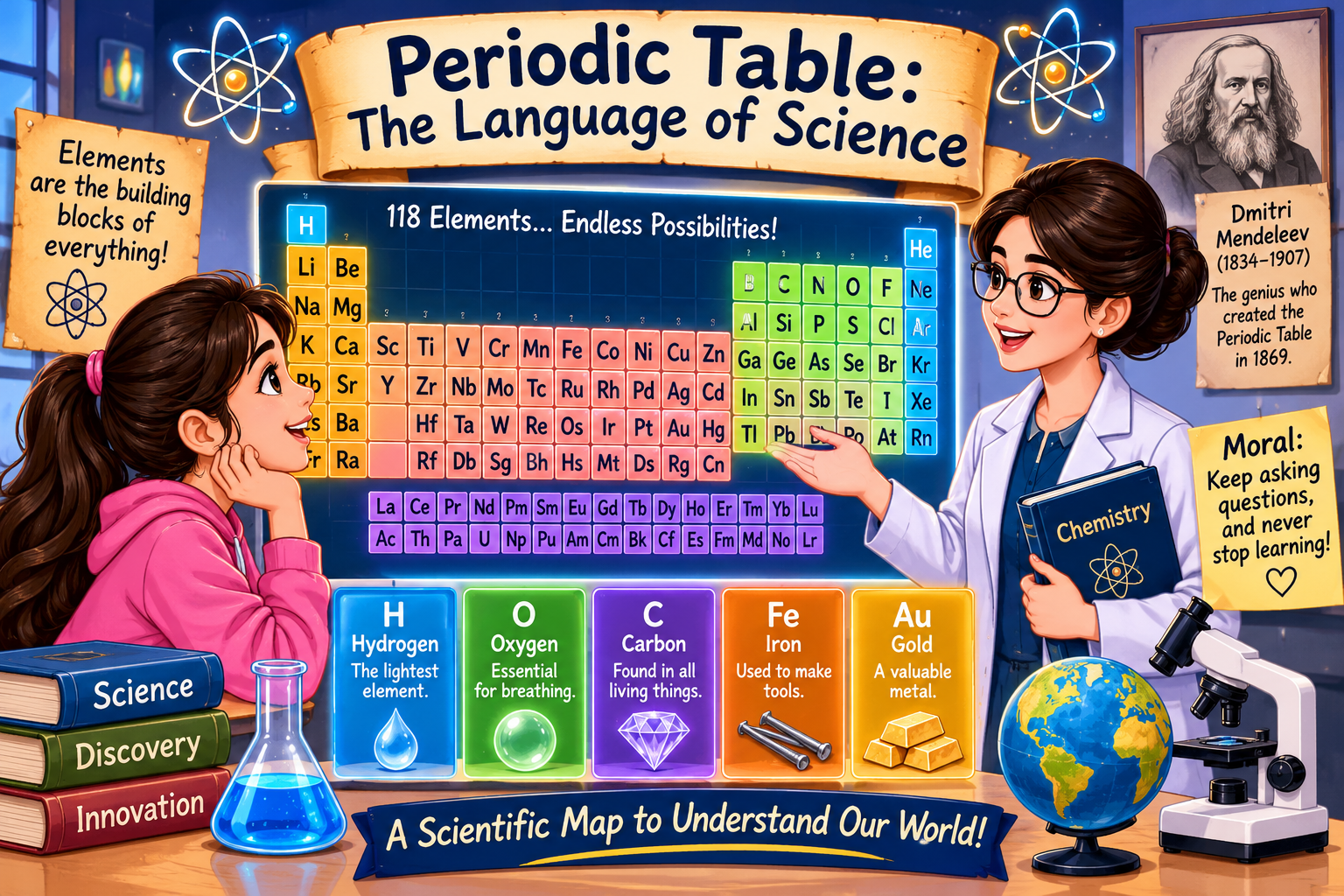
    Once upon a time, in the amazing world of science, there was a magical chart called the **Periodic Table**. It was not an ordinary chart; it was a special language that helped scientists understand the building blocks of everything around us.
    One day, a curious student named Ali asked his science teacher, "What is everything in the world made of?"
    The teacher smiled and replied, "Everything around you, from the air you breathe to the water you drink, is made of tiny building blocks called elements."
    Ali became curious and asked, "How can we understand all these elements?"
    The teacher pointed towards the Periodic Table and said, "This is where the magic begins!"
    The Periodic Table contains 118 known elements. Each element has its own name, symbol, and atomic number.
    For example:
    - **H – Hydrogen:** The lightest element.
    - **O – Oxygen:** Essential for breathing.
    - **C – Carbon:** Found in all living things.
    - **Fe – Iron:** Used to make many tools and structures.
    - **Au – Gold:** A valuable metal.
    Ali discovered that the elements were arranged according to their atomic numbers and properties. Elements in the same group often share similar characteristics.
    He also learned about Dmitri Mendeleev, the scientist who developed an early version of the Periodic Table in 1869. He even left spaces for elements that had not yet been discovered!
    Ali was amazed. He realized that the Periodic Table was like a scientific map that helped us understand nature, technology, medicine, and the world around us.
    From that day forward, Ali never saw the Periodic Table as just a collection of symbols. He saw it as the **language of science**, connecting every element to the incredible story of our universe.

    **Moral of the Story:**

    Science is all around us. Every element has a story, and every discovery begins with curiosity. Keep asking questions, keep exploring, and never stop learning!
    **The Periodic Table is not just a chart; it is the language that helps us understand our world!**

    **Periodic Table: The Language of Science**

    The Periodic Table is one of the most important tools in science. It organizes 118 known elements and helps us understand the building blocks of everything around us.
    In this educational story, we explore different elements such as Hydrogen, Oxygen, Carbon, Iron, and Gold. We also discover how Dmitri Mendeleev developed the Periodic Table and changed the world of chemistry.
    **My Learning:** Every element has its own properties and importance. Science helps us understand the world around us!
    Keep exploring, keep asking questions, and never stop learning!
    #PeriodicTable #LanguageOfScience #Chemistry #ScienceLearning #Elements #Education #DmitriMendeleev #KeepLearning #ScienceExploration


    Foundation level Task Day : 62 Task : story post # **🌍 Periodic Table: The Language of Science** *An Interesting Educational Story* Once upon a time, in the amazing world of science, there was a magical chart called the **Periodic Table**. It was not an ordinary chart; it was a special language that helped scientists understand the building blocks of everything around us. One day, a curious student named Ali asked his science teacher, "What is everything in the world made of?" The teacher smiled and replied, "Everything around you, from the air you breathe to the water you drink, is made of tiny building blocks called elements." Ali became curious and asked, "How can we understand all these elements?" The teacher pointed towards the Periodic Table and said, "This is where the magic begins!" The Periodic Table contains 118 known elements. Each element has its own name, symbol, and atomic number. For example: - **H – Hydrogen:** The lightest element. - **O – Oxygen:** Essential for breathing. - **C – Carbon:** Found in all living things. - **Fe – Iron:** Used to make many tools and structures. - **Au – Gold:** A valuable metal. Ali discovered that the elements were arranged according to their atomic numbers and properties. Elements in the same group often share similar characteristics. He also learned about Dmitri Mendeleev, the scientist who developed an early version of the Periodic Table in 1869. He even left spaces for elements that had not yet been discovered! Ali was amazed. He realized that the Periodic Table was like a scientific map that helped us understand nature, technology, medicine, and the world around us. From that day forward, Ali never saw the Periodic Table as just a collection of symbols. He saw it as the **language of science**, connecting every element to the incredible story of our universe. ✨ **Moral of the Story:** Science is all around us. Every element has a story, and every discovery begins with curiosity. Keep asking questions, keep exploring, and never stop learning! **The Periodic Table is not just a chart; it is the language that helps us understand our world!** 🌍🔬 🌍 **Periodic Table: The Language of Science** 🔬🧪 The Periodic Table is one of the most important tools in science. It organizes 118 known elements and helps us understand the building blocks of everything around us. ✨ In this educational story, we explore different elements such as Hydrogen, Oxygen, Carbon, Iron, and Gold. We also discover how Dmitri Mendeleev developed the Periodic Table and changed the world of chemistry. 💡 **My Learning:** Every element has its own properties and importance. Science helps us understand the world around us! 🚀 Keep exploring, keep asking questions, and never stop learning! #PeriodicTable #LanguageOfScience #Chemistry #ScienceLearning #Elements #Education #DmitriMendeleev #KeepLearning #ScienceExploration
    2
    0 تبصرے 0 شیئرز 2222 ویوز
  • Set it once | Muse keeps doing it for you.

    What is automation? You tell Muse AI once, and it repeats the work for you, every day, on time:

    Daily reminders — prayer times, medicine, study, work
    Regular checks — your emails, calendar, news, weather
    Repeated tasks — daily reports, messages, follow-ups
    Your goals — Muse keeps working on them, even after you close the app
    Always with your approval first — nothing happens without your yes

    Other AIs only answer when you ask. Muse AI works for you — on its own, on schedule.

    Get your Muse AI account:
    1 Billion Tokens FREE | Free Plan, Weekly Limited Usage for forever
    Only Rs 499
    PAY AFTER HANDOVER | Pay after your account is created and given to you.
    WhatsApp now: 0333 0717198

    #MuseAI #Automation #AIAgent #AITools #Pakistan
    Set it once | Muse keeps doing it for you. What is automation? You tell Muse AI once, and it repeats the work for you, every day, on time: ✅ Daily reminders — prayer times, medicine, study, work ✅ Regular checks — your emails, calendar, news, weather ✅ Repeated tasks — daily reports, messages, follow-ups ✅ Your goals — Muse keeps working on them, even after you close the app ✅ Always with your approval first — nothing happens without your yes Other AIs only answer when you ask. Muse AI works for you — on its own, on schedule. Get your Muse AI account: 1 Billion Tokens FREE | Free Plan, Weekly Limited Usage for forever Only Rs 499 ✅ PAY AFTER HANDOVER | Pay after your account is created and given to you. WhatsApp now: 0333 0717198 #MuseAI #Automation #AIAgent #AITools #Pakistan
    2
    0 تبصرے 0 شیئرز 1357 ویوز
  • **Roll No: 2**
    **Batch: 14**
    **Book: ACCL**
    **Task No: 162**

    # Sound Waves: The Physics of Hearing and Communication

    Have you ever wondered how we hear music, recognize someone's voice, or communicate with people from a distance? Every sound we hear is connected to the fascinating science of physics. From a gentle whisper to a powerful thunderstorm, sound travels through vibrations and waves, allowing us to experience and understand the world around us.

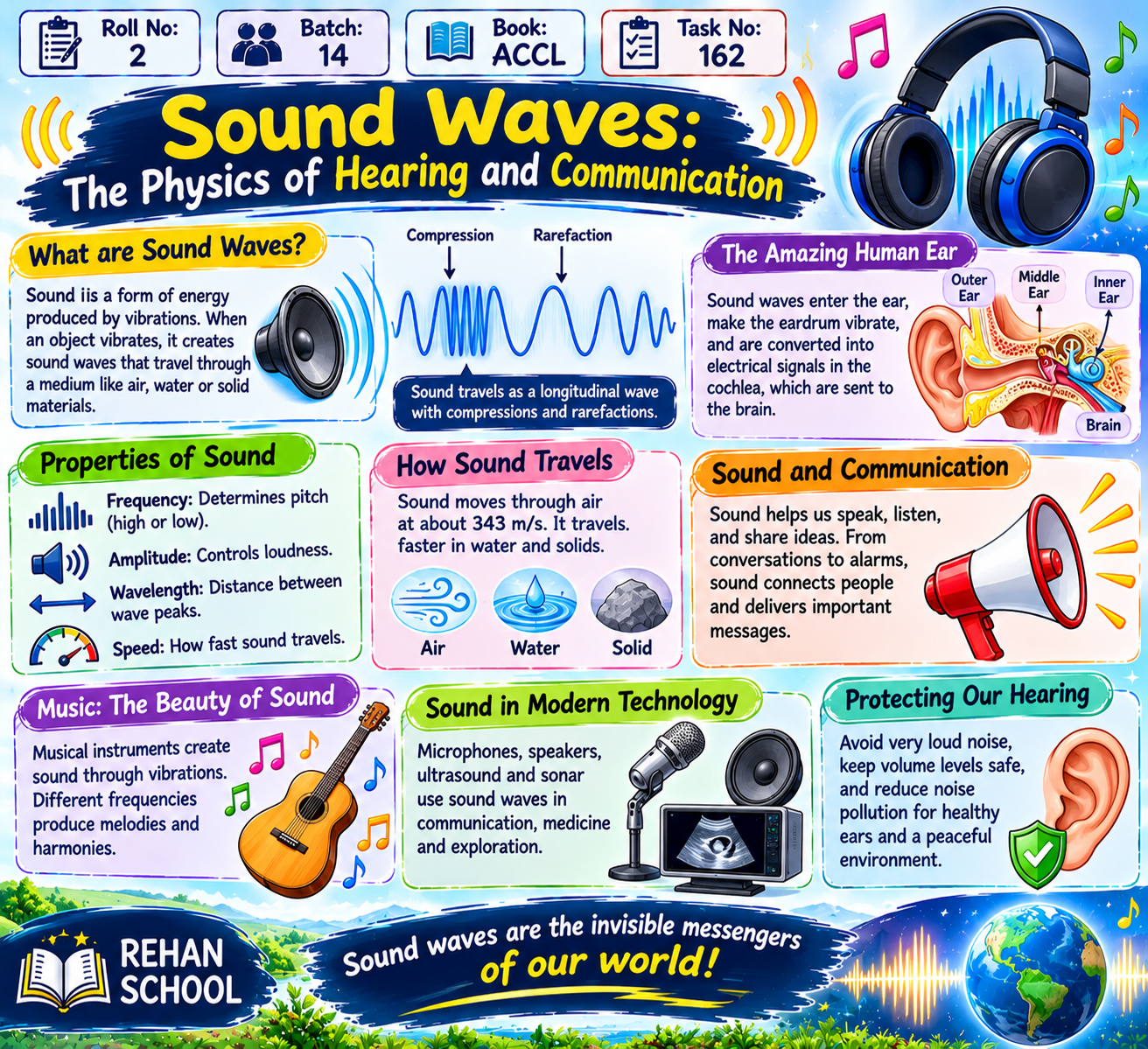
    **Sound is a form of energy produced by vibrations.** When an object vibrates, it causes nearby particles in a medium, such as air, water, or a solid material, to vibrate as well. These vibrations travel from one place to another in the form of sound waves. Unlike light, sound cannot travel through a vacuum because it needs a material medium to carry its vibrations.

    ## How Sound Waves Travel

    Sound generally travels through air as a longitudinal wave. This means that air particles vibrate back and forth in the same direction as the wave travels. These movements create areas of compression, where particles are closer together, and rarefaction, where particles are farther apart. Together, these patterns carry sound energy through the medium.

    The speed of sound depends on the material through which it travels and the surrounding conditions. In air at room temperature, sound travels at approximately 343 metres per second. It generally travels faster through liquids and solids because of the properties of their particles. This explains why sound behaves differently in different environments.

    ## Important Properties of Sound

    Sound waves have several important properties that help us understand what we hear.

    - **Frequency:** The number of vibrations or cycles per second, measured in hertz (Hz). Frequency determines the pitch of a sound. Higher frequency usually means a higher-pitched sound, while lower frequency produces a deeper sound.
    - **Amplitude:** The size of a wave's vibration. Greater amplitude generally corresponds to a louder sound.
    - **Wavelength:** The distance between two corresponding points on a wave, such as two successive compressions.
    - **Speed:** The rate at which sound travels through a particular medium.

    These properties help explain why a bird's chirping sounds different from the deep rumble of thunder.

    ## The Amazing Science of Human Hearing

    The human ear is a remarkable organ that allows us to detect and interpret sound. It has three main parts: the outer ear, middle ear, and inner ear. Each part performs an important function in the hearing process.

    The outer ear collects sound waves and directs them into the ear canal. They reach the eardrum, causing it to vibrate. These vibrations pass through three tiny bones in the middle ear, known as the hammer, anvil, and stirrup. The vibrations then reach the cochlea in the inner ear, where specialized sensory cells convert them into electrical signals.

    These signals travel through the auditory nerve to the brain, which processes them and allows us to recognize voices, music, and other sounds.

    ## Sound and Human Communication

    Sound is one of the most important tools of human communication. Through speech, people share information, express emotions, tell stories, and build relationships. Different languages use different combinations of sounds to create words and meanings.

    Communication is not limited to spoken words. Music, alarms, bells, and other signals also carry information. For example, a school bell tells students when a class begins or ends, while emergency sirens warn people about possible dangers. Sound helps societies exchange information quickly and effectively.

    ## Music: The Beauty of Sound

    Music demonstrates the creative side of sound physics. Musical instruments produce vibrations in different ways. A guitar creates sound through vibrating strings, a flute produces sound through vibrating air, and a drum produces sound through a vibrating surface.

    Different frequencies combine to create melodies and harmonies. The quality or tone of a sound, called timbre, helps us distinguish one instrument from another even when they play the same musical note. This connection between physics and music shows how scientific principles can create beautiful artistic experiences.

    ## Sound in Modern Technology

    The science of sound has transformed communication and technology. Microphones convert sound waves into electrical signals, while speakers convert electrical signals back into sound. These devices make telephones, computers, televisions, and recording systems possible.

    Ultrasound technology uses sound waves with frequencies higher than the human hearing range. It is widely used in medical imaging to help doctors observe structures inside the body. Sonar systems use sound waves to detect objects underwater and estimate their distance. These applications show that sound is important not only for communication but also for science, medicine, and exploration.

    ## Protecting Our Hearing

    Although sound is useful, excessively loud noise can damage hearing. Continuous exposure to high sound levels may harm the sensitive structures inside the ears. Therefore, it is important to keep headphone volumes at safe levels, take listening breaks, and use suitable hearing protection in noisy environments.

    Noise pollution is another environmental concern. Traffic, construction, factories, and loud machinery can disturb people and wildlife. Reducing unnecessary noise helps create healthier and more peaceful surroundings.

    ## Learning Through Observation

    We can explore sound waves through simple and safe activities. For example, gently plucking a rubber band stretched around a box allows us to observe how vibrations produce sound. We can also compare the sounds of different musical instruments and notice how their pitch and tone vary.

    These observations help students connect scientific theories with everyday experiences. By asking questions, testing ideas, and recording observations, we develop a deeper understanding of the physics behind hearing and communication.

    Sound is much more than something we hear. It is a physical phenomenon that connects science, technology, music, nature, and human interaction. Every conversation, musical note, and natural sound demonstrates the remarkable journey of vibrations through the world around us.

    **Sound waves are the invisible messengers of our world. By understanding how they travel, how our ears detect them, and how technology uses them, we discover the powerful connection between physics, hearing, and communication. **

    #SoundWaves #PhysicsOfSound #Hearing #Communication #Acoustics #Science #HumanEar #SoundTechnology #ACCL #Batch14 #Task162
    **Roll No: 2** **Batch: 14** **Book: ACCL** **Task No: 162** # 🔊🎵 Sound Waves: The Physics of Hearing and Communication 👂🌍 Have you ever wondered how we hear music, recognize someone's voice, or communicate with people from a distance? 🎶📢 Every sound we hear is connected to the fascinating science of physics. From a gentle whisper to a powerful thunderstorm, sound travels through vibrations and waves, allowing us to experience and understand the world around us. 🌎✨ **Sound is a form of energy produced by vibrations.** 🔬 When an object vibrates, it causes nearby particles in a medium, such as air, water, or a solid material, to vibrate as well. These vibrations travel from one place to another in the form of sound waves. Unlike light, sound cannot travel through a vacuum because it needs a material medium to carry its vibrations. ## 🌊 How Sound Waves Travel Sound generally travels through air as a longitudinal wave. This means that air particles vibrate back and forth in the same direction as the wave travels. These movements create areas of compression, where particles are closer together, and rarefaction, where particles are farther apart. Together, these patterns carry sound energy through the medium. 🌬️ The speed of sound depends on the material through which it travels and the surrounding conditions. In air at room temperature, sound travels at approximately 343 metres per second. It generally travels faster through liquids and solids because of the properties of their particles. This explains why sound behaves differently in different environments. 💧🪨 ## 📏 Important Properties of Sound Sound waves have several important properties that help us understand what we hear. - **Frequency:** The number of vibrations or cycles per second, measured in hertz (Hz). Frequency determines the pitch of a sound. Higher frequency usually means a higher-pitched sound, while lower frequency produces a deeper sound. - **Amplitude:** The size of a wave's vibration. Greater amplitude generally corresponds to a louder sound. - **Wavelength:** The distance between two corresponding points on a wave, such as two successive compressions. - **Speed:** The rate at which sound travels through a particular medium. These properties help explain why a bird's chirping sounds different from the deep rumble of thunder. 🐦⛈️ ## 👂 The Amazing Science of Human Hearing The human ear is a remarkable organ that allows us to detect and interpret sound. It has three main parts: the outer ear, middle ear, and inner ear. Each part performs an important function in the hearing process. 🦻 The outer ear collects sound waves and directs them into the ear canal. They reach the eardrum, causing it to vibrate. These vibrations pass through three tiny bones in the middle ear, known as the hammer, anvil, and stirrup. The vibrations then reach the cochlea in the inner ear, where specialized sensory cells convert them into electrical signals. These signals travel through the auditory nerve to the brain, which processes them and allows us to recognize voices, music, and other sounds. 🧠💡 ## 🗣️ Sound and Human Communication Sound is one of the most important tools of human communication. Through speech, people share information, express emotions, tell stories, and build relationships. Different languages use different combinations of sounds to create words and meanings. 🗨️🌍 Communication is not limited to spoken words. Music, alarms, bells, and other signals also carry information. For example, a school bell tells students when a class begins or ends, while emergency sirens warn people about possible dangers. Sound helps societies exchange information quickly and effectively. 🚨🔔 ## 🎶 Music: The Beauty of Sound Music demonstrates the creative side of sound physics. Musical instruments produce vibrations in different ways. A guitar creates sound through vibrating strings, a flute produces sound through vibrating air, and a drum produces sound through a vibrating surface. 🎸🥁 Different frequencies combine to create melodies and harmonies. The quality or tone of a sound, called timbre, helps us distinguish one instrument from another even when they play the same musical note. This connection between physics and music shows how scientific principles can create beautiful artistic experiences. 🎼✨ ## 📡 Sound in Modern Technology The science of sound has transformed communication and technology. Microphones convert sound waves into electrical signals, while speakers convert electrical signals back into sound. These devices make telephones, computers, televisions, and recording systems possible. 📱💻 Ultrasound technology uses sound waves with frequencies higher than the human hearing range. It is widely used in medical imaging to help doctors observe structures inside the body. Sonar systems use sound waves to detect objects underwater and estimate their distance. These applications show that sound is important not only for communication but also for science, medicine, and exploration. 🏥🚢 ## 🌍 Protecting Our Hearing Although sound is useful, excessively loud noise can damage hearing. Continuous exposure to high sound levels may harm the sensitive structures inside the ears. Therefore, it is important to keep headphone volumes at safe levels, take listening breaks, and use suitable hearing protection in noisy environments. 💚👂 Noise pollution is another environmental concern. Traffic, construction, factories, and loud machinery can disturb people and wildlife. Reducing unnecessary noise helps create healthier and more peaceful surroundings. 🌳🏡 ## 🧪 Learning Through Observation We can explore sound waves through simple and safe activities. For example, gently plucking a rubber band stretched around a box allows us to observe how vibrations produce sound. We can also compare the sounds of different musical instruments and notice how their pitch and tone vary. These observations help students connect scientific theories with everyday experiences. By asking questions, testing ideas, and recording observations, we develop a deeper understanding of the physics behind hearing and communication. 🔍📚 Sound is much more than something we hear. It is a physical phenomenon that connects science, technology, music, nature, and human interaction. Every conversation, musical note, and natural sound demonstrates the remarkable journey of vibrations through the world around us. 🌎🔊 **Sound waves are the invisible messengers of our world. By understanding how they travel, how our ears detect them, and how technology uses them, we discover the powerful connection between physics, hearing, and communication. 🎵👂🔬💚** #SoundWaves #PhysicsOfSound #Hearing #Communication #Acoustics #Science #HumanEar #SoundTechnology #ACCL #Batch14 #Task162 🔊🎶🌍

    0 تبصرے 0 شیئرز 6694 ویوز
  • RSIF8
    ROLLNO:13
    TASK NO:48
    CLASS: FOUNDATION LEVEL

    Health and DNA: The Struggle of Life

    Health and DNA: The Struggle of Life is a very interesting and educational topic that helps us understand the importance of our health, our bodies, and the amazing role of DNA in our lives. Life is a beautiful gift of nature, and our body is a complex system made up of trillions of tiny cells. Every cell has an important job that helps our body grow, develop, and function properly.

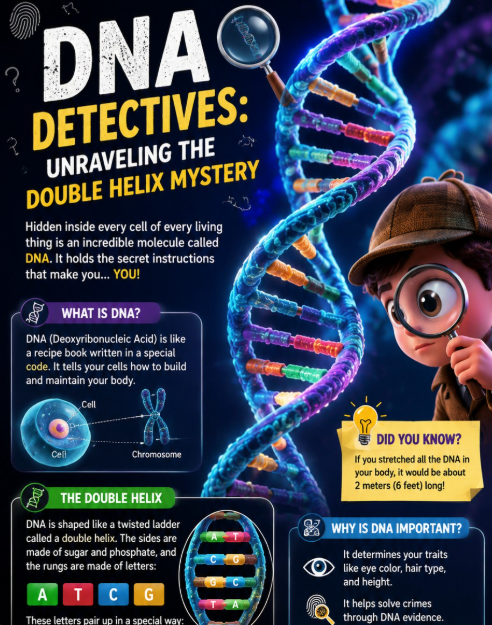
    DNA, which stands for Deoxyribonucleic Acid, is one of the most important parts of life. It carries genetic information that helps determine many characteristics of living organisms. DNA contains instructions that guide how our bodies develop and function. It also helps explain why children may share certain features with their parents and family members. Every living organism has its own genetic information, making DNA an important part of understanding life.

    Health is equally important because a healthy body helps us learn, work, think, and enjoy life. Good health is not only about avoiding diseases; it is also about taking care of our physical and mental well-being. Eating nutritious food, drinking clean water, getting enough sleep, staying physically active, and maintaining good hygiene are important habits for a healthy lifestyle.

    Sometimes our bodies face different challenges, such as diseases, infections, and genetic conditions. These challenges remind us how important medical science and scientific research are. Scientists and doctors study DNA to understand how certain diseases develop and how they may be prevented, diagnosed, or treated. Modern science has made remarkable progress in genetics, medicine, and biotechnology, giving people new hope for healthier lives.

    This topic also teaches us that life is full of challenges, but knowledge, research, and determination can help us find solutions. Understanding DNA allows us to explore the hidden instructions of life, while learning about health teaches us how to protect our bodies and make better decisions.
    RSIF8 ROLLNO:13 TASK NO:48 CLASS: FOUNDATION LEVEL Health and DNA: The Struggle of Life 🧬🌍 Health and DNA: The Struggle of Life is a very interesting and educational topic that helps us understand the importance of our health, our bodies, and the amazing role of DNA in our lives. Life is a beautiful gift of nature, and our body is a complex system made up of trillions of tiny cells. Every cell has an important job that helps our body grow, develop, and function properly. DNA, which stands for Deoxyribonucleic Acid, is one of the most important parts of life. It carries genetic information that helps determine many characteristics of living organisms. DNA contains instructions that guide how our bodies develop and function. It also helps explain why children may share certain features with their parents and family members. Every living organism has its own genetic information, making DNA an important part of understanding life. Health is equally important because a healthy body helps us learn, work, think, and enjoy life. Good health is not only about avoiding diseases; it is also about taking care of our physical and mental well-being. Eating nutritious food, drinking clean water, getting enough sleep, staying physically active, and maintaining good hygiene are important habits for a healthy lifestyle. Sometimes our bodies face different challenges, such as diseases, infections, and genetic conditions. These challenges remind us how important medical science and scientific research are. Scientists and doctors study DNA to understand how certain diseases develop and how they may be prevented, diagnosed, or treated. Modern science has made remarkable progress in genetics, medicine, and biotechnology, giving people new hope for healthier lives. This topic also teaches us that life is full of challenges, but knowledge, research, and determination can help us find solutions. Understanding DNA allows us to explore the hidden instructions of life, while learning about health teaches us how to protect our bodies and make better decisions.
    0 تبصرے 0 شیئرز 2880 ویوز 12
  • RSIf8
    Roll Number: 49
    Story post no.49
    Story post topic:DNA Detectives: Unraveling the Double Helix Mystery

    Have you ever wondered what makes you unique? The answer lies in a tiny molecule called DNA—the incredible blueprint of life! Every living organism, from the smallest bacteria to the largest animals, carries DNA that contains the instructions for growth, development, and survival.

    In this exciting journey, we become DNA detectives, exploring one of the greatest scientific discoveries in history: the double helix. We'll uncover how DNA stores genetic information, how traits are passed from parents to children, and why every person's DNA is almost identical—yet still uniquely their own. ‍‍‍

    Scientists use DNA to solve crimes, identify ancestors, develop life-saving medicines, improve crops, and better understand diseases. The discovery of the double helix revolutionized biology and continues to shape the future of medicine, genetics, and biotechnology.

    Join us as we unravel the mystery hidden inside every cell and discover how a microscopic molecule holds the secrets of life itself. Whether you're a science enthusiast, a student, or simply curious about the world around you, this story will inspire you to see DNA in a whole new way.

    Every strand tells a story. Every gene holds a clue. The mystery begins now!

    #DNA #Genetics #Science #Biology #STEM #Education
    RSIf8 Roll Number: 49 Story post no.49 Story post topic:DNA Detectives: Unraveling the Double Helix Mystery Have you ever wondered what makes you unique? 🤔 The answer lies in a tiny molecule called DNA—the incredible blueprint of life! Every living organism, from the smallest bacteria to the largest animals, carries DNA that contains the instructions for growth, development, and survival. 🌍 In this exciting journey, we become DNA detectives, exploring one of the greatest scientific discoveries in history: the double helix. 🧬 We'll uncover how DNA stores genetic information, how traits are passed from parents to children, and why every person's DNA is almost identical—yet still uniquely their own. 👨‍👩‍👧‍👦✨ Scientists use DNA to solve crimes, identify ancestors, develop life-saving medicines, improve crops, and better understand diseases. 🧪🔍 The discovery of the double helix revolutionized biology and continues to shape the future of medicine, genetics, and biotechnology. Join us as we unravel the mystery hidden inside every cell and discover how a microscopic molecule holds the secrets of life itself. 🌟 Whether you're a science enthusiast, a student, or simply curious about the world around you, this story will inspire you to see DNA in a whole new way. 🧬 Every strand tells a story. Every gene holds a clue. The mystery begins now! #DNA #Genetics #Science #Biology #STEM #Education
    0 تبصرے 0 شیئرز 1576 ویوز
  • RSIf8
    Roll Number: 49
    Story post no.43
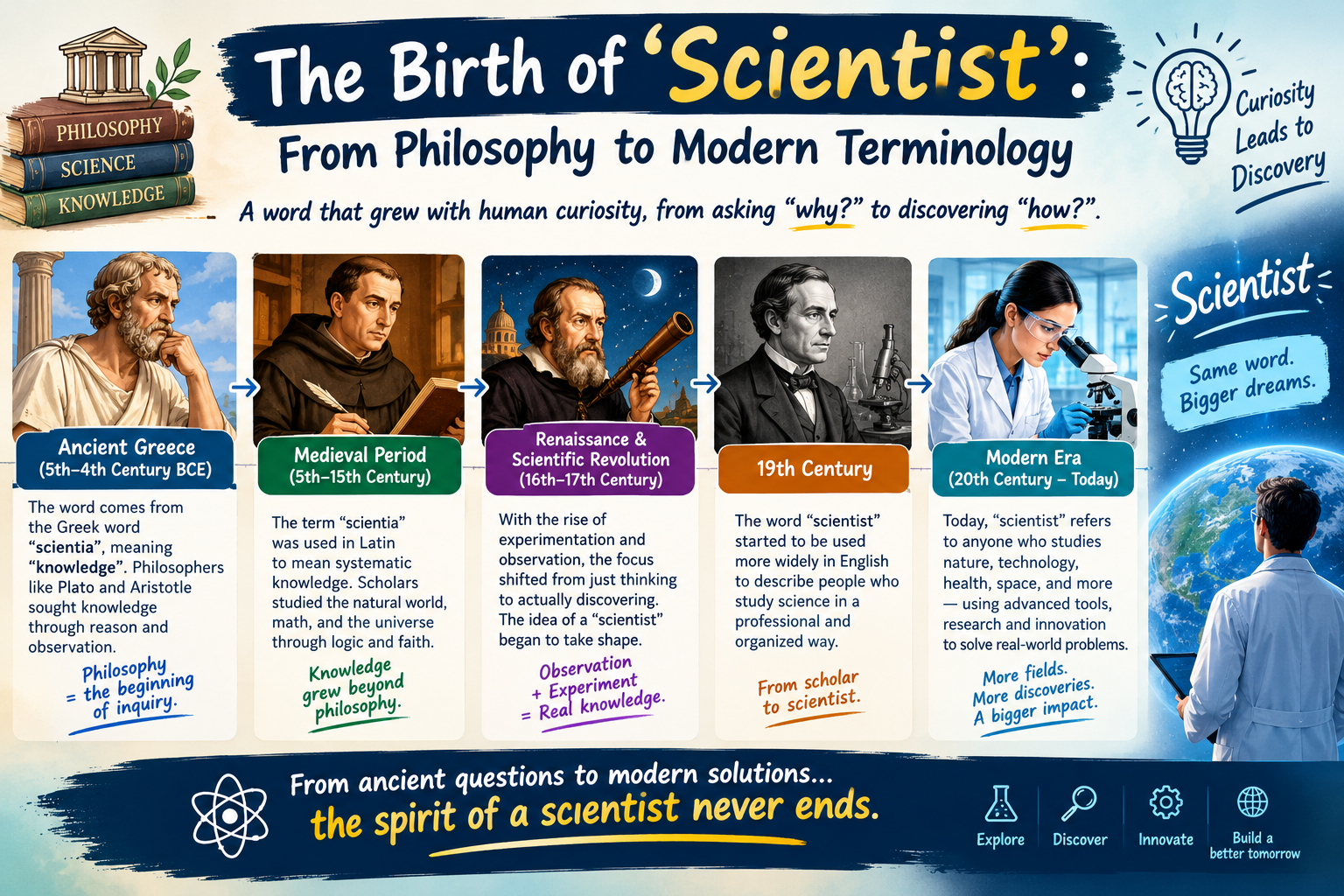
    Story post topic:The Birth of “Scientist” – From Philosophy to Modern Terminology

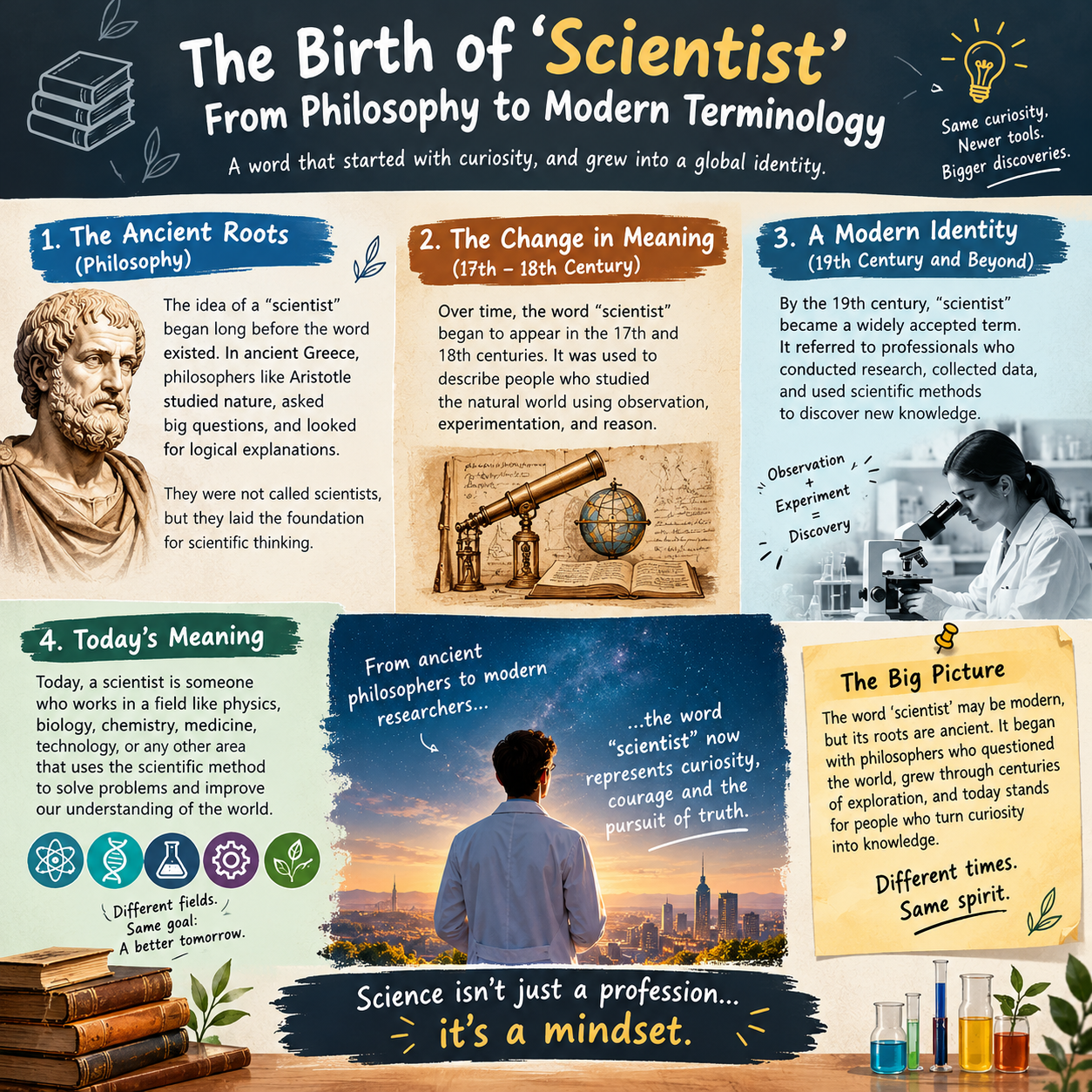
    Have you ever wondered how the word “scientist” came into existence? This story explores the fascinating journey of the word, from ancient philosophers who questioned the mysteries of nature to modern scientists who use observation, experimentation, and technology to discover new knowledge.

    From the early ideas of philosophers like Aristotle to today's researchers working in physics, biology, chemistry, and medicine, science has continuously evolved. This journey shows how human curiosity has helped us understand the world and make incredible discoveries.

    The key message: Science is more than a profession; it is a mindset built on curiosity, critical thinking, and the courage to ask questions. Different times, same spirit of discovery!

    #HistoryOfScience #Scientist #ScientificDiscoveries #Philosophy #ScienceAndTechnology #Curiosity #Knowledge #LearningJourney #ClassFoundation #RSf8
    RSIf8 Roll Number: 49 Story post no.43 Story post topic:The Birth of “Scientist” – From Philosophy to Modern Terminology Have you ever wondered how the word “scientist” came into existence? 🌍✨ This story explores the fascinating journey of the word, from ancient philosophers who questioned the mysteries of nature to modern scientists who use observation, experimentation, and technology to discover new knowledge. From the early ideas of philosophers like Aristotle to today's researchers working in physics, biology, chemistry, and medicine, science has continuously evolved. 🧪🔭 This journey shows how human curiosity has helped us understand the world and make incredible discoveries. 💡 The key message: Science is more than a profession; it is a mindset built on curiosity, critical thinking, and the courage to ask questions. Different times, same spirit of discovery! #HistoryOfScience #Scientist #ScientificDiscoveries #Philosophy #ScienceAndTechnology #Curiosity #Knowledge #LearningJourney #ClassFoundation #RSf8
    0 تبصرے 0 شیئرز 2328 ویوز
  • RSIF8
    Roll no: 86
    Story Post no: 30
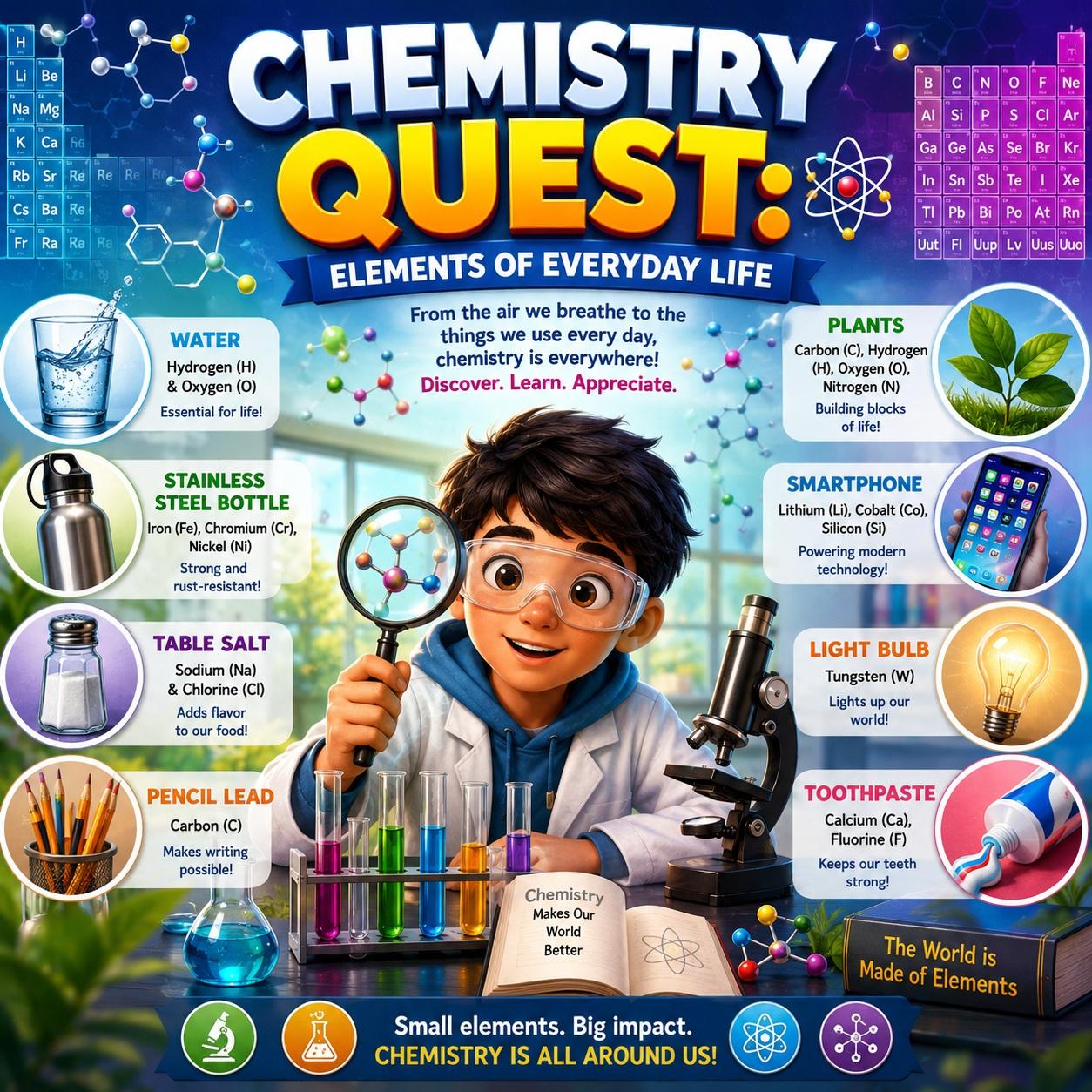
    Story Post Topic: **Chemistry Quest: Elements of Everyday Life**

    In this task, I created and shared a story post titled **"Chemistry Quest: Elements of Everyday Life"** on **Facebook, YouTube, LinkedIn, Instagram, and TikTok**.

    The story follows an exciting journey through the world of chemistry, showing how different **chemical elements** are present in our everyday lives. From the oxygen we breathe and the iron in our blood to the calcium in our bones and the silicon used in electronic devices, elements play a vital role in everything around us.

    Through this activity, I learned that chemistry is not limited to laboratories. It is part of our daily routines, helping us understand food, medicine, technology, nature, and the environment. Every element has unique properties that contribute to making life possible.

    Creating this story improved my understanding of chemistry and inspired me to explore how science connects with the real world. It also encouraged me to appreciate the importance of scientific discoveries and how they improve our quality of life.

    Overall, this activity was educational, creative, and inspiring. It reminded me that the elements of the periodic table are the building blocks of our world and are essential for life, innovation, and progress.

    #Chemistry #Elements #PeriodicTable #Science #STEM #Education #Learning #StudentLearning #Innovation #Knowledge #RSIF8
    RSIF8 Roll no: 86 Story Post no: 30 Story Post Topic: **Chemistry Quest: Elements of Everyday Life** 🧪⚛️🌍 In this task, I created and shared a story post titled **"Chemistry Quest: Elements of Everyday Life"** on **Facebook, YouTube, LinkedIn, Instagram, and TikTok**. 📱✨ The story follows an exciting journey through the world of chemistry, showing how different **chemical elements** are present in our everyday lives. From the oxygen we breathe and the iron in our blood to the calcium in our bones and the silicon used in electronic devices, elements play a vital role in everything around us. 🌬️💻🦴 Through this activity, I learned that chemistry is not limited to laboratories. It is part of our daily routines, helping us understand food, medicine, technology, nature, and the environment. Every element has unique properties that contribute to making life possible. 🌱🔬 Creating this story improved my understanding of chemistry and inspired me to explore how science connects with the real world. It also encouraged me to appreciate the importance of scientific discoveries and how they improve our quality of life. 📚🚀 Overall, this activity was educational, creative, and inspiring. It reminded me that the elements of the periodic table are the building blocks of our world and are essential for life, innovation, and progress. 🌟⚛️ #Chemistry #Elements #PeriodicTable #Science #STEM #Education #Learning #StudentLearning #Innovation #Knowledge #RSIF8 🧪⚛️🌍📚✨
    0 تبصرے 0 شیئرز 1415 ویوز
  • RSIF8
    Roll no: 86
    Short Documentary no: 3
    Short Documentary Topic: **The Birth of "Scientist": From Philosophy to Modern Terminology**

    In this task, I created and shared a short documentary titled **"The Birth of 'Scientist': From Philosophy to Modern Terminology"** on **Facebook, YouTube, LinkedIn, Instagram, and TikTok**.

    This documentary explores the history of the word **"scientist"** and explains how people who were once known as **natural philosophers** gradually became recognized as scientists. It highlights how the growth of scientific knowledge and discoveries led to the need for a new term that represented professionals dedicated to scientific research and innovation.

    Through this documentary, I learned that science has evolved over centuries through curiosity, observation, experimentation, and evidence. The contributions of great thinkers and researchers have transformed our understanding of the world and continue to improve our daily lives through medicine, technology, engineering, and environmental research.

    Creating this documentary improved my research, communication, and presentation skills. It also helped me appreciate the importance of scientific history and the role scientists play in solving global challenges and advancing human knowledge.

    Overall, this project was educational, informative, and inspiring. It encouraged me to value scientific thinking, continue learning, and understand how knowledge evolves over time to shape a better future for humanity.

    #Scientist #ScienceHistory #Innovation #Education #Learning #StudentLearning #Research #ScientificDiscovery #Technology #Knowledge #RSIF8
    RSIF8 Roll no: 86 Short Documentary no: 3 Short Documentary Topic: **The Birth of "Scientist": From Philosophy to Modern Terminology** 🎥🔬📚 In this task, I created and shared a short documentary titled **"The Birth of 'Scientist': From Philosophy to Modern Terminology"** on **Facebook, YouTube, LinkedIn, Instagram, and TikTok**. 📱🌍✨ This documentary explores the history of the word **"scientist"** and explains how people who were once known as **natural philosophers** gradually became recognized as scientists. It highlights how the growth of scientific knowledge and discoveries led to the need for a new term that represented professionals dedicated to scientific research and innovation. 🔬💡 Through this documentary, I learned that science has evolved over centuries through curiosity, observation, experimentation, and evidence. The contributions of great thinkers and researchers have transformed our understanding of the world and continue to improve our daily lives through medicine, technology, engineering, and environmental research. 🌱🚀 Creating this documentary improved my research, communication, and presentation skills. It also helped me appreciate the importance of scientific history and the role scientists play in solving global challenges and advancing human knowledge. 🎤📖 Overall, this project was educational, informative, and inspiring. It encouraged me to value scientific thinking, continue learning, and understand how knowledge evolves over time to shape a better future for humanity. 🌟✨ #Scientist #ScienceHistory #Innovation #Education #Learning #StudentLearning #Research #ScientificDiscovery #Technology #Knowledge #RSIF8 🔬📚🌍🚀✨
    0 تبصرے 0 شیئرز 2381 ویوز 12
  • RSIF8
    ROLL NO:92
    STORY POST NO:41
    TOPIC:### The Birth of 'Scientist': From Philosophy to Modern Terminology

    Have you ever wondered how the word **“scientist”** was born? Science has a fascinating history! In the past, people who studied nature and discovered new things were often called natural philosophers. In 1833, William Whewell introduced the word “scientist” to describe people who study science. Today, scientists help us understand the world, explore space, discover new medicines, and create amazing technologies.

    This story shows how one word became an important part of our modern world. Keep learning, stay curious, and never stop asking questions!

    **Moral:** Every great discovery begins with curiosity and a question.

    #BirthOfScientist #HistoryOfWords #ScienceHistory #AmazingFacts #LearnSomethingNew #Education #ScientificDiscoveries #StayCurious #KnowledgeIsPower #StoryPost
    RSIF8 ROLL NO:92 STORY POST NO:41 TOPIC:### 📚 The Birth of 'Scientist': From Philosophy to Modern Terminology 🔬 Have you ever wondered how the word **“scientist”** was born? Science has a fascinating history! In the past, people who studied nature and discovered new things were often called natural philosophers. In 1833, William Whewell introduced the word “scientist” to describe people who study science. Today, scientists help us understand the world, explore space, discover new medicines, and create amazing technologies. ✨ This story shows how one word became an important part of our modern world. Keep learning, stay curious, and never stop asking questions! 💡 **Moral:** Every great discovery begins with curiosity and a question. #BirthOfScientist #HistoryOfWords #ScienceHistory #AmazingFacts #LearnSomethingNew #Education #ScientificDiscoveries #StayCurious #KnowledgeIsPower #StoryPost
    0 تبصرے 0 شیئرز 1978 ویوز
More Results