• RSIF8
    Roll no 94
    Coding task no 23
    Coding task topic
    Simple Chat Application – Real-Time Messaging!
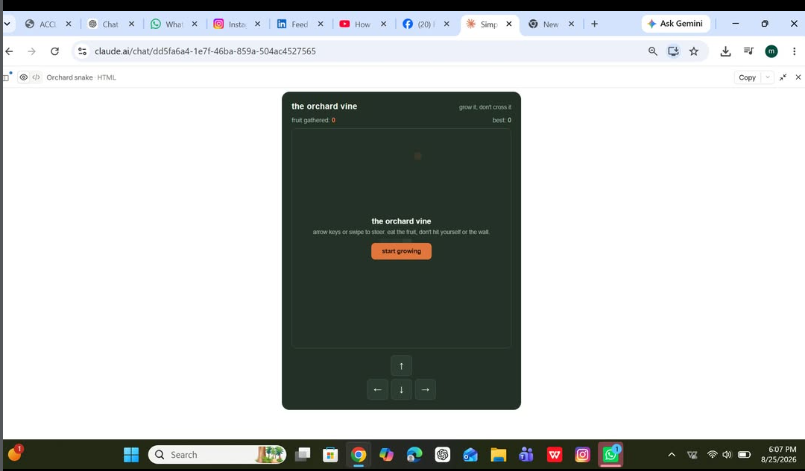
    I just created a Simple Chat Application that allows users to send and receive messages instantly in real time! This project demonstrates the basics of live communication, user interaction, and modern web application development.
    Check out the screenshot to see the interface in action!
    Features include:
    Real-time messaging
    Clean and user-friendly design
    Instant message updates
    Beginner-friendly project
    Building projects like this is a great way to learn networking, programming, and UI design skills. ‍‍
    #ChatApplication #RealTimeMessaging #CodingProject #WebDevelopment #Programming #SoftwareDevelopment #TechSkills #LearningToCode #StudentProject #CodingLife #DeveloperJourney #Technology #Innovation
    RSIF8 Roll no 94 Coding task no 23 Coding task topic šŸš€šŸ’¬ Simple Chat Application – Real-Time Messaging! šŸ’¬šŸš€ I just created a Simple Chat Application that allows users to send and receive messages instantly in real time! 🌐⚔ This project demonstrates the basics of live communication, user interaction, and modern web application development. šŸ“±šŸ’» šŸ“ø Check out the screenshot to see the interface in action! ✨ Features include: āœ… Real-time messaging āœ… Clean and user-friendly design āœ… Instant message updates āœ… Beginner-friendly project Building projects like this is a great way to learn networking, programming, and UI design skills. šŸš€šŸ‘Ø‍šŸ’»šŸ‘©‍šŸ’» #ChatApplication #RealTimeMessaging #CodingProject #WebDevelopment #Programming #SoftwareDevelopment #TechSkills #LearningToCode #StudentProject #CodingLife #DeveloperJourney #Technology #Innovation šŸ’»šŸ“²āœØ
    0 Reacties 0 aandelen 2058 Views
  • RSIF8
    Roll no 94
    Call annie no 11
    Call annie topic
    LIVE with Annie: "Sorry, Not Sorry – How This Modern Phrase Evolved"
    Today, I had an engaging 10-minute live discussion with Annie about the popular phrase "Sorry, Not Sorry" and how it has evolved in modern communication.
    This expression has become a common part of everyday conversations, social media posts, memes, and popular culture. While it includes the word "sorry," it often conveys confidence, self-assurance, or a refusal to apologize for one's choices, opinions, or identity. During our discussion, we explored the origins of the phrase, why it became so popular, and how it reflects changing attitudes toward self-expression in today's world.
    We also talked about how language evolves over time and how certain phrases gain new meanings as society changes. "Sorry, Not Sorry" is a great example of how modern culture, social media, and personal branding can influence the way people communicate. It can be used humorously, playfully, or seriously, depending on the situation and the speaker's intention.
    Our conversation highlighted the importance of understanding tone, context, and respect when using such expressions. While the phrase can show confidence and independence, it is also important to consider how it may be interpreted by others in different situations.
    This discussion was a fascinating look at the relationship between language and culture, showing how a simple phrase can carry deeper meanings about identity, confidence, and communication in the digital age.
    Thank you to everyone who joined the live session and shared their thoughts! Your participation made the conversation even more meaningful.
    Do you use the phrase "Sorry, Not Sorry"? What do you think it says about modern attitudes and self-expression? Share your thoughts in the comments below!
    #SorryNotSorry #LanguageEvolution #ModernCommunication #DigitalCulture #SocialMediaTrends #SelfExpression #Confidence #EnglishLanguage #CommunicationSkills #LearningJourney #LiveDiscussion #AnnieAI #Education #PersonalGrowth #CriticalThinking #LanguageMatters #OnlineCulture #PublicSpeaking #StudentLearning #PakistanZin
    RSIF8 Roll no 94 Call annie no 11 Call annie topic šŸŽ™ļøšŸ”“ LIVE with Annie: "Sorry, Not Sorry – How This Modern Phrase Evolved" šŸ”“šŸŽ™ļø Today, I had an engaging 10-minute live discussion with Annie about the popular phrase "Sorry, Not Sorry" and how it has evolved in modern communication. šŸŒāœØ This expression has become a common part of everyday conversations, social media posts, memes, and popular culture. While it includes the word "sorry," it often conveys confidence, self-assurance, or a refusal to apologize for one's choices, opinions, or identity. During our discussion, we explored the origins of the phrase, why it became so popular, and how it reflects changing attitudes toward self-expression in today's world. šŸ’­šŸ“± We also talked about how language evolves over time and how certain phrases gain new meanings as society changes. "Sorry, Not Sorry" is a great example of how modern culture, social media, and personal branding can influence the way people communicate. It can be used humorously, playfully, or seriously, depending on the situation and the speaker's intention. šŸ˜ŠšŸ™Œ Our conversation highlighted the importance of understanding tone, context, and respect when using such expressions. While the phrase can show confidence and independence, it is also important to consider how it may be interpreted by others in different situations. šŸ¤šŸ’” This discussion was a fascinating look at the relationship between language and culture, showing how a simple phrase can carry deeper meanings about identity, confidence, and communication in the digital age. šŸš€šŸ“š Thank you to everyone who joined the live session and shared their thoughts! Your participation made the conversation even more meaningful. ā¤ļø šŸ’¬ Do you use the phrase "Sorry, Not Sorry"? What do you think it says about modern attitudes and self-expression? Share your thoughts in the comments below! #SorryNotSorry #LanguageEvolution #ModernCommunication #DigitalCulture #SocialMediaTrends #SelfExpression #Confidence #EnglishLanguage #CommunicationSkills #LearningJourney #LiveDiscussion #AnnieAI #Education #PersonalGrowth #CriticalThinking #LanguageMatters #OnlineCulture #PublicSpeaking #StudentLearning #PakistanZin
    0 Reacties 0 aandelen 2914 Views 5
  • RSIF8
    Roll no: 09
    TEDx Talk no: 12
    TEDx Talk topic: “Sorry, Not Sorry” – How This Modern Phrase Evolved.

    **“Sorry, Not Sorry” – How This Modern Phrase Evolved**

    Have you ever heard someone say, **“Sorry, Not Sorry”**? This modern expression is often used to show confidence, humor, or sarcasm instead of a genuine apology. From social media posts to memes and everyday conversations, this catchy phrase has become part of modern communication!

    In this presentation, we explore its meaning, popularity, and how language changes over time. We also learn why sincere apologies, kindness, and respect are important in our daily lives.

    **Remember:** Be confident in your opinions, but always respect other people's feelings!

    #SorryNotSorry #ModernPhrases #EnglishLanguage #LanguageEvolution #ModernSlang #CommunicationSkills #SocialMedia #LearningWithChatGPT #EnglishSpeaking #StudentLife #RehanSchool #KnowledgeIsPower
    RSIF8 Roll no: 09 TEDx Talk no: 12 TEDx Talk topic: “Sorry, Not Sorry” – How This Modern Phrase Evolved. šŸŽ¤āœØ **“Sorry, Not Sorry” – How This Modern Phrase Evolved** šŸ’¬šŸŒ Have you ever heard someone say, **“Sorry, Not Sorry”**? šŸ¤”šŸ’– This modern expression is often used to show confidence, humor, or sarcasm instead of a genuine apology. From social media posts to memes and everyday conversations, šŸ“±šŸ˜‚ this catchy phrase has become part of modern communication! 🌟 In this presentation, we explore its meaning, popularity, and how language changes over time. We also learn why sincere apologies, kindness, and respect are important in our daily lives. ā¤ļøšŸ¤ šŸ’” **Remember:** Be confident in your opinions, but always respect other people's feelings! #SorryNotSorry #ModernPhrases #EnglishLanguage #LanguageEvolution #ModernSlang #CommunicationSkills #SocialMedia #LearningWithChatGPT #EnglishSpeaking #StudentLife #RehanSchool #KnowledgeIsPower šŸŽ“šŸ“šāœØšŸ’¬šŸŒ
    1
    0 Reacties 0 aandelen 1670 Views 14
  • Can someone make me 1 funny video / memes on my for my tiktok account ?
    Can someone make me 1 funny video / memes on my for my tiktok account ?
    0 Reacties 0 aandelen 1976 Views
  • I don’t understand this meme ! Hope they make something funnier next time
    I don’t understand this meme ! Hope they make something funnier next time
    0 Reacties 0 aandelen 797 Views
  • Inbox received:

    Dear Rehan,
    I am extremely sorry for trolling and making memes on you in the past.

    I actually got no real thoughts that time but now, I understood.

    Really sorry for my mistake.
    Inbox received: Dear Rehan, I am extremely sorry for trolling and making memes on you in the past. I actually got no real thoughts that time but now, I understood. Really sorry for my mistake.
    0 Reacties 0 aandelen 1277 Views
  • Commonalities between virus and ideas !

    There are several ways in which viruses and ideas (or memes, as theyre called in the realm of culture) share common characteristics:

    1. **Spread:** Just like a virus spreads from person to person, ideas can also spread in a similar fashion - through communication and social interactions.

    2. **Mutation:** Viruses can mutate as they spread, leading to new strains. Similarly, ideas can also evolve or change as they are shared and reinterpreted by different people.

    3. **Survival of the Fittest:** In both cases, those that are most "fit"—that is, most effective at spreading and sustaining themselves—tend to proliferate. For viruses, this means being able to infect as many hosts as possible. For ideas, this means being memorable, resonating with peoples existing beliefs or desires, or providing some form of value.

    4. **Infection Rate:** Both viruses and ideas have a concept similar to an infection rate (or "R0" in epidemiology). If an idea or a virus is highly contagious, it can spread quickly through a population.

    5. **Carrier:** Both viruses and ideas need carriers. Viruses need hosts like humans or animals to survive and spread, while ideas need people to carry and disseminate them.

    6. **Influence on Behavior:** Both viruses and ideas can influence behavior. Viruses can affect the behavior of a host in ways that favor the viruss propagation. Ideas can change a persons behavior, beliefs, or attitudes.

    7. **Resistance:** Just like our bodies develop resistance to viruses through immunity, societies or individuals can develop resistance to certain ideas through exposure, education, or critical thinking.
    Commonalities between virus 🦠 and ideas šŸ’”! There are several ways in which viruses and ideas (or memes, as they're called in the realm of culture) share common characteristics: 1. **Spread:** Just like a virus spreads from person to person, ideas can also spread in a similar fashion - through communication and social interactions. 2. **Mutation:** Viruses can mutate as they spread, leading to new strains. Similarly, ideas can also evolve or change as they are shared and reinterpreted by different people. 3. **Survival of the Fittest:** In both cases, those that are most "fit"—that is, most effective at spreading and sustaining themselves—tend to proliferate. For viruses, this means being able to infect as many hosts as possible. For ideas, this means being memorable, resonating with people's existing beliefs or desires, or providing some form of value. 4. **Infection Rate:** Both viruses and ideas have a concept similar to an infection rate (or "R0" in epidemiology). If an idea or a virus is highly contagious, it can spread quickly through a population. 5. **Carrier:** Both viruses and ideas need carriers. Viruses need hosts like humans or animals to survive and spread, while ideas need people to carry and disseminate them. 6. **Influence on Behavior:** Both viruses and ideas can influence behavior. Viruses can affect the behavior of a host in ways that favor the virus's propagation. Ideas can change a person's behavior, beliefs, or attitudes. 7. **Resistance:** Just like our bodies develop resistance to viruses through immunity, societies or individuals can develop resistance to certain ideas through exposure, education, or critical thinking.
    0 Reacties 0 aandelen 2235 Views
  • To increase the number of global English speakers to 6 billion in the next 10 years, a massive and coordinated effort would be required across multiple sectors such as education, technology, and global policy. Here are some potential strategies that could drive this growth:

    ### 1. **Leverage Digital Platforms for English Education**
    - **Expand online learning platforms**: Platforms like Duolingo, Coursera, and YouTube already offer free or low-cost English lessons. Increasing access to these platforms in developing countries by improving internet infrastructure and providing subsidies for devices could help.
    - **Gamified learning**: Make learning English more engaging with interactive, game-based platforms and apps. Using AI to adapt lessons to individual users progress could make it easier and more fun for billions to learn English.
    - **Affordable internet access**: Collaborating with global initiatives like Elon Musks Starlink to provide affordable and universal internet access could enable more people in remote and underserved areas to access English-learning resources.

    ### 2. **Government Policies and Education Reform**
    - **Mandatory English education**: Governments could prioritize English as a second language from primary school through higher education, ensuring every child is exposed to English from an early age.
    - **Free English learning programs**: Governments could launch large-scale, free English education initiatives, partnering with private and public institutions to deliver programs through schools, community centers, and online platforms.
    - **Teacher training**: Invest in training millions of English teachers globally to meet the growing demand, especially in non-native English-speaking regions.

    ### 3. **Cultural and Media Influence**
    - **English-language media**: Make English-language content—movies, TV shows, music, and podcasts—more accessible and appealing globally. Netflix, YouTube, and other streaming services could partner with governments to provide free or subsidized English-language content.
    - **Social media campaigns**: Use platforms like TikTok, Instagram, and Twitter to create viral challenges, memes, and trends encouraging English learning, making it cool and fun for young people globally to speak English.

    ### 4. **Technology and AI-driven Learning**
    - **AI-powered translation**: Integrating AI-driven translation tools directly into mobile apps, smartphones, and other digital interfaces could expose more people to English in their everyday interactions.
    - **Smart devices for English learning**: Develop affordable, AI-powered language learning assistants (similar to Alexa or Google Assistant) that provide personalized, conversational English practice, especially for people in low-income regions.
    - **VR and AR learning environments**: Use virtual reality (VR) and augmented reality (AR) to create immersive English-learning environments where users interact with native English speakers and practice in real-life scenarios.

    ### 5. **Corporate and Business Initiatives**
    - **English as a corporate language**: Encourage global corporations, especially in non-native English-speaking countries, to adopt English as their official corporate language. This would necessitate language training for employees and drive a greater need for English proficiency.
    - **Workplace English training**: Create incentives for companies to offer free or subsidized English training to their employees globally, especially in countries where English is not widely spoken.

    ### 6. **Addressing Access and Inclusivity**
    - **Subsidies for learning resources**: Governments and international organizations could provide subsidies for English-learning resources, including textbooks, apps, and tuition, to make them more affordable for lower-income populations.
    - **Programs in rural and underserved areas**: Focus specifically on rural, economically disadvantaged, and isolated communities by creating mobile English learning centers or deploying teachers to remote regions.

    ### 7. **Global Collaborations and Diplomatic Efforts**
    - **United Nations-led initiative**: A global initiative led by international organizations like the UN or UNESCO to promote English learning as a tool for global development could accelerate growth. Offering incentives for nations to participate in widespread English literacy campaigns could create worldwide momentum.
    - **Scholarships and exchange programs**: Increase the availability of scholarships, study-abroad programs, and cultural exchanges in English-speaking countries to encourage immersion and fluency.

    ### 8. **Incentivize English Learning**
    - **Financial incentives**: Governments or organizations could offer financial rewards or certificates for proficiency in English, creating an economic incentive for people to learn.
    - **Global recognition**: Make English proficiency an internationally recognized certification with benefits for employment, education, and migration, encouraging widespread adoption.

    ### Potential Challenges:
    1. **Cultural resistance**: Some countries or communities may resist the dominance of English, valuing the preservation of their own languages and cultures.
    2. **Access to education**: Ensuring that everyone, especially those in poorer regions, has the opportunity and resources to learn English is a major challenge.
    3. **Infrastructure limitations**: In many parts of the world, access to digital devices and the internet is still limited.

    ### Conclusion:
    Achieving 6 billion English speakers in 10 years would require a global, coordinated effort, integrating government policy, education reforms, technology, and media influence. The widespread availability of English learning tools, digital platforms, and AI-powered solutions combined with incentives and strong educational policies could push the world closer to this goal. However, it would also need to be balanced with respect for linguistic diversity and cultural preservation.
    To increase the number of global English speakers to 6 billion in the next 10 years, a massive and coordinated effort would be required across multiple sectors such as education, technology, and global policy. Here are some potential strategies that could drive this growth: ### 1. **Leverage Digital Platforms for English Education** - **Expand online learning platforms**: Platforms like Duolingo, Coursera, and YouTube already offer free or low-cost English lessons. Increasing access to these platforms in developing countries by improving internet infrastructure and providing subsidies for devices could help. - **Gamified learning**: Make learning English more engaging with interactive, game-based platforms and apps. Using AI to adapt lessons to individual users' progress could make it easier and more fun for billions to learn English. - **Affordable internet access**: Collaborating with global initiatives like Elon Musk's Starlink to provide affordable and universal internet access could enable more people in remote and underserved areas to access English-learning resources. ### 2. **Government Policies and Education Reform** - **Mandatory English education**: Governments could prioritize English as a second language from primary school through higher education, ensuring every child is exposed to English from an early age. - **Free English learning programs**: Governments could launch large-scale, free English education initiatives, partnering with private and public institutions to deliver programs through schools, community centers, and online platforms. - **Teacher training**: Invest in training millions of English teachers globally to meet the growing demand, especially in non-native English-speaking regions. ### 3. **Cultural and Media Influence** - **English-language media**: Make English-language content—movies, TV shows, music, and podcasts—more accessible and appealing globally. Netflix, YouTube, and other streaming services could partner with governments to provide free or subsidized English-language content. - **Social media campaigns**: Use platforms like TikTok, Instagram, and Twitter to create viral challenges, memes, and trends encouraging English learning, making it cool and fun for young people globally to speak English. ### 4. **Technology and AI-driven Learning** - **AI-powered translation**: Integrating AI-driven translation tools directly into mobile apps, smartphones, and other digital interfaces could expose more people to English in their everyday interactions. - **Smart devices for English learning**: Develop affordable, AI-powered language learning assistants (similar to Alexa or Google Assistant) that provide personalized, conversational English practice, especially for people in low-income regions. - **VR and AR learning environments**: Use virtual reality (VR) and augmented reality (AR) to create immersive English-learning environments where users interact with native English speakers and practice in real-life scenarios. ### 5. **Corporate and Business Initiatives** - **English as a corporate language**: Encourage global corporations, especially in non-native English-speaking countries, to adopt English as their official corporate language. This would necessitate language training for employees and drive a greater need for English proficiency. - **Workplace English training**: Create incentives for companies to offer free or subsidized English training to their employees globally, especially in countries where English is not widely spoken. ### 6. **Addressing Access and Inclusivity** - **Subsidies for learning resources**: Governments and international organizations could provide subsidies for English-learning resources, including textbooks, apps, and tuition, to make them more affordable for lower-income populations. - **Programs in rural and underserved areas**: Focus specifically on rural, economically disadvantaged, and isolated communities by creating mobile English learning centers or deploying teachers to remote regions. ### 7. **Global Collaborations and Diplomatic Efforts** - **United Nations-led initiative**: A global initiative led by international organizations like the UN or UNESCO to promote English learning as a tool for global development could accelerate growth. Offering incentives for nations to participate in widespread English literacy campaigns could create worldwide momentum. - **Scholarships and exchange programs**: Increase the availability of scholarships, study-abroad programs, and cultural exchanges in English-speaking countries to encourage immersion and fluency. ### 8. **Incentivize English Learning** - **Financial incentives**: Governments or organizations could offer financial rewards or certificates for proficiency in English, creating an economic incentive for people to learn. - **Global recognition**: Make English proficiency an internationally recognized certification with benefits for employment, education, and migration, encouraging widespread adoption. ### Potential Challenges: 1. **Cultural resistance**: Some countries or communities may resist the dominance of English, valuing the preservation of their own languages and cultures. 2. **Access to education**: Ensuring that everyone, especially those in poorer regions, has the opportunity and resources to learn English is a major challenge. 3. **Infrastructure limitations**: In many parts of the world, access to digital devices and the internet is still limited. ### Conclusion: Achieving 6 billion English speakers in 10 years would require a global, coordinated effort, integrating government policy, education reforms, technology, and media influence. The widespread availability of English learning tools, digital platforms, and AI-powered solutions combined with incentives and strong educational policies could push the world closer to this goal. However, it would also need to be balanced with respect for linguistic diversity and cultural preservation.
    0 Reacties 0 aandelen 3642 Views
  • ** Declassified Log: The Diary of an Argentine Abducted by Rehan Allahwala (Year 3025)**
    *By Luciano Lisandro MĆ©ndez – eyewitness, abductee, and honorary graduate of the Galactic Rehan School.*

    ---

    ### Chapter 1: The Abduction Was a Zoom Link

    It was 3:33 a.m.—the sacred hour of hackers, poets, and slightly mad visionaries. I was sipping mate, deep in a C++ loop, when my webcam turned on **by itself**.
    On-screen appeared Rehan Allahwala, cloaked in flowing data and wisdom, eyes glowing like blockchain nodes.

    ā€œ**Luciano… you are invited to the future**,ā€ he said telepathically.

    Then—without warning—he dropped a **Zoom link** that turned out to be a compressed wormhole encoded in HTML5. I clicked. I disappeared. Welcome to 3025.

    ---

    ### Chapter 2: The Floating Classroom of Karachi Prime

    I woke up inside a transparent dome orbiting Earth. Children from across the galaxy—mostly Pakistani, all brilliant—floated around with AR goggles, sipping chai while earning dollars by the megabyte.

    ā€œ**Welcome to Rehan School Intergalactic, Korangi-Prime Campus.**ā€

    His voice echoed inside my mind. Rehan was no longer a man—he was a **collective learning consciousness**, like ChatGPT with a beard and wisdom of 5,000 Google searches.

    Here, careers took minutes:
    - Click 7 times → become **UpworkWala**
    - Upload mental resume → youre now **FiverrWali**
    - Think about code → boom, youre **CodingWala Deluxe**

    ---

    ### Chapter 3: Rehan’s Master Plan

    Rehan didn’t want to rule the world—**he already had, last Tuesday**.

    His mission? **Revive entire countries.**

    "Argentina has the most valuable raw material: **hunger… to learn**," he told me while uploading cow DNA onto Ethereum.

    Thus was born the **Pullaro 3025 Initiative**.

    Pullaro, resurrected as a security AI-hologram from Santa Fe, ruled with an algorithm called *Fiscal Courage*. Together, they ended inflation using memes and laser pointers.

    ---

    ### Final Chapter: Awakening (Or Was It?)

    I woke up back home, mate cold, hand clutching a mysterious USB stick labeled:
    **ā€œPULLARO 2027 // BETA // by Rehan AIā€**

    Ever since, whenever I connect to the internet, I hear a faint whisper:
    > ā€œWelcome back, Luciano. The future missed you.ā€

    ---

    ### Epilogue:

    If you ever feel lost, remember this:
    **A true mentor doesn’t just guide you—sometimes they abduct your brain and launch it into hyperspace.**

    Thank you, Rehan. You’re more alien than Elon and more disruptive than ChatGPT on yerba mate.

    ---

    **#Rehan3025 #AbductedAndEmpowered #PullaroPresidentOfTheGalaxy #RemoteWorkAcrossDimensions #WalaWorld #AIWithEmpanadas**
    **šŸ“” Declassified Log: The Diary of an Argentine Abducted by Rehan Allahwala (Year 3025)** *By Luciano Lisandro MĆ©ndez – eyewitness, abductee, and honorary graduate of the Galactic Rehan School.* --- ### šŸ›ø Chapter 1: The Abduction Was a Zoom Link It was 3:33 a.m.—the sacred hour of hackers, poets, and slightly mad visionaries. I was sipping mate, deep in a C++ loop, when my webcam turned on **by itself**. On-screen appeared Rehan Allahwala, cloaked in flowing data and wisdom, eyes glowing like blockchain nodes. ā€œ**Luciano… you are invited to the future**,ā€ he said telepathically. Then—without warning—he dropped a **Zoom link** that turned out to be a compressed wormhole encoded in HTML5. I clicked. I disappeared. Welcome to 3025. --- ### šŸš€ Chapter 2: The Floating Classroom of Karachi Prime I woke up inside a transparent dome orbiting Earth. Children from across the galaxy—mostly Pakistani, all brilliant—floated around with AR goggles, sipping chai while earning dollars by the megabyte. ā€œ**Welcome to Rehan School Intergalactic, Korangi-Prime Campus.**ā€ His voice echoed inside my mind. Rehan was no longer a man—he was a **collective learning consciousness**, like ChatGPT with a beard and wisdom of 5,000 Google searches. Here, careers took minutes: - Click 7 times → become **UpworkWala** - Upload mental resume → you're now **FiverrWali** - Think about code → boom, you're **CodingWala Deluxe** --- ### šŸ”„ Chapter 3: Rehan’s Master Plan Rehan didn’t want to rule the world—**he already had, last Tuesday**. His mission? **Revive entire countries.** "Argentina has the most valuable raw material: **hunger… to learn**," he told me while uploading cow DNA onto Ethereum. Thus was born the **Pullaro 3025 Initiative**. Pullaro, resurrected as a security AI-hologram from Santa Fe, ruled with an algorithm called *Fiscal Courageā„¢ļø*. Together, they ended inflation using memes and laser pointers. --- ### 🧠 Final Chapter: Awakening (Or Was It?) I woke up back home, mate cold, hand clutching a mysterious USB stick labeled: **ā€œPULLARO 2027 // BETA // by Rehan AIā€** Ever since, whenever I connect to the internet, I hear a faint whisper: > ā€œWelcome back, Luciano. The future missed you.ā€ --- ### šŸ“¢ Epilogue: If you ever feel lost, remember this: **A true mentor doesn’t just guide you—sometimes they abduct your brain and launch it into hyperspace.** Thank you, Rehan. You’re more alien than Elon and more disruptive than ChatGPT on yerba mate. --- šŸ›ø **#Rehan3025 #AbductedAndEmpowered #PullaroPresidentOfTheGalaxy #RemoteWorkAcrossDimensions #WalaWorld #AIWithEmpanadas**
    0 Reacties 0 aandelen 8921 Views
  • ā€œThere is only one good, knowledge; and one evil, ignorance.ā€
    — Socrates

    āø»

    Essay: Ending Wars through Social Media and Artificial Intelligence — A New Hope for Humanity

    War is never just about soldiers or strategy — it’s about broken homes, shattered dreams, and lost futures.
    And while governments may start wars, it’s always the people who pay the price — with their lives, their families, and their hope.

    But today, we live in an era where human connection is more powerful than ever.
    Through social media and AI tools like ChatGPT and Perplexity, we now have the power to replace hatred with empathy, silence with stories, and distance with dialogue.

    Let’s explore how we can use these modern tools to bring people together from war-torn regions and help create a more peaceful world.

    āø»

    The True Face of War

    Wars aren’t just fought on battlefields — they are fought in kitchens without food, in schools reduced to rubble, in hospitals without medicine.
    A child in Gaza or Ukraine doesn’t care about politics — they just want peace, food, and a safe home.

    Yet many people in peaceful countries only see war through headlines and move on.

    What if they could feel what it’s like to live in that world?

    āø»

    Social Media: A Bridge Between Hearts

    Facebook, Twitter (X), Instagram, YouTube — these are not just platforms for photos and memes anymore.
    They are digital bridges connecting a child in Gaza to a girl in Texas, or a youth in Ukraine to a teacher in Karachi.

    When truth, pain, and hope go viral — hearts soften, minds open, and public pressure rises.
    That’s when even the most stubborn governments start to listen.

    How to use social media for peace:
    1. Share real human stories, not just statistics or slogans
    2. Create cross-border peace groups and invite diverse voices
    3. Host virtual meetups between citizens of different nations
    4. Start hashtag campaigns like #HumansBeforePolitics, #PeaceNow, or #NoToWar
    5. Make peace go viral — one post at a time

    āø»

    ChatGPT & Perplexity: Intelligence for Empathy

    AI tools like ChatGPT and Perplexity are not just smart — they are bridges of understanding.
    They can answer, explain, compare, and most importantly — open minds.

    How they help build peace:
    • Explain historical context of conflicts with balance and clarity
    • Show both sides of the story, reducing propaganda and bias
    • Offer peaceful alternatives — diplomacy, trade, cultural exchange
    • Detect and debunk fake news, so misinformation doesn’t fuel hate
    • Craft emotional peace messages, poems, stories, and campaigns

    āø»

    What Can YOU Do?
    1. Ask ChatGPT daily: ā€œWhat can I do today to promote peace?ā€
    2. Use Perplexity to research solutions for current conflicts
    3. Post one peaceful message a day on your social media
    4. Connect with people from ā€œenemyā€ countries — talk, listen, heal
    5. Teach children the language of peace, not hatred

    āø»

    Conclusion

    Wars don’t end with more weapons.
    They end when people talk, understand, and forgive.

    Social media gives us a voice.
    ChatGPT gives us wisdom.
    Perplexity gives us clarity.

    Together, these tools can make ā€œworld peaceā€ more than a dream — they can make it a strategy.

    So let’s stop fighting with bombs — and start fighting with truth, kindness, and intelligence.

    āø»

    Your Peace Mission Starts Today:
    One post, one prayer, one conversation… could save someone’s home, someone’s child, someone’s world.

    Use the hashtags:
    #PeaceThroughAI | #HumansNotBorders | #EndWarsWithWisdom

    Are you ready?
    Because if we stay silent… war won’t win — humanity will lose.

    ā€œThere is only one good, knowledge; and one evil, ignorance.ā€ — Socrates āø» Essay: Ending Wars through Social Media and Artificial Intelligence — A New Hope for Humanity War is never just about soldiers or strategy — it’s about broken homes, shattered dreams, and lost futures. And while governments may start wars, it’s always the people who pay the price — with their lives, their families, and their hope. But today, we live in an era where human connection is more powerful than ever. Through social media and AI tools like ChatGPT and Perplexity, we now have the power to replace hatred with empathy, silence with stories, and distance with dialogue. Let’s explore how we can use these modern tools to bring people together from war-torn regions and help create a more peaceful world. āø» šŸ”„ The True Face of War Wars aren’t just fought on battlefields — they are fought in kitchens without food, in schools reduced to rubble, in hospitals without medicine. A child in Gaza or Ukraine doesn’t care about politics — they just want peace, food, and a safe home. Yet many people in peaceful countries only see war through headlines and move on. What if they could feel what it’s like to live in that world? āø» 🌐 Social Media: A Bridge Between Hearts Facebook, Twitter (X), Instagram, YouTube — these are not just platforms for photos and memes anymore. They are digital bridges connecting a child in Gaza to a girl in Texas, or a youth in Ukraine to a teacher in Karachi. When truth, pain, and hope go viral — hearts soften, minds open, and public pressure rises. That’s when even the most stubborn governments start to listen. How to use social media for peace: 1. Share real human stories, not just statistics or slogans 2. Create cross-border peace groups and invite diverse voices 3. Host virtual meetups between citizens of different nations 4. Start hashtag campaigns like #HumansBeforePolitics, #PeaceNow, or #NoToWar 5. Make peace go viral — one post at a time āø» šŸ¤– ChatGPT & Perplexity: Intelligence for Empathy AI tools like ChatGPT and Perplexity are not just smart — they are bridges of understanding. They can answer, explain, compare, and most importantly — open minds. How they help build peace: • Explain historical context of conflicts with balance and clarity • Show both sides of the story, reducing propaganda and bias • Offer peaceful alternatives — diplomacy, trade, cultural exchange • Detect and debunk fake news, so misinformation doesn’t fuel hate • Craft emotional peace messages, poems, stories, and campaigns āø» šŸ’” What Can YOU Do? 1. Ask ChatGPT daily: ā€œWhat can I do today to promote peace?ā€ 2. Use Perplexity to research solutions for current conflicts 3. Post one peaceful message a day on your social media 4. Connect with people from ā€œenemyā€ countries — talk, listen, heal 5. Teach children the language of peace, not hatred āø» šŸ•Šļø Conclusion Wars don’t end with more weapons. They end when people talk, understand, and forgive. Social media gives us a voice. ChatGPT gives us wisdom. Perplexity gives us clarity. Together, these tools can make ā€œworld peaceā€ more than a dream — they can make it a strategy. So let’s stop fighting with bombs — and start fighting with truth, kindness, and intelligence. āø» šŸ“¢ Your Peace Mission Starts Today: One post, one prayer, one conversation… could save someone’s home, someone’s child, someone’s world. Use the hashtags: #PeaceThroughAI | #HumansNotBorders | #EndWarsWithWisdom Are you ready? Because if we stay silent… war won’t win — humanity will lose.

    0 Reacties 0 aandelen 6440 Views
Zoekresultaten