


• rehan school student
    foundation level
    task:57
    day:57
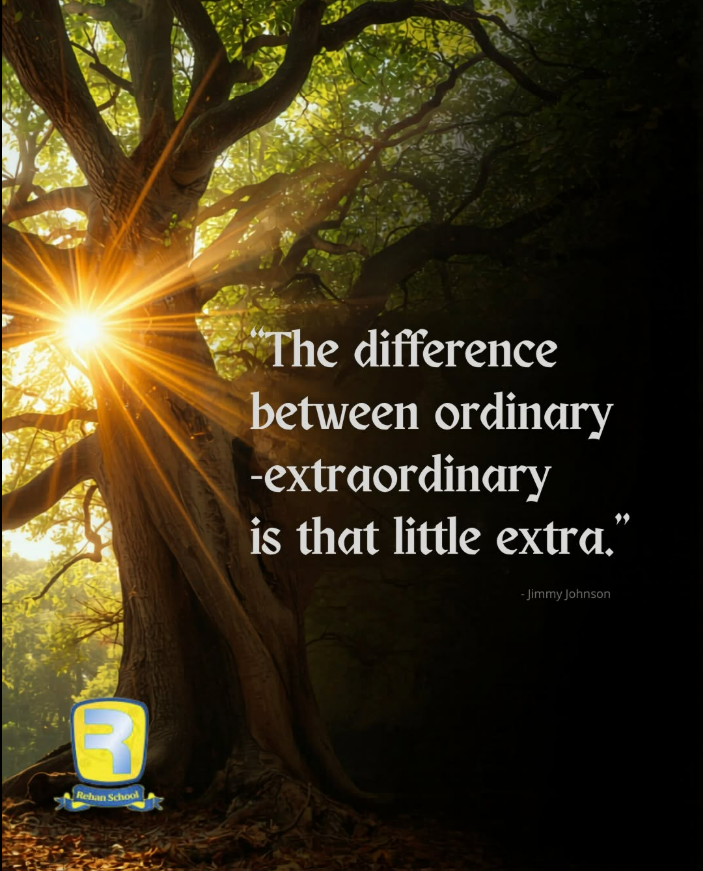
    “The difference between ordinary and extraordinary is that little extra.” — Jimmy Johnson

    Success is not always about doing big things all at once . Sometimes, the secret to becoming extraordinary is giving that *little extra* every single day . Extra effort ‍, extra patience , extra learning , and extra kindness can take you far beyond average.

    Ordinary people quit when challenges appear , but extraordinary people keep moving forward with courage and determination . That small extra step , extra practice , or extra positive attitude is what creates amazing results .

    Never underestimate the power of consistency . One more try , one more smile , one more prayer , or one more moment of hard work can completely change your future .

    Be the person who gives their best even when nobody is watching . Because greatness is built through small efforts repeated every day . Keep shining and always give that little extra!
    rehan school student foundation level task:57 day:57 “The difference between ordinary and extraordinary is that little extra.” — Jimmy Johnson Success is not always about doing big things all at once 🌍✨. Sometimes, the secret to becoming extraordinary is giving that *little extra* every single day 💪🔥. Extra effort 🏃‍♀️, extra patience ⏳, extra learning 📚, and extra kindness ❤️ can take you far beyond average. Ordinary people quit when challenges appear 🚧😔, but extraordinary people keep moving forward with courage 🦁⚡ and determination 🎯. That small extra step 👣, extra practice 🎨⚽, or extra positive attitude 😊🌈 is what creates amazing results 🌟🏆. Never underestimate the power of consistency 🔄✨. One more try 🔥, one more smile 😊, one more prayer 🤲, or one more moment of hard work 💼 can completely change your future 🚀🌍. Be the person who gives their best even when nobody is watching 👀💫. Because greatness is built through small efforts repeated every day 🌱➡️🌳. Keep shining ✨💖 and always give that little extra! 🚀🔥🌟🙌
    0 Σχόλια 0 Μοιράστηκε 346 Views
  • Set it once | Muse keeps doing it for you.

    What is automation? You tell Muse AI once, and it repeats the work for you, every day, on time:

    Daily reminders — prayer times, medicine, study, work
    Regular checks — your emails, calendar, news, weather
    Repeated tasks — daily reports, messages, follow-ups
    Your goals — Muse keeps working on them, even after you close the app
    Always with your approval first — nothing happens without your yes

    Other AIs only answer when you ask. Muse AI works for you — on its own, on schedule.

    Get your Muse AI account:
    1 Billion Tokens FREE | Free Plan, Weekly Limited Usage for forever
    Only Rs 499
    PAY AFTER HANDOVER | Pay after your account is created and given to you.
    WhatsApp now: 0333 0717198

    #MuseAI #Automation #AIAgent #AITools #Pakistan
    Set it once | Muse keeps doing it for you. What is automation? You tell Muse AI once, and it repeats the work for you, every day, on time: ✅ Daily reminders — prayer times, medicine, study, work ✅ Regular checks — your emails, calendar, news, weather ✅ Repeated tasks — daily reports, messages, follow-ups ✅ Your goals — Muse keeps working on them, even after you close the app ✅ Always with your approval first — nothing happens without your yes Other AIs only answer when you ask. Muse AI works for you — on its own, on schedule. Get your Muse AI account: 1 Billion Tokens FREE | Free Plan, Weekly Limited Usage for forever Only Rs 499 ✅ PAY AFTER HANDOVER | Pay after your account is created and given to you. WhatsApp now: 0333 0717198 #MuseAI #Automation #AIAgent #AITools #Pakistan
    2
    0 Σχόλια 0 Μοιράστηκε 1741 Views
  • #rsisb
    Roll no.239
    Miss zoya 22
    Foundation Level
    Assalamu Alaikum wa Rahmatullahi wa Barakatuh!

    Welcome to our educational video. Today, we will learn 100 questions about Jahannam (Hell) in Islam. These questions are written in Roman Arabic, using English letters, with English translations to help students and beginners read, understand, and practice them easily.

    In this video, we will explore what the Quran teaches about Jahannam, its descriptions, the Day of Judgment, accountability, good deeds, repentance, Allah's mercy, and the importance of preparing for the Hereafter.

    The purpose of learning about Jahannam is not simply to feel fear. It is to reflect on our actions, improve our character, avoid wrongdoing, treat others with kindness, perform our prayers, respect our parents, help those in need, and seek forgiveness from Allah.

    Islam teaches us to balance fear of Allah's punishment with hope in His mercy. We should never lose hope in Allah's forgiveness, and we should always try to become better people through sincere repentance and righteous deeds.

    These 100 questions are useful for Islamic studies, school assignments, classroom discussions, interview practice, Islamic educational videos, and personal learning.

    Read each question aloud, understand its English meaning, and discuss the answers with your teacher or family. For accurate explanations, refer to the Holy Quran, authentic hadith, and knowledgeable Islamic teachers.

    May Allah guide us to the straight path, forgive our mistakes, accept our good deeds, grant us Jannatul Firdaus, and protect us from the punishment of the Fire. Ameen.

    Thank you for watching! Please like, share, and subscribe for more Islamic questions, Arabic learning, Quran topics, and educational videos.

    #Jahannam #HellInIslam #IslamicQuestions #ArabicQuestions #RomanArabic #IslamicEducation #Quran #Islam #DayOfJudgment #Akhirah #AllahsMercy #Tawbah #Jannah #LearnArabic #IslamicKnowledge #MuslimStudents
    #rsisb Roll no.239 Miss zoya 22 Foundation Level Assalamu Alaikum wa Rahmatullahi wa Barakatuh! Welcome to our educational video. Today, we will learn 100 questions about Jahannam (Hell) in Islam. These questions are written in Roman Arabic, using English letters, with English translations to help students and beginners read, understand, and practice them easily. In this video, we will explore what the Quran teaches about Jahannam, its descriptions, the Day of Judgment, accountability, good deeds, repentance, Allah's mercy, and the importance of preparing for the Hereafter. The purpose of learning about Jahannam is not simply to feel fear. It is to reflect on our actions, improve our character, avoid wrongdoing, treat others with kindness, perform our prayers, respect our parents, help those in need, and seek forgiveness from Allah. Islam teaches us to balance fear of Allah's punishment with hope in His mercy. We should never lose hope in Allah's forgiveness, and we should always try to become better people through sincere repentance and righteous deeds. These 100 questions are useful for Islamic studies, school assignments, classroom discussions, interview practice, Islamic educational videos, and personal learning. Read each question aloud, understand its English meaning, and discuss the answers with your teacher or family. For accurate explanations, refer to the Holy Quran, authentic hadith, and knowledgeable Islamic teachers. May Allah guide us to the straight path, forgive our mistakes, accept our good deeds, grant us Jannatul Firdaus, and protect us from the punishment of the Fire. Ameen. 🤲 Thank you for watching! Please like, share, and subscribe for more Islamic questions, Arabic learning, Quran topics, and educational videos. #Jahannam #HellInIslam #IslamicQuestions #ArabicQuestions #RomanArabic #IslamicEducation #Quran #Islam #DayOfJudgment #Akhirah #AllahsMercy #Tawbah #Jannah #LearnArabic #IslamicKnowledge #MuslimStudents 🌙📖🤲
    0 Σχόλια 0 Μοιράστηκε 6917 Views 0
  • #rsisb
    Roll no.239
    Miss zoya 21
    Foundation Level

    Bismillahir Rahmanir Raheem. Assalamu Alaikum wa Rahmatullahi wa Barakatuh!
    Welcome, everyone, to my new educational video. My name is Subhanah, and I am a student at International Islamabad, Bahria Campus. Today, I am going to discuss a very important and meaningful topic in Islamic history: Masjid Al-Aqsa.
    Masjid Al-Aqsa holds a special place in the hearts of Muslims around the world. It is located in the Old City of Jerusalem, a city with deep religious, historical, and cultural significance. Al-Aqsa is associated with the history of many prophets and is an important part of the Islamic tradition.
    One of the most significant events associated with Masjid Al-Aqsa is Al-Isra wal-Mi'raj, the miraculous night journey and ascension of Prophet Muhammad (peace be upon him). According to Islamic tradition, the Prophet Muhammad (peace be upon him) travelled by night from Al-Masjid Al-Haram in Makkah to Al-Masjid Al-Aqsa, before his ascension.
    Masjid Al-Aqsa is also known as the first Qibla of Muslims, the direction Muslims faced in prayer before the Qibla was changed to the Kaaba in Makkah. Its religious significance makes learning about it an important part of understanding Islamic history and heritage.
    In this video, I will present 100 questions about Masjid Al-Aqsa. These questions cover its location, history, religious importance, connection with the prophets, Islamic traditions, architecture, and place in the lives of Muslims. The questions are designed to help students improve their knowledge, practise Arabic, and develop confidence in speaking and presenting educational topics.
    Learning about important religious places encourages us to explore history, understand different cultures, and appreciate the importance of faith, peace, respect, and knowledge. We should approach historical and religious topics thoughtfully and treat people of all backgrounds with dignity.
    I hope these 100 questions will help students, teachers, and viewers learn something valuable about Masjid Al-Aqsa. Let us continue learning, asking meaningful questions, and sharing knowledge with others.
    Thank you for watching my video. Please like, share, and subscribe for more educational questions, Arabic learning, Islamic history, and informative videos.
    May Allah grant us beneficial knowledge, guide us towards goodness, and bless all people with peace and justice.
    Jazakum Allahu Khairan. Assalamu Alaikum wa Rahmatullahi wa Barakatuh!
    #MasjidAlAqsa #AlAqsa #IslamicHistory #ArabicQuestions #LearnArabic #IslamicEducation #Jerusalem #100Questions #EducationalVideo
    #rsisb Roll no.239 Miss zoya 21 Foundation Level Bismillahir Rahmanir Raheem. Assalamu Alaikum wa Rahmatullahi wa Barakatuh! Welcome, everyone, to my new educational video. My name is Subhanah, and I am a student at International Islamabad, Bahria Campus. Today, I am going to discuss a very important and meaningful topic in Islamic history: Masjid Al-Aqsa. Masjid Al-Aqsa holds a special place in the hearts of Muslims around the world. It is located in the Old City of Jerusalem, a city with deep religious, historical, and cultural significance. Al-Aqsa is associated with the history of many prophets and is an important part of the Islamic tradition. One of the most significant events associated with Masjid Al-Aqsa is Al-Isra wal-Mi'raj, the miraculous night journey and ascension of Prophet Muhammad (peace be upon him). According to Islamic tradition, the Prophet Muhammad (peace be upon him) travelled by night from Al-Masjid Al-Haram in Makkah to Al-Masjid Al-Aqsa, before his ascension. Masjid Al-Aqsa is also known as the first Qibla of Muslims, the direction Muslims faced in prayer before the Qibla was changed to the Kaaba in Makkah. Its religious significance makes learning about it an important part of understanding Islamic history and heritage. In this video, I will present 100 questions about Masjid Al-Aqsa. These questions cover its location, history, religious importance, connection with the prophets, Islamic traditions, architecture, and place in the lives of Muslims. The questions are designed to help students improve their knowledge, practise Arabic, and develop confidence in speaking and presenting educational topics. Learning about important religious places encourages us to explore history, understand different cultures, and appreciate the importance of faith, peace, respect, and knowledge. We should approach historical and religious topics thoughtfully and treat people of all backgrounds with dignity. I hope these 100 questions will help students, teachers, and viewers learn something valuable about Masjid Al-Aqsa. Let us continue learning, asking meaningful questions, and sharing knowledge with others. Thank you for watching my video. Please like, share, and subscribe for more educational questions, Arabic learning, Islamic history, and informative videos. May Allah grant us beneficial knowledge, guide us towards goodness, and bless all people with peace and justice. Jazakum Allahu Khairan. Assalamu Alaikum wa Rahmatullahi wa Barakatuh! #MasjidAlAqsa #AlAqsa #IslamicHistory #ArabicQuestions #LearnArabic #IslamicEducation #Jerusalem #100Questions #EducationalVideo
    0 Σχόλια 0 Μοιράστηκε 5051 Views 6
  • #rsisb
    Roll no.239
    Miss zoya
    Foundation Level
    Bismillahir Rahmanir Raheem. Assalamu Alaikum wa Rahmatullahi wa Barakatuh!
    Welcome, everyone, to my new educational video. My name is Subhanah, and I am a student at International Islamabad, Bahria Campus. Today, I am going to discuss a very important and meaningful topic in Islamic history: Masjid Al-Aqsa.
    Masjid Al-Aqsa holds a special place in the hearts of Muslims around the world. It is located in the Old City of Jerusalem, a city with deep religious, historical, and cultural significance. Al-Aqsa is associated with the history of many prophets and is an important part of the Islamic tradition.
    One of the most significant events associated with Masjid Al-Aqsa is Al-Isra wal-Mi'raj, the miraculous night journey and ascension of Prophet Muhammad (peace be upon him). According to Islamic tradition, the Prophet Muhammad (peace be upon him) travelled by night from Al-Masjid Al-Haram in Makkah to Al-Masjid Al-Aqsa, before his ascension.
    Masjid Al-Aqsa is also known as the first Qibla of Muslims, the direction Muslims faced in prayer before the Qibla was changed to the Kaaba in Makkah. Its religious significance makes learning about it an important part of understanding Islamic history and heritage.
    In this video, I will present 100 questions about Masjid Al-Aqsa. These questions cover its location, history, religious importance, connection with the prophets, Islamic traditions, architecture, and place in the lives of Muslims. The questions are designed to help students improve their knowledge, practise Arabic, and develop confidence in speaking and presenting educational topics.
    Learning about important religious places encourages us to explore history, understand different cultures, and appreciate the importance of faith, peace, respect, and knowledge. We should approach historical and religious topics thoughtfully and treat people of all backgrounds with dignity.
    I hope these 100 questions will help students, teachers, and viewers learn something valuable about Masjid Al-Aqsa. Let us continue learning, asking meaningful questions, and sharing knowledge with others.
    Thank you for watching my video. Please like, share, and subscribe for more educational questions, Arabic learning, Islamic history, and informative videos.
    May Allah grant us beneficial knowledge, guide us towards goodness, and bless all people with peace and justice.
    Jazakum Allahu Khairan. Assalamu Alaikum wa Rahmatullahi wa Barakatuh!
    #MasjidAlAqsa #AlAqsa #IslamicHistory #ArabicQuestions #LearnArabic #IslamicEducation #Jerusalem #100Questions #EducationalVideo
    #rsisb Roll no.239 Miss zoya Foundation Level Bismillahir Rahmanir Raheem. Assalamu Alaikum wa Rahmatullahi wa Barakatuh! Welcome, everyone, to my new educational video. My name is Subhanah, and I am a student at International Islamabad, Bahria Campus. Today, I am going to discuss a very important and meaningful topic in Islamic history: Masjid Al-Aqsa. Masjid Al-Aqsa holds a special place in the hearts of Muslims around the world. It is located in the Old City of Jerusalem, a city with deep religious, historical, and cultural significance. Al-Aqsa is associated with the history of many prophets and is an important part of the Islamic tradition. One of the most significant events associated with Masjid Al-Aqsa is Al-Isra wal-Mi'raj, the miraculous night journey and ascension of Prophet Muhammad (peace be upon him). According to Islamic tradition, the Prophet Muhammad (peace be upon him) travelled by night from Al-Masjid Al-Haram in Makkah to Al-Masjid Al-Aqsa, before his ascension. Masjid Al-Aqsa is also known as the first Qibla of Muslims, the direction Muslims faced in prayer before the Qibla was changed to the Kaaba in Makkah. Its religious significance makes learning about it an important part of understanding Islamic history and heritage. In this video, I will present 100 questions about Masjid Al-Aqsa. These questions cover its location, history, religious importance, connection with the prophets, Islamic traditions, architecture, and place in the lives of Muslims. The questions are designed to help students improve their knowledge, practise Arabic, and develop confidence in speaking and presenting educational topics. Learning about important religious places encourages us to explore history, understand different cultures, and appreciate the importance of faith, peace, respect, and knowledge. We should approach historical and religious topics thoughtfully and treat people of all backgrounds with dignity. I hope these 100 questions will help students, teachers, and viewers learn something valuable about Masjid Al-Aqsa. Let us continue learning, asking meaningful questions, and sharing knowledge with others. Thank you for watching my video. Please like, share, and subscribe for more educational questions, Arabic learning, Islamic history, and informative videos. May Allah grant us beneficial knowledge, guide us towards goodness, and bless all people with peace and justice. Jazakum Allahu Khairan. Assalamu Alaikum wa Rahmatullahi wa Barakatuh! #MasjidAlAqsa #AlAqsa #IslamicHistory #ArabicQuestions #LearnArabic #IslamicEducation #Jerusalem #100Questions #EducationalVideo
    0 Σχόλια 0 Μοιράστηκε 4872 Views 9
  • #rsisb
    Roll no.239
    Miss Zoya no.4
    Foundation Level

    The **Kaaba** is the most sacred place in Islam and is located in the center of **Masjid al-Haram in Makkah, Saudi Arabia**. Muslims around the world face the Kaaba during their daily prayers, making it the **Qiblah** of Islam. The Kaaba is also the central focus of **Hajj and Umrah**, where Muslims perform Tawaf by walking around it seven times.

    According to Islamic tradition, **Prophet Ibrahim (Abraham) and his son Prophet Ismail (Ishmael)** rebuilt the Kaaba as a house dedicated to the worship of Allah. The Kaaba is covered with a special black cloth called the **Kiswah** and contains the **Black Stone (Hajar al-Aswad)** in one of its corners.

    For Muslims, the Kaaba represents **unity, faith, worship, and devotion to Allah**. Every year, millions of Muslims from different countries and cultures come to Makkah to perform Hajj and Umrah and visit this sacred house.
    #rsisb Roll no.239 Miss Zoya no.4 Foundation Level The **Kaaba** is the most sacred place in Islam and is located in the center of **Masjid al-Haram in Makkah, Saudi Arabia**. Muslims around the world face the Kaaba during their daily prayers, making it the **Qiblah** of Islam. The Kaaba is also the central focus of **Hajj and Umrah**, where Muslims perform Tawaf by walking around it seven times. According to Islamic tradition, **Prophet Ibrahim (Abraham) and his son Prophet Ismail (Ishmael)** rebuilt the Kaaba as a house dedicated to the worship of Allah. The Kaaba is covered with a special black cloth called the **Kiswah** and contains the **Black Stone (Hajar al-Aswad)** in one of its corners. For Muslims, the Kaaba represents **unity, faith, worship, and devotion to Allah**. Every year, millions of Muslims from different countries and cultures come to Makkah to perform Hajj and Umrah and visit this sacred house.
    0 Σχόλια 0 Μοιράστηκε 870 Views 2
  • Day 11
    story post
    Roll no:10
    foundation level
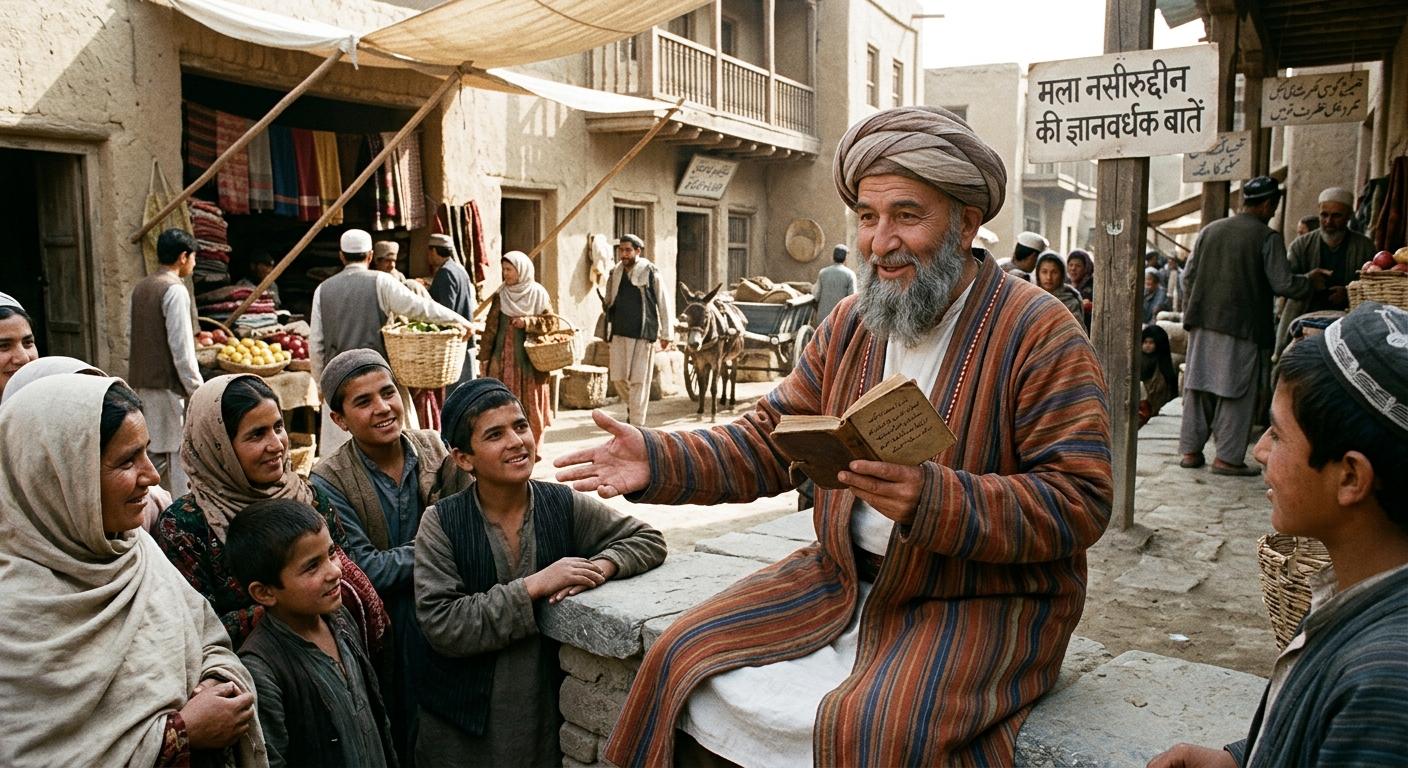
    Mulla Nasrudin was resting under a massive walnut tree in an orchard, looking out at a patch of large watermelons growing nearby on thin, fragile vines.
    He shook his head and murmured, "Oh, Allah, your wisdom is great, but sometimes I wonder about the design of this world! Look at this grand, powerful tree—it produces tiny, insignificant walnuts. And over there, those fragile, trailing vines carry giant, heavy watermelons! Surely it would make much more sense if the big tree grew the big watermelons, and the weak vines held the little nuts."
    Just as he finished his thought, a breeze blew through the orchard. A ripe walnut detached from a high branch, plummeted down, and landed squarely on Nasrudin's bare forehead with a sharp *thwack!*
    Rubbing his sore head, Nasrudin immediately dropped to his knees in prayer. "Forgive me, Allah!" he cried. "I will never question your design again! For if a heavy watermelon had been hanging from that branch instead of a tiny walnut, I would not be alive to tell the story!"
    ---
    ### Key Takeaway
    Nasrudin's tale serves as a classic humorous reminder about **perspective and humility**. It highlights how easy it is to judge a system or design as flawed based on superficial observations, only to realize later that there is a deeper function or balance we hadn't considered. See less
    Day 11 story post Roll no:10 foundation level Mulla Nasrudin was resting under a massive walnut tree in an orchard, looking out at a patch of large watermelons growing nearby on thin, fragile vines. He shook his head and murmured, "Oh, Allah, your wisdom is great, but sometimes I wonder about the design of this world! Look at this grand, powerful tree—it produces tiny, insignificant walnuts. And over there, those fragile, trailing vines carry giant, heavy watermelons! Surely it would make much more sense if the big tree grew the big watermelons, and the weak vines held the little nuts." Just as he finished his thought, a breeze blew through the orchard. A ripe walnut detached from a high branch, plummeted down, and landed squarely on Nasrudin's bare forehead with a sharp *thwack!* Rubbing his sore head, Nasrudin immediately dropped to his knees in prayer. "Forgive me, Allah!" he cried. "I will never question your design again! For if a heavy watermelon had been hanging from that branch instead of a tiny walnut, I would not be alive to tell the story!" --- ### Key Takeaway Nasrudin's tale serves as a classic humorous reminder about **perspective and humility**. It highlights how easy it is to judge a system or design as flawed based on superficial observations, only to realize later that there is a deeper function or balance we hadn't considered. See less
    0 Σχόλια 0 Μοιράστηκε 2160 Views
  • Foundation Level
    Day 23
    Call Maya No:3
    Roll No:007
    Talk with Maya – Micro-Habits That Can Change Your LifeCan small daily actions create big life changes? In this inspiring 5-minute conversation with Maya, we explore the power of micro-habits—simple practices that take only a few moments but can have a lasting impact. From hugging your mom or dad, performing Nafl prayers, and saying Salam to a new person, to marking your progress on a habit tracker, these small steps can help build stronger relationships, deepen faith, and develop positive daily routines.Join Maya as she shares how consistency in small habits can lead to meaningful personal growth, greater happiness, and long-term succes

    Foundation Level Day 23 Call Maya No:3 Roll No:007 Talk with Maya – Micro-Habits That Can Change Your LifeCan small daily actions create big life changes? In this inspiring 5-minute conversation with Maya, we explore the power of micro-habits—simple practices that take only a few moments but can have a lasting impact. From hugging your mom or dad, performing Nafl prayers, and saying Salam to a new person, to marking your progress on a habit tracker, these small steps can help build stronger relationships, deepen faith, and develop positive daily routines.Join Maya as she shares how consistency in small habits can lead to meaningful personal growth, greater happiness, and long-term succes
    0 Σχόλια 0 Μοιράστηκε 845 Views 2
  • Mohsin #RSF8
    Call Annine NO:4
    Class: foundation level
    Made by Me
    rool no:13
    Micro Habits: Small Actions That Create a Better Life

    In a world where people often focus on achieving big goals, it is easy to overlook the power of small daily actions. However, many successful people understand that lasting change does not happen overnight. It begins with simple habits that are practiced consistently. These small actions, often called micro habits, may seem insignificant at first, but when repeated every day, they can have a remarkable impact on our character, relationships, and overall well-being.

    One meaningful micro habit is hugging your mom or dad every day. Parents dedicate their lives to caring for their children, often making countless sacrifices that go unnoticed. A simple hug is a powerful way to express love, gratitude, and appreciation. It takes only a few seconds, yet it can strengthen family bonds and create moments of happiness. In today's busy lives, many people become occupied with school, work, and technology, forgetting to show affection to those who matter most. A daily hug reminds us to cherish our parents and acknowledge their importance in our lives.

    Another valuable micro habit is performing Nafl prayers. While the obligatory prayers are the foundation of a Muslim's worship, Nafl prayers provide an opportunity to grow closer to Allah. Even praying just two extra rak'ahs can bring peace to the heart, increase spiritual awareness, and strengthen one's faith. These voluntary acts of worship demonstrate sincerity and dedication. They help us develop discipline, patience, and gratitude while reminding us that every moment spent in worship has value. By making Nafl prayers a regular part of our routine, we create a stronger connection with our Creator and bring more blessings into our lives.

    A third powerful micro habit is saying Salam to a new person. The greeting "Assalamu Alaikum" carries a beautiful message of peace and goodwill. It is one of the simplest ways to spread kindness and positivity. Greeting someone you do not know can break barriers, create friendships, and make others feel welcomed and respected. In many situation
    Mohsin #RSF8🎓✨ Call Annine NO:4 Class: foundation level 📚 Made by Me 💻🚀 rool no:13 Micro Habits: Small Actions That Create a Better Life In a world where people often focus on achieving big goals, it is easy to overlook the power of small daily actions. However, many successful people understand that lasting change does not happen overnight. It begins with simple habits that are practiced consistently. These small actions, often called micro habits, may seem insignificant at first, but when repeated every day, they can have a remarkable impact on our character, relationships, and overall well-being. One meaningful micro habit is hugging your mom or dad every day. Parents dedicate their lives to caring for their children, often making countless sacrifices that go unnoticed. A simple hug is a powerful way to express love, gratitude, and appreciation. It takes only a few seconds, yet it can strengthen family bonds and create moments of happiness. In today's busy lives, many people become occupied with school, work, and technology, forgetting to show affection to those who matter most. A daily hug reminds us to cherish our parents and acknowledge their importance in our lives. Another valuable micro habit is performing Nafl prayers. While the obligatory prayers are the foundation of a Muslim's worship, Nafl prayers provide an opportunity to grow closer to Allah. Even praying just two extra rak'ahs can bring peace to the heart, increase spiritual awareness, and strengthen one's faith. These voluntary acts of worship demonstrate sincerity and dedication. They help us develop discipline, patience, and gratitude while reminding us that every moment spent in worship has value. By making Nafl prayers a regular part of our routine, we create a stronger connection with our Creator and bring more blessings into our lives. A third powerful micro habit is saying Salam to a new person. The greeting "Assalamu Alaikum" carries a beautiful message of peace and goodwill. It is one of the simplest ways to spread kindness and positivity. Greeting someone you do not know can break barriers, create friendships, and make others feel welcomed and respected. In many situation
    0 Σχόλια 0 Μοιράστηκε 1358 Views 116
  • Prompt:

    Cinematic potrait of ( subject)
    A boy standing in front of the Kaaba during Umrah/Hajj, wearing a white ihram (two pieces of white cloth). He is holding prayer beads in his hand and wearing a smartwatch. The sacred Kaaba with golden details is visible in the background, surrounded by pilgrims in white ihram, under the night sky at Masjid al-Haram, Makkah.

    @highlight
    @highlight
    Prompt: 🤍 Cinematic potrait of ( subject) A boy standing in front of the Kaaba during Umrah/Hajj, wearing a white ihram (two pieces of white cloth). He is holding prayer beads in his hand and wearing a smartwatch. The sacred Kaaba with golden details is visible in the background, surrounded by pilgrims in white ihram, under the night sky at Masjid al-Haram, Makkah. @highlight @highlight
    0 Σχόλια 0 Μοιράστηκε 1186 Views
Αναζήτηση αποτελεσμάτων