• Accl Foundation Level (Rehan School Urdu Bazar Campus)
    Day : 83 Story post no : 11
    Roll no : 17
    Accl task
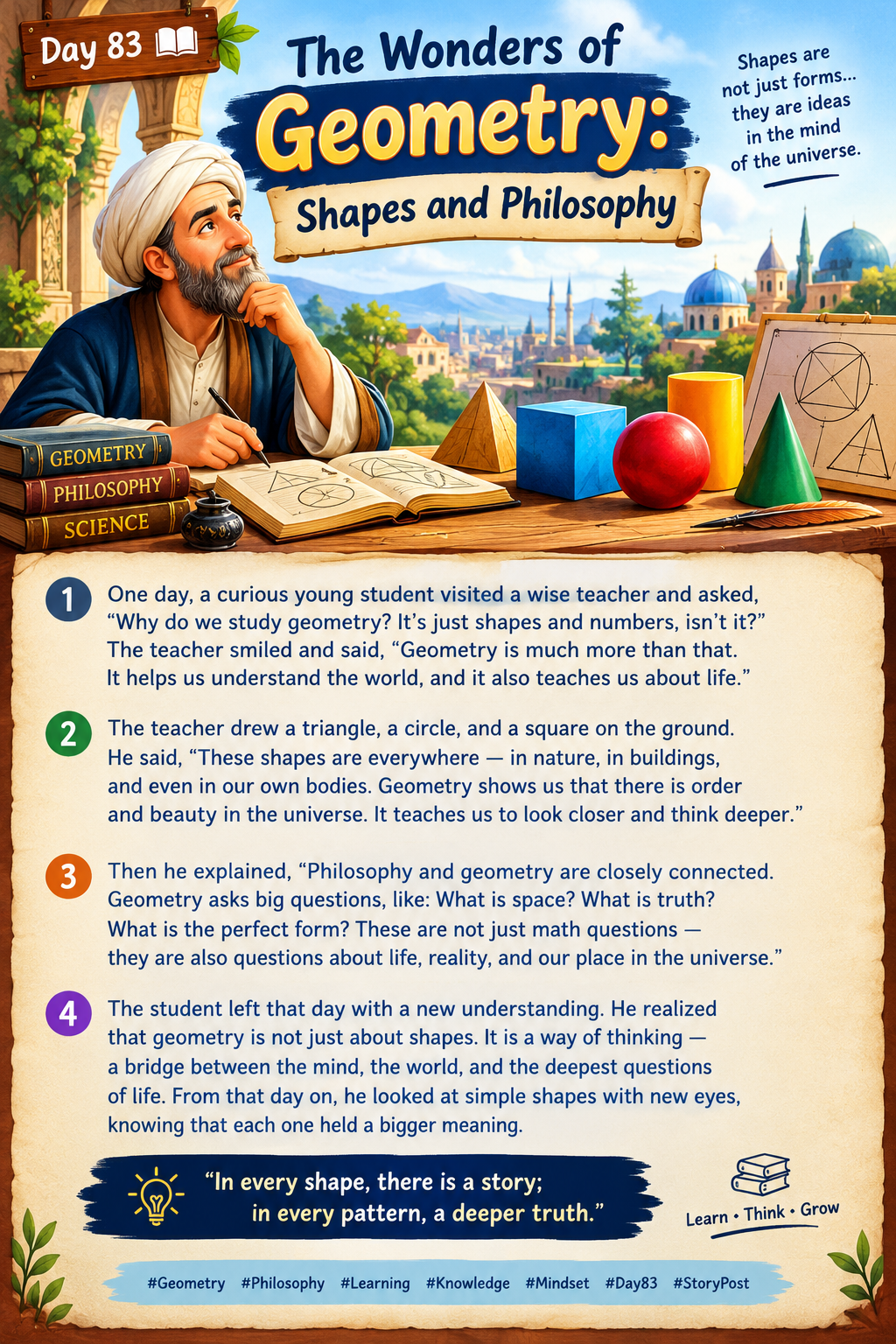
    Here is a beautiful story on The Wonders of Geometry Shapes and Philosophy
    ---
    ### The Language of the Universe
    A long time ago, a young student asked the great philosopher Plato,
    "Master, why do we study shapes? Are they not just lines and circles?"
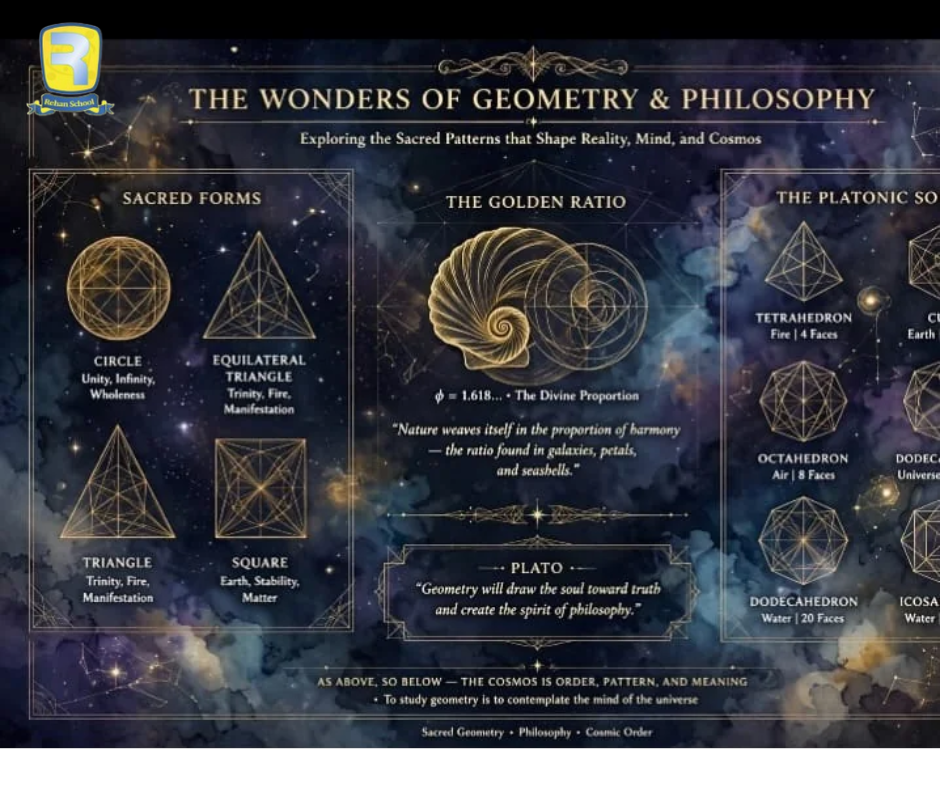
    Plato smiled and drew a Circle in the sand.
    "This Circle," he said, "has no beginning and no end. It teaches us about Unity, Infinity, and Wholeness. Just like life and the soul, it is eternal."
    Then he drew an Equilateral Triangle.
    "This triangle has three equal sides. It represents Trinity, Fire, and Manifestation. It teaches us balance. The mind, the body, and the spirit — all three must be in balance to create something new."
    Next, he drew a Square.
    "This Square stands for Earth, Stability, and Matter. It has four strong corners. It teaches us that to build a strong life, you need a strong foundation."
    The student was amazed. Then Plato showed him the most magical thing — The Golden Ratio, φ = 1.618...
    He showed him a seashell, a flower, and the stars in the sky.
    "Look closely," Plato said. "Nature weaves itself in the proportion of harmony — the same ratio found in galaxies, petals, and seashells. This is the Divine Proportion. It proves that the universe is not random, it is art."
    Finally, he showed him the Platonic Solids — the five sacred shapes that build the entire universe: Tetrahedron (Fire ), Cube (Earth ), Octahedron (Air ), Icosahedron (Water ), and Dodecahedron (Universe ).
    Plato whispered his most famous quote:
    > “Geometry will draw the soul toward truth and create the spirit of philosophy.”
    The student understood. Geometry is not just math. It is the secret language that God used to write the universe.
    And so, the saying goes:
    "As Above, So Below — The Cosmos is Order, Pattern, and Meaning. To study geometry is to contemplate the mind of the universe."

    ### کائنات کی زبان
    بہت پرانے زمانے کی بات ہے، ایک چھوٹے سے شاگرد نے اپنے استاد افلاطون سے پوچھا،
    "استاد، ہم شکلیں کیوں پڑھتے ہیں؟ کیا یہ صرف لکیریں اور گول دائرے نہیں ہیں؟"
    افلاطون مسکرائے اور ریت پر ایک دائرہ بنایا۔
    "بولو، اس دائرے کا کوئی شروع یا ختم ہے؟"
    "نہیں استاد،" شاگرد نے جواب دیا۔
    "بالکل، یہ اکتا، بے انتہا اور مکمل ہونے کا سبق دیتا ہے۔ جیسے ہماری روح، اس کا نہ کوئی آغاز ہے نہ اختتام۔"
    پھر انہوں نے ایک مثلث بنایا۔
    "یہ تین برابر سائیڈ والا ہے۔ یہ دماغ، جسم اور روح کا توازن سکھاتا ہے۔ جب تک تینوں میں توازن نہ ہو، کچھ نیا نہیں بنتا۔"
    اس کے بعد انہوں نے ایک مربع بنایا۔
    "یہ زمین، استحکام اور مضبوطی کی علامت ہے۔ اس کے چار کونے ہیں۔ یہ سکھاتا ہے کہ مضبوط زندگی کے لیے مضبوط بنیاد ضروری ہے۔"
    پھر افلاطون نے اسے سب سے جادوئی چیز دکھائی — گولڈن ریشو، 1.618
    انہوں نے ایک سیپ، ایک پھول اور آسمان کے ستارے دکھائے۔
    "دیکھو، قدرت اسی تناسب سے بنتی ہے۔ یہی تناسب کہکشاؤں میں، پھولوں کی پنکھڑیوں میں اور سیپ میں ہے۔ اس کا مطلب ہے کہ کائنات اتفاق نہیں، بلکہ ایک بہترین فن پارہ ہے۔"
    آخر میں انہوں نے پانچ مقدس شکلیں دکھائیں جو پوری کائنات کو بناتی ہیں: آگ، مٹی، ہوا، پانی اور کائنات۔
    اور افلاطون نے اپنا مشہور قول کہا:
    > "جیومیٹری روح کو سچائی کی طرف کھینچتی ہے اور فلسفے کی روح پیدا کرتی ہے۔"
    تب شاگرد کو سمجھ آیا۔ جیومیٹری صرف ریاضی نہیں، بلکہ وہ زبان ہے جس سے خدا نے اس پوری کائنات کو لکھا ہے۔
    "جیسا اوپر، ویسا نیچے — کائنات نظم، پیٹرن اور معنی کا نام ہے۔ جیومیٹری پڑھنا دراصل کائنات بنانے والے کے ذہن کو سمجھنا ہے۔
    Accl Foundation Level (Rehan School Urdu Bazar Campus) Day : 83 Story post no : 11 Roll no : 17 Accl task Here is a beautiful story on The Wonders of Geometry Shapes and Philosophy ✨📐 --- ### The Language of the Universe A long time ago, a young student asked the great philosopher Plato, "Master, why do we study shapes? Are they not just lines and circles?" Plato smiled and drew a Circle in the sand. ⭕ "This Circle," he said, "has no beginning and no end. It teaches us about Unity, Infinity, and Wholeness. Just like life and the soul, it is eternal." Then he drew an Equilateral Triangle. 🔺 "This triangle has three equal sides. It represents Trinity, Fire, and Manifestation. It teaches us balance. The mind, the body, and the spirit — all three must be in balance to create something new." Next, he drew a Square. ◼️ "This Square stands for Earth, Stability, and Matter. It has four strong corners. It teaches us that to build a strong life, you need a strong foundation." The student was amazed. Then Plato showed him the most magical thing — The Golden Ratio, φ = 1.618... 🐚✨ He showed him a seashell, a flower, and the stars in the sky. "Look closely," Plato said. "Nature weaves itself in the proportion of harmony — the same ratio found in galaxies, petals, and seashells. This is the Divine Proportion. It proves that the universe is not random, it is art." Finally, he showed him the Platonic Solids — the five sacred shapes that build the entire universe: Tetrahedron (Fire 🔥), Cube (Earth 🌍), Octahedron (Air 🌬️), Icosahedron (Water 💧), and Dodecahedron (Universe 🌌). Plato whispered his most famous quote: > “Geometry will draw the soul toward truth and create the spirit of philosophy.” The student understood. Geometry is not just math. It is the secret language that God used to write the universe. And so, the saying goes: "As Above, So Below — The Cosmos is Order, Pattern, and Meaning. To study geometry is to contemplate the mind of the universe." 🌟 ### کائنات کی زبان بہت پرانے زمانے کی بات ہے، ایک چھوٹے سے شاگرد نے اپنے استاد افلاطون سے پوچھا، "استاد، ہم شکلیں کیوں پڑھتے ہیں؟ کیا یہ صرف لکیریں اور گول دائرے نہیں ہیں؟" افلاطون مسکرائے اور ریت پر ایک دائرہ بنایا۔ ⭕ "بولو، اس دائرے کا کوئی شروع یا ختم ہے؟" "نہیں استاد،" شاگرد نے جواب دیا۔ "بالکل، یہ اکتا، بے انتہا اور مکمل ہونے کا سبق دیتا ہے۔ جیسے ہماری روح، اس کا نہ کوئی آغاز ہے نہ اختتام۔" پھر انہوں نے ایک مثلث بنایا۔ 🔺 "یہ تین برابر سائیڈ والا ہے۔ یہ دماغ، جسم اور روح کا توازن سکھاتا ہے۔ جب تک تینوں میں توازن نہ ہو، کچھ نیا نہیں بنتا۔" اس کے بعد انہوں نے ایک مربع بنایا۔ ◼️ "یہ زمین، استحکام اور مضبوطی کی علامت ہے۔ اس کے چار کونے ہیں۔ یہ سکھاتا ہے کہ مضبوط زندگی کے لیے مضبوط بنیاد ضروری ہے۔" پھر افلاطون نے اسے سب سے جادوئی چیز دکھائی — گولڈن ریشو، 1.618 🐚 انہوں نے ایک سیپ، ایک پھول اور آسمان کے ستارے دکھائے۔ "دیکھو، قدرت اسی تناسب سے بنتی ہے۔ یہی تناسب کہکشاؤں میں، پھولوں کی پنکھڑیوں میں اور سیپ میں ہے۔ اس کا مطلب ہے کہ کائنات اتفاق نہیں، بلکہ ایک بہترین فن پارہ ہے۔" آخر میں انہوں نے پانچ مقدس شکلیں دکھائیں جو پوری کائنات کو بناتی ہیں: آگ، مٹی، ہوا، پانی اور کائنات۔ اور افلاطون نے اپنا مشہور قول کہا: > "جیومیٹری روح کو سچائی کی طرف کھینچتی ہے اور فلسفے کی روح پیدا کرتی ہے۔" تب شاگرد کو سمجھ آیا۔ جیومیٹری صرف ریاضی نہیں، بلکہ وہ زبان ہے جس سے خدا نے اس پوری کائنات کو لکھا ہے۔ "جیسا اوپر، ویسا نیچے — کائنات نظم، پیٹرن اور معنی کا نام ہے۔ جیومیٹری پڑھنا دراصل کائنات بنانے والے کے ذہن کو سمجھنا ہے۔
    0 تبصرے 0 شیئرز 317 ویوز
  • RSIF8
    ROLL NO 60
    TASK 32
    CODING 2
    # Tic-Tac-Toe Game (2-Player)
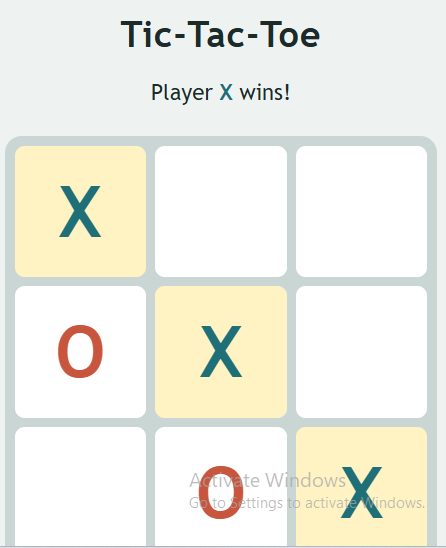
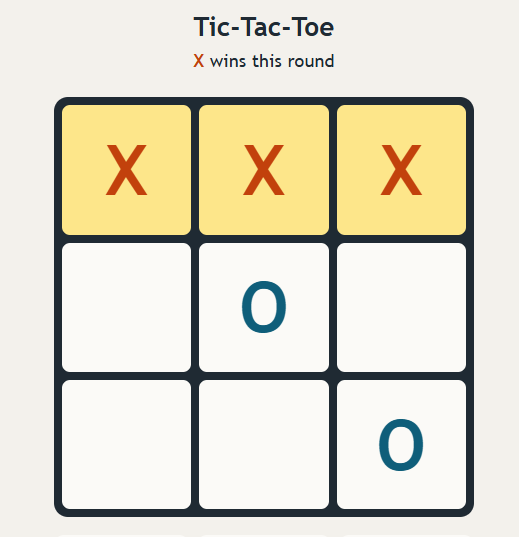
    Enjoy the classic Tic-Tac-Toe game with a friend! This fun and simple two-player game lets you challenge each other on a 3×3 grid. One player uses **X** and the other uses **O**. Take turns placing your marks and try to get three in a row horizontally, vertically, or diagonally to win.
    The game is easy to play, exciting, and perfect for developing logical thinking, strategy, and concentration. If all nine squares are filled and neither player gets three in a row, the game ends in a draw.
    **Play, think, compete, and have fun!** Challenge your friend and see who becomes the Tic-Tac-Toe champion!
    Add clear game featuresInclude simple play instruction
    RSIF8 ROLL NO 60 TASK 32 CODING 2 # Tic-Tac-Toe Game (2-Player) Enjoy the classic Tic-Tac-Toe game with a friend! This fun and simple two-player game lets you challenge each other on a 3×3 grid. One player uses **X** and the other uses **O**. Take turns placing your marks and try to get three in a row horizontally, vertically, or diagonally to win. The game is easy to play, exciting, and perfect for developing logical thinking, strategy, and concentration. If all nine squares are filled and neither player gets three in a row, the game ends in a draw. **Play, think, compete, and have fun!** Challenge your friend and see who becomes the Tic-Tac-Toe champion! Add clear game featuresInclude simple play instruction
    0 تبصرے 0 شیئرز 273 ویوز
  • #rsisb
    Roll no 279
    song post 3
    Foundation level

    **Rawalpindi Blues – The Soul of the City**

    Discover the beautiful spirit of Rawalpindi through *Rawalpindi Blues*, a musical journey filled with emotions, memories, culture, and the unique charm of the city. From its busy streets to its peaceful moments, Rawalpindi has a story to tell.

    This title captures the feelings, experiences, and unforgettable memories connected with the heart of Rawalpindi. Let the music take you on a journey through the city's rhythm and soul.

    Celebrate the beauty, culture, and musical vibes of Rawalpindi!

    \#RawalpindiBlues #Rawalpindi #Music #CityVibes #PakistaniCulture #MusicLovers #Emotions #BeautifulMemories #Pakistan
    #rsisb Roll no 279 song post 3 Foundation level 🎶 **Rawalpindi Blues – The Soul of the City** 💙🏙️ Discover the beautiful spirit of Rawalpindi through *Rawalpindi Blues*, a musical journey filled with emotions, memories, culture, and the unique charm of the city. From its busy streets to its peaceful moments, Rawalpindi has a story to tell. ✨ This title captures the feelings, experiences, and unforgettable memories connected with the heart of Rawalpindi. Let the music take you on a journey through the city's rhythm and soul. 🎧❤️ Celebrate the beauty, culture, and musical vibes of Rawalpindi! 🌆🎵 \#RawalpindiBlues #Rawalpindi #Music #CityVibes #PakistaniCulture #MusicLovers #Emotions #BeautifulMemories #Pakistan 🇵🇰💙
    0 تبصرے 0 شیئرز 431 ویوز 0
  • Roll no 87
    Canva post no: 7
    Task No 44
    Story post topic : "Don’t be pushed around by fears; be led by dreams." — Roy T. Bennett
    **Completed My Coding Task: Tic-Tac-Toe Game (2-Player)!**
    Today I successfully completed my coding task **“Tic-Tac-Toe Game (2-Player)”**. ‍ I created a simple two-player game where players take turns placing X and O on the board. The game checks the moves and identifies the winner or a draw.
    This task helped me improve my coding, problem-solving, logical thinking, and programming skills. I enjoyed building the game and learning how different parts of the code work together to create an interactive experience.
    I’m proud of completing this task and excited to keep learning, coding, and creating more projects!
    #TicTacToe #CodingTask #Programming #Coding #TwoPlayerGame #RehanSchool #Learning #ProblemSolving #ComputerScience #TaskCompleted
    Roll no 87 Canva post no: 7 Task No 44 Story post topic : "Don’t be pushed around by fears; be led by dreams." — Roy T. Bennett 🎮✨ **Completed My Coding Task: Tic-Tac-Toe Game (2-Player)!** ✨🎮 Today I successfully completed my coding task **“Tic-Tac-Toe Game (2-Player)”**. 🧑‍💻❌⭕ I created a simple two-player game where players take turns placing X and O on the board. The game checks the moves and identifies the winner or a draw. 🏆 This task helped me improve my coding, problem-solving, logical thinking, and programming skills. 💻🧠 I enjoyed building the game and learning how different parts of the code work together to create an interactive experience. I’m proud of completing this task and excited to keep learning, coding, and creating more projects! 🚀🔥 #TicTacToe #CodingTask #Programming #Coding #TwoPlayerGame #RehanSchool #Learning #ProblemSolving #ComputerScience #TaskCompleted 🎮💻✨
    0 تبصرے 0 شیئرز 443 ویوز
  • Roll no 87
    Canva post no: 6
    Task No 43
    Story post topic : "Opportunities are usually disguised as hard work." — Ann Landers
    **Completed My Coding Task: Tic-Tac-Toe Game (2-Player)!**
    Today I successfully completed my coding task **“Tic-Tac-Toe Game (2-Player)”**. ‍ I created a simple two-player game where players take turns placing X and O on the board. The game checks the moves and identifies the winner or a draw.
    This task helped me improve my coding, problem-solving, logical thinking, and programming skills. I enjoyed building the game and learning how different parts of the code work together to create an interactive experience.
    I’m proud of completing this task and excited to keep learning, coding, and creating more projects!
    #TicTacToe #CodingTask #Programming #Coding #TwoPlayerGame #RehanSchool #Learning #ProblemSolving #ComputerScience #TaskCompleted
    Roll no 87 Canva post no: 6 Task No 43 Story post topic : "Opportunities are usually disguised as hard work." — Ann Landers 🎮✨ **Completed My Coding Task: Tic-Tac-Toe Game (2-Player)!** ✨🎮 Today I successfully completed my coding task **“Tic-Tac-Toe Game (2-Player)”**. 🧑‍💻❌⭕ I created a simple two-player game where players take turns placing X and O on the board. The game checks the moves and identifies the winner or a draw. 🏆 This task helped me improve my coding, problem-solving, logical thinking, and programming skills. 💻🧠 I enjoyed building the game and learning how different parts of the code work together to create an interactive experience. I’m proud of completing this task and excited to keep learning, coding, and creating more projects! 🚀🔥 #TicTacToe #CodingTask #Programming #Coding #TwoPlayerGame #RehanSchool #Learning #ProblemSolving #ComputerScience #TaskCompleted 🎮💻✨
    0 تبصرے 0 شیئرز 436 ویوز
  • Roll no 87
    Canva post no: 5
    Task No 16
    Story post topic :"Believe in the impossible" — Charles Kingsleigh
    **Completed My Coding Task: Tic-Tac-Toe Game (2-Player)!**
    Today I successfully completed my coding task **“Tic-Tac-Toe Game (2-Player)”**. ‍ I created a simple two-player game where players take turns placing X and O on the board. The game checks the moves and identifies the winner or a draw.
    This task helped me improve my coding, problem-solving, logical thinking, and programming skills. I enjoyed building the game and learning how different parts of the code work together to create an interactive experience.
    I’m proud of completing this task and excited to keep learning, coding, and creating more projects!
    #TicTacToe #CodingTask #Programming #Coding #TwoPlayerGame #RehanSchool #Learning #ProblemSolving #ComputerScience #TaskCompleted
    Roll no 87 Canva post no: 5 Task No 16 Story post topic :"Believe in the impossible" — Charles Kingsleigh 🎮✨ **Completed My Coding Task: Tic-Tac-Toe Game (2-Player)!** ✨🎮 Today I successfully completed my coding task **“Tic-Tac-Toe Game (2-Player)”**. 🧑‍💻❌⭕ I created a simple two-player game where players take turns placing X and O on the board. The game checks the moves and identifies the winner or a draw. 🏆 This task helped me improve my coding, problem-solving, logical thinking, and programming skills. 💻🧠 I enjoyed building the game and learning how different parts of the code work together to create an interactive experience. I’m proud of completing this task and excited to keep learning, coding, and creating more projects! 🚀🔥 #TicTacToe #CodingTask #Programming #Coding #TwoPlayerGame #RehanSchool #Learning #ProblemSolving #ComputerScience #TaskCompleted 🎮💻✨
    0 تبصرے 0 شیئرز 364 ویوز
  • RSIF8
    Roll No : 87
    Song : 5
    Song : The Human Body: A Marvel of Creation
    **Completed My Coding Task: Tic-Tac-Toe Game (2-Player)!**
    Today I successfully completed my coding task **“Tic-Tac-Toe Game (2-Player)”**. ‍ I created a simple two-player game where players take turns placing X and O on the board. The game checks the moves and identifies the winner or a draw.
    This task helped me improve my coding, problem-solving, logical thinking, and programming skills. I enjoyed building the game and learning how different parts of the code work together to create an interactive experience.
    I’m proud of completing this task and excited to keep learning, coding, and creating more projects!
    #TicTacToe #CodingTask #Programming #Coding #TwoPlayerGame #RehanSchool #Learning #ProblemSolving #ComputerScience #TaskCompleted
    RSIF8 Roll No : 87 Song : 5 Song : The Human Body: A Marvel of Creation 🎮✨ **Completed My Coding Task: Tic-Tac-Toe Game (2-Player)!** ✨🎮 Today I successfully completed my coding task **“Tic-Tac-Toe Game (2-Player)”**. 🧑‍💻❌⭕ I created a simple two-player game where players take turns placing X and O on the board. The game checks the moves and identifies the winner or a draw. 🏆 This task helped me improve my coding, problem-solving, logical thinking, and programming skills. 💻🧠 I enjoyed building the game and learning how different parts of the code work together to create an interactive experience. I’m proud of completing this task and excited to keep learning, coding, and creating more projects! 🚀🔥 #TicTacToe #CodingTask #Programming #Coding #TwoPlayerGame #RehanSchool #Learning #ProblemSolving #ComputerScience #TaskCompleted 🎮💻✨
    0 تبصرے 0 شیئرز 362 ویوز 7
  • RSIF8
    ROLL NO:13
    CLASS: FOUNDATION LEVEL
    CODING TASK NO:12

    This is a two-player Tic-Tac-Toe game in one HTML file. Two people share the same screen and take turns clicking squares on a 3×3 grid. Player X always goes first in the first round. The game announces whose turn it is, ends as soon as someone wins or the board fills up, and keeps a running score across rounds.

    HTML structure

    The page has five parts:

    A title (<h1>).
    A status line that shows whose turn it is or who won. It is marked aria-live="polite", so screen readers announce each change.
    An empty <div id="board">, which JavaScript fills with nine buttons.
    A score area with three counters: X wins, draws and O wins.
    A “New game” button.

    The cells are real <button> elements rather than plain divs, so they work with the keyboard (Tab to move, Enter or Space to play) and with screen readers.

    CSS styling
    Board layout: CSS Grid with three equal columns builds the board. The board is min(90vw, 360px) wide and square, so it fits small phone screens and doesn’t grow too large on desktop.
    Colors: All colors are CSS variables on :root. X is teal and O is a warm orange-red, so the two players are easy to tell apart. The page also has a dark theme that follows the device’s light or dark setting.
    Cell states: Cells change background on hover. The winning three cells turn pale yellow. Cells are disabled once filled, and a visible focus outline helps keyboard users.
    Sizing: The X and O symbols scale with the screen using clamp(), so they stay readable on any device.
    JavaScript logic

    1. Winning lines. The LINES array lists the eight ways to win. The cells are numbered 0 to 8 from the top-left, row by row:

    Rows: 0-1-2, 3-4-5, 6-7-8
    Columns: 0-3-6, 1-4-7, 2-5-8
    Diagonals: 0-4-8 and 2-4-6

    2. Setup. A loop creates the nine buttons, gives each an accessible label (“Cell 1” to “Cell 9”) and attaches a click handler that calls play(i).

    3. newGame(). It resets the board array to nine empty slots, clears the cells, re-enables them and shows whose turn it is. It also alternates who starts, so X starts the first round, O the second, and so on. This keeps the game fair over many rounds.
    RSIF8 ROLL NO:13 CLASS: FOUNDATION LEVEL CODING TASK NO:12 This is a two-player Tic-Tac-Toe game in one HTML file. Two people share the same screen and take turns clicking squares on a 3×3 grid. Player X always goes first in the first round. The game announces whose turn it is, ends as soon as someone wins or the board fills up, and keeps a running score across rounds. HTML structure The page has five parts: A title (<h1>). A status line that shows whose turn it is or who won. It is marked aria-live="polite", so screen readers announce each change. An empty <div id="board">, which JavaScript fills with nine buttons. A score area with three counters: X wins, draws and O wins. A “New game” button. The cells are real <button> elements rather than plain divs, so they work with the keyboard (Tab to move, Enter or Space to play) and with screen readers. CSS styling Board layout: CSS Grid with three equal columns builds the board. The board is min(90vw, 360px) wide and square, so it fits small phone screens and doesn’t grow too large on desktop. Colors: All colors are CSS variables on :root. X is teal and O is a warm orange-red, so the two players are easy to tell apart. The page also has a dark theme that follows the device’s light or dark setting. Cell states: Cells change background on hover. The winning three cells turn pale yellow. Cells are disabled once filled, and a visible focus outline helps keyboard users. Sizing: The X and O symbols scale with the screen using clamp(), so they stay readable on any device. JavaScript logic 1. Winning lines. The LINES array lists the eight ways to win. The cells are numbered 0 to 8 from the top-left, row by row: Rows: 0-1-2, 3-4-5, 6-7-8 Columns: 0-3-6, 1-4-7, 2-5-8 Diagonals: 0-4-8 and 2-4-6 2. Setup. A loop creates the nine buttons, gives each an accessible label (“Cell 1” to “Cell 9”) and attaches a click handler that calls play(i). 3. newGame(). It resets the board array to nine empty slots, clears the cells, re-enables them and shows whose turn it is. It also alternates who starts, so X starts the first round, O the second, and so on. This keeps the game fair over many rounds.
    0 تبصرے 0 شیئرز 832 ویوز
  • ACCL Foundation Level (Rehan School Urdu Bazar Campus)
    Roll No. 16
    Day: 83
    Story in English (4 Paragraphs)
    Paragraph 1: The Curious Student
    One day, a curious young student visited a wise teacher and asked, "Why do we study geometry? Is it only about shapes, lines, and numbers?" The teacher smiled and replied, "Geometry is much more than mathematics. It helps us understand the world around us and teaches us to think carefully. Every shape has a purpose, and every pattern tells us something interesting about life."
    Paragraph 2: The Beauty of Shapes
    The teacher drew a circle, a triangle, and a square on the ground. He explained that these shapes could be found everywhere—in nature, buildings, art, and even in the stars. A circle represents unity, a triangle shows strength, and a square represents balance. Geometry helps us discover the beauty, order, and harmony hidden in the world around us.
    Paragraph 3: Geometry and Philosophy
    The teacher continued, "Geometry and philosophy are closely connected. Geometry teaches us about space, patterns, and measurements, while philosophy encourages us to ask deeper questions about life and the universe. When we study shapes, we also learn to observe, imagine, and understand things from different perspectives. Mathematics helps our minds become more logical and creative."
    Paragraph 4: A Lesson for Life
    The student listened carefully and finally understood the importance of geometry. He realized that geometry was not just about drawing shapes or solving mathematical problems. It was also a way to explore the beauty and mysteries of the universe. From that day onward, he looked at the world differently, discovering that even the simplest shapes could carry wonderful ideas and meanings.
    Moral of the Story
    "Geometry is not just the study of shapes; it is the art of discovering beauty, balance, and wisdom in the world."
    Hashtags
    #Day83 #Geometry #WondersOfGeometry #ShapesAndPhilosophy #Mathematics #Science #Education #Knowledge #Learning #Philosophy #CreativeThinking #Wisdom #StoryPost #EducationalStories #LearnEveryday
    अब मुझे अब चार पैराग्राफ इंग्लिश और चार पैराग्राफ उर्दू के भी लिख दो.
    Day 83 Story Post
    The Wonders of Geometry: Shapes and Philosophy
    English Story (4 Paragraphs)
    Paragraph 1: The Curious Student
    Once upon a time, there was a young student who loved learning new things. One day, he visited a wise teacher and asked, "Why is geometry so important? Why do we study circles, triangles, squares, and other shapes?" The teacher smiled and explained that geometry was not only about shapes and numbers but also about understanding the world around us.
    Paragraph 2: The Magic of Shapes
    The teacher took a piece of paper and drew a circle, a triangle, and a square. He explained that these shapes could be found everywhere. Circles appeared in the sun and moon, triangles were used in bridges and buildings, and squares could be seen in windows and floors. The student was surprised to discover that geometry was an important part of everyday life.
    Paragraph 3: Geometry and Philosophy
    The teacher then explained that geometry and philosophy were connected in many interesting ways. Geometry teaches us about patterns, measurements, space, and balance, while philosophy encourages us to think deeply and ask questions about life. Both subjects help people develop their minds, improve their thinking, and understand the beauty and order of the universe.
    Paragraph 4: The Greatest Lesson
    The student thanked his teacher for sharing such valuable knowledge. He realized that geometry was much more than drawing shapes and solving mathematical problems. It was a wonderful way to understand nature, architecture, science, and the world. From that day forward, he looked at every shape with curiosity and understood that even the simplest things could hold great meaning.
    اردو کہانی (4 پیراگراف)
    پیراگراف 1: تجسس رکھنے والا طالب علم
    ایک زمانے کی بات ہے، ایک نوجوان طالب علم تھا جسے نئی نئی چیزیں سیکھنے کا بہت شوق تھا۔ ایک دن وہ ایک دانا استاد کے پاس گیا اور پوچھنے لگا، "ہمارے لیے جیومیٹری اتنی اہم کیوں ہے؟ ہم دائرے، مثلث، مربع اور دوسری اشکال کیوں پڑھتے ہیں؟" استاد مسکرائے اور سمجھایا کہ جیومیٹری صرف اشکال اور اعداد کا علم نہیں بلکہ اپنے اردگرد کی دنیا کو سمجھنے کا ایک خوبصورت ذریعہ بھی ہے۔
    پیراگراف 2: اشکال کا جادو
    استاد نے کاغذ کا ایک ٹکڑا لیا اور اس پر ایک دائرہ، ایک مثلث اور ایک مربع بنایا۔ انہوں نے بتایا کہ یہ اشکال ہمیں ہر جگہ نظر آتی ہیں۔ سورج اور چاند میں دائرے کی شکل دکھائی دیتی ہے، پلوں اور عمارتوں میں مثلث استعمال ہوتا ہے، جبکہ کھڑکیوں اور فرش پر مربع نظر آتے ہیں۔ طالب علم یہ جان کر حیران رہ گیا کہ جیومیٹری ہماری روزمرہ زندگی کا ایک اہم حصہ ہے۔
    پیراگراف 3: جیومیٹری اور فلسفہ
    استاد نے مزید بتایا کہ جیومیٹری اور فلسفے کا آپس میں گہرا تعلق ہے۔ جیومیٹری ہمیں نمونوں، پیمائش، جگہ اور توازن کے بارے میں سکھاتی ہے، جبکہ فلسفہ ہمیں زندگی کے بارے میں گہرائی سے سوچنے اور سوالات کرنے کی ترغیب دیتا ہے۔ یہ دونوں علوم ہماری سوچ کو بہتر بناتے ہیں اور ہمیں کائنات کی خوبصورتی اور ترتیب کو سمجھنے میں مدد دیتے ہیں۔
    پیراگراف 4: سب سے بڑا سبق
    طالب علم نے اپنے استاد کا شکریہ ادا کیا اور اس قیمتی علم کو سمجھ کر بہت خوش ہوا۔ اسے معلوم ہوا کہ جیومیٹری صرف اشکال بنانے اور ریاضی کے سوال حل کرنے کا نام نہیں ہے بلکہ یہ قدرت، عمارتوں، سائنس اور دنیا کو سمجھنے کا ایک بہترین ذریعہ ہے۔ اس دن کے بعد وہ ہر شکل کو نئی نظر سے دیکھنے لگا اور سمجھ گیا کہ چھوٹی سے چھوٹی چیز میں بھی کوئی نہ کوئی خوبصورت معنی چھپا ہوتا ہے۔
    Moral / سبق
    English: Geometry teaches us to discover beauty, balance, creativity, and wisdom in the world.
    اردو: جیومیٹری ہمیں دنیا میں خوبصورتی، توازن، تخلیقی صلاحیت اور دانائی تلاش کرنا سکھاتی ہے۔
    Hashtags
    #Day83 #Geometry #Philosophy #Shapes #Mathematics #Education #Knowledge #Learning #Science #Wisdom #StoryPost #علم #جیومیٹری #تعلیم #اردو_کہانی See less See less
    ACCL Foundation Level (Rehan School Urdu Bazar Campus) Roll No. 16 Day: 83 Story in English (4 Paragraphs) Paragraph 1: The Curious Student One day, a curious young student visited a wise teacher and asked, "Why do we study geometry? Is it only about shapes, lines, and numbers?" The teacher smiled and replied, "Geometry is much more than mathematics. It helps us understand the world around us and teaches us to think carefully. Every shape has a purpose, and every pattern tells us something interesting about life." Paragraph 2: The Beauty of Shapes The teacher drew a circle, a triangle, and a square on the ground. He explained that these shapes could be found everywhere—in nature, buildings, art, and even in the stars. A circle represents unity, a triangle shows strength, and a square represents balance. Geometry helps us discover the beauty, order, and harmony hidden in the world around us. Paragraph 3: Geometry and Philosophy The teacher continued, "Geometry and philosophy are closely connected. Geometry teaches us about space, patterns, and measurements, while philosophy encourages us to ask deeper questions about life and the universe. When we study shapes, we also learn to observe, imagine, and understand things from different perspectives. Mathematics helps our minds become more logical and creative." Paragraph 4: A Lesson for Life The student listened carefully and finally understood the importance of geometry. He realized that geometry was not just about drawing shapes or solving mathematical problems. It was also a way to explore the beauty and mysteries of the universe. From that day onward, he looked at the world differently, discovering that even the simplest shapes could carry wonderful ideas and meanings. ✨ Moral of the Story "Geometry is not just the study of shapes; it is the art of discovering beauty, balance, and wisdom in the world." 🏷️ Hashtags #Day83 #Geometry #WondersOfGeometry #ShapesAndPhilosophy #Mathematics #Science #Education #Knowledge #Learning #Philosophy #CreativeThinking #Wisdom #StoryPost #EducationalStories #LearnEveryday अब मुझे अब चार पैराग्राफ इंग्लिश और चार पैराग्राफ उर्दू के भी लिख दो. Day 83 📖 Story Post The Wonders of Geometry: Shapes and Philosophy 🇬🇧 English Story (4 Paragraphs) Paragraph 1: The Curious Student Once upon a time, there was a young student who loved learning new things. One day, he visited a wise teacher and asked, "Why is geometry so important? Why do we study circles, triangles, squares, and other shapes?" The teacher smiled and explained that geometry was not only about shapes and numbers but also about understanding the world around us. Paragraph 2: The Magic of Shapes The teacher took a piece of paper and drew a circle, a triangle, and a square. He explained that these shapes could be found everywhere. Circles appeared in the sun and moon, triangles were used in bridges and buildings, and squares could be seen in windows and floors. The student was surprised to discover that geometry was an important part of everyday life. Paragraph 3: Geometry and Philosophy The teacher then explained that geometry and philosophy were connected in many interesting ways. Geometry teaches us about patterns, measurements, space, and balance, while philosophy encourages us to think deeply and ask questions about life. Both subjects help people develop their minds, improve their thinking, and understand the beauty and order of the universe. Paragraph 4: The Greatest Lesson The student thanked his teacher for sharing such valuable knowledge. He realized that geometry was much more than drawing shapes and solving mathematical problems. It was a wonderful way to understand nature, architecture, science, and the world. From that day forward, he looked at every shape with curiosity and understood that even the simplest things could hold great meaning. 🇵🇰 اردو کہانی (4 پیراگراف) پیراگراف 1: تجسس رکھنے والا طالب علم ایک زمانے کی بات ہے، ایک نوجوان طالب علم تھا جسے نئی نئی چیزیں سیکھنے کا بہت شوق تھا۔ ایک دن وہ ایک دانا استاد کے پاس گیا اور پوچھنے لگا، "ہمارے لیے جیومیٹری اتنی اہم کیوں ہے؟ ہم دائرے، مثلث، مربع اور دوسری اشکال کیوں پڑھتے ہیں؟" استاد مسکرائے اور سمجھایا کہ جیومیٹری صرف اشکال اور اعداد کا علم نہیں بلکہ اپنے اردگرد کی دنیا کو سمجھنے کا ایک خوبصورت ذریعہ بھی ہے۔ پیراگراف 2: اشکال کا جادو استاد نے کاغذ کا ایک ٹکڑا لیا اور اس پر ایک دائرہ، ایک مثلث اور ایک مربع بنایا۔ انہوں نے بتایا کہ یہ اشکال ہمیں ہر جگہ نظر آتی ہیں۔ سورج اور چاند میں دائرے کی شکل دکھائی دیتی ہے، پلوں اور عمارتوں میں مثلث استعمال ہوتا ہے، جبکہ کھڑکیوں اور فرش پر مربع نظر آتے ہیں۔ طالب علم یہ جان کر حیران رہ گیا کہ جیومیٹری ہماری روزمرہ زندگی کا ایک اہم حصہ ہے۔ پیراگراف 3: جیومیٹری اور فلسفہ استاد نے مزید بتایا کہ جیومیٹری اور فلسفے کا آپس میں گہرا تعلق ہے۔ جیومیٹری ہمیں نمونوں، پیمائش، جگہ اور توازن کے بارے میں سکھاتی ہے، جبکہ فلسفہ ہمیں زندگی کے بارے میں گہرائی سے سوچنے اور سوالات کرنے کی ترغیب دیتا ہے۔ یہ دونوں علوم ہماری سوچ کو بہتر بناتے ہیں اور ہمیں کائنات کی خوبصورتی اور ترتیب کو سمجھنے میں مدد دیتے ہیں۔ پیراگراف 4: سب سے بڑا سبق طالب علم نے اپنے استاد کا شکریہ ادا کیا اور اس قیمتی علم کو سمجھ کر بہت خوش ہوا۔ اسے معلوم ہوا کہ جیومیٹری صرف اشکال بنانے اور ریاضی کے سوال حل کرنے کا نام نہیں ہے بلکہ یہ قدرت، عمارتوں، سائنس اور دنیا کو سمجھنے کا ایک بہترین ذریعہ ہے۔ اس دن کے بعد وہ ہر شکل کو نئی نظر سے دیکھنے لگا اور سمجھ گیا کہ چھوٹی سے چھوٹی چیز میں بھی کوئی نہ کوئی خوبصورت معنی چھپا ہوتا ہے۔ ✨ Moral / سبق English: Geometry teaches us to discover beauty, balance, creativity, and wisdom in the world. اردو: جیومیٹری ہمیں دنیا میں خوبصورتی، توازن، تخلیقی صلاحیت اور دانائی تلاش کرنا سکھاتی ہے۔ 🏷️ Hashtags #Day83 #Geometry #Philosophy #Shapes #Mathematics #Education #Knowledge #Learning #Science #Wisdom #StoryPost #علم #جیومیٹری #تعلیم #اردو_کہانی See less See less
    0 تبصرے 0 شیئرز 2422 ویوز
  • **Roll No: 2**
    **Batch: 14**
    **Book: ACCL**
    **Task No: 160**

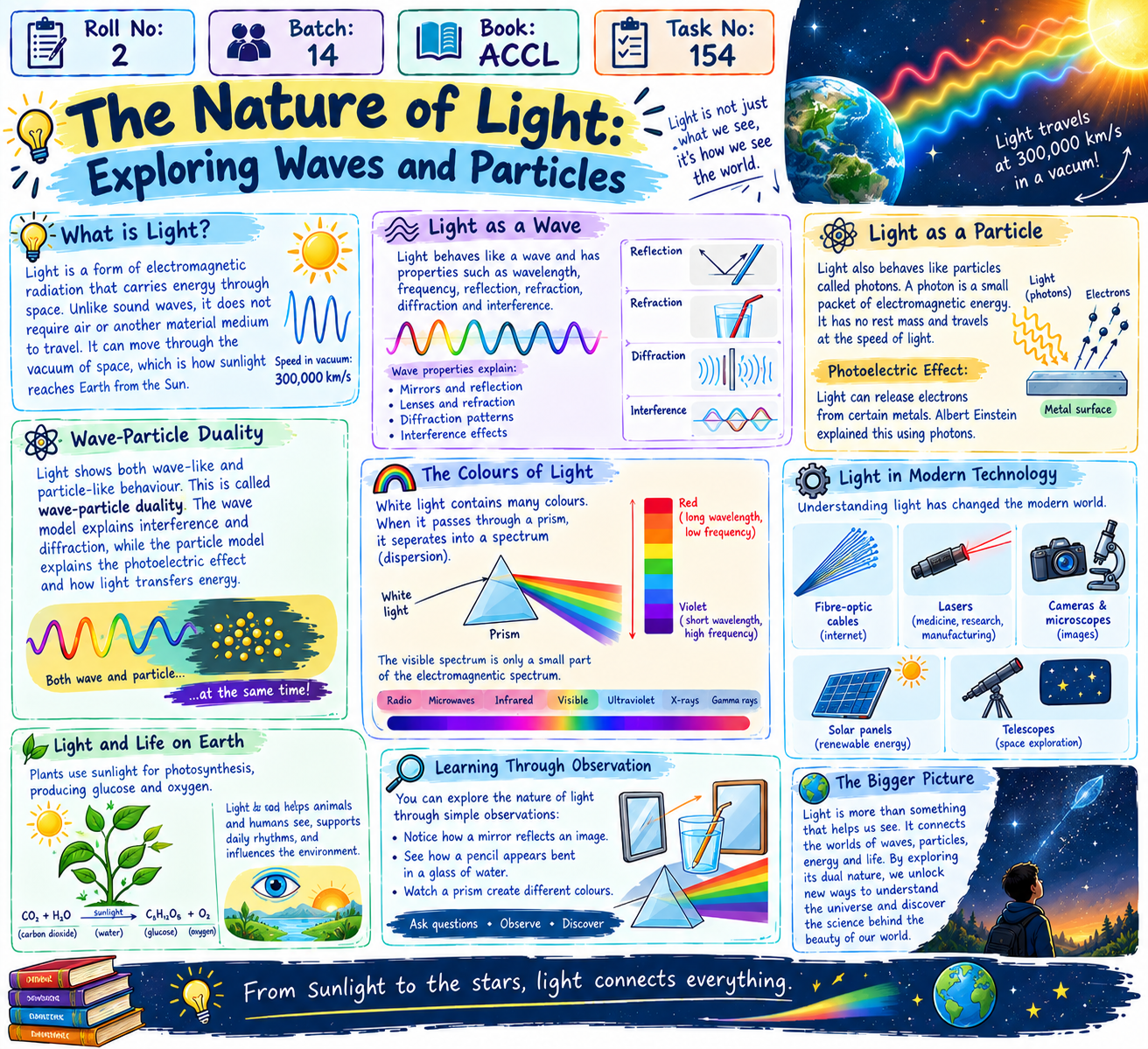
    # The Nature of Light: Exploring Waves and Particles

    Have you ever wondered how we see the colorful world around us? From the bright sunshine in the morning to the glowing stars at night, light plays an essential role in our lives. It allows us to see objects, helps plants grow, and makes many modern technologies possible. But what exactly is light? Is it a wave, a particle, or something even more fascinating?

    **Light is a form of electromagnetic radiation that carries energy through space.** Unlike sound waves, light does not require air or another material medium to travel. It can move through the vacuum of space, which is how sunlight reaches Earth from the Sun. In a vacuum, light travels at approximately 300,000 kilometres per second, making it one of the fastest phenomena in nature.

    ## Light as a Wave

    For many years, scientists studied light and discovered that it behaves like a wave. Light waves have properties such as wavelength, frequency, reflection, refraction, diffraction, and interference. These properties help explain many everyday optical phenomena.

    **Reflection** occurs when light bounces off a surface. A mirror is a familiar example because it reflects light and allows us to see our image. **Refraction** happens when light changes direction as it passes from one transparent material into another, such as from air into water. This is why a straw placed in a glass of water may appear bent.

    Light can also spread out through a process called diffraction and produce patterns through interference. These wave properties provide important evidence of the wave nature of light. Scientists use them to understand lenses, microscopes, telescopes, and many other optical instruments.

    ## Light as a Particle

    Light also behaves in ways that can be explained by particles called **photons**. A photon is a small packet, or quantum, of electromagnetic energy. Photons have no rest mass and travel at the speed of light in a vacuum.

    One important discovery was the photoelectric effect. Scientists observed that when light of a suitable frequency shines on certain metals, it can cause electrons to be released. Albert Einstein explained this phenomenon by showing that light transfers energy in individual packets called photons. This discovery helped establish the foundation of quantum physics.

    The particle model explains how light interacts with matter in processes such as the photoelectric effect and the absorption and emission of energy by atoms.

    ## Wave-Particle Duality

    One of the most fascinating discoveries in physics is that light shows both wave-like and particle-like behaviour. This idea is known as **wave-particle duality**.

    Light does not behave like an ordinary water wave or a tiny solid ball. Instead, its behaviour depends on the type of experiment and how it interacts with matter. The wave description helps explain interference and diffraction, while the photon description explains how light transfers energy in individual amounts.

    This discovery changed the way scientists understand the universe and became an important part of quantum mechanics.

    ## The Colours of Light

    White light may look simple, but it contains many different colours. When white light passes through a glass prism, it separates into a spectrum of colours: red, orange, yellow, green, blue, indigo, and violet. This process is called **dispersion**.

    Each colour has a different wavelength and frequency. Red light has a longer wavelength than violet light, while violet light has a higher frequency. The visible spectrum is only a small part of the electromagnetic spectrum, which also includes radio waves, microwaves, infrared radiation, ultraviolet radiation, X-rays, and gamma rays.

    ## Light in Modern Technology

    The study of light has transformed the modern world. Fibre-optic cables use light to transmit information over long distances, supporting internet communication and global connectivity. Lasers are used in medical equipment, scientific research, manufacturing, and barcode scanners.

    Cameras and microscopes use lenses to control light and produce images. Solar panels convert energy from sunlight into electrical energy, while telescopes help scientists observe distant stars and galaxies. These technologies demonstrate how understanding light can improve everyday life and expand human knowledge.

    ## Light and Life on Earth

    Light is essential for many living organisms. Green plants use sunlight during photosynthesis to produce glucose from water and carbon dioxide, releasing oxygen as a by-product. This process supports food chains and helps maintain the balance of gases in Earth's atmosphere.

    Light also helps animals and humans understand their surroundings through vision. Many organisms use natural light patterns to regulate daily activities, while sunlight influences environmental conditions and the rhythms of life.

    ## Learning Through Observation

    You can explore the nature of light through simple observations. Notice how a mirror reflects an image, how a pencil appears bent in a glass of water, or how sunlight passing through a prism produces different colours. These examples connect scientific ideas with experiences from everyday life.

    By asking questions, making observations, and studying experiments, we can understand how light behaves and why it is so important in science.

    **Light is more than something that helps us see; it is a fascinating phenomenon that connects the worlds of waves, particles, energy, and life. By exploring its dual nature, we unlock new ways to understand the universe and discover the science behind the beauty of our world. **

    \#NatureOfLight #WavesAndParticles #Physics #QuantumPhysics #ElectromagneticWaves #Science #ACCL #Batch14 #Task154
    **Roll No: 2** **Batch: 14** **Book: ACCL** **Task No: 160** # 🌈💡 The Nature of Light: Exploring Waves and Particles 🔬🌊 Have you ever wondered how we see the colorful world around us? 🌍 From the bright sunshine in the morning to the glowing stars at night, light plays an essential role in our lives. It allows us to see objects, helps plants grow, and makes many modern technologies possible. But what exactly is light? Is it a wave, a particle, or something even more fascinating? ✨ **Light is a form of electromagnetic radiation that carries energy through space.** Unlike sound waves, light does not require air or another material medium to travel. It can move through the vacuum of space, which is how sunlight reaches Earth from the Sun. In a vacuum, light travels at approximately 300,000 kilometres per second, making it one of the fastest phenomena in nature. ☀️🚀 ## 🌊 Light as a Wave For many years, scientists studied light and discovered that it behaves like a wave. Light waves have properties such as wavelength, frequency, reflection, refraction, diffraction, and interference. These properties help explain many everyday optical phenomena. 🌈 **Reflection** occurs when light bounces off a surface. A mirror is a familiar example because it reflects light and allows us to see our image. **Refraction** happens when light changes direction as it passes from one transparent material into another, such as from air into water. This is why a straw placed in a glass of water may appear bent. 🪞💧 Light can also spread out through a process called diffraction and produce patterns through interference. These wave properties provide important evidence of the wave nature of light. Scientists use them to understand lenses, microscopes, telescopes, and many other optical instruments. 🔭🔬 ## ⚛️ Light as a Particle Light also behaves in ways that can be explained by particles called **photons**. A photon is a small packet, or quantum, of electromagnetic energy. Photons have no rest mass and travel at the speed of light in a vacuum. ⚡ One important discovery was the photoelectric effect. Scientists observed that when light of a suitable frequency shines on certain metals, it can cause electrons to be released. Albert Einstein explained this phenomenon by showing that light transfers energy in individual packets called photons. This discovery helped establish the foundation of quantum physics. 🧪 The particle model explains how light interacts with matter in processes such as the photoelectric effect and the absorption and emission of energy by atoms. ## 🔬 Wave-Particle Duality One of the most fascinating discoveries in physics is that light shows both wave-like and particle-like behaviour. This idea is known as **wave-particle duality**. 🌌 Light does not behave like an ordinary water wave or a tiny solid ball. Instead, its behaviour depends on the type of experiment and how it interacts with matter. The wave description helps explain interference and diffraction, while the photon description explains how light transfers energy in individual amounts. This discovery changed the way scientists understand the universe and became an important part of quantum mechanics. ## 🌈 The Colours of Light White light may look simple, but it contains many different colours. When white light passes through a glass prism, it separates into a spectrum of colours: red, orange, yellow, green, blue, indigo, and violet. This process is called **dispersion**. 🌈 Each colour has a different wavelength and frequency. Red light has a longer wavelength than violet light, while violet light has a higher frequency. The visible spectrum is only a small part of the electromagnetic spectrum, which also includes radio waves, microwaves, infrared radiation, ultraviolet radiation, X-rays, and gamma rays. ## 📡 Light in Modern Technology The study of light has transformed the modern world. Fibre-optic cables use light to transmit information over long distances, supporting internet communication and global connectivity. 💻🌐 Lasers are used in medical equipment, scientific research, manufacturing, and barcode scanners. Cameras and microscopes use lenses to control light and produce images. Solar panels convert energy from sunlight into electrical energy, while telescopes help scientists observe distant stars and galaxies. These technologies demonstrate how understanding light can improve everyday life and expand human knowledge. 🔭🔋 ## 🌱 Light and Life on Earth Light is essential for many living organisms. Green plants use sunlight during photosynthesis to produce glucose from water and carbon dioxide, releasing oxygen as a by-product. This process supports food chains and helps maintain the balance of gases in Earth's atmosphere. 🌿☀️ Light also helps animals and humans understand their surroundings through vision. Many organisms use natural light patterns to regulate daily activities, while sunlight influences environmental conditions and the rhythms of life. ## 🧠 Learning Through Observation You can explore the nature of light through simple observations. Notice how a mirror reflects an image, how a pencil appears bent in a glass of water, or how sunlight passing through a prism produces different colours. These examples connect scientific ideas with experiences from everyday life. 🔍📚 By asking questions, making observations, and studying experiments, we can understand how light behaves and why it is so important in science. **Light is more than something that helps us see; it is a fascinating phenomenon that connects the worlds of waves, particles, energy, and life. By exploring its dual nature, we unlock new ways to understand the universe and discover the science behind the beauty of our world. 🌈💡🌍** \#NatureOfLight #WavesAndParticles #Physics #QuantumPhysics #ElectromagneticWaves #Science #ACCL #Batch14 #Task154 🌈🔬✨
    0 تبصرے 0 شیئرز 2018 ویوز
More Results