• ACCL Day 153 — Story: The Force Behind Motion: Understanding Newton’s Laws

    The sun was barely up when the science lab doors slid open, and young Ayan stepped inside. Today wasn’t just any day — it was the day he finally understood why things move the way they do.

    As he placed a small toy car on the table, Sir Imran walked in with his usual smile.
    “Ready to learn how the universe pushes you around?” he joked.

    Ayan nodded.

    “Good,” Sir Imran said. “Let’s talk Newton.”

    First Law — The Law of Inertia

    Ayan flicked the toy car lightly. It moved… then stopped.
    “Why did it stop?” Sir Imran asked.
    “Because I stopped pushing it,” Ayan replied.
    “No,” Sir Imran grinned. “It stopped because friction pushed back. Without any forces, things keep going forever.”

    Ayan imagined a car flying endlessly through space — no brakes, no slowing down.
    So that’s inertia, he thought.
    Objects don’t stop unless something forces them to.

    Second Law — F = ma

    Sir Imran handed him two identical cars: one empty, one full of metal weights.
    “Push them both,” he ordered.

    Ayan pushed.
    The light car zoomed. The heavy one crawled.

    “The heavier something is, the more force you need,” Sir Imran explained. “Force equals mass times acceleration. Simple math — powerful truth.”

    Ayan felt like he had just unlocked a secret code of the universe.

    Third Law — Action & Reaction

    Finally, Sir Imran placed a balloon car on the table.
    “Let go.”

    WOOSH! The balloon shot air backwards — the car zoomed forward.

    “For every action,” Sir Imran said, “there’s an equal and opposite reaction. The universe always responds.”

    Ayan watched the car bounce off the wall and laughed.
    It wasn’t just science… it felt like magic.

    The Lesson of the Day

    As Ayan packed up, he whispered to himself:
    “Everything moves for a reason. Forces shape every step we take.”

    Walking out of the lab, he felt the world differently — every motion, every push, every reaction suddenly made sense.

    Newton wasn’t just writing laws.
    He was explaining the story written into every moment of our lives.
    ACCL Day 153 — Story: The Force Behind Motion: Understanding Newton’s Laws The sun was barely up when the science lab doors slid open, and young Ayan stepped inside. Today wasn’t just any day — it was the day he finally understood why things move the way they do. As he placed a small toy car on the table, Sir Imran walked in with his usual smile. “Ready to learn how the universe pushes you around?” he joked. Ayan nodded. “Good,” Sir Imran said. “Let’s talk Newton.” First Law — The Law of Inertia Ayan flicked the toy car lightly. It moved… then stopped. “Why did it stop?” Sir Imran asked. “Because I stopped pushing it,” Ayan replied. “No,” Sir Imran grinned. “It stopped because friction pushed back. Without any forces, things keep going forever.” Ayan imagined a car flying endlessly through space — no brakes, no slowing down. So that’s inertia, he thought. Objects don’t stop unless something forces them to. Second Law — F = ma Sir Imran handed him two identical cars: one empty, one full of metal weights. “Push them both,” he ordered. Ayan pushed. The light car zoomed. The heavy one crawled. “The heavier something is, the more force you need,” Sir Imran explained. “Force equals mass times acceleration. Simple math — powerful truth.” Ayan felt like he had just unlocked a secret code of the universe. Third Law — Action & Reaction Finally, Sir Imran placed a balloon car on the table. “Let go.” WOOSH! The balloon shot air backwards — the car zoomed forward. “For every action,” Sir Imran said, “there’s an equal and opposite reaction. The universe always responds.” Ayan watched the car bounce off the wall and laughed. It wasn’t just science… it felt like magic. The Lesson of the Day As Ayan packed up, he whispered to himself: “Everything moves for a reason. Forces shape every step we take.” Walking out of the lab, he felt the world differently — every motion, every push, every reaction suddenly made sense. Newton wasn’t just writing laws. He was explaining the story written into every moment of our lives.
    0 Commentarios 0 Acciones 243 Views
  • ACCL Day 174
    Sound Waves: The Physics of Hearing and Communication

    In the lively town of Harmonia, everything revolved around sound. People communicated through music, bells guided the day, and even the birds seemed to sing in rhythm. Among them lived a curious boy named Arham, who always wondered:

    “How do sounds travel? How do we hear?”

    One morning, Arham visited the wise inventor, Master Raheel, who loved explaining science through magic-like demonstrations.

    Master Raheel smiled and struck a tuning fork. TINGGGG!
    Arham felt the table vibrate.

    “Sound,” Raheel explained, “is a wave. When something vibrates, it pushes air particles. Those tiny particles bump into others, passing energy forward—like a chain reaction.”

    To show this, he lined up marbles and pushed the first one. One by one, they knocked into each other.

    “That’s how sound travels through air, water, or even solid walls,” he said.

    Later that day, Arham sat near the river with his friend Sana. She spoke softly, but he still heard her clearly.

    “How?” Arham asked.

    Sana laughed, “Because your ears are amazing!”

    Master Raheel joined them and continued:

    “Inside your ear is a tiny drum called the eardrum. When sound waves reach it, it vibrates. Those vibrations move even smaller bones—the hammer, anvil, and stirrup—then send signals to your brain. Your brain turns those signals into sound you understand.”

    Arham’s eyes widened.
    “So when we talk, sing, or laugh, we send waves through the air that other people’s ears capture?”

    “Exactly,” Raheel said. “Sound lets us communicate, share emotions, warn of danger, and build connections.”

    That evening, Harmonia held a festival. Drums pounded, flutes danced in the air, and voices blended in harmony. Arham listened carefully—every beat, every laugh, every whisper.

    He realized something beautiful:

    Sound waves were not just physics—they were the reason people understood each other, felt close, and stayed connected.

    Without sound, Harmonia would be silent, lonely, and lost.

    Arham smiled and whispered, “Waves carry voices… and voices carry hearts.”

    Communication begins with a vibration—and ends with connection.
    ACCL Day 174 🎧 Sound Waves: The Physics of Hearing and Communication 🌊🔊 In the lively town of Harmonia, everything revolved around sound. People communicated through music, bells guided the day, and even the birds seemed to sing in rhythm. Among them lived a curious boy named Arham, who always wondered: “How do sounds travel? How do we hear?” One morning, Arham visited the wise inventor, Master Raheel, who loved explaining science through magic-like demonstrations. Master Raheel smiled and struck a tuning fork. TINGGGG! Arham felt the table vibrate. “Sound,” Raheel explained, “is a wave. When something vibrates, it pushes air particles. Those tiny particles bump into others, passing energy forward—like a chain reaction.” To show this, he lined up marbles and pushed the first one. One by one, they knocked into each other. “That’s how sound travels through air, water, or even solid walls,” he said. Later that day, Arham sat near the river with his friend Sana. She spoke softly, but he still heard her clearly. “How?” Arham asked. Sana laughed, “Because your ears are amazing!” Master Raheel joined them and continued: “Inside your ear is a tiny drum called the eardrum. When sound waves reach it, it vibrates. Those vibrations move even smaller bones—the hammer, anvil, and stirrup—then send signals to your brain. Your brain turns those signals into sound you understand.” Arham’s eyes widened. “So when we talk, sing, or laugh, we send waves through the air that other people’s ears capture?” “Exactly,” Raheel said. “Sound lets us communicate, share emotions, warn of danger, and build connections.” That evening, Harmonia held a festival. Drums pounded, flutes danced in the air, and voices blended in harmony. Arham listened carefully—every beat, every laugh, every whisper. He realized something beautiful: Sound waves were not just physics—they were the reason people understood each other, felt close, and stayed connected. Without sound, Harmonia would be silent, lonely, and lost. Arham smiled and whispered, “Waves carry voices… and voices carry hearts.” 🌊🎶 Communication begins with a vibration—and ends with connection.
    0 Commentarios 0 Acciones 191 Views
  • #rsisb
    Roll No 253
    Foundation Level
    Song 12
    **CALCULUS: THE JOURNEY OF NUMBERS AND SACRED SPACES | WHERE MATHEMATICS MEETS INFINITY**
    What if numbers could describe the movement of the stars, the curves of magnificent architecture, and the hidden patterns woven throughout the universe?
    **“Calculus: The Journey of Numbers and Sacred Spaces”** is a cinematic musical exploration of mathematics as a language of change, motion, structure, and beauty. It takes listeners on a journey from the smallest measurable changes to the vast dimensions of space, revealing how calculus helps us understand the world around us.
    Calculus is more than equations written on a page. It is a powerful mathematical tool for understanding how things change, how quantities accumulate, and how complex shapes and movements can be described through precise reasoning.
    **The song explores:**
    **Limits** — approaching a value and understanding what happens as quantities get closer and closer.
    **Derivatives** — discovering rates of change, from the speed of a moving object to the changing growth of a population.
    ∫ **Integrals** — bringing tiny pieces together to calculate areas, volumes, and accumulated quantities.
    **Space and motion** — using mathematical models to understand planetary orbits, trajectories, and the dynamics of the universe.
    **Sacred spaces and architecture** — appreciating geometric patterns, arches, domes, symmetry, and the mathematical ideas that help architects design remarkable structures.
    **Patterns in nature** — exploring curves, spirals, flowing water, and the changing forms of the natural world.
    **Science and engineering** — understanding how calculus supports modern technology, physics, astronomy, and countless practical innovations.
    At the heart of this journey lies a beautiful connection: **mathematics can help us understand both change and structure.**
    A moving star follows a path that can be modeled mathematically. A flowing river changes from moment to moment. A magnificent dome rises through carefully designed curves, while intricate geometric patterns reveal the relationship between symmetry, proportion, and space.
    Through calculus, seemingly complicated movements and shapes can become understandable through the relationships between quantities.
    The title's idea of *sacred spaces* adds another dimension to the journey — inviting us to appreciate the mathematical harmony found in architecture and the sense of wonder that carefully designed spaces can inspire.
    As the music unfolds, numbers become more than symbols. They become pathways through motion, dimensions, patterns, and the mysteries of existence.
    **Derivatives reveal change.**
    ∫ **Integrals reveal accumulation.**
    **Mathematics helps us explore the universe.**
    **Patterns transform space into beauty.**
    **“Calculus: The Journey of Numbers and Sacred Spaces”** celebrates the meeting point of mathematical reasoning, scientific discovery, architectural design, and human imagination.
    It reminds us that behind many of the world's most fascinating movements and structures lies a language of relationships waiting to be explored.
    **Follow the numbers.**
    **Discover the patterns.**
    **Explore the infinite possibilities of mathematics.**
    #Calculus #Mathematics #SacredSpaces #MathAndArchitecture #Derivatives #Integrals #Limits #Geometry #MathematicalPatterns #ScienceAndMath #STEMEducation #Astronomy #ArchitecturalDesign #EducationalMusic #JourneyOfNumbers
    Asma Shaheen EducationWali
    Saima Empowerment Wali
    Mishaal TrainingWali
    #rsisb Roll No 253 Foundation Level Song 12 📐 **CALCULUS: THE JOURNEY OF NUMBERS AND SACRED SPACES | WHERE MATHEMATICS MEETS INFINITY** 🌌✨ What if numbers could describe the movement of the stars, the curves of magnificent architecture, and the hidden patterns woven throughout the universe? 🔢🌠 **“Calculus: The Journey of Numbers and Sacred Spaces”** is a cinematic musical exploration of mathematics as a language of change, motion, structure, and beauty. It takes listeners on a journey from the smallest measurable changes to the vast dimensions of space, revealing how calculus helps us understand the world around us. 🎵📐 Calculus is more than equations written on a page. It is a powerful mathematical tool for understanding how things change, how quantities accumulate, and how complex shapes and movements can be described through precise reasoning. 🧠⚡ 🎬 **The song explores:** 🔢 **Limits** — approaching a value and understanding what happens as quantities get closer and closer. 📈 **Derivatives** — discovering rates of change, from the speed of a moving object to the changing growth of a population. ∫ **Integrals** — bringing tiny pieces together to calculate areas, volumes, and accumulated quantities. 🌌 **Space and motion** — using mathematical models to understand planetary orbits, trajectories, and the dynamics of the universe. 🕌 **Sacred spaces and architecture** — appreciating geometric patterns, arches, domes, symmetry, and the mathematical ideas that help architects design remarkable structures. 🌿 **Patterns in nature** — exploring curves, spirals, flowing water, and the changing forms of the natural world. 🚀 **Science and engineering** — understanding how calculus supports modern technology, physics, astronomy, and countless practical innovations. At the heart of this journey lies a beautiful connection: **mathematics can help us understand both change and structure.** A moving star follows a path that can be modeled mathematically. A flowing river changes from moment to moment. A magnificent dome rises through carefully designed curves, while intricate geometric patterns reveal the relationship between symmetry, proportion, and space. 🌊🏛️⭐ Through calculus, seemingly complicated movements and shapes can become understandable through the relationships between quantities. The title's idea of *sacred spaces* adds another dimension to the journey — inviting us to appreciate the mathematical harmony found in architecture and the sense of wonder that carefully designed spaces can inspire. 🕌✨ 🎶 As the music unfolds, numbers become more than symbols. They become pathways through motion, dimensions, patterns, and the mysteries of existence. 📐 **Derivatives reveal change.** ∫ **Integrals reveal accumulation.** 🌌 **Mathematics helps us explore the universe.** 🏛️ **Patterns transform space into beauty.** **“Calculus: The Journey of Numbers and Sacred Spaces”** celebrates the meeting point of mathematical reasoning, scientific discovery, architectural design, and human imagination. It reminds us that behind many of the world's most fascinating movements and structures lies a language of relationships waiting to be explored. ✨ **Follow the numbers.** 📈 **Discover the patterns.** 🌌 **Explore the infinite possibilities of mathematics.** #Calculus #Mathematics #SacredSpaces #MathAndArchitecture #Derivatives #Integrals #Limits #Geometry #MathematicalPatterns #ScienceAndMath #STEMEducation #Astronomy #ArchitecturalDesign #EducationalMusic #JourneyOfNumbers 📐🌌🕌🎵✨ Asma Shaheen EducationWali Saima Empowerment Wali Mishaal TrainingWali
    0 Commentarios 0 Acciones 1780 Views 6
  • ### Roll No: 2
    ### Batch: 14
    ### Book: ACCL
    ### Task No: 85

    **Calculus: The Journey of Numbers and Sacred Spaces**

    Today’s task explores **“Calculus: The Journey of Numbers and Sacred Spaces,”** an inspiring topic that connects the mathematical world of calculus with the beauty of patterns, shapes, and meaningful spaces. Calculus helps us understand change, motion, growth, and the relationships between quantities through concepts such as derivatives and integrals. When we explore these ideas alongside architecture, geometry, and sacred spaces, we can appreciate how mathematical principles help describe balance, structure, and design. This activity encourages curiosity, logical reasoning, and a deeper appreciation of the connections between mathematics, creativity, architecture, and the world around us.

    #Batch14 #Task85 #ACCL #Calculus #Mathematics #SacredSpaces #Geometry #Numbers #Architecture #Patterns #LogicalThinking #CreativeLearning #Education #StudentActivity
    ### 👤 Roll No: 2 ### 📚 Batch: 14 ### 📖 Book: ACCL ### 🧮 Task No: 85 **Calculus: The Journey of Numbers and Sacred Spaces** 🔢✨ Today’s task explores **“Calculus: The Journey of Numbers and Sacred Spaces,”** an inspiring topic that connects the mathematical world of calculus with the beauty of patterns, shapes, and meaningful spaces. 📐🌍 Calculus helps us understand change, motion, growth, and the relationships between quantities through concepts such as derivatives and integrals. 📈🧠 When we explore these ideas alongside architecture, geometry, and sacred spaces, we can appreciate how mathematical principles help describe balance, structure, and design. 🕌📏 This activity encourages curiosity, logical reasoning, and a deeper appreciation of the connections between mathematics, creativity, architecture, and the world around us. 📚💡 #Batch14 #Task85 #ACCL #Calculus #Mathematics #SacredSpaces #Geometry #Numbers #Architecture #Patterns #LogicalThinking #CreativeLearning #Education #StudentActivity
    0 Commentarios 0 Acciones 1268 Views 2
  • Canva post: 102
    Book A : Level 1
    RSISB Rollno 209
    Date 10:09:26


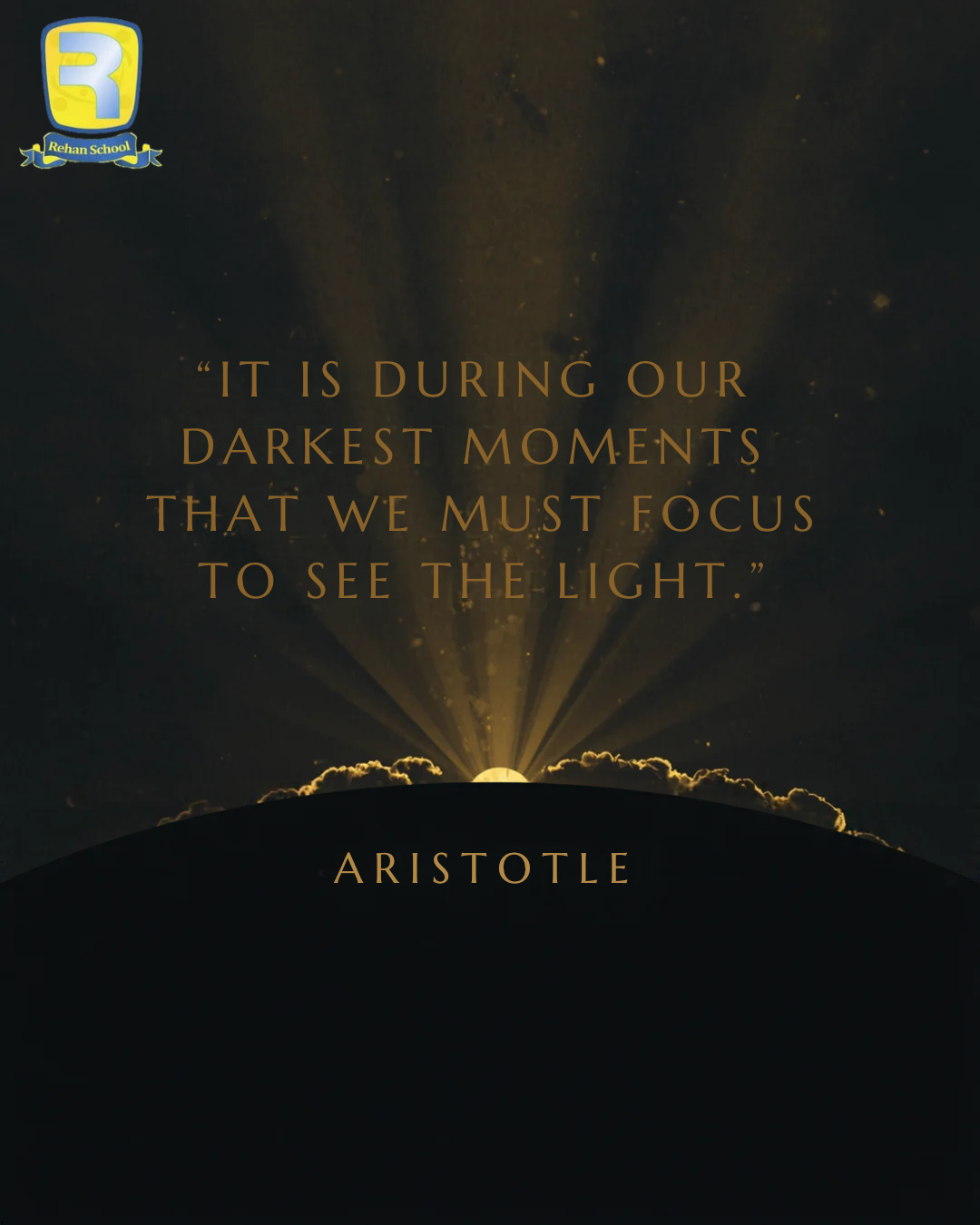
    “It is during our darkest moments that we must focus to see the light.” — Aristotle

    Life is not always easy. Sometimes, we face challenges, disappointments, and moments when the future seems uncertain. But even in the darkest times, there is always a reason to keep going, a lesson to learn, and a new opportunity waiting to be discovered.

    True strength is not about avoiding difficulties; it is about staying hopeful when life gets tough. When you focus on solutions instead of problems, believe in yourself, and take one step forward at a time, you can find the light that guides you toward a brighter tomorrow. ‍

    Remember:
    Stay strong during difficult times.
    Look for hope even in darkness.
    Learn and grow through challenges.
    Never lose faith in your ability to move forward.

    Even the smallest light can guide you through the darkest night. Keep believing, keep growing, and never give up!

    #Aristotle #InspirationalQuotes #Motivation #FindTheLight #Hope #StayStrong #NeverGiveUp #PositiveThinking #LifeLessons #Resilience #BelieveInYourself #OvercomeChallenges #PersonalGrowth #InnerStrength #SuccessMindset #DailyMotivation #Inspiration #KeepGoing #BrighterDays #PositiveMindset
    Canva post: 102 Book A : Level 1 RSISB Rollno 209 Date 10:09:26 🌑✨ “It is during our darkest moments that we must focus to see the light.” — Aristotle 🕯️💫 Life is not always easy. Sometimes, we face challenges, disappointments, and moments when the future seems uncertain. 🌧️💔 But even in the darkest times, there is always a reason to keep going, a lesson to learn, and a new opportunity waiting to be discovered. 🌅🌱 True strength is not about avoiding difficulties; it is about staying hopeful when life gets tough. 💪❤️ When you focus on solutions instead of problems, believe in yourself, and take one step forward at a time, you can find the light that guides you toward a brighter tomorrow. 🚶‍♂️🌟 🌟 Remember: 💪 Stay strong during difficult times. 🕯️ Look for hope even in darkness. 🌱 Learn and grow through challenges. ❤️ Never lose faith in your ability to move forward. ✨ Even the smallest light can guide you through the darkest night. Keep believing, keep growing, and never give up! 🌌🌈 #Aristotle #InspirationalQuotes #Motivation #FindTheLight #Hope #StayStrong #NeverGiveUp #PositiveThinking #LifeLessons #Resilience #BelieveInYourself #OvercomeChallenges #PersonalGrowth #InnerStrength #SuccessMindset #DailyMotivation #Inspiration #KeepGoing #BrighterDays #PositiveMindset
    0 Commentarios 0 Acciones 1139 Views
  • Mohsin RS F8
    Roll NO:13
    Canva post NO:49
    Class: Foundaton Level
    Made by Me

    “Start with Why.” — Simon Sinek

    “Start with why.” is a simple but powerful idea that encourages us to understand the purpose behind what we do. Before asking what we are doing or how we are going to do it, we should first ask ourselves: Why does it matter? Why am I doing this? What is the purpose behind my goal?

    Having a clear “why” can give our actions meaning and direction. When we understand our purpose, it becomes easier to stay focused, especially when things become difficult. A goal is not only about reaching a destination; it is also about understanding the reason that makes the journey worth taking.

    For students, this idea can be especially meaningful. Instead of simply studying because it is required, think about why you want to learn. Maybe you want to develop new skills, solve problems, create something useful, help others, or prepare yourself for future opportunities. When learning has a purpose, it can become more interesting and motivating.

    The same idea can be applied to creativity and personal projects. Before creating a video, designing a poster, writing a story, learning coding, or starting a new project, ask yourself what you want to achieve. Your purpose can guide your decisions and help you create something that has meaning.

    Knowing your “why” can also help when you face challenges. There will always be moments when progress feels slow or when something doesn't work the way you expected. During those moments, remembering your purpose can remind you why you started in the first place. It can encourage you to learn from mistakes, make improvements, and continue moving forward.

    “Start with why” also teaches us that success is not only about results. A meaningful journey involves curiosity, learning, patience, effort, and a willingness to improve. When we know what matters to us, we can make better choices about where to focus our time and energy.

    Another important lesson is that purpose can inspire others. When people understand the reason behind an idea, they may connect with it more deeply. Whether you are working on a school project, collaborating
    Mohsin RS F8 🎓✨ Roll NO:13 Canva post NO:49 Class: Foundaton Level 📚 Made by Me 🌟 “Start with Why.” — Simon Sinek “Start with why.” is a simple but powerful idea that encourages us to understand the purpose behind what we do. Before asking what we are doing or how we are going to do it, we should first ask ourselves: Why does it matter? Why am I doing this? What is the purpose behind my goal? Having a clear “why” can give our actions meaning and direction. When we understand our purpose, it becomes easier to stay focused, especially when things become difficult. A goal is not only about reaching a destination; it is also about understanding the reason that makes the journey worth taking. For students, this idea can be especially meaningful. Instead of simply studying because it is required, think about why you want to learn. Maybe you want to develop new skills, solve problems, create something useful, help others, or prepare yourself for future opportunities. When learning has a purpose, it can become more interesting and motivating. The same idea can be applied to creativity and personal projects. Before creating a video, designing a poster, writing a story, learning coding, or starting a new project, ask yourself what you want to achieve. Your purpose can guide your decisions and help you create something that has meaning. Knowing your “why” can also help when you face challenges. There will always be moments when progress feels slow or when something doesn't work the way you expected. During those moments, remembering your purpose can remind you why you started in the first place. It can encourage you to learn from mistakes, make improvements, and continue moving forward. “Start with why” also teaches us that success is not only about results. A meaningful journey involves curiosity, learning, patience, effort, and a willingness to improve. When we know what matters to us, we can make better choices about where to focus our time and energy. Another important lesson is that purpose can inspire others. When people understand the reason behind an idea, they may connect with it more deeply. Whether you are working on a school project, collaborating
    0 Commentarios 0 Acciones 982 Views
  • Mohsin RS F8
    Roll NO:13
    Canva post NO:45
    Class: Foundaton Level
    Made by Me

    “Focus on being productive instead of busy.” — Tim Ferriss

    In today’s fast-moving world, it is easy to confuse being busy with being productive. A person can spend hours studying, working, checking messages, organizing tasks, and moving from one activity to another without making meaningful progress. True productivity is not about how many things we do; it is about whether the time and effort we spend actually move us closer to our goals.

    Being busy often means having a long list of activities. Productivity, however, means choosing the activities that matter most. For example, a student may spend several hours with books open but become distracted by notifications or unrelated tasks. Another student might study for a shorter period with clear concentration and complete the most important work. The second approach can be more productive because the focus is on results rather than simply spending time.

    Productivity begins with knowing what is important. When we understand our priorities, it becomes easier to decide where our attention should go. Instead of trying to complete everything at once, we can identify the most valuable tasks and work on them one by one. This helps reduce distractions and makes large goals feel more manageable.

    Focus is another important part of productivity. Our attention is limited, and constantly switching between tasks can make it harder to do each one well. Giving full attention to one meaningful task can help us understand information better, solve problems more effectively, and complete our work with greater care. Even small periods of focused work can make a difference when they are used wisely.

    Being productive also means learning when to say no. Not every task, invitation, notification, or activity deserves our attention. Sometimes we become busy because we accept too many unnecessary responsibilities. Understanding our priorities allows us to protect our time and concentrate on what truly matters.

    Another important lesson is that rest is not the opposite of productivity. Taking reasonable breaks, sleeping well.
    Mohsin RS F8 🎓✨ Roll NO:13 Canva post NO:45 Class: Foundaton Level 📚 Made by Me “Focus on being productive instead of busy.” — Tim Ferriss In today’s fast-moving world, it is easy to confuse being busy with being productive. A person can spend hours studying, working, checking messages, organizing tasks, and moving from one activity to another without making meaningful progress. True productivity is not about how many things we do; it is about whether the time and effort we spend actually move us closer to our goals. Being busy often means having a long list of activities. Productivity, however, means choosing the activities that matter most. For example, a student may spend several hours with books open but become distracted by notifications or unrelated tasks. Another student might study for a shorter period with clear concentration and complete the most important work. The second approach can be more productive because the focus is on results rather than simply spending time. Productivity begins with knowing what is important. When we understand our priorities, it becomes easier to decide where our attention should go. Instead of trying to complete everything at once, we can identify the most valuable tasks and work on them one by one. This helps reduce distractions and makes large goals feel more manageable. Focus is another important part of productivity. Our attention is limited, and constantly switching between tasks can make it harder to do each one well. Giving full attention to one meaningful task can help us understand information better, solve problems more effectively, and complete our work with greater care. Even small periods of focused work can make a difference when they are used wisely. Being productive also means learning when to say no. Not every task, invitation, notification, or activity deserves our attention. Sometimes we become busy because we accept too many unnecessary responsibilities. Understanding our priorities allows us to protect our time and concentrate on what truly matters. Another important lesson is that rest is not the opposite of productivity. Taking reasonable breaks, sleeping well.
    0 Commentarios 0 Acciones 660 Views
  • Mohsin RS F8
    Roll NO:13
    Canva post NO:39
    Class: Foundaton Level
    Made by Me

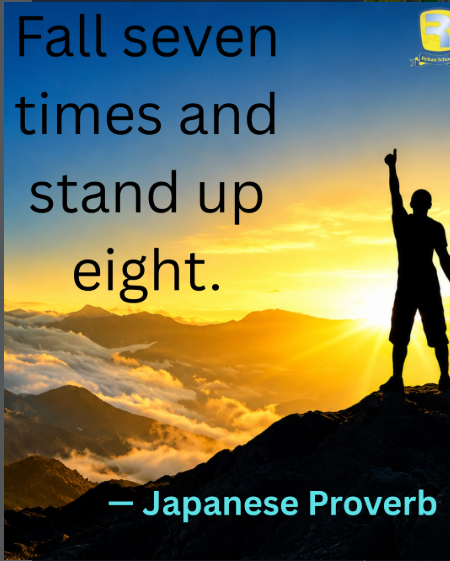
    “Fall seven times and stand up eight.” — Japanese Proverb

    This powerful Japanese proverb teaches us one of the most important lessons in life: failure is not the end of the journey; giving up is. Everyone faces difficulties, mistakes, disappointments, and moments when things do not go according to plan. Sometimes we may work hard and still fail. Sometimes our first attempt, second attempt, or even seventh attempt may not succeed. But every fall can teach us something valuable and give us another opportunity to become stronger, wiser, and more determined.

    The meaning behind “fall seven times and stand up eight” is about resilience, courage, patience, and persistence. Falling represents the challenges and failures we experience in life, while standing up represents our decision to continue moving forward. It reminds us that success does not always come from getting everything right on the first try. Instead, success often comes from learning from mistakes, improving our efforts, and refusing to stop when the journey becomes difficult.

    In education, this lesson is especially important. A student may struggle with a difficult subject, receive a lower grade, make mistakes in a project, or find a new skill challenging. These experiences should not become reasons to give up. Instead, they can become opportunities to learn. Every mistake can show us what we need to improve, and every challenge can help us develop greater confidence and determination.

    The proverb also teaches us that progress is sometimes slow, but slow progress is still progress. We should not compare our journey with someone else’s journey. Everyone learns and grows at a different pace. What matters is continuing to make an effort, learning from each experience, and taking another step forward.

    Life will not always be easy. There will be moments when we feel disappointed or tired, but those moments can help us discover our inner strength. The strongest people are not necessarily those who never face failure; they are often the people who experience difficulties and still choose to rise again.
    6w
    Mohsin RS F8 🎓✨ Roll NO:13 Canva post NO:39 Class: Foundaton Level 📚 Made by Me “Fall seven times and stand up eight.” — Japanese Proverb This powerful Japanese proverb teaches us one of the most important lessons in life: failure is not the end of the journey; giving up is. Everyone faces difficulties, mistakes, disappointments, and moments when things do not go according to plan. Sometimes we may work hard and still fail. Sometimes our first attempt, second attempt, or even seventh attempt may not succeed. But every fall can teach us something valuable and give us another opportunity to become stronger, wiser, and more determined. The meaning behind “fall seven times and stand up eight” is about resilience, courage, patience, and persistence. Falling represents the challenges and failures we experience in life, while standing up represents our decision to continue moving forward. It reminds us that success does not always come from getting everything right on the first try. Instead, success often comes from learning from mistakes, improving our efforts, and refusing to stop when the journey becomes difficult. In education, this lesson is especially important. A student may struggle with a difficult subject, receive a lower grade, make mistakes in a project, or find a new skill challenging. These experiences should not become reasons to give up. Instead, they can become opportunities to learn. Every mistake can show us what we need to improve, and every challenge can help us develop greater confidence and determination. The proverb also teaches us that progress is sometimes slow, but slow progress is still progress. We should not compare our journey with someone else’s journey. Everyone learns and grows at a different pace. What matters is continuing to make an effort, learning from each experience, and taking another step forward. Life will not always be easy. There will be moments when we feel disappointed or tired, but those moments can help us discover our inner strength. The strongest people are not necessarily those who never face failure; they are often the people who experience difficulties and still choose to rise again. 6w
    0 Commentarios 0 Acciones 392 Views
  • RSIF8
    Roll no:85
    Task no:54
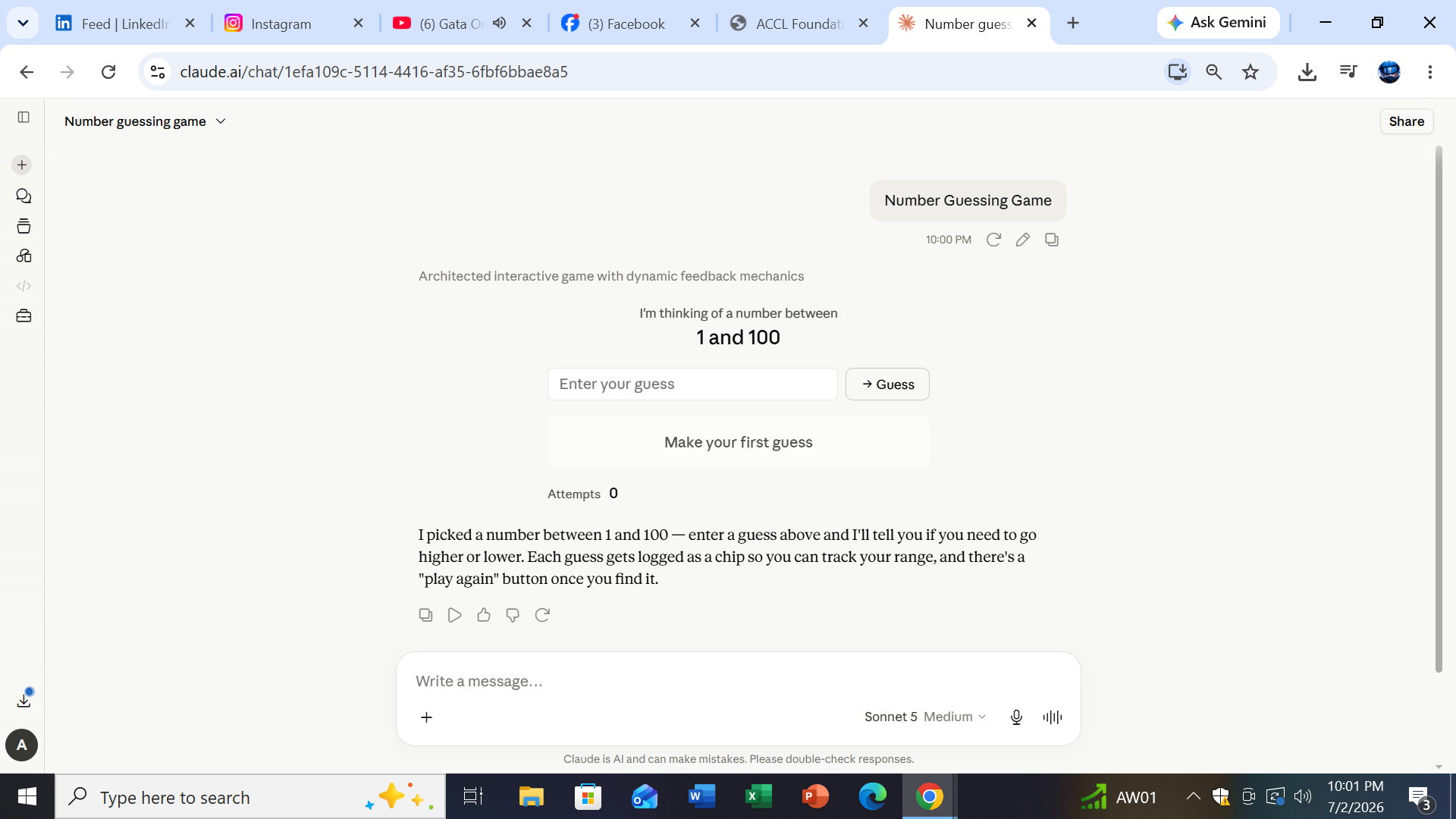
    Task topic Number Guessing Game
    Number Guessing Game is a fun and interactive game that challenges players to guess a secret number within a limited number of attempts. It helps improve logical thinking, problem-solving skills, and decision-making while keeping the experience entertaining. With each guess, players learn from hints such as "too high" or "too low," making every round exciting and educational.

    Beyond entertainment, a Number Guessing Game is an excellent way to strengthen critical thinking and basic mathematical reasoning. It encourages players to analyze patterns, make smarter guesses, and develop patience as they work toward the correct answer. This simple game is enjoyed by children, students, and adults alike.

    For beginner programmers, creating a Number Guessing Game is one of the best coding projects. It introduces essential programming concepts such as variables, loops, conditions, random number generation, and user input. Building this game provides a solid foundation for learning programming languages like Python, Java, C++, and JavaScript.

    Whether played for fun, learning, or coding practice, the Number Guessing Game demonstrates how a simple idea can become an engaging and rewarding experience. It combines entertainment with education, making it a timeless activity that inspires curiosity, creativity, and logical thinking.

    #️⃣ Hashtags:
    #NumberGuessingGame #Coding #Programming #Python #GameDevelopment #Learning #ProblemSolving #CriticalThinking #STEM #Education #Tech #Logic #ComputerScience ‍ #CodingForBeginners #Innovation
    RSIF8 Roll no:85 Task no:54 Task topic Number Guessing Game 🎯 Number Guessing Game is a fun and interactive game that challenges players to guess a secret number within a limited number of attempts. It helps improve logical thinking, problem-solving skills, and decision-making while keeping the experience entertaining. With each guess, players learn from hints such as "too high" or "too low," making every round exciting and educational. 🧠 Beyond entertainment, a Number Guessing Game is an excellent way to strengthen critical thinking and basic mathematical reasoning. It encourages players to analyze patterns, make smarter guesses, and develop patience as they work toward the correct answer. This simple game is enjoyed by children, students, and adults alike. 💻 For beginner programmers, creating a Number Guessing Game is one of the best coding projects. It introduces essential programming concepts such as variables, loops, conditions, random number generation, and user input. Building this game provides a solid foundation for learning programming languages like Python, Java, C++, and JavaScript. 🎮 Whether played for fun, learning, or coding practice, the Number Guessing Game demonstrates how a simple idea can become an engaging and rewarding experience. It combines entertainment with education, making it a timeless activity that inspires curiosity, creativity, and logical thinking. #️⃣ Hashtags: #NumberGuessingGame 🎯 #Coding 💻 #Programming 🖥️ #Python 🐍 #GameDevelopment 🎮 #Learning 📚 #ProblemSolving 🧩 #CriticalThinking 🧠 #STEM 🚀 #Education 🌟 #Tech 💡 #Logic 🔢 #ComputerScience 👨‍💻 #CodingForBeginners ✨ #Innovation 🌍
    0 Commentarios 0 Acciones 1221 Views
  • LEGAL WORK SHOULD MOVE FORWARD.

    Not stay stuck in
    endless searching
    scattered follow-ups
    repeated work
    AI + LEGAL TECHNOLOGY

    A CASE CAN SLOW DOWN FOR MANY REASONS.

    Missing information
    Difficult documents
    Important deadlines
    Repetitive legal work
    Too much information
    Every delay matters.

    WHAT IF THE WORKFLOW WAS SMARTER?
    Instead of constantly going back…
    Understand → Process → Act

    AI can assist with the legal workflow
    Lawyers stay at the center

    BUILDING A SMARTER WAY TO WORK WITH LAW.

    REHAN LAW brings AI + Legal Technology together to support a more efficient legal workflow.
    SMART LAW.
    BETTER FUTURE.

    WHAT SLOWS LEGAL WORK DOWN THE MOST?

    Too much information
    Repetitive work

    REHAN LAW
    Explore the platform:
    www.rehanlaw.com
    LEGAL WORK SHOULD MOVE FORWARD. Not stay stuck in ❌ endless searching ❌ scattered follow-ups ❌ repeated work AI + LEGAL TECHNOLOGY A CASE CAN SLOW DOWN FOR MANY REASONS. 📄 Missing information 🔍 Difficult documents ⏳ Important deadlines 📝 Repetitive legal work 📚 Too much information Every delay matters. WHAT IF THE WORKFLOW WAS SMARTER? Instead of constantly going back… Understand → Process → Act 🤖 AI can assist with the legal workflow ⚖️ Lawyers stay at the center BUILDING A SMARTER WAY TO WORK WITH LAW. REHAN LAW brings AI + Legal Technology together to support a more efficient legal workflow. SMART LAW. BETTER FUTURE. WHAT SLOWS LEGAL WORK DOWN THE MOST? 🔘 Too much information 🔘 Repetitive work REHAN LAW ⚖️ Explore the platform: www.rehanlaw.com
    0 Commentarios 0 Acciones 515 Views
Resultados de la búsqueda