• Unlock the future with robots: boost productivity, save time, and spark creativi

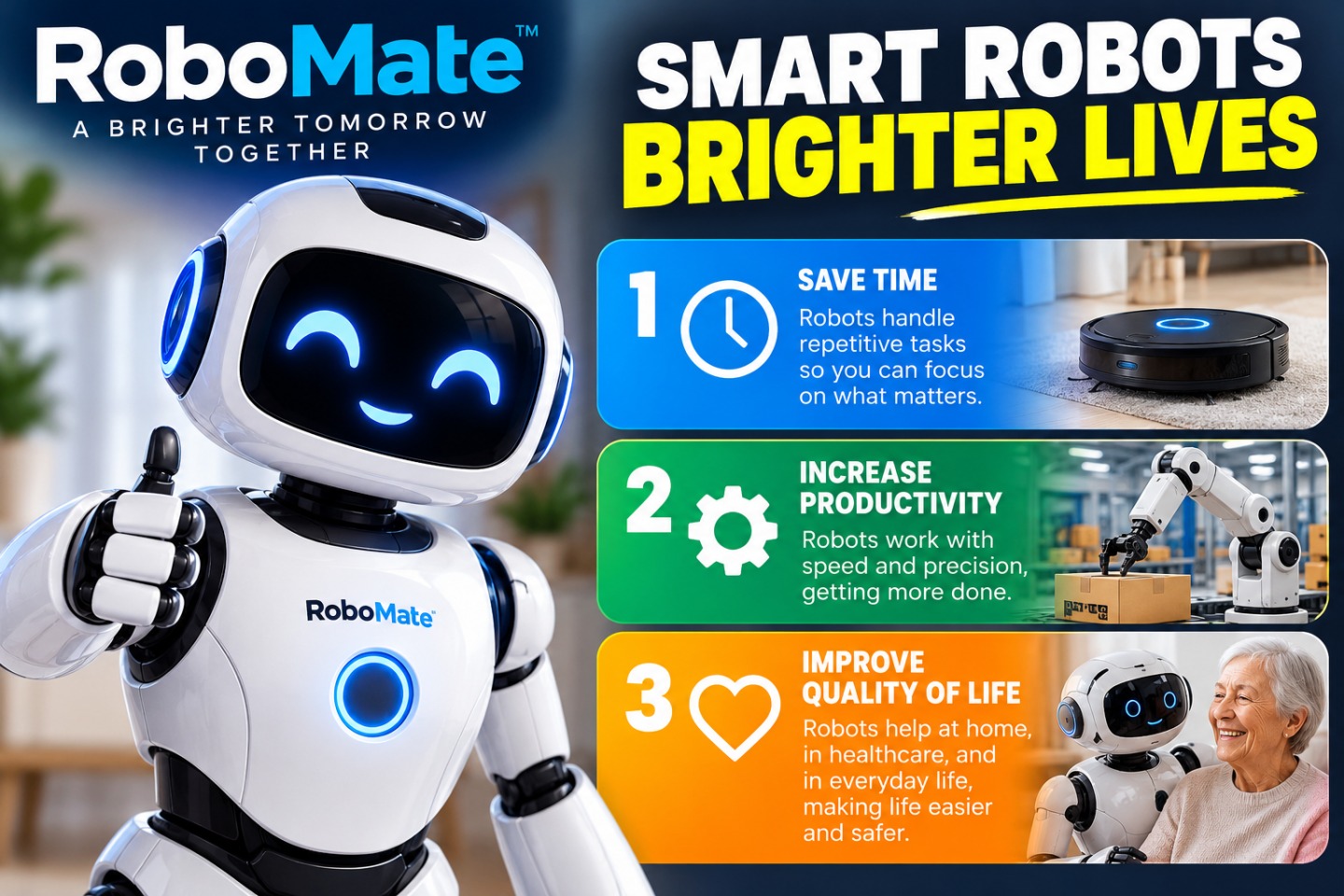
    Unlock the future with robots: boost productivity, save time, and spark creativity

    #robotics #futuretech #automation #innovation #techsavvy #productivity #fridayvibes #techtrends
    Unlock the future with robots: boost productivity, save time, and spark creativi Unlock the future with robots: boost productivity, save time, and spark creativity ๐Ÿค–โœจ #robotics #futuretech #automation #innovation #techsavvy #productivity #fridayvibes #techtrends
    0 Comments 0 Shares 195 Views
  • Unlock the future: robots boost productivity, safety, and creativity

    Unlock the future: robots boost productivity, safety, and creativity

    #robotics #futuretech #automation #innovation #productivity #safety #creativity #techtrends #fridayvibes
    Unlock the future: robots boost productivity, safety, and creativity ๐Ÿค–โœจ Unlock the future: robots boost productivity, safety, and creativity ๐Ÿค–โœจ #robotics #futuretech #automation #innovation #productivity #safety #creativity #techtrends #fridayvibes
    0 Comments 0 Shares 234 Views
  • #rsisb
    Roll no. 247
    Story post 14
    Foundation level

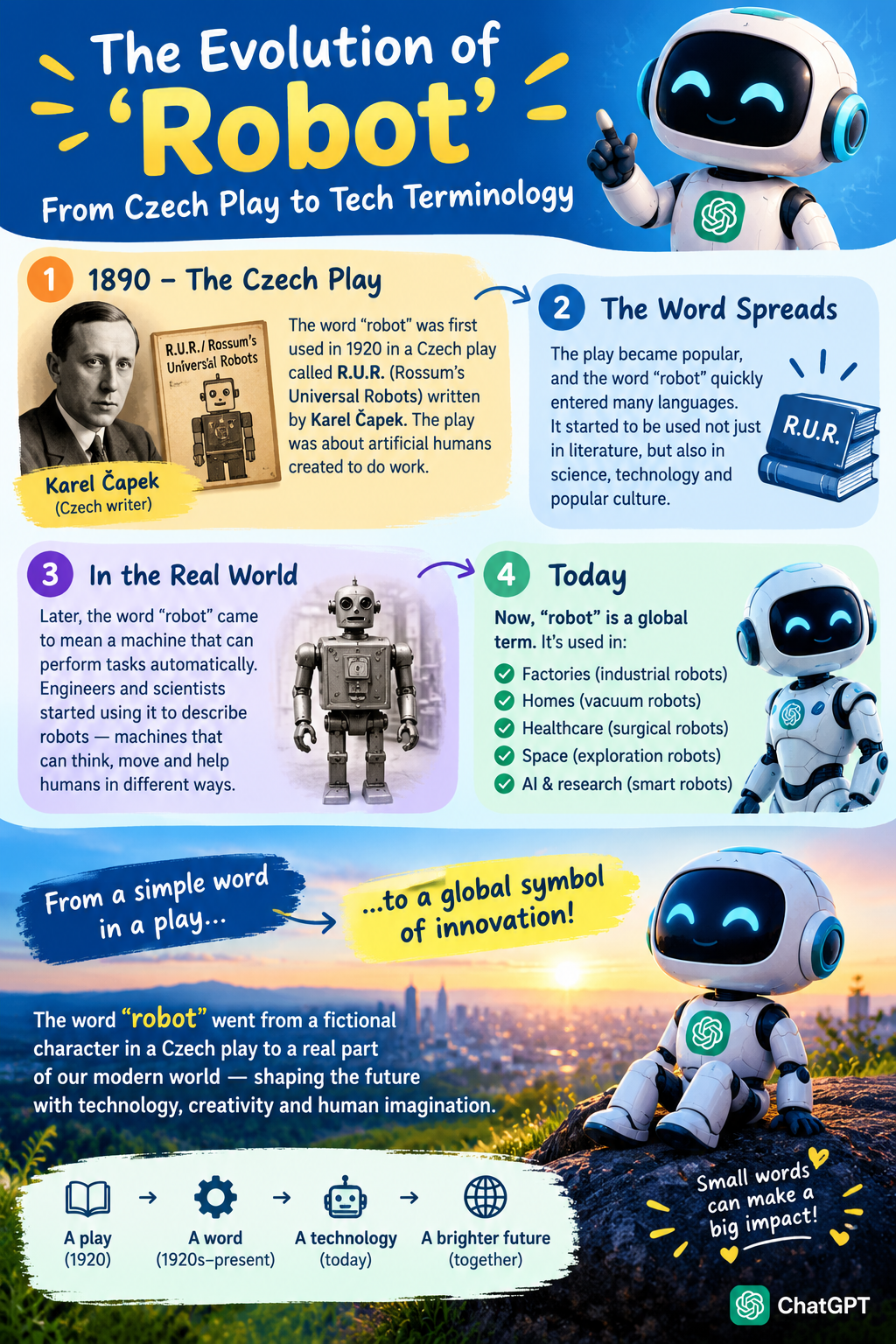
    **The Evolution of “Robot”: From Czech Play to Tech Terminology **

    Have you ever wondered where the word **“robot”** came from? Today, we use this word when talking about smart machines, artificial intelligence, factories, space exploration, and modern technology. But did you know that the word “robot” became popular through a Czech play written more than a century ago? Let's explore the fascinating journey of this little word that became a big part of our technological world!

    **1. The Beginning: A Czech Play **

    The story of the word “robot” begins with Czech writer and playwright **Karel ฤŒapek** and his science-fiction play *R.U.R. (Rossum’s Universal Robots)*, first performed in 1921 and published in 1920. The play imagined artificial workers created to perform tasks for humans. It introduced audiences to ideas about artificial beings, technology, work, and the relationship between humans and machines.

    The word “robot” comes from the Czech word *robota*, associated with forced labor or compulsory work. Interestingly, Karel ฤŒapek credited his brother, **Josef ฤŒapek**, with suggesting the word for the play.

    **2. How the Word Spread Around the World **

    As the play gained attention, the word “robot” spread beyond literature and entered everyday language. People began using it to discuss machines that could perform tasks automatically. Over time, robots became a popular subject in science-fiction stories, films, books, and discussions about the future.

    Writers and scientists explored exciting questions: Could machines help humans? Could robots perform difficult tasks? How might technology change our lives? These questions helped inspire generations of inventors and researchers.

    **3. From Fiction to Real Machines **

    Robots eventually became an important part of real-world engineering and science. Modern robots can perform repetitive tasks, assist with manufacturing, explore places that are difficult for humans to reach, and help researchers carry out complex work.

    Today, we can find robots in many areas:

    **Factories:** Industrial robots help assemble products and perform precise tasks.

    **Homes:** Robotic vacuum cleaners help people with household cleaning.

    **Healthcare:** Specialised robotic systems assist medical professionals with certain procedures.

    **Space Exploration:** Robotic rovers and spacecraft help scientists explore distant worlds.

    **Agriculture:** Some robots help monitor crops and perform farming tasks.

    **Research:** Scientists use robots to test ideas, collect information, and explore new possibilities.

    **4. Robots and Artificial Intelligence **

    Modern technology has introduced new possibilities through artificial intelligence (AI). Some robots use AI to interpret information from sensors, recognise objects, plan actions, or respond to changing conditions. However, not every robot uses AI, and not every AI system is a robot.

    This difference is important! A robot is generally a physical machine that can carry out tasks, while AI refers to computer systems designed to perform tasks that may require abilities such as recognising patterns or understanding language. Together, robotics and AI are helping researchers develop new tools and technologies.

    **5. What Can We Learn from the Evolution of “Robot”?**

    The journey of the word “robot” teaches us that ideas can travel from books and plays into real life. A word introduced through a fictional story became an important term in science, engineering, and technology.

    It also reminds us that technology is created by people using imagination, creativity, teamwork, and scientific knowledge. As we learn more about robots, we should think about how to use technology responsibly and how it can benefit people and communities.

    **Conclusion: From a Czech Play to a Technological Future**

    The evolution of “robot” is a remarkable example of how language, literature, and science connect. What began as a word associated with artificial workers in a Czech play is now used around the world to describe machines that help us in factories, homes, hospitals, laboratories, and space exploration.

    The future of robotics will continue to bring new discoveries, challenges, and opportunities. By learning about the past, understanding the present, and thinking creatively about the future, we can become more informed and responsible users of technology.

    **Let's keep learning, exploring, and innovating!** Every great invention begins with an idea, and every curious mind has the potential to discover something new.

    **Question for everyone:** If you could invent a helpful robot, what would you want it to do? Share your ideas in the comments!

    Like, share, and spread the excitement of science and technology!

    โ”โ”โ”โ”โ”โ”โ”โ”โ”โ”โ”โ”โ”โ”โ”โ”โ”โ”

    **HASHTAGS**

    #EvolutionOfRobots #RobotHistory #TheWordRobot #KarelCapek #JosefCapek #RUR #CzechLiterature #HistoryOfTechnology #Robotics #ArtificialIntelligence #AI #ScienceAndTechnology #EducationalPost #StoryPost #TechnologyEducation #FutureTechnology #Innovation #Engineering #STEMEducation #ScienceForEveryone #LearningIsFun #DigitalLearning #TechHistory #SmartMachines #SpaceExploration #IndustrialRobots #CreativeThinking #KnowledgeIsPower #ChatGPT #PostOnAllPlatforms
    #rsisb Roll no. 247 Story post 14 Foundation level ๐Ÿค–๐ŸŒ **The Evolution of “Robot”: From Czech Play to Tech Terminology ๐Ÿ“šโœจ** ๐Ÿš€๐Ÿค– Have you ever wondered where the word **“robot”** came from? Today, we use this word when talking about smart machines, artificial intelligence, factories, space exploration, and modern technology. But did you know that the word “robot” became popular through a Czech play written more than a century ago? ๐Ÿ“–๐ŸŒŸ Let's explore the fascinating journey of this little word that became a big part of our technological world! ๐Ÿ’ก๐ŸŒ ๐Ÿ“š **1. The Beginning: A Czech Play ๐Ÿ‡จ๐Ÿ‡ฟ** The story of the word “robot” begins with Czech writer and playwright **Karel ฤŒapek** and his science-fiction play *R.U.R. (Rossum’s Universal Robots)*, first performed in 1921 and published in 1920. ๐ŸŽญ๐Ÿค– The play imagined artificial workers created to perform tasks for humans. It introduced audiences to ideas about artificial beings, technology, work, and the relationship between humans and machines. The word “robot” comes from the Czech word *robota*, associated with forced labor or compulsory work. Interestingly, Karel ฤŒapek credited his brother, **Josef ฤŒapek**, with suggesting the word for the play. โœ๏ธ๐Ÿ’ญ ๐ŸŒŽ **2. How the Word Spread Around the World ๐ŸŒ** As the play gained attention, the word “robot” spread beyond literature and entered everyday language. People began using it to discuss machines that could perform tasks automatically. ๐Ÿ“–โš™๏ธ Over time, robots became a popular subject in science-fiction stories, films, books, and discussions about the future. Writers and scientists explored exciting questions: Could machines help humans? Could robots perform difficult tasks? How might technology change our lives? These questions helped inspire generations of inventors and researchers. ๐Ÿš€๐Ÿง  โš™๏ธ **3. From Fiction to Real Machines ๐Ÿญ** Robots eventually became an important part of real-world engineering and science. Modern robots can perform repetitive tasks, assist with manufacturing, explore places that are difficult for humans to reach, and help researchers carry out complex work. ๐Ÿ”ง๐Ÿค– Today, we can find robots in many areas: ๐Ÿญ **Factories:** Industrial robots help assemble products and perform precise tasks. ๐Ÿ  **Homes:** Robotic vacuum cleaners help people with household cleaning. ๐Ÿฅ **Healthcare:** Specialised robotic systems assist medical professionals with certain procedures. ๐Ÿš€ **Space Exploration:** Robotic rovers and spacecraft help scientists explore distant worlds. ๐ŸŒพ **Agriculture:** Some robots help monitor crops and perform farming tasks. ๐Ÿงช **Research:** Scientists use robots to test ideas, collect information, and explore new possibilities. ๐Ÿ’ป **4. Robots and Artificial Intelligence ๐Ÿง ** Modern technology has introduced new possibilities through artificial intelligence (AI). Some robots use AI to interpret information from sensors, recognise objects, plan actions, or respond to changing conditions. ๐Ÿค–๐Ÿ’ก However, not every robot uses AI, and not every AI system is a robot. This difference is important! A robot is generally a physical machine that can carry out tasks, while AI refers to computer systems designed to perform tasks that may require abilities such as recognising patterns or understanding language. Together, robotics and AI are helping researchers develop new tools and technologies. ๐ŸŒโœจ ๐ŸŒŸ **5. What Can We Learn from the Evolution of “Robot”?** The journey of the word “robot” teaches us that ideas can travel from books and plays into real life. A word introduced through a fictional story became an important term in science, engineering, and technology. ๐Ÿ“šโžก๏ธโš™๏ธ It also reminds us that technology is created by people using imagination, creativity, teamwork, and scientific knowledge. As we learn more about robots, we should think about how to use technology responsibly and how it can benefit people and communities. โค๏ธ๐ŸŒ ๐ŸŽฏ **Conclusion: From a Czech Play to a Technological Future** The evolution of “robot” is a remarkable example of how language, literature, and science connect. What began as a word associated with artificial workers in a Czech play is now used around the world to describe machines that help us in factories, homes, hospitals, laboratories, and space exploration. ๐Ÿค–๐Ÿš€ The future of robotics will continue to bring new discoveries, challenges, and opportunities. By learning about the past, understanding the present, and thinking creatively about the future, we can become more informed and responsible users of technology. ๐ŸŒŸ๐Ÿ’š ๐Ÿ“ข **Let's keep learning, exploring, and innovating!** Every great invention begins with an idea, and every curious mind has the potential to discover something new. ๐Ÿ’ก๐Ÿ“š ๐Ÿ’ฌ **Question for everyone:** If you could invent a helpful robot, what would you want it to do? Share your ideas in the comments! ๐Ÿ‘‡๐Ÿค– โค๏ธ Like, share, and spread the excitement of science and technology! โ”โ”โ”โ”โ”โ”โ”โ”โ”โ”โ”โ”โ”โ”โ”โ”โ”โ” ๐Ÿท๏ธ **HASHTAGS** #EvolutionOfRobots #RobotHistory #TheWordRobot #KarelCapek #JosefCapek #RUR #CzechLiterature #HistoryOfTechnology #Robotics #ArtificialIntelligence #AI #ScienceAndTechnology #EducationalPost #StoryPost #TechnologyEducation #FutureTechnology #Innovation #Engineering #STEMEducation #ScienceForEveryone #LearningIsFun #DigitalLearning #TechHistory #SmartMachines #SpaceExploration #IndustrialRobots #CreativeThinking #KnowledgeIsPower #ChatGPT #PostOnAllPlatforms ๐Ÿค–๐ŸŒ๐Ÿ“š๐Ÿš€โœจ
    0 Comments 0 Shares 1344 Views
  • #rsisb
    Roll no.247
    Documentary no.1
    Foundation level

    **The Evolution of “Robot”: From Czech Play to Tech Terminology **

    **Discover the Amazing Journey of Robots!**

    Have you ever wondered where the word **“Robot”** came from? Today, robots are everywhere—from factories and hospitals to schools, homes, and even outer space! But the story of this incredible word began long before modern artificial intelligence and advanced technology became part of our daily lives.

    **The Beginning of the Word “Robot” **

    The word “robot” became famous through a Czech science-fiction play called *R.U.R. (Rossum’s Universal Robots)*, written by Czech writer Karel ฤŒapek. The play premiered in 1921 and introduced audiences to artificial workers created to serve humans. The word is connected to the Czech word *robota*, which refers to forced labor or hard work.

    **From Fiction to Reality!**

    When the word “robot” first appeared, the robots people imagined were very different from the machines we know today. Early robots were mainly ideas from stories, plays, and science fiction. Over time, scientists, engineers, and inventors began building real machines that could perform tasks automatically.

    **The Rise of Modern Robotics**

    As technology developed, robots became more advanced. Industrial robots began helping workers manufacture cars, assemble products, and complete repetitive tasks. Later, robots were developed for medical assistance, scientific research, space exploration, agriculture, and education. ‍

    **Robots and Artificial Intelligence**

    Today, robotics and Artificial Intelligence (AI) are transforming the world! Some robots can recognize objects, follow instructions, navigate their surroundings, and assist people with different tasks. AI can help certain robots process information and make decisions within their designed capabilities.

    However, not every robot uses AI, and robots do not all think or behave like humans. Understanding this difference helps us learn how technology really works!

    **Why Is the Word “Robot” Important?**

    The evolution of the word “robot” shows how imagination can influence science and innovation. A term popularized through a Czech play became an important part of modern science and technology. It reminds us that ideas from books and stories can inspire people to explore new possibilities and create amazing inventions.

    **What Can We Learn From This Story?**

    Words have fascinating histories.
    Stories can inspire scientific discoveries.
    Technology changes and develops over time.
    Robotics can help solve real-world problems.
    Learning about the past helps us understand the future.

    **Think About It!**

    If robots continue to develop, how might they help students, teachers, doctors, scientists, and communities in the future? Could you design a robot that solves a problem in your school or neighborhood?

    Remember, every great invention begins with curiosity, creativity, and the courage to explore new ideas!

    **Watch, Learn, Explore, and Innovate!** Share this documentary with your friends and family, discover the fascinating history of robotics, and keep asking questions about the technology shaping our world.

    **Comment below:** What kind of robot would you like to invent, and what problem would it solve?

    Like | Comment | Share | Follow for more educational documentaries, science stories, technology facts, and exciting learning adventures!

    #Robot #Robotics #EvolutionOfRobots #HistoryOfRobots #KarelCapek #RUR #CzechHistory #ArtificialIntelligence #AI #ScienceAndTechnology #Technology #Innovation #FutureOfTechnology #STEMEducation #ScienceDocumentary #EducationalContent #LearningIsFun #TechHistory #ModernRobotics #RoboticsForKids #DiscoverScience #KnowledgeIsPower #CreativeThinking #FutureInnovators #DigitalLearning #ExploreAndLearn #EducationalJourney #Documentary #ScienceFacts #InspiringInnovation
    #rsisb Roll no.247 Documentary no.1 Foundation level ๐Ÿค–๐Ÿ“š **The Evolution of “Robot”: From Czech Play to Tech Terminology ๐ŸŒ๐Ÿš€** โœจ **Discover the Amazing Journey of Robots!** โœจ Have you ever wondered where the word **“Robot”** came from? ๐Ÿค”๐Ÿค– Today, robots are everywhere—from factories and hospitals to schools, homes, and even outer space! ๐Ÿš—๐Ÿญ๐Ÿฅ๐Ÿš€ But the story of this incredible word began long before modern artificial intelligence and advanced technology became part of our daily lives. ๐Ÿ“– **The Beginning of the Word “Robot” ๐Ÿ‡จ๐Ÿ‡ฟ** The word “robot” became famous through a Czech science-fiction play called *R.U.R. (Rossum’s Universal Robots)*, written by Czech writer Karel ฤŒapek. The play premiered in 1921 and introduced audiences to artificial workers created to serve humans. ๐Ÿค–๐ŸŽญ The word is connected to the Czech word *robota*, which refers to forced labor or hard work. ๐Ÿ’ก **From Fiction to Reality!** When the word “robot” first appeared, the robots people imagined were very different from the machines we know today. Early robots were mainly ideas from stories, plays, and science fiction. ๐Ÿ“šโœจ Over time, scientists, engineers, and inventors began building real machines that could perform tasks automatically. โš™๏ธ **The Rise of Modern Robotics** As technology developed, robots became more advanced. Industrial robots began helping workers manufacture cars, assemble products, and complete repetitive tasks. ๐Ÿญ๐Ÿš˜ Later, robots were developed for medical assistance, scientific research, space exploration, agriculture, and education. ๐ŸŒฑ๐Ÿง‘‍โš•๏ธ๐Ÿ”ฌ๐Ÿช ๐Ÿง  **Robots and Artificial Intelligence** Today, robotics and Artificial Intelligence (AI) are transforming the world! ๐ŸŒ๐Ÿ’ป Some robots can recognize objects, follow instructions, navigate their surroundings, and assist people with different tasks. AI can help certain robots process information and make decisions within their designed capabilities. However, not every robot uses AI, and robots do not all think or behave like humans. Understanding this difference helps us learn how technology really works! ๐Ÿ’ก๐Ÿ“– ๐ŸŒŸ **Why Is the Word “Robot” Important?** The evolution of the word “robot” shows how imagination can influence science and innovation. A term popularized through a Czech play became an important part of modern science and technology. ๐Ÿš€โœจ It reminds us that ideas from books and stories can inspire people to explore new possibilities and create amazing inventions. ๐ŸŽฏ **What Can We Learn From This Story?** โœ… Words have fascinating histories. ๐Ÿ“š โœ… Stories can inspire scientific discoveries. ๐Ÿ’ญ โœ… Technology changes and develops over time. โš™๏ธ โœ… Robotics can help solve real-world problems. ๐ŸŒ โœ… Learning about the past helps us understand the future. ๐Ÿš€ ๐Ÿค” **Think About It!** If robots continue to develop, how might they help students, teachers, doctors, scientists, and communities in the future? Could you design a robot that solves a problem in your school or neighborhood? ๐Ÿซ๐Ÿค–๐Ÿ’ก Remember, every great invention begins with curiosity, creativity, and the courage to explore new ideas! ๐ŸŒˆ๐ŸŒŸ ๐Ÿ“ข **Watch, Learn, Explore, and Innovate!** Share this documentary with your friends and family, discover the fascinating history of robotics, and keep asking questions about the technology shaping our world. ๐Ÿค–๐ŸŒโค๏ธ ๐Ÿ’ฌ **Comment below:** What kind of robot would you like to invent, and what problem would it solve? ๐Ÿ‘ Like | ๐Ÿ’ฌ Comment | ๐Ÿ”„ Share | โญ Follow for more educational documentaries, science stories, technology facts, and exciting learning adventures! #Robot #Robotics #EvolutionOfRobots #HistoryOfRobots #KarelCapek #RUR #CzechHistory #ArtificialIntelligence #AI #ScienceAndTechnology #Technology #Innovation #FutureOfTechnology #STEMEducation #ScienceDocumentary #EducationalContent #LearningIsFun #TechHistory #ModernRobotics #RoboticsForKids #DiscoverScience #KnowledgeIsPower #CreativeThinking #FutureInnovators #DigitalLearning #ExploreAndLearn #EducationalJourney #Documentary #ScienceFacts #InspiringInnovation ๐Ÿค–๐Ÿš€๐Ÿ“š๐ŸŒ๐Ÿ’กโœจ
    0 Comments 0 Shares 3441 Views 8
  • RSIF8
    ROLL NO 77
    SHOURT DOCUMENTARY NO 9
    SHOURT DOCUMENTARY TOPIC "Decoding 'Cyber': Origins in Norbert Wiener's Cybernetics".

    **Decoding “Cyber”: Origins in Norbert Wiener’s Cybernetics**

    What does the word **“Cyber”** really mean?
    In this fascinating journey, we explore **Norbert Wiener’s Cybernetics**—the study of communication, control, and feedback in machines, animals, and humans.

    From the early ideas of cybernetics to today’s **Artificial Intelligence, robotics, automation, and cybersecurity**, Wiener’s work helped shape the digital world we live in.

    Discover how one powerful idea became part of the language of modern technology!

    #Cyber #Cybernetics #NorbertWiener #ArtificialIntelligence #AI #Technology #ComputerScience #Robotics #Innovation #DigitalWorld #TechEducation #Learning #FutureOfTechnology
    RSIF8 ROLL NO 77 SHOURT DOCUMENTARY NO 9 SHOURT DOCUMENTARY TOPIC "Decoding 'Cyber': Origins in Norbert Wiener's Cybernetics". ๐Ÿค–๐Ÿ” **Decoding “Cyber”: Origins in Norbert Wiener’s Cybernetics** What does the word **“Cyber”** really mean? ๐ŸŒ๐Ÿ’ก In this fascinating journey, we explore **Norbert Wiener’s Cybernetics**—the study of communication, control, and feedback in machines, animals, and humans. ๐Ÿง โš™๏ธ From the early ideas of cybernetics to today’s **Artificial Intelligence, robotics, automation, and cybersecurity**, Wiener’s work helped shape the digital world we live in. ๐Ÿš€๐Ÿ’ป Discover how one powerful idea became part of the language of modern technology! ๐ŸŒโœจ #Cyber #Cybernetics #NorbertWiener #ArtificialIntelligence #AI #Technology #ComputerScience #Robotics #Innovation #DigitalWorld #TechEducation #Learning #FutureOfTechnology ๐Ÿค–๐Ÿง ๐Ÿ’ป๐Ÿš€
    0 Comments 0 Shares 1289 Views 10
  • #rsisb
    Roll no.239
    Miss Zoya no.6
    Foundation Level

    Artificial Intelligence (AI) is a powerful technology that enables computers and machines to perform tasks that usually require human intelligence. AI can learn from data, recognize patterns, understand language, answer questions, solve problems, and help people make decisions.

    AI is now used in many areas, including **education, healthcare, science, smartphones, robotics, transportation, business, and entertainment**. Students can use AI to learn new topics, practice skills, generate ideas, and understand difficult concepts.

    The 100 AI questions explore important topics such as **how AI works, Machine Learning, robots, AI in education, AI and humans, healthcare, safety, ethics, and the future of technology**.

    AI has many benefits, but it can also make mistakes and should be used responsibly. We should always check important information and use AI as a helpful tool rather than depending on it completely.

    **Key Message:** AI can help us learn, create, and solve problems. By using it wisely, safely, and responsibly, we can make technology useful for a better future.

    #AI #ArtificialIntelligence #Technology #Education #MachineLearning #Robotics #Innovation #FutureOfTechnology #Students #DigitalLearning

    #rsisb Roll no.239 Miss Zoya no.6 Foundation Level Artificial Intelligence (AI) is a powerful technology that enables computers and machines to perform tasks that usually require human intelligence. AI can learn from data, recognize patterns, understand language, answer questions, solve problems, and help people make decisions. AI is now used in many areas, including **education, healthcare, science, smartphones, robotics, transportation, business, and entertainment**. Students can use AI to learn new topics, practice skills, generate ideas, and understand difficult concepts. The 100 AI questions explore important topics such as **how AI works, Machine Learning, robots, AI in education, AI and humans, healthcare, safety, ethics, and the future of technology**. AI has many benefits, but it can also make mistakes and should be used responsibly. We should always check important information and use AI as a helpful tool rather than depending on it completely. ๐ŸŒŸ **Key Message:** AI can help us learn, create, and solve problems. By using it wisely, safely, and responsibly, we can make technology useful for a better future. #AI #ArtificialIntelligence #Technology #Education #MachineLearning #Robotics #Innovation #FutureOfTechnology #Students #DigitalLearning ๐Ÿค–๐Ÿ’ป๐ŸŒโœจ
    0 Comments 0 Shares 1311 Views 4
  • #rsisb
    Roll no.239
    Miss Zoya no.5
    Foundation Level

    Artificial Intelligence (AI) is one of the most important technologies in the modern world. It allows computers and machines to perform tasks that normally require human intelligence, such as learning, understanding language, recognizing images, solving problems, and generating ideas.

    AI is used in many areas of our daily lives, including **education, healthcare, smartphones, robotics, transportation, business, science, and entertainment**. Students can use AI as a learning tool to understand difficult topics, practice skills, find ideas, and explore new subjects.

    This topic helps students understand how AI works, its benefits and limitations, and the importance of using technology safely, responsibly, and honestly.

    **Key Message:** AI is a powerful tool for learning and innovation. When we use it wisely and responsibly, it can help us build a smarter and better future.

    #AI #ArtificialIntelligence #Technology #Education #Students #Robotics #Innovation #Future #DigitalLearning
    #rsisb Roll no.239 Miss Zoya no.5 Foundation Level Artificial Intelligence (AI) is one of the most important technologies in the modern world. It allows computers and machines to perform tasks that normally require human intelligence, such as learning, understanding language, recognizing images, solving problems, and generating ideas. AI is used in many areas of our daily lives, including **education, healthcare, smartphones, robotics, transportation, business, science, and entertainment**. Students can use AI as a learning tool to understand difficult topics, practice skills, find ideas, and explore new subjects. This topic helps students understand how AI works, its benefits and limitations, and the importance of using technology safely, responsibly, and honestly. ๐ŸŒŸ **Key Message:** AI is a powerful tool for learning and innovation. When we use it wisely and responsibly, it can help us build a smarter and better future. #AI #ArtificialIntelligence #Technology #Education #Students #Robotics #Innovation #Future #DigitalLearning ๐Ÿค–๐Ÿ’ป๐ŸŒโœจ
    0 Comments 0 Shares 877 Views 5
  • #rsisb
    Roll no.239
    Miss Zoya no.3
    Foundation Level

    **Human beings are one of the most remarkable parts of life on Earth.** Humans have the ability to think, learn, communicate, create, imagine, and solve problems. They can develop knowledge through education and experience and use that knowledge to improve their lives and the world around them.

    The **human body** is a complex system made up of many organs and body systems that work together. The brain helps humans think, remember, learn, and control the body. The heart pumps blood throughout the body, while the lungs help provide oxygen. Bones provide structure and support, muscles allow movement, and the nervous system helps control and coordinate many body functions.

    Humans also have **emotions and feelings**. People can experience happiness, sadness, fear, anger, love, excitement, and many other emotions. Understanding emotions is important because they influence how people communicate, make decisions, and interact with others.

    ### Learning and Intelligence

    Humans have a remarkable ability to learn. Children learn language, numbers, social skills, and many other things as they grow. Education helps people develop knowledge and skills, while experience teaches them how to deal with challenges and make better decisions.

    Humans can also use **creativity and imagination** to create art, music, literature, inventions, and new technologies. This ability to imagine new possibilities has played an important role in the development of human civilization.

    ### Health and Well-Being

    Good health is essential for a healthy and productive life. Humans need nutritious food, clean water, oxygen, enough sleep, physical activity, and a safe environment. Regular exercise can help keep the body strong, while healthy habits can support overall well-being.

    Mental and emotional well-being are also important. People need positive relationships, support, relaxation, and opportunities to express their feelings.

    ### ‍‍‍ Human Relationships

    Humans are social beings. Families, friends, classmates, teachers, colleagues, and communities all play important roles in people's lives. Communication and cooperation help people build strong relationships

    ### Humans and Technology

    Technology has become an important part of modern human life. Computers, smartphones, the internet, robotics, and artificial intelligence help people communicate, learn, work, and solve problems.

    Artificial intelligence can assist humans in many areas, but human judgment, responsibility, creativity, and ethical thinking remain extremely important. Technology should be used wisely and responsibly to benefit society.

    ### Humans and the Environment

    Humans depend on Earth for air, water, food, energy, and natural resources. Protecting the environment is therefore an important responsibility.

    Pollution, climate change, deforestation, and the loss of biodiversity can affect human life and other living organisms. People can help protect the planet by reducing waste, saving water and energy, recycling, planting trees, and using resources responsibly.

    ### The Future of Humanity

    The future of humanity will depend on the choices people make today. Education, science, technology, cooperation, peace, and responsible decision-making can help create a better future.

    Humans may continue to explore space, develop new medical treatments, create advanced technologies, and discover new ways to solve global problems. However, progress should always be balanced with ethics, safety, equality, and respect for life.

    ### **Conclusion**

    The study of humans is a broad and fascinating topic that includes the **human body, brain, emotions, health, learning, relationships, society, technology, and the future**.

    Understanding ourselves can help us become healthier, kinder, more responsible, and more thoughtful people. It can also teach us to respect others, appreciate differences, protect our planet, and work together to solve problems.

    **Key Message:**

    > **Human beings have the ability to learn, create, care, and make a difference. By using knowledge wisely and treating others with respect, humans can help build a healthier, kinder, and better world.**

    #rsisb Roll no.239 Miss Zoya no.3 Foundation Level **Human beings are one of the most remarkable parts of life on Earth.** Humans have the ability to think, learn, communicate, create, imagine, and solve problems. They can develop knowledge through education and experience and use that knowledge to improve their lives and the world around them. The **human body** is a complex system made up of many organs and body systems that work together. The brain helps humans think, remember, learn, and control the body. The heart pumps blood throughout the body, while the lungs help provide oxygen. Bones provide structure and support, muscles allow movement, and the nervous system helps control and coordinate many body functions. Humans also have **emotions and feelings**. People can experience happiness, sadness, fear, anger, love, excitement, and many other emotions. Understanding emotions is important because they influence how people communicate, make decisions, and interact with others. ### ๐Ÿง  Learning and Intelligence Humans have a remarkable ability to learn. Children learn language, numbers, social skills, and many other things as they grow. Education helps people develop knowledge and skills, while experience teaches them how to deal with challenges and make better decisions. Humans can also use **creativity and imagination** to create art, music, literature, inventions, and new technologies. This ability to imagine new possibilities has played an important role in the development of human civilization. ### โค๏ธ Health and Well-Being Good health is essential for a healthy and productive life. Humans need nutritious food, clean water, oxygen, enough sleep, physical activity, and a safe environment. Regular exercise can help keep the body strong, while healthy habits can support overall well-being. Mental and emotional well-being are also important. People need positive relationships, support, relaxation, and opportunities to express their feelings. ### ๐Ÿ‘จ‍๐Ÿ‘ฉ‍๐Ÿ‘ง‍๐Ÿ‘ฆ Human Relationships Humans are social beings. Families, friends, classmates, teachers, colleagues, and communities all play important roles in people's lives. Communication and cooperation help people build strong relationships ### ๐Ÿ’ป Humans and Technology Technology has become an important part of modern human life. Computers, smartphones, the internet, robotics, and artificial intelligence help people communicate, learn, work, and solve problems. Artificial intelligence can assist humans in many areas, but human judgment, responsibility, creativity, and ethical thinking remain extremely important. Technology should be used wisely and responsibly to benefit society. ### ๐ŸŒฑ Humans and the Environment Humans depend on Earth for air, water, food, energy, and natural resources. Protecting the environment is therefore an important responsibility. Pollution, climate change, deforestation, and the loss of biodiversity can affect human life and other living organisms. People can help protect the planet by reducing waste, saving water and energy, recycling, planting trees, and using resources responsibly. ### ๐Ÿš€ The Future of Humanity The future of humanity will depend on the choices people make today. Education, science, technology, cooperation, peace, and responsible decision-making can help create a better future. Humans may continue to explore space, develop new medical treatments, create advanced technologies, and discover new ways to solve global problems. However, progress should always be balanced with ethics, safety, equality, and respect for life. ### **Conclusion** The study of humans is a broad and fascinating topic that includes the **human body, brain, emotions, health, learning, relationships, society, technology, and the future**. Understanding ourselves can help us become healthier, kinder, more responsible, and more thoughtful people. It can also teach us to respect others, appreciate differences, protect our planet, and work together to solve problems. **Key Message:** > **Human beings have the ability to learn, create, care, and make a difference. By using knowledge wisely and treating others with respect, humans can help build a healthier, kinder, and better world.**

    0 Comments 0 Shares 2498 Views 5
  • #rsisb
    Roll no.239
    Miss Zoya no.1
    Foundation Level

    **Artificial Intelligence (AI)** is a powerful technology that enables computers and machines to perform tasks that normally require human intelligence. AI can help machines understand information, recognize patterns, answer questions, solve problems, learn from data, and support people in many different areas.

    This topic explores **100 questions about AI**, including what artificial intelligence is, how it works, machine learning, robots, education, healthcare, science, daily life, safety, ethics, and the future of technology.

    AI can help students learn new subjects, improve their skills, create ideas, analyze information, and understand complex topics. However, it is also important to use AI **responsibly, safely, and honestly** and to check important information before trusting it.

    **Key Message:** AI is a powerful tool that can make our lives easier and help us learn—but the way we use it determines how beneficial it can be.

    #AI #ArtificialIntelligence #Technology #Education #MachineLearning #Robotics #FutureTechnology #DigitalLearning #Science #Students
    #rsisb Roll no.239 Miss Zoya no.1 Foundation Level **Artificial Intelligence (AI)** is a powerful technology that enables computers and machines to perform tasks that normally require human intelligence. AI can help machines understand information, recognize patterns, answer questions, solve problems, learn from data, and support people in many different areas. This topic explores **100 questions about AI**, including what artificial intelligence is, how it works, machine learning, robots, education, healthcare, science, daily life, safety, ethics, and the future of technology. AI can help students learn new subjects, improve their skills, create ideas, analyze information, and understand complex topics. However, it is also important to use AI **responsibly, safely, and honestly** and to check important information before trusting it. ๐ŸŒŸ **Key Message:** AI is a powerful tool that can make our lives easier and help us learn—but the way we use it determines how beneficial it can be. #AI #ArtificialIntelligence #Technology #Education #MachineLearning #Robotics #FutureTechnology #DigitalLearning #Science #Students ๐Ÿค–๐Ÿ’ป๐ŸŒโœจ
    0 Comments 0 Shares 1458 Views 2
  • #rsisb
    Roll no 248
    Foundation level
    Story post no 21
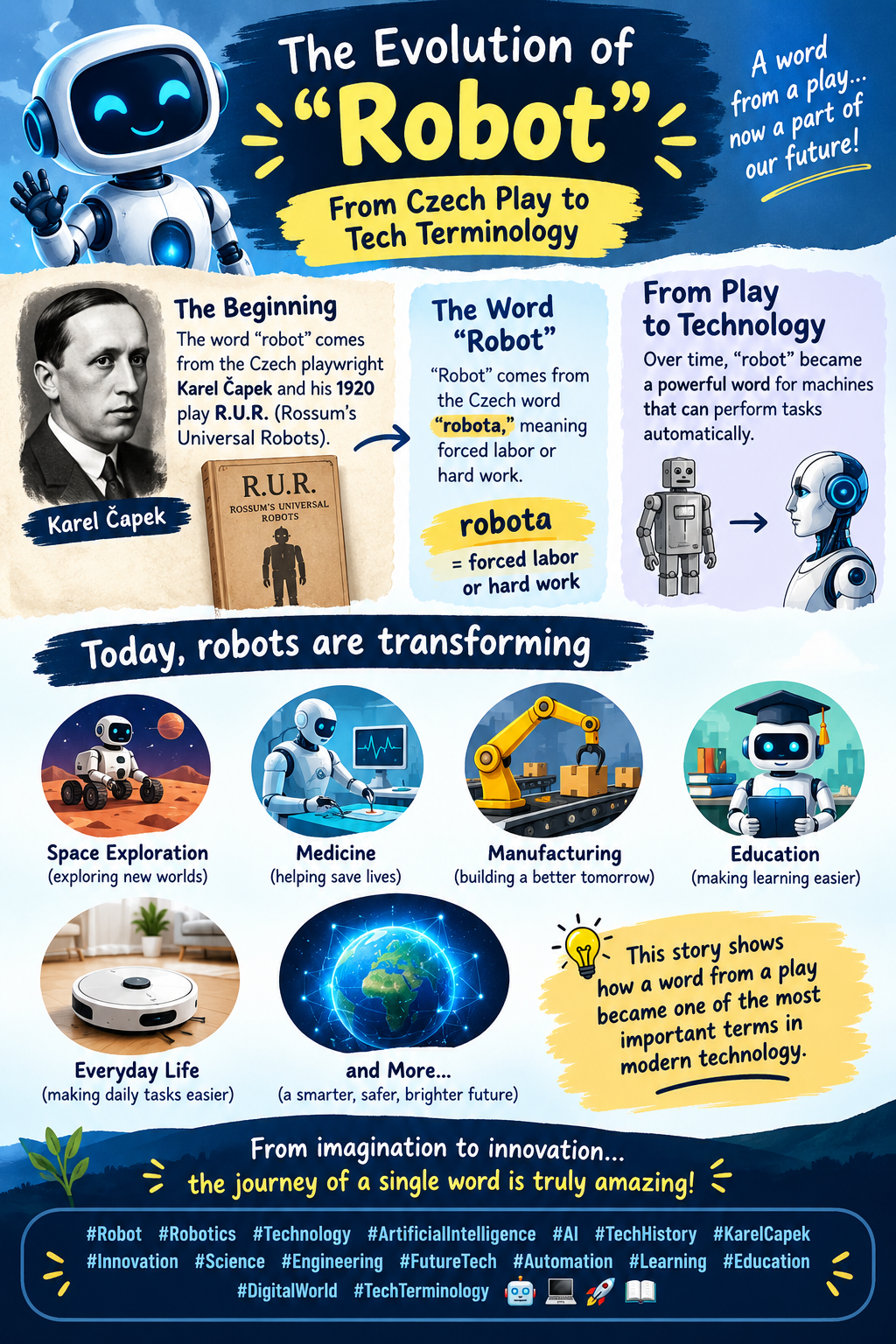
    **The Evolution of “Robot”: From Czech Play to Tech Terminology**

    Have you ever wondered where the word **“robot”** came from? The story begins with the Czech playwright **Karel ฤŒapek** and his 1920 play *R.U.R. (Rossum’s Universal Robots)*. The word “robot” comes from the Czech word **“robota,”** meaning forced labor or hard work.

    Over time, “robot” became a powerful word for machines that can perform tasks automatically. Today, robots are transforming **science, medicine, manufacturing, space exploration, education, and everyday life**! ‍

    This story shows how a word from a play became one of the most important terms in modern technology.

    #Robot #Robotics #Technology #ArtificialIntelligence #AI #TechHistory #KarelCapek #Innovation #Science #Engineering #FutureTech #Automation #Learning #Education #DigitalWorld #TechTerminology
    #rsisb Roll no 248 Foundation level Story post no 21 ๐Ÿค–โœจ **The Evolution of “Robot”: From Czech Play to Tech Terminology** ๐ŸŽญ๐Ÿ’ป Have you ever wondered where the word **“robot”** came from? ๐Ÿค”๐ŸŒ The story begins with the Czech playwright **Karel ฤŒapek** and his 1920 play *R.U.R. (Rossum’s Universal Robots)*. ๐ŸŽญ๐Ÿค– The word “robot” comes from the Czech word **“robota,”** meaning forced labor or hard work. ๐Ÿ’ก Over time, “robot” became a powerful word for machines that can perform tasks automatically. Today, robots are transforming **science, medicine, manufacturing, space exploration, education, and everyday life**! ๐Ÿš€๐Ÿญ๐Ÿง‘‍โš•๏ธ๐ŸŒŒ This story shows how a word from a play became one of the most important terms in modern technology. ๐Ÿ“šโžก๏ธ๐Ÿค– #Robot #Robotics #Technology #ArtificialIntelligence #AI #TechHistory #KarelCapek #Innovation #Science #Engineering #FutureTech #Automation #Learning #Education #DigitalWorld #TechTerminology ๐Ÿค–๐Ÿ’ป๐Ÿš€๐Ÿ“šโœจ
    0 Comments 0 Shares 1489 Views
More Results