• Wouldn’t it be interesting to see a conversation where politicians need to discuss some of the very real issues we will face in the 2020s:

    - What happens when a foreign power develops a 50 Qbit quantum computer that can cut through encryption like a knife through butter and look back 10 years at everything ever said by anyone? What private companies should be allowed to have a powerful quantum computer that can strip away all known encryption?

    - What ethical choices do we make about AI that is better at diagnosis than 90% of GPs? Or that can drive cars 90% more safely than humans? Or that is 90% better at adjudication than judges? Or that can categorically predict someone is a danger before they actually do something bad?

    - How does the economy function when 75% of human needs can be fulfilled by digital products, software, media or automation that creates this capacity without any human inputs?

    - In a 5G world, what do we want to occupy the additional 90% of bandwidth with? Do we want a super-surveillance state that is linked to Machine Learning? Do we want early diagnosis of incurable disease based upon sensors in our homes and watches?

    - What role do we want traditional education to play? What future are we preparing kids for? In a world where computers can give precise answers to 95% of the problems we could ever conceive, what training does a child require to operate it?

    If our biggest medical breakthroughs, military threats and educational needs all hinge on having good answers to difficult questions with quantum computing, AI/ML, 5G, etc why is this stuff never even remotely discussed?

    Via Daniel Priestley
    Wouldn’t it be interesting to see a conversation where politicians need to discuss some of the very real issues we will face in the 2020s: - What happens when a foreign power develops a 50 Qbit quantum computer that can cut through encryption like a knife through butter and look back 10 years at everything ever said by anyone? What private companies should be allowed to have a powerful quantum computer that can strip away all known encryption? - What ethical choices do we make about AI that is better at diagnosis than 90% of GPs? Or that can drive cars 90% more safely than humans? Or that is 90% better at adjudication than judges? Or that can categorically predict someone is a danger before they actually do something bad? - How does the economy function when 75% of human needs can be fulfilled by digital products, software, media or automation that creates this capacity without any human inputs? - In a 5G world, what do we want to occupy the additional 90% of bandwidth with? Do we want a super-surveillance state that is linked to Machine Learning? Do we want early diagnosis of incurable disease based upon sensors in our homes and watches? - What role do we want traditional education to play? What future are we preparing kids for? In a world where computers can give precise answers to 95% of the problems we could ever conceive, what training does a child require to operate it? If our biggest medical breakthroughs, military threats and educational needs all hinge on having good answers to difficult questions with quantum computing, AI/ML, 5G, etc why is this stuff never even remotely discussed? Via Daniel Priestley
    0 Comentários 0 Compartilhamentos 817 Visualizações
  • The photovoltaic effect is a physical phenomenon where certain materials can convert light energy into electrical energy. This effect was first observed by French physicist Alexandre-Edmond Becquerel in 1839 when he noticed that certain materials produced a small electrical current when exposed to light.

    The photovoltaic effect is used in solar cells, which are devices that convert sunlight into electricity. Solar cells are made up of layers of materials, usually silicon, that are specially designed to generate an electric current when exposed to light.

    The process of the photovoltaic effect in solar cells works like this:

    1. When sunlight hits the solar cell, it excites the electrons in the silicon atoms in the top layer of the cell.

    2. Some of these excited electrons break free from their atoms and become mobile.

    3. The free electrons are attracted to one side of the cell, while the positively charged "holes" left behind by the free electrons are attracted to the other side of the cell. This creates an electrical imbalance between the two sides of the cell.

    4. By connecting a wire between the two sides of the cell, a flow of electric current is generated as the free electrons move from one side of the cell to the other.

    5. This flow of electric current can be used to power electrical devices or stored in a battery for later use.

    The photovoltaic effect is not limited to solar cells, and can also be used in other types of electronic devices, such as light sensors and photodetectors. It is a fundamental process in the field of optoelectronics, which involves the study of the interaction between light and electricity.

    In summary, the photovoltaic effect is a process where certain materials can convert light energy into electrical energy. It is the basis for the operation of solar cells and other electronic devices that use light as a source of energy.
    The photovoltaic effect is a physical phenomenon where certain materials can convert light energy into electrical energy. This effect was first observed by French physicist Alexandre-Edmond Becquerel in 1839 when he noticed that certain materials produced a small electrical current when exposed to light. The photovoltaic effect is used in solar cells, which are devices that convert sunlight into electricity. Solar cells are made up of layers of materials, usually silicon, that are specially designed to generate an electric current when exposed to light. The process of the photovoltaic effect in solar cells works like this: 1. When sunlight hits the solar cell, it excites the electrons in the silicon atoms in the top layer of the cell. 2. Some of these excited electrons break free from their atoms and become mobile. 3. The free electrons are attracted to one side of the cell, while the positively charged "holes" left behind by the free electrons are attracted to the other side of the cell. This creates an electrical imbalance between the two sides of the cell. 4. By connecting a wire between the two sides of the cell, a flow of electric current is generated as the free electrons move from one side of the cell to the other. 5. This flow of electric current can be used to power electrical devices or stored in a battery for later use. The photovoltaic effect is not limited to solar cells, and can also be used in other types of electronic devices, such as light sensors and photodetectors. It is a fundamental process in the field of optoelectronics, which involves the study of the interaction between light and electricity. In summary, the photovoltaic effect is a process where certain materials can convert light energy into electrical energy. It is the basis for the operation of solar cells and other electronic devices that use light as a source of energy.
    0 Comentários 0 Compartilhamentos 1208 Visualizações
  • Teleporting humans or objects as seen in sci-fi movies is extremely challenging because of fundamental laws of physics. However, let’s think creatively and propose a hypothetical pathway to achieving real teleportation by combining quantum mechanics, advanced computing, and molecular engineering.

    Hypothetical Model for Human Teleportation:
    1. Quantum Scanning & Mapping (Quantum Digital Twin)
    • Use advanced quantum sensors to scan every atom and quantum state of a human body.
    • Store this information as a “quantum blueprint” in a high-density quantum computer.
    • Develop a method to overcome the Heisenberg Uncertainty Principle, allowing precise scanning without disturbing atomic states.
    2. Entanglement-Based Transmission (Quantum Network)
    • Utilize quantum entanglement to transfer the quantum state of scanned particles to another location instantly.
    • This requires a global network of entangled particles—potentially stored in a quantum teleportation station at both locations.
    3. Reconstruction at Destination (Molecular Assembly)
    • At the target location, use nanotechnology and atomic assembly to rebuild the body using a supply of fundamental atoms.
    • A quantum AI system ensures perfect reassembly without errors.
    • The process must ensure the consciousness and identity of the person remain intact.

    Major Challenges to Overcome:
    • Data Storage & Processing: A human body consists of ~10^27 atoms, requiring unimaginable storage and computing power.
    • Error Correction: Any slight mistake in reconstruction could be fatal.
    • Ethical Issues: Would the person at the destination still be the “original” person?
    • Energy Requirements: Breaking and rebuilding atomic structures requires massive energy.

    Alternative Solution – Wormhole-Based Teleportation

    Instead of scanning and reconstructing, another possibility is wormhole teleportation:
    1. Create an Einstein-Rosen Bridge (Wormhole)
    • Use extreme gravity or quantum fluctuations to create a stable wormhole.
    • This requires exotic matter to keep the wormhole open.
    2. Quantum Stabilization
    • Develop a system that prevents collapse by quantum field manipulation.
    3. Instantaneous Travel
    • If successful, stepping into the wormhole would instantly transport matter to another location.

    Conclusion

    While current physics does not allow human teleportation, advancements in quantum computing, nanotechnology, and theoretical physics could one day make it possible. It might take centuries, but breakthroughs in quantum entanglement, atomic assembly, or wormhole engineering could lead to real teleportation in the future.
    Teleporting humans or objects as seen in sci-fi movies is extremely challenging because of fundamental laws of physics. However, let’s think creatively and propose a hypothetical pathway to achieving real teleportation by combining quantum mechanics, advanced computing, and molecular engineering. Hypothetical Model for Human Teleportation: 1. Quantum Scanning & Mapping (Quantum Digital Twin) • Use advanced quantum sensors to scan every atom and quantum state of a human body. • Store this information as a “quantum blueprint” in a high-density quantum computer. • Develop a method to overcome the Heisenberg Uncertainty Principle, allowing precise scanning without disturbing atomic states. 2. Entanglement-Based Transmission (Quantum Network) • Utilize quantum entanglement to transfer the quantum state of scanned particles to another location instantly. • This requires a global network of entangled particles—potentially stored in a quantum teleportation station at both locations. 3. Reconstruction at Destination (Molecular Assembly) • At the target location, use nanotechnology and atomic assembly to rebuild the body using a supply of fundamental atoms. • A quantum AI system ensures perfect reassembly without errors. • The process must ensure the consciousness and identity of the person remain intact. Major Challenges to Overcome: • Data Storage & Processing: A human body consists of ~10^27 atoms, requiring unimaginable storage and computing power. • Error Correction: Any slight mistake in reconstruction could be fatal. • Ethical Issues: Would the person at the destination still be the “original” person? • Energy Requirements: Breaking and rebuilding atomic structures requires massive energy. Alternative Solution – Wormhole-Based Teleportation Instead of scanning and reconstructing, another possibility is wormhole teleportation: 1. Create an Einstein-Rosen Bridge (Wormhole) • Use extreme gravity or quantum fluctuations to create a stable wormhole. • This requires exotic matter to keep the wormhole open. 2. Quantum Stabilization • Develop a system that prevents collapse by quantum field manipulation. 3. Instantaneous Travel • If successful, stepping into the wormhole would instantly transport matter to another location. Conclusion While current physics does not allow human teleportation, advancements in quantum computing, nanotechnology, and theoretical physics could one day make it possible. It might take centuries, but breakthroughs in quantum entanglement, atomic assembly, or wormhole engineering could lead to real teleportation in the future.
    0 Comentários 0 Compartilhamentos 993 Visualizações
  • The Physics of Abundance

    For most of human history, people lived in scarcity. Food was limited, energy was rare, knowledge was locked in books, and only a few had the privilege to dream beyond survival. But scarcity is not a law of nature. It is a condition created by incomplete understanding of the universe.

    Physics teaches us that the universe is made of infinite energy and matter, constantly transforming but never destroyed. If energy and matter are abundant in the cosmos, why should human societies be trapped in scarcity? The answer is not that abundance does not exist—it is that we have not yet developed the science to access it fully. This is where the Physics of Abundance begins.


    1. Energy is Infinite

    According to the laws of physics, energy cannot be created or destroyed; it only changes form. The sun releases more energy in one second than humanity has used in its entire history. The oceans, the wind, the geothermal heat of the Earth—these are all vast reservoirs. Scarcity exists not because energy is missing, but because our systems to capture and distribute it are inefficient.

    The Physics of Abundance studies how to unlock infinite energy flows cheaply, cleanly, and universally. Solar panels, wind farms, fusion reactors, and AI-driven energy grids are not just technologies—they are gateways to abundance.


    2. Information Multiplies, Not Depletes

    Unlike material resources, information grows the more it is shared. If I give you knowledge, I do not lose mine; we both gain. The internet and artificial intelligence have transformed information into a self-replicating resource.

    The Physics of Abundance treats information as a new form of “energy.” Just as electricity powers machines, information powers human creativity. With AI, one idea can turn into a million applications overnight.


    3. Networks Create Exponential Value

    Physics teaches that particles interact through forces. In human systems, people interact through networks. A single human may have limited capacity, but when connected through digital networks, the total output becomes exponential.

    The Physics of Abundance explores the mathematics of connectivity: how each new node in a network multiplies the opportunities for trade, collaboration, and innovation. This explains why connected societies grow richer, healthier, and more creative.


    4. Ego as Friction in the System

    In physics, friction wastes energy. In society, ego plays the same role. Ego creates competition where cooperation is possible, hoards resources where sharing multiplies value, and breeds inequality instead of balance.

    The Physics of Abundance includes the reduction of “ego friction.” Humility, collaboration, and service are not just virtues—they are efficient states of energy flow in human systems. By lowering ego, more abundance flows to more people.


    5. The Abundance Equation

    If we merge energy, information, and networks, we arrive at an equation:

    Abundance = (Energy × Information × Networks) – Ego Friction

    This is the foundation of a measurable science. It shows that scarcity is not natural—it is engineered by inefficiency, disconnection, and ego.


    6. From Theory to Practice

    The Physics of Abundance must not remain abstract. It must guide how we build schools, design economies, and solve problems:
    • Free energy through renewables.
    • Free education through AI tutors.
    • Free healthcare through connected sensors and AI diagnostics.
    • Free opportunity through global digital work platforms.

    In such a system, scarcity becomes a choice, not a destiny.


    Conclusion

    The Physics of Abundance declares that the universe is generous, not stingy. Energy is infinite, information multiplies, networks expand value, and ego is the only true limiter. By studying these laws and designing systems that follow them, humanity can move from survival to flourishing.

    Scarcity was yesterday’s physics. Abundance is the new law of nature.
    The Physics of Abundance For most of human history, people lived in scarcity. Food was limited, energy was rare, knowledge was locked in books, and only a few had the privilege to dream beyond survival. But scarcity is not a law of nature. It is a condition created by incomplete understanding of the universe. Physics teaches us that the universe is made of infinite energy and matter, constantly transforming but never destroyed. If energy and matter are abundant in the cosmos, why should human societies be trapped in scarcity? The answer is not that abundance does not exist—it is that we have not yet developed the science to access it fully. This is where the Physics of Abundance begins. ⸻ 1. Energy is Infinite According to the laws of physics, energy cannot be created or destroyed; it only changes form. The sun releases more energy in one second than humanity has used in its entire history. The oceans, the wind, the geothermal heat of the Earth—these are all vast reservoirs. Scarcity exists not because energy is missing, but because our systems to capture and distribute it are inefficient. The Physics of Abundance studies how to unlock infinite energy flows cheaply, cleanly, and universally. Solar panels, wind farms, fusion reactors, and AI-driven energy grids are not just technologies—they are gateways to abundance. ⸻ 2. Information Multiplies, Not Depletes Unlike material resources, information grows the more it is shared. If I give you knowledge, I do not lose mine; we both gain. The internet and artificial intelligence have transformed information into a self-replicating resource. The Physics of Abundance treats information as a new form of “energy.” Just as electricity powers machines, information powers human creativity. With AI, one idea can turn into a million applications overnight. ⸻ 3. Networks Create Exponential Value Physics teaches that particles interact through forces. In human systems, people interact through networks. A single human may have limited capacity, but when connected through digital networks, the total output becomes exponential. The Physics of Abundance explores the mathematics of connectivity: how each new node in a network multiplies the opportunities for trade, collaboration, and innovation. This explains why connected societies grow richer, healthier, and more creative. ⸻ 4. Ego as Friction in the System In physics, friction wastes energy. In society, ego plays the same role. Ego creates competition where cooperation is possible, hoards resources where sharing multiplies value, and breeds inequality instead of balance. The Physics of Abundance includes the reduction of “ego friction.” Humility, collaboration, and service are not just virtues—they are efficient states of energy flow in human systems. By lowering ego, more abundance flows to more people. ⸻ 5. The Abundance Equation If we merge energy, information, and networks, we arrive at an equation: Abundance = (Energy × Information × Networks) – Ego Friction This is the foundation of a measurable science. It shows that scarcity is not natural—it is engineered by inefficiency, disconnection, and ego. ⸻ 6. From Theory to Practice The Physics of Abundance must not remain abstract. It must guide how we build schools, design economies, and solve problems: • Free energy through renewables. • Free education through AI tutors. • Free healthcare through connected sensors and AI diagnostics. • Free opportunity through global digital work platforms. In such a system, scarcity becomes a choice, not a destiny. ⸻ Conclusion The Physics of Abundance declares that the universe is generous, not stingy. Energy is infinite, information multiplies, networks expand value, and ego is the only true limiter. By studying these laws and designing systems that follow them, humanity can move from survival to flourishing. Scarcity was yesterday’s physics. Abundance is the new law of nature.
    0 Comentários 0 Compartilhamentos 928 Visualizações
  • A Practical, Do-Able Solution to the Problems of Karachi via Chatgpt

    Karachi is not a failed city.
    Karachi is a mismanaged, under-trusted, under-designed city.

    It generates over 25–30% of Pakistan’s GDP, collects massive taxes, runs the country’s ports, feeds industries, and absorbs migrants from every province.
    Yet it struggles with water, waste, transport, safety, and dignity.

    The problem is not money.
    The problem is systems.

    Below is a realistic, phased, ground-level solution—not political slogans.


    1. Governance: One City, One Brain

    Problem

    Karachi is run by too many authorities:
    • KMC
    • Cantonments
    • DHA
    • K-Electric
    • Water Board
    • Provincial control

    No one is accountable.

    Solution

    Create One Karachi Authority (OKA):
    • Single elected mayor with 5-year protected term
    • Direct control over:
    • Water
    • Transport
    • Solid waste
    • Policing coordination
    • Independent city budget (like global mega cities)

    Without one brain, the body will always suffer.


    2. Water: Treat It Like Gold, Not Charity

    Problem
    • Over 40% water theft
    • Tanker mafia
    • Leaky pipelines
    • Zero metering

    Solutions
    1. Universal Water Metering (low-cost smart meters)
    2. Community Desalination Plants near coast (solar-powered)
    3. Rainwater harvesting mandatory for:
    • Schools
    • Mosques
    • Factories
    4. Heavy penalties for illegal hydrants

    Water must be priced fairly, not stolen freely.


    3. Waste: Turn Garbage into Jobs

    Problem
    • 12,000+ tons of waste daily
    • Open dumping
    • Zero segregation

    Solutions
    1. Ward-level waste ownership
    2. Mandatory 3-bin system:
    • Organic
    • Recyclable
    • Residual
    3. Micro-contracts to local youth groups
    4. Compost → urban farming → income

    Garbage is not filth.
    Garbage is misused raw material.


    4. Transport: Move People, Not Cars

    Problem
    • Broken buses
    • Unsafe rickshaws
    • Traffic chaos
    • No pedestrian respect

    Solutions
    1. Dedicated Bus Rapid Transit (BRT) lanes enforced by cameras
    2. City-wide single transport card
    3. Legalize & regulate:
    • Bike taxis
    • Electric rickshaws
    4. Sidewalks rebuilt before flyovers

    A city that forces the poor to suffer in transport is already unjust.


    5. Safety: Cameras + Community, Not Fear

    Problem
    • Street crime
    • Weak policing trust
    • Slow response time

    Solutions
    1. City-owned CCTV grid (not private islands)
    2. AI-based crime heat maps
    3. Local Mohalla Safety Committees
    4. Police promotions tied to:
    • Response time
    • Complaint resolution

    Fear reduces productivity more than poverty.


    6. Education: Fix the Root, Not the Leaves

    Problem
    • Millions of out-of-school children
    • Outdated curriculum
    • No skills, no earning

    Solutions
    1. Convert public schools into skill-first schools
    2. Mandatory:
    • English communication
    • Digital literacy
    • AI tools
    3. Students earning by age 12
    4. Partnerships with startups & SMEs

    A city where children earn with dignity does not breed crime.


    7. Health: Prevent, Don’t Just Treat

    Problem
    • Overloaded hospitals
    • No primary care
    • Pollution-driven illness

    Solutions
    1. Neighborhood primary clinics every 10,000 people
    2. Air quality sensors published publicly
    3. Mandatory health screening in schools
    4. Mental health awareness at community level

    A sick city cannot compete globally.


    8. Economy: Enable Small, Scale Fast

    Problem
    • Informal economy
    • Harassment
    • No growth path

    Solutions
    1. One-window digital business registration
    2. Zero bribes via online approvals
    3. Skill-to-market pipelines:
    • Freelancing
    • Repair services
    • Micro manufacturing
    4. City-backed micro-loans tied to training

    Karachi does not need charity.
    It needs permission to work.


    9. Data: Measure Everything

    Problem

    Decisions are made on opinions, not facts.

    Solutions
    1. Open city dashboard:
    • Water supply
    • Waste cleared
    • Crime stats
    • School attendance
    2. Public access = public pressure
    3. Annual “City Report Card”

    What is measured improves.
    What is hidden rots.


    10. Mindset: From Survival to Pride

    Karachi’s biggest crisis is emotional exhaustion.

    People have stopped believing.

    Final Step
    • Teach civic responsibility in schools
    • Celebrate honest workers
    • Reward cleanliness
    • Publicly shame corruption (legally)

    A city heals when citizens feel ownership, not helplessness.


    Final Truth

    Karachi does not need:
    • More speeches
    • More flyovers
    • More commissions

    Karachi needs:
    • Clear authority
    • Simple systems
    • Respect for citizens
    • Youth empowerment
    • Technology as leverage

    If run properly, Karachi alone can lift Pakistan’s economy.

    This is not a dream.
    This is basic urban management.

    And it is possible—now, not someday.
    A Practical, Do-Able Solution to the Problems of Karachi via Chatgpt Karachi is not a failed city. Karachi is a mismanaged, under-trusted, under-designed city. It generates over 25–30% of Pakistan’s GDP, collects massive taxes, runs the country’s ports, feeds industries, and absorbs migrants from every province. Yet it struggles with water, waste, transport, safety, and dignity. The problem is not money. The problem is systems. Below is a realistic, phased, ground-level solution—not political slogans. ⸻ 1. Governance: One City, One Brain Problem Karachi is run by too many authorities: • KMC • Cantonments • DHA • K-Electric • Water Board • Provincial control No one is accountable. Solution Create One Karachi Authority (OKA): • Single elected mayor with 5-year protected term • Direct control over: • Water • Transport • Solid waste • Policing coordination • Independent city budget (like global mega cities) Without one brain, the body will always suffer. ⸻ 2. Water: Treat It Like Gold, Not Charity Problem • Over 40% water theft • Tanker mafia • Leaky pipelines • Zero metering Solutions 1. Universal Water Metering (low-cost smart meters) 2. Community Desalination Plants near coast (solar-powered) 3. Rainwater harvesting mandatory for: • Schools • Mosques • Factories 4. Heavy penalties for illegal hydrants Water must be priced fairly, not stolen freely. ⸻ 3. Waste: Turn Garbage into Jobs Problem • 12,000+ tons of waste daily • Open dumping • Zero segregation Solutions 1. Ward-level waste ownership 2. Mandatory 3-bin system: • Organic • Recyclable • Residual 3. Micro-contracts to local youth groups 4. Compost → urban farming → income Garbage is not filth. Garbage is misused raw material. ⸻ 4. Transport: Move People, Not Cars Problem • Broken buses • Unsafe rickshaws • Traffic chaos • No pedestrian respect Solutions 1. Dedicated Bus Rapid Transit (BRT) lanes enforced by cameras 2. City-wide single transport card 3. Legalize & regulate: • Bike taxis • Electric rickshaws 4. Sidewalks rebuilt before flyovers A city that forces the poor to suffer in transport is already unjust. ⸻ 5. Safety: Cameras + Community, Not Fear Problem • Street crime • Weak policing trust • Slow response time Solutions 1. City-owned CCTV grid (not private islands) 2. AI-based crime heat maps 3. Local Mohalla Safety Committees 4. Police promotions tied to: • Response time • Complaint resolution Fear reduces productivity more than poverty. ⸻ 6. Education: Fix the Root, Not the Leaves Problem • Millions of out-of-school children • Outdated curriculum • No skills, no earning Solutions 1. Convert public schools into skill-first schools 2. Mandatory: • English communication • Digital literacy • AI tools 3. Students earning by age 12 4. Partnerships with startups & SMEs A city where children earn with dignity does not breed crime. ⸻ 7. Health: Prevent, Don’t Just Treat Problem • Overloaded hospitals • No primary care • Pollution-driven illness Solutions 1. Neighborhood primary clinics every 10,000 people 2. Air quality sensors published publicly 3. Mandatory health screening in schools 4. Mental health awareness at community level A sick city cannot compete globally. ⸻ 8. Economy: Enable Small, Scale Fast Problem • Informal economy • Harassment • No growth path Solutions 1. One-window digital business registration 2. Zero bribes via online approvals 3. Skill-to-market pipelines: • Freelancing • Repair services • Micro manufacturing 4. City-backed micro-loans tied to training Karachi does not need charity. It needs permission to work. ⸻ 9. Data: Measure Everything Problem Decisions are made on opinions, not facts. Solutions 1. Open city dashboard: • Water supply • Waste cleared • Crime stats • School attendance 2. Public access = public pressure 3. Annual “City Report Card” What is measured improves. What is hidden rots. ⸻ 10. Mindset: From Survival to Pride Karachi’s biggest crisis is emotional exhaustion. People have stopped believing. Final Step • Teach civic responsibility in schools • Celebrate honest workers • Reward cleanliness • Publicly shame corruption (legally) A city heals when citizens feel ownership, not helplessness. ⸻ Final Truth Karachi does not need: • More speeches • More flyovers • More commissions Karachi needs: • Clear authority • Simple systems • Respect for citizens • Youth empowerment • Technology as leverage If run properly, Karachi alone can lift Pakistan’s economy. This is not a dream. This is basic urban management. And it is possible—now, not someday.
    0 Comentários 0 Compartilhamentos 918 Visualizações
  • Proposal for Implementing Clean Energy Initiatives at Pakistan’s Airports

    To: Chairman, Civil Aviation Authority of Pakistan

    Subject: Proposal for Enhancing Energy Efficiency and Sustainability at Major Pakistani Airports

    Executive Summary:

    With increasing global attention on reducing carbon emissions and adopting sustainable energy solutions, it is imperative for Pakistan’s key airports—Karachi (Jinnah International), Lahore (Allama Iqbal International), and Islamabad (Islamabad International)—to modernize their energy infrastructure. Drawing inspiration from Dubai International Airport’s groundbreaking solar energy initiatives, this proposal outlines steps to transition Pakistan’s airports toward cleaner, more sustainable operations, with a focus on solar energy integration.

    Objective:

    The goal is to reduce the carbon footprint of major Pakistani airports by:

    • Harnessing renewable energy, primarily solar, to meet a substantial portion of their energy needs.
    • Reducing operational costs through energy efficiency and savings.
    • Aligning with national and global sustainability targets for cleaner, greener operations.

    Proposal Overview:

    1. Solar Energy Installation:

    • Dubai’s Model: Dubai International Airport and Dubai World Central are set to generate 60,346 MWh annually through solar panels, offsetting 23,000 tonnes of CO2 emissions .
    • Proposal for Pakistan: Install solar panels on rooftops and open spaces such as parking lots and unused land around the airports.
    • Target Capacity: Aim for 20-30 MW capacity initially, scalable in future phases.
    • Energy Output: Estimated generation of 40,000-50,000 MWh annually, potentially powering up to 30% of each airport’s energy needs.
    • Cost Savings: Significant reduction in electricity costs for airport operations over the long term.

    2. Energy-Efficient Systems:

    • Introduce energy-saving measures like LED lighting, motion sensors, and advanced HVAC systems.
    • Smart Energy Management: Implement a real-time energy monitoring system to optimize energy use and detect inefficiencies.

    3. Green Building Standards:

    • Integrate LEED (Leadership in Energy and Environmental Design) certification practices into new terminal designs and renovations.
    • Use energy-efficient materials in construction and retrofitting of existing facilities.

    4. Carbon Offset Initiatives:

    • Carbon Neutrality: Set long-term goals to make major airports carbon-neutral by 2035, focusing on energy efficiency and renewable energy usage.
    • Partnerships: Collaborate with international bodies (e.g., UNDP, World Bank) and private sector investors to fund clean energy projects at airports.

    5. Government and Policy Support:

    • Leverage government programs and international climate funds to subsidize the initial installation and integration of renewable energy sources.
    • Policy Incentives: Advocate for government tax breaks or incentives for renewable energy adoption, similar to the incentives used in Dubai.

    Expected Benefits:

    1. Cost Reduction:
    • Substantial reduction in electricity bills due to the shift to solar energy.
    • Reduced dependence on external electricity suppliers and volatile fuel prices.
    2. Environmental Impact:
    • Reduction in Carbon Emissions: A significant contribution to Pakistan’s climate goals by reducing CO2 emissions by thousands of tonnes annually.
    • Improvement in the environmental reputation of Pakistan’s aviation sector.
    3. Energy Security:
    • Increased resilience of airports to energy disruptions and power shortages.
    • Sustainable energy solutions can support future airport expansions without increasing the carbon footprint.
    4. Global Competitiveness:
    • Pakistan’s airports will align with international sustainability standards, enhancing their global standing and appeal to environmentally conscious travelers and businesses.

    Action Plan and Timeline:

    1. Feasibility Study (3-6 months):
    Conduct a comprehensive energy audit and feasibility study to identify key areas for solar panel installation, energy efficiency measures, and expected ROI.
    2. Pilot Project (6-12 months):
    Launch a pilot solar installation at one terminal (preferably in Karachi or Islamabad). Monitor energy savings, performance, and operational impacts.
    3. Full-Scale Implementation (24-36 months):
    Roll out solar energy installations and energy efficiency systems across all major airports in phases, ensuring minimal disruption to airport operations.
    4. Monitoring and Evaluation (Ongoing):
    Implement an ongoing monitoring framework to assess performance, savings, and environmental impact.

    Budget Estimate:

    • Initial Capital Investment: Estimated cost for solar installations and energy efficiency measures is projected between USD 20-40 million for each major airport.
    • Long-term Savings: The initial investment is expected to be recouped within 5-7 years through energy savings, with long-term operational costs reduced by up to 30%.

    Conclusion:

    This proposal aims to position Pakistan’s major airports as leaders in sustainability, aligning with global trends toward greener aviation practices. By implementing solar energy and other sustainable measures, we can reduce operating costs, enhance energy security, and contribute to national and international environmental goals. Your support in driving this initiative forward is crucial to its success.
    Proposal for Implementing Clean Energy Initiatives at Pakistan’s Airports To: Chairman, Civil Aviation Authority of Pakistan Subject: Proposal for Enhancing Energy Efficiency and Sustainability at Major Pakistani Airports Executive Summary: With increasing global attention on reducing carbon emissions and adopting sustainable energy solutions, it is imperative for Pakistan’s key airports—Karachi (Jinnah International), Lahore (Allama Iqbal International), and Islamabad (Islamabad International)—to modernize their energy infrastructure. Drawing inspiration from Dubai International Airport’s groundbreaking solar energy initiatives, this proposal outlines steps to transition Pakistan’s airports toward cleaner, more sustainable operations, with a focus on solar energy integration. Objective: The goal is to reduce the carbon footprint of major Pakistani airports by: • Harnessing renewable energy, primarily solar, to meet a substantial portion of their energy needs. • Reducing operational costs through energy efficiency and savings. • Aligning with national and global sustainability targets for cleaner, greener operations. Proposal Overview: 1. Solar Energy Installation: • Dubai’s Model: Dubai International Airport and Dubai World Central are set to generate 60,346 MWh annually through solar panels, offsetting 23,000 tonnes of CO2 emissions . • Proposal for Pakistan: Install solar panels on rooftops and open spaces such as parking lots and unused land around the airports. • Target Capacity: Aim for 20-30 MW capacity initially, scalable in future phases. • Energy Output: Estimated generation of 40,000-50,000 MWh annually, potentially powering up to 30% of each airport’s energy needs. • Cost Savings: Significant reduction in electricity costs for airport operations over the long term. 2. Energy-Efficient Systems: • Introduce energy-saving measures like LED lighting, motion sensors, and advanced HVAC systems. • Smart Energy Management: Implement a real-time energy monitoring system to optimize energy use and detect inefficiencies. 3. Green Building Standards: • Integrate LEED (Leadership in Energy and Environmental Design) certification practices into new terminal designs and renovations. • Use energy-efficient materials in construction and retrofitting of existing facilities. 4. Carbon Offset Initiatives: • Carbon Neutrality: Set long-term goals to make major airports carbon-neutral by 2035, focusing on energy efficiency and renewable energy usage. • Partnerships: Collaborate with international bodies (e.g., UNDP, World Bank) and private sector investors to fund clean energy projects at airports. 5. Government and Policy Support: • Leverage government programs and international climate funds to subsidize the initial installation and integration of renewable energy sources. • Policy Incentives: Advocate for government tax breaks or incentives for renewable energy adoption, similar to the incentives used in Dubai. Expected Benefits: 1. Cost Reduction: • Substantial reduction in electricity bills due to the shift to solar energy. • Reduced dependence on external electricity suppliers and volatile fuel prices. 2. Environmental Impact: • Reduction in Carbon Emissions: A significant contribution to Pakistan’s climate goals by reducing CO2 emissions by thousands of tonnes annually. • Improvement in the environmental reputation of Pakistan’s aviation sector. 3. Energy Security: • Increased resilience of airports to energy disruptions and power shortages. • Sustainable energy solutions can support future airport expansions without increasing the carbon footprint. 4. Global Competitiveness: • Pakistan’s airports will align with international sustainability standards, enhancing their global standing and appeal to environmentally conscious travelers and businesses. Action Plan and Timeline: 1. Feasibility Study (3-6 months): Conduct a comprehensive energy audit and feasibility study to identify key areas for solar panel installation, energy efficiency measures, and expected ROI. 2. Pilot Project (6-12 months): Launch a pilot solar installation at one terminal (preferably in Karachi or Islamabad). Monitor energy savings, performance, and operational impacts. 3. Full-Scale Implementation (24-36 months): Roll out solar energy installations and energy efficiency systems across all major airports in phases, ensuring minimal disruption to airport operations. 4. Monitoring and Evaluation (Ongoing): Implement an ongoing monitoring framework to assess performance, savings, and environmental impact. Budget Estimate: • Initial Capital Investment: Estimated cost for solar installations and energy efficiency measures is projected between USD 20-40 million for each major airport. • Long-term Savings: The initial investment is expected to be recouped within 5-7 years through energy savings, with long-term operational costs reduced by up to 30%. Conclusion: This proposal aims to position Pakistan’s major airports as leaders in sustainability, aligning with global trends toward greener aviation practices. By implementing solar energy and other sustainable measures, we can reduce operating costs, enhance energy security, and contribute to national and international environmental goals. Your support in driving this initiative forward is crucial to its success.
    0 Comentários 0 Compartilhamentos 150 Visualizações
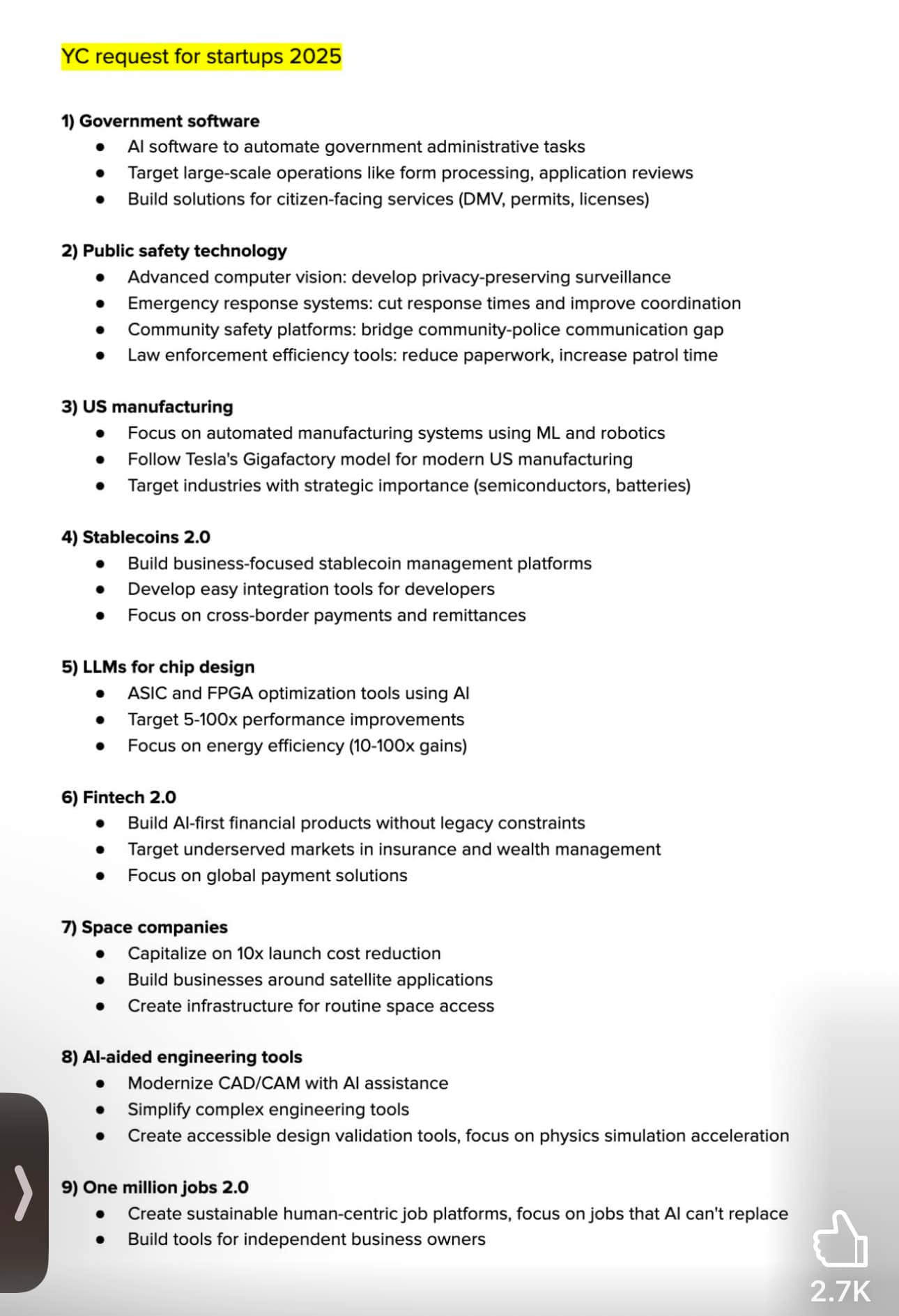
  • 1. Government Software
    • Build a mobile app to streamline online vehicle registration and tax payments.
    • Create AI tools to simplify and automate college admission processes.
    • Develop a platform to automate local government complaint management.

    2. Public Safety Technology
    • Develop an AI-powered emergency alert app for local communities.
    • Create a digital tool to track and report missing persons effectively.
    • Build a mobile platform for efficient neighborhood watch coordination.

    3. US Manufacturing
    • Design affordable robotic arms for local manufacturing industries.
    • Develop IoT sensors to monitor factory energy efficiency.
    • Build 3D printing solutions for small-scale businesses in Pakistan.

    4. Stablecoins 2.0
    • Create a stablecoin wallet for secure remittance transfers to rural areas.
    • Develop a blockchain-based platform for microloans in local communities.
    • Build tools for students to learn and transact in cryptocurrency safely.

    5. LLMs for Chip Design
    • Build AI tools to optimize solar panel chips for local energy use.
    • Create software to improve efficiency in smartphone chip manufacturing.
    • Design low-cost AI-powered simulation tools for student projects.

    6. Fintech 2.0
    • Develop an app to provide microinsurance for daily wage earners.
    • Create AI-based savings plans tailored for Pakistani students.
    • Build a mobile platform for digital zakat and charity management.

    7. Space Companies
    • Design satellite kits for educational use in schools and colleges.
    • Create software to simulate satellite launches for training purposes.
    • Build tools to track weather using satellite data for agriculture.

    8. AI-Aided Engineering Tools
    • Develop an AI-powered app to teach CAD/CAM to engineering students.
    • Create simulation tools to visualize building designs before construction.
    • Build AI plugins to optimize engineering software for Pakistani industries.

    9. One Million Jobs 2.0
    • Build an app connecting freelancers to international clients.
    • Create a platform offering AI-enhanced tools for small businesses.
    • Develop a job training portal focused on high-demand remote skills.
    1. Government Software • Build a mobile app to streamline online vehicle registration and tax payments. • Create AI tools to simplify and automate college admission processes. • Develop a platform to automate local government complaint management. 2. Public Safety Technology • Develop an AI-powered emergency alert app for local communities. • Create a digital tool to track and report missing persons effectively. • Build a mobile platform for efficient neighborhood watch coordination. 3. US Manufacturing • Design affordable robotic arms for local manufacturing industries. • Develop IoT sensors to monitor factory energy efficiency. • Build 3D printing solutions for small-scale businesses in Pakistan. 4. Stablecoins 2.0 • Create a stablecoin wallet for secure remittance transfers to rural areas. • Develop a blockchain-based platform for microloans in local communities. • Build tools for students to learn and transact in cryptocurrency safely. 5. LLMs for Chip Design • Build AI tools to optimize solar panel chips for local energy use. • Create software to improve efficiency in smartphone chip manufacturing. • Design low-cost AI-powered simulation tools for student projects. 6. Fintech 2.0 • Develop an app to provide microinsurance for daily wage earners. • Create AI-based savings plans tailored for Pakistani students. • Build a mobile platform for digital zakat and charity management. 7. Space Companies • Design satellite kits for educational use in schools and colleges. • Create software to simulate satellite launches for training purposes. • Build tools to track weather using satellite data for agriculture. 8. AI-Aided Engineering Tools • Develop an AI-powered app to teach CAD/CAM to engineering students. • Create simulation tools to visualize building designs before construction. • Build AI plugins to optimize engineering software for Pakistani industries. 9. One Million Jobs 2.0 • Build an app connecting freelancers to international clients. • Create a platform offering AI-enhanced tools for small businesses. • Develop a job training portal focused on high-demand remote skills.
    0 Comentários 0 Compartilhamentos 304 Visualizações
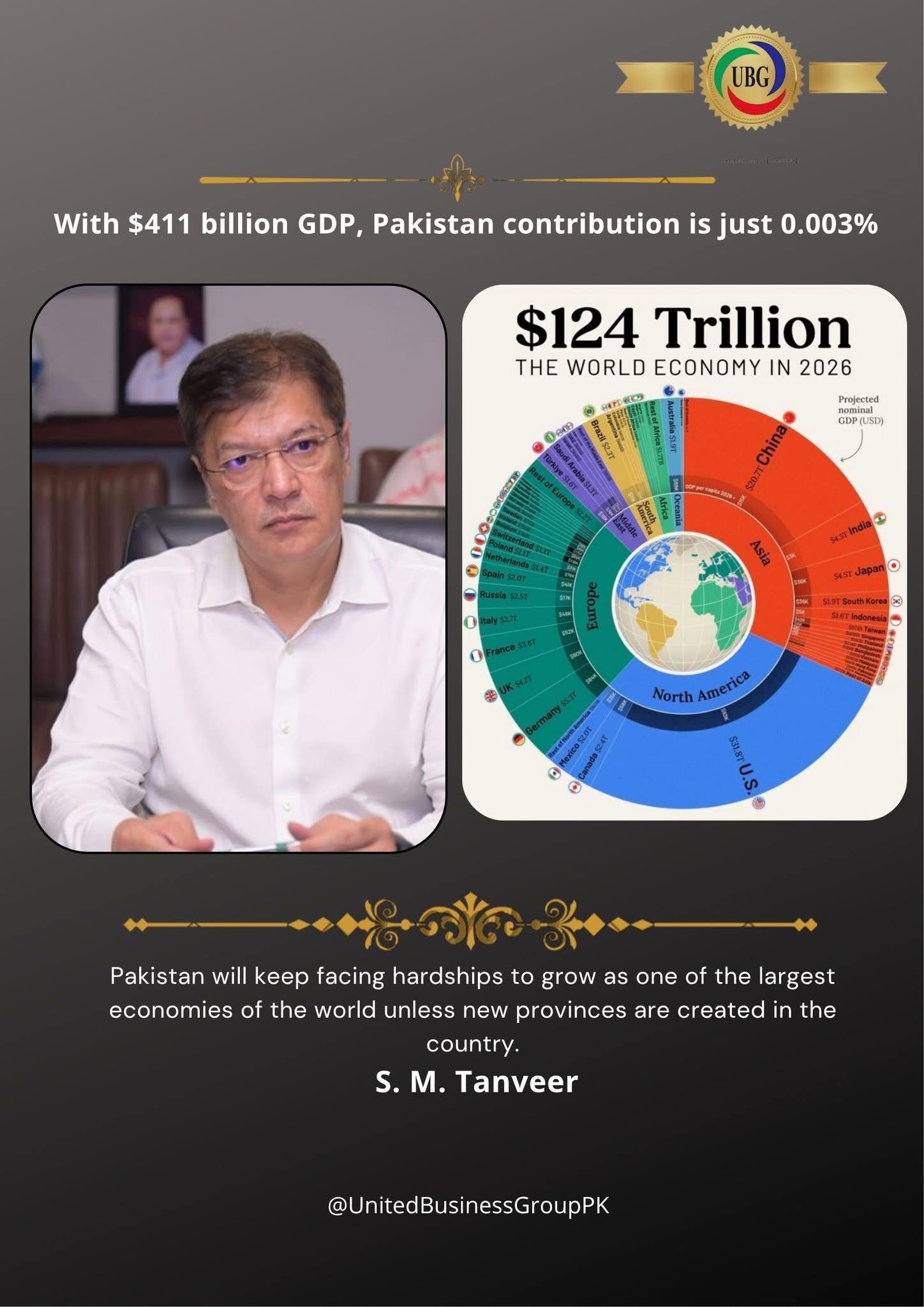
  • Thank you for sharing SM Tanveer

    How AI Can Help Pakistan Become a 10 Trillion Dollar Economy by 2030
    By Rehan Allahwala

    Artificial Intelligence (AI) is the most powerful tool in human history. It’s not just changing the world — it’s creating a new one. For Pakistan, AI is not a luxury; it’s the only fast track to massive growth. If we act with unity, focus, and speed, we can build a $10 trillion economy by 2030 — not by waiting for foreign aid, but by unlocking the power inside our people through AI.

    Here’s how it can happen in just five years.


    AI Will Make Every Pakistani More Productive

    AI can make our people 5 to 10 times more efficient.
    A teacher can teach 10,000 students through AI tools.
    A farmer can predict crop yield and save fertilizer using AI sensors.
    A small business can advertise globally using ChatGPT, Canva, and AI marketing tools.

    If even half of Pakistan’s workforce starts using AI daily, our total national productivity will skyrocket — just as China used machines to multiply production in the 1980s, Pakistan can use AI in the 2020s.


    AI Will Create New Million-Dollar Industries

    AI will not only improve what we already do — it will create entirely new industries.
    AI-driven exports like software, design, video creation, and automation services can easily cross $500 billion a year within five years.

    Imagine millions of Pakistanis earning globally by offering AI solutions, content creation, voiceovers, and coding — right from their homes. The world now buys digital products, and Pakistan can become the factory of that digital world.


    AI Will Transform Education and Skills

    In every Rehan School, we have already seen what AI can do. A student who could not speak English last year can now learn from ChatGPT, YouTube, and AI tutors in months.

    If we make AI literacy a national goal, every child in Pakistan can learn faster than ever before — English, business, science, design — everything is now one voice command away.
    With 10 million AI-skilled students and freelancers, we can generate over $1 trillion in new digital income by 2030.


    AI Will Fix Government and Corruption

    AI can make our government smarter, faster, and cleaner.
    We can use AI to collect taxes, manage traffic, monitor schools, and plan cities with no human delay or corruption.
    Just digitizing and automating government systems can save billions of rupees every month, which can be invested in infrastructure, health, and innovation.

    When government becomes transparent and efficient, investors return. That’s how China built trust and progress — through central planning powered by data. Pakistan can do it faster with AI.


    AI Will Power the Green Economy

    AI can help Pakistan lead the global green revolution.
    We can use AI to monitor forests, plant trees with drones, manage solar energy grids, and trade carbon credits globally.
    Pakistan can earn billions in green exports by turning its deserts and mountains into renewable energy farms.
    AI will guide every decision — how much to plant, where to build, when to sell — making our green economy smart and profitable.


    The 2030 Vision

    If we combine these five steps — productivity, new industries, education, governance, and green growth — Pakistan can:
    • Double its GDP every 2 years.
    • Create 30 million new jobs.
    • Train 100 million Pakistanis to use AI.
    • Earn over $1 trillion annually in exports by 2030.

    This is not a fantasy — it’s math and mindset.
    AI is like electricity — once we plug in, everything lights up.


    Final Message

    The world is not waiting.
    Every student, every teacher, every entrepreneur must now say:
    “AI is my tool, not my threat.”

    Let’s make Pakistan the first developing country to rise to a $10 trillion economy through Artificial Intelligence.
    If China used factories to grow, Pakistan will use minds.

    The revolution has already begun.
    Rehan School – Building AI Leaders for a 10 Trillion Dollar Pakistan.
    Thank you for sharing SM Tanveer How AI Can Help Pakistan Become a 10 Trillion Dollar Economy by 2030 By Rehan Allahwala Artificial Intelligence (AI) is the most powerful tool in human history. It’s not just changing the world — it’s creating a new one. For Pakistan, AI is not a luxury; it’s the only fast track to massive growth. If we act with unity, focus, and speed, we can build a $10 trillion economy by 2030 — not by waiting for foreign aid, but by unlocking the power inside our people through AI. Here’s how it can happen in just five years. ⸻ 1️⃣ AI Will Make Every Pakistani More Productive AI can make our people 5 to 10 times more efficient. A teacher can teach 10,000 students through AI tools. A farmer can predict crop yield and save fertilizer using AI sensors. A small business can advertise globally using ChatGPT, Canva, and AI marketing tools. If even half of Pakistan’s workforce starts using AI daily, our total national productivity will skyrocket — just as China used machines to multiply production in the 1980s, Pakistan can use AI in the 2020s. ⸻ 2️⃣ AI Will Create New Million-Dollar Industries AI will not only improve what we already do — it will create entirely new industries. AI-driven exports like software, design, video creation, and automation services can easily cross $500 billion a year within five years. Imagine millions of Pakistanis earning globally by offering AI solutions, content creation, voiceovers, and coding — right from their homes. The world now buys digital products, and Pakistan can become the factory of that digital world. ⸻ 3️⃣ AI Will Transform Education and Skills In every Rehan School, we have already seen what AI can do. A student who could not speak English last year can now learn from ChatGPT, YouTube, and AI tutors in months. If we make AI literacy a national goal, every child in Pakistan can learn faster than ever before — English, business, science, design — everything is now one voice command away. With 10 million AI-skilled students and freelancers, we can generate over $1 trillion in new digital income by 2030. ⸻ 4️⃣ AI Will Fix Government and Corruption AI can make our government smarter, faster, and cleaner. We can use AI to collect taxes, manage traffic, monitor schools, and plan cities with no human delay or corruption. Just digitizing and automating government systems can save billions of rupees every month, which can be invested in infrastructure, health, and innovation. When government becomes transparent and efficient, investors return. That’s how China built trust and progress — through central planning powered by data. Pakistan can do it faster with AI. ⸻ 5️⃣ AI Will Power the Green Economy AI can help Pakistan lead the global green revolution. We can use AI to monitor forests, plant trees with drones, manage solar energy grids, and trade carbon credits globally. Pakistan can earn billions in green exports by turning its deserts and mountains into renewable energy farms. AI will guide every decision — how much to plant, where to build, when to sell — making our green economy smart and profitable. ⸻ 🌍 The 2030 Vision If we combine these five steps — productivity, new industries, education, governance, and green growth — Pakistan can: • Double its GDP every 2 years. • Create 30 million new jobs. • Train 100 million Pakistanis to use AI. • Earn over $1 trillion annually in exports by 2030. This is not a fantasy — it’s math and mindset. AI is like electricity — once we plug in, everything lights up. ⸻ ⚡ Final Message The world is not waiting. Every student, every teacher, every entrepreneur must now say: “AI is my tool, not my threat.” Let’s make Pakistan the first developing country to rise to a $10 trillion economy through Artificial Intelligence. If China used factories to grow, Pakistan will use minds. The revolution has already begun. 🇵🇰✨ Rehan School – Building AI Leaders for a 10 Trillion Dollar Pakistan.
    0 Comentários 0 Compartilhamentos 106 Visualizações
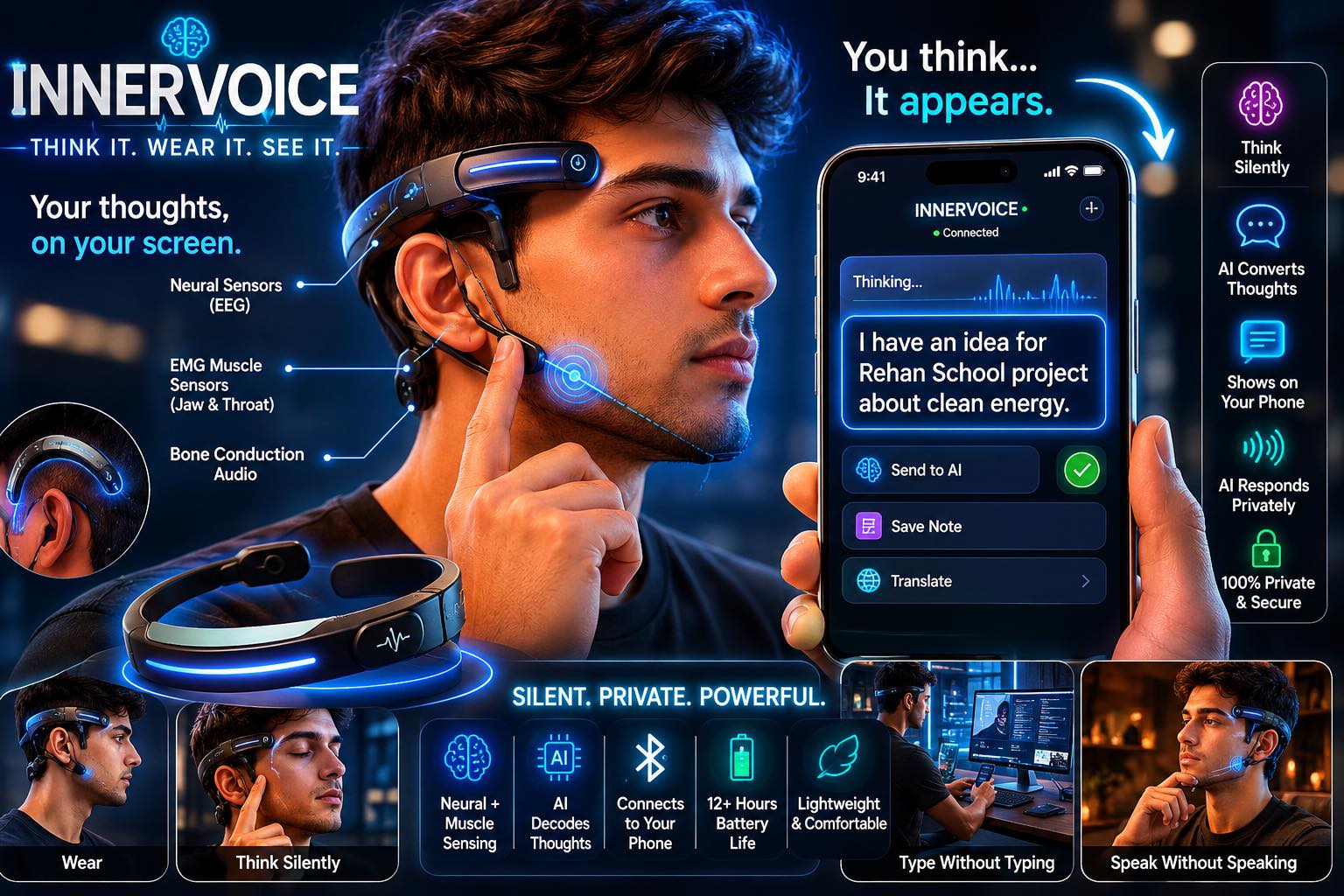
  • InnerVoice Band

    The Future Device That Turns Silent Thoughts Into Text

    For thousands of years, humans have used:

    * speaking,
    * writing,
    * keyboards,
    * touchscreens,
    to communicate with machines and each other.

    But a new era is beginning.

    A future is coming where humans may no longer need to:

    * type,
    * press buttons,
    * or even speak aloud.

    Instead, computers may understand:

    intention itself.

    One possible step toward that future is a device called:

    InnerVoice Band

    A wearable AI-powered communication device that converts silent inner speech into text on a phone, computer, or TV screen.


    What Is the InnerVoice Band?

    The InnerVoice Band is a wearable device placed around:

    * the jaw,
    * ear,
    * neck,
    * or glasses frame.

    The user silently “speaks” in their mind.

    For example:

    “Message Abdullah I am coming.”

    The device detects tiny muscle and nerve signals generated during internal speech and converts them into:

    * text,
    * commands,
    * notes,
    * AI prompts,
    displayed instantly on a phone or screen.

    The person never speaks aloud.

    To an outside observer, it appears almost magical.


    The Science Behind It

    The device does not truly “read minds.”

    Instead, it reads:

    subvocal signals.

    When humans silently talk in their head, the brain still sends microscopic electrical signals to:

    * jaw muscles,
    * throat muscles,
    * tongue muscles.

    These signals are extremely weak but real.

    The technology used to detect them is called:

    Electromyography (EMG)

    EMG sensors measure tiny electrical activity in muscles.

    Even when a person does not visibly move their mouth, the body often prepares speech internally.

    The InnerVoice Band captures these hidden signals.


    How the Device Works

    Step 1 — Internal Speech

    The user silently thinks:

    “Open WhatsApp.”


    Step 2 — Signal Detection

    EMG sensors detect:

    * jaw micro-movements,
    * throat activation,
    * muscle electrical patterns.

    Optional EEG sensors may also detect general neural activity.


    Step 3 — AI Interpretation

    An AI model analyzes the signals.

    The AI predicts:

    * words,
    * commands,
    * sentences,
    using:
    * machine learning,
    * language prediction,
    * personal training data.

    This is similar to how ChatGPT predicts sentences from incomplete information.


    Step 4 — Output

    The text appears on:

    * phone,
    * computer,
    * AR glasses,
    * TV screen.

    Example:

    “Open WhatsApp.”

    Or:

    “I have an idea for a solar startup.”


    Hardware Needed

    1. EMG Sensors

    These detect electrical muscle activity.

    Possible components:

    * MyoWare EMG sensor,
    * ADS1299 bio-signal chips,
    * custom dry electrodes.

    Cost:
    ~$5–20 per sensor.


    2. Microcontroller / AI Processor

    Possible options:

    * ESP32,
    * Raspberry Pi Zero,
    * Qualcomm AI chip,
    * NVIDIA Jetson Nano.

    This handles:

    * signal collection,
    * Bluetooth,
    * preprocessing.


    3. Bluetooth Module

    Sends data to:

    * smartphone,
    * computer,
    * cloud AI.

    Most modern chips already include Bluetooth.


    4. AI Software

    The AI system performs:

    * signal interpretation,
    * noise filtering,
    * word prediction,
    * personalization.

    Possible software stack:

    * Python,
    * TensorFlow,
    * PyTorch,
    * OpenAI APIs,
    * Whisper-like speech models.


    5. Battery

    Small lithium battery:

    * 8–12 hour runtime.

    Rechargeable through USB-C.


    6. Bone Conduction Speaker (Optional)

    The AI can respond privately through skull vibrations.

    Only the wearer hears the response.

    Like:

    * a silent AI whisper assistant.


    Why AI Changed Everything

    Ten years ago, this device would have been nearly impossible.

    The signals from the body are:

    * noisy,
    * weak,
    * inconsistent.

    But modern AI can now:

    * predict missing information,
    * infer intent,
    * autocomplete human language.

    This changes the problem completely.

    Even imperfect muscle signals can become useful when combined with:

    large language models.


    Training the Device

    Every human has different muscle patterns.

    So the device must learn:

    * your speech style,
    * your jaw signals,
    * your vocabulary.

    The user trains it by:

    1. silently speaking phrases,
    2. confirming correct outputs,
    3. allowing AI personalization.

    Over time:
    accuracy improves dramatically.

    Similar to:

    * Face ID learning your face,
    * keyboard autocorrect learning your typing style.


    Realistic Version 1 Features

    Possible Today

    Silent note taking
    Silent texting
    AI assistant control
    Smart home commands
    Translation
    Accessibility communication
    Cursor control
    AR glasses interaction


    Not Yet Realistic

    Reading random thoughts
    Reading dreams
    Detecting secrets automatically
    Perfect emotion reading
    Full telepathy


    Best Initial Markets

    1. Disabled Communication

    People unable to speak could communicate silently.

    Massive humanitarian impact.


    2. Professionals

    Silent note taking during meetings.


    3. Military & Security

    Silent communication without radios.


    4. AR/VR Industry

    Future glasses need post-keyboard interfaces.


    5. AI Power Users

    Fast interaction with AI assistants.


    Challenges

    Noise

    Human bodies generate many overlapping signals.


    Accuracy

    Different users speak differently internally.


    Privacy

    People may fear “mind reading.”

    Marketing must emphasize:

    “Intentional silent speech only.”


    Comfort

    The wearable must become:

    * lightweight,
    * fashionable,
    * all-day wearable.


    Future Possibilities

    In the future, devices like InnerVoice Band may merge with:

    * smart glasses,
    * AI assistants,
    * neural wristbands,
    * earbuds.

    Humans may eventually interact with computers using:

    intention instead of typing.

    The keyboard may become:

    * outdated,
    * slow,
    * unnecessary.

    Just as smartphones replaced many older technologies, silent AI interfaces may replace:

    * keyboards,
    * mice,
    * touchscreens,
    over the next few decades.


    Final Thought

    Human history is the story of improving communication:

    * cave drawings,
    * language,
    * writing,
    * printing,
    * telephones,
    * internet,
    * smartphones,
    * AI.

    The next step may be:

    thought-to-computer communication.

    Not magic.
    Not telepathy.
    But a powerful combination of:

    * biology,
    * sensors,
    * AI,
    * and human intention.

    And the first generation of that future is already beginning.

    InnerVoice Band The Future Device That Turns Silent Thoughts Into Text For thousands of years, humans have used: * speaking, * writing, * keyboards, * touchscreens, to communicate with machines and each other. But a new era is beginning. A future is coming where humans may no longer need to: * type, * press buttons, * or even speak aloud. Instead, computers may understand: intention itself. One possible step toward that future is a device called: InnerVoice Band A wearable AI-powered communication device that converts silent inner speech into text on a phone, computer, or TV screen. ⸻ What Is the InnerVoice Band? The InnerVoice Band is a wearable device placed around: * the jaw, * ear, * neck, * or glasses frame. The user silently “speaks” in their mind. For example: “Message Abdullah I am coming.” The device detects tiny muscle and nerve signals generated during internal speech and converts them into: * text, * commands, * notes, * AI prompts, displayed instantly on a phone or screen. The person never speaks aloud. To an outside observer, it appears almost magical. ⸻ The Science Behind It The device does not truly “read minds.” Instead, it reads: subvocal signals. When humans silently talk in their head, the brain still sends microscopic electrical signals to: * jaw muscles, * throat muscles, * tongue muscles. These signals are extremely weak but real. The technology used to detect them is called: Electromyography (EMG) EMG sensors measure tiny electrical activity in muscles. Even when a person does not visibly move their mouth, the body often prepares speech internally. The InnerVoice Band captures these hidden signals. ⸻ How the Device Works Step 1 — Internal Speech The user silently thinks: “Open WhatsApp.” ⸻ Step 2 — Signal Detection EMG sensors detect: * jaw micro-movements, * throat activation, * muscle electrical patterns. Optional EEG sensors may also detect general neural activity. ⸻ Step 3 — AI Interpretation An AI model analyzes the signals. The AI predicts: * words, * commands, * sentences, using: * machine learning, * language prediction, * personal training data. This is similar to how ChatGPT predicts sentences from incomplete information. ⸻ Step 4 — Output The text appears on: * phone, * computer, * AR glasses, * TV screen. Example: “Open WhatsApp.” Or: “I have an idea for a solar startup.” ⸻ Hardware Needed 1. EMG Sensors These detect electrical muscle activity. Possible components: * MyoWare EMG sensor, * ADS1299 bio-signal chips, * custom dry electrodes. Cost: ~$5–20 per sensor. ⸻ 2. Microcontroller / AI Processor Possible options: * ESP32, * Raspberry Pi Zero, * Qualcomm AI chip, * NVIDIA Jetson Nano. This handles: * signal collection, * Bluetooth, * preprocessing. ⸻ 3. Bluetooth Module Sends data to: * smartphone, * computer, * cloud AI. Most modern chips already include Bluetooth. ⸻ 4. AI Software The AI system performs: * signal interpretation, * noise filtering, * word prediction, * personalization. Possible software stack: * Python, * TensorFlow, * PyTorch, * OpenAI APIs, * Whisper-like speech models. ⸻ 5. Battery Small lithium battery: * 8–12 hour runtime. Rechargeable through USB-C. ⸻ 6. Bone Conduction Speaker (Optional) The AI can respond privately through skull vibrations. Only the wearer hears the response. Like: * a silent AI whisper assistant. ⸻ Why AI Changed Everything Ten years ago, this device would have been nearly impossible. The signals from the body are: * noisy, * weak, * inconsistent. But modern AI can now: * predict missing information, * infer intent, * autocomplete human language. This changes the problem completely. Even imperfect muscle signals can become useful when combined with: large language models. ⸻ Training the Device Every human has different muscle patterns. So the device must learn: * your speech style, * your jaw signals, * your vocabulary. The user trains it by: 1. silently speaking phrases, 2. confirming correct outputs, 3. allowing AI personalization. Over time: accuracy improves dramatically. Similar to: * Face ID learning your face, * keyboard autocorrect learning your typing style. ⸻ Realistic Version 1 Features Possible Today ✅ Silent note taking ✅ Silent texting ✅ AI assistant control ✅ Smart home commands ✅ Translation ✅ Accessibility communication ✅ Cursor control ✅ AR glasses interaction ⸻ Not Yet Realistic ❌ Reading random thoughts ❌ Reading dreams ❌ Detecting secrets automatically ❌ Perfect emotion reading ❌ Full telepathy ⸻ Best Initial Markets 1. Disabled Communication People unable to speak could communicate silently. Massive humanitarian impact. ⸻ 2. Professionals Silent note taking during meetings. ⸻ 3. Military & Security Silent communication without radios. ⸻ 4. AR/VR Industry Future glasses need post-keyboard interfaces. ⸻ 5. AI Power Users Fast interaction with AI assistants. ⸻ Challenges Noise Human bodies generate many overlapping signals. ⸻ Accuracy Different users speak differently internally. ⸻ Privacy People may fear “mind reading.” Marketing must emphasize: “Intentional silent speech only.” ⸻ Comfort The wearable must become: * lightweight, * fashionable, * all-day wearable. ⸻ Future Possibilities In the future, devices like InnerVoice Band may merge with: * smart glasses, * AI assistants, * neural wristbands, * earbuds. Humans may eventually interact with computers using: intention instead of typing. The keyboard may become: * outdated, * slow, * unnecessary. Just as smartphones replaced many older technologies, silent AI interfaces may replace: * keyboards, * mice, * touchscreens, over the next few decades. ⸻ Final Thought Human history is the story of improving communication: * cave drawings, * language, * writing, * printing, * telephones, * internet, * smartphones, * AI. The next step may be: thought-to-computer communication. Not magic. Not telepathy. But a powerful combination of: * biology, * sensors, * AI, * and human intention. And the first generation of that future is already beginning.

    0 Comentários 0 Compartilhamentos 502 Visualizações
  • Use light #sensors and save #energy !
    Use light #sensors and save #energy !
    0 Comentários 0 Compartilhamentos 105 Visualizações 0
Páginas impulsionada