• #rsisb
    Roll no.239
    Canva Post no.49
    Foundation Level


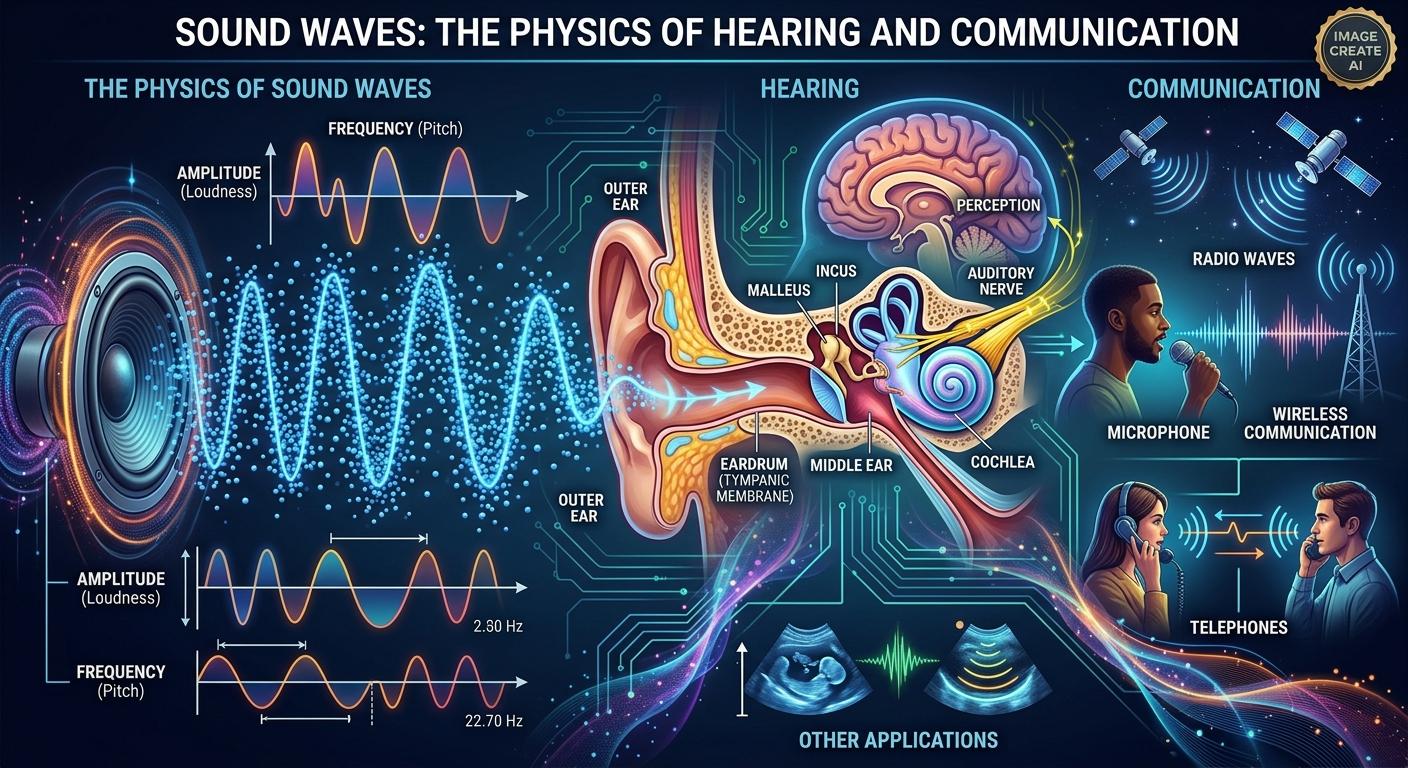
    Sound is an essential part of our everyday lives. We hear people speaking, music playing, birds singing, and many other sounds around us. But have you ever wondered how sound travels from one place to another? The answer lies in **sound waves**—vibrations that carry energy through a medium such as air, water, or solids.

    Sound is produced when an object **vibrates**. These vibrations cause nearby particles to move back and forth, creating a series of compressions and rarefactions. This movement travels outward as a wave. Unlike light, sound cannot travel through a vacuum because it needs particles to carry the vibrations.

    The characteristics of sound include **frequency, amplitude, wavelength, and speed**. Frequency determines the **pitch** of a sound: higher frequencies produce higher-pitched sounds, while lower frequencies produce deeper sounds. Amplitude is related to the **loudness** of a sound. Larger vibrations generally create louder sounds.

    Our ears are remarkable organs designed to detect these waves. Sound waves enter the ear and cause the **eardrum** to vibrate. These vibrations are transmitted through tiny bones in the middle ear and eventually reach the inner ear, where specialized cells convert them into electrical signals. The brain then interprets these signals as meaningful sounds.

    Sound waves also play a vital role in **human communication**. When we speak, our vocal cords vibrate and produce sound waves. These waves travel through the air to another person's ears, allowing them to hear and understand our words. Modern technology uses the same principles in telephones, microphones, radios, and other communication devices.

    The study of sound helps us understand not only hearing and communication but also music, medicine, engineering, and technology. From the simple vibration of a guitar string to advanced ultrasound technology, sound waves demonstrate the fascinating connection between **physics and everyday life**.

    **Sound is more than something we hear—it is energy in motion, carrying information and connecting us with the world around us.**

    #SoundWaves #Physics #Science #Hearing #Communication #Education #Learning #Waves #Technology
    #rsisb Roll no.239 Canva Post no.49 Foundation Level Sound is an essential part of our everyday lives. We hear people speaking, music playing, birds singing, and many other sounds around us. But have you ever wondered how sound travels from one place to another? The answer lies in **sound waves**—vibrations that carry energy through a medium such as air, water, or solids. Sound is produced when an object **vibrates**. These vibrations cause nearby particles to move back and forth, creating a series of compressions and rarefactions. This movement travels outward as a wave. Unlike light, sound cannot travel through a vacuum because it needs particles to carry the vibrations. The characteristics of sound include **frequency, amplitude, wavelength, and speed**. Frequency determines the **pitch** of a sound: higher frequencies produce higher-pitched sounds, while lower frequencies produce deeper sounds. Amplitude is related to the **loudness** of a sound. Larger vibrations generally create louder sounds. Our ears are remarkable organs designed to detect these waves. Sound waves enter the ear and cause the **eardrum** to vibrate. These vibrations are transmitted through tiny bones in the middle ear and eventually reach the inner ear, where specialized cells convert them into electrical signals. The brain then interprets these signals as meaningful sounds. Sound waves also play a vital role in **human communication**. When we speak, our vocal cords vibrate and produce sound waves. These waves travel through the air to another person's ears, allowing them to hear and understand our words. Modern technology uses the same principles in telephones, microphones, radios, and other communication devices. The study of sound helps us understand not only hearing and communication but also music, medicine, engineering, and technology. From the simple vibration of a guitar string to advanced ultrasound technology, sound waves demonstrate the fascinating connection between **physics and everyday life**. 🌟 **Sound is more than something we hear—it is energy in motion, carrying information and connecting us with the world around us.** #SoundWaves #Physics #Science #Hearing #Communication #Education #Learning #Waves #Technology 🔊🌍🎵
    0 Yorumlar 0 hisse senetleri 737 Views
  • #rsisb
    Roll no 248
    Foundation level
    Call Annie no 15
    **“Water” – The Origin of Life and Language **

    Water is one of the most amazing and essential substances on Earth. From supporting the first forms of life to shaping civilizations, cultures, and even the words we use, water has played a powerful role in human history.

    In this **25-minute exploration**, we’ll discover why water is called the **source of life**, how it helped life develop on Earth, and how rivers, oceans, and rain have influenced human communication, stories, and language.

    Let’s dive deep into the fascinating connection between **water, life, humans, and language!**

    #Water #OriginOfLife #Language #Science #Nature #Learning #Knowledge #Biology #Earth #Curiosity #Education #WaterIsLife #ExploreAndLearn #StudentLife
    #rsisb Roll no 248 Foundation level Call Annie no 15 💧 **“Water” – The Origin of Life and Language 🌍🧬🗣️** Water is one of the most amazing and essential substances on Earth. 🌊 From supporting the first forms of life to shaping civilizations, cultures, and even the words we use, water has played a powerful role in human history. 🌱💙 In this **25-minute exploration**, we’ll discover why water is called the **source of life**, how it helped life develop on Earth, and how rivers, oceans, and rain have influenced human communication, stories, and language. 🌧️🌊📚 Let’s dive deep into the fascinating connection between **water, life, humans, and language!** 🚀💡 #Water 💧 #OriginOfLife 🧬 #Language 🗣️ #Science 🔬 #Nature 🌍 #Learning 📚 #Knowledge 💡 #Biology 🧬 #Earth 🌎 #Curiosity 🔍 #Education 🎓 #WaterIsLife 💙 #ExploreAndLearn 🚀 #StudentLife 📖
    0 Yorumlar 0 hisse senetleri 907 Views 7
  • #rsisb
    Roll No.269
    Foundation Level
    Story Post No.10


    **Acids and Bases: The Balance of Nature **

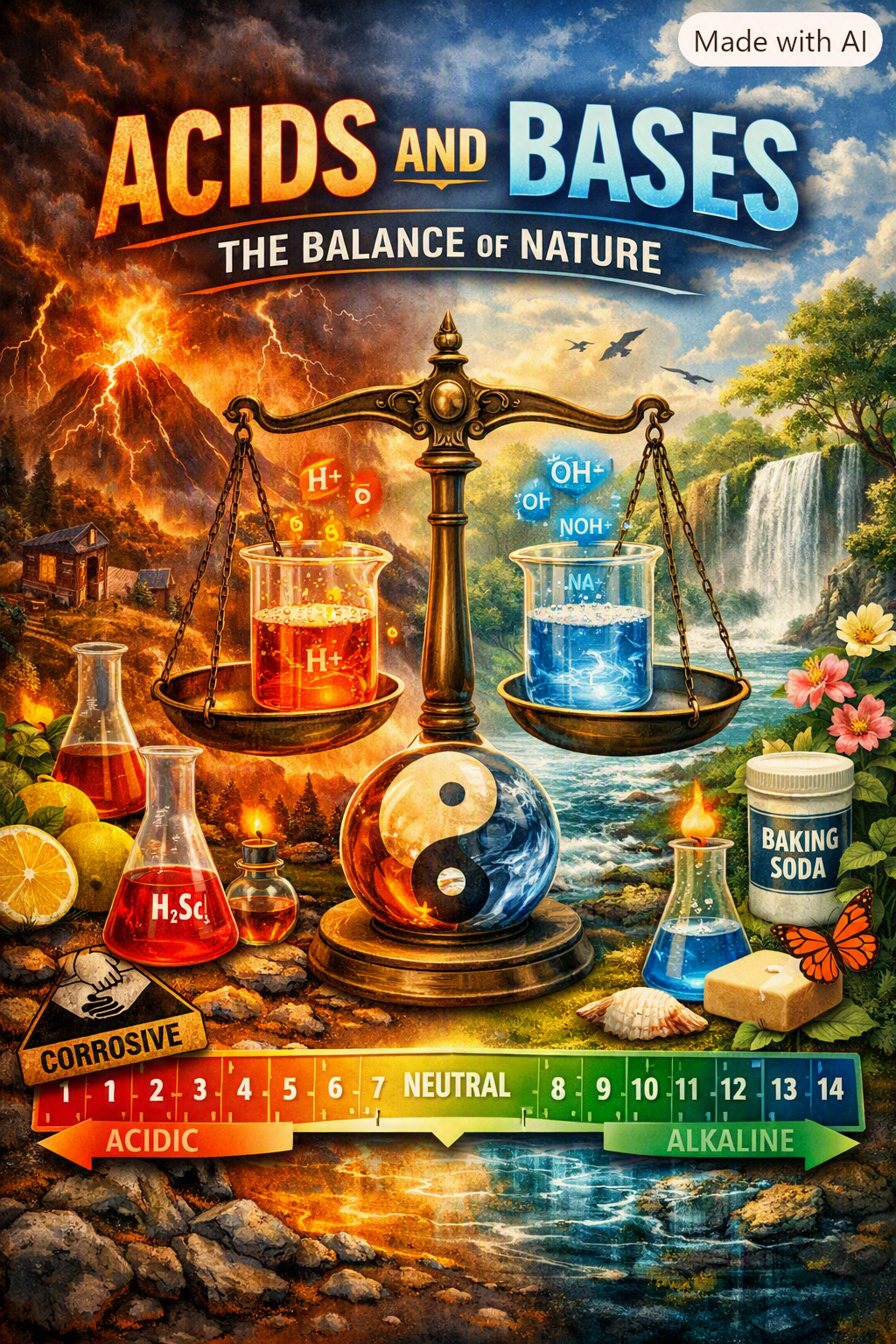
    Have you ever wondered why lemons taste sour , why soap feels slippery , or how scientists measure the strength of different substances? The answer lies in the fascinating world of **acids and bases!**

    In this video, we explore **“Acids and Bases: The Balance of Nature”** and discover how these two important groups of substances interact with each other. Acids and bases are found everywhere around us—from the foods we eat and the drinks we enjoy to our environment, soil, water, and many everyday products.

    We’ll learn about the **pH scale**, the difference between acids and bases, neutral substances, indicators, and the process of **neutralization**. Understanding these concepts helps us see how chemistry plays an important role in everyday life.

    **In This Video, You’ll Learn:**
    What acids and bases are
    The meaning of the pH scale
    Examples of acids and bases in daily life
    What neutral substances are
    How indicators help identify acids and bases
    What happens during neutralization
    Why the balance between acids and bases is important in nature

    From the chemistry of our oceans and soil to the food in our kitchens, acids and bases help maintain balance in the natural world.

    Whether you're a student, science lover, or simply curious about how the world works, this video will help make chemistry interesting and easy to understand!

    **Like, Share & Subscribe** for more educational videos and fascinating science topics!

    **Question:** Can you name one acidic substance and one basic substance you use in everyday life?

    #AcidsAndBases #Chemistry #Science #PHScale #ScienceEducation #LearnChemistry #ChemicalReactions #Neutralization #Nature #ScienceFacts #STEM #Education #LearningIsFun #ChemistryForStudents
    #rsisb Roll No.269 Foundation Level Story Post No.10 🧪 **Acids and Bases: The Balance of Nature 🌿⚖️** Have you ever wondered why lemons taste sour 🍋, why soap feels slippery 🧼, or how scientists measure the strength of different substances? 🤔 The answer lies in the fascinating world of **acids and bases!** 🔬✨ In this video, we explore **“Acids and Bases: The Balance of Nature”** and discover how these two important groups of substances interact with each other. Acids and bases are found everywhere around us—from the foods we eat 🍊 and the drinks we enjoy 🥤 to our environment, soil, water, and many everyday products. 🌍💧 We’ll learn about the **pH scale**, the difference between acids and bases, neutral substances, indicators, and the process of **neutralization**. 🧪📚 Understanding these concepts helps us see how chemistry plays an important role in everyday life. 🌱 **In This Video, You’ll Learn:** 🔹 What acids and bases are 🔹 The meaning of the pH scale 🔹 Examples of acids and bases in daily life 🔹 What neutral substances are 🔹 How indicators help identify acids and bases 🔹 What happens during neutralization 🔹 Why the balance between acids and bases is important in nature 🌍 From the chemistry of our oceans and soil to the food in our kitchens, acids and bases help maintain balance in the natural world. ⚖️🌿 🎓 Whether you're a student, science lover, or simply curious about how the world works, this video will help make chemistry interesting and easy to understand! 🧠🔬 👍 **Like, Share & Subscribe** for more educational videos and fascinating science topics! 🔔📖 💬 **Question:** Can you name one acidic substance and one basic substance you use in everyday life? 🤔🧪 #AcidsAndBases 🧪 #Chemistry 🔬 #Science 🌍 #PHScale ⚖️ #ScienceEducation 📚 #LearnChemistry 🧠 #ChemicalReactions ⚗️ #Neutralization 🧪 #Nature 🌿 #ScienceFacts 💡 #STEM 🚀 #Education 🎓 #LearningIsFun 😊 #ChemistryForStudents 📖
    0 Yorumlar 0 hisse senetleri 975 Views
  • #rsisb
    Roll No.269
    Foundation Level
    Story Post No.9

    Here’s a detailed YouTube description for your topic:

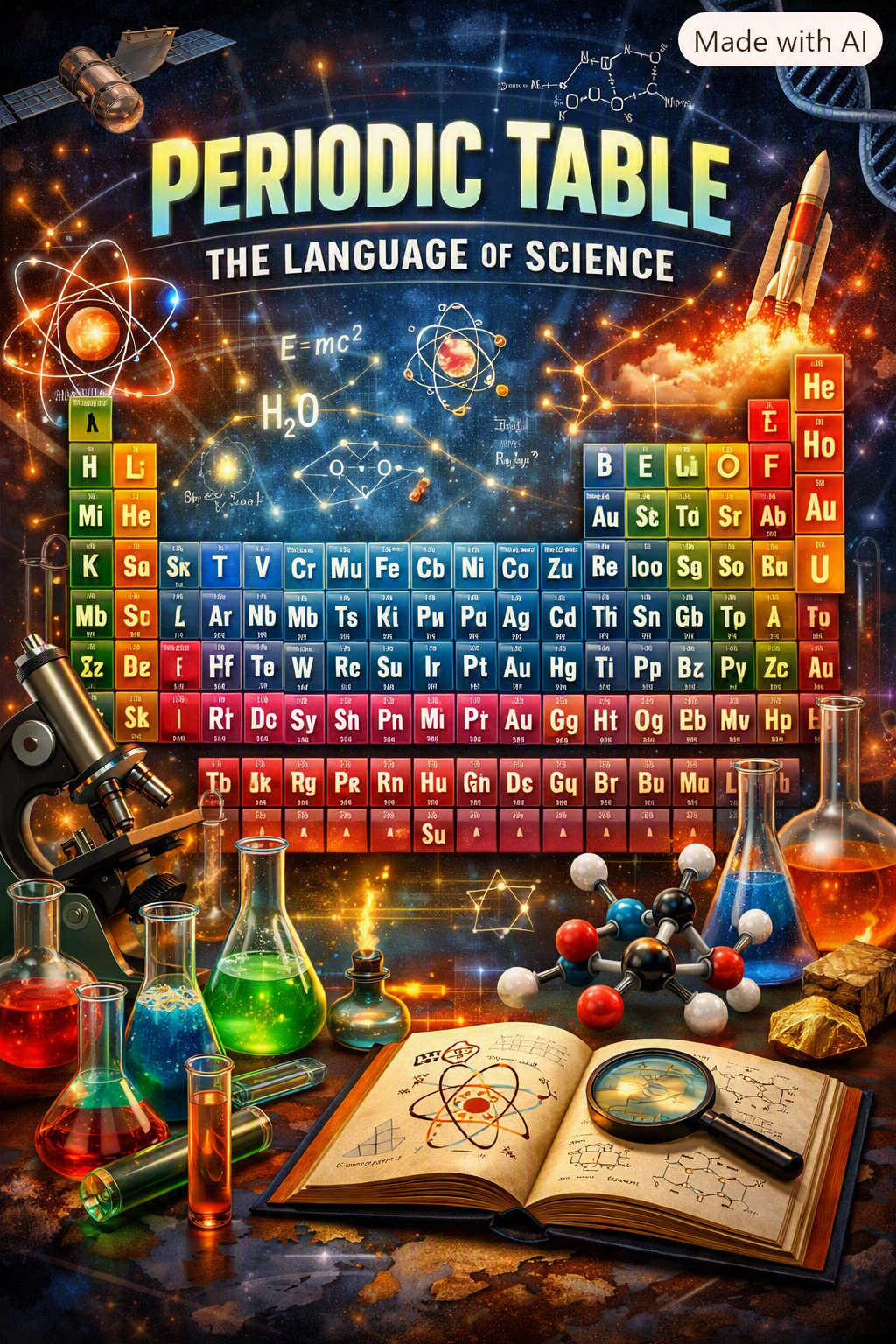
    **Periodic Table: The Language of Science **

    Have you ever wondered how scientists organize more than 100 different chemical elements? In this video, we explore the **Periodic Table**, one of the most important tools in the world of science!

    The Periodic Table is like a special language that helps scientists understand the elements that make up everything around us—from the air we breathe and the water we drink to the food we eat and the technology we use every day .

    In this video, we’ll learn about **chemical elements, atomic numbers, symbols, periods, groups, metals, non-metals, and noble gases**. We’ll also discover how the arrangement of elements helps us understand their properties and how they interact with one another.

    The Periodic Table is not just a chart—it is a **map of the building blocks of our universe! ** Whether you're a student, a science enthusiast, or simply curious about how the world works, this video will make the fascinating world of chemistry easier to understand.

    **What You’ll Learn:**
    What the Periodic Table is
    Why elements are arranged in a specific order
    What atomic numbers and symbols mean
    Understanding groups and periods
    Metals, non-metals, and metalloids
    How the Periodic Table helps scientists
    Interesting facts about chemical elements

    If you enjoyed this video, **Like, Share, and Subscribe** for more educational and interesting content!

    **Comment below:** Which chemical element do you find the most interesting?

    #PeriodicTable #Chemistry #Science #ChemicalElements #ScienceEducation #LearnScience #ChemistryForStudents #Education #ScienceFacts #STEM #AtomicNumbers #Elements #ScienceLovers #LearningIsFun #Knowledge
    #rsisb Roll No.269 Foundation Level Story Post No.9 Here’s a detailed YouTube description for your topic: 🧪 **Periodic Table: The Language of Science 🌍🔬** Have you ever wondered how scientists organize more than 100 different chemical elements? 🤔⚛️ In this video, we explore the **Periodic Table**, one of the most important tools in the world of science! 📚✨ The Periodic Table is like a special language that helps scientists understand the elements that make up everything around us—from the air we breathe 🌬️ and the water we drink 💧 to the food we eat 🍎 and the technology we use every day 📱💻. In this video, we’ll learn about **chemical elements, atomic numbers, symbols, periods, groups, metals, non-metals, and noble gases**. 🧪🔍 We’ll also discover how the arrangement of elements helps us understand their properties and how they interact with one another. The Periodic Table is not just a chart—it is a **map of the building blocks of our universe! 🌌⚛️** Whether you're a student, a science enthusiast, or simply curious about how the world works, this video will make the fascinating world of chemistry easier to understand. 🧠📖 🎓 **What You’ll Learn:** 🔹 What the Periodic Table is 🔹 Why elements are arranged in a specific order 🔹 What atomic numbers and symbols mean 🔹 Understanding groups and periods 🔹 Metals, non-metals, and metalloids 🔹 How the Periodic Table helps scientists 🔹 Interesting facts about chemical elements 👍 If you enjoyed this video, **Like, Share, and Subscribe** for more educational and interesting content! 🔔📚 💬 **Comment below:** Which chemical element do you find the most interesting? ⚛️🤔 #PeriodicTable 🧪 #Chemistry 🔬 #Science 🌍 #ChemicalElements ⚛️ #ScienceEducation 📚 #LearnScience 🧠 #ChemistryForStudents 🎓 #Education 📖 #ScienceFacts 💡 #STEM 🚀 #AtomicNumbers ⚛️ #Elements 🔍 #ScienceLovers 🔬 #LearningIsFun 😊 #Knowledge 📚
    0 Yorumlar 0 hisse senetleri 941 Views
  • #rsisb
    Roll no.247
    Foundation level

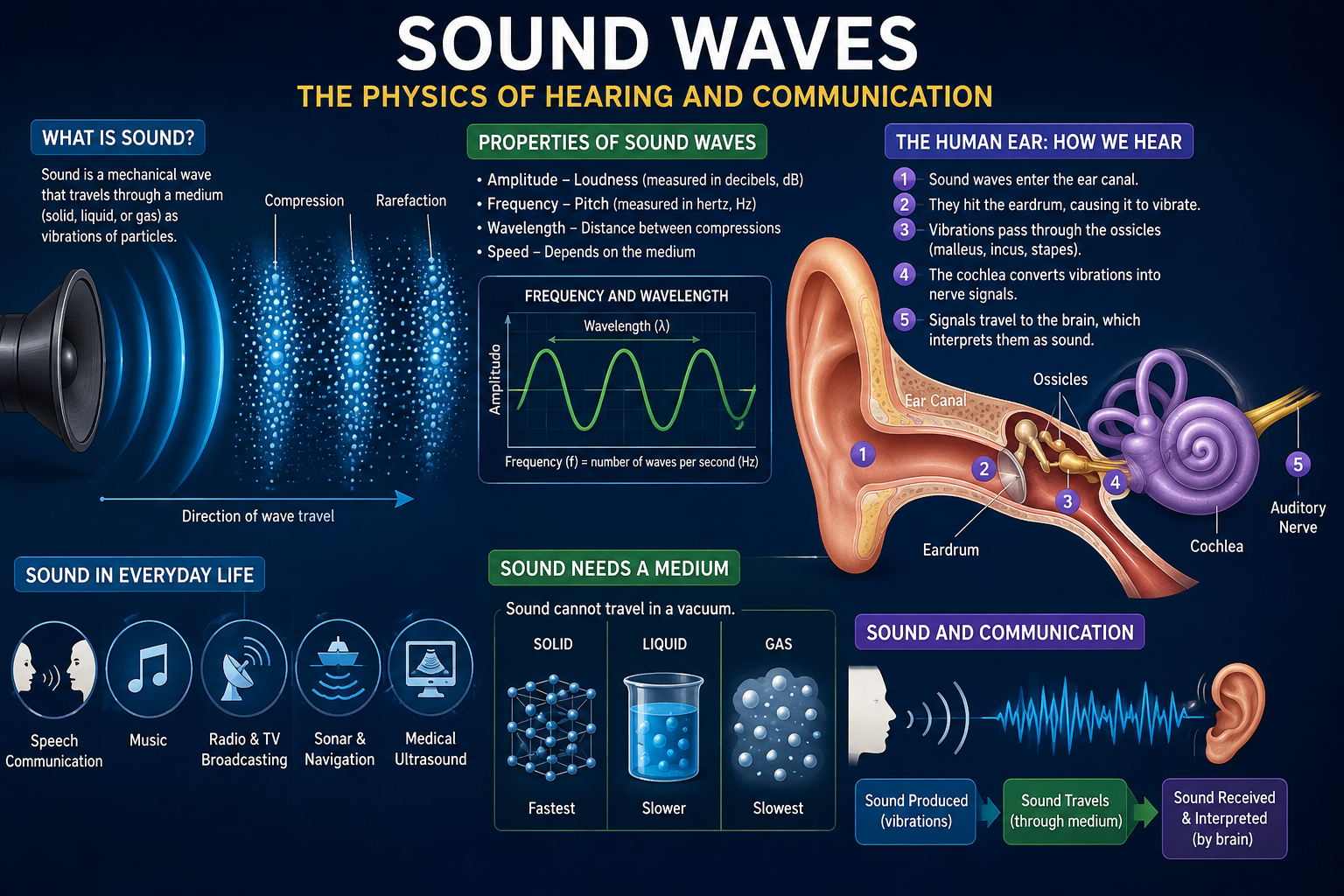
    # Sound Waves: The Physics of Hearing and Communication

    Have you ever wondered how a sound travels from one place to another? How does a musical instrument produce beautiful melodies? How can we hear someone speaking from across a room? The fascinating answer lies in the science of **sound waves!**

    In this exciting exploration of **“Sound Waves: The Physics of Hearing and Communication,”** we dive into the amazing world of sound and discover the physics behind one of the most important ways humans experience and understand the world around them.

    Sound is a form of energy that travels through a medium such as air, water, or solids. When an object vibrates, it causes nearby particles to vibrate, creating a wave that carries energy from one location to another. These vibrations eventually reach our ears, allowing our brains to recognize sounds.

    We’ll explore important concepts such as **frequency, wavelength, amplitude, speed, and pitch**. Understanding these properties helps explain why some sounds are high or low, loud or soft.

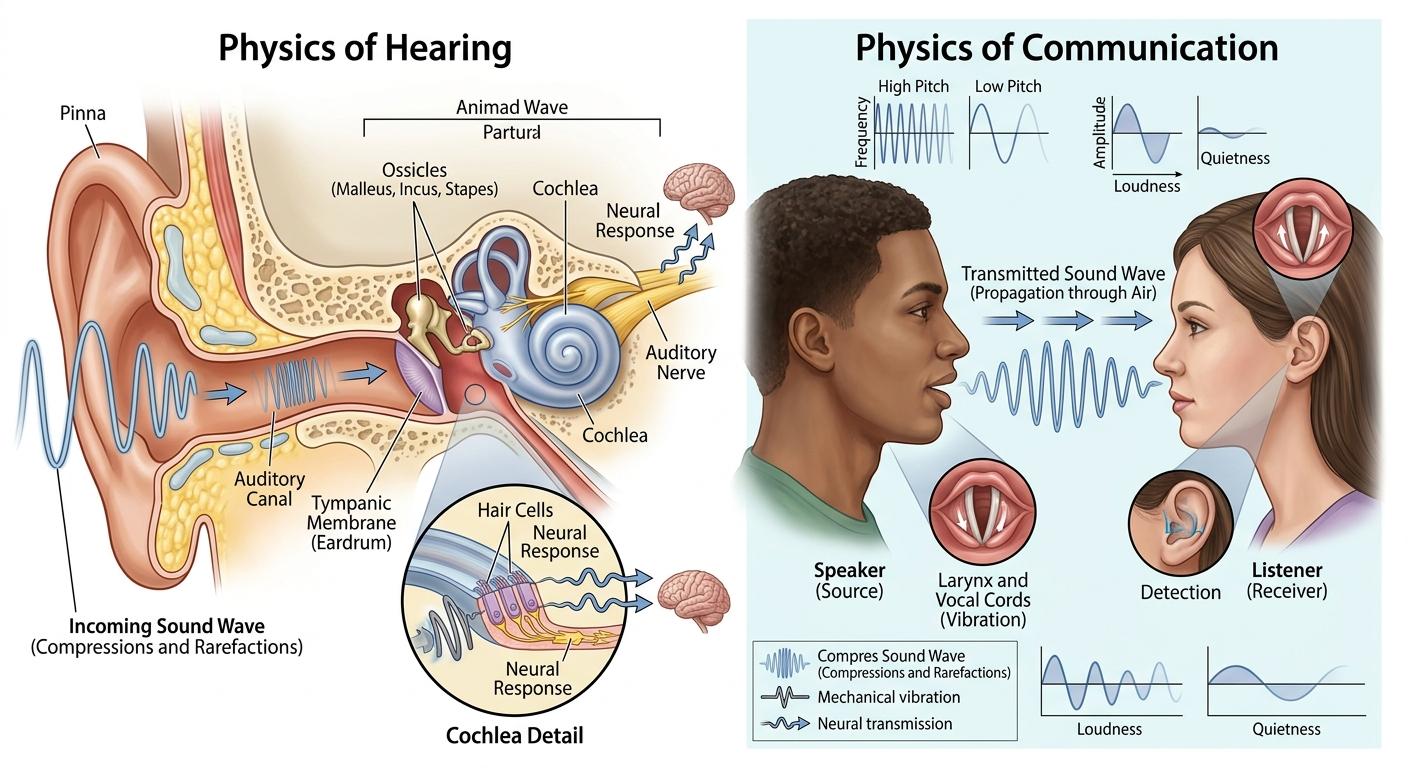
    The journey of sound into the human ear is equally fascinating! Sound waves enter the ear and cause tiny structures to vibrate. These vibrations are transformed into electrical signals that travel to the brain, where they are interpreted as meaningful sounds. This incredible process allows us to enjoy music , understand speech , recognize familiar sounds , and communicate with people around us.

    Communication depends heavily on sound. From everyday conversations to public speaking, telephone calls, radio broadcasts, and educational videos, sound allows information to travel between people. Modern technology also uses the principles of sound waves in microphones, speakers, headphones, medical imaging, and many other applications.

    This topic is a wonderful opportunity for students, science lovers, and curious minds to connect **physics with everyday life**. Instead of thinking of sound as something we simply hear, we can understand it as a physical phenomenon involving vibrations, energy, waves, and the remarkable human hearing system.

    **In this learning journey, you can discover:**
    What sound waves are
    How vibrations create sound
    How sound travels through different materials
    The relationship between frequency and pitch
    How amplitude affects loudness
    How the human ear detects sound
    How the brain interprets sound signals
    How sound enables communication
    How microphones and speakers work
    Everyday applications of sound-wave technology

    **Sound is everywhere!** From the gentle sound of rain to birds singing , from the voices of our friends to the music we enjoy , sound surrounds us every day. By understanding its physics, we gain a deeper appreciation for the invisible waves that connect our world.

    So get ready to listen, learn, explore, and discover the fascinating science behind the sounds we hear every day!

    **Learn the science. Understand the waves. Discover the power of sound!**

    #SoundWaves #Physics #Science #PhysicsOfSound #Hearing #Communication #Waves #SoundPhysics #ScienceEducation #PhysicsEducation #LearnScience #STEM #STEMEducation #HumanEar #Frequency #Amplitude #Wavelength #Pitch #Vibrations #ScienceForStudents #EducationalVideo #Learning #ScienceExploration #Technology #Acoustics #SoundAndCommunication #Curiosity #Knowledge #Education #ExploreScience
    #rsisb Roll no.247 Foundation level # 🔊 Sound Waves: The Physics of Hearing and Communication 🎧🌊 Have you ever wondered how a sound travels from one place to another? 🤔🔊 How does a musical instrument produce beautiful melodies? 🎵 How can we hear someone speaking from across a room? 🗣️👂 The fascinating answer lies in the science of **sound waves!** 🌊✨ In this exciting exploration of **“Sound Waves: The Physics of Hearing and Communication,”** we dive into the amazing world of sound and discover the physics behind one of the most important ways humans experience and understand the world around them. 🌍🔬 Sound is a form of energy that travels through a medium such as air, water, or solids. 🌬️💧🪨 When an object vibrates, it causes nearby particles to vibrate, creating a wave that carries energy from one location to another. These vibrations eventually reach our ears, allowing our brains to recognize sounds. 🧠👂💡 We’ll explore important concepts such as **frequency, wavelength, amplitude, speed, and pitch**. 📚📐 Understanding these properties helps explain why some sounds are high or low, loud or soft. 🎶🔉🔊 The journey of sound into the human ear is equally fascinating! 👂✨ Sound waves enter the ear and cause tiny structures to vibrate. These vibrations are transformed into electrical signals that travel to the brain, where they are interpreted as meaningful sounds. 🧠⚡ This incredible process allows us to enjoy music 🎼, understand speech 🗣️, recognize familiar sounds 👋, and communicate with people around us. ❤️🌎 Communication depends heavily on sound. From everyday conversations to public speaking, telephone calls, radio broadcasts, and educational videos, sound allows information to travel between people. 📞📻🎙️ Modern technology also uses the principles of sound waves in microphones, speakers, headphones, medical imaging, and many other applications. 💻🎧🔬 This topic is a wonderful opportunity for students, science lovers, and curious minds to connect **physics with everyday life**. 🌟📖 Instead of thinking of sound as something we simply hear, we can understand it as a physical phenomenon involving vibrations, energy, waves, and the remarkable human hearing system. 🌊⚛️👂 🎯 **In this learning journey, you can discover:** 🔹 What sound waves are 🔹 How vibrations create sound 🔹 How sound travels through different materials 🔹 The relationship between frequency and pitch 🔹 How amplitude affects loudness 🔹 How the human ear detects sound 🔹 How the brain interprets sound signals 🔹 How sound enables communication 🔹 How microphones and speakers work 🔹 Everyday applications of sound-wave technology 🌈 **Sound is everywhere!** From the gentle sound of rain 🌧️ to birds singing 🐦, from the voices of our friends 🗣️ to the music we enjoy 🎵, sound surrounds us every day. By understanding its physics, we gain a deeper appreciation for the invisible waves that connect our world. 🌍🌊✨ So get ready to listen, learn, explore, and discover the fascinating science behind the sounds we hear every day! 🔊🎧🔬📚 💡 **Learn the science. Understand the waves. Discover the power of sound!** 🌊🔊✨ #SoundWaves #Physics #Science #PhysicsOfSound #Hearing #Communication #Waves #SoundPhysics #ScienceEducation #PhysicsEducation #LearnScience #STEM #STEMEducation #HumanEar #Frequency #Amplitude #Wavelength #Pitch #Vibrations #ScienceForStudents #EducationalVideo #Learning #ScienceExploration #Technology #Acoustics #SoundAndCommunication #Curiosity #Knowledge #Education #ExploreScience 🔬📚🌍🎧🔊✨
    0 Yorumlar 0 hisse senetleri 1624 Views
  • #rsisb
    Roll no.239
    Story Post no.21
    Foundation Level

    Sound is all around us! From the voices we hear to the music we enjoy , sound waves play an important role in our daily lives. But have you ever wondered how sound travels and how our ears help us hear?

    Sound is produced when an object vibrates. These vibrations travel through a medium such as air, water, or solids in the form of **sound waves** . Our ears receive these waves and send signals to the brain, allowing us to recognize voices, music, and many other sounds.

    The physics of sound helps us understand important concepts such as **frequency, amplitude, wavelength, pitch, and loudness** . Sound is not only a fascinating scientific phenomenon—it is also essential for **hearing, communication, technology, music, and human connection**

    Let's explore the amazing world of sound and discover how invisible waves help us communicate with the world around us!

    #SoundWaves #Physics #PhysicsOfSound #Science #Hearing #Communication #Acoustics #SoundScience #Frequency #Amplitude #Wavelength #Vibrations #Pitch #Loudness #HumanEar #HowWeHear #ScienceEducation #LearnScience #LearnPhysics #EducationalContent #ScienceFacts #Knowledge #Technology #Audio #Music #WavePhysics #ExploreScience #StudentLife #EducationMatters #DiscoverMore
    #rsisb Roll no.239 Story Post no.21 Foundation Level Sound is all around us! From the voices we hear 🗣️ to the music we enjoy 🎶, sound waves play an important role in our daily lives. But have you ever wondered how sound travels and how our ears help us hear? 🤔🔬 Sound is produced when an object vibrates. These vibrations travel through a medium such as air, water, or solids in the form of **sound waves** 🌊. Our ears receive these waves and send signals to the brain, allowing us to recognize voices, music, and many other sounds. 👂🧠✨ The physics of sound helps us understand important concepts such as **frequency, amplitude, wavelength, pitch, and loudness** 📊🔊. Sound is not only a fascinating scientific phenomenon—it is also essential for **hearing, communication, technology, music, and human connection** 🌍❤️🎵 Let's explore the amazing world of sound and discover how invisible waves help us communicate with the world around us! 🚀🔬🌊 #SoundWaves 🔊 #Physics 🌊 #PhysicsOfSound 🎓 #Science 🔬 #Hearing 👂 #Communication 🗣️ #Acoustics 🎧 #SoundScience 📚 #Frequency 📈 #Amplitude 📊 #Wavelength 🌐 #Vibrations ⚡ #Pitch 🎵 #Loudness 🔊 #HumanEar 👂 #HowWeHear 🧠 #ScienceEducation 🎓 #LearnScience 📖 #LearnPhysics 💡 #EducationalContent 📚 #ScienceFacts 🔍 #Knowledge ✨ #Technology 💻 #Audio 🎶 #Music 🎵 #WavePhysics 🌊 #ExploreScience 🚀 #StudentLife 🧑‍🎓 #EducationMatters 🌟 #DiscoverMore 🔭
    0 Yorumlar 0 hisse senetleri 2029 Views
  • #rsisb
    Roll no.246
    Foundation level

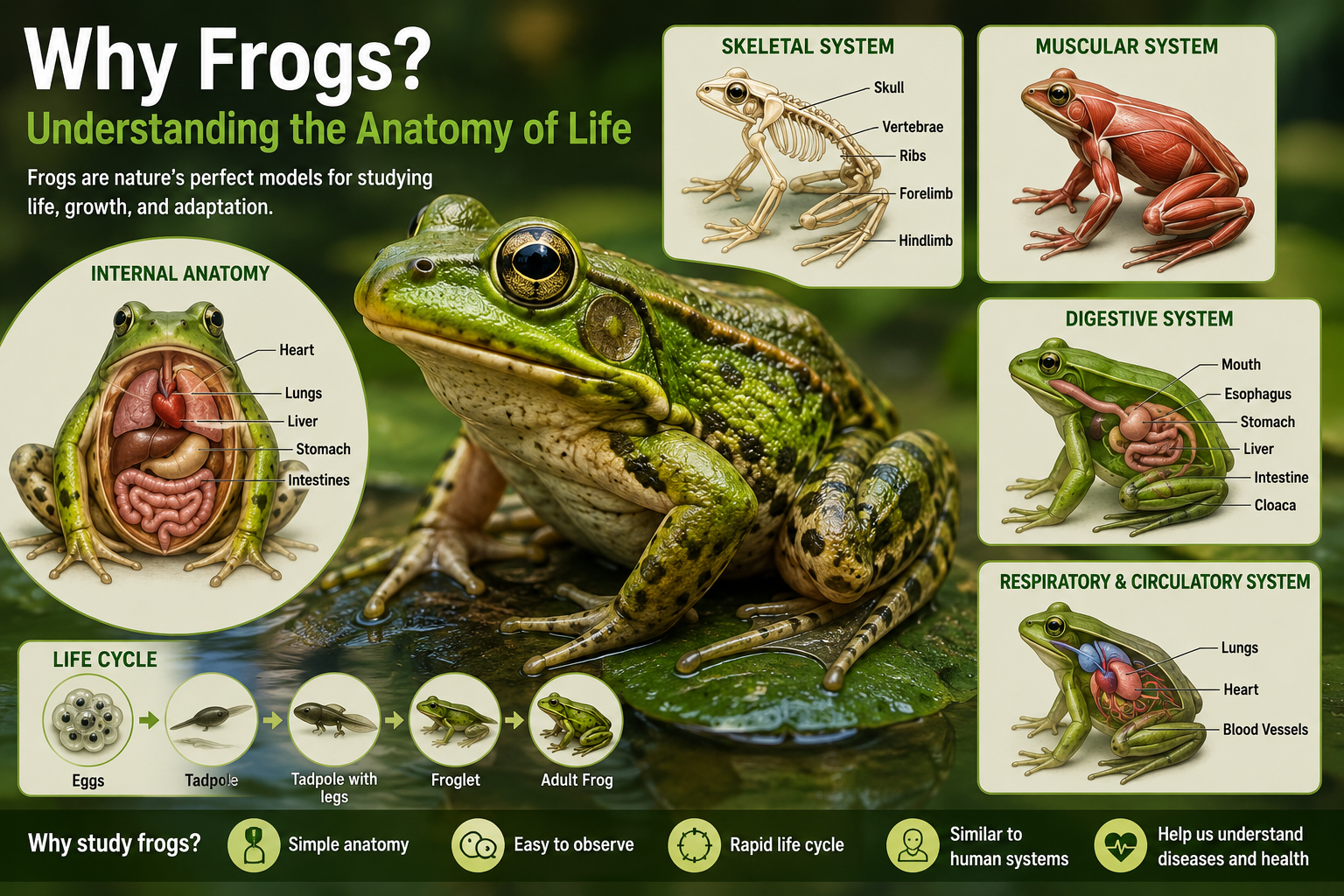
    # Why Frogs? Understanding the Anatomy of Life

    Why study frogs? Because these fascinating amphibians provide an excellent way to explore the incredible organization and complexity of living organisms. From their powerful hind legs and unique skeletal structure to their remarkable organs, muscles, nervous system, and respiratory adaptations, frogs offer a wonderful window into the basic principles of anatomy and biology.

    In this educational exploration, **“Why Frogs? Understanding the Anatomy of Life,”** we discover how different body systems work together to keep an organism alive. We can learn how a frog moves, breathes, senses its environment, obtains nutrients, circulates blood, and responds to changes around it. Studying frog anatomy also helps us understand broader biological concepts that apply to many other animals, including humans.

    Frogs are especially interesting because they live both in water and on land, making them excellent examples of adaptation. Their life cycle—from egg to tadpole to adult frog—demonstrates how living organisms can undergo remarkable changes as they develop. Their anatomy reflects their lifestyle, showing how body structures are connected to survival and environmental challenges.

    Exploring anatomy encourages students to ask important scientific questions: How does each organ function? Why are certain body structures shaped the way they are? How do different systems cooperate? By investigating these questions, we develop observation skills, scientific curiosity, and a deeper appreciation for the complexity of life.

    Most importantly, studying frogs reminds us that biology is not simply about memorizing names of organs—it is about understanding **how life works as a connected system.** Every bone, muscle, organ, and tissue has a role, and together they create a living organism capable of movement, growth, reproduction, and interaction with its environment.

    Join us on this fascinating scientific journey and discover how the anatomy of a frog can open the door to understanding the amazing mechanisms of life!

    #WhyFrogs #FrogAnatomy #UnderstandingLife #Biology #ScienceEducation #Anatomy #Amphibians #FrogLifeCycle #AnimalBiology #HumanAnatomy #LifeScience #ScienceLearning #BiologyStudents #ScientificDiscovery #ExploreScience #Nature #Wildlife #Evolution #Adaptation #STEM #STEMEducation #ScienceIsAmazing #LearningIsFun #Curiosity #ExploreNature
    #rsisb Roll no.246 Foundation level # Why Frogs? Understanding the Anatomy of Life 🐸🔬 Why study frogs? 🐸 Because these fascinating amphibians provide an excellent way to explore the incredible organization and complexity of living organisms. From their powerful hind legs and unique skeletal structure to their remarkable organs, muscles, nervous system, and respiratory adaptations, frogs offer a wonderful window into the basic principles of anatomy and biology. 🌿🧬 In this educational exploration, **“Why Frogs? Understanding the Anatomy of Life,”** we discover how different body systems work together to keep an organism alive. 🫀🫁🧠 We can learn how a frog moves, breathes, senses its environment, obtains nutrients, circulates blood, and responds to changes around it. Studying frog anatomy also helps us understand broader biological concepts that apply to many other animals, including humans. 🌎✨ Frogs are especially interesting because they live both in water and on land, making them excellent examples of adaptation. 💧🌱 Their life cycle—from egg to tadpole to adult frog—demonstrates how living organisms can undergo remarkable changes as they develop. 🔄🐸 Their anatomy reflects their lifestyle, showing how body structures are connected to survival and environmental challenges. Exploring anatomy encourages students to ask important scientific questions: How does each organ function? Why are certain body structures shaped the way they are? How do different systems cooperate? 🤔🔬 By investigating these questions, we develop observation skills, scientific curiosity, and a deeper appreciation for the complexity of life. Most importantly, studying frogs reminds us that biology is not simply about memorizing names of organs—it is about understanding **how life works as a connected system.** ❤️🧬 Every bone, muscle, organ, and tissue has a role, and together they create a living organism capable of movement, growth, reproduction, and interaction with its environment. 🐸🌿 Join us on this fascinating scientific journey and discover how the anatomy of a frog can open the door to understanding the amazing mechanisms of life! #WhyFrogs #FrogAnatomy #UnderstandingLife #Biology #ScienceEducation #Anatomy #Amphibians #FrogLifeCycle #AnimalBiology #HumanAnatomy #LifeScience #ScienceLearning #BiologyStudents #ScientificDiscovery #ExploreScience #Nature #Wildlife #Evolution #Adaptation #STEM #STEMEducation #ScienceIsAmazing #LearningIsFun #Curiosity #ExploreNature 🐸🔬🌿🧬🫀🧠🌎✨
    0 Yorumlar 0 hisse senetleri 1512 Views
  • Today I practiced my American Midwestern accent with ChatGPT for 05 minutes.

    My main focus was on words like “water,” “butter,” and “better,” and learning how to pronounce them more naturally in American English.

    I also practiced the sentence: “Hey ChatGPT, I wanna drink water.”

    Just 5 minutes every day — improving one word, one sound, and one sentence at a time.

    Watch my Day 2 American Midwestern accent practice!

    Tomorrow: Day 3 — new words, smoother pronunciation, and more confidence!

    Rehan Allahwala
    Today I practiced my American Midwestern accent with ChatGPT for 05 minutes. My main focus was on words like “water,” “butter,” and “better,” and learning how to pronounce them more naturally in American English. I also practiced the sentence: “Hey ChatGPT, I wanna drink water.” Just 5 minutes every day — improving one word, one sound, and one sentence at a time. 🚀 🎥 Watch my Day 2 American Midwestern accent practice! Tomorrow: Day 3 — new words, smoother pronunciation, and more confidence! [rehan]
    0 Yorumlar 0 hisse senetleri 384 Views 9
  • #rsisb
    roll no.247
    Foundation level

    **Chemical Bonding: The Relationship of Molecules **

    Chemical bonding is one of the most fascinating concepts in chemistry because it explains **how atoms connect with one another to form molecules and compounds**. From the water we drink to the oxygen we breathe , the food we eat , and the materials around us , chemical bonds play an essential role in our everyday lives.

    Atoms form bonds because they seek greater stability. Through the sharing, gaining, or losing of electrons, atoms can create different types of chemical bonds, including **ionic bonds, covalent bonds, and metallic bonds**. Each type of bond has unique characteristics that influence the properties of the substances formed.

    In **ionic bonding**, electrons are transferred between atoms, creating positively and negatively charged ions that attract each other. In **covalent bonding**, atoms share electrons to form stable molecules. And in **metallic bonding**, metal atoms share a pool of electrons, helping explain properties such as electrical conductivity and strength.

    Understanding chemical bonding allows us to see chemistry as more than just formulas and equations. It helps us understand **why substances behave the way they do**, why some materials are strong while others are soft, why some compounds dissolve in water, and how countless substances are created through atomic interactions.

    Chemical bonding is truly the **relationship of molecules**—a microscopic connection that creates the enormous and fascinating world of matter around us. Every bond tells a story of attraction, stability, and transformation.

    Whether you are a student, teacher, science enthusiast, or simply curious about the world, learning about chemical bonding opens the door to a deeper understanding of chemistry and nature.

    **Explore the world of atoms. Discover the power of bonds. Understand the chemistry of life!**

    #ChemicalBonding #Chemistry #Atoms #Molecules #IonicBond #CovalentBond #MetallicBond #Science #ChemistryEducation #ScienceLearning #ChemistryLovers #MolecularScience #AtomicWorld #STEM #ScienceStudents #LearnChemistry #ChemistryExplained #Education #ScienceFacts #MoleculesAndAtoms #ChemicalScience
    #rsisb roll no.247 Foundation level **Chemical Bonding: The Relationship of Molecules 🧪🔗** Chemical bonding is one of the most fascinating concepts in chemistry because it explains **how atoms connect with one another to form molecules and compounds**. 🌍⚛️ From the water we drink 💧 to the oxygen we breathe 🌬️, the food we eat 🍎, and the materials around us 🏠, chemical bonds play an essential role in our everyday lives. Atoms form bonds because they seek greater stability. Through the sharing, gaining, or losing of electrons, atoms can create different types of chemical bonds, including **ionic bonds, covalent bonds, and metallic bonds**. ⚡🔬 Each type of bond has unique characteristics that influence the properties of the substances formed. In **ionic bonding**, electrons are transferred between atoms, creating positively and negatively charged ions that attract each other. ⚡ In **covalent bonding**, atoms share electrons to form stable molecules. 🤝 And in **metallic bonding**, metal atoms share a pool of electrons, helping explain properties such as electrical conductivity and strength. 🔩✨ Understanding chemical bonding allows us to see chemistry as more than just formulas and equations. It helps us understand **why substances behave the way they do**, why some materials are strong while others are soft, why some compounds dissolve in water, and how countless substances are created through atomic interactions. 🧠🧪 Chemical bonding is truly the **relationship of molecules**—a microscopic connection that creates the enormous and fascinating world of matter around us. 🌌⚛️ Every bond tells a story of attraction, stability, and transformation. 🎓 Whether you are a student, teacher, science enthusiast, or simply curious about the world, learning about chemical bonding opens the door to a deeper understanding of chemistry and nature. 🔬📚 ✨ **Explore the world of atoms. Discover the power of bonds. Understand the chemistry of life!** 🧪⚛️🌍 #ChemicalBonding #Chemistry #Atoms #Molecules #IonicBond #CovalentBond #MetallicBond #Science #ChemistryEducation #ScienceLearning #ChemistryLovers #MolecularScience #AtomicWorld #STEM #ScienceStudents #LearnChemistry #ChemistryExplained #Education #ScienceFacts #MoleculesAndAtoms #ChemicalScience 🧪⚛️🔬🌍📚✨
    0 Yorumlar 0 hisse senetleri 2167 Views 17
  • RSISB
    Roll No: 209
    Song No.26

    Task topic: "The Journey of the Water Cycle" *The Journey of the Water Cycle*


    Water is one of the most important parts of life, and the *Water Cycle* shows us how water continuously travels through nature. From evaporation caused by the Sun’s heat, to cloud formation, rainfall, and the return of water to rivers, lakes, and oceans, this amazing journey never stops.


    This educational song, *“The Journey of the Water Cycle,”* explains the water cycle in a fun, simple, and creative way. It is especially helpful for children and students to understand important stages such as **Evaporation, Condensation, and Precipitation**.


    *Save Water, Save Life!*

    Let’s protect our water, care for our environment, and build a cleaner and healthier future together.


    #WaterCycle #JourneyOfTheWaterCycle #SaveWater #ScienceForKids #Education #Learning #Environment #Nature #EducationalSong #SunoAI #Canva #WaterCycleSong #Science
    RSISB Roll No: 209 Song No.26 Task topic: "The Journey of the Water Cycle" 💧 *The Journey of the Water Cycle* 🌧️☀️🌈 Water is one of the most important parts of life, and the *Water Cycle* shows us how water continuously travels through nature. From evaporation caused by the Sun’s heat, to cloud formation, rainfall, and the return of water to rivers, lakes, and oceans, this amazing journey never stops. 🌍💦 This educational song, *“The Journey of the Water Cycle,”* explains the water cycle in a fun, simple, and creative way. 🎶✨ It is especially helpful for children and students to understand important stages such as **Evaporation, Condensation, and Precipitation**. 💧 *Save Water, Save Life!* 🌱 Let’s protect our water, care for our environment, and build a cleaner and healthier future together. #WaterCycle #JourneyOfTheWaterCycle #SaveWater #ScienceForKids #Education #Learning #Environment #Nature #EducationalSong #SunoAI #Canva #WaterCycleSong #Science 🌧️💧🌍
    0 Yorumlar 0 hisse senetleri 1755 Views 14
Arama Sonuçları