• Today I feel truly happy and honored to be attending the WSA Gala Dinner & Award Ceremony at ViennaUP 2026 in Vienna, Austria.

    A heartfelt thank you to Peter Bruck and the entire WSA team for organizing such a beautiful gathering of innovators, startups, educators, dreamers, and changemakers from around the world.

    It is inspiring to see people from so many countries coming together not just to build companies — but to build a better future for humanity through technology, education, AI, and innovation.

    As the founder of Rehan School, it gives me hope that there are communities around the world still believing in solving real problems, empowering youth, and creating positive impact.

    Thank you for making me part of this wonderful startup and changemaker community.

    Vienna has been beautiful.
    The people have been amazing.
    And the energy of innovation here is truly special.

    Rehan Allahwala
    Founder, Rehan School
    rehanschool.com

    #WSA2026 #ViennaUP2026 #InnovationForImpact #RehanSchool #AI #Education #Startups #Changemakers
    Today I feel truly happy and honored to be attending the WSA Gala Dinner & Award Ceremony at ViennaUP 2026 in Vienna, Austria. 🌍✨ A heartfelt thank you to Peter Bruck and the entire WSA team for organizing such a beautiful gathering of innovators, startups, educators, dreamers, and changemakers from around the world. It is inspiring to see people from so many countries coming together not just to build companies — but to build a better future for humanity through technology, education, AI, and innovation. As the founder of Rehan School, it gives me hope that there are communities around the world still believing in solving real problems, empowering youth, and creating positive impact. Thank you for making me part of this wonderful startup and changemaker community. ❤️ Vienna has been beautiful. The people have been amazing. And the energy of innovation here is truly special. Rehan Allahwala Founder, Rehan School rehanschool.com #WSA2026 #ViennaUP2026 #InnovationForImpact #RehanSchool #AI #Education #Startups #Changemakers
    0 Reacties 0 aandelen 245 Views
  • FREE AI COURSE — LIVE DAILY

    اگر آپ نے ابھی تک ChatGPT، Google Gemini اور Grok استعمال کرنا نہیں سیکھا…
    تو اب وقت آ گیا ہے۔

    پاکستان بھر کے لیے FREE LIVE Zoom Classes

    ChatGPT سیکھیں
    Google Gemini سیکھیں
    Grok سیکھیں
    AI کو practical زندگی میں استعمال کرنا سیکھیں

    ہر 3 گھنٹے بعد کلاس:
    12 PM | 3 PM | 6 PM | 9 PM
    12 AM | 3 AM | 6 AM | 9 AM

    FREE Join Link:
    rehan.com/ai

    WhatsApp Help:
    03232145278

    کسی بھی device سے join کریں:
    Mobile
    Laptop
    Chromebook
    iPad

    سمجھ نہ آئے؟
    دوبارہ join کریں… جب تک سمجھ نہ ائے۔
    🚨 FREE AI COURSE — LIVE DAILY اگر آپ نے ابھی تک ChatGPT، Google Gemini اور Grok استعمال کرنا نہیں سیکھا… تو اب وقت آ گیا ہے۔ 💻 پاکستان بھر کے لیے FREE LIVE Zoom Classes ✔️ ChatGPT سیکھیں ✔️ Google Gemini سیکھیں ✔️ Grok سیکھیں ✔️ AI کو practical زندگی میں استعمال کرنا سیکھیں ⏰ ہر 3 گھنٹے بعد کلاس: 🕛 12 PM | 🕒 3 PM | 🕕 6 PM | 🕘 9 PM 🌙 12 AM | 🕒 3 AM | 🌅 6 AM | 🕘 9 AM 📲 FREE Join Link: 👉 rehan.com/ai 📞 WhatsApp Help: 03232145278 📱 کسی بھی device سے join کریں: ✔️ Mobile ✔️ Laptop ✔️ Chromebook ✔️ iPad 🤖 سمجھ نہ آئے؟ دوبارہ join کریں… جب تک سمجھ نہ ائے۔
    0 Reacties 0 aandelen 14 Views
  • The *UAE Prime Minister’s Office* has highlighted the collaboration between *Nutshell Group, VEON,* and *JazzWorld* on *THE GLOBAL CONNECT*, a strategic platform aimed at supporting, facilitating, and engaging investors while fostering meaningful dialogue, digital transformation, inclusive growth, and cross-border investment opportunities in Pakistan.

    Great work by a great human bridge maker @azfar ahsan
    The *UAE Prime Minister’s Office* has highlighted the collaboration between *Nutshell Group, VEON,* and *JazzWorld* on *THE GLOBAL CONNECT*, a strategic platform aimed at supporting, facilitating, and engaging investors while fostering meaningful dialogue, digital transformation, inclusive growth, and cross-border investment opportunities in Pakistan. Great work by a great human bridge maker @azfar ahsan
    0 Reacties 0 aandelen 55 Views
  • Join free daily
    Join free daily
    0 Reacties 0 aandelen 14 Views
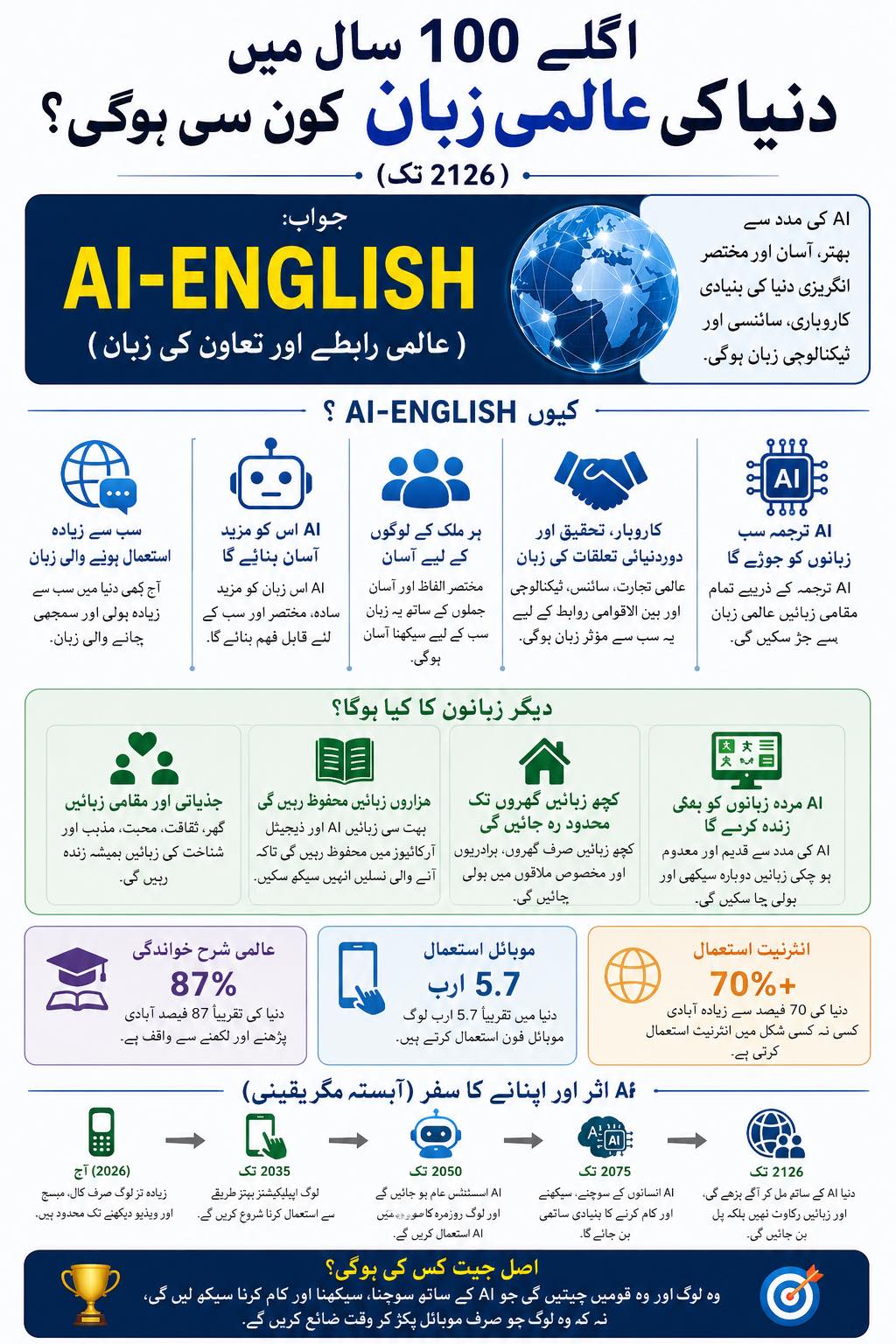
  • اگلے 100 سال میں دنیا کی زبانوں کا مستقبل

    2026 سے 2126 تک کی ایک ممکنہ تاریخ

    آج انسانیت ایک عجیب دور میں کھڑی ہے۔

    پہلی بار تاریخ میں:

    * کتابوں سے زیادہ لوگوں کے ہاتھ میں اسمارٹ فون ہیں،
    * لوگ پڑھنے سے زیادہ ویڈیوز دیکھتے ہیں،
    * اور اب لوگ ماہرین سے زیادہ AI سے سوال پوچھ رہے ہیں۔

    لیکن اس کے باوجود دنیا ابھی بھی “ڈیجیٹل سمجھ” کے ابتدائی مرحلے میں ہے۔


    دنیا کی حالت – سال 2026

    آج دنیا میں:

    * تقریباً 7170 زبانیں بولی جاتی ہیں۔
    * عالمی شرحِ خواندگی تقریباً 87 فیصد ہے۔
    * دنیا میں تقریباً 5.7 ارب لوگ موبائل فون استعمال کرتے ہیں۔
    * اور 70 فیصد سے زیادہ انسان کسی نہ کسی شکل میں انٹرنیٹ استعمال کرتے ہیں۔

    لیکن یہ اعداد و شمار مکمل حقیقت نہیں بتاتے۔

    کیونکہ:

    موبائل فون رکھنا

    اور

    ڈیجیٹل انسان بن جانا

    دو الگ چیزیں ہیں۔

    ایک شخص:

    * 10 سال سے WhatsApp استعمال کر رہا ہو،
    * لیکن پھر بھی:
    * صحیح سرچ نہ کر سکتا ہو،
    * ای میل استعمال نہ کرتا ہو،
    * ChatGPT نہ جانتا ہو،
    * آن لائن کمائی نہ سمجھتا ہو،
    * یا AI سے فائدہ نہ اٹھا سکتا ہو۔

    حتیٰ کہ دنیا کے کروڑوں پڑھے لکھے لوگ بھی آج:

    * ChatGPT
    * Claude
    * Gemini

    جیسے ٹولز استعمال نہیں کرتے۔

    کیونکہ:

    ٹیکنالوجی خریدنے سے ذہن نہیں بدلتا۔

    عادتیں بدلنے سے تہذیب بدلتی ہے۔


    اگلے 100 سال میں دنیا کی 3 بڑی زبانیں

    2126 تک دنیا اصل میں تین قسم کی زبانوں پر چل رہی ہوگی۔


    1. جذباتی زبانیں

    یہ زبانیں ہوں گی:

    * گھر کی،
    * محبت کی،
    * مذہب کی،
    * شاعری کی،
    * ثقافت کی،
    * ماں کی لوری کی۔

    مثلاً:

    * اردو
    * پنجابی
    * پشتو
    * سندھی
    * عربی
    * تامل
    * سواحلی

    یہ زبانیں ختم نہیں ہوں گی۔

    کیونکہ انسان صرف کاروبار سے نہیں جیتا،
    انسان کو شناخت بھی چاہیے۔

    ایک دادی اپنے پوتے کو “AI-English” میں لوری نہیں سنائے گی۔


    2. کاروباری زبان

    یہ وہ زبان ہوگی جس میں:

    * بزنس ہوگا،
    * AI سے بات ہوگی،
    * سافٹ ویئر بنے گا،
    * تحقیق ہوگی،
    * عالمی میٹنگز ہوں گی،
    * اور دنیا ایک دوسرے سے جڑے گی۔

    آج یہ زبان:

    English ہے۔

    کیوں؟

    کیونکہ:

    * انٹرنیٹ اس کے گرد بنا،
    * سافٹ ویئر اس میں بنا،
    * تحقیق اس میں لکھی گئی،
    * عالمی کمپنیاں اسی میں چلیں۔

    لیکن 2050 کے بعد ایک نئی چیز آئے گی:

    AI-English

    یہ:

    * آسان ہوگی،
    * چھوٹے جملوں والی ہوگی،
    * کم گرامر والی ہوگی،
    * پوری دنیا کے لیے optimize ہوگی۔

    جیسے آج “Airport English” ہوتی ہے۔


    3. AI کی زبان

    یہ سب سے بڑا انقلاب ہوگا۔

    آج انسان زبان سیکھنے میں:

    * 5 سال،
    * 10 سال،
    * کبھی پوری زندگی لگا دیتا ہے۔

    لیکن AI یہ دیوار توڑ دے گا۔

    2040 کے بعد:

    * آپ اردو بولیں گے،
    * دوسرا شخص جرمن سنے گا۔

    آپ پشتو میں لکھیں گے،

    * دوسرا شخص جاپانی پڑھے گا۔

    یہ انسانی تاریخ کی سب سے بڑی communication revolution ہوگی۔


    لیکن ایک اہم حقیقت

    AI آنے کے باوجود:

    انسان آہستہ بدلتا ہے۔

    مثال:
    آج کروڑوں لوگوں کے پاس:

    * 10 سال سے smartphone ہے،
    * لیکن وہ اب بھی:
    * files organize نہیں کر سکتے،
    * cloud storage نہیں سمجھتے،
    * AI استعمال نہیں کرتے،
    * online earning نہیں جانتے۔

    کیوں؟

    کیونکہ:

    Tools civilization نہیں بناتے۔

    Habits civilization بناتے ہیں۔


    2050 کی دنیا – دو حصوں میں تقسیم

    2050 تک دنیا دو حصوں میں تقسیم ہونے لگے گی۔


    پہلا گروپ:

    وہ لوگ جو AI کو بجلی کی طرح استعمال کریں گے۔

    وہ:

    * AI سے سوچیں گے،
    * AI سے کاروبار کریں گے،
    * AI سے research کریں گے،
    * AI سے سیکھیں گے،
    * AI سے earning کریں گے۔

    ایک AI انسان:

    * 10 لوگوں جتنا،
    * 100 لوگوں جتنا،
    * کبھی پوری کمپنی جتنا productive ہوگا۔


    دوسرا گروپ:

    وہ لوگ جو صرف scroll کریں گے۔

    وہ:

    * ویڈیوز دیکھیں گے،
    * memes forward کریں گے،
    * reactions دیں گے،
    * entertainment consume کریں گے۔

    لیکن کچھ create نہیں کریں گے۔

    یہی اگلے 100 سال کی سب سے بڑی inequality ہوگی۔

    نہ:

    * امیر اور غریب،
    * نہ کالا اور سفید،
    * نہ مشرق اور مغرب۔

    بلکہ:

    AI استعمال کرنے والے انسان

    اور

    AI استعمال نہ کرنے والے انسان


    زبانوں کا کیا ہوگا؟

    2126 تک:

    * تقریباً 3000 سے 4500 زبانیں active رہیں گی۔
    * ہزاروں زبانیں صرف AI archives میں محفوظ ہوں گی۔
    * کچھ زبانیں صرف cultural زبانیں بن جائیں گی۔
    * کچھ صرف گھروں تک محدود رہ جائیں گی۔

    لیکن AI ایک حیران کن کام کرے گا:

    مردہ زبانوں کو بھی زندہ کر دے گا۔

    شاید 100 سال بعد بچے:

    * Latin،
    * Sanskrit،
    * یا ہزار سال پرانی extinct زبانوں میں AI سے بات کر سکیں۔


    مستقبل کی تحقیق کی زبان

    آج:
    تحقیقی papers زیادہ تر English میں لکھے جاتے ہیں۔

    لیکن 2100 کے بعد:
    research کا نظام بدل جائے گا۔

    AI:

    * لاکھوں papers پڑھے گا،
    * contradictions نکالے گا،
    * simulations چلائے گا،
    * نئی discoveries generate کرے گا۔

    انسان:

    knowledge پڑھنے سے

    knowledge کے ساتھ partnership کی طرف جائے گا۔


    اگلے 100 سال کے اصل فاتح کون ہوں گے؟

    وہ ممالک نہیں:

    * جن کے پاس صرف oil ہوگا،
    * یا صرف population ہوگی۔

    بلکہ وہ قومیں جیتیں گی جو:

    1. AI literacy سکھائیں گی،
    2. English/global communication سکھائیں گی،
    3. digital discipline سکھائیں گی،
    4. internet earning سکھائیں گی،
    5. confidence سکھائیں گی،
    6. problem solving سکھائیں گی۔


    آخری پیش گوئی – سال 2126

    2126 کی دنیا میں:

    * ایک global business language ہوگی،
    * ہزاروں emotional languages زندہ ہوں گی،
    * AI translation عام ہوگی،
    * ہر انسان کے پاس AI assistant ہوگا،
    * اور اربوں لوگ روزانہ مشینوں کے ساتھ بات کر رہے ہوں گے۔

    لیکن اصل جنگ زبان کی نہیں ہوگی۔

    اصل جنگ ہوگی:

    کون AI کے ساتھ سوچنا سیکھتا ہے

    اور

    کون صرف موبائل پکڑ کر scroll کرتا رہ جاتا ہے۔
    اگلے 100 سال میں دنیا کی زبانوں کا مستقبل 2026 سے 2126 تک کی ایک ممکنہ تاریخ آج انسانیت ایک عجیب دور میں کھڑی ہے۔ پہلی بار تاریخ میں: * کتابوں سے زیادہ لوگوں کے ہاتھ میں اسمارٹ فون ہیں، * لوگ پڑھنے سے زیادہ ویڈیوز دیکھتے ہیں، * اور اب لوگ ماہرین سے زیادہ AI سے سوال پوچھ رہے ہیں۔ لیکن اس کے باوجود دنیا ابھی بھی “ڈیجیٹل سمجھ” کے ابتدائی مرحلے میں ہے۔ ⸻ دنیا کی حالت – سال 2026 آج دنیا میں: * تقریباً 7170 زبانیں بولی جاتی ہیں۔ * عالمی شرحِ خواندگی تقریباً 87 فیصد ہے۔ * دنیا میں تقریباً 5.7 ارب لوگ موبائل فون استعمال کرتے ہیں۔ * اور 70 فیصد سے زیادہ انسان کسی نہ کسی شکل میں انٹرنیٹ استعمال کرتے ہیں۔ لیکن یہ اعداد و شمار مکمل حقیقت نہیں بتاتے۔ کیونکہ: موبائل فون رکھنا اور ڈیجیٹل انسان بن جانا دو الگ چیزیں ہیں۔ ایک شخص: * 10 سال سے WhatsApp استعمال کر رہا ہو، * لیکن پھر بھی: * صحیح سرچ نہ کر سکتا ہو، * ای میل استعمال نہ کرتا ہو، * ChatGPT نہ جانتا ہو، * آن لائن کمائی نہ سمجھتا ہو، * یا AI سے فائدہ نہ اٹھا سکتا ہو۔ حتیٰ کہ دنیا کے کروڑوں پڑھے لکھے لوگ بھی آج: * ChatGPT * Claude * Gemini جیسے ٹولز استعمال نہیں کرتے۔ کیونکہ: ٹیکنالوجی خریدنے سے ذہن نہیں بدلتا۔ عادتیں بدلنے سے تہذیب بدلتی ہے۔ ⸻ اگلے 100 سال میں دنیا کی 3 بڑی زبانیں 2126 تک دنیا اصل میں تین قسم کی زبانوں پر چل رہی ہوگی۔ ⸻ 1. جذباتی زبانیں یہ زبانیں ہوں گی: * گھر کی، * محبت کی، * مذہب کی، * شاعری کی، * ثقافت کی، * ماں کی لوری کی۔ مثلاً: * اردو * پنجابی * پشتو * سندھی * عربی * تامل * سواحلی یہ زبانیں ختم نہیں ہوں گی۔ کیونکہ انسان صرف کاروبار سے نہیں جیتا، انسان کو شناخت بھی چاہیے۔ ایک دادی اپنے پوتے کو “AI-English” میں لوری نہیں سنائے گی۔ ⸻ 2. کاروباری زبان یہ وہ زبان ہوگی جس میں: * بزنس ہوگا، * AI سے بات ہوگی، * سافٹ ویئر بنے گا، * تحقیق ہوگی، * عالمی میٹنگز ہوں گی، * اور دنیا ایک دوسرے سے جڑے گی۔ آج یہ زبان: English ہے۔ کیوں؟ کیونکہ: * انٹرنیٹ اس کے گرد بنا، * سافٹ ویئر اس میں بنا، * تحقیق اس میں لکھی گئی، * عالمی کمپنیاں اسی میں چلیں۔ لیکن 2050 کے بعد ایک نئی چیز آئے گی: AI-English یہ: * آسان ہوگی، * چھوٹے جملوں والی ہوگی، * کم گرامر والی ہوگی، * پوری دنیا کے لیے optimize ہوگی۔ جیسے آج “Airport English” ہوتی ہے۔ ⸻ 3. AI کی زبان یہ سب سے بڑا انقلاب ہوگا۔ آج انسان زبان سیکھنے میں: * 5 سال، * 10 سال، * کبھی پوری زندگی لگا دیتا ہے۔ لیکن AI یہ دیوار توڑ دے گا۔ 2040 کے بعد: * آپ اردو بولیں گے، * دوسرا شخص جرمن سنے گا۔ آپ پشتو میں لکھیں گے، * دوسرا شخص جاپانی پڑھے گا۔ یہ انسانی تاریخ کی سب سے بڑی communication revolution ہوگی۔ ⸻ لیکن ایک اہم حقیقت AI آنے کے باوجود: انسان آہستہ بدلتا ہے۔ مثال: آج کروڑوں لوگوں کے پاس: * 10 سال سے smartphone ہے، * لیکن وہ اب بھی: * files organize نہیں کر سکتے، * cloud storage نہیں سمجھتے، * AI استعمال نہیں کرتے، * online earning نہیں جانتے۔ کیوں؟ کیونکہ: Tools civilization نہیں بناتے۔ Habits civilization بناتے ہیں۔ ⸻ 2050 کی دنیا – دو حصوں میں تقسیم 2050 تک دنیا دو حصوں میں تقسیم ہونے لگے گی۔ ⸻ پہلا گروپ: وہ لوگ جو AI کو بجلی کی طرح استعمال کریں گے۔ وہ: * AI سے سوچیں گے، * AI سے کاروبار کریں گے، * AI سے research کریں گے، * AI سے سیکھیں گے، * AI سے earning کریں گے۔ ایک AI انسان: * 10 لوگوں جتنا، * 100 لوگوں جتنا، * کبھی پوری کمپنی جتنا productive ہوگا۔ ⸻ دوسرا گروپ: وہ لوگ جو صرف scroll کریں گے۔ وہ: * ویڈیوز دیکھیں گے، * memes forward کریں گے، * reactions دیں گے، * entertainment consume کریں گے۔ لیکن کچھ create نہیں کریں گے۔ یہی اگلے 100 سال کی سب سے بڑی inequality ہوگی۔ نہ: * امیر اور غریب، * نہ کالا اور سفید، * نہ مشرق اور مغرب۔ بلکہ: AI استعمال کرنے والے انسان اور AI استعمال نہ کرنے والے انسان ⸻ زبانوں کا کیا ہوگا؟ 2126 تک: * تقریباً 3000 سے 4500 زبانیں active رہیں گی۔ * ہزاروں زبانیں صرف AI archives میں محفوظ ہوں گی۔ * کچھ زبانیں صرف cultural زبانیں بن جائیں گی۔ * کچھ صرف گھروں تک محدود رہ جائیں گی۔ لیکن AI ایک حیران کن کام کرے گا: مردہ زبانوں کو بھی زندہ کر دے گا۔ شاید 100 سال بعد بچے: * Latin، * Sanskrit، * یا ہزار سال پرانی extinct زبانوں میں AI سے بات کر سکیں۔ ⸻ مستقبل کی تحقیق کی زبان آج: تحقیقی papers زیادہ تر English میں لکھے جاتے ہیں۔ لیکن 2100 کے بعد: research کا نظام بدل جائے گا۔ AI: * لاکھوں papers پڑھے گا، * contradictions نکالے گا، * simulations چلائے گا، * نئی discoveries generate کرے گا۔ انسان: knowledge پڑھنے سے knowledge کے ساتھ partnership کی طرف جائے گا۔ ⸻ اگلے 100 سال کے اصل فاتح کون ہوں گے؟ وہ ممالک نہیں: * جن کے پاس صرف oil ہوگا، * یا صرف population ہوگی۔ بلکہ وہ قومیں جیتیں گی جو: 1. AI literacy سکھائیں گی، 2. English/global communication سکھائیں گی، 3. digital discipline سکھائیں گی، 4. internet earning سکھائیں گی، 5. confidence سکھائیں گی، 6. problem solving سکھائیں گی۔ ⸻ آخری پیش گوئی – سال 2126 2126 کی دنیا میں: * ایک global business language ہوگی، * ہزاروں emotional languages زندہ ہوں گی، * AI translation عام ہوگی، * ہر انسان کے پاس AI assistant ہوگا، * اور اربوں لوگ روزانہ مشینوں کے ساتھ بات کر رہے ہوں گے۔ لیکن اصل جنگ زبان کی نہیں ہوگی۔ اصل جنگ ہوگی: کون AI کے ساتھ سوچنا سیکھتا ہے اور کون صرف موبائل پکڑ کر scroll کرتا رہ جاتا ہے۔
    0 Reacties 0 aandelen 124 Views
  • In 2026, humanity stands at a strange point in history.

    For the first time ever:

    * more people have smartphones than books,
    * more people can watch than read,
    * and more people can talk to AI than talk to experts.

    Yet the world still does not truly understand technology.

    The World in 2026

    Today:

    * Humanity speaks about 7,170 languages.
    * The global literacy rate is about 87%.
    * Around 5.7 billion people use mobile phones.
    * More than 70% of humanity has internet access in some form.

    But these numbers are misleading.

    Owning a smartphone does not mean understanding the digital world.

    A farmer may use WhatsApp for 10 years and still never:

    * search properly,
    * use email correctly,
    * create documents,
    * use spreadsheets,
    * use AI,
    * or understand digital business.

    Even many educated people with smartphones for a decade still do not use tools like:

    * ChatGPT
    * Claude
    * Gemini

    In reality, humanity is entering a new phase:

    The Difference Between:

    * Phone ownership
    and
    * Digital civilization

    These are two completely different things.


    The Three Languages of the Future

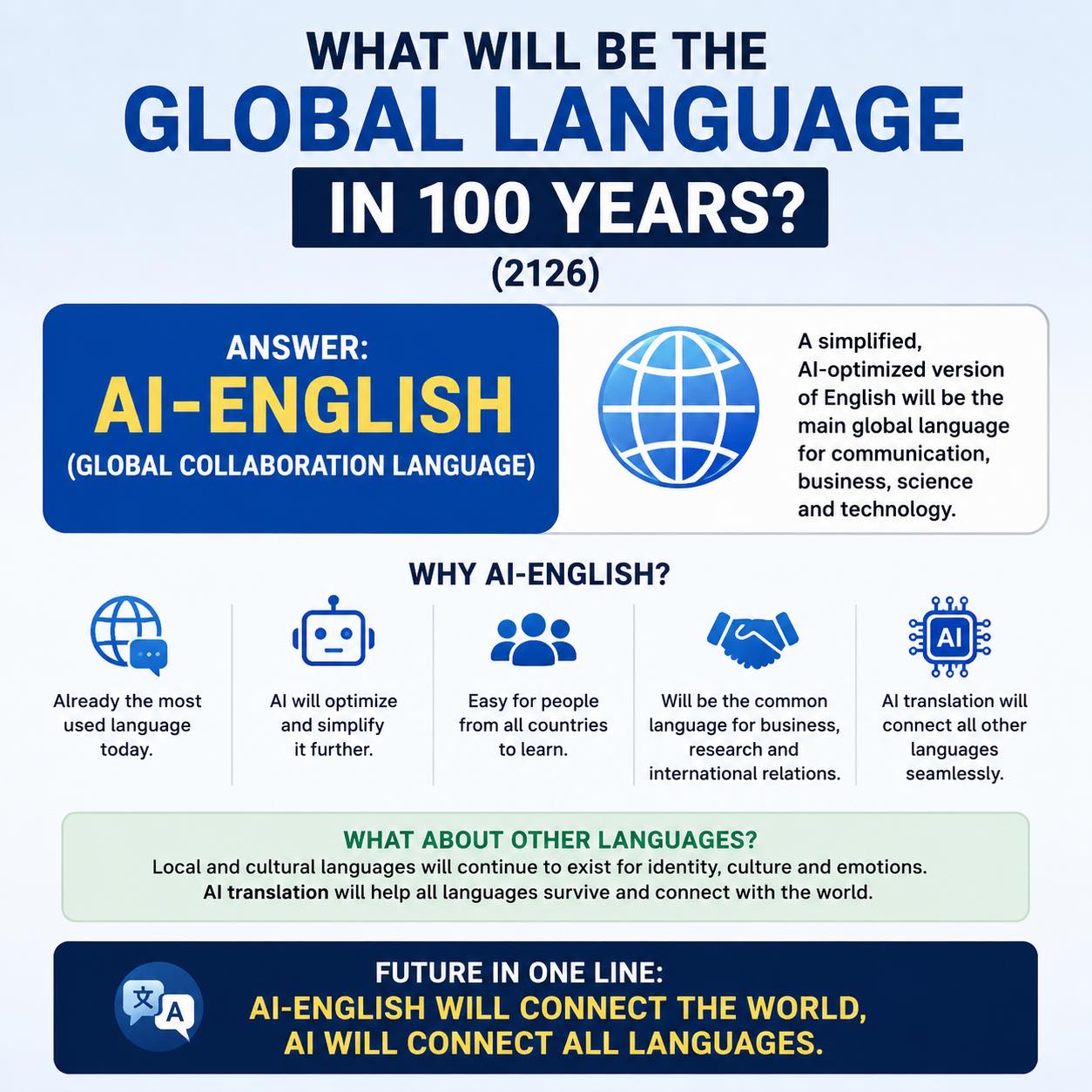
    By 2126, humanity will operate using three major language systems simultaneously.

    1. Emotional Language

    This is the language of:

    * family,
    * identity,
    * poetry,
    * religion,
    * childhood,
    * love,
    * culture.

    Examples:

    * Urdu
    * Punjabi
    * Pashto
    * Slovak
    * Tamil
    * Yoruba
    * Navajo

    These languages survive because humans need emotional identity.

    A grandmother does not sing lullabies in “global business English.”

    Humans need roots.

    So thousands of emotional languages will survive.


    2. Business Language

    This becomes the language of:

    * trade,
    * startups,
    * science,
    * coding,
    * AI prompts,
    * global collaboration,
    * negotiation.

    Today, that language is mainly:

    English

    Not because English is superior.

    But because:

    * the internet grew around it,
    * software grew around it,
    * research papers grew around it,
    * global business adopted it.

    By 2050–2080:
    English likely remains the dominant business language of Earth.

    But simplified AI-assisted English emerges:

    * shorter,
    * clearer,
    * less grammar-heavy,
    * globally optimized.

    Like “global airport English.”

    At the same time:

    * Mandarin grows economically,
    * Hindi/Urdu grows demographically,
    * Spanish grows culturally,
    * Arabic grows regionally,
    * African languages grow digitally.

    But AI prevents any one language from fully dominating.


    3. AI Language

    This is the biggest revolution.

    Humans once needed:

    * translators,
    * dictionaries,
    * years of study.

    AI changes this.

    By 2040:
    real-time translation becomes nearly perfect.

    You speak Urdu.
    The other person hears flawless German.

    You write in Pashto.
    The other person reads perfect Japanese.

    This changes civilization.

    For 5,000 years:
    language barriers limited human collaboration.

    AI begins destroying those walls.


    But Here Is the Hidden Truth

    Even with AI, humans still take years to adapt.

    Technology adoption is slow.

    Example:

    Many people today:

    * had smartphones for 10 years,
    * yet still cannot:
    * type properly,
    * search properly,
    * organize files,
    * use cloud storage,
    * use AI productively.

    Why?

    Because:

    Tools do not change civilizations.

    Habits do.

    A smartphone in the hand does not create a digital citizen.

    Just like:

    * owning books does not create a scholar,
    * owning a gym does not create an athlete.

    Civilization changes when:

    * schools change,
    * parenting changes,
    * habits change,
    * culture changes.


    The Great Divide of 2050

    By 2050, humanity splits into two groups.

    Group 1:

    People who use AI like electricity.

    They:

    * think with AI,
    * work with AI,
    * learn with AI,
    * negotiate with AI,
    * build businesses with AI.

    These people become massively productive.

    One person with AI may outperform:

    * 10 workers,
    * 100 workers,
    * sometimes entire companies.


    Group 2:

    People who only consume technology.

    They:

    * scroll,
    * watch,
    * react,
    * entertain themselves,
    * forward messages.

    But they do not create.

    This becomes the new global inequality.

    Not:

    * rich vs poor,
    * black vs white,
    * East vs West.

    But:

    AI-augmented humans

    versus

    non-AI humans.


    What Happens to Languages?

    By 2126:

    Around 3,000–4,500 languages survive actively.

    But survival means different things.

    Some survive as:

    * home languages,
    * village languages,
    * cultural languages.

    Others become:

    * AI-preserved archives,
    * museum languages,
    * digitally reconstructable languages.

    AI may literally revive dead languages.

    Children may someday talk to AI avatars in:

    * Ancient Egyptian,
    * Sanskrit,
    * Latin,
    * extinct tribal languages.


    Research Language of the Future

    Today:
    most research is written in English.

    By 2100:
    research itself changes.

    Instead of humans reading 400-page papers:
    AI systems summarize, debate, simulate, and test ideas instantly.

    The “language of research” becomes:

    structured machine-readable knowledge.

    Not just human sentences.

    AI agents may read:

    * 50 million papers,
    * compare contradictions,
    * simulate outcomes,
    * generate discoveries.

    Humanity moves from:

    reading knowledge

    to

    collaborating with knowledge systems.


    The Biggest Winners

    The nations that win the next 100 years are not necessarily:

    * the richest,
    * the biggest,
    * or the oldest civilizations.

    The winners are the countries that teach:

    1. English or global communication,
    2. AI literacy,
    3. digital discipline,
    4. problem solving,
    5. human confidence,
    6. internet-based earning.

    Countries that fail to adapt may have smartphones everywhere but productivity nowhere.


    Final Prediction for 2126

    Humanity in 2126 likely has:

    * one dominant business language (English-based),
    * thousands of emotional identity languages,
    * universal AI translation,
    * AI-generated real-time communication,
    * AI-assisted education from childhood,
    * and billions of people talking daily with machines.

    But the real battle will not be about language.

    It will be about:

    who learns to think with AI

    before the rest of the world does.

    In 2026, humanity stands at a strange point in history. For the first time ever: * more people have smartphones than books, * more people can watch than read, * and more people can talk to AI than talk to experts. Yet the world still does not truly understand technology. The World in 2026 Today: * Humanity speaks about 7,170 languages. * The global literacy rate is about 87%. * Around 5.7 billion people use mobile phones. * More than 70% of humanity has internet access in some form. But these numbers are misleading. Owning a smartphone does not mean understanding the digital world. A farmer may use WhatsApp for 10 years and still never: * search properly, * use email correctly, * create documents, * use spreadsheets, * use AI, * or understand digital business. Even many educated people with smartphones for a decade still do not use tools like: * ChatGPT * Claude * Gemini In reality, humanity is entering a new phase: The Difference Between: * Phone ownership and * Digital civilization These are two completely different things. ⸻ The Three Languages of the Future By 2126, humanity will operate using three major language systems simultaneously. 1. Emotional Language This is the language of: * family, * identity, * poetry, * religion, * childhood, * love, * culture. Examples: * Urdu * Punjabi * Pashto * Slovak * Tamil * Yoruba * Navajo These languages survive because humans need emotional identity. A grandmother does not sing lullabies in “global business English.” Humans need roots. So thousands of emotional languages will survive. ⸻ 2. Business Language This becomes the language of: * trade, * startups, * science, * coding, * AI prompts, * global collaboration, * negotiation. Today, that language is mainly: English Not because English is superior. But because: * the internet grew around it, * software grew around it, * research papers grew around it, * global business adopted it. By 2050–2080: English likely remains the dominant business language of Earth. But simplified AI-assisted English emerges: * shorter, * clearer, * less grammar-heavy, * globally optimized. Like “global airport English.” At the same time: * Mandarin grows economically, * Hindi/Urdu grows demographically, * Spanish grows culturally, * Arabic grows regionally, * African languages grow digitally. But AI prevents any one language from fully dominating. ⸻ 3. AI Language This is the biggest revolution. Humans once needed: * translators, * dictionaries, * years of study. AI changes this. By 2040: real-time translation becomes nearly perfect. You speak Urdu. The other person hears flawless German. You write in Pashto. The other person reads perfect Japanese. This changes civilization. For 5,000 years: language barriers limited human collaboration. AI begins destroying those walls. ⸻ But Here Is the Hidden Truth Even with AI, humans still take years to adapt. Technology adoption is slow. Example: Many people today: * had smartphones for 10 years, * yet still cannot: * type properly, * search properly, * organize files, * use cloud storage, * use AI productively. Why? Because: Tools do not change civilizations. Habits do. A smartphone in the hand does not create a digital citizen. Just like: * owning books does not create a scholar, * owning a gym does not create an athlete. Civilization changes when: * schools change, * parenting changes, * habits change, * culture changes. ⸻ The Great Divide of 2050 By 2050, humanity splits into two groups. Group 1: People who use AI like electricity. They: * think with AI, * work with AI, * learn with AI, * negotiate with AI, * build businesses with AI. These people become massively productive. One person with AI may outperform: * 10 workers, * 100 workers, * sometimes entire companies. ⸻ Group 2: People who only consume technology. They: * scroll, * watch, * react, * entertain themselves, * forward messages. But they do not create. This becomes the new global inequality. Not: * rich vs poor, * black vs white, * East vs West. But: AI-augmented humans versus non-AI humans. ⸻ What Happens to Languages? By 2126: Around 3,000–4,500 languages survive actively. But survival means different things. Some survive as: * home languages, * village languages, * cultural languages. Others become: * AI-preserved archives, * museum languages, * digitally reconstructable languages. AI may literally revive dead languages. Children may someday talk to AI avatars in: * Ancient Egyptian, * Sanskrit, * Latin, * extinct tribal languages. ⸻ Research Language of the Future Today: most research is written in English. By 2100: research itself changes. Instead of humans reading 400-page papers: AI systems summarize, debate, simulate, and test ideas instantly. The “language of research” becomes: structured machine-readable knowledge. Not just human sentences. AI agents may read: * 50 million papers, * compare contradictions, * simulate outcomes, * generate discoveries. Humanity moves from: reading knowledge to collaborating with knowledge systems. ⸻ The Biggest Winners The nations that win the next 100 years are not necessarily: * the richest, * the biggest, * or the oldest civilizations. The winners are the countries that teach: 1. English or global communication, 2. AI literacy, 3. digital discipline, 4. problem solving, 5. human confidence, 6. internet-based earning. Countries that fail to adapt may have smartphones everywhere but productivity nowhere. ⸻ Final Prediction for 2126 Humanity in 2126 likely has: * one dominant business language (English-based), * thousands of emotional identity languages, * universal AI translation, * AI-generated real-time communication, * AI-assisted education from childhood, * and billions of people talking daily with machines. But the real battle will not be about language. It will be about: who learns to think with AI before the rest of the world does.

    0 Reacties 0 aandelen 322 Views
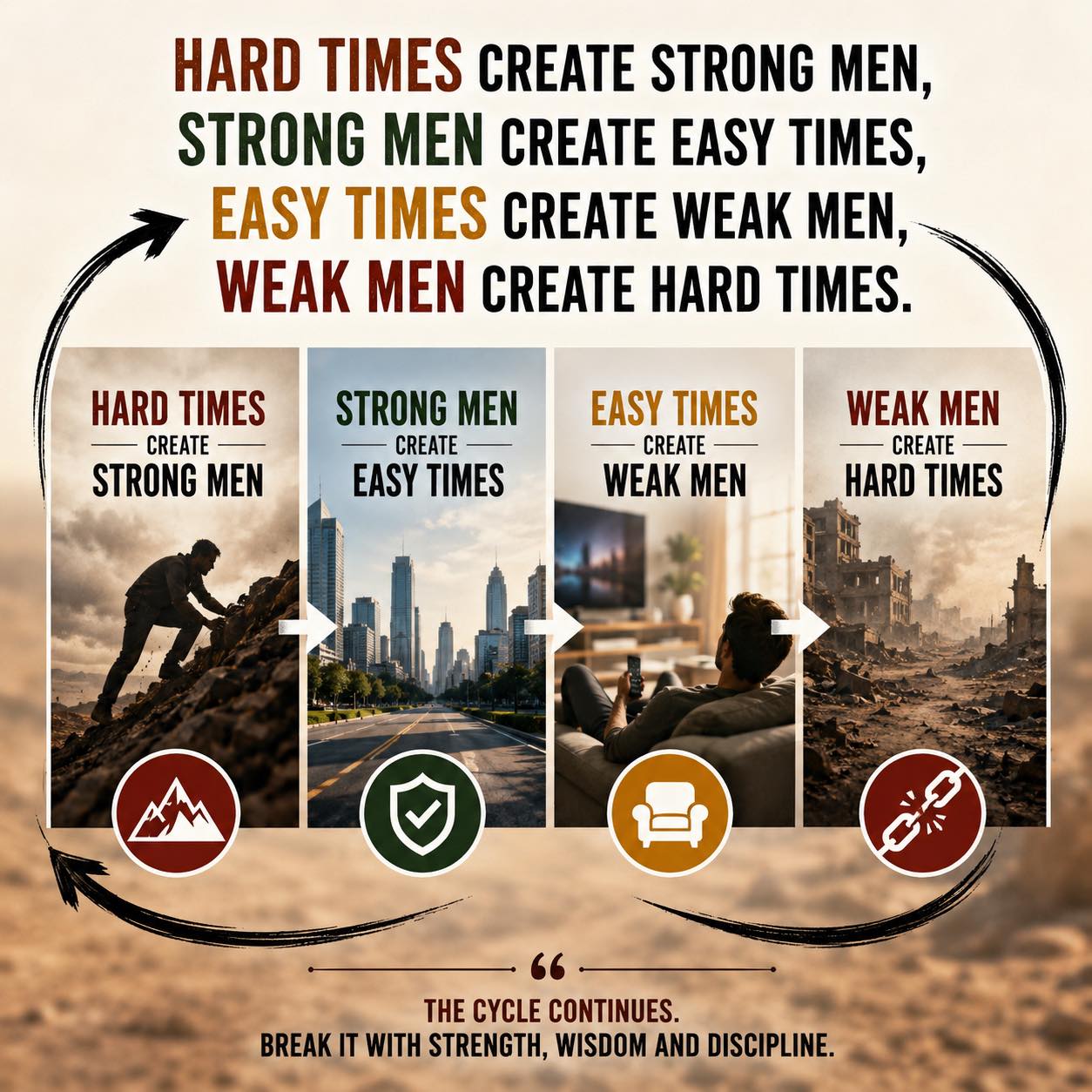
  • “Hard times create strong men, strong men create easy times, easy times create weak men, and weak men create hard times.”

    has become one of the most discussed ideas about civilization, leadership, wealth, and human behavior. Whether completely true or not in every case, history repeatedly shows a similar pattern across families, companies, empires, and nations.

    The core idea is simple:

    Pain creates discipline.
    Discipline creates success.
    Success creates comfort.
    Comfort creates carelessness.
    Carelessness creates collapse.

    Then the cycle begins again.

    Human beings behave differently depending on the environment around them. A child who grows up in hunger, poverty, war, or struggle often develops survival instincts, resilience, patience, creativity, and toughness. That person learns to value money, time, relationships, and opportunity because they have experienced life without them.

    Many of the world’s greatest builders came from hardship.

    Steve Jobs was adopted and struggled for years before building Apple.

    Elon Musk experienced bullying and isolation before building multiple companies.

    Abdul Sattar Edhi lived a life of simplicity and sacrifice before building one of the world’s largest welfare networks.

    Hardship forced them to think differently.

    Strong people often build systems that make life easier for the next generation:

    * better schools,
    * safer cities,
    * stronger economies,
    * advanced technology,
    * medical systems,
    * transportation,
    * wealth,
    * peace.

    The next generation grows up with comfort their parents never had.

    This is where the danger begins.

    When people inherit comfort without understanding sacrifice, they may slowly lose:

    * discipline,
    * gratitude,
    * hunger,
    * resilience,
    * patience,
    * emotional strength,
    * ability to suffer.

    A person who has never faced difficulty may become offended easily, quit quickly, complain constantly, or expect success without effort.

    History gives many examples.

    The Roman Empire became wealthy and powerful, but over time luxury, political corruption, and internal weakness weakened it from inside.

    Many royal families across history lost kingdoms not because enemies were stronger, but because heirs became disconnected from reality.

    Even businesses follow this pattern.

    A startup begins with desperate founders working day and night. They innovate because survival depends on it. Once the company becomes large and rich, bureaucracy increases, risk-taking decreases, and employees may prioritize comfort over innovation. Eventually, a smaller hungry startup appears and replaces them.

    This cycle also happens inside families.

    The first generation builds.
    The second generation manages.
    The third generation often wastes.

    This is why many family businesses disappear within three generations.

    But the quote does not mean suffering is automatically good, nor that comfort is evil.

    The real lesson is this:

    A society must preserve discipline even during prosperity.

    The challenge of civilization is:
    How do you create strong people without forcing them to suffer through disaster?

    That is the real educational challenge of the future.

    A good education system should not merely create comfortable people. It should create resilient people:

    * people who can handle rejection,
    * people who can communicate,
    * people who can solve problems,
    * people who can build under pressure,
    * people who can survive uncertainty,
    * people who can lead during chaos.

    Physical labor, entrepreneurship, public speaking, teamwork, responsibility, discipline, and exposure to real-world problems help build this strength.

    If children only consume entertainment and comfort, they may become emotionally fragile even while living in wealthy societies.

    Today many countries face this exact contradiction:
    They have the highest technology, highest comfort, and highest convenience in human history — yet anxiety, loneliness, depression, and purposelessness are rising.

    Why?

    Because human beings were not designed only for comfort.
    They were designed for meaning, challenge, growth, and contribution.

    The strongest societies are not the richest ones alone.
    They are the societies that maintain hunger after success.

    Japan rebuilt after destruction.
    Germany rebuilt after war.
    South Korea transformed from poverty into technological power within decades.

    Not because life was easy.
    But because difficulty forced focus, discipline, and national urgency.

    The same principle applies to individuals.

    A person who survives failure often becomes wiser.
    A person who survives rejection often becomes stronger.
    A person who survives hardship often becomes dangerous in a positive way — focused, calm, and capable.

    The goal of life should therefore not be to avoid all hardship.

    The goal should be:

    * to become stronger through hardship,
    * wiser through success,
    * humble through achievement,
    * and disciplined even during comfort.

    Because civilizations do not collapse in one day.

    They slowly decay when people stop valuing effort, sacrifice, truth, and responsibility.

    And civilizations rise when ordinary people decide to become strong again.
    “Hard times create strong men, strong men create easy times, easy times create weak men, and weak men create hard times.” has become one of the most discussed ideas about civilization, leadership, wealth, and human behavior. Whether completely true or not in every case, history repeatedly shows a similar pattern across families, companies, empires, and nations. The core idea is simple: Pain creates discipline. Discipline creates success. Success creates comfort. Comfort creates carelessness. Carelessness creates collapse. Then the cycle begins again. Human beings behave differently depending on the environment around them. A child who grows up in hunger, poverty, war, or struggle often develops survival instincts, resilience, patience, creativity, and toughness. That person learns to value money, time, relationships, and opportunity because they have experienced life without them. Many of the world’s greatest builders came from hardship. Steve Jobs was adopted and struggled for years before building Apple. Elon Musk experienced bullying and isolation before building multiple companies. Abdul Sattar Edhi lived a life of simplicity and sacrifice before building one of the world’s largest welfare networks. Hardship forced them to think differently. Strong people often build systems that make life easier for the next generation: * better schools, * safer cities, * stronger economies, * advanced technology, * medical systems, * transportation, * wealth, * peace. The next generation grows up with comfort their parents never had. This is where the danger begins. When people inherit comfort without understanding sacrifice, they may slowly lose: * discipline, * gratitude, * hunger, * resilience, * patience, * emotional strength, * ability to suffer. A person who has never faced difficulty may become offended easily, quit quickly, complain constantly, or expect success without effort. History gives many examples. The Roman Empire became wealthy and powerful, but over time luxury, political corruption, and internal weakness weakened it from inside. Many royal families across history lost kingdoms not because enemies were stronger, but because heirs became disconnected from reality. Even businesses follow this pattern. A startup begins with desperate founders working day and night. They innovate because survival depends on it. Once the company becomes large and rich, bureaucracy increases, risk-taking decreases, and employees may prioritize comfort over innovation. Eventually, a smaller hungry startup appears and replaces them. This cycle also happens inside families. The first generation builds. The second generation manages. The third generation often wastes. This is why many family businesses disappear within three generations. But the quote does not mean suffering is automatically good, nor that comfort is evil. The real lesson is this: A society must preserve discipline even during prosperity. The challenge of civilization is: How do you create strong people without forcing them to suffer through disaster? That is the real educational challenge of the future. A good education system should not merely create comfortable people. It should create resilient people: * people who can handle rejection, * people who can communicate, * people who can solve problems, * people who can build under pressure, * people who can survive uncertainty, * people who can lead during chaos. Physical labor, entrepreneurship, public speaking, teamwork, responsibility, discipline, and exposure to real-world problems help build this strength. If children only consume entertainment and comfort, they may become emotionally fragile even while living in wealthy societies. Today many countries face this exact contradiction: They have the highest technology, highest comfort, and highest convenience in human history — yet anxiety, loneliness, depression, and purposelessness are rising. Why? Because human beings were not designed only for comfort. They were designed for meaning, challenge, growth, and contribution. The strongest societies are not the richest ones alone. They are the societies that maintain hunger after success. Japan rebuilt after destruction. Germany rebuilt after war. South Korea transformed from poverty into technological power within decades. Not because life was easy. But because difficulty forced focus, discipline, and national urgency. The same principle applies to individuals. A person who survives failure often becomes wiser. A person who survives rejection often becomes stronger. A person who survives hardship often becomes dangerous in a positive way — focused, calm, and capable. The goal of life should therefore not be to avoid all hardship. The goal should be: * to become stronger through hardship, * wiser through success, * humble through achievement, * and disciplined even during comfort. Because civilizations do not collapse in one day. They slowly decay when people stop valuing effort, sacrifice, truth, and responsibility. And civilizations rise when ordinary people decide to become strong again.
    0 Reacties 0 aandelen 76 Views
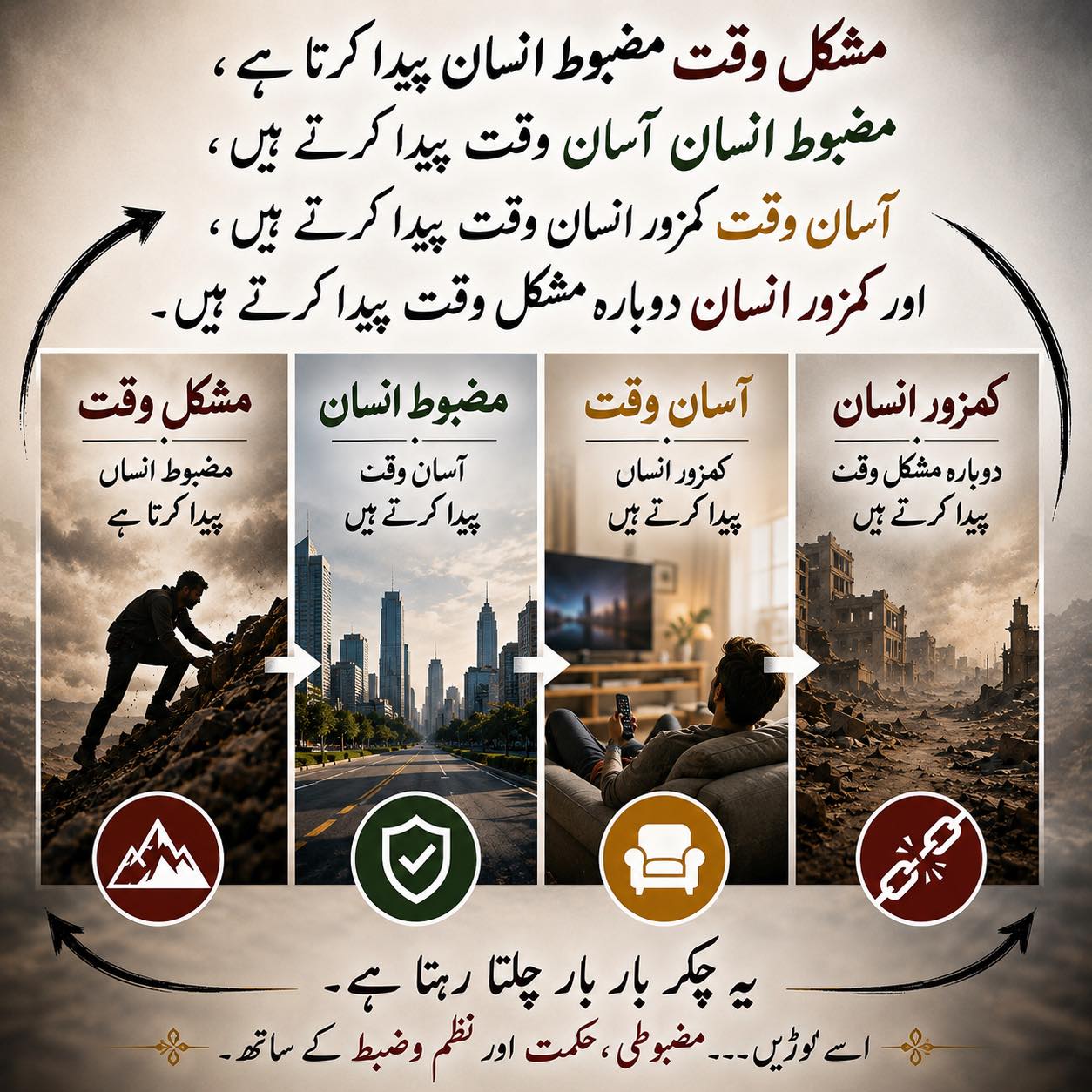
  • “مشکل وقت مضبوط انسان پیدا کرتا ہے، مضبوط انسان آسان وقت پیدا کرتے ہیں، آسان وقت کمزور انسان پیدا کرتے ہیں، اور کمزور انسان دوبارہ مشکل وقت پیدا کرتے ہیں۔”

    صرف ایک جملہ نہیں بلکہ پوری انسانی تاریخ کا خلاصہ ہے۔

    اگر آپ دنیا کی بڑی سلطنتوں، کامیاب خاندانوں، بڑی کمپنیوں اور قوموں کو غور سے دیکھیں تو اکثر یہی چکر بار بار چلتا نظر آتا ہے۔

    غربت، بھوک، جنگ، ناکامی اور مشکلات انسان کو سوچنے پر مجبور کرتی ہیں۔
    جب انسان کے پاس سہولتیں کم ہوں تو وہ:

    * محنت کرنا سیکھتا ہے،
    * صبر کرنا سیکھتا ہے،
    * خطرہ لینا سیکھتا ہے،
    * اور زندگی کی قدر سمجھتا ہے۔

    اسی لیے اکثر بڑے لوگ آسانیوں سے نہیں بلکہ مشکلات سے نکلتے ہیں۔

    Abdul Sattar Edhi نے سادگی اور تکلیف میں زندگی گزاری، تب جا کر انسانیت کی عظیم مثال بنے۔

    Steve Jobs نے جدوجہد دیکھی، تب جا کر Apple جیسی کمپنی بنائی۔

    Elon Musk نے مشکلات، تنقید اور ناکامیوں کا سامنا کیا، تب جا کر نئی صنعتیں بدل ڈالیں۔

    مشکل وقت انسان کو توڑتا بھی ہے اور بناتا بھی ہے۔

    جب مضبوط لوگ بنتے ہیں تو وہ دنیا کو بہتر بناتے ہیں:

    * اچھی سڑکیں،
    * اچھے اسکول،
    * مضبوط معیشت،
    * امن،
    * ٹیکنالوجی،
    * کاروبار،
    * اور آسان زندگیاں۔

    پھر ان کی اگلی نسل ایک آرام دہ دنیا میں پیدا ہوتی ہے۔

    یہیں سے خطرہ شروع ہوتا ہے۔

    جب انسان کو سب کچھ بغیر جدوجہد کے مل جائے تو وہ آہستہ آہستہ:

    * شکر کرنا بھول جاتا ہے،
    * محنت سے دور ہو جاتا ہے،
    * تکلیف برداشت نہیں کر پاتا،
    * چھوٹی باتوں پر ٹوٹ جاتا ہے،
    * اور کامیابی کو اپنا حق سمجھنے لگتا ہے۔

    ایسے لوگ آرام تو چاہتے ہیں، لیکن ذمہ داری نہیں۔

    آج دنیا کے کئی معاشروں میں یہی ہو رہا ہے۔

    انسان کے پاس:

    * بہترین موبائل،
    * انٹرنیٹ،
    * گاڑیاں،
    * ائیرکنڈیشنڈ گھر،
    * کھانا،
    * تفریح،
    * اور سہولتیں موجود ہیں،

    لیکن پھر بھی:

    * ڈپریشن بڑھ رہا ہے،
    * بے چینی بڑھ رہی ہے،
    * مقصد ختم ہو رہا ہے،
    * اور لوگ اندر سے کمزور ہوتے جا رہے ہیں۔

    کیوں؟

    کیونکہ انسان صرف آرام کے لیے پیدا نہیں ہوا۔

    انسان کو مقصد چاہیے، چیلنج چاہیے، جدوجہد چاہیے، ذمہ داری چاہیے۔

    جب کوئی قوم صرف تفریح، آرام اور فوری خوشیوں کے پیچھے بھاگنے لگتی ہے تو وہ آہستہ آہستہ کمزور ہو جاتی ہے۔

    Roman Empire دنیا کی عظیم ترین سلطنتوں میں سے تھی۔
    لیکن جب عیش و آرام، کرپشن اور اندرونی کمزوری بڑھی تو سلطنت اندر سے کھوکھلی ہو گئی۔

    اسی طرح بہت سے خاندانی کاروبار بھی تین نسلوں سے زیادہ نہیں چلتے۔

    پہلی نسل قربانی دیتی ہے۔
    دوسری نسل کاروبار سنبھالتی ہے۔
    تیسری نسل اکثر آرام میں سب کچھ ضائع کر دیتی ہے۔

    لیکن اس کا مطلب یہ نہیں کہ غربت اچھی چیز ہے یا تکلیف ضروری ہے۔

    اصل سوال یہ ہے:

    کیا ہم اپنے بچوں کو بغیر تباہی کے مضبوط بنا سکتے ہیں؟

    یہی اصل تعلیم کا مقصد ہونا چاہیے۔

    اسکول صرف کتابیں پڑھانے کی جگہ نہیں ہونے چاہئیں۔
    وہ ایسی جگہیں ہونی چاہئیں جہاں بچے:

    * ناکامی برداشت کرنا سیکھیں،
    * بات کرنا سیکھیں،
    * مسئلے حل کرنا سیکھیں،
    * ذمہ داری لینا سیکھیں،
    * اور حقیقی دنیا کا سامنا کرنا سیکھیں۔

    جو بچے صرف آرام میں بڑے ہوتے ہیں، وہ اکثر حقیقی زندگی کے دباؤ میں ٹوٹ جاتے ہیں۔

    لیکن جو بچے جدوجہد، نظم و ضبط اور محنت سیکھ لیتے ہیں، وہ دنیا بدل سکتے ہیں۔

    Japan نے تباہی کے بعد خود کو دوبارہ کھڑا کیا۔

    Germany جنگ کے بعد دوبارہ طاقت بنا۔

    South Korea غربت سے نکل کر ٹیکنالوجی کی طاقت بن گیا۔

    کیوں؟

    کیونکہ مشکل وقت نے انہیں سنجیدہ، منظم اور بھوکا بنا دیا۔

    زندگی کا مقصد مشکلات سے بھاگنا نہیں ہونا چاہیے۔

    بلکہ ایسا انسان بننا چاہیے:

    * جو مشکل میں مضبوط رہے،
    * کامیابی میں عاجز رہے،
    * آرام میں بھی محنت کرے،
    * اور طاقت ملنے کے بعد بھی انسانیت نہ بھولے۔

    کیونکہ قومیں ایک دن میں تباہ نہیں ہوتیں۔

    وہ آہستہ آہستہ تباہ ہوتی ہیں،
    جب لوگ:

    * محنت چھوڑ دیتے ہیں،
    * سچ چھوڑ دیتے ہیں،
    * قربانی چھوڑ دیتے ہیں،
    * اور ذمہ داری چھوڑ دیتے ہیں۔

    اور قومیں دوبارہ اس دن اٹھتی ہیں،
    جب عام لوگ دوبارہ مضبوط بننے کا فیصلہ کرتے ہیں۔
    “مشکل وقت مضبوط انسان پیدا کرتا ہے، مضبوط انسان آسان وقت پیدا کرتے ہیں، آسان وقت کمزور انسان پیدا کرتے ہیں، اور کمزور انسان دوبارہ مشکل وقت پیدا کرتے ہیں۔” صرف ایک جملہ نہیں بلکہ پوری انسانی تاریخ کا خلاصہ ہے۔ اگر آپ دنیا کی بڑی سلطنتوں، کامیاب خاندانوں، بڑی کمپنیوں اور قوموں کو غور سے دیکھیں تو اکثر یہی چکر بار بار چلتا نظر آتا ہے۔ غربت، بھوک، جنگ، ناکامی اور مشکلات انسان کو سوچنے پر مجبور کرتی ہیں۔ جب انسان کے پاس سہولتیں کم ہوں تو وہ: * محنت کرنا سیکھتا ہے، * صبر کرنا سیکھتا ہے، * خطرہ لینا سیکھتا ہے، * اور زندگی کی قدر سمجھتا ہے۔ اسی لیے اکثر بڑے لوگ آسانیوں سے نہیں بلکہ مشکلات سے نکلتے ہیں۔ Abdul Sattar Edhi نے سادگی اور تکلیف میں زندگی گزاری، تب جا کر انسانیت کی عظیم مثال بنے۔ Steve Jobs نے جدوجہد دیکھی، تب جا کر Apple جیسی کمپنی بنائی۔ Elon Musk نے مشکلات، تنقید اور ناکامیوں کا سامنا کیا، تب جا کر نئی صنعتیں بدل ڈالیں۔ مشکل وقت انسان کو توڑتا بھی ہے اور بناتا بھی ہے۔ جب مضبوط لوگ بنتے ہیں تو وہ دنیا کو بہتر بناتے ہیں: * اچھی سڑکیں، * اچھے اسکول، * مضبوط معیشت، * امن، * ٹیکنالوجی، * کاروبار، * اور آسان زندگیاں۔ پھر ان کی اگلی نسل ایک آرام دہ دنیا میں پیدا ہوتی ہے۔ یہیں سے خطرہ شروع ہوتا ہے۔ جب انسان کو سب کچھ بغیر جدوجہد کے مل جائے تو وہ آہستہ آہستہ: * شکر کرنا بھول جاتا ہے، * محنت سے دور ہو جاتا ہے، * تکلیف برداشت نہیں کر پاتا، * چھوٹی باتوں پر ٹوٹ جاتا ہے، * اور کامیابی کو اپنا حق سمجھنے لگتا ہے۔ ایسے لوگ آرام تو چاہتے ہیں، لیکن ذمہ داری نہیں۔ آج دنیا کے کئی معاشروں میں یہی ہو رہا ہے۔ انسان کے پاس: * بہترین موبائل، * انٹرنیٹ، * گاڑیاں، * ائیرکنڈیشنڈ گھر، * کھانا، * تفریح، * اور سہولتیں موجود ہیں، لیکن پھر بھی: * ڈپریشن بڑھ رہا ہے، * بے چینی بڑھ رہی ہے، * مقصد ختم ہو رہا ہے، * اور لوگ اندر سے کمزور ہوتے جا رہے ہیں۔ کیوں؟ کیونکہ انسان صرف آرام کے لیے پیدا نہیں ہوا۔ انسان کو مقصد چاہیے، چیلنج چاہیے، جدوجہد چاہیے، ذمہ داری چاہیے۔ جب کوئی قوم صرف تفریح، آرام اور فوری خوشیوں کے پیچھے بھاگنے لگتی ہے تو وہ آہستہ آہستہ کمزور ہو جاتی ہے۔ Roman Empire دنیا کی عظیم ترین سلطنتوں میں سے تھی۔ لیکن جب عیش و آرام، کرپشن اور اندرونی کمزوری بڑھی تو سلطنت اندر سے کھوکھلی ہو گئی۔ اسی طرح بہت سے خاندانی کاروبار بھی تین نسلوں سے زیادہ نہیں چلتے۔ پہلی نسل قربانی دیتی ہے۔ دوسری نسل کاروبار سنبھالتی ہے۔ تیسری نسل اکثر آرام میں سب کچھ ضائع کر دیتی ہے۔ لیکن اس کا مطلب یہ نہیں کہ غربت اچھی چیز ہے یا تکلیف ضروری ہے۔ اصل سوال یہ ہے: کیا ہم اپنے بچوں کو بغیر تباہی کے مضبوط بنا سکتے ہیں؟ یہی اصل تعلیم کا مقصد ہونا چاہیے۔ اسکول صرف کتابیں پڑھانے کی جگہ نہیں ہونے چاہئیں۔ وہ ایسی جگہیں ہونی چاہئیں جہاں بچے: * ناکامی برداشت کرنا سیکھیں، * بات کرنا سیکھیں، * مسئلے حل کرنا سیکھیں، * ذمہ داری لینا سیکھیں، * اور حقیقی دنیا کا سامنا کرنا سیکھیں۔ جو بچے صرف آرام میں بڑے ہوتے ہیں، وہ اکثر حقیقی زندگی کے دباؤ میں ٹوٹ جاتے ہیں۔ لیکن جو بچے جدوجہد، نظم و ضبط اور محنت سیکھ لیتے ہیں، وہ دنیا بدل سکتے ہیں۔ Japan نے تباہی کے بعد خود کو دوبارہ کھڑا کیا۔ Germany جنگ کے بعد دوبارہ طاقت بنا۔ South Korea غربت سے نکل کر ٹیکنالوجی کی طاقت بن گیا۔ کیوں؟ کیونکہ مشکل وقت نے انہیں سنجیدہ، منظم اور بھوکا بنا دیا۔ زندگی کا مقصد مشکلات سے بھاگنا نہیں ہونا چاہیے۔ بلکہ ایسا انسان بننا چاہیے: * جو مشکل میں مضبوط رہے، * کامیابی میں عاجز رہے، * آرام میں بھی محنت کرے، * اور طاقت ملنے کے بعد بھی انسانیت نہ بھولے۔ کیونکہ قومیں ایک دن میں تباہ نہیں ہوتیں۔ وہ آہستہ آہستہ تباہ ہوتی ہیں، جب لوگ: * محنت چھوڑ دیتے ہیں، * سچ چھوڑ دیتے ہیں، * قربانی چھوڑ دیتے ہیں، * اور ذمہ داری چھوڑ دیتے ہیں۔ اور قومیں دوبارہ اس دن اٹھتی ہیں، جب عام لوگ دوبارہ مضبوط بننے کا فیصلہ کرتے ہیں۔
    0 Reacties 0 aandelen 14 Views
  • Thank you ! I paid mine and applied totally online yesterday ! Please deliver it also don’t make me come there
    Thank you ! I paid mine and applied totally online yesterday ! Please deliver it also don’t make me come there
    0 Reacties 0 aandelen 14 Views
  • Zara Jakhro EducationWali
    Thatta
    0300 1622655
    Zara Jakhro EducationWali Thatta 0300 1622655
    0 Reacties 0 aandelen 14 Views