The Million-Book Revolution
How One Book Taught a Nation to Dream Again
By Rehan Allahwala
⸻
It was December 2026.
Winter sunlight spread across Pakistan like a quiet blessing.
From Karachi’s crowded classrooms to the shadowed courtyards of Thar,
a million young voices hummed the same word — “AI.”
It had begun not with a government plan,
not with billions in funding,
but with a book — soft in color, small in price, vast in purpose.
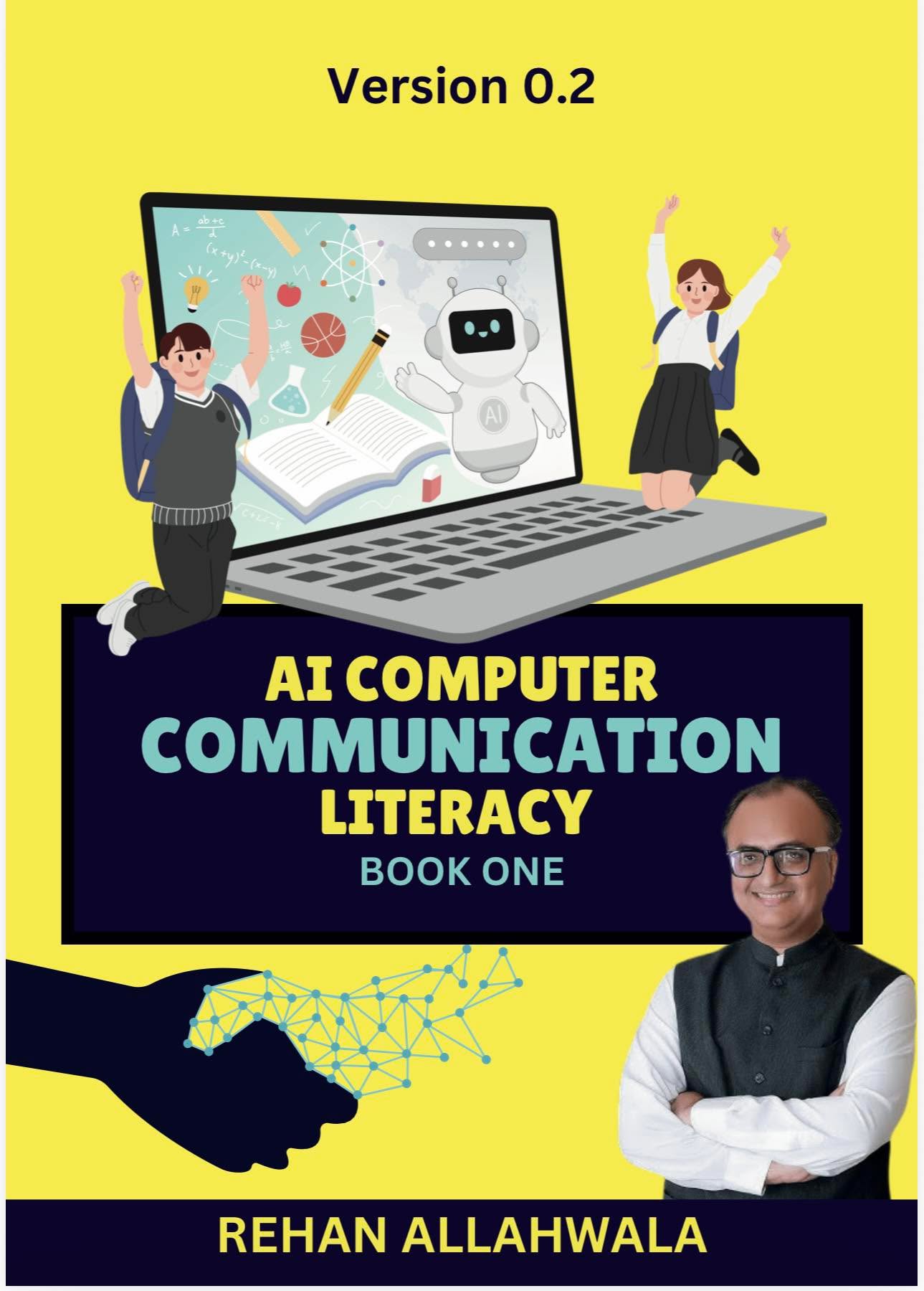
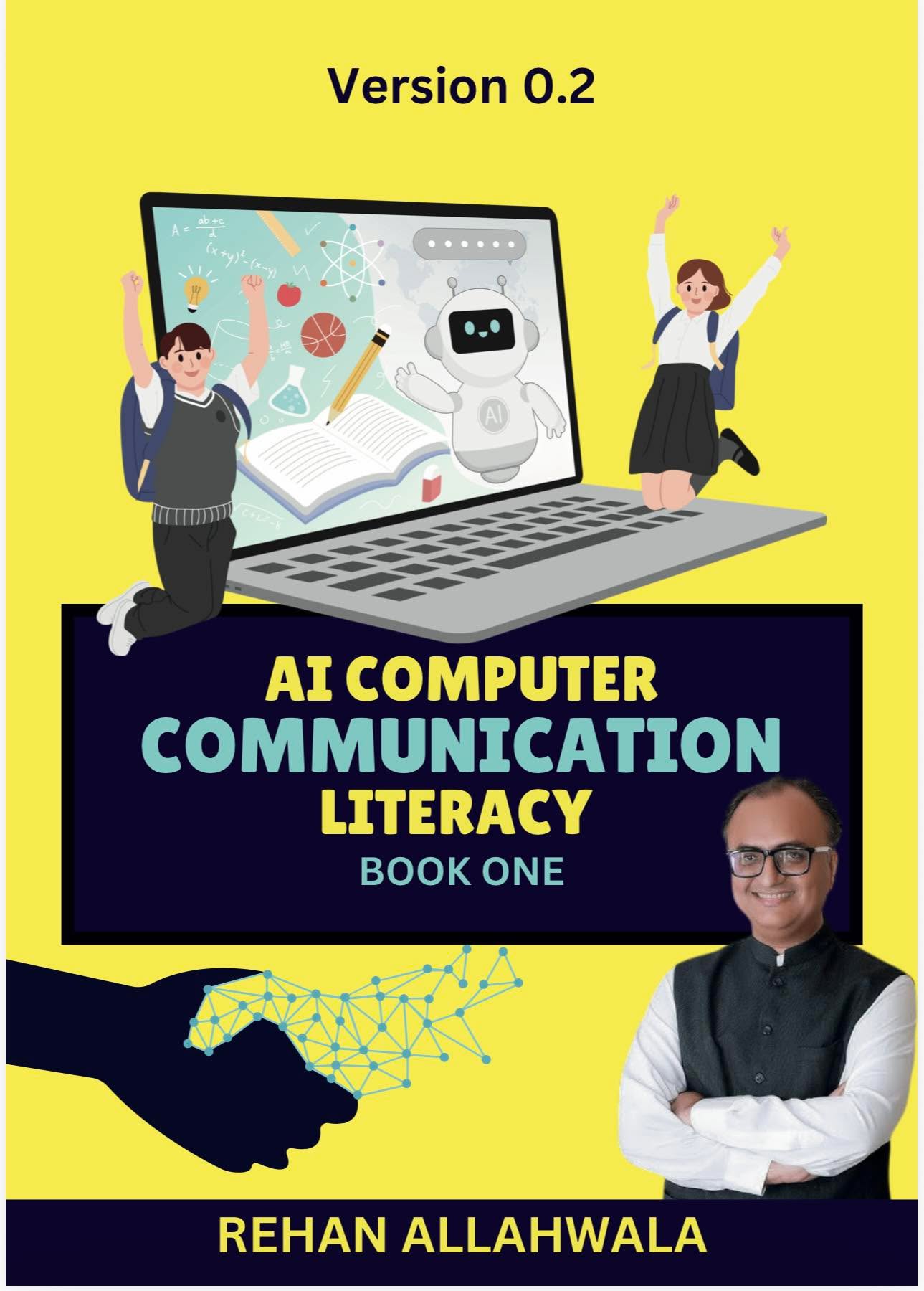
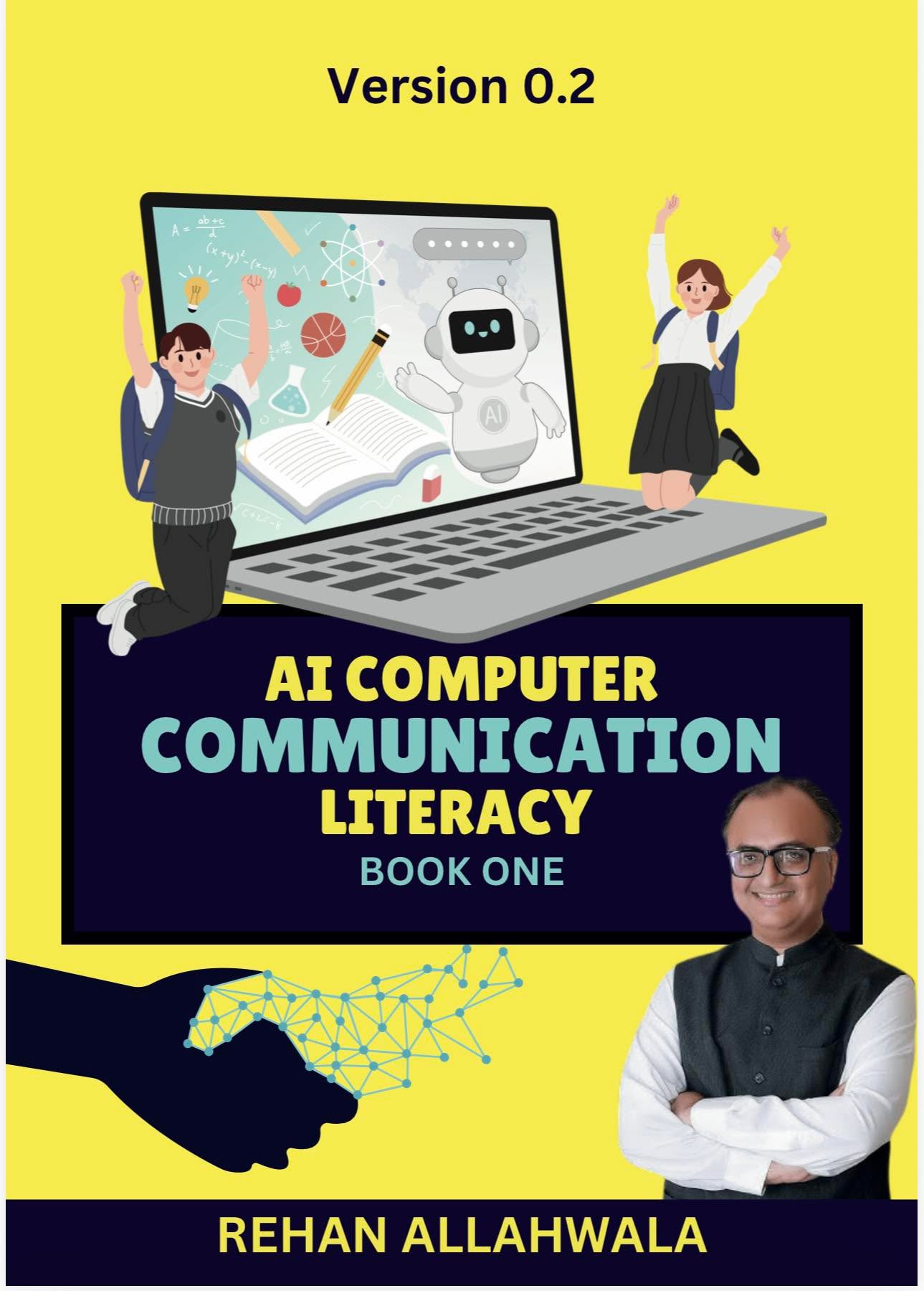
Its name: ACCL — AI Computer Communication Literacy.
Its creator: Rehan Allahwala.
Its power: to awaken the sleeping intelligence of a nation.
⸻
The World Before
Only a few years earlier, the computer classes of Pakistan were frozen in time.
Children memorized what a “floppy disk” was,
as if history were more sacred than possibility.
Screens blinked, but minds did not.
The mouse was their master; the world, their stranger.
The curriculum — a relic of a vanished century —
taught hands to click, not hearts to think.
It produced typists, not dreamers.
Followers, not leaders.
And somewhere in the noise of repetition,
the light of curiosity dimmed.
⸻
The Spark
Then came a whisper that became a wind.
A man asked, gently but firmly:
“Why are our children learning to use a mouse,
when the world has learned to talk to machines?”
And that question became a revolution.
In his humble office in Karachi, surrounded by laptops and laughter,
Rehan Allahwala wrote a book.
Not a manual — a manifesto.
Not a syllabus — a seed.
A book that replaced the old question “What is a computer?”
with the eternal one —
“What can you become?”
⸻
The 180 Steps to Awakening
The ACCL Book was not meant to be read.
It was meant to be lived.
One hundred and eighty small daily tasks —
simple, human, profound.
Ask an AI to write your first poem.
Record your voice telling a story.
Make a poster about kindness.
Search the internet not for entertainment, but for understanding.
In each task, a child discovered a mirror.
And in that reflection, found a teacher more powerful than any textbook —
themselves.
⸻
The Unfolding Miracle
By the end of the first year,
thousands of schools had quietly replaced their old “MS Word and Excel” lessons
with this strange new book that spoke of the future in the language of the present.
Students no longer feared English — they played with it.
They no longer repeated; they created.
They no longer waited; they led.
Videos of ten-year-olds conversing with AI went viral.
Parents who had once silenced their children
now listened —
for the first time —
in awe.
And thus began The Million-Book Revolution.
⸻
A School Without Walls
By 2026, the book had reached one million students.
And through them, another ten million out-of-school children.
For Pakistan has 26 million children who never sit in classrooms —
but they had something more powerful than a desk:
a smartphone.
The ACCL students became their teachers.
In villages, they gathered children under trees and said,
“Let’s learn together. Listen. Speak. Ask.”
AI tools became storytellers,
reading lessons aloud in soft, human voices.
Children who could not write began to think.
Those who could not read began to dream.
Education had escaped the classroom —
it had become an atmosphere.
⸻
The Transformation
In a town near Multan, a rickshaw driver’s daughter built a YouTube channel
where she taught AI in Urdu.
In Gwadar, fishermen’s sons began learning English through voice chat with AI.
In Gilgit, children mapped their valleys on Google Earth and called them “our digital Himalayas.”
They were no longer waiting for opportunity —
they were creating it.
And the most beautiful part?
They didn’t even realize they were making history.
⸻
The National Awakening
By December 2026, Pakistan had changed.
The Ministry of Education could not ignore the storm.
Colleges began teaching “AI Communication Literacy.”
Governors quoted ten-year-olds in their speeches.
Even television anchors started asking,
“Have you read the ACCL book?”
The nation had found something it had lost long ago —
its confidence.
⸻
Rehan’s Reflection
When journalists asked Rehan Allahwala how it all happened,
he smiled — that calm, patient smile of a man who had already seen the future.
“It was never about a book,” he said softly.
“It was about giving our children permission to think.
We taught them that intelligence is not memorized — it is awakened.”
And in that awakening,
a nation began to heal.
⸻
Epilogue: The Dawn of Pakistan 2.0
As 2026 ended, the headlines read:
“One Million Students Now Learning AI Literacy.”
But the truth was far larger.
These were not just students.
They were storytellers of a new civilization.
A generation that spoke in code and compassion.
That used technology not to escape the world —
but to improve it.
And at the center of it all, a single book —
thin as a whisper, vast as a horizon.
⸻
Final Words
No war was fought.
No law was passed.
And yet, a nation changed.
Because one man dared to believe
that if you give a child a question and a tool,
they will give you a universe.
And that belief — printed on 180 pages —
became Pakistan’s first true revolution of the mind.
⸻
“The ACCL Book — a bridge between ignorance and infinity.”
A million books. A million voices. One new Pakistan.
⸻
How One Book Taught a Nation to Dream Again
By Rehan Allahwala
⸻
It was December 2026.
Winter sunlight spread across Pakistan like a quiet blessing.
From Karachi’s crowded classrooms to the shadowed courtyards of Thar,
a million young voices hummed the same word — “AI.”
It had begun not with a government plan,
not with billions in funding,
but with a book — soft in color, small in price, vast in purpose.
Its name: ACCL — AI Computer Communication Literacy.
Its creator: Rehan Allahwala.
Its power: to awaken the sleeping intelligence of a nation.
⸻
The World Before
Only a few years earlier, the computer classes of Pakistan were frozen in time.
Children memorized what a “floppy disk” was,
as if history were more sacred than possibility.
Screens blinked, but minds did not.
The mouse was their master; the world, their stranger.
The curriculum — a relic of a vanished century —
taught hands to click, not hearts to think.
It produced typists, not dreamers.
Followers, not leaders.
And somewhere in the noise of repetition,
the light of curiosity dimmed.
⸻
The Spark
Then came a whisper that became a wind.
A man asked, gently but firmly:
“Why are our children learning to use a mouse,
when the world has learned to talk to machines?”
And that question became a revolution.
In his humble office in Karachi, surrounded by laptops and laughter,
Rehan Allahwala wrote a book.
Not a manual — a manifesto.
Not a syllabus — a seed.
A book that replaced the old question “What is a computer?”
with the eternal one —
“What can you become?”
⸻
The 180 Steps to Awakening
The ACCL Book was not meant to be read.
It was meant to be lived.
One hundred and eighty small daily tasks —
simple, human, profound.
Ask an AI to write your first poem.
Record your voice telling a story.
Make a poster about kindness.
Search the internet not for entertainment, but for understanding.
In each task, a child discovered a mirror.
And in that reflection, found a teacher more powerful than any textbook —
themselves.
⸻
The Unfolding Miracle
By the end of the first year,
thousands of schools had quietly replaced their old “MS Word and Excel” lessons
with this strange new book that spoke of the future in the language of the present.
Students no longer feared English — they played with it.
They no longer repeated; they created.
They no longer waited; they led.
Videos of ten-year-olds conversing with AI went viral.
Parents who had once silenced their children
now listened —
for the first time —
in awe.
And thus began The Million-Book Revolution.
⸻
A School Without Walls
By 2026, the book had reached one million students.
And through them, another ten million out-of-school children.
For Pakistan has 26 million children who never sit in classrooms —
but they had something more powerful than a desk:
a smartphone.
The ACCL students became their teachers.
In villages, they gathered children under trees and said,
“Let’s learn together. Listen. Speak. Ask.”
AI tools became storytellers,
reading lessons aloud in soft, human voices.
Children who could not write began to think.
Those who could not read began to dream.
Education had escaped the classroom —
it had become an atmosphere.
⸻
The Transformation
In a town near Multan, a rickshaw driver’s daughter built a YouTube channel
where she taught AI in Urdu.
In Gwadar, fishermen’s sons began learning English through voice chat with AI.
In Gilgit, children mapped their valleys on Google Earth and called them “our digital Himalayas.”
They were no longer waiting for opportunity —
they were creating it.
And the most beautiful part?
They didn’t even realize they were making history.
⸻
The National Awakening
By December 2026, Pakistan had changed.
The Ministry of Education could not ignore the storm.
Colleges began teaching “AI Communication Literacy.”
Governors quoted ten-year-olds in their speeches.
Even television anchors started asking,
“Have you read the ACCL book?”
The nation had found something it had lost long ago —
its confidence.
⸻
Rehan’s Reflection
When journalists asked Rehan Allahwala how it all happened,
he smiled — that calm, patient smile of a man who had already seen the future.
“It was never about a book,” he said softly.
“It was about giving our children permission to think.
We taught them that intelligence is not memorized — it is awakened.”
And in that awakening,
a nation began to heal.
⸻
Epilogue: The Dawn of Pakistan 2.0
As 2026 ended, the headlines read:
“One Million Students Now Learning AI Literacy.”
But the truth was far larger.
These were not just students.
They were storytellers of a new civilization.
A generation that spoke in code and compassion.
That used technology not to escape the world —
but to improve it.
And at the center of it all, a single book —
thin as a whisper, vast as a horizon.
⸻
Final Words
No war was fought.
No law was passed.
And yet, a nation changed.
Because one man dared to believe
that if you give a child a question and a tool,
they will give you a universe.
And that belief — printed on 180 pages —
became Pakistan’s first true revolution of the mind.
⸻
“The ACCL Book — a bridge between ignorance and infinity.”
A million books. A million voices. One new Pakistan.
⸻
🌍 The Million-Book Revolution
How One Book Taught a Nation to Dream Again
By Rehan Allahwala
⸻
It was December 2026.
Winter sunlight spread across Pakistan like a quiet blessing.
From Karachi’s crowded classrooms to the shadowed courtyards of Thar,
a million young voices hummed the same word — “AI.”
It had begun not with a government plan,
not with billions in funding,
but with a book — soft in color, small in price, vast in purpose.
Its name: ACCL — AI Computer Communication Literacy.
Its creator: Rehan Allahwala.
Its power: to awaken the sleeping intelligence of a nation.
⸻
🕊️ The World Before
Only a few years earlier, the computer classes of Pakistan were frozen in time.
Children memorized what a “floppy disk” was,
as if history were more sacred than possibility.
Screens blinked, but minds did not.
The mouse was their master; the world, their stranger.
The curriculum — a relic of a vanished century —
taught hands to click, not hearts to think.
It produced typists, not dreamers.
Followers, not leaders.
And somewhere in the noise of repetition,
the light of curiosity dimmed.
⸻
🌱 The Spark
Then came a whisper that became a wind.
A man asked, gently but firmly:
“Why are our children learning to use a mouse,
when the world has learned to talk to machines?”
And that question became a revolution.
In his humble office in Karachi, surrounded by laptops and laughter,
Rehan Allahwala wrote a book.
Not a manual — a manifesto.
Not a syllabus — a seed.
A book that replaced the old question “What is a computer?”
with the eternal one —
“What can you become?”
⸻
💡 The 180 Steps to Awakening
The ACCL Book was not meant to be read.
It was meant to be lived.
One hundred and eighty small daily tasks —
simple, human, profound.
Ask an AI to write your first poem.
Record your voice telling a story.
Make a poster about kindness.
Search the internet not for entertainment, but for understanding.
In each task, a child discovered a mirror.
And in that reflection, found a teacher more powerful than any textbook —
themselves.
⸻
🌾 The Unfolding Miracle
By the end of the first year,
thousands of schools had quietly replaced their old “MS Word and Excel” lessons
with this strange new book that spoke of the future in the language of the present.
Students no longer feared English — they played with it.
They no longer repeated; they created.
They no longer waited; they led.
Videos of ten-year-olds conversing with AI went viral.
Parents who had once silenced their children
now listened —
for the first time —
in awe.
And thus began The Million-Book Revolution.
⸻
🌐 A School Without Walls
By 2026, the book had reached one million students.
And through them, another ten million out-of-school children.
For Pakistan has 26 million children who never sit in classrooms —
but they had something more powerful than a desk:
a smartphone.
The ACCL students became their teachers.
In villages, they gathered children under trees and said,
“Let’s learn together. Listen. Speak. Ask.”
AI tools became storytellers,
reading lessons aloud in soft, human voices.
Children who could not write began to think.
Those who could not read began to dream.
Education had escaped the classroom —
it had become an atmosphere.
⸻
🔥 The Transformation
In a town near Multan, a rickshaw driver’s daughter built a YouTube channel
where she taught AI in Urdu.
In Gwadar, fishermen’s sons began learning English through voice chat with AI.
In Gilgit, children mapped their valleys on Google Earth and called them “our digital Himalayas.”
They were no longer waiting for opportunity —
they were creating it.
And the most beautiful part?
They didn’t even realize they were making history.
⸻
🧭 The National Awakening
By December 2026, Pakistan had changed.
The Ministry of Education could not ignore the storm.
Colleges began teaching “AI Communication Literacy.”
Governors quoted ten-year-olds in their speeches.
Even television anchors started asking,
“Have you read the ACCL book?”
The nation had found something it had lost long ago —
its confidence.
⸻
🕊️ Rehan’s Reflection
When journalists asked Rehan Allahwala how it all happened,
he smiled — that calm, patient smile of a man who had already seen the future.
“It was never about a book,” he said softly.
“It was about giving our children permission to think.
We taught them that intelligence is not memorized — it is awakened.”
And in that awakening,
a nation began to heal.
⸻
🌟 Epilogue: The Dawn of Pakistan 2.0
As 2026 ended, the headlines read:
“One Million Students Now Learning AI Literacy.”
But the truth was far larger.
These were not just students.
They were storytellers of a new civilization.
A generation that spoke in code and compassion.
That used technology not to escape the world —
but to improve it.
And at the center of it all, a single book —
thin as a whisper, vast as a horizon.
⸻
✨ Final Words
No war was fought.
No law was passed.
And yet, a nation changed.
Because one man dared to believe
that if you give a child a question and a tool,
they will give you a universe.
And that belief — printed on 180 pages —
became Pakistan’s first true revolution of the mind.
⸻
“The ACCL Book — a bridge between ignorance and infinity.”
A million books. A million voices. One new Pakistan.
⸻
0 Kommentare
0 Anteile
59 Ansichten