• #rsisb
    Roll No.247
    foundation level
    # The Journey of Dinosaurs: A Scientific Perspective

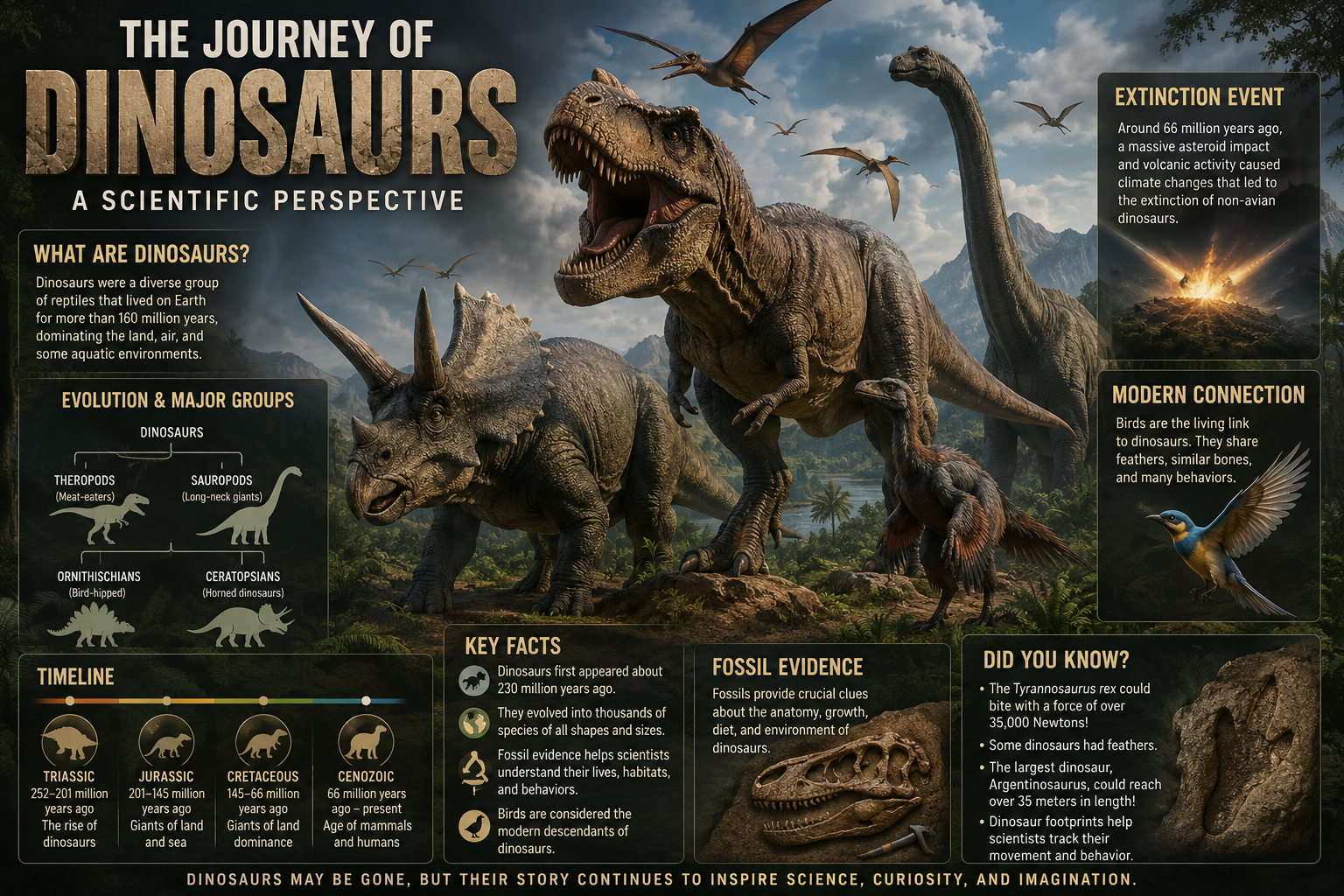
    Step into the fascinating world of dinosaurs and explore one of the most remarkable chapters in the history of life on Earth! Dinosaurs ruled many of the planet’s ecosystems for more than 160 million years, appearing during the Triassic Period and continuing through the Jurassic and Cretaceous Periods. Their incredible diversity included enormous plant-eaters, powerful predators, swift hunters, armored species, and many other extraordinary creatures.

    From a scientific perspective, the story of dinosaurs is not simply a tale of giant creatures—it is a story of evolution, adaptation, survival, extinction, and discovery. Scientists learn about dinosaurs through fossils, including bones, teeth, footprints, eggs, nests, and even traces of skin and feathers. By carefully studying these clues, paleontologists can reconstruct how dinosaurs lived, what they ate, how they moved, and how different species changed over millions of years.

    Dinosaurs first appeared roughly 230 million years ago. Over time, they adapted to changing environments and became one of the most successful groups of land animals in Earth's history. Some developed long necks and enormous bodies to reach vegetation, while others evolved sharp teeth and strong jaws for hunting. Their fossils have been discovered on every continent, showing just how widely they were distributed.

    The Jurassic Period is often remembered as a time when giant dinosaurs became especially prominent. Huge sauropods walked across ancient landscapes, while theropods hunted or scavenged. During the Cretaceous Period, dinosaurs continued to diversify, and many familiar species appeared. At the same time, flowering plants became increasingly important parts of many ecosystems.

    One of the most important scientific discoveries is that birds are living dinosaurs. Evidence from fossils, anatomy, and evolutionary studies shows that modern birds descended from theropod dinosaurs. This means that although non-avian dinosaurs disappeared from the fossil record about 66 million years ago, the dinosaur lineage continues today in the form of birds.

    The end of the Cretaceous Period brought a dramatic change. A large asteroid struck what is now the Yucatán Peninsula, contributing to major environmental disruptions around the world. This event, together with other environmental changes, played a major role in the extinction of non-avian dinosaurs. However, many other organisms survived, including early mammals, reptiles, and birds.

    Today, dinosaur research continues to evolve. New fossils, improved imaging technologies, computer modeling, and advances in genetics and evolutionary biology are helping scientists understand these ancient animals more accurately. Every newly discovered fossil can provide another piece of the enormous puzzle of Earth's past.

    The journey of dinosaurs reminds us that Earth has changed dramatically over geological time. Their story teaches us about adaptation, biodiversity, environmental change, and extinction. Most importantly, it shows how scientific evidence can help us understand a world that existed millions of years before humans appeared.

    Whether you are fascinated by enormous herbivores, fearsome predators, ancient ecosystems, or the origins of modern birds, the scientific journey of dinosaurs offers endless opportunities for discovery. Their fossils connect us to a distant past and inspire scientists, students, and curious minds to keep asking questions about the incredible history of life on our planet.

    #Dinosaurs #DinosaurJourney #Paleontology #Science #Fossils #Evolution #EarthHistory #JurassicPeriod #CretaceousPeriod #TriassicPeriod #DinosaurScience #AncientEarth #NaturalHistory #PrehistoricLife #ScientificDiscovery #Paleontologist #Biodiversity #Extinction #BirdsAreDinosaurs #LearnScience #ScienceEducation
    #rsisb Roll No.247 foundation level # The Journey of Dinosaurs: A Scientific Perspective 🦖🌍🔬 Step into the fascinating world of dinosaurs and explore one of the most remarkable chapters in the history of life on Earth! 🌎🦕 Dinosaurs ruled many of the planet’s ecosystems for more than 160 million years, appearing during the Triassic Period and continuing through the Jurassic and Cretaceous Periods. Their incredible diversity included enormous plant-eaters, powerful predators, swift hunters, armored species, and many other extraordinary creatures. 🦴✨ From a scientific perspective, the story of dinosaurs is not simply a tale of giant creatures—it is a story of evolution, adaptation, survival, extinction, and discovery. Scientists learn about dinosaurs through fossils, including bones, teeth, footprints, eggs, nests, and even traces of skin and feathers. 🔬🦴 By carefully studying these clues, paleontologists can reconstruct how dinosaurs lived, what they ate, how they moved, and how different species changed over millions of years. Dinosaurs first appeared roughly 230 million years ago. 🌋🌿 Over time, they adapted to changing environments and became one of the most successful groups of land animals in Earth's history. Some developed long necks and enormous bodies to reach vegetation, while others evolved sharp teeth and strong jaws for hunting. 🦕🌱🦖 Their fossils have been discovered on every continent, showing just how widely they were distributed. The Jurassic Period is often remembered as a time when giant dinosaurs became especially prominent. 🌴☀️ Huge sauropods walked across ancient landscapes, while theropods hunted or scavenged. During the Cretaceous Period, dinosaurs continued to diversify, and many familiar species appeared. At the same time, flowering plants became increasingly important parts of many ecosystems. 🌸🦖 One of the most important scientific discoveries is that birds are living dinosaurs. 🐦🦕 Evidence from fossils, anatomy, and evolutionary studies shows that modern birds descended from theropod dinosaurs. This means that although non-avian dinosaurs disappeared from the fossil record about 66 million years ago, the dinosaur lineage continues today in the form of birds. 🌍🔬 The end of the Cretaceous Period brought a dramatic change. A large asteroid struck what is now the Yucatán Peninsula, contributing to major environmental disruptions around the world. 🌠🌎 This event, together with other environmental changes, played a major role in the extinction of non-avian dinosaurs. However, many other organisms survived, including early mammals, reptiles, and birds. Today, dinosaur research continues to evolve. 🧑‍🔬🔎 New fossils, improved imaging technologies, computer modeling, and advances in genetics and evolutionary biology are helping scientists understand these ancient animals more accurately. Every newly discovered fossil can provide another piece of the enormous puzzle of Earth's past. 🦴🧩 The journey of dinosaurs reminds us that Earth has changed dramatically over geological time. 🌎⏳ Their story teaches us about adaptation, biodiversity, environmental change, and extinction. Most importantly, it shows how scientific evidence can help us understand a world that existed millions of years before humans appeared. Whether you are fascinated by enormous herbivores, fearsome predators, ancient ecosystems, or the origins of modern birds, the scientific journey of dinosaurs offers endless opportunities for discovery. 🦖🔬🌿 Their fossils connect us to a distant past and inspire scientists, students, and curious minds to keep asking questions about the incredible history of life on our planet. 🌍✨ #Dinosaurs 🦖 #DinosaurJourney 🦕 #Paleontology 🔬 #Science 🧪 #Fossils 🦴 #Evolution 🧬 #EarthHistory 🌍 #JurassicPeriod 🌿 #CretaceousPeriod 🌋 #TriassicPeriod 🌎 #DinosaurScience 🔎 #AncientEarth ⏳ #NaturalHistory 🏞️ #PrehistoricLife 🦕 #ScientificDiscovery 💡 #Paleontologist 🧑‍🔬 #Biodiversity 🌱 #Extinction 🌠 #BirdsAreDinosaurs 🐦 #LearnScience 📚 #ScienceEducation 🔬✨
    0 Comments 0 Shares 108 Views
  • #rsisb
    Roll No.240
    Canva No.67
    Foundation Level

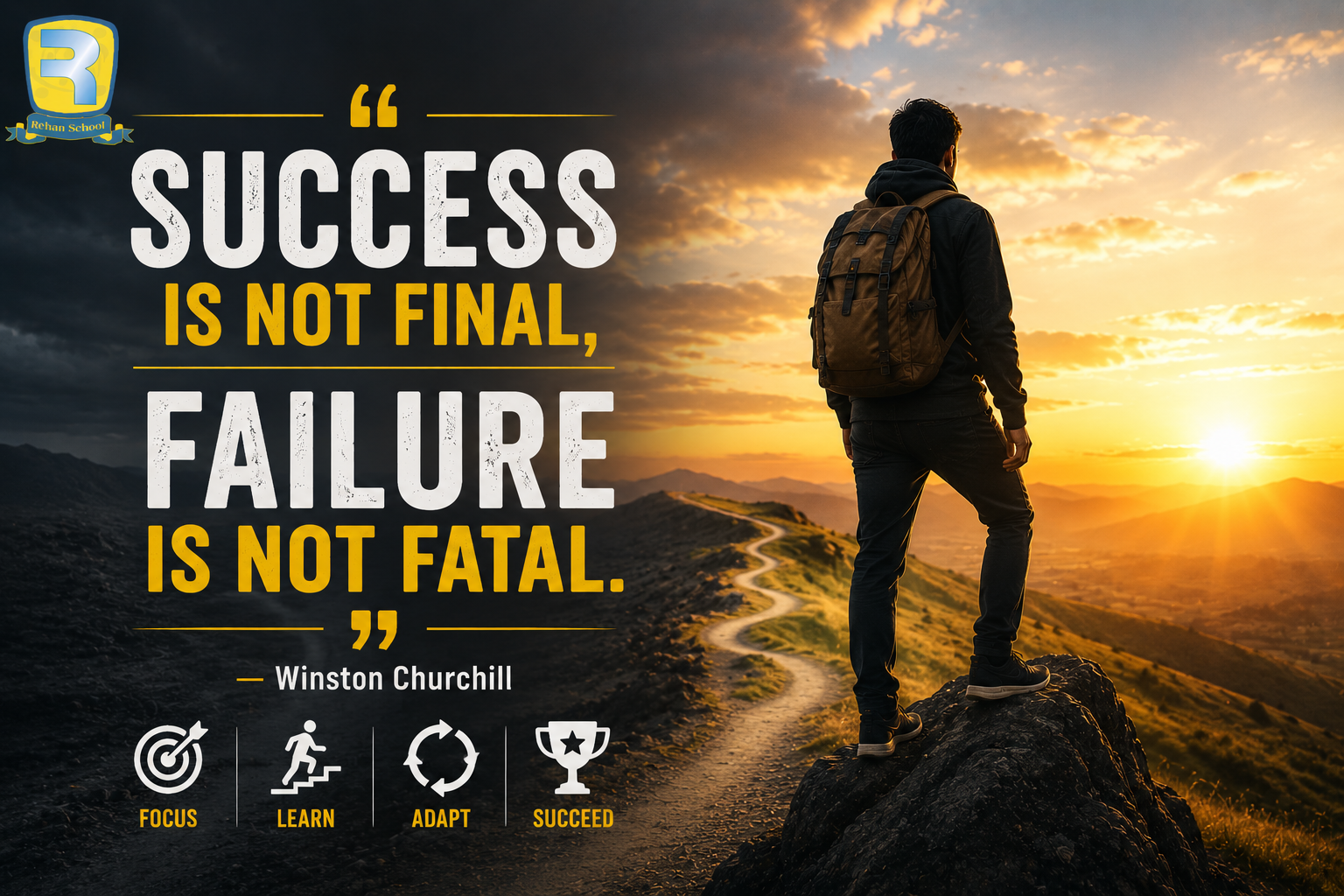
    Success and failure are both parts of the journey. “Success is not final, failure is not fatal.” — Winston Churchill reminds us that one achievement does not mean the journey is over, and one failure does not mean your journey has ended.

    When you achieve something important, stay humble and continue improving. Success should motivate you to aim higher, learn more, and keep growing. At the same time, when things do not go according to plan, do not let failure define you. Every mistake can teach you something valuable and every setback can make you stronger.

    There will be difficult days, unexpected challenges, and moments when you may feel like giving up. But remember that your current situation does not determine your future. Keep your focus, learn from every experience, adapt when necessary, and continue moving forward.

    Do not become comfortable with success, and do not become defeated by failure. Learn, adapt, stay focused, and keep going until you reach your next goal.

    — Winston Churchill

    #Motivation #WinstonChurchill #Success #Failure #NeverGiveUp #KeepGoing #GrowthMindset #SuccessMindset #HardWork #Discipline #Focus #Learn #Adapt #Inspiration #PersonalGrowth #GoalSetting #PositiveMindset #RehanSchool #DailyMotivation #believeinyourself

    Rehan School Islamabad Campus
    Asma Shaheen EducationWali
    Irum Asim
    Saima Happinesswali

    #rsisb Roll No.240 Canva No.67 Foundation Level Success and failure are both parts of the journey. “Success is not final, failure is not fatal.” — Winston Churchill reminds us that one achievement does not mean the journey is over, and one failure does not mean your journey has ended. When you achieve something important, stay humble and continue improving. Success should motivate you to aim higher, learn more, and keep growing. At the same time, when things do not go according to plan, do not let failure define you. Every mistake can teach you something valuable and every setback can make you stronger. There will be difficult days, unexpected challenges, and moments when you may feel like giving up. But remember that your current situation does not determine your future. Keep your focus, learn from every experience, adapt when necessary, and continue moving forward. 🌟 Do not become comfortable with success, and do not become defeated by failure. Learn, adapt, stay focused, and keep going until you reach your next goal. — Winston Churchill #Motivation #WinstonChurchill #Success #Failure #NeverGiveUp #KeepGoing #GrowthMindset #SuccessMindset #HardWork #Discipline #Focus #Learn #Adapt #Inspiration #PersonalGrowth #GoalSetting #PositiveMindset #RehanSchool #DailyMotivation #believeinyourself Rehan School Islamabad Campus Asma Shaheen EducationWali Irum Asim Saima Happinesswali
    0 Comments 0 Shares 318 Views
  • #rsisb
    Roll no.239
    Story Post no.29
    Foundation Level

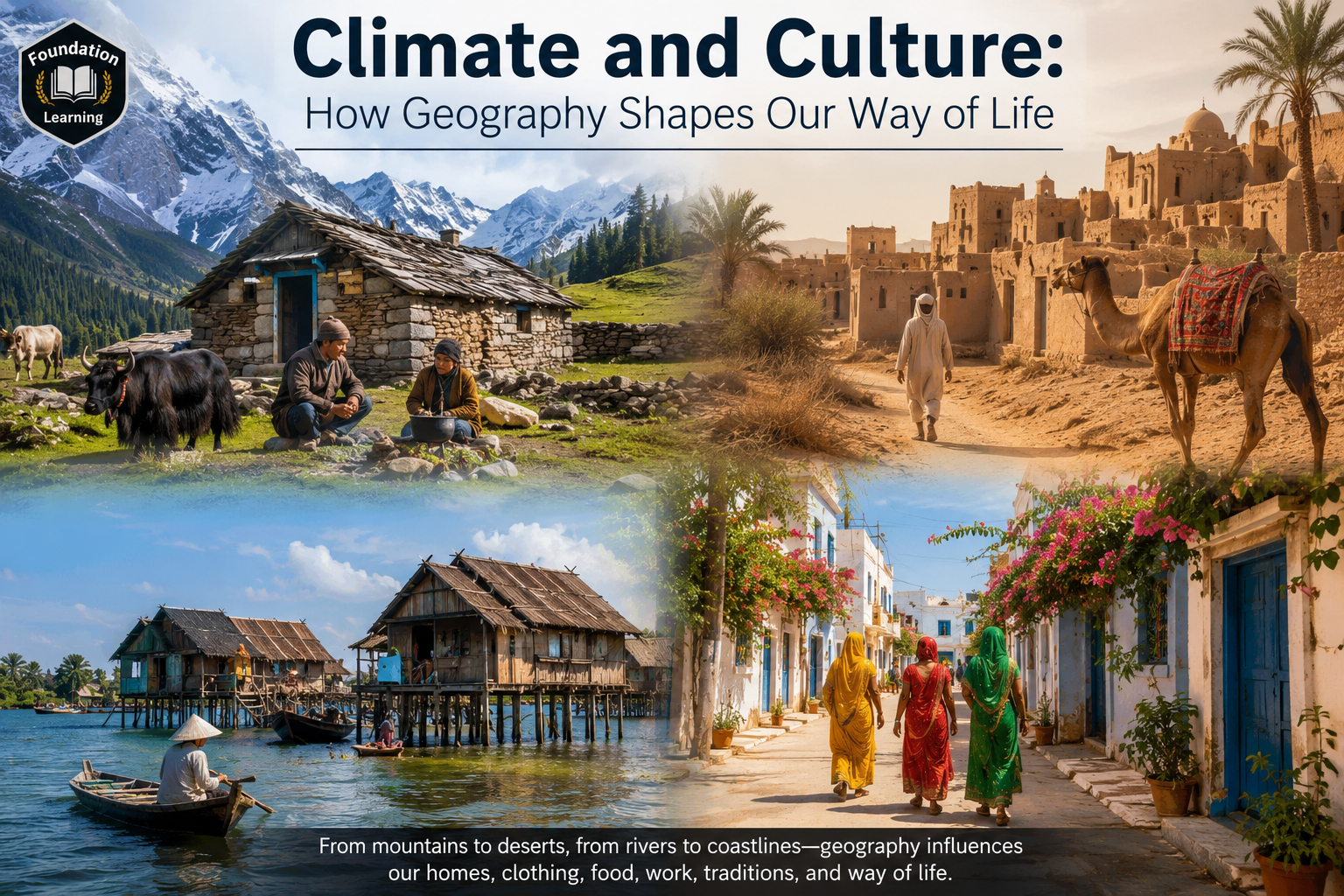
    **Climate and Culture: How Geography Shapes Our Way of Life**

    Climate and geography play a major role in shaping how people live, work, eat, dress, build homes, and celebrate traditions. From hot deserts to cold mountains and from coastal regions to fertile plains, the environment around us influences many aspects of human life.

    Different climates encourage different lifestyles. In cold regions, people may build insulated homes and wear warm clothing, while in hot areas, homes and daily routines often adapt to high temperatures. Geography also influences agriculture, transportation, occupations, and the foods that become part of local traditions.

    Culture develops through the interaction between people and their surroundings. Rivers can support farming and the growth of cities, mountains can shape communities and traditions, and coastal areas often develop strong connections to fishing and trade.

    However, geography does not completely determine culture. People adapt, innovate, migrate, and exchange ideas with others. Modern technology has also allowed communities to overcome many environmental limitations.

    Understanding the relationship between climate and culture helps us appreciate why societies around the world are so diverse. **Our environment influences the way we live, but human creativity determines how we adapt to it.**
    #rsisb Roll no.239 Story Post no.29 Foundation Level **Climate and Culture: How Geography Shapes Our Way of Life** Climate and geography play a major role in shaping how people live, work, eat, dress, build homes, and celebrate traditions. From hot deserts to cold mountains and from coastal regions to fertile plains, the environment around us influences many aspects of human life. Different climates encourage different lifestyles. In cold regions, people may build insulated homes and wear warm clothing, while in hot areas, homes and daily routines often adapt to high temperatures. Geography also influences agriculture, transportation, occupations, and the foods that become part of local traditions. Culture develops through the interaction between people and their surroundings. Rivers can support farming and the growth of cities, mountains can shape communities and traditions, and coastal areas often develop strong connections to fishing and trade. However, geography does not completely determine culture. People adapt, innovate, migrate, and exchange ideas with others. Modern technology has also allowed communities to overcome many environmental limitations. Understanding the relationship between climate and culture helps us appreciate why societies around the world are so diverse. **Our environment influences the way we live, but human creativity determines how we adapt to it.**
    0 Comments 0 Shares 311 Views
  • #rsisb
    Roll No.240
    Story No.15
    Foundation Level

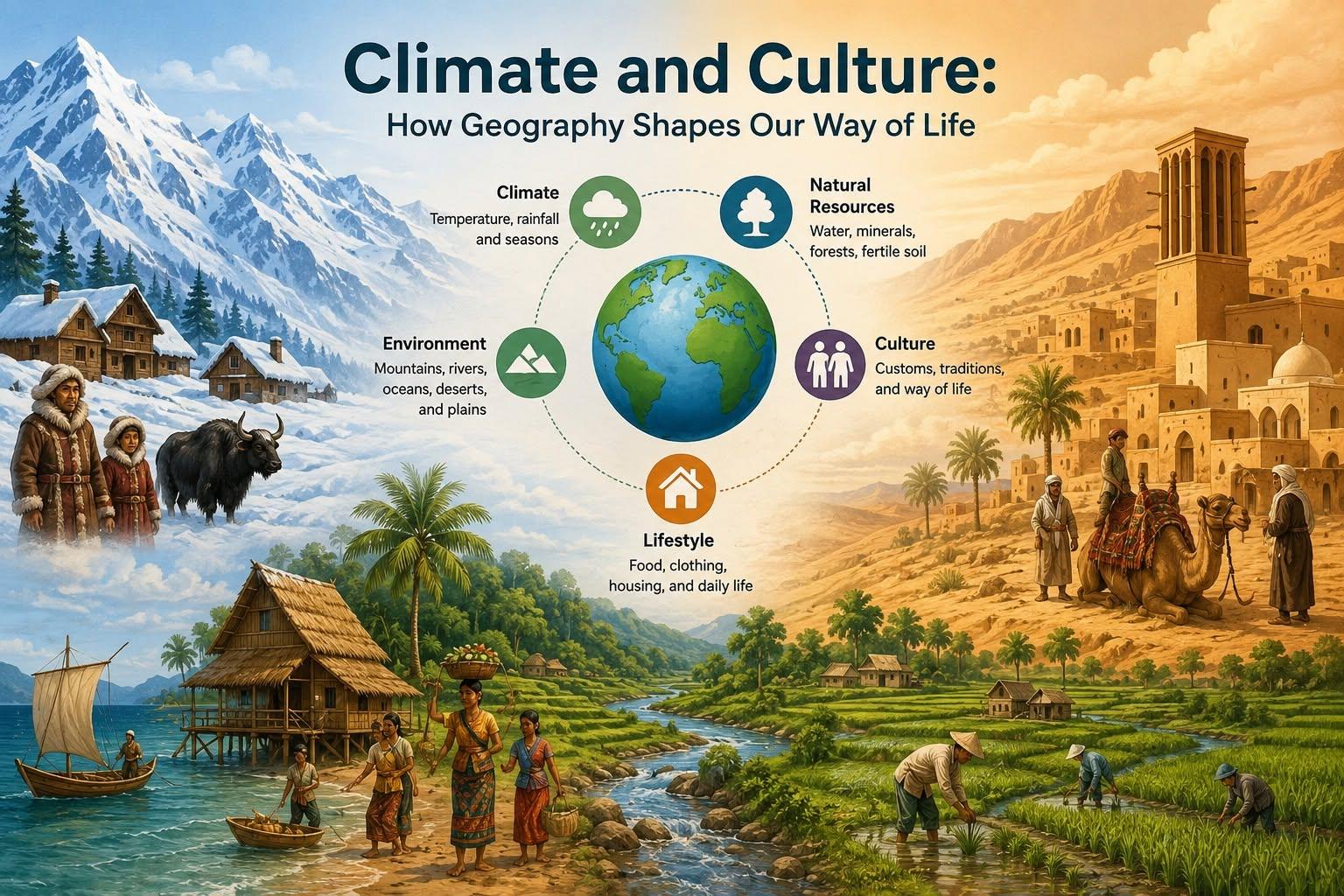
    ### **Climate and Culture: How Geography Shapes Our Way of Life**

    Our world is incredibly diverse, and much of that diversity comes from geography. From snowy mountain villages to tropical islands, vast deserts to fertile river valleys, the environment influences how people live, work, eat, build homes, celebrate traditions, and interact with one another. Climate affects agriculture, clothing, architecture, transportation, and even cultural festivals, making every region unique in its own way.

    This topic explores the fascinating relationship between nature and human civilization, showing how geography has shaped cultures throughout history. Understanding this connection helps us appreciate the richness of global traditions and the remarkable ability of people to adapt to different environments. By learning how climate influences daily life, we gain a deeper respect for cultural diversity and the shared experiences that unite humanity.

    **#ClimateAndCulture #Geography #HumanGeography #Culture #Climate #Environment #WorldCultures #GlobalLearning #Education #GeographyFacts #Nature #SocialStudies #EarthScience #Learning #Knowledge #ExploreTheWorld **

    Rehan School Islamabad Campus
    Asma Shaheen EducationWali
    Irum Asim
    Saima Happinesswali
    #rsisb Roll No.240 Story No.15 Foundation Level ### **Climate and Culture: How Geography Shapes Our Way of Life** Our world is incredibly diverse, and much of that diversity comes from geography. 🌍 From snowy mountain villages to tropical islands, vast deserts to fertile river valleys, the environment influences how people live, work, eat, build homes, celebrate traditions, and interact with one another. Climate affects agriculture, clothing, architecture, transportation, and even cultural festivals, making every region unique in its own way. This topic explores the fascinating relationship between nature and human civilization, showing how geography has shaped cultures throughout history. Understanding this connection helps us appreciate the richness of global traditions and the remarkable ability of people to adapt to different environments. By learning how climate influences daily life, we gain a deeper respect for cultural diversity and the shared experiences that unite humanity. **#ClimateAndCulture #Geography #HumanGeography #Culture #Climate #Environment #WorldCultures #GlobalLearning #Education #GeographyFacts #Nature #SocialStudies #EarthScience #Learning #Knowledge #ExploreTheWorld 🌎🌿🏔️🌊🏜️** Rehan School Islamabad Campus Asma Shaheen EducationWali Irum Asim Saima Happinesswali
    0 Comments 0 Shares 1205 Views
  • #rsisb
    Roll no.239
    Foundation Level


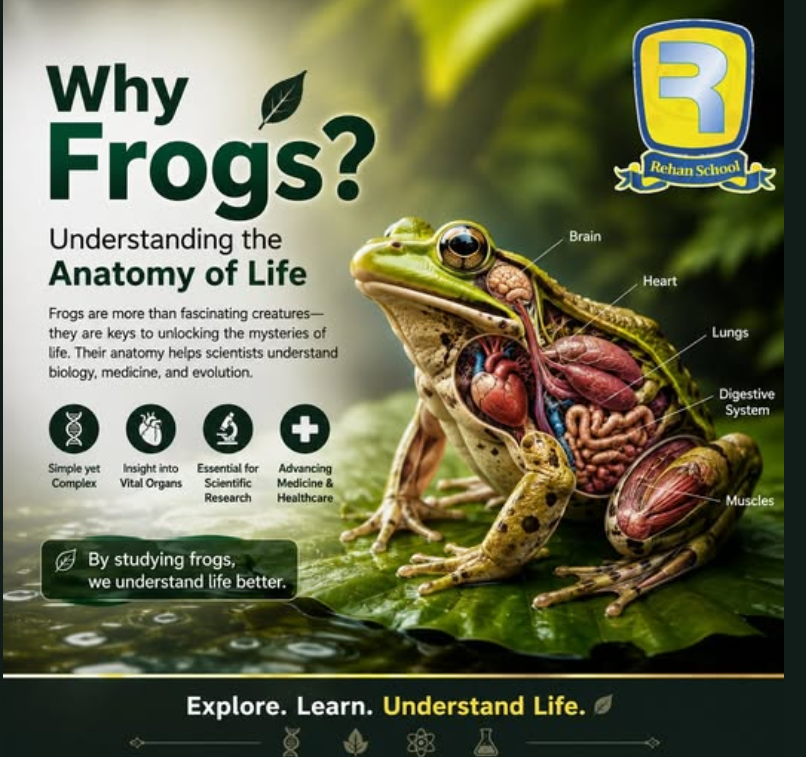
    Frogs are often studied in biology because their bodies provide a clear way to understand **basic animal anatomy and physiology**. Their organs and organ systems are relatively easy to observe, while still showing many of the same fundamental structures found in other vertebrates.

    ### What Can Frogs Teach Us?

    * **Heart:** A frog’s three-chambered heart demonstrates how blood circulates through the body.
    * **Lungs and skin:** Frogs breathe through both their lungs and moist skin, showing different methods of gas exchange.
    * **Digestive system:** Their digestive organs demonstrate how food is broken down and nutrients are absorbed.
    * **Muscles and skeleton:** Powerful hind-leg muscles and a specialized skeleton explain how frogs jump and move.
    * **Nervous system:** The brain, spinal cord, and nerves coordinate movement and responses.
    * **Kidneys:** These organs help remove waste and maintain the body's internal balance.

    genui{"biology_anatomy_physiology":{"type_id":"BLOOD_CIRCULATION","locale_override":"en-US"}}

    ### **Why Are Frogs Important in Biology?**

    Frogs are useful study organisms because their anatomy helps students connect **structure with function**. By examining how different organs work together, we can better understand a central idea of biology: **life depends on coordinated systems working as one whole organism.**

    In short, studying a frog is not simply about studying one animal—it is a way to explore the **anatomy, physiology, adaptation, and organization of life itself**.
    #rsisb Roll no.239 Foundation Level Frogs are often studied in biology because their bodies provide a clear way to understand **basic animal anatomy and physiology**. Their organs and organ systems are relatively easy to observe, while still showing many of the same fundamental structures found in other vertebrates. ### 🐸 What Can Frogs Teach Us? * **Heart:** A frog’s three-chambered heart demonstrates how blood circulates through the body. * **Lungs and skin:** Frogs breathe through both their lungs and moist skin, showing different methods of gas exchange. * **Digestive system:** Their digestive organs demonstrate how food is broken down and nutrients are absorbed. * **Muscles and skeleton:** Powerful hind-leg muscles and a specialized skeleton explain how frogs jump and move. * **Nervous system:** The brain, spinal cord, and nerves coordinate movement and responses. * **Kidneys:** These organs help remove waste and maintain the body's internal balance. genui{"biology_anatomy_physiology":{"type_id":"BLOOD_CIRCULATION","locale_override":"en-US"}} ### **Why Are Frogs Important in Biology?** Frogs are useful study organisms because their anatomy helps students connect **structure with function**. By examining how different organs work together, we can better understand a central idea of biology: **life depends on coordinated systems working as one whole organism.** In short, studying a frog is not simply about studying one animal—it is a way to explore the **anatomy, physiology, adaptation, and organization of life itself**.
    0 Comments 0 Shares 939 Views
  • #rsisb
    Roll no.239
    Foundation Level

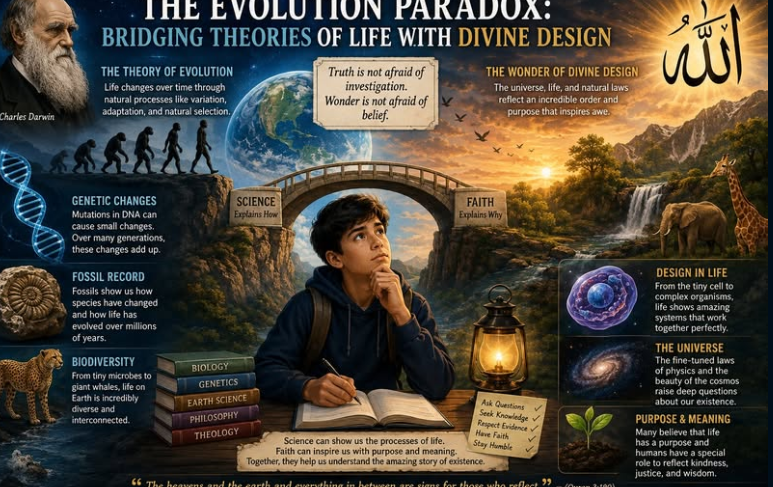
    **“The Evolution Paradox: Bridging Theories of Life with Divine Design”** explores one of the most fascinating questions about life: how can scientific explanations of evolution be understood alongside beliefs about divine creation?

    Evolution explains the diversity of life through processes such as **genetic variation, natural selection, mutation, and adaptation** over long periods of time. It provides a scientific framework for understanding how populations change and how different species have developed throughout Earth's history.

    Divine design, on the other hand, is a theological and philosophical idea that life and the universe have purpose or ultimately originate from a divine source. Different religious traditions interpret creation and humanity's place in the universe in different ways.

    The apparent “paradox” arises when people view scientific explanations and religious beliefs as necessarily competing explanations. However, some people see them as addressing different kinds of questions. Science primarily investigates **how natural processes occur**, while theology and philosophy may explore questions about **meaning, purpose, and ultimate origins**.

    The relationship between evolution and divine belief remains a subject of thoughtful discussion among scientists, philosophers, and religious thinkers. Some religious traditions accept evolutionary science, while others interpret creation in different ways.

    Ultimately, the topic encourages us to think deeply about **science, faith, human origins, and our understanding of life**. It shows that asking questions and examining different perspectives can help us develop a richer understanding of the world around us.
    #rsisb Roll no.239 Foundation Level **“The Evolution Paradox: Bridging Theories of Life with Divine Design”** explores one of the most fascinating questions about life: how can scientific explanations of evolution be understood alongside beliefs about divine creation? Evolution explains the diversity of life through processes such as **genetic variation, natural selection, mutation, and adaptation** over long periods of time. It provides a scientific framework for understanding how populations change and how different species have developed throughout Earth's history. Divine design, on the other hand, is a theological and philosophical idea that life and the universe have purpose or ultimately originate from a divine source. Different religious traditions interpret creation and humanity's place in the universe in different ways. The apparent “paradox” arises when people view scientific explanations and religious beliefs as necessarily competing explanations. However, some people see them as addressing different kinds of questions. Science primarily investigates **how natural processes occur**, while theology and philosophy may explore questions about **meaning, purpose, and ultimate origins**. The relationship between evolution and divine belief remains a subject of thoughtful discussion among scientists, philosophers, and religious thinkers. Some religious traditions accept evolutionary science, while others interpret creation in different ways. Ultimately, the topic encourages us to think deeply about **science, faith, human origins, and our understanding of life**. It shows that asking questions and examining different perspectives can help us develop a richer understanding of the world around us.
    0 Comments 0 Shares 896 Views
  • **Faceless: Skin** explores the profound story of **skin—the body’s first boundary and silent storyteller** . Long before identity or expression, skin protected life, adapting to the environment, holding secrets of survival, and carrying the marks of evolution . It is more than a covering—it is a record of existence, reflecting balance, struggle, and resilience . This episode dives into how skin connects all living beings, shaping life’s journey without words, labels, or recognition .

    #facelesscreator #FacelessJourney #skinstories #BirthOfLife #NatureStory #HiddenTruths
    **Faceless: Skin** explores the profound story of **skin—the body’s first boundary and silent storyteller** 🌱🌀. Long before identity or expression, skin protected life, adapting to the environment, holding secrets of survival, and carrying the marks of evolution 🔥💧. It is more than a covering—it is a record of existence, reflecting balance, struggle, and resilience 🌊✨. This episode dives into how skin connects all living beings, shaping life’s journey without words, labels, or recognition 🌍🤍. #facelesscreator🌍 #FacelessJourney 🌀 #skinstories #BirthOfLife🌱 #NatureStory🌊 #HiddenTruths
    0 Comments 0 Shares 1146 Views 0
  • **Faceless: Skin** explores the profound story of **skin—the body’s first boundary and silent storyteller** . Long before identity or expression, skin protected life, adapting to the environment, holding secrets of survival, and carrying the marks of evolution . It is more than a covering—it is a record of existence, reflecting balance, struggle, and resilience . This episode dives into how skin connects all living beings, shaping life’s journey without words, labels, or recognition .

    #facelesscreator #FacelessJourney #skinstories #BirthOfLife #NatureStory #HiddenTruths
    **Faceless: Skin** explores the profound story of **skin—the body’s first boundary and silent storyteller** 🌱🌀. Long before identity or expression, skin protected life, adapting to the environment, holding secrets of survival, and carrying the marks of evolution 🔥💧. It is more than a covering—it is a record of existence, reflecting balance, struggle, and resilience 🌊✨. This episode dives into how skin connects all living beings, shaping life’s journey without words, labels, or recognition 🌍🤍. #facelesscreator🌍 #FacelessJourney 🌀 #skinstories #BirthOfLife🌱 #NatureStory🌊 #HiddenTruths
    0 Comments 0 Shares 1146 Views 0
  • Today, I watched an incredible TED Talk that completely blew my mind!
    TEDx Review 293 — “AI is Coming for Your Job. Now What?” by Vlad Tenev is a deeply inspiring and thought-provoking talk that explores the impact of Artificial Intelligence (AI) on the future of work and how we can adapt to stay successful .

    Through powerful research, real-life examples, and insights on the changing job market, Vlad Tenev encouraged me to reflect on my own skills, learning, and growth opportunities. I created this video to share the key highlights and life-changing lessons from this talk with you all .

    This talk reveals that while AI will automate many tasks and transform industries, it is also an opportunity for humans to adapt, learn new skills, and work alongside AI to create new career and growth opportunities .

    Prepare to rethink success, jobs, and your future in an AI-driven world. Let’s learn, grow, and improve together!
    Watch, reflect, and share your thoughts in the comments!
    Watch the original TED Talk here: https://youtu.be/cJfKqKEyw1o?si=_CEhscWSUdj9rimm

    Connect & Follow the Brilliant Speaker: Vlad Tenev

    Special Thanks & Acknowledgment
    Principal:
    Rahat CounsellingWali
    Facilitator:
    Muhammad Awais ConfidenceWala
    🎥 Today, I watched an incredible TED Talk that completely blew my mind! 🤯 TEDx Review 293 — “AI is Coming for Your Job. Now What?” by Vlad Tenev is a deeply inspiring and thought-provoking talk that explores the impact of Artificial Intelligence (AI) on the future of work and how we can adapt to stay successful 🌱💻. 🌟 Through powerful research, real-life examples, and insights on the changing job market, Vlad Tenev encouraged me to reflect on my own skills, learning, and growth opportunities. I created this video to share the key highlights and life-changing lessons from this talk with you all 🚀. This talk reveals that while AI will automate many tasks and transform industries, it is also an opportunity for humans to adapt, learn new skills, and work alongside AI to create new career and growth opportunities 🧠✨. 📢 Prepare to rethink success, jobs, and your future in an AI-driven world. Let’s learn, grow, and improve together! 👇 Watch, reflect, and share your thoughts in the comments! 🔗 Watch the original TED Talk here: https://youtu.be/cJfKqKEyw1o?si=_CEhscWSUdj9rimm 🔗 Connect & Follow the Brilliant Speaker: Vlad Tenev 🙏 Special Thanks & Acknowledgment Principal: Rahat CounsellingWali Facilitator: Muhammad Awais ConfidenceWala
    0 Comments 0 Shares 250 Views 0
  • #rsisb Roll No.240 Maya No.1 Foundation Level # Origins of a Simple Greeting Every great conversation begins with a simple greeting. Whether it's "Hello," "Hi," or "Assalamu Alaikum," these everyday words carry a long history and a powerful purpose. Greetings are more than just polite expressions—they build trust, show respect, create positive first impressions, and strengthen human connections across cultures. The story of greetings dates back centuries, evolving alongside languages, traditions, and societies. From ancient customs of bowing and handshakes to modern digital messages and emojis, greetings have continuously adapted while keeping their essential role: bringing people together. Understanding the origins of a simple greeting helps us appreciate how a few kind words can break barriers, start meaningful conversations, and make someone feel welcomed. In both personal and professional life, a thoughtful greeting reflects good manners, confidence, and empathy. This topic explores the history, cultural significance, and social importance of greetings, showing that even the simplest words have the power to create lasting connections and spread positivity around the world. Rehan School Islamabad Campus Asma Shaheen EducationWali Irum Asim Saima Happinesswali https://www.facebook.com/reel/994468936516040
    WWW.FACEBOOK.COM
    Facebook
    #rsisb Roll No.240 Maya No.1 Foundation Level # Origins of a Simple Greeting Every great conversation begins with a simple greeting. Whether it's "Hello," "Hi," or "Assalamu Alaikum," these...
    0 Comments 0 Shares 502 Views
More Results