• #rsisb
    Roll No.240
    Image With Chatgpt No.6
    Foundation Level

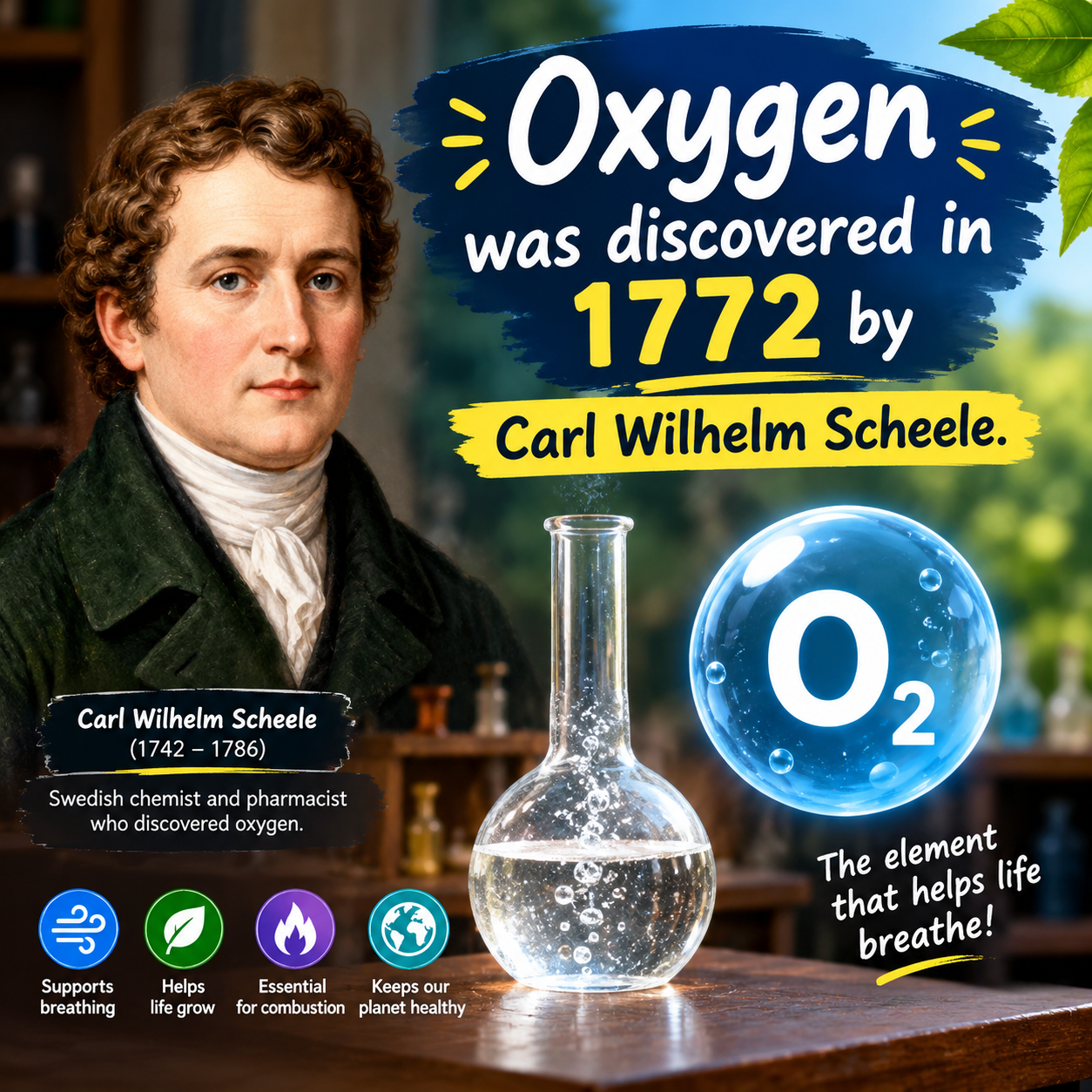
    Oxygen is one of the most important elements for life on Earth, but its discovery was the result of careful experiments, curiosity, and scientific investigation.

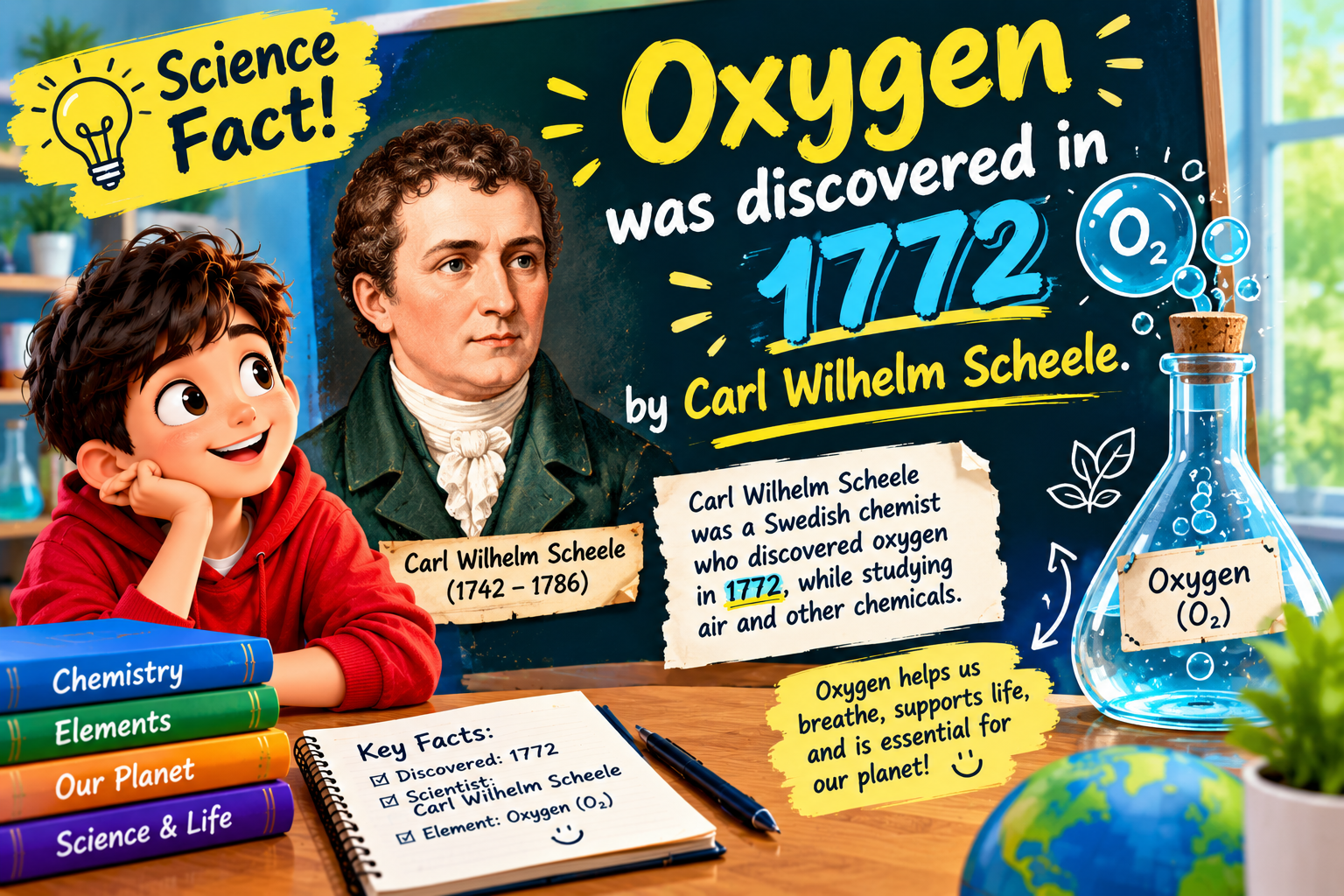
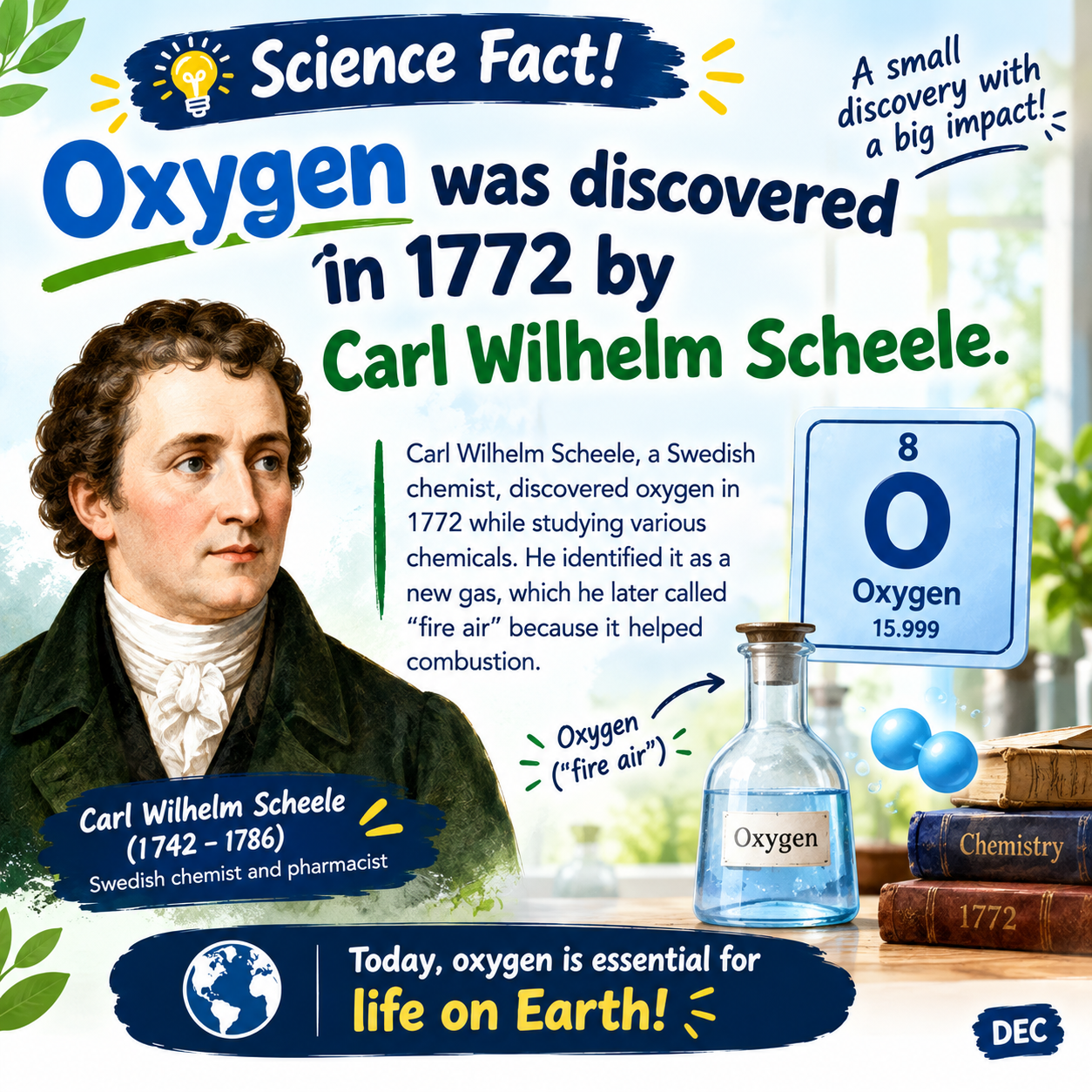
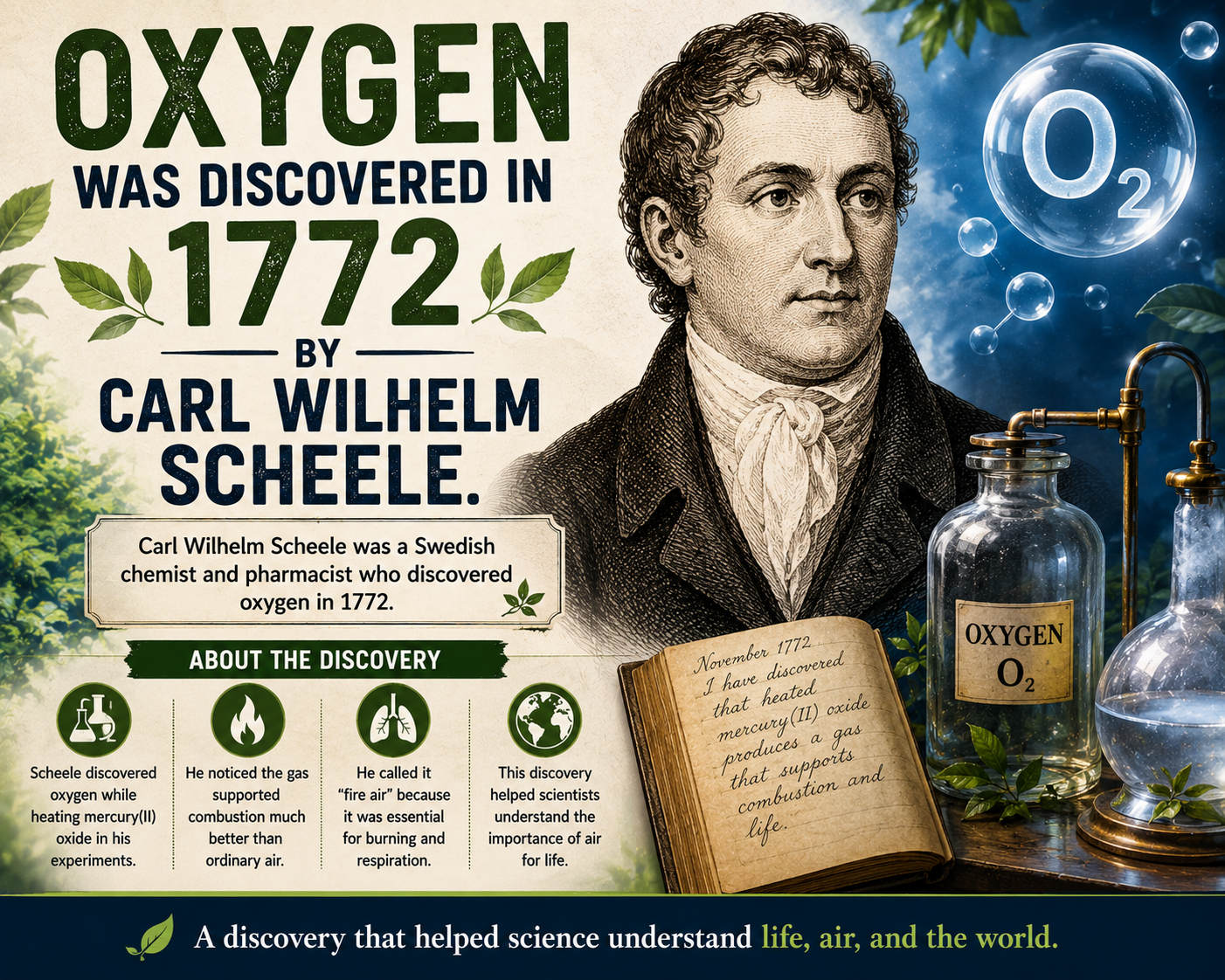
    In 1772, Swedish chemist and pharmacist Carl Wilhelm Scheele identified a gas that behaved differently from ordinary air. He found that this gas strongly supported combustion and played an important role in the processes we now understand as respiration and burning.

    Scheele referred to the gas as “fire air” because of its ability to support combustion. His experiments helped reveal that air was not simply one single substance, but a mixture containing different gases.

    The story of oxygen’s discovery is a fascinating example of how science develops through observation and experimentation. Scientists investigate materials, record their observations, test ideas, and gradually build a better understanding of the natural world.

    Although Scheele discovered oxygen independently, the recognition and naming of oxygen as an element also involved other scientists, including Joseph Priestley and Antoine Lavoisier. Their work helped establish oxygen’s role in combustion and contributed to the development of modern chemistry.

    Oxygen is represented by the chemical symbol O and has the atomic number 8. It is essential for aerobic respiration in humans and many other organisms. Without oxygen, most familiar forms of complex life could not survive.

    The discovery of oxygen changed the way scientists understood air, combustion, chemistry, and life. It became an important part of the scientific revolution in chemistry and helped researchers develop a much clearer understanding of chemical reactions.

    This story also reminds us that major scientific discoveries often happen through patience, careful observation, and a willingness to ask questions. Every experiment can reveal something new, and every discovery can open the door to further knowledge.

    From “fire air” to oxygen, the journey of discovery changed chemistry forever.

    Science teaches us that the world around us is full of mysteries waiting to be explored. Whether studying gases, atoms, cells, planets, or living organisms, curiosity is often the first step toward discovery.

    Question. Observe. Experiment. Discover. Learn.

    #Oxygen #DiscoveryOfOxygen #CarlWilhelmScheele #ScienceHistory #HistoryOfScience #Chemistry #ChemicalElements #OxygenDiscovery #1772 #ScientificDiscovery #ScienceEducation #ChemistryFacts #ScienceFacts #LearnScience #ScientificRevolution #Combustion #Air #Respiration #ChemistryHistory #STEM #Education #LearningJourney #ScienceExperiment #ScientificThinking #Research #Discovery #Knowledge #Innovation #Curiosity #ExploreScience #ScienceLovers #EducationalContent #Scientists #ChemicalScience #ModernChemistry #ScienceJourney #HistoryOfChemistry

    Rehan School Islamabad Campus
    Asma Shaheen EducationWali
    Irum Asim
    Saima Happinesswali

    #rsisb Roll No.240 Image With Chatgpt No.6 Foundation Level Oxygen is one of the most important elements for life on Earth, but its discovery was the result of careful experiments, curiosity, and scientific investigation. 🌱🫁🔥 In 1772, Swedish chemist and pharmacist Carl Wilhelm Scheele identified a gas that behaved differently from ordinary air. He found that this gas strongly supported combustion and played an important role in the processes we now understand as respiration and burning. 🔥🧪 Scheele referred to the gas as “fire air” because of its ability to support combustion. His experiments helped reveal that air was not simply one single substance, but a mixture containing different gases. 🌬️🔬 The story of oxygen’s discovery is a fascinating example of how science develops through observation and experimentation. Scientists investigate materials, record their observations, test ideas, and gradually build a better understanding of the natural world. 📚🔎💡 Although Scheele discovered oxygen independently, the recognition and naming of oxygen as an element also involved other scientists, including Joseph Priestley and Antoine Lavoisier. Their work helped establish oxygen’s role in combustion and contributed to the development of modern chemistry. ⚗️🧠🌍 Oxygen is represented by the chemical symbol O and has the atomic number 8. It is essential for aerobic respiration in humans and many other organisms. 🫁🌿🐾 Without oxygen, most familiar forms of complex life could not survive. The discovery of oxygen changed the way scientists understood air, combustion, chemistry, and life. 🌎🔥🔬 It became an important part of the scientific revolution in chemistry and helped researchers develop a much clearer understanding of chemical reactions. This story also reminds us that major scientific discoveries often happen through patience, careful observation, and a willingness to ask questions. 💭➡️🔬➡️💡 Every experiment can reveal something new, and every discovery can open the door to further knowledge. ✨ From “fire air” to oxygen, the journey of discovery changed chemistry forever. ✨ Science teaches us that the world around us is full of mysteries waiting to be explored. 🌍🔎 Whether studying gases, atoms, cells, planets, or living organisms, curiosity is often the first step toward discovery. 🚀📚 🌟 Question. Observe. Experiment. Discover. Learn. 🌟 #Oxygen #DiscoveryOfOxygen #CarlWilhelmScheele #ScienceHistory #HistoryOfScience #Chemistry #ChemicalElements #OxygenDiscovery #1772 #ScientificDiscovery #ScienceEducation #ChemistryFacts #ScienceFacts #LearnScience #ScientificRevolution #Combustion #Air #Respiration #ChemistryHistory #STEM #Education #LearningJourney #ScienceExperiment #ScientificThinking #Research #Discovery #Knowledge #Innovation #Curiosity #ExploreScience #ScienceLovers #EducationalContent #Scientists #ChemicalScience #ModernChemistry #ScienceJourney #HistoryOfChemistry 🔬🧪🌍🔥🫁📚💡✨🚀🌱 Rehan School Islamabad Campus Asma Shaheen EducationWali Irum Asim Saima Happinesswali
    0 Comentários 0 Compartilhamentos 505 Visualizações
  • RSISB
    Roll No: 209
    Image with ChatGPT No.7


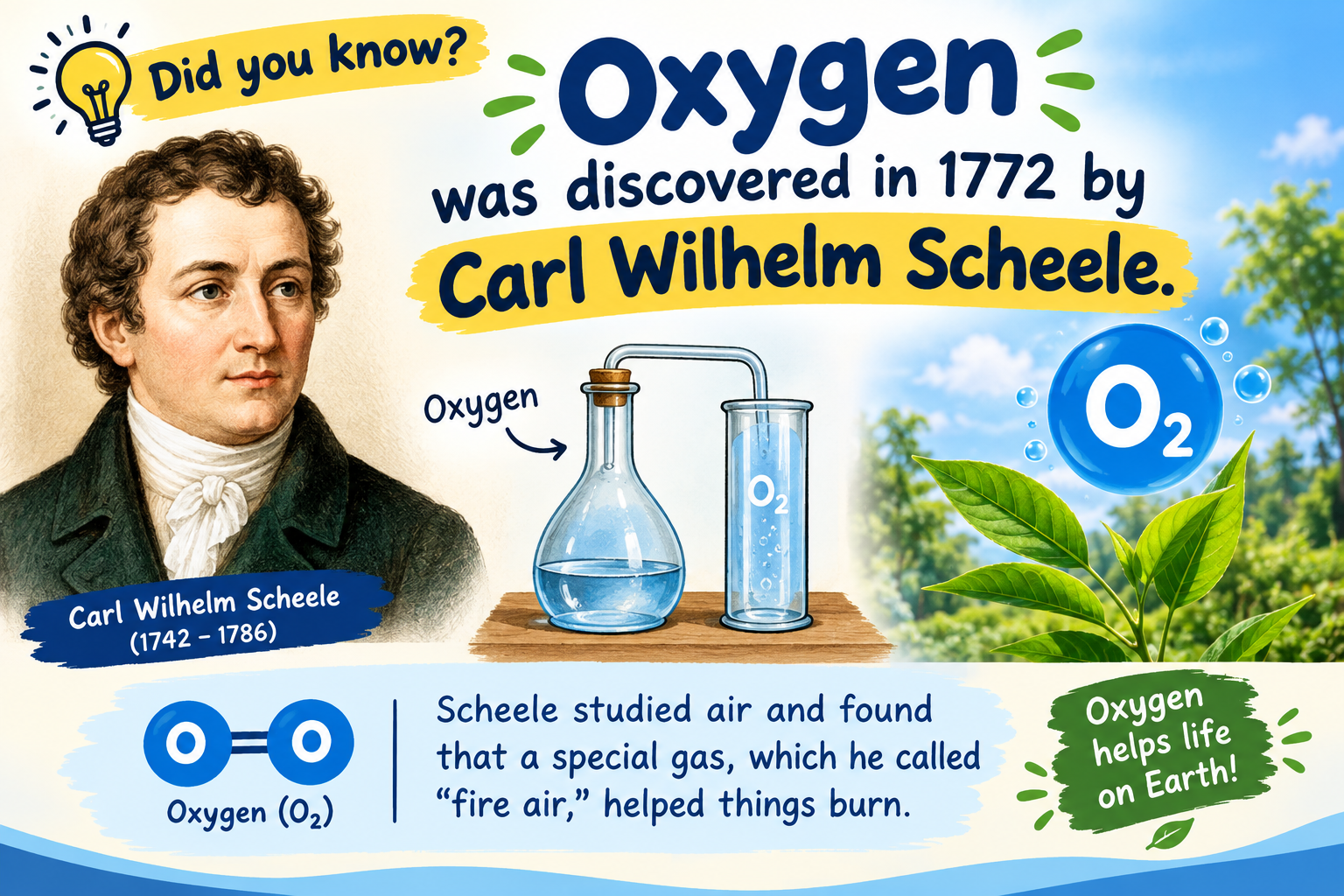
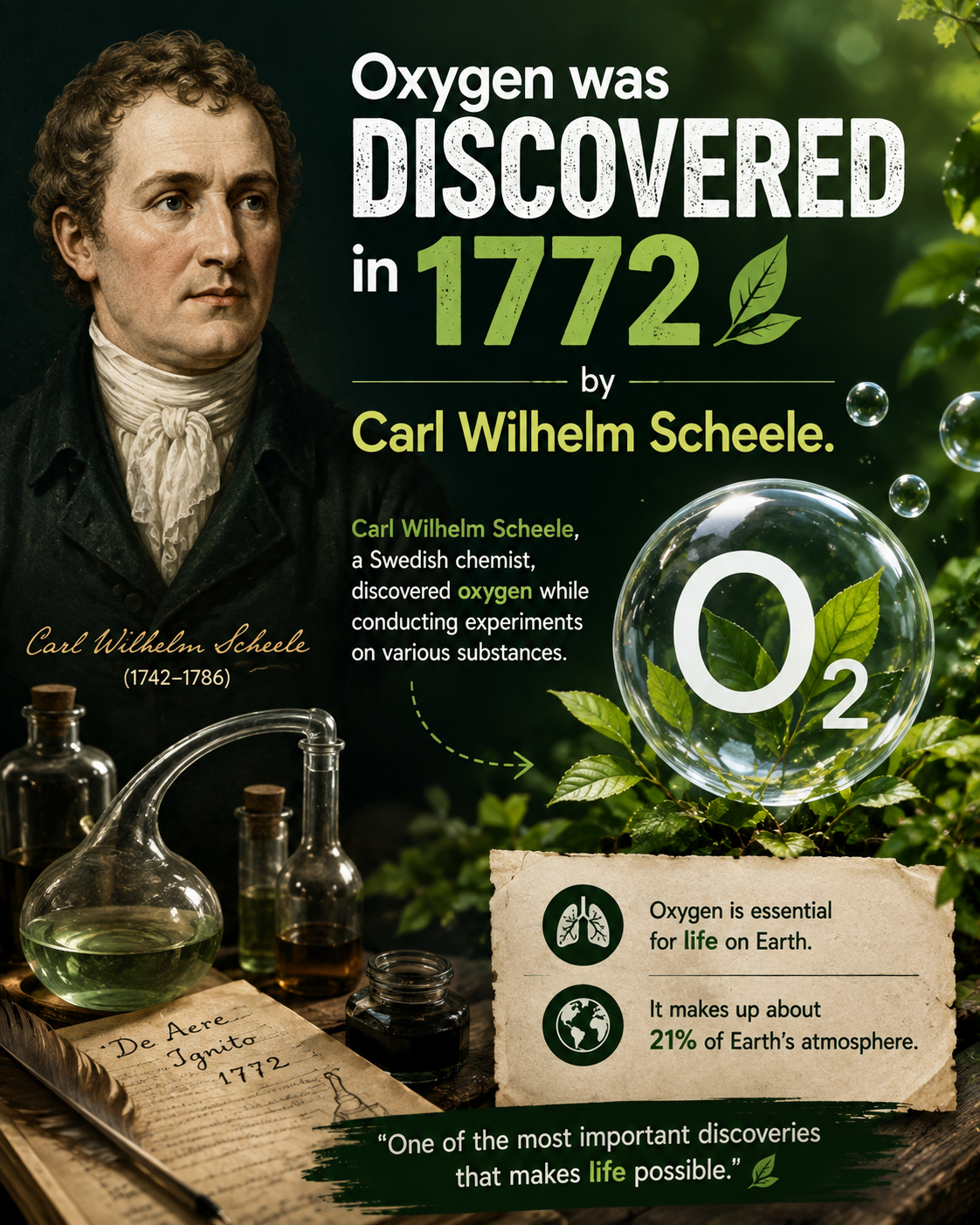
    Did you know? Oxygen was discovered in 1772 by Carl Wilhelm Scheele, a Swedish chemist who called it “fire air” because it supported combustion. His discovery helped shape our understanding of chemistry and the air we breathe every day!

    Science is full of fascinating discoveries—keep learning, keep exploring, and stay curious!

    #Oxygen #CarlWilhelmScheele #ScienceFacts #DidYouKnow #Chemistry #HistoryOfScience #AmazingFacts #Science #Discovery #LearnSomethingNew #Curiosity #Education
    RSISB Roll No: 209 Image with ChatGPT No.7 🧪🌍 Did you know? Oxygen was discovered in 1772 by Carl Wilhelm Scheele, a Swedish chemist who called it “fire air” because it supported combustion. 🔥🫁 His discovery helped shape our understanding of chemistry and the air we breathe every day! 🌬️🔬✨ Science is full of fascinating discoveries—keep learning, keep exploring, and stay curious! 🚀📚 #Oxygen #CarlWilhelmScheele #ScienceFacts #DidYouKnow #Chemistry #HistoryOfScience #AmazingFacts #Science #Discovery #LearnSomethingNew #Curiosity #Education 🧪🔬🌍✨
    0 Comentários 0 Compartilhamentos 1395 Visualizações
  • Invention: Ultra-Efficient Motorcycle – “Eco700”

    Key Specifications:
    1. Fuel Efficiency: 700 km per liter of gasoline.
    2. Engine Type: Advanced Hyper-Efficient Combustion Engine (HECE).
    3. Weight: 50 kg (ultra-lightweight design).
    4. Top Speed: 90 km/h (optimized for fuel efficiency).
    5. Range: 7000 km on a 10-liter tank.

    Design Elements:
    1. Engine:
    • Homogeneous Charge Compression Ignition (HCCI) technology for near-perfect fuel combustion.
    • Nano-coated cylinder walls to reduce friction and heat loss.
    • Micro-turbocharging for efficient air-fuel mixing at low speeds.
    2. Chassis:
    • Constructed from carbon fiber-reinforced polymer for lightweight and durability.
    • Aerodynamic design to minimize drag.
    3. Fuel System:
    • Vapor injection system: Converts gasoline into a fine mist for better combustion.
    • Ultra-precise fuel injection controlled by AI algorithms.
    4. Transmission:
    • Continuously Variable Transmission (CVT) optimized for low energy loss.
    5. Wheels & Tires:
    • Low-resistance tires with self-sealing features to prevent punctures.
    6. Energy Recovery:
    • Regenerative braking to recover kinetic energy and reduce fuel usage.

    Prototype Assembly:
    1. Engine Development: Build the HCCI engine using advanced manufacturing techniques.
    2. Chassis Construction: Assemble the carbon-fiber body and integrate engine mounts.
    3. System Integration: Install the vapor injection and regenerative braking systems.
    4. Testing and Optimization: Conduct efficiency tests and fine-tune for maximum mileage.

    This motorcycle, the “Eco700,” achieves unparalleled fuel efficiency through cutting-edge engine technology, lightweight materials, and innovative design features.
    Invention: Ultra-Efficient Motorcycle – “Eco700” Key Specifications: 1. Fuel Efficiency: 700 km per liter of gasoline. 2. Engine Type: Advanced Hyper-Efficient Combustion Engine (HECE). 3. Weight: 50 kg (ultra-lightweight design). 4. Top Speed: 90 km/h (optimized for fuel efficiency). 5. Range: 7000 km on a 10-liter tank. Design Elements: 1. Engine: • Homogeneous Charge Compression Ignition (HCCI) technology for near-perfect fuel combustion. • Nano-coated cylinder walls to reduce friction and heat loss. • Micro-turbocharging for efficient air-fuel mixing at low speeds. 2. Chassis: • Constructed from carbon fiber-reinforced polymer for lightweight and durability. • Aerodynamic design to minimize drag. 3. Fuel System: • Vapor injection system: Converts gasoline into a fine mist for better combustion. • Ultra-precise fuel injection controlled by AI algorithms. 4. Transmission: • Continuously Variable Transmission (CVT) optimized for low energy loss. 5. Wheels & Tires: • Low-resistance tires with self-sealing features to prevent punctures. 6. Energy Recovery: • Regenerative braking to recover kinetic energy and reduce fuel usage. Prototype Assembly: 1. Engine Development: Build the HCCI engine using advanced manufacturing techniques. 2. Chassis Construction: Assemble the carbon-fiber body and integrate engine mounts. 3. System Integration: Install the vapor injection and regenerative braking systems. 4. Testing and Optimization: Conduct efficiency tests and fine-tune for maximum mileage. This motorcycle, the “Eco700,” achieves unparalleled fuel efficiency through cutting-edge engine technology, lightweight materials, and innovative design features.
    0 Comentários 0 Compartilhamentos 855 Visualizações
  • The Man Who Gave Us the Industrial Age—And Why He Refused to Hire “Experts”

    Henry Ford, the man who transformed the world with the moving assembly line, didn’t just create cars — he created a new way of thinking. Yet, in his own book My Life and Work, Ford made a surprising confession: he avoided hiring “experts.” Not because he disliked knowledge, but because he saw how it often kills innovation.

    “That is why I never employ an expert in full bloom… If ever I wanted to kill opposition by unfair means I would endow the opposition with experts.”
    — Henry Ford, My Life and Work (1922)

    Ford noticed that experts were quick to explain why something cannot be done. Their experience made them prisoners of precedent. They knew too much about limitations and too little about possibilities. When Ford began building the automobile, experts laughed. They said the internal-combustion engine could never replace steam. He ignored them — and changed history.


    Experts Protect the Past, Learners Create the Future

    Ford’s factories were full of people who learned by doing. He wrote:

    “A man who knows a job sees so much more to be done than he has done, that he is always pressing forward.”

    In other words, true progress comes from curiosity — not from credentials. Experts spend their energy defending what they already know; innovators spend theirs exploring what they don’t.


    Today’s “Expert Coders” Are Repeating the Same Mistake

    A century later, the same pattern repeats. Many of today’s so-called expert programmers are becoming obsolete — not because their knowledge is wrong, but because it’s frozen in time. They perfected the art of coding by hand, line by line. But now, AI can generate, debug, and optimize code in seconds.

    The new innovators aren’t the old “experts” — they’re the learners who know how to collaborate with AI, who ask better questions, and who think like Ford’s factory workers: always pressing forward.

    The coder who clings to the past is no different from the engineer who once swore that steam would last forever.


    Why Experts Kill Growth
    1. They fear change. Their identity depends on being right.
    2. They stop experimenting. They already “know” how things are done.
    3. They over-analyze. They advise, report, and explain — while doers build.

    Ford’s factories were fast because they were learning machines. He designed systems that rewarded experimentation, not seniority.


    The Lesson for the AI Age

    Ford’s principle is timeless: don’t fill your organization with experts who argue; fill it with learners who build. The future belongs to people who can learn fast, unlearn faster, and work with technology — not against it.

    Ford gave us the Industrial Age by trusting learners with machines.
    Today, the world belongs to those who trust themselves with AI.
    The Man Who Gave Us the Industrial Age—And Why He Refused to Hire “Experts” Henry Ford, the man who transformed the world with the moving assembly line, didn’t just create cars — he created a new way of thinking. Yet, in his own book My Life and Work, Ford made a surprising confession: he avoided hiring “experts.” Not because he disliked knowledge, but because he saw how it often kills innovation. “That is why I never employ an expert in full bloom… If ever I wanted to kill opposition by unfair means I would endow the opposition with experts.” — Henry Ford, My Life and Work (1922) Ford noticed that experts were quick to explain why something cannot be done. Their experience made them prisoners of precedent. They knew too much about limitations and too little about possibilities. When Ford began building the automobile, experts laughed. They said the internal-combustion engine could never replace steam. He ignored them — and changed history. ⸻ Experts Protect the Past, Learners Create the Future Ford’s factories were full of people who learned by doing. He wrote: “A man who knows a job sees so much more to be done than he has done, that he is always pressing forward.” In other words, true progress comes from curiosity — not from credentials. Experts spend their energy defending what they already know; innovators spend theirs exploring what they don’t. ⸻ Today’s “Expert Coders” Are Repeating the Same Mistake A century later, the same pattern repeats. Many of today’s so-called expert programmers are becoming obsolete — not because their knowledge is wrong, but because it’s frozen in time. They perfected the art of coding by hand, line by line. But now, AI can generate, debug, and optimize code in seconds. The new innovators aren’t the old “experts” — they’re the learners who know how to collaborate with AI, who ask better questions, and who think like Ford’s factory workers: always pressing forward. The coder who clings to the past is no different from the engineer who once swore that steam would last forever. ⸻ Why Experts Kill Growth 1. They fear change. Their identity depends on being right. 2. They stop experimenting. They already “know” how things are done. 3. They over-analyze. They advise, report, and explain — while doers build. Ford’s factories were fast because they were learning machines. He designed systems that rewarded experimentation, not seniority. ⸻ The Lesson for the AI Age Ford’s principle is timeless: don’t fill your organization with experts who argue; fill it with learners who build. The future belongs to people who can learn fast, unlearn faster, and work with technology — not against it. Ford gave us the Industrial Age by trusting learners with machines. Today, the world belongs to those who trust themselves with AI.
    0 Comentários 0 Compartilhamentos 658 Visualizações
  • I agree, we should have a ministry of Human Resource Development, as it’s our biggest asset and we have not worked on it much !

    The goal of it should be to make sure everyone in Pakistan is enabled to produce $1000 a month in 3 years and then 5000$ in 7 and 10,000$ a month in 10 years !

    We can start now !!!!!!

    Below is via Avinash Bugti from Baluchistan !

    Actually its a state failure...... States primary responsibility is to ensure that its people move in a right direction in order to prosper collectively through comprehensive long term human development policy. But unfortunately Pakistan from a very first had decided to remain a security state and use its people as a line of defense under the false sense of threat to religion rather being practical about the real issues.
    Its a fact that people with no opportunities find refuge in this kind of life style because of the helping hand of politico-religious clergy.
    Yes they are still the human resource but for destructive deeds which they have been prepared for. Since the world and decided to turn the tables around on Pakistan, the process of internal combustion has been started which needs to be extinguished on priority basis.
    I agree, we should have a ministry of Human Resource Development, as it’s our biggest asset and we have not worked on it much ! The goal of it should be to make sure everyone in Pakistan 🇵🇰 is enabled to produce $1000 a month in 3 years and then 5000$ in 7 and 10,000$ a month in 10 years ! We can start now !!!!!! Below is via Avinash Bugti from Baluchistan ! Actually it's a state failure...... State's primary responsibility is to ensure that its people move in a right direction in order to prosper collectively through comprehensive long term human development policy. But unfortunately Pakistan from a very first had decided to remain a security state and use its people as a line of defense under the false sense of threat to religion rather being practical about the real issues. Its a fact that people with no opportunities find refuge in this kind of life style because of the helping hand of politico-religious clergy. Yes they are still the human resource but for destructive deeds which they have been prepared for. Since the world and decided to turn the tables around on Pakistan, the process of internal combustion has been started which needs to be extinguished on priority basis.
    0 Comentários 0 Compartilhamentos 118 Visualizações