• #rsisb
    Roll no.247
    song . 9
    Foundation level

    **Cellular Symphony: The Intricate Dance of Life’s Building Blocks**

    Life is an extraordinary masterpiece, and at its heart lies the incredible world of the **cell**—the fundamental building block of every living organism. From the tiniest microorganisms to the complex human body, cells work together in a beautifully coordinated system that makes life possible.

    In **“Cellular Symphony: The Intricate Dance of Life’s Building Blocks,”** we explore the fascinating universe hidden within cells. Discover how the cell membrane protects and communicates, how the nucleus stores genetic information, how mitochondria help provide energy, and how proteins and other molecular components perform countless essential tasks.

    Just like musicians in a symphony orchestra, each cellular component has a unique role. No single part works completely alone. Instead, organelles, molecules, and genetic instructions interact continuously, creating an amazing biological harmony. From energy production and cellular communication to growth, repair, and reproduction, every process contributes to the larger story of life.

    We’ll also take a closer look at **DNA**, the remarkable molecule that carries the instructions needed for life. How does DNA store information? How do cells use those instructions to create proteins? And how do cells coordinate their activities with such incredible precision? These questions reveal just how sophisticated even the smallest living systems can be.

    This journey into cellular biology is an opportunity to appreciate the complexity and beauty of life from a completely new perspective. Whether you are a student, science enthusiast, educator, or simply curious about how living things work, this exploration can help make the microscopic world easier to understand and appreciate.

    **Every cell tells a story.**
    **Every molecule has a purpose.**
    **Every process contributes to life.**
    **Together, they create the symphony of existence.**

    Join us as we zoom into the microscopic world and uncover the remarkable cooperation that takes place inside living cells. From the structure of cellular organelles to the flow of genetic information, this is a fascinating journey through one of nature’s greatest achievements—the living cell.

    **Educational • Scientific • Inspiring • Fascinating**
    Explore. Discover. Learn. Be Inspired.

    #CellularSymphony #CellBiology #Cells #Biology #Science #ScienceEducation #MolecularBiology #DNA #Genetics #LifeScience #HumanBody #MicroscopicWorld #BiologyLovers #ScienceLovers #STEM #STEMEducation #LearnScience #ScientificDiscovery #Nature #Life #Education #Knowledge #ScienceExplained #AmazingScience #CellularLife #Organelle #GeneticInformation #BiologicalScience #ExploreScience #ScienceJourney
    #rsisb Roll no.247 song . 9 Foundation level 🧬✨ **Cellular Symphony: The Intricate Dance of Life’s Building Blocks** πŸ”¬πŸŒ± Life is an extraordinary masterpiece, and at its heart lies the incredible world of the **cell**—the fundamental building block of every living organism. 🧫🌍 From the tiniest microorganisms to the complex human body, cells work together in a beautifully coordinated system that makes life possible. In **“Cellular Symphony: The Intricate Dance of Life’s Building Blocks,”** we explore the fascinating universe hidden within cells. πŸ”¬βœ¨ Discover how the cell membrane protects and communicates, how the nucleus stores genetic information, how mitochondria help provide energy, and how proteins and other molecular components perform countless essential tasks. ⚑🧬 Just like musicians in a symphony orchestra, each cellular component has a unique role. 🎻🎢 No single part works completely alone. Instead, organelles, molecules, and genetic instructions interact continuously, creating an amazing biological harmony. From energy production and cellular communication to growth, repair, and reproduction, every process contributes to the larger story of life. 🌱❀️ We’ll also take a closer look at **DNA**, the remarkable molecule that carries the instructions needed for life. πŸ§¬πŸ“– How does DNA store information? How do cells use those instructions to create proteins? And how do cells coordinate their activities with such incredible precision? These questions reveal just how sophisticated even the smallest living systems can be. This journey into cellular biology is an opportunity to appreciate the complexity and beauty of life from a completely new perspective. πŸŒŽπŸ” Whether you are a student, science enthusiast, educator, or simply curious about how living things work, this exploration can help make the microscopic world easier to understand and appreciate. πŸ”¬ **Every cell tells a story.** 🧬 **Every molecule has a purpose.** ⚑ **Every process contributes to life.** 🌱 **Together, they create the symphony of existence.** Join us as we zoom into the microscopic world and uncover the remarkable cooperation that takes place inside living cells. From the structure of cellular organelles to the flow of genetic information, this is a fascinating journey through one of nature’s greatest achievements—the living cell. 🌟🧫 πŸŽ“ **Educational • Scientific • Inspiring • Fascinating** πŸ”¬ Explore. 🧬 Discover. 🌱 Learn. ✨ Be Inspired. #CellularSymphony #CellBiology #Cells #Biology #Science #ScienceEducation #MolecularBiology #DNA #Genetics #LifeScience #HumanBody #MicroscopicWorld #BiologyLovers #ScienceLovers #STEM #STEMEducation #LearnScience #ScientificDiscovery #Nature #Life #Education #Knowledge #ScienceExplained #AmazingScience #CellularLife #Organelle #GeneticInformation #BiologicalScience #ExploreScience #ScienceJourney πŸ”¬πŸ§¬πŸŒ±βœ¨
    0 Comments 0 Shares 20 Views 4
  • #rsisb
    Roll no.247
    call annie no.18
    Foundation level

    **Water – The Origin of Life and Language | 25-Minute Exploration**

    Water is one of the simplest substances on Earth, yet it plays one of the most extraordinary roles in our existence. From the earliest forms of life to the development of human civilization, water has shaped the story of our planet in countless ways. In this fascinating 25-minute journey, **“Water – The Origin of Life and Language,”** we explore why water is so important to life and how it has influenced human history, culture, communication, and imagination.

    Life as we know it depends on water. Every living organism requires water in some way, and scientists consider liquid water one of the key ingredients necessary for life as we understand it. From microscopic cells to enormous ecosystems, water provides an environment where countless biological processes can occur.

    But water is more than a biological necessity. It has been at the heart of human civilization for thousands of years. Ancient communities developed around rivers, lakes, springs, and coastlines because access to water meant access to food, agriculture, transportation, and survival. The great civilizations of history were deeply connected to waterways, demonstrating how water helped shape where people lived and how societies developed.

    This exploration also takes us into the fascinating relationship between **water and language**. Humans have created thousands of words, expressions, stories, poems, songs, and metaphors inspired by water. Words associated with rivers, rain, oceans, waves, streams, and storms appear throughout languages and cultures around the world.

    Water has also become a powerful symbol in human communication. It can represent life, change, movement, renewal, peace, strength, and transformation. Just as water flows and changes its form, human language constantly evolves and adapts.

    Throughout this 25-minute presentation, we will think about some fascinating questions: **How did water contribute to the development of life? Why did civilizations grow near water? How has water influenced human culture? Why do so many languages contain words connected to water? And what can water teach us about life, change, and human connection?**

    The story of water is ultimately a story about ourselves. It connects science with history, nature with civilization, and biology with language. By understanding water, we gain a deeper appreciation for the remarkable planet we call home.

    So take a moment, relax, and join us on this fascinating journey through the science, history, language, and mystery of **water**.

    **Water gives life. Water shapes civilizations. Water inspires language. Water connects us all.**

    If you enjoyed this educational journey, don't forget to **Like, Share, and Subscribe** for more fascinating topics about science, history, nature, language, and the world around us!

    #Water #OriginOfLife #WaterAndLife #Science #Biology #Nature #Earth #LifeOnEarth #WaterCycle #Oceans #Rivers #HumanCivilization #AncientCivilizations #Language #OriginOfLanguage #HumanHistory #Environment #Education #EducationalVideo #ScienceEducation #NatureLovers #EarthScience #Knowledge #Learning #Curiosity #Discovery #Life #PlanetEarth #SaveWater #WaterIsLife #ExploreScience #AmazingScience #DidYouKnow #EducationalContent #ScienceAndNature
    #rsisb Roll no.247 call annie no.18 Foundation level πŸ’§πŸŒŠ **Water – The Origin of Life and Language | 25-Minute Exploration** 🌍🧬 Water is one of the simplest substances on Earth, yet it plays one of the most extraordinary roles in our existence. πŸ’§βœ¨ From the earliest forms of life to the development of human civilization, water has shaped the story of our planet in countless ways. In this fascinating 25-minute journey, **“Water – The Origin of Life and Language,”** we explore why water is so important to life and how it has influenced human history, culture, communication, and imagination. πŸŒŽπŸ”¬πŸ“– Life as we know it depends on water. πŸŒ±πŸ πŸ¦‹ Every living organism requires water in some way, and scientists consider liquid water one of the key ingredients necessary for life as we understand it. From microscopic cells to enormous ecosystems, water provides an environment where countless biological processes can occur. πŸ§¬πŸ”¬πŸ’¦ But water is more than a biological necessity. It has been at the heart of human civilization for thousands of years. Ancient communities developed around rivers, lakes, springs, and coastlines because access to water meant access to food, agriculture, transportation, and survival. 🏞️🏺🌾🚀 The great civilizations of history were deeply connected to waterways, demonstrating how water helped shape where people lived and how societies developed. This exploration also takes us into the fascinating relationship between **water and language**. πŸ—£οΈπŸ’§ Humans have created thousands of words, expressions, stories, poems, songs, and metaphors inspired by water. Words associated with rivers, rain, oceans, waves, streams, and storms appear throughout languages and cultures around the world. πŸŒ§οΈπŸŒŠπŸ“š Water has also become a powerful symbol in human communication. It can represent life, change, movement, renewal, peace, strength, and transformation. πŸŒŠπŸ•ŠοΈβœ¨ Just as water flows and changes its form, human language constantly evolves and adapts. Throughout this 25-minute presentation, we will think about some fascinating questions: **How did water contribute to the development of life? Why did civilizations grow near water? How has water influenced human culture? Why do so many languages contain words connected to water? And what can water teach us about life, change, and human connection?** πŸ€”πŸ’‘ The story of water is ultimately a story about ourselves. πŸ’™πŸŒ It connects science with history, nature with civilization, and biology with language. By understanding water, we gain a deeper appreciation for the remarkable planet we call home. So take a moment, relax, and join us on this fascinating journey through the science, history, language, and mystery of **water**. πŸ’§πŸŒŠπŸ”¬πŸ“š ✨ **Water gives life. Water shapes civilizations. Water inspires language. Water connects us all.** πŸŒπŸ’™ πŸ‘ If you enjoyed this educational journey, don't forget to **Like, Share, and Subscribe** for more fascinating topics about science, history, nature, language, and the world around us! πŸ””πŸ“šβœ¨ #Water #OriginOfLife #WaterAndLife #Science #Biology #Nature #Earth #LifeOnEarth #WaterCycle #Oceans #Rivers #HumanCivilization #AncientCivilizations #Language #OriginOfLanguage #HumanHistory #Environment #Education #EducationalVideo #ScienceEducation #NatureLovers #EarthScience #Knowledge #Learning #Curiosity #Discovery #Life #PlanetEarth #SaveWater #WaterIsLife #ExploreScience #AmazingScience #DidYouKnow #EducationalContent #ScienceAndNature πŸ’§πŸŒπŸŒŠπŸ§¬πŸ”¬πŸ“šβœ¨
    0 Comments 0 Shares 104 Views 8
  • Day 90
    Task No:90
    Roll No:42
    RSLC
    Foundation Level, Batch#04

    Trigonometry is the fascinating branch of mathematics that reveals the hidden relationships between angles and sides of triangles. From the earliest civilizations to modern science, humans have relied on angles to measure distances, navigate oceans, and understand the world around them. What may seem like simple lines and triangles actually hold the secrets to solving some of lifes greatest mathematical challenges.

    As mathematicians explored the power of angles, they discovered remarkable patterns through sine, cosine, and tangent. These concepts became essential tools in architecture, astronomy, engineering, and navigation. Whether designing towering skyscrapers, calculating the height of mountains, or guiding satellites through space, trigonometry continues to play a vital role in shaping our modern world.

    Today, trigonometry is far more than a classroom subject?its a universal language of precision and discovery. Every angle tells a story, every triangle hides a solution, and every calculation brings us closer to understanding the beauty of mathematics. By learning trigonometry, we unlock the power to measure, create, and innovate in ways that transform imagination into reality.

    #Trigonometry #Mathematics #Angles #Geometry #Education #STEM #Learning #Science #Engineering #MathLovers #Knowledge #Students #Study #Innovation #ProblemSolving
    Day 90 Task No:90 Roll No:42 RSLC Foundation Level, Batch#04 Trigonometry is the fascinating branch of mathematics that reveals the hidden relationships between angles and sides of triangles. From the earliest civilizations to modern science, humans have relied on angles to measure distances, navigate oceans, and understand the world around them. What may seem like simple lines and triangles actually hold the secrets to solving some of life's greatest mathematical challenges. As mathematicians explored the power of angles, they discovered remarkable patterns through sine, cosine, and tangent. These concepts became essential tools in architecture, astronomy, engineering, and navigation. Whether designing towering skyscrapers, calculating the height of mountains, or guiding satellites through space, trigonometry continues to play a vital role in shaping our modern world. Today, trigonometry is far more than a classroom subject?it's a universal language of precision and discovery. Every angle tells a story, every triangle hides a solution, and every calculation brings us closer to understanding the beauty of mathematics. By learning trigonometry, we unlock the power to measure, create, and innovate in ways that transform imagination into reality. #Trigonometry #Mathematics #Angles #Geometry #Education #STEM #Learning #Science #Engineering #MathLovers #Knowledge #Students #Study #Innovation #ProblemSolving
    0 Comments 0 Shares 629 Views
  • Day 104
    Task No:104
    Roll No:42
    RSLC
    Foundation Level, Batch#04

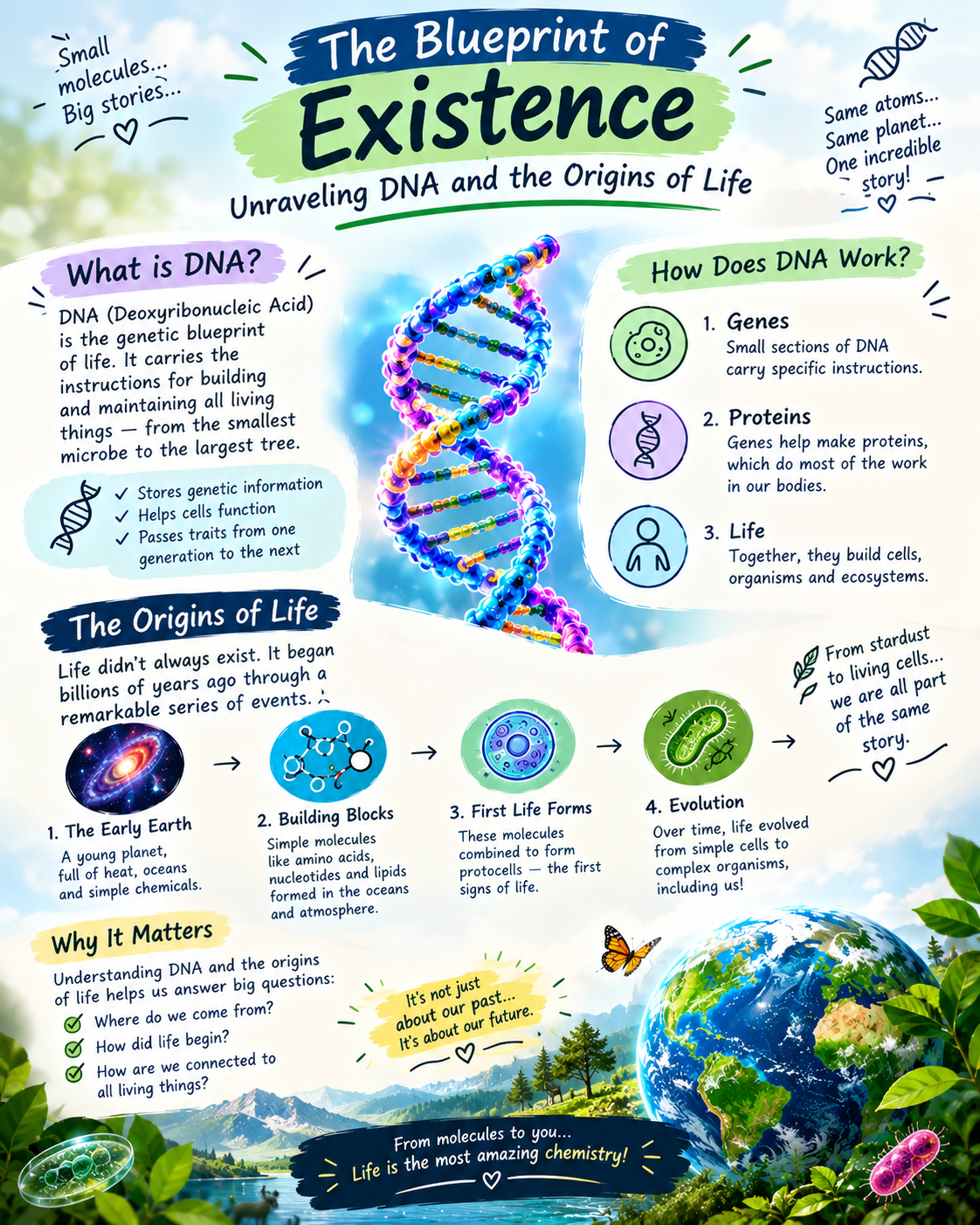
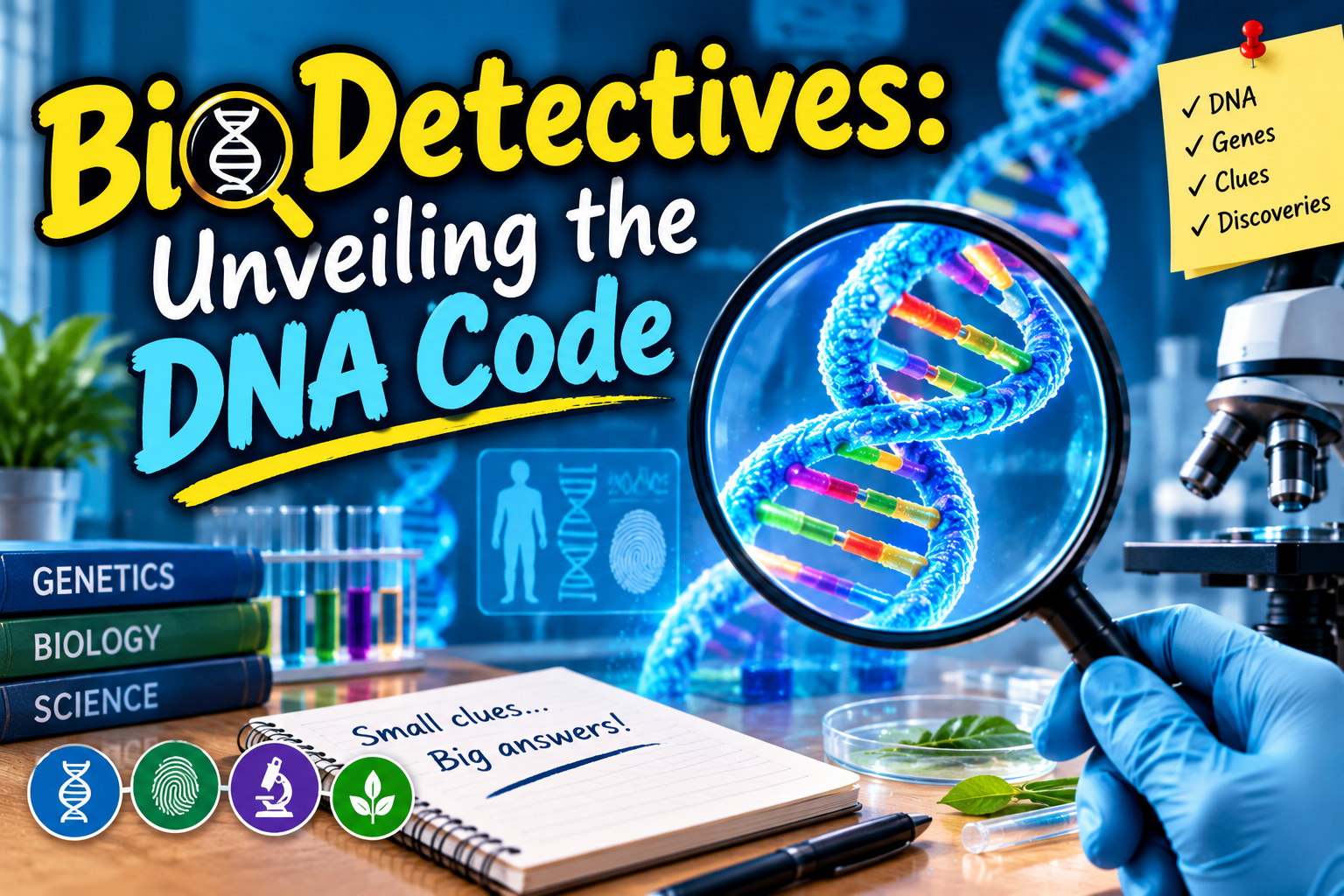
    Life on Earth is built upon an extraordinary blueprint known as DNA. Hidden inside every living cell, DNA carries the genetic instructions that determine how organisms grow, develop, and survive. From the smallest bacteria to the largest whales, every living being shares this remarkable biological code. Scientists often describe DNA as the language of life because it stores the information that connects all generations across time.

    The mystery of lifes origins has fascinated humanity for centuries. While researchers continue to explore how the first living cells emerged on the early Earth, DNA remains one of the greatest clues to understanding our beginnings. By studying genes and genetic evolution, scientists can trace the relationships between species and uncover how life has adapted over billions of years. Every discovery in genetics brings us one step closer to answering one of humanitys greatest questions: Where did life come from?

    DNA is more than just a scientific molecule?it is a symbol of connection, diversity, and the incredible complexity of nature. As technology advances, our understanding of genetics opens new possibilities in medicine, agriculture, and environmental conservation. The blueprint of existence reminds us that every living organism is part of a shared story written over billions of years, inspiring us to protect and appreciate the remarkable web of life that surrounds us.

    #DNA #Genetics #OriginOfLife #Science #Biology #MolecularBiology #LifeScience #Genome #Evolution #ScientificDiscovery #STEM #Education #DNAResearch #CellBiology #Nature #Knowledge #Innovation #FutureOfScience #LearnScience #ScienceFacts
    Day 104 Task No:104 Roll No:42 RSLC Foundation Level, Batch#04 Life on Earth is built upon an extraordinary blueprint known as DNA. Hidden inside every living cell, DNA carries the genetic instructions that determine how organisms grow, develop, and survive. From the smallest bacteria to the largest whales, every living being shares this remarkable biological code. Scientists often describe DNA as the language of life because it stores the information that connects all generations across time. The mystery of life's origins has fascinated humanity for centuries. While researchers continue to explore how the first living cells emerged on the early Earth, DNA remains one of the greatest clues to understanding our beginnings. By studying genes and genetic evolution, scientists can trace the relationships between species and uncover how life has adapted over billions of years. Every discovery in genetics brings us one step closer to answering one of humanity's greatest questions: Where did life come from? DNA is more than just a scientific molecule?it is a symbol of connection, diversity, and the incredible complexity of nature. As technology advances, our understanding of genetics opens new possibilities in medicine, agriculture, and environmental conservation. The blueprint of existence reminds us that every living organism is part of a shared story written over billions of years, inspiring us to protect and appreciate the remarkable web of life that surrounds us. #DNA #Genetics #OriginOfLife #Science #Biology #MolecularBiology #LifeScience #Genome #Evolution #ScientificDiscovery #STEM #Education #DNAResearch #CellBiology #Nature #Knowledge #Innovation #FutureOfScience #LearnScience #ScienceFacts
    0 Comments 0 Shares 537 Views
  • Fondation Level Batch No 4
    Roll RSLC #42
    Task No #132
    Day #132

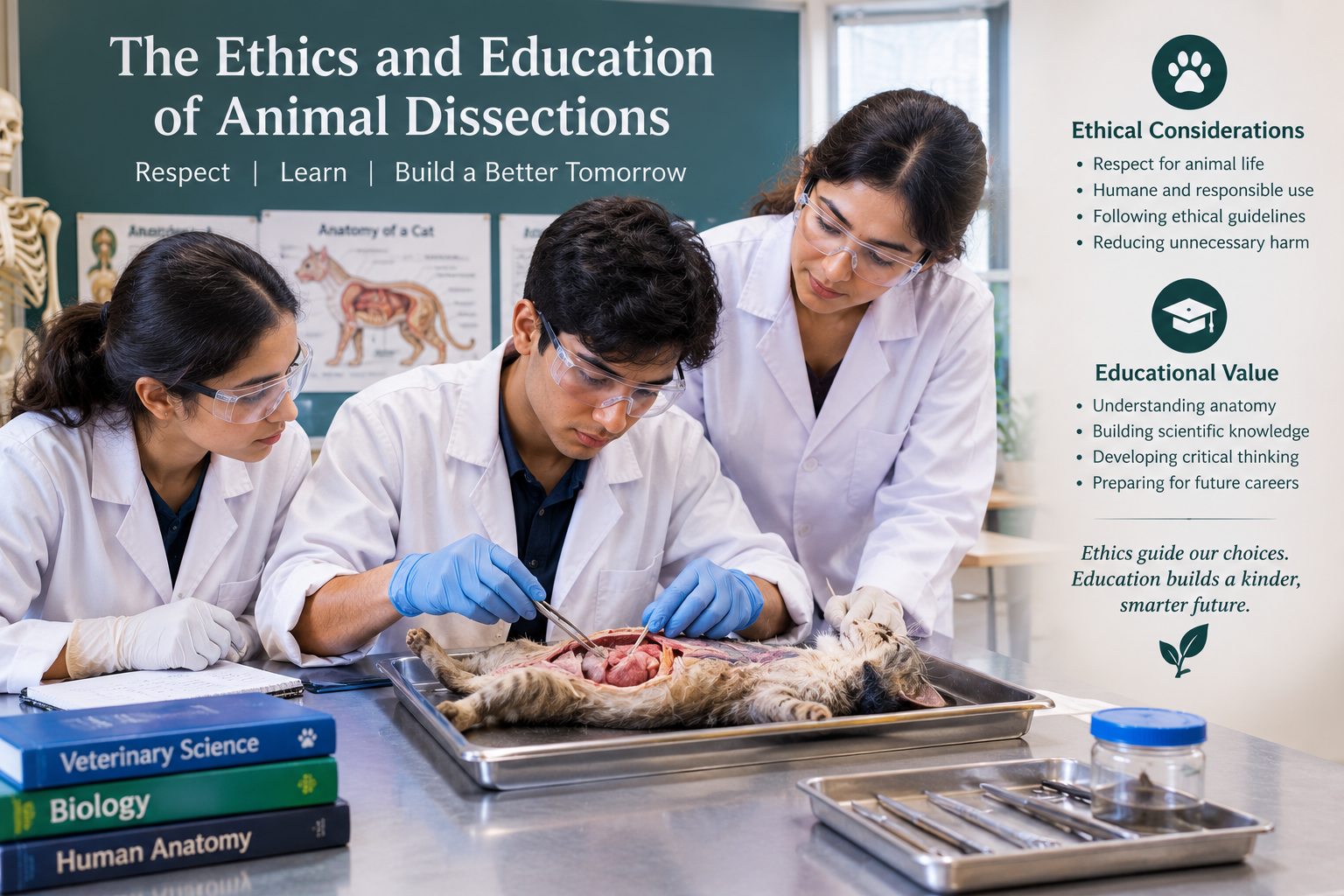
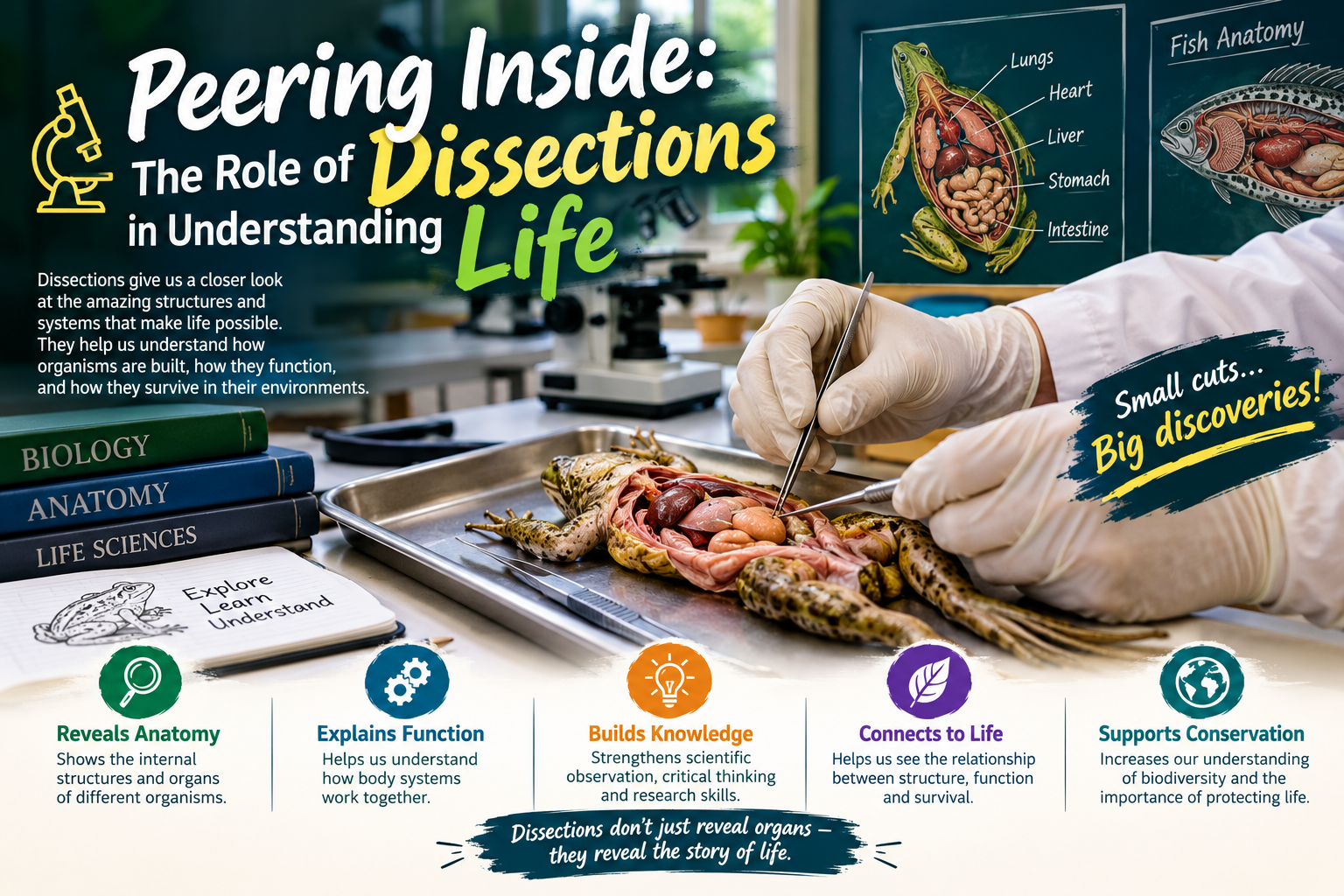
    Peering Inside: The Role of Dissections in Understanding Life

    Ali was a curious student who loved learning about biology. One day, his teacher introduced the class to dissection and explained how carefully studying internal structures can help us understand how living organisms function. Ali had always relied on textbook pictures, so he was surprised to see how complex and organized the structures were in reality. As he observed carefully, he began connecting the practical experience with everything he had previously learned in class.

    During the lesson, Ali noticed that every organ had a particular shape and purpose. He realized that the body works like a carefully organized system, where different parts depend on one another. Instead of simply memorizing names, he started asking questions and searching for explanations. His teacher encouraged him to observe patiently and reminded him that good science requires curiosity, responsibility, and respect for life.

    After the lesson, Ali understood that true learning does not always come from reading a book. Sometimes, we learn more deeply when we observe, investigate, and experience things carefully. The dissection lesson had changed the way he looked at biology because he could now understand the connection between theory and real structures. He became more interested in discovering how life works and wanted to continue exploring the mysteries of science.

    As Ali walked home, he thought about what his teacher had said: ?Never stop asking questions.? He realized that the world contains many hidden details, and understanding them requires patience and an open mind. The experience taught him that knowledge grows when curiosity leads us to explore responsibly. From that day forward, Ali promised himself that he would not just memorize information but would always try to understand the reason behind it.

    Moral Lesson: True knowledge comes from curiosity, careful observation, and the courage to look beyond the surface. When we ask questions and explore responsibly, even the smallest discovery can teach us something valuable about life.

    #HumanBody #Dissection #Anatomy #Biology #MedicalScience #ScienceEdu
    Fondation Level Batch No 4 Roll RSLC #42 Task No #132 Day #132 Peering Inside: The Role of Dissections in Understanding Life Ali was a curious student who loved learning about biology. One day, his teacher introduced the class to dissection and explained how carefully studying internal structures can help us understand how living organisms function. Ali had always relied on textbook pictures, so he was surprised to see how complex and organized the structures were in reality. As he observed carefully, he began connecting the practical experience with everything he had previously learned in class. During the lesson, Ali noticed that every organ had a particular shape and purpose. He realized that the body works like a carefully organized system, where different parts depend on one another. Instead of simply memorizing names, he started asking questions and searching for explanations. His teacher encouraged him to observe patiently and reminded him that good science requires curiosity, responsibility, and respect for life. After the lesson, Ali understood that true learning does not always come from reading a book. Sometimes, we learn more deeply when we observe, investigate, and experience things carefully. The dissection lesson had changed the way he looked at biology because he could now understand the connection between theory and real structures. He became more interested in discovering how life works and wanted to continue exploring the mysteries of science. As Ali walked home, he thought about what his teacher had said: ?Never stop asking questions.? He realized that the world contains many hidden details, and understanding them requires patience and an open mind. The experience taught him that knowledge grows when curiosity leads us to explore responsibly. From that day forward, Ali promised himself that he would not just memorize information but would always try to understand the reason behind it. Moral Lesson: True knowledge comes from curiosity, careful observation, and the courage to look beyond the surface. When we ask questions and explore responsibly, even the smallest discovery can teach us something valuable about life. #HumanBody #Dissection #Anatomy #Biology #MedicalScience #ScienceEdu
    0 Comments 0 Shares 461 Views
  • Fondation Level Batch No 4
    Roll RSLC #42
    Task No #139
    Day #139

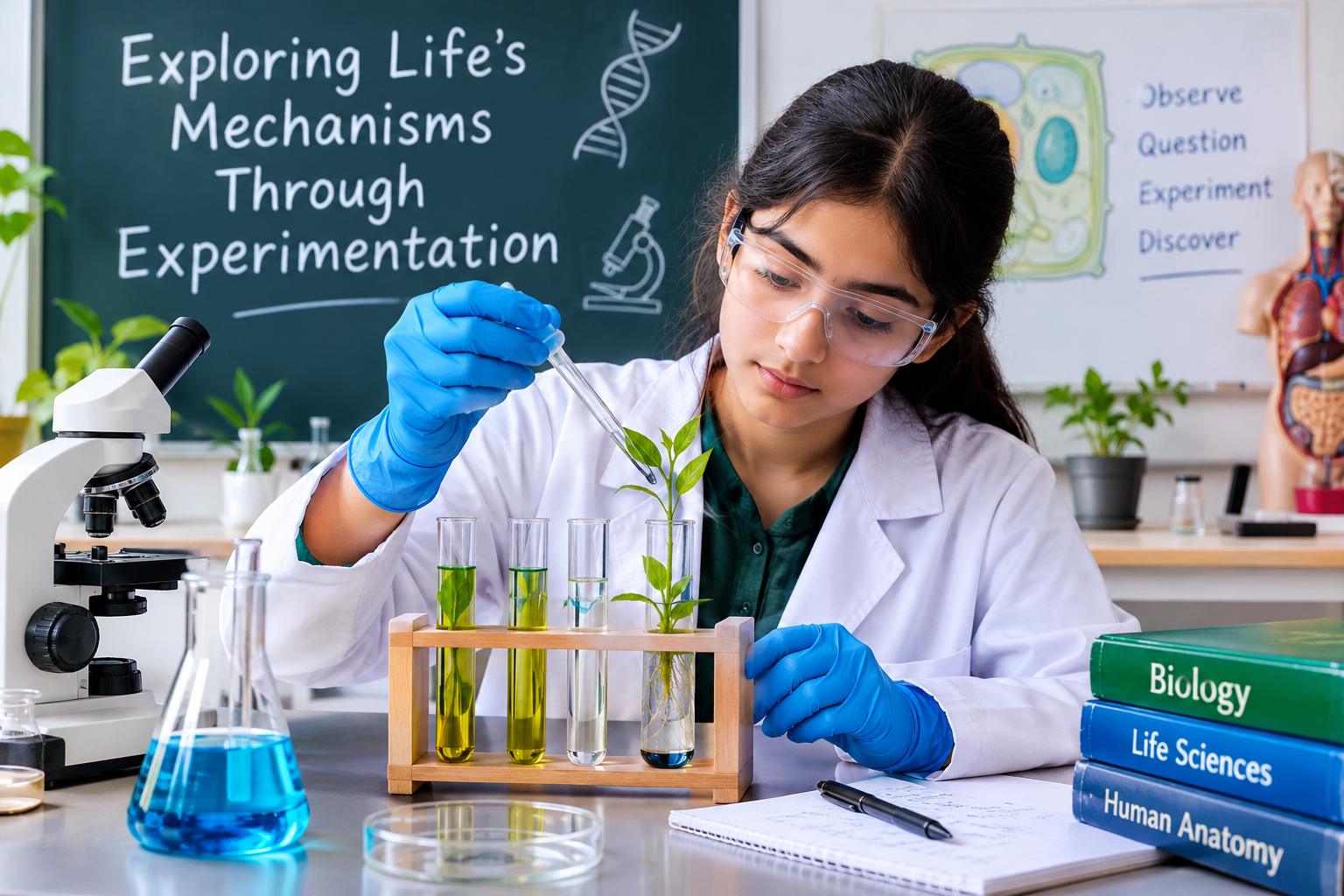
    # Exploring Life?s Mechanisms Through Experimentation

    Sara was a curious young student who loved discovering how life worked. One day, while studying in her school laboratory, she looked through a microscope and became fascinated by the tiny cells she saw moving beneath the lens. She wondered how something so small could perform such important tasks and keep living organisms alive. Instead of simply memorizing facts from her textbook, Sara decided to investigate through experiments. She carefully planned her work, recorded her observations, and began searching for answers to the mysteries hidden inside living cells.

    At first, Sara?s experiments did not go as planned. Some results were confusing, while others were completely different from what she expected. She became disappointed and thought about giving up, but her teacher encouraged her to look at every mistake as an opportunity to learn. Sara repeated her experiments, checked her measurements, and carefully studied her observations. Gradually, she discovered that cells respond to changes in their environment and that many different processes work together to keep life functioning. Each experiment, even the unsuccessful ones, taught her something valuable.

    As Sara continued her research, she realized that life is a complex system filled with countless interactions. Cells communicate, produce energy, transport materials, grow, repair damage, and respond to their surroundings. She understood that scientific discovery requires more than intelligence; it requires patience, curiosity, careful observation, and the courage to learn from failure. The more she experimented, the more questions she developed, and each question encouraged her to explore even deeper into the fascinating mechanisms of life.

    When Sara finally completed her project, she presented her findings to her classmates. She explained that her greatest discovery was not a single scientific fact, but the understanding that every experiment has something to teach us. Success can give us answers, while failure can show us a better path toward them. Sara left the laboratory with a new appreciation for science and a stronger belief in herself.

    **Moral: Never be afraid of failure, because every mistake can become a lesson, and every lesson can bring you one step closer to discovery.**

    #LifeScience #ScientificResearch #Experimentation #Biology #ScienceExploration #LifeMechanisms #ScientificDiscovery
    Fondation Level Batch No 4 Roll RSLC #42 Task No #139 Day #139 # Exploring Life?s Mechanisms Through Experimentation Sara was a curious young student who loved discovering how life worked. One day, while studying in her school laboratory, she looked through a microscope and became fascinated by the tiny cells she saw moving beneath the lens. She wondered how something so small could perform such important tasks and keep living organisms alive. Instead of simply memorizing facts from her textbook, Sara decided to investigate through experiments. She carefully planned her work, recorded her observations, and began searching for answers to the mysteries hidden inside living cells. At first, Sara?s experiments did not go as planned. Some results were confusing, while others were completely different from what she expected. She became disappointed and thought about giving up, but her teacher encouraged her to look at every mistake as an opportunity to learn. Sara repeated her experiments, checked her measurements, and carefully studied her observations. Gradually, she discovered that cells respond to changes in their environment and that many different processes work together to keep life functioning. Each experiment, even the unsuccessful ones, taught her something valuable. As Sara continued her research, she realized that life is a complex system filled with countless interactions. Cells communicate, produce energy, transport materials, grow, repair damage, and respond to their surroundings. She understood that scientific discovery requires more than intelligence; it requires patience, curiosity, careful observation, and the courage to learn from failure. The more she experimented, the more questions she developed, and each question encouraged her to explore even deeper into the fascinating mechanisms of life. When Sara finally completed her project, she presented her findings to her classmates. She explained that her greatest discovery was not a single scientific fact, but the understanding that every experiment has something to teach us. Success can give us answers, while failure can show us a better path toward them. Sara left the laboratory with a new appreciation for science and a stronger belief in herself. **Moral: Never be afraid of failure, because every mistake can become a lesson, and every lesson can bring you one step closer to discovery.** #LifeScience #ScientificResearch #Experimentation #Biology #ScienceExploration #LifeMechanisms #ScientificDiscovery
    0 Comments 0 Shares 422 Views
  • Fondation Level Batch No 4
    Roll RSLC #42
    Task No #160
    Day #160

    One evening, Ayan sat by his window watching the golden sunlight fill his room.
    He wondered how light traveled from the Sun across the vastness of space.
    The next day, he asked his science teacher about the true nature of light.
    His teacher explained that light is much more mysterious than it appears.
    Scientists discovered that light can behave both like waves and tiny particles.
    This fascinating property is called the wave-particle duality of light.
    Ayan became curious and wanted to discover how this was possible.
    He began an exciting journey into the hidden world of light.
    His teacher explained that light can behave like waves moving through space.
    Light shows reflection, refraction, diffraction, and interference in different situations.
    Reflection allows light to bounce from surfaces such as mirrors and shiny objects.
    Refraction causes light to change direction when it passes through different materials.
    Interference happens when light waves meet and interact with one another.
    These properties help explain rainbows, colors, reflections, and many other phenomena.
    Ayan realized that everyday sights could reveal important scientific secrets.
    He became even more fascinated by the mysterious behavior of light.
    Then Ayan learned that light can also behave like tiny particles called photons.
    Each photon carries energy and can interact with matter in different ways.
    This particle-like behavior helps scientists understand the photoelectric effect.
    Ayan found it amazing that light could appear as both a wave and a particle.
    His teacher explained that this strange behavior is a key idea in quantum physics.
    The quantum world does not always follow the rules we experience every day.
    Light became a perfect example of nature?s surprising complexity.
    Ayan realized that science often reveals things we cannot understand at first.
    That evening, Ayan looked at the sunlight outside with completely new eyes.
    He imagined photons traveling through space and waves carrying energy across the universe.
    He understood that something as ordinary as sunlight could hold incredible mysteries.
    The experience taught him that science is not only about learning known facts.
    It is also about asking questions and searching for answers beyond what we can see.
    Ayan felt inspired to explore more mysteries hidden throughout the universe.
    From that day forward, every beam of light reminded him of his discovery.
    He learned that even the simplest things can contain the greatest scientific wonders.


    #NatureOfLight #LightWaves #LightParticles #Photon #QuantumPhysics #ScienceExploration #PhysicsFacts
    Fondation Level Batch No 4 Roll RSLC #42 Task No #160 Day #160 One evening, Ayan sat by his window watching the golden sunlight fill his room. He wondered how light traveled from the Sun across the vastness of space. The next day, he asked his science teacher about the true nature of light. His teacher explained that light is much more mysterious than it appears. Scientists discovered that light can behave both like waves and tiny particles. This fascinating property is called the wave-particle duality of light. Ayan became curious and wanted to discover how this was possible. He began an exciting journey into the hidden world of light. His teacher explained that light can behave like waves moving through space. Light shows reflection, refraction, diffraction, and interference in different situations. Reflection allows light to bounce from surfaces such as mirrors and shiny objects. Refraction causes light to change direction when it passes through different materials. Interference happens when light waves meet and interact with one another. These properties help explain rainbows, colors, reflections, and many other phenomena. Ayan realized that everyday sights could reveal important scientific secrets. He became even more fascinated by the mysterious behavior of light. Then Ayan learned that light can also behave like tiny particles called photons. Each photon carries energy and can interact with matter in different ways. This particle-like behavior helps scientists understand the photoelectric effect. Ayan found it amazing that light could appear as both a wave and a particle. His teacher explained that this strange behavior is a key idea in quantum physics. The quantum world does not always follow the rules we experience every day. Light became a perfect example of nature?s surprising complexity. Ayan realized that science often reveals things we cannot understand at first. That evening, Ayan looked at the sunlight outside with completely new eyes. He imagined photons traveling through space and waves carrying energy across the universe. He understood that something as ordinary as sunlight could hold incredible mysteries. The experience taught him that science is not only about learning known facts. It is also about asking questions and searching for answers beyond what we can see. Ayan felt inspired to explore more mysteries hidden throughout the universe. From that day forward, every beam of light reminded him of his discovery. He learned that even the simplest things can contain the greatest scientific wonders. #NatureOfLight #LightWaves #LightParticles #Photon #QuantumPhysics #ScienceExploration #PhysicsFacts
    0 Comments 0 Shares 705 Views
  • #rsisb
    Roll No.240
    Story No.25
    Foundation Level

    “Scientist” is a word that represents curiosity, discovery, and the human desire to understand the world.

    Long before the modern term existed, people who studied nature were often called natural philosophers. Over time, scientific thinking became more specialized, and a new word was needed to describe those who practiced science professionally.

    This story explores how the word “scientist” was born, how its meaning evolved, and how it became a familiar part of modern language.

    From asking questions to discovering answers — the journey of science begins with curiosity.

    #Scientist #ScienceHistory #WordOrigins #HistoryOfScience #Philosophy #LanguageEvolution #Curiosity #Discovery #Knowledge #Learning #StoryPost

    Rehan School Islamabad Campus
    Asma Shaheen Eduction Wali
    Irum Asim
    Saima Happines Wali

    #rsisb Roll No.240 Story No.25 Foundation Level πŸ”¬ “Scientist” is a word that represents curiosity, discovery, and the human desire to understand the world. 🌍✨ Long before the modern term existed, people who studied nature were often called natural philosophers. Over time, scientific thinking became more specialized, and a new word was needed to describe those who practiced science professionally. πŸ“– This story explores how the word “scientist” was born, how its meaning evolved, and how it became a familiar part of modern language. πŸ’‘ From asking questions to discovering answers — the journey of science begins with curiosity. #Scientist #ScienceHistory #WordOrigins #HistoryOfScience #Philosophy #LanguageEvolution #Curiosity #Discovery #Knowledge #Learning #StoryPost πŸ”¬πŸŒπŸ“šβœ¨ Rehan School Islamabad Campus Asma Shaheen Eduction Wali Irum Asim Saima Happines Wali
    0 Comments 0 Shares 901 Views
  • #rsisb
    Roll No.240
    Image With Chatgpt No.6
    Foundation Level

    Oxygen is one of the most important elements for life on Earth, but its discovery was the result of careful experiments, curiosity, and scientific investigation.

    In 1772, Swedish chemist and pharmacist Carl Wilhelm Scheele identified a gas that behaved differently from ordinary air. He found that this gas strongly supported combustion and played an important role in the processes we now understand as respiration and burning.

    Scheele referred to the gas as “fire air” because of its ability to support combustion. His experiments helped reveal that air was not simply one single substance, but a mixture containing different gases.

    The story of oxygen’s discovery is a fascinating example of how science develops through observation and experimentation. Scientists investigate materials, record their observations, test ideas, and gradually build a better understanding of the natural world.

    Although Scheele discovered oxygen independently, the recognition and naming of oxygen as an element also involved other scientists, including Joseph Priestley and Antoine Lavoisier. Their work helped establish oxygen’s role in combustion and contributed to the development of modern chemistry.

    Oxygen is represented by the chemical symbol O and has the atomic number 8. It is essential for aerobic respiration in humans and many other organisms. Without oxygen, most familiar forms of complex life could not survive.

    The discovery of oxygen changed the way scientists understood air, combustion, chemistry, and life. It became an important part of the scientific revolution in chemistry and helped researchers develop a much clearer understanding of chemical reactions.

    This story also reminds us that major scientific discoveries often happen through patience, careful observation, and a willingness to ask questions. Every experiment can reveal something new, and every discovery can open the door to further knowledge.

    From “fire air” to oxygen, the journey of discovery changed chemistry forever.

    Science teaches us that the world around us is full of mysteries waiting to be explored. Whether studying gases, atoms, cells, planets, or living organisms, curiosity is often the first step toward discovery.

    Question. Observe. Experiment. Discover. Learn.

    #Oxygen #DiscoveryOfOxygen #CarlWilhelmScheele #ScienceHistory #HistoryOfScience #Chemistry #ChemicalElements #OxygenDiscovery #1772 #ScientificDiscovery #ScienceEducation #ChemistryFacts #ScienceFacts #LearnScience #ScientificRevolution #Combustion #Air #Respiration #ChemistryHistory #STEM #Education #LearningJourney #ScienceExperiment #ScientificThinking #Research #Discovery #Knowledge #Innovation #Curiosity #ExploreScience #ScienceLovers #EducationalContent #Scientists #ChemicalScience #ModernChemistry #ScienceJourney #HistoryOfChemistry

    Rehan School Islamabad Campus
    Asma Shaheen EducationWali
    Irum Asim
    Saima Happinesswali

    #rsisb Roll No.240 Image With Chatgpt No.6 Foundation Level Oxygen is one of the most important elements for life on Earth, but its discovery was the result of careful experiments, curiosity, and scientific investigation. 🌱🫁πŸ”₯ In 1772, Swedish chemist and pharmacist Carl Wilhelm Scheele identified a gas that behaved differently from ordinary air. He found that this gas strongly supported combustion and played an important role in the processes we now understand as respiration and burning. πŸ”₯πŸ§ͺ Scheele referred to the gas as “fire air” because of its ability to support combustion. His experiments helped reveal that air was not simply one single substance, but a mixture containing different gases. πŸŒ¬οΈπŸ”¬ The story of oxygen’s discovery is a fascinating example of how science develops through observation and experimentation. Scientists investigate materials, record their observations, test ideas, and gradually build a better understanding of the natural world. πŸ“šπŸ”ŽπŸ’‘ Although Scheele discovered oxygen independently, the recognition and naming of oxygen as an element also involved other scientists, including Joseph Priestley and Antoine Lavoisier. Their work helped establish oxygen’s role in combustion and contributed to the development of modern chemistry. βš—οΈπŸ§ πŸŒ Oxygen is represented by the chemical symbol O and has the atomic number 8. It is essential for aerobic respiration in humans and many other organisms. 🫁🌿🐾 Without oxygen, most familiar forms of complex life could not survive. The discovery of oxygen changed the way scientists understood air, combustion, chemistry, and life. 🌎πŸ”₯πŸ”¬ It became an important part of the scientific revolution in chemistry and helped researchers develop a much clearer understanding of chemical reactions. This story also reminds us that major scientific discoveries often happen through patience, careful observation, and a willingness to ask questions. πŸ’­βž‘οΈπŸ”¬βž‘οΈπŸ’‘ Every experiment can reveal something new, and every discovery can open the door to further knowledge. ✨ From “fire air” to oxygen, the journey of discovery changed chemistry forever. ✨ Science teaches us that the world around us is full of mysteries waiting to be explored. πŸŒπŸ”Ž Whether studying gases, atoms, cells, planets, or living organisms, curiosity is often the first step toward discovery. πŸš€πŸ“š 🌟 Question. Observe. Experiment. Discover. Learn. 🌟 #Oxygen #DiscoveryOfOxygen #CarlWilhelmScheele #ScienceHistory #HistoryOfScience #Chemistry #ChemicalElements #OxygenDiscovery #1772 #ScientificDiscovery #ScienceEducation #ChemistryFacts #ScienceFacts #LearnScience #ScientificRevolution #Combustion #Air #Respiration #ChemistryHistory #STEM #Education #LearningJourney #ScienceExperiment #ScientificThinking #Research #Discovery #Knowledge #Innovation #Curiosity #ExploreScience #ScienceLovers #EducationalContent #Scientists #ChemicalScience #ModernChemistry #ScienceJourney #HistoryOfChemistry πŸ”¬πŸ§ͺ🌍πŸ”₯πŸ«πŸ“šπŸ’‘βœ¨πŸš€πŸŒ± Rehan School Islamabad Campus Asma Shaheen EducationWali Irum Asim Saima Happinesswali
    0 Comments 0 Shares 2422 Views
  • #rsisb
    Roll No.240
    Image With Chatgpt No.5
    Foundation Level

    The Amazon Rainforest is one of the most extraordinary natural environments on our planet. Stretching across a vast area of South America, it is home to an incredible variety of plants, animals, insects, birds, and microorganisms.

    The rainforest is often called the “lungs of the world,” because its plants produce oxygen through photosynthesis and the ecosystem plays an important role in absorbing and storing carbon dioxide. However, the commonly repeated claim that the Amazon produces 20% of the world’s oxygen is misleading. Much of the oxygen produced by plants is also consumed by plants, animals, fungi, and microorganisms within the ecosystem.

    What makes the Amazon truly remarkable is its biodiversity. From colorful macaws flying through the canopy to jaguars moving through the forest, countless species depend on this habitat for food, shelter, and survival.

    The rainforest also has an important role in the global carbon cycle and climate system. Trees and vegetation absorb large amounts of carbon dioxide, storing carbon in plants and soils. This makes protecting healthy forests important for the environment and for communities that depend on them.

    Every part of the Amazon ecosystem is connected. When forests are damaged or destroyed, the effects can spread through habitats, wildlife populations, water systems, and climate processes.

    Learning about the Amazon teaches us an important lesson: protecting nature means protecting the systems that support life. Conservation, responsible land use, reducing deforestation, and caring for biodiversity can all help preserve this extraordinary ecosystem for future generations.

    Explore the rainforest. Discover its biodiversity. Understand its importance. Protect our planet.

    The Amazon is more than just a forest—it is a living, interconnected world filled with life, discovery, and natural wonder.

    #AmazonRainforest #Amazon #Rainforest #DidYouKnow #Nature #Biodiversity #Wildlife #Environment #Earth #PlanetEarth #Forest #TropicalRainforest #Ecology #Science #Biology #ScienceEducation #EnvironmentalEducation #WildlifeConservation #ForestConservation #ProtectNature #SaveTheRainforest #Climate #CarbonCycle #Ecosystem #NaturalWorld #NatureLovers #ExploreNature #EarthScience #LearningJourney #EducationalContent #ScienceFacts #BiodiversityMatters #EverySpeciesCounts #ProtectOurPlanet

    Rehan School Islamabad Campus
    Asma Shaheen EducationWali
    Irum Asim
    Saima Happinesswali

    #rsisb Roll No.240 Image With Chatgpt No.5 Foundation Level The Amazon Rainforest is one of the most extraordinary natural environments on our planet. Stretching across a vast area of South America, it is home to an incredible variety of plants, animals, insects, birds, and microorganisms. πŸŒŽπŸŒ±πŸ’πŸ¦‹ The rainforest is often called the “lungs of the world,” because its plants produce oxygen through photosynthesis and the ecosystem plays an important role in absorbing and storing carbon dioxide. However, the commonly repeated claim that the Amazon produces 20% of the world’s oxygen is misleading. Much of the oxygen produced by plants is also consumed by plants, animals, fungi, and microorganisms within the ecosystem. What makes the Amazon truly remarkable is its biodiversity. πŸŒΏπŸ’πŸπŸ¦œπŸ† From colorful macaws flying through the canopy to jaguars moving through the forest, countless species depend on this habitat for food, shelter, and survival. The rainforest also has an important role in the global carbon cycle and climate system. Trees and vegetation absorb large amounts of carbon dioxide, storing carbon in plants and soils. 🌱🌍 This makes protecting healthy forests important for the environment and for communities that depend on them. Every part of the Amazon ecosystem is connected. πŸŒ³βž‘οΈπŸ¦‹βž‘οΈπŸ¦βž‘οΈπŸ† When forests are damaged or destroyed, the effects can spread through habitats, wildlife populations, water systems, and climate processes. Learning about the Amazon teaches us an important lesson: protecting nature means protecting the systems that support life. πŸ’šπŸŒŽ Conservation, responsible land use, reducing deforestation, and caring for biodiversity can all help preserve this extraordinary ecosystem for future generations. ✨ Explore the rainforest. Discover its biodiversity. Understand its importance. Protect our planet. πŸŒΏπŸ”¬πŸŒ The Amazon is more than just a forest—it is a living, interconnected world filled with life, discovery, and natural wonder. πŸŒ³πŸ’šπŸ¦œ #AmazonRainforest #Amazon #Rainforest #DidYouKnow #Nature #Biodiversity #Wildlife #Environment #Earth #PlanetEarth #Forest #TropicalRainforest #Ecology #Science #Biology #ScienceEducation #EnvironmentalEducation #WildlifeConservation #ForestConservation #ProtectNature #SaveTheRainforest #Climate #CarbonCycle #Ecosystem #NaturalWorld #NatureLovers #ExploreNature #EarthScience #LearningJourney #EducationalContent #ScienceFacts #BiodiversityMatters #EverySpeciesCounts #ProtectOurPlanet πŸŒŽπŸŒΏπŸŒ³πŸ¦œπŸ†πŸ’ Rehan School Islamabad Campus Asma Shaheen EducationWali Irum Asim Saima Happinesswali
    0 Comments 0 Shares 2387 Views
More Results