• RSIF 8

    Roll no 93

    Story post no 26

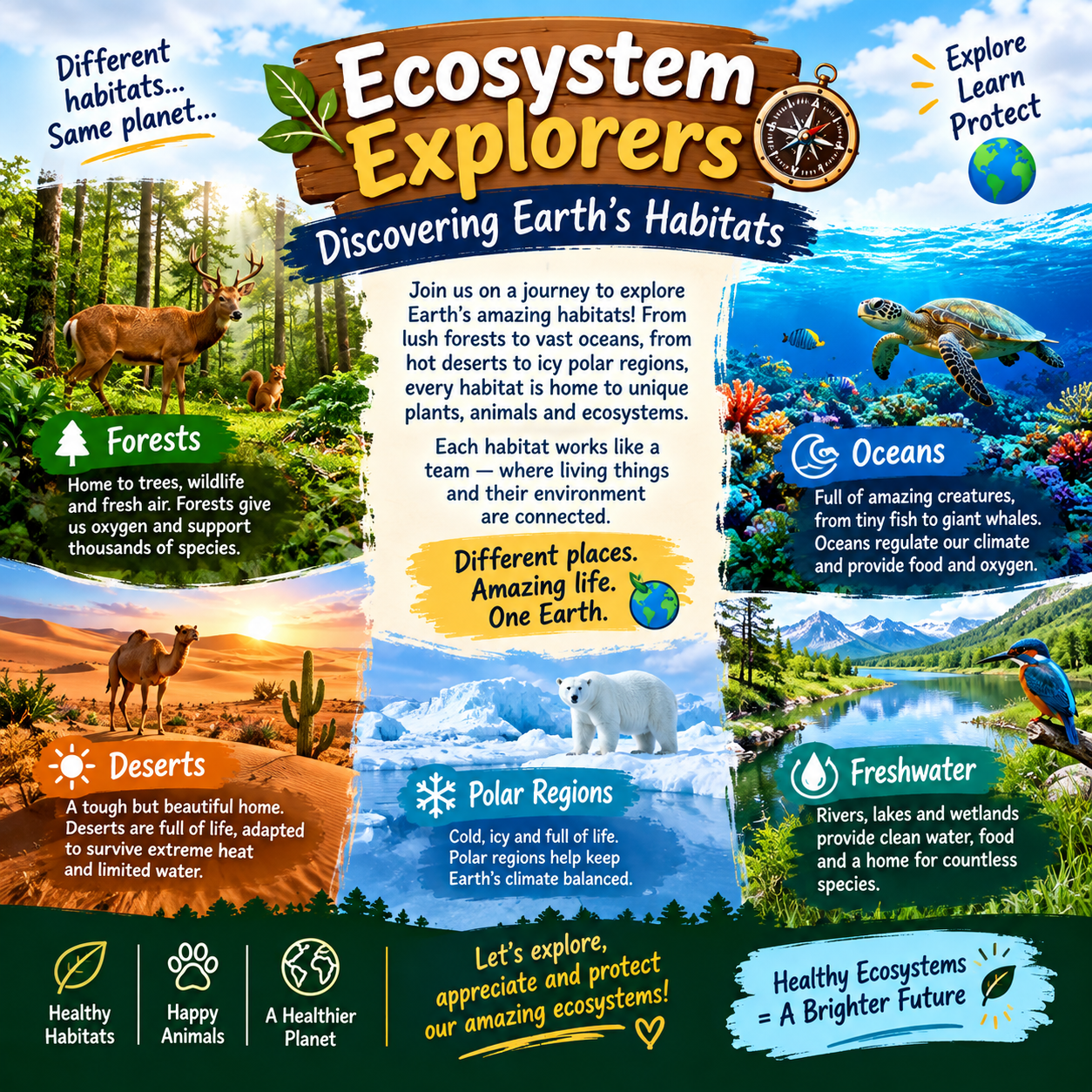
    Task topic:"Ecosystem Explorers: Discovering Earth's Habitats".Here is a ready-to-use **story post** for **“Ecosystem Explorers: Discovering Earth’s Habitats”**


    **Ecosystem Explorers: Discovering Earth’s Habitats**


    Have you ever wondered how animals, plants, and people live together in different parts of our amazing planet?


    Join our **Ecosystem Explorers** as we travel through Earth’s incredible habitats—from lush forests and dry deserts to deep oceans and icy polar regions .


    In every habitat, living things have special ways to survive. A camel can survive for long periods in the desert, polar bears are adapted to freezing temperatures, and rainforest plants compete for sunlight beneath a thick green canopy.


    But every ecosystem is connected. Plants provide oxygen and food, animals help maintain natural balance, water supports life, and tiny organisms help recycle nutrients back into the environment.


    As explorers, our mission is not only to discover these habitats but also to understand why they matter. Pollution, deforestation, climate change, and habitat destruction can affect ecosystems and the creatures that depend on them.


    **The Earth is our shared home. Let’s explore it, learn about it, and protect it for future generations.**


    **Explore. Learn. Protect. Repeat.**


    #EcosystemExplorers #EarthHabitats #Ecosystems #Nature #Environment #Wildlife #Biodiversity #SaveOurPlanet #ClimateAction #Earth #Science #Learning #NatureLovers #ProtectNature


    You can use this as your **Facebook, Instagram, LinkedIn, YouTube, or TikTok post description**.
    RSIF 8 Roll no 93 Story post no 26 Task topic:"Ecosystem Explorers: Discovering Earth's Habitats".Here is a ready-to-use **story post** for **“Ecosystem Explorers: Discovering Earth’s Habitats”** 🌍🌿 🌍🌿 **Ecosystem Explorers: Discovering Earth’s Habitats** 🐾🌊 Have you ever wondered how animals, plants, and people live together in different parts of our amazing planet? 🌎 Join our **Ecosystem Explorers** as we travel through Earth’s incredible habitats—from lush forests 🌳 and dry deserts 🏜️ to deep oceans 🌊 and icy polar regions ❄️. In every habitat, living things have special ways to survive. A camel can survive for long periods in the desert, polar bears are adapted to freezing temperatures, and rainforest plants compete for sunlight beneath a thick green canopy. 🐪🐻‍❄️🌱 But every ecosystem is connected. Plants provide oxygen and food, animals help maintain natural balance, water supports life, and tiny organisms help recycle nutrients back into the environment. 🌱💧🦋 As explorers, our mission is not only to discover these habitats but also to understand why they matter. Pollution, deforestation, climate change, and habitat destruction can affect ecosystems and the creatures that depend on them. 🌍💚 **The Earth is our shared home. Let’s explore it, learn about it, and protect it for future generations.** 🌎✨ 🔎 **Explore. Learn. Protect. Repeat.** #EcosystemExplorers #EarthHabitats #Ecosystems #Nature #Environment #Wildlife #Biodiversity #SaveOurPlanet #ClimateAction #Earth #Science #Learning #NatureLovers #ProtectNature You can use this as your **Facebook, Instagram, LinkedIn, YouTube, or TikTok post description**.
    0 Comentários 0 Compartilhamentos 719 Visualizações
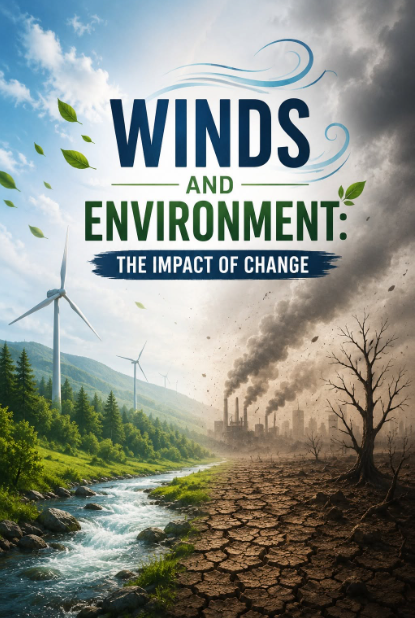
  • Winds and Environment: The Impact of Change

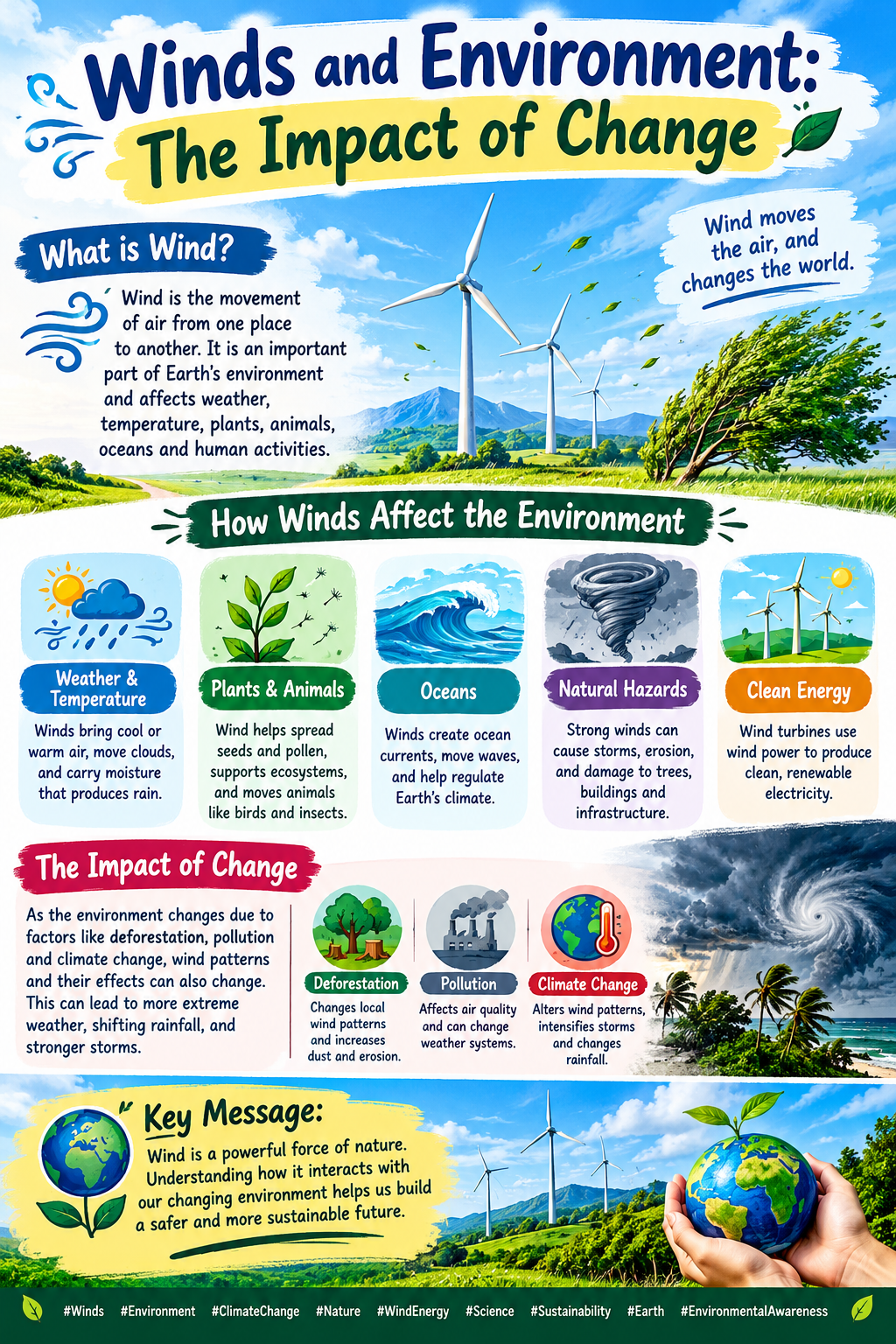
    Wind is the movement of air from one place to another. It is an important part of Earth’s environment and affects weather, temperature, plants, animals, oceans, and human activities.

    Winds can bring cool or warm air, move clouds, and carry moisture that produces rain. Strong winds can also cause storms, erosion, and damage to trees and buildings. In dry areas, wind can carry dust and sand over long distances.

    Wind also has positive effects. It helps spread seeds and pollen, supports natural ecosystems, and can be used to produce clean electricity through wind turbines.

    As the environment changes because of factors such as deforestation, pollution, and climate change, wind patterns and their effects can also change. Understanding these changes helps us prepare for extreme weather and protect our environment.

    Key Message:
    Wind is a powerful force of nature. Understanding how it interacts with our changing environment helps us build a safer and more sustainable future.

    #Winds #Environment #ClimateChange #Nature #Weather #WindEnergy #Science #Sustainability #Earth #EnvironmentalAwareness

    Day:- 55
    rollno:- 006
    foundation level
    Story Post
    🌬️ Winds and Environment: The Impact of Change Wind is the movement of air from one place to another. It is an important part of Earth’s environment and affects weather, temperature, plants, animals, oceans, and human activities. Winds can bring cool or warm air, move clouds, and carry moisture that produces rain. Strong winds can also cause storms, erosion, and damage to trees and buildings. In dry areas, wind can carry dust and sand over long distances. Wind also has positive effects. It helps spread seeds and pollen, supports natural ecosystems, and can be used to produce clean electricity through wind turbines. As the environment changes because of factors such as deforestation, pollution, and climate change, wind patterns and their effects can also change. Understanding these changes helps us prepare for extreme weather and protect our environment. 🌍 Key Message: Wind is a powerful force of nature. Understanding how it interacts with our changing environment helps us build a safer and more sustainable future. #Winds #Environment #ClimateChange #Nature #Weather #WindEnergy #Science #Sustainability #Earth #EnvironmentalAwareness Day:- 55 rollno:- 006 foundation level 📖 Story Post
    0 Comentários 0 Compartilhamentos 945 Visualizações
  • RSIF8
    ROll no:82
    Canva post: 10
    Canva post topic:Winds and Environment: The Impact of Change

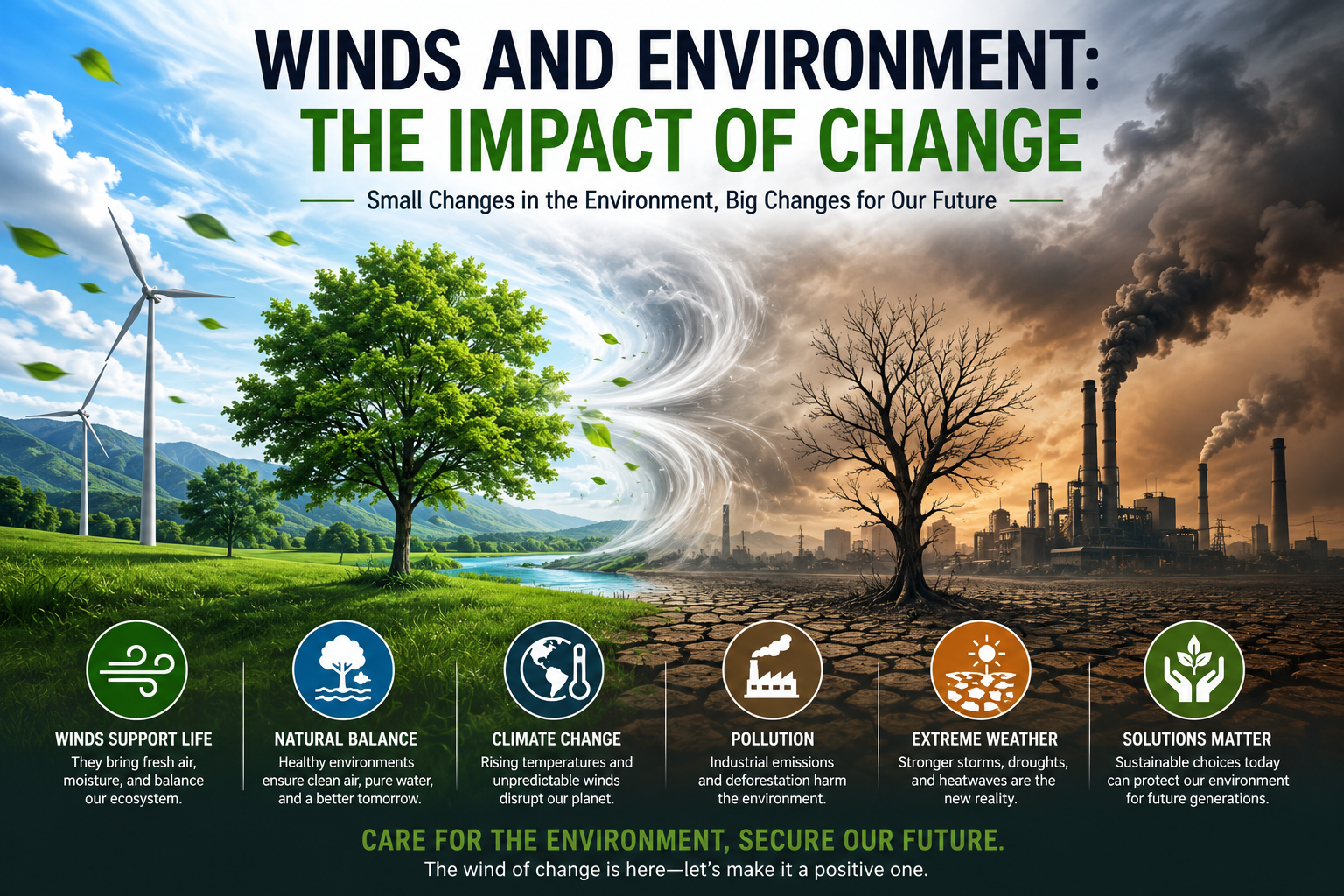
    Wind is a powerful force of nature that shapes our planet in countless ways. It carries rain clouds, spreads seeds across forests, helps regulate temperatures, and provides clean, renewable energy. From gentle breezes to powerful storms, wind is an essential part of Earth's natural balance.

    Today, however, our environment is changing rapidly. Climate change, deforestation, pollution, and excessive greenhouse gas emissions are altering global wind patterns and weather systems. These changes can lead to stronger storms, prolonged droughts, heatwaves, and unpredictable seasons, affecting people, wildlife, and ecosystems alike.

    Protecting the environment is no longer just an option—it is a responsibility. Planting trees, reducing waste, conserving energy, and supporting renewable sources like wind power can help reduce the effects of climate change. Every positive action, no matter how small, contributes to a healthier and more sustainable future.

    The story of wind is also the story of hope. It reminds us that nature has the power to heal when we choose to protect it. Together, we can create a world where clean air, healthy forests, and balanced climates continue to support life for generations to come.

    "The winds of tomorrow depend on the choices we make today. Protect nature, embrace sustainability, and let positive change begin with us."
    See less
    RSIF8 ROll no:82 Canva post: 10 Canva post topic:Winds and Environment: The Impact of Change Wind is a powerful force of nature that shapes our planet in countless ways. It carries rain clouds, spreads seeds across forests, helps regulate temperatures, and provides clean, renewable energy. From gentle breezes to powerful storms, wind is an essential part of Earth's natural balance. Today, however, our environment is changing rapidly. Climate change, deforestation, pollution, and excessive greenhouse gas emissions are altering global wind patterns and weather systems. These changes can lead to stronger storms, prolonged droughts, heatwaves, and unpredictable seasons, affecting people, wildlife, and ecosystems alike. Protecting the environment is no longer just an option—it is a responsibility. Planting trees, reducing waste, conserving energy, and supporting renewable sources like wind power can help reduce the effects of climate change. Every positive action, no matter how small, contributes to a healthier and more sustainable future. The story of wind is also the story of hope. It reminds us that nature has the power to heal when we choose to protect it. Together, we can create a world where clean air, healthy forests, and balanced climates continue to support life for generations to come. "The winds of tomorrow depend on the choices we make today. Protect nature, embrace sustainability, and let positive change begin with us." 📷 See less
    0 Comentários 0 Compartilhamentos 1113 Visualizações
  • RSIF8
    Roll no:14
    TEDx TALK:3
    TEDx TALK topic:Living in Denial – Climate Change – Iqra Khilji

    *Living in Denial – Climate Change – Iqra Khilji*

    Climate change is one of the most serious challenges facing our planet today. In this video, Iqra Khilji discusses the idea of *“Living in Denial”* and how ignoring climate change can affect our environment and future.

    The video highlights the causes and effects of climate change, including rising temperatures, pollution, deforestation, floods, droughts, and extreme weather. It also explains why accepting the reality of climate change is the first step toward finding solutions.

    Through this video, we are encouraged to stop ignoring the problem and start taking responsibility. Small actions such as saving energy, reducing waste, planting trees, and protecting our environment can make a meaningful difference.

    *Let’s stop living in denial and start taking action to protect our planet.*

    *Presented by: Iqra Khilji
    RSIF8 Roll no:14 TEDx TALK:3 TEDx TALK topic:Living in Denial – Climate Change – Iqra Khilji *Living in Denial – Climate Change – Iqra Khilji* Climate change is one of the most serious challenges facing our planet today. In this video, Iqra Khilji discusses the idea of *“Living in Denial”* and how ignoring climate change can affect our environment and future. The video highlights the causes and effects of climate change, including rising temperatures, pollution, deforestation, floods, droughts, and extreme weather. It also explains why accepting the reality of climate change is the first step toward finding solutions. Through this video, we are encouraged to stop ignoring the problem and start taking responsibility. Small actions such as saving energy, reducing waste, planting trees, and protecting our environment can make a meaningful difference. *Let’s stop living in denial and start taking action to protect our planet.* *Presented by: Iqra Khilji
    0 Comentários 0 Compartilhamentos 734 Visualizações 12
  • #rsisb
    Roll No.240
    Image With Chatgpt No.5
    Foundation Level

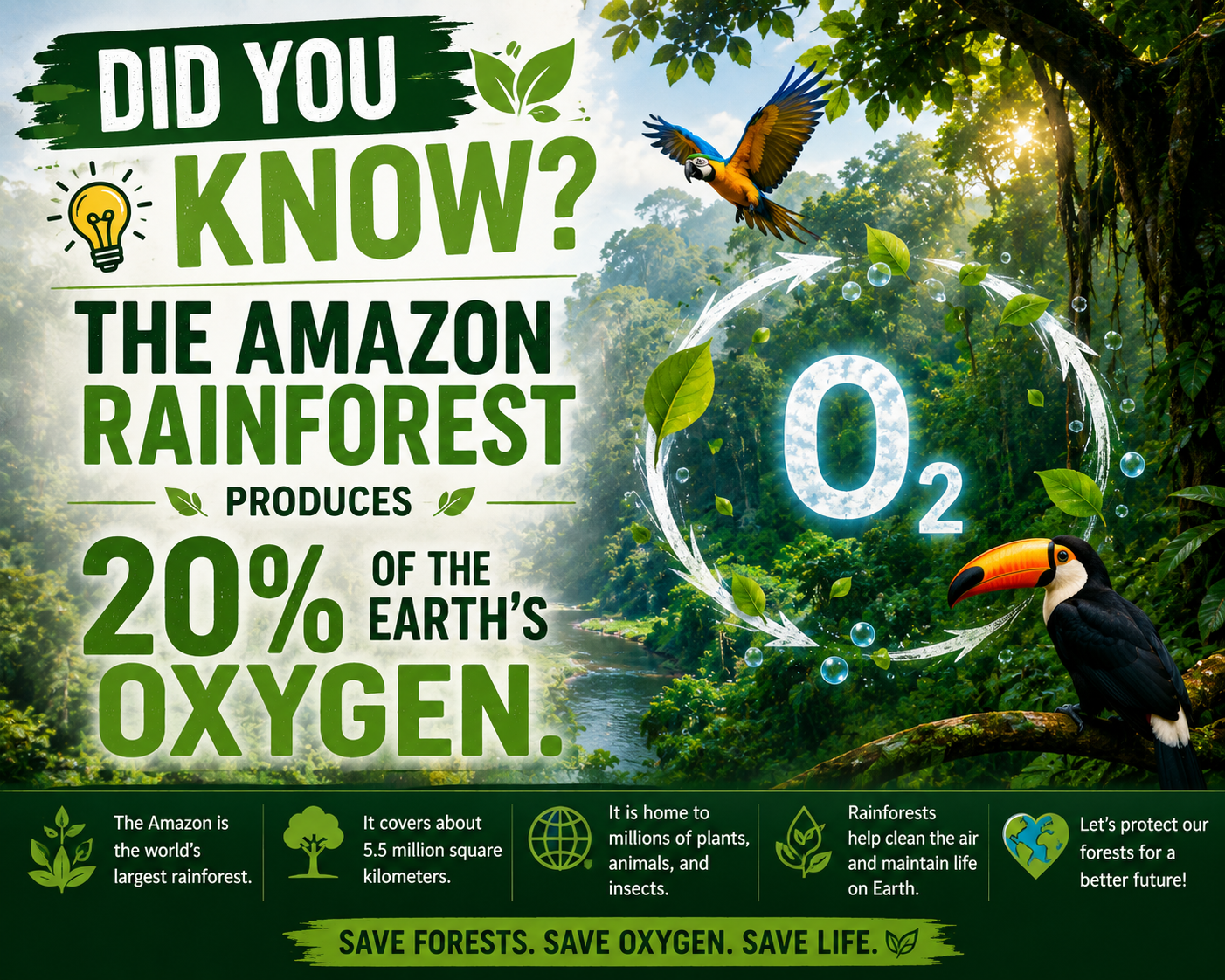
    The Amazon Rainforest is one of the most extraordinary natural environments on our planet. Stretching across a vast area of South America, it is home to an incredible variety of plants, animals, insects, birds, and microorganisms.

    The rainforest is often called the “lungs of the world,” because its plants produce oxygen through photosynthesis and the ecosystem plays an important role in absorbing and storing carbon dioxide. However, the commonly repeated claim that the Amazon produces 20% of the world’s oxygen is misleading. Much of the oxygen produced by plants is also consumed by plants, animals, fungi, and microorganisms within the ecosystem.

    What makes the Amazon truly remarkable is its biodiversity. From colorful macaws flying through the canopy to jaguars moving through the forest, countless species depend on this habitat for food, shelter, and survival.

    The rainforest also has an important role in the global carbon cycle and climate system. Trees and vegetation absorb large amounts of carbon dioxide, storing carbon in plants and soils. This makes protecting healthy forests important for the environment and for communities that depend on them.

    Every part of the Amazon ecosystem is connected. When forests are damaged or destroyed, the effects can spread through habitats, wildlife populations, water systems, and climate processes.

    Learning about the Amazon teaches us an important lesson: protecting nature means protecting the systems that support life. Conservation, responsible land use, reducing deforestation, and caring for biodiversity can all help preserve this extraordinary ecosystem for future generations.

    Explore the rainforest. Discover its biodiversity. Understand its importance. Protect our planet.

    The Amazon is more than just a forest—it is a living, interconnected world filled with life, discovery, and natural wonder.

    #AmazonRainforest #Amazon #Rainforest #DidYouKnow #Nature #Biodiversity #Wildlife #Environment #Earth #PlanetEarth #Forest #TropicalRainforest #Ecology #Science #Biology #ScienceEducation #EnvironmentalEducation #WildlifeConservation #ForestConservation #ProtectNature #SaveTheRainforest #Climate #CarbonCycle #Ecosystem #NaturalWorld #NatureLovers #ExploreNature #EarthScience #LearningJourney #EducationalContent #ScienceFacts #BiodiversityMatters #EverySpeciesCounts #ProtectOurPlanet

    Rehan School Islamabad Campus
    Asma Shaheen EducationWali
    Irum Asim
    Saima Happinesswali

    #rsisb Roll No.240 Image With Chatgpt No.5 Foundation Level The Amazon Rainforest is one of the most extraordinary natural environments on our planet. Stretching across a vast area of South America, it is home to an incredible variety of plants, animals, insects, birds, and microorganisms. 🌎🌱🐒🦋 The rainforest is often called the “lungs of the world,” because its plants produce oxygen through photosynthesis and the ecosystem plays an important role in absorbing and storing carbon dioxide. However, the commonly repeated claim that the Amazon produces 20% of the world’s oxygen is misleading. Much of the oxygen produced by plants is also consumed by plants, animals, fungi, and microorganisms within the ecosystem. What makes the Amazon truly remarkable is its biodiversity. 🌿🐢🐍🦜🐆 From colorful macaws flying through the canopy to jaguars moving through the forest, countless species depend on this habitat for food, shelter, and survival. The rainforest also has an important role in the global carbon cycle and climate system. Trees and vegetation absorb large amounts of carbon dioxide, storing carbon in plants and soils. 🌱🌍 This makes protecting healthy forests important for the environment and for communities that depend on them. Every part of the Amazon ecosystem is connected. 🌳➡️🦋➡️🐦➡️🐆 When forests are damaged or destroyed, the effects can spread through habitats, wildlife populations, water systems, and climate processes. Learning about the Amazon teaches us an important lesson: protecting nature means protecting the systems that support life. 💚🌎 Conservation, responsible land use, reducing deforestation, and caring for biodiversity can all help preserve this extraordinary ecosystem for future generations. ✨ Explore the rainforest. Discover its biodiversity. Understand its importance. Protect our planet. 🌿🔬🌍 The Amazon is more than just a forest—it is a living, interconnected world filled with life, discovery, and natural wonder. 🌳💚🦜 #AmazonRainforest #Amazon #Rainforest #DidYouKnow #Nature #Biodiversity #Wildlife #Environment #Earth #PlanetEarth #Forest #TropicalRainforest #Ecology #Science #Biology #ScienceEducation #EnvironmentalEducation #WildlifeConservation #ForestConservation #ProtectNature #SaveTheRainforest #Climate #CarbonCycle #Ecosystem #NaturalWorld #NatureLovers #ExploreNature #EarthScience #LearningJourney #EducationalContent #ScienceFacts #BiodiversityMatters #EverySpeciesCounts #ProtectOurPlanet 🌎🌿🌳🦜🐆🐢 Rehan School Islamabad Campus Asma Shaheen EducationWali Irum Asim Saima Happinesswali
    0 Comentários 0 Compartilhamentos 6329 Visualizações
  • #rsisb
    Roll no.239
    maya no.18
    Foundation Level

    The word **“Earth”** is one of the oldest and most meaningful words in the English language. It represents much more than the planet beneath our feet. Earth is our **home, the source of life, the ground we walk on, and a symbol of nature and human existence**. But where did this simple word come from, and how did its meaning develop over time?

    The history of the word **“Earth”** takes us back thousands of years. In ancient forms of English and related Germanic languages, words similar to *earth* were used to describe the **ground, soil, land, and the physical world**. Over time, the word developed into the name we now use for our entire planet. Unlike many planets in our Solar System, whose names are connected to ancient gods and mythology, **Earth's English name is closely connected to the ordinary ground beneath our feet**.

    This connection tells us something important about human history. Long before people understood that they lived on a planet moving through space, they experienced Earth simply as the land around them—the soil that grew their food, the ground that supported their homes, and the world they could see and touch.

    As human knowledge grew, our understanding of Earth changed dramatically. Ancient thinkers observed the sky and began asking important questions about the shape and nature of the world. Over centuries, explorers, scientists, astronomers, and travelers expanded humanity's understanding of the planet. Eventually, space exploration allowed humans to see Earth from beyond its atmosphere. Those images showed something extraordinary: **our vast world is a beautiful, fragile-looking sphere surrounded by the darkness of space**.

    From a scientific perspective, Earth is the **third planet from the Sun** and the only world currently known to support life. It has liquid water on its surface, a protective atmosphere, and a wide variety of environments that support countless living organisms. Its oceans, forests, mountains, deserts, rivers, and grasslands form an incredibly diverse and interconnected system.

    Earth's structure is also fascinating. Beneath the surface are different layers, including the **crust, mantle, and core**. These layers influence many natural processes, including the movement of tectonic plates, earthquakes, volcanic activity, and the formation of mountains. Although we live on the surface, the planet beneath us is constantly changing.

    Life on Earth depends on a delicate balance. **Air, water, sunlight, soil, and biodiversity** all play essential roles in supporting life. Plants produce oxygen and form the foundation of many ecosystems. Oceans help regulate climate and support an enormous variety of life. Forests provide habitats and influence the movement of water and carbon through the environment.

    However, Earth also faces serious environmental challenges. **Pollution, deforestation, habitat destruction, and climate change** affect ecosystems and communities around the world. These challenges remind us that Earth is not an unlimited resource. The choices humans make today can influence the quality of life for future generations.

    Protecting Earth does not always require extraordinary actions. Small changes can make a difference, such as **reducing waste, conserving water and energy, planting and protecting trees, avoiding unnecessary pollution, and learning more about the environment**. Governments, scientists, businesses, communities, and individuals all have important roles to play.

    The word **“Earth”** also has a powerful emotional and cultural meaning. People may come from different countries, speak different languages, and follow different traditions, but we all share the same planet. From this perspective, Earth can be seen as a symbol of our **shared home and shared responsibility**.

    **“Earth” – The History of Our Home in a Word** is therefore a journey through **language, history, science, nature, and human imagination**. The story of this word shows how language grows alongside human knowledge. What once described the soil beneath people's feet eventually became the name of an entire world traveling through space.

    The next time you hear or say the word **“Earth,”** remember that it carries a remarkable story. It connects us to the ancient past, the natural world around us, and the future we are helping to create.

    **Earth is not just where we live—it is the only home we all share. Protecting it is a responsibility that belongs to everyone.**

    ### **Hashtags**

    #Earth #OurPlanet #PlanetEarth #WordHistory #HistoryOfEarth #EnglishLanguage #LanguageHistory #Science #Nature #Environment #ClimateAwareness #ProtectOurPlanet #Sustainability #EarthScience #Space #Astronomy #LifeOnEarth #MotherEarth #SaveEarth #GoGreen #CleanEnvironment #Biodiversity #ClimateChange #Education #Knowledge #LearnAndExplore #OnePlanet #FutureGenerations #EarthLovers #OurHome
    #rsisb Roll no.239 maya no.18 Foundation Level The word **“Earth”** is one of the oldest and most meaningful words in the English language. It represents much more than the planet beneath our feet. Earth is our **home, the source of life, the ground we walk on, and a symbol of nature and human existence**. But where did this simple word come from, and how did its meaning develop over time? The history of the word **“Earth”** takes us back thousands of years. In ancient forms of English and related Germanic languages, words similar to *earth* were used to describe the **ground, soil, land, and the physical world**. Over time, the word developed into the name we now use for our entire planet. Unlike many planets in our Solar System, whose names are connected to ancient gods and mythology, **Earth's English name is closely connected to the ordinary ground beneath our feet**. 📖🌱 This connection tells us something important about human history. Long before people understood that they lived on a planet moving through space, they experienced Earth simply as the land around them—the soil that grew their food, the ground that supported their homes, and the world they could see and touch. As human knowledge grew, our understanding of Earth changed dramatically. Ancient thinkers observed the sky and began asking important questions about the shape and nature of the world. Over centuries, explorers, scientists, astronomers, and travelers expanded humanity's understanding of the planet. Eventually, space exploration allowed humans to see Earth from beyond its atmosphere. Those images showed something extraordinary: **our vast world is a beautiful, fragile-looking sphere surrounded by the darkness of space**. 🚀🌌 From a scientific perspective, Earth is the **third planet from the Sun** and the only world currently known to support life. It has liquid water on its surface, a protective atmosphere, and a wide variety of environments that support countless living organisms. Its oceans, forests, mountains, deserts, rivers, and grasslands form an incredibly diverse and interconnected system. 🌊🏔️🌳 Earth's structure is also fascinating. Beneath the surface are different layers, including the **crust, mantle, and core**. These layers influence many natural processes, including the movement of tectonic plates, earthquakes, volcanic activity, and the formation of mountains. Although we live on the surface, the planet beneath us is constantly changing. Life on Earth depends on a delicate balance. **Air, water, sunlight, soil, and biodiversity** all play essential roles in supporting life. Plants produce oxygen and form the foundation of many ecosystems. Oceans help regulate climate and support an enormous variety of life. Forests provide habitats and influence the movement of water and carbon through the environment. However, Earth also faces serious environmental challenges. **Pollution, deforestation, habitat destruction, and climate change** affect ecosystems and communities around the world. These challenges remind us that Earth is not an unlimited resource. The choices humans make today can influence the quality of life for future generations. 🌿♻️ Protecting Earth does not always require extraordinary actions. Small changes can make a difference, such as **reducing waste, conserving water and energy, planting and protecting trees, avoiding unnecessary pollution, and learning more about the environment**. Governments, scientists, businesses, communities, and individuals all have important roles to play. The word **“Earth”** also has a powerful emotional and cultural meaning. People may come from different countries, speak different languages, and follow different traditions, but we all share the same planet. From this perspective, Earth can be seen as a symbol of our **shared home and shared responsibility**. 🤝🌍 **“Earth” – The History of Our Home in a Word** is therefore a journey through **language, history, science, nature, and human imagination**. The story of this word shows how language grows alongside human knowledge. What once described the soil beneath people's feet eventually became the name of an entire world traveling through space. The next time you hear or say the word **“Earth,”** remember that it carries a remarkable story. It connects us to the ancient past, the natural world around us, and the future we are helping to create. **Earth is not just where we live—it is the only home we all share. Protecting it is a responsibility that belongs to everyone.** 🌍💚✨ ### 🔖 **Hashtags** #Earth #OurPlanet #PlanetEarth #WordHistory #HistoryOfEarth #EnglishLanguage #LanguageHistory #Science #Nature #Environment #ClimateAwareness #ProtectOurPlanet #Sustainability #EarthScience #Space #Astronomy #LifeOnEarth #MotherEarth #SaveEarth #GoGreen #CleanEnvironment #Biodiversity #ClimateChange #Education #Knowledge #LearnAndExplore #OnePlanet #FutureGenerations #EarthLovers #OurHome 🌍🌿💚✨
    0 Comentários 0 Compartilhamentos 9064 Visualizações 18
  • #rsisb
    Roll no.239
    Tedex talk no.10
    Foundation Level


    “Living in Denial – Climate Change” is a powerful and thought-provoking talk that encourages us to recognize the reality of climate change instead of ignoring it. Iqra Khilji combines emotion, poetry, and environmental awareness to show how human actions are affecting our planet.

    The message reminds us that pollution, deforestation, rising temperatures, waste, and other environmental problems cannot simply be ignored. Real change begins when we accept the problem and take responsibility for our actions.

    The talk encourages everyone to make better choices—save water and electricity, reduce waste, avoid unnecessary plastic, plant trees, and spread awareness. Even small actions can make a difference when millions of people participate.

    **Let’s stop living in denial and start protecting the planet we call home. **

    #LivingInDenial #ClimateChange #IqraKhilji #ClimateAction #SaveOurPlanet #Environment #GlobalWarming #Sustainability #GoGreen #SaveEarth #PlantTrees #ReduceWaste #StopPollution #EnvironmentalAwareness #ClimateCrisis #ProtectNature #GreenFuture #EcoFriendly #EarthDay #TakeAction
    #rsisb Roll no.239 Tedex talk no.10 Foundation Level “Living in Denial – Climate Change” is a powerful and thought-provoking talk that encourages us to recognize the reality of climate change instead of ignoring it. Iqra Khilji combines emotion, poetry, and environmental awareness to show how human actions are affecting our planet. 🌎💔 The message reminds us that pollution, deforestation, rising temperatures, waste, and other environmental problems cannot simply be ignored. Real change begins when we accept the problem and take responsibility for our actions. 🌱♻️ The talk encourages everyone to make better choices—save water and electricity, reduce waste, avoid unnecessary plastic, plant trees, and spread awareness. Even small actions can make a difference when millions of people participate. 💚🌳 **Let’s stop living in denial and start protecting the planet we call home. 🌍✨** #LivingInDenial #ClimateChange #IqraKhilji #ClimateAction #SaveOurPlanet #Environment #GlobalWarming #Sustainability #GoGreen #SaveEarth #PlantTrees #ReduceWaste #StopPollution #EnvironmentalAwareness #ClimateCrisis #ProtectNature #GreenFuture #EcoFriendly #EarthDay #TakeAction 🌍🌱💚♻️✨
    0 Comentários 0 Compartilhamentos 5670 Visualizações 9
  • #rsisb
    RollNo.247
    TEDX No.8
    Foundation Level
    # Winds and Environment: The Impact of Change

    Welcome to an insightful journey into the fascinating relationship between **winds and our environment**! In this video, we explore how winds influence Earth's climate, weather patterns, ecosystems, agriculture, and daily life. From gentle breezes that bring comfort to powerful storms that reshape landscapes, wind is one of nature’s most influential forces.

    Discover how changing environmental conditions, pollution, deforestation, and climate change are affecting global wind patterns and why these changes matter for the future of our planet. Learn about the science behind air movement, the role of winds in distributing heat and moisture, and how they impact oceans, forests, wildlife, and human communities.

    **In this video, you'll learn about:**
    What causes wind and how it forms
    Different types of winds around the world
    The role of winds in weather and climate
    How climate change is altering wind patterns
    The environmental impacts of pollution and deforestation
    The importance of renewable wind energy
    Ways we can protect our environment for future generations

    Understanding the connection between winds and the environment helps us appreciate the delicate balance of nature. Every small action we take—reducing pollution, planting trees, conserving energy, and supporting clean energy—can contribute to a healthier and more sustainable world.

    Whether you're a student, teacher, environmental enthusiast, or simply curious about the natural world, this video offers valuable knowledge in an easy-to-understand and engaging way.

    We'd love to hear from you!
    What do you think is the biggest environmental challenge facing our planet today? Share your thoughts in the comments below!

    If you enjoyed this video, don't forget to:
    Like
    Share
    Subscribe
    Turn on notifications so you never miss our latest educational content!

    Together, let's spread awareness, inspire action, and work toward a cleaner, greener, and healthier future for everyone.

    #WindsAndEnvironment #ClimateChange #Environment #GlobalWarming #Wind #Nature #Earth #Weather #RenewableEnergy #Sustainability #GoGreen #EcoFriendly #SaveEarth #CleanEnergy #GreenFuture #EnvironmentalAwareness #ScienceEducation #Geography #ClimateAction #Pollution #Deforestation #ProtectNature #WeatherScience #EducationalVideo #Learning #EarthScience #WindEnergy #NatureLovers #SaveThePlanet #KnowledgeIsPower
    #rsisb RollNo.247 TEDX No.8 Foundation Level # 🌍💨 Winds and Environment: The Impact of Change 🌿🌎 Welcome to an insightful journey into the fascinating relationship between **winds and our environment**! 🌬️🌍 In this video, we explore how winds influence Earth's climate, weather patterns, ecosystems, agriculture, and daily life. From gentle breezes that bring comfort to powerful storms that reshape landscapes, wind is one of nature’s most influential forces. 🌤️🌪️ Discover how changing environmental conditions, pollution, deforestation, and climate change are affecting global wind patterns and why these changes matter for the future of our planet. 🌱⚠️ Learn about the science behind air movement, the role of winds in distributing heat and moisture, and how they impact oceans, forests, wildlife, and human communities. 🌎 **In this video, you'll learn about:** ✅ What causes wind and how it forms 🌬️ ✅ Different types of winds around the world 🌍 ✅ The role of winds in weather and climate 🌦️ ✅ How climate change is altering wind patterns 🌡️ ✅ The environmental impacts of pollution and deforestation 🌳 ✅ The importance of renewable wind energy ⚡🌿 ✅ Ways we can protect our environment for future generations 🌎💚 Understanding the connection between winds and the environment helps us appreciate the delicate balance of nature. Every small action we take—reducing pollution, planting trees, conserving energy, and supporting clean energy—can contribute to a healthier and more sustainable world. 🌱🤝 Whether you're a student, teacher, environmental enthusiast, or simply curious about the natural world, this video offers valuable knowledge in an easy-to-understand and engaging way. 📚✨ 💬 We'd love to hear from you! What do you think is the biggest environmental challenge facing our planet today? Share your thoughts in the comments below! 👇 👍 If you enjoyed this video, don't forget to: 🔹 Like ❤️ 🔹 Share 📤 🔹 Subscribe 🔔 🔹 Turn on notifications so you never miss our latest educational content! Together, let's spread awareness, inspire action, and work toward a cleaner, greener, and healthier future for everyone. 🌍💚🌿 #WindsAndEnvironment #ClimateChange #Environment #GlobalWarming #Wind #Nature #Earth #Weather #RenewableEnergy #Sustainability #GoGreen #EcoFriendly #SaveEarth #CleanEnergy #GreenFuture #EnvironmentalAwareness #ScienceEducation #Geography #ClimateAction #Pollution #Deforestation #ProtectNature #WeatherScience #EducationalVideo #Learning #EarthScience #WindEnergy #NatureLovers #SaveThePlanet #KnowledgeIsPower 🌍💨
    0 Comentários 0 Compartilhamentos 8502 Visualizações
  • Urgent Need for Tree Planting in Karachi!

    Karachi and Sindh are facing a serious environmental crisis due to deforestation, rising temperatures, and pollution. During the construction of the Red Line Bus Rapid Transit (BRT) project, around 3,802 trees were cut down, yet the promise to plant five new trees for each one felled has not been fulfilled.

    Why Trees Matter:

    Trees absorb harmful CO2, helping fight climate change.
    They cool down our environment, combating heatwaves.
    Trees act as natural filters, improving air quality.
    They preserve biodiversity, providing habitats for wildlife.
    They help prevent desertification by stabilizing soil and retaining moisture.

    The situation is dire—Karachi has seen deadly heatwaves and increased pollution. Without trees, we’re facing rising temperatures, poor air quality, and threats to public health.

    The Solution? Massive tree plantation efforts! We must green our urban spaces, restore forests, and involve our communities in tree-planting campaigns.

    The High Court has ordered that no more trees be cut in Sindh unless absolutely necessary, with proper approval and relocation.

    Let’s act NOW to protect our city and our planet for future generations! #PlantTrees #GreenKarachi #SaveThePlanet #BRTProject
    🚨 Urgent Need for Tree Planting in Karachi! 🌳 Karachi and Sindh are facing a serious environmental crisis due to deforestation, rising temperatures, and pollution. During the construction of the Red Line Bus Rapid Transit (BRT) project, around 3,802 trees were cut down, yet the promise to plant five new trees for each one felled has not been fulfilled. Why Trees Matter: • 🌍 Trees absorb harmful CO2, helping fight climate change. • 🌞 They cool down our environment, combating heatwaves. • 🌬️ Trees act as natural filters, improving air quality. • 🦜 They preserve biodiversity, providing habitats for wildlife. • 🌾 They help prevent desertification by stabilizing soil and retaining moisture. The situation is dire—Karachi has seen deadly heatwaves and increased pollution. Without trees, we’re facing rising temperatures, poor air quality, and threats to public health. 🌱 The Solution? Massive tree plantation efforts! We must green our urban spaces, restore forests, and involve our communities in tree-planting campaigns. The High Court has ordered that no more trees be cut in Sindh unless absolutely necessary, with proper approval and relocation. 🌿 Let’s act NOW to protect our city and our planet for future generations! #PlantTrees #GreenKarachi #SaveThePlanet #BRTProject
    0 Comentários 0 Compartilhamentos 5098 Visualizações
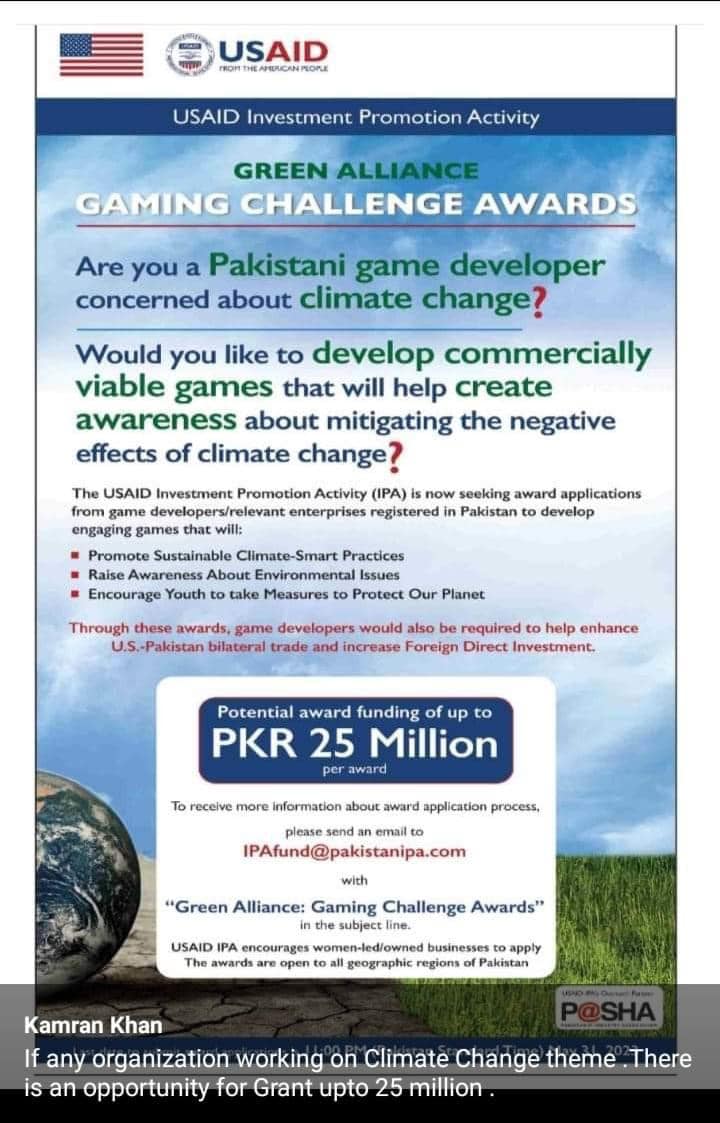
  • Sure, here are 10 game ideas that are easy to understand and relate to, and will help create awareness about climate change in Pakistan:

    1. Trash Collector: A game where the player has to pick up litter and put it into the correct recycling bins to clean up the environment.

    2. Farming Hero: A game where the player has to manage a farm, plant crops, and raise animals while following sustainable and climate-smart practices.

    3. Climate Explorer: A game where the player travels around Pakistan, learning about the different climates and ecosystems, and how climate change is affecting them.

    4. Eco-Bike Challenge: A game where the player has to ride a bike to different locations while avoiding obstacles, and learning about how biking can help reduce carbon emissions.

    5. Tree Planter: A game where the player has to plant trees in different locations to help combat deforestation and promote a greener environment.

    6. Green Chef: A game where the player has to cook meals using only sustainable and locally sourced ingredients, and learn about how food choices can impact the environment.

    7. Water Hero: A game where the player has to manage a water supply and distribution system, while learning about the importance of water conservation.

    8. Eco-Friendly Fashionista: A game where the player has to choose and design outfits made from eco-friendly materials, and learn about how fashion choices can impact the environment.

    9. Solar Power Tycoon: A game where the player has to build and manage a solar power plant, while learning about the benefits of renewable energy sources.

    10. Climate Quiz: A game where the player has to answer questions about climate change and sustainable practices, and earn points for every correct answer.

    To get more details of the games go to rehan.ai or chatgpt
    Sure, here are 10 game ideas that are easy to understand and relate to, and will help create awareness about climate change in Pakistan: 1. Trash Collector: A game where the player has to pick up litter and put it into the correct recycling bins to clean up the environment. 2. Farming Hero: A game where the player has to manage a farm, plant crops, and raise animals while following sustainable and climate-smart practices. 3. Climate Explorer: A game where the player travels around Pakistan, learning about the different climates and ecosystems, and how climate change is affecting them. 4. Eco-Bike Challenge: A game where the player has to ride a bike to different locations while avoiding obstacles, and learning about how biking can help reduce carbon emissions. 5. Tree Planter: A game where the player has to plant trees in different locations to help combat deforestation and promote a greener environment. 6. Green Chef: A game where the player has to cook meals using only sustainable and locally sourced ingredients, and learn about how food choices can impact the environment. 7. Water Hero: A game where the player has to manage a water supply and distribution system, while learning about the importance of water conservation. 8. Eco-Friendly Fashionista: A game where the player has to choose and design outfits made from eco-friendly materials, and learn about how fashion choices can impact the environment. 9. Solar Power Tycoon: A game where the player has to build and manage a solar power plant, while learning about the benefits of renewable energy sources. 10. Climate Quiz: A game where the player has to answer questions about climate change and sustainable practices, and earn points for every correct answer. To get more details of the games go to rehan.ai or chatgpt
    0 Comentários 0 Compartilhamentos 590 Visualizações
Páginas Impulsionadas