• #rsisb
    Roll no. 227
    Story post no. 27
    Foundation Level

    **Ecosystem Explorers: Discovering Earth's Habitats**

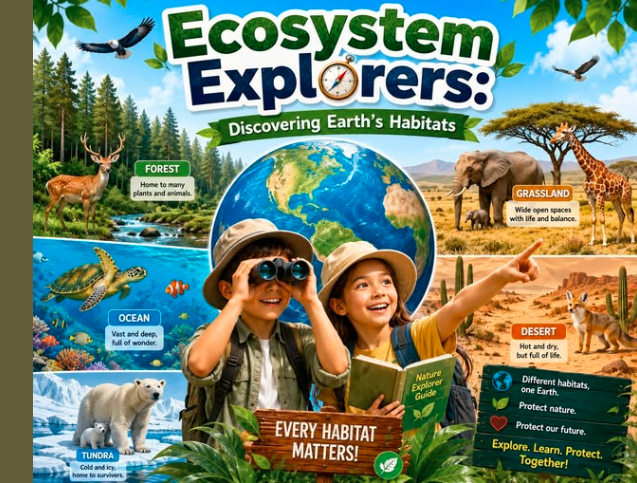
    Join us on an exciting journey to explore the amazing ecosystems and habitats of our planet! From lush forests and deep oceans to deserts and grasslands , every habitat is home to unique plants, animals, and living communities.

    Let’s discover how living things interact with their environment and why protecting Earth’s ecosystems is so important. **Explore, learn, and become a true Ecosystem Explorer!**

    #EcosystemExplorers #Ecosystem #EarthHabitats #Nature #Environment #Wildlife #Biodiversity #ExploreNature #ScienceLearning #SaveOurPlanet #Earth #LearningJourney

    Asma Shaheen EducationWali
    Irum Asim
    Saima Happinesswali
    #rsisb Roll no. 227 Story post no. 27 Foundation Level ๐ŸŒ๐ŸŒฟ **Ecosystem Explorers: Discovering Earth's Habitats** ๐Ÿฆ‹๐ŸŒณ Join us on an exciting journey to explore the amazing ecosystems and habitats of our planet! ๐ŸŒŽ๐Ÿ” From lush forests ๐ŸŒฒ and deep oceans ๐ŸŒŠ to deserts ๐Ÿœ๏ธ and grasslands ๐ŸŒพ, every habitat is home to unique plants, animals, and living communities. ๐Ÿ˜๐Ÿฆ๐Ÿ ๐ŸŒบ Let’s discover how living things interact with their environment and why protecting Earth’s ecosystems is so important. ๐Ÿ’š๐ŸŒฑโœจ **Explore, learn, and become a true Ecosystem Explorer!** ๐Ÿš€๐Ÿ”ฌ #EcosystemExplorers #Ecosystem #EarthHabitats #Nature #Environment #Wildlife #Biodiversity #ExploreNature #ScienceLearning #SaveOurPlanet #Earth #LearningJourney ๐ŸŒ๐ŸŒฟ๐Ÿ”ฌ Asma Shaheen EducationWali Irum Asim Saima Happinesswali
    0 Comments 0 Shares 81 Views
  • #rsisb
    Roll No.240
    Image With Chatgpt No.5
    Foundation Level

    The Amazon Rainforest is one of the most extraordinary natural environments on our planet. Stretching across a vast area of South America, it is home to an incredible variety of plants, animals, insects, birds, and microorganisms.

    The rainforest is often called the “lungs of the world,” because its plants produce oxygen through photosynthesis and the ecosystem plays an important role in absorbing and storing carbon dioxide. However, the commonly repeated claim that the Amazon produces 20% of the world’s oxygen is misleading. Much of the oxygen produced by plants is also consumed by plants, animals, fungi, and microorganisms within the ecosystem.

    What makes the Amazon truly remarkable is its biodiversity. From colorful macaws flying through the canopy to jaguars moving through the forest, countless species depend on this habitat for food, shelter, and survival.

    The rainforest also has an important role in the global carbon cycle and climate system. Trees and vegetation absorb large amounts of carbon dioxide, storing carbon in plants and soils. This makes protecting healthy forests important for the environment and for communities that depend on them.

    Every part of the Amazon ecosystem is connected. When forests are damaged or destroyed, the effects can spread through habitats, wildlife populations, water systems, and climate processes.

    Learning about the Amazon teaches us an important lesson: protecting nature means protecting the systems that support life. Conservation, responsible land use, reducing deforestation, and caring for biodiversity can all help preserve this extraordinary ecosystem for future generations.

    Explore the rainforest. Discover its biodiversity. Understand its importance. Protect our planet.

    The Amazon is more than just a forest—it is a living, interconnected world filled with life, discovery, and natural wonder.

    #AmazonRainforest #Amazon #Rainforest #DidYouKnow #Nature #Biodiversity #Wildlife #Environment #Earth #PlanetEarth #Forest #TropicalRainforest #Ecology #Science #Biology #ScienceEducation #EnvironmentalEducation #WildlifeConservation #ForestConservation #ProtectNature #SaveTheRainforest #Climate #CarbonCycle #Ecosystem #NaturalWorld #NatureLovers #ExploreNature #EarthScience #LearningJourney #EducationalContent #ScienceFacts #BiodiversityMatters #EverySpeciesCounts #ProtectOurPlanet

    Rehan School Islamabad Campus
    Asma Shaheen EducationWali
    Irum Asim
    Saima Happinesswali

    #rsisb Roll No.240 Image With Chatgpt No.5 Foundation Level The Amazon Rainforest is one of the most extraordinary natural environments on our planet. Stretching across a vast area of South America, it is home to an incredible variety of plants, animals, insects, birds, and microorganisms. ๐ŸŒŽ๐ŸŒฑ๐Ÿ’๐Ÿฆ‹ The rainforest is often called the “lungs of the world,” because its plants produce oxygen through photosynthesis and the ecosystem plays an important role in absorbing and storing carbon dioxide. However, the commonly repeated claim that the Amazon produces 20% of the world’s oxygen is misleading. Much of the oxygen produced by plants is also consumed by plants, animals, fungi, and microorganisms within the ecosystem. What makes the Amazon truly remarkable is its biodiversity. ๐ŸŒฟ๐Ÿข๐Ÿ๐Ÿฆœ๐Ÿ† From colorful macaws flying through the canopy to jaguars moving through the forest, countless species depend on this habitat for food, shelter, and survival. The rainforest also has an important role in the global carbon cycle and climate system. Trees and vegetation absorb large amounts of carbon dioxide, storing carbon in plants and soils. ๐ŸŒฑ๐ŸŒ This makes protecting healthy forests important for the environment and for communities that depend on them. Every part of the Amazon ecosystem is connected. ๐ŸŒณโžก๏ธ๐Ÿฆ‹โžก๏ธ๐Ÿฆโžก๏ธ๐Ÿ† When forests are damaged or destroyed, the effects can spread through habitats, wildlife populations, water systems, and climate processes. Learning about the Amazon teaches us an important lesson: protecting nature means protecting the systems that support life. ๐Ÿ’š๐ŸŒŽ Conservation, responsible land use, reducing deforestation, and caring for biodiversity can all help preserve this extraordinary ecosystem for future generations. โœจ Explore the rainforest. Discover its biodiversity. Understand its importance. Protect our planet. ๐ŸŒฟ๐Ÿ”ฌ๐ŸŒ The Amazon is more than just a forest—it is a living, interconnected world filled with life, discovery, and natural wonder. ๐ŸŒณ๐Ÿ’š๐Ÿฆœ #AmazonRainforest #Amazon #Rainforest #DidYouKnow #Nature #Biodiversity #Wildlife #Environment #Earth #PlanetEarth #Forest #TropicalRainforest #Ecology #Science #Biology #ScienceEducation #EnvironmentalEducation #WildlifeConservation #ForestConservation #ProtectNature #SaveTheRainforest #Climate #CarbonCycle #Ecosystem #NaturalWorld #NatureLovers #ExploreNature #EarthScience #LearningJourney #EducationalContent #ScienceFacts #BiodiversityMatters #EverySpeciesCounts #ProtectOurPlanet ๐ŸŒŽ๐ŸŒฟ๐ŸŒณ๐Ÿฆœ๐Ÿ†๐Ÿข Rehan School Islamabad Campus Asma Shaheen EducationWali Irum Asim Saima Happinesswali
    0 Comments 0 Shares 2400 Views
  • #rsisb
    Roll No.240
    Story No.23
    Foundation Level

    Every corner of our planet is home to an amazing variety of life, from the highest mountains and deepest oceans to vast forests, peaceful rivers, colorful wetlands, and dry deserts. Each habitat has its own unique environment, plants, animals, and natural systems that work together to support life.

    In **“Ecosystem Explorers: Discovering Earth’s Habitats,”** we take an exciting journey across different ecosystems to discover how living organisms interact with their surroundings. We explore the beauty of forests, the mystery of oceans, the strength of mountain ecosystems, the unique life of deserts, and the importance of freshwater habitats.

    Every ecosystem tells a different story. A forest provides shelter and food for countless species, oceans support incredible marine life, deserts show how animals and plants can adapt to challenging conditions, and wetlands play an important role in maintaining healthy environments.

    This journey helps us understand the importance of **biodiversity** and why every species matters. Even the smallest organisms can have an important role in maintaining the balance of an ecosystem. When one part of an ecosystem changes, it can affect many other living things.

    Learning about habitats is not just about discovering animals and plants. It is also about understanding our responsibility toward nature. By protecting forests, keeping rivers and oceans clean, reducing pollution, conserving wildlife, and respecting natural habitats, we can help create a healthier planet for future generations.

    Our Earth is full of incredible places waiting to be explored. The more we learn about these ecosystems, the more we understand how connected all life truly is. Every habitat has value, every species has a role, and every person can make a positive difference.

    Let’s become true **Ecosystem Explorers**—curious about nature, passionate about learning, and committed to protecting the amazing world around us.

    **Explore Habitats**
    **Discover Biodiversity**
    **Protect Nature**
    **Care for Our Planet**

    **Every Habitat Matters • Every Species Counts**

    #EcosystemExplorers #DiscoveringEarthsHabitats #Ecosystem #Habitats #Biodiversity #Nature #Wildlife #Environment #Earth #PlanetEarth #ExploreNature #NatureExploration #AnimalLife #PlantLife #Forests #Oceans #Deserts #Mountains #Wetlands #Freshwater #MarineLife #WildlifeConservation #ProtectNature #SaveOurPlanet #EnvironmentalEducation #ScienceEducation #Biology #Ecology #LearningJourney #NatureLovers #EarthExplorers #Conservation #ClimateAwareness #SustainableFuture #GreenPlanet #NatureIsAmazing #EverySpeciesCounts #EveryHabitatMatters


    Rehan School Islamabad Campus
    Asma Shaheen EducationWali
    Irum Asim
    Saima Happinesswali


    #rsisb Roll No.240 Story No.23 Foundation Level Every corner of our planet is home to an amazing variety of life, from the highest mountains and deepest oceans to vast forests, peaceful rivers, colorful wetlands, and dry deserts. ๐ŸŒŽโœจ Each habitat has its own unique environment, plants, animals, and natural systems that work together to support life. ๐Ÿฆ‹๐ŸŒฑ๐ŸŸ๐Ÿฆ In **“Ecosystem Explorers: Discovering Earth’s Habitats,”** we take an exciting journey across different ecosystems to discover how living organisms interact with their surroundings. ๐Ÿ”๐ŸŒฟ We explore the beauty of forests, the mystery of oceans, the strength of mountain ecosystems, the unique life of deserts, and the importance of freshwater habitats. ๐ŸŒŠ๐Ÿœ๏ธ๐Ÿž๏ธ๐ŸŒฒ Every ecosystem tells a different story. ๐ŸŒŸ A forest provides shelter and food for countless species, oceans support incredible marine life, deserts show how animals and plants can adapt to challenging conditions, and wetlands play an important role in maintaining healthy environments. ๐Ÿข๐Ÿ ๐Ÿฆ…๐ŸŒต This journey helps us understand the importance of **biodiversity** and why every species matters. ๐Ÿ†๐Ÿฆ‹๐Ÿข๐ŸŒบ Even the smallest organisms can have an important role in maintaining the balance of an ecosystem. When one part of an ecosystem changes, it can affect many other living things. ๐ŸŒฑ๐Ÿ”—๐ŸŒ Learning about habitats is not just about discovering animals and plants. It is also about understanding our responsibility toward nature. ๐Ÿ’š๐ŸŒŽ By protecting forests, keeping rivers and oceans clean, reducing pollution, conserving wildlife, and respecting natural habitats, we can help create a healthier planet for future generations. ๐ŸŒฟโ™ป๏ธ๐ŸŒŠ Our Earth is full of incredible places waiting to be explored. ๐Ÿ”ญ๐ŸŒ The more we learn about these ecosystems, the more we understand how connected all life truly is. Every habitat has value, every species has a role, and every person can make a positive difference. ๐ŸŒŽโค๏ธ Let’s become true **Ecosystem Explorers**—curious about nature, passionate about learning, and committed to protecting the amazing world around us. ๐Ÿ”๐ŸŒฟ๐Ÿฆœ ๐ŸŒฑ **Explore Habitats** ๐Ÿ”Ž **Discover Biodiversity** ๐Ÿ›ก๏ธ **Protect Nature** ๐ŸŒ **Care for Our Planet** โœจ **Every Habitat Matters • Every Species Counts** โœจ #EcosystemExplorers #DiscoveringEarthsHabitats #Ecosystem #Habitats #Biodiversity #Nature #Wildlife #Environment #Earth #PlanetEarth #ExploreNature #NatureExploration #AnimalLife #PlantLife #Forests #Oceans #Deserts #Mountains #Wetlands #Freshwater #MarineLife #WildlifeConservation #ProtectNature #SaveOurPlanet #EnvironmentalEducation #ScienceEducation #Biology #Ecology #LearningJourney #NatureLovers #EarthExplorers #Conservation #ClimateAwareness #SustainableFuture #GreenPlanet #NatureIsAmazing #EverySpeciesCounts #EveryHabitatMatters ๐ŸŒ๐ŸŒฟ๐Ÿ˜๐Ÿฆ…๐Ÿข๐Ÿ  ๐Ÿ”๏ธ๐ŸŒŠ๐ŸŒณโœจ๐Ÿ’š Rehan School Islamabad Campus Asma Shaheen EducationWali Irum Asim Saima Happinesswali
    0 Comments 0 Shares 3309 Views
  • RSIF8
    roll no 72
    story post no 1
    story post topic :Ecosystem Explorers: Discovering Earth's Habitats**
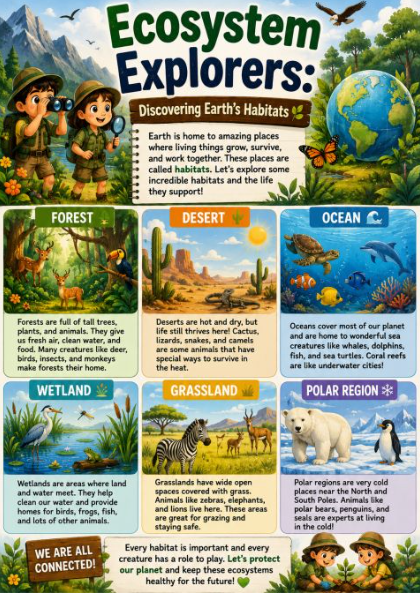
    welcome, young explorers! Earth is full of amazing habitats, and each one is home to different plants, animals, and living things. From the deep blue oceans to the green forests , the hot deserts , wide grasslands , and beautiful wetlands —every ecosystem plays an important role in keeping our planet healthy.
    **Forests** give us oxygen and shelter to countless animals.
    **Deserts** show us how life can survive in extreme conditions.
    **Oceans** are filled with incredible creatures and cover most of our planet.
    **Grasslands** provide homes for grazing animals and many other species.
    **Wetlands** help clean water and support a wonderful variety of wildlife.
    Let's become **Ecosystem Explorers**! Observe nature, learn about Earth's habitats, and help protect the amazing world we all share.
    **Different habitats, one home—Earth. Let's take care of it together!**
    #EcosystemExplorers #EarthHabitats #NatureLovers #ProtectOurPlanet #Wildlife #Forests #Oceans #Deserts #Grasslands #Wetlands #EnvironmentalEducation #ExploreNature #saveearth See less
    RSIF8 roll no 72 story post no 1 story post topic :Ecosystem Explorers: Discovering Earth's Habitats** ๐ŸŒฟ๐Ÿช๐Ÿ‹ welcome, young explorers! ๐Ÿ”Žโœจ Earth is full of amazing habitats, and each one is home to different plants, animals, and living things. From the deep blue oceans ๐ŸŒŠ to the green forests ๐ŸŒฒ, the hot deserts ๐Ÿœ๏ธ, wide grasslands ๐ŸŒพ, and beautiful wetlands ๐Ÿฆ†—every ecosystem plays an important role in keeping our planet healthy. ๐ŸŒฒ **Forests** give us oxygen and shelter to countless animals. ๐Ÿœ๏ธ **Deserts** show us how life can survive in extreme conditions. ๐ŸŒŠ **Oceans** are filled with incredible creatures and cover most of our planet. ๐ŸŒพ **Grasslands** provide homes for grazing animals and many other species. ๐Ÿฆ† **Wetlands** help clean water and support a wonderful variety of wildlife. Let's become **Ecosystem Explorers**! ๐ŸŒŽ๐Ÿ’š Observe nature, learn about Earth's habitats, and help protect the amazing world we all share. โœจ **Different habitats, one home—Earth. Let's take care of it together!** ๐ŸŒ๐Ÿ’š #EcosystemExplorers #EarthHabitats #NatureLovers #ProtectOurPlanet #Wildlife #Forests #Oceans #Deserts #Grasslands #Wetlands #EnvironmentalEducation #ExploreNature #saveearth See less
    0 Comments 0 Shares 2143 Views
  • RSISB
    Roll No: 209
    Story Post No.37

    Ecosystem Explorers: Discovering Earth’s Habitats

    Embark on an exciting journey across our incredible planet and discover the diverse habitats that make Earth a home for millions of living organisms!

    From lush forests and mysterious oceans to challenging deserts and life-rich wetlands, every ecosystem plays a vital role in maintaining the balance of nature.

    Observe nature.
    Learn about ecosystems.
    Respect every habitat.
    Protect our planet.

    Every habitat has a story, and every species has a role to play. Together, let’s explore, understand, and protect the amazing world we call home!

    #EcosystemExplorers #EarthsHabitats #Ecosystems #Nature #Biodiversity #Wildlife #EnvironmentalEducation #ExploreNature #ProtectOurPlanet #SaveNature #ClimateAwareness #ScienceEducation #NatureLovers #WildlifeConservation #DiscoverEarth
    RSISB Roll No: 209 Story Post No.37 ๐ŸŒ๐ŸŒฟ Ecosystem Explorers: Discovering Earth’s Habitats ๐Ÿ”๐Ÿพ Embark on an exciting journey across our incredible planet and discover the diverse habitats that make Earth a home for millions of living organisms! ๐ŸŒณ๐ŸŒŠ๐Ÿœ๏ธ๐Ÿฆ‹ From lush forests and mysterious oceans to challenging deserts and life-rich wetlands, every ecosystem plays a vital role in maintaining the balance of nature. ๐ŸŒฑโš–๏ธ ๐Ÿ” Observe nature. ๐Ÿ“š Learn about ecosystems. ๐Ÿ’š Respect every habitat. ๐ŸŒ Protect our planet. Every habitat has a story, and every species has a role to play. Together, let’s explore, understand, and protect the amazing world we call home! ๐ŸŒŽโœจ #EcosystemExplorers #EarthsHabitats #Ecosystems #Nature #Biodiversity #Wildlife #EnvironmentalEducation #ExploreNature #ProtectOurPlanet #SaveNature #ClimateAwareness #ScienceEducation #NatureLovers #WildlifeConservation #DiscoverEarth ๐ŸŒ๐ŸŒฟ๐Ÿพ๐Ÿ”โœจ
    0 Comments 0 Shares 2521 Views
  • #rsisb
    Roll No.190
    Call Anni.No.46
    Foundation Level


    1. *My First Conversation With AI! *

    Start a video by introducing AI and asking simple questions like: “What are you?”*, *“How do you answer questions?”*, and *“What can you help me with?” Then move into more interesting questions about school, technology, hobbies, and the future. Finish by asking AI what advice it would give to someone who wants to learn new things.

    2. *Can AI Answer 20 Questions? *

    Create a fun challenge where you ask AI 20 completely different questions. Start with easy questions and slowly make them more difficult. Ask about science, space, computers, animals, history, and everyday life. The goal is to see how interesting and useful AI's answers can be.

    3. *AI and the Future of Technology *

    Talk with AI about how technology might change in the future. Ask about smart homes, robots, self-driving cars, virtual reality, and future computers. You can also ask, “What might technology look like 20 years from now?” This can make an exciting educational conversation.

    4. *AI Becomes My Teacher! *

    Pretend that AI is your personal teacher for one day. Ask it to explain mathematics, science, English, and computer topics in very simple language. You can then ask follow-up questions whenever something is difficult.

    5. *Ask AI About Our Amazing Planet *

    Have a conversation about Earth and nature. Ask AI about oceans, mountains, forests, weather, animals, and interesting natural phenomena. You can make each question more surprising than the previous one.

    6. *Talking to AI About Space! *

    Take your audience on a virtual journey through space. Ask AI about planets, stars, galaxies, black holes, astronauts, and space exploration. End with an imaginative question such as, “What could humans discover in space in the future?”

    7. *AI and Video Games *

    Discuss how AI is used in modern games. Ask about computer-controlled characters, game worlds, racing games, and how AI can make games more challenging. You can also ask AI to invent an idea for a brand-new game.

    8. *My Dream Smart Home With AI *

    Ask AI to imagine a futuristic smart home. Talk about automatic lights, smart security, helpful robots, voice commands, smart appliances, and energy-saving technology. Then ask AI to design your perfect futuristic room.

    9. *AI Helps Me Learn Coding! *

    Make a beginner-friendly coding conversation. Ask AI what coding is, why people learn it, and how simple programs work. You can ask it to explain concepts like variables, loops, and functions using easy examples.

    10. *Can AI Solve My Brain Challenges? *

    Give AI fun puzzles, riddles, logic questions, and math challenges. Don't reveal the answers immediately—let your audience think first! Then compare your answer with AI's explanation.

    11. *Improve My English With AI! *

    Have a daily English conversation with AI. Talk about school, hobbies, food, sports, technology, and your daily routine. Ask AI to correct your grammar and teach you new vocabulary in a simple way.

    12. *AI Predicts the Future! *

    Ask AI questions about the future of computers, phones, robots, transportation, education, and space exploration. Make it clear that these are **ideas or predictions, not guaranteed facts**.

    13. *Can AI Help Save the Planet? *

    Talk about pollution, recycling, renewable energy, forests, oceans, and wildlife. Ask AI how technology could help people protect the environment. This gives your video an educational and positive message.

    14. *Funny Questions for AI! *

    Ask AI unusual but harmless questions such as “If you could have a favorite hobby, what would it be?” or “What would a robot's perfect vacation look like?” Turn the answers into a fun conversation with reactions and jokes.

    15. *A Full Day With My AI Assistant! *

    Create a story where AI helps you throughout an imaginary day. Start with planning your morning, then studying, learning something new, organizing tasks, solving a puzzle, and finishing the day with a fun conversation. It can become a complete *“Day With AI”* episode.
    #rsisb Roll No.190 Call Anni.No.46 Foundation Level ๐Ÿค– 1. *My First Conversation With AI! ๐ŸŒŸ* Start a video by introducing AI and asking simple questions like: “What are you?”*, *“How do you answer questions?”*, and *“What can you help me with?” Then move into more interesting questions about school, technology, hobbies, and the future. Finish by asking AI what advice it would give to someone who wants to learn new things. ๐Ÿ“šโœจ ๐Ÿง  2. *Can AI Answer 20 Questions? ๐ŸŽฏ* Create a fun challenge where you ask AI 20 completely different questions. Start with easy questions and slowly make them more difficult. Ask about science, space, computers, animals, history, and everyday life. The goal is to see how interesting and useful AI's answers can be. ๐Ÿš€๐ŸŒ ๐Ÿ’ป 3. *AI and the Future of Technology ๐Ÿš€* Talk with AI about how technology might change in the future. Ask about smart homes, robots, self-driving cars, virtual reality, and future computers. You can also ask, “What might technology look like 20 years from now?” This can make an exciting educational conversation. ๐Ÿค–๐Ÿ ๐Ÿš— ๐Ÿ“š 4. *AI Becomes My Teacher! ๐Ÿ‘จ‍๐Ÿซ๐Ÿค–* Pretend that AI is your personal teacher for one day. Ask it to explain mathematics, science, English, and computer topics in very simple language. You can then ask follow-up questions whenever something is difficult. ๐Ÿ“–โœ๏ธ ๐ŸŒŽ 5. *Ask AI About Our Amazing Planet ๐ŸŒ* Have a conversation about Earth and nature. Ask AI about oceans, mountains, forests, weather, animals, and interesting natural phenomena. You can make each question more surprising than the previous one. ๐ŸŒŠ๐Ÿ”๏ธ๐Ÿฆ ๐Ÿ‘จ‍๐Ÿš€ 6. *Talking to AI About Space! ๐ŸŒŒ๐Ÿš€* Take your audience on a virtual journey through space. Ask AI about planets, stars, galaxies, black holes, astronauts, and space exploration. End with an imaginative question such as, “What could humans discover in space in the future?” ๐ŸŒ™โญ ๐ŸŽฎ 7. *AI and Video Games ๐ŸŽฎ๐Ÿค–* Discuss how AI is used in modern games. Ask about computer-controlled characters, game worlds, racing games, and how AI can make games more challenging. You can also ask AI to invent an idea for a brand-new game. ๐ŸŽ๏ธ๐ŸŽฏ ๐Ÿ  8. *My Dream Smart Home With AI ๐Ÿกโœจ* Ask AI to imagine a futuristic smart home. Talk about automatic lights, smart security, helpful robots, voice commands, smart appliances, and energy-saving technology. Then ask AI to design your perfect futuristic room. ๐Ÿ’ก๐Ÿค–๐Ÿ  ๐Ÿง‘‍๐Ÿ’ป 9. *AI Helps Me Learn Coding! ๐Ÿ’ป๐Ÿ”ฅ* Make a beginner-friendly coding conversation. Ask AI what coding is, why people learn it, and how simple programs work. You can ask it to explain concepts like variables, loops, and functions using easy examples. ๐Ÿ–ฅ๏ธโŒจ๏ธ ๐Ÿงฉ 10. *Can AI Solve My Brain Challenges? ๐Ÿง ๐Ÿ†* Give AI fun puzzles, riddles, logic questions, and math challenges. Don't reveal the answers immediately—let your audience think first! Then compare your answer with AI's explanation. ๐Ÿค”๐Ÿ’ก ๐Ÿ—ฃ๏ธ 11. *Improve My English With AI! ๐Ÿ‡ฌ๐Ÿ‡ง๐Ÿค–* Have a daily English conversation with AI. Talk about school, hobbies, food, sports, technology, and your daily routine. Ask AI to correct your grammar and teach you new vocabulary in a simple way. ๐Ÿ“š๐Ÿ—ฃ๏ธโœจ ๐Ÿ”ฎ 12. *AI Predicts the Future! ๐Ÿš€๐Ÿ”ฎ* Ask AI questions about the future of computers, phones, robots, transportation, education, and space exploration. Make it clear that these are **ideas or predictions, not guaranteed facts**. ๐ŸŒ๐Ÿค– ๐ŸŒฑ 13. *Can AI Help Save the Planet? ๐ŸŒณ๐ŸŒŽ* Talk about pollution, recycling, renewable energy, forests, oceans, and wildlife. Ask AI how technology could help people protect the environment. This gives your video an educational and positive message. โ™ป๏ธ๐ŸŒณ๐Ÿผ ๐Ÿ˜‚ 14. *Funny Questions for AI! ๐Ÿคฃ๐Ÿค–* Ask AI unusual but harmless questions such as “If you could have a favorite hobby, what would it be?” or “What would a robot's perfect vacation look like?” Turn the answers into a fun conversation with reactions and jokes. ๐Ÿ˜„๐ŸŽ‰ ๐ŸŒŸ 15. *A Full Day With My AI Assistant! ๐Ÿค–โ˜€๏ธ๐ŸŒ™* Create a story where AI helps you throughout an imaginary day. Start with planning your morning, then studying, learning something new, organizing tasks, solving a puzzle, and finishing the day with a fun conversation. It can become a complete *“Day With AI”* episode. ๐Ÿš€๐Ÿ“š๐ŸŽฎ๐ŸŒ™
    0 Comments 0 Shares 2398 Views 8
  • RSISB
    Roll No: 209
    IMG with ChatGPT No.20

    Did You Know? The Amazon Rainforest is one of the most incredible ecosystems on Earth! Often called the “lungs of the planet,” it plays an important role in our global climate and supports an amazing variety of wildlife.

    Let’s learn more about our planet, protect our forests, and inspire others to care for nature!

    #AmazonRainforest #DidYouKnow #Earth #Nature #Rainforest #Environment #SaveTheAmazon #ClimateAwareness #Wildlife #ProtectOurPlanet #EcoAwareness #ScienceFacts
    RSISB Roll No: 209 IMG with ChatGPT No.20 ๐ŸŒณ๐ŸŒŽ Did You Know? ๐ŸŒฟโœจ The Amazon Rainforest is one of the most incredible ecosystems on Earth! ๐ŸŒง๏ธ๐Ÿฆœ๐Ÿ’ Often called the “lungs of the planet,” it plays an important role in our global climate and supports an amazing variety of wildlife. ๐Ÿ’š๐ŸŒ Let’s learn more about our planet, protect our forests, and inspire others to care for nature! ๐ŸŒฑ๐Ÿ’ช๐ŸŒŽ #AmazonRainforest ๐ŸŒณ #DidYouKnow ๐Ÿค” #Earth ๐ŸŒ #Nature ๐ŸŒฟ #Rainforest ๐ŸŒง๏ธ #Environment ๐Ÿ’š #SaveTheAmazon ๐ŸŒŽ #ClimateAwareness ๐ŸŒฑ #Wildlife ๐Ÿฆœ #ProtectOurPlanet ๐Ÿ’š #EcoAwareness โ™ป๏ธ #ScienceFacts ๐Ÿ”ฌ
    0 Comments 0 Shares 1013 Views
  • #rsisb
    Roll No.269
    Foundation Level
    Story Post No.8

    # Winds and Environment: The Impact of Change

    **Winds and Environment: The Impact of Change** explores the important relationship between wind, weather, climate, and our environment. Wind is a natural force that affects our daily lives in many ways—from changing temperatures and moving clouds to spreading seeds, shaping landscapes, and influencing weather patterns.

    In this video, we explore how changes in wind patterns can impact the environment, agriculture, wildlife, air quality, and human communities. We also look at how climate change and environmental changes may influence wind behavior and weather conditions.

    Understanding these changes helps us appreciate the power of nature and reminds us why protecting our environment is so important. Let’s learn more about our changing world and discover how small actions can contribute to a healthier and more sustainable future.

    **Watch, learn, and share your thoughts!**

    #Winds #Environment #ClimateChange #Nature #Weather #EnvironmentalAwareness #Climate #GlobalWarming #Sustainability #Earth #Science #Education #NatureLovers #SaveOurPlanet #LearnAndGrow
    #rsisb Roll No.269 Foundation Level Story Post No.8 # ๐ŸŒฌ๏ธ Winds and Environment: The Impact of Change ๐ŸŒ ๐ŸŒฟ **Winds and Environment: The Impact of Change** explores the important relationship between wind, weather, climate, and our environment. ๐ŸŒฌ๏ธ๐ŸŒŽ Wind is a natural force that affects our daily lives in many ways—from changing temperatures and moving clouds to spreading seeds, shaping landscapes, and influencing weather patterns. In this video, we explore how changes in wind patterns can impact the environment, agriculture, wildlife, air quality, and human communities. ๐ŸŒฑ๐ŸŒพ๐Ÿฆ We also look at how climate change and environmental changes may influence wind behavior and weather conditions. Understanding these changes helps us appreciate the power of nature and reminds us why protecting our environment is so important. ๐ŸŒณ๐Ÿ’š Let’s learn more about our changing world and discover how small actions can contribute to a healthier and more sustainable future. ๐ŸŒโœจ ๐ŸŽ“ **Watch, learn, and share your thoughts!** ๐Ÿ’ก #Winds ๐ŸŒฌ๏ธ #Environment ๐ŸŒ #ClimateChange ๐ŸŒก๏ธ #Nature ๐ŸŒฟ #Weather โ˜๏ธ #EnvironmentalAwareness ๐Ÿ’š #Climate ๐ŸŒŽ #GlobalWarming ๐Ÿ”ฅ #Sustainability โ™ป๏ธ #Earth ๐ŸŒ #Science ๐Ÿ”ฌ #Education ๐Ÿ“š #NatureLovers ๐ŸŒฑ #SaveOurPlanet ๐Ÿ’š #LearnAndGrow ๐Ÿš€
    0 Comments 0 Shares 2368 Views
  • #rsisb
    Roll no.246
    Foundation level

    # Why Frogs? Understanding the Anatomy of Life

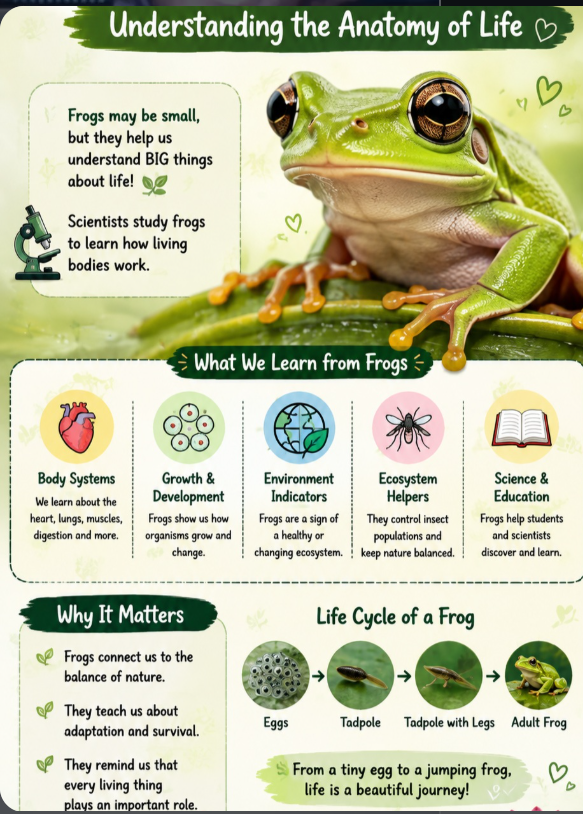
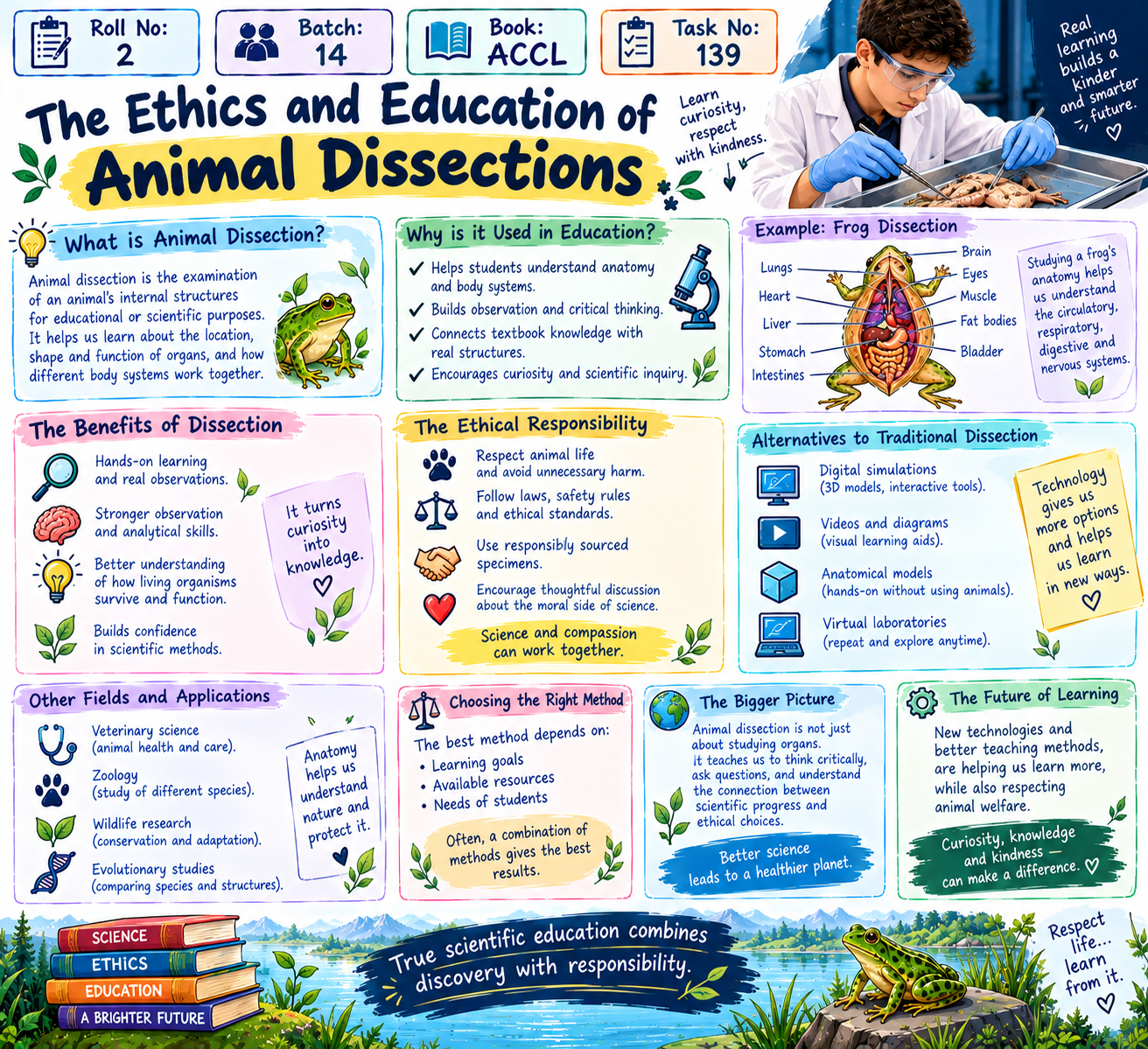
    Why study frogs? Because these fascinating amphibians provide an excellent way to explore the incredible organization and complexity of living organisms. From their powerful hind legs and unique skeletal structure to their remarkable organs, muscles, nervous system, and respiratory adaptations, frogs offer a wonderful window into the basic principles of anatomy and biology.

    In this educational exploration, **“Why Frogs? Understanding the Anatomy of Life,”** we discover how different body systems work together to keep an organism alive. We can learn how a frog moves, breathes, senses its environment, obtains nutrients, circulates blood, and responds to changes around it. Studying frog anatomy also helps us understand broader biological concepts that apply to many other animals, including humans.

    Frogs are especially interesting because they live both in water and on land, making them excellent examples of adaptation. Their life cycle—from egg to tadpole to adult frog—demonstrates how living organisms can undergo remarkable changes as they develop. Their anatomy reflects their lifestyle, showing how body structures are connected to survival and environmental challenges.

    Exploring anatomy encourages students to ask important scientific questions: How does each organ function? Why are certain body structures shaped the way they are? How do different systems cooperate? By investigating these questions, we develop observation skills, scientific curiosity, and a deeper appreciation for the complexity of life.

    Most importantly, studying frogs reminds us that biology is not simply about memorizing names of organs—it is about understanding **how life works as a connected system.** Every bone, muscle, organ, and tissue has a role, and together they create a living organism capable of movement, growth, reproduction, and interaction with its environment.

    Join us on this fascinating scientific journey and discover how the anatomy of a frog can open the door to understanding the amazing mechanisms of life!

    #WhyFrogs #FrogAnatomy #UnderstandingLife #Biology #ScienceEducation #Anatomy #Amphibians #FrogLifeCycle #AnimalBiology #HumanAnatomy #LifeScience #ScienceLearning #BiologyStudents #ScientificDiscovery #ExploreScience #Nature #Wildlife #Evolution #Adaptation #STEM #STEMEducation #ScienceIsAmazing #LearningIsFun #Curiosity #ExploreNature
    #rsisb Roll no.246 Foundation level # Why Frogs? Understanding the Anatomy of Life ๐Ÿธ๐Ÿ”ฌ Why study frogs? ๐Ÿธ Because these fascinating amphibians provide an excellent way to explore the incredible organization and complexity of living organisms. From their powerful hind legs and unique skeletal structure to their remarkable organs, muscles, nervous system, and respiratory adaptations, frogs offer a wonderful window into the basic principles of anatomy and biology. ๐ŸŒฟ๐Ÿงฌ In this educational exploration, **“Why Frogs? Understanding the Anatomy of Life,”** we discover how different body systems work together to keep an organism alive. ๐Ÿซ€๐Ÿซ๐Ÿง  We can learn how a frog moves, breathes, senses its environment, obtains nutrients, circulates blood, and responds to changes around it. Studying frog anatomy also helps us understand broader biological concepts that apply to many other animals, including humans. ๐ŸŒŽโœจ Frogs are especially interesting because they live both in water and on land, making them excellent examples of adaptation. ๐Ÿ’ง๐ŸŒฑ Their life cycle—from egg to tadpole to adult frog—demonstrates how living organisms can undergo remarkable changes as they develop. ๐Ÿ”„๐Ÿธ Their anatomy reflects their lifestyle, showing how body structures are connected to survival and environmental challenges. Exploring anatomy encourages students to ask important scientific questions: How does each organ function? Why are certain body structures shaped the way they are? How do different systems cooperate? ๐Ÿค”๐Ÿ”ฌ By investigating these questions, we develop observation skills, scientific curiosity, and a deeper appreciation for the complexity of life. Most importantly, studying frogs reminds us that biology is not simply about memorizing names of organs—it is about understanding **how life works as a connected system.** โค๏ธ๐Ÿงฌ Every bone, muscle, organ, and tissue has a role, and together they create a living organism capable of movement, growth, reproduction, and interaction with its environment. ๐Ÿธ๐ŸŒฟ Join us on this fascinating scientific journey and discover how the anatomy of a frog can open the door to understanding the amazing mechanisms of life! #WhyFrogs #FrogAnatomy #UnderstandingLife #Biology #ScienceEducation #Anatomy #Amphibians #FrogLifeCycle #AnimalBiology #HumanAnatomy #LifeScience #ScienceLearning #BiologyStudents #ScientificDiscovery #ExploreScience #Nature #Wildlife #Evolution #Adaptation #STEM #STEMEducation #ScienceIsAmazing #LearningIsFun #Curiosity #ExploreNature ๐Ÿธ๐Ÿ”ฌ๐ŸŒฟ๐Ÿงฌ๐Ÿซ€๐Ÿง ๐ŸŒŽโœจ
    0 Comments 0 Shares 2712 Views
  • #rsisb
    Roll no.239
    Story Post no.3
    Foundation Level
    **Why Frogs? Understanding the Anatomy of Life**

    Frogs are much more than fascinating creatures found near ponds and wetlands. They provide scientists and students with a simple yet powerful way to understand the **anatomy, biology, and complexity of life**.

    From their powerful hind legs to their unique respiratory system , sensitive eyes , strong hearts , and specialized skin, frogs have body structures that demonstrate how different organs work together to keep an organism alive.

    Studying frog anatomy can help us understand important biological concepts such as **organs, muscles, bones, digestion, circulation, respiration, and nervous systems**. It also gives us a deeper appreciation for how living organisms adapt to their environments.

    Frogs are often studied in biology because their anatomy provides an accessible example of the basic principles shared by many vertebrates. By exploring their bodies, we can discover how structure and function are connected—and how every part of a living organism has an important role.

    **Explore the frog. Discover anatomy. Understand life.**

    #WhyFrogs #FrogAnatomy #UnderstandingLife #Anatomy #Biology #Science #LifeScience #BiologyEducation #ScienceEducation #Frogs #Amphibians #AnimalAnatomy #HumanBiology #Vertebrates #Organs #Muscles #Bones #Heart #RespiratorySystem #DigestiveSystem #NervousSystem #BiologicalScience #Nature #Wildlife #Ecology #Learning #Education #STEM #ScienceForStudents #BiologyStudents #StudyScience #ScienceIsAmazing #ExploreScience #DiscoverBiology #Knowledge #LearningJourney #EducationalContent #ScienceLovers #NatureLovers
    #rsisb Roll no.239 Story Post no.3 Foundation Level ๐Ÿธ๐Ÿ”ฌ **Why Frogs? Understanding the Anatomy of Life** ๐ŸŒฟ๐Ÿงฌ Frogs are much more than fascinating creatures found near ponds and wetlands. ๐Ÿธ๐ŸŒŠ They provide scientists and students with a simple yet powerful way to understand the **anatomy, biology, and complexity of life**. ๐Ÿ”ฌ๐Ÿ“š From their powerful hind legs ๐Ÿฆต to their unique respiratory system ๐Ÿซ, sensitive eyes ๐Ÿ‘€, strong hearts โค๏ธ, and specialized skin, frogs have body structures that demonstrate how different organs work together to keep an organism alive. ๐ŸŒฑโœจ Studying frog anatomy can help us understand important biological concepts such as **organs, muscles, bones, digestion, circulation, respiration, and nervous systems**. ๐Ÿง ๐Ÿฆดโค๏ธ It also gives us a deeper appreciation for how living organisms adapt to their environments. ๐ŸŒ๐ŸŒฟ Frogs are often studied in biology because their anatomy provides an accessible example of the basic principles shared by many vertebrates. ๐Ÿงช๐Ÿ” By exploring their bodies, we can discover how structure and function are connected—and how every part of a living organism has an important role. ๐Ÿธ **Explore the frog. Discover anatomy. Understand life.** ๐Ÿ”ฌ๐ŸŒโœจ #WhyFrogs #FrogAnatomy #UnderstandingLife #Anatomy #Biology #Science #LifeScience #BiologyEducation #ScienceEducation #Frogs #Amphibians #AnimalAnatomy #HumanBiology #Vertebrates #Organs #Muscles #Bones #Heart #RespiratorySystem #DigestiveSystem #NervousSystem #BiologicalScience #Nature #Wildlife #Ecology #Learning #Education #STEM #ScienceForStudents #BiologyStudents #StudyScience #ScienceIsAmazing #ExploreScience #DiscoverBiology #Knowledge #LearningJourney #EducationalContent #ScienceLovers #NatureLovers ๐Ÿธ๐Ÿ”ฌ๐Ÿงฌ๐ŸŒฟ๐Ÿ“šโœจ
    0 Comments 0 Shares 5457 Views
More Results