• Foundation level

    Day:- 97
    Rollno:-005
    Story Post

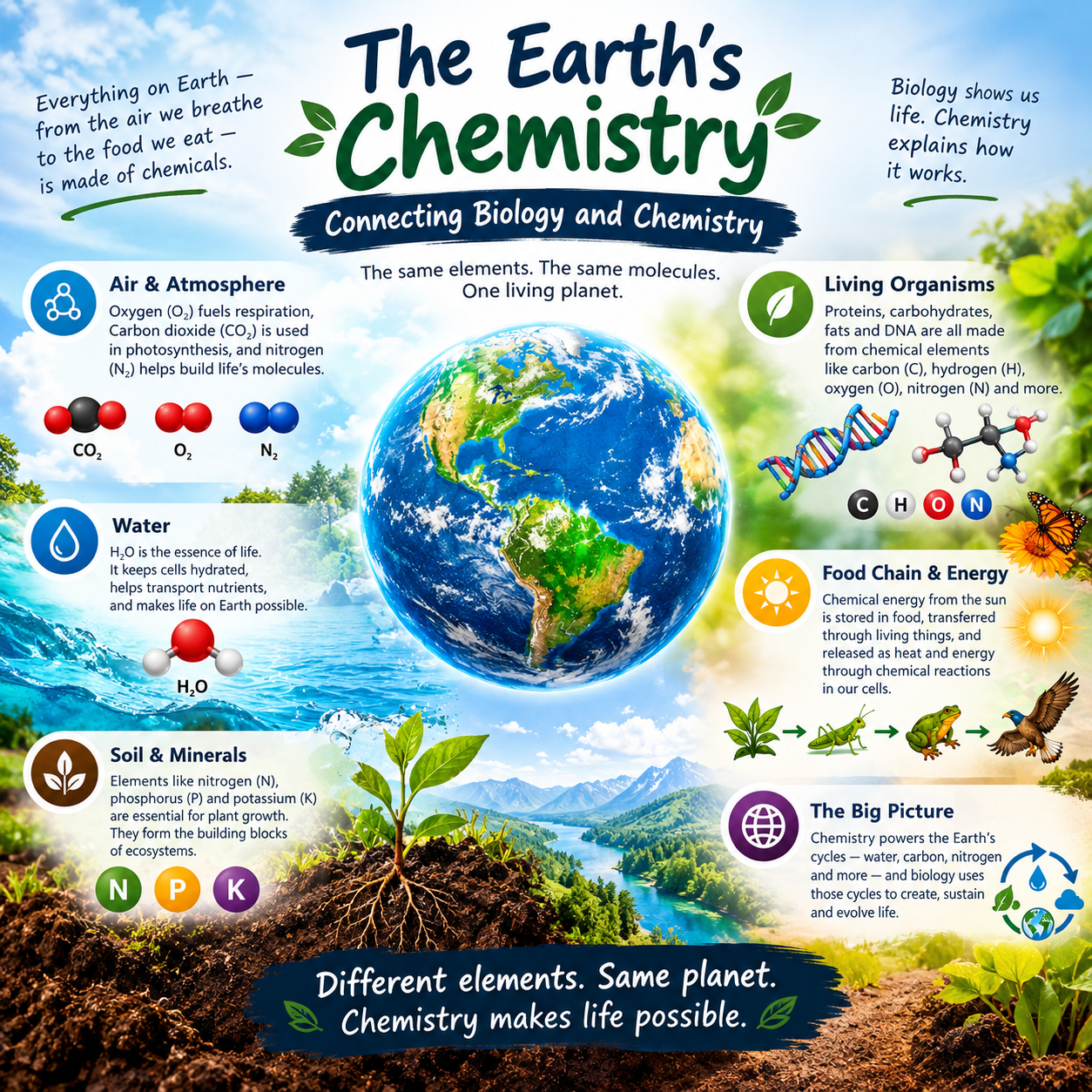
    The Earth’s Chemistry – Connecting Biology and Chemistry

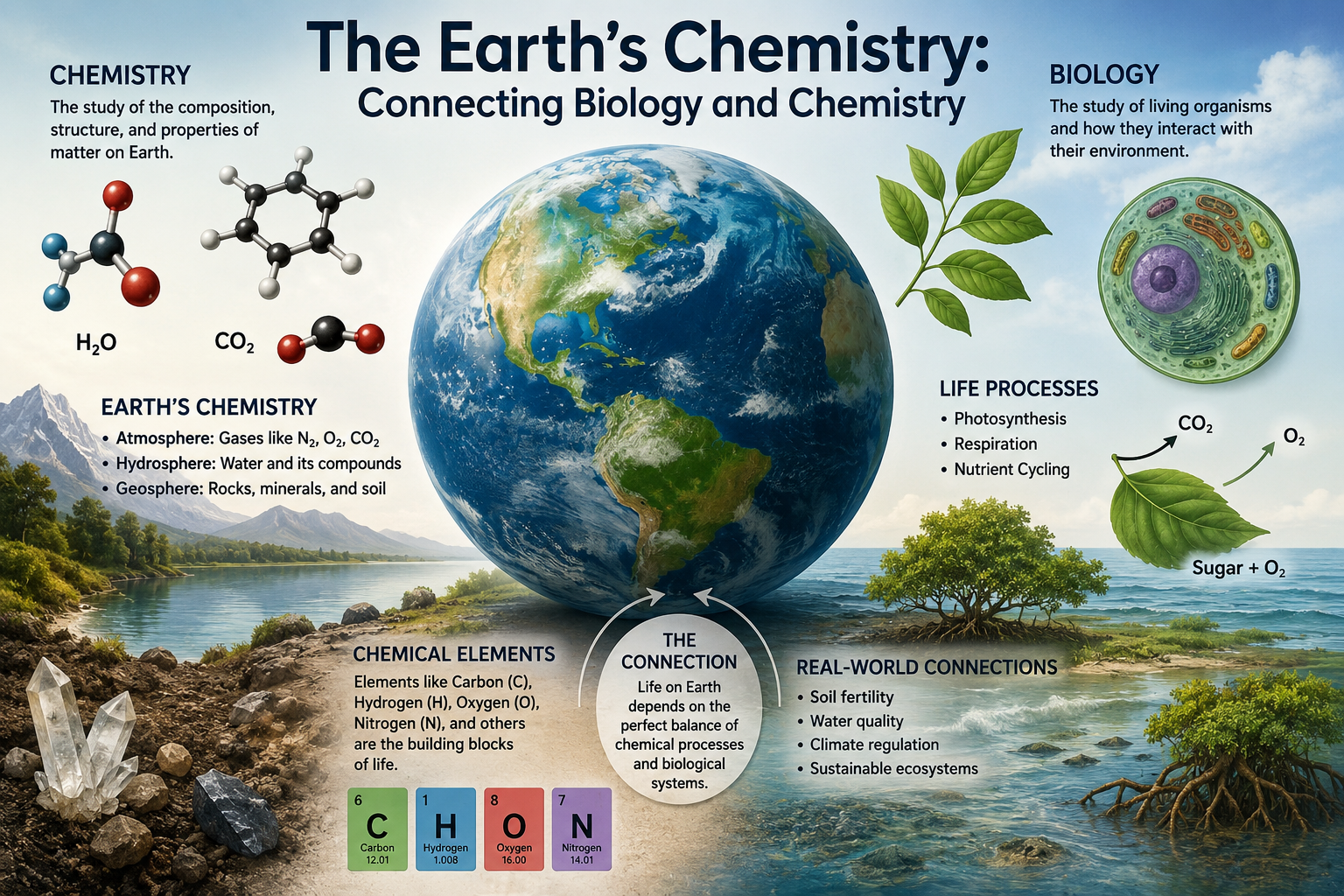
    Everything around us—from the air we breathe and the water we drink to plants, animals, soil, and even our own bodies—is connected through chemistry. Chemistry explains the elements and molecules that make life possible, while biology shows how living organisms use them.

    From oxygen and carbon dioxide in the atmosphere to water, minerals, proteins, DNA, and carbohydrates, chemical reactions are constantly taking place on Earth.

    This educational post explores how chemistry and biology work together to support life, ecosystems, energy flow, and Earth’s natural cycles.

    Different elements. Same planet. Chemistry makes life possible!

    #EarthsChemistry #Chemistry #Biology #Science #EarthScience #Molecules #Elements #Nature #Education #SciencePost #Learning #STEM #EnvironmentalScience #ChemistryAndBiology
    Foundation level Day:- 97 Rollno:-005 πŸ“– Story Post 🌍 The Earth’s Chemistry – Connecting Biology and Chemistry πŸ§ͺ🌱 Everything around us—from the air we breathe and the water we drink to plants, animals, soil, and even our own bodies—is connected through chemistry. Chemistry explains the elements and molecules that make life possible, while biology shows how living organisms use them. From oxygen and carbon dioxide in the atmosphere to water, minerals, proteins, DNA, and carbohydrates, chemical reactions are constantly taking place on Earth. πŸŒΏπŸ”¬ This educational post explores how chemistry and biology work together to support life, ecosystems, energy flow, and Earth’s natural cycles. ✨ Different elements. Same planet. Chemistry makes life possible! #EarthsChemistry #Chemistry #Biology #Science #EarthScience #Molecules #Elements #Nature #Education #SciencePost #Learning #STEM #EnvironmentalScience #ChemistryAndBiology
    0 Comments 0 Shares 746 Views
  • Day 97
    Task No:97
    Roll No:42
    RSLC
    Foundation Level, Batch#04

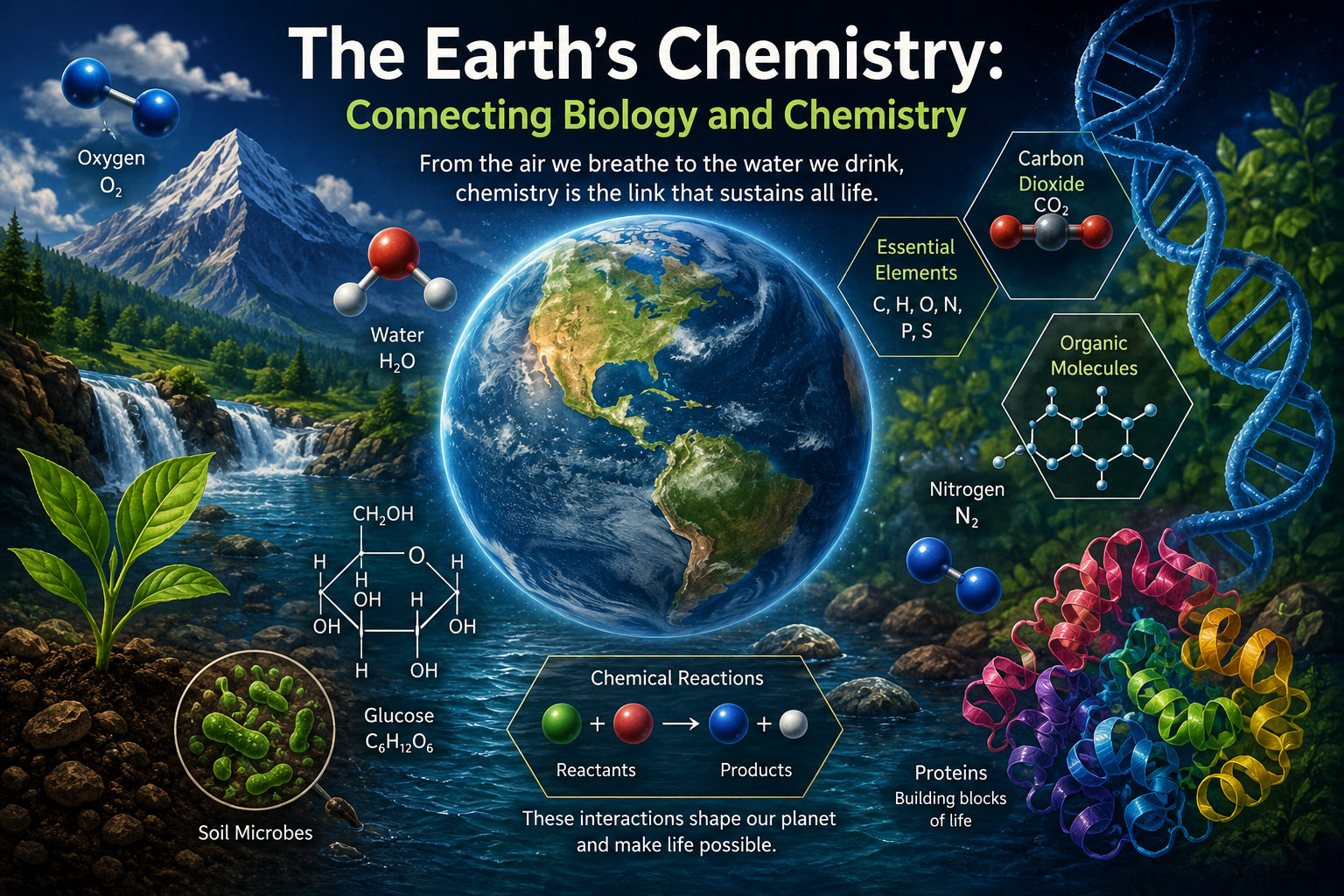
    Deep beneath the Earths surface and across its vast oceans, an incredible chemical journey has been shaping life for billions of years. Every drop of water, every mineral in the soil, and every breath of oxygen is part of a natural chemical cycle. These elements combine in perfect balance, creating the conditions that allow plants, animals, and humans to survive. Biology and chemistry work together as natures hidden partners, building the foundation of life on our planet.

    Plants demonstrate this remarkable connection every day by transforming sunlight, water, and carbon dioxide into food through photosynthesis. This amazing biological process depends entirely on chemical reactions that produce oxygen for living organisms. Animals and humans then use this oxygen to release energy from food, while returning carbon dioxide to the atmosphere, creating a continuous cycle that keeps Earths ecosystems healthy and alive.

    The relationship between biology and chemistry reminds us that every living thing is connected through natures invisible processes. From the smallest cell to the largest forest, chemical reactions make life possible and maintain the balance of our environment. By understanding this powerful partnership, we gain a deeper appreciation for our planet and the responsibility we all share to protect the natural world for future generations.

    #TheEarthsChemistry #Biology #Chemistry #Science #Nature #Earth #Photosynthesis #Ecosystem #EnvironmentalScience #STEM #Learning #Education #Knowledge #ScienceFacts #NatureLovers
    Day 97 Task No:97 Roll No:42 RSLC Foundation Level, Batch#04 Deep beneath the Earth's surface and across its vast oceans, an incredible chemical journey has been shaping life for billions of years. Every drop of water, every mineral in the soil, and every breath of oxygen is part of a natural chemical cycle. These elements combine in perfect balance, creating the conditions that allow plants, animals, and humans to survive. Biology and chemistry work together as nature's hidden partners, building the foundation of life on our planet. Plants demonstrate this remarkable connection every day by transforming sunlight, water, and carbon dioxide into food through photosynthesis. This amazing biological process depends entirely on chemical reactions that produce oxygen for living organisms. Animals and humans then use this oxygen to release energy from food, while returning carbon dioxide to the atmosphere, creating a continuous cycle that keeps Earth's ecosystems healthy and alive. The relationship between biology and chemistry reminds us that every living thing is connected through nature's invisible processes. From the smallest cell to the largest forest, chemical reactions make life possible and maintain the balance of our environment. By understanding this powerful partnership, we gain a deeper appreciation for our planet and the responsibility we all share to protect the natural world for future generations. #TheEarthsChemistry #Biology #Chemistry #Science #Nature #Earth #Photosynthesis #Ecosystem #EnvironmentalScience #STEM #Learning #Education #Knowledge #ScienceFacts #NatureLovers
    0 Comments 0 Shares 2741 Views
  • #rsisb
    Roll No.269
    Foundation Level
    Story Post No.14

    ## The Earth's Chemistry: Connecting Biology and Chemistry

    Have you ever wondered how **chemistry makes life on Earth possible?** In this video, we explore **“The Earth's Chemistry: Connecting Biology and Chemistry”** and discover how these two sciences are deeply connected.

    From the **air we breathe and the water we drink** to the soil, plants, animals, and human beings around us, chemical elements and reactions are essential for life. Elements such as **carbon, oxygen, hydrogen, and nitrogen** form the building blocks of living organisms.

    We will explore important processes such as **photosynthesis, respiration, nutrient cycling, and the water cycle**, and see how chemical reactions support biological systems.

    This topic shows us that Earth is not just a planet—it is a complex system where **biology and chemistry work together** to maintain life and healthy ecosystems.

    **Learn • Explore • Discover • Understand**

    ### Hashtags

    #EarthsChemistry #Biology #Chemistry #Science #EarthScience #Photosynthesis #ChemicalReactions #Ecosystems #Nature #Education #ScienceLearning #STEM #LifeOnEarth #EnvironmentalScience #ChemistryAndBiology
    #rsisb Roll No.269 Foundation Level Story Post No.14 ## 🌍πŸ§ͺ The Earth's Chemistry: Connecting Biology and Chemistry Have you ever wondered how **chemistry makes life on Earth possible?** πŸŒ±πŸ”¬ In this video, we explore **“The Earth's Chemistry: Connecting Biology and Chemistry”** and discover how these two sciences are deeply connected. From the **air we breathe and the water we drink** to the soil, plants, animals, and human beings around us, chemical elements and reactions are essential for life. πŸŒŽπŸ’§πŸŒΏ Elements such as **carbon, oxygen, hydrogen, and nitrogen** form the building blocks of living organisms. We will explore important processes such as **photosynthesis, respiration, nutrient cycling, and the water cycle**, and see how chemical reactions support biological systems. πŸ§¬βš—οΈπŸŒ³ This topic shows us that Earth is not just a planet—it is a complex system where **biology and chemistry work together** to maintain life and healthy ecosystems. 🌍✨ πŸŽ“ **Learn • Explore • Discover • Understand** ### πŸ”– Hashtags #EarthsChemistry 🌍 #Biology 🧬 #Chemistry πŸ§ͺ #Science πŸ”¬ #EarthScience 🌎 #Photosynthesis 🌱 #ChemicalReactions βš—οΈ #Ecosystems 🌿 #Nature 🌳 #Education πŸ“š #ScienceLearning πŸŽ“ #STEM πŸš€ #LifeOnEarth 🌍 #EnvironmentalScience πŸ’§ #ChemistryAndBiology
    0 Comments 0 Shares 2126 Views
  • #rsisb
    roll no.247
    Foundation level

    **The Earth's Chemistry: Connecting Biology and Chemistry**

    Our Earth is a remarkable laboratory where chemistry and biology work together every moment! From the air we breathe to the water we drink, from the soil that supports plants to the cells that make up living organisms, chemistry is at the heart of life.

    **Chemistry makes life possible.** Plants use chemical reactions during photosynthesis to transform sunlight, water, and carbon dioxide into energy-rich food while releasing oxygen. This amazing process supports ecosystems and provides the oxygen needed by countless living organisms.

    **Biology and chemistry are deeply connected.** Every living cell depends on chemical substances such as proteins, carbohydrates, fats, DNA, water, minerals, and gases. These molecules interact through countless chemical reactions that allow organisms to grow, repair themselves, reproduce, and respond to their environment.

    Water is another perfect example of this connection. It helps transport nutrients, regulate temperature, support chemical reactions, and maintain ecosystems. Oceans, rivers, lakes, and groundwater are all part of Earth's interconnected chemical and biological systems.

    The **carbon cycle, nitrogen cycle, and oxygen cycle** demonstrate how matter continuously moves between the atmosphere, soil, water, and living organisms. Plants absorb carbon dioxide, animals obtain nutrients by consuming plants or other organisms, and decomposers return important elements to the environment.

    Even the soil beneath our feet is full of chemistry and biology. Minerals, microorganisms, organic matter, water, and air interact to create an environment where plants can grow. Healthy ecosystems depend on these delicate chemical relationships.

    Understanding Earth's chemistry helps us better understand climate, pollution, agriculture, ecosystems, human health, and the future of our planet. By studying how chemical substances interact with living systems, scientists can discover better ways to protect nature and use Earth's resources responsibly.

    **The big lesson:** Chemistry explains many of the processes that make biology possible, while biology shows us how those chemical processes come together to create living systems. Together, they tell an incredible story about our planet and life itself.

    Keep exploring, keep questioning, and keep discovering the fascinating science hidden all around us!

    #EarthsChemistry #Chemistry #Biology #EarthScience #Science #ScienceEducation #ChemistryAndBiology #LifeOnEarth #EnvironmentalScience #Photosynthesis #CarbonCycle #NitrogenCycle #OxygenCycle #Ecosystems #Nature #ScienceLovers #LearningScience #STEM #STEMEducation #ScienceExploration #OurPlanet #AmazingScience #Biochemistry #PlanetEarth #Education
    #rsisb roll no.247 Foundation level 🌍πŸ§ͺ **The Earth's Chemistry: Connecting Biology and Chemistry** 🧬🌱 Our Earth is a remarkable laboratory where chemistry and biology work together every moment! 🌎✨ From the air we breathe to the water we drink, from the soil that supports plants to the cells that make up living organisms, chemistry is at the heart of life. πŸ”¬πŸ’š 🌿 **Chemistry makes life possible.** Plants use chemical reactions during photosynthesis to transform sunlight, water, and carbon dioxide into energy-rich food while releasing oxygen. β˜€οΈπŸŒ± This amazing process supports ecosystems and provides the oxygen needed by countless living organisms. 🧬 **Biology and chemistry are deeply connected.** Every living cell depends on chemical substances such as proteins, carbohydrates, fats, DNA, water, minerals, and gases. These molecules interact through countless chemical reactions that allow organisms to grow, repair themselves, reproduce, and respond to their environment. πŸ”¬πŸ§« πŸ’§ Water is another perfect example of this connection. It helps transport nutrients, regulate temperature, support chemical reactions, and maintain ecosystems. Oceans, rivers, lakes, and groundwater are all part of Earth's interconnected chemical and biological systems. 🌊🐟 🌎 The **carbon cycle, nitrogen cycle, and oxygen cycle** demonstrate how matter continuously moves between the atmosphere, soil, water, and living organisms. Plants absorb carbon dioxide, animals obtain nutrients by consuming plants or other organisms, and decomposers return important elements to the environment. πŸ”„πŸŒΏπŸ¦  🌱 Even the soil beneath our feet is full of chemistry and biology. Minerals, microorganisms, organic matter, water, and air interact to create an environment where plants can grow. Healthy ecosystems depend on these delicate chemical relationships. 🌾🌍 πŸ”¬ Understanding Earth's chemistry helps us better understand climate, pollution, agriculture, ecosystems, human health, and the future of our planet. By studying how chemical substances interact with living systems, scientists can discover better ways to protect nature and use Earth's resources responsibly. πŸ’‘πŸŒ³ ✨ **The big lesson:** Chemistry explains many of the processes that make biology possible, while biology shows us how those chemical processes come together to create living systems. Together, they tell an incredible story about our planet and life itself. 🌍❀️πŸ§ͺ🧬 πŸ“š Keep exploring, keep questioning, and keep discovering the fascinating science hidden all around us! πŸ”Žβœ¨ #EarthsChemistry #Chemistry #Biology #EarthScience #Science #ScienceEducation #ChemistryAndBiology #LifeOnEarth #EnvironmentalScience #Photosynthesis #CarbonCycle #NitrogenCycle #OxygenCycle #Ecosystems #Nature #ScienceLovers #LearningScience #STEM #STEMEducation #ScienceExploration #OurPlanet #AmazingScience #Biochemistry #PlanetEarth #Education
    0 Comments 0 Shares 6428 Views
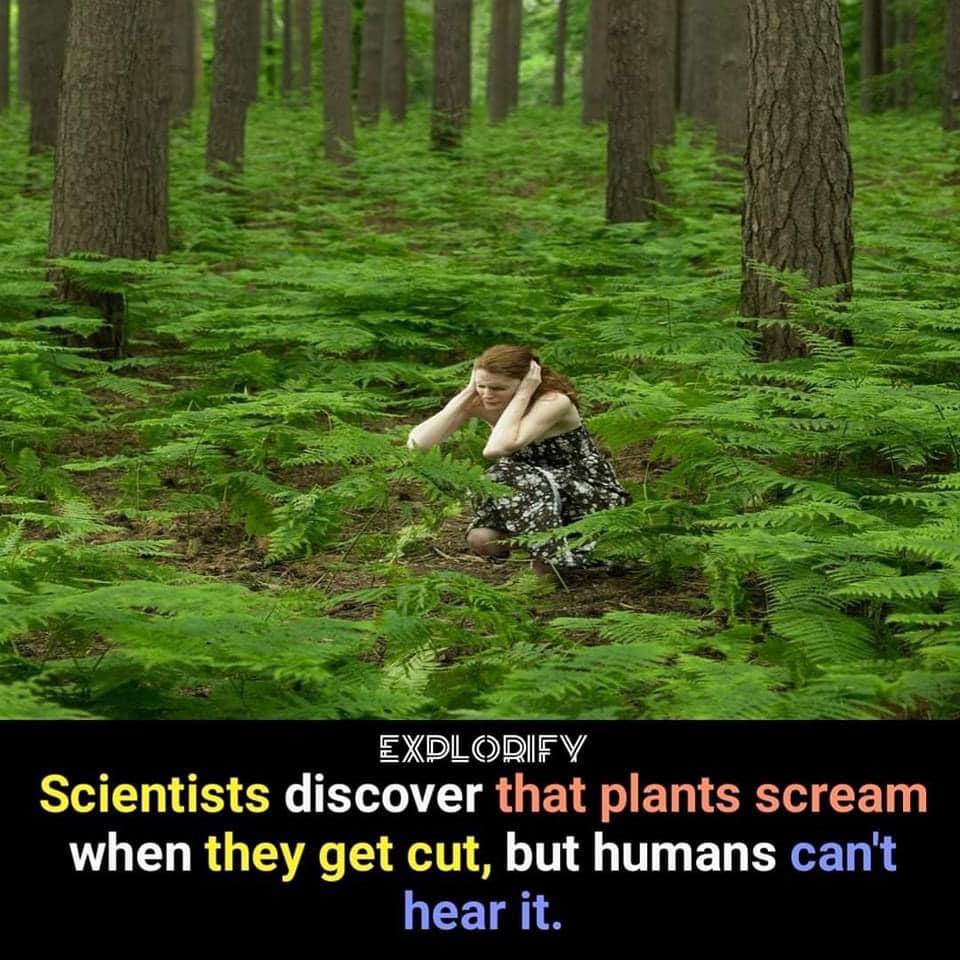
  • Scientists have discovered that plants emit ultrasonic soundsβ€”essentially "screams"β€”when they are cut or stressed, but these sounds are beyond the range of human hearing . When a plant is damaged or deprived of water, it releases these high-pitched noises as a form of distress signal, though we cant detect them without specialized equipment . This discovery highlights the complex ways plants respond to their environment, suggesting that they have more advanced mechanisms for survival than previously understood . While we cant hear their cries, this research adds a new dimension to our understanding of plant behavior and communication.

    #PlantScience #Nature #UltrasonicSounds #Botany #PlantCommunication #EnvironmentalScience #GreenWorld #NatureMysteries #ScientificDiscovery
    Scientists have discovered that plants emit ultrasonic soundsβ€”essentially "screams"β€”when they are cut or stressed, but these sounds are beyond the range of human hearing πŸŒ±πŸ”Š. When a plant is damaged or deprived of water, it releases these high-pitched noises as a form of distress signal, though we can't detect them without specialized equipment πŸ‘‚πŸ”¬. This discovery highlights the complex ways plants respond to their environment, suggesting that they have more advanced mechanisms for survival than previously understood πŸŒΏπŸ’‘. While we can't hear their cries, this research adds a new dimension to our understanding of plant behavior and communication. #PlantScience #Nature #UltrasonicSounds #Botany #PlantCommunication #EnvironmentalScience #GreenWorld #NatureMysteries #ScientificDiscovery
    0 Comments 0 Shares 2840 Views
  • #rsib
    Roll No.190
    Story Post No.37
    Foundation Level

    :

    Why Frogs? Understanding the Anatomy of Life

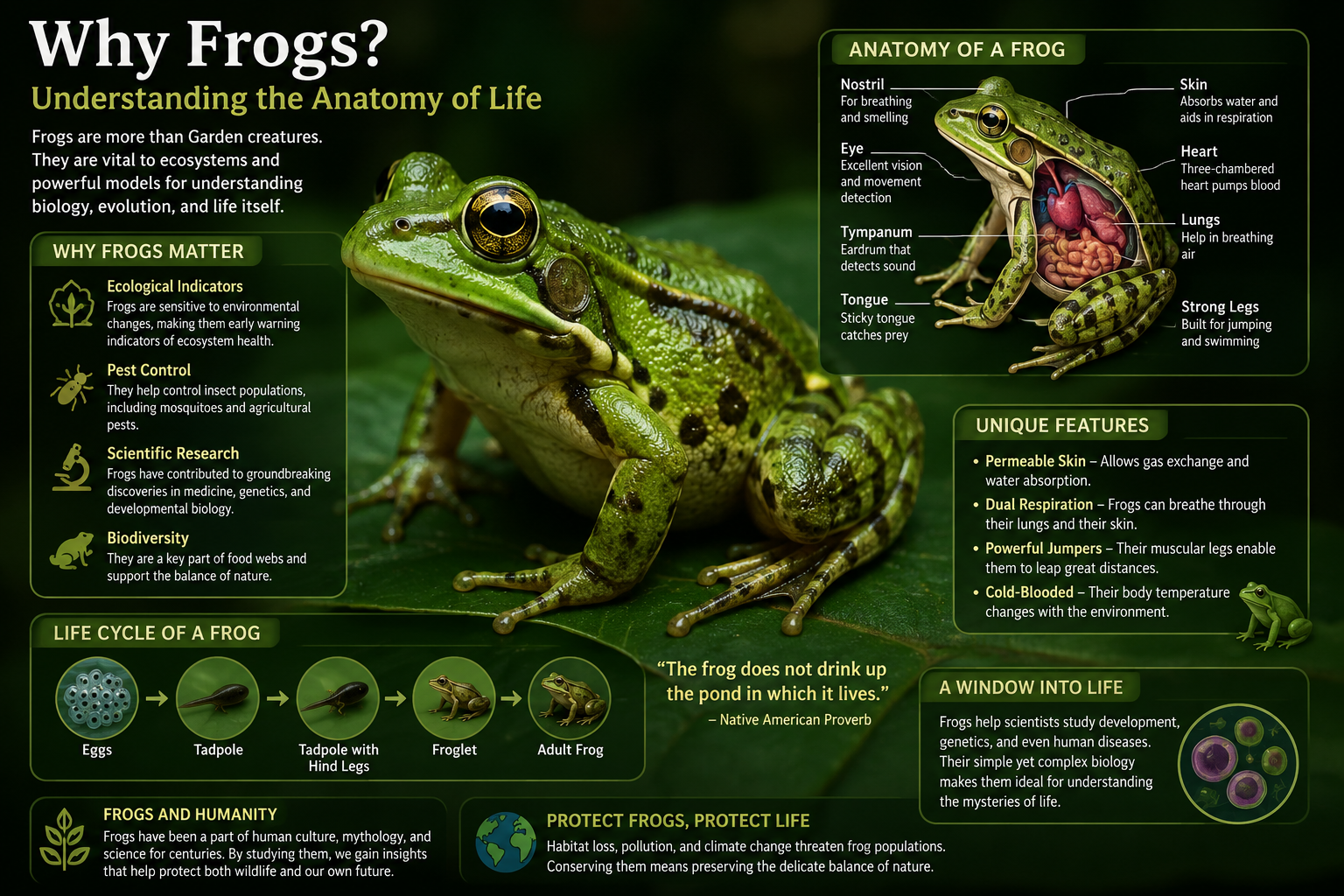
    Frogs are some of the most fascinating creatures on Earth. They are much more than simple amphibians hopping around ponds and forests. Frogs help scientists understand how living organisms grow, adapt, and survive. Their unique anatomy, incredible life cycle, and important role in ecosystems make them valuable subjects for biological research.

    From tiny eggs to swimming tadpoles and finally adult frogs, their transformation showcases one of nature's most amazing processes. Their sensitive skin, powerful legs, and specialized organs help them thrive both in water and on land. Because frogs react quickly to environmental changes, they are also important indicators of ecosystem health.

    Studying frogs helps researchers learn about genetics, development, medicine, evolution, and environmental conservation. By understanding frogs, we gain deeper insights into life itself and the delicate balance of nature that supports all living things.

    Let's appreciate these incredible amphibians and work together to protect their habitats for future generations.

    #WhyFrogs #FrogAnatomy #Biology #ScienceEducation #LifeScience #Amphibians #Nature #Wildlife #EnvironmentalScience #Ecosystem #FrogLifeCycle #ScientificResearch #STEM #Learning #Education #NatureLovers #AnimalScience #Conservation #Biodiversity #DiscoverScience #EarthScience #AmazingNature #StudyOfLife #Knowledge #ExploreNature
    #rsib Roll No.190 Story Post No.37 Foundation Level : πŸΈπŸ”¬πŸŒΏ Why Frogs? Understanding the Anatomy of Life πŸŒΏπŸ”¬πŸΈ Frogs are some of the most fascinating creatures on Earth. They are much more than simple amphibians hopping around ponds and forests. Frogs help scientists understand how living organisms grow, adapt, and survive. Their unique anatomy, incredible life cycle, and important role in ecosystems make them valuable subjects for biological research. From tiny eggs to swimming tadpoles and finally adult frogs, their transformation showcases one of nature's most amazing processes. Their sensitive skin, powerful legs, and specialized organs help them thrive both in water and on land. Because frogs react quickly to environmental changes, they are also important indicators of ecosystem health. πŸŒŽπŸ’§ Studying frogs helps researchers learn about genetics, development, medicine, evolution, and environmental conservation. By understanding frogs, we gain deeper insights into life itself and the delicate balance of nature that supports all living things. 🌱✨ Let's appreciate these incredible amphibians and work together to protect their habitats for future generations. πŸΈπŸ’šπŸŒ #WhyFrogs #FrogAnatomy #Biology #ScienceEducation #LifeScience #Amphibians #Nature #Wildlife #EnvironmentalScience #Ecosystem #FrogLifeCycle #ScientificResearch #STEM #Learning #Education #NatureLovers #AnimalScience #Conservation #Biodiversity #DiscoverScience #EarthScience #AmazingNature #StudyOfLife #Knowledge #ExploreNature πŸΈπŸ”¬πŸŒΏπŸ’šπŸŒŽβœ¨πŸ“šπŸ§¬πŸŒ±
    0 Comments 0 Shares 14277 Views