• accl task
    day 69
    week 3
    task: story post 69
    topic:Acids and Bases: The Balance of Nature
    Title: Acids and Bases: The Balance of Nature

    One afternoon, a curious student named Ayan entered the chemistry laboratory.

    On the table were several ordinary substances: lemon juice, vinegar, baking soda, soap, and pure water.

    Ayan looked at them and asked his teacher,

    “How can such different substances all be part of the same scientific system?”

    His teacher smiled.

    “Because many of them can be understood through the chemistry of acids, bases, and balance.”

    Ayan became curious.

    The World of Acids

    The teacher first placed a small amount of lemon juice on the table.

    “Lemon juice contains citric acid,” she explained.

    Acids are substances that, in water, increase the concentration of hydrogen ions (H⁺). Many acids have a sour taste, although scientists never identify an unknown chemical by tasting it.

    Ayan had seen acids in everyday life without realizing it.

    Vinegar contains acetic acid.

    The stomach naturally contains hydrochloric acid, which helps with digestion.

    Even some fruits contain naturally occurring acids.

    Ayan began to understand that the word “acid” did not always mean something dangerous.

    Discovering Bases

    Next, the teacher showed him a solution of baking soda.

    “This behaves as a base in water,” she said.

    Bases generally increase the concentration of hydroxide ions or accept hydrogen ions, depending on the chemical definition being used.

    Many basic substances are found around us.

    Some cleaning products are basic.

    Soap solutions are often basic.

    Certain minerals and compounds in nature can also behave as bases.

    Ayan realized that acids and bases were not simply opposites in a textbook.

    They were part of everyday chemistry.

    The pH Scale

    The teacher then drew a colorful scale on the board.

    It was the pH scale.

    “pH helps us describe how acidic or basic an aqueous solution is,” she explained.

    At about pH 7, a solution is considered neutral under standard conditions, such as pure water at around room temperature.

    Values below 7 are generally acidic.

    Values above 7 are generally basic.

    Ayan looked at the scale with fascination.

    The numbers seemed simple, but they represented important chemical differences.

    The teacher added:

    “The pH scale is logarithmic. A change of one pH unit represents a tenfold change in hydrogen-ion concentration.”

    Ayan suddenly realized that even a small numerical change could represent a significant chemical difference.

    When Acids and Bases Meet

    Then the teacher performed an experiment.

    She carefully combined an acid with a base.

    The two substances reacted.

    In many common acid-base reactions, the products include water and a salt. This type of reaction is often called neutralization.

    Ayan watched as the chemistry changed before his eyes.

    “So acids and bases can balance each other?” he asked.

    “In the right conditions, yes,” his teacher replied.

    “But neutralization does not always mean the final mixture has exactly pH 7. The result depends on the substances and their amounts.”

    Ayan nodded.

    Chemistry was more precise than he had imagined.

    Balance in Nature

    The teacher then showed Ayan pictures of lakes, soil, oceans, and living organisms.

    “Acid-base balance is important in nature too.”

    Soil chemistry can influence how nutrients are available to plants.

    The pH of freshwater can affect aquatic organisms.

    Ocean chemistry is also changing as the ocean absorbs carbon dioxide from the atmosphere, which leads to ocean acidification.

    This does not mean the ocean suddenly becomes a strong acid.

    Instead, its seawater chemistry shifts toward greater acidity, with important consequences for organisms that build shells or skeletons from calcium carbonate.

    Ayan began to see that chemistry was connected to the entire environment.

    Balance Inside the Human Body

    The teacher then explained that acid-base balance is also essential inside the human body.

    Blood normally stays within a narrow pH range.

    The body uses several systems—including the lungs and kidneys—to help regulate this balance.

    The lungs influence carbon dioxide levels, while the kidneys help regulate acids and bases over longer periods.

    Ayan was amazed.

    “Even our bodies have their own chemical balancing systems?”

    “Exactly,” said his teacher.

    The Power of Buffers

    There was one final concept.

    The teacher added:

    “Some solutions contain buffers.”

    Buffers help resist large changes in pH when relatively small amounts of acid or base are added.

    Ayan learned that buffer systems are important in chemistry, biology, medicine, and many natural environments.

    They help keep chemical conditions within useful ranges.

    The Lesson of Balance

    As the lesson ended, Ayan looked again at the bottles on the laboratory table.

    Lemon juice.

    Vinegar.

    Baking soda.

    Water.

    They seemed ordinary.

    But behind each substance was a world of chemical reactions, ions, and equilibrium.

    Ayan finally understood the lesson.

    Acids and bases are not simply about “strong” and “weak” chemicals.

    They are part of a larger story about chemical balance.

    From a laboratory experiment to soil, oceans, and living organisms, acid-base chemistry helps explain how many systems behave.

    Final Thought

    Nature depends on balance.

    Too much of one chemical condition can change an entire system, while the right balance can help maintain stability.

    Acids and bases teach us an important scientific lesson:9 sometimes, understanding two different forces interact is the key to understanding the system as a when
    accl task day 69 week 3 task: story post 69 topic:Acids and Bases: The Balance of Nature Title: 🧪 Acids and Bases: The Balance of Nature One afternoon, a curious student named Ayan entered the chemistry laboratory. On the table were several ordinary substances: lemon juice, vinegar, baking soda, soap, and pure water. Ayan looked at them and asked his teacher, “How can such different substances all be part of the same scientific system?” His teacher smiled. “Because many of them can be understood through the chemistry of acids, bases, and balance.” Ayan became curious. 🍋 The World of Acids The teacher first placed a small amount of lemon juice on the table. “Lemon juice contains citric acid,” she explained. Acids are substances that, in water, increase the concentration of hydrogen ions (H⁺). Many acids have a sour taste, although scientists never identify an unknown chemical by tasting it. Ayan had seen acids in everyday life without realizing it. Vinegar contains acetic acid. The stomach naturally contains hydrochloric acid, which helps with digestion. Even some fruits contain naturally occurring acids. Ayan began to understand that the word “acid” did not always mean something dangerous. 🧼 Discovering Bases Next, the teacher showed him a solution of baking soda. “This behaves as a base in water,” she said. Bases generally increase the concentration of hydroxide ions or accept hydrogen ions, depending on the chemical definition being used. Many basic substances are found around us. Some cleaning products are basic. Soap solutions are often basic. Certain minerals and compounds in nature can also behave as bases. Ayan realized that acids and bases were not simply opposites in a textbook. They were part of everyday chemistry. 🌈 The pH Scale The teacher then drew a colorful scale on the board. It was the pH scale. “pH helps us describe how acidic or basic an aqueous solution is,” she explained. At about pH 7, a solution is considered neutral under standard conditions, such as pure water at around room temperature. Values below 7 are generally acidic. Values above 7 are generally basic. Ayan looked at the scale with fascination. The numbers seemed simple, but they represented important chemical differences. The teacher added: “The pH scale is logarithmic. A change of one pH unit represents a tenfold change in hydrogen-ion concentration.” Ayan suddenly realized that even a small numerical change could represent a significant chemical difference. ⚖️ When Acids and Bases Meet Then the teacher performed an experiment. She carefully combined an acid with a base. The two substances reacted. In many common acid-base reactions, the products include water and a salt. This type of reaction is often called neutralization. Ayan watched as the chemistry changed before his eyes. “So acids and bases can balance each other?” he asked. “In the right conditions, yes,” his teacher replied. “But neutralization does not always mean the final mixture has exactly pH 7. The result depends on the substances and their amounts.” Ayan nodded. Chemistry was more precise than he had imagined. 🌱 Balance in Nature The teacher then showed Ayan pictures of lakes, soil, oceans, and living organisms. “Acid-base balance is important in nature too.” Soil chemistry can influence how nutrients are available to plants. The pH of freshwater can affect aquatic organisms. Ocean chemistry is also changing as the ocean absorbs carbon dioxide from the atmosphere, which leads to ocean acidification. This does not mean the ocean suddenly becomes a strong acid. Instead, its seawater chemistry shifts toward greater acidity, with important consequences for organisms that build shells or skeletons from calcium carbonate. Ayan began to see that chemistry was connected to the entire environment. 🧬 Balance Inside the Human Body The teacher then explained that acid-base balance is also essential inside the human body. Blood normally stays within a narrow pH range. The body uses several systems—including the lungs and kidneys—to help regulate this balance. The lungs influence carbon dioxide levels, while the kidneys help regulate acids and bases over longer periods. Ayan was amazed. “Even our bodies have their own chemical balancing systems?” “Exactly,” said his teacher. 🔬 The Power of Buffers There was one final concept. The teacher added: “Some solutions contain buffers.” Buffers help resist large changes in pH when relatively small amounts of acid or base are added. Ayan learned that buffer systems are important in chemistry, biology, medicine, and many natural environments. They help keep chemical conditions within useful ranges. 🌍 The Lesson of Balance As the lesson ended, Ayan looked again at the bottles on the laboratory table. Lemon juice. Vinegar. Baking soda. Water. They seemed ordinary. But behind each substance was a world of chemical reactions, ions, and equilibrium. Ayan finally understood the lesson. Acids and bases are not simply about “strong” and “weak” chemicals. They are part of a larger story about chemical balance. From a laboratory experiment to soil, oceans, and living organisms, acid-base chemistry helps explain how many systems behave. ⚗️ Final Thought Nature depends on balance. Too much of one chemical condition can change an entire system, while the right balance can help maintain stability. Acids and bases teach us an important scientific lesson:9 sometimes, understanding two different forces interact is the key to understanding the system as a when
    0 Reacties 0 aandelen 1520 Views
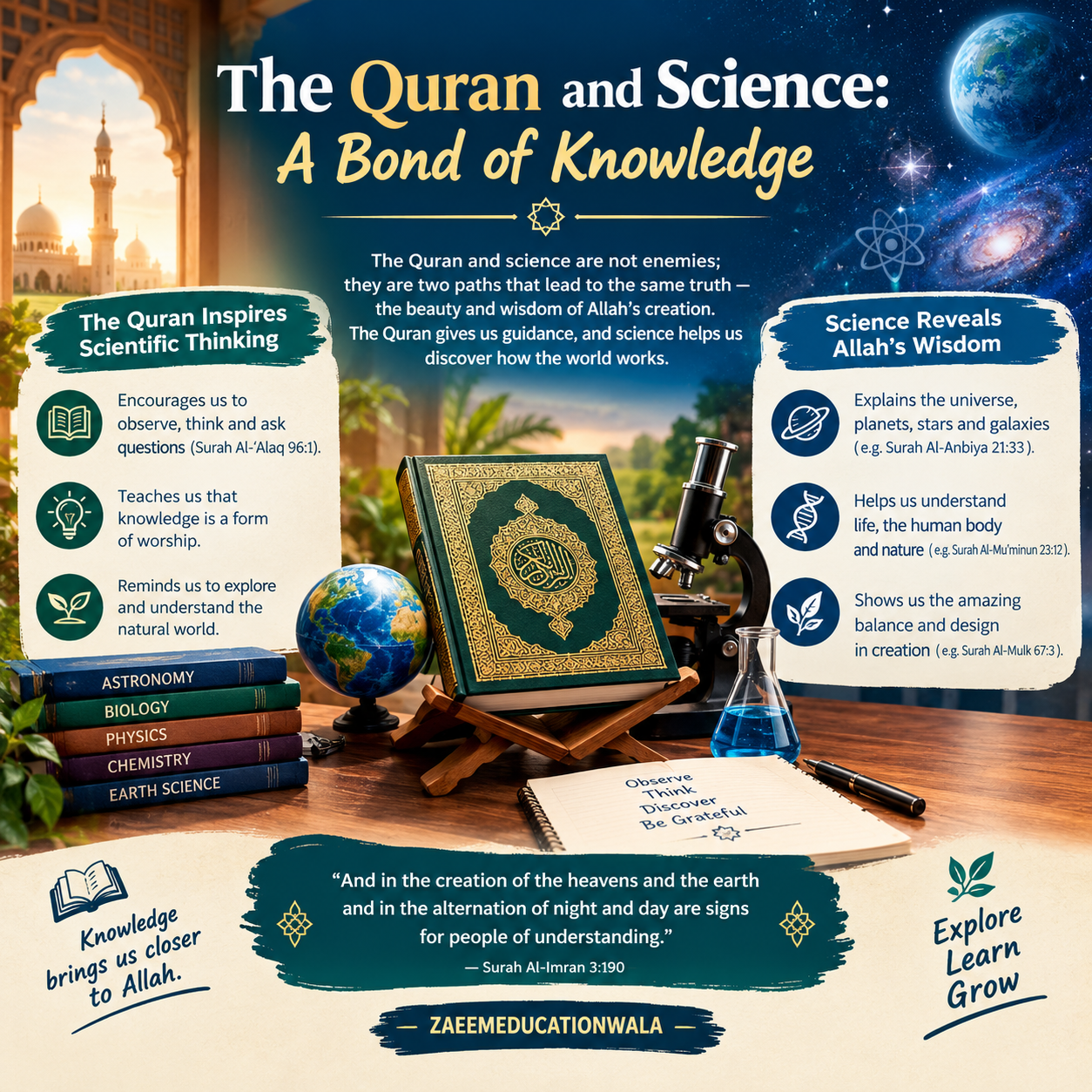
  • The Quran and Science: A Bond of Knowledge

    This educational poster explores the relationship between Quranic teachings and the pursuit of knowledge. It presents the Quran as a source of spiritual guidance and encourages people to observe, think, ask questions, and learn about the natural world.

    The design combines Islamic elements such as a Quran and mosque architecture with scientific symbols including a microscope, globe, laboratory flask, stars, and science books. The central message highlights curiosity, learning, and appreciation of the natural world.

    The poster also features Surah Al-Imran 3:190, which reflects on the signs found in the creation of the heavens and Earth.

    Key Message:
    Seek knowledge, explore creation, think deeply, and remain grateful.

    #Quran #Science #IslamicEducation #Knowledge #QuranAndScience #Learning #Education #IslamicStudies #ScienceEducation #ZaeemEducationWala

    Your file library is full. New files won't be saved to your library, but you can still use them in this chat. To store new files for later, free up space or upgrade your storage.
    Upgrade
    Manage

    Day:-76
    rollno:-006
    foundation level
    Story Post
    The Quran and Science: A Bond of Knowledge This educational poster explores the relationship between Quranic teachings and the pursuit of knowledge. It presents the Quran as a source of spiritual guidance and encourages people to observe, think, ask questions, and learn about the natural world. The design combines Islamic elements such as a Quran and mosque architecture with scientific symbols including a microscope, globe, laboratory flask, stars, and science books. The central message highlights curiosity, learning, and appreciation of the natural world. The poster also features Surah Al-Imran 3:190, which reflects on the signs found in the creation of the heavens and Earth. 🌙 Key Message: Seek knowledge, explore creation, think deeply, and remain grateful. #Quran #Science #IslamicEducation #Knowledge #QuranAndScience #Learning #Education #IslamicStudies #ScienceEducation #ZaeemEducationWala Your file library is full. New files won't be saved to your library, but you can still use them in this chat. To store new files for later, free up space or upgrade your storage. Upgrade Manage Day:-76 rollno:-006 foundation level 📖 Story Post
    0 Reacties 0 aandelen 1152 Views
  • Fondation Level Batch No 4
    Roll RSLC #42
    Task No #139
    Day #139

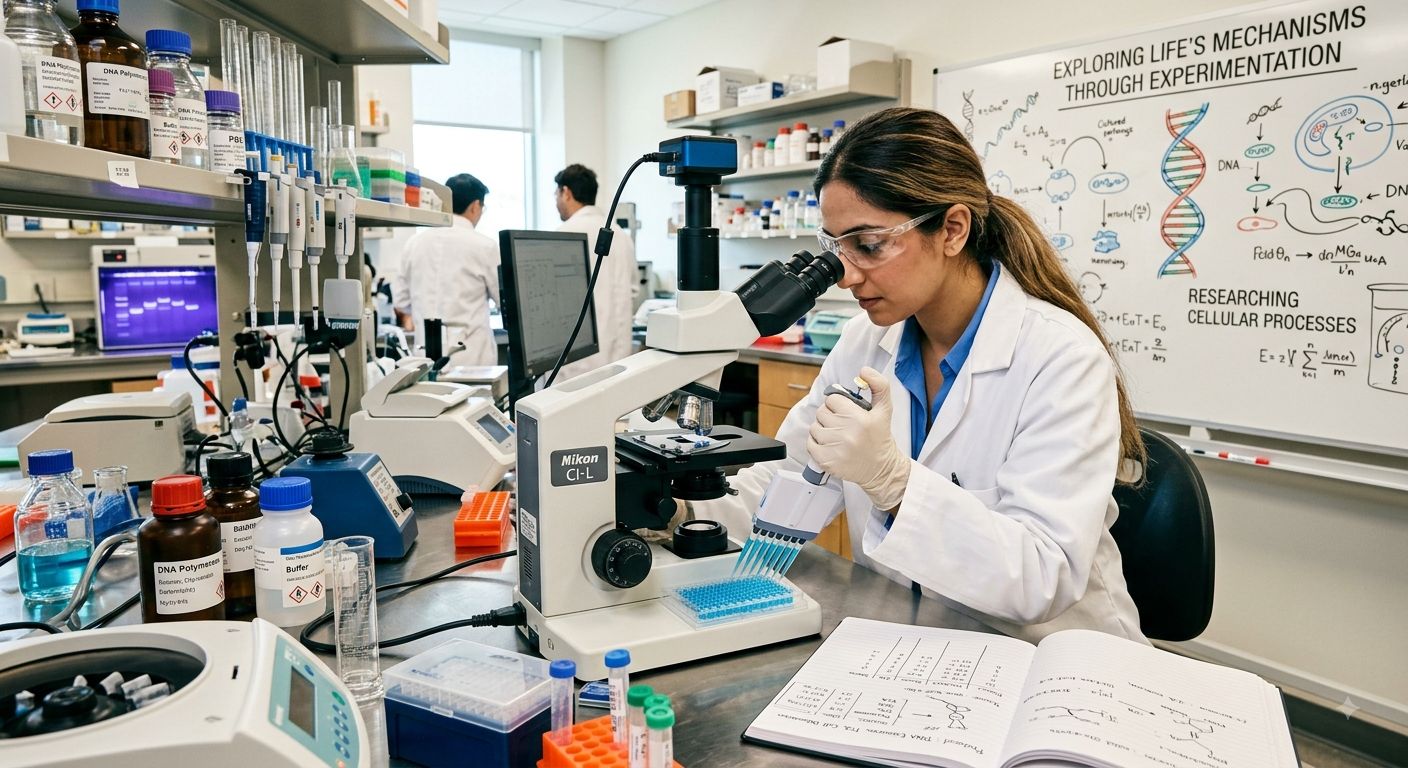
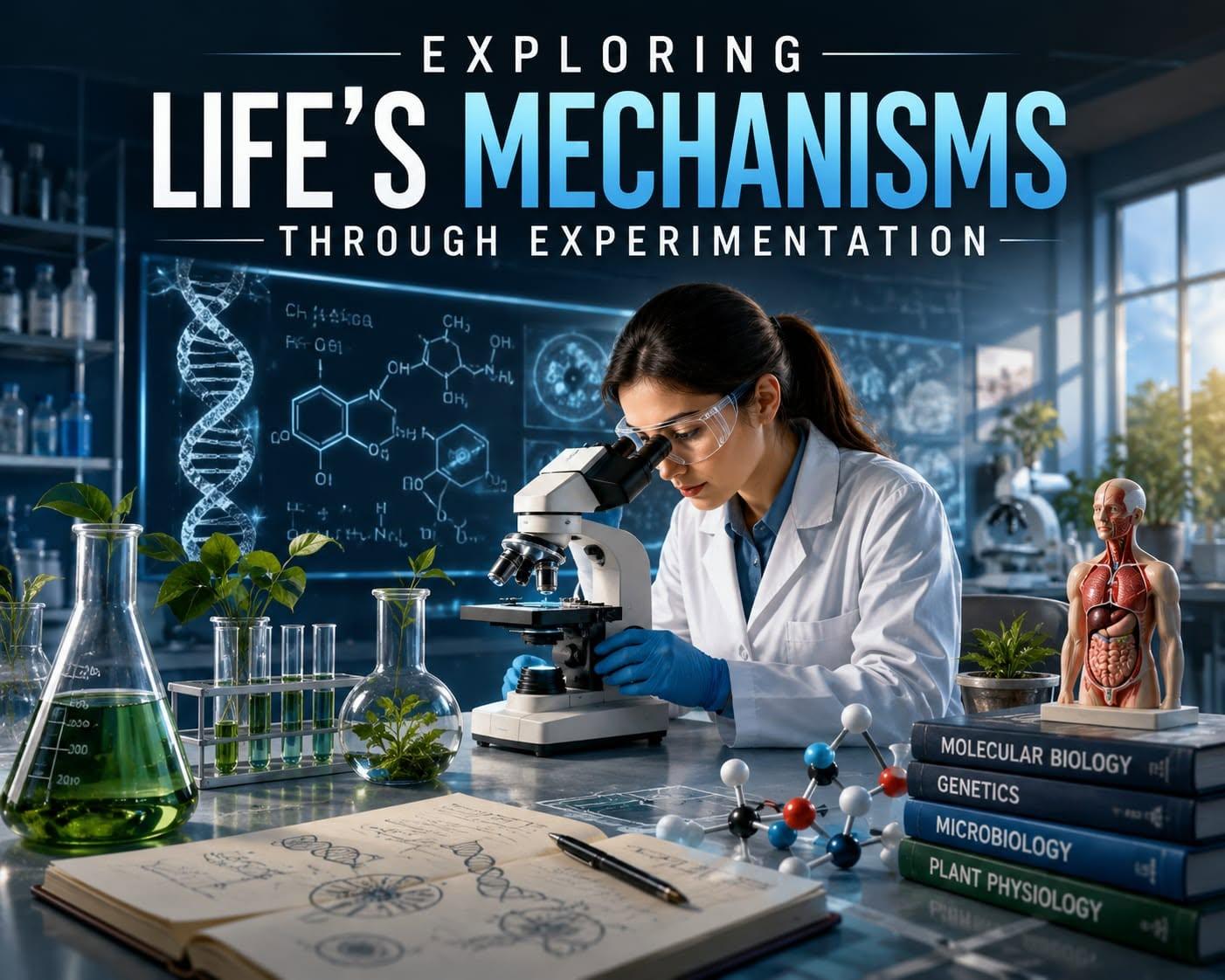
    # Exploring Life?s Mechanisms Through Experimentation

    Sara was a curious young student who loved discovering how life worked. One day, while studying in her school laboratory, she looked through a microscope and became fascinated by the tiny cells she saw moving beneath the lens. She wondered how something so small could perform such important tasks and keep living organisms alive. Instead of simply memorizing facts from her textbook, Sara decided to investigate through experiments. She carefully planned her work, recorded her observations, and began searching for answers to the mysteries hidden inside living cells.

    At first, Sara?s experiments did not go as planned. Some results were confusing, while others were completely different from what she expected. She became disappointed and thought about giving up, but her teacher encouraged her to look at every mistake as an opportunity to learn. Sara repeated her experiments, checked her measurements, and carefully studied her observations. Gradually, she discovered that cells respond to changes in their environment and that many different processes work together to keep life functioning. Each experiment, even the unsuccessful ones, taught her something valuable.

    As Sara continued her research, she realized that life is a complex system filled with countless interactions. Cells communicate, produce energy, transport materials, grow, repair damage, and respond to their surroundings. She understood that scientific discovery requires more than intelligence; it requires patience, curiosity, careful observation, and the courage to learn from failure. The more she experimented, the more questions she developed, and each question encouraged her to explore even deeper into the fascinating mechanisms of life.

    When Sara finally completed her project, she presented her findings to her classmates. She explained that her greatest discovery was not a single scientific fact, but the understanding that every experiment has something to teach us. Success can give us answers, while failure can show us a better path toward them. Sara left the laboratory with a new appreciation for science and a stronger belief in herself.

    **Moral: Never be afraid of failure, because every mistake can become a lesson, and every lesson can bring you one step closer to discovery.**

    #LifeScience #ScientificResearch #Experimentation #Biology #ScienceExploration #LifeMechanisms #ScientificDiscovery
    Fondation Level Batch No 4 Roll RSLC #42 Task No #139 Day #139 # Exploring Life?s Mechanisms Through Experimentation Sara was a curious young student who loved discovering how life worked. One day, while studying in her school laboratory, she looked through a microscope and became fascinated by the tiny cells she saw moving beneath the lens. She wondered how something so small could perform such important tasks and keep living organisms alive. Instead of simply memorizing facts from her textbook, Sara decided to investigate through experiments. She carefully planned her work, recorded her observations, and began searching for answers to the mysteries hidden inside living cells. At first, Sara?s experiments did not go as planned. Some results were confusing, while others were completely different from what she expected. She became disappointed and thought about giving up, but her teacher encouraged her to look at every mistake as an opportunity to learn. Sara repeated her experiments, checked her measurements, and carefully studied her observations. Gradually, she discovered that cells respond to changes in their environment and that many different processes work together to keep life functioning. Each experiment, even the unsuccessful ones, taught her something valuable. As Sara continued her research, she realized that life is a complex system filled with countless interactions. Cells communicate, produce energy, transport materials, grow, repair damage, and respond to their surroundings. She understood that scientific discovery requires more than intelligence; it requires patience, curiosity, careful observation, and the courage to learn from failure. The more she experimented, the more questions she developed, and each question encouraged her to explore even deeper into the fascinating mechanisms of life. When Sara finally completed her project, she presented her findings to her classmates. She explained that her greatest discovery was not a single scientific fact, but the understanding that every experiment has something to teach us. Success can give us answers, while failure can show us a better path toward them. Sara left the laboratory with a new appreciation for science and a stronger belief in herself. **Moral: Never be afraid of failure, because every mistake can become a lesson, and every lesson can bring you one step closer to discovery.** #LifeScience #ScientificResearch #Experimentation #Biology #ScienceExploration #LifeMechanisms #ScientificDiscovery
    0 Reacties 0 aandelen 1883 Views
  • Fondation Level Batch No 4
    Roll RSLC #42
    Task No #153
    Day #153

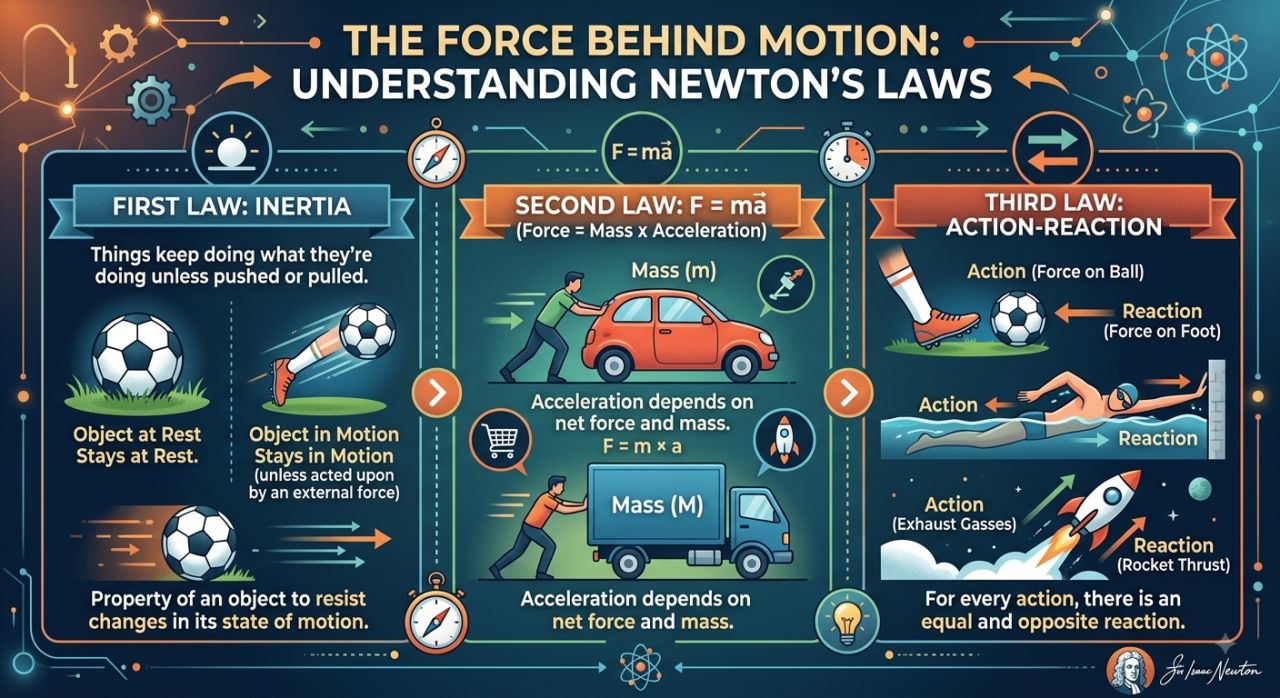
    One bright morning, Adam was playing in a park when he noticed a football resting quietly on the grass. He gently kicked the ball, and it suddenly began rolling across the field. Curious, Adam wondered why the ball had moved only after he kicked it. His teacher explained that this was connected to Newton?s First Law of Motion. An object remains at rest or keeps moving in the same way unless an external force changes its motion. Adam realized that even a simple kick could demonstrate an important scientific principle. From that moment, he became interested in discovering the forces behind everyday movement.

    Adam then decided to test how different objects responded to force. He pushed a light ball and a heavier ball with similar strength and noticed that the lighter ball moved more easily. His teacher explained Newton?s Second Law, which connects force, mass, and acceleration. Adam learned that applying more force can produce a greater change in an object?s motion. He also discovered that heavier objects usually need more force to achieve the same acceleration. Suddenly, pushing a bicycle, moving a box, or kicking a ball seemed much more interesting to him. He understood that forces were constantly influencing the world around him.

    Later, Adam threw a ball against a wall and watched it bounce back toward him. His teacher explained that this was an example of Newton?s Third Law of Motion. Whenever one object applies a force to another object, an equal and opposite force acts back. Adam realized that this principle could be seen when people walk, jump, swim, or ride a bicycle. When his feet pushed the ground backward, the ground pushed him forward. He also learned that rockets move upward by pushing gases downward at high speed. Newton?s Third Law suddenly made many everyday movements easier for Adam to understand.

    By the end of the day, Adam realized that Newton?s laws were much more than formulas in a science book. They were powerful principles that explained how objects move, stop, accelerate, and interact with one another. He could see examples of them in cars, bicycles, sports, falling objects, machines, and even rockets traveling into space. The world around him suddenly looked like a fascinating laboratory filled with invisible forces. Adam understood that physics helps us discover the rules behind ordinary events. From a simple football rolling across the grass to a spacecraft leaving Earth, Newton?s laws tell an amazing story about the force behind motion.

    #NewtonLaws #Physics #ForceAndMotion #NewtonianPhysics #ScienceEducation #PhysicsExplained #LearningScience
    Fondation Level Batch No 4 Roll RSLC #42 Task No #153 Day #153 One bright morning, Adam was playing in a park when he noticed a football resting quietly on the grass. He gently kicked the ball, and it suddenly began rolling across the field. Curious, Adam wondered why the ball had moved only after he kicked it. His teacher explained that this was connected to Newton?s First Law of Motion. An object remains at rest or keeps moving in the same way unless an external force changes its motion. Adam realized that even a simple kick could demonstrate an important scientific principle. From that moment, he became interested in discovering the forces behind everyday movement. Adam then decided to test how different objects responded to force. He pushed a light ball and a heavier ball with similar strength and noticed that the lighter ball moved more easily. His teacher explained Newton?s Second Law, which connects force, mass, and acceleration. Adam learned that applying more force can produce a greater change in an object?s motion. He also discovered that heavier objects usually need more force to achieve the same acceleration. Suddenly, pushing a bicycle, moving a box, or kicking a ball seemed much more interesting to him. He understood that forces were constantly influencing the world around him. Later, Adam threw a ball against a wall and watched it bounce back toward him. His teacher explained that this was an example of Newton?s Third Law of Motion. Whenever one object applies a force to another object, an equal and opposite force acts back. Adam realized that this principle could be seen when people walk, jump, swim, or ride a bicycle. When his feet pushed the ground backward, the ground pushed him forward. He also learned that rockets move upward by pushing gases downward at high speed. Newton?s Third Law suddenly made many everyday movements easier for Adam to understand. By the end of the day, Adam realized that Newton?s laws were much more than formulas in a science book. They were powerful principles that explained how objects move, stop, accelerate, and interact with one another. He could see examples of them in cars, bicycles, sports, falling objects, machines, and even rockets traveling into space. The world around him suddenly looked like a fascinating laboratory filled with invisible forces. Adam understood that physics helps us discover the rules behind ordinary events. From a simple football rolling across the grass to a spacecraft leaving Earth, Newton?s laws tell an amazing story about the force behind motion. #NewtonLaws #Physics #ForceAndMotion #NewtonianPhysics #ScienceEducation #PhysicsExplained #LearningScience
    0 Reacties 0 aandelen 1961 Views
  • #rsisb Roll No.240 Song No.25 Foundation level Dissecting Frogs: A Gateway to Human Anatomy explores the role of frog anatomy in biology education and shows how studying animal structures can help students develop a better understanding of anatomy. Frog anatomy provides a useful learning model for exploring the organization of a living body. Through careful observation, students can learn about different organs, body parts, and biological systems, while connecting classroom concepts with practical scientific learning. One of the important goals of anatomy studies is understanding how different body parts work together. By learning about body structures and their functions, students can build a stronger foundation for understanding more complex biological systems, including those found in humans. This topic also introduces the importance of observation, comparison, and scientific thinking. Students can examine similarities and differences between frog and human anatomy and understand that different organisms may have different structures while still sharing some basic biological principles. Practical anatomy work can also teach students important values such as responsibility, careful observation, accurate recording of information, and respect for biological specimens. Such activities should always be conducted with appropriate supervision, ethical consideration, and laboratory safety procedures. The study of frog anatomy can be especially valuable for students interested in biology, medicine, veterinary science, zoology, and health-related subjects. It helps turn scientific ideas into meaningful learning experiences and encourages students to ask questions about how living bodies are organized. 🔬 Learn about animal anatomy 🐸 Explore body structures and biological systems 🧠 Develop observation and scientific thinking skills 📚 Connect practical study with biology lessons 🫀 Build a foundation for understanding human anatomy 🌍 Appreciate the complexity of living organisms Dissecting Frogs: A Gateway to Human Anatomy reminds us that studying biology is more than memorizing names and diagrams. It is about observing, questioning, comparing, and understanding how life is organized. Through responsible scientific study, students can gain knowledge that supports deeper learning in anatomy and the life sciences. #FrogDissection #FrogAnatomy #HumanAnatomy #Biology #Anatomy #ScienceEducation #BiologyLab #LifeScience #AnimalAnatomy #ScientificLearning #StudentLearning #Zoology #HumanBody Rehan School Islamabad Campus Asma Shaheen EducationWali Irum Asim Saima Happinesswali https://www.facebook.com/share/v/1BrWG6PyH1/
    WWW.FACEBOOK.COM
    Facebook
    #rsisb Roll No.240 Song No.25 Foundation level Dissecting Frogs: A Gateway to Human Anatomy explores the role of frog anatomy in biology education and shows how studying animal structures can help...
    0 Reacties 0 aandelen 2755 Views

  • #rsisb
    Roll no.239
    Story Post no.3
    Foundation Level


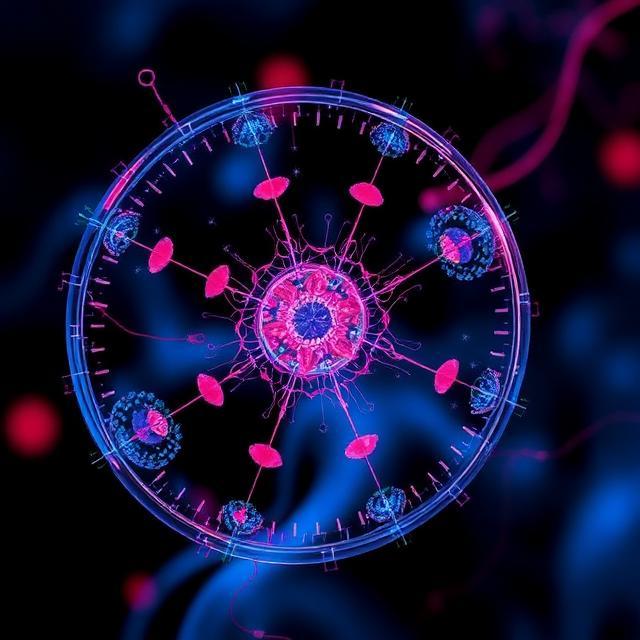
    Life is full of fascinating mechanisms that work together in remarkable ways. From the movement of cells to the functioning of organs , every living system follows complex processes that scientists continue to explore and understand.

    **Experimentation** is one of the most powerful ways to discover how life works. By asking questions, forming hypotheses, conducting experiments, observing results, and analyzing evidence, we can uncover the hidden processes that keep living organisms alive.

    Through careful experimentation, scientists can study **cellular processes, genetics, metabolism, respiration, growth, adaptation, and communication between cells**. Each experiment provides an opportunity to learn something new and sometimes leads to discoveries that change our understanding of biology.

    Science teaches us that curiosity is the beginning of discovery. A simple question can lead to a fascinating investigation, while one experiment can open the door to countless new ideas.

    Let’s **question, experiment, observe, and discover** the incredible mechanisms that make life possible!

    #LifeScience #Biology #Experimentation #ScientificMethod #Science #BiologyExperiments #LifeMechanisms #CellBiology #Genetics #Metabolism #Respiration #Cells #DNA #Microbiology #ScienceEducation #STEM #ScienceForStudents #BiologyStudents #Learning #Education #ScientificDiscovery #Research #Laboratory #Experiments #Curiosity #Innovation #Discovery #Nature #LivingOrganisms #ExploreScience #LearnBiology #ScienceIsAmazing #Knowledge #EducationalContent #StudyScience #FutureScientists #ScienceLovers #LearningJourney #AskQuestions #Observe #Analyze #Discover #ThinkLikeAScientist
    #rsisb Roll no.239 Story Post no.3 Foundation Level Life is full of fascinating mechanisms that work together in remarkable ways. From the movement of cells 🔬 to the functioning of organs ❤️, every living system follows complex processes that scientists continue to explore and understand. 🧪 **Experimentation** is one of the most powerful ways to discover how life works. By asking questions, forming hypotheses, conducting experiments, observing results, and analyzing evidence, we can uncover the hidden processes that keep living organisms alive. 🧠📊 Through careful experimentation, scientists can study **cellular processes, genetics, metabolism, respiration, growth, adaptation, and communication between cells**. 🧬🧫🌿 Each experiment provides an opportunity to learn something new and sometimes leads to discoveries that change our understanding of biology. 🌍 Science teaches us that curiosity is the beginning of discovery. A simple question can lead to a fascinating investigation, while one experiment can open the door to countless new ideas. 💡🚀 Let’s **question, experiment, observe, and discover** the incredible mechanisms that make life possible! 🔬🧬✨ #LifeScience #Biology #Experimentation #ScientificMethod #Science #BiologyExperiments #LifeMechanisms #CellBiology #Genetics #Metabolism #Respiration #Cells #DNA #Microbiology #ScienceEducation #STEM #ScienceForStudents #BiologyStudents #Learning #Education #ScientificDiscovery #Research #Laboratory #Experiments #Curiosity #Innovation #Discovery #Nature #LivingOrganisms #ExploreScience #LearnBiology #ScienceIsAmazing #Knowledge #EducationalContent #StudyScience #FutureScientists #ScienceLovers #LearningJourney #AskQuestions #Observe #Analyze #Discover #ThinkLikeAScientist 🧬🔬🧪🌱💡📚🌍✨
    0 Reacties 0 aandelen 6276 Views
  • #rsisb
    roll no.247
    Foundation level

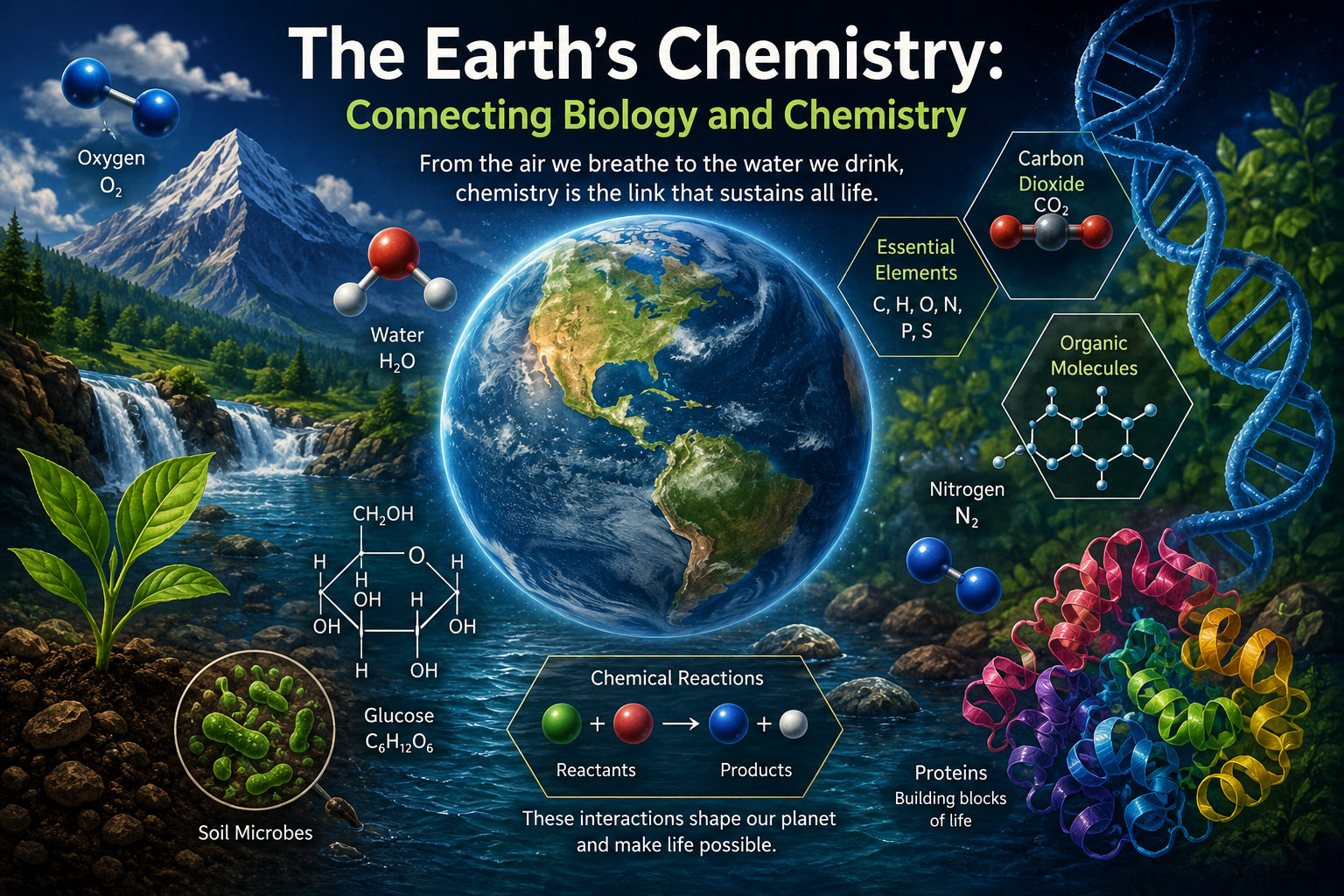
    **The Earth's Chemistry: Connecting Biology and Chemistry**

    Our Earth is a remarkable laboratory where chemistry and biology work together every moment! From the air we breathe to the water we drink, from the soil that supports plants to the cells that make up living organisms, chemistry is at the heart of life.

    **Chemistry makes life possible.** Plants use chemical reactions during photosynthesis to transform sunlight, water, and carbon dioxide into energy-rich food while releasing oxygen. This amazing process supports ecosystems and provides the oxygen needed by countless living organisms.

    **Biology and chemistry are deeply connected.** Every living cell depends on chemical substances such as proteins, carbohydrates, fats, DNA, water, minerals, and gases. These molecules interact through countless chemical reactions that allow organisms to grow, repair themselves, reproduce, and respond to their environment.

    Water is another perfect example of this connection. It helps transport nutrients, regulate temperature, support chemical reactions, and maintain ecosystems. Oceans, rivers, lakes, and groundwater are all part of Earth's interconnected chemical and biological systems.

    The **carbon cycle, nitrogen cycle, and oxygen cycle** demonstrate how matter continuously moves between the atmosphere, soil, water, and living organisms. Plants absorb carbon dioxide, animals obtain nutrients by consuming plants or other organisms, and decomposers return important elements to the environment.

    Even the soil beneath our feet is full of chemistry and biology. Minerals, microorganisms, organic matter, water, and air interact to create an environment where plants can grow. Healthy ecosystems depend on these delicate chemical relationships.

    Understanding Earth's chemistry helps us better understand climate, pollution, agriculture, ecosystems, human health, and the future of our planet. By studying how chemical substances interact with living systems, scientists can discover better ways to protect nature and use Earth's resources responsibly.

    **The big lesson:** Chemistry explains many of the processes that make biology possible, while biology shows us how those chemical processes come together to create living systems. Together, they tell an incredible story about our planet and life itself.

    Keep exploring, keep questioning, and keep discovering the fascinating science hidden all around us!

    #EarthsChemistry #Chemistry #Biology #EarthScience #Science #ScienceEducation #ChemistryAndBiology #LifeOnEarth #EnvironmentalScience #Photosynthesis #CarbonCycle #NitrogenCycle #OxygenCycle #Ecosystems #Nature #ScienceLovers #LearningScience #STEM #STEMEducation #ScienceExploration #OurPlanet #AmazingScience #Biochemistry #PlanetEarth #Education
    #rsisb roll no.247 Foundation level 🌍🧪 **The Earth's Chemistry: Connecting Biology and Chemistry** 🧬🌱 Our Earth is a remarkable laboratory where chemistry and biology work together every moment! 🌎✨ From the air we breathe to the water we drink, from the soil that supports plants to the cells that make up living organisms, chemistry is at the heart of life. 🔬💚 🌿 **Chemistry makes life possible.** Plants use chemical reactions during photosynthesis to transform sunlight, water, and carbon dioxide into energy-rich food while releasing oxygen. ☀️🌱 This amazing process supports ecosystems and provides the oxygen needed by countless living organisms. 🧬 **Biology and chemistry are deeply connected.** Every living cell depends on chemical substances such as proteins, carbohydrates, fats, DNA, water, minerals, and gases. These molecules interact through countless chemical reactions that allow organisms to grow, repair themselves, reproduce, and respond to their environment. 🔬🧫 💧 Water is another perfect example of this connection. It helps transport nutrients, regulate temperature, support chemical reactions, and maintain ecosystems. Oceans, rivers, lakes, and groundwater are all part of Earth's interconnected chemical and biological systems. 🌊🐟 🌎 The **carbon cycle, nitrogen cycle, and oxygen cycle** demonstrate how matter continuously moves between the atmosphere, soil, water, and living organisms. Plants absorb carbon dioxide, animals obtain nutrients by consuming plants or other organisms, and decomposers return important elements to the environment. 🔄🌿🦠 🌱 Even the soil beneath our feet is full of chemistry and biology. Minerals, microorganisms, organic matter, water, and air interact to create an environment where plants can grow. Healthy ecosystems depend on these delicate chemical relationships. 🌾🌍 🔬 Understanding Earth's chemistry helps us better understand climate, pollution, agriculture, ecosystems, human health, and the future of our planet. By studying how chemical substances interact with living systems, scientists can discover better ways to protect nature and use Earth's resources responsibly. 💡🌳 ✨ **The big lesson:** Chemistry explains many of the processes that make biology possible, while biology shows us how those chemical processes come together to create living systems. Together, they tell an incredible story about our planet and life itself. 🌍❤️🧪🧬 📚 Keep exploring, keep questioning, and keep discovering the fascinating science hidden all around us! 🔎✨ #EarthsChemistry #Chemistry #Biology #EarthScience #Science #ScienceEducation #ChemistryAndBiology #LifeOnEarth #EnvironmentalScience #Photosynthesis #CarbonCycle #NitrogenCycle #OxygenCycle #Ecosystems #Nature #ScienceLovers #LearningScience #STEM #STEMEducation #ScienceExploration #OurPlanet #AmazingScience #Biochemistry #PlanetEarth #Education
    0 Reacties 0 aandelen 6384 Views
  • #rsisb
    Roll No.240
    Story No.18
    Foundation Level

    ### **Exploring Life’s Mechanisms Through Experimentation**

    Scientific experimentation is one of the most powerful ways to understand the complex processes that sustain life. From the smallest microscopic cells to entire ecosystems, experiments allow scientists to observe, test, and explain how living organisms grow, reproduce, respond to their environment, and maintain balance. Through careful observation, data collection, and analysis, researchers uncover the biological mechanisms that drive life and contribute to advances in medicine, agriculture, biotechnology, and environmental conservation.

    Biological experiments help students and scientists explore essential topics such as genetics, cell biology, microbiology, physiology, ecology, and evolution. By forming hypotheses, conducting controlled experiments, and interpreting results, learners develop critical thinking, problem-solving, and analytical skills. Laboratory investigations also demonstrate the importance of accuracy, ethical responsibility, and evidence-based conclusions in scientific research.

    Modern technology has transformed biological experimentation through advanced microscopes, DNA sequencing, computer simulations, molecular biology techniques, and artificial intelligence. These innovations enable researchers to study diseases, develop life-saving medicines, improve crop production, protect endangered species, and better understand the incredible complexity of living organisms. Every experiment, whether simple or advanced, contributes valuable knowledge that helps improve human health and our understanding of the natural world.

    Exploring life's mechanisms through experimentation inspires curiosity, encourages innovation, and highlights the importance of scientific discovery. By combining observation, creativity, and rigorous testing, scientists continue to unlock the mysteries of life and create solutions to global challenges, paving the way for a healthier, more sustainable future.

    **#Biology #LifeScience #ScientificExperiment #Laboratory #STEM #ScienceEducation #Research #Biotechnology #CellBiology #Genetics #Microbiology #Innovation #ScientificDiscovery #Education #ExploreScience **

    Rehan School Islamabad Campus
    Asma Shaheen EducationWali
    Irum Asim
    Saima Happinesswali
    #rsisb Roll No.240 Story No.18 Foundation Level ### **Exploring Life’s Mechanisms Through Experimentation** Scientific experimentation is one of the most powerful ways to understand the complex processes that sustain life. From the smallest microscopic cells to entire ecosystems, experiments allow scientists to observe, test, and explain how living organisms grow, reproduce, respond to their environment, and maintain balance. Through careful observation, data collection, and analysis, researchers uncover the biological mechanisms that drive life and contribute to advances in medicine, agriculture, biotechnology, and environmental conservation. Biological experiments help students and scientists explore essential topics such as genetics, cell biology, microbiology, physiology, ecology, and evolution. By forming hypotheses, conducting controlled experiments, and interpreting results, learners develop critical thinking, problem-solving, and analytical skills. Laboratory investigations also demonstrate the importance of accuracy, ethical responsibility, and evidence-based conclusions in scientific research. Modern technology has transformed biological experimentation through advanced microscopes, DNA sequencing, computer simulations, molecular biology techniques, and artificial intelligence. These innovations enable researchers to study diseases, develop life-saving medicines, improve crop production, protect endangered species, and better understand the incredible complexity of living organisms. Every experiment, whether simple or advanced, contributes valuable knowledge that helps improve human health and our understanding of the natural world. Exploring life's mechanisms through experimentation inspires curiosity, encourages innovation, and highlights the importance of scientific discovery. By combining observation, creativity, and rigorous testing, scientists continue to unlock the mysteries of life and create solutions to global challenges, paving the way for a healthier, more sustainable future. **#Biology #LifeScience #ScientificExperiment #Laboratory #STEM #ScienceEducation #Research #Biotechnology #CellBiology #Genetics #Microbiology #Innovation #ScientificDiscovery #Education #ExploreScience 🔬🧬🧫🌱📚** Rehan School Islamabad Campus Asma Shaheen EducationWali Irum Asim Saima Happinesswali
    0 Reacties 0 aandelen 7300 Views
  • #rsisb
    Roll No.190
    Image With Chatgpt
    Foundation Level

    “Oxygen was discovered in 1772 by Carl Wilhelm Scheele.”
    Idea 1: The Discovery Moment

    Show Carl Wilhelm Scheele in an old 18th-century laboratory surrounded by glass bottles, test tubes, candles, and handwritten notes. A glowing cloud of oxygen rises from a glass container, with “1772” shining in the background.

    Idea 2: The Invisible Gas

    Show a scientist holding an empty-looking glass jar. Around the jar, add glowing symbols of breathing, fire, plants, and life to show that oxygen is invisible but essential.

    Idea 3: History to Modern Science

    Create a timeline:

    1772 → Oxygen Discovery → Modern Science → Life on Earth

    Idea 4: Oxygen and Life

    Show a historical scientist on one side and a modern world on the other: forests , animals , humans , fire , and a space mission .

    Best AI Picture Prompt

    “A cinematic educational science poster showing Carl Wilhelm Scheele in an 18th-century laboratory in 1772, surrounded by vintage glass bottles, chemical equipment, candles, and handwritten scientific notes, a subtle glowing symbol representing oxygen emerging from a glass container, historical atmosphere, scientific discovery theme, dramatic warm lighting, realistic, highly detailed, inspirational, with the title ‘OXYGEN DISCOVERED IN 1772’ and ‘CARL WILHELM SCHEELE’.”

    Caption:
    A discovery that changed science forever!
    #Oxygen #ScienceHistory #CarlWilhelmScheele #Chemistry #ScientificDiscovery #ScienceFacts #LearnScience
    #rsisb Roll No.190 Image With Chatgpt Foundation Level 🧪💨 “Oxygen was discovered in 1772 by Carl Wilhelm Scheele.” 🖼️ Idea 1: The Discovery Moment 🔬✨ Show Carl Wilhelm Scheele in an old 18th-century laboratory surrounded by glass bottles, test tubes, candles, and handwritten notes. A glowing cloud of oxygen rises from a glass container, with “1772” shining in the background. 🖼️ Idea 2: The Invisible Gas 💨🔍 Show a scientist holding an empty-looking glass jar. Around the jar, add glowing symbols of breathing, fire, plants, and life to show that oxygen is invisible but essential. 🌱🔥🫁 🖼️ Idea 3: History to Modern Science ⏳➡️🔬 Create a timeline: 1772 🧪 → Oxygen Discovery 💨 → Modern Science 🚀 → Life on Earth 🌍 🖼️ Idea 4: Oxygen and Life 🌍🌿 Show a historical scientist on one side and a modern world on the other: forests 🌳, animals 🐘, humans 🫁, fire 🔥, and a space mission 🚀. 🎨 Best AI Picture Prompt “A cinematic educational science poster showing Carl Wilhelm Scheele in an 18th-century laboratory in 1772, surrounded by vintage glass bottles, chemical equipment, candles, and handwritten scientific notes, a subtle glowing symbol representing oxygen emerging from a glass container, historical atmosphere, scientific discovery theme, dramatic warm lighting, realistic, highly detailed, inspirational, with the title ‘OXYGEN DISCOVERED IN 1772’ and ‘CARL WILHELM SCHEELE’.” 🔬💨✨ Caption: 🧪✨ A discovery that changed science forever! 💨🌍 #Oxygen #ScienceHistory #CarlWilhelmScheele #Chemistry #ScientificDiscovery #ScienceFacts #LearnScience 🔬🌟
    0 Reacties 0 aandelen 6121 Views
  • Hamburger University

    In 1961, Ray launched a training program, later called Hamburger University, at a new restaurant in Elk Grove Village, Illinois. There, franchisees and operators were trained in the scientific methods of running a successful McDonald’s. Hamburger U also had a research and development laboratory to develop new cooking, freezing, storing and serving methods. Today, more than 80,000 people have graduated from the program.
    Hamburger University In 1961, Ray launched a training program, later called Hamburger University, at a new restaurant in Elk Grove Village, Illinois. There, franchisees and operators were trained in the scientific methods of running a successful McDonald’s. Hamburger U also had a research and development laboratory to develop new cooking, freezing, storing and serving methods. Today, more than 80,000 people have graduated from the program.
    0 Reacties 0 aandelen 3304 Views
Zoekresultaten