• #rsisb
    Roll no 279
    song no
    foundation level
    **Cellular Symphony: The Intricate Dance of Life’s Building Blocks**
    Life is a beautiful masterpiece, and every cell plays an important role in creating it! From the tiny structures inside our bodies to the complex processes that keep us alive, cells work together like a perfectly organized orchestra.
    Explore the fascinating world of cells, discover the functions of their organelles, and understand how these microscopic building blocks support growth, energy, repair, and life itself.
    Every cell has a purpose, every organelle has a role, and together they create the incredible symphony of life!
    #CellularSymphony #Biology #CellScience #HumanBody #ScienceAndDiscovery #LifeScience #LearningIsFun #ExploreScience
    #rsisb Roll no 279 song no foundation level 🧬 **Cellular Symphony: The Intricate Dance of Life’s Building Blocks** πŸ”¬βœ¨ Life is a beautiful masterpiece, and every cell plays an important role in creating it! 🌱 From the tiny structures inside our bodies to the complex processes that keep us alive, cells work together like a perfectly organized orchestra. 🎼 Explore the fascinating world of cells, discover the functions of their organelles, and understand how these microscopic building blocks support growth, energy, repair, and life itself. πŸ§«πŸ” Every cell has a purpose, every organelle has a role, and together they create the incredible symphony of life! πŸŒπŸ’‘ #CellularSymphony #Biology #CellScience #HumanBody #ScienceAndDiscovery #LifeScience #LearningIsFun #ExploreScience πŸ§¬πŸ”¬πŸŒ±
    0 Reacties 0 aandelen 403 Views 2
  • ACCL Foundation Level (Rehan School Urdu Bazar Campus)
    Roll no:19
    Day : 41 story post
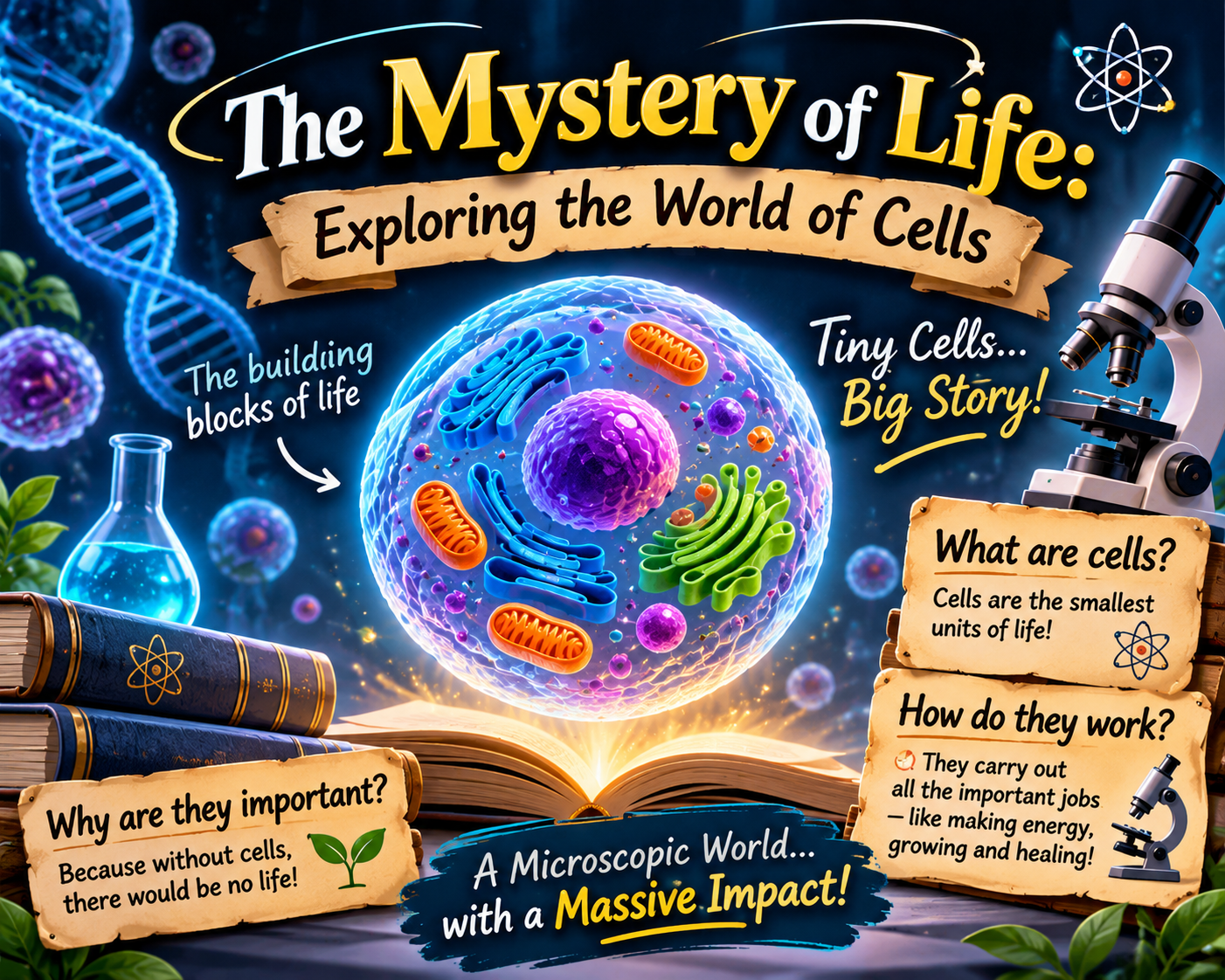
    **The Mystery of Life: Exploring the World of Cells!**
    Have you ever wondered what makes life possible? Every living thing, from tiny plants to enormous animals, is made up of microscopic building blocks called **CELLS!**
    Cells are the basic units of life, and each part has a special job. The nucleus controls cell activities, mitochondria provide energy, and other organelles help the cell perform its important functions.
    **Tiny Cells, Amazing World!**
    Let's explore the hidden world inside living things and discover the incredible secrets of life!
    Remember: *Every great living thing begins with something incredibly small!*
    #MysteryOfLife #WorldOfCells #ScienceExploration #CellBiology #AmazingScience #LearningIsFun #DiscoverScience #BiologyForKids #KnowledgeIsPower
    ACCL Foundation Level (Rehan School Urdu Bazar Campus) Roll no:19 Day : 41 story post πŸ”¬βœ¨ **The Mystery of Life: Exploring the World of Cells!** 🧬🌍 Have you ever wondered what makes life possible? πŸ€” Every living thing, from tiny plants to enormous animals, is made up of microscopic building blocks called **CELLS!** πŸ¦ πŸ’™ Cells are the basic units of life, and each part has a special job. The nucleus controls cell activities, mitochondria provide energy, and other organelles help the cell perform its important functions. βš‘πŸ”¬ 🌟 **Tiny Cells, Amazing World!** Let's explore the hidden world inside living things and discover the incredible secrets of life! πŸ’‘ Remember: *Every great living thing begins with something incredibly small!* #MysteryOfLife #WorldOfCells #ScienceExploration #CellBiology #AmazingScience #LearningIsFun #DiscoverScience #BiologyForKids #KnowledgeIsPower 🧬✨
    0 Reacties 0 aandelen 1727 Views
  • RSIF8
    ROLL NO:92
    STORY POST NO:45
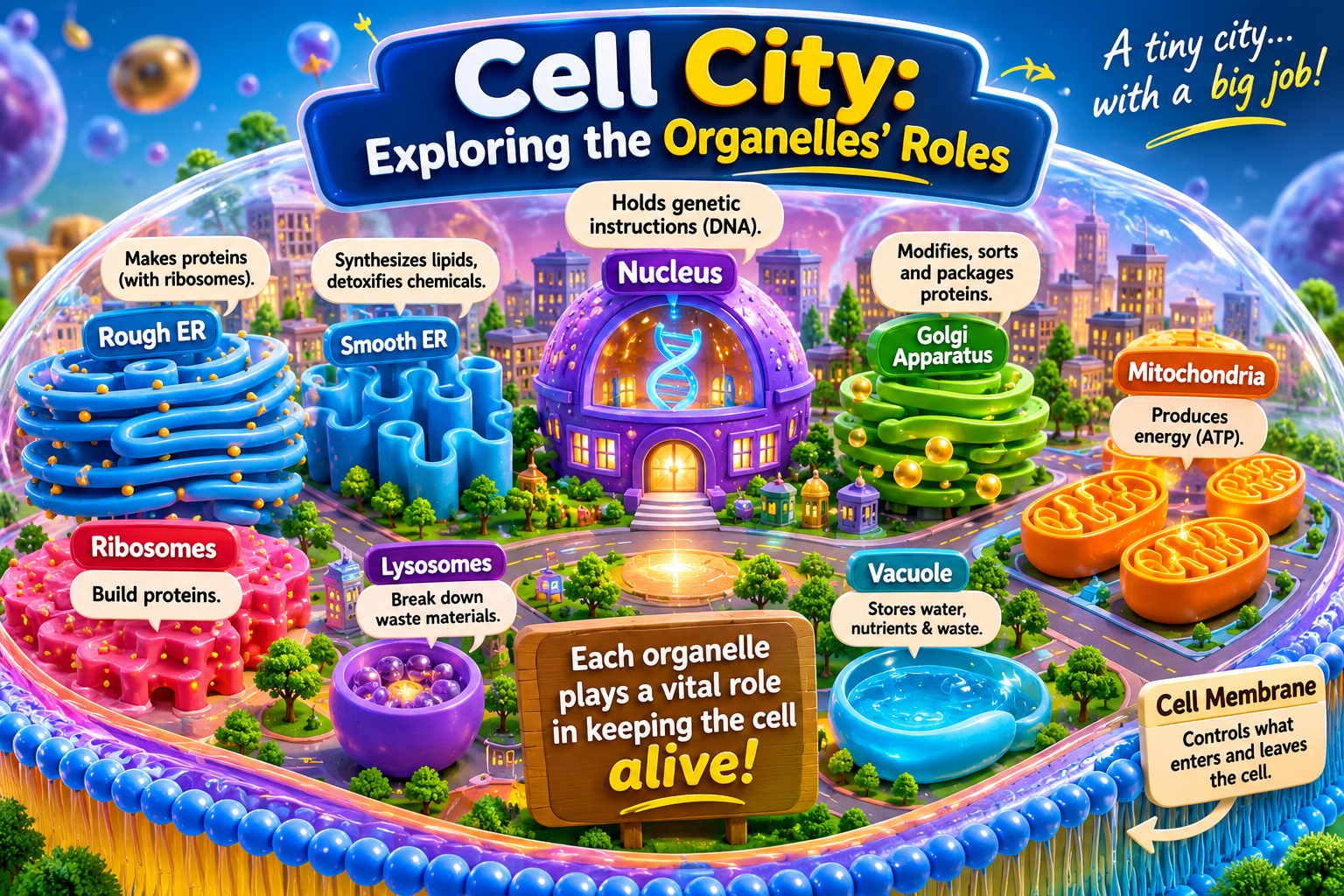
    TOPIC:### Story Post — Cell City: Exploring the Organelles’ Roles

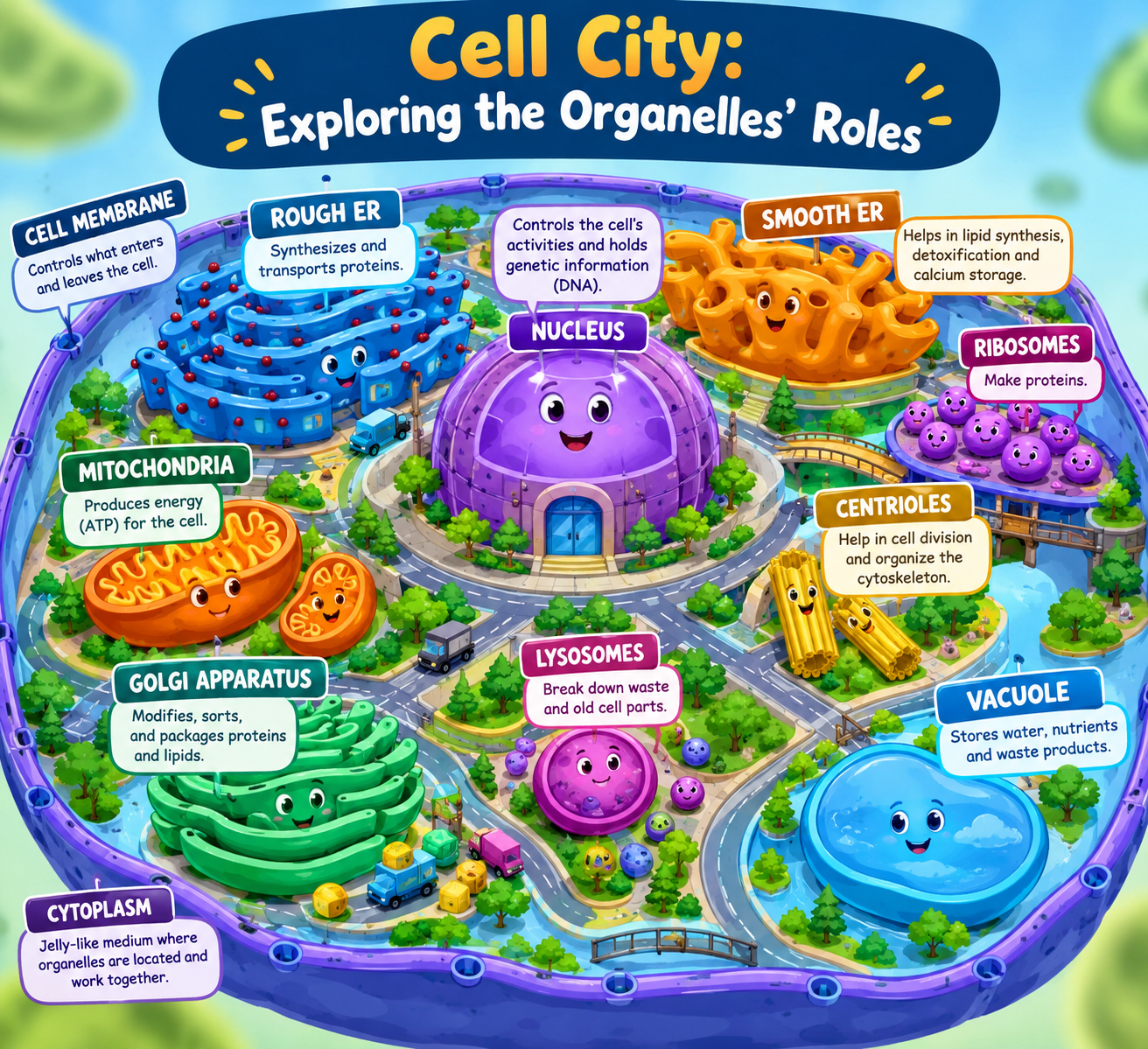
    Welcome to Cell City, a tiny world full of amazing activities! In this exciting journey, we explore the different organelles of a cell and discover their important roles. From the nucleus, which controls cell activities, to mitochondria, which provide energy, every organelle has a special job. Just like a city needs different workers to function, a cell needs all its organelles to stay alive and healthy.

    Let's explore the fascinating world inside a cell and learn how life works at the microscopic level!

    Learn Science. Explore Life. Discover More!

    #CellCity #CellOrganelles #Biology #ScienceLearning #EducationalPost #ExploreScience #ScienceFacts #LearningIsFun #StoryPost #BiologyEducation
    RSIF8 ROLL NO:92 STORY POST NO:45 TOPIC:### 🧬 Story Post — Cell City: Exploring the Organelles’ Roles πŸ™οΈ Welcome to Cell City, a tiny world full of amazing activities! πŸ”¬βœ¨ In this exciting journey, we explore the different organelles of a cell and discover their important roles. From the nucleus, which controls cell activities, to mitochondria, which provide energy, every organelle has a special job. Just like a city needs different workers to function, a cell needs all its organelles to stay alive and healthy. 🌱 Let's explore the fascinating world inside a cell and learn how life works at the microscopic level! πŸ“š Learn Science. Explore Life. Discover More! #CellCity #CellOrganelles #Biology #ScienceLearning #EducationalPost #ExploreScience #ScienceFacts #LearningIsFun #StoryPost #BiologyEducation
    0 Reacties 0 aandelen 1552 Views
  • RSIf8
    Roll Number: 49
    Story post no.47
    Story post topic:Exploring the Organelles' Roles

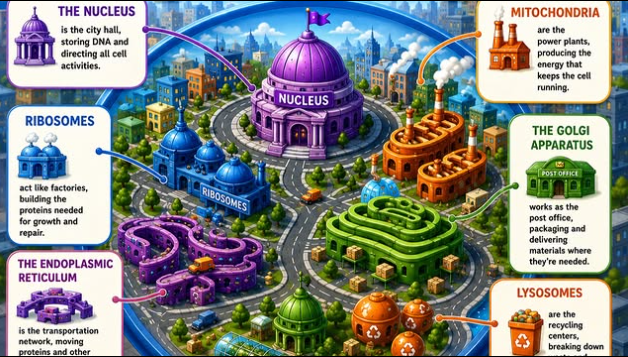
    Imagine a cell as a busy city where every organelle has an important job!

    The nucleus is the city hall, storing DNA and directing all cell activities.
    Mitochondria are the power plants, producing the energy that keeps the cell running.
    Ribosomes act like factories, building the proteins needed for growth and repair.
    The Golgi apparatus works as the post office, packaging and delivering materials where they're needed.
    The endoplasmic reticulum is the transportation network, moving proteins and other substances throughout the cell.
    Lysosomes are the recycling centers, breaking down waste and keeping the cell clean.
    In plant cells, chloroplasts capture sunlight to produce food through photosynthesis.

    Together, these tiny organelles work in perfect harmony, proving that even the smallest parts can make the biggest difference.

    Every cell is a bustling city—and every organelle plays a vital role in keeping life alive!

    #CellBiology #Science #Biology #Organelles #STEM #Education #Learning #ScienceFacts #DidYouKnow #Microscope #LifeScience #Knowledge
    RSIf8 Roll Number: 49 Story post no.47 Story post topic:Exploring the Organelles' Roles Imagine a cell as a busy city where every organelle has an important job! πŸŒŸπŸ™οΈ 🧠 The nucleus is the city hall, storing DNA and directing all cell activities. ⚑ Mitochondria are the power plants, producing the energy that keeps the cell running. 🏭 Ribosomes act like factories, building the proteins needed for growth and repair. πŸ“¦ The Golgi apparatus works as the post office, packaging and delivering materials where they're needed. 🚚 The endoplasmic reticulum is the transportation network, moving proteins and other substances throughout the cell. 🧹 Lysosomes are the recycling centers, breaking down waste and keeping the cell clean. 🌿 In plant cells, chloroplasts capture sunlight to produce food through photosynthesis. β˜€οΈπŸƒ Together, these tiny organelles work in perfect harmony, proving that even the smallest parts can make the biggest difference. πŸŒπŸ’š Every cell is a bustling city—and every organelle plays a vital role in keeping life alive! πŸŒŸπŸ”¬ #CellBiology #Science #Biology #Organelles #STEM #Education #Learning #ScienceFacts #DidYouKnow #Microscope #LifeScience #Knowledge 🧬✨
    0 Reacties 0 aandelen 2545 Views
  • ACCL POST
    Day:43
    Roll No:003
    Story post
    Student at Rehan School Urdu bazar campus

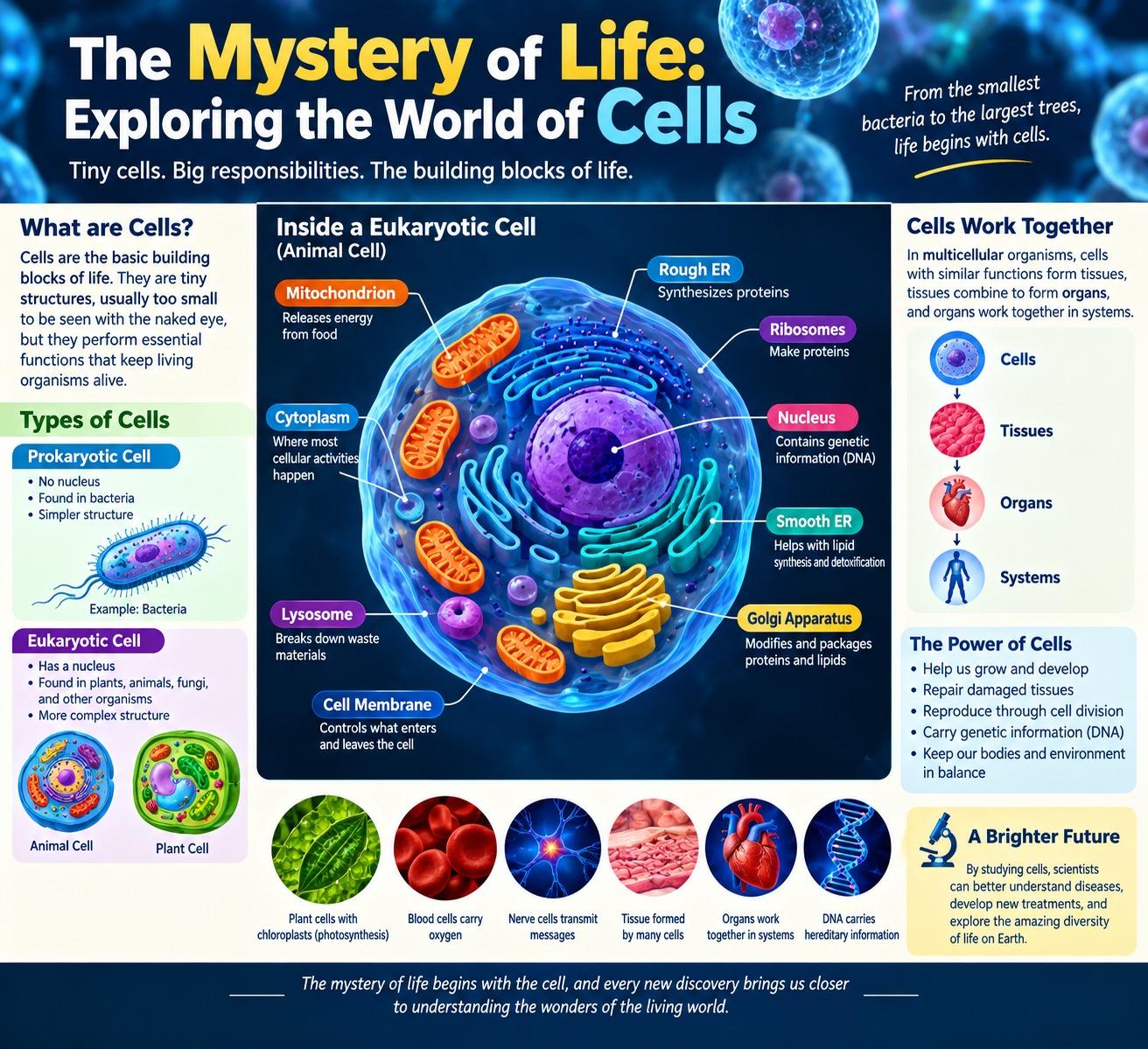
    # The Mystery of Life: Exploring the World of Cells Life is one of the most fascinating mysteries of the natural world. From the tallest trees to the smallest insects, every living organism has a unique structure and a special way of surviving. But have you ever wondered what makes life possible? What is the tiny building block that forms every living thing? The answer is **cells**, the fundamental units of life. Although cells are usually too small to be seen without a microscope, they perform countless important functions that allow living organisms to grow, develop, reproduce, and survive. Cells are often described as the basic building blocks of life because all living organisms are made up of one or more cells. Some organisms, such as bacteria, consist of only a single cell, while humans, animals, and plants are made up of trillions of cells. Each cell has its own structure and responsibilities. Some cells help the body obtain energy, while others carry oxygen, fight infections, or transmit messages throughout the body. In plants, cells help produce food through photosynthesis and provide support to the plant's structure. There are two major types of cells: **prokaryotic cells and eukaryotic cells**. Prokaryotic cells, such as bacteria, do not have a nucleus enclosed by a membrane. Eukaryotic cells, which are found in animals, plants, fungi, and many other organisms, contain a nucleus that stores genetic information. These cells also contain specialized structures called organelles, each of which performs a particular function. For example, the nucleus controls many cellular activities, mitochondria release usable energy from food, and the cell membrane regulates what enters and leaves the cell. Plant cells also contain chloroplasts, which help them produce food using sunlight. One of the most amazing things about cells is how they work together. In multicellular organisms, cells with similar functions form tissues, tissues combine to form organs, and organs work together in systems. In the human body, for example, the heart, lungs, brain, and other organs depend on the coordinated activities of countless cells. This cooperation allows the body to maintain balance, respond to changes, and carry out the activities necessary for life. Cells also play an essential role in growth, healing, and reproduction. Through a process called cell division, cells produce new cells. This allows organisms to grow, replace old or damaged cells, and repair tissues. Cells contain DNA, the genetic material that carries instructions for the development and functioning of living organisms. By studying DNA and cellular processes, scientists can better understand heredity, diseases, and the remarkable diversity of life on Earth. The study of cells has transformed our understanding of biology and medicine. understanding the wonders of the living world.**
    Activate to view larger image,
    View image

    ACCL POST Day:43 Roll No:003 Story post Student at Rehan School Urdu bazar campus # The Mystery of Life: Exploring the World of Cells Life is one of the most fascinating mysteries of the natural world. From the tallest trees to the smallest insects, every living organism has a unique structure and a special way of surviving. But have you ever wondered what makes life possible? What is the tiny building block that forms every living thing? The answer is **cells**, the fundamental units of life. Although cells are usually too small to be seen without a microscope, they perform countless important functions that allow living organisms to grow, develop, reproduce, and survive. Cells are often described as the basic building blocks of life because all living organisms are made up of one or more cells. Some organisms, such as bacteria, consist of only a single cell, while humans, animals, and plants are made up of trillions of cells. Each cell has its own structure and responsibilities. Some cells help the body obtain energy, while others carry oxygen, fight infections, or transmit messages throughout the body. In plants, cells help produce food through photosynthesis and provide support to the plant's structure. There are two major types of cells: **prokaryotic cells and eukaryotic cells**. Prokaryotic cells, such as bacteria, do not have a nucleus enclosed by a membrane. Eukaryotic cells, which are found in animals, plants, fungi, and many other organisms, contain a nucleus that stores genetic information. These cells also contain specialized structures called organelles, each of which performs a particular function. For example, the nucleus controls many cellular activities, mitochondria release usable energy from food, and the cell membrane regulates what enters and leaves the cell. Plant cells also contain chloroplasts, which help them produce food using sunlight. One of the most amazing things about cells is how they work together. In multicellular organisms, cells with similar functions form tissues, tissues combine to form organs, and organs work together in systems. In the human body, for example, the heart, lungs, brain, and other organs depend on the coordinated activities of countless cells. This cooperation allows the body to maintain balance, respond to changes, and carry out the activities necessary for life. Cells also play an essential role in growth, healing, and reproduction. Through a process called cell division, cells produce new cells. This allows organisms to grow, replace old or damaged cells, and repair tissues. Cells contain DNA, the genetic material that carries instructions for the development and functioning of living organisms. By studying DNA and cellular processes, scientists can better understand heredity, diseases, and the remarkable diversity of life on Earth. The study of cells has transformed our understanding of biology and medicine. understanding the wonders of the living world.** Activate to view larger image, View image

    0 Reacties 0 aandelen 3056 Views
  • ACCL TASK
    Day:41
    Roll No:003
    Story post
    @Student at Rehan School Urdu bazar campus

    # The Mystery of Life: Exploring the World of Cells

    Life is one of the most fascinating mysteries of the natural world. From the tallest trees to the smallest insects, every living organism has a unique structure and a special way of surviving. But have you ever wondered what makes life possible? What is the tiny building block that forms every living thing? The answer is **cells**, the fundamental units of life. Although cells are usually too small to be seen without a microscope, they perform countless important functions that allow living organisms to grow, develop, reproduce, and survive.

    Cells are often described as the basic building blocks of life because all living organisms are made up of one or more cells. Some organisms, such as bacteria, consist of only a single cell, while humans, animals, and plants are made up of trillions of cells. Each cell has its own structure and responsibilities. Some cells help the body obtain energy, while others carry oxygen, fight infections, or transmit messages throughout the body. In plants, cells help produce food through photosynthesis and provide support to the plant's structure.

    There are two major types of cells: **prokaryotic cells and eukaryotic cells**. Prokaryotic cells, such as bacteria, do not have a nucleus enclosed by a membrane. Eukaryotic cells, which are found in animals, plants, fungi, and many other organisms, contain a nucleus that stores genetic information. These cells also contain specialized structures called organelles, each of which performs a particular function. For example, the nucleus controls many cellular activities, mitochondria release usable energy from food, and the cell membrane regulates what enters and leaves the cell. Plant cells also contain chloroplasts, which help them produce food using sunlight.

    One of the most amazing things about cells is how they work together. In multicellular organisms, cells with similar functions form tissues, tissues combine to form organs, and organs work together in systems. In the human body, for example, the heart, lungs, brain, and other organs depend on the coordinated activities of countless cells. This cooperation allows the body to maintain balance, respond to changes, and carry out the activities necessary for life.

    Cells also play an essential role in growth, healing, and reproduction. Through a process called cell division, cells produce new cells. This allows organisms to grow, replace old or damaged cells, and repair tissues. Cells contain DNA, the genetic material that carries instructions for the development and functioning of living organisms. of cells. Exploring the world of cells helps us understand how living things function and reveals the extraordinary hidden within even the smallest units of life. The mystery of life begins with the cell, and every new discovery brings us closer to understanding the wonders of the living world.
    ACCL TASK Day:41 Roll No:003 Story post @Student at Rehan School Urdu bazar campus # The Mystery of Life: Exploring the World of Cells Life is one of the most fascinating mysteries of the natural world. From the tallest trees to the smallest insects, every living organism has a unique structure and a special way of surviving. But have you ever wondered what makes life possible? What is the tiny building block that forms every living thing? The answer is **cells**, the fundamental units of life. Although cells are usually too small to be seen without a microscope, they perform countless important functions that allow living organisms to grow, develop, reproduce, and survive. Cells are often described as the basic building blocks of life because all living organisms are made up of one or more cells. Some organisms, such as bacteria, consist of only a single cell, while humans, animals, and plants are made up of trillions of cells. Each cell has its own structure and responsibilities. Some cells help the body obtain energy, while others carry oxygen, fight infections, or transmit messages throughout the body. In plants, cells help produce food through photosynthesis and provide support to the plant's structure. There are two major types of cells: **prokaryotic cells and eukaryotic cells**. Prokaryotic cells, such as bacteria, do not have a nucleus enclosed by a membrane. Eukaryotic cells, which are found in animals, plants, fungi, and many other organisms, contain a nucleus that stores genetic information. These cells also contain specialized structures called organelles, each of which performs a particular function. For example, the nucleus controls many cellular activities, mitochondria release usable energy from food, and the cell membrane regulates what enters and leaves the cell. Plant cells also contain chloroplasts, which help them produce food using sunlight. One of the most amazing things about cells is how they work together. In multicellular organisms, cells with similar functions form tissues, tissues combine to form organs, and organs work together in systems. In the human body, for example, the heart, lungs, brain, and other organs depend on the coordinated activities of countless cells. This cooperation allows the body to maintain balance, respond to changes, and carry out the activities necessary for life. Cells also play an essential role in growth, healing, and reproduction. Through a process called cell division, cells produce new cells. This allows organisms to grow, replace old or damaged cells, and repair tissues. Cells contain DNA, the genetic material that carries instructions for the development and functioning of living organisms. of cells. Exploring the world of cells helps us understand how living things function and reveals the extraordinary hidden within even the smallest units of life. The mystery of life begins with the cell, and every new discovery brings us closer to understanding the wonders of the living world.
    0 Reacties 0 aandelen 2557 Views
  • RSIF8
    ROLL NO 77
    STORY POST NO 45
    STORY TOPIC Cell City: Exploring the Organelles' Roles".

    **Cell City: Exploring the Organelles' Roles! **

    Welcome to Cell City, where every organelle has an important job! From the nucleus, which controls cell activities, to the mitochondria, which provide energy, every tiny part works together to keep the cell alive and functioning.

    Discover the amazing world inside a cell and learn how these microscopic structures work like a well-organized city!

    **Learn Science, Explore Life, and Discover the Wonders of Biology!**

    #CellCity #CellBiology #Organelles #ScienceEducation #Biology #LearnWithFun #EducationalContent #ScienceLovers #ExploreAndLearn #KnowledgeIsPower
    RSIF8 ROLL NO 77 STORY POST NO 45 STORY TOPIC Cell City: Exploring the Organelles' Roles". πŸ™οΈπŸ”¬ **Cell City: Exploring the Organelles' Roles! 🧬✨** Welcome to Cell City, where every organelle has an important job! πŸ™οΈπŸ§« From the nucleus, which controls cell activities, to the mitochondria, which provide energy, every tiny part works together to keep the cell alive and functioning. βš‘πŸ”‹ 🌱 Discover the amazing world inside a cell and learn how these microscopic structures work like a well-organized city! πŸš€πŸ” πŸ’‘ **Learn Science, Explore Life, and Discover the Wonders of Biology!** πŸ§ͺ🌍 #CellCity #CellBiology #Organelles #ScienceEducation #Biology #LearnWithFun #EducationalContent #ScienceLovers #ExploreAndLearn #KnowledgeIsPower πŸ§¬πŸ”¬πŸ“šβœ¨
    0 Reacties 0 aandelen 2199 Views
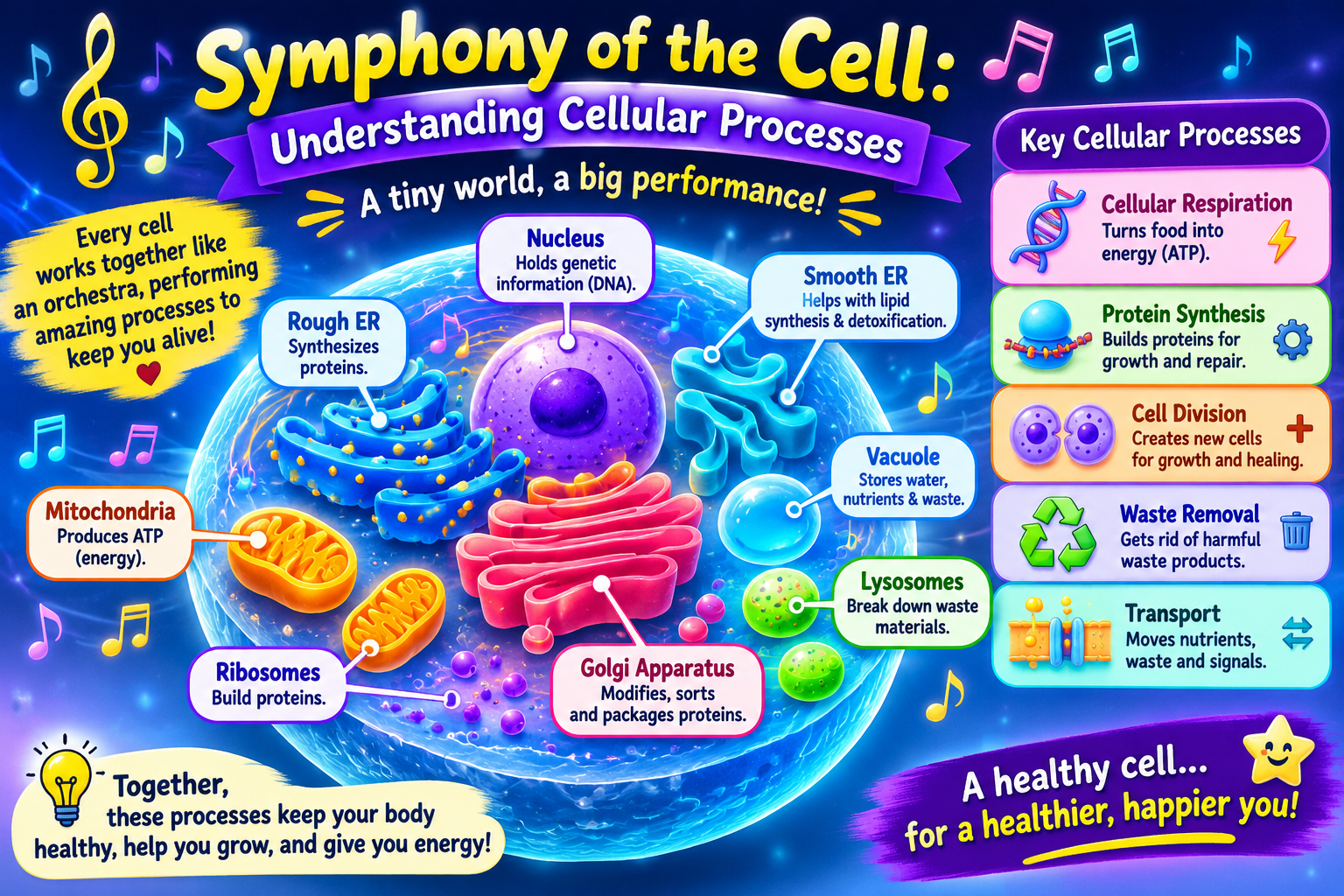
  • #rsisb Foundation level student. Roll no:232 Documentary NO:5 πŸ”¬πŸ§¬ **Documentary — Symphony of the Cell: Understanding Cellular Processes** 🎬✨ Welcome to an exciting journey into the microscopic world of cells! πŸŒπŸ”¬ In this documentary, *Symphony of the Cell: Understanding Cellular Processes*, we explore the amazing activities that keep living organisms alive. πŸ§«πŸ’‘ Discover how cells produce energy, create proteins, transport materials, remove waste, and communicate with one another. Learn about important cell organelles, including the nucleus, mitochondria, ribosomes, and cell membrane, and understand how they work together like instruments in a beautiful symphony. 🎢🧬 From cell division to maintaining life, every cellular process plays an essential role in the growth, development, and survival of living things. This documentary makes biology fascinating and helps us appreciate the incredible complexity of life at its smallest level. πŸŒ±πŸ” Join me on this educational adventure and discover the hidden wonders of the cell! πŸš€πŸ“š **Keep Exploring, Keep Learning, and Keep Discovering! 🌟** #SymphonyOfTheCell #CellBiology #CellularProcesses #Biology #ScienceDocumentary #HumanBiology #CellOrganelles #Mitochondria #Nucleus #ScientificDiscovery #EducationalVideo #ScienceEducation #LearnWithAI #KnowledgeIsPower #KeepLearning πŸ”¬πŸ§¬πŸŽ¬πŸŒβœ¨ Irum Asim Leadershipwali Asma Shaheen EducationWali Rehan School Islamabad Campus https://www.facebook.com/share/v/1J5vJHF9Mo/
    WWW.FACEBOOK.COM
    Facebook
    #rsisb Foundation level student. Roll no:232 Documentary NO:5 πŸ”¬πŸ§¬ **Documentary — Symphony of the Cell: Understanding Cellular Processes** 🎬✨ Welcome to an exciting journey into the microscopic...
    0 Reacties 0 aandelen 3123 Views
  • #rsisb
    Roll no. 247
    Story post . 18
    Foundation level

    **Story Post — Symphony of the Cell: Understanding Cellular Processes**

    **Welcome to the Amazing World of Cells!**

    Have you ever wondered how the human body works, how we grow, how we breathe, or how our bodies get energy? The answer lies in the tiny but powerful building blocks of life — **cells!**

    **Symphony of the Cell** takes us on an exciting journey into the microscopic world, where every cell works like a beautiful orchestra. Just as musical instruments work together to create a wonderful melody, the different parts of a cell work together to keep living organisms alive and healthy.

    **Discover the Amazing Cell Organelles!**

    **Mitochondria:** Often called the powerhouse of the cell, mitochondria help produce the energy that cells need to function.

    **Nucleus:** The control center of the cell, containing DNA and instructions for many cellular activities.

    **Ribosomes:** Tiny structures that make proteins, which are essential for growth and repair.

    **Golgi Apparatus:** Helps modify, package, and transport proteins and other materials.

    **Cell Membrane:** Controls what enters and leaves the cell, helping maintain a stable internal environment.

    **Chloroplasts:** Found in plant cells, these structures capture sunlight for photosynthesis.

    **Cytoplasm:** The jelly-like material inside the cell where many important chemical reactions take place.

    **How Do Cells Work Together?**

    Cells carry out many amazing processes every second! They use nutrients to obtain energy, make proteins, transport materials, remove waste, respond to their surroundings, and grow. Some cells can also divide to produce new cells. These activities help living organisms survive and develop.

    **Why Is Understanding Cellular Processes Important?**

    Learning about cells helps us understand human health, diseases, plant growth, genetics, and the incredible complexity of life. From the smallest microorganism to the largest living organisms, cells play an essential role in the natural world.

    **Let's Learn, Explore, and Discover!**

    Science teaches us that even the smallest things can have the biggest impact. Every cell has a role to play, and together, cells create the extraordinary systems that make life possible. Keep asking questions, keep exploring, and never stop learning!

    **Question for You:** If you could explore one part of a cell under a powerful microscope, which organelle would you choose, and why?

    Like, share, and comment to spread the wonder of science! Let's make learning fun, creative, and inspiring for everyone.
    #rsisb Roll no. 247 Story post . 18 Foundation level πŸ”¬πŸŽΆ **Story Post — Symphony of the Cell: Understanding Cellular Processes** 🧬✨ 🌟 **Welcome to the Amazing World of Cells!** 🌟 Have you ever wondered how the human body works, how we grow, how we breathe, or how our bodies get energy? πŸ€”πŸ’‘ The answer lies in the tiny but powerful building blocks of life — **cells!** πŸ¦ πŸ”¬ 🎼 **Symphony of the Cell** takes us on an exciting journey into the microscopic world, where every cell works like a beautiful orchestra. Just as musical instruments work together to create a wonderful melody, the different parts of a cell work together to keep living organisms alive and healthy. 🎻🎹🎡 🧫 **Discover the Amazing Cell Organelles!** πŸ”‹ **Mitochondria:** Often called the powerhouse of the cell, mitochondria help produce the energy that cells need to function. 🧠 **Nucleus:** The control center of the cell, containing DNA and instructions for many cellular activities. 🏭 **Ribosomes:** Tiny structures that make proteins, which are essential for growth and repair. πŸ“¦ **Golgi Apparatus:** Helps modify, package, and transport proteins and other materials. πŸšͺ **Cell Membrane:** Controls what enters and leaves the cell, helping maintain a stable internal environment. 🌱 **Chloroplasts:** Found in plant cells, these structures capture sunlight for photosynthesis. β˜€οΈπŸŒΏ πŸ’§ **Cytoplasm:** The jelly-like material inside the cell where many important chemical reactions take place. ⚑ **How Do Cells Work Together?** Cells carry out many amazing processes every second! They use nutrients to obtain energy, make proteins, transport materials, remove waste, respond to their surroundings, and grow. Some cells can also divide to produce new cells. These activities help living organisms survive and develop. 🌍❀️ 🧬 **Why Is Understanding Cellular Processes Important?** Learning about cells helps us understand human health, diseases, plant growth, genetics, and the incredible complexity of life. From the smallest microorganism to the largest living organisms, cells play an essential role in the natural world. πŸŒŽπŸ” πŸ“š **Let's Learn, Explore, and Discover!** Science teaches us that even the smallest things can have the biggest impact. Every cell has a role to play, and together, cells create the extraordinary systems that make life possible. Keep asking questions, keep exploring, and never stop learning! πŸš€πŸ’‘ πŸ’­ **Question for You:** If you could explore one part of a cell under a powerful microscope, which organelle would you choose, and why? πŸ”¬πŸ‘‡ ❀️ Like, share, and comment to spread the wonder of science! Let's make learning fun, creative, and inspiring for everyone. πŸŒŸπŸ“–
    0 Reacties 0 aandelen 1966 Views
  • RSIF8
    Task NO:41

    The Mystery of Life: Exploring the World of Cells

    Cells are the fundamental building blocks of life, and understanding them helps us understand how living organisms grow, function, develop, and survive. From tiny microorganisms to plants, animals, and humans, every living organism is made up of cells. Although cells are incredibly small, they contain many fascinating structures that work together like a well-organized system.

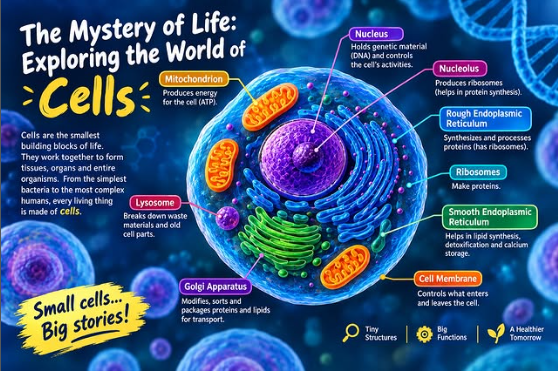
    In this learning task, I explored the amazing world of cells and learned about different cell organelles and their important functions. The nucleus contains genetic material and helps control the activities of the cell, while the nucleolus plays an important role in producing ribosomes. The mitochondria are responsible for producing energy that the cell needs to perform its activities. I also learned about the rough and smooth endoplasmic reticulum, which are involved in processes such as protein production, lipid synthesis, and other cellular functions.

    Another interesting part of the cell is the Golgi apparatus, which modifies, sorts, and packages proteins and other materials for transport. Ribosomes help make proteins, while lysosomes help break down waste materials and unwanted cell components. The cell membrane surrounds the cell and controls what enters and leaves it. Learning about these structures made me realize that even the smallest parts of life have specific jobs and work together to keep the cell functioning properly.

    This topic also helped me understand how complex life can exist at a microscopic level. A cell may look tiny and simple from the outside, but inside it is a busy world filled with structures, chemical reactions, energy production, information, and continuous activity. Studying cells gives us a foundation for learning more advanced topics such as genetics, DNA, human biology, diseases, medicine, and biotechnology.

    Through this task, I improved my knowledge of biology and developed a greater appreciation for the incredible organization found in living things. It also reminded me that science is all about asking questions, exploring mysteries, observing carefully, and discovering
    RSIF8 Task NO:41 πŸ”¬πŸ§¬ The Mystery of Life: Exploring the World of Cells πŸ§¬πŸ”¬ Cells are the fundamental building blocks of life, and understanding them helps us understand how living organisms grow, function, develop, and survive. From tiny microorganisms to plants, animals, and humans, every living organism is made up of cells. Although cells are incredibly small, they contain many fascinating structures that work together like a well-organized system. In this learning task, I explored the amazing world of cells and learned about different cell organelles and their important functions. The nucleus contains genetic material and helps control the activities of the cell, while the nucleolus plays an important role in producing ribosomes. The mitochondria are responsible for producing energy that the cell needs to perform its activities. I also learned about the rough and smooth endoplasmic reticulum, which are involved in processes such as protein production, lipid synthesis, and other cellular functions. Another interesting part of the cell is the Golgi apparatus, which modifies, sorts, and packages proteins and other materials for transport. Ribosomes help make proteins, while lysosomes help break down waste materials and unwanted cell components. The cell membrane surrounds the cell and controls what enters and leaves it. Learning about these structures made me realize that even the smallest parts of life have specific jobs and work together to keep the cell functioning properly. This topic also helped me understand how complex life can exist at a microscopic level. A cell may look tiny and simple from the outside, but inside it is a busy world filled with structures, chemical reactions, energy production, information, and continuous activity. Studying cells gives us a foundation for learning more advanced topics such as genetics, DNA, human biology, diseases, medicine, and biotechnology. Through this task, I improved my knowledge of biology and developed a greater appreciation for the incredible organization found in living things. It also reminded me that science is all about asking questions, exploring mysteries, observing carefully, and discovering
    0 Reacties 0 aandelen 2818 Views
Zoekresultaten