• ACCL foun da tion level
    rehan school
    roll no . 27
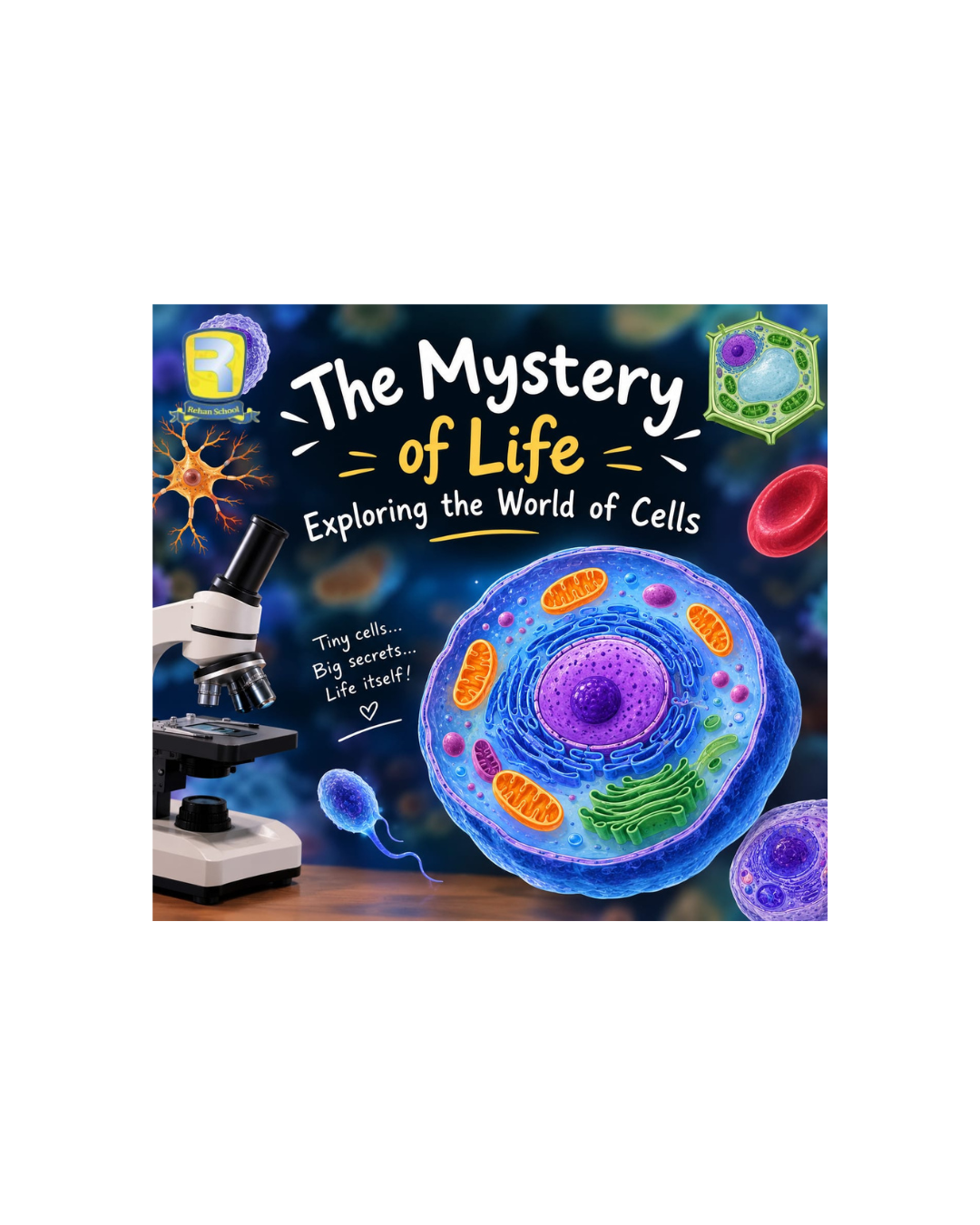
    The Mystery of Life: Exploring the World of Cells

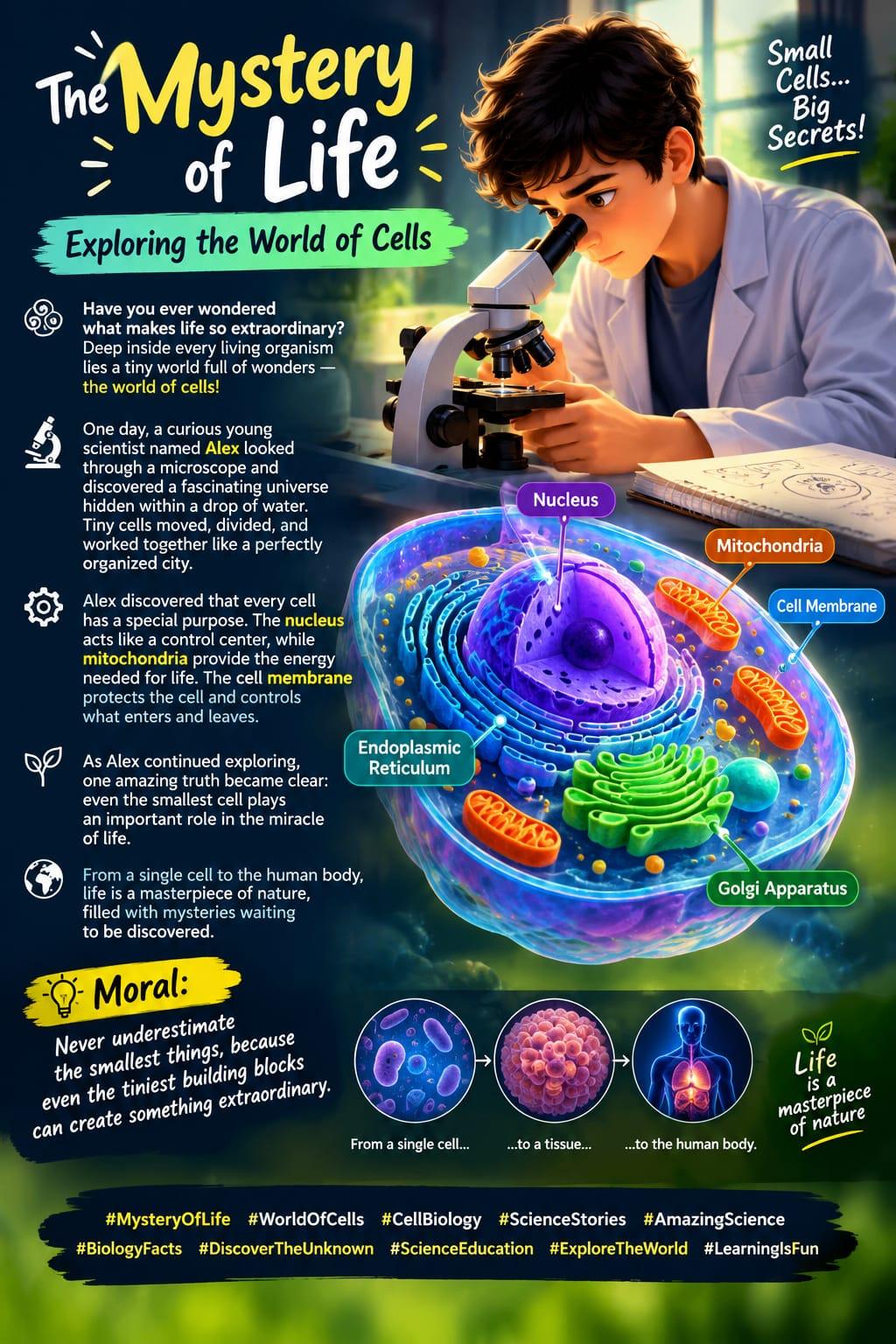
    Have you ever wondered what makes life so extraordinary? Deep inside every living organism lies a tiny world full of wonders — the world of cells!

    One day, a curious young scientist named Alex looked through a microscope and discovered a fascinating universe hidden within a drop of water. Tiny cells moved, divided, and worked together like a perfectly organized city. Some produced energy, others carried important materials, and many worked together to keep living things alive.

    Alex discovered that every cell has a special purpose. The nucleus acts like a control center, while mitochondria provide the energy needed for life. The cell membrane protects the cell and controls what enters and leaves.

    As Alex continued exploring, one amazing truth became clear: even the smallest cell plays an important role in the miracle of life.

    From a single cell to the human body, life is a masterpiece of nature, filled with mysteries waiting to be
    #MysteryOfLife #WorldOfCells #CellBiology #ScienceStories #AmazingScience #BiologyFacts #DiscoverTheUnknown #ScienceEducation #ExploreTheWorld #LearningIsFun
    ACCL foun da tion level rehan school roll no . 27 The Mystery of Life: Exploring the World of Cells Have you ever wondered what makes life so extraordinary? Deep inside every living organism lies a tiny world full of wonders — the world of cells! One day, a curious young scientist named Alex looked through a microscope and discovered a fascinating universe hidden within a drop of water. Tiny cells moved, divided, and worked together like a perfectly organized city. Some produced energy, others carried important materials, and many worked together to keep living things alive. Alex discovered that every cell has a special purpose. The nucleus acts like a control center, while mitochondria provide the energy needed for life. The cell membrane protects the cell and controls what enters and leaves. As Alex continued exploring, one amazing truth became clear: even the smallest cell plays an important role in the miracle of life. From a single cell to the human body, life is a masterpiece of nature, filled with mysteries waiting to be #MysteryOfLife #WorldOfCells #CellBiology #ScienceStories #AmazingScience #BiologyFacts #DiscoverTheUnknown #ScienceEducation #ExploreTheWorld #LearningIsFun
    0 Comments 0 Shares 639 Views
  • RSIF8
    Roll no:14
    story no:22
    story post topic:Exploring Life’s Mechanisms Through Experimentation
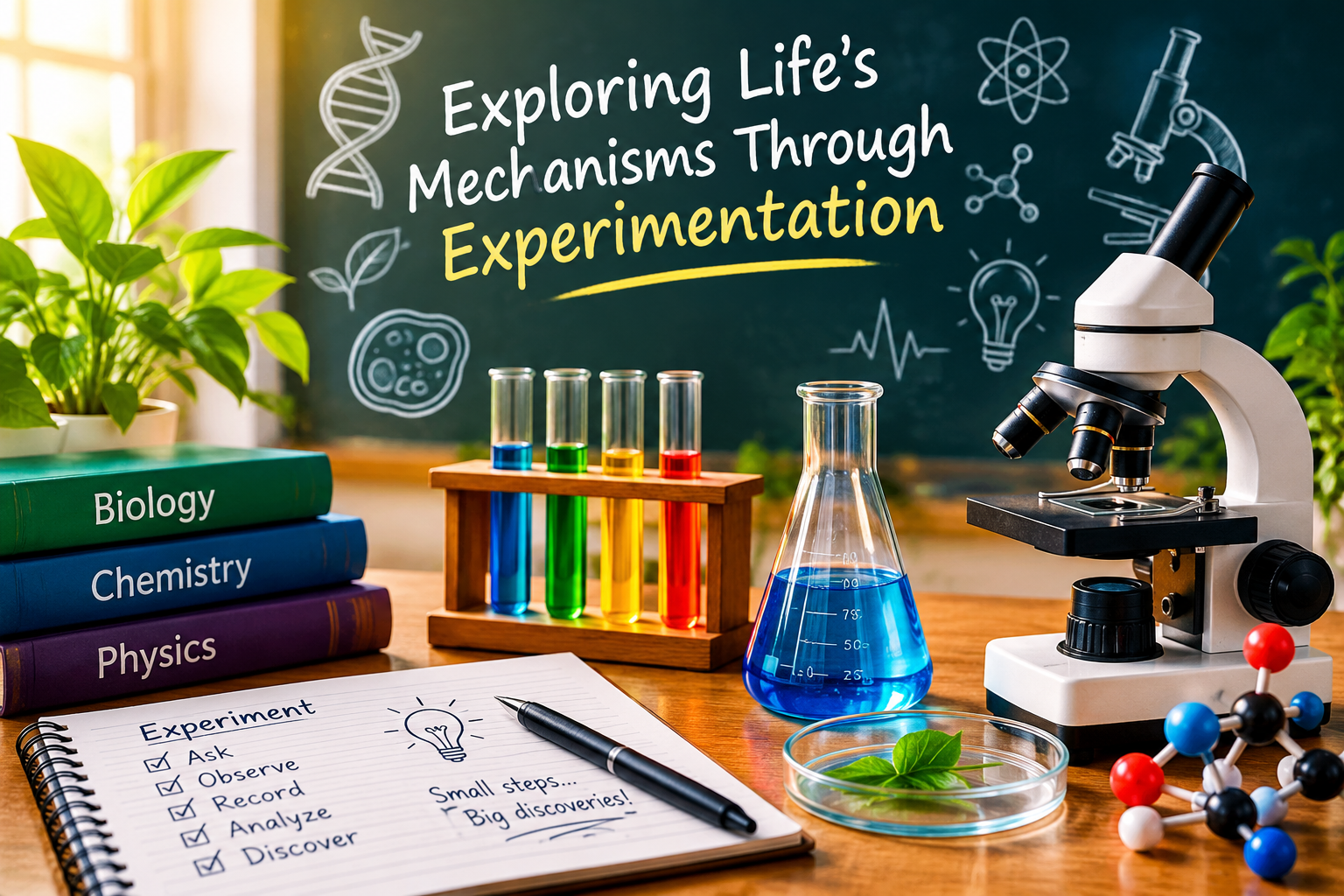
    # Exploring Life’s Mechanisms Through Experimentation

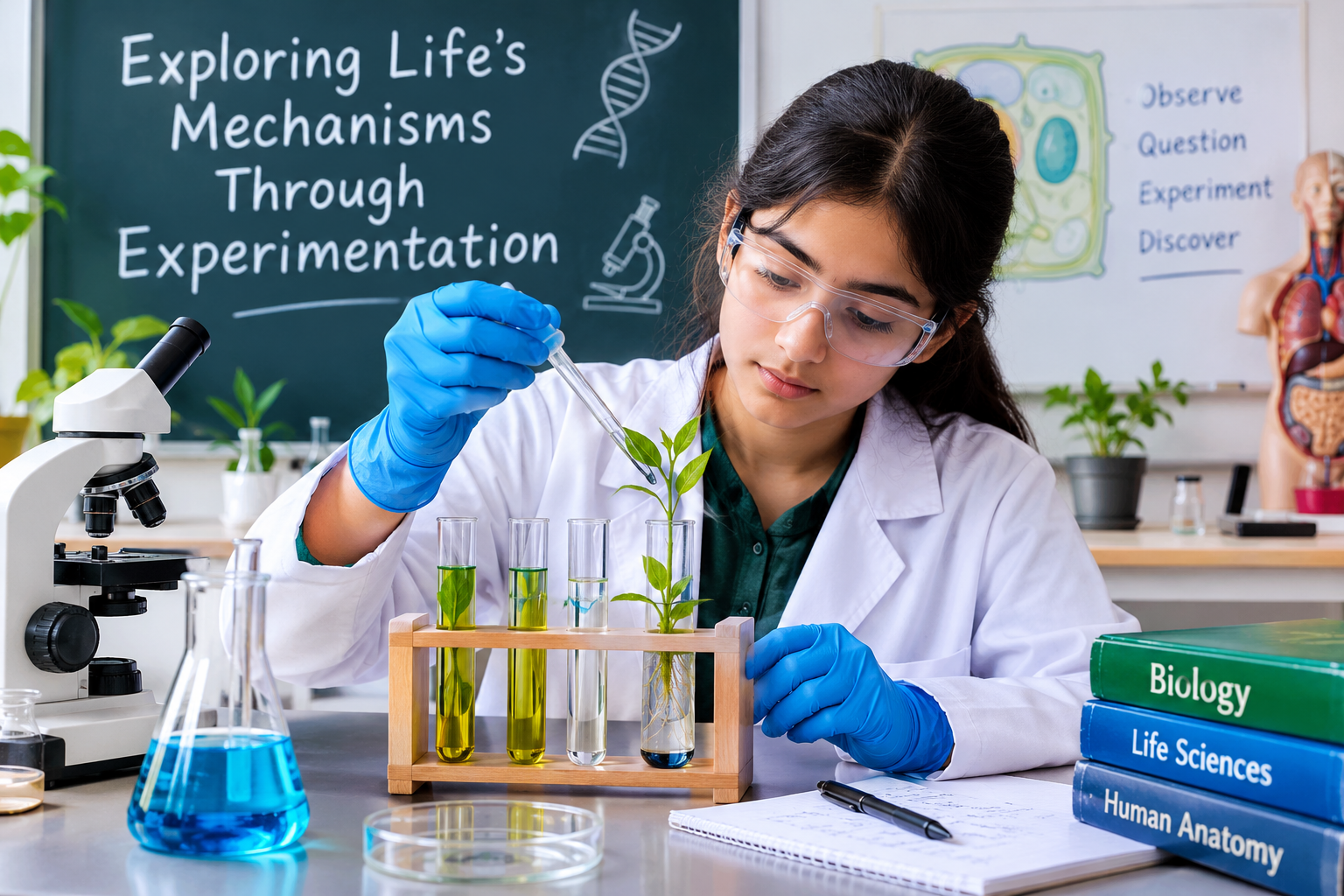
    Welcome to the fascinating world of scientific discovery, where curiosity meets experimentation and every observation brings us closer to understanding the mysteries of life! **“Exploring Life’s Mechanisms Through Experimentation”** highlights the importance of practical experiments in understanding how living organisms function, grow, and interact with their environments.

    Through hands-on activities, laboratory experiments, microscopes, and scientific observations, students can explore the amazing processes that take place inside living things. From examining plant growth and studying cells to understanding biological systems, experimentation helps transform scientific theories into meaningful discoveries.

    **Key Topics Covered:**
    - Understanding the structure and functions of living organisms
    - Exploring cells, DNA, and biological processes
    - Investigating plant growth and environmental factors
    - Learning through experiments and scientific observations
    - Developing critical thinking and problem-solving skills
    - Discovering how living organisms interact with their surroundings

    **Why Is Experimentation Important?**

    Scientific experimentation allows learners to ask questions, test ideas, analyze results, and develop evidence-based conclusions. It encourages creativity, patience, and curiosity while helping students understand the principles of biology and life sciences.

    Whether you are a student, science enthusiast, or aspiring researcher, exploring life's mechanisms through experimentation opens the door to new knowledge and exciting discoveries. Every experiment is an opportunity to learn something new about the incredible world around us!

    **Observe, experiment, discover, and explore the science of life—because every great discovery begins with a question!**

    #Biology #ScienceExperiments #LifeSciences #ScientificDiscovery #BiologyLab #LearningThroughExperimentation #STEMEducation #ScienceLearning #CellBiology #NatureAndScience #EducationalContent #ExploreScience
    RSIF8 Roll no:14 story no:22 story post topic:Exploring Life’s Mechanisms Through Experimentation # 🔬 Exploring Life’s Mechanisms Through Experimentation 🧬 Welcome to the fascinating world of scientific discovery, where curiosity meets experimentation and every observation brings us closer to understanding the mysteries of life! 🌱🔍 **“Exploring Life’s Mechanisms Through Experimentation”** highlights the importance of practical experiments in understanding how living organisms function, grow, and interact with their environments. Through hands-on activities, laboratory experiments, microscopes, and scientific observations, students can explore the amazing processes that take place inside living things. From examining plant growth and studying cells to understanding biological systems, experimentation helps transform scientific theories into meaningful discoveries. 🧪🌿 💡 **Key Topics Covered:** - 🔬 Understanding the structure and functions of living organisms - 🧬 Exploring cells, DNA, and biological processes - 🌱 Investigating plant growth and environmental factors - 🧪 Learning through experiments and scientific observations - 📚 Developing critical thinking and problem-solving skills - 🌍 Discovering how living organisms interact with their surroundings 🎯 **Why Is Experimentation Important?** Scientific experimentation allows learners to ask questions, test ideas, analyze results, and develop evidence-based conclusions. It encourages creativity, patience, and curiosity while helping students understand the principles of biology and life sciences. 🌟 Whether you are a student, science enthusiast, or aspiring researcher, exploring life's mechanisms through experimentation opens the door to new knowledge and exciting discoveries. Every experiment is an opportunity to learn something new about the incredible world around us! ✨ **Observe, experiment, discover, and explore the science of life—because every great discovery begins with a question!** #Biology #ScienceExperiments #LifeSciences #ScientificDiscovery #BiologyLab #LearningThroughExperimentation #STEMEducation #ScienceLearning #CellBiology #NatureAndScience #EducationalContent #ExploreScience
    0 Comments 0 Shares 893 Views
  • ACCL Foundation Level
    Rehan School Urdu Bazar Campus
    Roll no. 04
    Day 41: Story Post

    # The Mystery of Life: Exploring the World of Cells

    ## English Story

    Once upon a time, there was a curious student who wanted to discover the mystery of life. One day, the student learned about cells, the tiny building blocks of all living things.

    With the help of a microscope, the student explored a drop of water and discovered a fascinating world of tiny structures. The student learned that plants, animals, and humans are all made of cells.

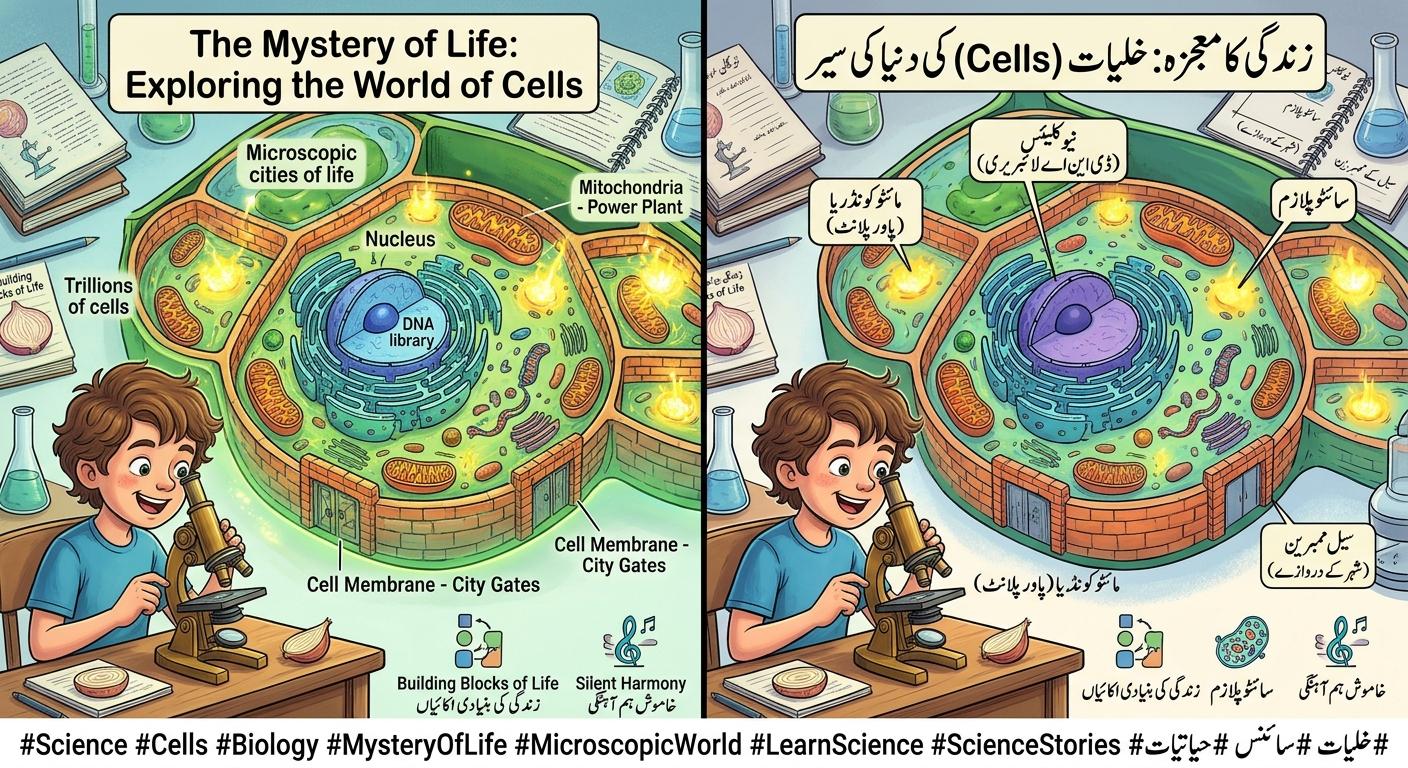
    Each cell has a special job. The nucleus controls the cell’s activities, the cell membrane protects it, and the mitochondria provide energy. Plant cells also have a cell wall and chloroplasts that help plants make their food.

    The student was amazed to discover that millions of tiny cells work together to help our bodies grow, heal, and stay alive. Although cells are too small to see with our eyes alone, they play a huge role in life.

    From that day on, the student understood that the smallest things can hold the biggest mysteries. Exploring the world of cells opened the door to a deeper understanding of nature, science, and the miracle of life.

    Moral: Every tiny part of life has a special purpose, and curiosity helps us discover the wonders of our world.

    ## اردو کہانی

    ایک دفعہ کا ذکر ہے کہ ایک تجسس رکھنے والا طالب علم زندگی کے راز جاننا چاہتا تھا۔ ایک دن اس نے خلیات (Cells) کے بارے میں سیکھا، جو تمام جانداروں کے جسم کی بنیادی اکائیاں ہیں۔

    خوردبین (Microscope) کی مدد سے اس طالب علم نے پانی کے ایک قطرے کا مشاہدہ کیا اور ایک حیرت انگیز چھوٹی دنیا دریافت کی۔ اس نے سیکھا کہ پودے، جانور اور انسان سب خلیات سے مل کر بنے ہیں۔

    ہر خلیے کا اپنا ایک خاص کام ہوتا ہے۔ نیوکلیئس خلیے کی سرگرمیوں کو کنٹرول کرتا ہے، خلیے کی جھلی اس کی حفاظت کرتی ہے، اور مائٹوکانڈریا توانائی فراہم کرتے ہیں۔ پودوں کے خلیوں میں خلیاتی دیوار اور کلوروپلاسٹ بھی ہوتے ہیں، جو پودوں کو خوراک بنانے میں مدد دیتے ہیں۔

    طالب علم یہ جان کر حیران رہ گیا کہ لاکھوں چھوٹے چھوٹے خلیے مل کر ہمارے جسم کو بڑھنے، زخموں کو ٹھیک کرنے اور زندہ رہنے میں مدد دیتے ہیں۔ اگرچہ ہم خلیات کو اپنی آنکھوں سے نہیں دیکھ سکتے، لیکن زندگی میں ان کا کردار بہت اہم ہے۔

    اس دن کے بعد طالب علم سمجھ گیا کہ دنیا کی سب سے چھوٹی چیزوں میں بھی بڑے راز چھپے ہو سکتے ہیں۔ خلیات کی دنیا کو دریافت کرنے سے اسے قدرت، سائنس اور زندگی کے حیرت انگیز نظام کو سمجھنے کا موقع ملا۔

    سبق: زندگی کا ہر چھوٹا حصہ ایک خاص مقصد رکھتا ہے، اور تجسس ہمیں دنیا کے حیرت انگیز راز دریافت کرنے میں مدد دیتا ہے۔

    ## Hashtags

    \#TheMysteryOfLife #ExploringCells #WorldOfCells #CellBiology #ScienceEducation #Microscope #Biology #AmazingScience #LifeScience #LearningIsFun #RehanSchool #UrduBazaarCampus #FoundationLevel
    ACCL Foundation Level Rehan School Urdu Bazar Campus Roll no. 04 Day 41: Story Post # The Mystery of Life: Exploring the World of Cells ## 🇬🇧 English Story Once upon a time, there was a curious student who wanted to discover the mystery of life. One day, the student learned about cells, the tiny building blocks of all living things. With the help of a microscope, the student explored a drop of water and discovered a fascinating world of tiny structures. The student learned that plants, animals, and humans are all made of cells. Each cell has a special job. The nucleus controls the cell’s activities, the cell membrane protects it, and the mitochondria provide energy. Plant cells also have a cell wall and chloroplasts that help plants make their food. The student was amazed to discover that millions of tiny cells work together to help our bodies grow, heal, and stay alive. Although cells are too small to see with our eyes alone, they play a huge role in life. From that day on, the student understood that the smallest things can hold the biggest mysteries. Exploring the world of cells opened the door to a deeper understanding of nature, science, and the miracle of life. Moral: Every tiny part of life has a special purpose, and curiosity helps us discover the wonders of our world. ## 🇵🇰 اردو کہانی ایک دفعہ کا ذکر ہے کہ ایک تجسس رکھنے والا طالب علم زندگی کے راز جاننا چاہتا تھا۔ ایک دن اس نے خلیات (Cells) کے بارے میں سیکھا، جو تمام جانداروں کے جسم کی بنیادی اکائیاں ہیں۔ خوردبین (Microscope) کی مدد سے اس طالب علم نے پانی کے ایک قطرے کا مشاہدہ کیا اور ایک حیرت انگیز چھوٹی دنیا دریافت کی۔ اس نے سیکھا کہ پودے، جانور اور انسان سب خلیات سے مل کر بنے ہیں۔ ہر خلیے کا اپنا ایک خاص کام ہوتا ہے۔ نیوکلیئس خلیے کی سرگرمیوں کو کنٹرول کرتا ہے، خلیے کی جھلی اس کی حفاظت کرتی ہے، اور مائٹوکانڈریا توانائی فراہم کرتے ہیں۔ پودوں کے خلیوں میں خلیاتی دیوار اور کلوروپلاسٹ بھی ہوتے ہیں، جو پودوں کو خوراک بنانے میں مدد دیتے ہیں۔ طالب علم یہ جان کر حیران رہ گیا کہ لاکھوں چھوٹے چھوٹے خلیے مل کر ہمارے جسم کو بڑھنے، زخموں کو ٹھیک کرنے اور زندہ رہنے میں مدد دیتے ہیں۔ اگرچہ ہم خلیات کو اپنی آنکھوں سے نہیں دیکھ سکتے، لیکن زندگی میں ان کا کردار بہت اہم ہے۔ اس دن کے بعد طالب علم سمجھ گیا کہ دنیا کی سب سے چھوٹی چیزوں میں بھی بڑے راز چھپے ہو سکتے ہیں۔ خلیات کی دنیا کو دریافت کرنے سے اسے قدرت، سائنس اور زندگی کے حیرت انگیز نظام کو سمجھنے کا موقع ملا۔ سبق: زندگی کا ہر چھوٹا حصہ ایک خاص مقصد رکھتا ہے، اور تجسس ہمیں دنیا کے حیرت انگیز راز دریافت کرنے میں مدد دیتا ہے۔ ## 🏷️ Hashtags \#TheMysteryOfLife #ExploringCells #WorldOfCells #CellBiology #ScienceEducation #Microscope #Biology #AmazingScience #LifeScience #LearningIsFun #RehanSchool #UrduBazaarCampus #FoundationLevel
    0 Comments 0 Shares 964 Views
  • ACCL Foundation Level (Rehan School Urdu Bazar Campus )
    Day : 41 Story Post No: 6
    Roll No : 16
    Accl task
    The Mystery of Life: Exploring the World of Cells
    ---
    Once, a curious girl named Sara always asked one question: "What is life really made of?"
    One day, her science teacher didn't answer with words. She just placed a single drop of pond water under a microscope and said, "Look."
    Sara looked. And gasped.
    Inside that tiny, clear drop was an entire universe. Hundreds of tiny creatures swimming, spinning, eating, dividing. Little transparent bubbles were moving like they had a purpose.
    "What are they?" Sara whispered.
    "They are Cells," her teacher said. "The building blocks of all life. Every leaf, every bird, every human - including you - is made of them. You have about 37 trillion of them inside you right now."
    Sara couldn't believe it. "But they are so small!"
    "Small, but not simple," said the teacher. "Let's explore one."
    She showed Sara a diagram of a single cell.
    "See this? This dark circle in the middle is the Nucleus. Think of it as the brain or the control center. It holds all the instructions - your DNA - that tells the cell who you are.
    Around it is the Cytoplasm, a jelly-like fluid. It's like a busy factory floor where all the work happens. Food is turned into energy here.
    Scattered inside are tiny machines. Some are Mitochondria - the powerhouses that give you energy to run and laugh. Some are Ribosomes - tiny builders that make proteins.
    And finally, surrounding everything is the Cell Membrane. It's the gatekeeper, the wall of the city. It decides what goes in and what stays out, keeping the cell safe."
    Sara stared, amazed. "So... inside me, there are trillions of little cities, all working together?"
    "Exactly," the teacher smiled. "When cells of the same kind join together, they form tissues. Tissues join to form organs, like your heart and brain. And organs join to form... you."
    "So life isn't one big thing," Sara said slowly. "Life is billions of tiny lives working as one team."
    The teacher nodded. "That's the mystery. From the outside, we look like one person. From the inside, we are a universe."
    From that day on, Sara never saw herself the same way again. She knew that every time she breathed, healed, or grew - it was her 37 trillion tiny citizens working hard for her.
    MORAL: Life's greatest wonder is not in the stars above, but in the tiny world within us.
    ---
    زندگی کا راز: خلیوں کی دنیا کی سیر
    ایک دفعہ کا ذکر ہے، سارہ نام کی ایک بہت متجسس لڑکی تھی۔ وہ ہمیشہ ایک ہی سوال پوچھتی تھی: "آخر زندگی بنی کس چیز سے ہے؟"
    ایک دن اس کی سائنس ٹیچر نے اسے لفظوں میں جواب نہیں دیا۔ اس نے تالاب کے پانی کا ایک قطرہ خوردبین کے نیچے رکھا اور کہا، "خود دیکھ لو۔"
    سارہ نے خوردبین میں جھانکا۔ اور اس کی چیخ نکل گئی۔
    اس چھوٹے سے شفاف قطرے کے اندر ایک پوری کائنات آباد تھی۔ سینکڑوں ننھی ننھی مخلوقات تیر رہی تھیں، گھوم رہی تھیں، کھا رہی تھیں، تقسیم ہو رہی تھیں۔ چھوٹے چھوٹے شفاف غبارے ایسے حرکت کر رہے تھے جیسے ان کا کوئی مقصد ہو۔
    "یہ کیا ہیں؟" سارہ نے سرگوشی کی۔
    "یہ خلیے (Cells) ہیں،" ٹیچر نے کہا۔ "یہ زندگی کی بنیاد ہیں۔ ہر پتہ، ہر پرندہ، ہر انسان، تم سمیت، انہی سے بنا ہے۔ تمہارے اندر اس وقت تقریباً 37 کھرب خلیے موجود ہیں۔"
    سارہ کو یقین نہیں آیا۔ "لیکن یہ تو اتنے چھوٹے ہیں!"
    "چھوٹے ہیں، لیکن سادہ نہیں،" ٹیچر نے کہا۔ "آؤ ایک کو قریب سے دیکھتے ہیں۔"
    اس نے سارہ کو ایک خلیے کا نقشہ دکھایا۔
    "یہ دیکھو؟ بیچ میں یہ گہرا دائرہ مرکزہ (Nucleus) ہے۔ اسے خلیے کا دماغ یا کنٹرول سینٹر سمجھو۔ اس میں ساری ہدایات ہیں، تمہارا ڈی این اے، جو خلیے کو بتاتا ہے کہ تم کون ہو۔
    اس کے ارد گرد سائٹو پلازم (Cytoplasm) ہے، ایک جیلی جیسا مادہ۔ یہ ایک مصروف فیکٹری کے فرش کی طرح ہے جہاں سارا کام ہوتا ہے۔ یہاں خوراک توانائی میں بدلتی ہے۔
    اندر بکھری ہوئی چھوٹی چھوٹی مشینیں ہیں۔ کچھ مائٹو کونڈریا ہیں، یہ پاور ہاؤس ہیں جو تمہیں بھاگنے اور ہنسنے کے لیے توانائی دیتے ہیں۔ کچھ رائبوسومز ہیں، چھوٹے مستری جو پروٹین بناتے ہیں۔
    اور آخر میں، ہر چیز کے گرد خلیاتی جھلی (Cell Membrane) ہے۔ یہ دربان ہے، شہر کی دیوار ہے۔ یہ فیصلہ کرتی ہے کہ اندر کیا جائے گا اور باہر کیا رہے گا، اور خلیے کو محفوظ رکھتی ہے۔"
    سارہ حیرت سے بولی، "تو... میرے اندر کھربوں چھوٹے شہر ہیں، جو سب مل کر کام کر رہے ہیں؟"بالکل،" ٹیچر مسکرائی۔ "جب ایک ہی قسم کے خلیے آپس میں ملتے ہیں تو وہ ٹشو (نسیج) بناتے ہیں۔ ٹشو مل کر اعضاء بناتے ہیں، جیسے تمہارا دل اور دماغ۔ اور اعضاء مل کر بناتے ہیں... تمہیں۔"
    "تو زندگی ایک بڑی چیز نہیں ہے،" سارہ نے آہستہ سے کہا۔ "زندگی اربوں ننھی زندگیوں کا ایک ٹیم کے طور پر کام کرنا ہے۔"
    ٹیچر نے سر ہلایا۔ "یہی تو راز ہے۔ باہر سے ہم ایک انسان نظر آتے ہیں۔ اندر سے ہم ایک پوری کائنات ہیں۔"
    اس دن کے بعد سارہ نے اپنے آپ کو کبھی پہلے جیسا نہیں دیکھا۔ وہ جان گئی تھی کہ جب بھی وہ سانس لیتی ہے، اس کا زخم بھرتا ہے، یا وہ بڑی ہوتی ہے، تو اس کے 37 کھرب ننھے شہری اس کے لیے سخت محنت کر رہے ہوتے ہیں۔
    سبق: زندگی کا سب سے بڑا عجوبہ اوپر ستاروں میں نہیں، بلکہ ہمارے اندر کی چھوٹی دنیا میں چھپا ہے۔ See less
    ACCL Foundation Level (Rehan School Urdu Bazar Campus ) Day : 41 Story Post No: 6 Roll No : 16 Accl task The Mystery of Life: Exploring the World of Cells --- Once, a curious girl named Sara always asked one question: "What is life really made of?" One day, her science teacher didn't answer with words. She just placed a single drop of pond water under a microscope and said, "Look." Sara looked. And gasped. Inside that tiny, clear drop was an entire universe. Hundreds of tiny creatures swimming, spinning, eating, dividing. Little transparent bubbles were moving like they had a purpose. "What are they?" Sara whispered. "They are Cells," her teacher said. "The building blocks of all life. Every leaf, every bird, every human - including you - is made of them. You have about 37 trillion of them inside you right now." Sara couldn't believe it. "But they are so small!" "Small, but not simple," said the teacher. "Let's explore one." She showed Sara a diagram of a single cell. "See this? This dark circle in the middle is the Nucleus. Think of it as the brain or the control center. It holds all the instructions - your DNA - that tells the cell who you are. Around it is the Cytoplasm, a jelly-like fluid. It's like a busy factory floor where all the work happens. Food is turned into energy here. Scattered inside are tiny machines. Some are Mitochondria - the powerhouses that give you energy to run and laugh. Some are Ribosomes - tiny builders that make proteins. And finally, surrounding everything is the Cell Membrane. It's the gatekeeper, the wall of the city. It decides what goes in and what stays out, keeping the cell safe." Sara stared, amazed. "So... inside me, there are trillions of little cities, all working together?" "Exactly," the teacher smiled. "When cells of the same kind join together, they form tissues. Tissues join to form organs, like your heart and brain. And organs join to form... you." "So life isn't one big thing," Sara said slowly. "Life is billions of tiny lives working as one team." The teacher nodded. "That's the mystery. From the outside, we look like one person. From the inside, we are a universe." From that day on, Sara never saw herself the same way again. She knew that every time she breathed, healed, or grew - it was her 37 trillion tiny citizens working hard for her. MORAL: Life's greatest wonder is not in the stars above, but in the tiny world within us. --- زندگی کا راز: خلیوں کی دنیا کی سیر ایک دفعہ کا ذکر ہے، سارہ نام کی ایک بہت متجسس لڑکی تھی۔ وہ ہمیشہ ایک ہی سوال پوچھتی تھی: "آخر زندگی بنی کس چیز سے ہے؟" ایک دن اس کی سائنس ٹیچر نے اسے لفظوں میں جواب نہیں دیا۔ اس نے تالاب کے پانی کا ایک قطرہ خوردبین کے نیچے رکھا اور کہا، "خود دیکھ لو۔" سارہ نے خوردبین میں جھانکا۔ اور اس کی چیخ نکل گئی۔ اس چھوٹے سے شفاف قطرے کے اندر ایک پوری کائنات آباد تھی۔ سینکڑوں ننھی ننھی مخلوقات تیر رہی تھیں، گھوم رہی تھیں، کھا رہی تھیں، تقسیم ہو رہی تھیں۔ چھوٹے چھوٹے شفاف غبارے ایسے حرکت کر رہے تھے جیسے ان کا کوئی مقصد ہو۔ "یہ کیا ہیں؟" سارہ نے سرگوشی کی۔ "یہ خلیے (Cells) ہیں،" ٹیچر نے کہا۔ "یہ زندگی کی بنیاد ہیں۔ ہر پتہ، ہر پرندہ، ہر انسان، تم سمیت، انہی سے بنا ہے۔ تمہارے اندر اس وقت تقریباً 37 کھرب خلیے موجود ہیں۔" سارہ کو یقین نہیں آیا۔ "لیکن یہ تو اتنے چھوٹے ہیں!" "چھوٹے ہیں، لیکن سادہ نہیں،" ٹیچر نے کہا۔ "آؤ ایک کو قریب سے دیکھتے ہیں۔" اس نے سارہ کو ایک خلیے کا نقشہ دکھایا۔ "یہ دیکھو؟ بیچ میں یہ گہرا دائرہ مرکزہ (Nucleus) ہے۔ اسے خلیے کا دماغ یا کنٹرول سینٹر سمجھو۔ اس میں ساری ہدایات ہیں، تمہارا ڈی این اے، جو خلیے کو بتاتا ہے کہ تم کون ہو۔ اس کے ارد گرد سائٹو پلازم (Cytoplasm) ہے، ایک جیلی جیسا مادہ۔ یہ ایک مصروف فیکٹری کے فرش کی طرح ہے جہاں سارا کام ہوتا ہے۔ یہاں خوراک توانائی میں بدلتی ہے۔ اندر بکھری ہوئی چھوٹی چھوٹی مشینیں ہیں۔ کچھ مائٹو کونڈریا ہیں، یہ پاور ہاؤس ہیں جو تمہیں بھاگنے اور ہنسنے کے لیے توانائی دیتے ہیں۔ کچھ رائبوسومز ہیں، چھوٹے مستری جو پروٹین بناتے ہیں۔ اور آخر میں، ہر چیز کے گرد خلیاتی جھلی (Cell Membrane) ہے۔ یہ دربان ہے، شہر کی دیوار ہے۔ یہ فیصلہ کرتی ہے کہ اندر کیا جائے گا اور باہر کیا رہے گا، اور خلیے کو محفوظ رکھتی ہے۔" سارہ حیرت سے بولی، "تو... میرے اندر کھربوں چھوٹے شہر ہیں، جو سب مل کر کام کر رہے ہیں؟"بالکل،" ٹیچر مسکرائی۔ "جب ایک ہی قسم کے خلیے آپس میں ملتے ہیں تو وہ ٹشو (نسیج) بناتے ہیں۔ ٹشو مل کر اعضاء بناتے ہیں، جیسے تمہارا دل اور دماغ۔ اور اعضاء مل کر بناتے ہیں... تمہیں۔" "تو زندگی ایک بڑی چیز نہیں ہے،" سارہ نے آہستہ سے کہا۔ "زندگی اربوں ننھی زندگیوں کا ایک ٹیم کے طور پر کام کرنا ہے۔" ٹیچر نے سر ہلایا۔ "یہی تو راز ہے۔ باہر سے ہم ایک انسان نظر آتے ہیں۔ اندر سے ہم ایک پوری کائنات ہیں۔" اس دن کے بعد سارہ نے اپنے آپ کو کبھی پہلے جیسا نہیں دیکھا۔ وہ جان گئی تھی کہ جب بھی وہ سانس لیتی ہے، اس کا زخم بھرتا ہے، یا وہ بڑی ہوتی ہے، تو اس کے 37 کھرب ننھے شہری اس کے لیے سخت محنت کر رہے ہوتے ہیں۔ سبق: زندگی کا سب سے بڑا عجوبہ اوپر ستاروں میں نہیں، بلکہ ہمارے اندر کی چھوٹی دنیا میں چھپا ہے۔ See less
    0 Comments 0 Shares 676 Views
  • Rsif8
    Roll No 30
    Post No 230
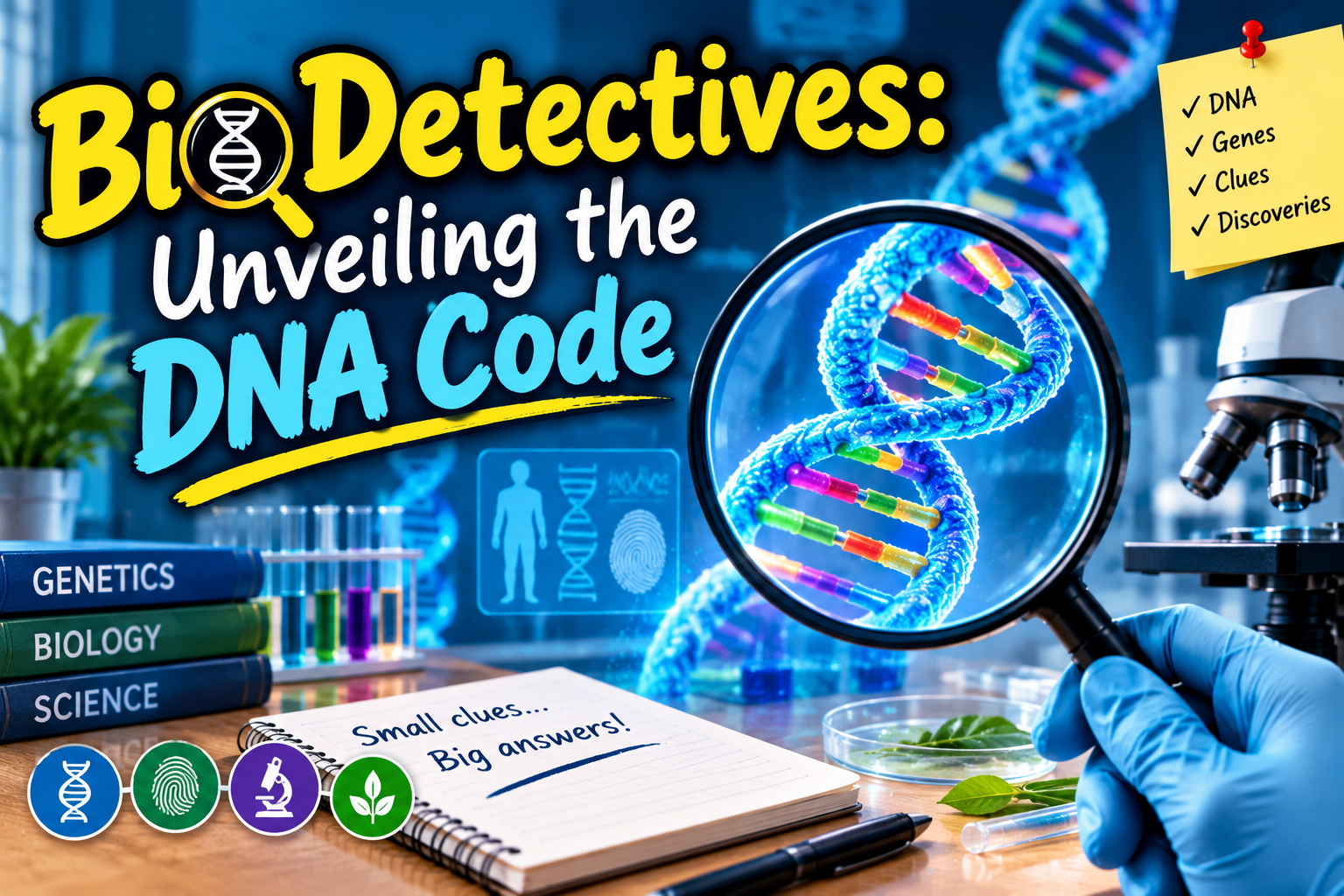
    **Bio Detectives: Unveiling the DNA Code!**

    Welcome to the fascinating world of DNA and science! In this video, we explore the secrets of DNA, genes, and the amazing code inside living things. Discover how scientists use clues, microscopes, and scientific research to understand DNA and learn more about life.

    **What will you discover?**
    - What is DNA?
    - What are genes?
    - How do scientists study DNA?
    - What secrets can DNA reveal?
    - How does science help us understand living things?

    Join this exciting journey of discovery and become a bio detective with us!

    Like, Comment, Share, and Subscribe for more interesting science and educational videos.

    #BioDetectives #DNA #Genetics #Science #Biology #DNACode #ScienceForKids #EducationalVideos #LearningIsFun
    Rsif8 Roll No 30 Post No 230 🧬🔍 **Bio Detectives: Unveiling the DNA Code!** Welcome to the fascinating world of DNA and science! In this video, we explore the secrets of DNA, genes, and the amazing code inside living things. Discover how scientists use clues, microscopes, and scientific research to understand DNA and learn more about life. 🔬 **What will you discover?** - What is DNA? - What are genes? - How do scientists study DNA? - What secrets can DNA reveal? - How does science help us understand living things? Join this exciting journey of discovery and become a bio detective with us! 🧪🧬 👍 Like, 💬 Comment, 🔄 Share, and 🔔 Subscribe for more interesting science and educational videos. #BioDetectives #DNA #Genetics #Science #Biology #DNACode #ScienceForKids #EducationalVideos #LearningIsFun
    0 Comments 0 Shares 380 Views
  • RSIF8
    TASK NO:139
    ROLLNO:13
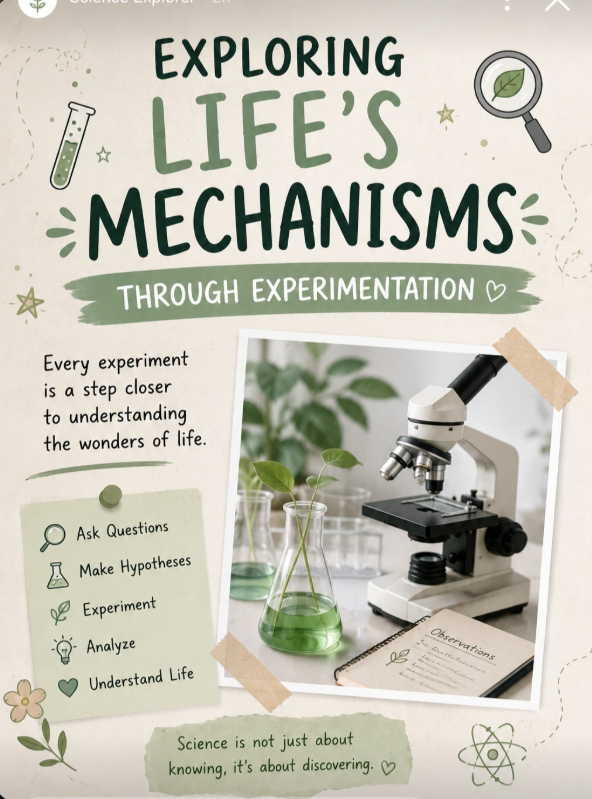
    # Exploring Life’s Mechanisms Through Experimentation

    Life is full of mysteries, discoveries, and amazing processes that help us understand how living organisms work. **“Exploring Life’s Mechanisms Through Experimentation”** is an exciting topic that highlights the importance of scientific experiments in understanding life, nature, and the world around us. Through observation, investigation, and practical activities, we can explore how living things function and discover the scientific principles behind everyday phenomena.

    Experimentation is one of the most important parts of science. It allows us to ask questions, develop ideas, test hypotheses, observe results, and learn from our findings. Instead of simply memorizing facts from books, we can use experiments to understand scientific concepts through practical experience. Every experiment gives us an opportunity to explore something new, improve our knowledge, and develop critical-thinking skills.

    Biology helps us understand living organisms, including plants, animals, humans, and microorganisms. By studying cells, we can discover how the basic units of life work together to support living systems. We can investigate how plants grow, how seeds germinate, how leaves respond to sunlight, and how environmental conditions affect living things. These investigations help us appreciate the complexity of life and understand the relationships between organisms and their surroundings.

    Chemistry also plays an important role in understanding life. Living organisms depend on chemical reactions to obtain energy, grow, repair cells, and maintain essential functions. Through safe and supervised experiments, students can explore how different substances interact, observe changes in color, and learn about solutions, acids, bases, and chemical reactions. These activities demonstrate that chemistry is not just a subject in a textbook; it is connected to many processes that happen inside our bodies and throughout the natural world.

    Microscopes and laboratory equipment make scientific exploration even more interesting. A microscope allows us to observe structures that are too small to see
    RSIF8 TASK NO:139 ROLLNO:13 # Exploring Life’s Mechanisms Through Experimentation 🧬🔬🧪 Life is full of mysteries, discoveries, and amazing processes that help us understand how living organisms work. **“Exploring Life’s Mechanisms Through Experimentation”** is an exciting topic that highlights the importance of scientific experiments in understanding life, nature, and the world around us. Through observation, investigation, and practical activities, we can explore how living things function and discover the scientific principles behind everyday phenomena. Experimentation is one of the most important parts of science. It allows us to ask questions, develop ideas, test hypotheses, observe results, and learn from our findings. Instead of simply memorizing facts from books, we can use experiments to understand scientific concepts through practical experience. Every experiment gives us an opportunity to explore something new, improve our knowledge, and develop critical-thinking skills. Biology helps us understand living organisms, including plants, animals, humans, and microorganisms. By studying cells, we can discover how the basic units of life work together to support living systems. We can investigate how plants grow, how seeds germinate, how leaves respond to sunlight, and how environmental conditions affect living things. These investigations help us appreciate the complexity of life and understand the relationships between organisms and their surroundings. Chemistry also plays an important role in understanding life. Living organisms depend on chemical reactions to obtain energy, grow, repair cells, and maintain essential functions. Through safe and supervised experiments, students can explore how different substances interact, observe changes in color, and learn about solutions, acids, bases, and chemical reactions. These activities demonstrate that chemistry is not just a subject in a textbook; it is connected to many processes that happen inside our bodies and throughout the natural world. Microscopes and laboratory equipment make scientific exploration even more interesting. A microscope allows us to observe structures that are too small to see
    0 Comments 0 Shares 1663 Views
  • RSIF8
    Roll no 94
    Storypost no 20
    Storypost topic
    Exploring Life's Mechanisms Through Experimentation
    Science begins with curiosity and grows through discovery. Every experiment helps us understand how living organisms function, adapt, and interact with the world around them.
    From observing tiny cells under a microscope to testing hypotheses in the lab, experimentation allows us to uncover the fascinating mechanisms that make life possible.
    Keep asking questions, exploring new ideas, and embracing the journey of learning. Every discovery starts with a single experiment!
    #Science #Biology #Experimentation #STEM #LifeSciences #ScientificDiscovery #Learning #Innovation #Curiosity #FutureScientists #Education #Research
    RSIF8 Roll no 94 Storypost no 20 Storypost topic 🔬🌱 Exploring Life's Mechanisms Through Experimentation 🧪✨ Science begins with curiosity and grows through discovery. Every experiment helps us understand how living organisms function, adapt, and interact with the world around them. 🌍💡 From observing tiny cells under a microscope to testing hypotheses in the lab, experimentation allows us to uncover the fascinating mechanisms that make life possible. 🔍🧬 Keep asking questions, exploring new ideas, and embracing the journey of learning. Every discovery starts with a single experiment! 🚀📚💚 #Science #Biology #Experimentation #STEM #LifeSciences #ScientificDiscovery #Learning #Innovation #Curiosity #FutureScientists #Education #Research 🔬🧪🌱📖✨
    0 Comments 0 Shares 898 Views
  • RSIF8
    ROLL NO 77
    STORY POST TOPIC The Journey of "Cell" From Monks' Chambers to Biology Labs

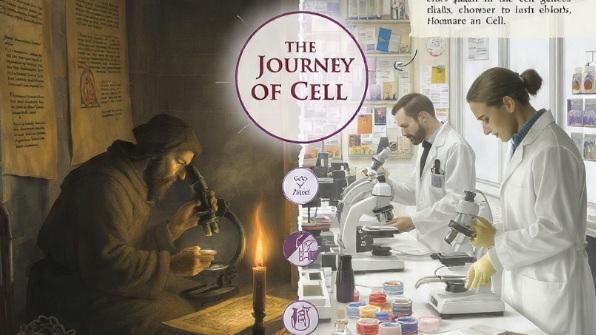
    **The Journey of “Cell” — From Monks’ Chambers to Biology Labs**

    کیا آپ جانتے ہیں کہ Biology میں **“Cell”** کا نام کہاں سے آیا؟

    یہ دلچسپ سفر **Robert Hooke** کے مشاہدات سے شروع ہوا، جب انہوں نے cork کے ایک ٹکڑے کو microscope کے ذریعے دیکھا اور اس میں چھوٹے چھوٹے خانے نما حصے نظر آئے۔ ان خانوں نے انہیں راہبوں کے کمروں (monks’ chambers) کی یاد دلائی، اور یوں **“cell”** کا نام مشہور ہوا۔

    آج Cell Biology جدید microscopes، DNA research اور advanced laboratories تک پہنچ چکی ہے۔

    یہ کہانی ہمیں دکھاتی ہے کہ ایک چھوٹا سا مشاہدہ کس طرح سائنس کی پوری دنیا کو بدل سکتا ہے!

    **Keep observing, keep questioning, and keep discovering! **
    RSIF8 ROLL NO 77 STORY POST TOPIC The Journey of "Cell" From Monks' Chambers to Biology Labs 🔬🧬 **The Journey of “Cell” — From Monks’ Chambers to Biology Labs** 🏛️➡️🧪 کیا آپ جانتے ہیں کہ Biology میں **“Cell”** کا نام کہاں سے آیا؟ 🤔🔬 یہ دلچسپ سفر **Robert Hooke** کے مشاہدات سے شروع ہوا، جب انہوں نے cork کے ایک ٹکڑے کو microscope کے ذریعے دیکھا اور اس میں چھوٹے چھوٹے خانے نما حصے نظر آئے۔ 🧫🔍 ان خانوں نے انہیں راہبوں کے کمروں (monks’ chambers) کی یاد دلائی، اور یوں **“cell”** کا نام مشہور ہوا۔ 📚✨ آج Cell Biology جدید microscopes، DNA research اور advanced laboratories تک پہنچ چکی ہے۔ 🧬🧪🚀 یہ کہانی ہمیں دکھاتی ہے کہ ایک چھوٹا سا مشاہدہ کس طرح سائنس کی پوری دنیا کو بدل سکتا ہے! 🌍💡 **Keep observing, keep questioning, and keep discovering! 🔬✨**
    0 Comments 0 Shares 345 Views
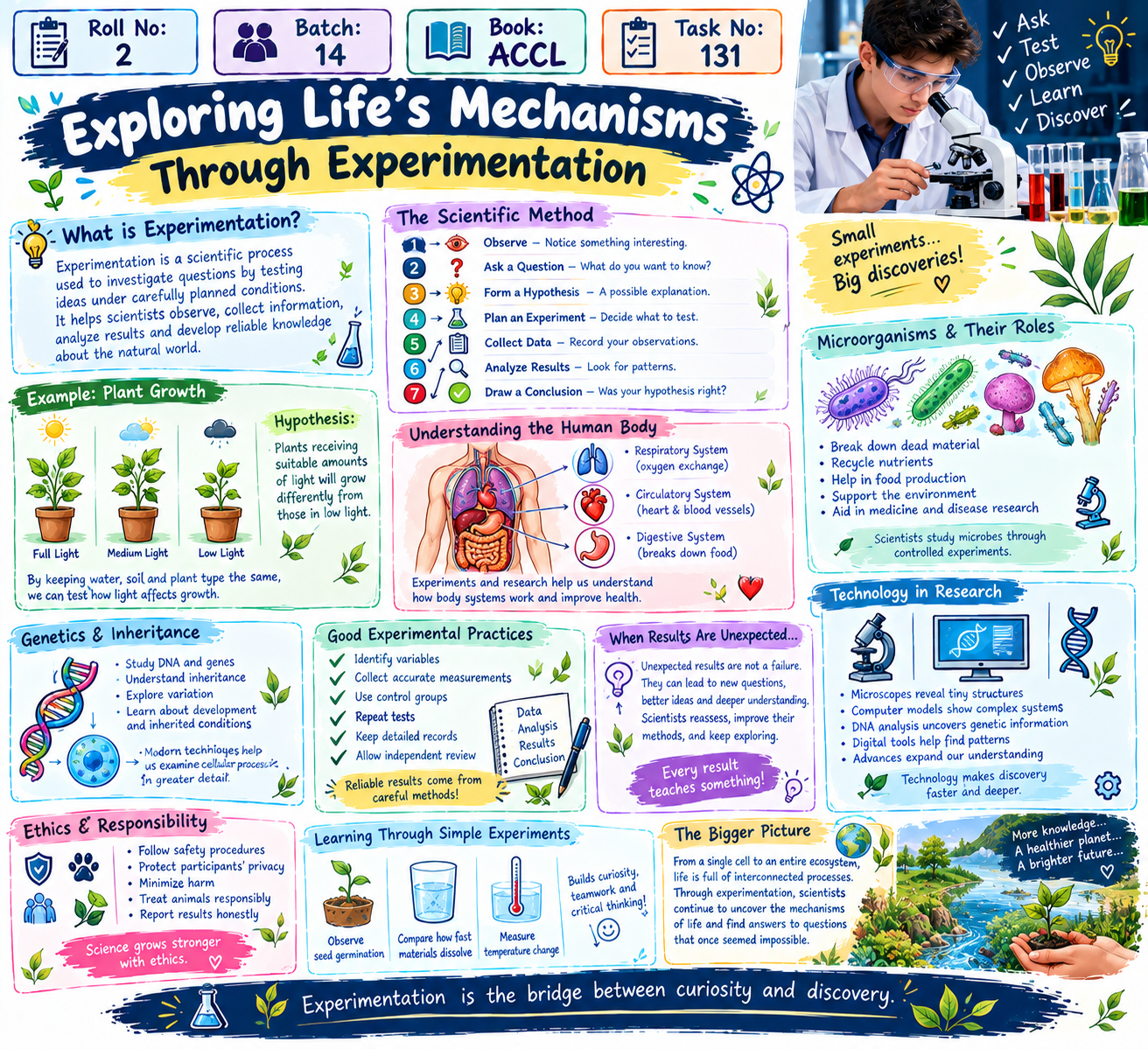
  • **Roll No: 2**
    **Batch: 14**
    **Book: ACCL**
    **Task No: 138**

    # Exploring Life’s Mechanisms Through Experimentation

    Have you ever wondered how scientists discover the secrets of life? From understanding how plants grow to investigating how the human heart works, science helps us explore the processes that make living organisms function. Behind many important discoveries lies a powerful method called **experimentation**, which allows scientists to test ideas, observe results, and develop a deeper understanding of the natural world.

    **Experimentation is a scientific process used to investigate questions by testing ideas under carefully planned conditions.** Scientists begin by observing something interesting, asking a question, and developing a hypothesis—a possible explanation that can be tested. They then design an experiment, collect information, and analyze the results to determine whether the evidence supports their original idea. This process helps turn curiosity into reliable scientific knowledge.

    One fascinating example is the study of plant growth. Imagine a student who wants to discover whether the amount of light affects how quickly a plant grows. The student forms a hypothesis that plants receiving suitable amounts of light will grow differently from plants kept in low-light conditions. By keeping factors such as water, soil, and plant type consistent, the student can compare the results and investigate the role of light in plant development.

    Experimentation is also essential for understanding the human body. Scientists investigate how the heart circulates blood, how the lungs exchange gases, and how the digestive system processes food. Through carefully designed studies, medical imaging, laboratory tests, and other research methods, scientists learn how body systems work together to maintain health. Their findings can contribute to improved medical treatments and a better understanding of human biology.

    Another important field is microbiology, the study of microscopic organisms. Many bacteria and fungi play beneficial roles in nature, including breaking down dead material and recycling nutrients. Scientists use controlled experiments to investigate how these organisms respond to different environmental conditions. Such research can help improve food production, develop medicines, understand infectious diseases, and protect ecosystems.

    Experiments also help researchers understand genetics and the mechanisms of inheritance. By studying DNA, genes, and the characteristics of organisms across generations, scientists investigate how biological information is passed on and how variations arise. Modern techniques allow researchers to explore cellular processes in greater detail, helping them understand development, inherited conditions, and the relationships among different forms of life.

    A successful experiment requires more than simply observing what happens. Scientists must identify the variables they are studying, collect accurate measurements, and repeat tests when appropriate. They often use control groups for comparison and record their observations carefully. Repeating experiments helps determine whether a result is consistent, while independent review allows other researchers to examine the methods and evaluate the conclusions. These practices make scientific findings more trustworthy.

    Sometimes experiments produce unexpected results. Instead of treating an unexpected outcome as a failure, scientists use it as an opportunity to ask new questions. They may reconsider their hypothesis, improve their experimental design, or investigate another possible explanation. Scientific progress often happens through this cycle of questioning, testing, learning, and refining ideas. Every result can contribute something valuable when it is interpreted carefully.

    Technology has made biological experimentation more advanced than ever before. Microscopes reveal structures too small to see with the naked eye, computer models help researchers understand complicated systems, and DNA analysis allows scientists to investigate genetic information. Digital tools can also help organize large amounts of data and identify patterns that might otherwise be difficult to notice. These innovations continue to expand our understanding of living organisms.

    However, scientific experimentation must always be guided by responsibility and ethics. Researchers should follow safety procedures, protect participants' privacy, minimize harm, and treat animals responsibly. Experiments involving people or animals require appropriate ethical review and safeguards. Scientists must also report results honestly, even when the findings do not match their expectations. Reliable science depends on both accurate evidence and responsible behavior.

    Experimentation connects classroom learning with real-world discoveries. Students can explore scientific ideas through safe activities, such as observing seed germination, comparing how quickly different materials dissolve in water, or measuring changes in temperature. These activities encourage curiosity, careful observation, teamwork, and critical thinking. They also show that science is not just a collection of facts to memorize; it is an ongoing process of discovery.

    As we explore life's mechanisms, we begin to understand how countless processes work together to support living organisms. From the activity inside a single cell to the interactions among species in an ecosystem, each discovery reveals another part of nature's complexity. Through experimentation, scientists continue to investigate these connections and search for answers to questions that once seemed impossible to solve.

    **Experimentation is the bridge between curiosity and discovery. By asking thoughtful questions, testing ideas fairly, and learning from evidence, we can uncover the mechanisms of life and use scientific knowledge to improve human health, protect the environment, and build a brighter future. **

    \#Experimentation #Biology #ScientificMethod #LifeSciences #ScientificDiscovery #Research #ACCL #Batch14 #Task131
    **Roll No: 2** **Batch: 14** **Book: ACCL** **Task No: 138** # 🔬🧪 Exploring Life’s Mechanisms Through Experimentation 🌱🧬 Have you ever wondered how scientists discover the secrets of life? 🌍 From understanding how plants grow to investigating how the human heart works, science helps us explore the processes that make living organisms function. Behind many important discoveries lies a powerful method called **experimentation**, which allows scientists to test ideas, observe results, and develop a deeper understanding of the natural world. 🔍✨ **Experimentation is a scientific process used to investigate questions by testing ideas under carefully planned conditions.** 🧪 Scientists begin by observing something interesting, asking a question, and developing a hypothesis—a possible explanation that can be tested. They then design an experiment, collect information, and analyze the results to determine whether the evidence supports their original idea. This process helps turn curiosity into reliable scientific knowledge. 📚💡 One fascinating example is the study of plant growth. 🌱 Imagine a student who wants to discover whether the amount of light affects how quickly a plant grows. The student forms a hypothesis that plants receiving suitable amounts of light will grow differently from plants kept in low-light conditions. By keeping factors such as water, soil, and plant type consistent, the student can compare the results and investigate the role of light in plant development. ☀️🌿 Experimentation is also essential for understanding the human body. ❤️ Scientists investigate how the heart circulates blood, how the lungs exchange gases, and how the digestive system processes food. Through carefully designed studies, medical imaging, laboratory tests, and other research methods, scientists learn how body systems work together to maintain health. Their findings can contribute to improved medical treatments and a better understanding of human biology. 🫁🧠 Another important field is microbiology, the study of microscopic organisms. 🦠 Many bacteria and fungi play beneficial roles in nature, including breaking down dead material and recycling nutrients. Scientists use controlled experiments to investigate how these organisms respond to different environmental conditions. Such research can help improve food production, develop medicines, understand infectious diseases, and protect ecosystems. 🔬🌍 Experiments also help researchers understand genetics and the mechanisms of inheritance. 🧬 By studying DNA, genes, and the characteristics of organisms across generations, scientists investigate how biological information is passed on and how variations arise. Modern techniques allow researchers to explore cellular processes in greater detail, helping them understand development, inherited conditions, and the relationships among different forms of life. 🌱🔍 A successful experiment requires more than simply observing what happens. Scientists must identify the variables they are studying, collect accurate measurements, and repeat tests when appropriate. 📏 They often use control groups for comparison and record their observations carefully. Repeating experiments helps determine whether a result is consistent, while independent review allows other researchers to examine the methods and evaluate the conclusions. These practices make scientific findings more trustworthy. 📊📝 Sometimes experiments produce unexpected results. 🤔 Instead of treating an unexpected outcome as a failure, scientists use it as an opportunity to ask new questions. They may reconsider their hypothesis, improve their experimental design, or investigate another possible explanation. Scientific progress often happens through this cycle of questioning, testing, learning, and refining ideas. Every result can contribute something valuable when it is interpreted carefully. 💡🔄 Technology has made biological experimentation more advanced than ever before. 🤖🔬 Microscopes reveal structures too small to see with the naked eye, computer models help researchers understand complicated systems, and DNA analysis allows scientists to investigate genetic information. Digital tools can also help organize large amounts of data and identify patterns that might otherwise be difficult to notice. These innovations continue to expand our understanding of living organisms. 💻🧬 However, scientific experimentation must always be guided by responsibility and ethics. 💚 Researchers should follow safety procedures, protect participants' privacy, minimize harm, and treat animals responsibly. Experiments involving people or animals require appropriate ethical review and safeguards. Scientists must also report results honestly, even when the findings do not match their expectations. Reliable science depends on both accurate evidence and responsible behavior. ⚖️🌿 Experimentation connects classroom learning with real-world discoveries. 🏫 Students can explore scientific ideas through safe activities, such as observing seed germination, comparing how quickly different materials dissolve in water, or measuring changes in temperature. These activities encourage curiosity, careful observation, teamwork, and critical thinking. They also show that science is not just a collection of facts to memorize; it is an ongoing process of discovery. 🌈🧪 As we explore life's mechanisms, we begin to understand how countless processes work together to support living organisms. From the activity inside a single cell to the interactions among species in an ecosystem, each discovery reveals another part of nature's complexity. Through experimentation, scientists continue to investigate these connections and search for answers to questions that once seemed impossible to solve. 🌎🦋🔬 **Experimentation is the bridge between curiosity and discovery. By asking thoughtful questions, testing ideas fairly, and learning from evidence, we can uncover the mechanisms of life and use scientific knowledge to improve human health, protect the environment, and build a brighter future. 🔬🧬🌍💚** \#Experimentation #Biology #ScientificMethod #LifeSciences #ScientificDiscovery #Research #ACCL #Batch14 #Task131 🧪🔬🌱

    0 Comments 0 Shares 3436 Views
  • #rsisb
    Roll no. 247
    Story post . 18
    Foundation level

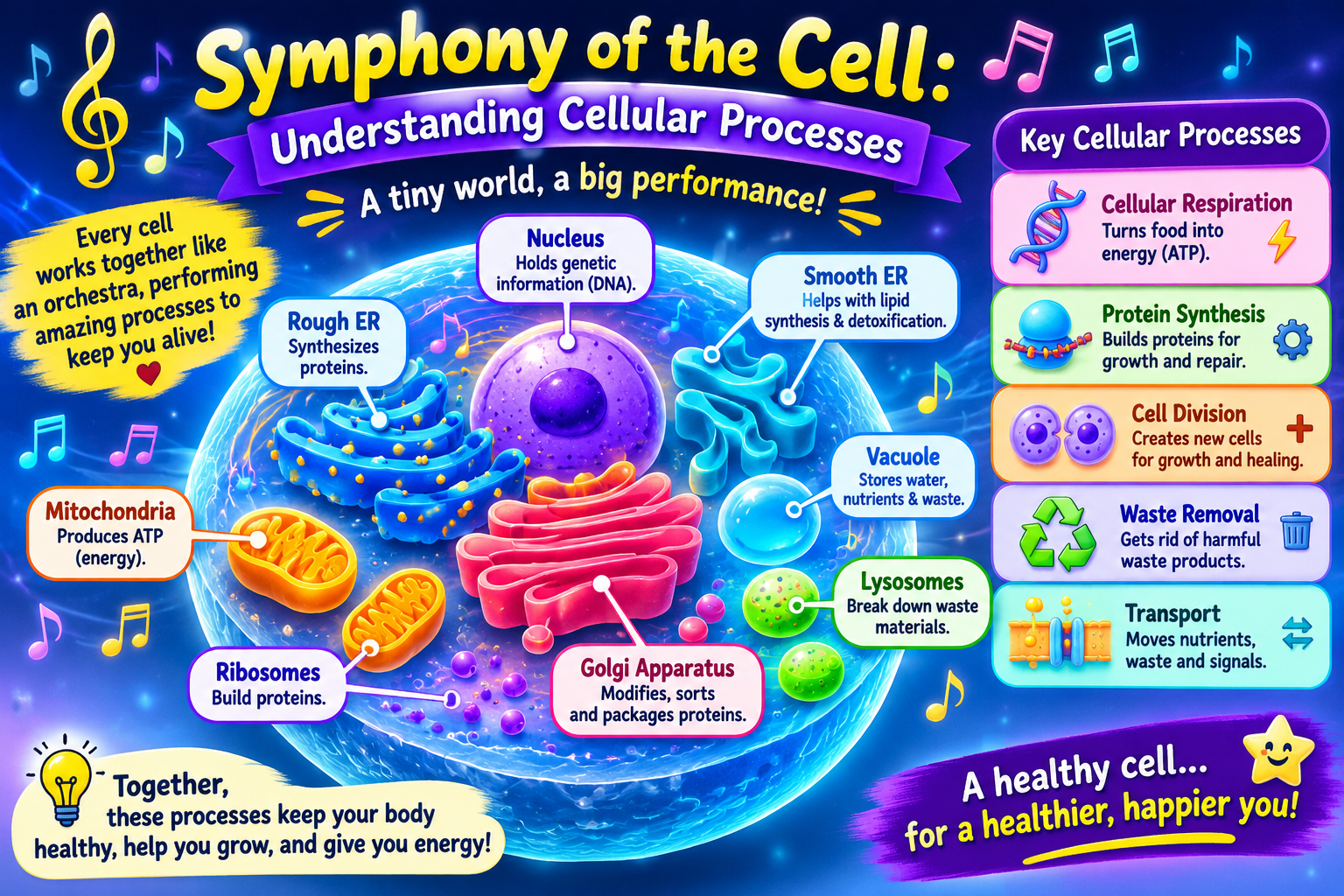
    **Story Post — Symphony of the Cell: Understanding Cellular Processes**

    **Welcome to the Amazing World of Cells!**

    Have you ever wondered how the human body works, how we grow, how we breathe, or how our bodies get energy? The answer lies in the tiny but powerful building blocks of life — **cells!**

    **Symphony of the Cell** takes us on an exciting journey into the microscopic world, where every cell works like a beautiful orchestra. Just as musical instruments work together to create a wonderful melody, the different parts of a cell work together to keep living organisms alive and healthy.

    **Discover the Amazing Cell Organelles!**

    **Mitochondria:** Often called the powerhouse of the cell, mitochondria help produce the energy that cells need to function.

    **Nucleus:** The control center of the cell, containing DNA and instructions for many cellular activities.

    **Ribosomes:** Tiny structures that make proteins, which are essential for growth and repair.

    **Golgi Apparatus:** Helps modify, package, and transport proteins and other materials.

    **Cell Membrane:** Controls what enters and leaves the cell, helping maintain a stable internal environment.

    **Chloroplasts:** Found in plant cells, these structures capture sunlight for photosynthesis.

    **Cytoplasm:** The jelly-like material inside the cell where many important chemical reactions take place.

    **How Do Cells Work Together?**

    Cells carry out many amazing processes every second! They use nutrients to obtain energy, make proteins, transport materials, remove waste, respond to their surroundings, and grow. Some cells can also divide to produce new cells. These activities help living organisms survive and develop.

    **Why Is Understanding Cellular Processes Important?**

    Learning about cells helps us understand human health, diseases, plant growth, genetics, and the incredible complexity of life. From the smallest microorganism to the largest living organisms, cells play an essential role in the natural world.

    **Let's Learn, Explore, and Discover!**

    Science teaches us that even the smallest things can have the biggest impact. Every cell has a role to play, and together, cells create the extraordinary systems that make life possible. Keep asking questions, keep exploring, and never stop learning!

    **Question for You:** If you could explore one part of a cell under a powerful microscope, which organelle would you choose, and why?

    Like, share, and comment to spread the wonder of science! Let's make learning fun, creative, and inspiring for everyone.
    #rsisb Roll no. 247 Story post . 18 Foundation level 🔬🎶 **Story Post — Symphony of the Cell: Understanding Cellular Processes** 🧬✨ 🌟 **Welcome to the Amazing World of Cells!** 🌟 Have you ever wondered how the human body works, how we grow, how we breathe, or how our bodies get energy? 🤔💡 The answer lies in the tiny but powerful building blocks of life — **cells!** 🦠🔬 🎼 **Symphony of the Cell** takes us on an exciting journey into the microscopic world, where every cell works like a beautiful orchestra. Just as musical instruments work together to create a wonderful melody, the different parts of a cell work together to keep living organisms alive and healthy. 🎻🎹🎵 🧫 **Discover the Amazing Cell Organelles!** 🔋 **Mitochondria:** Often called the powerhouse of the cell, mitochondria help produce the energy that cells need to function. 🧠 **Nucleus:** The control center of the cell, containing DNA and instructions for many cellular activities. 🏭 **Ribosomes:** Tiny structures that make proteins, which are essential for growth and repair. 📦 **Golgi Apparatus:** Helps modify, package, and transport proteins and other materials. 🚪 **Cell Membrane:** Controls what enters and leaves the cell, helping maintain a stable internal environment. 🌱 **Chloroplasts:** Found in plant cells, these structures capture sunlight for photosynthesis. ☀️🌿 💧 **Cytoplasm:** The jelly-like material inside the cell where many important chemical reactions take place. ⚡ **How Do Cells Work Together?** Cells carry out many amazing processes every second! They use nutrients to obtain energy, make proteins, transport materials, remove waste, respond to their surroundings, and grow. Some cells can also divide to produce new cells. These activities help living organisms survive and develop. 🌍❤️ 🧬 **Why Is Understanding Cellular Processes Important?** Learning about cells helps us understand human health, diseases, plant growth, genetics, and the incredible complexity of life. From the smallest microorganism to the largest living organisms, cells play an essential role in the natural world. 🌎🔍 📚 **Let's Learn, Explore, and Discover!** Science teaches us that even the smallest things can have the biggest impact. Every cell has a role to play, and together, cells create the extraordinary systems that make life possible. Keep asking questions, keep exploring, and never stop learning! 🚀💡 💭 **Question for You:** If you could explore one part of a cell under a powerful microscope, which organelle would you choose, and why? 🔬👇 ❤️ Like, share, and comment to spread the wonder of science! Let's make learning fun, creative, and inspiring for everyone. 🌟📖
    0 Comments 0 Shares 945 Views
More Results