• #rsisb
    Roll no. 253
    Story Post no.07
    Foundation level
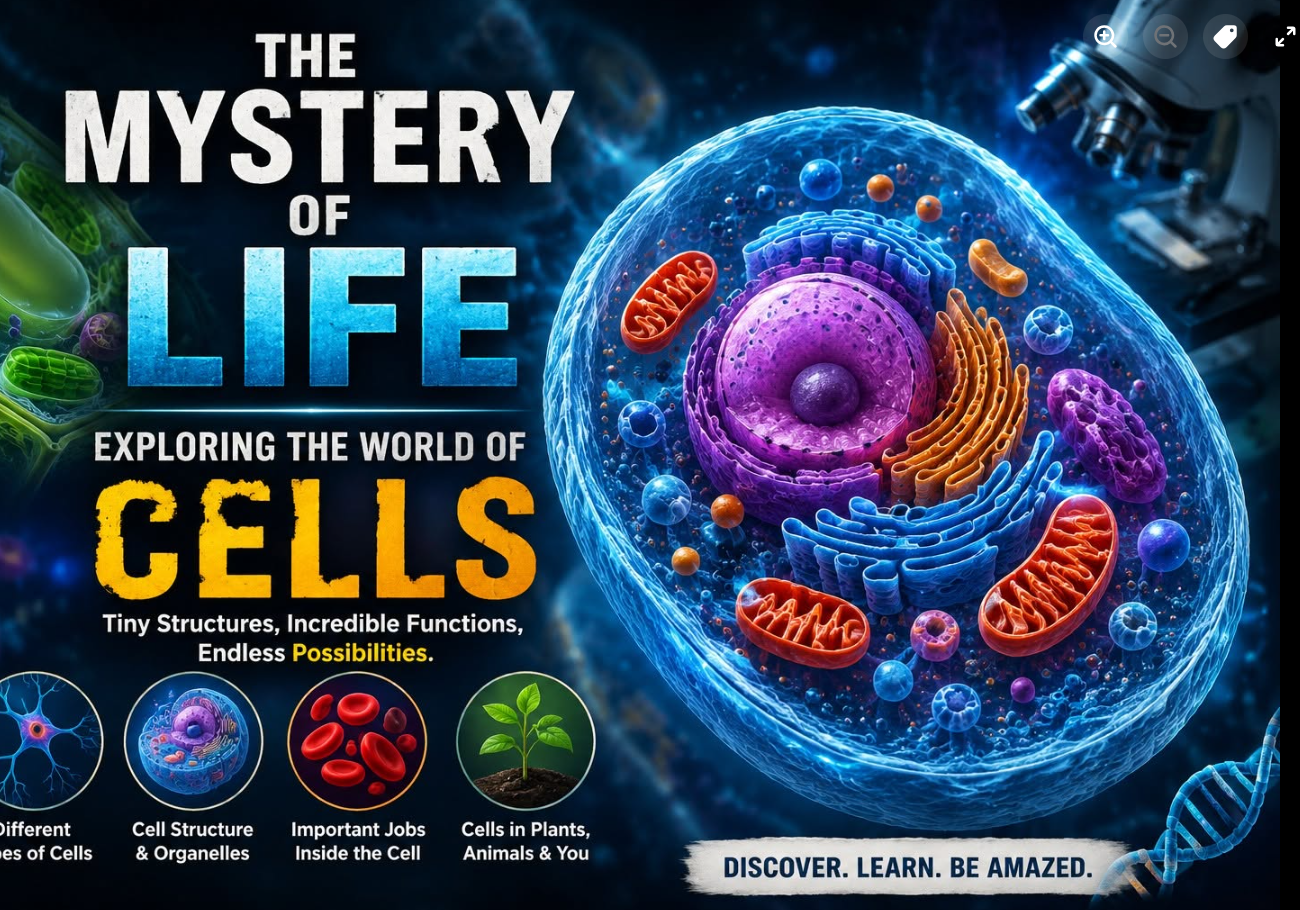
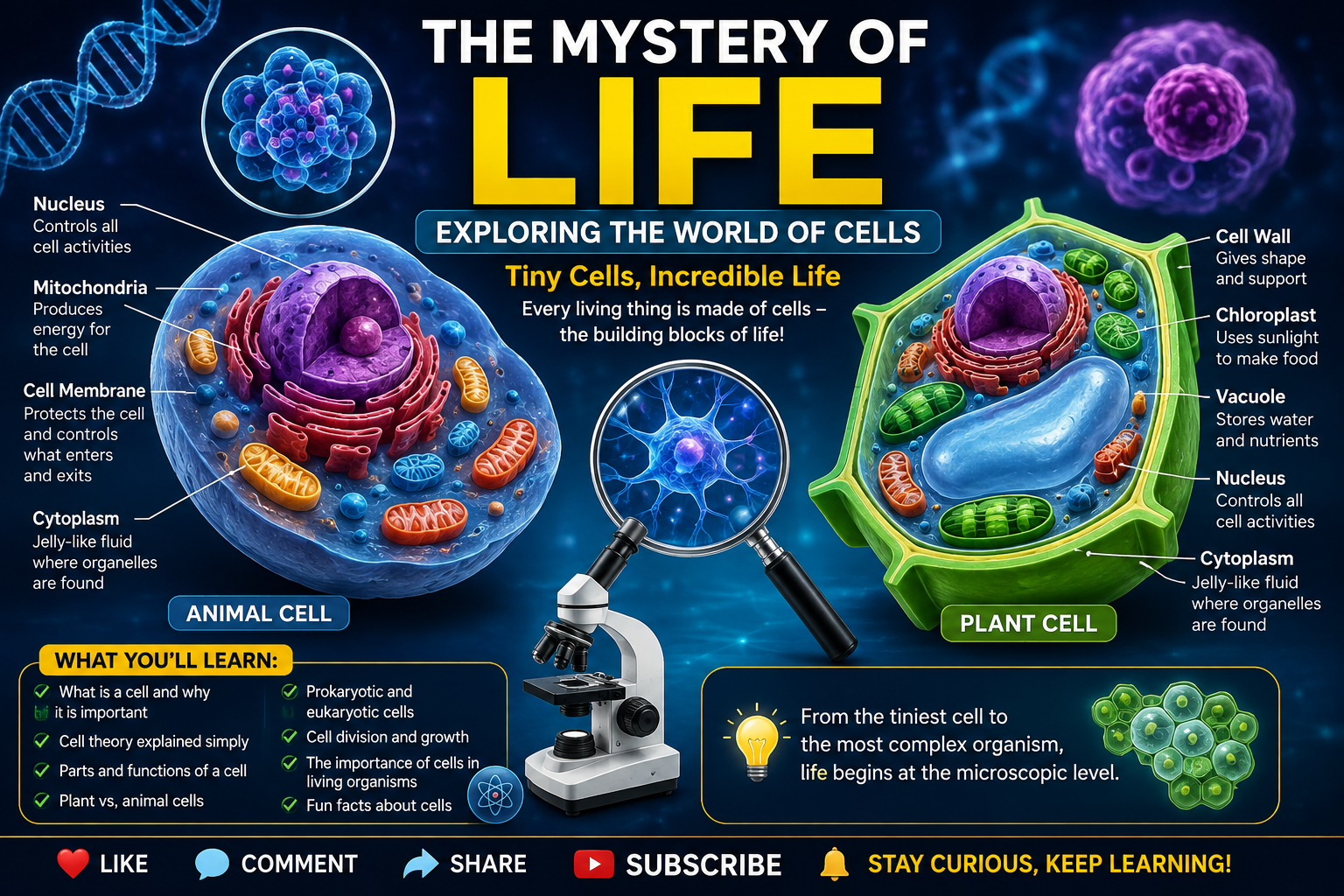
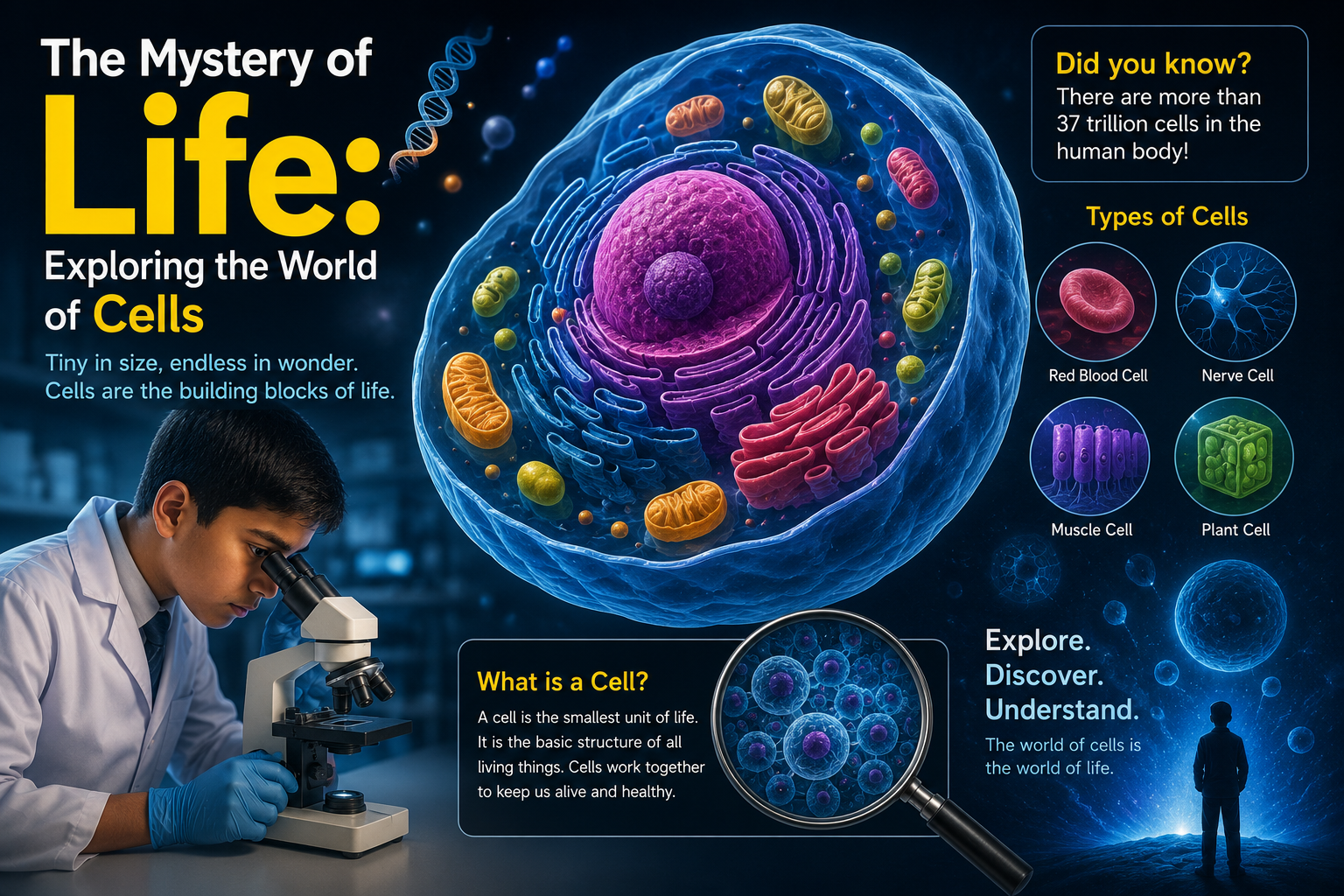
    ## The Mystery of Life: Exploring the World of Cells

    Cells are the tiny building blocks of all living organisms, forming the foundation of life on Earth. Although they are too small to be seen with the naked eye, cells perform essential functions such as producing energy, transporting nutrients, fighting diseases, and enabling growth and reproduction. From the smallest bacteria to the largest animals and plants, every living thing depends on cells to survive. Exploring the fascinating world of cells helps us understand how our bodies work, how life develops, and how scientific discoveries continue to improve medicine, health, and our understanding of nature.

    ** Key Lesson:** *Cells are the basic units of life, and understanding them helps us unlock the mysteries of living organisms.*

    ** Tags:**
    #Cells #Biology #Science #STEM #Education #LifeScience #Microscope #HumanBody #PlantCells #AnimalCells #CellBiology #Learning #ScientificDiscovery #ScienceEducation #RehanSchool

    Asma Shaheen EducationWali
    Irum Asim
    Saima Happinesswali
    #rsisb Roll no. 253 Story Post no.07 Foundation level ## 🔬🧬 The Mystery of Life: Exploring the World of Cells Cells are the tiny building blocks of all living organisms, forming the foundation of life on Earth. Although they are too small to be seen with the naked eye, cells perform essential functions such as producing energy, transporting nutrients, fighting diseases, and enabling growth and reproduction. From the smallest bacteria to the largest animals and plants, every living thing depends on cells to survive. Exploring the fascinating world of cells helps us understand how our bodies work, how life develops, and how scientific discoveries continue to improve medicine, health, and our understanding of nature. 🌍✨ **📚 Key Lesson:** *Cells are the basic units of life, and understanding them helps us unlock the mysteries of living organisms.* **🏷️ Tags:** #Cells #Biology #Science #STEM #Education #LifeScience #Microscope #HumanBody #PlantCells #AnimalCells #CellBiology #Learning #ScientificDiscovery #ScienceEducation #RehanSchool 🔬🧫🌱 Asma Shaheen EducationWali Irum Asim Saima Happinesswali
    0 التعليقات 0 المشاركات 2002 مشاهدة
  • All big fears are tiny ones that we look through a microscope !

    Rehan Allahwala
    All big fears are tiny ones that we look through a microscope ! Rehan Allahwala
    0 التعليقات 0 المشاركات 280 مشاهدة
  • #rsisb
    RollNo.244
    Story Post
    Foundation Level
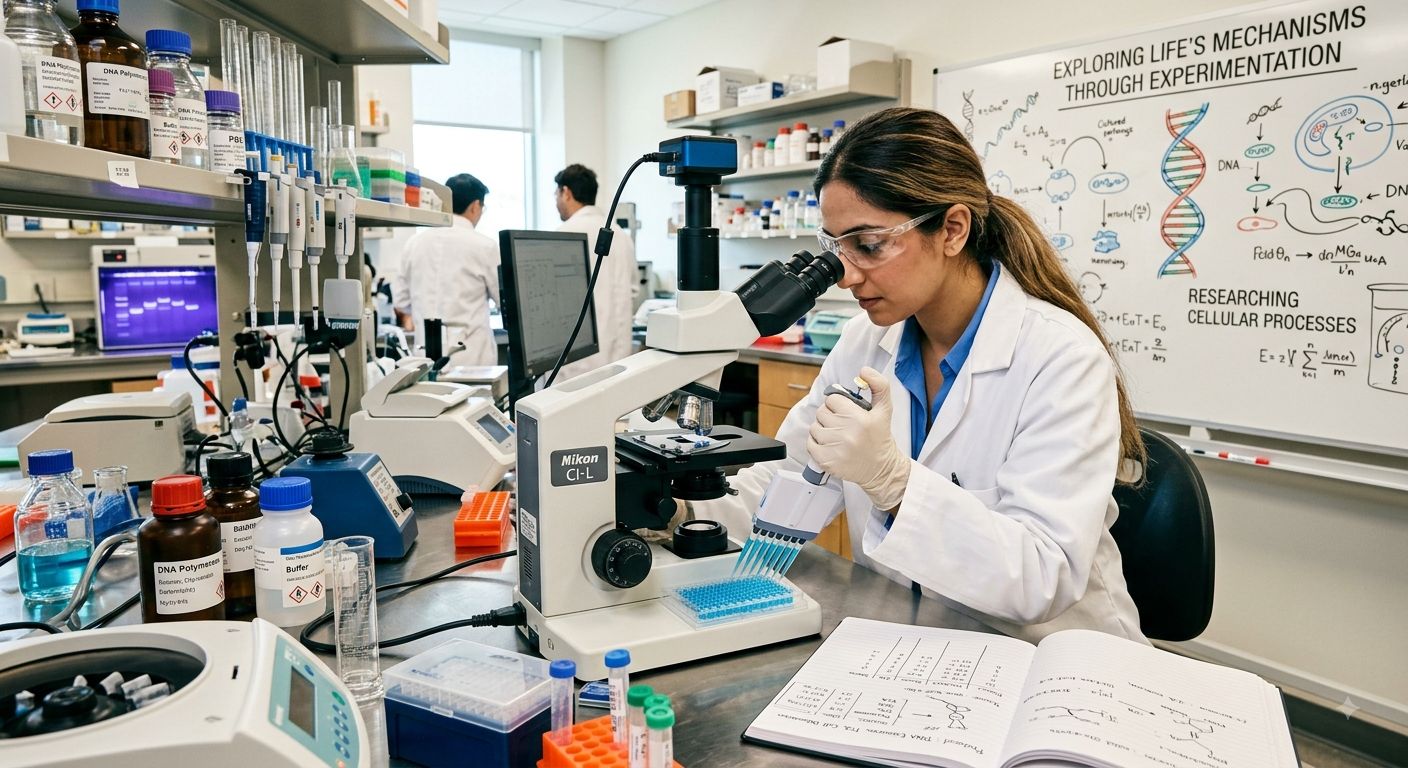
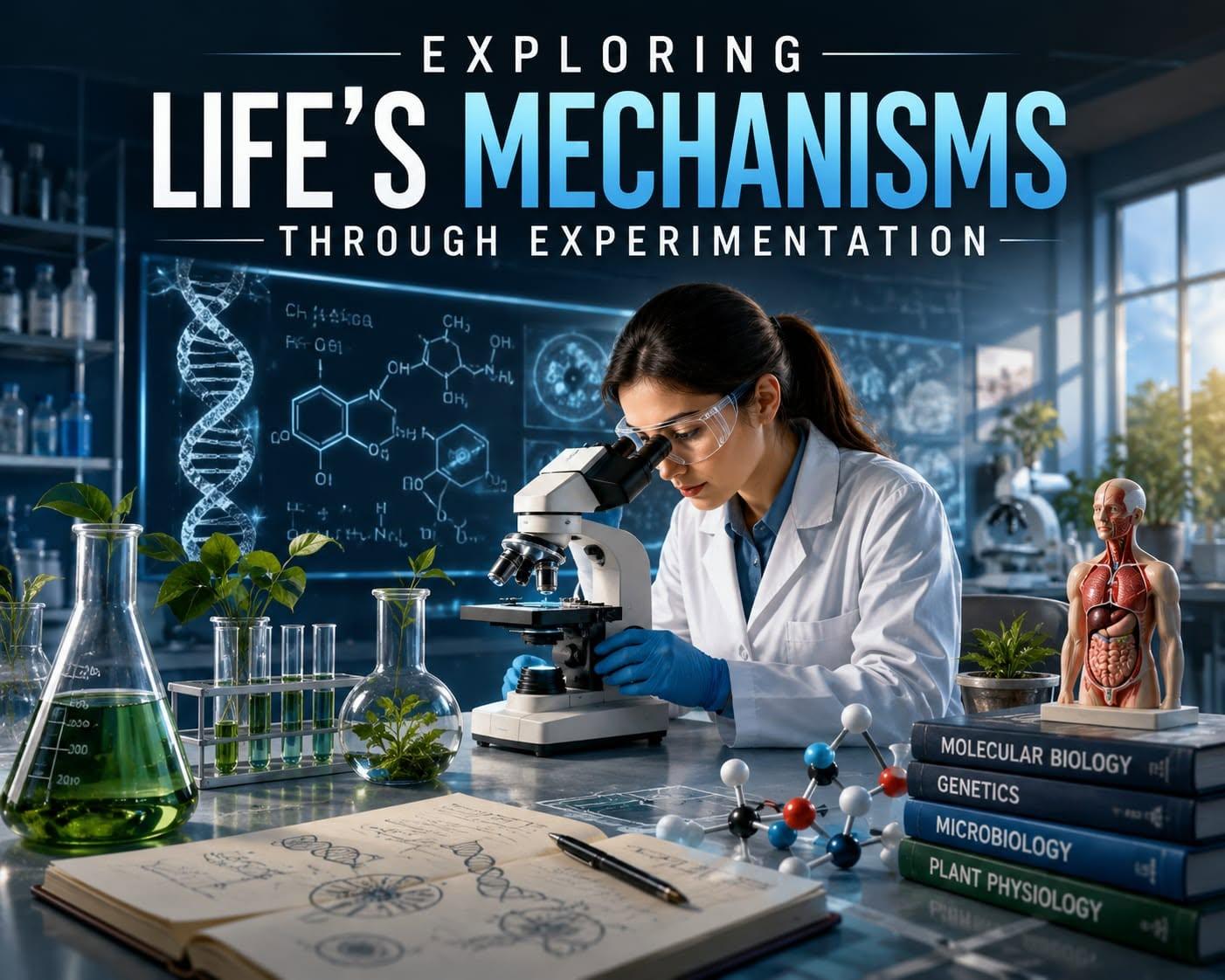
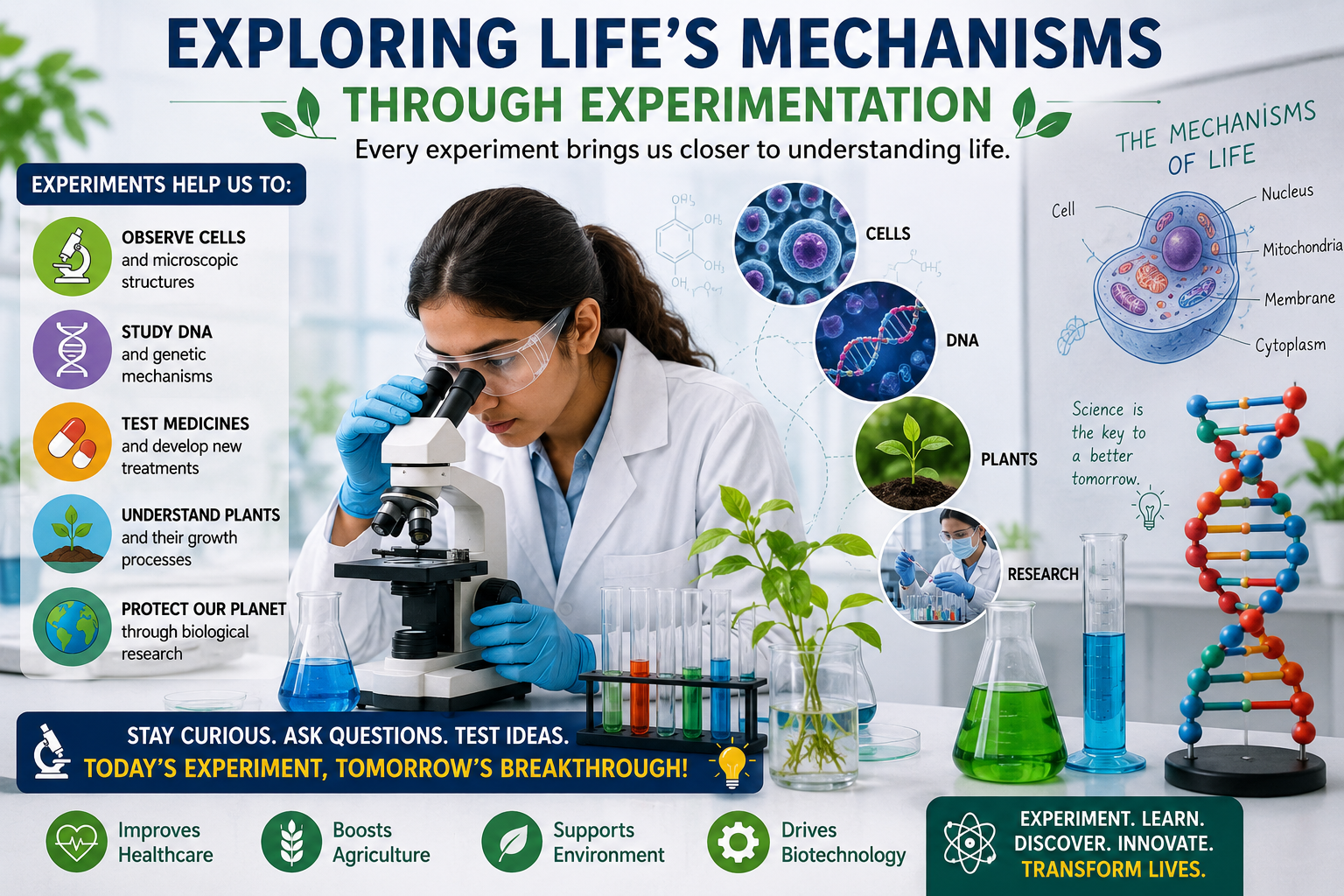
    ## Exploring Life’s Mechanisms Through Experimentation

    Every great scientific discovery begins with a question. Through careful experimentation, scientists uncover how living organisms grow, adapt, reproduce, and interact with their environment.

    From observing cells under a microscope to studying DNA and testing medicines , experiments help us understand the incredible mechanisms that keep life functioning. Biology experiments encourage curiosity, critical thinking, and problem-solving while teaching us the importance of evidence-based conclusions.

    Experimentation has transformed healthcare , agriculture , environmental conservation , and biotechnology , leading to innovations that improve lives around the world. Every observation and every experiment brings us one step closer to solving the mysteries of life.

    So, stay curious, ask questions, test ideas, and never stop exploring—because today's experiment could become tomorrow's breakthrough!

    #Biology #Science #Experimentation #LifeMechanisms #STEM #Learning #Education #ScientificDiscovery #Innovation #Research #Curiosity #FutureScientists
    #rsisb RollNo.244 Story Post Foundation Level ## 🔬 Exploring Life’s Mechanisms Through Experimentation 🧪🌱 Every great scientific discovery begins with a question. 🤔 Through careful experimentation, scientists uncover how living organisms grow, adapt, reproduce, and interact with their environment. 🌍🔬 From observing cells under a microscope 🦠 to studying DNA 🧬 and testing medicines 💊, experiments help us understand the incredible mechanisms that keep life functioning. Biology experiments encourage curiosity, critical thinking, and problem-solving while teaching us the importance of evidence-based conclusions. 📚✨ Experimentation has transformed healthcare 🏥, agriculture 🌾, environmental conservation 🌿, and biotechnology ⚙️, leading to innovations that improve lives around the world. Every observation and every experiment brings us one step closer to solving the mysteries of life. 🌟 So, stay curious, ask questions, test ideas, and never stop exploring—because today's experiment could become tomorrow's breakthrough! 🚀🔍 #Biology #Science #Experimentation #LifeMechanisms #STEM #Learning #Education #ScientificDiscovery #Innovation #Research #Curiosity #FutureScientists 🧬🌱
    0 التعليقات 0 المشاركات 2699 مشاهدة
  • #rsisb
    RollNo.244
    Task No.41
    Foundation Level
    Here's a social-media-friendly description with emojis:
    **The Mystery of Life: Exploring the World of Cells**
    Every living thing, from the tiniest ant to the tallest tree and every human being , is made up of tiny building blocks called **cells**. Although they are too small to see with the naked eye , cells perform incredible jobs every second to keep us alive.
    Think of cells as tiny factories working nonstop! They produce energy , repair damaged tissues , fight harmful germs , and help our bodies grow stronger every day. Each cell has a special role, and together they create the amazing masterpiece that is life.
    Scientists use powerful microscopes to unlock the secrets hidden inside cells. From discovering new medicines to understanding diseases and improving healthcare, the study of cells has transformed our world in remarkable ways.
    The more we explore the microscopic world, the more we realize how extraordinary life truly is. Every cell tells a story of growth , teamwork , and survival . So, the next time you look at yourself in the mirror , remember that trillions of tiny cells are working together to make you who you are!
    Keep exploring, keep asking questions, and never stop being curious—because every great discovery begins with curiosity!
    #rsisb RollNo.244 Task No.41 Foundation Level Here's a social-media-friendly description with emojis: 🧬🔬 **The Mystery of Life: Exploring the World of Cells** 🌍✨ Every living thing, from the tiniest ant 🐜 to the tallest tree 🌳 and every human being 👨‍👩‍👧‍👦, is made up of tiny building blocks called **cells**. 🧫 Although they are too small to see with the naked eye 👀, cells perform incredible jobs every second to keep us alive. ❤️⚡ Think of cells as tiny factories 🏭 working nonstop! They produce energy ⚡, repair damaged tissues 🩹, fight harmful germs 🦠, and help our bodies grow stronger every day. 💪🌱 Each cell has a special role, and together they create the amazing masterpiece that is life. 🌟 Scientists use powerful microscopes 🔬 to unlock the secrets hidden inside cells. From discovering new medicines 💊 to understanding diseases 🩺 and improving healthcare, the study of cells has transformed our world in remarkable ways. 🌍✨ The more we explore the microscopic world, the more we realize how extraordinary life truly is. 💚 Every cell tells a story of growth 🌱, teamwork 🤝, and survival 🌟. So, the next time you look at yourself in the mirror 🪞, remember that trillions of tiny cells are working together to make you who you are! 🧬💖 🌟 Keep exploring, keep asking questions, and never stop being curious—because every great discovery begins with curiosity!
    0 التعليقات 0 المشاركات 1785 مشاهدة
  • Quantum mechanics is a type of science that studies the tiniest things in the universe, things that are too small for us to see with our own eyes. Its like a secret world that only special scientists know about.

    In this secret world, things can be in two places at the same time, and they can even disappear and reappear somewhere else! Its like magic, but its real!

    Scientists use special tools to study this secret world, like a microscope that is even more powerful than the ones we use in science class. They can see things that are smaller than a grain of sand, and they can watch them move and change in ways that are amazing.

    Even though it may seem strange and confusing, quantum mechanics helps us understand more about the world around us and how it works. Who knows, maybe someday you will become a quantum scientist and discover even more secrets of this magical world!
    Quantum mechanics is a type of science that studies the tiniest things in the universe, things that are too small for us to see with our own eyes. It's like a secret world that only special scientists know about. In this secret world, things can be in two places at the same time, and they can even disappear and reappear somewhere else! It's like magic, but it's real! Scientists use special tools to study this secret world, like a microscope that is even more powerful than the ones we use in science class. They can see things that are smaller than a grain of sand, and they can watch them move and change in ways that are amazing. Even though it may seem strange and confusing, quantum mechanics helps us understand more about the world around us and how it works. Who knows, maybe someday you will become a quantum scientist and discover even more secrets of this magical world!
    0 التعليقات 0 المشاركات 303 مشاهدة
  • The Magical White Powder That Changed the World — The Story of Baking Soda

    If you looked at baking soda for the first time — a soft, white, innocent-looking powder — you would never imagine that it is one of the most powerful and versatile substances ever discovered by humans.

    But its real name already hints at its strength:

    Sodium Bicarbonate.

    A big scientific word for a tiny crystal that behaves like a magician.


    A Long Time Ago… the Powder Was Born in the Earth

    Millions of years before humans existed, deep underground, a mineral called nahcolite formed slowly inside rocks. This mineral is basically baking soda in solid, natural form.

    It waited there quietly — like a genie trapped inside a stone — until human beings finally learned how to extract it.

    But ancient civilizations had already seen something special.
    • Egyptians used a similar natural powder (called natron) for cleaning and preserving mummies.
    • Greek and Roman healers used alkaline powders to treat stomach acidity.

    But they didn’t know the secret formula.

    That came much later.


    When Science Finally Met the Genie

    In the late 1700s, a French chemist examined these mysterious alkaline minerals and discovered something shocking:

    “When mixed with acid, they produce gas — bubbles!”

    That bubbling gas was carbon dioxide, the same gas that makes soda fizzy.

    A few decades later, two clever bakers — John Dwight and Austin Church in the United States — used this discovery to create the world’s first commercial baking soda in 1846.

    Suddenly, bread could rise without yeast. Cakes could become fluffy. Biscuits could become soft. Kitchen magic was born.


    What Makes Baking Soda So Magical?

    It seems like a simple white dust.

    But inside the dust are tiny particles that behave like soldiers with a mission:
    Neutralize acids. Clean messes. Deodorize smells. Lift dough. Fight fire. Freshen everything.

    It is:
    • A base (alkaline) — so it fights acidity.
    • A deodorizer — so it captures bad smells and destroys them.
    • A gentle abrasive — so it scrubs but does not scratch.
    • A gas-releaser — so it makes bread rise.
    • A neutralizer — so it softens water and reduces corrosion.
    • A home remedy — for cleaning teeth, calming acid reflux (carefully!), treating insect bites, washing, cleaning carpets, shoes, and even cat litter.

    Few substances on Earth have so many uses.

    Even NASA uses it for cleaning spacecraft materials.

    Firefighters use it to stop small grease fires.

    Hospitals use it for medical treatments.

    And yes — your cat litter box also needs it like oxygen.


    The Science Behind the Magic

    If you look extremely close — under a microscope — baking soda is made of tiny cubes.

    Each tiny cube follows one rule:

    When it meets something acidic, it releases carbon dioxide gas.

    This is the “puff!” that makes cupcakes grow.

    This is the “bubble!” that cleans stains.

    This is the “lift!” that loosens dirt and removes smells.

    You can test it right now:

    Pour a spoon of baking soda.
    Add a few drops of lemon juice or vinegar.
    Watch the reaction explode like tiny fireworks.

    That’s the genie waking up.


    The Powder That Lives in Every Home

    Every kitchen in the world has a big box of it.

    Why?

    Because nothing else is so cheap… yet so powerful.

    A few rupees or euros, and you have:
    • A cleaning agent
    • A smell killer
    • A cooking helper
    • A science experiment
    • A fire extinguisher
    • A mild medicine
    • A deodorizer
    • A carpet cleaner
    • A fridge freshener
    • A cat litter smell neutralizer

    All in one.

    No wonder people call it the magical powder of the 19th century… and the 20th… and the 21st.


    In Simple Words

    Baking soda = sodium bicarbonate = NaHCO₃
    A natural mineral that reacts with acids, makes bubbles, cleans everything, kills smells, and has hundreds of uses.

    A miracle that costs almost nothing.

    A magic trick hidden in every kitchen.

    A powder that looks ordinary but behaves extraordinary.
    The Magical White Powder That Changed the World — The Story of Baking Soda If you looked at baking soda for the first time — a soft, white, innocent-looking powder — you would never imagine that it is one of the most powerful and versatile substances ever discovered by humans. But its real name already hints at its strength: Sodium Bicarbonate. A big scientific word for a tiny crystal that behaves like a magician. ⸻ A Long Time Ago… the Powder Was Born in the Earth Millions of years before humans existed, deep underground, a mineral called nahcolite formed slowly inside rocks. This mineral is basically baking soda in solid, natural form. It waited there quietly — like a genie trapped inside a stone — until human beings finally learned how to extract it. But ancient civilizations had already seen something special. • Egyptians used a similar natural powder (called natron) for cleaning and preserving mummies. • Greek and Roman healers used alkaline powders to treat stomach acidity. But they didn’t know the secret formula. That came much later. ⸻ When Science Finally Met the Genie In the late 1700s, a French chemist examined these mysterious alkaline minerals and discovered something shocking: “When mixed with acid, they produce gas — bubbles!” That bubbling gas was carbon dioxide, the same gas that makes soda fizzy. A few decades later, two clever bakers — John Dwight and Austin Church in the United States — used this discovery to create the world’s first commercial baking soda in 1846. Suddenly, bread could rise without yeast. Cakes could become fluffy. Biscuits could become soft. Kitchen magic was born. ⸻ What Makes Baking Soda So Magical? It seems like a simple white dust. But inside the dust are tiny particles that behave like soldiers with a mission: Neutralize acids. Clean messes. Deodorize smells. Lift dough. Fight fire. Freshen everything. It is: • A base (alkaline) — so it fights acidity. • A deodorizer — so it captures bad smells and destroys them. • A gentle abrasive — so it scrubs but does not scratch. • A gas-releaser — so it makes bread rise. • A neutralizer — so it softens water and reduces corrosion. • A home remedy — for cleaning teeth, calming acid reflux (carefully!), treating insect bites, washing, cleaning carpets, shoes, and even cat litter. Few substances on Earth have so many uses. Even NASA uses it for cleaning spacecraft materials. Firefighters use it to stop small grease fires. Hospitals use it for medical treatments. And yes — your cat litter box also needs it like oxygen. ⸻ The Science Behind the Magic If you look extremely close — under a microscope — baking soda is made of tiny cubes. Each tiny cube follows one rule: When it meets something acidic, it releases carbon dioxide gas. This is the “puff!” that makes cupcakes grow. This is the “bubble!” that cleans stains. This is the “lift!” that loosens dirt and removes smells. You can test it right now: Pour a spoon of baking soda. Add a few drops of lemon juice or vinegar. Watch the reaction explode like tiny fireworks. That’s the genie waking up. ⸻ The Powder That Lives in Every Home Every kitchen in the world has a big box of it. Why? Because nothing else is so cheap… yet so powerful. A few rupees or euros, and you have: • A cleaning agent • A smell killer • A cooking helper • A science experiment • A fire extinguisher • A mild medicine • A deodorizer • A carpet cleaner • A fridge freshener • A cat litter smell neutralizer All in one. No wonder people call it the magical powder of the 19th century… and the 20th… and the 21st. ⸻ In Simple Words Baking soda = sodium bicarbonate = NaHCO₃ A natural mineral that reacts with acids, makes bubbles, cleans everything, kills smells, and has hundreds of uses. A miracle that costs almost nothing. A magic trick hidden in every kitchen. A powder that looks ordinary but behaves extraordinary.
    0 التعليقات 0 المشاركات 732 مشاهدة
  • Dr. Gary Greenberg, a visionary microscopist, is defying the conventional notion that compares something to a grain of sand as tiny or meaningless.

    Through his remarkable use of a microlens, Dr. Greenberg’s captivating images challenge this stereotype and showcase the astonishing beauty and complexity found within the microscopic world.

    Dr. Greenberg’s photographs unveil the hidden wonders within grains of sand, magnifying them up to 300 times their size. These incredible images reveal a kaleidoscope of colors and intricate patterns, transforming the perception of sand under a microscope from insignificance to a realm of awe-inspiring intricacy.

    By highlighting the beauty of these tiny rocks at such a magnified scale, Dr. Greenberg aims to challenge the notion that size determines significance. His work encourages us to recognize the incredible diversity and complexity that exists even within the tiniest particles of our world.

    #Sand #Singlegrain #Microscopic #Zoomedin #Picture
    Dr. Gary Greenberg, a visionary microscopist, is defying the conventional notion that compares something to a grain of sand as tiny or meaningless. Through his remarkable use of a microlens, Dr. Greenberg’s captivating images challenge this stereotype and showcase the astonishing beauty and complexity found within the microscopic world. Dr. Greenberg’s photographs unveil the hidden wonders within grains of sand, magnifying them up to 300 times their size. These incredible images reveal a kaleidoscope of colors and intricate patterns, transforming the perception of sand under a microscope from insignificance to a realm of awe-inspiring intricacy. By highlighting the beauty of these tiny rocks at such a magnified scale, Dr. Greenberg aims to challenge the notion that size determines significance. His work encourages us to recognize the incredible diversity and complexity that exists even within the tiniest particles of our world. #Sand #Singlegrain #Microscopic #Zoomedin #Picture
    0 التعليقات 0 المشاركات 795 مشاهدة
  • The Magical Factory Beneath Our Feet

    Deep beneath the quiet soil, where sunlight only dreams of reaching, lives a humble little worker — the earthworm.
    To most people, it’s just a wriggly creature, slimy and small.
    But in truth, it’s one of the most powerful alchemists on Earth.


    The Secret Life of Wormy

    Meet Wormy.
    Every night, when the world above sleeps, Wormy starts his shift in the underground factory.
    He doesn’t wear a helmet or gloves, but he works harder than any human engineer.
    His mission?
    To take the world’s waste — fallen leaves, spoiled fruits, animal dung, and bits of old plants — and turn it into something miraculous: vermicompost, a treasure chest of life-giving minerals.


    The Magic Begins

    Wormy munches on what we call “dirt.”
    But inside his tiny body lives a whole universe of microorganisms — billions of friendly bacteria that work like invisible chefs.
    As Wormy eats, these chefs break down the waste into simpler forms.
    Inside his gut, chemical reactions quietly happen:
    Nitrogen becomes available for new leaves ,
    Phosphorus prepares itself to strengthen roots ,
    and Potassium sharpens a plant’s immune system .

    When Wormy finally lets go of what he doesn’t need — his poo, or worm castings — it’s no longer waste.
    It’s pure black gold.


    From Poo to Power

    Each grain of this black gold glows under a microscope.
    It is rich in:
    • Nitrogen, Phosphorus, and Potassium,
    • Calcium, Magnesium, and Sulphur,
    • and trace minerals like Iron, Zinc, Copper, and Boron.

    In a single teaspoon of Wormy’s compost live millions of microbes, quietly feeding the Earth and keeping plants alive.
    When farmers sprinkle it on their fields, vegetables grow greener, fruits taste sweeter, and the soil becomes softer and more fertile.

    Wormy’s droppings even help the planet breathe — they lock carbon in the soil, reducing pollution from the air.


    Nature’s Recycling Engineer

    Without asking for salary or sleep, Wormy and his family work day and night.
    They don’t just recycle; they regenerate.
    They take what humans call “poo-poo” or garbage and transform it into minerals, enzymes, and life itself.
    Through them, nothing in nature is wasted.
    Every fallen leaf becomes a promise — that life will rise again.


    The Lesson of Wormy

    Next time you see a worm on the ground, don’t step over it.
    Bend down, smile, and say thank you.
    That little worm is helping feed the world.
    It is silently reminding us that real magic is not in the sky, but in the soil beneath our feet.

    From decay comes nourishment.
    From waste comes life.
    From Wormy comes the future.


    Written by Rehan Allahwala — with ChatGPT
    🌍 The Magical Factory Beneath Our Feet Deep beneath the quiet soil, where sunlight only dreams of reaching, lives a humble little worker — the earthworm. To most people, it’s just a wriggly creature, slimy and small. But in truth, it’s one of the most powerful alchemists on Earth. ⸻ 🪱 The Secret Life of Wormy Meet Wormy. Every night, when the world above sleeps, Wormy starts his shift in the underground factory. He doesn’t wear a helmet or gloves, but he works harder than any human engineer. His mission? To take the world’s waste — fallen leaves, spoiled fruits, animal dung, and bits of old plants — and turn it into something miraculous: vermicompost, a treasure chest of life-giving minerals. ⸻ ⚗️ The Magic Begins Wormy munches on what we call “dirt.” But inside his tiny body lives a whole universe of microorganisms — billions of friendly bacteria that work like invisible chefs. As Wormy eats, these chefs break down the waste into simpler forms. Inside his gut, chemical reactions quietly happen: Nitrogen becomes available for new leaves 🌿, Phosphorus prepares itself to strengthen roots 🌱, and Potassium sharpens a plant’s immune system 💪. When Wormy finally lets go of what he doesn’t need — his poo, or worm castings — it’s no longer waste. It’s pure black gold. ⸻ 💎 From Poo to Power Each grain of this black gold glows under a microscope. It is rich in: • Nitrogen, Phosphorus, and Potassium, • Calcium, Magnesium, and Sulphur, • and trace minerals like Iron, Zinc, Copper, and Boron. In a single teaspoon of Wormy’s compost live millions of microbes, quietly feeding the Earth and keeping plants alive. When farmers sprinkle it on their fields, vegetables grow greener, fruits taste sweeter, and the soil becomes softer and more fertile. Wormy’s droppings even help the planet breathe — they lock carbon in the soil, reducing pollution from the air. 🌎 ⸻ 🌈 Nature’s Recycling Engineer Without asking for salary or sleep, Wormy and his family work day and night. They don’t just recycle; they regenerate. They take what humans call “poo-poo” or garbage and transform it into minerals, enzymes, and life itself. Through them, nothing in nature is wasted. Every fallen leaf becomes a promise — that life will rise again. ⸻ 💚 The Lesson of Wormy Next time you see a worm on the ground, don’t step over it. Bend down, smile, and say thank you. That little worm is helping feed the world. It is silently reminding us that real magic is not in the sky, but in the soil beneath our feet. From decay comes nourishment. From waste comes life. From Wormy comes the future. ⸻ 🖋️ Written by Rehan Allahwala — with ChatGPT
    0 التعليقات 0 المشاركات 415 مشاهدة
  • ** ACCl Task 24 – Day 41: The Mystery of Life: Exploring the World of Cells **

    I have successfully completed my twenty-fourth ACCl task titled **“The Mystery of Life: Exploring the World of Cells”** .
    This task helped me understand how **tiny cells form the foundation of all living things**, revealing the hidden beauty and complexity of life itself .

    Story: The Mystery of Life — Exploring the World of Cells

    Long ago, scientists wondered what made living things alive. Why did a leaf grow, a bird fly, or a person breathe? The answer was hidden in something so small that no one could see it — the cell.

    In the 1600s, a man named Robert Hooke looked through a microscope and saw tiny box-like shapes in a slice of cork. He called them cells, which means “small rooms.” Later, other scientists discovered that every plant, animal, and human is made up of these tiny living units.

    Cells are like miniature cities. The nucleus acts as the brain, giving orders and storing information. The mitochondria are the power stations, creating the energy needed for life. The cell membrane guards the city walls, letting in what’s good and keeping out what’s harmful.

    Some creatures, like bacteria, are made of just one cell — yet they live, eat, and even reproduce! Others, like humans, have trillions of cells, each doing its special job — skin cells protect, blood cells carry oxygen, and nerve cells send messages faster than lightning.

    The world of cells is a hidden universe inside every living thing. Though we can’t see them with our eyes, they are the building blocks of life, quietly working every second to keep us alive.
    **📘 ACCl Task 24 – Day 41: The Mystery of Life: Exploring the World of Cells 🔬** I have successfully completed my twenty-fourth ACCl task titled **“The Mystery of Life: Exploring the World of Cells”** 🧬. This task helped me understand how **tiny cells form the foundation of all living things**, revealing the hidden beauty and complexity of life itself 🌍✨. Story: The Mystery of Life — Exploring the World of Cells Long ago, scientists wondered what made living things alive. Why did a leaf grow, a bird fly, or a person breathe? The answer was hidden in something so small that no one could see it — the cell. In the 1600s, a man named Robert Hooke looked through a microscope and saw tiny box-like shapes in a slice of cork. He called them cells, which means “small rooms.” Later, other scientists discovered that every plant, animal, and human is made up of these tiny living units. Cells are like miniature cities. The nucleus acts as the brain, giving orders and storing information. The mitochondria are the power stations, creating the energy needed for life. The cell membrane guards the city walls, letting in what’s good and keeping out what’s harmful. Some creatures, like bacteria, are made of just one cell — yet they live, eat, and even reproduce! Others, like humans, have trillions of cells, each doing its special job — skin cells protect, blood cells carry oxygen, and nerve cells send messages faster than lightning. The world of cells is a hidden universe inside every living thing. Though we can’t see them with our eyes, they are the building blocks of life, quietly working every second to keep us alive.
    0 التعليقات 0 المشاركات 353 مشاهدة
  • Story: The Mystery of Life — Exploring the World of Cells

    ACCL Task — Day 41

    Once upon a time, a curious student named Alina wanted to uncover the mystery of life. One day, her teacher gave her a magical microscope. As soon as she looked through it, she entered a tiny, invisible world — the world of cells!

    She saw busy cells working like a well-organized city. The nucleus was the control center, giving commands. The mitochondria produced energy like power stations. The cell membrane acted as a security gate, allowing only the right things to enter.

    Alina was amazed to learn that every living thing is made up of cells, from the tallest trees to the smallest insects. She realized that even her own body is a world full of millions of tiny workers, keeping her alive and healthy.

    When she came back to the real world, she smiled and whispered, “The mystery of life is inside us.”
    📖 Story: The Mystery of Life — Exploring the World of Cells ACCL Task — Day 41 Once upon a time, a curious student named Alina wanted to uncover the mystery of life. One day, her teacher gave her a magical microscope. As soon as she looked through it, she entered a tiny, invisible world — the world of cells! She saw busy cells working like a well-organized city. The nucleus was the control center, giving commands. The mitochondria produced energy like power stations. The cell membrane acted as a security gate, allowing only the right things to enter. Alina was amazed to learn that every living thing is made up of cells, from the tallest trees to the smallest insects. She realized that even her own body is a world full of millions of tiny workers, keeping her alive and healthy. When she came back to the real world, she smiled and whispered, “The mystery of life is inside us.” 🧠✨🔬
    0 التعليقات 0 المشاركات 391 مشاهدة
الصفحات المعززة