• #rsisb
    Roll No 253
    Foundation Level
    Song 08

    **CHEMICAL REACTIONS: THE ENGINE OF LIFE | THE SCIENCE BEHIND EVERY BREATH**

    What if every heartbeat, every breath, every movement, and every thought depends on an invisible world of chemical reactions?

    **“Chemical Reactions: The Engine of Life”** takes you on a fascinating musical journey into the chemistry that keeps living organisms alive. From the smallest cell to the most complex human body, life depends on countless chemical reactions happening every second.

    Inside every cell, molecules are constantly being **broken down, built up, transformed, and exchanged**. These reactions release energy, create essential molecules, repair cellular structures, and maintain the delicate balance required for life.

    **The song explores:**

    How chemical reactions transform matter
    Energy release and energy storage in cells
    Photosynthesis and how plants capture sunlight
    Cellular respiration and the production of usable energy
    Enzymes that accelerate essential biological reactions
    The importance of water and molecular interactions
    How metabolism connects thousands of reactions together
    How chemistry supports the function of organs and cells
    How chemical processes drive growth, repair, and reproduction

    At the heart of the story is **metabolism** — the vast network of chemical reactions that allows organisms to obtain energy and build the molecules they need to survive.

    When you eat food, chemistry transforms its molecules into usable energy. When you breathe, oxygen participates in reactions that help cells produce energy. When a plant grows toward sunlight, chemistry is turning light energy into stored chemical energy.

    Even the smallest changes in molecules can create enormous consequences.

    A reaction can release energy.
    A reaction can store energy.
    A reaction can build something new.
    A reaction can break something down.

    Together, these processes form an extraordinary molecular engine that powers life itself.

    **From atoms to cells, from sunlight to energy, from food to movement — chemistry is everywhere.**

    **Plants use it to grow.**
    **Cells use it to survive.**
    **Brains use it to function.**
    **Muscles use it to move.**
    **Life uses it to continue.**

    **“Chemical Reactions: The Engine of Life”** is more than a song about chemistry. It is a reminder that beneath everything we see, an invisible molecular world is constantly working — transforming matter and energy into the processes we call **life**.

    **Every reaction tells a story.**
    **Every molecule has a purpose.**
    **And together, they create the chemistry of life.**

    #ChemicalReactions #EngineOfLife #Chemistry #Biochemistry #ScienceSong #ChemistryEducation #Biology #CellularRespiration #Photosynthesis #Enzymes #Metabolism #MolecularScience #ScienceEducation #LifeScience #EducationalMusic

    Asma Shaheen EducationWali
    Saima Empowerment Wali
    Mishaal TrainingWali
    #rsisb Roll No 253 Foundation Level Song 08 ๐Ÿงช **CHEMICAL REACTIONS: THE ENGINE OF LIFE | THE SCIENCE BEHIND EVERY BREATH** ๐Ÿงฌโšก What if every heartbeat, every breath, every movement, and every thought depends on an invisible world of chemical reactions? ๐ŸŒŒ๐Ÿ”ฌ **“Chemical Reactions: The Engine of Life”** takes you on a fascinating musical journey into the chemistry that keeps living organisms alive. From the smallest cell to the most complex human body, life depends on countless chemical reactions happening every second. ๐Ÿงชโœจ Inside every cell, molecules are constantly being **broken down, built up, transformed, and exchanged**. These reactions release energy, create essential molecules, repair cellular structures, and maintain the delicate balance required for life. โšก๐Ÿงฌ ๐ŸŽต **The song explores:** ๐Ÿงช How chemical reactions transform matter โšก Energy release and energy storage in cells ๐Ÿƒ Photosynthesis and how plants capture sunlight ๐Ÿซ Cellular respiration and the production of usable energy ๐Ÿงฌ Enzymes that accelerate essential biological reactions ๐Ÿ’ง The importance of water and molecular interactions ๐Ÿ”ฌ How metabolism connects thousands of reactions together โค๏ธ How chemistry supports the function of organs and cells ๐ŸŒฑ How chemical processes drive growth, repair, and reproduction At the heart of the story is **metabolism** — the vast network of chemical reactions that allows organisms to obtain energy and build the molecules they need to survive. ๐Ÿ”ฅ๐Ÿ”ฌ When you eat food, chemistry transforms its molecules into usable energy. When you breathe, oxygen participates in reactions that help cells produce energy. When a plant grows toward sunlight, chemistry is turning light energy into stored chemical energy. โ˜€๏ธ๐ŸŒฟ Even the smallest changes in molecules can create enormous consequences. A reaction can release energy. A reaction can store energy. A reaction can build something new. A reaction can break something down. Together, these processes form an extraordinary molecular engine that powers life itself. ๐Ÿงฌโš™๏ธโœจ ๐ŸŽฌ **From atoms to cells, from sunlight to energy, from food to movement — chemistry is everywhere.** ๐ŸŒฑ **Plants use it to grow.** ๐Ÿซ€ **Cells use it to survive.** ๐Ÿง  **Brains use it to function.** ๐Ÿƒ **Muscles use it to move.** ๐ŸŒ **Life uses it to continue.** **“Chemical Reactions: The Engine of Life”** is more than a song about chemistry. It is a reminder that beneath everything we see, an invisible molecular world is constantly working — transforming matter and energy into the processes we call **life**. โค๏ธ๐Ÿงช โœจ **Every reaction tells a story.** โšก **Every molecule has a purpose.** ๐Ÿงฌ **And together, they create the chemistry of life.** #ChemicalReactions #EngineOfLife #Chemistry #Biochemistry #ScienceSong #ChemistryEducation #Biology #CellularRespiration #Photosynthesis #Enzymes #Metabolism #MolecularScience #ScienceEducation #LifeScience #EducationalMusic ๐Ÿงช๐Ÿงฌโšก๐ŸŒฑ๐Ÿ”ฌ Asma Shaheen EducationWali Saima Empowerment Wali Mishaal TrainingWali
    0 Reacties 0 aandelen 324 Views 4
  • Mohsin RS F8
    Story post NO:17
    roll NO:13
    Class: Foundation Level
    Made by Me

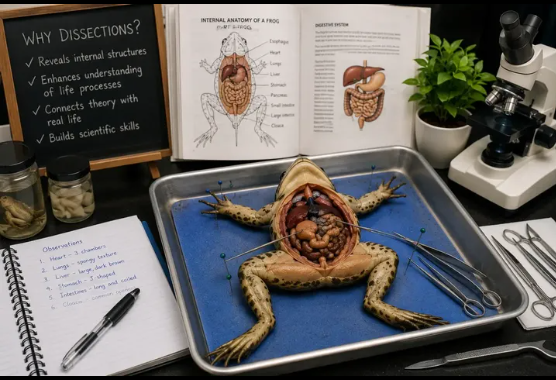
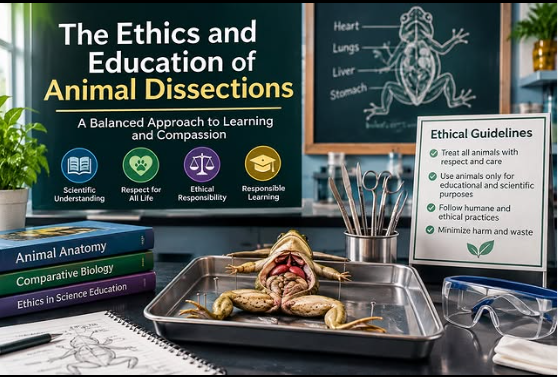
    The Ethics and Education of Animal Dissections

    Animal dissections have been used in science education for many years as a way to help students understand anatomy, biological structures, and how different body systems work together. By studying organisms directly, students can connect what they read in textbooks with real biological structures. Dissections can make lessons more meaningful by allowing learners to observe organs, tissues, and their relationships in a practical setting.

    However, animal dissection is not only a scientific or educational topic; it also raises important ethical questions. Animals are living beings, and their use in education should always be approached with respect, care, and responsibility. Students and teachers should understand why a specimen is being used and ensure that the activity has a genuine educational purpose. Ethical education encourages students to think about both the value of scientific knowledge and the responsibility humans have toward other living organisms.

    A responsible approach to dissection includes following appropriate safety and ethical guidelines. Specimens should be obtained through approved and humane sources, handled carefully, and used only when they provide meaningful educational value. Teachers should also explain the purpose of the activity before beginning and create an environment where students can ask questions or express concerns respectfully.

    Education is ultimately about developing knowledge as well as character. Learning anatomy through dissection can teach students about the complexity of life, but it can also encourage appreciation for living organisms. When carried out responsibly, the experience can promote scientific curiosity, careful observation, critical thinking, and respect for life.

    Modern education can also consider alternatives such as detailed anatomical models, digital simulations, videos, diagrams, and virtual dissection programs. These methods can provide valuable learning experiences while reducing the need for physical specimens in some situations.
    Mohsin RS F8 ๐ŸŽ“โœจ Story post NO:17 roll NO:13 Class: Foundation Level ๐Ÿ“š Made by Me ๐Ÿ’ป๐Ÿš€ The Ethics and Education of Animal Dissections Animal dissections have been used in science education for many years as a way to help students understand anatomy, biological structures, and how different body systems work together. By studying organisms directly, students can connect what they read in textbooks with real biological structures. Dissections can make lessons more meaningful by allowing learners to observe organs, tissues, and their relationships in a practical setting. However, animal dissection is not only a scientific or educational topic; it also raises important ethical questions. Animals are living beings, and their use in education should always be approached with respect, care, and responsibility. Students and teachers should understand why a specimen is being used and ensure that the activity has a genuine educational purpose. Ethical education encourages students to think about both the value of scientific knowledge and the responsibility humans have toward other living organisms. A responsible approach to dissection includes following appropriate safety and ethical guidelines. Specimens should be obtained through approved and humane sources, handled carefully, and used only when they provide meaningful educational value. Teachers should also explain the purpose of the activity before beginning and create an environment where students can ask questions or express concerns respectfully. Education is ultimately about developing knowledge as well as character. Learning anatomy through dissection can teach students about the complexity of life, but it can also encourage appreciation for living organisms. When carried out responsibly, the experience can promote scientific curiosity, careful observation, critical thinking, and respect for life. Modern education can also consider alternatives such as detailed anatomical models, digital simulations, videos, diagrams, and virtual dissection programs. These methods can provide valuable learning experiences while reducing the need for physical specimens in some situations.
    0 Reacties 0 aandelen 221 Views
  • Mohsin RS F8
    Story post NO:15
    Class: Foundation Level
    Made by Me

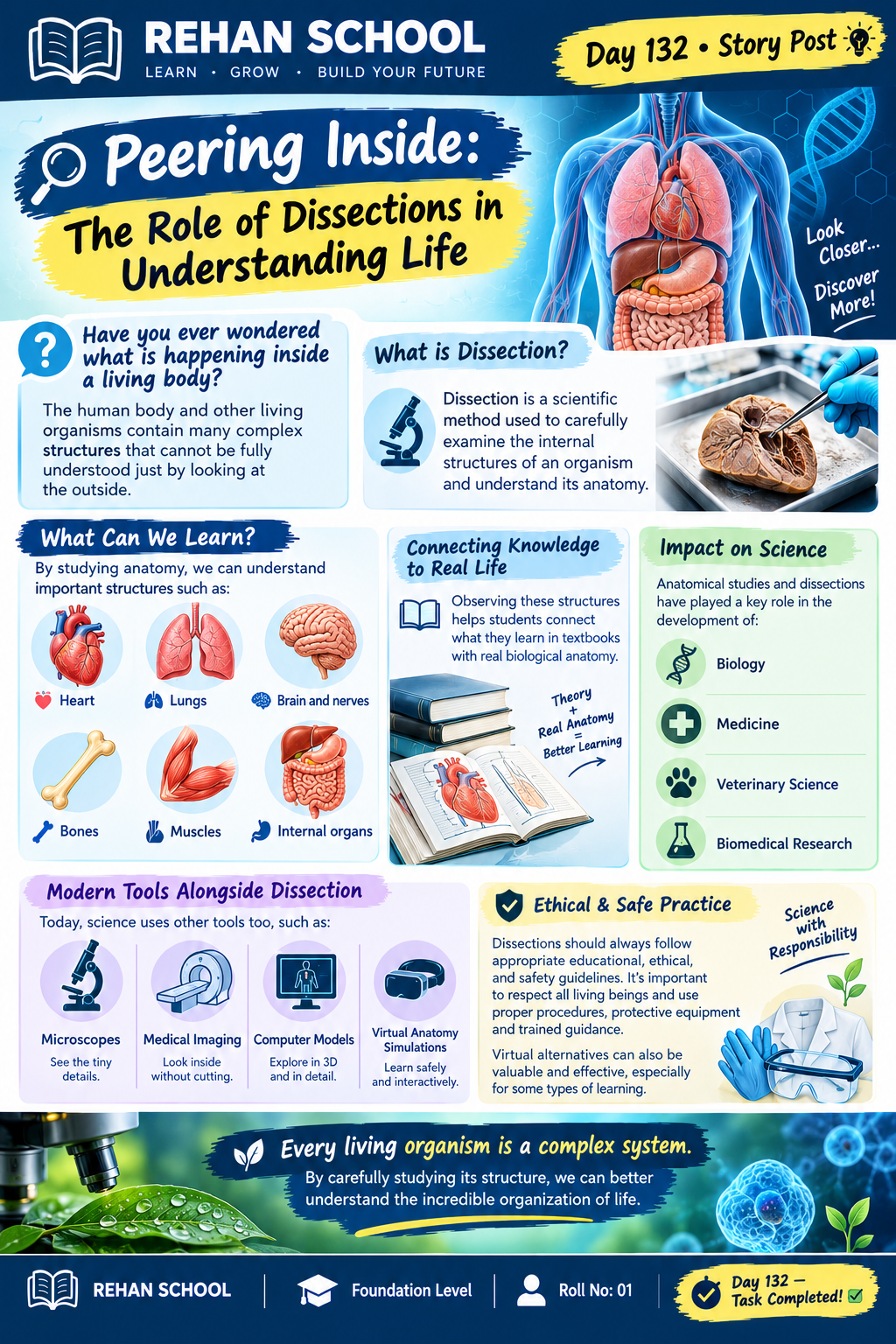
    “Peering Inside: The Role of Dissections in Understanding Life” explores how dissection can help us understand the hidden structures of living organisms. While diagrams, textbooks, and digital models provide important information, studying anatomical structures directly can make biological concepts easier to understand and remember.
    Dissection allows students and researchers to observe how organs are positioned, how different body systems are connected, and how structures work together to support life. It encourages careful observation, scientific thinking, curiosity, and evidence-based learning. By examining anatomy, students can connect what they learn in the classroom with real biological structures.
    Dissections have also played an important role in the development of biological and medical knowledge. Understanding anatomy has helped scientists learn more about the human body, animal biology, diseases, and the functions of different organs. Today, traditional dissection can also be supported by modern tools such as microscopes, anatomical models, medical imaging, 3D simulations, and virtual laboratories.
    Most importantly, studying anatomy teaches us about the remarkable organization and complexity of life. Peering inside is not simply about seeing organs—it is about discovering how the many parts of a living system work together. Through responsible scientific study, dissection can help turn curiosity into knowledge and observation into a deeper understanding of life.
    Mohsin RS F8 ๐ŸŽ“โœจ Story post NO:15 Class: Foundation Level ๐Ÿ“š Made by Me ๐Ÿ’ป๐Ÿš€ “Peering Inside: The Role of Dissections in Understanding Life” explores how dissection can help us understand the hidden structures of living organisms. While diagrams, textbooks, and digital models provide important information, studying anatomical structures directly can make biological concepts easier to understand and remember. Dissection allows students and researchers to observe how organs are positioned, how different body systems are connected, and how structures work together to support life. It encourages careful observation, scientific thinking, curiosity, and evidence-based learning. By examining anatomy, students can connect what they learn in the classroom with real biological structures. Dissections have also played an important role in the development of biological and medical knowledge. Understanding anatomy has helped scientists learn more about the human body, animal biology, diseases, and the functions of different organs. Today, traditional dissection can also be supported by modern tools such as microscopes, anatomical models, medical imaging, 3D simulations, and virtual laboratories. Most importantly, studying anatomy teaches us about the remarkable organization and complexity of life. Peering inside is not simply about seeing organs—it is about discovering how the many parts of a living system work together. Through responsible scientific study, dissection can help turn curiosity into knowledge and observation into a deeper understanding of life.
    0 Reacties 0 aandelen 189 Views
  • Mohsin RS F8
    Story post NO:15
    roll NO:13
    Class: Foundation Level
    Made by Me

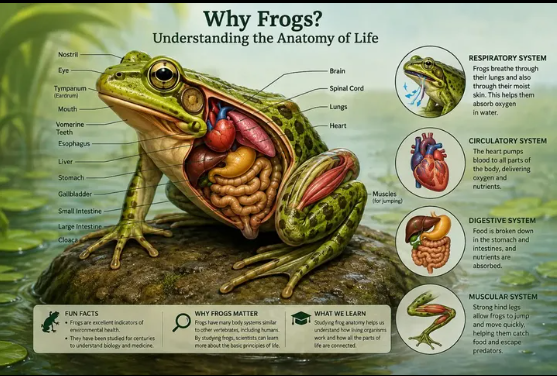
    Frogs may be small animals, but their bodies contain an amazing combination of organs, systems, and adaptations that make them excellent subjects for understanding the basic principles of life. Studying frog anatomy gives us an opportunity to see how different parts of a living organism work together to support movement, breathing, digestion, communication, growth, and survival. Their anatomy also shares important features with many other vertebrates, making frogs useful for learning fundamental concepts in biology.
    One of the most interesting features of frogs is their respiratory system. Unlike humans, frogs can exchange gases not only through their lungs but also through their moist skin. This special adaptation allows them to survive in aquatic and terrestrial environments. Their circulatory system also plays an important role in maintaining life by transporting oxygen and nutrients throughout the body.
    Frogs have powerful hind legs that are specially adapted for jumping and swimming. Their large eyes provide a wide field of vision and help them detect movement, while their ears allow them to hear sounds and communicate. Inside the body, organs such as the heart, lungs, liver, stomach, and intestines each perform important functions. These organs do not work independently; instead, they form interconnected systems that keep the frog alive and functioning.
    The frog's life cycle is another fascinating example of biological development. It begins with eggs laid in water, followed by the tadpole stage. Tadpoles gradually develop legs and lungs as their bodies change, eventually becoming froglets and then adult frogs. This transformation demonstrates how living organisms can undergo remarkable changes as they grow and mature.
    Frogs are also important indicators of environmental health. Because they are sensitive to changes in their surroundings, changes in frog populations can provide clues about the condition of an ecosystem. They also play an important role in controlling insect populations and maintaining food chains.
    Overall, “Why Frogs? Understanding the Anat
    Mohsin RS F8 ๐ŸŽ“โœจ Story post NO:15 roll NO:13 Class: Foundation Level ๐Ÿ“š Made by Me ๐Ÿ’ป๐Ÿš€ Frogs may be small animals, but their bodies contain an amazing combination of organs, systems, and adaptations that make them excellent subjects for understanding the basic principles of life. Studying frog anatomy gives us an opportunity to see how different parts of a living organism work together to support movement, breathing, digestion, communication, growth, and survival. Their anatomy also shares important features with many other vertebrates, making frogs useful for learning fundamental concepts in biology. One of the most interesting features of frogs is their respiratory system. Unlike humans, frogs can exchange gases not only through their lungs but also through their moist skin. This special adaptation allows them to survive in aquatic and terrestrial environments. Their circulatory system also plays an important role in maintaining life by transporting oxygen and nutrients throughout the body. Frogs have powerful hind legs that are specially adapted for jumping and swimming. Their large eyes provide a wide field of vision and help them detect movement, while their ears allow them to hear sounds and communicate. Inside the body, organs such as the heart, lungs, liver, stomach, and intestines each perform important functions. These organs do not work independently; instead, they form interconnected systems that keep the frog alive and functioning. The frog's life cycle is another fascinating example of biological development. It begins with eggs laid in water, followed by the tadpole stage. Tadpoles gradually develop legs and lungs as their bodies change, eventually becoming froglets and then adult frogs. This transformation demonstrates how living organisms can undergo remarkable changes as they grow and mature. Frogs are also important indicators of environmental health. Because they are sensitive to changes in their surroundings, changes in frog populations can provide clues about the condition of an ecosystem. They also play an important role in controlling insect populations and maintaining food chains. Overall, “Why Frogs? Understanding the Anat
    0 Reacties 0 aandelen 182 Views
  • Day 132 | Story Post
    “Peering Inside: The Role of Dissections in Understanding Life”

    Foundation Level
    Roll No: 01

    Aaj ke Story Post mein maine explore kiya ke living organisms ke andar maujood complex structures ko samajhne mein dissections aur anatomical studies kis tarah help karti hain.

    Sirf bahar se dekhne ke bajaye, anatomy ka study humein heart, lungs, brain, bones, muscles aur internal organs jaise important structures ko better samajhne ka mauqa deta hai.

    Is topic ke through mujhe ye bhi seekhne ko mila ke anatomical studies ne biology, medicine, veterinary science aur biomedical research ki development mein important role play kiya hai.

    Aaj modern science mein dissections ke saath microscopes, medical imaging, computer models aur virtual anatomy simulations jaise tools bhi use kiye jate hain. ๐Ÿฉป Ye methods learning ko aur safe, detailed aur interactive banane mein help karte hain.

    Sabse important baat ye hai ke scientific learning hamesha **ethical, safe aur responsible practices** ke saath honi chahiye.

    **Every living organism is a complex system. By carefully studying its structure, we can better understand the incredible organization of life.**

    Rehan School
    Day 132 — Task Completed!

    #RehanSchool #Day132 #StoryPost #Biology #Science #Anatomy #Dissection #HumanBody #LifeScience #MedicalScience #BiomedicalResearch #ScienceLearning #Education #LearningJourney #FoundationLevel #AI
    ๐Ÿ“– Day 132 | Story Post ๐Ÿ”ฌ “Peering Inside: The Role of Dissections in Understanding Life” ๐Ÿ“š Foundation Level ๐Ÿ”ข Roll No: 01 Aaj ke Story Post mein maine explore kiya ke living organisms ke andar maujood complex structures ko samajhne mein dissections aur anatomical studies kis tarah help karti hain. ๐Ÿงฌ๐Ÿ”ฌ Sirf bahar se dekhne ke bajaye, anatomy ka study humein heart, lungs, brain, bones, muscles aur internal organs jaise important structures ko better samajhne ka mauqa deta hai. ๐Ÿซ€๐Ÿซ๐Ÿง ๐Ÿฆด Is topic ke through mujhe ye bhi seekhne ko mila ke anatomical studies ne biology, medicine, veterinary science aur biomedical research ki development mein important role play kiya hai. ๐Ÿ“š๐Ÿ”ฌ Aaj modern science mein dissections ke saath microscopes, medical imaging, computer models aur virtual anatomy simulations jaise tools bhi use kiye jate hain. ๐Ÿ’ป๐Ÿฉป๐Ÿฅฝ Ye methods learning ko aur safe, detailed aur interactive banane mein help karte hain. Sabse important baat ye hai ke scientific learning hamesha **ethical, safe aur responsible practices** ke saath honi chahiye. ๐ŸŒฑ โœจ **Every living organism is a complex system. By carefully studying its structure, we can better understand the incredible organization of life.** ๐Ÿซ Rehan School โœ… Day 132 — Task Completed! #RehanSchool #Day132 #StoryPost #Biology #Science #Anatomy #Dissection #HumanBody #LifeScience #MedicalScience #BiomedicalResearch #ScienceLearning #Education #LearningJourney #FoundationLevel #AI
    0 Reacties 0 aandelen 409 Views
  • RSIF8
    Roll no:85
    Task no:69
    Task topic:Acids and Bases: The Balance of Nature
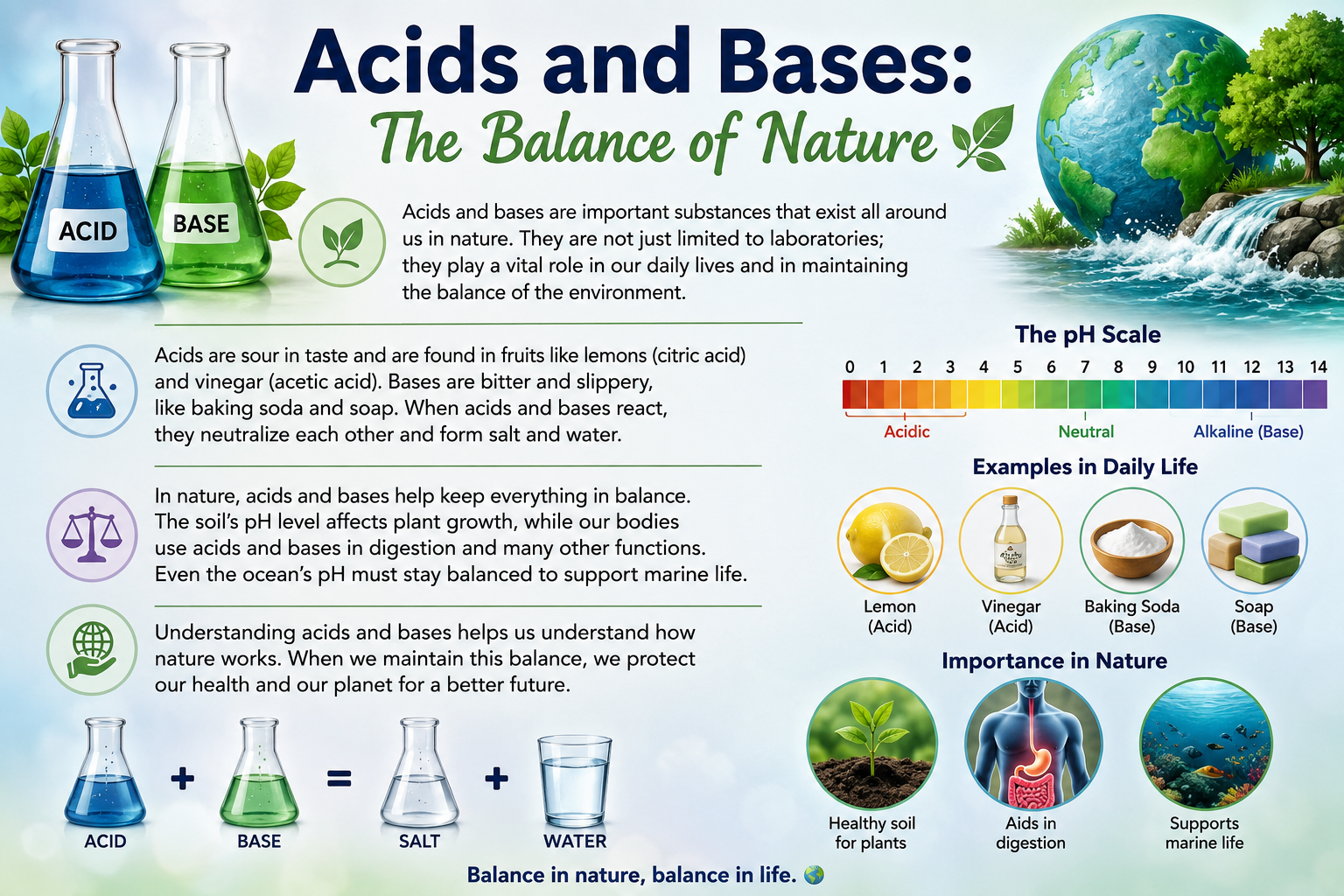
    Have you ever wondered why a lemon tastes sour, why soap feels slippery, or how our stomach digests food? The answer lies in the fascinating world of acids and bases. These substances are found everywhere—in nature, in our homes, and even inside our bodies. Together, they help maintain the delicate balance that supports life on Earth.
    Acids are substances that usually taste sour and have a pH below 7. Common examples include citric acid in lemons, acetic acid in vinegar, and hydrochloric acid in the stomach, which helps digest food. Bases, on the other hand, usually have a pH above 7 and feel slippery. Baking soda, soap, and many cleaning products are everyday examples of bases.
    One of the most amazing things about acids and bases is that they can neutralize each other. When an acid reacts with a base, they produce salt and water. This neutralization process is important in many areas of life, from treating acidic soil for better farming to making medicines that reduce excess stomach acid.
    Nature depends on the balance between acids and bases. Healthy soil has the right pH for plants to grow, rivers and oceans need balanced pH levels to support aquatic life, and our bodies carefully regulate pH so that organs and enzymes can function properly. Even a small change in this balance can affect living organisms.
    Understanding acids and bases helps us appreciate how chemistry works in everyday life. They are not just laboratory chemicals—they are essential to cooking, cleaning, farming, medicine, and the environment. By learning about them, we gain a deeper understanding of the natural world and the scientific principles that keep it in harmony
    RSIF8 Roll no:85 Task no:69 Task topic:Acids and Bases: The Balance of Nature Have you ever wondered why a lemon tastes sour, why soap feels slippery, or how our stomach digests food? The answer lies in the fascinating world of acids and bases. These substances are found everywhere—in nature, in our homes, and even inside our bodies. Together, they help maintain the delicate balance that supports life on Earth. Acids are substances that usually taste sour and have a pH below 7. Common examples include citric acid in lemons, acetic acid in vinegar, and hydrochloric acid in the stomach, which helps digest food. Bases, on the other hand, usually have a pH above 7 and feel slippery. Baking soda, soap, and many cleaning products are everyday examples of bases. One of the most amazing things about acids and bases is that they can neutralize each other. When an acid reacts with a base, they produce salt and water. This neutralization process is important in many areas of life, from treating acidic soil for better farming to making medicines that reduce excess stomach acid. Nature depends on the balance between acids and bases. Healthy soil has the right pH for plants to grow, rivers and oceans need balanced pH levels to support aquatic life, and our bodies carefully regulate pH so that organs and enzymes can function properly. Even a small change in this balance can affect living organisms. Understanding acids and bases helps us appreciate how chemistry works in everyday life. They are not just laboratory chemicals—they are essential to cooking, cleaning, farming, medicine, and the environment. By learning about them, we gain a deeper understanding of the natural world and the scientific principles that keep it in harmony
    0 Reacties 0 aandelen 516 Views
  • #rsisb
    Roll no.239
    Miss Zoya no.3
    Foundation Level

    **Human beings are one of the most remarkable parts of life on Earth.** Humans have the ability to think, learn, communicate, create, imagine, and solve problems. They can develop knowledge through education and experience and use that knowledge to improve their lives and the world around them.

    The **human body** is a complex system made up of many organs and body systems that work together. The brain helps humans think, remember, learn, and control the body. The heart pumps blood throughout the body, while the lungs help provide oxygen. Bones provide structure and support, muscles allow movement, and the nervous system helps control and coordinate many body functions.

    Humans also have **emotions and feelings**. People can experience happiness, sadness, fear, anger, love, excitement, and many other emotions. Understanding emotions is important because they influence how people communicate, make decisions, and interact with others.

    ### Learning and Intelligence

    Humans have a remarkable ability to learn. Children learn language, numbers, social skills, and many other things as they grow. Education helps people develop knowledge and skills, while experience teaches them how to deal with challenges and make better decisions.

    Humans can also use **creativity and imagination** to create art, music, literature, inventions, and new technologies. This ability to imagine new possibilities has played an important role in the development of human civilization.

    ### Health and Well-Being

    Good health is essential for a healthy and productive life. Humans need nutritious food, clean water, oxygen, enough sleep, physical activity, and a safe environment. Regular exercise can help keep the body strong, while healthy habits can support overall well-being.

    Mental and emotional well-being are also important. People need positive relationships, support, relaxation, and opportunities to express their feelings.

    ### ‍‍‍ Human Relationships

    Humans are social beings. Families, friends, classmates, teachers, colleagues, and communities all play important roles in people's lives. Communication and cooperation help people build strong relationships

    ### Humans and Technology

    Technology has become an important part of modern human life. Computers, smartphones, the internet, robotics, and artificial intelligence help people communicate, learn, work, and solve problems.

    Artificial intelligence can assist humans in many areas, but human judgment, responsibility, creativity, and ethical thinking remain extremely important. Technology should be used wisely and responsibly to benefit society.

    ### Humans and the Environment

    Humans depend on Earth for air, water, food, energy, and natural resources. Protecting the environment is therefore an important responsibility.

    Pollution, climate change, deforestation, and the loss of biodiversity can affect human life and other living organisms. People can help protect the planet by reducing waste, saving water and energy, recycling, planting trees, and using resources responsibly.

    ### The Future of Humanity

    The future of humanity will depend on the choices people make today. Education, science, technology, cooperation, peace, and responsible decision-making can help create a better future.

    Humans may continue to explore space, develop new medical treatments, create advanced technologies, and discover new ways to solve global problems. However, progress should always be balanced with ethics, safety, equality, and respect for life.

    ### **Conclusion**

    The study of humans is a broad and fascinating topic that includes the **human body, brain, emotions, health, learning, relationships, society, technology, and the future**.

    Understanding ourselves can help us become healthier, kinder, more responsible, and more thoughtful people. It can also teach us to respect others, appreciate differences, protect our planet, and work together to solve problems.

    **Key Message:**

    > **Human beings have the ability to learn, create, care, and make a difference. By using knowledge wisely and treating others with respect, humans can help build a healthier, kinder, and better world.**
    #rsisb Roll no.239 Miss Zoya no.3 Foundation Level **Human beings are one of the most remarkable parts of life on Earth.** Humans have the ability to think, learn, communicate, create, imagine, and solve problems. They can develop knowledge through education and experience and use that knowledge to improve their lives and the world around them. The **human body** is a complex system made up of many organs and body systems that work together. The brain helps humans think, remember, learn, and control the body. The heart pumps blood throughout the body, while the lungs help provide oxygen. Bones provide structure and support, muscles allow movement, and the nervous system helps control and coordinate many body functions. Humans also have **emotions and feelings**. People can experience happiness, sadness, fear, anger, love, excitement, and many other emotions. Understanding emotions is important because they influence how people communicate, make decisions, and interact with others. ### ๐Ÿง  Learning and Intelligence Humans have a remarkable ability to learn. Children learn language, numbers, social skills, and many other things as they grow. Education helps people develop knowledge and skills, while experience teaches them how to deal with challenges and make better decisions. Humans can also use **creativity and imagination** to create art, music, literature, inventions, and new technologies. This ability to imagine new possibilities has played an important role in the development of human civilization. ### โค๏ธ Health and Well-Being Good health is essential for a healthy and productive life. Humans need nutritious food, clean water, oxygen, enough sleep, physical activity, and a safe environment. Regular exercise can help keep the body strong, while healthy habits can support overall well-being. Mental and emotional well-being are also important. People need positive relationships, support, relaxation, and opportunities to express their feelings. ### ๐Ÿ‘จ‍๐Ÿ‘ฉ‍๐Ÿ‘ง‍๐Ÿ‘ฆ Human Relationships Humans are social beings. Families, friends, classmates, teachers, colleagues, and communities all play important roles in people's lives. Communication and cooperation help people build strong relationships ### ๐Ÿ’ป Humans and Technology Technology has become an important part of modern human life. Computers, smartphones, the internet, robotics, and artificial intelligence help people communicate, learn, work, and solve problems. Artificial intelligence can assist humans in many areas, but human judgment, responsibility, creativity, and ethical thinking remain extremely important. Technology should be used wisely and responsibly to benefit society. ### ๐ŸŒฑ Humans and the Environment Humans depend on Earth for air, water, food, energy, and natural resources. Protecting the environment is therefore an important responsibility. Pollution, climate change, deforestation, and the loss of biodiversity can affect human life and other living organisms. People can help protect the planet by reducing waste, saving water and energy, recycling, planting trees, and using resources responsibly. ### ๐Ÿš€ The Future of Humanity The future of humanity will depend on the choices people make today. Education, science, technology, cooperation, peace, and responsible decision-making can help create a better future. Humans may continue to explore space, develop new medical treatments, create advanced technologies, and discover new ways to solve global problems. However, progress should always be balanced with ethics, safety, equality, and respect for life. ### **Conclusion** The study of humans is a broad and fascinating topic that includes the **human body, brain, emotions, health, learning, relationships, society, technology, and the future**. Understanding ourselves can help us become healthier, kinder, more responsible, and more thoughtful people. It can also teach us to respect others, appreciate differences, protect our planet, and work together to solve problems. **Key Message:** > **Human beings have the ability to learn, create, care, and make a difference. By using knowledge wisely and treating others with respect, humans can help build a healthier, kinder, and better world.**
    0 Reacties 0 aandelen 1021 Views 5
  • ๐Ÿ“– **Day 125 | Story Post** ๐Ÿธ **Why Frogs? Understanding the Anatomy of Life** Frogs may look like simple animals, but their bodies provide an amazing way to understand how life works. Their anatomy shows how different organs and body systems work together to help them survive. A frog has a **heart, lungs, digestive system, nervous system, muscles, and bones**, just like many other vertebrates. ๐Ÿซ€๐Ÿซ One fascinating feature is that frogs can breathe through both their **lungs and their skin**. Their powerful hind legs help them jump, while their eyes and ears help them detect what is happening around them. Studying frogs helps scientists and students understand important concepts in **biology, anatomy, adaptation, and evolution**. ๐Ÿ”ฌ๐ŸŒฟ ๐Ÿธ **A small frog can teach us a big lesson: every living organism has a remarkable design and a complex system that helps it survive.** ๐ŸŽ“ **Rehan School | Foundation Level** ๐Ÿ”ข **Roll No: 01** โœ… **Day 125 — Task Completed!** http://youtube.com/post/Ugkx8XKleK_2aVCTBhDkbmEeJzY2p9MGPqMb?si=2A-Mzzu9NR4WqiXF
    YOUTUBE.COM
    ๐Ÿ“– **Day 125 | Story Post** ๐Ÿธ **Why Frogs? Understanding the Anatomy of Life** Frogs may look like simple animals, but their bodies provide an amazing way to ...
    ๐Ÿ“– **Day 125 | Story Post** ๐Ÿธ **Why Frogs? Understanding the Anatomy of Life** Frogs may look like simple animals, but their bodies provide an amazing way to ...
    0 Reacties 0 aandelen 766 Views
  • #rsisb
    Roll no 248
    Foundation level
    Story post no 20
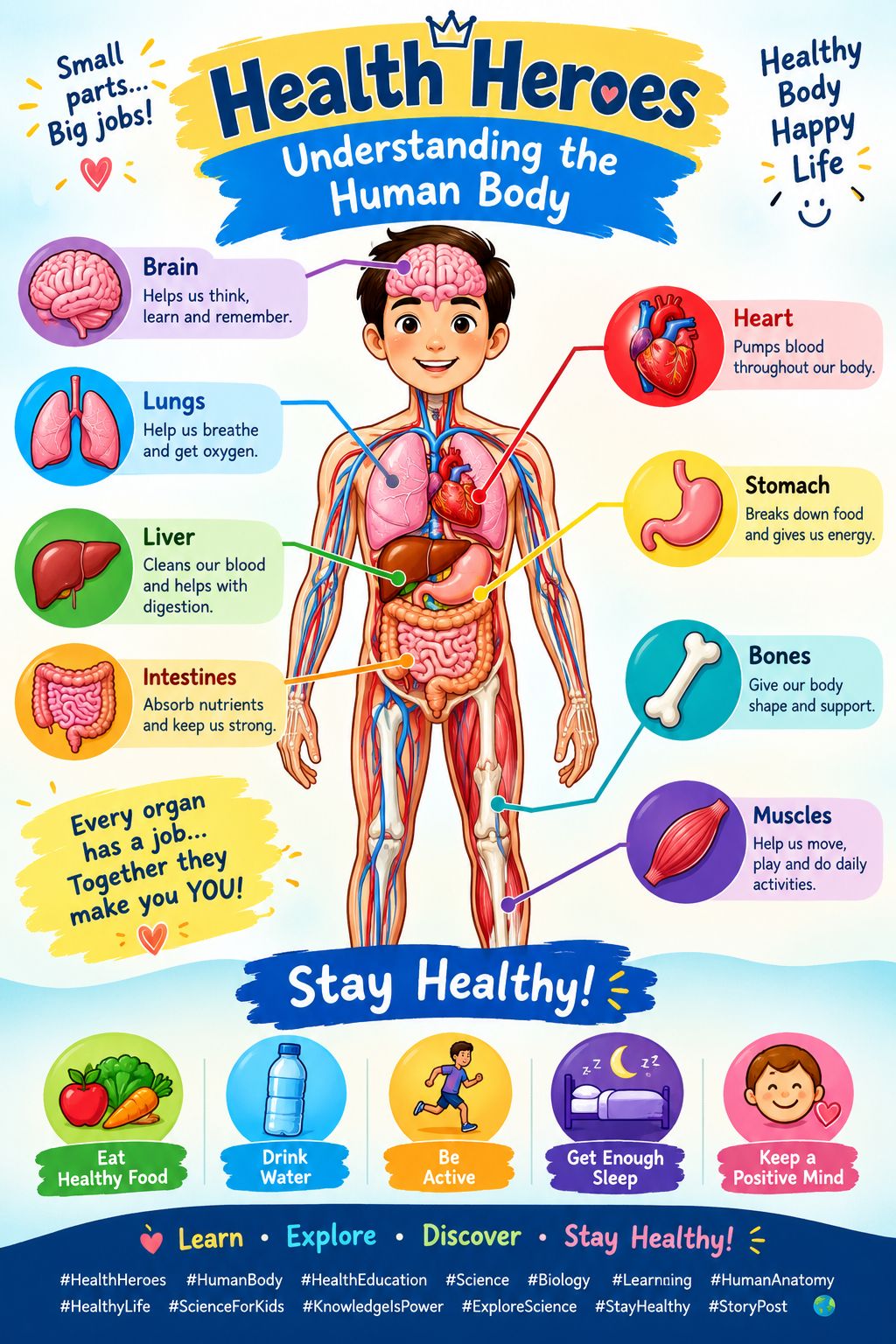
    **Health Heroes: Understanding the Human Body**

    Our body is an amazing system made up of many organs, tissues, and cells working together every day! From the brain that helps us think to the heart that pumps blood , every part has an important job.

    Join us on an exciting journey to discover how the human body works, learn about different organs, and understand why healthy habits matter. ‍

    Learn • Explore • Discover • Stay Healthy!

    #HealthHeroes #HumanBody #HealthEducation #Science #Biology #Learning #Education #HumanAnatomy #HealthyLife #ScienceForKids #KnowledgeIsPower #ExploreScience #StayHealthy #StoryPost
    #rsisb Roll no 248 Foundation level Story post no 20 ๐Ÿง โค๏ธ **Health Heroes: Understanding the Human Body** ๐Ÿซ€๐Ÿฆด Our body is an amazing system made up of many organs, tissues, and cells working together every day! ๐Ÿ”ฌโœจ From the brain that helps us think ๐Ÿง  to the heart that pumps blood โค๏ธ, every part has an important job. Join us on an exciting journey to discover how the human body works, learn about different organs, and understand why healthy habits matter. ๐Ÿฅ—๐Ÿ’ง๐Ÿƒ‍โ™‚๏ธ๐Ÿ˜ด ๐Ÿ“š Learn • ๐Ÿ” Explore • ๐Ÿ’ก Discover • โค๏ธ Stay Healthy! #HealthHeroes #HumanBody #HealthEducation #Science #Biology #Learning #Education #HumanAnatomy #HealthyLife #ScienceForKids #KnowledgeIsPower #ExploreScience #StayHealthy #StoryPost ๐ŸŒ๐Ÿ”ฌโค๏ธ
    0 Reacties 0 aandelen 1088 Views
  • RSIF8
    Roll no: 99
    Song no: 17
    Song topic: Learning Through Layers: The Importance of Animal Anatomy Studies
    Animal anatomy is more than the study of bones, muscles, and organs—it is a journey into understanding how living organisms are built and how their bodies work together. By exploring anatomy through different layers, we can better understand the structure, function, and complexity of life. This song highlights the importance of animal anatomy studies in biology, helping us connect what we see on the outside with the fascinating systems working within.
    #AnimalAnatomy #AnatomyStudies #Biology #AnimalScience #LearningThroughLayers #Science #ScienceSong #Learning #Education
    RSIF8 Roll no: 99 Song no: 17 Song topic: Learning Through Layers: The Importance of Animal Anatomy Studies Animal anatomy is more than the study of bones, muscles, and organs—it is a journey into understanding how living organisms are built and how their bodies work together. By exploring anatomy through different layers, we can better understand the structure, function, and complexity of life. This song highlights the importance of animal anatomy studies in biology, helping us connect what we see on the outside with the fascinating systems working within. #AnimalAnatomy #AnatomyStudies #Biology #AnimalScience #LearningThroughLayers #Science #ScienceSong #Learning #Education
    0 Reacties 0 aandelen 900 Views 0
Zoekresultaten