• Exploring the fascinating chemistry that keeps us alive on Day 56! In this episode, we dive deep into how microscopic chemical reactions and molecular bonds act as the ultimate engine of life.

    From the air we breathe to the cellular energy released by breaking down glucose, every breath is part of a magnificent natural design.

    Let me know your thoughts in the comments below!

    Hassan ClimateWala signing off!

    #ClimateWala #Day56 #EngineOfLife #ScienceFacts #CellularRespiration #ChemicalReactions #BiologyIsAwesome #LearningEveryday #NatureAndScience
    Exploring the fascinating chemistry that keeps us alive on Day 56! 🌱✨ In this episode, we dive deep into how microscopic chemical reactions and molecular bonds act as the ultimate engine of life. 🔬🔥 From the air we breathe to the cellular energy released by breaking down glucose, every breath is part of a magnificent natural design. 🌬️💫 Let me know your thoughts in the comments below! 👇💬 Hassan ClimateWala signing off! 🎬🌿 #ClimateWala #Day56 #EngineOfLife #ScienceFacts #CellularRespiration #ChemicalReactions #BiologyIsAwesome #LearningEveryday #NatureAndScience 🌍⚡
    0 Commentaires 0 Parts 1694 Vue 5
  • RSIF8
    Roll no: 86
    Story Post no: 49
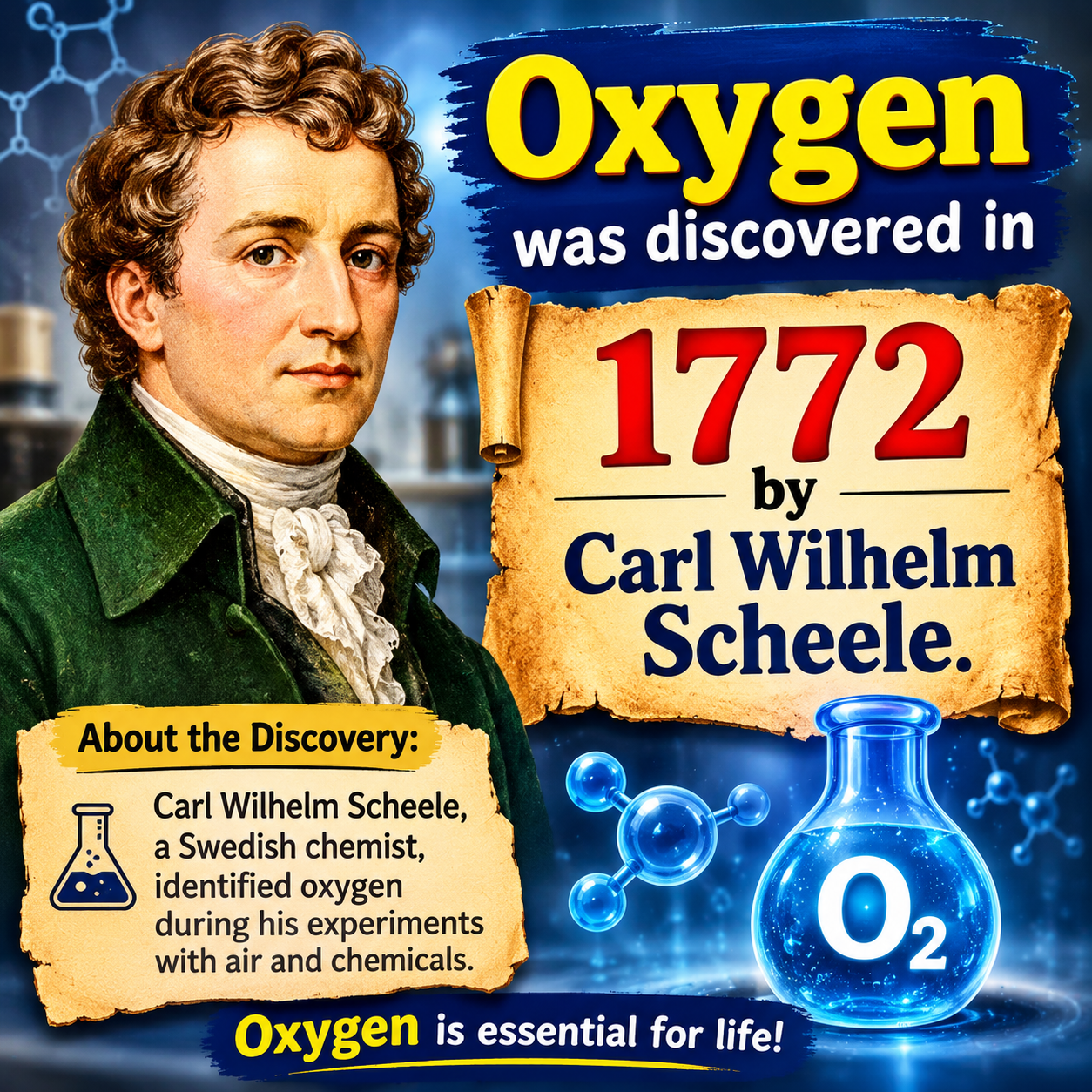
    Story Post Topic:Image with ChatGPT: Oxygen Was Discovered in 1772 by Carl Wilhelm Scheele

    Did you know that oxygen, one of the most important elements for life on Earth, was discovered in 1772 by Swedish chemist Carl Wilhelm Scheele? Oxygen plays a very important role in our daily lives and is essential for the survival of humans, animals, and many other living organisms.

    Carl Wilhelm Scheele was a talented scientist who performed many experiments to understand different chemical substances. During his experiments, he discovered a gas that supported burning and was later recognized as oxygen. He called it "Fire Air" because of its connection with combustion.

    Oxygen is represented by the chemical symbol O and has the atomic number 8. It is a colorless and odorless gas that makes up about 21% of Earth's atmosphere. We breathe oxygen to help our bodies release energy from food. It also supports combustion and plays an important role in many natural processes.

    Why Is Oxygen Important?

    It is essential for breathing in humans and many animals.

    It helps cells release energy through cellular respiration.

    It supports the process of combustion.

    It is important for many chemical and biological processes.

    Plants release oxygen during photosynthesis.

    An Interesting Fact: Although Carl Wilhelm Scheele discovered oxygen around 1772, Joseph Priestley independently discovered it in 1774. Antoine Lavoisier later helped explain its role in combustion and gave it the name oxygen.

    This educational activity helped me learn more about the history of chemistry, scientific discoveries, and the importance of oxygen in our world.

    Science teaches us that even the smallest discoveries can make a huge difference in our understanding of life and nature.

    Sharing this educational image on Facebook, YouTube, LinkedIn, Instagram, and TikTok to spread scientific knowledge and encourage everyone to keep learning!

    #RSIF8 #Oxygen #CarlWilhelmScheele #ScienceFacts #Chemistry #ScientificDiscoveries #LearnWithScience #Education
    RSIF8 Roll no: 86 Story Post no: 49 Story Post Topic:Image with ChatGPT: Oxygen Was Discovered in 1772 by Carl Wilhelm Scheele 🔬 Did you know that oxygen, one of the most important elements for life on Earth, was discovered in 1772 by Swedish chemist Carl Wilhelm Scheele? 🌍✨ Oxygen plays a very important role in our daily lives and is essential for the survival of humans, animals, and many other living organisms. Carl Wilhelm Scheele was a talented scientist who performed many experiments to understand different chemical substances. During his experiments, he discovered a gas that supported burning and was later recognized as oxygen. He called it "Fire Air" because of its connection with combustion. Oxygen is represented by the chemical symbol O and has the atomic number 8. It is a colorless and odorless gas that makes up about 21% of Earth's atmosphere. We breathe oxygen to help our bodies release energy from food. It also supports combustion and plays an important role in many natural processes. 🌱 Why Is Oxygen Important? It is essential for breathing in humans and many animals. It helps cells release energy through cellular respiration. It supports the process of combustion. It is important for many chemical and biological processes. Plants release oxygen during photosynthesis. 🔍 An Interesting Fact: Although Carl Wilhelm Scheele discovered oxygen around 1772, Joseph Priestley independently discovered it in 1774. Antoine Lavoisier later helped explain its role in combustion and gave it the name oxygen. 📚 This educational activity helped me learn more about the history of chemistry, scientific discoveries, and the importance of oxygen in our world. 🌟 Science teaches us that even the smallest discoveries can make a huge difference in our understanding of life and nature. 📢 Sharing this educational image on Facebook, YouTube, LinkedIn, Instagram, and TikTok to spread scientific knowledge and encourage everyone to keep learning! #RSIF8 🎓 #Oxygen 🧪 #CarlWilhelmScheele 🔬 #ScienceFacts 🌍 #Chemistry 📚 #ScientificDiscoveries 💡 #LearnWithScience 🚀 #Education ✨
    0 Commentaires 0 Parts 1880 Vue
  • #rsisb Roll no 279 song post 10 Foundation level 🧪 Chemical Reactions: The Engine of Life ⚗️🔬 Chemical reactions are an essential part of our everyday lives. They are the processes through which substances transform into new substances with different properties. From the food we eat to the air we breathe, chemical reactions play a vital role in keeping life alive. 🌱 In science, chemical reactions help us understand how atoms and molecules interact, break bonds, and form new ones. Photosynthesis, digestion, respiration, and even the burning of fuel are examples of chemical reactions. 🌿⚡ Learning about chemical reactions helps us explore the fascinating world of chemistry and understand how nature works. It shows us that science is everywhere, making life possible and shaping the world around us! 🌍✨ \#ChemicalReactions #Chemistry #Science #Learning #Education #AtomsAndMolecules #ScienceIsAmazing #ExploreScience 🧪🔬⚗️ https://www.facebook.com/share/v/1DVybgc4Jt/
    WWW.FACEBOOK.COM
    Facebook
    #rsisb Roll no 279 song post 10 Foundation level 🧪 Chemical Reactions: The Engine of Life ⚗️🔬 Chemical reactions are an essential part of our everyday lives. They are the processes through which...
    1
    0 Commentaires 0 Parts 1343 Vue
  • Accl Foundation Level ( Rehan School Urdu Bazar Campus )
    Day : 56 Song ( Chemical Reactions: The Engine of Life )
    Roll No : 17
    Syeda Umaima Editing Wali
    Foundation Level
    Accl Task
    Chemical Reaction: The Engine of Life
    Chemical reactions are the foundation of life and play an important role in our everyday world. From the smallest cells to the human body, every living thing depends on chemical reactions to survive, grow, and function.
    Chemistry helps us understand how different elements and substances combine, change, and create new materials. In laboratories, scientists use test tubes, flasks, microscopes, and different chemical substances to explore the amazing world of science.
    Chemical reactions are involved in many important processes, including digestion, respiration, photosynthesis, and energy production. They help plants grow, support our bodies, and make life possible. Every element has its own unique properties, and when different substances interact, they create fascinating scientific changes.
    This project explores the beauty of chemistry through different laboratory experiments, scientific equipment, chemical elements, and reactions. It shows how chemistry connects science, nature, and everyday life.
    Chemical reactions are not just scientific changes; they are the hidden engine that keeps life moving!
    Chemistry is the science of change, discovery, and life! See less
    Accl Foundation Level ( Rehan School Urdu Bazar Campus ) Day : 56 Song ( Chemical Reactions: The Engine of Life ) Roll No : 17 Syeda Umaima Editing Wali Foundation Level Accl Task 🧪 Chemical Reaction: The Engine of Life ⚗️🔬 Chemical reactions are the foundation of life and play an important role in our everyday world. From the smallest cells to the human body, every living thing depends on chemical reactions to survive, grow, and function. 🌍✨ Chemistry helps us understand how different elements and substances combine, change, and create new materials. In laboratories, scientists use test tubes, flasks, microscopes, and different chemical substances to explore the amazing world of science. 🧫🔬 Chemical reactions are involved in many important processes, including digestion, respiration, photosynthesis, and energy production. They help plants grow, support our bodies, and make life possible. Every element has its own unique properties, and when different substances interact, they create fascinating scientific changes. This project explores the beauty of chemistry through different laboratory experiments, scientific equipment, chemical elements, and reactions. It shows how chemistry connects science, nature, and everyday life. Chemical reactions are not just scientific changes; they are the hidden engine that keeps life moving! 🌱⚡ 🧪 Chemistry is the science of change, discovery, and life! ❤️ See less
    0 Commentaires 0 Parts 1055 Vue 3
  • RSIF8
    Roll no.49
    Documentary no.07
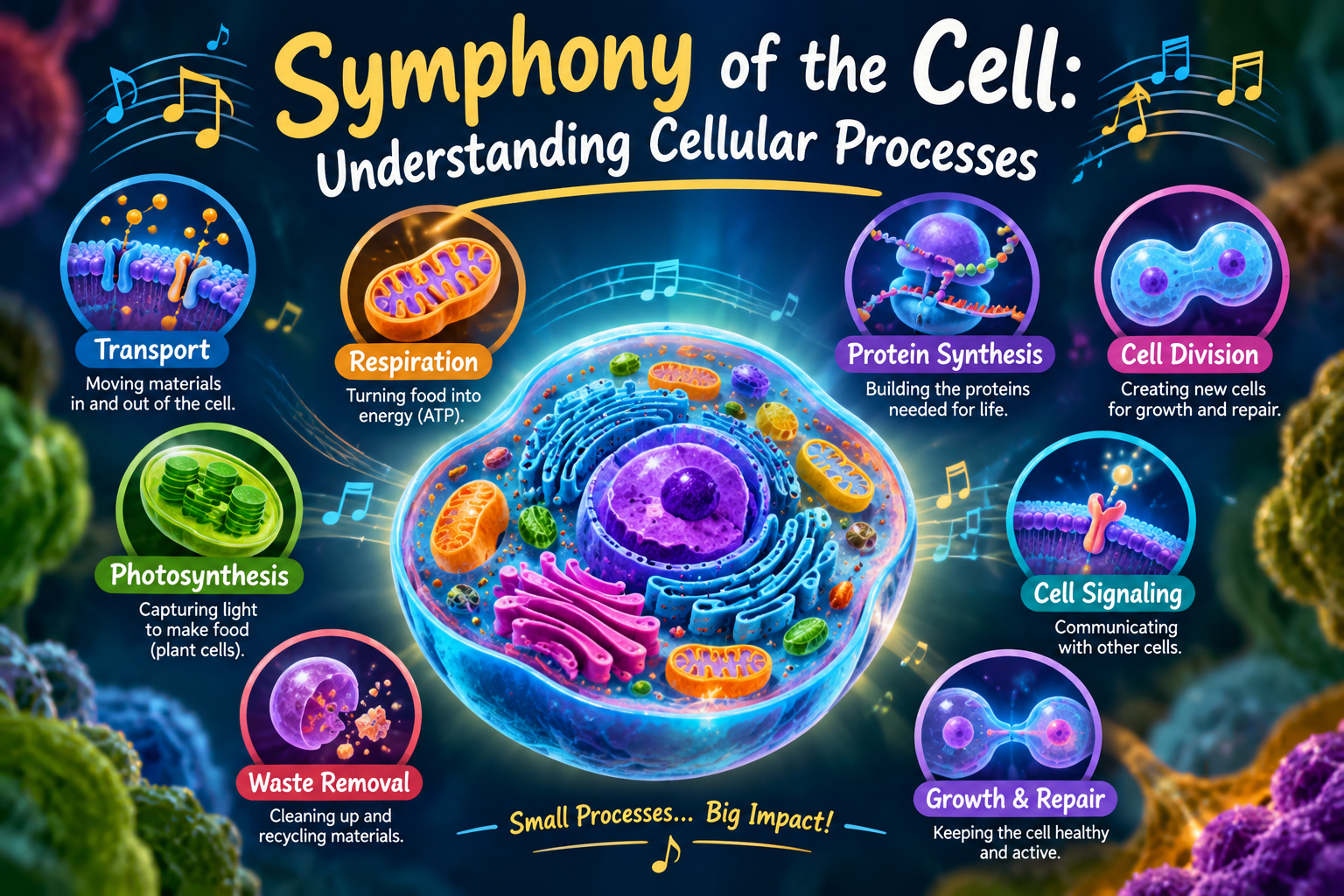
    Documentary Topic:Symphony of the Cell – Understanding Cellular Processes

    Explore the fascinating microscopic world of cells through this educational documentary! This documentary explains how cells work like tiny factories, performing essential activities that keep living organisms alive.

    From the protective role of the cell membrane and the control center of the nucleus to energy production through cellular respiration, every process has an important purpose. It also explores photosynthesis, cell division, and how different cell structures work together to support life.

    Just like musicians in an orchestra, every part of a cell plays a unique role in maintaining balance and keeping life moving.

    The key message: Cells may be tiny, but their functions are powerful. Understanding them helps us discover the amazing science behind life!

    #SymphonyOfTheCell #CellBiology #CellularProcesses #ScienceDocumentary #CellDivision #Photosynthesis #CellularRespiration #Biology #ClassFoundation #RSf8
    RSIF8 Roll no.49 Documentary no.07 Documentary Topic:Symphony of the Cell – Understanding Cellular Processes Explore the fascinating microscopic world of cells through this educational documentary! 🌱 This documentary explains how cells work like tiny factories, performing essential activities that keep living organisms alive. From the protective role of the cell membrane and the control center of the nucleus to energy production through cellular respiration, every process has an important purpose. ⚡ It also explores photosynthesis, cell division, and how different cell structures work together to support life. Just like musicians in an orchestra, every part of a cell plays a unique role in maintaining balance and keeping life moving. 🎶 💡 The key message: Cells may be tiny, but their functions are powerful. Understanding them helps us discover the amazing science behind life! #SymphonyOfTheCell #CellBiology #CellularProcesses #ScienceDocumentary #CellDivision #Photosynthesis #CellularRespiration #Biology #ClassFoundation #RSf8
    0 Commentaires 0 Parts 2704 Vue 1
  • RSIF8
    ROLL NO 77
    STORY POST NO 47
    STORY TOPIC "Symphony of the Cell: Understanding Cellular Processes".

    **Symphony of the Cell: Understanding Cellular Processes**

    Have you ever wondered how tiny cells work together to keep living organisms alive?

    Welcome to the amazing world of cells, where every tiny part plays an important role, just like instruments in a beautiful symphony!

    In this exciting journey, we'll explore how cells produce energy , build proteins , transport materials , remove waste , communicate with other cells , and create new cells through cell division!

    Every process has a special purpose, and together they keep life running smoothly.

    **Remember:** Even the smallest parts of life can make a big difference!

    Keep learning, keep exploring, and discover the incredible science of life!

    Like, share, and follow for more amazing educational content!

    #SymphonyOfTheCell #CellBiology #CellularProcesses #Biology #ScienceEducation #HumanCell #CellDivision #ProteinSynthesis #CellularRespiration #Photosynthesis #ScienceFacts #LearnWithFun #EducationalContent
    RSIF8 ROLL NO 77 STORY POST NO 47 STORY TOPIC "Symphony of the Cell: Understanding Cellular Processes". 🎶🔬 **Symphony of the Cell: Understanding Cellular Processes** 🧬✨ Have you ever wondered how tiny cells work together to keep living organisms alive? 🌱🔍 Welcome to the amazing world of cells, where every tiny part plays an important role, just like instruments in a beautiful symphony! 🎼🦠 In this exciting journey, we'll explore how cells produce energy ⚡, build proteins 🧬, transport materials 🚚, remove waste ♻️, communicate with other cells 📡, and create new cells through cell division! 🔬🌟 Every process has a special purpose, and together they keep life running smoothly. 🌍💚 💡 **Remember:** Even the smallest parts of life can make a big difference! 🚀 Keep learning, keep exploring, and discover the incredible science of life! 👍 Like, share, and follow for more amazing educational content! 📚✨ #SymphonyOfTheCell #CellBiology #CellularProcesses #Biology #ScienceEducation #HumanCell #CellDivision #ProteinSynthesis #CellularRespiration #Photosynthesis #ScienceFacts #LearnWithFun #EducationalContent 🧬🔬🎶
    0 Commentaires 0 Parts 2083 Vue
  • RSIF8
    Roll NO:92
    CHAT GPT TASK NO:14
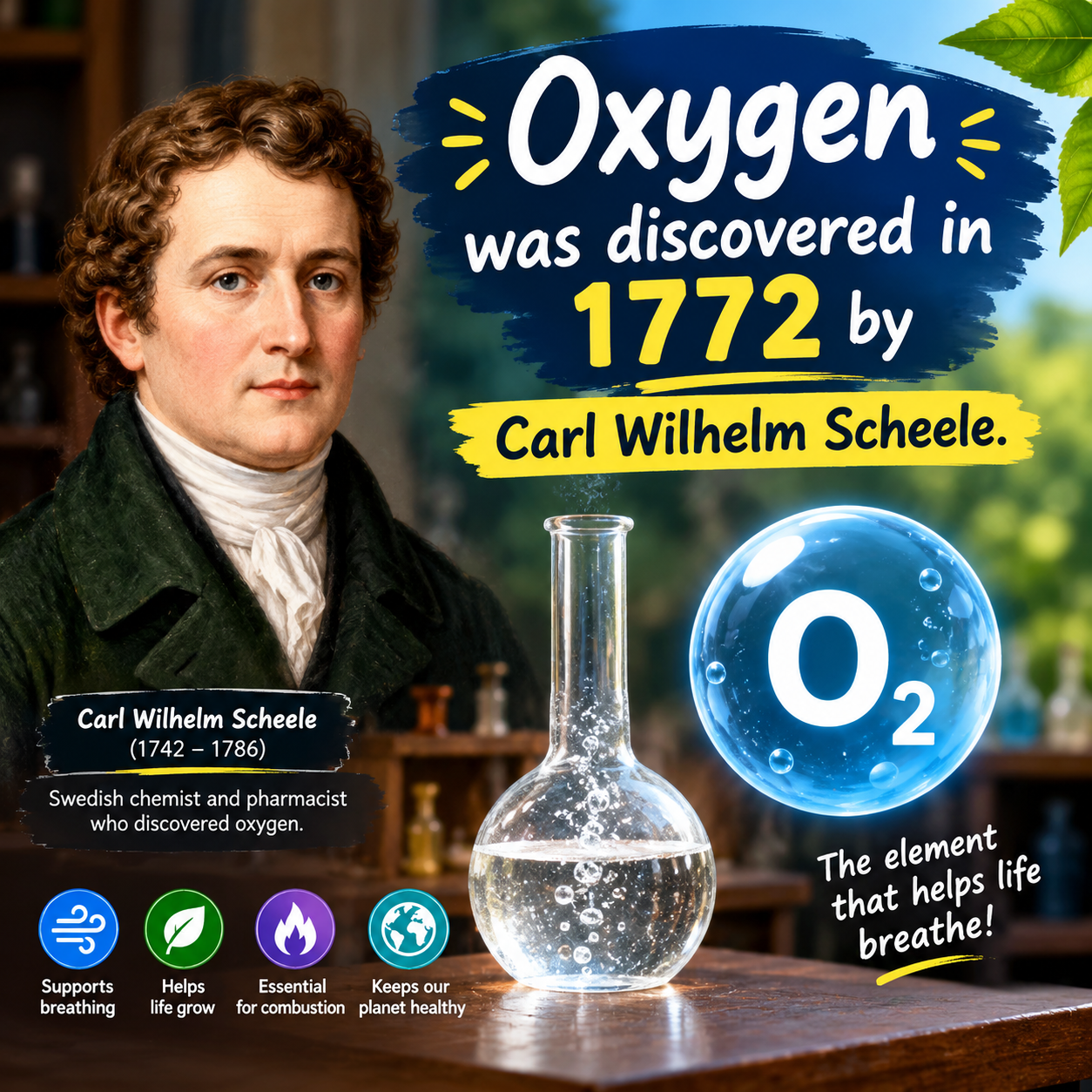
    Topic: **Did You Know? Oxygen Was Discovered in 1772! **

    Oxygen is one of the most important elements for life on Earth! Swedish chemist and pharmacist **Carl Wilhelm Scheele** discovered oxygen around 1772. This amazing discovery helped scientists understand the chemistry of air, breathing, and combustion.

    **Interesting Facts About Oxygen:**
    Symbol: O
    Chemical formula: O₂
    Essential for life and respiration
    Supports combustion
    Makes up about 21% of Earth's atmosphere

    Science is full of amazing discoveries that help us understand our world!

    **Keep learning, stay curious, and explore the wonders of science!**

    #DidYouKnow #Oxygen #CarlWilhelmScheele #ScienceFacts #Chemistry #ScienceEducation #AmazingFacts #KnowledgeIsPower #EducationalPost #LearnSomethingNew
    RSIF8 Roll NO:92 CHAT GPT TASK NO:14 Topic:🌬️ **Did You Know? Oxygen Was Discovered in 1772! 🧪** Oxygen is one of the most important elements for life on Earth! 🌍 Swedish chemist and pharmacist **Carl Wilhelm Scheele** discovered oxygen around 1772. This amazing discovery helped scientists understand the chemistry of air, breathing, and combustion. 💡 **Interesting Facts About Oxygen:** 🔬 Symbol: O 🧪 Chemical formula: O₂ 🌱 Essential for life and respiration 🔥 Supports combustion 🌍 Makes up about 21% of Earth's atmosphere ✨ Science is full of amazing discoveries that help us understand our world! 📚 **Keep learning, stay curious, and explore the wonders of science!** #DidYouKnow #Oxygen #CarlWilhelmScheele #ScienceFacts #Chemistry #ScienceEducation #AmazingFacts #KnowledgeIsPower #EducationalPost #LearnSomethingNew
    0 Commentaires 0 Parts 2569 Vue
  • **Roll No: 2**
    **Batch: 14**
    **Book: ACCL**
    **Task No: 120**

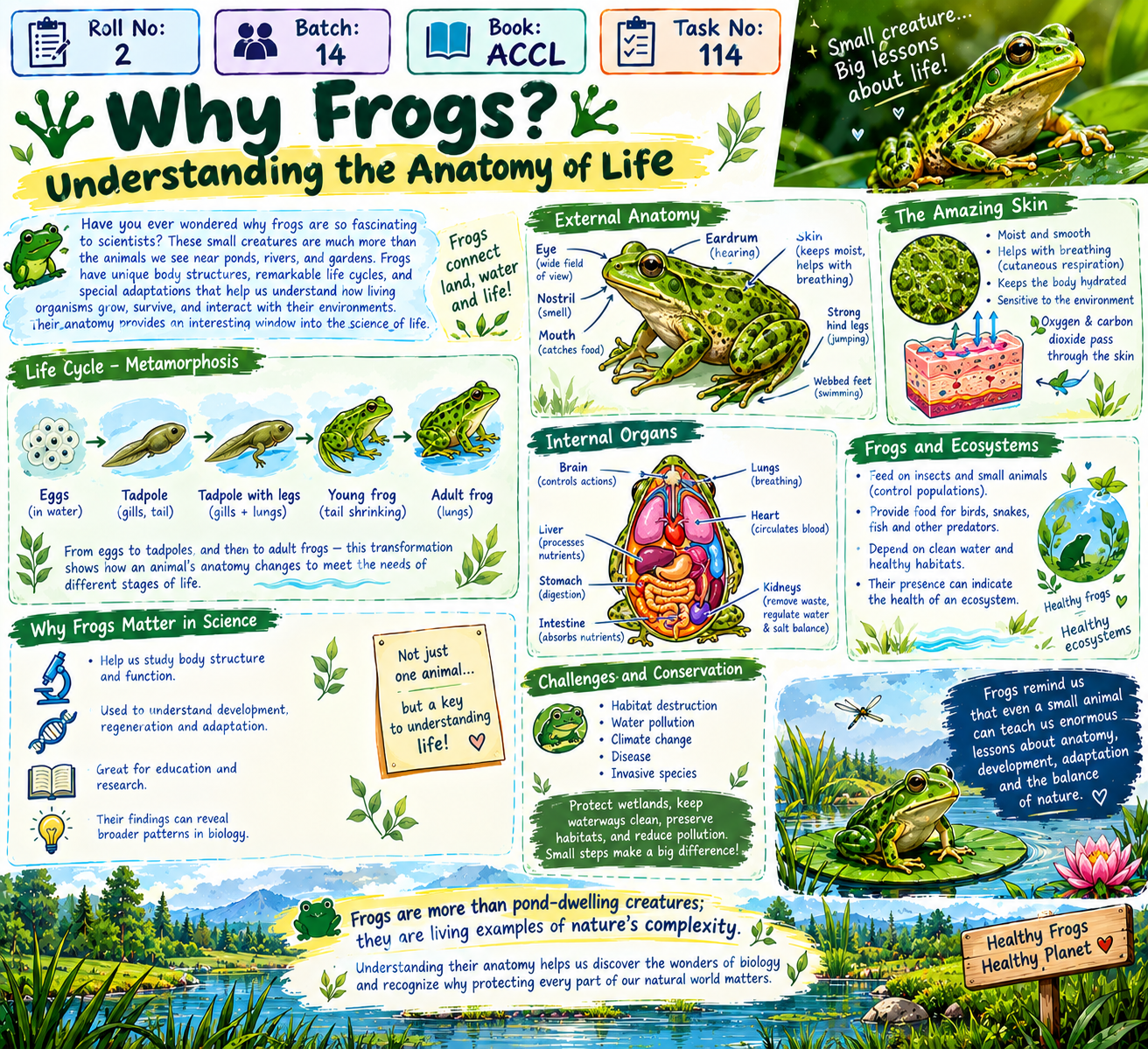
    # Why Frogs? Understanding the Anatomy of Life

    Have you ever wondered why frogs are so fascinating to scientists? These small creatures are much more than the animals we see near ponds, rivers, and gardens. Frogs have unique body structures, remarkable life cycles, and special adaptations that help us understand how living organisms grow, survive, and interact with their environments. Their anatomy provides an interesting window into the science of life.

    A frog's body is designed for life both in water and on land. Its body generally has a broad head, a short trunk, strong hind legs, and webbed feet in many species. These features help frogs jump, swim, and move through their habitats. Their eyes are positioned to provide a wide field of view, while their sensitive hearing helps them detect sounds, including the calls of other frogs.

    One of the most interesting features of frogs is their skin. Unlike the dry, scaly skin of many reptiles, frog skin is usually moist and plays an important role in their survival. Many frogs can exchange gases through their skin as well as through their lungs. This process, called **cutaneous respiration**, allows oxygen and carbon dioxide to pass across the skin under suitable conditions. Their skin also helps maintain moisture, making a healthy habitat especially important for them.

    Frogs have a fascinating life cycle called **metamorphosis**. Many begin life as eggs in water. The eggs hatch into tadpoles, which usually have tails and breathe mainly through gills. As they develop, they grow legs, their lungs develop, and their bodies gradually change into those of adult frogs. The tail is usually absorbed during development. This transformation demonstrates how an animal's anatomy changes to meet the needs of different stages of life.

    The internal organs of a frog also reveal important biological principles. Its heart circulates blood through the body, carrying oxygen and nutrients to tissues. The digestive system breaks down food, while the kidneys help remove waste and regulate water and salt balance. The brain and nervous system coordinate movement, senses, and responses to the environment. Each organ works with other systems to keep the animal alive.

    Frogs are also valuable to ecosystems. Many feed on insects and other small animals, helping influence populations of these organisms. Frogs themselves provide food for birds, snakes, fish, and other predators. Because many frogs depend on suitable water and land habitats, changes in their populations can provide clues about environmental conditions. Scientists therefore study frogs to learn more about biodiversity, habitat quality, and ecosystem health.

    Another reason frogs are important is their role in scientific research and education. Their anatomy helps students explore the structure and function of organs, compare different vertebrates, and understand biological systems. Researchers also study frog development, regeneration in certain species, communication, and adaptation. Such research can reveal broader patterns in biology, although findings from frogs do not always apply directly to humans.

    Unfortunately, many frog species face challenges such as habitat destruction, water pollution, climate change, disease, and invasive species. Protecting wetlands, keeping waterways clean, preserving natural habitats, and reducing pollution can help support frog populations and the many other organisms that share their ecosystems. Caring for frogs is one way of caring for the wider web of life.

    Frogs remind us that even a small animal can teach us enormous lessons about anatomy, development, adaptation, and the balance of nature. By observing their bodies and studying their life cycles, we gain a deeper appreciation of how living systems work together.

    **Frogs are more than pond-dwelling creatures; they are living examples of nature's complexity. Understanding their anatomy helps us discover the wonders of biology and recognize why protecting every part of our natural world matters. **

    \#Frogs #AnatomyOfLife #Biology #LifeCycle #AnimalScience #Biodiversity #ACCL #Batch14 #Task114
    **Roll No: 2** **Batch: 14** **Book: ACCL** **Task No: 120** # 🐸🔬 Why Frogs? Understanding the Anatomy of Life 🌿💚 Have you ever wondered why frogs are so fascinating to scientists? 🐸🌎 These small creatures are much more than the animals we see near ponds, rivers, and gardens. Frogs have unique body structures, remarkable life cycles, and special adaptations that help us understand how living organisms grow, survive, and interact with their environments. Their anatomy provides an interesting window into the science of life. 🔬✨ A frog's body is designed for life both in water and on land. 💧🌱 Its body generally has a broad head, a short trunk, strong hind legs, and webbed feet in many species. These features help frogs jump, swim, and move through their habitats. Their eyes are positioned to provide a wide field of view, while their sensitive hearing helps them detect sounds, including the calls of other frogs. 🦵👀 One of the most interesting features of frogs is their skin. Unlike the dry, scaly skin of many reptiles, frog skin is usually moist and plays an important role in their survival. 🐸💦 Many frogs can exchange gases through their skin as well as through their lungs. This process, called **cutaneous respiration**, allows oxygen and carbon dioxide to pass across the skin under suitable conditions. Their skin also helps maintain moisture, making a healthy habitat especially important for them. Frogs have a fascinating life cycle called **metamorphosis**. 🥚➡️🐟➡️🐸 Many begin life as eggs in water. The eggs hatch into tadpoles, which usually have tails and breathe mainly through gills. As they develop, they grow legs, their lungs develop, and their bodies gradually change into those of adult frogs. The tail is usually absorbed during development. This transformation demonstrates how an animal's anatomy changes to meet the needs of different stages of life. 🌱🔄 The internal organs of a frog also reveal important biological principles. ❤️ Its heart circulates blood through the body, carrying oxygen and nutrients to tissues. The digestive system breaks down food, while the kidneys help remove waste and regulate water and salt balance. The brain and nervous system coordinate movement, senses, and responses to the environment. Each organ works with other systems to keep the animal alive. 🧠🫀 Frogs are also valuable to ecosystems. 🦟🌿 Many feed on insects and other small animals, helping influence populations of these organisms. Frogs themselves provide food for birds, snakes, fish, and other predators. Because many frogs depend on suitable water and land habitats, changes in their populations can provide clues about environmental conditions. Scientists therefore study frogs to learn more about biodiversity, habitat quality, and ecosystem health. 🌍🔎 Another reason frogs are important is their role in scientific research and education. 📚🔬 Their anatomy helps students explore the structure and function of organs, compare different vertebrates, and understand biological systems. Researchers also study frog development, regeneration in certain species, communication, and adaptation. Such research can reveal broader patterns in biology, although findings from frogs do not always apply directly to humans. Unfortunately, many frog species face challenges such as habitat destruction, water pollution, climate change, disease, and invasive species. 🌧️🏞️ Protecting wetlands, keeping waterways clean, preserving natural habitats, and reducing pollution can help support frog populations and the many other organisms that share their ecosystems. Caring for frogs is one way of caring for the wider web of life. 💚♻️ Frogs remind us that even a small animal can teach us enormous lessons about anatomy, development, adaptation, and the balance of nature. By observing their bodies and studying their life cycles, we gain a deeper appreciation of how living systems work together. 🐸🌎🔬 **Frogs are more than pond-dwelling creatures; they are living examples of nature's complexity. Understanding their anatomy helps us discover the wonders of biology and recognize why protecting every part of our natural world matters. 🐸🧬🌿✨** \#Frogs #AnatomyOfLife #Biology #LifeCycle #AnimalScience #Biodiversity #ACCL #Batch14 #Task114 🐸🔬🌍

    0 Commentaires 0 Parts 5341 Vue
  • #rsisb
    Roll No 253
    Foundation Level
    Song 08

    **CHEMICAL REACTIONS: THE ENGINE OF LIFE | THE SCIENCE BEHIND EVERY BREATH**

    What if every heartbeat, every breath, every movement, and every thought depends on an invisible world of chemical reactions?

    **“Chemical Reactions: The Engine of Life”** takes you on a fascinating musical journey into the chemistry that keeps living organisms alive. From the smallest cell to the most complex human body, life depends on countless chemical reactions happening every second.

    Inside every cell, molecules are constantly being **broken down, built up, transformed, and exchanged**. These reactions release energy, create essential molecules, repair cellular structures, and maintain the delicate balance required for life.

    **The song explores:**

    How chemical reactions transform matter
    Energy release and energy storage in cells
    Photosynthesis and how plants capture sunlight
    Cellular respiration and the production of usable energy
    Enzymes that accelerate essential biological reactions
    The importance of water and molecular interactions
    How metabolism connects thousands of reactions together
    How chemistry supports the function of organs and cells
    How chemical processes drive growth, repair, and reproduction

    At the heart of the story is **metabolism** — the vast network of chemical reactions that allows organisms to obtain energy and build the molecules they need to survive.

    When you eat food, chemistry transforms its molecules into usable energy. When you breathe, oxygen participates in reactions that help cells produce energy. When a plant grows toward sunlight, chemistry is turning light energy into stored chemical energy.

    Even the smallest changes in molecules can create enormous consequences.

    A reaction can release energy.
    A reaction can store energy.
    A reaction can build something new.
    A reaction can break something down.

    Together, these processes form an extraordinary molecular engine that powers life itself.

    **From atoms to cells, from sunlight to energy, from food to movement — chemistry is everywhere.**

    **Plants use it to grow.**
    **Cells use it to survive.**
    **Brains use it to function.**
    **Muscles use it to move.**
    **Life uses it to continue.**

    **“Chemical Reactions: The Engine of Life”** is more than a song about chemistry. It is a reminder that beneath everything we see, an invisible molecular world is constantly working — transforming matter and energy into the processes we call **life**.

    **Every reaction tells a story.**
    **Every molecule has a purpose.**
    **And together, they create the chemistry of life.**

    #ChemicalReactions #EngineOfLife #Chemistry #Biochemistry #ScienceSong #ChemistryEducation #Biology #CellularRespiration #Photosynthesis #Enzymes #Metabolism #MolecularScience #ScienceEducation #LifeScience #EducationalMusic

    Asma Shaheen EducationWali
    Saima Empowerment Wali
    Mishaal TrainingWali
    #rsisb Roll No 253 Foundation Level Song 08 🧪 **CHEMICAL REACTIONS: THE ENGINE OF LIFE | THE SCIENCE BEHIND EVERY BREATH** 🧬⚡ What if every heartbeat, every breath, every movement, and every thought depends on an invisible world of chemical reactions? 🌌🔬 **“Chemical Reactions: The Engine of Life”** takes you on a fascinating musical journey into the chemistry that keeps living organisms alive. From the smallest cell to the most complex human body, life depends on countless chemical reactions happening every second. 🧪✨ Inside every cell, molecules are constantly being **broken down, built up, transformed, and exchanged**. These reactions release energy, create essential molecules, repair cellular structures, and maintain the delicate balance required for life. ⚡🧬 🎵 **The song explores:** 🧪 How chemical reactions transform matter ⚡ Energy release and energy storage in cells 🍃 Photosynthesis and how plants capture sunlight 🫁 Cellular respiration and the production of usable energy 🧬 Enzymes that accelerate essential biological reactions 💧 The importance of water and molecular interactions 🔬 How metabolism connects thousands of reactions together ❤️ How chemistry supports the function of organs and cells 🌱 How chemical processes drive growth, repair, and reproduction At the heart of the story is **metabolism** — the vast network of chemical reactions that allows organisms to obtain energy and build the molecules they need to survive. 🔥🔬 When you eat food, chemistry transforms its molecules into usable energy. When you breathe, oxygen participates in reactions that help cells produce energy. When a plant grows toward sunlight, chemistry is turning light energy into stored chemical energy. ☀️🌿 Even the smallest changes in molecules can create enormous consequences. A reaction can release energy. A reaction can store energy. A reaction can build something new. A reaction can break something down. Together, these processes form an extraordinary molecular engine that powers life itself. 🧬⚙️✨ 🎬 **From atoms to cells, from sunlight to energy, from food to movement — chemistry is everywhere.** 🌱 **Plants use it to grow.** 🫀 **Cells use it to survive.** 🧠 **Brains use it to function.** 🏃 **Muscles use it to move.** 🌍 **Life uses it to continue.** **“Chemical Reactions: The Engine of Life”** is more than a song about chemistry. It is a reminder that beneath everything we see, an invisible molecular world is constantly working — transforming matter and energy into the processes we call **life**. ❤️🧪 ✨ **Every reaction tells a story.** ⚡ **Every molecule has a purpose.** 🧬 **And together, they create the chemistry of life.** #ChemicalReactions #EngineOfLife #Chemistry #Biochemistry #ScienceSong #ChemistryEducation #Biology #CellularRespiration #Photosynthesis #Enzymes #Metabolism #MolecularScience #ScienceEducation #LifeScience #EducationalMusic 🧪🧬⚡🌱🔬 Asma Shaheen EducationWali Saima Empowerment Wali Mishaal TrainingWali
    0 Commentaires 0 Parts 4719 Vue 5
  • RSIF8
    Roll no: 99
    Story post no: 14
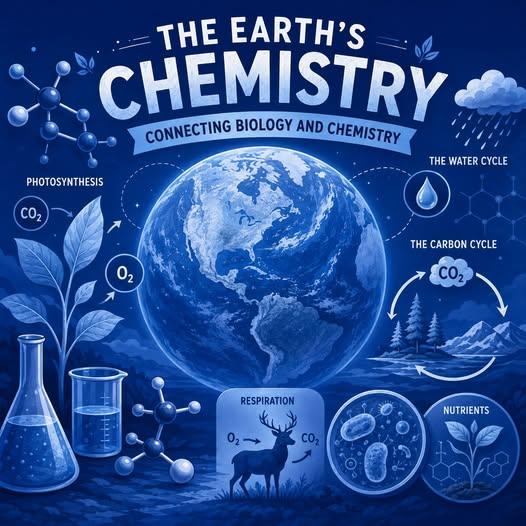
    Story topic: The Earth's Chemistry: Connecting Biology and Chemistry
    The Earth is a giant laboratory where biology and chemistry work together every day. From the air we breathe and the water we drink to the nutrients that help plants and animals grow, chemical processes make life possible.
    Photosynthesis, respiration, the carbon cycle, and the breakdown of nutrients are all examples of this connection. By studying Earth's chemistry, we can better understand how living organisms survive and how our planet continues to support life.
    #EarthScience #Chemistry #Biology #Science #EarthChemistry #LifeScience #ScienceEducation #STEM #LearnScience #Education
    RSIF8 Roll no: 99 Story post no: 14 Story topic: The Earth's Chemistry: Connecting Biology and Chemistry The Earth is a giant laboratory where biology and chemistry work together every day. From the air we breathe and the water we drink to the nutrients that help plants and animals grow, chemical processes make life possible. Photosynthesis, respiration, the carbon cycle, and the breakdown of nutrients are all examples of this connection. By studying Earth's chemistry, we can better understand how living organisms survive and how our planet continues to support life. #EarthScience #Chemistry #Biology #Science #EarthChemistry #LifeScience #ScienceEducation #STEM #LearnScience #Education
    0 Commentaires 0 Parts 1891 Vue
Plus de résultats