• RSIF8
    Roll no:14
    story no:23
    story topic:The Ethics and Education of Animal Dissections

    # The Ethics and Education of Animal Dissections

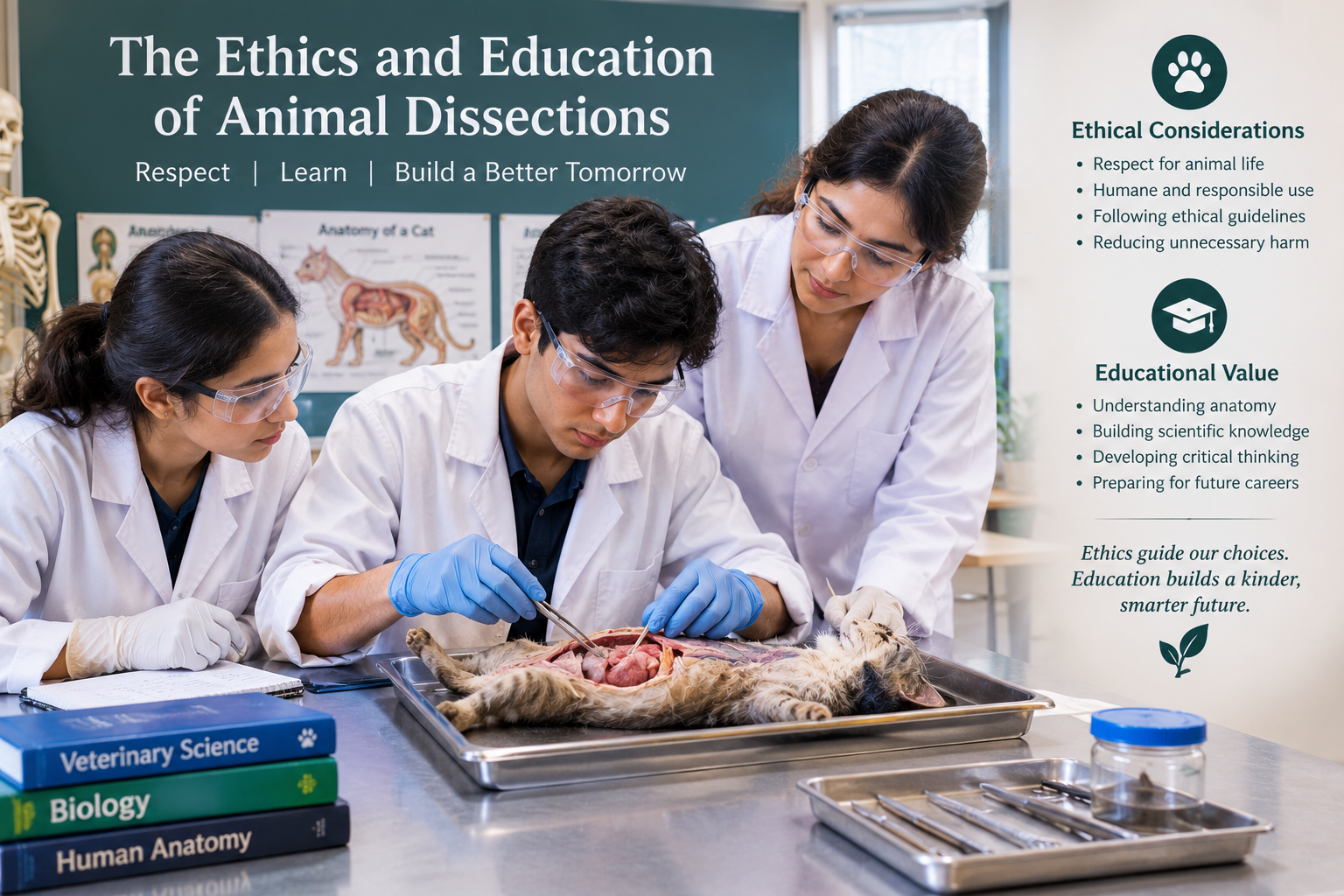
    Welcome to an exploration of science, learning, and ethical responsibility! **“The Ethics and Education of Animal Dissections”** examines the role of animal dissection in biological education and highlights the importance of balancing scientific knowledge with respect for animal life.

    Animal dissection has traditionally been used to help students understand the structure and function of organs, tissues, and body systems. Through guided observation and practical learning, students can develop a deeper understanding of anatomy, improve their scientific thinking, and explore how different biological systems work together.

    However, scientific education also involves important ethical questions. Students and educators must consider animal welfare, responsible specimen use, and ways to reduce unnecessary harm. Modern educational approaches increasingly include virtual dissections, 3D anatomical models, videos, and interactive simulations as valuable alternatives that can support effective learning.

    ## Key Topics Covered

    - Understanding animal anatomy and biological systems
    - Exploring the educational purpose of animal dissections
    - Respecting animal welfare and ethical responsibilities
    - Developing scientific knowledge and critical-thinking skills
    - Discovering virtual dissections and alternative learning methods
    - Encouraging responsible and compassionate scientific research

    ## Why Is This Topic Important?

    Understanding the ethics of animal dissection encourages students to think critically about how scientific knowledge is gained. It teaches the importance of balancing educational benefits with compassion, responsibility, and respect for living organisms.

    **Science is not only about discovering how life works; it is also about making thoughtful, ethical choices in the pursuit of knowledge.**

    Join us in exploring how education, scientific discovery, and animal welfare can work together to create a more responsible future!

    #AnimalDissection #AnimalAnatomy #ScienceEducation #Bioethics #AnimalWelfare #Biology #EthicalScience #VirtualDissection #ScientificLearning #VeterinaryScience #EducationAndEthics
    RSIF8 Roll no:14 story no:23 story topic:The Ethics and Education of Animal Dissections # 🔬 The Ethics and Education of Animal Dissections 🐾 Welcome to an exploration of science, learning, and ethical responsibility! **“The Ethics and Education of Animal Dissections”** examines the role of animal dissection in biological education and highlights the importance of balancing scientific knowledge with respect for animal life. 🧬📚 Animal dissection has traditionally been used to help students understand the structure and function of organs, tissues, and body systems. Through guided observation and practical learning, students can develop a deeper understanding of anatomy, improve their scientific thinking, and explore how different biological systems work together. However, scientific education also involves important ethical questions. Students and educators must consider animal welfare, responsible specimen use, and ways to reduce unnecessary harm. Modern educational approaches increasingly include virtual dissections, 3D anatomical models, videos, and interactive simulations as valuable alternatives that can support effective learning. 🌱💻 ## 🌟 Key Topics Covered - 🔬 Understanding animal anatomy and biological systems - 🐾 Exploring the educational purpose of animal dissections - ❤️ Respecting animal welfare and ethical responsibilities - 📚 Developing scientific knowledge and critical-thinking skills - 💻 Discovering virtual dissections and alternative learning methods - 🌍 Encouraging responsible and compassionate scientific research ## 🎯 Why Is This Topic Important? Understanding the ethics of animal dissection encourages students to think critically about how scientific knowledge is gained. It teaches the importance of balancing educational benefits with compassion, responsibility, and respect for living organisms. ✨ **Science is not only about discovering how life works; it is also about making thoughtful, ethical choices in the pursuit of knowledge.** Join us in exploring how education, scientific discovery, and animal welfare can work together to create a more responsible future! #AnimalDissection #AnimalAnatomy #ScienceEducation #Bioethics #AnimalWelfare #Biology #EthicalScience #VirtualDissection #ScientificLearning #VeterinaryScience #EducationAndEthics
    0 Commentarios 0 Acciones 1890 Views
  • RSIF8
    Roll no:14
    story no:21
    story topic:Peering Inside: The Role of Dissections in Understanding Life
    # Peering Inside: The Role of Dissections in Understanding Life

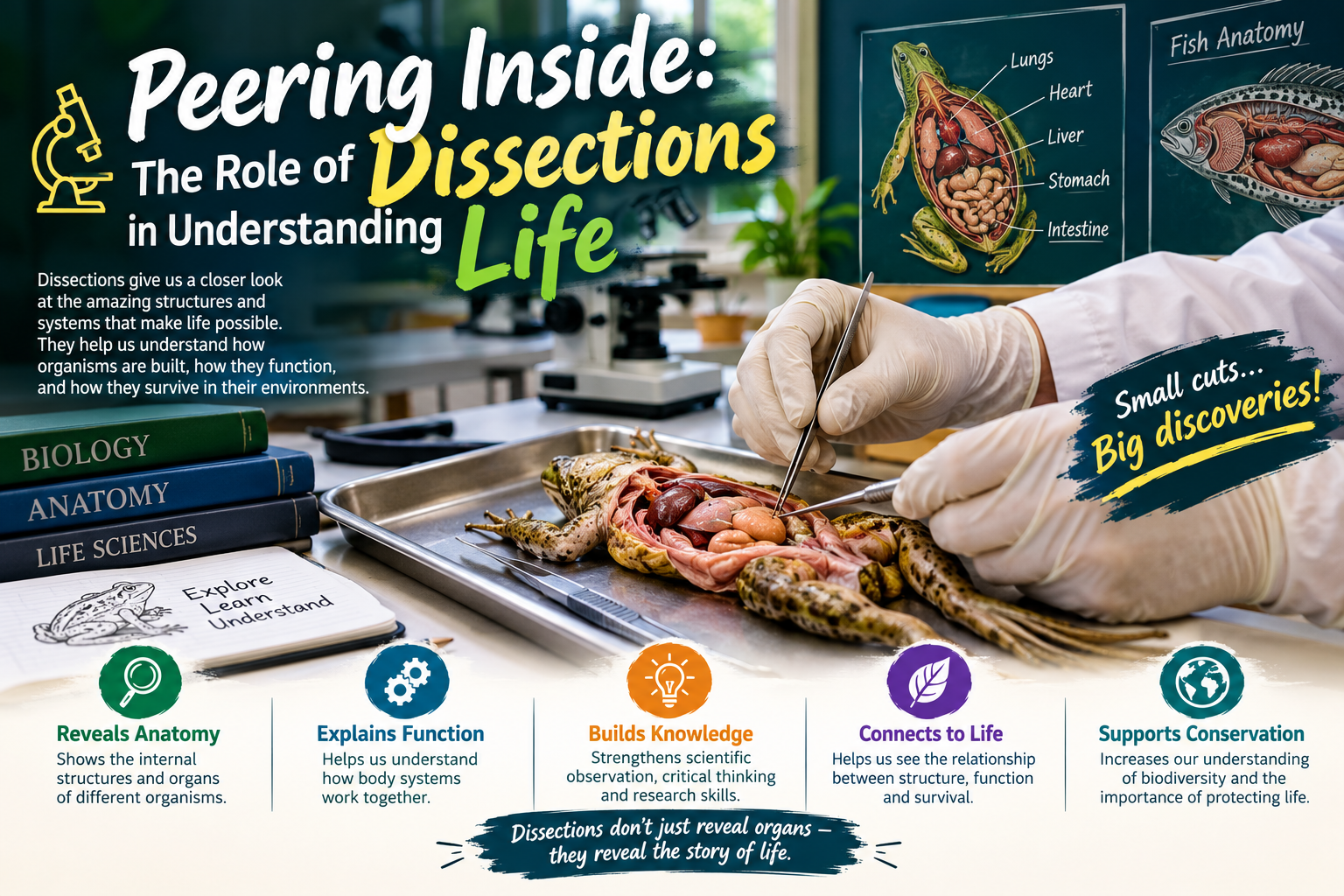
    Discover the fascinating world of biology through **“Peering Inside: The Role of Dissections in Understanding Life.”** This educational topic explores how dissection helps scientists and students understand the internal structures of living organisms and uncover the amazing systems that make life possible.

    Dissection is an important scientific method that allows researchers to examine organs, tissues, and body structures to learn how different parts of an organism work together. By studying anatomy, we can better understand the relationship between structure and function, how body systems support survival, and how different species are adapted to their environments.

    **What Will You Learn?**

    - **Understanding Anatomy:** Discover the internal structures and organs of living organisms.
    - **Structure and Function:** Learn how different organs work together to support life.
    - **Exploring Organisms:** Understand the similarities and differences between various species.
    - **Scientific Investigation:** Develop observation, analytical thinking, and research skills.
    - **Biodiversity and Conservation:** Explore how anatomical knowledge contributes to understanding and protecting living things.
    - **Educational Importance:** Discover how dissection supports biology, medicine, and scientific learning.

    Dissection has contributed greatly to our understanding of the human body and other organisms. Today, scientists and educators can also use anatomical models, digital simulations, and virtual dissection tools to explore biological structures. Responsible scientific study emphasizes ethical practices, safety, and respect for living things.

    **Conclusion:** Dissection is more than the study of internal organs; it is a window into the complexity, organization, and wonder of life. By exploring anatomy, we gain valuable knowledge about how organisms function, survive, and interact with the world around them.

    **“Dissections don't just reveal organs — they reveal the story of life!”**

    #PeeringInside #Dissection #Anatomy #Biology #LifeSciences #ScienceEducation #ScientificDiscovery #HumanAnatomy #AnimalBiology #Biodiversity #LearningThroughScience #EducationalContent #ExploreLife
    RSIF8 Roll no:14 story no:21 story topic:Peering Inside: The Role of Dissections in Understanding Life # 🔬 Peering Inside: The Role of Dissections in Understanding Life 🧬 Discover the fascinating world of biology through **“Peering Inside: The Role of Dissections in Understanding Life.”** This educational topic explores how dissection helps scientists and students understand the internal structures of living organisms and uncover the amazing systems that make life possible. 🌿✨ Dissection is an important scientific method that allows researchers to examine organs, tissues, and body structures to learn how different parts of an organism work together. By studying anatomy, we can better understand the relationship between structure and function, how body systems support survival, and how different species are adapted to their environments. 🔍 **What Will You Learn?** - 🫀 **Understanding Anatomy:** Discover the internal structures and organs of living organisms. - 🧠 **Structure and Function:** Learn how different organs work together to support life. - 🐸 **Exploring Organisms:** Understand the similarities and differences between various species. - 🔬 **Scientific Investigation:** Develop observation, analytical thinking, and research skills. - 🌍 **Biodiversity and Conservation:** Explore how anatomical knowledge contributes to understanding and protecting living things. - 📚 **Educational Importance:** Discover how dissection supports biology, medicine, and scientific learning. Dissection has contributed greatly to our understanding of the human body and other organisms. Today, scientists and educators can also use anatomical models, digital simulations, and virtual dissection tools to explore biological structures. Responsible scientific study emphasizes ethical practices, safety, and respect for living things. 💚 ✨ **Conclusion:** Dissection is more than the study of internal organs; it is a window into the complexity, organization, and wonder of life. By exploring anatomy, we gain valuable knowledge about how organisms function, survive, and interact with the world around them. **“Dissections don't just reveal organs — they reveal the story of life!”** 🌱🔬 #PeeringInside #Dissection #Anatomy #Biology #LifeSciences #ScienceEducation #ScientificDiscovery #HumanAnatomy #AnimalBiology #Biodiversity #LearningThroughScience #EducationalContent #ExploreLife
    0 Commentarios 0 Acciones 2143 Views
  • **Roll No: 2**
    **Batch: 14**
    **Book: ACCL**
    **Task No: 145**

    # The Ethics and Education of Animal Dissections

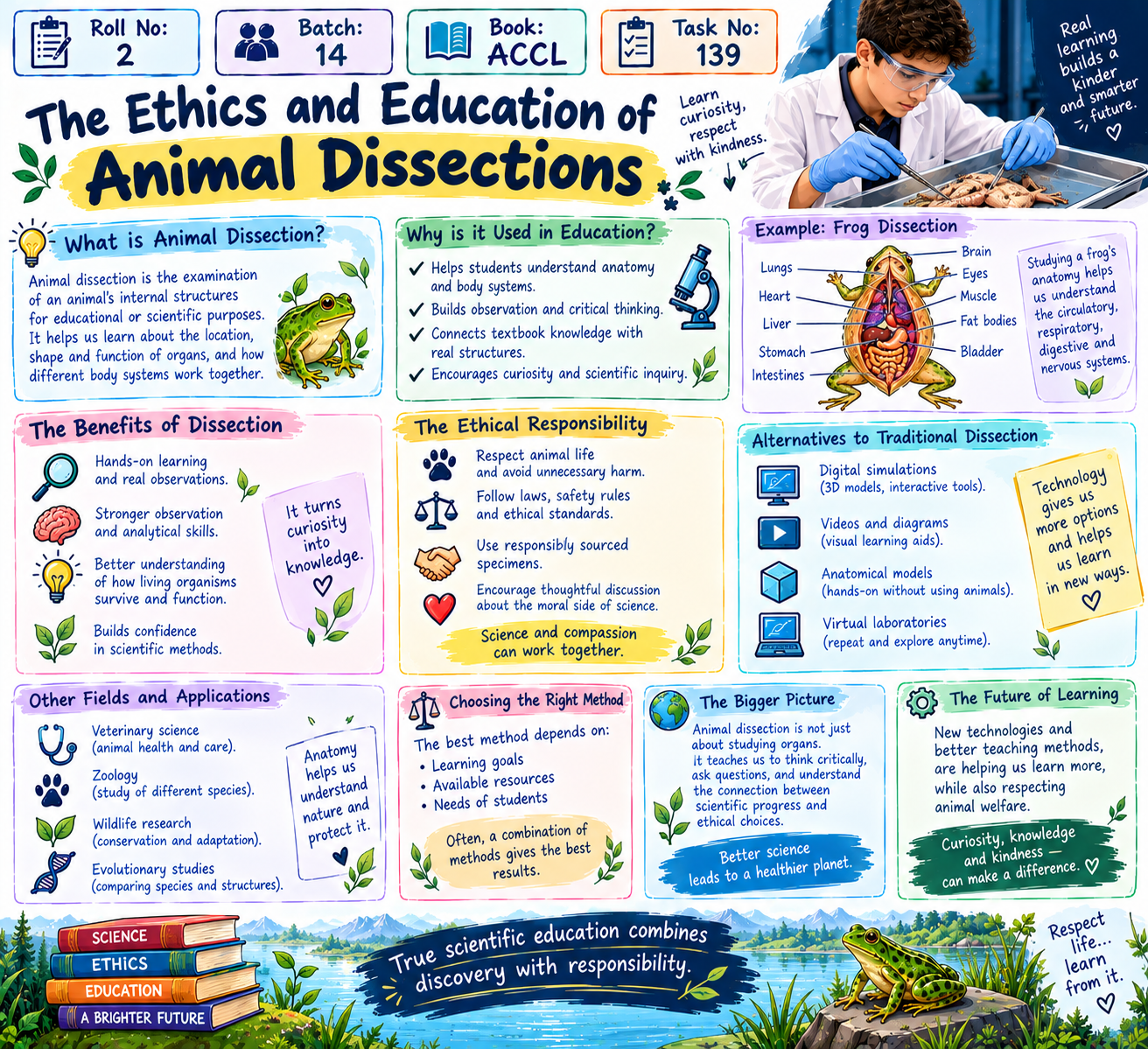
    Have you ever wondered how students learn about the internal structures of animals and why science education places importance on understanding life responsibly? Animal dissection has been used in biology classrooms and scientific research to help learners explore anatomy, examine organs, and understand how different body systems function. However, it also raises important questions about animal welfare, ethical responsibility, and the best ways to teach scientific concepts.

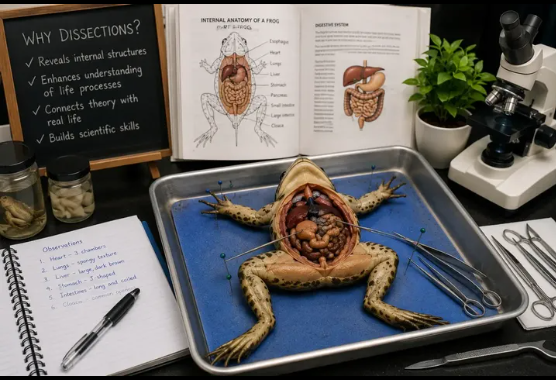
    **Animal dissection is the examination of an animal's internal structures for educational or scientific purposes.** By studying anatomy, students can learn how organs are arranged and how body systems work together. For example, examining the anatomy of a frog can help learners understand the circulatory, respiratory, digestive, and nervous systems. These observations connect information from textbooks with the physical structures found in living organisms.

    One major benefit of dissection is that it encourages active learning. Instead of only memorizing the names of organs, students can observe anatomical structures, compare their shapes and positions, and ask questions about their functions. This process can strengthen observation skills, critical thinking, and scientific understanding. It also helps learners recognize that every organ has a role in supporting the survival of an organism.

    Nevertheless, **education must balance scientific learning with respect for animal life.** Animals are living organisms with their own biological needs, and their use in education should be considered carefully. Teachers and institutions should follow applicable laws, safety rules, and ethical standards. Specimens should be obtained responsibly, and unnecessary harm should be avoided. Students should also be encouraged to discuss the moral responsibilities that accompany scientific discovery.

    Fortunately, modern technology provides several alternatives to traditional dissection. Digital simulations allow students to explore three-dimensional anatomical models, examine virtual organs, and study body systems through interactive activities. Videos, diagrams, anatomical models, and virtual laboratories can also make complex concepts easier to understand. These approaches may reduce the need for physical specimens while offering flexible opportunities for repeated learning.

    The best educational method can depend on the learning objective, available resources, and the needs of students. A physical specimen may provide certain observations that a diagram cannot fully reproduce, while a digital model may allow students to rotate structures, zoom in on details, and repeat an activity without using another specimen. Combining different teaching methods can provide a richer understanding of anatomy and biology.

    Animal dissection also connects classroom education with wider scientific fields. Knowledge of anatomy contributes to veterinary science, zoology, wildlife research, and the study of animal health. Comparing anatomical structures across species can help scientists investigate adaptation and evolutionary relationships. Such knowledge can also support conservation efforts by improving our understanding of animals and the environments in which they live.

    Ethics should remain an important part of every scientific learning experience. Students should be able to ask questions, understand why a particular method is being used, and learn about alternatives where appropriate. Teachers can create respectful classrooms by explaining the educational purpose of activities, ensuring proper supervision, and encouraging thoughtful discussion. Scientific progress is strongest when curiosity is combined with compassion and responsibility.

    Another important lesson is that science continues to develop. New technologies and educational methods provide opportunities to improve the way anatomy is taught. By evaluating the effectiveness of different approaches, educators can choose methods that support learning while taking animal welfare seriously. This ongoing evaluation reflects the scientific habit of questioning, testing, and improving established practices.

    Ultimately, the ethics and education of animal dissections are about more than studying organs. They encourage students to think critically about scientific methods, recognize the value of responsible research, and understand the relationship between knowledge and moral choices. Learning biology should deepen both our understanding of nature and our respect for living organisms.

    **True scientific education combines discovery with responsibility. By studying anatomy thoughtfully, considering ethical alternatives, and respecting animal welfare, we can develop knowledgeable learners who value both scientific progress and the natural world. **

    #AnimalDissection #AnimalEthics #Biology #ScienceEducation #AnimalWelfare #Anatomy #ACCL #Batch14 #Task139
    **Roll No: 2** **Batch: 14** **Book: ACCL** **Task No: 145** # 🐸🔬 The Ethics and Education of Animal Dissections 🌿📚 Have you ever wondered how students learn about the internal structures of animals and why science education places importance on understanding life responsibly? 🧬🔍 Animal dissection has been used in biology classrooms and scientific research to help learners explore anatomy, examine organs, and understand how different body systems function. However, it also raises important questions about animal welfare, ethical responsibility, and the best ways to teach scientific concepts. **Animal dissection is the examination of an animal's internal structures for educational or scientific purposes.** 🔬 By studying anatomy, students can learn how organs are arranged and how body systems work together. For example, examining the anatomy of a frog can help learners understand the circulatory, respiratory, digestive, and nervous systems. These observations connect information from textbooks with the physical structures found in living organisms. 🐸🫀 One major benefit of dissection is that it encourages active learning. 📖 Instead of only memorizing the names of organs, students can observe anatomical structures, compare their shapes and positions, and ask questions about their functions. This process can strengthen observation skills, critical thinking, and scientific understanding. It also helps learners recognize that every organ has a role in supporting the survival of an organism. Nevertheless, **education must balance scientific learning with respect for animal life.** 💚 Animals are living organisms with their own biological needs, and their use in education should be considered carefully. Teachers and institutions should follow applicable laws, safety rules, and ethical standards. Specimens should be obtained responsibly, and unnecessary harm should be avoided. Students should also be encouraged to discuss the moral responsibilities that accompany scientific discovery. ⚖️🌱 Fortunately, modern technology provides several alternatives to traditional dissection. 💻🧬 Digital simulations allow students to explore three-dimensional anatomical models, examine virtual organs, and study body systems through interactive activities. Videos, diagrams, anatomical models, and virtual laboratories can also make complex concepts easier to understand. These approaches may reduce the need for physical specimens while offering flexible opportunities for repeated learning. The best educational method can depend on the learning objective, available resources, and the needs of students. 🏫 A physical specimen may provide certain observations that a diagram cannot fully reproduce, while a digital model may allow students to rotate structures, zoom in on details, and repeat an activity without using another specimen. Combining different teaching methods can provide a richer understanding of anatomy and biology. Animal dissection also connects classroom education with wider scientific fields. 🏥 Knowledge of anatomy contributes to veterinary science, zoology, wildlife research, and the study of animal health. Comparing anatomical structures across species can help scientists investigate adaptation and evolutionary relationships. Such knowledge can also support conservation efforts by improving our understanding of animals and the environments in which they live. 🌍🐦 Ethics should remain an important part of every scientific learning experience. Students should be able to ask questions, understand why a particular method is being used, and learn about alternatives where appropriate. Teachers can create respectful classrooms by explaining the educational purpose of activities, ensuring proper supervision, and encouraging thoughtful discussion. Scientific progress is strongest when curiosity is combined with compassion and responsibility. 🤝💚 Another important lesson is that science continues to develop. 🔬 New technologies and educational methods provide opportunities to improve the way anatomy is taught. By evaluating the effectiveness of different approaches, educators can choose methods that support learning while taking animal welfare seriously. This ongoing evaluation reflects the scientific habit of questioning, testing, and improving established practices. Ultimately, the ethics and education of animal dissections are about more than studying organs. They encourage students to think critically about scientific methods, recognize the value of responsible research, and understand the relationship between knowledge and moral choices. 🌿📚 Learning biology should deepen both our understanding of nature and our respect for living organisms. **True scientific education combines discovery with responsibility. By studying anatomy thoughtfully, considering ethical alternatives, and respecting animal welfare, we can develop knowledgeable learners who value both scientific progress and the natural world. 🐸🔬🌎💚** #AnimalDissection #AnimalEthics #Biology #ScienceEducation #AnimalWelfare #Anatomy #ACCL #Batch14 #Task139 🐸🧬📚
    0 Commentarios 0 Acciones 2995 Views
  • Story Post

    # Cybersecurity Chronicles: Protecting Information in the Digital Age

    The air in the control room was thick with tension, punctuated only by the hum of cooling fans and the quiet, rhythmic clacking of mechanical keyboards. For Maya, a senior cybersecurity analyst at Apex Sentinel, late-night shifts were usually spent monitoring routine network pings and automated firewall logs.

    Tonight was different.

    At 2:17 AM, a single red alert flashed across her secondary monitor: **`UNAUTHORIZED ACCESS ATTEMPT – SECTOR 4 DATABASE`**.

    ---

    ## Chapter 1: The Invisible Intruder

    Sector 4 housed the core sensitive data for millions of users—encrypted identifiers, access keys, and proprietary algorithms. Maya leaned in, her eyes scanning the incoming data packets. This was no low-level script kiddie trying a basic brute-force attack. The intruder was moving with surgical precision, exploiting an unpatched zero-day vulnerability in a legacy microservice.

    > *"They're not just trying to break in,"* Maya whispered to her teammate, Leo, sitting at the adjacent console. *"They already have internal credentials. It’s a spear-phishing compromise."*

    The threat actor—known in threat intelligence circles as **ShadowByte**—had spent weeks laying the groundwork. A spoofed executive email, a single clicked link on a rogue landing page, and a compromised credential was all it took to bypass traditional perimeter defenses.

    ---

    ## Chapter 2: The Digital Countermeasure

    Every second mattered. A full breach could result in millions of compromised records, massive regulatory fines, and shattered public trust.

    Maya executed Apex Sentinel’s incident response protocol:

    1. **Isolation:** She immediately severed Sector 4's outward-facing network connections, routing traffic into a isolated honeypot to monitor the attacker's movements.
    2. **Credential Revocation:** Leo forced a company-wide token refresh, revoking all active sessions associated with the compromised user account.
    3. **Patch Deployment:** Working rapidly, the engineering team deployed an emergency hotfix to patch the exploited vulnerability across all microservices.

    ```text
    [SYSTEM ACTION] Isolating Sector 4... SUCCESS
    [SYSTEM ACTION] Revoking Active Tokens... SUCCESS
    [SYSTEM ACTION] Hotfix v4.12.9 Deployed. Threat Contained.

    ```

    By 3:45 AM, the malicious traffic ceased. The breach was neutralized before a single byte of customer data left the server.

    ---

    ## Chapter 3: Lessons from the Frontlines

    The attack was a stark reminder that in the digital age, **security is not a static destination—it is a continuous practice.**

    Technology alone is never enough; humans remain both the most vulnerable link and the strongest line of defense in cybersecurity.

    | Threat Vectors | Modern Safeguards |
    | --- | --- |
    | **Spear-Phishing & Social Engineering** | Security awareness training & Phishing simulations |
    | **Stolen Credentials** | Multi-Factor Authentication (MFA) & Zero Trust Access |
    | **Zero-Day Vulnerabilities** | Automated patch management & Intrusion Detection Systems (IDS) |
    | **Data Exfiltration** | End-to-end encryption & Data Loss Prevention (DLP) tools |

    ---

    ## The Takeaway: Building a Culture of Security

    As the sun began to rise over the city, Maya stepped out of the building into the cool morning air. The digital battleground is silent, invisible to the millions of people going about their day, trusting that their information is safe.

    Protecting data in the modern world requires vigilance at every level:

    * **For Individuals:** Use strong, unique passwords combined with dynamic MFA, and remain skeptical of unexpected emails or requests for information.
    * **For Organizations:** Adopt a **Zero Trust architecture** ("Never trust, always verify"), keep infrastructure patched, and empower employees with security education.

    In the digital age, our information is our currency. Safeguarding it isn't just the job of analysts like Maya—it’s a collective responsibility we all share.

    ---

    *How does your team or organization stay ahead of evolving cyber threats? What security practices do you rely on daily?*
    Story Post # Cybersecurity Chronicles: Protecting Information in the Digital Age The air in the control room was thick with tension, punctuated only by the hum of cooling fans and the quiet, rhythmic clacking of mechanical keyboards. For Maya, a senior cybersecurity analyst at Apex Sentinel, late-night shifts were usually spent monitoring routine network pings and automated firewall logs. Tonight was different. At 2:17 AM, a single red alert flashed across her secondary monitor: **`UNAUTHORIZED ACCESS ATTEMPT – SECTOR 4 DATABASE`**. --- ## Chapter 1: The Invisible Intruder Sector 4 housed the core sensitive data for millions of users—encrypted identifiers, access keys, and proprietary algorithms. Maya leaned in, her eyes scanning the incoming data packets. This was no low-level script kiddie trying a basic brute-force attack. The intruder was moving with surgical precision, exploiting an unpatched zero-day vulnerability in a legacy microservice. > *"They're not just trying to break in,"* Maya whispered to her teammate, Leo, sitting at the adjacent console. *"They already have internal credentials. It’s a spear-phishing compromise."* The threat actor—known in threat intelligence circles as **ShadowByte**—had spent weeks laying the groundwork. A spoofed executive email, a single clicked link on a rogue landing page, and a compromised credential was all it took to bypass traditional perimeter defenses. --- ## Chapter 2: The Digital Countermeasure Every second mattered. A full breach could result in millions of compromised records, massive regulatory fines, and shattered public trust. Maya executed Apex Sentinel’s incident response protocol: 1. **Isolation:** She immediately severed Sector 4's outward-facing network connections, routing traffic into a isolated honeypot to monitor the attacker's movements. 2. **Credential Revocation:** Leo forced a company-wide token refresh, revoking all active sessions associated with the compromised user account. 3. **Patch Deployment:** Working rapidly, the engineering team deployed an emergency hotfix to patch the exploited vulnerability across all microservices. ```text [SYSTEM ACTION] Isolating Sector 4... SUCCESS [SYSTEM ACTION] Revoking Active Tokens... SUCCESS [SYSTEM ACTION] Hotfix v4.12.9 Deployed. Threat Contained. ``` By 3:45 AM, the malicious traffic ceased. The breach was neutralized before a single byte of customer data left the server. --- ## Chapter 3: Lessons from the Frontlines The attack was a stark reminder that in the digital age, **security is not a static destination—it is a continuous practice.** Technology alone is never enough; humans remain both the most vulnerable link and the strongest line of defense in cybersecurity. | Threat Vectors | Modern Safeguards | | --- | --- | | **Spear-Phishing & Social Engineering** | Security awareness training & Phishing simulations | | **Stolen Credentials** | Multi-Factor Authentication (MFA) & Zero Trust Access | | **Zero-Day Vulnerabilities** | Automated patch management & Intrusion Detection Systems (IDS) | | **Data Exfiltration** | End-to-end encryption & Data Loss Prevention (DLP) tools | --- ## The Takeaway: Building a Culture of Security As the sun began to rise over the city, Maya stepped out of the building into the cool morning air. The digital battleground is silent, invisible to the millions of people going about their day, trusting that their information is safe. Protecting data in the modern world requires vigilance at every level: * **For Individuals:** Use strong, unique passwords combined with dynamic MFA, and remain skeptical of unexpected emails or requests for information. * **For Organizations:** Adopt a **Zero Trust architecture** ("Never trust, always verify"), keep infrastructure patched, and empower employees with security education. In the digital age, our information is our currency. Safeguarding it isn't just the job of analysts like Maya—it’s a collective responsibility we all share. --- *How does your team or organization stay ahead of evolving cyber threats? What security practices do you rely on daily?*
    0 Commentarios 0 Acciones 2517 Views
  • **Roll No: 2**
    **Batch: 14**
    **Book: ACCL**
    **Task No: 130**

    # Peering Inside: The Role of Dissections in Understanding Life

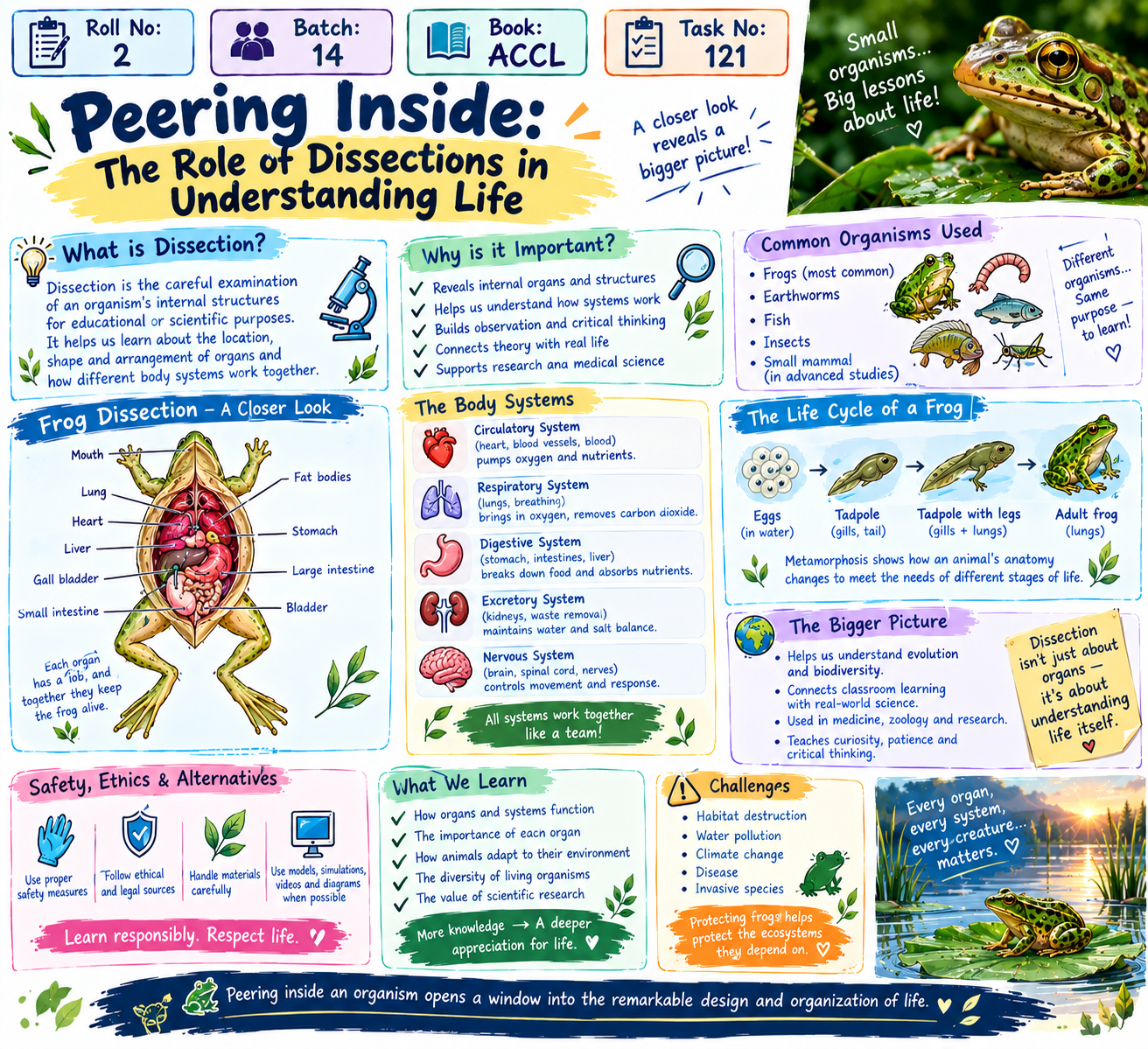
    Have you ever wondered how scientists discover what lies inside a living organism and how its different organs work together? The human body and the bodies of other animals contain many complex structures that cannot be fully understood by looking only at their outer appearance. Dissection is one scientific method that helps students and researchers explore internal anatomy and understand the remarkable organization of life.

    **Dissection is the careful examination of an organism's internal structures for educational or scientific purposes.** It helps us learn about the location, shape, and arrangement of organs and how different body systems work together. By studying anatomy, we can better understand how living organisms obtain energy, breathe, circulate blood, digest food, and respond to their surroundings.

    One commonly discussed example in biology education is frog dissection. Frogs are interesting study organisms because they have many organ systems that can be compared with those of other vertebrates. Their bodies are adapted for movement on land and in water, and their anatomy provides useful opportunities to study how organs perform different functions. Observing frog anatomy can help students understand the relationship between body structure and survival.

    The circulatory system is an important area of anatomical study. The heart pumps blood through blood vessels, helping transport oxygen, nutrients, and other substances around the body. The respiratory system supports gas exchange, while the digestive system breaks down food so that the body can absorb useful nutrients. These systems work together to supply cells with the materials and energy they need.

    The nervous system is equally fascinating. It includes the brain, spinal cord, and nerves, which coordinate movement, process information, and help organisms respond to changes in their environments. The excretory system also plays an essential role by removing waste products and maintaining the balance of water and salts. Studying these systems reveals that every organ has a specific role, yet no organ works entirely alone.

    Dissection can also connect classroom learning with real-world science. Medical professionals study anatomy to understand the human body, while zoologists investigate the structures of different animal species. Researchers use many methods, including imaging, microscopy, computer models, and carefully conducted anatomical studies, to investigate how organisms function. These approaches have helped expand our knowledge of health, development, and biodiversity.

    Although dissection can be a valuable learning method, science education must also emphasize responsibility and respect for life. Schools and laboratories should follow appropriate safety procedures, use legally and ethically sourced specimens, and handle materials carefully. Whenever possible, students may also learn through digital simulations, anatomical models, videos, and diagrams. These alternatives can explain many internal structures without requiring the use of preserved specimens.

    The study of anatomy helps us appreciate the diversity of living organisms. Different species have different body structures because they have adapted to different environments and ways of life. Comparing these structures allows scientists to investigate evolution, understand biological similarities, and discover how organisms meet the challenges of survival.

    Dissection teaches more than the names of organs. It encourages observation, patience, careful reasoning, and the ability to connect scientific evidence with biological explanations. It also reminds us that scientific knowledge grows through asking questions, examining evidence, and learning from reliable methods rather than making assumptions.

    **Peering inside an organism opens a window into the remarkable design and organization of life. By studying anatomy responsibly, we deepen our understanding of biology, appreciate the connections between body systems, and learn why every discovery should be guided by curiosity, care, and respect for the natural world. **

    \#Dissection #Anatomy #Biology #ScienceEducation #AnimalScience #LearningThroughScience #ACCL #Batch14 #Task121
    **Roll No: 2** **Batch: 14** **Book: ACCL** **Task No: 130** # 🔬🧬 Peering Inside: The Role of Dissections in Understanding Life 🐸🌿 Have you ever wondered how scientists discover what lies inside a living organism and how its different organs work together? 🔍🫀 The human body and the bodies of other animals contain many complex structures that cannot be fully understood by looking only at their outer appearance. Dissection is one scientific method that helps students and researchers explore internal anatomy and understand the remarkable organization of life. 🌍✨ **Dissection is the careful examination of an organism's internal structures for educational or scientific purposes.** 🔬 It helps us learn about the location, shape, and arrangement of organs and how different body systems work together. By studying anatomy, we can better understand how living organisms obtain energy, breathe, circulate blood, digest food, and respond to their surroundings. 📚🧠 One commonly discussed example in biology education is frog dissection. 🐸 Frogs are interesting study organisms because they have many organ systems that can be compared with those of other vertebrates. Their bodies are adapted for movement on land and in water, and their anatomy provides useful opportunities to study how organs perform different functions. Observing frog anatomy can help students understand the relationship between body structure and survival. The circulatory system is an important area of anatomical study. ❤️ The heart pumps blood through blood vessels, helping transport oxygen, nutrients, and other substances around the body. The respiratory system supports gas exchange, while the digestive system breaks down food so that the body can absorb useful nutrients. These systems work together to supply cells with the materials and energy they need. ⚡🫁 The nervous system is equally fascinating. 🧠 It includes the brain, spinal cord, and nerves, which coordinate movement, process information, and help organisms respond to changes in their environments. The excretory system also plays an essential role by removing waste products and maintaining the balance of water and salts. Studying these systems reveals that every organ has a specific role, yet no organ works entirely alone. Dissection can also connect classroom learning with real-world science. 🏥 Medical professionals study anatomy to understand the human body, while zoologists investigate the structures of different animal species. Researchers use many methods, including imaging, microscopy, computer models, and carefully conducted anatomical studies, to investigate how organisms function. These approaches have helped expand our knowledge of health, development, and biodiversity. 🔬📖 Although dissection can be a valuable learning method, science education must also emphasize responsibility and respect for life. 💚 Schools and laboratories should follow appropriate safety procedures, use legally and ethically sourced specimens, and handle materials carefully. Whenever possible, students may also learn through digital simulations, anatomical models, videos, and diagrams. These alternatives can explain many internal structures without requiring the use of preserved specimens. The study of anatomy helps us appreciate the diversity of living organisms. 🐸🐟🐦 Different species have different body structures because they have adapted to different environments and ways of life. Comparing these structures allows scientists to investigate evolution, understand biological similarities, and discover how organisms meet the challenges of survival. Dissection teaches more than the names of organs. It encourages observation, patience, careful reasoning, and the ability to connect scientific evidence with biological explanations. 🧪💡 It also reminds us that scientific knowledge grows through asking questions, examining evidence, and learning from reliable methods rather than making assumptions. **Peering inside an organism opens a window into the remarkable design and organization of life. By studying anatomy responsibly, we deepen our understanding of biology, appreciate the connections between body systems, and learn why every discovery should be guided by curiosity, care, and respect for the natural world. 🔬🌿🌎** \#Dissection #Anatomy #Biology #ScienceEducation #AnimalScience #LearningThroughScience #ACCL #Batch14 #Task121 🧬🔬💚
    0 Commentarios 0 Acciones 2352 Views
  • Roll No : 55 Level 2 Work Book A Coding Task : 01 Grass hopper https://gray-talk-bridge-go.base44.app 📞 Virtual Phone System Project | Built by Faizan Ali SoftwareWala 💻🚀 I have built a Virtual Phone System project with features designed to make call management easier and more organized. ✨ Key Features: 🔐 User Signup and Login 📱 Unique Virtual Number for Each User 📲 Call Forwarding Setup 🎙️ Voicemail Setup ☎️ Call Forwarding Simulation with the message: “Call forwarded to [Number]” This project helped me explore how virtual phone systems work and how technology can be used to manage calls efficiently. My goal is to keep learning, building practical projects, and improving my software development skills by creating solutions that solve real-world problems. Built with creativity, powered by learning, and driven by innovation! 🚀 #SoftwareDevelopment #WebDevelopment #VirtualPhoneSystem #CallForwarding #Voicemail #CodingProjects #TechInnovation #FaizanAliSoftwareWala #LearnByBuilding @followers Asma Shaheen EducationWali
    0 Commentarios 0 Acciones 2171 Views
  • #rsisb
    Roll no.279
    story post no.21
    Foundation Level
    **The Ethics and Education of Animal Dissections**
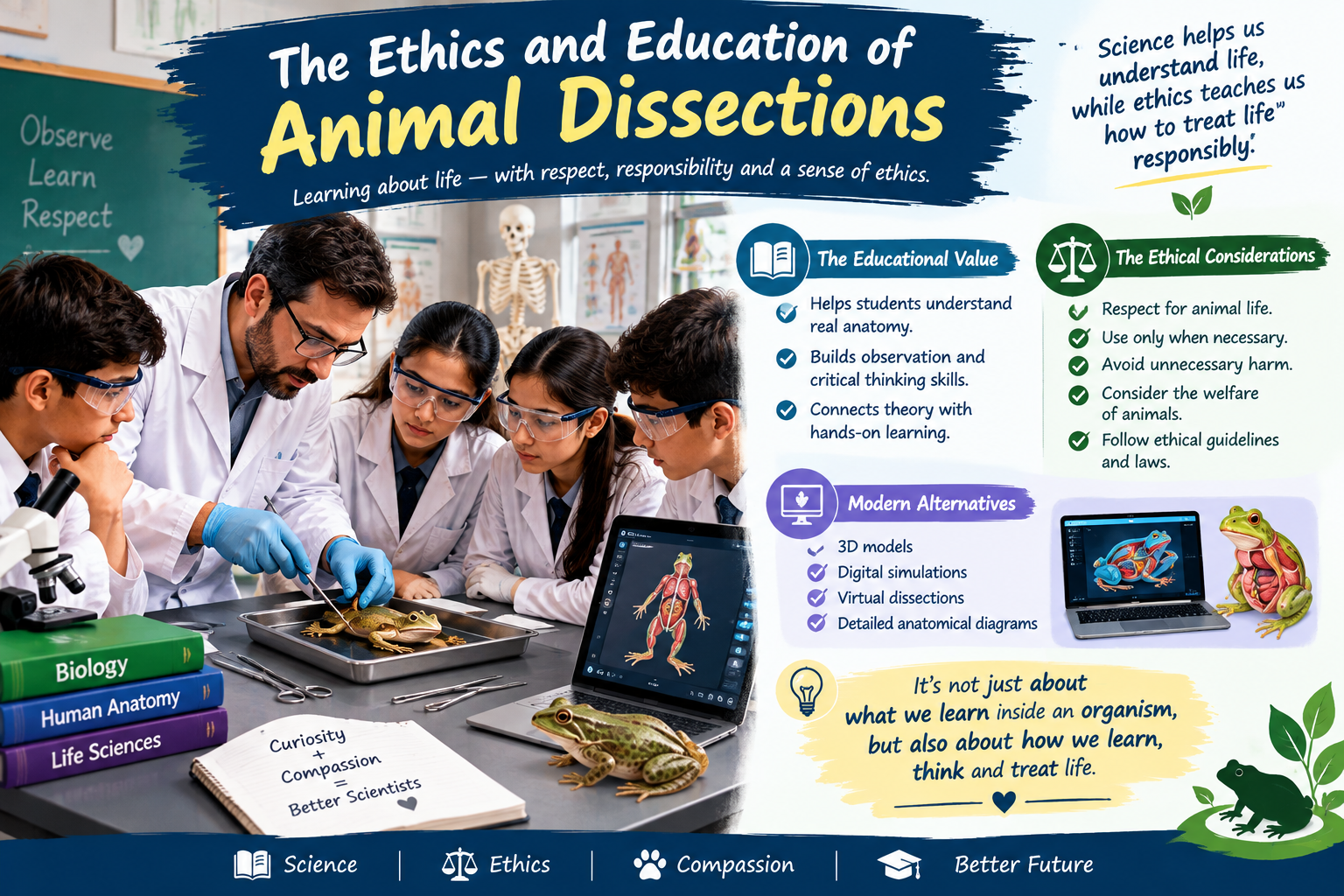
    In a science classroom, students gathered around their teacher for an important lesson about how living organisms are structured and how their bodies work. ‍ The topic was **animal dissection**, a traditional method that has helped students understand anatomy through direct scientific observation.
    The teacher explained that science is not only about discovering new information—it is also about **responsibility, respect, and ethical thinking**. Students learned that when animals are used for educational purposes, their use should be carefully considered, and unnecessary harm should always be avoided.
    Some students were curious about how organs and body systems are connected. Others wondered whether there were alternative ways to learn anatomy without using animals. This led to an interesting classroom discussion about modern educational tools such as **3D models, digital simulations, virtual dissections, and detailed anatomical diagrams**.
    The students discovered that there is no single answer to every ethical question. Instead, responsible science requires people to ask thoughtful questions: **Is the activity necessary? Is there a safer alternative? Does it provide meaningful educational value?**
    By the end of the lesson, the students understood that learning biology is not simply about looking inside an organism—it is also about developing **curiosity, compassion, critical thinking, and respect for life**.
    The classroom became more than a place to study anatomy. It became a place where students learned how **science and ethics can work together**.
    **Science helps us understand life, while ethics teaches us how to treat life responsibly.**
    #AnimalDissection #ScienceEducation #Biology #Ethics #AnimalWelfare #ScienceAndEthics #Learning #Education #CriticalThinking #BiologyStudents #ScienceClass #Anatomy #ResponsibleScience #StudentLearning #RespectForLife
    Asma Shaheen EducationWali
    Saima Empowerment Wali
    Irum Asim Leadershipwali
    #rsisb Roll no.279 story post no.21 Foundation Level 🧬🔬 **The Ethics and Education of Animal Dissections** 🐸📚 In a science classroom, students gathered around their teacher for an important lesson about how living organisms are structured and how their bodies work. 🧑‍🏫🔬 The topic was **animal dissection**, a traditional method that has helped students understand anatomy through direct scientific observation. 📖🧠 The teacher explained that science is not only about discovering new information—it is also about **responsibility, respect, and ethical thinking**. 🌱⚖️ Students learned that when animals are used for educational purposes, their use should be carefully considered, and unnecessary harm should always be avoided. ❤️🐾 Some students were curious about how organs and body systems are connected. Others wondered whether there were alternative ways to learn anatomy without using animals. 💭🔍 This led to an interesting classroom discussion about modern educational tools such as **3D models, digital simulations, virtual dissections, and detailed anatomical diagrams**. 💻🧩 The students discovered that there is no single answer to every ethical question. Instead, responsible science requires people to ask thoughtful questions: **Is the activity necessary? Is there a safer alternative? Does it provide meaningful educational value?** 🤔⚖️ By the end of the lesson, the students understood that learning biology is not simply about looking inside an organism—it is also about developing **curiosity, compassion, critical thinking, and respect for life**. 🌍❤️🧠 The classroom became more than a place to study anatomy. It became a place where students learned how **science and ethics can work together**. 🔬🤝⚖️ ✨ **Science helps us understand life, while ethics teaches us how to treat life responsibly.** 🌱🐾📚 #AnimalDissection #ScienceEducation #Biology #Ethics #AnimalWelfare #ScienceAndEthics #Learning #Education #CriticalThinking #BiologyStudents #ScienceClass #Anatomy #ResponsibleScience #StudentLearning #RespectForLife 🔬🧬📚🐾⚖️🌱✨ Asma Shaheen EducationWali Saima Empowerment Wali Irum Asim Leadershipwali
    0 Commentarios 0 Acciones 2168 Views
  • Mohsin RS F8
    Story post NO:17
    roll NO:13
    Class: Foundation Level
    Made by Me

    The Ethics and Education of Animal Dissections

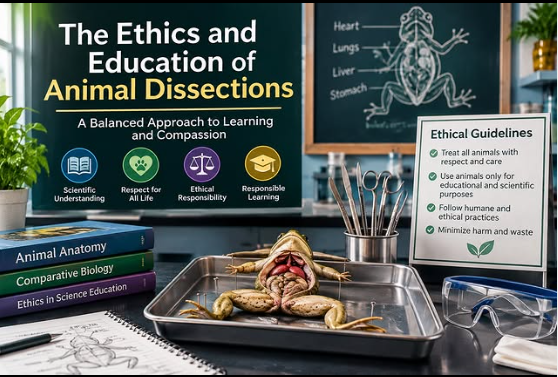
    Animal dissections have been used in science education for many years as a way to help students understand anatomy, biological structures, and how different body systems work together. By studying organisms directly, students can connect what they read in textbooks with real biological structures. Dissections can make lessons more meaningful by allowing learners to observe organs, tissues, and their relationships in a practical setting.

    However, animal dissection is not only a scientific or educational topic; it also raises important ethical questions. Animals are living beings, and their use in education should always be approached with respect, care, and responsibility. Students and teachers should understand why a specimen is being used and ensure that the activity has a genuine educational purpose. Ethical education encourages students to think about both the value of scientific knowledge and the responsibility humans have toward other living organisms.

    A responsible approach to dissection includes following appropriate safety and ethical guidelines. Specimens should be obtained through approved and humane sources, handled carefully, and used only when they provide meaningful educational value. Teachers should also explain the purpose of the activity before beginning and create an environment where students can ask questions or express concerns respectfully.

    Education is ultimately about developing knowledge as well as character. Learning anatomy through dissection can teach students about the complexity of life, but it can also encourage appreciation for living organisms. When carried out responsibly, the experience can promote scientific curiosity, careful observation, critical thinking, and respect for life.

    Modern education can also consider alternatives such as detailed anatomical models, digital simulations, videos, diagrams, and virtual dissection programs. These methods can provide valuable learning experiences while reducing the need for physical specimens in some situations.
    Mohsin RS F8 🎓✨ Story post NO:17 roll NO:13 Class: Foundation Level 📚 Made by Me 💻🚀 The Ethics and Education of Animal Dissections Animal dissections have been used in science education for many years as a way to help students understand anatomy, biological structures, and how different body systems work together. By studying organisms directly, students can connect what they read in textbooks with real biological structures. Dissections can make lessons more meaningful by allowing learners to observe organs, tissues, and their relationships in a practical setting. However, animal dissection is not only a scientific or educational topic; it also raises important ethical questions. Animals are living beings, and their use in education should always be approached with respect, care, and responsibility. Students and teachers should understand why a specimen is being used and ensure that the activity has a genuine educational purpose. Ethical education encourages students to think about both the value of scientific knowledge and the responsibility humans have toward other living organisms. A responsible approach to dissection includes following appropriate safety and ethical guidelines. Specimens should be obtained through approved and humane sources, handled carefully, and used only when they provide meaningful educational value. Teachers should also explain the purpose of the activity before beginning and create an environment where students can ask questions or express concerns respectfully. Education is ultimately about developing knowledge as well as character. Learning anatomy through dissection can teach students about the complexity of life, but it can also encourage appreciation for living organisms. When carried out responsibly, the experience can promote scientific curiosity, careful observation, critical thinking, and respect for life. Modern education can also consider alternatives such as detailed anatomical models, digital simulations, videos, diagrams, and virtual dissection programs. These methods can provide valuable learning experiences while reducing the need for physical specimens in some situations.
    0 Commentarios 0 Acciones 1769 Views
  • Mohsin RS F8
    Story post NO:15
    Class: Foundation Level
    Made by Me

    “Peering Inside: The Role of Dissections in Understanding Life” explores how dissection can help us understand the hidden structures of living organisms. While diagrams, textbooks, and digital models provide important information, studying anatomical structures directly can make biological concepts easier to understand and remember.
    Dissection allows students and researchers to observe how organs are positioned, how different body systems are connected, and how structures work together to support life. It encourages careful observation, scientific thinking, curiosity, and evidence-based learning. By examining anatomy, students can connect what they learn in the classroom with real biological structures.
    Dissections have also played an important role in the development of biological and medical knowledge. Understanding anatomy has helped scientists learn more about the human body, animal biology, diseases, and the functions of different organs. Today, traditional dissection can also be supported by modern tools such as microscopes, anatomical models, medical imaging, 3D simulations, and virtual laboratories.
    Most importantly, studying anatomy teaches us about the remarkable organization and complexity of life. Peering inside is not simply about seeing organs—it is about discovering how the many parts of a living system work together. Through responsible scientific study, dissection can help turn curiosity into knowledge and observation into a deeper understanding of life.
    Mohsin RS F8 🎓✨ Story post NO:15 Class: Foundation Level 📚 Made by Me 💻🚀 “Peering Inside: The Role of Dissections in Understanding Life” explores how dissection can help us understand the hidden structures of living organisms. While diagrams, textbooks, and digital models provide important information, studying anatomical structures directly can make biological concepts easier to understand and remember. Dissection allows students and researchers to observe how organs are positioned, how different body systems are connected, and how structures work together to support life. It encourages careful observation, scientific thinking, curiosity, and evidence-based learning. By examining anatomy, students can connect what they learn in the classroom with real biological structures. Dissections have also played an important role in the development of biological and medical knowledge. Understanding anatomy has helped scientists learn more about the human body, animal biology, diseases, and the functions of different organs. Today, traditional dissection can also be supported by modern tools such as microscopes, anatomical models, medical imaging, 3D simulations, and virtual laboratories. Most importantly, studying anatomy teaches us about the remarkable organization and complexity of life. Peering inside is not simply about seeing organs—it is about discovering how the many parts of a living system work together. Through responsible scientific study, dissection can help turn curiosity into knowledge and observation into a deeper understanding of life.
    0 Commentarios 0 Acciones 1176 Views
  • Day 132 | Story Post
    “Peering Inside: The Role of Dissections in Understanding Life”

    Foundation Level
    Roll No: 01

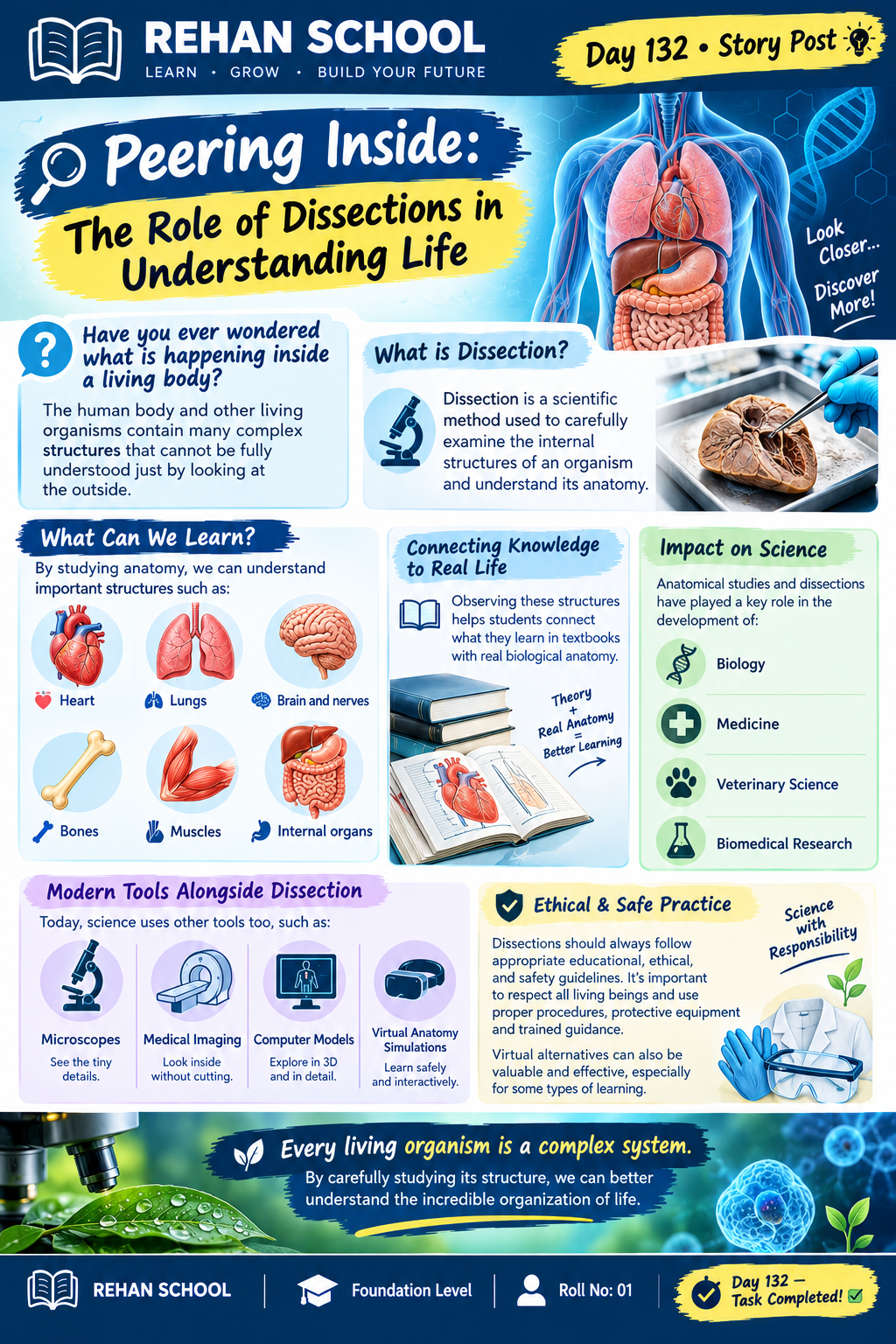
    Aaj ke Story Post mein maine explore kiya ke living organisms ke andar maujood complex structures ko samajhne mein dissections aur anatomical studies kis tarah help karti hain.

    Sirf bahar se dekhne ke bajaye, anatomy ka study humein heart, lungs, brain, bones, muscles aur internal organs jaise important structures ko better samajhne ka mauqa deta hai.

    Is topic ke through mujhe ye bhi seekhne ko mila ke anatomical studies ne biology, medicine, veterinary science aur biomedical research ki development mein important role play kiya hai.

    Aaj modern science mein dissections ke saath microscopes, medical imaging, computer models aur virtual anatomy simulations jaise tools bhi use kiye jate hain. 🩻 Ye methods learning ko aur safe, detailed aur interactive banane mein help karte hain.

    Sabse important baat ye hai ke scientific learning hamesha **ethical, safe aur responsible practices** ke saath honi chahiye.

    **Every living organism is a complex system. By carefully studying its structure, we can better understand the incredible organization of life.**

    Rehan School
    Day 132 — Task Completed!

    #RehanSchool #Day132 #StoryPost #Biology #Science #Anatomy #Dissection #HumanBody #LifeScience #MedicalScience #BiomedicalResearch #ScienceLearning #Education #LearningJourney #FoundationLevel #AI
    📖 Day 132 | Story Post 🔬 “Peering Inside: The Role of Dissections in Understanding Life” 📚 Foundation Level 🔢 Roll No: 01 Aaj ke Story Post mein maine explore kiya ke living organisms ke andar maujood complex structures ko samajhne mein dissections aur anatomical studies kis tarah help karti hain. 🧬🔬 Sirf bahar se dekhne ke bajaye, anatomy ka study humein heart, lungs, brain, bones, muscles aur internal organs jaise important structures ko better samajhne ka mauqa deta hai. 🫀🫁🧠🦴 Is topic ke through mujhe ye bhi seekhne ko mila ke anatomical studies ne biology, medicine, veterinary science aur biomedical research ki development mein important role play kiya hai. 📚🔬 Aaj modern science mein dissections ke saath microscopes, medical imaging, computer models aur virtual anatomy simulations jaise tools bhi use kiye jate hain. 💻🩻🥽 Ye methods learning ko aur safe, detailed aur interactive banane mein help karte hain. Sabse important baat ye hai ke scientific learning hamesha **ethical, safe aur responsible practices** ke saath honi chahiye. 🌱 ✨ **Every living organism is a complex system. By carefully studying its structure, we can better understand the incredible organization of life.** 🏫 Rehan School ✅ Day 132 — Task Completed! #RehanSchool #Day132 #StoryPost #Biology #Science #Anatomy #Dissection #HumanBody #LifeScience #MedicalScience #BiomedicalResearch #ScienceLearning #Education #LearningJourney #FoundationLevel #AI
    0 Commentarios 0 Acciones 2510 Views
Resultados de la búsqueda