• #rsisb
    Roll no.246
    Foundation level

    # Why Frogs? Understanding the Anatomy of Life

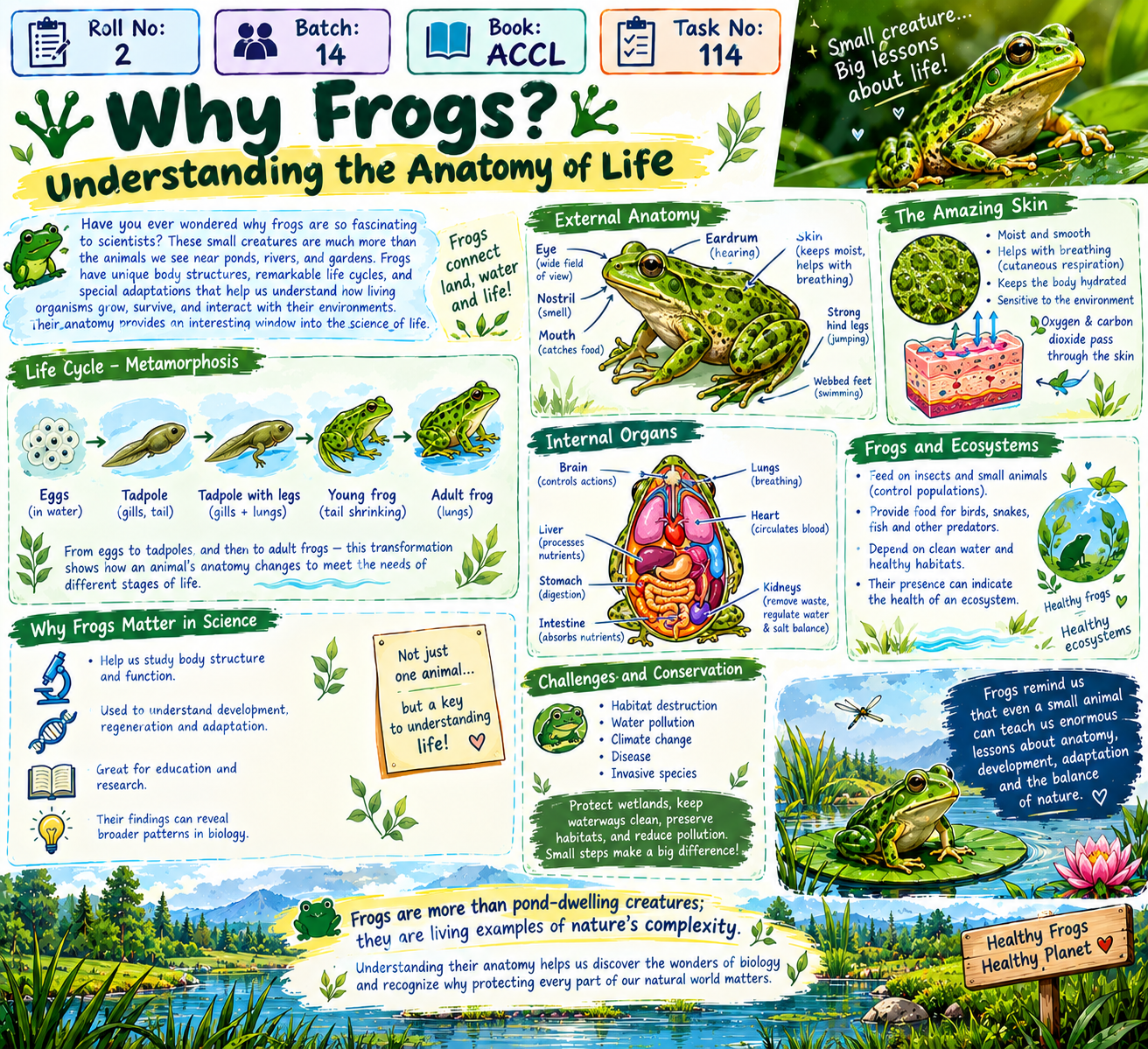
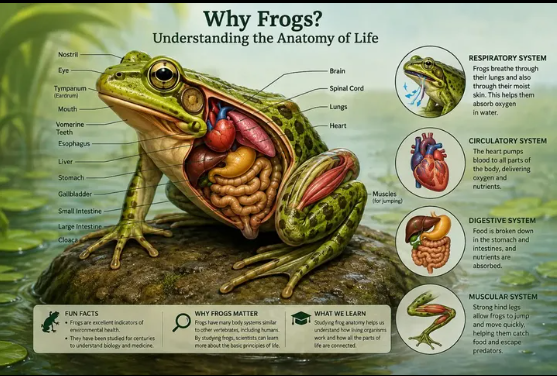
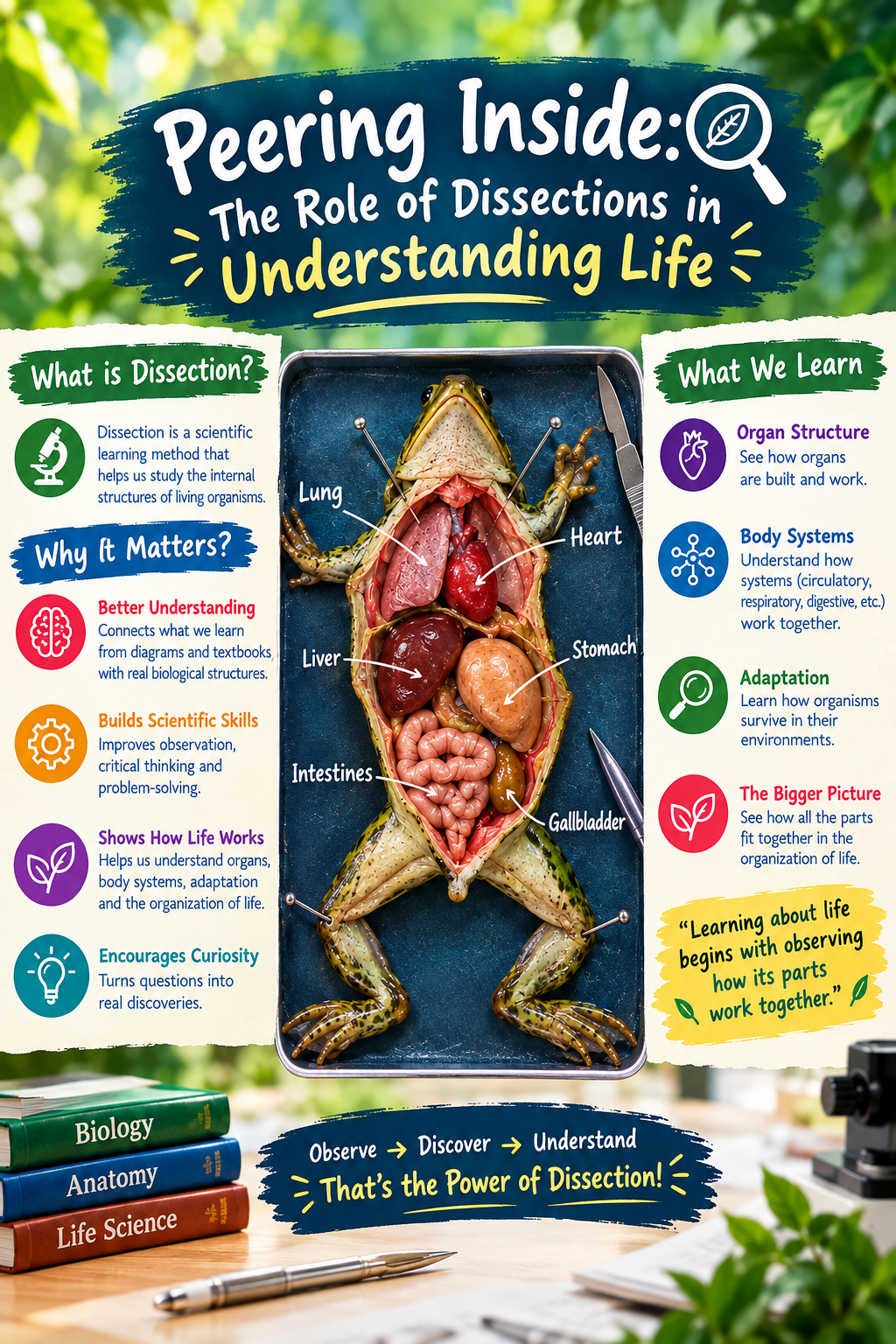
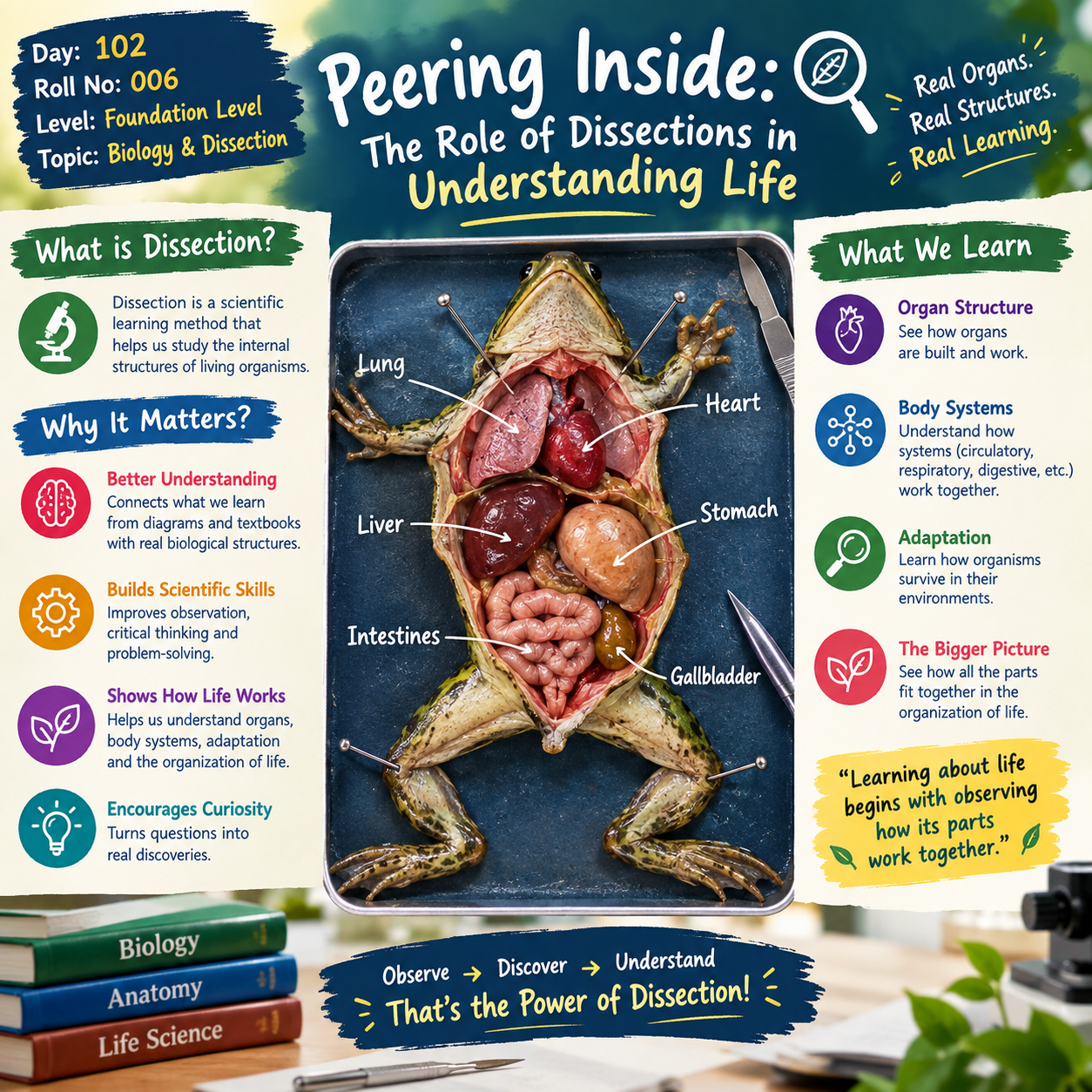
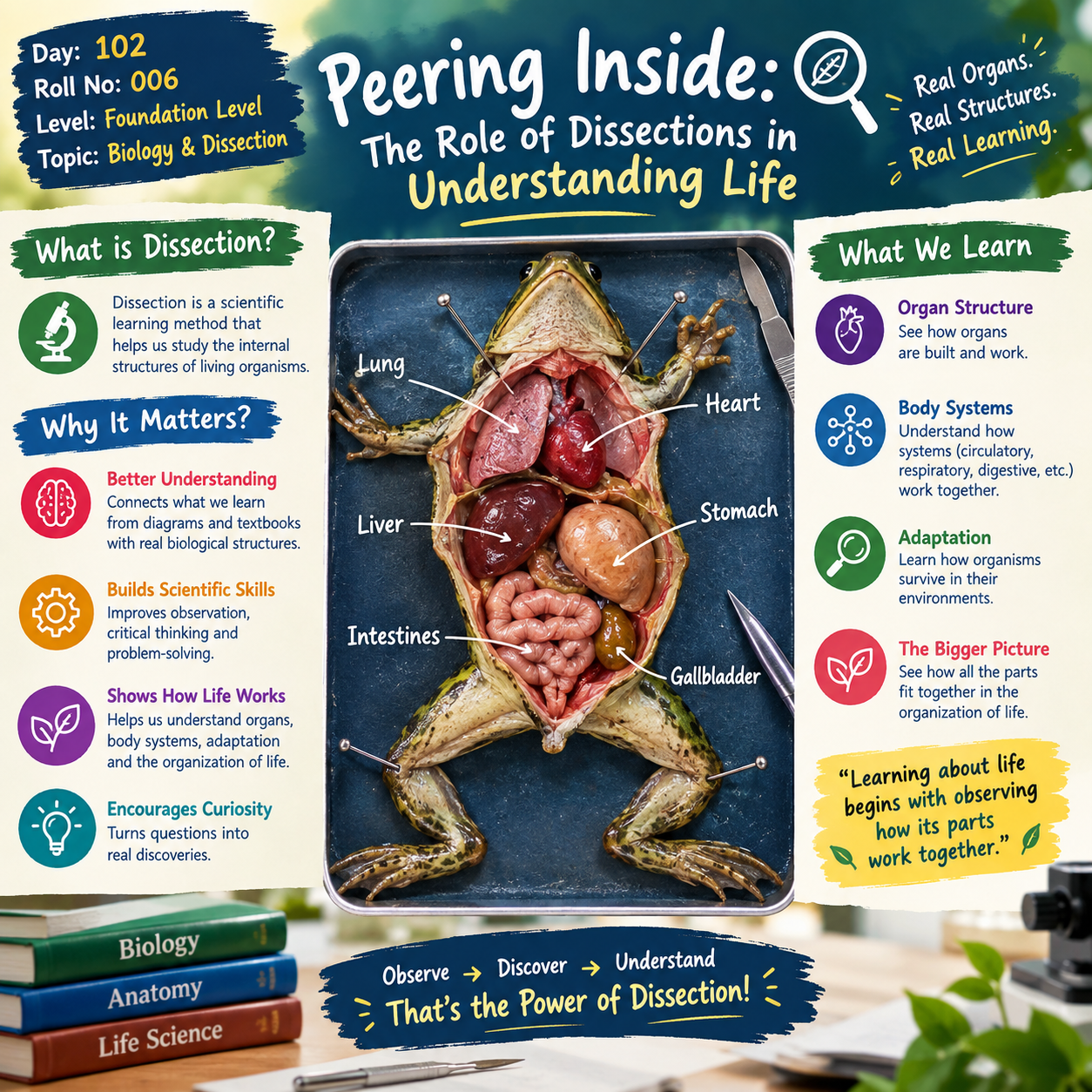
    Why study frogs? Because these fascinating amphibians provide an excellent way to explore the incredible organization and complexity of living organisms. From their powerful hind legs and unique skeletal structure to their remarkable organs, muscles, nervous system, and respiratory adaptations, frogs offer a wonderful window into the basic principles of anatomy and biology.

    In this educational exploration, **“Why Frogs? Understanding the Anatomy of Life,”** we discover how different body systems work together to keep an organism alive. We can learn how a frog moves, breathes, senses its environment, obtains nutrients, circulates blood, and responds to changes around it. Studying frog anatomy also helps us understand broader biological concepts that apply to many other animals, including humans.

    Frogs are especially interesting because they live both in water and on land, making them excellent examples of adaptation. Their life cycle—from egg to tadpole to adult frog—demonstrates how living organisms can undergo remarkable changes as they develop. Their anatomy reflects their lifestyle, showing how body structures are connected to survival and environmental challenges.

    Exploring anatomy encourages students to ask important scientific questions: How does each organ function? Why are certain body structures shaped the way they are? How do different systems cooperate? By investigating these questions, we develop observation skills, scientific curiosity, and a deeper appreciation for the complexity of life.

    Most importantly, studying frogs reminds us that biology is not simply about memorizing names of organs—it is about understanding **how life works as a connected system.** Every bone, muscle, organ, and tissue has a role, and together they create a living organism capable of movement, growth, reproduction, and interaction with its environment.

    Join us on this fascinating scientific journey and discover how the anatomy of a frog can open the door to understanding the amazing mechanisms of life!

    #WhyFrogs #FrogAnatomy #UnderstandingLife #Biology #ScienceEducation #Anatomy #Amphibians #FrogLifeCycle #AnimalBiology #HumanAnatomy #LifeScience #ScienceLearning #BiologyStudents #ScientificDiscovery #ExploreScience #Nature #Wildlife #Evolution #Adaptation #STEM #STEMEducation #ScienceIsAmazing #LearningIsFun #Curiosity #ExploreNature
    #rsisb Roll no.246 Foundation level # Why Frogs? Understanding the Anatomy of Life 🐸🔬 Why study frogs? 🐸 Because these fascinating amphibians provide an excellent way to explore the incredible organization and complexity of living organisms. From their powerful hind legs and unique skeletal structure to their remarkable organs, muscles, nervous system, and respiratory adaptations, frogs offer a wonderful window into the basic principles of anatomy and biology. 🌿🧬 In this educational exploration, **“Why Frogs? Understanding the Anatomy of Life,”** we discover how different body systems work together to keep an organism alive. 🫀🫁🧠 We can learn how a frog moves, breathes, senses its environment, obtains nutrients, circulates blood, and responds to changes around it. Studying frog anatomy also helps us understand broader biological concepts that apply to many other animals, including humans. 🌎✨ Frogs are especially interesting because they live both in water and on land, making them excellent examples of adaptation. 💧🌱 Their life cycle—from egg to tadpole to adult frog—demonstrates how living organisms can undergo remarkable changes as they develop. 🔄🐸 Their anatomy reflects their lifestyle, showing how body structures are connected to survival and environmental challenges. Exploring anatomy encourages students to ask important scientific questions: How does each organ function? Why are certain body structures shaped the way they are? How do different systems cooperate? 🤔🔬 By investigating these questions, we develop observation skills, scientific curiosity, and a deeper appreciation for the complexity of life. Most importantly, studying frogs reminds us that biology is not simply about memorizing names of organs—it is about understanding **how life works as a connected system.** ❤️🧬 Every bone, muscle, organ, and tissue has a role, and together they create a living organism capable of movement, growth, reproduction, and interaction with its environment. 🐸🌿 Join us on this fascinating scientific journey and discover how the anatomy of a frog can open the door to understanding the amazing mechanisms of life! #WhyFrogs #FrogAnatomy #UnderstandingLife #Biology #ScienceEducation #Anatomy #Amphibians #FrogLifeCycle #AnimalBiology #HumanAnatomy #LifeScience #ScienceLearning #BiologyStudents #ScientificDiscovery #ExploreScience #Nature #Wildlife #Evolution #Adaptation #STEM #STEMEducation #ScienceIsAmazing #LearningIsFun #Curiosity #ExploreNature 🐸🔬🌿🧬🫀🧠🌎✨
    0 التعليقات 0 المشاركات 205 مشاهدة

  • #rsisb
    Roll no.239
    Story Post no.3
    Foundation Level


    Life is full of fascinating mechanisms that work together in remarkable ways. From the movement of cells to the functioning of organs , every living system follows complex processes that scientists continue to explore and understand.

    **Experimentation** is one of the most powerful ways to discover how life works. By asking questions, forming hypotheses, conducting experiments, observing results, and analyzing evidence, we can uncover the hidden processes that keep living organisms alive.

    Through careful experimentation, scientists can study **cellular processes, genetics, metabolism, respiration, growth, adaptation, and communication between cells**. Each experiment provides an opportunity to learn something new and sometimes leads to discoveries that change our understanding of biology.

    Science teaches us that curiosity is the beginning of discovery. A simple question can lead to a fascinating investigation, while one experiment can open the door to countless new ideas.

    Let’s **question, experiment, observe, and discover** the incredible mechanisms that make life possible!

    #LifeScience #Biology #Experimentation #ScientificMethod #Science #BiologyExperiments #LifeMechanisms #CellBiology #Genetics #Metabolism #Respiration #Cells #DNA #Microbiology #ScienceEducation #STEM #ScienceForStudents #BiologyStudents #Learning #Education #ScientificDiscovery #Research #Laboratory #Experiments #Curiosity #Innovation #Discovery #Nature #LivingOrganisms #ExploreScience #LearnBiology #ScienceIsAmazing #Knowledge #EducationalContent #StudyScience #FutureScientists #ScienceLovers #LearningJourney #AskQuestions #Observe #Analyze #Discover #ThinkLikeAScientist
    #rsisb Roll no.239 Story Post no.3 Foundation Level Life is full of fascinating mechanisms that work together in remarkable ways. From the movement of cells 🔬 to the functioning of organs ❤️, every living system follows complex processes that scientists continue to explore and understand. 🧪 **Experimentation** is one of the most powerful ways to discover how life works. By asking questions, forming hypotheses, conducting experiments, observing results, and analyzing evidence, we can uncover the hidden processes that keep living organisms alive. 🧠📊 Through careful experimentation, scientists can study **cellular processes, genetics, metabolism, respiration, growth, adaptation, and communication between cells**. 🧬🧫🌿 Each experiment provides an opportunity to learn something new and sometimes leads to discoveries that change our understanding of biology. 🌍 Science teaches us that curiosity is the beginning of discovery. A simple question can lead to a fascinating investigation, while one experiment can open the door to countless new ideas. 💡🚀 Let’s **question, experiment, observe, and discover** the incredible mechanisms that make life possible! 🔬🧬✨ #LifeScience #Biology #Experimentation #ScientificMethod #Science #BiologyExperiments #LifeMechanisms #CellBiology #Genetics #Metabolism #Respiration #Cells #DNA #Microbiology #ScienceEducation #STEM #ScienceForStudents #BiologyStudents #Learning #Education #ScientificDiscovery #Research #Laboratory #Experiments #Curiosity #Innovation #Discovery #Nature #LivingOrganisms #ExploreScience #LearnBiology #ScienceIsAmazing #Knowledge #EducationalContent #StudyScience #FutureScientists #ScienceLovers #LearningJourney #AskQuestions #Observe #Analyze #Discover #ThinkLikeAScientist 🧬🔬🧪🌱💡📚🌍✨
    0 التعليقات 0 المشاركات 2137 مشاهدة
  • #rsisb
    roll no.247
    Foundation level # The Evolution Paradox: Bridging Theories of Life with Divine Design

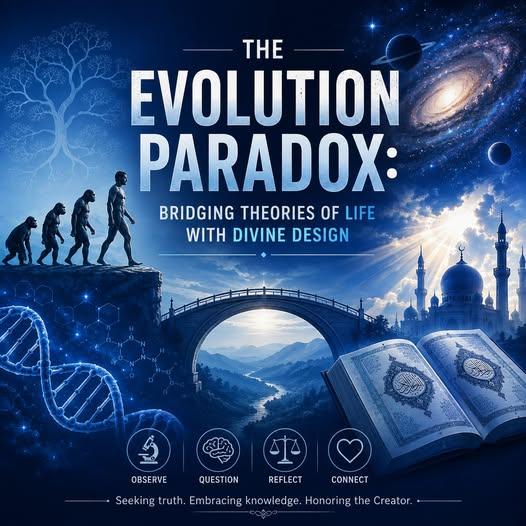
    The story of life is one of the greatest mysteries ever explored by humanity. From the smallest living cell to the incredible diversity of plants, animals, and human beings, nature presents a fascinating journey filled with questions about **origins, adaptation, complexity, and purpose**.

    **“The Evolution Paradox: Bridging Theories of Life with Divine Design”** explores the thought-provoking relationship between scientific ideas about evolution and philosophical or religious perspectives about creation and divine purpose. Rather than treating these subjects as simple opposites, this topic invites us to think deeply about how different ways of understanding the universe can raise meaningful questions about the same extraordinary reality.

    Evolutionary theory provides a scientific framework for explaining how populations of living organisms change across generations and how biodiversity develops over vast periods of time. Fossils, genetics, comparative anatomy, and observations of living organisms all contribute to our understanding of life's history.

    At the same time, many people look beyond scientific mechanisms and ask questions about **meaning, purpose, consciousness, and why the universe exists at all**. These questions belong not only to laboratories but also to philosophy, theology, and human reflection.

    The fascinating “paradox” arises when we consider how a natural process can be studied scientifically while questions about ultimate purpose remain philosophical or theological. For some people, evolutionary processes and belief in divine creation can coexist: evolution may describe **how biological change occurs**, while faith addresses questions of **meaning and ultimate purpose**.

    This discussion encourages curiosity rather than conflict. It reminds us that science seeks evidence-based explanations for the natural world, while philosophy and religion often explore broader questions about existence and meaning.

    Whether you approach the subject as a scientist, student, philosopher, or person of faith, the study of life encourages one powerful habit: **keep asking questions.** The more we discover about DNA, cells, ecosystems, fossils, and the history of life, the more fascinating the natural world becomes.

    **Life is not only a subject to study—it is a mystery that inspires us to learn, question, discover, and reflect.**

    Let this journey encourage thoughtful conversations between **science, philosophy, and faith**, while respecting the different perspectives people hold.

    #EvolutionParadox #Evolution #DivineDesign #OriginsOfLife #ScienceAndFaith #Biology #Genetics #DNA #LifeScience #NaturalWorld #Science #Philosophy #Theology #Creation #Biodiversity #HumanOrigins #Fossils #Nature #Discovery #Curiosity #Knowledge #Education #CriticalThinking #ExploreScience #MysteriesOfLife #Universe #LifeOnEarth #ScienceEducation #FaithAndScience #DeepQuestions
    #rsisb roll no.247 Foundation level # 🌍🧬 The Evolution Paradox: Bridging Theories of Life with Divine Design ✨🙏 The story of life is one of the greatest mysteries ever explored by humanity. 🌱🔬 From the smallest living cell to the incredible diversity of plants, animals, and human beings, nature presents a fascinating journey filled with questions about **origins, adaptation, complexity, and purpose**. 🧬🌎 **“The Evolution Paradox: Bridging Theories of Life with Divine Design”** explores the thought-provoking relationship between scientific ideas about evolution and philosophical or religious perspectives about creation and divine purpose. 🔬📖✨ Rather than treating these subjects as simple opposites, this topic invites us to think deeply about how different ways of understanding the universe can raise meaningful questions about the same extraordinary reality. 🌌💭 Evolutionary theory provides a scientific framework for explaining how populations of living organisms change across generations and how biodiversity develops over vast periods of time. 🧬🌿 Fossils, genetics, comparative anatomy, and observations of living organisms all contribute to our understanding of life's history. 🔎🦴 At the same time, many people look beyond scientific mechanisms and ask questions about **meaning, purpose, consciousness, and why the universe exists at all**. 🙏🌌 These questions belong not only to laboratories but also to philosophy, theology, and human reflection. 📚💡 The fascinating “paradox” arises when we consider how a natural process can be studied scientifically while questions about ultimate purpose remain philosophical or theological. 🤔✨ For some people, evolutionary processes and belief in divine creation can coexist: evolution may describe **how biological change occurs**, while faith addresses questions of **meaning and ultimate purpose**. 🌱🙏 This discussion encourages curiosity rather than conflict. It reminds us that science seeks evidence-based explanations for the natural world, while philosophy and religion often explore broader questions about existence and meaning. 🔬📖🌍 Whether you approach the subject as a scientist, student, philosopher, or person of faith, the study of life encourages one powerful habit: **keep asking questions.** ❓🧠✨ The more we discover about DNA, cells, ecosystems, fossils, and the history of life, the more fascinating the natural world becomes. 🧬🔬🌿 🌟 **Life is not only a subject to study—it is a mystery that inspires us to learn, question, discover, and reflect.** 🌟 Let this journey encourage thoughtful conversations between **science, philosophy, and faith**, while respecting the different perspectives people hold. 🤝🌎💫 #EvolutionParadox #Evolution #DivineDesign #OriginsOfLife #ScienceAndFaith #Biology #Genetics #DNA #LifeScience #NaturalWorld #Science #Philosophy #Theology #Creation #Biodiversity #HumanOrigins #Fossils #Nature #Discovery #Curiosity #Knowledge #Education #CriticalThinking #ExploreScience #MysteriesOfLife #Universe #LifeOnEarth #ScienceEducation #FaithAndScience #DeepQuestions 🧬🌍🔬
    0 التعليقات 0 المشاركات 2048 مشاهدة
  • #rsisb
    roll no.247
    Story post no.13
    Foundation Level

    **Climate and Culture: How Geography Shapes Our Way of Life**

    Our planet is a beautiful mosaic of mountains, deserts, forests, rivers, coastlines, and plains—and each environment influences the way people live, work, eat, dress, build homes, celebrate traditions, and connect with one another.

    Climate and geography are much more than physical features on a map. They help shape human culture and everyday life. In cold regions, people may develop warm clothing, insulated homes, and traditions suited to long winters. In hot and dry areas, communities often adapt with lightweight clothing, shaded spaces, water-saving practices, and lifestyles suited to intense heat. Near rivers and fertile plains, agriculture can become an important part of life, while coastal communities may develop strong connections with fishing, sailing, and the sea.

    Geography also influences food and traditions. Different climates allow different crops to grow, creating unique cuisines and agricultural practices around the world. From rice-growing regions to wheat-producing plains, from tropical fruits to mountain crops, the natural environment provides resources that become part of local identity.

    Even architecture reflects geography. People have developed creative ways to build homes that protect them from heat, cold, rain, wind, and other environmental conditions. These adaptations show how human creativity and nature can work together.

    Most importantly, studying climate and culture helps us understand and appreciate the incredible diversity of human societies. Every community has its own story, traditions, knowledge, and ways of adapting to its surroundings. By learning about these differences, we can develop greater respect for cultures around the world and recognize how deeply connected people are to the places they call home.

    **Geography shapes our surroundings, climate influences our choices, and culture reflects how people adapt, create, and thrive.** Let’s explore our world with curiosity, respect, and a deeper appreciation for the relationship between people and the planet!

    #ClimateAndCulture #Geography #Culture #OurWorld #HumanGeography #Climate #GeographyMatters #CulturalDiversity #WorldCultures #Environment #Nature #PeopleAndPlanet #SustainableLiving #GlobalAwareness #Education #Learning #ExploreTheWorld #GeographyEducation #CulturalHeritage #Community #Earth #OurPlanet #EnvironmentalAwareness #Diversity #KnowledgeIsPower
    #rsisb roll no.247 Story post no.13 Foundation Level 🌍🌦️ **Climate and Culture: How Geography Shapes Our Way of Life** 🏔️🌊🌾 Our planet is a beautiful mosaic of mountains, deserts, forests, rivers, coastlines, and plains—and each environment influences the way people live, work, eat, dress, build homes, celebrate traditions, and connect with one another. 🌎✨ Climate and geography are much more than physical features on a map. They help shape human culture and everyday life. In cold regions, people may develop warm clothing, insulated homes, and traditions suited to long winters. ❄️🏠🧥 In hot and dry areas, communities often adapt with lightweight clothing, shaded spaces, water-saving practices, and lifestyles suited to intense heat. ☀️🏜️💧 Near rivers and fertile plains, agriculture can become an important part of life, while coastal communities may develop strong connections with fishing, sailing, and the sea. 🌊🐟🚤 Geography also influences food and traditions. 🌾🍲 Different climates allow different crops to grow, creating unique cuisines and agricultural practices around the world. From rice-growing regions to wheat-producing plains, from tropical fruits to mountain crops, the natural environment provides resources that become part of local identity. 🌱🥭🌾 Even architecture reflects geography. 🏘️🏔️ People have developed creative ways to build homes that protect them from heat, cold, rain, wind, and other environmental conditions. These adaptations show how human creativity and nature can work together. 🌿🏡💡 Most importantly, studying climate and culture helps us understand and appreciate the incredible diversity of human societies. 🤝🌍 Every community has its own story, traditions, knowledge, and ways of adapting to its surroundings. By learning about these differences, we can develop greater respect for cultures around the world and recognize how deeply connected people are to the places they call home. ❤️🌎 🌟 **Geography shapes our surroundings, climate influences our choices, and culture reflects how people adapt, create, and thrive.** Let’s explore our world with curiosity, respect, and a deeper appreciation for the relationship between people and the planet! 🌍💚 #ClimateAndCulture #Geography #Culture #OurWorld #HumanGeography #Climate #GeographyMatters #CulturalDiversity #WorldCultures #Environment #Nature #PeopleAndPlanet #SustainableLiving #GlobalAwareness #Education #Learning #ExploreTheWorld #GeographyEducation #CulturalHeritage #Community #Earth #OurPlanet #EnvironmentalAwareness #Diversity #KnowledgeIsPower 🌍
    0 التعليقات 0 المشاركات 3003 مشاهدة
  • #rsisb
    Roll no 248
    Foundation level
    story post no 25
    **Exploring Life’s Mechanisms Through Experimentation**

    Discover how scientists use experiments to understand the amazing mechanisms that make life possible! From cells and DNA to growth, energy, and adaptation, experimentation helps us uncover how living systems work. Every experiment brings new questions, new discoveries, and a deeper understanding of life.

    #LifeScience #Biology #Experimentation #Science #ScientificDiscovery #BiologyExperiments #LifeMechanisms #LearningScience #STEM #ScienceEducation #Curiosity #ExploreAndLearn
    #rsisb Roll no 248 Foundation level story post no 25 🔬🧬 **Exploring Life’s Mechanisms Through Experimentation** 🧪🌱 Discover how scientists use experiments to understand the amazing mechanisms that make life possible! From cells and DNA to growth, energy, and adaptation, experimentation helps us uncover how living systems work. 🌍🔍 Every experiment brings new questions, new discoveries, and a deeper understanding of life. 💡✨ #LifeScience #Biology #Experimentation #Science #ScientificDiscovery #BiologyExperiments #LifeMechanisms #LearningScience #STEM #ScienceEducation #Curiosity #ExploreAndLearn 🧪🔬🧬🌱📚
    0 التعليقات 0 المشاركات 1857 مشاهدة
  • #rsisb
    Roll No.247
    foundation level
    # The Journey of Dinosaurs: A Scientific Perspective

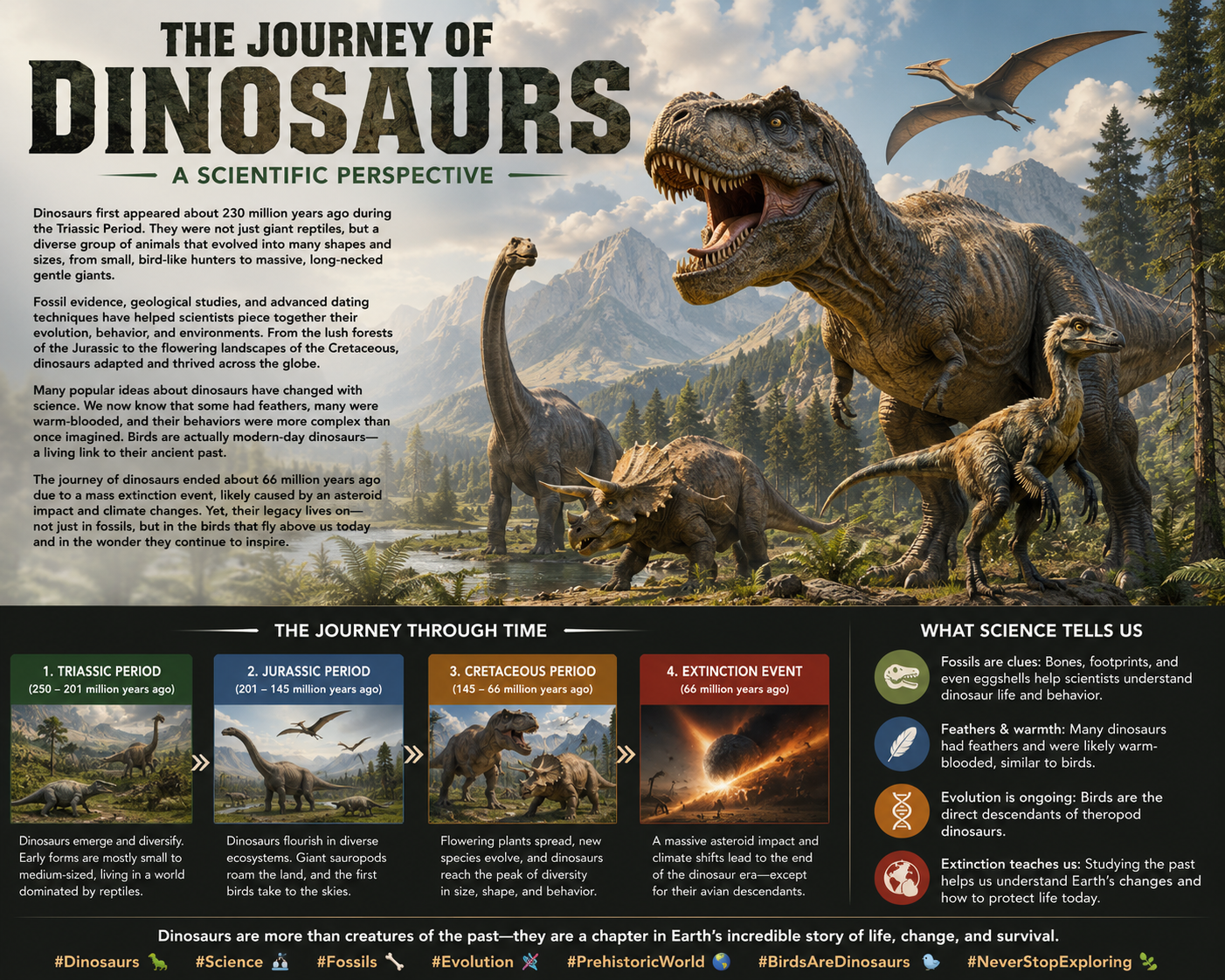
    Step into the fascinating world of dinosaurs and explore one of the most remarkable chapters in the history of life on Earth! Dinosaurs ruled many of the planet’s ecosystems for more than 160 million years, appearing during the Triassic Period and continuing through the Jurassic and Cretaceous Periods. Their incredible diversity included enormous plant-eaters, powerful predators, swift hunters, armored species, and many other extraordinary creatures.

    From a scientific perspective, the story of dinosaurs is not simply a tale of giant creatures—it is a story of evolution, adaptation, survival, extinction, and discovery. Scientists learn about dinosaurs through fossils, including bones, teeth, footprints, eggs, nests, and even traces of skin and feathers. By carefully studying these clues, paleontologists can reconstruct how dinosaurs lived, what they ate, how they moved, and how different species changed over millions of years.

    Dinosaurs first appeared roughly 230 million years ago. Over time, they adapted to changing environments and became one of the most successful groups of land animals in Earth's history. Some developed long necks and enormous bodies to reach vegetation, while others evolved sharp teeth and strong jaws for hunting. Their fossils have been discovered on every continent, showing just how widely they were distributed.

    The Jurassic Period is often remembered as a time when giant dinosaurs became especially prominent. Huge sauropods walked across ancient landscapes, while theropods hunted or scavenged. During the Cretaceous Period, dinosaurs continued to diversify, and many familiar species appeared. At the same time, flowering plants became increasingly important parts of many ecosystems.

    One of the most important scientific discoveries is that birds are living dinosaurs. Evidence from fossils, anatomy, and evolutionary studies shows that modern birds descended from theropod dinosaurs. This means that although non-avian dinosaurs disappeared from the fossil record about 66 million years ago, the dinosaur lineage continues today in the form of birds.

    The end of the Cretaceous Period brought a dramatic change. A large asteroid struck what is now the Yucatán Peninsula, contributing to major environmental disruptions around the world. This event, together with other environmental changes, played a major role in the extinction of non-avian dinosaurs. However, many other organisms survived, including early mammals, reptiles, and birds.

    Today, dinosaur research continues to evolve. New fossils, improved imaging technologies, computer modeling, and advances in genetics and evolutionary biology are helping scientists understand these ancient animals more accurately. Every newly discovered fossil can provide another piece of the enormous puzzle of Earth's past.

    The journey of dinosaurs reminds us that Earth has changed dramatically over geological time. Their story teaches us about adaptation, biodiversity, environmental change, and extinction. Most importantly, it shows how scientific evidence can help us understand a world that existed millions of years before humans appeared.

    Whether you are fascinated by enormous herbivores, fearsome predators, ancient ecosystems, or the origins of modern birds, the scientific journey of dinosaurs offers endless opportunities for discovery. Their fossils connect us to a distant past and inspire scientists, students, and curious minds to keep asking questions about the incredible history of life on our planet.

    #Dinosaurs #DinosaurJourney #Paleontology #Science #Fossils #Evolution #EarthHistory #JurassicPeriod #CretaceousPeriod #TriassicPeriod #DinosaurScience #AncientEarth #NaturalHistory #PrehistoricLife #ScientificDiscovery #Paleontologist #Biodiversity #Extinction #BirdsAreDinosaurs #LearnScience #ScienceEducation
    #rsisb Roll No.247 foundation level # The Journey of Dinosaurs: A Scientific Perspective 🦖🌍🔬 Step into the fascinating world of dinosaurs and explore one of the most remarkable chapters in the history of life on Earth! 🌎🦕 Dinosaurs ruled many of the planet’s ecosystems for more than 160 million years, appearing during the Triassic Period and continuing through the Jurassic and Cretaceous Periods. Their incredible diversity included enormous plant-eaters, powerful predators, swift hunters, armored species, and many other extraordinary creatures. 🦴✨ From a scientific perspective, the story of dinosaurs is not simply a tale of giant creatures—it is a story of evolution, adaptation, survival, extinction, and discovery. Scientists learn about dinosaurs through fossils, including bones, teeth, footprints, eggs, nests, and even traces of skin and feathers. 🔬🦴 By carefully studying these clues, paleontologists can reconstruct how dinosaurs lived, what they ate, how they moved, and how different species changed over millions of years. Dinosaurs first appeared roughly 230 million years ago. 🌋🌿 Over time, they adapted to changing environments and became one of the most successful groups of land animals in Earth's history. Some developed long necks and enormous bodies to reach vegetation, while others evolved sharp teeth and strong jaws for hunting. 🦕🌱🦖 Their fossils have been discovered on every continent, showing just how widely they were distributed. The Jurassic Period is often remembered as a time when giant dinosaurs became especially prominent. 🌴☀️ Huge sauropods walked across ancient landscapes, while theropods hunted or scavenged. During the Cretaceous Period, dinosaurs continued to diversify, and many familiar species appeared. At the same time, flowering plants became increasingly important parts of many ecosystems. 🌸🦖 One of the most important scientific discoveries is that birds are living dinosaurs. 🐦🦕 Evidence from fossils, anatomy, and evolutionary studies shows that modern birds descended from theropod dinosaurs. This means that although non-avian dinosaurs disappeared from the fossil record about 66 million years ago, the dinosaur lineage continues today in the form of birds. 🌍🔬 The end of the Cretaceous Period brought a dramatic change. A large asteroid struck what is now the Yucatán Peninsula, contributing to major environmental disruptions around the world. 🌠🌎 This event, together with other environmental changes, played a major role in the extinction of non-avian dinosaurs. However, many other organisms survived, including early mammals, reptiles, and birds. Today, dinosaur research continues to evolve. 🧑‍🔬🔎 New fossils, improved imaging technologies, computer modeling, and advances in genetics and evolutionary biology are helping scientists understand these ancient animals more accurately. Every newly discovered fossil can provide another piece of the enormous puzzle of Earth's past. 🦴🧩 The journey of dinosaurs reminds us that Earth has changed dramatically over geological time. 🌎⏳ Their story teaches us about adaptation, biodiversity, environmental change, and extinction. Most importantly, it shows how scientific evidence can help us understand a world that existed millions of years before humans appeared. Whether you are fascinated by enormous herbivores, fearsome predators, ancient ecosystems, or the origins of modern birds, the scientific journey of dinosaurs offers endless opportunities for discovery. 🦖🔬🌿 Their fossils connect us to a distant past and inspire scientists, students, and curious minds to keep asking questions about the incredible history of life on our planet. 🌍✨ #Dinosaurs 🦖 #DinosaurJourney 🦕 #Paleontology 🔬 #Science 🧪 #Fossils 🦴 #Evolution 🧬 #EarthHistory 🌍 #JurassicPeriod 🌿 #CretaceousPeriod 🌋 #TriassicPeriod 🌎 #DinosaurScience 🔎 #AncientEarth ⏳ #NaturalHistory 🏞️ #PrehistoricLife 🦕 #ScientificDiscovery 💡 #Paleontologist 🧑‍🔬 #Biodiversity 🌱 #Extinction 🌠 #BirdsAreDinosaurs 🐦 #LearnScience 📚 #ScienceEducation 🔬✨
    0 التعليقات 0 المشاركات 5206 مشاهدة
  • #rsisb
    Roll no.239
    Foundation Level


    Frogs are often studied in biology because their bodies provide a clear way to understand **basic animal anatomy and physiology**. Their organs and organ systems are relatively easy to observe, while still showing many of the same fundamental structures found in other vertebrates.

    ### What Can Frogs Teach Us?

    * **Heart:** A frog’s three-chambered heart demonstrates how blood circulates through the body.
    * **Lungs and skin:** Frogs breathe through both their lungs and moist skin, showing different methods of gas exchange.
    * **Digestive system:** Their digestive organs demonstrate how food is broken down and nutrients are absorbed.
    * **Muscles and skeleton:** Powerful hind-leg muscles and a specialized skeleton explain how frogs jump and move.
    * **Nervous system:** The brain, spinal cord, and nerves coordinate movement and responses.
    * **Kidneys:** These organs help remove waste and maintain the body's internal balance.

    genui{"biology_anatomy_physiology":{"type_id":"BLOOD_CIRCULATION","locale_override":"en-US"}}

    ### **Why Are Frogs Important in Biology?**

    Frogs are useful study organisms because their anatomy helps students connect **structure with function**. By examining how different organs work together, we can better understand a central idea of biology: **life depends on coordinated systems working as one whole organism.**

    In short, studying a frog is not simply about studying one animal—it is a way to explore the **anatomy, physiology, adaptation, and organization of life itself**.
    #rsisb Roll no.239 Foundation Level Frogs are often studied in biology because their bodies provide a clear way to understand **basic animal anatomy and physiology**. Their organs and organ systems are relatively easy to observe, while still showing many of the same fundamental structures found in other vertebrates. ### 🐸 What Can Frogs Teach Us? * **Heart:** A frog’s three-chambered heart demonstrates how blood circulates through the body. * **Lungs and skin:** Frogs breathe through both their lungs and moist skin, showing different methods of gas exchange. * **Digestive system:** Their digestive organs demonstrate how food is broken down and nutrients are absorbed. * **Muscles and skeleton:** Powerful hind-leg muscles and a specialized skeleton explain how frogs jump and move. * **Nervous system:** The brain, spinal cord, and nerves coordinate movement and responses. * **Kidneys:** These organs help remove waste and maintain the body's internal balance. genui{"biology_anatomy_physiology":{"type_id":"BLOOD_CIRCULATION","locale_override":"en-US"}} ### **Why Are Frogs Important in Biology?** Frogs are useful study organisms because their anatomy helps students connect **structure with function**. By examining how different organs work together, we can better understand a central idea of biology: **life depends on coordinated systems working as one whole organism.** In short, studying a frog is not simply about studying one animal—it is a way to explore the **anatomy, physiology, adaptation, and organization of life itself**.
    0 التعليقات 0 المشاركات 2562 مشاهدة
  • #rsisb
    Roll no.239
    Foundation Level

    **“The Evolution Paradox: Bridging Theories of Life with Divine Design”** explores one of the most fascinating questions about life: how can scientific explanations of evolution be understood alongside beliefs about divine creation?

    Evolution explains the diversity of life through processes such as **genetic variation, natural selection, mutation, and adaptation** over long periods of time. It provides a scientific framework for understanding how populations change and how different species have developed throughout Earth's history.

    Divine design, on the other hand, is a theological and philosophical idea that life and the universe have purpose or ultimately originate from a divine source. Different religious traditions interpret creation and humanity's place in the universe in different ways.

    The apparent “paradox” arises when people view scientific explanations and religious beliefs as necessarily competing explanations. However, some people see them as addressing different kinds of questions. Science primarily investigates **how natural processes occur**, while theology and philosophy may explore questions about **meaning, purpose, and ultimate origins**.

    The relationship between evolution and divine belief remains a subject of thoughtful discussion among scientists, philosophers, and religious thinkers. Some religious traditions accept evolutionary science, while others interpret creation in different ways.

    Ultimately, the topic encourages us to think deeply about **science, faith, human origins, and our understanding of life**. It shows that asking questions and examining different perspectives can help us develop a richer understanding of the world around us.
    #rsisb Roll no.239 Foundation Level **“The Evolution Paradox: Bridging Theories of Life with Divine Design”** explores one of the most fascinating questions about life: how can scientific explanations of evolution be understood alongside beliefs about divine creation? Evolution explains the diversity of life through processes such as **genetic variation, natural selection, mutation, and adaptation** over long periods of time. It provides a scientific framework for understanding how populations change and how different species have developed throughout Earth's history. Divine design, on the other hand, is a theological and philosophical idea that life and the universe have purpose or ultimately originate from a divine source. Different religious traditions interpret creation and humanity's place in the universe in different ways. The apparent “paradox” arises when people view scientific explanations and religious beliefs as necessarily competing explanations. However, some people see them as addressing different kinds of questions. Science primarily investigates **how natural processes occur**, while theology and philosophy may explore questions about **meaning, purpose, and ultimate origins**. The relationship between evolution and divine belief remains a subject of thoughtful discussion among scientists, philosophers, and religious thinkers. Some religious traditions accept evolutionary science, while others interpret creation in different ways. Ultimately, the topic encourages us to think deeply about **science, faith, human origins, and our understanding of life**. It shows that asking questions and examining different perspectives can help us develop a richer understanding of the world around us.
    0 التعليقات 0 المشاركات 2045 مشاهدة
  • People can be resistant to change for various psychological reasons. Some of the key factors include:

    Fear of the unknown: Change brings uncertainty, which can cause anxiety and discomfort. People might prefer to stick with familiar situations, even if they are not ideal, because they know what to expect.
    Loss of control: Change can make people feel as though they have lost control over their lives or circumstances, which can be unsettling and create resistance.
    Comfort zone: People tend to prefer staying in their comfort zone, where they know they can function effectively and with minimal risk. Change pushes them out of this familiar territory and requires adaptation, which can be challenging.
    Habit: Habits are deeply ingrained patterns of behavior that people develop over time. Changing these patterns requires effort and persistence, which can be difficult for many individuals.
    Fear of failure: People might resist change because they are afraid of failing in the new situation or not being able to adapt successfully.
    Identity and self-concept: Change can challenge an individuals sense of identity and self-concept, making them feel as though they are losing a part of themselves.
    Perceived risk: People might perceive the risks associated with change as outweighing the potential benefits, causing them to avoid change.
    Lack of trust: If individuals do not trust the process, the people involved, or the reasons behind the change, they are more likely to resist it.
    Inertia: Some people might resist change simply due to inertia or a general reluctance to alter the status quo.
    Insufficient motivation: If people do not see a clear benefit or compelling reason for the change, they may not be motivated to embrace it.
    People can be resistant to change for various psychological reasons. Some of the key factors include: Fear of the unknown: Change brings uncertainty, which can cause anxiety and discomfort. People might prefer to stick with familiar situations, even if they are not ideal, because they know what to expect. Loss of control: Change can make people feel as though they have lost control over their lives or circumstances, which can be unsettling and create resistance. Comfort zone: People tend to prefer staying in their comfort zone, where they know they can function effectively and with minimal risk. Change pushes them out of this familiar territory and requires adaptation, which can be challenging. Habit: Habits are deeply ingrained patterns of behavior that people develop over time. Changing these patterns requires effort and persistence, which can be difficult for many individuals. Fear of failure: People might resist change because they are afraid of failing in the new situation or not being able to adapt successfully. Identity and self-concept: Change can challenge an individual's sense of identity and self-concept, making them feel as though they are losing a part of themselves. Perceived risk: People might perceive the risks associated with change as outweighing the potential benefits, causing them to avoid change. Lack of trust: If individuals do not trust the process, the people involved, or the reasons behind the change, they are more likely to resist it. Inertia: Some people might resist change simply due to inertia or a general reluctance to alter the status quo. Insufficient motivation: If people do not see a clear benefit or compelling reason for the change, they may not be motivated to embrace it.
    0 التعليقات 0 المشاركات 401 مشاهدة
  • Creating the European Union (EU) was a complex process that evolved over decades, involving a series of treaties, expansions, and integrative steps. Heres a detailed look at the small and significant steps that led to the formation of the EU, which could serve as a roadmap for creating a similar union, like an Asian Union.

    ### Initial Concepts and Foundations

    1. **Post-World War II Reconciliation (1945-1950):** The devastation of World War II prompted European leaders to seek ways to prevent future conflicts. The idea of European integration was seen as a solution to foster peace and economic cooperation.

    2. **Schuman Declaration (1950):** French Foreign Minister Robert Schuman proposed the creation of a European Coal and Steel Community (ECSC), aiming to pool coal and steel production. This was a strategic move to bind Europe’s key industries together, making war between historic rivals France and Germany "not merely unthinkable, but materially impossible."

    3. **Treaty of Paris (1951):** Established the ECSC, including six founding countries: Belgium, France, Germany, Italy, Luxembourg, and the Netherlands. This treaty was the first step towards economic integration.

    ### Expanding the Scope of Integration

    4. **Treaty of Rome (1957):** Signed by the six ECSC members, it created the European Economic Community (EEC) and Euratom. The EEC aimed at establishing a common market and a customs union among the member states.

    5. **Merger Treaty (1965):** Merged the executive bodies of the ECSC, EEC, and Euratom into a single Commission and Council of the European Communities, simplifying the structure and strengthening integration.

    ### Enlargement and Deepening Integration

    6. **First Enlargement (1973):** Denmark, Ireland, and the United Kingdom joined, marking the first expansion beyond the six founding members.

    7. **Single European Act (1986):** Aimed at creating a single market by 1992, it allowed for the free movement of goods, services, capital, and people. This act significantly deepened economic integration.

    8. **Treaty of Maastricht (1992):** Officially established the European Union and introduced the concept of European citizenship. It set the stage for monetary union and introduced the three-pillar structure of the EU.

    9. **Treaty of Amsterdam (1997) and Treaty of Nice (2001):** These treaties reformed institutions to prepare for the eastward expansion of the EU and improved decision-making processes.

    ### Expansion and Consolidation

    10. **Eurozone (1999):** Introduction of the euro as a single currency for many EU countries, further integrating the economies of member states.

    11. **Eastern Enlargement (2004 and 2007):** The EU expanded to include eight Central and Eastern European countries in 2004, followed by Bulgaria and Romania in 2007, marking a significant geographical and political expansion.

    12. **Treaty of Lisbon (2007, effective 2009):** Simplified the EU’s structure, increased the powers of the European Parliament, and introduced changes to improve decision-making efficiency. It also established a more permanent President of the European Council and a High Representative for Foreign Affairs to strengthen the EUs global presence.

    ### Continuous Challenges and Adaptations

    - **Brexit (2016 referendum, effective 2020):** The United Kingdoms vote to leave the EU marked a significant challenge and led to discussions about the nature of EU integration and the future direction of the union.

    - **Ongoing Issues:** The EU continues to face challenges such as migration crises, economic disparities, and external pressures. It has also been working on digital transformation, climate change policies, and strengthening the European Health Union in response to the COVID-19 pandemic.

    Creating a similar union, like an Asian Union, would likely involve similar steps: starting with targeted economic cooperation, gradually expanding the scope of integration, formalizing structures through treaties, and continuously adapting to new challenges. It would also require strong political will, a shared vision among member states, and mechanisms to accommodate diversity while pursuing common goals.
    Creating the European Union (EU) was a complex process that evolved over decades, involving a series of treaties, expansions, and integrative steps. Here's a detailed look at the small and significant steps that led to the formation of the EU, which could serve as a roadmap for creating a similar union, like an Asian Union. ### Initial Concepts and Foundations 1. **Post-World War II Reconciliation (1945-1950):** The devastation of World War II prompted European leaders to seek ways to prevent future conflicts. The idea of European integration was seen as a solution to foster peace and economic cooperation. 2. **Schuman Declaration (1950):** French Foreign Minister Robert Schuman proposed the creation of a European Coal and Steel Community (ECSC), aiming to pool coal and steel production. This was a strategic move to bind Europe’s key industries together, making war between historic rivals France and Germany "not merely unthinkable, but materially impossible." 3. **Treaty of Paris (1951):** Established the ECSC, including six founding countries: Belgium, France, Germany, Italy, Luxembourg, and the Netherlands. This treaty was the first step towards economic integration. ### Expanding the Scope of Integration 4. **Treaty of Rome (1957):** Signed by the six ECSC members, it created the European Economic Community (EEC) and Euratom. The EEC aimed at establishing a common market and a customs union among the member states. 5. **Merger Treaty (1965):** Merged the executive bodies of the ECSC, EEC, and Euratom into a single Commission and Council of the European Communities, simplifying the structure and strengthening integration. ### Enlargement and Deepening Integration 6. **First Enlargement (1973):** Denmark, Ireland, and the United Kingdom joined, marking the first expansion beyond the six founding members. 7. **Single European Act (1986):** Aimed at creating a single market by 1992, it allowed for the free movement of goods, services, capital, and people. This act significantly deepened economic integration. 8. **Treaty of Maastricht (1992):** Officially established the European Union and introduced the concept of European citizenship. It set the stage for monetary union and introduced the three-pillar structure of the EU. 9. **Treaty of Amsterdam (1997) and Treaty of Nice (2001):** These treaties reformed institutions to prepare for the eastward expansion of the EU and improved decision-making processes. ### Expansion and Consolidation 10. **Eurozone (1999):** Introduction of the euro as a single currency for many EU countries, further integrating the economies of member states. 11. **Eastern Enlargement (2004 and 2007):** The EU expanded to include eight Central and Eastern European countries in 2004, followed by Bulgaria and Romania in 2007, marking a significant geographical and political expansion. 12. **Treaty of Lisbon (2007, effective 2009):** Simplified the EU’s structure, increased the powers of the European Parliament, and introduced changes to improve decision-making efficiency. It also established a more permanent President of the European Council and a High Representative for Foreign Affairs to strengthen the EU's global presence. ### Continuous Challenges and Adaptations - **Brexit (2016 referendum, effective 2020):** The United Kingdom's vote to leave the EU marked a significant challenge and led to discussions about the nature of EU integration and the future direction of the union. - **Ongoing Issues:** The EU continues to face challenges such as migration crises, economic disparities, and external pressures. It has also been working on digital transformation, climate change policies, and strengthening the European Health Union in response to the COVID-19 pandemic. Creating a similar union, like an Asian Union, would likely involve similar steps: starting with targeted economic cooperation, gradually expanding the scope of integration, formalizing structures through treaties, and continuously adapting to new challenges. It would also require strong political will, a shared vision among member states, and mechanisms to accommodate diversity while pursuing common goals.
    0 التعليقات 0 المشاركات 1173 مشاهدة
الصفحات المعززة