• #rsisb
    Roll no.247
    Call annie.18
    Foundation level

    **“Wood” – The Backbone of Early Civilization | 25-Minute Learning Journey**

    Wood is one of the oldest and most important natural materials used by humanity. Long before modern technology, steel, concrete, and plastic transformed our world, people depended on trees and wood for survival, creativity, shelter, transportation, tools, and everyday life.

    In this fascinating **25-minute exploration**, we travel back through history to discover how wood helped early civilizations grow, adapt, and build their communities. From simple wooden tools and shelters to boats, bridges, furniture, weapons, wheels, and farming equipment, wood played a remarkable role in human development.

    **Why was wood so important?**
    Wood was relatively easy to find, shape, cut, carve, and transport. Early humans learned to use different types of trees for different purposes, turning a natural resource into useful objects that made life easier and helped communities become more organized.

    Wood also provided an important source of fuel. Fire helped people cook food, stay warm, protect themselves, and eventually develop new technologies such as pottery and metalworking. The relationship between humans, trees, fire, and technology became an important part of civilization.

    **Wood and Transportation**
    One of the most exciting developments was the use of wood to create boats and other forms of transportation. Wooden boats allowed people to travel across rivers, lakes, and seas, encouraging exploration, trade, communication, and cultural exchange.

    **Wood and Shelter**
    Wood became an essential building material for homes, villages, storage structures, roofs, doors, and other buildings. As communities developed, woodworking skills became increasingly valuable, allowing people to construct stronger and more useful structures.

    **Wood and Human Creativity**
    Wood was not simply a material for survival—it became a medium for creativity. People carved decorations, created musical instruments, made furniture, constructed tools, and produced objects that reflected their cultures and traditions.

    **Wood and the Growth of Civilization**
    The story of wood is also the story of human innovation. By learning how to select, shape, join, preserve, and use wood, people developed practical skills that contributed to agriculture, construction, transportation, craftsmanship, and trade.

    This 25-minute lesson encourages us to look at an ordinary piece of wood in a completely different way. A wooden table, chair, pencil, door, or boat may seem simple today, but behind these objects lies thousands of years of human knowledge, experimentation, craftsmanship, and discovery.

    **A Lesson for Today**
    Understanding the historical importance of wood also reminds us of our responsibility toward forests and the environment. Trees provide habitats, help support ecosystems, and play an important role in our planet’s natural systems. Learning about wood means learning not only about the past, but also about how we can use natural resources responsibly in the future.

    Join us on this educational journey through history and discover how **wood became one of the foundations of human civilization**. From ancient tools to magnificent wooden structures, from forests to communities, the story of wood reveals how humans transformed the resources around them into the foundations of everyday life.

    **Watch, learn, explore, and discover the incredible story behind one of humanity’s oldest materials!**

    #Wood #HistoryOfWood #EarlyCivilization #HumanHistory #AncientCivilizations #History #Education #Learning #Science #Nature #Trees #Forests #Woodworking #AncientHistory #HumanInnovation #Technology #Archaeology #Culture #Craftsmanship #NaturalResources #EnvironmentalAwareness #LearningJourney #EducationalVideo #HistoryLesson #Civilization #Innovation #Knowledge #ExploreHistory #WoodenTools
    #rsisb Roll no.247 Call annie.18 Foundation level 🌳 **“Wood” – The Backbone of Early Civilization | 25-Minute Learning Journey** πŸͺ΅πŸΊ Wood is one of the oldest and most important natural materials used by humanity. Long before modern technology, steel, concrete, and plastic transformed our world, people depended on trees and wood for survival, creativity, shelter, transportation, tools, and everyday life. 🌍🌳 In this fascinating **25-minute exploration**, we travel back through history to discover how wood helped early civilizations grow, adapt, and build their communities. πŸ•οΈπŸ  From simple wooden tools and shelters to boats, bridges, furniture, weapons, wheels, and farming equipment, wood played a remarkable role in human development. πŸ›ΆπŸ› οΈ 🌲 **Why was wood so important?** Wood was relatively easy to find, shape, cut, carve, and transport. Early humans learned to use different types of trees for different purposes, turning a natural resource into useful objects that made life easier and helped communities become more organized. πŸ”₯ Wood also provided an important source of fuel. Fire helped people cook food, stay warm, protect themselves, and eventually develop new technologies such as pottery and metalworking. The relationship between humans, trees, fire, and technology became an important part of civilization. πŸ”₯🍲 πŸ›Ά **Wood and Transportation** One of the most exciting developments was the use of wood to create boats and other forms of transportation. Wooden boats allowed people to travel across rivers, lakes, and seas, encouraging exploration, trade, communication, and cultural exchange. πŸŒŠβ›΅ 🏠 **Wood and Shelter** Wood became an essential building material for homes, villages, storage structures, roofs, doors, and other buildings. As communities developed, woodworking skills became increasingly valuable, allowing people to construct stronger and more useful structures. πŸ‘πŸ”¨ πŸ› οΈ **Wood and Human Creativity** Wood was not simply a material for survival—it became a medium for creativity. People carved decorations, created musical instruments, made furniture, constructed tools, and produced objects that reflected their cultures and traditions. 🎡🎨πŸͺ‘ 🌍 **Wood and the Growth of Civilization** The story of wood is also the story of human innovation. By learning how to select, shape, join, preserve, and use wood, people developed practical skills that contributed to agriculture, construction, transportation, craftsmanship, and trade. This 25-minute lesson encourages us to look at an ordinary piece of wood in a completely different way. A wooden table, chair, pencil, door, or boat may seem simple today, but behind these objects lies thousands of years of human knowledge, experimentation, craftsmanship, and discovery. πŸ”πŸ§ βœ¨ 🌱 **A Lesson for Today** Understanding the historical importance of wood also reminds us of our responsibility toward forests and the environment. Trees provide habitats, help support ecosystems, and play an important role in our planet’s natural systems. Learning about wood means learning not only about the past, but also about how we can use natural resources responsibly in the future. πŸŒ³πŸŒŽπŸ’š πŸ“š Join us on this educational journey through history and discover how **wood became one of the foundations of human civilization**. From ancient tools to magnificent wooden structures, from forests to communities, the story of wood reveals how humans transformed the resources around them into the foundations of everyday life. 🌳πŸͺ΅πŸΊβœ¨ πŸ’‘ **Watch, learn, explore, and discover the incredible story behind one of humanity’s oldest materials!** #Wood #HistoryOfWood #EarlyCivilization #HumanHistory #AncientCivilizations #History #Education #Learning #Science #Nature #Trees #Forests #Woodworking #AncientHistory #HumanInnovation #Technology #Archaeology #Culture #Craftsmanship #NaturalResources #EnvironmentalAwareness #LearningJourney #EducationalVideo #HistoryLesson #Civilization #Innovation #Knowledge #ExploreHistory #WoodenTools 🌳πŸͺ΅πŸ“šπŸŒβœ¨
    0 Comments 0 Shares 1064 Views 7
  • #rsisb
    Roll no.247
    call annie no.18
    Foundation level

    **Water – The Origin of Life and Language | 25-Minute Exploration**

    Water is one of the simplest substances on Earth, yet it plays one of the most extraordinary roles in our existence. From the earliest forms of life to the development of human civilization, water has shaped the story of our planet in countless ways. In this fascinating 25-minute journey, **“Water – The Origin of Life and Language,”** we explore why water is so important to life and how it has influenced human history, culture, communication, and imagination.

    Life as we know it depends on water. Every living organism requires water in some way, and scientists consider liquid water one of the key ingredients necessary for life as we understand it. From microscopic cells to enormous ecosystems, water provides an environment where countless biological processes can occur.

    But water is more than a biological necessity. It has been at the heart of human civilization for thousands of years. Ancient communities developed around rivers, lakes, springs, and coastlines because access to water meant access to food, agriculture, transportation, and survival. The great civilizations of history were deeply connected to waterways, demonstrating how water helped shape where people lived and how societies developed.

    This exploration also takes us into the fascinating relationship between **water and language**. Humans have created thousands of words, expressions, stories, poems, songs, and metaphors inspired by water. Words associated with rivers, rain, oceans, waves, streams, and storms appear throughout languages and cultures around the world.

    Water has also become a powerful symbol in human communication. It can represent life, change, movement, renewal, peace, strength, and transformation. Just as water flows and changes its form, human language constantly evolves and adapts.

    Throughout this 25-minute presentation, we will think about some fascinating questions: **How did water contribute to the development of life? Why did civilizations grow near water? How has water influenced human culture? Why do so many languages contain words connected to water? And what can water teach us about life, change, and human connection?**

    The story of water is ultimately a story about ourselves. It connects science with history, nature with civilization, and biology with language. By understanding water, we gain a deeper appreciation for the remarkable planet we call home.

    So take a moment, relax, and join us on this fascinating journey through the science, history, language, and mystery of **water**.

    **Water gives life. Water shapes civilizations. Water inspires language. Water connects us all.**

    If you enjoyed this educational journey, don't forget to **Like, Share, and Subscribe** for more fascinating topics about science, history, nature, language, and the world around us!

    #Water #OriginOfLife #WaterAndLife #Science #Biology #Nature #Earth #LifeOnEarth #WaterCycle #Oceans #Rivers #HumanCivilization #AncientCivilizations #Language #OriginOfLanguage #HumanHistory #Environment #Education #EducationalVideo #ScienceEducation #NatureLovers #EarthScience #Knowledge #Learning #Curiosity #Discovery #Life #PlanetEarth #SaveWater #WaterIsLife #ExploreScience #AmazingScience #DidYouKnow #EducationalContent #ScienceAndNature
    #rsisb Roll no.247 call annie no.18 Foundation level πŸ’§πŸŒŠ **Water – The Origin of Life and Language | 25-Minute Exploration** 🌍🧬 Water is one of the simplest substances on Earth, yet it plays one of the most extraordinary roles in our existence. πŸ’§βœ¨ From the earliest forms of life to the development of human civilization, water has shaped the story of our planet in countless ways. In this fascinating 25-minute journey, **“Water – The Origin of Life and Language,”** we explore why water is so important to life and how it has influenced human history, culture, communication, and imagination. πŸŒŽπŸ”¬πŸ“– Life as we know it depends on water. πŸŒ±πŸ πŸ¦‹ Every living organism requires water in some way, and scientists consider liquid water one of the key ingredients necessary for life as we understand it. From microscopic cells to enormous ecosystems, water provides an environment where countless biological processes can occur. πŸ§¬πŸ”¬πŸ’¦ But water is more than a biological necessity. It has been at the heart of human civilization for thousands of years. Ancient communities developed around rivers, lakes, springs, and coastlines because access to water meant access to food, agriculture, transportation, and survival. 🏞️🏺🌾🚀 The great civilizations of history were deeply connected to waterways, demonstrating how water helped shape where people lived and how societies developed. This exploration also takes us into the fascinating relationship between **water and language**. πŸ—£οΈπŸ’§ Humans have created thousands of words, expressions, stories, poems, songs, and metaphors inspired by water. Words associated with rivers, rain, oceans, waves, streams, and storms appear throughout languages and cultures around the world. πŸŒ§οΈπŸŒŠπŸ“š Water has also become a powerful symbol in human communication. It can represent life, change, movement, renewal, peace, strength, and transformation. πŸŒŠπŸ•ŠοΈβœ¨ Just as water flows and changes its form, human language constantly evolves and adapts. Throughout this 25-minute presentation, we will think about some fascinating questions: **How did water contribute to the development of life? Why did civilizations grow near water? How has water influenced human culture? Why do so many languages contain words connected to water? And what can water teach us about life, change, and human connection?** πŸ€”πŸ’‘ The story of water is ultimately a story about ourselves. πŸ’™πŸŒ It connects science with history, nature with civilization, and biology with language. By understanding water, we gain a deeper appreciation for the remarkable planet we call home. So take a moment, relax, and join us on this fascinating journey through the science, history, language, and mystery of **water**. πŸ’§πŸŒŠπŸ”¬πŸ“š ✨ **Water gives life. Water shapes civilizations. Water inspires language. Water connects us all.** πŸŒπŸ’™ πŸ‘ If you enjoyed this educational journey, don't forget to **Like, Share, and Subscribe** for more fascinating topics about science, history, nature, language, and the world around us! πŸ””πŸ“šβœ¨ #Water #OriginOfLife #WaterAndLife #Science #Biology #Nature #Earth #LifeOnEarth #WaterCycle #Oceans #Rivers #HumanCivilization #AncientCivilizations #Language #OriginOfLanguage #HumanHistory #Environment #Education #EducationalVideo #ScienceEducation #NatureLovers #EarthScience #Knowledge #Learning #Curiosity #Discovery #Life #PlanetEarth #SaveWater #WaterIsLife #ExploreScience #AmazingScience #DidYouKnow #EducationalContent #ScienceAndNature πŸ’§πŸŒπŸŒŠπŸ§¬πŸ”¬πŸ“šβœ¨
    0 Comments 0 Shares 2582 Views 8
  • Day 104
    Task No:104
    Roll No:42
    RSLC
    Foundation Level, Batch#04

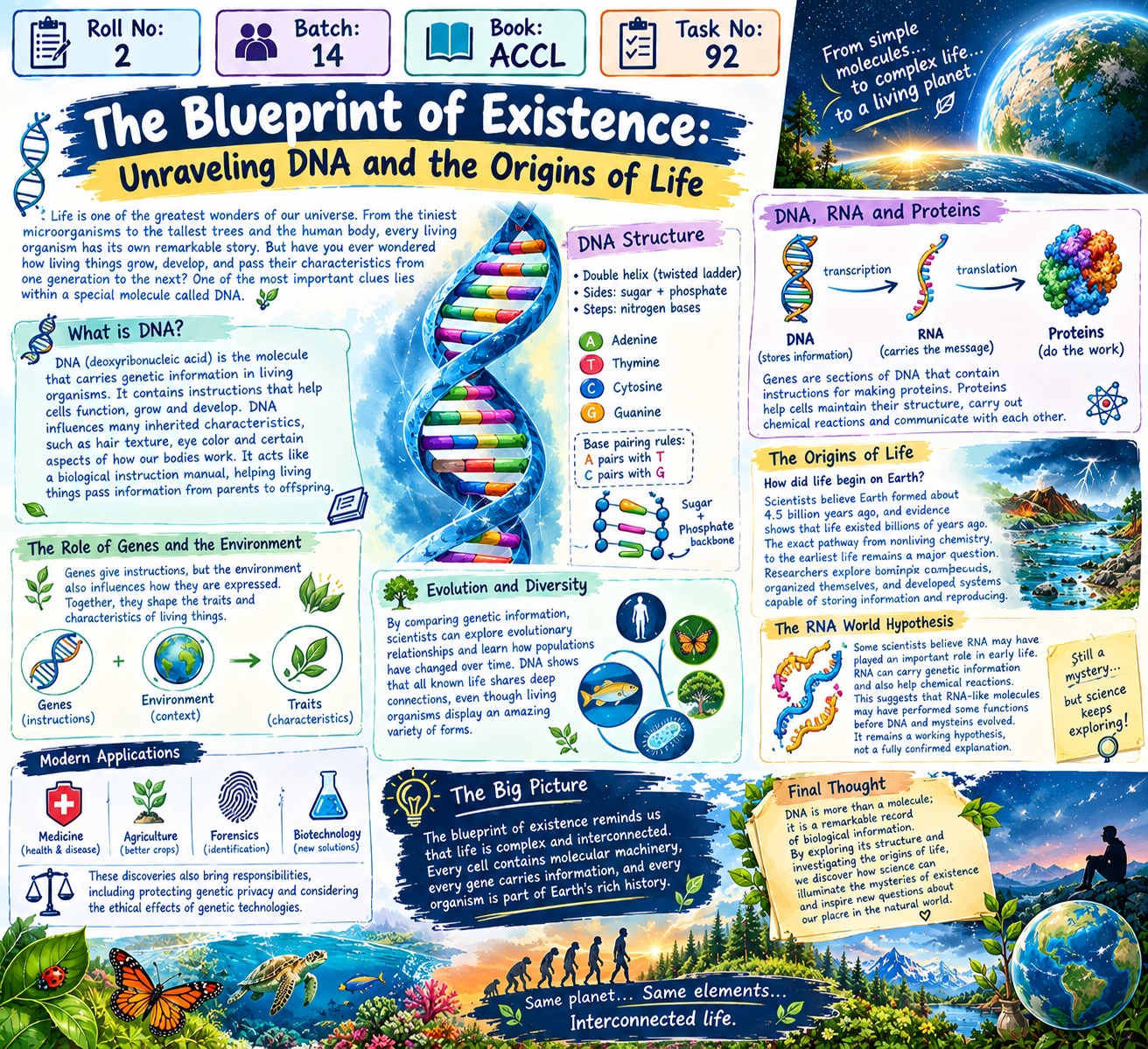
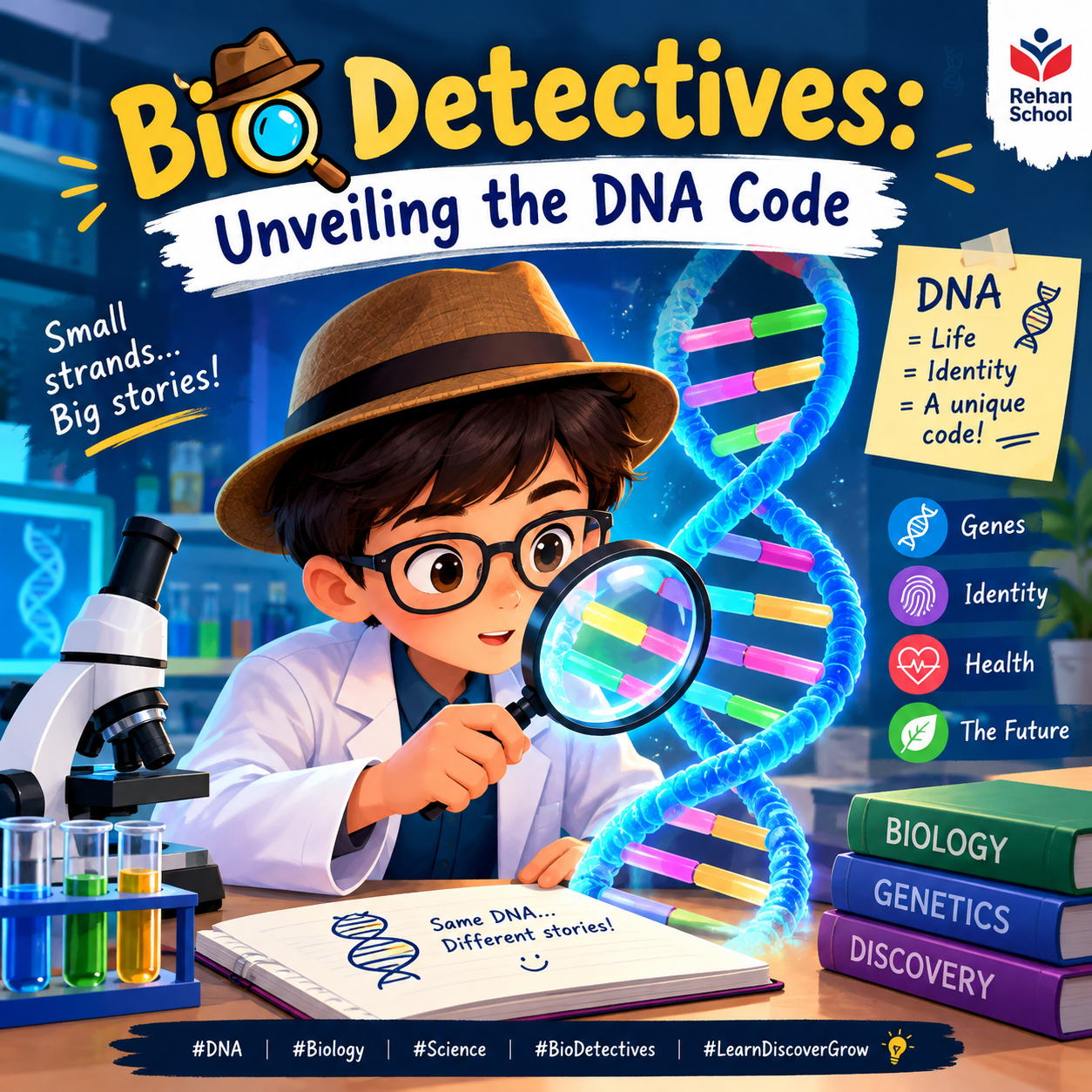
    Life on Earth is built upon an extraordinary blueprint known as DNA. Hidden inside every living cell, DNA carries the genetic instructions that determine how organisms grow, develop, and survive. From the smallest bacteria to the largest whales, every living being shares this remarkable biological code. Scientists often describe DNA as the language of life because it stores the information that connects all generations across time.

    The mystery of lifes origins has fascinated humanity for centuries. While researchers continue to explore how the first living cells emerged on the early Earth, DNA remains one of the greatest clues to understanding our beginnings. By studying genes and genetic evolution, scientists can trace the relationships between species and uncover how life has adapted over billions of years. Every discovery in genetics brings us one step closer to answering one of humanitys greatest questions: Where did life come from?

    DNA is more than just a scientific molecule?it is a symbol of connection, diversity, and the incredible complexity of nature. As technology advances, our understanding of genetics opens new possibilities in medicine, agriculture, and environmental conservation. The blueprint of existence reminds us that every living organism is part of a shared story written over billions of years, inspiring us to protect and appreciate the remarkable web of life that surrounds us.

    #DNA #Genetics #OriginOfLife #Science #Biology #MolecularBiology #LifeScience #Genome #Evolution #ScientificDiscovery #STEM #Education #DNAResearch #CellBiology #Nature #Knowledge #Innovation #FutureOfScience #LearnScience #ScienceFacts
    Day 104 Task No:104 Roll No:42 RSLC Foundation Level, Batch#04 Life on Earth is built upon an extraordinary blueprint known as DNA. Hidden inside every living cell, DNA carries the genetic instructions that determine how organisms grow, develop, and survive. From the smallest bacteria to the largest whales, every living being shares this remarkable biological code. Scientists often describe DNA as the language of life because it stores the information that connects all generations across time. The mystery of life's origins has fascinated humanity for centuries. While researchers continue to explore how the first living cells emerged on the early Earth, DNA remains one of the greatest clues to understanding our beginnings. By studying genes and genetic evolution, scientists can trace the relationships between species and uncover how life has adapted over billions of years. Every discovery in genetics brings us one step closer to answering one of humanity's greatest questions: Where did life come from? DNA is more than just a scientific molecule?it is a symbol of connection, diversity, and the incredible complexity of nature. As technology advances, our understanding of genetics opens new possibilities in medicine, agriculture, and environmental conservation. The blueprint of existence reminds us that every living organism is part of a shared story written over billions of years, inspiring us to protect and appreciate the remarkable web of life that surrounds us. #DNA #Genetics #OriginOfLife #Science #Biology #MolecularBiology #LifeScience #Genome #Evolution #ScientificDiscovery #STEM #Education #DNAResearch #CellBiology #Nature #Knowledge #Innovation #FutureOfScience #LearnScience #ScienceFacts
    0 Comments 0 Shares 1476 Views
  • Fondation Level Batch No 4
    Roll RSLC #42
    Task No #167
    Day #167

    Geography deeply influences the way we live our lives.
    Climate, land, and natural resources shape our daily routines.
    That is why every region develops its own unique culture.

    In cold regions, people wear warm clothes and enjoy different foods.
    In hot areas, light clothing and refreshing drinks are more common.
    Climate influences our habits, traditions, and everyday lifestyle.

    Communities near rivers and fertile lands often grow through agriculture.
    Trade, farming, and local traditions become an important part of life.
    The natural environment also shapes people?s professions and customs.

    Geography is not just about land and maps; it shapes our identity.
    Climate and surroundings influence our food, clothing, language, and traditions.
    The beauty of our world lies in this wonderful cultural diversity.

    ??????? ????? ????? ?? ????? ?? ?????? ?? ????? ???? ???
    ????? ???? ??? ????? ????? ????? ??? ??? ?? ????? ????
    ??? ??? ?? ??? ?? ???? ????? ????? ??? ???? ???

    ??? ?????? ??? ??? ??? ???? ??? ????? ????? ?????? ???? ????
    ??? ?????? ??? ???? ???? ??? ????? ??????? ??? ???? ????
    ???? ????? ?????? ????? ??? ???? ????? ?? ??? ????? ???

    ?????? ??? ????? ?????? ?? ???? ??????? ????? ???? ???? ????
    ???? ?????? ????? ??? ????? ?????? ????? ?? ??? ??? ???? ????
    ????? ????? ????? ?? ????? ??? ????? ?? ??? ??? ???? ???

    ??? ??????? ??? ???? ?? ???? ???? ???? ????? ????? ??? ????? ???
    ???? ??? ????? ????? ????? ????? ????? ??? ??? ? ???? ?? ????? ???? ????
    ???? ?? ???????? ??? ?????? ???? ??? ???? ???? ??

    #ClimateAndCulture #Geography #CulturalDiversity #WayOfLife #ClimateChange #HumanCulture #GeographyMatters
    Fondation Level Batch No 4 Roll RSLC #42 Task No #167 Day #167 Geography deeply influences the way we live our lives. Climate, land, and natural resources shape our daily routines. That is why every region develops its own unique culture. In cold regions, people wear warm clothes and enjoy different foods. In hot areas, light clothing and refreshing drinks are more common. Climate influences our habits, traditions, and everyday lifestyle. Communities near rivers and fertile lands often grow through agriculture. Trade, farming, and local traditions become an important part of life. The natural environment also shapes people?s professions and customs. Geography is not just about land and maps; it shapes our identity. Climate and surroundings influence our food, clothing, language, and traditions. The beauty of our world lies in this wonderful cultural diversity. ??????? ????? ????? ?? ????? ?? ?????? ?? ????? ???? ??? ????? ???? ??? ????? ????? ????? ??? ??? ?? ????? ???? ??? ??? ?? ??? ?? ???? ????? ????? ??? ???? ??? ??? ?????? ??? ??? ??? ???? ??? ????? ????? ?????? ???? ???? ??? ?????? ??? ???? ???? ??? ????? ??????? ??? ???? ???? ???? ????? ?????? ????? ??? ???? ????? ?? ??? ????? ??? ?????? ??? ????? ?????? ?? ???? ??????? ????? ???? ???? ???? ???? ?????? ????? ??? ????? ?????? ????? ?? ??? ??? ???? ???? ????? ????? ????? ?? ????? ??? ????? ?? ??? ??? ???? ??? ??? ??????? ??? ???? ?? ???? ???? ???? ????? ????? ??? ????? ??? ???? ??? ????? ????? ????? ????? ????? ??? ??? ? ???? ?? ????? ???? ???? ???? ?? ???????? ??? ?????? ???? ??? ???? ???? ?? #ClimateAndCulture #Geography #CulturalDiversity #WayOfLife #ClimateChange #HumanCulture #GeographyMatters
    0 Comments 0 Shares 1069 Views
  • #rsisb
    Roll no.247
    call Annie .15
    Foundation level

    **“Earth” – The History of Our Home in a Word (25 min)**

    Welcome to an exciting journey through the incredible history of **Earth — our beautiful home in the universe!** From its formation billions of years ago to the amazing diversity of life we see today, Earth has experienced an extraordinary story filled with change, discovery, survival, and transformation.

    In this **25-minute exploration**, we will travel back through deep time and discover how our planet formed from the early material of the solar system. We’ll explore the development of oceans , mountains , continents , atmosphere , and the conditions that eventually made life possible.

    We’ll take a fascinating look at ancient Earth, when the planet was very different from the world we know today. We’ll discover how simple forms of life appeared and gradually evolved into increasingly complex organisms.

    The story of Earth also includes dramatic events such as massive volcanic activity, changing climates, shifting continents, ice ages, and the disappearance of many ancient species. These events helped shape the planet and created opportunities for new forms of life to develop.

    As we move closer to the present, we’ll explore the rise of humans and how our species became an important part of Earth’s story. From early communities and agriculture to modern cities, technology, science, and exploration, humanity has changed the planet in remarkable ways.

    But Earth’s history is not just a story about the past. It also encourages us to think about the future. What will happen to our planet in the years ahead? How can we protect nature, conserve resources, reduce pollution, and take better care of the world we call home?

    **Earth is more than just a planet — it is a living story.** Every mountain, ocean, fossil, forest, river, and living creature is part of that incredible story. By learning about Earth’s past, we can better understand the present and make wiser choices for the future.

    Join us for this fascinating **25-minute journey through Earth’s history** and discover how our planet became the remarkable world we know today!

    **Learn about the past. Understand the present. Protect the future.**

    #Earth #EarthHistory #OurPlanet #PlanetEarth #HistoryOfEarth #Science #Geology #Evolution #Dinosaurs #AncientEarth #Oceans #Nature #Environment #Climate #Space #Universe #HumanHistory #ScienceEducation #Learning #EducationalVideo #EarthScience #ExploreEarth #SaveOurPlanet #ProtectNature #FutureOfEarth #Knowledge #DiscoverScience #AmazingEarth #WorldHistory
    #rsisb Roll no.247 call Annie .15 Foundation level 🌍 **“Earth” – The History of Our Home in a Word (25 min)** 🌎✨ Welcome to an exciting journey through the incredible history of **Earth — our beautiful home in the universe!** 🌌🌍 From its formation billions of years ago to the amazing diversity of life we see today, Earth has experienced an extraordinary story filled with change, discovery, survival, and transformation. πŸ¦•πŸŒ‹πŸŒŠπŸŒ³ In this **25-minute exploration**, we will travel back through deep time and discover how our planet formed from the early material of the solar system. β˜€οΈπŸͺ We’ll explore the development of oceans 🌊, mountains ⛰️, continents 🌎, atmosphere 🌀️, and the conditions that eventually made life possible. 🧬🌱 We’ll take a fascinating look at ancient Earth, when the planet was very different from the world we know today. πŸŒ‹πŸ”₯ We’ll discover how simple forms of life appeared and gradually evolved into increasingly complex organisms. πŸ¦ βž‘οΈπŸ βž‘οΈπŸ¦–βž‘οΈπŸ¦…βž‘οΈπŸ˜ The story of Earth also includes dramatic events such as massive volcanic activity, changing climates, shifting continents, ice ages, and the disappearance of many ancient species. πŸŒ‹β„οΈπŸŒ These events helped shape the planet and created opportunities for new forms of life to develop. πŸŒ±πŸ¦–πŸ”¬ As we move closer to the present, we’ll explore the rise of humans and how our species became an important part of Earth’s story. πŸ‘¨‍πŸ‘©‍πŸ‘§‍πŸ‘¦πŸ•οΈπŸŒΎπŸ™οΈ From early communities and agriculture to modern cities, technology, science, and exploration, humanity has changed the planet in remarkable ways. πŸšœπŸ—οΈπŸ’‘πŸš€ But Earth’s history is not just a story about the past. It also encourages us to think about the future. πŸŒ±πŸ’š What will happen to our planet in the years ahead? How can we protect nature, conserve resources, reduce pollution, and take better care of the world we call home? πŸŒ³πŸ’§β™»οΈ 🌍 **Earth is more than just a planet — it is a living story.** Every mountain, ocean, fossil, forest, river, and living creature is part of that incredible story. By learning about Earth’s past, we can better understand the present and make wiser choices for the future. πŸ”¬πŸ“šπŸŒŽ Join us for this fascinating **25-minute journey through Earth’s history** and discover how our planet became the remarkable world we know today! πŸŒβœ¨πŸš€ πŸ’š **Learn about the past. Understand the present. Protect the future.** 🌱🌎 #Earth 🌍 #EarthHistory πŸ“š #OurPlanet 🌎 #PlanetEarth πŸͺ #HistoryOfEarth ⏳ #Science πŸ”¬ #Geology πŸͺ¨ #Evolution 🧬 #Dinosaurs πŸ¦– #AncientEarth πŸŒ‹ #Oceans 🌊 #Nature 🌳 #Environment 🌱 #Climate 🌀️ #Space 🌌 #Universe ✨ #HumanHistory πŸ‘¨‍πŸ‘©‍πŸ‘§‍πŸ‘¦ #ScienceEducation πŸ“– #Learning πŸ“š #EducationalVideo πŸŽ“ #EarthScience πŸ”¬ #ExploreEarth 🌍 #SaveOurPlanet πŸ’š #ProtectNature 🌳 #FutureOfEarth 🌎 #Knowledge πŸ’‘ #DiscoverScience πŸš€ #AmazingEarth ✨ #WorldHistory 🌍
    0 Comments 0 Shares 3380 Views 6
  • #rsisb Roll No.240 Song No.21 Foundation Level **Microbial Universe: The Power of the Invisible World** takes us into a fascinating world that is all around us but usually cannot be seen with our eyes. Microorganisms, also called microbes, are tiny living organisms found in places such as soil, water, air, plants, animals, and even inside the human body. In this topic, we discover the amazing role of microbes in our world. Some microorganisms can be helpful and play important roles in nature, food production, medicine, and the environment. For example, certain microbes help break down natural materials and return nutrients to the soil. Others are used in making foods such as yogurt and cheese. We also learn that some microorganisms can cause diseases, which is why hygiene, clean water, safe food practices, and proper health habits are important. Understanding microbes helps us learn how infections can spread and why cleanliness matters. The microbial world is a reminder that **small does not always mean unimportant**. These tiny organisms can have a huge impact on ecosystems, human health, agriculture, and everyday life. Through microscopes and modern scientific techniques, scientists continue to discover new microorganisms and learn more about their incredible abilities. Studying microbes helps us understand life at a much smaller scale and shows us how connected all living things are. πŸ”¬ **Microbes are tiny but powerful.** 🦠 **They are found almost everywhere.** 🌱 **Many microbes are important for nature and ecosystems.** 🍎 **Some microbes are useful in food production.** 🧼 **Good hygiene helps protect us from harmful microorganisms.** πŸ’‘ **Science helps us explore the invisible world.** **Microbial Universe** encourages students to stay curious, explore the world around them, and understand how even the smallest forms of life can make a big difference. #MicrobialUniverse #Microbiology #Microbes #Bacteria #Science #Biology #InvisibleWorld #LifeScience #Education #ScienceEducation #Learning #Nature #ScientificDiscovery Rehan School Islamabad Campus Asma Shaheen EducationWali Irum Asim Saima Happinesswali https://www.facebook.com/share/v/1Ee8a81onj/
    WWW.FACEBOOK.COM
    Facebook
    #rsisb Roll No.240 Song No.21 Foundation Level **Microbial Universe: The Power of the Invisible World** takes us into a fascinating world that is all around us but usually cannot be seen with our...
    0 Comments 0 Shares 2491 Views
  • #rsisb
    Roll No.269
    Foundation Level
    Story Post No.8

    # Winds and Environment: The Impact of Change

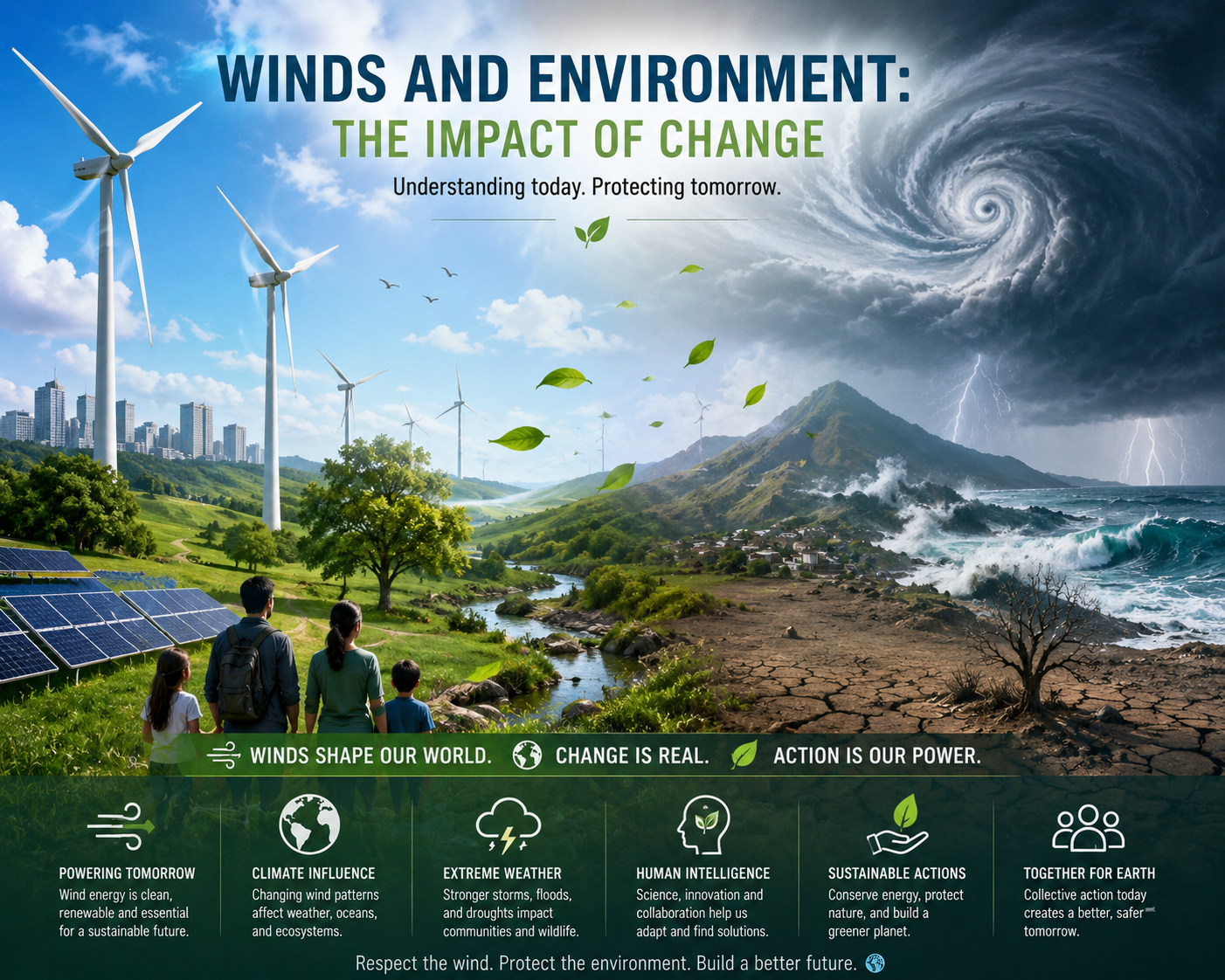
    **Winds and Environment: The Impact of Change** explores the important relationship between wind, weather, climate, and our environment. Wind is a natural force that affects our daily lives in many ways—from changing temperatures and moving clouds to spreading seeds, shaping landscapes, and influencing weather patterns.

    In this video, we explore how changes in wind patterns can impact the environment, agriculture, wildlife, air quality, and human communities. We also look at how climate change and environmental changes may influence wind behavior and weather conditions.

    Understanding these changes helps us appreciate the power of nature and reminds us why protecting our environment is so important. Let’s learn more about our changing world and discover how small actions can contribute to a healthier and more sustainable future.

    **Watch, learn, and share your thoughts!**

    #Winds #Environment #ClimateChange #Nature #Weather #EnvironmentalAwareness #Climate #GlobalWarming #Sustainability #Earth #Science #Education #NatureLovers #SaveOurPlanet #LearnAndGrow
    #rsisb Roll No.269 Foundation Level Story Post No.8 # 🌬️ Winds and Environment: The Impact of Change 🌍 🌿 **Winds and Environment: The Impact of Change** explores the important relationship between wind, weather, climate, and our environment. 🌬️🌎 Wind is a natural force that affects our daily lives in many ways—from changing temperatures and moving clouds to spreading seeds, shaping landscapes, and influencing weather patterns. In this video, we explore how changes in wind patterns can impact the environment, agriculture, wildlife, air quality, and human communities. 🌱🌾🐦 We also look at how climate change and environmental changes may influence wind behavior and weather conditions. Understanding these changes helps us appreciate the power of nature and reminds us why protecting our environment is so important. πŸŒ³πŸ’š Let’s learn more about our changing world and discover how small actions can contribute to a healthier and more sustainable future. 🌍✨ πŸŽ“ **Watch, learn, and share your thoughts!** πŸ’‘ #Winds 🌬️ #Environment 🌍 #ClimateChange 🌑️ #Nature 🌿 #Weather ☁️ #EnvironmentalAwareness πŸ’š #Climate 🌎 #GlobalWarming πŸ”₯ #Sustainability ♻️ #Earth 🌏 #Science πŸ”¬ #Education πŸ“š #NatureLovers 🌱 #SaveOurPlanet πŸ’š #LearnAndGrow πŸš€
    0 Comments 0 Shares 2719 Views
  • #rsisb
    roll no.247
    Foundation level

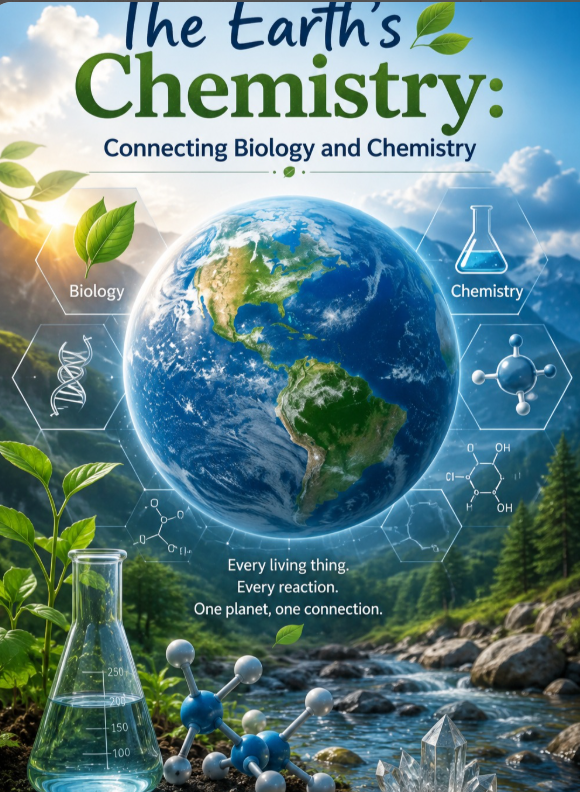
    **The Earth's Chemistry: Connecting Biology and Chemistry**

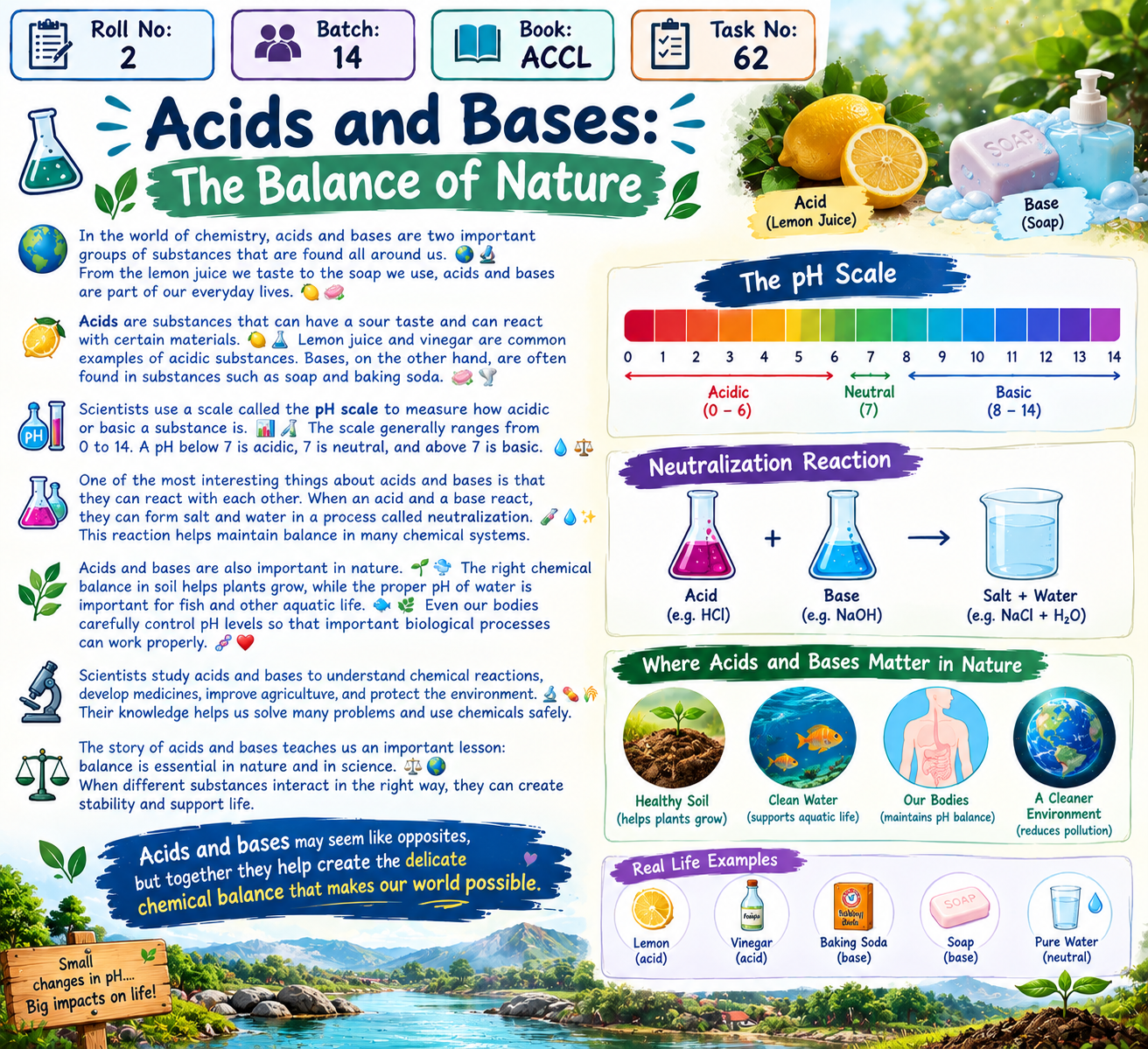
    Our Earth is a remarkable laboratory where chemistry and biology work together every moment! From the air we breathe to the water we drink, from the soil that supports plants to the cells that make up living organisms, chemistry is at the heart of life.

    **Chemistry makes life possible.** Plants use chemical reactions during photosynthesis to transform sunlight, water, and carbon dioxide into energy-rich food while releasing oxygen. This amazing process supports ecosystems and provides the oxygen needed by countless living organisms.

    **Biology and chemistry are deeply connected.** Every living cell depends on chemical substances such as proteins, carbohydrates, fats, DNA, water, minerals, and gases. These molecules interact through countless chemical reactions that allow organisms to grow, repair themselves, reproduce, and respond to their environment.

    Water is another perfect example of this connection. It helps transport nutrients, regulate temperature, support chemical reactions, and maintain ecosystems. Oceans, rivers, lakes, and groundwater are all part of Earth's interconnected chemical and biological systems.

    The **carbon cycle, nitrogen cycle, and oxygen cycle** demonstrate how matter continuously moves between the atmosphere, soil, water, and living organisms. Plants absorb carbon dioxide, animals obtain nutrients by consuming plants or other organisms, and decomposers return important elements to the environment.

    Even the soil beneath our feet is full of chemistry and biology. Minerals, microorganisms, organic matter, water, and air interact to create an environment where plants can grow. Healthy ecosystems depend on these delicate chemical relationships.

    Understanding Earth's chemistry helps us better understand climate, pollution, agriculture, ecosystems, human health, and the future of our planet. By studying how chemical substances interact with living systems, scientists can discover better ways to protect nature and use Earth's resources responsibly.

    **The big lesson:** Chemistry explains many of the processes that make biology possible, while biology shows us how those chemical processes come together to create living systems. Together, they tell an incredible story about our planet and life itself.

    Keep exploring, keep questioning, and keep discovering the fascinating science hidden all around us!

    #EarthsChemistry #Chemistry #Biology #EarthScience #Science #ScienceEducation #ChemistryAndBiology #LifeOnEarth #EnvironmentalScience #Photosynthesis #CarbonCycle #NitrogenCycle #OxygenCycle #Ecosystems #Nature #ScienceLovers #LearningScience #STEM #STEMEducation #ScienceExploration #OurPlanet #AmazingScience #Biochemistry #PlanetEarth #Education
    #rsisb roll no.247 Foundation level 🌍πŸ§ͺ **The Earth's Chemistry: Connecting Biology and Chemistry** 🧬🌱 Our Earth is a remarkable laboratory where chemistry and biology work together every moment! 🌎✨ From the air we breathe to the water we drink, from the soil that supports plants to the cells that make up living organisms, chemistry is at the heart of life. πŸ”¬πŸ’š 🌿 **Chemistry makes life possible.** Plants use chemical reactions during photosynthesis to transform sunlight, water, and carbon dioxide into energy-rich food while releasing oxygen. β˜€οΈπŸŒ± This amazing process supports ecosystems and provides the oxygen needed by countless living organisms. 🧬 **Biology and chemistry are deeply connected.** Every living cell depends on chemical substances such as proteins, carbohydrates, fats, DNA, water, minerals, and gases. These molecules interact through countless chemical reactions that allow organisms to grow, repair themselves, reproduce, and respond to their environment. πŸ”¬πŸ§« πŸ’§ Water is another perfect example of this connection. It helps transport nutrients, regulate temperature, support chemical reactions, and maintain ecosystems. Oceans, rivers, lakes, and groundwater are all part of Earth's interconnected chemical and biological systems. 🌊🐟 🌎 The **carbon cycle, nitrogen cycle, and oxygen cycle** demonstrate how matter continuously moves between the atmosphere, soil, water, and living organisms. Plants absorb carbon dioxide, animals obtain nutrients by consuming plants or other organisms, and decomposers return important elements to the environment. πŸ”„πŸŒΏπŸ¦  🌱 Even the soil beneath our feet is full of chemistry and biology. Minerals, microorganisms, organic matter, water, and air interact to create an environment where plants can grow. Healthy ecosystems depend on these delicate chemical relationships. 🌾🌍 πŸ”¬ Understanding Earth's chemistry helps us better understand climate, pollution, agriculture, ecosystems, human health, and the future of our planet. By studying how chemical substances interact with living systems, scientists can discover better ways to protect nature and use Earth's resources responsibly. πŸ’‘πŸŒ³ ✨ **The big lesson:** Chemistry explains many of the processes that make biology possible, while biology shows us how those chemical processes come together to create living systems. Together, they tell an incredible story about our planet and life itself. 🌍❀️πŸ§ͺ🧬 πŸ“š Keep exploring, keep questioning, and keep discovering the fascinating science hidden all around us! πŸ”Žβœ¨ #EarthsChemistry #Chemistry #Biology #EarthScience #Science #ScienceEducation #ChemistryAndBiology #LifeOnEarth #EnvironmentalScience #Photosynthesis #CarbonCycle #NitrogenCycle #OxygenCycle #Ecosystems #Nature #ScienceLovers #LearningScience #STEM #STEMEducation #ScienceExploration #OurPlanet #AmazingScience #Biochemistry #PlanetEarth #Education
    0 Comments 0 Shares 5299 Views
  • #rsisb
    roll no.247
    Story post no.13
    Foundation Level

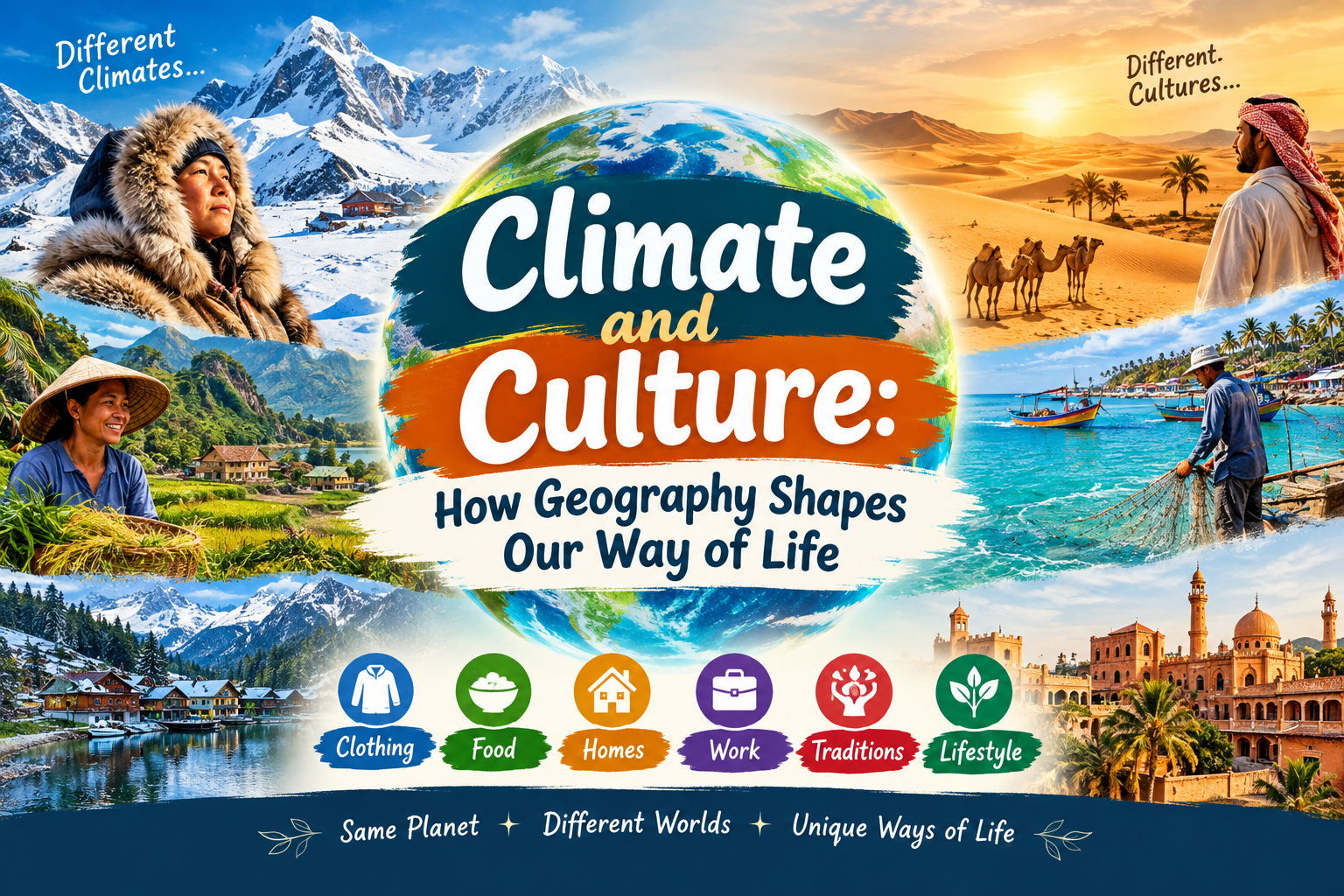
    **Climate and Culture: How Geography Shapes Our Way of Life**

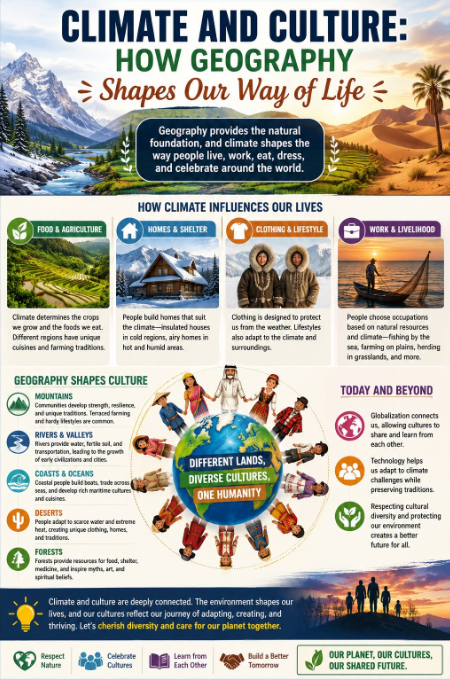
    Our planet is a beautiful mosaic of mountains, deserts, forests, rivers, coastlines, and plains—and each environment influences the way people live, work, eat, dress, build homes, celebrate traditions, and connect with one another.

    Climate and geography are much more than physical features on a map. They help shape human culture and everyday life. In cold regions, people may develop warm clothing, insulated homes, and traditions suited to long winters. In hot and dry areas, communities often adapt with lightweight clothing, shaded spaces, water-saving practices, and lifestyles suited to intense heat. Near rivers and fertile plains, agriculture can become an important part of life, while coastal communities may develop strong connections with fishing, sailing, and the sea.

    Geography also influences food and traditions. Different climates allow different crops to grow, creating unique cuisines and agricultural practices around the world. From rice-growing regions to wheat-producing plains, from tropical fruits to mountain crops, the natural environment provides resources that become part of local identity.

    Even architecture reflects geography. People have developed creative ways to build homes that protect them from heat, cold, rain, wind, and other environmental conditions. These adaptations show how human creativity and nature can work together.

    Most importantly, studying climate and culture helps us understand and appreciate the incredible diversity of human societies. Every community has its own story, traditions, knowledge, and ways of adapting to its surroundings. By learning about these differences, we can develop greater respect for cultures around the world and recognize how deeply connected people are to the places they call home.

    **Geography shapes our surroundings, climate influences our choices, and culture reflects how people adapt, create, and thrive.** Let’s explore our world with curiosity, respect, and a deeper appreciation for the relationship between people and the planet!

    #ClimateAndCulture #Geography #Culture #OurWorld #HumanGeography #Climate #GeographyMatters #CulturalDiversity #WorldCultures #Environment #Nature #PeopleAndPlanet #SustainableLiving #GlobalAwareness #Education #Learning #ExploreTheWorld #GeographyEducation #CulturalHeritage #Community #Earth #OurPlanet #EnvironmentalAwareness #Diversity #KnowledgeIsPower
    #rsisb roll no.247 Story post no.13 Foundation Level 🌍🌦️ **Climate and Culture: How Geography Shapes Our Way of Life** πŸ”οΈπŸŒŠπŸŒΎ Our planet is a beautiful mosaic of mountains, deserts, forests, rivers, coastlines, and plains—and each environment influences the way people live, work, eat, dress, build homes, celebrate traditions, and connect with one another. 🌎✨ Climate and geography are much more than physical features on a map. They help shape human culture and everyday life. In cold regions, people may develop warm clothing, insulated homes, and traditions suited to long winters. β„οΈπŸ πŸ§₯ In hot and dry areas, communities often adapt with lightweight clothing, shaded spaces, water-saving practices, and lifestyles suited to intense heat. β˜€οΈπŸœοΈπŸ’§ Near rivers and fertile plains, agriculture can become an important part of life, while coastal communities may develop strong connections with fishing, sailing, and the sea. 🌊🐟🚀 Geography also influences food and traditions. 🌾🍲 Different climates allow different crops to grow, creating unique cuisines and agricultural practices around the world. From rice-growing regions to wheat-producing plains, from tropical fruits to mountain crops, the natural environment provides resources that become part of local identity. 🌱πŸ₯­πŸŒΎ Even architecture reflects geography. πŸ˜οΈπŸ”οΈ People have developed creative ways to build homes that protect them from heat, cold, rain, wind, and other environmental conditions. These adaptations show how human creativity and nature can work together. πŸŒΏπŸ‘πŸ’‘ Most importantly, studying climate and culture helps us understand and appreciate the incredible diversity of human societies. 🀝🌍 Every community has its own story, traditions, knowledge, and ways of adapting to its surroundings. By learning about these differences, we can develop greater respect for cultures around the world and recognize how deeply connected people are to the places they call home. ❀️🌎 🌟 **Geography shapes our surroundings, climate influences our choices, and culture reflects how people adapt, create, and thrive.** Let’s explore our world with curiosity, respect, and a deeper appreciation for the relationship between people and the planet! πŸŒπŸ’š #ClimateAndCulture #Geography #Culture #OurWorld #HumanGeography #Climate #GeographyMatters #CulturalDiversity #WorldCultures #Environment #Nature #PeopleAndPlanet #SustainableLiving #GlobalAwareness #Education #Learning #ExploreTheWorld #GeographyEducation #CulturalHeritage #Community #Earth #OurPlanet #EnvironmentalAwareness #Diversity #KnowledgeIsPower 🌍
    0 Comments 0 Shares 6042 Views
  • #rsisb
    Roll no.239
    Story Post no.29
    Foundation Level

    **Climate and Culture: How Geography Shapes Our Way of Life**

    Climate and geography play a major role in shaping how people live, work, eat, dress, build homes, and celebrate traditions. From hot deserts to cold mountains and from coastal regions to fertile plains, the environment around us influences many aspects of human life.

    Different climates encourage different lifestyles. In cold regions, people may build insulated homes and wear warm clothing, while in hot areas, homes and daily routines often adapt to high temperatures. Geography also influences agriculture, transportation, occupations, and the foods that become part of local traditions.

    Culture develops through the interaction between people and their surroundings. Rivers can support farming and the growth of cities, mountains can shape communities and traditions, and coastal areas often develop strong connections to fishing and trade.

    However, geography does not completely determine culture. People adapt, innovate, migrate, and exchange ideas with others. Modern technology has also allowed communities to overcome many environmental limitations.

    Understanding the relationship between climate and culture helps us appreciate why societies around the world are so diverse. **Our environment influences the way we live, but human creativity determines how we adapt to it.**
    #rsisb Roll no.239 Story Post no.29 Foundation Level **Climate and Culture: How Geography Shapes Our Way of Life** Climate and geography play a major role in shaping how people live, work, eat, dress, build homes, and celebrate traditions. From hot deserts to cold mountains and from coastal regions to fertile plains, the environment around us influences many aspects of human life. Different climates encourage different lifestyles. In cold regions, people may build insulated homes and wear warm clothing, while in hot areas, homes and daily routines often adapt to high temperatures. Geography also influences agriculture, transportation, occupations, and the foods that become part of local traditions. Culture develops through the interaction between people and their surroundings. Rivers can support farming and the growth of cities, mountains can shape communities and traditions, and coastal areas often develop strong connections to fishing and trade. However, geography does not completely determine culture. People adapt, innovate, migrate, and exchange ideas with others. Modern technology has also allowed communities to overcome many environmental limitations. Understanding the relationship between climate and culture helps us appreciate why societies around the world are so diverse. **Our environment influences the way we live, but human creativity determines how we adapt to it.**
    0 Comments 0 Shares 2687 Views
More Results