• #rsisb
    RollNo.247
    Foundation Level

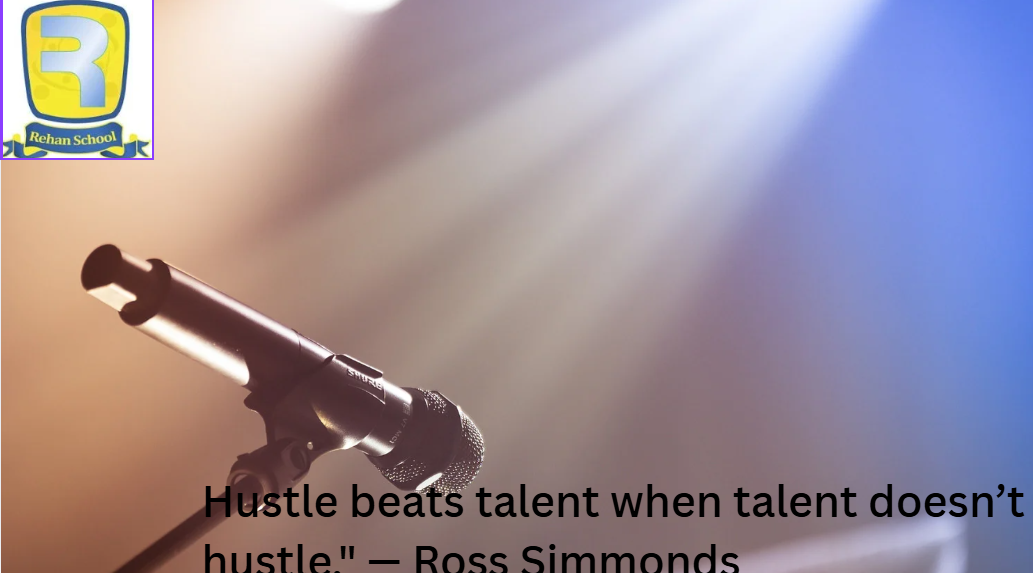
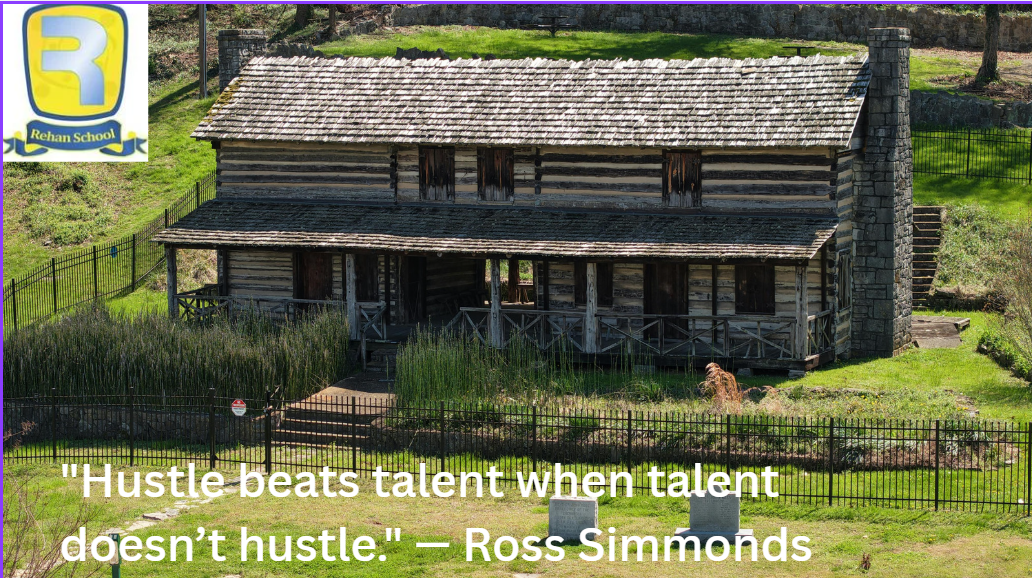
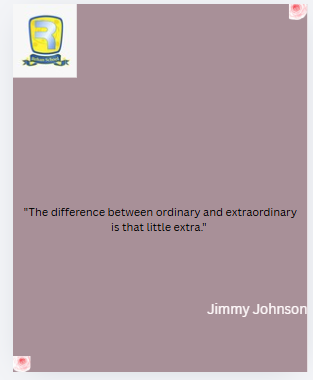
    "Hustle beats talent when talent doesn’t hustle." — Ross Simmonds

    Success is not determined by talent alone—it is built through consistent effort, dedication, and the willingness to keep moving forward even when things get difficult. Many people are naturally talented, but without hard work, discipline, and persistence, that talent can go unnoticed. On the other hand, someone with average talent who works tirelessly every day can achieve extraordinary results.

    Hustle means showing up when you don't feel like it, learning from your mistakes, staying focused on your goals, and never giving up. Every small step you take today brings you closer to the future you dream about. Whether you're a student, entrepreneur, creator, athlete, or professional, your daily actions matter more than your natural abilities.

    Remember, success is earned through consistency. The person who keeps learning, improving, and working hard will eventually surpass the one who relies only on talent. Every challenge is an opportunity to grow stronger, every failure is a lesson, and every new day is another chance to become better than yesterday.

    Don't wait for the perfect moment. Start now. Stay disciplined. Keep pushing yourself beyond your limits. Believe in your dreams, embrace the journey, and let your hard work speak louder than your words. One day, all your effort will pay off, and you'll be proud that you never gave up.

    Keep hustling. Keep believing. Keep achieving.

    #Hustle #HardWork #Success #Motivation #Inspiration #GrowthMindset #Discipline #Consistency #DreamBig #NeverGiveUp #KeepLearning #WorkSmart #WorkHard #SelfImprovement #PositiveMindset #Entrepreneur #StudentLife #Leadership #SuccessMindset #DailyMotivation #Goals #Determination #Achievement #RossSimmonds #BelieveInYourself
    #rsisb RollNo.247 Foundation Level 🔥 "Hustle beats talent when talent doesn’t hustle." — Ross Simmonds 🔥💪 Success is not determined by talent alone—it is built through consistent effort, dedication, and the willingness to keep moving forward even when things get difficult. 🌟 Many people are naturally talented, but without hard work, discipline, and persistence, that talent can go unnoticed. On the other hand, someone with average talent who works tirelessly every day can achieve extraordinary results. 🚀 Hustle means showing up when you don't feel like it, learning from your mistakes, staying focused on your goals, and never giving up. Every small step you take today brings you closer to the future you dream about. 📚💡 Whether you're a student, entrepreneur, creator, athlete, or professional, your daily actions matter more than your natural abilities. Remember, success is earned through consistency. The person who keeps learning, improving, and working hard will eventually surpass the one who relies only on talent. 🌱 Every challenge is an opportunity to grow stronger, every failure is a lesson, and every new day is another chance to become better than yesterday. Don't wait for the perfect moment. Start now. Stay disciplined. Keep pushing yourself beyond your limits. Believe in your dreams, embrace the journey, and let your hard work speak louder than your words. One day, all your effort will pay off, and you'll be proud that you never gave up. 🌈✨ 💯 Keep hustling. Keep believing. Keep achieving. 🚀🔥 #Hustle #HardWork #Success #Motivation #Inspiration #GrowthMindset #Discipline #Consistency #DreamBig #NeverGiveUp #KeepLearning #WorkSmart #WorkHard #SelfImprovement #PositiveMindset #Entrepreneur #StudentLife #Leadership #SuccessMindset #DailyMotivation #Goals #Determination #Achievement #RossSimmonds #BelieveInYourself
    0 Commentarios 0 Acciones 2148 Views
  • #rsisb
    Roll no . 214
    Foundaption level
    Canva post no .24


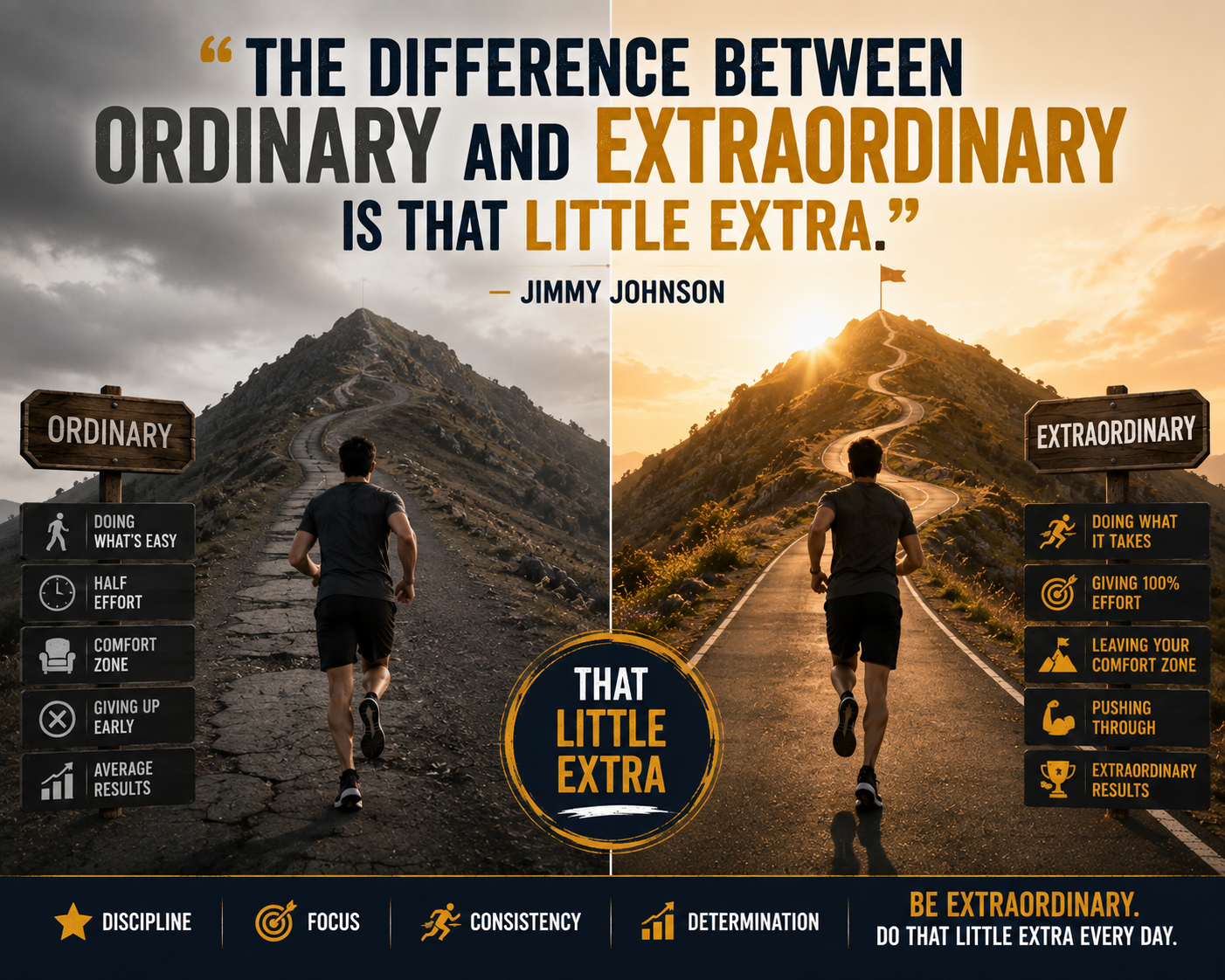
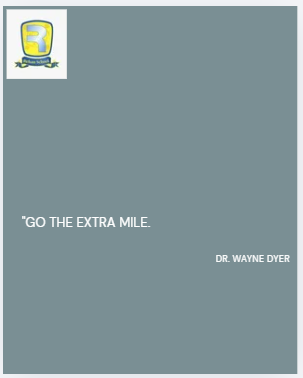
    Success doesn't come from doing only what's expected—it comes from giving your best even when no one is watching. Every extra step you take today builds a stronger, wiser, and more successful tomorrow. Keep learning, keep growing, and never settle for average. The extra mile is where dreams become reality.

    Believe in yourself, stay consistent, and let your actions inspire others. Every small effort counts!

    #GoTheExtraMile #WayneDyer #Motivation #Success #GrowthMindset #BelieveInYourself #NeverGiveUp #DreamBig #HardWork #SelfImprovement #PositiveMindset #Inspiration #Goals #SuccessJourney #KeepGoing

    #rsisb Roll no . 214 Foundaption level Canva post no .24 Success doesn't come from doing only what's expected—it comes from giving your best even when no one is watching. 💪 Every extra step you take today builds a stronger, wiser, and more successful tomorrow. Keep learning, keep growing, and never settle for average. The extra mile is where dreams become reality. 🚀✨ 🌈 Believe in yourself, stay consistent, and let your actions inspire others. Every small effort counts! 💖 #GoTheExtraMile #WayneDyer #Motivation #Success #GrowthMindset #BelieveInYourself #NeverGiveUp #DreamBig #HardWork #SelfImprovement #PositiveMindset #Inspiration #Goals #SuccessJourney #KeepGoing 🚀💯✨🌟📚❤️
    0 Commentarios 0 Acciones 1230 Views
  • Your monthly income will be average of your 5 nearest friends / Mentors - Muhammad Siddique
    Your monthly income will be average of your 5 nearest friends / Mentors - Muhammad Siddique
    0 Commentarios 0 Acciones 216 Views
  • Are jews choosen people ? - By Rabbi Gershon Steinberg-Caudill

    By Rabbi Gershon Winkler

    Regarding the question about the Jews claiming to be the chosen people, and how that has led to antisemitism: my feeling is that we never claimed to the world to be the chosen people. We claimed it to ourselves, no less and no more than did the Celts claim that they were the chosen ones, or the Hopi Indians, or the Lakota Sioux or the Egyptians, or the Greeks. It is not our fault that Christianity TOOK our personal diary from us and published it all over the world. It is the early Church in its claim to be the only true religion that used our scriptures to prove this by quoting about how we were chosen by God, so that by replacing us, they became automatically the NEWLY chosen ones.

    But we Jews never publicized to the world that God had chosen us over any other. On the contrary, throughout the Tenakh we were reminded again and again that we are not THE chosen people, but A chosen people, meaning a people chosen amongst many others.

    Here are a few examples from the Tenakh, the private diary of the Jewish people:
    "In that day shall Israel be third alongside Egypt and Assyria, as a blessing on earth; for God will bless them, saying: Blessed be my people Egypt, my handiwork Assyria, and my inheritance Israel" (Isaiah 19:24).

    "Are you not just like the Children of the Ethiopians unto me, O Children of Israel? Did I not bring out Israel from the Land of Egypt, and the Philistines from Caftor, and Aram from Kir?" (Amos 9:7).

    From the Talmud:
    "It is written, There never again arose among the Israelites a prophet as great as Moses (Deuteronomy 34:10) --among the Israelites there never again arose a prophet as great as Moses, but amongst other peoples, it is certainly probable!" (Midrash Bamidbar Rabbah 14:19).

    Martin Buber put it this way: "As a historical people, Israel enjoys no precedence over any other. Like Israel, the other peoples were all wanderers and settlers; they came up from a land of want and servitude into their present homeland. The one God, the Redeemer and Leader of the peoples, strode before all of them upon their way -- even the hostile neighboring peoples -- protecting them by His might. He guided their steps, gave them power, let them inherit the soil of a people that had been ruined by its sins and abandoned by history." (From "Martin Buber On the Bible", edited by N. Glatzer [Schocken Books, 1982], p. 80).

    I believe that we believe that God does not discriminate between one people and another. That God loves the Palestinians as much as [God loves] the Israelis. Sort of like a mother who writes six letters to her six children, and in each letter she writes "You are my favorite. I love you more than anything in the world!" This is why we never went out missionizing to people. We believed every-one had their own divine revelation and each their path is sacred as long as they dont use it to destroy others. A tzadik (righteous person), the Talmud teaches, is not someone who is a holy Jew, but someone of ANY faith or [ANY] people who is righteous by their actions. A tzadik is not determined by belief or religious affiliation but by how they live their life.

    So, no we are not any more chosen than the aboriginals of Australia. We are equally chosen. And when we say "asher bachar banu meekol haameem" (who chose in us from all the nations) we mean that we thank God for choosing us, too, from among all the other nations, meaning from among all those other peoples who were chosen long before we were.

    Of course the average traditional Jew will think about this differently. I believe that is because we have as a people been persecuted for so long that our religious teachers kept impressing upon us how precious we were to God in order to lift up our downtrodden spirits. A people oppressed for close to two thousand years needs to hear that they are important, chosen, the highest of the high. But theologically it is totally incorrect. We are different than most, yes. But we are not more important to God than most. God likes us because we are funny. We gave the world more comedians than anyone else.

    We are not hated because we claim to be chosen. We are hated because of the venom spread against us by the New Testament story of the Jews calling for the crucifixion of Jesus, which has been proven again and again as historically and theologically fictitious, but it is already a poison well-entrenched in every-one influenced by the Church, whether Christian or not, which is practically the entire world today.

    I think another factor of this chosen people problem is not anything we say or said to the world as much as what the world assumes we say about ourselves or think about ourselves, because the world sees us as uncompromising, tenaciously clinging to our peculiar and often politically-incorrect ways, even when those ways clash with the rest of the world. We have always been different, and always refused to conform to the religious and cultural ways of those who have conquered us, whether Babylonian, Greek, Roman, Christian, etc. which led them to assume that we thought ourselves special. Why dont the Jews give in? They couldnt understand it. Everyone else who was conquered adopted the conquerors ways. Everyone but the Jews. Which may naturally lead people to think that we think we are too special, chosen by God or the gods. Our crime was our stubborn refusal to compromise our beliefs and our ways, and so we chose death more often than any other conquered people, rather than conform or convert.

    Our crime was not our claim to be chosen. Our crime was our claim to the right to believe as we wished.

    And for that we have paid dearly.
    Are jews choosen people ? - By Rabbi Gershon Steinberg-Caudill By Rabbi Gershon Winkler Regarding the question about the Jews claiming to be the chosen people, and how that has led to antisemitism: my feeling is that we never claimed to the world to be the chosen people. We claimed it to ourselves, no less and no more than did the Celts claim that they were the chosen ones, or the Hopi Indians, or the Lakota Sioux or the Egyptians, or the Greeks. It is not our fault that Christianity TOOK our personal diary from us and published it all over the world. It is the early Church in its claim to be the only true religion that used our scriptures to prove this by quoting about how we were chosen by God, so that by replacing us, they became automatically the NEWLY chosen ones. But we Jews never publicized to the world that God had chosen us over any other. On the contrary, throughout the Tenakh we were reminded again and again that we are not THE chosen people, but A chosen people, meaning a people chosen amongst many others. Here are a few examples from the Tenakh, the private diary of the Jewish people: "In that day shall Israel be third alongside Egypt and Assyria, as a blessing on earth; for God will bless them, saying: 'Blessed be my people Egypt, my handiwork Assyria, and my inheritance Israel'" (Isaiah 19:24). "Are you not just like the Children of the Ethiopians unto me, O Children of Israel? Did I not bring out Israel from the Land of Egypt, and the Philistines from Caf'tor, and Aram from Kir?" (Amos 9:7). From the Talmud: "It is written, 'There never again arose among the Israelites a prophet as great as Moses' (Deuteronomy 34:10) --among the Israelites there never again arose a prophet as great as Moses, but amongst other peoples, it is certainly probable!" (Midrash Bamid'bar Rabbah 14:19). Martin Buber put it this way: "As a historical people, Israel enjoys no precedence over any other. Like Israel, the other peoples were all wanderers and settlers; they came 'up' from a land of want and servitude into their present homeland. The one God, the Redeemer and Leader of the peoples, strode before all of them upon their way -- even the hostile neighboring peoples -- protecting them by His might. He guided their steps, gave them power, let them 'inherit' the soil of a people that had been ruined by its sins and abandoned by history." (From "Martin Buber On the Bible", edited by N. Glatzer [Schocken Books, 1982], p. 80). I believe that we believe that God does not discriminate between one people and another. That God loves the Palestinians as much as [God loves] the Israelis. Sort of like a mother who writes six letters to her six children, and in each letter she writes "You are my favorite. I love you more than anything in the world!" This is why we never went out missionizing to people. We believed every-one had their own divine revelation and each their path is sacred as long as they don't use it to destroy others. A tzadik (righteous person), the Talmud teaches, is not someone who is a holy Jew, but someone of ANY faith or [ANY] people who is righteous by their actions. A tzadik is not determined by belief or religious affiliation but by how they live their life. So, no we are not any more chosen than the aboriginals of Australia. We are equally chosen. And when we say "asher bachar ba'nu mee'kol ha'ameem" (who chose in us from all the nations) we mean that we thank God for choosing us, too, from among all the other nations, meaning from among all those other peoples who were chosen long before we were. Of course the average traditional Jew will think about this differently. I believe that is because we have as a people been persecuted for so long that our religious teachers kept impressing upon us how precious we were to God in order to lift up our downtrodden spirits. A people oppressed for close to two thousand years needs to hear that they are important, chosen, the highest of the high. But theologically it is totally incorrect. We are different than most, yes. But we are not more important to God than most. God likes us because we are funny. We gave the world more comedians than anyone else. We are not hated because we claim to be chosen. We are hated because of the venom spread against us by the New Testament story of the Jews calling for the crucifixion of Jesus, which has been proven again and again as historically and theologically fictitious, but it is already a poison well-entrenched in every-one influenced by the Church, whether Christian or not, which is practically the entire world today. I think another factor of this chosen people problem is not anything we say or said to the world as much as what the world assumes we say about ourselves or think about ourselves, because the world sees us as uncompromising, tenaciously clinging to our peculiar and often politically-incorrect ways, even when those ways clash with the rest of the world. We have always been different, and always refused to conform to the religious and cultural ways of those who have conquered us, whether Babylonian, Greek, Roman, Christian, etc. which led them to assume that we thought ourselves special. Why don't the Jews give in? They couldn't understand it. Everyone else who was conquered adopted the conqueror's ways. Everyone but the Jews. Which may naturally lead people to think that we think we are too special, chosen by God or the gods. Our crime was our stubborn refusal to compromise our beliefs and our ways, and so we chose death more often than any other conquered people, rather than conform or convert. Our crime was not our claim to be chosen. Our crime was our claim to the right to believe as we wished. And for that we have paid dearly.
    0 Commentarios 0 Acciones 646 Views
  • You were not born to be average, normal or typical.

    You were not born a carbon copy.

    You were born unique, born to excel, born to manifest the glory of the universe in your authentic truth.

    You are not weak.

    You are stronger than you imagine, wiser than you know, and have vast powers that you have yet to actualize.

    Stop playing small.

    Be YOU. Tell your truth - now, today, this very moment.

    Manifest your true self - not a poor reflection of your circumstance.

    Don’t walk through this world unconscious of your greatness, sleep walking, surrendering your light to the bland grey around you.

    You were born to be brilliant,

    to be light,

    to be fire.

    Infuse your glory into this moment, into your choices, into your deeds, into the habits you create.

    Consciously choose.

    Choose your body through conscious consumption.

    Choose your attitude, through conscious thought.

    Choose your destiny by being present right now – for remember mindful moments multiplied, totally transform tomorrows.

    Today choose integrity, choose discipline, choose joy, choose joy, choose joy.

    Rejoice in your blessings AND, most importantly, know that EVERYTHING is a blessing.

    And your blessings are rich soil.

    So choose to grow into the boldest, proudest, most glorious version of YOU.

    You were born for this.

    @Corey Booker
    You were not born to be average, normal or typical. You were not born a carbon copy. You were born unique, born to excel, born to manifest the glory of the universe in your authentic truth. You are not weak. You are stronger than you imagine, wiser than you know, and have vast powers that you have yet to actualize. Stop playing small. Be YOU. Tell your truth - now, today, this very moment. Manifest your true self - not a poor reflection of your circumstance. Don’t walk through this world unconscious of your greatness, sleep walking, surrendering your light to the bland grey around you. You were born to be brilliant, to be light, to be fire. Infuse your glory into this moment, into your choices, into your deeds, into the habits you create. Consciously choose. Choose your body through conscious consumption. Choose your attitude, through conscious thought. Choose your destiny by being present right now – for remember mindful moments multiplied, totally transform tomorrow's. Today choose integrity, choose discipline, choose joy, choose joy, choose joy. Rejoice in your blessings AND, most importantly, know that EVERYTHING is a blessing. And your blessings are rich soil. So choose to grow into the boldest, proudest, most glorious version of YOU. You were born for this. @Corey Booker
    0 Commentarios 0 Acciones 896 Views
  • Farhan Shah writes

    Rehan Allahwala is redefiing the use of social network. On a platform like facebook having algorithm which doesnt endorse adding unknown people he is helping his friends making thousands of more. Someone rightly said "You are the average of 5 of your closest friends". He can help us change how we brand ourselves which honestly most of us are missing out. Who dont know the importance of personal branding more importanly for an entrepreneur, he can help us with it.

    I am connected with him on Facebook for a while now and noticed he is doing it very differently. This is my claim, get connected with him and prove me wrong ;)
    Farhan Shah writes Rehan Allahwala is redefiing the use of social network. On a platform like facebook having algorithm which doesn't endorse adding unknown people he is helping his friends making thousands of more. Someone rightly said "You are the average of 5 of your closest friends". He can help us change how we brand ourselves which honestly most of us are missing out. Who don't know the importance of personal branding more importanly for an entrepreneur, he can help us with it. I am connected with him on Facebook for a while now and noticed he is doing it very differently. This is my claim, get connected with him and prove me wrong ;)
    0 Commentarios 0 Acciones 229 Views
  • t’s No #SiliconValley, but #Pakistan is Building Its Own Startup Scene. #Technology http://www.newsweek.com/pakistan-building-silicon-valley-scene-426408

    In the past five years, Pakistan’s startup ecosystem has grown from a nascent colony to a self-sustaining environment. Zameen, an online real estate startup based in Lahore, has ridden that startup wave in developing a Zillow-like app and website that allows users to search and buy real estate listings in Pakistan’s largest cities.

    Like many famous U.S. internet companies, Zameen started with a gamble. In 2006, Zeeshan Ali Khan and his brother left their e-commerce business in the United Kingdom to move to Pakistan and started Zameen in their bedrooms. Back then, online-only services in Pakistan were rare, but Ali Khan followed the money coming into Pakistani real estate from expats living abroad—a million of whom lived in the United Kingdom. Now Zameen employees 500 people and has offices in nearly all major cities in Pakistan.

    “Zameen.com came into being when we realised there was a desperate need for a trustworthy online real estate enterprise in Pakistan, especially given the importance the average Pakistani attaches to property,” Ali Khan tells Newsweek in an email. “Back then the state of internet infrastructure in Pakistan was extremely poor but the offline property market was exploding. Facilitated by large investments from the Pakistani diaspora, people found that investing in real estate would earn them significant returns.”

    Pakistan’s fast-growing economy and, perhaps more importantly, large English-speaking population has provided a backbone to encourage startups to form and work with foreign companies.

    The country has seen startup hubs form around elite universities in cities like Lahore and Karachi—similar to Boston and San Francisco—in the last few years. The Punjab province, where Lahore is located, has been the major hotspot for startups in Pakistan. Plan9, the Punjab provincial government-run technology incubator, hosts over 80 startups. Ali Khan believes there are 140 startups in Lahore, a city of 5 million people.

    But Pakistani startups are still minnows compared to those in Silicon Valley. Cultural and economic norms, like being predominantly reliant on cash for transactions, are big obstacles for startups. Despite leading the South Asian region in consumers using mobile payments, only 9 percent of Pakistani men and 2 percent of women have used mobile phones for money transfers. Around 39 percent of Americans have used mobile banking in 2015, according to a report from the Federal Reserve.

    To accommodate its cash-based users, Zameen employs motorcycle riders to collect payments from Zameen agents across 30 Pakistani cities in person. “The situation is improving, and a lot of people are beginning to feel more comfortable with online payments and even mobile transactions,” says Ali Khan.

    Earning public trust for a little-known startup—a concept now just becoming understood in Pakistan—was a big challenge as well. When Zameen began, it discovered most of the Pakistani property market undocumented, and reliable data was nearly non-existent.

    Pakistani consumers, including Ali Khan’s family, had a hard time becoming comfortable with Zameen and its Silicon Valley-inspired ideas. “My family was a little apprehensive when I told them I wanted to start a business of my own,” Ali Khan says. “Today however, the attitudes have greatly changed, thanks to the startup ecosystem that is supporting the startup culture in Pakistan.”

    The two biggest hurdles Zameen and fellow startups face are the low penetration rates of 3G/4G mobile Internet and the lack of support from its government. In 2015, only 22 million out of 182 million Pakistanis had 3G/4G technology, leaving little room for startups to continue growing and scale upwards with their online services.

    Infrastructural issues like 3G/4G technology need the government’s help, but such support has been lacking, according to Ali Khan.

    Shared via Riaz Haq
    t’s No #SiliconValley, but #Pakistan is Building Its Own Startup Scene. #Technology http://www.newsweek.com/pakistan-building-silicon-valley-scene-426408 … In the past five years, Pakistan’s startup ecosystem has grown from a nascent colony to a self-sustaining environment. Zameen, an online real estate startup based in Lahore, has ridden that startup wave in developing a Zillow-like app and website that allows users to search and buy real estate listings in Pakistan’s largest cities. Like many famous U.S. internet companies, Zameen started with a gamble. In 2006, Zeeshan Ali Khan and his brother left their e-commerce business in the United Kingdom to move to Pakistan and started Zameen in their bedrooms. Back then, online-only services in Pakistan were rare, but Ali Khan followed the money coming into Pakistani real estate from expats living abroad—a million of whom lived in the United Kingdom. Now Zameen employees 500 people and has offices in nearly all major cities in Pakistan. “Zameen.com came into being when we realised there was a desperate need for a trustworthy online real estate enterprise in Pakistan, especially given the importance the average Pakistani attaches to property,” Ali Khan tells Newsweek in an email. “Back then the state of internet infrastructure in Pakistan was extremely poor but the offline property market was exploding. Facilitated by large investments from the Pakistani diaspora, people found that investing in real estate would earn them significant returns.” Pakistan’s fast-growing economy and, perhaps more importantly, large English-speaking population has provided a backbone to encourage startups to form and work with foreign companies. The country has seen startup hubs form around elite universities in cities like Lahore and Karachi—similar to Boston and San Francisco—in the last few years. The Punjab province, where Lahore is located, has been the major hotspot for startups in Pakistan. Plan9, the Punjab provincial government-run technology incubator, hosts over 80 startups. Ali Khan believes there are 140 startups in Lahore, a city of 5 million people. But Pakistani startups are still minnows compared to those in Silicon Valley. Cultural and economic norms, like being predominantly reliant on cash for transactions, are big obstacles for startups. Despite leading the South Asian region in consumers using mobile payments, only 9 percent of Pakistani men and 2 percent of women have used mobile phones for money transfers. Around 39 percent of Americans have used mobile banking in 2015, according to a report from the Federal Reserve. To accommodate its cash-based users, Zameen employs motorcycle riders to collect payments from Zameen agents across 30 Pakistani cities in person. “The situation is improving, and a lot of people are beginning to feel more comfortable with online payments and even mobile transactions,” says Ali Khan. Earning public trust for a little-known startup—a concept now just becoming understood in Pakistan—was a big challenge as well. When Zameen began, it discovered most of the Pakistani property market undocumented, and reliable data was nearly non-existent. Pakistani consumers, including Ali Khan’s family, had a hard time becoming comfortable with Zameen and its Silicon Valley-inspired ideas. “My family was a little apprehensive when I told them I wanted to start a business of my own,” Ali Khan says. “Today however, the attitudes have greatly changed, thanks to the startup ecosystem that is supporting the startup culture in Pakistan.” The two biggest hurdles Zameen and fellow startups face are the low penetration rates of 3G/4G mobile Internet and the lack of support from its government. In 2015, only 22 million out of 182 million Pakistanis had 3G/4G technology, leaving little room for startups to continue growing and scale upwards with their online services. Infrastructural issues like 3G/4G technology need the government’s help, but such support has been lacking, according to Ali Khan. Shared via Riaz Haq
    0 Commentarios 0 Acciones 1135 Views
  • Thought provoking crystal gaze for next generation........
    (Lengthy but Must Read Article).

    In 1998, Kodak had 170,000 employees and sold 85% of all photo paper worldwide.
    Within just a few years, their business model disappeared and they got bankrupt.
    What happened to Kodak will happen in a lot of industries in the next 10 year - and most people dont see it coming. Did you think in 1998 that 3 years later you would never take pictures on paper film again?
    Yet digital cameras were invented in 1975. The first ones only had 10,000 pixels, but followed Moores law. So as with all exponential technologies, it was a disappointment for a long time, before it became way superiour and got mainstream in only a few short years. It will now happen with Artificial Intelligence, health, autonomous and electric cars, education, 3D printing, agriculture and jobs. Welcome to the 4th Industrial Revolution.
    Welcome to the Exponential Age.

    Software will disrupt most traditional industries in the next 5-10 years.
    Uber is just a software tool, they dont own any cars, and are now the biggest taxi company in the world. Airbnb is now the biggest hotel company in the world, although they dont own any properties.

    Artificial Intelligence: Computers become exponentially better in understanding the world. This year, a computer beat the best Go player in the world, 10 years earlier than expected. In the US, young lawyers already dont get jobs. Because of IBM Watson, you can get legal advice (so far for more or less basic stuff) within seconds, with 90% accuracy compared with 70% accuracy when done by humans. So if you study law, stop immediately. There will be 90% less laywyers in the future, only specialists will remain.
    Watson already helps nurses diagnosing cancer, 4 time more accurate than human nurses. Facebook now has a pattern recognition software that can recognize faces better than humans. In 2030, computers will become more intelligent than humans.

    Autonomous cars: In 2018 the first self driving cars will appear for the public. Around 2020, the complete industry will start to be disrupted. You dont want to own a car anymore. You will call a car with your phone, it will show up at your location and drive you to your destination. You will not need to park it, you only pay for the driven distance and can be productive while driving. Our kids will never get a drivers licence and will never own a car. It will change the cities, because we will need 90-95% less cars for that. We can transform former parking space into parks. 1,2 million people die each year in car accidents worldwide. We now have one accident every 100,000km, with autonomous driving that will drop to one accident in 10 million km. That will save a million lifes each year.

    Most car companies might become bankrupt. Traditional car companies try the evolutionary approach and just build a better car, while tech companies (Tesla, Apple, Google) will do the revolutionary approach and build a computer on wheels. I spoke to a lot of engineers from Volkswagen and Audi; they are completely terrified of Tesla.

    Insurance companies will have massive trouble because without accidents, the insurance will become 100x cheaper. Their car insurance business model will disappear.
    Real estate will change. Because if you can work while you commute, people will move further away to live in a more beautiful neighborhood.
    Electric cars will become mainstream until 2020. Cities will be less noisy because all cars will run on electric. Electricity will become incredibly cheap and clean: Solar production has been on an exponential curve for 30 years, but you can only now see the impact. Last year, more solar energy was installed worldwide than fossil. The price for solar will drop so much that all coal companies will be out of business by 2025.
    With cheap electricity comes cheap and abundant water. Desalination now only needs 2kWh per cubic meter. We dont have scarce water in most places, we only have scarce drinking water. Imagine what will be possible if anyone can have as much clean water as he wants, for nearly no cost.

    Health: The Tricorder X price will be announced this year. There will be companies who will build a medical device (called the "Tricorder" from Star Trek) that works with you phone, which takes your retina scan, you blood sample and you breath into it. It then analyses 54 biomarkers that will identify nearly any disease. It will be cheap, so in a few years everyone on this planet will have access to world class medicine, nearly for free.

    3D printing: The price of the cheapest 3D printer came down from 18,000$ to 400$ within 10 years. In the same time, it became 100 times faster. All major shoe companies started 3D printing shoes. Spare airplane parts are already 3D printed in remote airports. The space station now has a printer that eliminates the need for the large amout of spare parts they used to have in the past.
    At the end of this year, new smartphones will have 3D scanning possibilities. You can then 3D scan your feet and print your perfect shoe at home. In China, they already 3D printed a complete 6-storey office building. By 2027, 10% of everything thats being produced will be 3D printed.

    Business opportunities: If you think of a niche you want to go in, ask yourself: "in the future, do you think we will have that?" and if the answer is yes, how can you make that happen sooner? If it doesnt work with your phone, forget the idea. And any idea designed for success in the 20th century is doomed in to failure in the 21st century.

    Work: 70-80% of jobs will disappear in the next 20 years. There will be a lot of new jobs, but it is not clear if there will be enough new jobs in such a small time.

    Agriculture: There will be a 100$ agricultural robot in the future. Farmers in 3rd world countried can then become managers of their field instead of working all days on their fields. Aeroponics will need much less water. The first petri dish produced veal is now available and will be cheaper than cow produced veal in 2018. Right now, 30% of all agricultural surfaces is used for cows. Imagine if we dont need that space anymore. There are several startups who will bring insect protein to the market shortly. It contains more protein than meat. It will be labeled as "alternative protein source" (because most people still reject the idea of eating insects).

    There is an app called "moodies" which can already tell in which mood you are. Until 2020 there will be apps that can tell by your facial expressions if you are lying. Imagine a political debate where its being displayed when they are telling the truth and when not.

    Bitcoin will become mainstream this year and might even become the default reserve currency.

    Longevity: Right now, the average life span increases by 3 months per year. Four years ago, the life span used to be 79 years, now its 80 years. The increase itself is increasing and by 2036, there will be more that one year increase per year. So we all might live for a long long time, probably way more than 100.

    Education: The cheapest smartphones are already at 10$ in Africa and Asia. Until 2020, 70% of all humans will own a smartphone. That means, everyone has the same access to world class education. Every child can use Khan academy for everything a child learns at school in First World countries. We have already released our software in Indonesia and will release it in Arabic, Suaheli and Chinese this Summer, because I see an enormous potential. We will give the English app for free, so that children in Africa can become fluent in English within half a year.
    🏼

    SaSarfaraz Ahmed Rehman
    Thought provoking crystal gaze for next generation........ (Lengthy but Must Read Article). In 1998, Kodak had 170,000 employees and sold 85% of all photo paper worldwide. Within just a few years, their business model disappeared and they got bankrupt. What happened to Kodak will happen in a lot of industries in the next 10 year - and most people don't see it coming. Did you think in 1998 that 3 years later you would never take pictures on paper film again? Yet digital cameras were invented in 1975. The first ones only had 10,000 pixels, but followed Moore's law. So as with all exponential technologies, it was a disappointment for a long time, before it became way superiour and got mainstream in only a few short years. It will now happen with Artificial Intelligence, health, autonomous and electric cars, education, 3D printing, agriculture and jobs. Welcome to the 4th Industrial Revolution. Welcome to the Exponential Age. Software will disrupt most traditional industries in the next 5-10 years. Uber is just a software tool, they don't own any cars, and are now the biggest taxi company in the world. Airbnb is now the biggest hotel company in the world, although they don't own any properties. Artificial Intelligence: Computers become exponentially better in understanding the world. This year, a computer beat the best Go player in the world, 10 years earlier than expected. In the US, young lawyers already don't get jobs. Because of IBM Watson, you can get legal advice (so far for more or less basic stuff) within seconds, with 90% accuracy compared with 70% accuracy when done by humans. So if you study law, stop immediately. There will be 90% less laywyers in the future, only specialists will remain. Watson already helps nurses diagnosing cancer, 4 time more accurate than human nurses. Facebook now has a pattern recognition software that can recognize faces better than humans. In 2030, computers will become more intelligent than humans. Autonomous cars: In 2018 the first self driving cars will appear for the public. Around 2020, the complete industry will start to be disrupted. You don't want to own a car anymore. You will call a car with your phone, it will show up at your location and drive you to your destination. You will not need to park it, you only pay for the driven distance and can be productive while driving. Our kids will never get a driver's licence and will never own a car. It will change the cities, because we will need 90-95% less cars for that. We can transform former parking space into parks. 1,2 million people die each year in car accidents worldwide. We now have one accident every 100,000km, with autonomous driving that will drop to one accident in 10 million km. That will save a million lifes each year. Most car companies might become bankrupt. Traditional car companies try the evolutionary approach and just build a better car, while tech companies (Tesla, Apple, Google) will do the revolutionary approach and build a computer on wheels. I spoke to a lot of engineers from Volkswagen and Audi; they are completely terrified of Tesla. Insurance companies will have massive trouble because without accidents, the insurance will become 100x cheaper. Their car insurance business model will disappear. Real estate will change. Because if you can work while you commute, people will move further away to live in a more beautiful neighborhood. Electric cars will become mainstream until 2020. Cities will be less noisy because all cars will run on electric. Electricity will become incredibly cheap and clean: Solar production has been on an exponential curve for 30 years, but you can only now see the impact. Last year, more solar energy was installed worldwide than fossil. The price for solar will drop so much that all coal companies will be out of business by 2025. With cheap electricity comes cheap and abundant water. Desalination now only needs 2kWh per cubic meter. We don't have scarce water in most places, we only have scarce drinking water. Imagine what will be possible if anyone can have as much clean water as he wants, for nearly no cost. Health: The Tricorder X price will be announced this year. There will be companies who will build a medical device (called the "Tricorder" from Star Trek) that works with you phone, which takes your retina scan, you blood sample and you breath into it. It then analyses 54 biomarkers that will identify nearly any disease. It will be cheap, so in a few years everyone on this planet will have access to world class medicine, nearly for free. 3D printing: The price of the cheapest 3D printer came down from 18,000$ to 400$ within 10 years. In the same time, it became 100 times faster. All major shoe companies started 3D printing shoes. Spare airplane parts are already 3D printed in remote airports. The space station now has a printer that eliminates the need for the large amout of spare parts they used to have in the past. At the end of this year, new smartphones will have 3D scanning possibilities. You can then 3D scan your feet and print your perfect shoe at home. In China, they already 3D printed a complete 6-storey office building. By 2027, 10% of everything that's being produced will be 3D printed. Business opportunities: If you think of a niche you want to go in, ask yourself: "in the future, do you think we will have that?" and if the answer is yes, how can you make that happen sooner? If it doesn't work with your phone, forget the idea. And any idea designed for success in the 20th century is doomed in to failure in the 21st century. Work: 70-80% of jobs will disappear in the next 20 years. There will be a lot of new jobs, but it is not clear if there will be enough new jobs in such a small time. Agriculture: There will be a 100$ agricultural robot in the future. Farmers in 3rd world countried can then become managers of their field instead of working all days on their fields. Aeroponics will need much less water. The first petri dish produced veal is now available and will be cheaper than cow produced veal in 2018. Right now, 30% of all agricultural surfaces is used for cows. Imagine if we don't need that space anymore. There are several startups who will bring insect protein to the market shortly. It contains more protein than meat. It will be labeled as "alternative protein source" (because most people still reject the idea of eating insects). There is an app called "moodies" which can already tell in which mood you are. Until 2020 there will be apps that can tell by your facial expressions if you are lying. Imagine a political debate where it's being displayed when they are telling the truth and when not. Bitcoin will become mainstream this year and might even become the default reserve currency. Longevity: Right now, the average life span increases by 3 months per year. Four years ago, the life span used to be 79 years, now it's 80 years. The increase itself is increasing and by 2036, there will be more that one year increase per year. So we all might live for a long long time, probably way more than 100. Education: The cheapest smartphones are already at 10$ in Africa and Asia. Until 2020, 70% of all humans will own a smartphone. That means, everyone has the same access to world class education. Every child can use Khan academy for everything a child learns at school in First World countries. We have already released our software in Indonesia and will release it in Arabic, Suaheli and Chinese this Summer, because I see an enormous potential. We will give the English app for free, so that children in Africa can become fluent in English within half a year. 🙏🏼 SaSarfaraz Ahmed Rehman
    0 Commentarios 0 Acciones 1349 Views
  • Inbox Received:

    Slam rehan Bhi how r u doing? Ramzan kasa ja rha ha ? I have a wiered question khty Hn insan apny 5 friends ka average hota ha but sometimes u want to hang around with great people but unfortunately those successful people dont have time so u have to stick to those people available around u , what should one do in this case?

    What should be the answer ?
    Inbox Received: Slam rehan Bhi how r u doing? Ramzan kasa ja rha ha ? I have a wiered question khty Hn insan apny 5 friends ka average hota ha but sometimes u want to hang around with great people but unfortunately those successful people don't have time so u have to stick to those people available around u , what should one do in this case? What should be the answer ?
    0 Commentarios 0 Acciones 136 Views
  • As you may be aware, I did an interesting experiment last year, and I wanted to prove that if people add 500 People from outside of their network, who were amazing, it would be like travelling to 10 countries, and would allow these people to see the world in a very very differnt way, it would also allow them to become more like these amazing new friends of theirs. So if you have super achievers in your network, you become one of them.

    Now I have over 290 people who have 500 mutual friends with me, and in this eco system, I want to do my next experiment, and see if I can help all of them become a Per Capita of $30,000 at least in next 18 months.

    I think it is doable, as these people who have made 500 mutual friends, have become very very fertile ground of learning, and very easy to teach and train on new ideas.

    I am looking forward to your ideas on HOW to get these people to $30,000 per capita, from on average 3000 to 7000 per capita income that they are at, at this time.

    Any Crazy/ brilliant ideas ?
    As you may be aware, I did an interesting experiment last year, and I wanted to prove that if people add 500 People from outside of their network, who were amazing, it would be like travelling to 10 countries, and would allow these people to see the world in a very very differnt way, it would also allow them to become more like these amazing new friends of theirs. So if you have super achievers in your network, you become one of them. Now I have over 290 people who have 500 mutual friends with me, and in this eco system, I want to do my next experiment, and see if I can help all of them become a Per Capita of $30,000 at least in next 18 months. I think it is doable, as these people who have made 500 mutual friends, have become very very fertile ground of learning, and very easy to teach and train on new idea's. I am looking forward to your idea's on HOW to get these people to $30,000 per capita, from on average 3000 to 7000 per capita income that they are at, at this time. Any Crazy/ brilliant ideas ?
    0 Commentarios 0 Acciones 142 Views
Resultados de la búsqueda