• **RSIF8**
    Roll no: 86
    Image ChatGPT no: 16
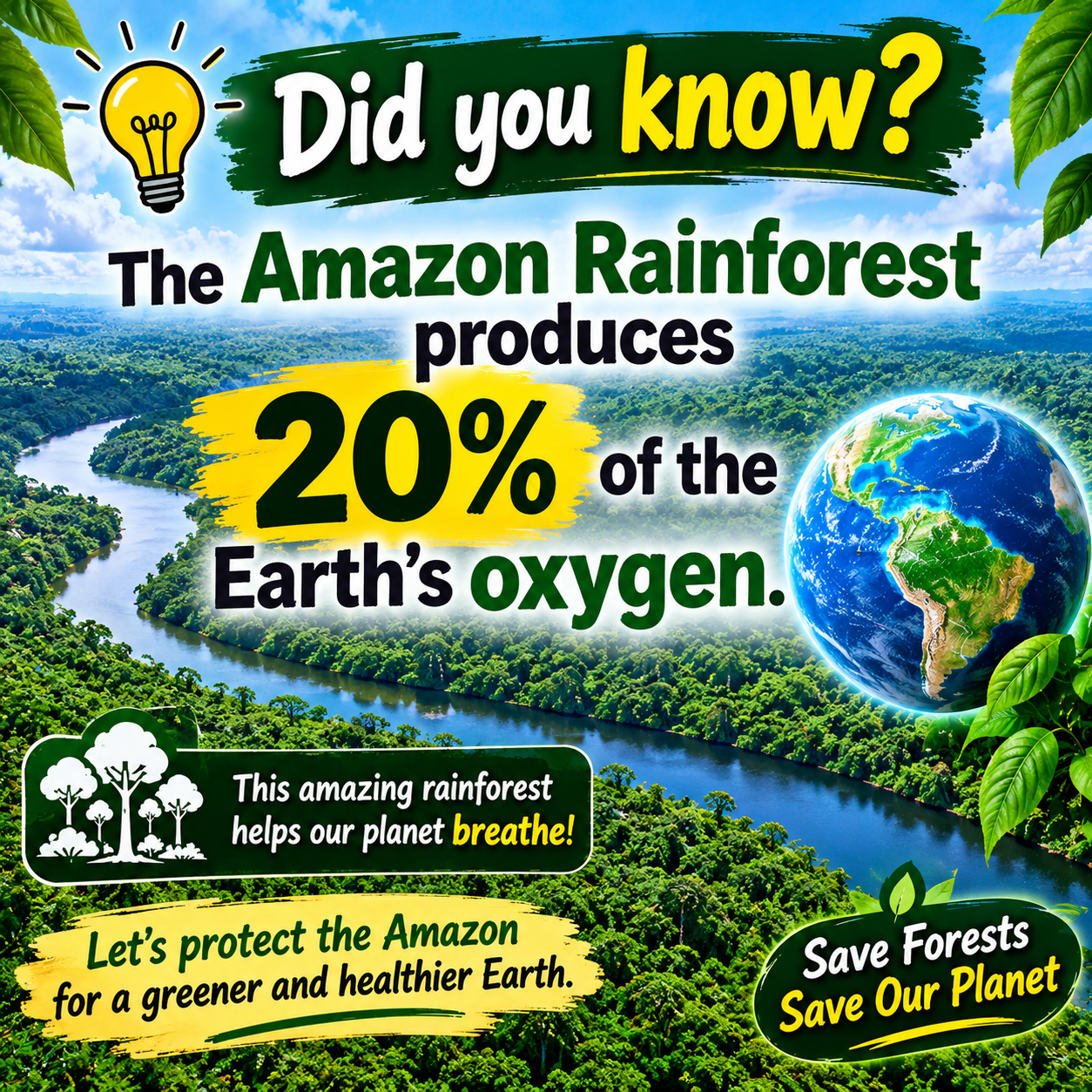
    Image ChatGPT Topic: **"Did You Know? The Amazon Rainforest Produces 20% of the Earth's Oxygen"**

    In this task, I used **ChatGPT** to create an educational social media post featuring an interesting fact about the **Amazon Rainforest**. I generated an image and shared the post on **Facebook, YouTube, LinkedIn, Instagram, and TikTok**.

    The post highlights the importance of the Amazon Rainforest, which is home to countless plants and animals and plays a major role in maintaining Earth's biodiversity and climate.

    I also learned that the popular claim that the Amazon produces 20% of the world's oxygen is misleading. Although the rainforest produces oxygen through photosynthesis, much of it is used again by organisms and decomposition. Its greatest importance is its rich biodiversity, carbon storage, and influence on the water cycle.

    Creating this post helped me improve my **creativity, environmental awareness, research, and digital content creation skills**. It also reminded me that protecting forests is essential for a healthier planet and a better future.

    Overall, this was an educational and enjoyable activity. It encouraged me to learn more about rainforests, protect nature, and share useful environmental information with others.

    \#AmazonRainforest #SaveTheAmazon #Environment #Biodiversity #Nature #Climate #Education #Learning #ChatGPT #DigitalSkills #StudentLearning #RSIF8
    **RSIF8** Roll no: 86 Image ChatGPT no: 16 Image ChatGPT Topic: **"Did You Know? The Amazon Rainforest Produces 20% of the Earth's Oxygen"** 🌳🌍💚 In this task, I used **ChatGPT** to create an educational social media post featuring an interesting fact about the **Amazon Rainforest**. I generated an image and shared the post on **Facebook, YouTube, LinkedIn, Instagram, and TikTok**. 📱🎨✨ The post highlights the importance of the Amazon Rainforest, which is home to countless plants and animals and plays a major role in maintaining Earth's biodiversity and climate. 🌿🐒🦜 I also learned that the popular claim that the Amazon produces 20% of the world's oxygen is misleading. Although the rainforest produces oxygen through photosynthesis, much of it is used again by organisms and decomposition. Its greatest importance is its rich biodiversity, carbon storage, and influence on the water cycle. 💧🌱 Creating this post helped me improve my **creativity, environmental awareness, research, and digital content creation skills**. It also reminded me that protecting forests is essential for a healthier planet and a better future. 🌎💚 Overall, this was an educational and enjoyable activity. It encouraged me to learn more about rainforests, protect nature, and share useful environmental information with others. 🌟✨ \#AmazonRainforest #SaveTheAmazon #Environment #Biodiversity #Nature #Climate #Education #Learning #ChatGPT #DigitalSkills #StudentLearning #RSIF8 🌳🌍💚
    0 Σχόλια 0 Μοιράστηκε 442 Views
  • #RSFI8
    Roll No: 64
    Class: Foundation Level
    Muhammad ibrahim Acctounting wala
    TEDx Talk Review task topicDocumentary — "The Photosynthesis Factory: How Plants Make Food".
    Documentary Review – The Photosynthesis Factory: How Plants Make Food
    I watched the interesting documentary The Photosynthesis Factory: How Plants Make Food."*
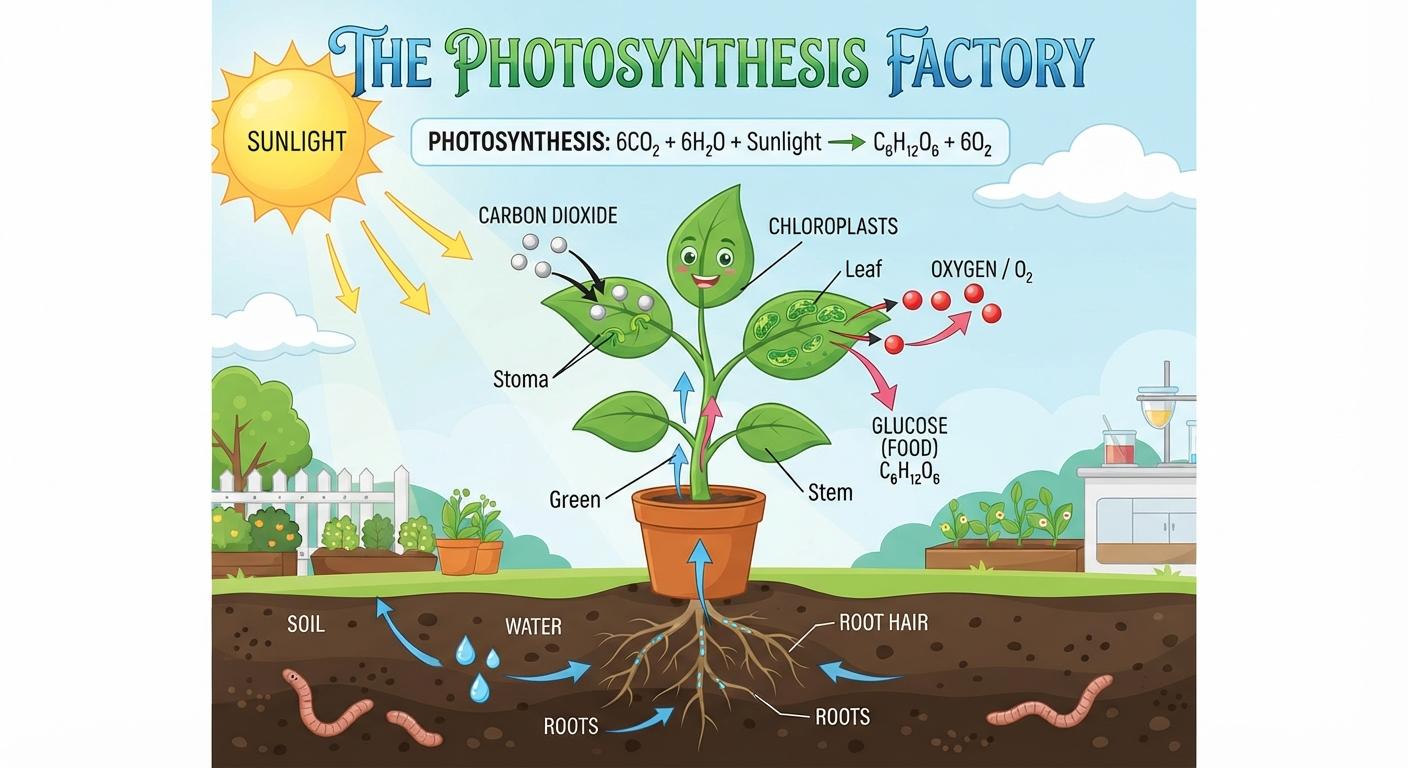
    This documentary explains how plants make their own food through a natural process called photosynthesis. Plants use sunlight, water, and carbon dioxide to produce glucose (food) and release oxygen into the air.

    I learned that leaves act like tiny food factories, and chlorophyll helps plants absorb sunlight. Photosynthesis is essential for life on Earth because it provides food and oxygen for living organisms.

    My Key Learnings:**
    Plants make their own food through photosynthesis.
    - Sunlight provides the energy needed for this process.
    Water and carbon dioxide are important ingredients.
    Chlorophyll helps absorb sunlight.
    - Photosynthesis supports life by producing oxygen.
    This documentary was a wonderful learning experience. It helped me understand how plants make food and why protecting nature is so important.
    #Photosynthesis #DocumentaryReview #PlantScience #ScienceLearning #Nature #Biology #Environment #GreenPlanet #LearningExperience #RSFI8 #MadeByMe
    #RSFI8 Roll No: 64📝 Class: Foundation Level Muhammad ibrahim Acctounting wala 🎤 TEDx Talk Review task topicDocumentary — "The Photosynthesis Factory: How Plants Make Food". Documentary Review – The Photosynthesis Factory: How Plants Make Food I watched the interesting documentary The Photosynthesis Factory: How Plants Make Food."* This documentary explains how plants make their own food through a natural process called photosynthesis. Plants use sunlight, water, and carbon dioxide to produce glucose (food) and release oxygen into the air. 🌞💧 I learned that leaves act like tiny food factories, and chlorophyll helps plants absorb sunlight. Photosynthesis is essential for life on Earth because it provides food and oxygen for living organisms. 🌍 My Key Learnings:** 🌱 Plants make their own food through photosynthesis. -☀️ Sunlight provides the energy needed for this process. 💧 Water and carbon dioxide are important ingredients. 🍃 Chlorophyll helps absorb sunlight. -🌎 Photosynthesis supports life by producing oxygen. This documentary was a wonderful learning experience. It helped me understand how plants make food and why protecting nature is so important. 💚 #Photosynthesis #DocumentaryReview #PlantScience #ScienceLearning #Nature #Biology #Environment #GreenPlanet #LearningExperience #RSFI8 #MadeByMe 🌿💻
    0 Σχόλια 0 Μοιράστηκε 461 Views 6
  • RSIF8
    ROLL NO 100
    SONG TASK NO 7
    SONG TOPIC **The Story of Elements: From Carbon to Gold**

    Discover the fascinating journey of chemical elements, from Carbon to Gold! Every element has a unique story and plays an important role in our world. From the atoms that make up life to the precious metals that shine, chemistry is full of amazing discoveries.

    Let's explore the wonders of science through music and learn how elements shape our universe!

    **#StoryOfElements #CarbonToGold #Chemistry #PeriodicTable #ScienceAndMusic #ChemicalElements #ScienceLearning #DiscoverScience #Atoms #Gold #Education #LearnWithFun**

    Add a stronger call to actionMake the caption more engaging
    RSIF8 ROLL NO 100 SONG TASK NO 7 SONG TOPIC 🎵🧪 **The Story of Elements: From Carbon to Gold** ⚛️✨ Discover the fascinating journey of chemical elements, from Carbon to Gold! 🌍🔬 Every element has a unique story and plays an important role in our world. From the atoms that make up life to the precious metals that shine, chemistry is full of amazing discoveries. 🎶 Let's explore the wonders of science through music and learn how elements shape our universe! 🚀🌟 **#StoryOfElements #CarbonToGold #Chemistry #PeriodicTable #ScienceAndMusic #ChemicalElements #ScienceLearning #DiscoverScience #Atoms #Gold #Education #LearnWithFun** 🎼🧬🔬 Add a stronger call to actionMake the caption more engaging
    0 Σχόλια 0 Μοιράστηκε 530 Views 5
  • RSIF8
    ROLL NO 77
    STORY POST NO 44
    STORY POST TOPIC The Photosynthesis Factory: How Plants Make Food".


    The Photosynthesis Factory: How Plants Make Food

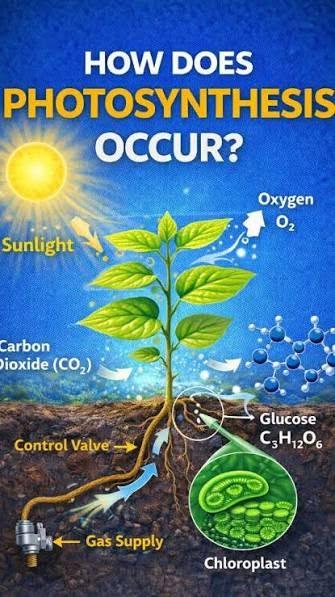
    Discover the amazing process of photosynthesis! Plants are nature’s little food factories. They use sunlight , water , and carbon dioxide to make their own food and release oxygen into the air. 🫧

    Photosynthesis helps plants grow, keeps our environment healthy, and provides the oxygen we need to breathe.

    Let's explore the science behind how plants turn sunlight into life!

    \#Photosynthesis #PlantScience #ScienceLearning #HowPlantsGrow #Nature #Biology #EducationalContent #ScienceFacts #GreenPlanet #AIlearninghub #LearnExploreCreate
    RSIF8 ROLL NO 77 STORY POST NO 44 STORY POST TOPIC The Photosynthesis Factory: How Plants Make Food". 🌿 The Photosynthesis Factory: How Plants Make Food ☀️🌱 Discover the amazing process of photosynthesis! 🌿 Plants are nature’s little food factories. They use sunlight ☀️, water 💧, and carbon dioxide 🌬️ to make their own food and release oxygen into the air. 🫧 Photosynthesis helps plants grow, keeps our environment healthy, and provides the oxygen we need to breathe. 🌍💚 Let's explore the science behind how plants turn sunlight into life! 🌱✨ \#Photosynthesis #PlantScience #ScienceLearning #HowPlantsGrow #Nature #Biology #EducationalContent #ScienceFacts #GreenPlanet #AIlearninghub #LearnExploreCreate 🌿📚
    0 Σχόλια 0 Μοιράστηκε 699 Views
  • RSIF8
    Roll no.49
    Documentary no.08
    Documentary Topic:The Photosynthesis Factory – How Plants Make Food

    Discover the amazing natural process through which plants prepare their own food! In this educational documentary, I explore photosynthesis, the process that allows green plants to use sunlight, water, and carbon dioxide to produce glucose and release oxygen.

    From the role of chlorophyll and chloroplasts to the importance of roots, leaves, and tiny openings called stomata, this documentary explains how every part of a plant contributes to this incredible process.

    Photosynthesis is essential for life on Earth because it provides oxygen, supports food chains, and helps maintain the balance of our environment.

    The key message: Every green leaf is a tiny food factory, turning sunlight into the energy that supports life on our planet!

    #Photosynthesis #PlantScience #HowPlantsMakeFood #Biology #Nature #ScienceDocumentary #Chlorophyll #EnvironmentalAwareness #ClassFoundation #RSf8
    RSIF8 Roll no.49 Documentary no.08 Documentary Topic:The Photosynthesis Factory – How Plants Make Food Discover the amazing natural process through which plants prepare their own food! 🌱 In this educational documentary, I explore photosynthesis, the process that allows green plants to use sunlight, water, and carbon dioxide to produce glucose and release oxygen. From the role of chlorophyll and chloroplasts to the importance of roots, leaves, and tiny openings called stomata, this documentary explains how every part of a plant contributes to this incredible process. 🔬🍃 Photosynthesis is essential for life on Earth because it provides oxygen, supports food chains, and helps maintain the balance of our environment. 🌍💚 💡 The key message: Every green leaf is a tiny food factory, turning sunlight into the energy that supports life on our planet! #Photosynthesis #PlantScience #HowPlantsMakeFood #Biology #Nature #ScienceDocumentary #Chlorophyll #EnvironmentalAwareness #ClassFoundation #RSf8
    0 Σχόλια 0 Μοιράστηκε 930 Views 3
  • #rsisb
    Roll no.231
    story post no.98
    FOundation Level
    ### The Photosynthesis Factory: How Plants Make Food
    Imagine every green plant has a tiny **food factory** inside its leaves! This amazing process is called **photosynthesis**. Plants use **sunlight, water, and carbon dioxide** to produce glucose, a type of sugar that provides stored chemical energy for growth and survival.
    genui{"learning_viz":{"type_id":"PHOTOSYNTHESIS","initial_values":{"lightIntensity":"high","carbonDioxide":"medium","water":"medium"}}}
    The process mainly takes place in structures called **chloroplasts**, which contain the green pigment **chlorophyll**. Chlorophyll absorbs light energy from the Sun.
    Plants take in **carbon dioxide** from the air through tiny openings in their leaves called **stomata**, while their roots absorb **water** from the soil. These ingredients are used to make glucose, and **oxygen is released** into the atmosphere.
    Photosynthesis is essential for life because plants provide food and release much of the oxygen that living organisms depend on.
    #Photosynthesis #PlantScience #Biology #Chlorophyll #Plants #Science #Nature #Learning #Education #PhotosynthesisFactory
    Asma Shaheen EducationWali
    Saima Empowerment Wali
    Irum Asim Leadershipwali
    #rsisb Roll no.231 story post no.98 FOundation Level ### 🌱☀️ The Photosynthesis Factory: How Plants Make Food Imagine every green plant has a tiny **food factory** inside its leaves! 🏭🌿 This amazing process is called **photosynthesis**. Plants use **sunlight, water, and carbon dioxide** to produce glucose, a type of sugar that provides stored chemical energy for growth and survival. ☀️💧🌬️ genui{"learning_viz":{"type_id":"PHOTOSYNTHESIS","initial_values":{"lightIntensity":"high","carbonDioxide":"medium","water":"medium"}}} The process mainly takes place in structures called **chloroplasts**, which contain the green pigment **chlorophyll**. Chlorophyll absorbs light energy from the Sun. 🌞🍃 Plants take in **carbon dioxide** from the air through tiny openings in their leaves called **stomata**, while their roots absorb **water** from the soil. These ingredients are used to make glucose, and **oxygen is released** into the atmosphere. 🌍💚 Photosynthesis is essential for life because plants provide food and release much of the oxygen that living organisms depend on. 🌱🫁✨ #Photosynthesis #PlantScience #Biology #Chlorophyll #Plants #Science #Nature #Learning #Education #PhotosynthesisFactory 🌿🔬☀️ Asma Shaheen EducationWali Saima Empowerment Wali Irum Asim Leadershipwali
    0 Σχόλια 0 Μοιράστηκε 549 Views
  • **Roll No: 2**
    **Batch: 14**
    **Book: ACCL**
    **Task No: 160**

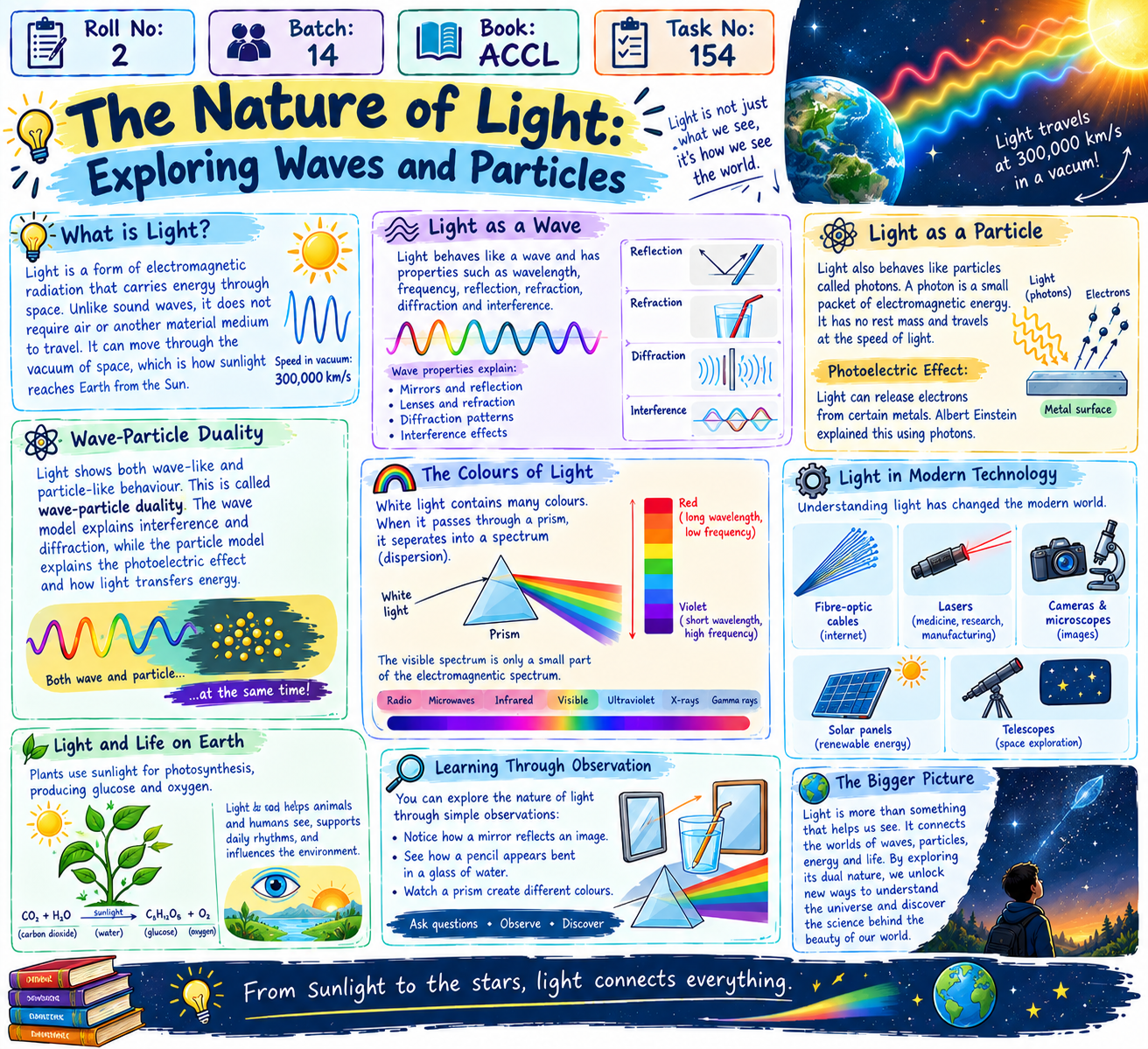
    # The Nature of Light: Exploring Waves and Particles

    Have you ever wondered how we see the colorful world around us? From the bright sunshine in the morning to the glowing stars at night, light plays an essential role in our lives. It allows us to see objects, helps plants grow, and makes many modern technologies possible. But what exactly is light? Is it a wave, a particle, or something even more fascinating?

    **Light is a form of electromagnetic radiation that carries energy through space.** Unlike sound waves, light does not require air or another material medium to travel. It can move through the vacuum of space, which is how sunlight reaches Earth from the Sun. In a vacuum, light travels at approximately 300,000 kilometres per second, making it one of the fastest phenomena in nature.

    ## Light as a Wave

    For many years, scientists studied light and discovered that it behaves like a wave. Light waves have properties such as wavelength, frequency, reflection, refraction, diffraction, and interference. These properties help explain many everyday optical phenomena.

    **Reflection** occurs when light bounces off a surface. A mirror is a familiar example because it reflects light and allows us to see our image. **Refraction** happens when light changes direction as it passes from one transparent material into another, such as from air into water. This is why a straw placed in a glass of water may appear bent.

    Light can also spread out through a process called diffraction and produce patterns through interference. These wave properties provide important evidence of the wave nature of light. Scientists use them to understand lenses, microscopes, telescopes, and many other optical instruments.

    ## Light as a Particle

    Light also behaves in ways that can be explained by particles called **photons**. A photon is a small packet, or quantum, of electromagnetic energy. Photons have no rest mass and travel at the speed of light in a vacuum.

    One important discovery was the photoelectric effect. Scientists observed that when light of a suitable frequency shines on certain metals, it can cause electrons to be released. Albert Einstein explained this phenomenon by showing that light transfers energy in individual packets called photons. This discovery helped establish the foundation of quantum physics.

    The particle model explains how light interacts with matter in processes such as the photoelectric effect and the absorption and emission of energy by atoms.

    ## Wave-Particle Duality

    One of the most fascinating discoveries in physics is that light shows both wave-like and particle-like behaviour. This idea is known as **wave-particle duality**.

    Light does not behave like an ordinary water wave or a tiny solid ball. Instead, its behaviour depends on the type of experiment and how it interacts with matter. The wave description helps explain interference and diffraction, while the photon description explains how light transfers energy in individual amounts.

    This discovery changed the way scientists understand the universe and became an important part of quantum mechanics.

    ## The Colours of Light

    White light may look simple, but it contains many different colours. When white light passes through a glass prism, it separates into a spectrum of colours: red, orange, yellow, green, blue, indigo, and violet. This process is called **dispersion**.

    Each colour has a different wavelength and frequency. Red light has a longer wavelength than violet light, while violet light has a higher frequency. The visible spectrum is only a small part of the electromagnetic spectrum, which also includes radio waves, microwaves, infrared radiation, ultraviolet radiation, X-rays, and gamma rays.

    ## Light in Modern Technology

    The study of light has transformed the modern world. Fibre-optic cables use light to transmit information over long distances, supporting internet communication and global connectivity. Lasers are used in medical equipment, scientific research, manufacturing, and barcode scanners.

    Cameras and microscopes use lenses to control light and produce images. Solar panels convert energy from sunlight into electrical energy, while telescopes help scientists observe distant stars and galaxies. These technologies demonstrate how understanding light can improve everyday life and expand human knowledge.

    ## Light and Life on Earth

    Light is essential for many living organisms. Green plants use sunlight during photosynthesis to produce glucose from water and carbon dioxide, releasing oxygen as a by-product. This process supports food chains and helps maintain the balance of gases in Earth's atmosphere.

    Light also helps animals and humans understand their surroundings through vision. Many organisms use natural light patterns to regulate daily activities, while sunlight influences environmental conditions and the rhythms of life.

    ## Learning Through Observation

    You can explore the nature of light through simple observations. Notice how a mirror reflects an image, how a pencil appears bent in a glass of water, or how sunlight passing through a prism produces different colours. These examples connect scientific ideas with experiences from everyday life.

    By asking questions, making observations, and studying experiments, we can understand how light behaves and why it is so important in science.

    **Light is more than something that helps us see; it is a fascinating phenomenon that connects the worlds of waves, particles, energy, and life. By exploring its dual nature, we unlock new ways to understand the universe and discover the science behind the beauty of our world. **

    \#NatureOfLight #WavesAndParticles #Physics #QuantumPhysics #ElectromagneticWaves #Science #ACCL #Batch14 #Task154
    **Roll No: 2** **Batch: 14** **Book: ACCL** **Task No: 160** # 🌈💡 The Nature of Light: Exploring Waves and Particles 🔬🌊 Have you ever wondered how we see the colorful world around us? 🌍 From the bright sunshine in the morning to the glowing stars at night, light plays an essential role in our lives. It allows us to see objects, helps plants grow, and makes many modern technologies possible. But what exactly is light? Is it a wave, a particle, or something even more fascinating? ✨ **Light is a form of electromagnetic radiation that carries energy through space.** Unlike sound waves, light does not require air or another material medium to travel. It can move through the vacuum of space, which is how sunlight reaches Earth from the Sun. In a vacuum, light travels at approximately 300,000 kilometres per second, making it one of the fastest phenomena in nature. ☀️🚀 ## 🌊 Light as a Wave For many years, scientists studied light and discovered that it behaves like a wave. Light waves have properties such as wavelength, frequency, reflection, refraction, diffraction, and interference. These properties help explain many everyday optical phenomena. 🌈 **Reflection** occurs when light bounces off a surface. A mirror is a familiar example because it reflects light and allows us to see our image. **Refraction** happens when light changes direction as it passes from one transparent material into another, such as from air into water. This is why a straw placed in a glass of water may appear bent. 🪞💧 Light can also spread out through a process called diffraction and produce patterns through interference. These wave properties provide important evidence of the wave nature of light. Scientists use them to understand lenses, microscopes, telescopes, and many other optical instruments. 🔭🔬 ## ⚛️ Light as a Particle Light also behaves in ways that can be explained by particles called **photons**. A photon is a small packet, or quantum, of electromagnetic energy. Photons have no rest mass and travel at the speed of light in a vacuum. ⚡ One important discovery was the photoelectric effect. Scientists observed that when light of a suitable frequency shines on certain metals, it can cause electrons to be released. Albert Einstein explained this phenomenon by showing that light transfers energy in individual packets called photons. This discovery helped establish the foundation of quantum physics. 🧪 The particle model explains how light interacts with matter in processes such as the photoelectric effect and the absorption and emission of energy by atoms. ## 🔬 Wave-Particle Duality One of the most fascinating discoveries in physics is that light shows both wave-like and particle-like behaviour. This idea is known as **wave-particle duality**. 🌌 Light does not behave like an ordinary water wave or a tiny solid ball. Instead, its behaviour depends on the type of experiment and how it interacts with matter. The wave description helps explain interference and diffraction, while the photon description explains how light transfers energy in individual amounts. This discovery changed the way scientists understand the universe and became an important part of quantum mechanics. ## 🌈 The Colours of Light White light may look simple, but it contains many different colours. When white light passes through a glass prism, it separates into a spectrum of colours: red, orange, yellow, green, blue, indigo, and violet. This process is called **dispersion**. 🌈 Each colour has a different wavelength and frequency. Red light has a longer wavelength than violet light, while violet light has a higher frequency. The visible spectrum is only a small part of the electromagnetic spectrum, which also includes radio waves, microwaves, infrared radiation, ultraviolet radiation, X-rays, and gamma rays. ## 📡 Light in Modern Technology The study of light has transformed the modern world. Fibre-optic cables use light to transmit information over long distances, supporting internet communication and global connectivity. 💻🌐 Lasers are used in medical equipment, scientific research, manufacturing, and barcode scanners. Cameras and microscopes use lenses to control light and produce images. Solar panels convert energy from sunlight into electrical energy, while telescopes help scientists observe distant stars and galaxies. These technologies demonstrate how understanding light can improve everyday life and expand human knowledge. 🔭🔋 ## 🌱 Light and Life on Earth Light is essential for many living organisms. Green plants use sunlight during photosynthesis to produce glucose from water and carbon dioxide, releasing oxygen as a by-product. This process supports food chains and helps maintain the balance of gases in Earth's atmosphere. 🌿☀️ Light also helps animals and humans understand their surroundings through vision. Many organisms use natural light patterns to regulate daily activities, while sunlight influences environmental conditions and the rhythms of life. ## 🧠 Learning Through Observation You can explore the nature of light through simple observations. Notice how a mirror reflects an image, how a pencil appears bent in a glass of water, or how sunlight passing through a prism produces different colours. These examples connect scientific ideas with experiences from everyday life. 🔍📚 By asking questions, making observations, and studying experiments, we can understand how light behaves and why it is so important in science. **Light is more than something that helps us see; it is a fascinating phenomenon that connects the worlds of waves, particles, energy, and life. By exploring its dual nature, we unlock new ways to understand the universe and discover the science behind the beauty of our world. 🌈💡🌍** \#NatureOfLight #WavesAndParticles #Physics #QuantumPhysics #ElectromagneticWaves #Science #ACCL #Batch14 #Task154 🌈🔬✨

    0 Σχόλια 0 Μοιράστηκε 2065 Views
  • RSIF8
    ROLL NO:92
    SHORT DOCUMENTARY NO:8
    TOPIC:**Documentary — The Photosynthesis Factory: How Plants Make Food **

    Discover the amazing process of photosynthesis and learn how plants make their own food using sunlight, water, and carbon dioxide. This documentary explores the important role of leaves and chlorophyll in helping plants grow and produce oxygen. It also explains why photosynthesis is essential for humans, animals, and life on Earth.

    **Learn how nature's green factories keep our planet alive!**

    #Photosynthesis #PlantScience #ScienceDocumentary #Nature #Biology #GreenPlanet #ScienceLearning #EducationalVideo #ExploreScience
    RSIF8 ROLL NO:92 SHORT DOCUMENTARY NO:8 TOPIC:**Documentary — The Photosynthesis Factory: How Plants Make Food 🌿🌞** Discover the amazing process of photosynthesis and learn how plants make their own food using sunlight, water, and carbon dioxide. 🌱 This documentary explores the important role of leaves and chlorophyll in helping plants grow and produce oxygen. It also explains why photosynthesis is essential for humans, animals, and life on Earth. ✨ **Learn how nature's green factories keep our planet alive!** #Photosynthesis #PlantScience #ScienceDocumentary #Nature #Biology #GreenPlanet #ScienceLearning #EducationalVideo #ExploreScience
    0 Σχόλια 0 Μοιράστηκε 661 Views 4
  • **Taking Care of the Environment | An Inspiring Live Discussion with Maya**

    Protecting our planet starts with small actions, but together, those actions can create a big difference!

    I had a wonderful and informative conversation with Maya about **“Taking Care of the Environment”**, where we discussed the importance of environmental protection, the challenges our planet faces, and the responsibilities we all share in creating a cleaner, greener, and healthier future.

    During this discussion, we explored important environmental issues such as climate change, global warming, air and water pollution, plastic waste, deforestation, and the protection of wildlife. We also talked about how these challenges affect our daily lives, our communities, and future generations.

    **Some important topics we discussed:**

    **Plant More Trees:** Trees help absorb carbon dioxide, support biodiversity, and provide habitats for wildlife.

    **Reduce Plastic Waste:** Reducing single-use plastics, reusing everyday items, and recycling properly can help keep our environment clean.

    **Save Water:** Every drop matters! Using water responsibly helps protect this essential natural resource.

    **Use Clean Energy:** Renewable energy sources, including solar and wind power, can help reduce dependence on fossil fuels.

    **Fight Climate Change:** Individual choices, community projects, responsible businesses, and effective government policies all have a role to play.

    **Protect Wildlife:** Preserving forests, rivers, oceans, and natural habitats is essential for maintaining biodiversity.

    **Educate the Next Generation:** Environmental awareness among students and young people can inspire lasting positive change.

    One of the most important lessons from this conversation is that **we do not inherit the Earth only for ourselves; we also have a responsibility to protect it for future generations.**

    We do not need to wait for someone else to take the first step. We can start by keeping our surroundings clean, avoiding unnecessary waste, saving electricity, conserving water, and encouraging others to adopt environmentally responsible habits. Small actions, repeated by millions of people, can contribute to meaningful change.

    Thank you, Maya, for being part of this meaningful and educational discussion. I am grateful for the opportunity to exchange ideas, learn more about environmental responsibility, and encourage others to think about the future of our planet.

    **Now I want to hear from you!**

    What is one thing you do to protect the environment?
    How can we reduce plastic pollution in our communities?
    What should young people do to create a greener future?

    Share your thoughts in the comments, spread awareness, and inspire others to take action!

    **Let's work together for a cleaner environment, a healthier planet, and a brighter future. Our planet needs our care, our commitment, and our action!**

    #TakingCareOfTheEnvironment #EnvironmentalProtection #SaveOurPlanet #ClimateChange #GlobalWarming #GoGreen #Sustainability #ReduceReuseRecycle #PlasticPollution #PlantMoreTrees #SaveWater #RenewableEnergy #ProtectWildlife #EnvironmentalAwareness #GreenFuture #ClimateAction #YouthForChange #SocialMediaLive #LiveDiscussion #KnowledgeSharing #Maya #TogetherForThePlanet
    🌍🌱 **Taking Care of the Environment | An Inspiring Live Discussion with Maya** 💚🎙️ Protecting our planet starts with small actions, but together, those actions can create a big difference! 🌎✨ I had a wonderful and informative conversation with Maya about **“Taking Care of the Environment”**, where we discussed the importance of environmental protection, the challenges our planet faces, and the responsibilities we all share in creating a cleaner, greener, and healthier future. 🌳💚 During this discussion, we explored important environmental issues such as climate change, global warming, air and water pollution, plastic waste, deforestation, and the protection of wildlife. We also talked about how these challenges affect our daily lives, our communities, and future generations. 🌡️♻️🐾 💡 **Some important topics we discussed:** 🌳 **Plant More Trees:** Trees help absorb carbon dioxide, support biodiversity, and provide habitats for wildlife. ♻️ **Reduce Plastic Waste:** Reducing single-use plastics, reusing everyday items, and recycling properly can help keep our environment clean. 💧 **Save Water:** Every drop matters! Using water responsibly helps protect this essential natural resource. ☀️ **Use Clean Energy:** Renewable energy sources, including solar and wind power, can help reduce dependence on fossil fuels. 🌍 **Fight Climate Change:** Individual choices, community projects, responsible businesses, and effective government policies all have a role to play. 🐾 **Protect Wildlife:** Preserving forests, rivers, oceans, and natural habitats is essential for maintaining biodiversity. 🎓 **Educate the Next Generation:** Environmental awareness among students and young people can inspire lasting positive change. One of the most important lessons from this conversation is that **we do not inherit the Earth only for ourselves; we also have a responsibility to protect it for future generations.** 🌿💚 We do not need to wait for someone else to take the first step. We can start by keeping our surroundings clean, avoiding unnecessary waste, saving electricity, conserving water, and encouraging others to adopt environmentally responsible habits. Small actions, repeated by millions of people, can contribute to meaningful change. 🌱🤝 🙏 Thank you, Maya, for being part of this meaningful and educational discussion. I am grateful for the opportunity to exchange ideas, learn more about environmental responsibility, and encourage others to think about the future of our planet. 💬 **Now I want to hear from you!** 🌳 What is one thing you do to protect the environment? ♻️ How can we reduce plastic pollution in our communities? 🌍 What should young people do to create a greener future? Share your thoughts in the comments, spread awareness, and inspire others to take action! 💚✨ **Let's work together for a cleaner environment, a healthier planet, and a brighter future. Our planet needs our care, our commitment, and our action!** 🌎🌱💚 #TakingCareOfTheEnvironment #EnvironmentalProtection #SaveOurPlanet #ClimateChange #GlobalWarming #GoGreen #Sustainability #ReduceReuseRecycle #PlasticPollution #PlantMoreTrees #SaveWater #RenewableEnergy #ProtectWildlife #EnvironmentalAwareness #GreenFuture #ClimateAction #YouthForChange #SocialMediaLive #LiveDiscussion #KnowledgeSharing #Maya #TogetherForThePlanet 🌍🌳♻️💚✨
    0 Σχόλια 0 Μοιράστηκε 4039 Views 5
  • accl book
    rehan school urdu bazar campus
    roll no 16
    foundation leval
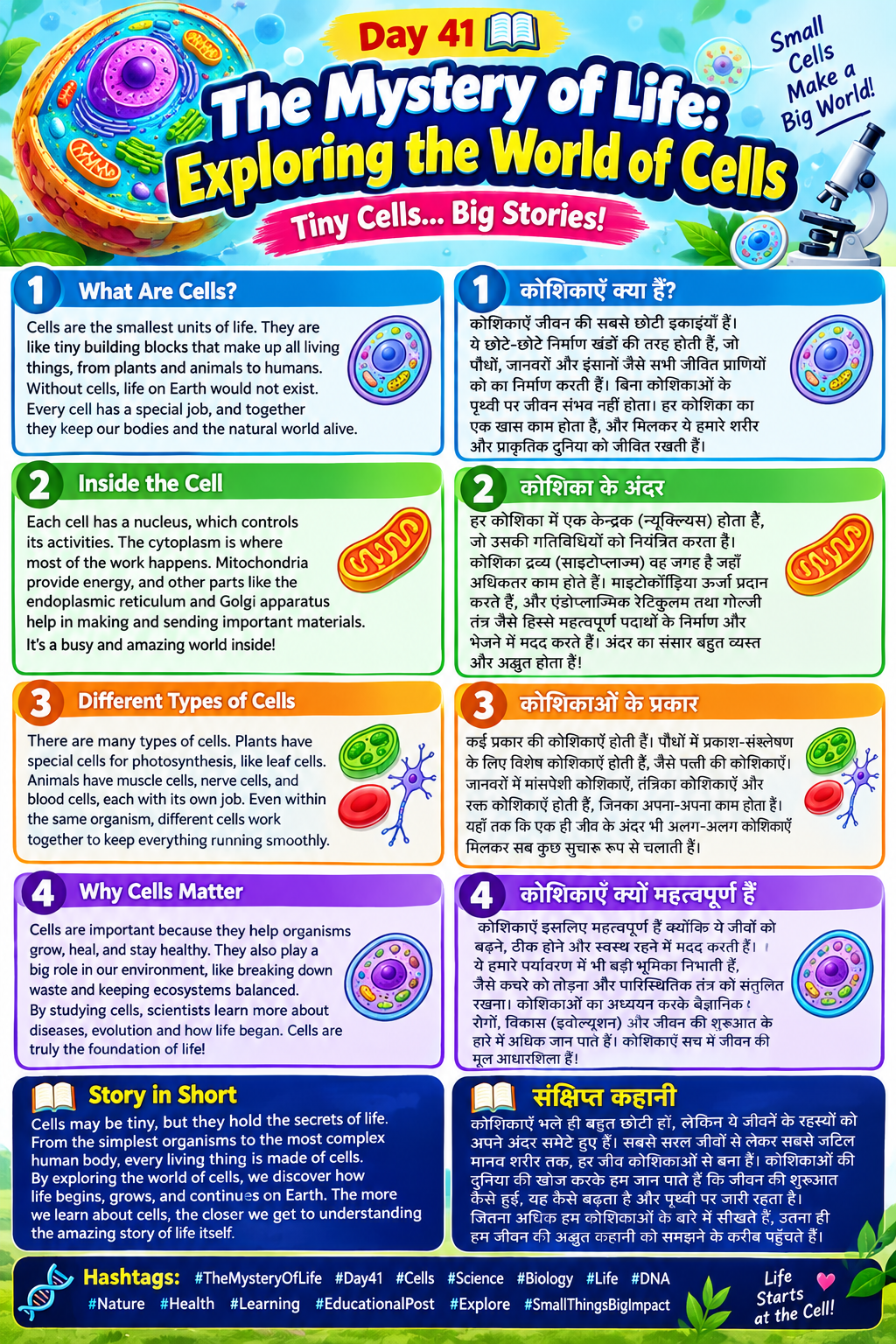
    Day 41
    Day 41: The Mystery of Life — Exploring the World of Cells
    English Story — Paragraph 1
    Cells are the tiny building blocks of life. Every living thing on Earth, including humans, animals, and plants, is made of cells. Although cells are extremely small and cannot usually be seen without a microscope, they perform amazing jobs every day. Our bodies contain billions and billions of cells that help us breathe, grow, move, digest food, and stay healthy. Each cell has its own special role, just like every worker in a big team. Some cells carry oxygen through our blood, while others help our bodies fight germs and repair damaged tissues. Without cells, life as we know it would not exist. These tiny structures are the foundation of all living things, and they hold many fascinating secrets about the natural world.
    English Story — Paragraph 2
    Inside every cell, there is a wonderful world of different parts working together. The nucleus acts like a control center, while the cytoplasm provides a place for many important activities to happen. The cell membrane protects the cell and controls what enters and leaves it. In plant cells, chloroplasts help plants make their own food using sunlight, water, and carbon dioxide. Mitochondria release energy that cells need to perform their functions. Scientists study cells with powerful microscopes to understand how living things grow, develop, and survive. By exploring the mystery of cells, we learn more about our bodies, diseases, nature, and the history of life. Even though cells are tiny, their importance is enormous. The more we discover about cells, the more we understand the amazing mystery of life!

    اردو کہانی — پیراگراف 1
    خلیے زندگی کی بنیادی اور انتہائی چھوٹی اکائیاں ہیں۔ زمین پر موجود تمام جاندار، جن میں انسان، جانور اور پودے شامل ہیں، خلیوں سے مل کر بنے ہیں۔ اگرچہ خلیے اتنے چھوٹے ہوتے ہیں کہ انہیں عام طور پر خوردبین کے بغیر دیکھنا ممکن نہیں ہوتا، لیکن یہ ہر روز حیرت انگیز کام انجام دیتے ہیں۔ ہمارے جسم میں اربوں خلیے موجود ہیں جو ہمیں سانس لینے، بڑھنے، حرکت کرنے، خوراک ہضم کرنے اور صحت مند رہنے میں مدد دیتے ہیں۔ ہر خلیے کا اپنا ایک خاص کام ہوتا ہے، بالکل اسی طرح جیسے کسی بڑی ٹیم میں ہر فرد کی الگ ذمہ داری ہوتی ہے۔ کچھ خلیے خون کے ذریعے آکسیجن پہنچاتے ہیں، جبکہ دوسرے جراثیم سے لڑنے اور جسم کے خراب حصوں کی مرمت کرنے میں مدد دیتے ہیں۔ اگر خلیے نہ ہوتے تو زندگی کا وجود ممکن نہ ہوتا۔ یہی ننھے خلیے تمام جانداروں کی بنیاد ہیں اور قدرتی دنیا کے بہت سے حیرت انگیز راز اپنے اندر رکھتے ہیں۔
    اردو کہانی — پیراگراف 2
    ہر خلیے کے اندر مختلف حصوں کی ایک حیرت انگیز دنیا موجود ہوتی ہے، جہاں ہر حصہ مل کر کام کرتا ہے۔ خلیے کا مرکز، جسے نیوکلیئس کہتے ہیں، ایک کنٹرول سینٹر کی طرح کام کرتا ہے۔ سائٹوپلازم خلیے کے اندر موجود وہ مادہ ہے جہاں بہت سی اہم سرگرمیاں انجام پاتی ہیں۔ خلیے کی جھلی اس کی حفاظت کرتی ہے اور یہ کنٹرول کرتی ہے کہ کون سے مادے اندر داخل ہوں اور کون سے باہر نکلیں۔ پودوں کے خلیوں میں کلوروپلاسٹ سورج کی روشنی، پانی اور کاربن ڈائی آکسائیڈ کی مدد سے خوراک بنانے میں مدد دیتے ہیں۔ مائٹوکونڈریا خلیے کو کام کرنے کے لیے توانائی فراہم کرتے ہیں۔ سائنس دان خوردبین کے ذریعے خلیوں کا مطالعہ کرتے ہیں تاکہ یہ سمجھ سکیں کہ جاندار کس طرح بڑھتے، ترقی کرتے اور زندہ رہتے ہیں۔ خلیوں کی دنیا کو جاننے سے ہمیں انسانی جسم، بیماریوں اور قدرت کے بارے میں بہت کچھ سیکھنے کو ملتا ہے۔ خلیے بظاہر بہت چھوٹے ہیں، لیکن زندگی میں ان کی اہمیت بے حد بڑی ہے!

    Hashtags
    #TheMysteryOfLife #Day41 #Cells #CellBiology #Science #Biology #HumanBody #MicroscopicWorld #LifeScience #Education #Learning #علم #خلیے #سائنس #حیاتیات #زندگی_کے_راز
    accl book rehan school urdu bazar campus roll no 16 foundation leval Day 41 📖 Day 41: The Mystery of Life — Exploring the World of Cells 🌍 English Story — Paragraph 1 Cells are the tiny building blocks of life. Every living thing on Earth, including humans, animals, and plants, is made of cells. Although cells are extremely small and cannot usually be seen without a microscope, they perform amazing jobs every day. Our bodies contain billions and billions of cells that help us breathe, grow, move, digest food, and stay healthy. Each cell has its own special role, just like every worker in a big team. Some cells carry oxygen through our blood, while others help our bodies fight germs and repair damaged tissues. Without cells, life as we know it would not exist. These tiny structures are the foundation of all living things, and they hold many fascinating secrets about the natural world. 🔬 English Story — Paragraph 2 Inside every cell, there is a wonderful world of different parts working together. The nucleus acts like a control center, while the cytoplasm provides a place for many important activities to happen. The cell membrane protects the cell and controls what enters and leaves it. In plant cells, chloroplasts help plants make their own food using sunlight, water, and carbon dioxide. Mitochondria release energy that cells need to perform their functions. Scientists study cells with powerful microscopes to understand how living things grow, develop, and survive. By exploring the mystery of cells, we learn more about our bodies, diseases, nature, and the history of life. Even though cells are tiny, their importance is enormous. The more we discover about cells, the more we understand the amazing mystery of life! 🌸 اردو کہانی — پیراگراف 1 خلیے زندگی کی بنیادی اور انتہائی چھوٹی اکائیاں ہیں۔ زمین پر موجود تمام جاندار، جن میں انسان، جانور اور پودے شامل ہیں، خلیوں سے مل کر بنے ہیں۔ اگرچہ خلیے اتنے چھوٹے ہوتے ہیں کہ انہیں عام طور پر خوردبین کے بغیر دیکھنا ممکن نہیں ہوتا، لیکن یہ ہر روز حیرت انگیز کام انجام دیتے ہیں۔ ہمارے جسم میں اربوں خلیے موجود ہیں جو ہمیں سانس لینے، بڑھنے، حرکت کرنے، خوراک ہضم کرنے اور صحت مند رہنے میں مدد دیتے ہیں۔ ہر خلیے کا اپنا ایک خاص کام ہوتا ہے، بالکل اسی طرح جیسے کسی بڑی ٹیم میں ہر فرد کی الگ ذمہ داری ہوتی ہے۔ کچھ خلیے خون کے ذریعے آکسیجن پہنچاتے ہیں، جبکہ دوسرے جراثیم سے لڑنے اور جسم کے خراب حصوں کی مرمت کرنے میں مدد دیتے ہیں۔ اگر خلیے نہ ہوتے تو زندگی کا وجود ممکن نہ ہوتا۔ یہی ننھے خلیے تمام جانداروں کی بنیاد ہیں اور قدرتی دنیا کے بہت سے حیرت انگیز راز اپنے اندر رکھتے ہیں۔ 🧬 اردو کہانی — پیراگراف 2 ہر خلیے کے اندر مختلف حصوں کی ایک حیرت انگیز دنیا موجود ہوتی ہے، جہاں ہر حصہ مل کر کام کرتا ہے۔ خلیے کا مرکز، جسے نیوکلیئس کہتے ہیں، ایک کنٹرول سینٹر کی طرح کام کرتا ہے۔ سائٹوپلازم خلیے کے اندر موجود وہ مادہ ہے جہاں بہت سی اہم سرگرمیاں انجام پاتی ہیں۔ خلیے کی جھلی اس کی حفاظت کرتی ہے اور یہ کنٹرول کرتی ہے کہ کون سے مادے اندر داخل ہوں اور کون سے باہر نکلیں۔ پودوں کے خلیوں میں کلوروپلاسٹ سورج کی روشنی، پانی اور کاربن ڈائی آکسائیڈ کی مدد سے خوراک بنانے میں مدد دیتے ہیں۔ مائٹوکونڈریا خلیے کو کام کرنے کے لیے توانائی فراہم کرتے ہیں۔ سائنس دان خوردبین کے ذریعے خلیوں کا مطالعہ کرتے ہیں تاکہ یہ سمجھ سکیں کہ جاندار کس طرح بڑھتے، ترقی کرتے اور زندہ رہتے ہیں۔ خلیوں کی دنیا کو جاننے سے ہمیں انسانی جسم، بیماریوں اور قدرت کے بارے میں بہت کچھ سیکھنے کو ملتا ہے۔ خلیے بظاہر بہت چھوٹے ہیں، لیکن زندگی میں ان کی اہمیت بے حد بڑی ہے! 🏷️ Hashtags #TheMysteryOfLife #Day41 #Cells #CellBiology #Science #Biology #HumanBody #MicroscopicWorld #LifeScience #Education #Learning #علم #خلیے #سائنس #حیاتیات #زندگی_کے_راز
    0 Σχόλια 0 Μοιράστηκε 3194 Views
Αναζήτηση αποτελεσμάτων