• #rsisb
    Roll No.240
    Image With Chatgpt No.6
    Foundation Level

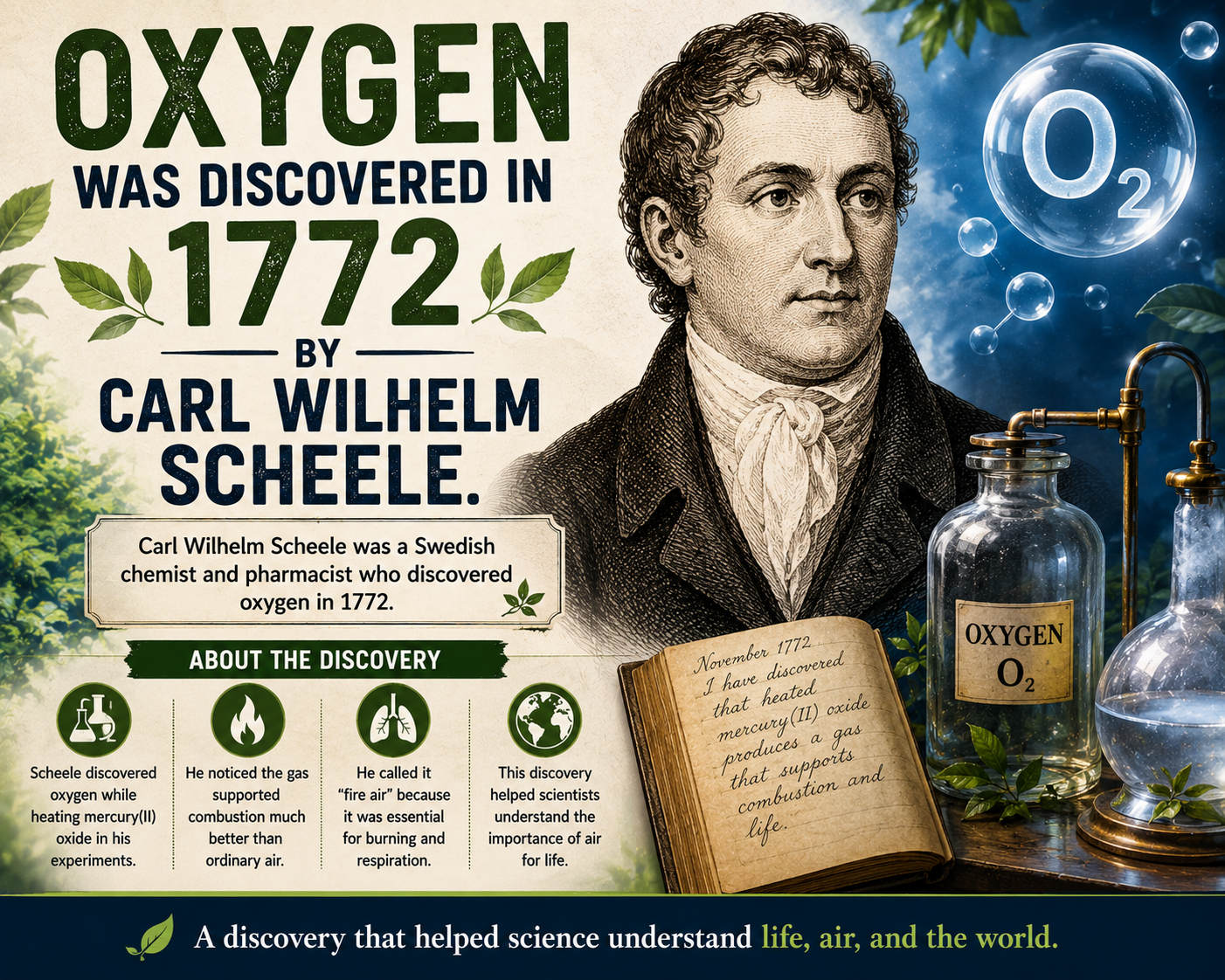
    Oxygen is one of the most important elements for life on Earth, but its discovery was the result of careful experiments, curiosity, and scientific investigation.

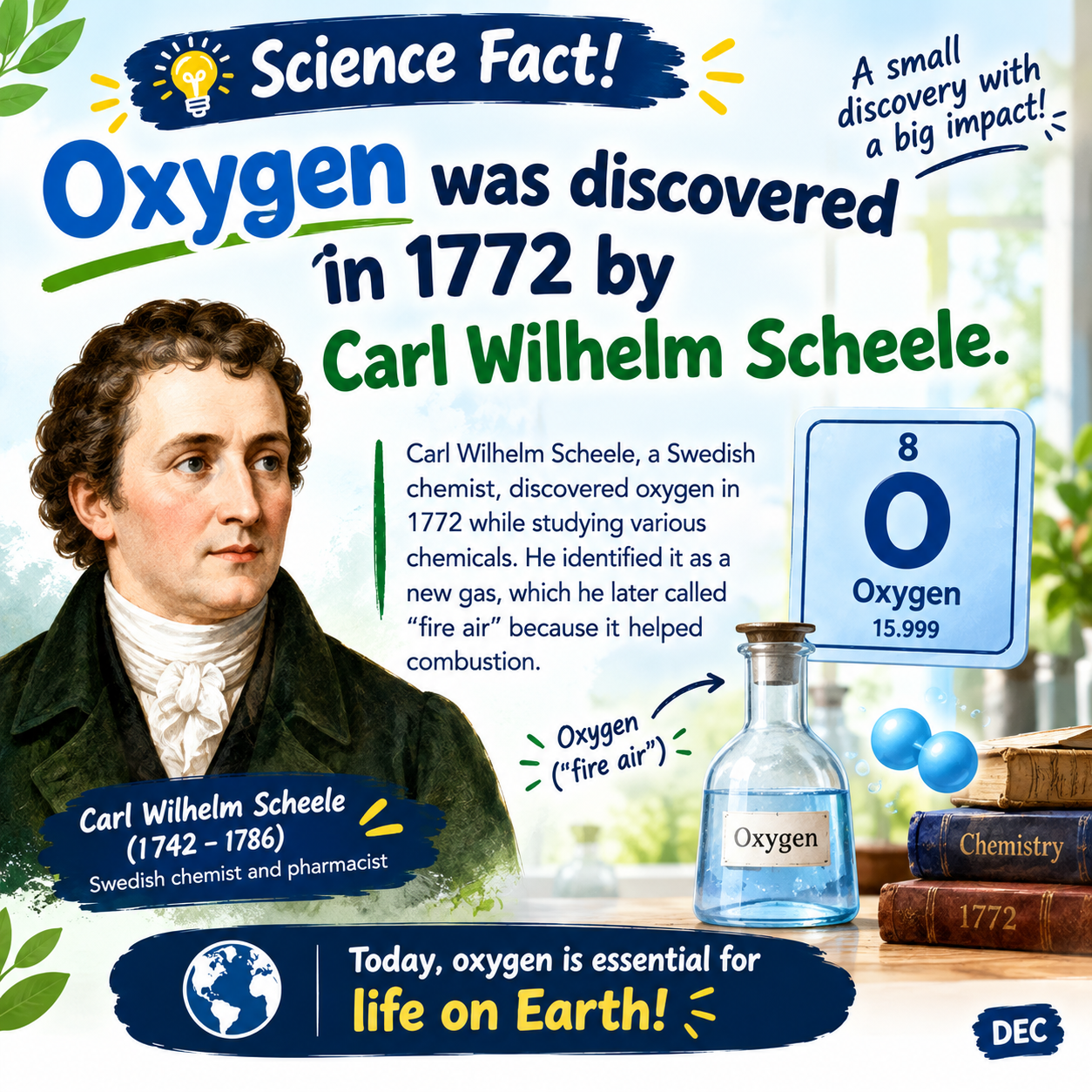
    In 1772, Swedish chemist and pharmacist Carl Wilhelm Scheele identified a gas that behaved differently from ordinary air. He found that this gas strongly supported combustion and played an important role in the processes we now understand as respiration and burning.

    Scheele referred to the gas as “fire air” because of its ability to support combustion. His experiments helped reveal that air was not simply one single substance, but a mixture containing different gases.

    The story of oxygen’s discovery is a fascinating example of how science develops through observation and experimentation. Scientists investigate materials, record their observations, test ideas, and gradually build a better understanding of the natural world.

    Although Scheele discovered oxygen independently, the recognition and naming of oxygen as an element also involved other scientists, including Joseph Priestley and Antoine Lavoisier. Their work helped establish oxygen’s role in combustion and contributed to the development of modern chemistry.

    Oxygen is represented by the chemical symbol O and has the atomic number 8. It is essential for aerobic respiration in humans and many other organisms. Without oxygen, most familiar forms of complex life could not survive.

    The discovery of oxygen changed the way scientists understood air, combustion, chemistry, and life. It became an important part of the scientific revolution in chemistry and helped researchers develop a much clearer understanding of chemical reactions.

    This story also reminds us that major scientific discoveries often happen through patience, careful observation, and a willingness to ask questions. Every experiment can reveal something new, and every discovery can open the door to further knowledge.

    From “fire air” to oxygen, the journey of discovery changed chemistry forever.

    Science teaches us that the world around us is full of mysteries waiting to be explored. Whether studying gases, atoms, cells, planets, or living organisms, curiosity is often the first step toward discovery.

    Question. Observe. Experiment. Discover. Learn.

    #Oxygen #DiscoveryOfOxygen #CarlWilhelmScheele #ScienceHistory #HistoryOfScience #Chemistry #ChemicalElements #OxygenDiscovery #1772 #ScientificDiscovery #ScienceEducation #ChemistryFacts #ScienceFacts #LearnScience #ScientificRevolution #Combustion #Air #Respiration #ChemistryHistory #STEM #Education #LearningJourney #ScienceExperiment #ScientificThinking #Research #Discovery #Knowledge #Innovation #Curiosity #ExploreScience #ScienceLovers #EducationalContent #Scientists #ChemicalScience #ModernChemistry #ScienceJourney #HistoryOfChemistry

    Rehan School Islamabad Campus
    Asma Shaheen EducationWali
    Irum Asim
    Saima Happinesswali

    #rsisb Roll No.240 Image With Chatgpt No.6 Foundation Level Oxygen is one of the most important elements for life on Earth, but its discovery was the result of careful experiments, curiosity, and scientific investigation. 🌱🫁🔥 In 1772, Swedish chemist and pharmacist Carl Wilhelm Scheele identified a gas that behaved differently from ordinary air. He found that this gas strongly supported combustion and played an important role in the processes we now understand as respiration and burning. 🔥🧪 Scheele referred to the gas as “fire air” because of its ability to support combustion. His experiments helped reveal that air was not simply one single substance, but a mixture containing different gases. 🌬️🔬 The story of oxygen’s discovery is a fascinating example of how science develops through observation and experimentation. Scientists investigate materials, record their observations, test ideas, and gradually build a better understanding of the natural world. 📚🔎💡 Although Scheele discovered oxygen independently, the recognition and naming of oxygen as an element also involved other scientists, including Joseph Priestley and Antoine Lavoisier. Their work helped establish oxygen’s role in combustion and contributed to the development of modern chemistry. ⚗️🧠🌍 Oxygen is represented by the chemical symbol O and has the atomic number 8. It is essential for aerobic respiration in humans and many other organisms. 🫁🌿🐾 Without oxygen, most familiar forms of complex life could not survive. The discovery of oxygen changed the way scientists understood air, combustion, chemistry, and life. 🌎🔥🔬 It became an important part of the scientific revolution in chemistry and helped researchers develop a much clearer understanding of chemical reactions. This story also reminds us that major scientific discoveries often happen through patience, careful observation, and a willingness to ask questions. 💭➡️🔬➡️💡 Every experiment can reveal something new, and every discovery can open the door to further knowledge. ✨ From “fire air” to oxygen, the journey of discovery changed chemistry forever. ✨ Science teaches us that the world around us is full of mysteries waiting to be explored. 🌍🔎 Whether studying gases, atoms, cells, planets, or living organisms, curiosity is often the first step toward discovery. 🚀📚 🌟 Question. Observe. Experiment. Discover. Learn. 🌟 #Oxygen #DiscoveryOfOxygen #CarlWilhelmScheele #ScienceHistory #HistoryOfScience #Chemistry #ChemicalElements #OxygenDiscovery #1772 #ScientificDiscovery #ScienceEducation #ChemistryFacts #ScienceFacts #LearnScience #ScientificRevolution #Combustion #Air #Respiration #ChemistryHistory #STEM #Education #LearningJourney #ScienceExperiment #ScientificThinking #Research #Discovery #Knowledge #Innovation #Curiosity #ExploreScience #ScienceLovers #EducationalContent #Scientists #ChemicalScience #ModernChemistry #ScienceJourney #HistoryOfChemistry 🔬🧪🌍🔥🫁📚💡✨🚀🌱 Rehan School Islamabad Campus Asma Shaheen EducationWali Irum Asim Saima Happinesswali
    0 Commentarii 0 Distribuiri 2509 Views
  • #rsisb
    Roll No.269
    Foundation Level
    Story Post No.9

    Here’s a detailed YouTube description for your topic:

    **Periodic Table: The Language of Science **

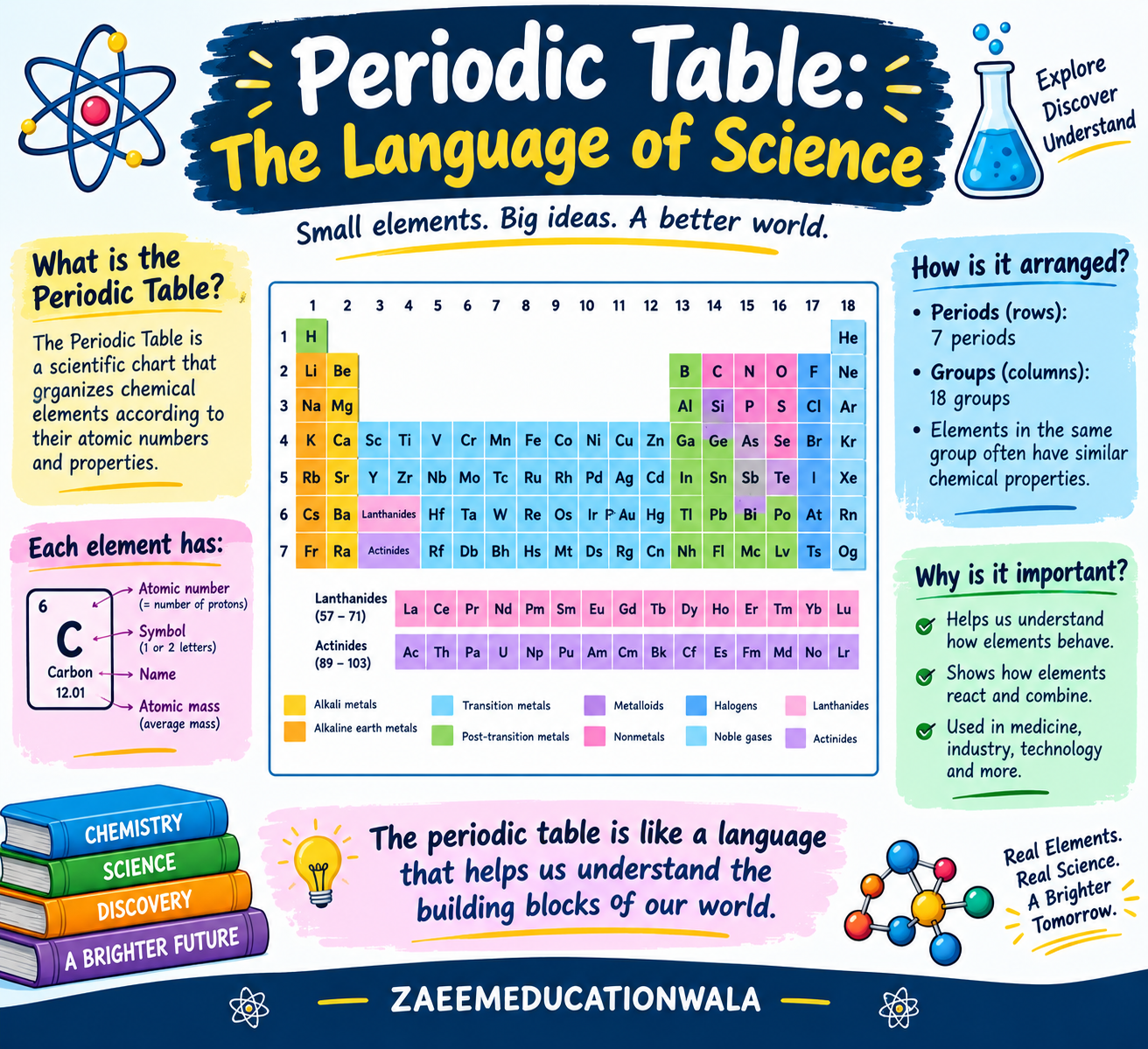
    Have you ever wondered how scientists organize more than 100 different chemical elements? In this video, we explore the **Periodic Table**, one of the most important tools in the world of science!

    The Periodic Table is like a special language that helps scientists understand the elements that make up everything around us—from the air we breathe and the water we drink to the food we eat and the technology we use every day .

    In this video, we’ll learn about **chemical elements, atomic numbers, symbols, periods, groups, metals, non-metals, and noble gases**. We’ll also discover how the arrangement of elements helps us understand their properties and how they interact with one another.

    The Periodic Table is not just a chart—it is a **map of the building blocks of our universe! ** Whether you're a student, a science enthusiast, or simply curious about how the world works, this video will make the fascinating world of chemistry easier to understand.

    **What You’ll Learn:**
    What the Periodic Table is
    Why elements are arranged in a specific order
    What atomic numbers and symbols mean
    Understanding groups and periods
    Metals, non-metals, and metalloids
    How the Periodic Table helps scientists
    Interesting facts about chemical elements

    If you enjoyed this video, **Like, Share, and Subscribe** for more educational and interesting content!

    **Comment below:** Which chemical element do you find the most interesting?

    #PeriodicTable #Chemistry #Science #ChemicalElements #ScienceEducation #LearnScience #ChemistryForStudents #Education #ScienceFacts #STEM #AtomicNumbers #Elements #ScienceLovers #LearningIsFun #Knowledge
    #rsisb Roll No.269 Foundation Level Story Post No.9 Here’s a detailed YouTube description for your topic: 🧪 **Periodic Table: The Language of Science 🌍🔬** Have you ever wondered how scientists organize more than 100 different chemical elements? 🤔⚛️ In this video, we explore the **Periodic Table**, one of the most important tools in the world of science! 📚✨ The Periodic Table is like a special language that helps scientists understand the elements that make up everything around us—from the air we breathe 🌬️ and the water we drink 💧 to the food we eat 🍎 and the technology we use every day 📱💻. In this video, we’ll learn about **chemical elements, atomic numbers, symbols, periods, groups, metals, non-metals, and noble gases**. 🧪🔍 We’ll also discover how the arrangement of elements helps us understand their properties and how they interact with one another. The Periodic Table is not just a chart—it is a **map of the building blocks of our universe! 🌌⚛️** Whether you're a student, a science enthusiast, or simply curious about how the world works, this video will make the fascinating world of chemistry easier to understand. 🧠📖 🎓 **What You’ll Learn:** 🔹 What the Periodic Table is 🔹 Why elements are arranged in a specific order 🔹 What atomic numbers and symbols mean 🔹 Understanding groups and periods 🔹 Metals, non-metals, and metalloids 🔹 How the Periodic Table helps scientists 🔹 Interesting facts about chemical elements 👍 If you enjoyed this video, **Like, Share, and Subscribe** for more educational and interesting content! 🔔📚 💬 **Comment below:** Which chemical element do you find the most interesting? ⚛️🤔 #PeriodicTable 🧪 #Chemistry 🔬 #Science 🌍 #ChemicalElements ⚛️ #ScienceEducation 📚 #LearnScience 🧠 #ChemistryForStudents 🎓 #Education 📖 #ScienceFacts 💡 #STEM 🚀 #AtomicNumbers ⚛️ #Elements 🔍 #ScienceLovers 🔬 #LearningIsFun 😊 #Knowledge 📚
    0 Commentarii 0 Distribuiri 2589 Views
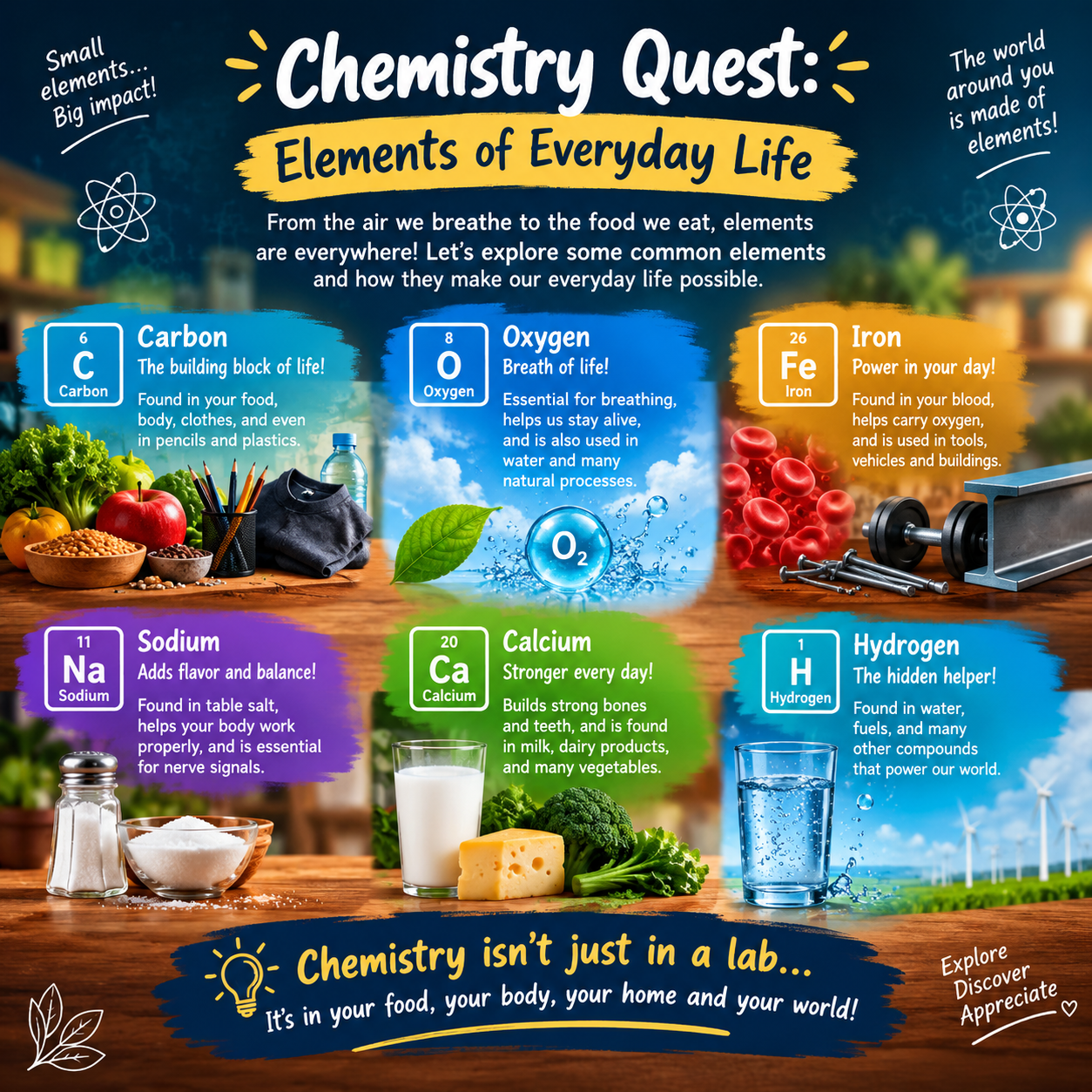
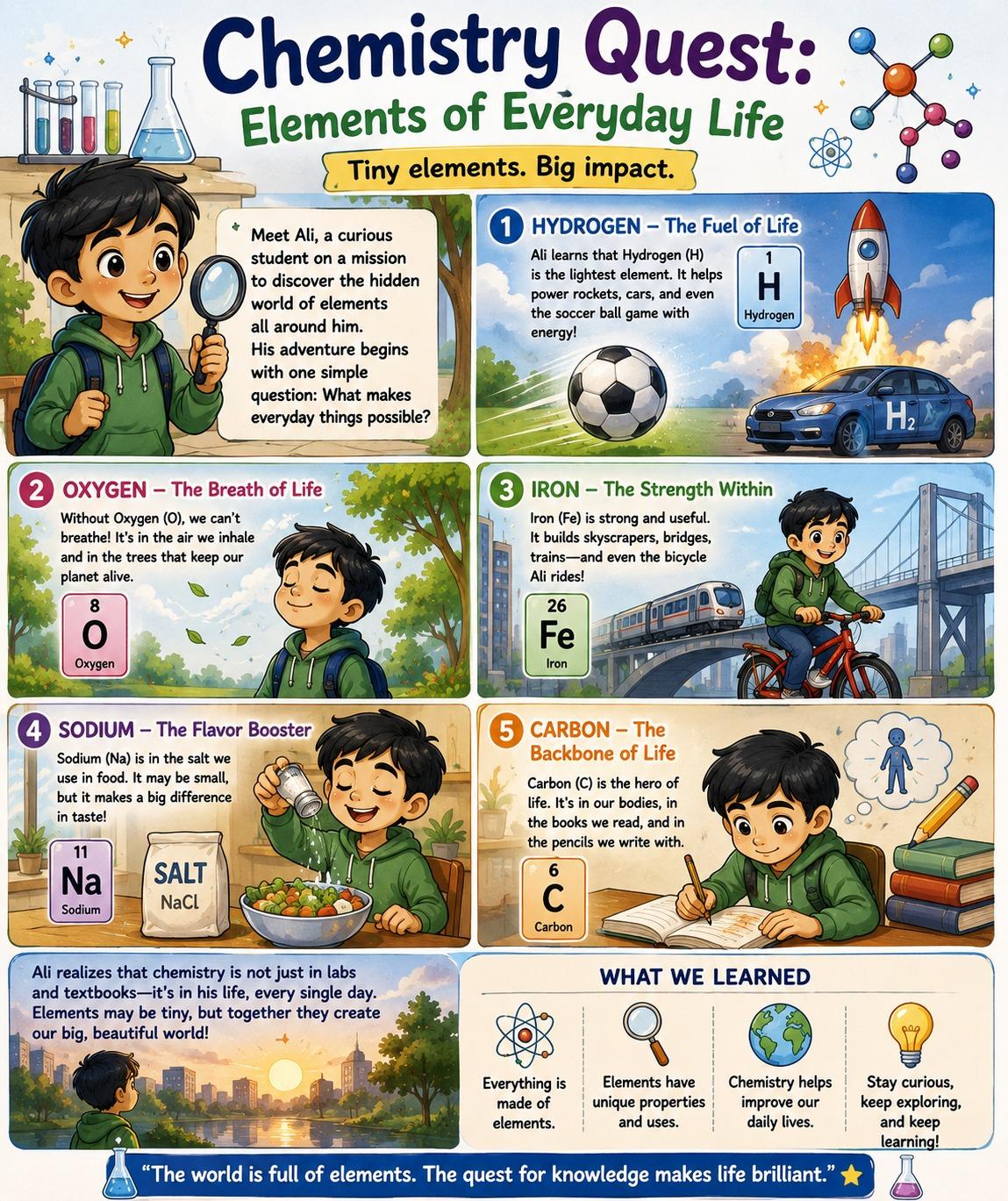
  • #rsisb Roll No.240 Song No.11 Foundation Level Explore the amazing world of chemical elements in this simple and interesting educational video! 🌍🔬 Learn what carbon is, why it is important for life, and how different elements are found and used in the world around us. From carbon to gold, every element has its own unique properties and importance. This video explains basic chemistry in an easy-to-understand way, making it suitable for students, children, and anyone who wants to learn about science. 🎓 Learn Science | Explore Elements | Discover the World #Carbon #Gold #ChemicalElements #Chemistry #Science #Education #ScienceForKids #Learning #Elements #UrduScience Rehan School Islamabad Campus Asma Shaheen EducationWali Irum Asim Saima Happinesswali https://www.facebook.com/share/v/1CZ8LaHjLu/
    WWW.FACEBOOK.COM
    Facebook
    #rsisb Roll No.240 Song No.11 Foundation Level Explore the amazing world of chemical elements in this simple and interesting educational video! 🌍🔬 Learn what carbon is, why it is important for...
    0 Commentarii 0 Distribuiri 1183 Views
  • #rsisb
    RollNo.247
    Foundation Level
    Periodic Table: The Language of Science

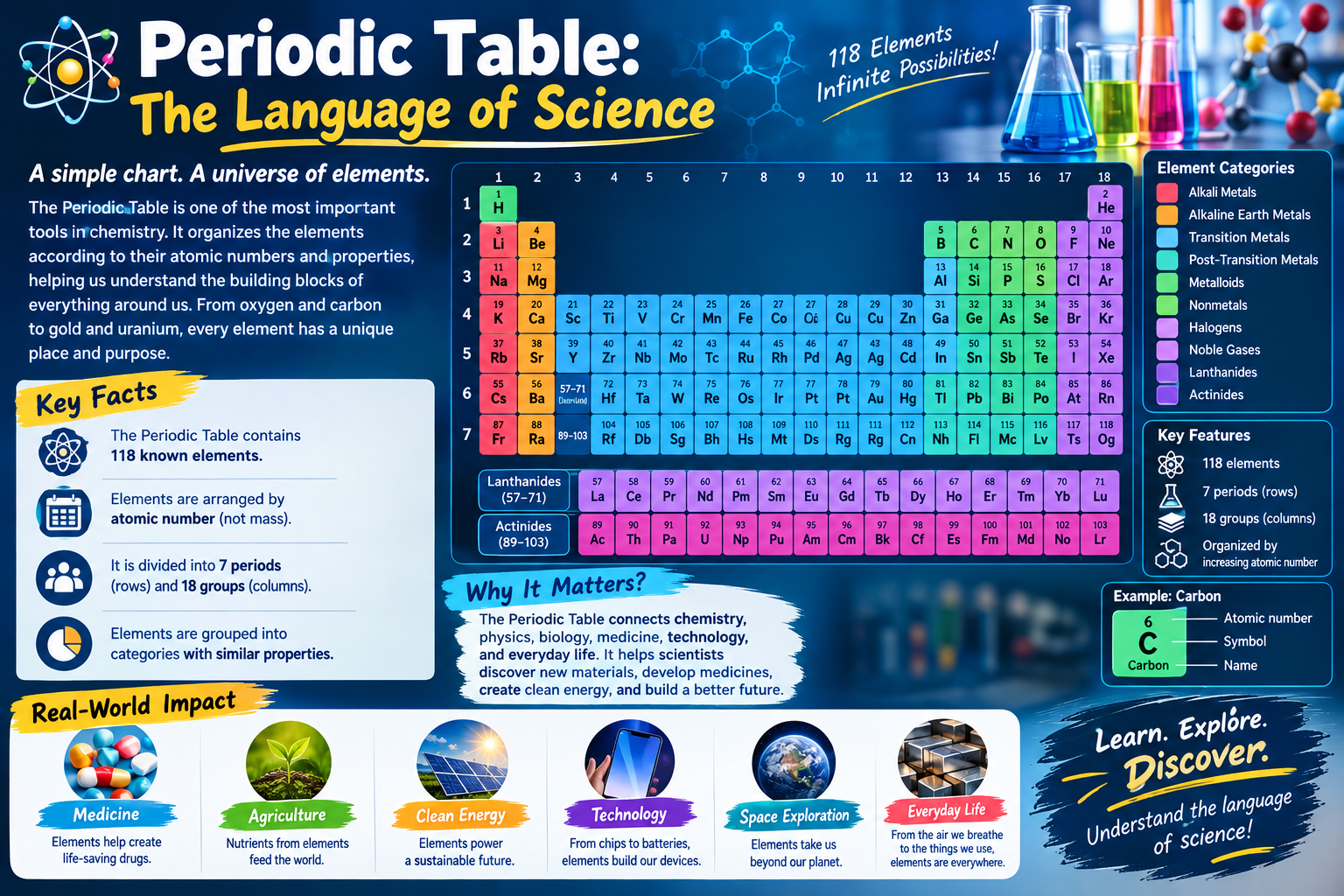
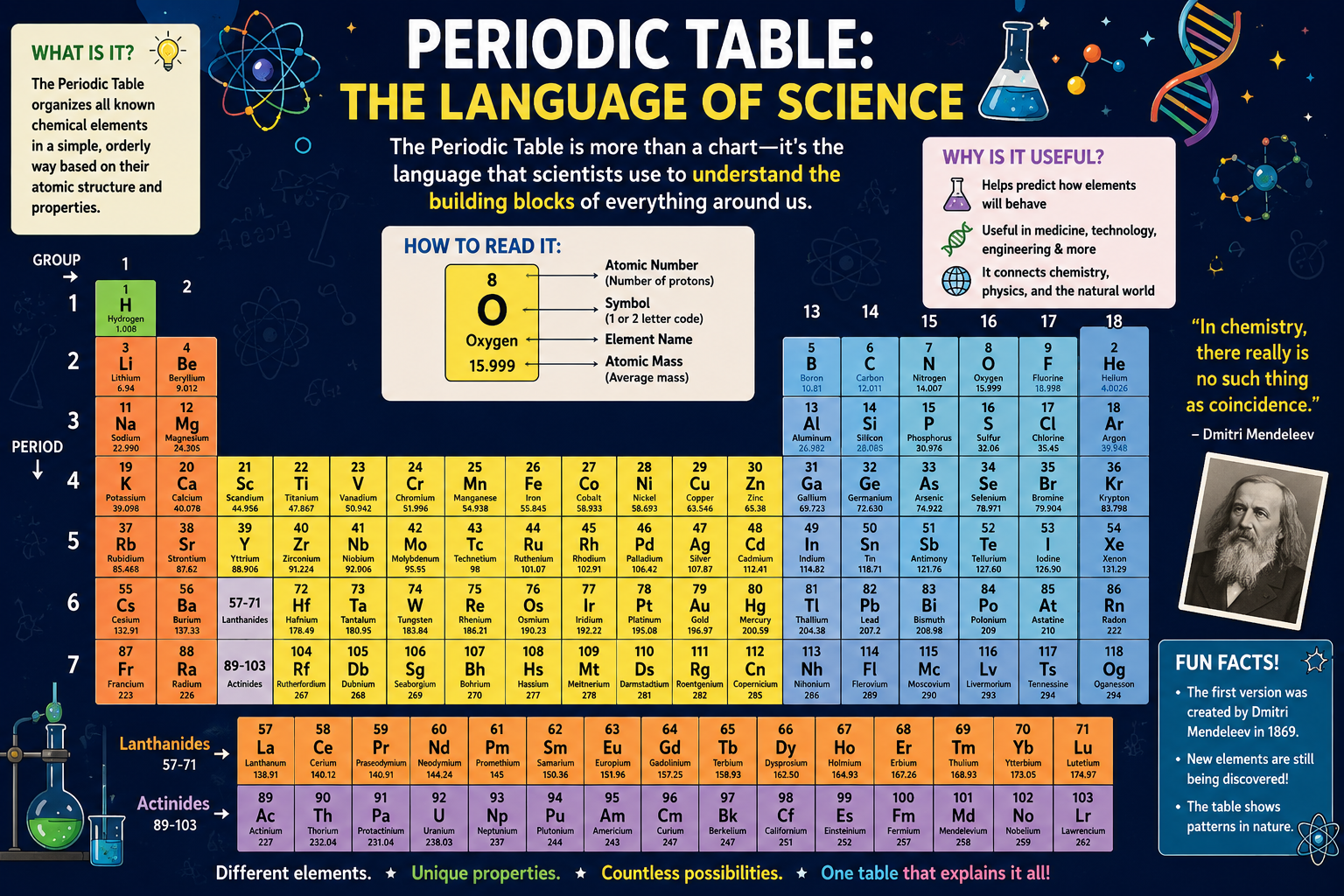
    The Periodic Table is often called the language of science because it organizes all known chemical elements into a clear and meaningful system. Developed from the groundbreaking work of Dmitri Mendeleev, the periodic table helps scientists, students, engineers, and researchers understand the properties and behaviour of every element. From the oxygen we breathe to the gold in jewellery and the silicon inside computers , every element has its own place and purpose.

    Each element is represented by a unique symbol, atomic number, and atomic mass, making it easier to study and compare their characteristics. The rows, called periods, and the columns, called groups, reveal patterns that allow scientists to predict how elements react with one another. This organised structure has become one of the most important tools in chemistry and modern science.

    The periodic table is more than just a chart hanging on a classroom wall—it is a map of the building blocks of the universe. It helps us understand everything from stars and planets to medicines, clean energy, electronics, and everyday materials. Whether creating life-saving drugs , designing stronger buildings , developing renewable energy , or exploring space , the periodic table plays a vital role in scientific discovery.

    Learning the periodic table strengthens critical thinking, improves problem-solving skills, and opens the door to understanding chemistry in a simple and logical way. Every element tells a story about nature, innovation, and the incredible world around us.

    The more we explore the periodic table, the more we appreciate the beauty, order, and endless possibilities of science. Let curiosity guide you, because every great scientific discovery begins with a single question.

    #PeriodicTable #Chemistry #Science #STEM #Education #Learning #ChemicalElements #AtomicStructure #ScienceEducation #ScientificDiscovery #Physics #Biology #Innovation #Research #Knowledge #Students #Teachers #FutureScientists #ScienceFacts #ExploreScience
    #rsisb RollNo.247 Foundation Level 🧪 Periodic Table: The Language of Science 🌍⚛️ The Periodic Table is often called the language of science because it organizes all known chemical elements into a clear and meaningful system. 📚⚛️ Developed from the groundbreaking work of Dmitri Mendeleev, the periodic table helps scientists, students, engineers, and researchers understand the properties and behaviour of every element. From the oxygen we breathe 🌬️ to the gold in jewellery 💍 and the silicon inside computers 💻, every element has its own place and purpose. Each element is represented by a unique symbol, atomic number, and atomic mass, making it easier to study and compare their characteristics. The rows, called periods, and the columns, called groups, reveal patterns that allow scientists to predict how elements react with one another. 🔬✨ This organised structure has become one of the most important tools in chemistry and modern science. The periodic table is more than just a chart hanging on a classroom wall—it is a map of the building blocks of the universe. 🌌 It helps us understand everything from stars and planets to medicines, clean energy, electronics, and everyday materials. Whether creating life-saving drugs 💊, designing stronger buildings 🏗️, developing renewable energy ⚡, or exploring space 🚀, the periodic table plays a vital role in scientific discovery. Learning the periodic table strengthens critical thinking, improves problem-solving skills, and opens the door to understanding chemistry in a simple and logical way. Every element tells a story about nature, innovation, and the incredible world around us. 🌱🔍 The more we explore the periodic table, the more we appreciate the beauty, order, and endless possibilities of science. Let curiosity guide you, because every great scientific discovery begins with a single question. 🌟🧠 #PeriodicTable #Chemistry #Science #STEM #Education #Learning #ChemicalElements #AtomicStructure #ScienceEducation #ScientificDiscovery #Physics #Biology #Innovation #Research #Knowledge #Students #Teachers #FutureScientists #ScienceFacts #ExploreScience
    0 Commentarii 0 Distribuiri 8051 Views
  • #rsisb
    Roll no. 253
    StoryPost no.09
    Foundation level
    ## **Periodic Table: The Language of Science**

    The **Periodic Table** is one of the greatest achievements in science, organizing all known chemical elements into a systematic chart based on their atomic structure and properties. It serves as a universal language for scientists, helping them understand how elements behave, interact, and combine to form everything around us—from the air we breathe and the water we drink to the stars in the universe and the technology we use every day. By studying the periodic table, students gain a deeper understanding of chemistry, discover patterns among elements, and learn how scientific knowledge drives innovation in medicine, engineering, environmental science, and space exploration. It is the foundation of chemistry and a powerful tool for exploring the building blocks of our world.

    ** Key Lesson:** *The Periodic Table organizes the elements of nature, helping us understand the composition of matter and the science behind the world around us.*

    ** Hashtags:**
    #PeriodicTable #Chemistry #Science #STEM #Education #ChemicalElements #AtomicStructure #Learning #ScientificDiscovery #Innovation #ScienceEducation #Matter #Elements #RehanSchool #FutureScientists
    Asma Shaheen EducationWali
    Irum Asim
    Saima Happinesswali
    #rsisb Roll no. 253 StoryPost no.09 Foundation level ## 🧪⚛️ **Periodic Table: The Language of Science** The **Periodic Table** is one of the greatest achievements in science, organizing all known chemical elements into a systematic chart based on their atomic structure and properties. It serves as a universal language for scientists, helping them understand how elements behave, interact, and combine to form everything around us—from the air we breathe and the water we drink to the stars in the universe and the technology we use every day. By studying the periodic table, students gain a deeper understanding of chemistry, discover patterns among elements, and learn how scientific knowledge drives innovation in medicine, engineering, environmental science, and space exploration. It is the foundation of chemistry and a powerful tool for exploring the building blocks of our world. 🌍🔬✨ **📚 Key Lesson:** *The Periodic Table organizes the elements of nature, helping us understand the composition of matter and the science behind the world around us.* **🏷️ Hashtags:** #PeriodicTable #Chemistry #Science #STEM #Education #ChemicalElements #AtomicStructure #Learning #ScientificDiscovery #Innovation #ScienceEducation #Matter #Elements #RehanSchool #FutureScientists ⚛️🧪🌍 Asma Shaheen EducationWali Irum Asim Saima Happinesswali
    0 Commentarii 0 Distribuiri 7555 Views