• RSIf8
    Roll Number: 49
    Story post no.44
    Story post topic:The Journey of “Quarantine” – From Venetian Ports to Global Health

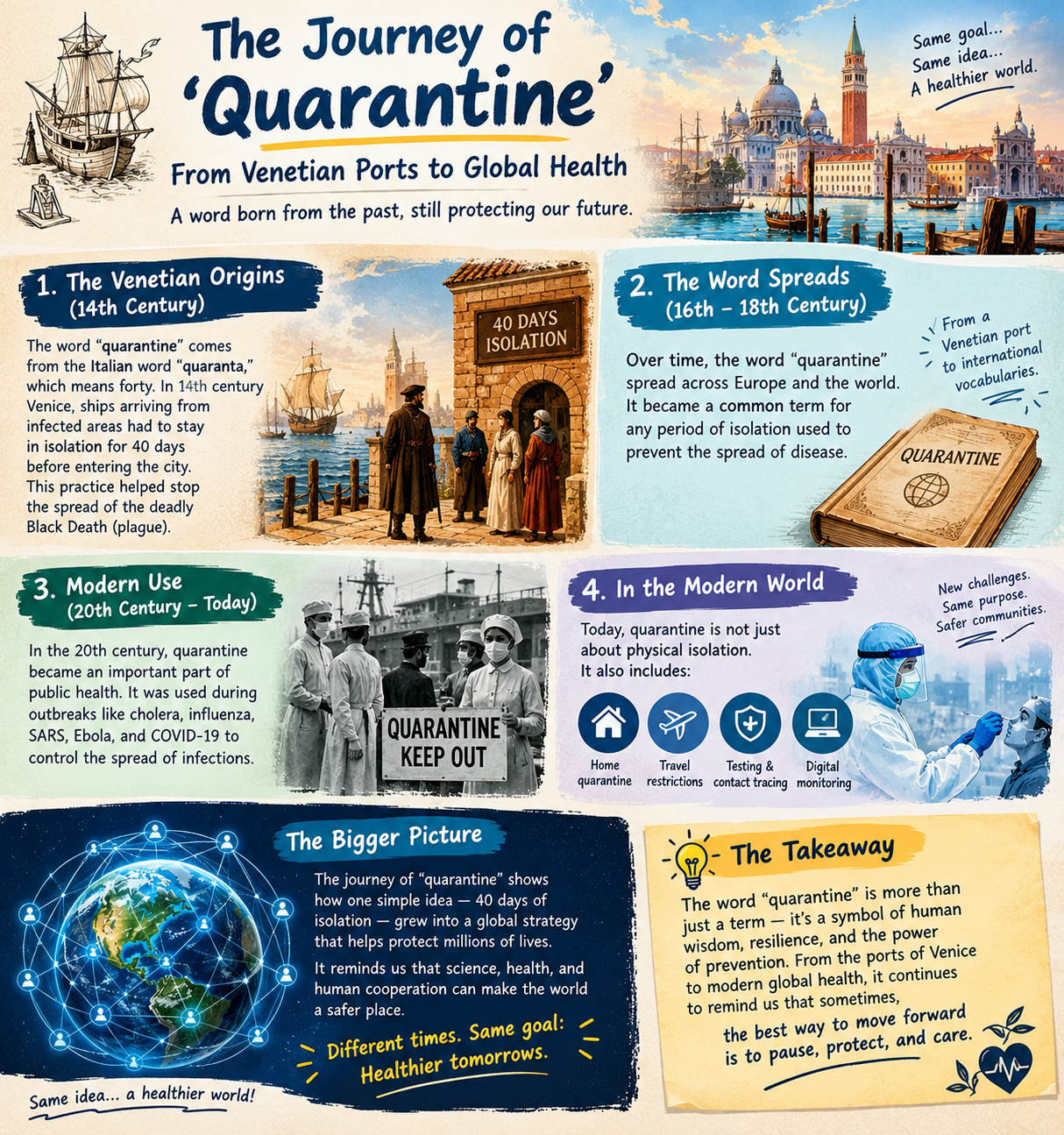
    Have you ever wondered where the word “quarantine” came from? This story explores the fascinating history of quarantine, beginning in 14th-century Venice, Italy, where ships arriving from areas affected by disease were required to remain isolated for 40 days before entering the city.

    Over time, quarantine became an important public health practice used to help prevent the spread of infectious diseases. From historical plague outbreaks to modern health emergencies such as COVID-19, quarantine has played a role in protecting communities and raising awareness about disease prevention.

    The key message: History teaches us that cooperation, scientific knowledge, and responsible actions can help protect public health. By learning from the past, we can work together toward a healthier future!

    #HistoryOfQuarantine #GlobalHealth #PublicHealth #HistoryAndScience #DiseasePrevention #COVID19 #HealthAwareness #LearningThroughStories #ClassFoundation #RSf8
    RSIf8 Roll Number: 49 Story post no.44 Story post topic:The Journey of “Quarantine” – From Venetian Ports to Global Health ๐Ÿšข๐Ÿฉบ Have you ever wondered where the word “quarantine” came from? ๐Ÿค” This story explores the fascinating history of quarantine, beginning in 14th-century Venice, Italy, where ships arriving from areas affected by disease were required to remain isolated for 40 days before entering the city. Over time, quarantine became an important public health practice used to help prevent the spread of infectious diseases. From historical plague outbreaks to modern health emergencies such as COVID-19, quarantine has played a role in protecting communities and raising awareness about disease prevention. ๐Ÿฅโœจ ๐Ÿ’ก The key message: History teaches us that cooperation, scientific knowledge, and responsible actions can help protect public health. By learning from the past, we can work together toward a healthier future! ๐Ÿ’™ #HistoryOfQuarantine #GlobalHealth #PublicHealth #HistoryAndScience #DiseasePrevention #COVID19 #HealthAwareness #LearningThroughStories #ClassFoundation #RSf8
    0 Reacties 0 aandelen 14 Views
  • RSIF 8

    Roll no 93

    Story post no 44

    Task topic:"The Journey of 'Quarantine': From Venetian Ports to Global Health". **The Journey of “Quarantine”: From Venetian Ports to Global Health**

    Did you know that the word *quarantine* comes from an Italian word meaning “forty days”? In the 14th century, ships arriving in Venice sometimes had to wait 40 days before entering the city to help stop the spread of disease.

    Over time, quarantine became an important way to help control infectious diseases. Today, public health measures such as testing, contact tracing, vaccination, and health guidelines help protect people and communities.

    **Key Lessons:**

    - History teaches us important lessons about health.

    - Prevention helps protect communities.

    - Science and cooperation are important during health emergencies.

    - Staying informed helps us make better decisions.

    **Different times, same goal: a healthier world!**

    Posting on YouTube, Facebook, Instagram, TikTok, and LinkedIn.

    #Quarantine #GlobalHealth #HealthHistory #PublicHealth #ScienceAndHistory #HealthAwareness #Learning #Education #StayInformed #RehanSchool
    RSIF 8 Roll no 93 Story post no 44 Task topic:"The Journey of 'Quarantine': From Venetian Ports to Global Health".๐ŸŒ **The Journey of “Quarantine”: From Venetian Ports to Global Health** ๐Ÿฅ๐Ÿšข Did you know that the word *quarantine* comes from an Italian word meaning “forty days”? In the 14th century, ships arriving in Venice sometimes had to wait 40 days before entering the city to help stop the spread of disease. Over time, quarantine became an important way to help control infectious diseases. Today, public health measures such as testing, contact tracing, vaccination, and health guidelines help protect people and communities. โœจ **Key Lessons:** - History teaches us important lessons about health. - Prevention helps protect communities. - Science and cooperation are important during health emergencies. - Staying informed helps us make better decisions. ๐Ÿ’™ **Different times, same goal: a healthier world!** ๐Ÿ“ข Posting on YouTube, Facebook, Instagram, TikTok, and LinkedIn. #Quarantine #GlobalHealth #HealthHistory #PublicHealth #ScienceAndHistory #HealthAwareness #Learning #Education #StayInformed #RehanSchool
    0 Reacties 0 aandelen 140 Views
  • #RSFI8
    Roll No: 64
    Class: Foundation Level
    Muhammad ibrahim Acctounting wala
    TEDx Talk task topic Watch "Why animals help each other" – Ashley Ward.
    TodayIwatchedthe
    TEDxTalkWhyAnimals
    HelpEachOtherbyAshleyWardandlearnedhowanimalshelpandprotecteachotherinnature.Thistalkteachesustheimportanceofteamworkkindnesscooperationandunity.Animalsworktogethertosurviveandbuildstrongcommunities.Thisinspiringtalkhelpedmeunderstandthathelpingothersmakesusstrongerandwecanlearnvaluablelessonsfromtheanimalworld.

    #TEDxTalk #AshleyWard #WhyAnimalsHelpEachOther #AnimalBehavior #Nature #Wildlife #Teamwork #Kindness #Cooperation #Education #Learning #AnimalWorld #RehanSchool #RSFI8 #Motivation #Inspiration
    #RSFI8 Roll No: 64๐Ÿ“ Class: Foundation Level Muhammad ibrahim Acctounting wala TEDx Talk task topic Watch "Why animals help each other" – Ashley Ward. TodayIwatchedthe TEDxTalkWhyAnimals HelpEachOtherbyAshleyWardandlearnedhowanimalshelpandprotecteachotherinnature.Thistalkteachesustheimportanceofteamworkkindnesscooperationandunity.Animalsworktogethertosurviveandbuildstrongcommunities.Thisinspiringtalkhelpedmeunderstandthathelpingothersmakesusstrongerandwecanlearnvaluablelessonsfromtheanimalworld. #TEDxTalk #AshleyWard #WhyAnimalsHelpEachOther #AnimalBehavior #Nature #Wildlife #Teamwork #Kindness #Cooperation #Education #Learning #AnimalWorld #RehanSchool #RSFI8 #Motivation #Inspiration
    0 Reacties 0 aandelen 393 Views 8
  • RSIF8
    Roll no:14
    tedxtalk no:11
    tedxtalk topic:Challenging Norms – Abiha Haider

    **Challenging Norms – Abiha Haider | The Courage to Think Differently**

    Have you ever wondered why we follow certain rules, traditions, and expectations without questioning them? Why do people sometimes resist new ideas simply because they are different from what they already know? Challenging norms encourages us to think independently, question assumptions, and discover new possibilities for a better future.

    **What Does Challenging Norms Mean?**

    Challenging norms means examining the beliefs, traditions, and social expectations that influence our daily lives. Some norms help maintain respect, cooperation, and harmony, while others may create unnecessary barriers or limit opportunities. The goal is not to reject every tradition, but to understand which practices are beneficial and which ones may need to change.

    **The Courage to Be Different**

    Throughout history, progress has often begun with people who dared to ask questions and explore new ideas. From scientific discoveries to educational reforms, independent thinking has helped societies learn, grow, and improve. Challenging established expectations requires confidence, patience, and the willingness to consider different perspectives.

    **The Importance of Critical Thinking**

    Critical thinking helps us evaluate information, question assumptions, and make informed decisions. Instead of accepting every idea without examination, we should ask meaningful questions, seek reliable evidence, and remain open to learning. True intelligence is not about always being right; it is about having the courage to learn, improve, and change our minds when necessary.

    **Creating Positive Change in Society**

    We can challenge harmful norms through small actions in our everyday lives. Supporting equal opportunities, respecting different opinions, encouraging creativity, and standing against unfair treatment can help create a more inclusive society. Every thoughtful conversation and every fair decision can contribute to meaningful progress.

    **Why Does It Matter?**

    Challenging norms teaches us that progress begins with curiosity and grows through responsible action. It encourages young people to express their ideas, discover their abilities, and develop the confidence to pursue their goals. By combining independent thinking with respect and empathy, we can build a future where creativity, fairness, and understanding are valued.

    **Remember:** You do not have to follow every expectation simply because it has always existed. Question thoughtfully, listen carefully, learn continuously, and have the courage to stand for what is right.

    **Think Differently. Question Wisely. Inspire Change.**

    Like, Share, and Subscribe for more educational videos, inspirational ideas, and meaningful life lessons!

    #ChallengingNorms #AbihaHaider #CriticalThinking #PositiveChange #IndependentThinking #Education #SocialAwareness #Inspiration #PersonalGrowth #ThinkDifferently #Leadership #Motivation #LifeLessons
    RSIF8 Roll no:14 tedxtalk no:11 tedxtalk topic:Challenging Norms – Abiha Haider ๐ŸŒŸ **Challenging Norms – Abiha Haider | The Courage to Think Differently** ๐Ÿ’กโœจ Have you ever wondered why we follow certain rules, traditions, and expectations without questioning them? Why do people sometimes resist new ideas simply because they are different from what they already know? Challenging norms encourages us to think independently, question assumptions, and discover new possibilities for a better future. ๐Ÿ’ญ **What Does Challenging Norms Mean?** Challenging norms means examining the beliefs, traditions, and social expectations that influence our daily lives. Some norms help maintain respect, cooperation, and harmony, while others may create unnecessary barriers or limit opportunities. The goal is not to reject every tradition, but to understand which practices are beneficial and which ones may need to change. ๐Ÿš€ **The Courage to Be Different** Throughout history, progress has often begun with people who dared to ask questions and explore new ideas. From scientific discoveries to educational reforms, independent thinking has helped societies learn, grow, and improve. Challenging established expectations requires confidence, patience, and the willingness to consider different perspectives. ๐Ÿ“š **The Importance of Critical Thinking** Critical thinking helps us evaluate information, question assumptions, and make informed decisions. Instead of accepting every idea without examination, we should ask meaningful questions, seek reliable evidence, and remain open to learning. True intelligence is not about always being right; it is about having the courage to learn, improve, and change our minds when necessary. ๐Ÿค **Creating Positive Change in Society** We can challenge harmful norms through small actions in our everyday lives. Supporting equal opportunities, respecting different opinions, encouraging creativity, and standing against unfair treatment can help create a more inclusive society. Every thoughtful conversation and every fair decision can contribute to meaningful progress. ๐ŸŒฑ **Why Does It Matter?** Challenging norms teaches us that progress begins with curiosity and grows through responsible action. It encourages young people to express their ideas, discover their abilities, and develop the confidence to pursue their goals. By combining independent thinking with respect and empathy, we can build a future where creativity, fairness, and understanding are valued. ๐Ÿ”ฅ **Remember:** You do not have to follow every expectation simply because it has always existed. Question thoughtfully, listen carefully, learn continuously, and have the courage to stand for what is right. โœจ **Think Differently. Question Wisely. Inspire Change.** ๐Ÿ‘ Like, Share, and Subscribe for more educational videos, inspirational ideas, and meaningful life lessons! #ChallengingNorms #AbihaHaider #CriticalThinking #PositiveChange #IndependentThinking #Education #SocialAwareness #Inspiration #PersonalGrowth #ThinkDifferently #Leadership #Motivation #LifeLessons ๐ŸŒ๐Ÿ’ก
    0 Reacties 0 aandelen 1711 Views 7
  • RSIF8
    ROLL NO 108
    TASK 45
    TEDX TALK 5
    **Making Peace is a Marathon – May El-Khalil**
    This talk highlights the importance of peace, patience, and unity in our lives. May El-Khalil explains that building peace is like running a marathon because it requires courage, determination, and continuous effort. Peace does not happen overnight; it takes time, understanding, and cooperation. Through her inspiring message, she encourages people to overcome differences, respect each other, and work together to create a peaceful world. This talk teaches us that every small step toward understanding and kindness can make a big difference. True peace is a long journey, and we must never give up on it. See less
    RSIF8 ROLL NO 108 TASK 45 TEDX TALK 5 **Making Peace is a Marathon – May El-Khalil** This talk highlights the importance of peace, patience, and unity in our lives. May El-Khalil explains that building peace is like running a marathon because it requires courage, determination, and continuous effort. Peace does not happen overnight; it takes time, understanding, and cooperation. Through her inspiring message, she encourages people to overcome differences, respect each other, and work together to create a peaceful world. This talk teaches us that every small step toward understanding and kindness can make a big difference. True peace is a long journey, and we must never give up on it. See less
    0 Reacties 0 aandelen 581 Views 6
  • RSIF8
    Roll no:14
    tedxtalk no:10
    tedxtalk topic:Making Peace is a Marathon – May El-Khalil

    ‍ **Making Peace Is a Marathon – May El-Khalil | The Power of Unity and Perseverance**

    What does it take to build lasting peace in a world filled with differences, challenges, and conflicts? Is peace something we can achieve in a single moment, or is it a journey that requires patience, courage, and continuous effort?

    **“Making Peace Is a Marathon – May El-Khalil”** explores an inspiring message about the importance of unity, understanding, and perseverance. Through her work with the Beirut Marathon Association in Lebanon, May El-Khalil demonstrated how running can become more than a sporting activity. It can serve as a powerful symbol of hope, bringing people from different backgrounds together through a shared purpose.

    ‍ **Peace Is a Journey, Not a Race**

    Just as a marathon requires preparation, endurance, and determination, building peace takes time and commitment. Communities cannot overcome every disagreement overnight. Lasting peace grows when people learn to respect differences, communicate openly, support one another, and work toward common goals.

    **The Power of Unity**

    A marathon brings together people of different ages, cultures, and experiences. When they run side by side, they demonstrate that shared goals can connect people despite their differences. In the same way, cooperation and mutual respect can help build stronger communities and create opportunities for understanding.

    **Lessons for Everyday Life**

    May El-Khalil's message encourages us to practice patience, choose understanding over hostility, and recognize the value of small positive actions. Whether at school, at home, or in our communities, every effort to resolve disagreements peacefully can make a difference.

    **Why This Message Matters**

    In a divided world, peace requires more than words. It requires action, empathy, and a willingness to keep trying, even when progress seems slow. By learning to listen, respecting different perspectives, and working together, we can help create a future where people live with greater dignity, trust, and hope.

    **Remember:** Peace is not a sprint toward a quick victory. It is a marathon that demands patience, teamwork, and determination. Every act of kindness, every bridge built between communities, and every peaceful solution brings us one step closer to a better world.

    **Choose understanding. Build unity. Keep moving toward peace. Every step matters!**

    If you enjoyed this message, like, share, and subscribe for more inspirational stories, educational videos, and meaningful life lessons.

    #MakingPeaceIsAMarathon #MayElKhalil #Peace #Unity #BeirutMarathon #Inspiration #Motivation #PeaceBuilding #Teamwork #Perseverance #Hope #Education #LifeLessons #PositiveChange ‍
    RSIF8 Roll no:14 tedxtalk no:10 tedxtalk topic:Making Peace is a Marathon – May El-Khalil ๐Ÿƒ‍โ™€๏ธ **Making Peace Is a Marathon – May El-Khalil | The Power of Unity and Perseverance** ๐Ÿ•Š๏ธ๐ŸŒ What does it take to build lasting peace in a world filled with differences, challenges, and conflicts? Is peace something we can achieve in a single moment, or is it a journey that requires patience, courage, and continuous effort? โœจ **“Making Peace Is a Marathon – May El-Khalil”** explores an inspiring message about the importance of unity, understanding, and perseverance. Through her work with the Beirut Marathon Association in Lebanon, May El-Khalil demonstrated how running can become more than a sporting activity. It can serve as a powerful symbol of hope, bringing people from different backgrounds together through a shared purpose. ๐Ÿƒ‍โ™‚๏ธ **Peace Is a Journey, Not a Race** Just as a marathon requires preparation, endurance, and determination, building peace takes time and commitment. Communities cannot overcome every disagreement overnight. Lasting peace grows when people learn to respect differences, communicate openly, support one another, and work toward common goals. ๐Ÿค **The Power of Unity** A marathon brings together people of different ages, cultures, and experiences. When they run side by side, they demonstrate that shared goals can connect people despite their differences. In the same way, cooperation and mutual respect can help build stronger communities and create opportunities for understanding. ๐ŸŒฑ **Lessons for Everyday Life** May El-Khalil's message encourages us to practice patience, choose understanding over hostility, and recognize the value of small positive actions. Whether at school, at home, or in our communities, every effort to resolve disagreements peacefully can make a difference. ๐Ÿ’ก **Why This Message Matters** In a divided world, peace requires more than words. It requires action, empathy, and a willingness to keep trying, even when progress seems slow. By learning to listen, respecting different perspectives, and working together, we can help create a future where people live with greater dignity, trust, and hope. ๐Ÿ•Š๏ธ **Remember:** Peace is not a sprint toward a quick victory. It is a marathon that demands patience, teamwork, and determination. Every act of kindness, every bridge built between communities, and every peaceful solution brings us one step closer to a better world. ๐ŸŒŸ **Choose understanding. Build unity. Keep moving toward peace. Every step matters!** ๐Ÿ‘ If you enjoyed this message, like, share, and subscribe for more inspirational stories, educational videos, and meaningful life lessons. #MakingPeaceIsAMarathon #MayElKhalil #Peace #Unity #BeirutMarathon #Inspiration #Motivation #PeaceBuilding #Teamwork #Perseverance #Hope #Education #LifeLessons #PositiveChange ๐Ÿ•Š๏ธ๐Ÿƒ‍โ™€๏ธ
    0 Reacties 0 aandelen 1500 Views 2

  • #RSFI8
    Roll No: 64
    Class: Foundation Level
    Muhammad ibrahim Acctounting wala
    Documentary task topic "The Journey of 'Quarantine': From Venetian Ports to Global Health".
    Documentary Review — "The Journey of Quarantine: From Venetian Ports to Global Health" Today I watched an interesting and educational documentary about the history of quarantine and its importance in global health. This documentary helped me understand how quarantine started in Venetian ports and became an important way to protect people from infectious diseases. I learned that the word quarantine comes from the Italian word "quaranta," meaning forty, because ships were historically required to wait for forty days before entering certain ports. As a student, I found this documentary fascinating because I had heard the word quarantine many times during the COVID-19 pandemic, but I never knew much about its history. This documentary taught me the importance of health awareness, disease prevention, responsibility, and global cooperation. My biggest lesson from this documentary is that understanding history helps us make better decisions for a healthier and safer future. I really enjoyed learning about this topic, and it inspired me to explore more about science, history, and public health. Knowledge is power, and every day is a new opportunity to learn something valuable! #DocumentaryReview #HistoryOfQuarantine #Quarantine #VeniceHistory #GlobalHealth #PublicHealth #MedicalHistory #ScienceAndHistory #HealthAwareness #COVID19 #LearningJourney #EducationalContent #RehanSchool #StudentLife #HistoryFacts #KnowledgeIsPower #NeverStopLearning #DailyLearning #StayCurious #Education #Motivation
    #RSFI8 Roll No: 64๐Ÿ“ Class: Foundation Level Muhammad ibrahim Acctounting wala Documentary task topic "The Journey of 'Quarantine': From Venetian Ports to Global Health". ๐ŸŒ๐ŸŽฌ Documentary Review — "The Journey of Quarantine: From Venetian Ports to Global Health" ๐Ÿšข๐Ÿฅโœจ Today I watched an interesting and educational documentary about the history of quarantine and its importance in global health. ๐Ÿ“š๐ŸŒŸ This documentary helped me understand how quarantine started in Venetian ports and became an important way to protect people from infectious diseases. ๐Ÿฆ ๐Ÿ›ก๏ธ I learned that the word quarantine comes from the Italian word "quaranta," meaning forty, because ships were historically required to wait for forty days before entering certain ports. ๐Ÿšขโณ As a student, I found this documentary fascinating because I had heard the word quarantine many times during the COVID-19 pandemic, but I never knew much about its history. ๐Ÿ’ก๐Ÿ“– This documentary taught me the importance of health awareness, disease prevention, responsibility, and global cooperation. ๐ŸŒŽโค๏ธ My biggest lesson from this documentary is that understanding history helps us make better decisions for a healthier and safer future. ๐ŸŒˆโœจ I really enjoyed learning about this topic, and it inspired me to explore more about science, history, and public health. ๐Ÿš€๐Ÿ“š Knowledge is power, and every day is a new opportunity to learn something valuable! ๐Ÿ’–๐ŸŒŸ #DocumentaryReview #HistoryOfQuarantine #Quarantine #VeniceHistory #GlobalHealth #PublicHealth #MedicalHistory #ScienceAndHistory #HealthAwareness #COVID19 #LearningJourney #EducationalContent #RehanSchool #StudentLife #HistoryFacts #KnowledgeIsPower #NeverStopLearning #DailyLearning #StayCurious #Education #Motivation ๐ŸŒ๐Ÿ“šโœจ
    0 Reacties 0 aandelen 1237 Views 8
  • RSIF8
    Roll no.49
    Documentary no.06
    Documentary Topic:The Journey of “Quarantine” – From Venetian Ports to Global Health

    In this documentary, I explored the fascinating history of the word “Quarantine” and how its meaning developed from practices at Venetian ports to an important concept in modern public health. The word comes from the Italian quaranta, meaning forty, and is connected to the historical practice of requiring ships arriving from areas affected by disease to wait for forty days.

    I learned how quarantine practices evolved over time and became part of efforts to control the spread of infectious diseases. From the Black Death in medieval Europe to the COVID-19 pandemic, quarantine has played an important role in public health responses. This documentary also highlights the importance of scientific knowledge, community cooperation, and caring for people during health emergencies.

    History teaches us valuable lessons about protecting our health and preparing for the future!

    #Quarantine #HistoryOfWords #VenetianHistory #GlobalHealth #PublicHealth #MedicalHistory #COVID19 #EducationalDocumentary #ClassFoundation #RSf8
    RSIF8 Roll no.49 Documentary no.06 Documentary Topic:The Journey of “Quarantine” – From Venetian Ports to Global Health In this documentary, I explored the fascinating history of the word “Quarantine” and how its meaning developed from practices at Venetian ports to an important concept in modern public health. ๐Ÿ›๏ธ๐Ÿฆ  The word comes from the Italian quaranta, meaning forty, and is connected to the historical practice of requiring ships arriving from areas affected by disease to wait for forty days. ๐Ÿฉบโœจ I learned how quarantine practices evolved over time and became part of efforts to control the spread of infectious diseases. From the Black Death in medieval Europe to the COVID-19 pandemic, quarantine has played an important role in public health responses. This documentary also highlights the importance of scientific knowledge, community cooperation, and caring for people during health emergencies. ๐Ÿ“š History teaches us valuable lessons about protecting our health and preparing for the future! #Quarantine #HistoryOfWords #VenetianHistory #GlobalHealth #PublicHealth #MedicalHistory #COVID19 #EducationalDocumentary #ClassFoundation #RSf8
    0 Reacties 0 aandelen 1081 Views 0
  • ACCL POST
    Day:43
    Roll No:003
    Story post
    Student at Rehan School Urdu bazar campus

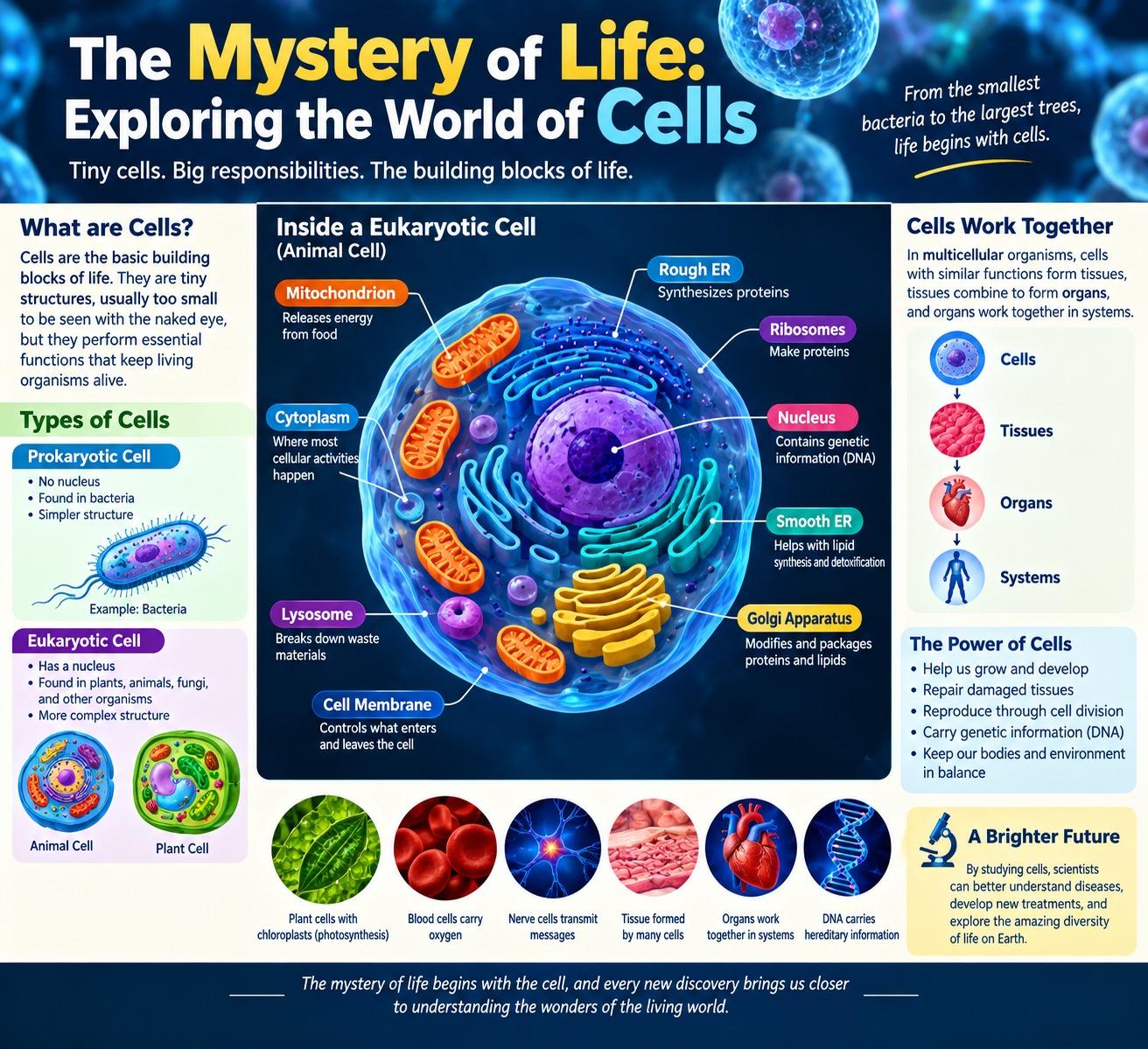
    # The Mystery of Life: Exploring the World of Cells Life is one of the most fascinating mysteries of the natural world. From the tallest trees to the smallest insects, every living organism has a unique structure and a special way of surviving. But have you ever wondered what makes life possible? What is the tiny building block that forms every living thing? The answer is **cells**, the fundamental units of life. Although cells are usually too small to be seen without a microscope, they perform countless important functions that allow living organisms to grow, develop, reproduce, and survive. Cells are often described as the basic building blocks of life because all living organisms are made up of one or more cells. Some organisms, such as bacteria, consist of only a single cell, while humans, animals, and plants are made up of trillions of cells. Each cell has its own structure and responsibilities. Some cells help the body obtain energy, while others carry oxygen, fight infections, or transmit messages throughout the body. In plants, cells help produce food through photosynthesis and provide support to the plant's structure. There are two major types of cells: **prokaryotic cells and eukaryotic cells**. Prokaryotic cells, such as bacteria, do not have a nucleus enclosed by a membrane. Eukaryotic cells, which are found in animals, plants, fungi, and many other organisms, contain a nucleus that stores genetic information. These cells also contain specialized structures called organelles, each of which performs a particular function. For example, the nucleus controls many cellular activities, mitochondria release usable energy from food, and the cell membrane regulates what enters and leaves the cell. Plant cells also contain chloroplasts, which help them produce food using sunlight. One of the most amazing things about cells is how they work together. In multicellular organisms, cells with similar functions form tissues, tissues combine to form organs, and organs work together in systems. In the human body, for example, the heart, lungs, brain, and other organs depend on the coordinated activities of countless cells. This cooperation allows the body to maintain balance, respond to changes, and carry out the activities necessary for life. Cells also play an essential role in growth, healing, and reproduction. Through a process called cell division, cells produce new cells. This allows organisms to grow, replace old or damaged cells, and repair tissues. Cells contain DNA, the genetic material that carries instructions for the development and functioning of living organisms. By studying DNA and cellular processes, scientists can better understand heredity, diseases, and the remarkable diversity of life on Earth. The study of cells has transformed our understanding of biology and medicine. understanding the wonders of the living world.**
    Activate to view larger image,
    View image
    ACCL POST Day:43 Roll No:003 Story post Student at Rehan School Urdu bazar campus # The Mystery of Life: Exploring the World of Cells Life is one of the most fascinating mysteries of the natural world. From the tallest trees to the smallest insects, every living organism has a unique structure and a special way of surviving. But have you ever wondered what makes life possible? What is the tiny building block that forms every living thing? The answer is **cells**, the fundamental units of life. Although cells are usually too small to be seen without a microscope, they perform countless important functions that allow living organisms to grow, develop, reproduce, and survive. Cells are often described as the basic building blocks of life because all living organisms are made up of one or more cells. Some organisms, such as bacteria, consist of only a single cell, while humans, animals, and plants are made up of trillions of cells. Each cell has its own structure and responsibilities. Some cells help the body obtain energy, while others carry oxygen, fight infections, or transmit messages throughout the body. In plants, cells help produce food through photosynthesis and provide support to the plant's structure. There are two major types of cells: **prokaryotic cells and eukaryotic cells**. Prokaryotic cells, such as bacteria, do not have a nucleus enclosed by a membrane. Eukaryotic cells, which are found in animals, plants, fungi, and many other organisms, contain a nucleus that stores genetic information. These cells also contain specialized structures called organelles, each of which performs a particular function. For example, the nucleus controls many cellular activities, mitochondria release usable energy from food, and the cell membrane regulates what enters and leaves the cell. Plant cells also contain chloroplasts, which help them produce food using sunlight. One of the most amazing things about cells is how they work together. In multicellular organisms, cells with similar functions form tissues, tissues combine to form organs, and organs work together in systems. In the human body, for example, the heart, lungs, brain, and other organs depend on the coordinated activities of countless cells. This cooperation allows the body to maintain balance, respond to changes, and carry out the activities necessary for life. Cells also play an essential role in growth, healing, and reproduction. Through a process called cell division, cells produce new cells. This allows organisms to grow, replace old or damaged cells, and repair tissues. Cells contain DNA, the genetic material that carries instructions for the development and functioning of living organisms. By studying DNA and cellular processes, scientists can better understand heredity, diseases, and the remarkable diversity of life on Earth. The study of cells has transformed our understanding of biology and medicine. understanding the wonders of the living world.** Activate to view larger image, View image
    0 Reacties 0 aandelen 1750 Views
  • ACCL TASK
    Day:41
    Roll No:003
    Story post
    @Student at Rehan School Urdu bazar campus

    # The Mystery of Life: Exploring the World of Cells

    Life is one of the most fascinating mysteries of the natural world. From the tallest trees to the smallest insects, every living organism has a unique structure and a special way of surviving. But have you ever wondered what makes life possible? What is the tiny building block that forms every living thing? The answer is **cells**, the fundamental units of life. Although cells are usually too small to be seen without a microscope, they perform countless important functions that allow living organisms to grow, develop, reproduce, and survive.

    Cells are often described as the basic building blocks of life because all living organisms are made up of one or more cells. Some organisms, such as bacteria, consist of only a single cell, while humans, animals, and plants are made up of trillions of cells. Each cell has its own structure and responsibilities. Some cells help the body obtain energy, while others carry oxygen, fight infections, or transmit messages throughout the body. In plants, cells help produce food through photosynthesis and provide support to the plant's structure.

    There are two major types of cells: **prokaryotic cells and eukaryotic cells**. Prokaryotic cells, such as bacteria, do not have a nucleus enclosed by a membrane. Eukaryotic cells, which are found in animals, plants, fungi, and many other organisms, contain a nucleus that stores genetic information. These cells also contain specialized structures called organelles, each of which performs a particular function. For example, the nucleus controls many cellular activities, mitochondria release usable energy from food, and the cell membrane regulates what enters and leaves the cell. Plant cells also contain chloroplasts, which help them produce food using sunlight.

    One of the most amazing things about cells is how they work together. In multicellular organisms, cells with similar functions form tissues, tissues combine to form organs, and organs work together in systems. In the human body, for example, the heart, lungs, brain, and other organs depend on the coordinated activities of countless cells. This cooperation allows the body to maintain balance, respond to changes, and carry out the activities necessary for life.

    Cells also play an essential role in growth, healing, and reproduction. Through a process called cell division, cells produce new cells. This allows organisms to grow, replace old or damaged cells, and repair tissues. Cells contain DNA, the genetic material that carries instructions for the development and functioning of living organisms. of cells. Exploring the world of cells helps us understand how living things function and reveals the extraordinary hidden within even the smallest units of life. The mystery of life begins with the cell, and every new discovery brings us closer to understanding the wonders of the living world.
    ACCL TASK Day:41 Roll No:003 Story post @Student at Rehan School Urdu bazar campus # The Mystery of Life: Exploring the World of Cells Life is one of the most fascinating mysteries of the natural world. From the tallest trees to the smallest insects, every living organism has a unique structure and a special way of surviving. But have you ever wondered what makes life possible? What is the tiny building block that forms every living thing? The answer is **cells**, the fundamental units of life. Although cells are usually too small to be seen without a microscope, they perform countless important functions that allow living organisms to grow, develop, reproduce, and survive. Cells are often described as the basic building blocks of life because all living organisms are made up of one or more cells. Some organisms, such as bacteria, consist of only a single cell, while humans, animals, and plants are made up of trillions of cells. Each cell has its own structure and responsibilities. Some cells help the body obtain energy, while others carry oxygen, fight infections, or transmit messages throughout the body. In plants, cells help produce food through photosynthesis and provide support to the plant's structure. There are two major types of cells: **prokaryotic cells and eukaryotic cells**. Prokaryotic cells, such as bacteria, do not have a nucleus enclosed by a membrane. Eukaryotic cells, which are found in animals, plants, fungi, and many other organisms, contain a nucleus that stores genetic information. These cells also contain specialized structures called organelles, each of which performs a particular function. For example, the nucleus controls many cellular activities, mitochondria release usable energy from food, and the cell membrane regulates what enters and leaves the cell. Plant cells also contain chloroplasts, which help them produce food using sunlight. One of the most amazing things about cells is how they work together. In multicellular organisms, cells with similar functions form tissues, tissues combine to form organs, and organs work together in systems. In the human body, for example, the heart, lungs, brain, and other organs depend on the coordinated activities of countless cells. This cooperation allows the body to maintain balance, respond to changes, and carry out the activities necessary for life. Cells also play an essential role in growth, healing, and reproduction. Through a process called cell division, cells produce new cells. This allows organisms to grow, replace old or damaged cells, and repair tissues. Cells contain DNA, the genetic material that carries instructions for the development and functioning of living organisms. of cells. Exploring the world of cells helps us understand how living things function and reveals the extraordinary hidden within even the smallest units of life. The mystery of life begins with the cell, and every new discovery brings us closer to understanding the wonders of the living world.
    0 Reacties 0 aandelen 1536 Views
Zoekresultaten