• #rsisb
    Roll No.240
    Story No.22
    Foundation Level

    ### **Atoms and Eternity: How Chemistry Shapes the Cosmos – Description**

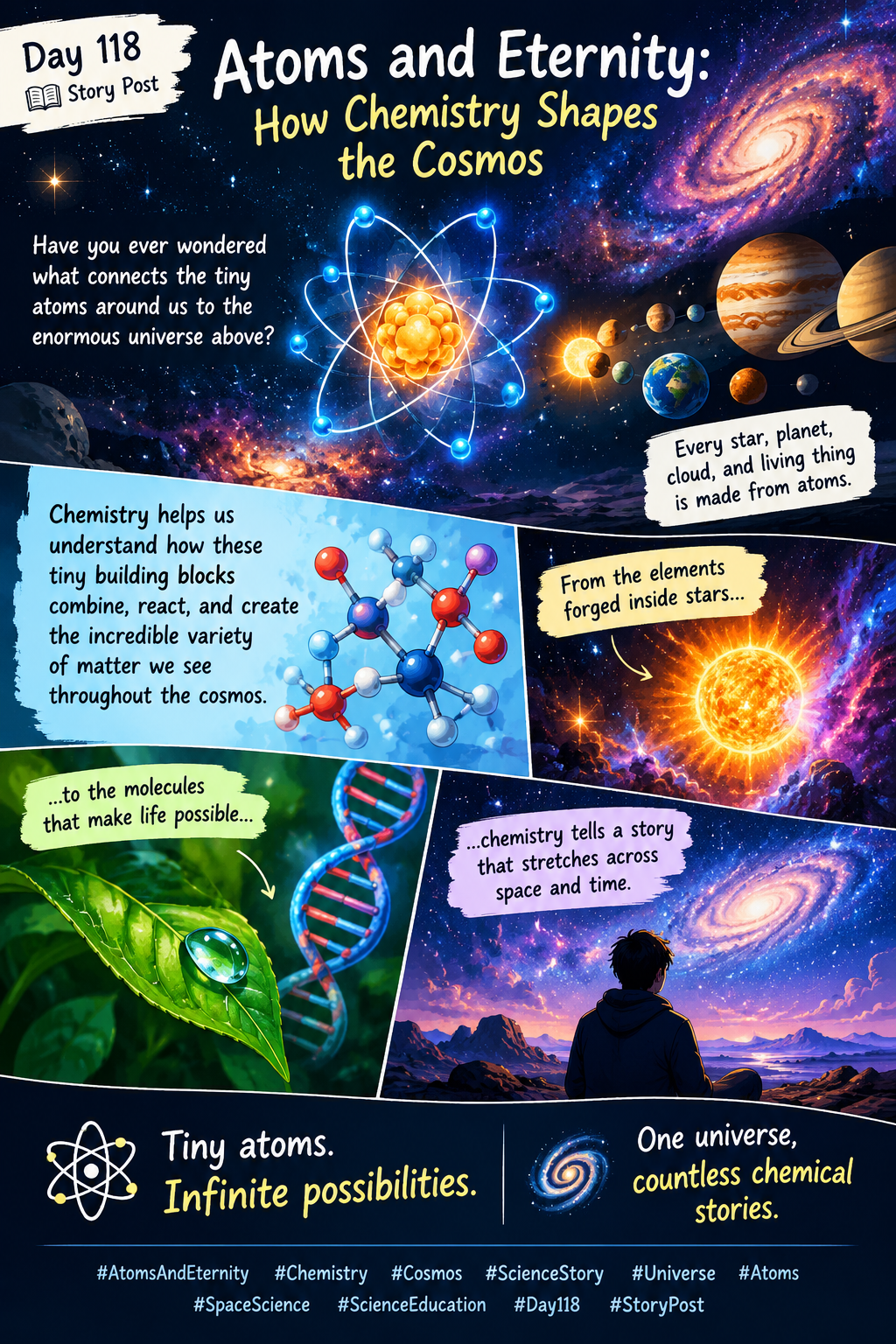
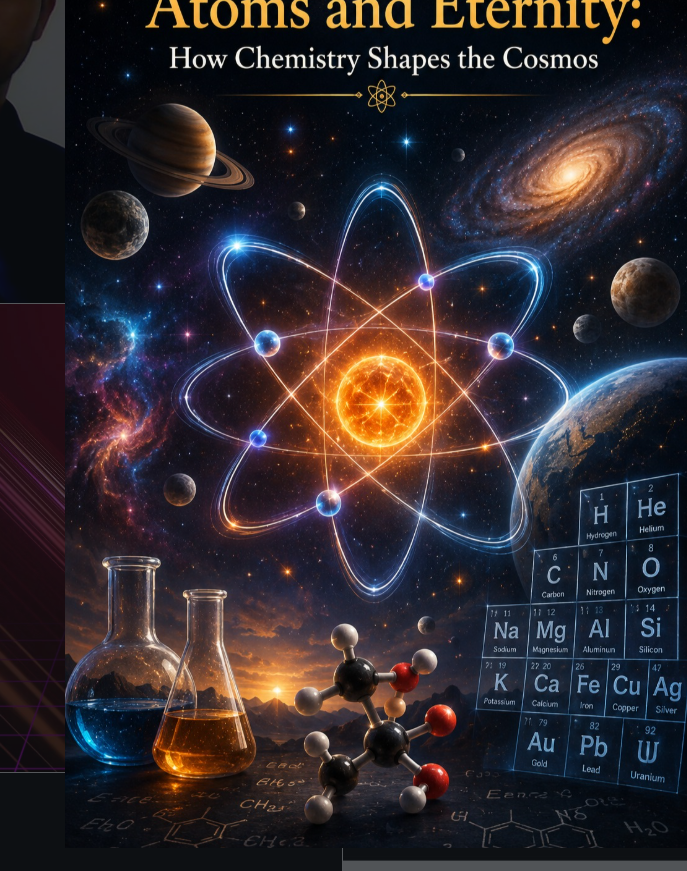
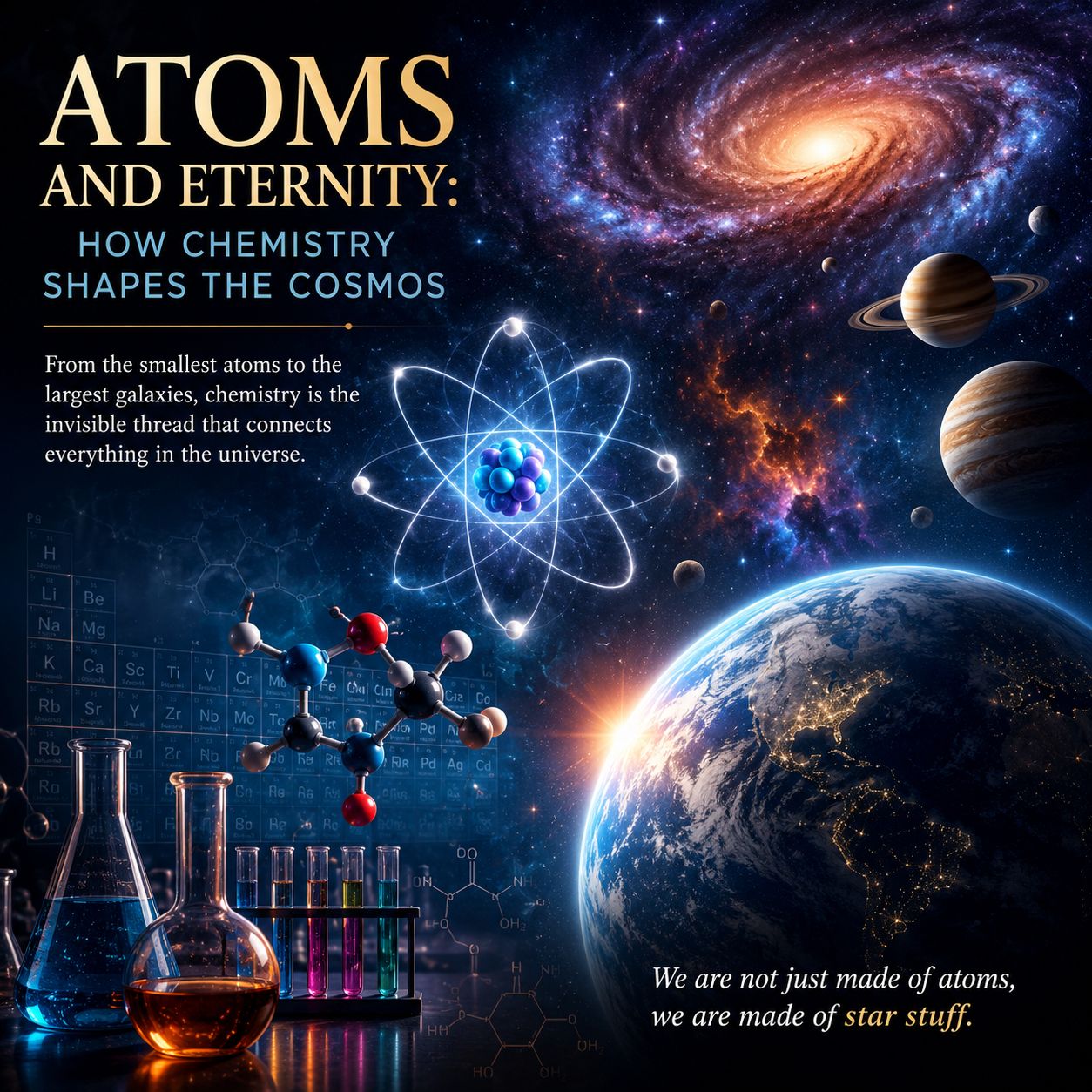
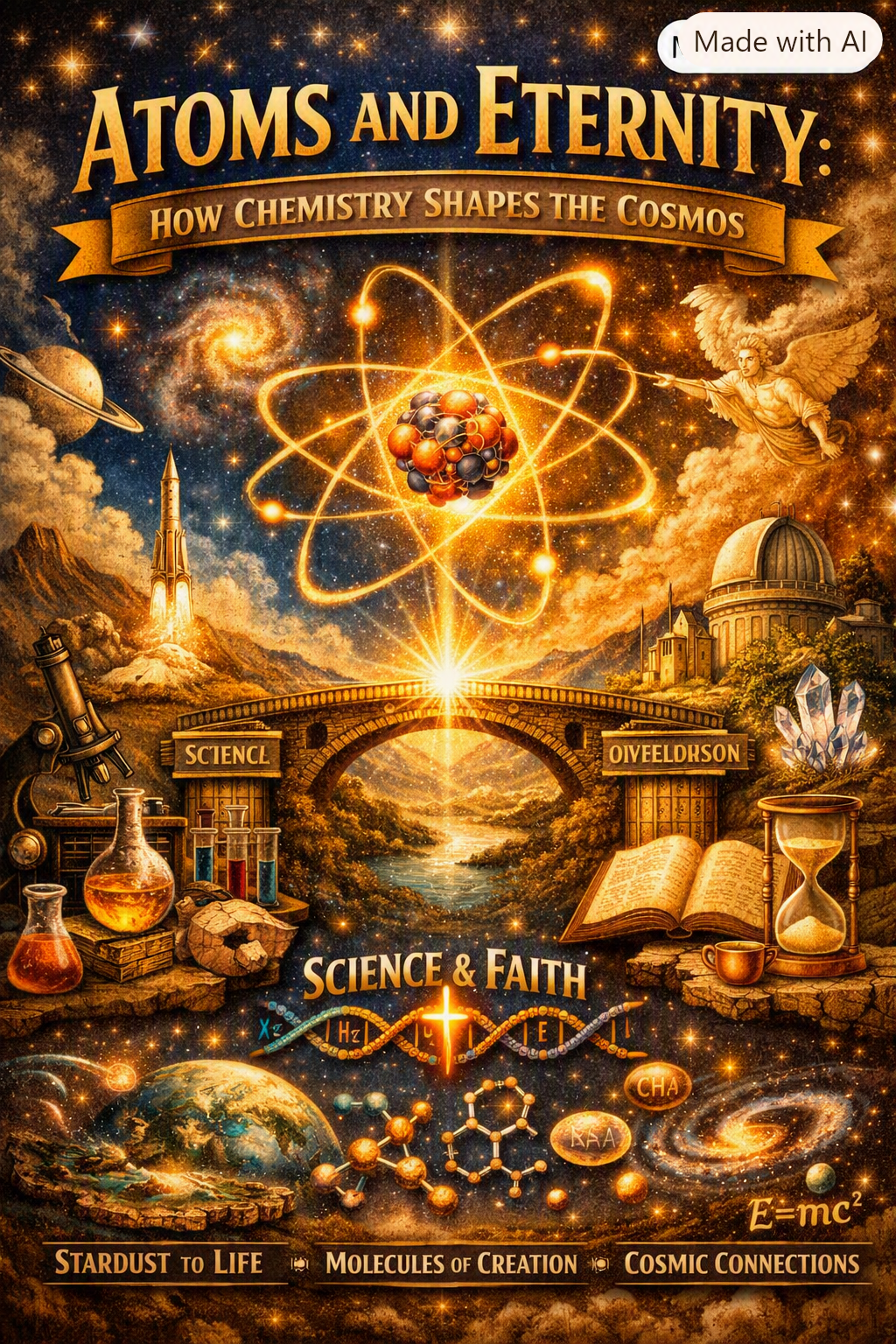
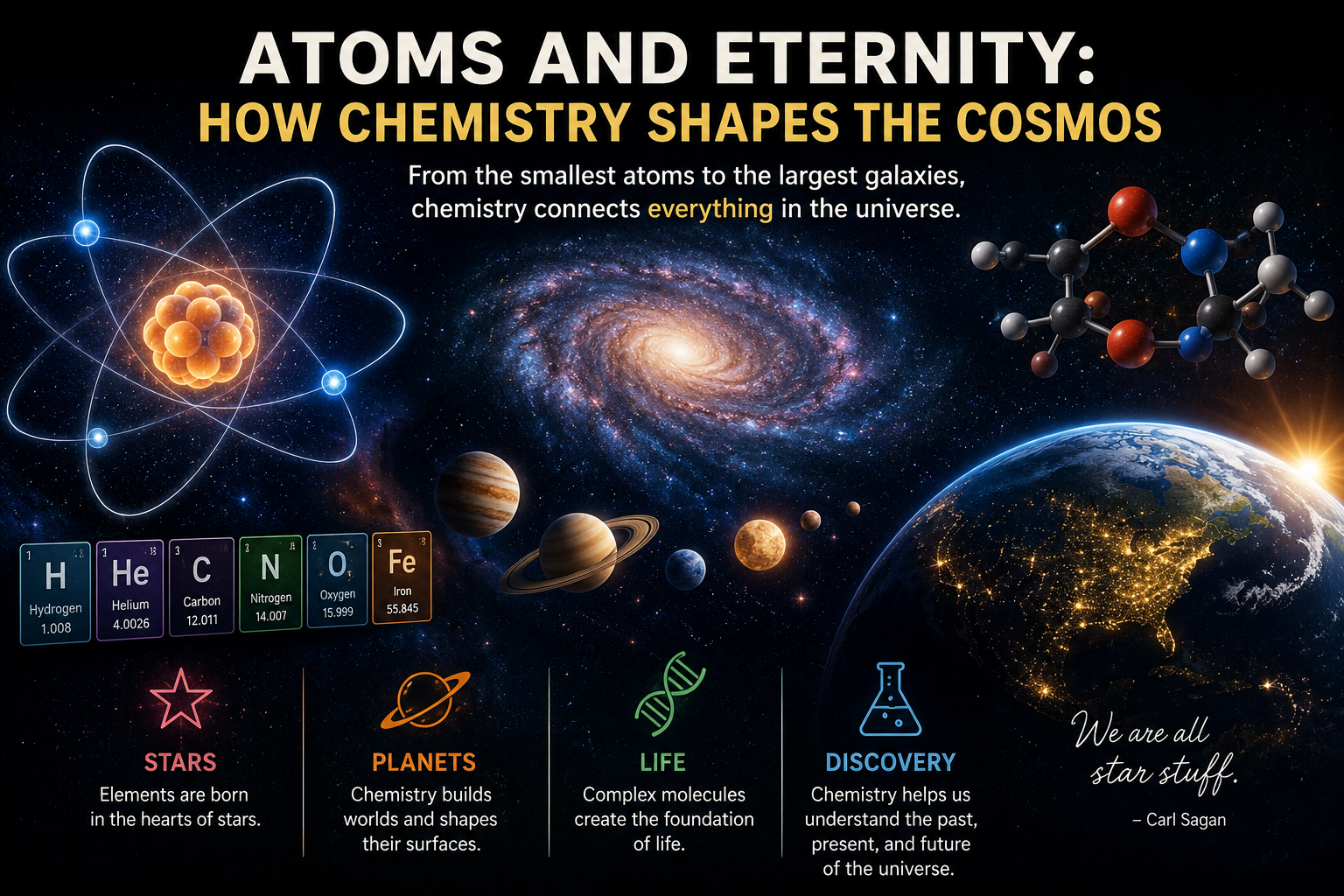
    **Atoms and Eternity: How Chemistry Shapes the Cosmos** takes us on an incredible journey through the hidden world of atoms and molecules that make up everything around us. From the smallest particles inside atoms to the formation of stars, planets, and life itself, chemistry is the powerful force that connects the universe.

    Every element in the cosmos has a story — created inside ancient stars, spread across galaxies, and combined through chemical reactions to build the world we know today. The same atoms that formed distant planets also exist within our bodies, showing the deep connection between humanity and the universe.

    This exploration reveals how chemistry acts as the language of creation, explaining the birth of matter, the evolution of life, and the endless possibilities of the cosmos.

    Join this fascinating journey to discover how tiny atoms create the vast universe and how chemistry shapes the eternity of existence.

    #AtomsAndEternity #ChemistryOfCosmos #ScienceJourney #UniverseExploration #Atoms #Molecules #CosmicChemistry #ScienceEducation #MysteriesOfTheUniverse

    Rehan School Islamabad Campus
    Asma Shaheen EducationWali
    Irum Asim
    Saima Happinesswali
    #rsisb Roll No.240 Story No.22 Foundation Level ### 🌌 **Atoms and Eternity: How Chemistry Shapes the Cosmos – Description** ✨ 🔬 **Atoms and Eternity: How Chemistry Shapes the Cosmos** takes us on an incredible journey through the hidden world of atoms and molecules that make up everything around us. From the smallest particles inside atoms to the formation of stars, planets, and life itself, chemistry is the powerful force that connects the universe. 🌠 Every element in the cosmos has a story — created inside ancient stars, spread across galaxies, and combined through chemical reactions to build the world we know today. The same atoms that formed distant planets also exist within our bodies, showing the deep connection between humanity and the universe. 🧪 This exploration reveals how chemistry acts as the language of creation, explaining the birth of matter, the evolution of life, and the endless possibilities of the cosmos. 🌍 Join this fascinating journey to discover how tiny atoms create the vast universe and how chemistry shapes the eternity of existence. #AtomsAndEternity #ChemistryOfCosmos #ScienceJourney #UniverseExploration #Atoms #Molecules #CosmicChemistry #ScienceEducation #MysteriesOfTheUniverse 🌌🔬✨ Rehan School Islamabad Campus Asma Shaheen EducationWali Irum Asim Saima Happinesswali
    0 Comentários 0 Compartilhamentos 29 Visualizações
  • #rsisb
    Roll no.239
    Foundation Level

    “Atoms and Eternity: How Chemistry Shapes the Cosmos” explores the fascinating connection between the tiny world of atoms and the enormous universe.

    Everything around us—from stars and planets to water, rocks, plants, and living organisms—is made of atoms.


    Chemistry explains how atoms combine to form molecules and materials. Inside stars, nuclear processes create many of the elements that later become part of planets and living things. Over billions of years, these elements travel through space and become ingredients for new stars, worlds, and life.

    The topic reminds us that the same fundamental building blocks found throughout the cosmos also make up our own bodies. In this sense, chemistry connects the smallest particles to the vast story of the universe.

    Key idea: Atoms may be incredibly small, but their interactions shape everything we see—and their story reaches across cosmic time.
    #rsisb Roll no.239 Foundation Level “Atoms and Eternity: How Chemistry Shapes the Cosmos” explores the fascinating connection between the tiny world of atoms and the enormous universe. Everything around us—from stars and planets to water, rocks, plants, and living organisms—is made of atoms. Chemistry explains how atoms combine to form molecules and materials. Inside stars, nuclear processes create many of the elements that later become part of planets and living things. Over billions of years, these elements travel through space and become ingredients for new stars, worlds, and life. The topic reminds us that the same fundamental building blocks found throughout the cosmos also make up our own bodies. In this sense, chemistry connects the smallest particles to the vast story of the universe. Key idea: Atoms may be incredibly small, but their interactions shape everything we see—and their story reaches across cosmic time.
    0 Comentários 0 Compartilhamentos 50 Visualizações
  • #rsisb
    Roll No.221
    Song No.20
    Foundation Level


    ** Black Holes and Beyond: Exploring the Limits of Physics | Urdu Educational Song **

    Journey into the mysteries of the universe with this inspiring Urdu educational song about **black holes, gravity, space, and the limitless wonders of physics**. From the incredible power of black holes to the secrets hidden deep within the cosmos, this song celebrates humanity's curiosity and our endless quest to understand the universe.

    Whether you're passionate about **science, astronomy, astrophysics, or space exploration**, this song is designed to inspire learning, imagination, and discovery.

    If you enjoyed this educational song, don't forget to **Like, Share, Comment, and Subscribe** for more science-based songs and educational content.

    **#BlackHoles #Physics #Astronomy #Space #Universe #Cosmos #Science #Astrophysics #SpaceExploration #EducationalSong #STEM #Learning #Galaxy #CosmicMystery #UrduSong #YouTube #Facebook**
    Asma Shaheen EducationWali
    Irum Asim
    Saima Happinesswali
    @followers
    #rsisb Roll No.221 Song No.20 Foundation Level **🌌 Black Holes and Beyond: Exploring the Limits of Physics | Urdu Educational Song 🚀** Journey into the mysteries of the universe with this inspiring Urdu educational song about **black holes, gravity, space, and the limitless wonders of physics**. From the incredible power of black holes to the secrets hidden deep within the cosmos, this song celebrates humanity's curiosity and our endless quest to understand the universe. Whether you're passionate about **science, astronomy, astrophysics, or space exploration**, this song is designed to inspire learning, imagination, and discovery. 🎵 If you enjoyed this educational song, don't forget to **Like, Share, Comment, and Subscribe** for more science-based songs and educational content. **#BlackHoles #Physics #Astronomy #Space #Universe #Cosmos #Science #Astrophysics #SpaceExploration #EducationalSong #STEM #Learning #Galaxy #CosmicMystery #UrduSong #YouTube #Facebook** Asma Shaheen EducationWali Irum Asim Saima Happinesswali @followers
    0 Comentários 0 Compartilhamentos 2946 Visualizações 27
  • Help me improve this text !

    Every human being has their own universe, with their own sun and the moon that is there to make this cosmos beautiful with their glow !

    As we are born the culture wraps us, hides our light, trying to protect our light, not knowing that they are depriving the world from our Magic !

    I started working when I was 13 with my first company selling Commodore 64 Games and after over 150 Enterprenueiral projects, discovered that my true gift is to be able to help others find their gifts and allowing them to glow the world around them with their light.

    If you feel that I can help you find your gift, your light that You came to this planet to shine, join me and lets uncover your true magic, showing the world, who you really are and how they can benefit from you.
    Help me improve this text ! Every human being has their own universe, with their own sun and the moon that is there to make this cosmos beautiful with their glow ! As we are born the culture wraps us, hides our light, trying to protect our light, not knowing that they are depriving the world from our Magic ! I started working when I was 13 with my first company selling Commodore 64 Games and after over 150 Enterprenueiral projects, discovered that my true gift is to be able to help others find their gifts and allowing them to glow the world around them with their light. If you feel that I can help you find your gift, your light that You came to this planet to shine, join me and let's uncover your true magic, showing the world, who you really are and how they can benefit from you.
    0 Comentários 0 Compartilhamentos 470 Visualizações
  • Ibn Arabi, whose full name is Muhyiddin Muhammad ibn Ali ibn Muhammad ibn Arabi al-Hatimi at-Tai, was a prominent Arab Andalusian Muslim scholar, mystic, philosopher, and poet. He was born in 1165 CE in what is now modern-day Spain and passed away in 1240 CE in Damascus, Syria. Ibn Arabi is considered one of the most important figures in Islamic mysticism, known as Sufism.

    Key points about Ibn Arabi:

    1. **Sufi Mystic:** Ibn Arabi is often referred to as "al-Shaykh al-Akbar" (The Greatest Master) within Sufism due to the profound impact of his mystical writings and teachings. He was a leading figure in the development of Sufi thought and spirituality.

    2. **Writings:** He authored numerous works, including "Fusus al-Hikam" (The Ringstones of Wisdom), "Al-Futuhat al-Makkiyya" (The Meccan Revelations), and "Tarjuman al-Ashwaq" (The Interpreter of Desires), among others. These writings delve into profound metaphysical and spiritual topics.

    3. **Unity of Existence:** Ibn Arabis central philosophical and mystical concept is the "Unity of Existence" (wahdat al-wujud). He believed that there is a fundamental unity underlying all existence, and that Gods essence permeates everything in the universe.

    4. **Influence:** His writings have had a profound influence on Islamic philosophy, Sufism, and mysticism. They have been studied and revered by scholars, mystics, and poets throughout the centuries.

    5. **Travel:** Ibn Arabi traveled extensively throughout the Islamic world, including Spain, North Africa, the Middle East, and Anatolia, where he engaged with various Sufi orders and scholars.

    6. **Legacy:** Ibn Arabis teachings continue to be studied and respected by those interested in Islamic mysticism and philosophy. His ideas about the nature of God, the cosmos, and the self have had a lasting impact on Islamic thought and continue to inspire spiritual seekers.

    Ibn Arabis writings are often complex and deeply philosophical, and they explore the relationship between human beings and the divine. His work remains an important part of the intellectual and spiritual heritage of the Islamic world.
    Ibn Arabi, whose full name is Muhyiddin Muhammad ibn Ali ibn Muhammad ibn Arabi al-Hatimi at-Ta'i, was a prominent Arab Andalusian Muslim scholar, mystic, philosopher, and poet. He was born in 1165 CE in what is now modern-day Spain and passed away in 1240 CE in Damascus, Syria. Ibn Arabi is considered one of the most important figures in Islamic mysticism, known as Sufism. Key points about Ibn Arabi: 1. **Sufi Mystic:** Ibn Arabi is often referred to as "al-Shaykh al-Akbar" (The Greatest Master) within Sufism due to the profound impact of his mystical writings and teachings. He was a leading figure in the development of Sufi thought and spirituality. 2. **Writings:** He authored numerous works, including "Fusus al-Hikam" (The Ringstones of Wisdom), "Al-Futuhat al-Makkiyya" (The Meccan Revelations), and "Tarjuman al-Ashwaq" (The Interpreter of Desires), among others. These writings delve into profound metaphysical and spiritual topics. 3. **Unity of Existence:** Ibn Arabi's central philosophical and mystical concept is the "Unity of Existence" (wahdat al-wujud). He believed that there is a fundamental unity underlying all existence, and that God's essence permeates everything in the universe. 4. **Influence:** His writings have had a profound influence on Islamic philosophy, Sufism, and mysticism. They have been studied and revered by scholars, mystics, and poets throughout the centuries. 5. **Travel:** Ibn Arabi traveled extensively throughout the Islamic world, including Spain, North Africa, the Middle East, and Anatolia, where he engaged with various Sufi orders and scholars. 6. **Legacy:** Ibn Arabi's teachings continue to be studied and respected by those interested in Islamic mysticism and philosophy. His ideas about the nature of God, the cosmos, and the self have had a lasting impact on Islamic thought and continue to inspire spiritual seekers. Ibn Arabi's writings are often complex and deeply philosophical, and they explore the relationship between human beings and the divine. His work remains an important part of the intellectual and spiritual heritage of the Islamic world.
    0 Comentários 0 Compartilhamentos 967 Visualizações
  • Before the time of Moses (Musa in Islamic tradition), a variety of religious beliefs and practices existed in the regions surrounding what is now known as Israel and Palestine, as well as in broader ancient Mesopotamia, Egypt, and the Levant. Some of the prominent religions and belief systems included:

    1. **Ancient Egyptian Religion**:
    - A complex system of polytheistic beliefs and rituals integral to ancient Egyptian society. Gods and goddesses represented aspects of nature or society, and practices included temple rituals, festivals, and rites related to the afterlife.

    2. **Mesopotamian Religion**:
    - In ancient Mesopotamia (modern-day Iraq and Syria), a rich pantheon of gods and goddesses was worshipped. Deities like Anu, Enlil, and Ishtar were central figures. Religion was deeply integrated into daily life, governance, and the cosmoss understanding.

    3. **Canaanite Religion**:
    - In the Levant, including areas of modern-day Israel, Lebanon, and Syria, the Canaanite religion was practiced. It was polytheistic with gods like El, Baal, and Asherah. The Canaanite religion influenced and was influenced by neighboring cultures.

    4. **Anatolian Religions**:
    - In ancient Anatolia (modern-day Turkey), various indigenous religions were practiced, often involving worship of nature deities and mother goddesses.

    5. **Sumerian Religion**:
    - One of the earliest known religions, practiced in ancient Sumer (southern Mesopotamia). It included a pantheon of gods who were believed to control all aspects of the natural world and society.

    6. **Akkadian and Babylonian Religion**:
    - As cultures and empires evolved in Mesopotamia, so did their religious beliefs. Notable deities included Marduk, who rose to prominence in Babylon.

    These ancient religions were typically polytheistic, involving the worship of multiple gods and goddesses associated with natural elements, celestial bodies, and human activities. They often included elaborate myths, rituals, and temple ceremonies. The arrival of monotheistic religions, such as Judaism with figures like Moses, marked a significant shift in religious thought and practice in the region and beyond.
    Before the time of Moses (Musa in Islamic tradition), a variety of religious beliefs and practices existed in the regions surrounding what is now known as Israel and Palestine, as well as in broader ancient Mesopotamia, Egypt, and the Levant. Some of the prominent religions and belief systems included: 1. **Ancient Egyptian Religion**: - A complex system of polytheistic beliefs and rituals integral to ancient Egyptian society. Gods and goddesses represented aspects of nature or society, and practices included temple rituals, festivals, and rites related to the afterlife. 2. **Mesopotamian Religion**: - In ancient Mesopotamia (modern-day Iraq and Syria), a rich pantheon of gods and goddesses was worshipped. Deities like Anu, Enlil, and Ishtar were central figures. Religion was deeply integrated into daily life, governance, and the cosmos's understanding. 3. **Canaanite Religion**: - In the Levant, including areas of modern-day Israel, Lebanon, and Syria, the Canaanite religion was practiced. It was polytheistic with gods like El, Baal, and Asherah. The Canaanite religion influenced and was influenced by neighboring cultures. 4. **Anatolian Religions**: - In ancient Anatolia (modern-day Turkey), various indigenous religions were practiced, often involving worship of nature deities and mother goddesses. 5. **Sumerian Religion**: - One of the earliest known religions, practiced in ancient Sumer (southern Mesopotamia). It included a pantheon of gods who were believed to control all aspects of the natural world and society. 6. **Akkadian and Babylonian Religion**: - As cultures and empires evolved in Mesopotamia, so did their religious beliefs. Notable deities included Marduk, who rose to prominence in Babylon. These ancient religions were typically polytheistic, involving the worship of multiple gods and goddesses associated with natural elements, celestial bodies, and human activities. They often included elaborate myths, rituals, and temple ceremonies. The arrival of monotheistic religions, such as Judaism with figures like Moses, marked a significant shift in religious thought and practice in the region and beyond.
    0 Comentários 0 Compartilhamentos 887 Visualizações
  • Hermetic teachings are a set of ancient spiritual, philosophical, and mystical ideas based on the writings attributed to Hermes Trismegistus—a legendary figure who is believed to be a blend of the Greek god Hermes and the Egyptian god Thoth.

    Core of Hermetic Teachings

    They’re summarized in a set of principles that describe how the universe works. These ideas are mostly found in texts like:
    • The Kybalion
    • Corpus Hermeticum

    Think of Hermeticism as a spiritual science from ancient Egypt and Greece. It tries to explain the nature of God, the cosmos, the mind, and human potential.


    The 7 Hermetic Principles (from The Kybalion)
    1. The Principle of Mentalism
    “The All is Mind.”
    Everything begins in the mind — the universe is like a mental projection.
    2. The Principle of Correspondence
    “As above, so below; as below, so above.”
    What happens on one level (like the spiritual) reflects what happens on another (like the physical).
    3. The Principle of Vibration
    “Nothing rests; everything moves; everything vibrates.”
    Everything is energy and in constant motion.
    4. The Principle of Polarity
    “Everything is dual; everything has poles.”
    Opposites are actually two ends of the same thing — hot/cold, light/dark, love/hate.
    5. The Principle of Rhythm
    “Everything flows, out and in.”
    Life moves in cycles — rise and fall, expansion and contraction.
    6. The Principle of Cause and Effect
    “Every cause has its effect; every effect has its cause.”
    Nothing happens by chance — even “luck” has a reason.
    7. The Principle of Gender
    “Gender is in everything; everything has its masculine and feminine principles.”
    Not just biological — this refers to creative energies and dualities in all things.


    Why People Study It

    Hermetic teachings offer a toolkit for self-mastery, manifestation, healing, and enlightenment.
    People into alchemy, magic, mysticism, the occult, or even psychology often draw from Hermetic wisdom.


    Quick Note

    It’s not a religion — it’s more like a philosophical framework. You can be any religion and still study Hermeticism.
    Hermetic teachings are a set of ancient spiritual, philosophical, and mystical ideas based on the writings attributed to Hermes Trismegistus—a legendary figure who is believed to be a blend of the Greek god Hermes and the Egyptian god Thoth. 🔑 Core of Hermetic Teachings They’re summarized in a set of principles that describe how the universe works. These ideas are mostly found in texts like: • The Kybalion • Corpus Hermeticum Think of Hermeticism as a spiritual science from ancient Egypt and Greece. It tries to explain the nature of God, the cosmos, the mind, and human potential. ⸻ 🌟 The 7 Hermetic Principles (from The Kybalion) 1. The Principle of Mentalism 👉 “The All is Mind.” Everything begins in the mind — the universe is like a mental projection. 2. The Principle of Correspondence 👉 “As above, so below; as below, so above.” What happens on one level (like the spiritual) reflects what happens on another (like the physical). 3. The Principle of Vibration 👉 “Nothing rests; everything moves; everything vibrates.” Everything is energy and in constant motion. 4. The Principle of Polarity 👉 “Everything is dual; everything has poles.” Opposites are actually two ends of the same thing — hot/cold, light/dark, love/hate. 5. The Principle of Rhythm 👉 “Everything flows, out and in.” Life moves in cycles — rise and fall, expansion and contraction. 6. The Principle of Cause and Effect 👉 “Every cause has its effect; every effect has its cause.” Nothing happens by chance — even “luck” has a reason. 7. The Principle of Gender 👉 “Gender is in everything; everything has its masculine and feminine principles.” Not just biological — this refers to creative energies and dualities in all things. ⸻ 🧠 Why People Study It Hermetic teachings offer a toolkit for self-mastery, manifestation, healing, and enlightenment. People into alchemy, magic, mysticism, the occult, or even psychology often draw from Hermetic wisdom. ⸻ ⚠️ Quick Note It’s not a religion — it’s more like a philosophical framework. You can be any religion and still study Hermeticism.
    0 Comentários 0 Compartilhamentos 609 Visualizações
  • Inventing New Physics with AI

    Physics has always been the foundation of human progress. It explains the motion of planets, the behavior of particles, the nature of light, and the birth of the universe. Yet, the history of physics also shows that what we call “truth” is never final. Newton’s mechanics gave way to Einstein’s relativity. Relativity opened the door to quantum mechanics. And today, even quantum physics struggles to unify with gravity. This means one thing: new physics is waiting to be born.

    For the first time in history, we have a partner that past geniuses never had—Artificial Intelligence. By working with systems like ChatGPT, we can accelerate the creation of entirely new branches of physics.


    1. Begin with the Unexplainable

    New physics begins where old physics fails.
    • Why does consciousness arise from matter?
    • What is “dark energy” and “dark matter,” which make up 95% of the universe but remain invisible?
    • Why does quantum entanglement allow instant correlations faster than light?
    • What exactly is “time”?

    With ChatGPT, researchers can generate hundreds of possible hypotheses and frameworks in hours instead of decades, each pointing toward unexplored laws of nature.


    2. Map the Existing Landscape

    Physics is vast, scattered across thousands of papers and theories. One human cannot read them all. But an AI can scan, summarize, and compare ideas at scale. ChatGPT can highlight contradictions, find unexplored connections, and expose the “white spaces” where new physics might emerge.

    Example: Unifying general relativity (gravity) with quantum field theory (particles) has remained unsolved for a century. An AI can review every attempt, classify their assumptions, and suggest new combinations never tried before.


    3. Generate New Models and Mathematics

    At the heart of physics lies mathematics. New symbols and equations give us new ways to describe reality. AI can:
    • Suggest new mathematical operators that describe phenomena like entanglement.
    • Simulate universes with different physical constants.
    • Test whether a new equation produces consistent predictions with observed data.

    This turns ChatGPT into a co-inventor of mathematical languages for new physics.


    4. Design Thought Experiments

    Einstein invented relativity not in a lab, but by imagining himself riding a beam of light. Today, ChatGPT can help invent thousands of such thought experiments:
    • What happens inside a black hole if information is never lost?
    • What if time is not a line but a loop?
    • What if gravity is not a force but an emergent property of information flow?

    Each thought experiment becomes a seed for real experiments.


    5. Simulate and Test

    With integration into physics engines and quantum simulators, AI can model the consequences of new laws. For example:
    • If a new theory of time predicts particles aging differently, we can simulate particle decays.
    • If a new geometry explains dark matter, AI can test its predictions against galaxy rotation curves.

    In hours, we can discard weak theories and refine promising ones.


    6. Build a New Physics Community

    New sciences require believers. By writing manifestos, publishing papers, and building institutes, we can attract students and researchers to test these new frameworks. A “Physics of Consciousness” or “Physics of Abundance” could start at Rehan School and spread globally.


    7. Democratizing Physics

    For centuries, physics was locked in elite universities. With AI, every curious student—whether in Karachi, Kathmandu, or Kansas—can run experiments, test equations, and publish ideas. This democratization could unleash the next Newton or Einstein from anywhere in the world.


    Conclusion

    Inventing new physics is no longer the privilege of a lone genius with a chalkboard. It is a collective act powered by AI. By combining human imagination with AI’s capacity for infinite connections, we can explore questions that have haunted humanity for centuries.

    With ChatGPT, we are not just studying the universe—we are invited to reinvent the laws that define it.

    The physics of tomorrow will not only explain the cosmos. It will explain us.
    Inventing New Physics with AI Physics has always been the foundation of human progress. It explains the motion of planets, the behavior of particles, the nature of light, and the birth of the universe. Yet, the history of physics also shows that what we call “truth” is never final. Newton’s mechanics gave way to Einstein’s relativity. Relativity opened the door to quantum mechanics. And today, even quantum physics struggles to unify with gravity. This means one thing: new physics is waiting to be born. For the first time in history, we have a partner that past geniuses never had—Artificial Intelligence. By working with systems like ChatGPT, we can accelerate the creation of entirely new branches of physics. ⸻ 1. Begin with the Unexplainable New physics begins where old physics fails. • Why does consciousness arise from matter? • What is “dark energy” and “dark matter,” which make up 95% of the universe but remain invisible? • Why does quantum entanglement allow instant correlations faster than light? • What exactly is “time”? With ChatGPT, researchers can generate hundreds of possible hypotheses and frameworks in hours instead of decades, each pointing toward unexplored laws of nature. ⸻ 2. Map the Existing Landscape Physics is vast, scattered across thousands of papers and theories. One human cannot read them all. But an AI can scan, summarize, and compare ideas at scale. ChatGPT can highlight contradictions, find unexplored connections, and expose the “white spaces” where new physics might emerge. Example: Unifying general relativity (gravity) with quantum field theory (particles) has remained unsolved for a century. An AI can review every attempt, classify their assumptions, and suggest new combinations never tried before. ⸻ 3. Generate New Models and Mathematics At the heart of physics lies mathematics. New symbols and equations give us new ways to describe reality. AI can: • Suggest new mathematical operators that describe phenomena like entanglement. • Simulate universes with different physical constants. • Test whether a new equation produces consistent predictions with observed data. This turns ChatGPT into a co-inventor of mathematical languages for new physics. ⸻ 4. Design Thought Experiments Einstein invented relativity not in a lab, but by imagining himself riding a beam of light. Today, ChatGPT can help invent thousands of such thought experiments: • What happens inside a black hole if information is never lost? • What if time is not a line but a loop? • What if gravity is not a force but an emergent property of information flow? Each thought experiment becomes a seed for real experiments. ⸻ 5. Simulate and Test With integration into physics engines and quantum simulators, AI can model the consequences of new laws. For example: • If a new theory of time predicts particles aging differently, we can simulate particle decays. • If a new geometry explains dark matter, AI can test its predictions against galaxy rotation curves. In hours, we can discard weak theories and refine promising ones. ⸻ 6. Build a New Physics Community New sciences require believers. By writing manifestos, publishing papers, and building institutes, we can attract students and researchers to test these new frameworks. A “Physics of Consciousness” or “Physics of Abundance” could start at Rehan School and spread globally. ⸻ 7. Democratizing Physics For centuries, physics was locked in elite universities. With AI, every curious student—whether in Karachi, Kathmandu, or Kansas—can run experiments, test equations, and publish ideas. This democratization could unleash the next Newton or Einstein from anywhere in the world. ⸻ Conclusion Inventing new physics is no longer the privilege of a lone genius with a chalkboard. It is a collective act powered by AI. By combining human imagination with AI’s capacity for infinite connections, we can explore questions that have haunted humanity for centuries. With ChatGPT, we are not just studying the universe—we are invited to reinvent the laws that define it. The physics of tomorrow will not only explain the cosmos. It will explain us.
    0 Comentários 0 Compartilhamentos 1379 Visualizações
  • The Physics of Abundance

    For most of human history, people lived in scarcity. Food was limited, energy was rare, knowledge was locked in books, and only a few had the privilege to dream beyond survival. But scarcity is not a law of nature. It is a condition created by incomplete understanding of the universe.

    Physics teaches us that the universe is made of infinite energy and matter, constantly transforming but never destroyed. If energy and matter are abundant in the cosmos, why should human societies be trapped in scarcity? The answer is not that abundance does not exist—it is that we have not yet developed the science to access it fully. This is where the Physics of Abundance begins.


    1. Energy is Infinite

    According to the laws of physics, energy cannot be created or destroyed; it only changes form. The sun releases more energy in one second than humanity has used in its entire history. The oceans, the wind, the geothermal heat of the Earth—these are all vast reservoirs. Scarcity exists not because energy is missing, but because our systems to capture and distribute it are inefficient.

    The Physics of Abundance studies how to unlock infinite energy flows cheaply, cleanly, and universally. Solar panels, wind farms, fusion reactors, and AI-driven energy grids are not just technologies—they are gateways to abundance.


    2. Information Multiplies, Not Depletes

    Unlike material resources, information grows the more it is shared. If I give you knowledge, I do not lose mine; we both gain. The internet and artificial intelligence have transformed information into a self-replicating resource.

    The Physics of Abundance treats information as a new form of “energy.” Just as electricity powers machines, information powers human creativity. With AI, one idea can turn into a million applications overnight.


    3. Networks Create Exponential Value

    Physics teaches that particles interact through forces. In human systems, people interact through networks. A single human may have limited capacity, but when connected through digital networks, the total output becomes exponential.

    The Physics of Abundance explores the mathematics of connectivity: how each new node in a network multiplies the opportunities for trade, collaboration, and innovation. This explains why connected societies grow richer, healthier, and more creative.


    4. Ego as Friction in the System

    In physics, friction wastes energy. In society, ego plays the same role. Ego creates competition where cooperation is possible, hoards resources where sharing multiplies value, and breeds inequality instead of balance.

    The Physics of Abundance includes the reduction of “ego friction.” Humility, collaboration, and service are not just virtues—they are efficient states of energy flow in human systems. By lowering ego, more abundance flows to more people.


    5. The Abundance Equation

    If we merge energy, information, and networks, we arrive at an equation:

    Abundance = (Energy × Information × Networks) – Ego Friction

    This is the foundation of a measurable science. It shows that scarcity is not natural—it is engineered by inefficiency, disconnection, and ego.


    6. From Theory to Practice

    The Physics of Abundance must not remain abstract. It must guide how we build schools, design economies, and solve problems:
    • Free energy through renewables.
    • Free education through AI tutors.
    • Free healthcare through connected sensors and AI diagnostics.
    • Free opportunity through global digital work platforms.

    In such a system, scarcity becomes a choice, not a destiny.


    Conclusion

    The Physics of Abundance declares that the universe is generous, not stingy. Energy is infinite, information multiplies, networks expand value, and ego is the only true limiter. By studying these laws and designing systems that follow them, humanity can move from survival to flourishing.

    Scarcity was yesterday’s physics. Abundance is the new law of nature.
    The Physics of Abundance For most of human history, people lived in scarcity. Food was limited, energy was rare, knowledge was locked in books, and only a few had the privilege to dream beyond survival. But scarcity is not a law of nature. It is a condition created by incomplete understanding of the universe. Physics teaches us that the universe is made of infinite energy and matter, constantly transforming but never destroyed. If energy and matter are abundant in the cosmos, why should human societies be trapped in scarcity? The answer is not that abundance does not exist—it is that we have not yet developed the science to access it fully. This is where the Physics of Abundance begins. ⸻ 1. Energy is Infinite According to the laws of physics, energy cannot be created or destroyed; it only changes form. The sun releases more energy in one second than humanity has used in its entire history. The oceans, the wind, the geothermal heat of the Earth—these are all vast reservoirs. Scarcity exists not because energy is missing, but because our systems to capture and distribute it are inefficient. The Physics of Abundance studies how to unlock infinite energy flows cheaply, cleanly, and universally. Solar panels, wind farms, fusion reactors, and AI-driven energy grids are not just technologies—they are gateways to abundance. ⸻ 2. Information Multiplies, Not Depletes Unlike material resources, information grows the more it is shared. If I give you knowledge, I do not lose mine; we both gain. The internet and artificial intelligence have transformed information into a self-replicating resource. The Physics of Abundance treats information as a new form of “energy.” Just as electricity powers machines, information powers human creativity. With AI, one idea can turn into a million applications overnight. ⸻ 3. Networks Create Exponential Value Physics teaches that particles interact through forces. In human systems, people interact through networks. A single human may have limited capacity, but when connected through digital networks, the total output becomes exponential. The Physics of Abundance explores the mathematics of connectivity: how each new node in a network multiplies the opportunities for trade, collaboration, and innovation. This explains why connected societies grow richer, healthier, and more creative. ⸻ 4. Ego as Friction in the System In physics, friction wastes energy. In society, ego plays the same role. Ego creates competition where cooperation is possible, hoards resources where sharing multiplies value, and breeds inequality instead of balance. The Physics of Abundance includes the reduction of “ego friction.” Humility, collaboration, and service are not just virtues—they are efficient states of energy flow in human systems. By lowering ego, more abundance flows to more people. ⸻ 5. The Abundance Equation If we merge energy, information, and networks, we arrive at an equation: Abundance = (Energy × Information × Networks) – Ego Friction This is the foundation of a measurable science. It shows that scarcity is not natural—it is engineered by inefficiency, disconnection, and ego. ⸻ 6. From Theory to Practice The Physics of Abundance must not remain abstract. It must guide how we build schools, design economies, and solve problems: • Free energy through renewables. • Free education through AI tutors. • Free healthcare through connected sensors and AI diagnostics. • Free opportunity through global digital work platforms. In such a system, scarcity becomes a choice, not a destiny. ⸻ Conclusion The Physics of Abundance declares that the universe is generous, not stingy. Energy is infinite, information multiplies, networks expand value, and ego is the only true limiter. By studying these laws and designing systems that follow them, humanity can move from survival to flourishing. Scarcity was yesterday’s physics. Abundance is the new law of nature.
    0 Comentários 0 Compartilhamentos 657 Visualizações
  • What is Physics? A Journey from Curiosity to Science

    Physics is the science of nature. It studies the laws that govern matter, energy, space, and time. From the falling of an apple to the motion of galaxies, from the spark of electricity to the mysteries of black holes, physics explains how the universe works.

    But physics did not appear fully formed. It has a long history, beginning with human curiosity thousands of years ago.


    1. The Birth of Wonder (Ancient Civilizations)

    The story of physics begins with the first humans who looked at the sky and asked:
    • Why do the stars move?
    • Why does the sun rise and set?
    • Why do objects fall down instead of up?

    Ancient Egyptians studied the stars to predict the Nile floods. Babylonians recorded planetary motion. The Chinese studied magnetism. In India, thinkers like Kanada spoke of atoms (anu). These were not yet “physics,” but they planted the seeds of scientific thinking.


    2. Greek Beginnings (6th century BCE – 4th century BCE)

    The Greeks were the first to ask systematic questions about nature.
    • Thales believed everything came from water.
    • Democritus imagined the universe was made of tiny, indivisible particles called “atoms.”
    • Aristotle (4th century BCE) wrote about motion, elements, and the heavens. Although many of his ideas were wrong, they shaped science for centuries.

    Greek physics was more philosophy than experiment, but it gave us the habit of searching for universal laws.


    3. The Age of Islamic Science (8th – 14th century CE)

    When Europe entered the Dark Ages, the Islamic world became the center of science.
    • Alhazen (Ibn al-Haytham) pioneered the scientific method and explained how vision works using light.
    • Al-Biruni measured Earth’s radius with surprising accuracy.
    • Avicenna (Ibn Sina) studied motion and inertia, anticipating Newton.

    These scholars translated Greek works, criticized them, and laid the foundations for modern physics.


    4. The Scientific Revolution (16th – 17th century)

    This was the true birth of modern physics.
    • Copernicus placed the sun, not Earth, at the center of the universe.
    • Galileo Galilei used experiments to study falling bodies and the motion of planets, overthrowing Aristotle’s ideas.
    • Isaac Newton (1687) united heaven and earth under the same laws of motion and gravity, creating classical mechanics.

    For the first time, the universe was seen as a giant machine governed by mathematical laws.


    5. The Age of Energy and Light (18th – 19th century)

    The Industrial Revolution brought new questions.
    • Thermodynamics (heat and engines) explained steam power.
    • Electromagnetism (Faraday, Maxwell) united electricity, magnetism, and light into one theory.
    • Scientists discovered atoms were made of smaller particles.

    Physics was no longer about stars alone—it powered machines, factories, and cities.


    6. The 20th Century: Revolution Upon Revolution

    The 1900s brought the most radical changes:
    • Einstein’s Relativity (1905–1915) showed that time and space are not fixed but bend with motion and gravity.
    • Quantum Mechanics (Planck, Bohr, Heisenberg, Schrödinger) revealed the strange rules of the atomic world—where particles can exist in two places at once.
    • Nuclear Physics led to both energy (nuclear power) and destruction (atomic bombs).
    • Cosmology revealed that the universe is expanding from a Big Bang.

    Physics became the science not only of the very large (cosmos) but also of the very small (quarks, photons, neutrinos).


    7. The Present and the Future

    Today, physics continues to ask questions:
    • What is dark matter and dark energy (95% of the universe)?
    • How do we unify relativity and quantum mechanics into a “theory of everything”?
    • Can we control fusion energy like the sun?
    • Is the universe infinite or part of a multiverse?

    With AI tools like ChatGPT, physicists can now analyze mountains of data, generate new hypotheses, and even simulate universes, accelerating discovery beyond what was ever possible before.


    Conclusion

    Physics began as simple curiosity—watching the stars, asking why things fall, wondering about light. Over thousands of years, it has grown into a science that explains the structure of the universe and powers modern life.

    From Aristotle to Newton, from Einstein to today’s AI-powered research, the journey of physics shows one truth: every mystery of nature is an invitation to discover a new law.

    And perhaps the next great leap in physics—the Physics of Consciousness, the Physics of Abundance, or the Physics of AI-Human Symbiosis—will begin with us.
    What is Physics? A Journey from Curiosity to Science Physics is the science of nature. It studies the laws that govern matter, energy, space, and time. From the falling of an apple to the motion of galaxies, from the spark of electricity to the mysteries of black holes, physics explains how the universe works. But physics did not appear fully formed. It has a long history, beginning with human curiosity thousands of years ago. ⸻ 1. The Birth of Wonder (Ancient Civilizations) The story of physics begins with the first humans who looked at the sky and asked: • Why do the stars move? • Why does the sun rise and set? • Why do objects fall down instead of up? Ancient Egyptians studied the stars to predict the Nile floods. Babylonians recorded planetary motion. The Chinese studied magnetism. In India, thinkers like Kanada spoke of atoms (anu). These were not yet “physics,” but they planted the seeds of scientific thinking. ⸻ 2. Greek Beginnings (6th century BCE – 4th century BCE) The Greeks were the first to ask systematic questions about nature. • Thales believed everything came from water. • Democritus imagined the universe was made of tiny, indivisible particles called “atoms.” • Aristotle (4th century BCE) wrote about motion, elements, and the heavens. Although many of his ideas were wrong, they shaped science for centuries. Greek physics was more philosophy than experiment, but it gave us the habit of searching for universal laws. ⸻ 3. The Age of Islamic Science (8th – 14th century CE) When Europe entered the Dark Ages, the Islamic world became the center of science. • Alhazen (Ibn al-Haytham) pioneered the scientific method and explained how vision works using light. • Al-Biruni measured Earth’s radius with surprising accuracy. • Avicenna (Ibn Sina) studied motion and inertia, anticipating Newton. These scholars translated Greek works, criticized them, and laid the foundations for modern physics. ⸻ 4. The Scientific Revolution (16th – 17th century) This was the true birth of modern physics. • Copernicus placed the sun, not Earth, at the center of the universe. • Galileo Galilei used experiments to study falling bodies and the motion of planets, overthrowing Aristotle’s ideas. • Isaac Newton (1687) united heaven and earth under the same laws of motion and gravity, creating classical mechanics. For the first time, the universe was seen as a giant machine governed by mathematical laws. ⸻ 5. The Age of Energy and Light (18th – 19th century) The Industrial Revolution brought new questions. • Thermodynamics (heat and engines) explained steam power. • Electromagnetism (Faraday, Maxwell) united electricity, magnetism, and light into one theory. • Scientists discovered atoms were made of smaller particles. Physics was no longer about stars alone—it powered machines, factories, and cities. ⸻ 6. The 20th Century: Revolution Upon Revolution The 1900s brought the most radical changes: • Einstein’s Relativity (1905–1915) showed that time and space are not fixed but bend with motion and gravity. • Quantum Mechanics (Planck, Bohr, Heisenberg, Schrödinger) revealed the strange rules of the atomic world—where particles can exist in two places at once. • Nuclear Physics led to both energy (nuclear power) and destruction (atomic bombs). • Cosmology revealed that the universe is expanding from a Big Bang. Physics became the science not only of the very large (cosmos) but also of the very small (quarks, photons, neutrinos). ⸻ 7. The Present and the Future Today, physics continues to ask questions: • What is dark matter and dark energy (95% of the universe)? • How do we unify relativity and quantum mechanics into a “theory of everything”? • Can we control fusion energy like the sun? • Is the universe infinite or part of a multiverse? With AI tools like ChatGPT, physicists can now analyze mountains of data, generate new hypotheses, and even simulate universes, accelerating discovery beyond what was ever possible before. ⸻ Conclusion Physics began as simple curiosity—watching the stars, asking why things fall, wondering about light. Over thousands of years, it has grown into a science that explains the structure of the universe and powers modern life. From Aristotle to Newton, from Einstein to today’s AI-powered research, the journey of physics shows one truth: every mystery of nature is an invitation to discover a new law. And perhaps the next great leap in physics—the Physics of Consciousness, the Physics of Abundance, or the Physics of AI-Human Symbiosis—will begin with us.
    0 Comentários 0 Compartilhamentos 1246 Visualizações
Páginas Impulsionadas