• RSIF8
    Roll no:14
    story no:23
    story topic:The Ethics and Education of Animal Dissections

    # The Ethics and Education of Animal Dissections

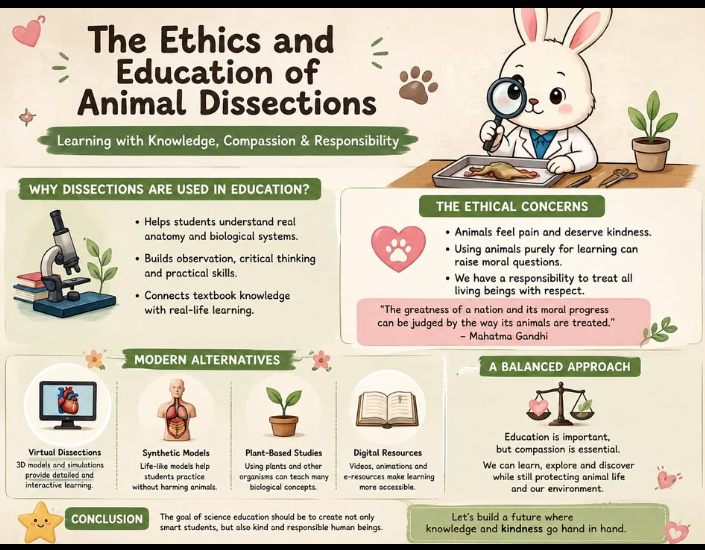
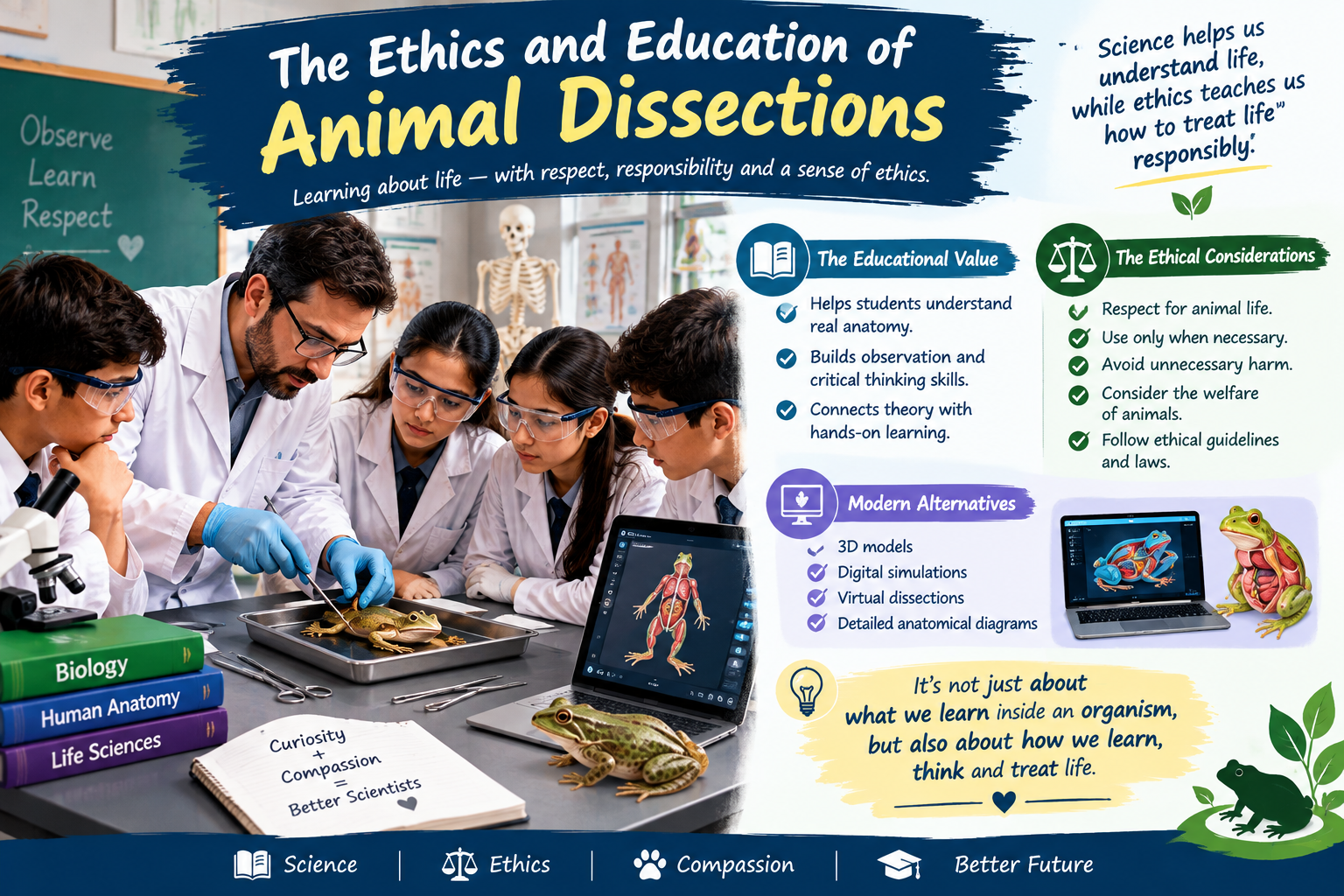
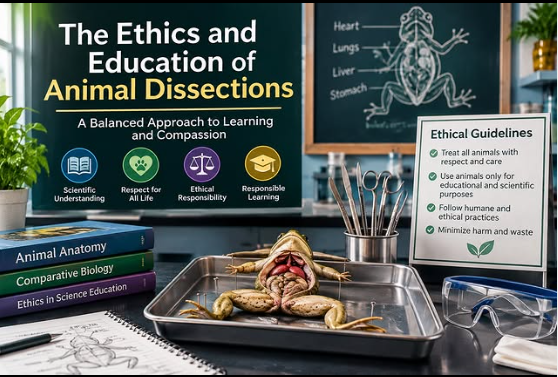
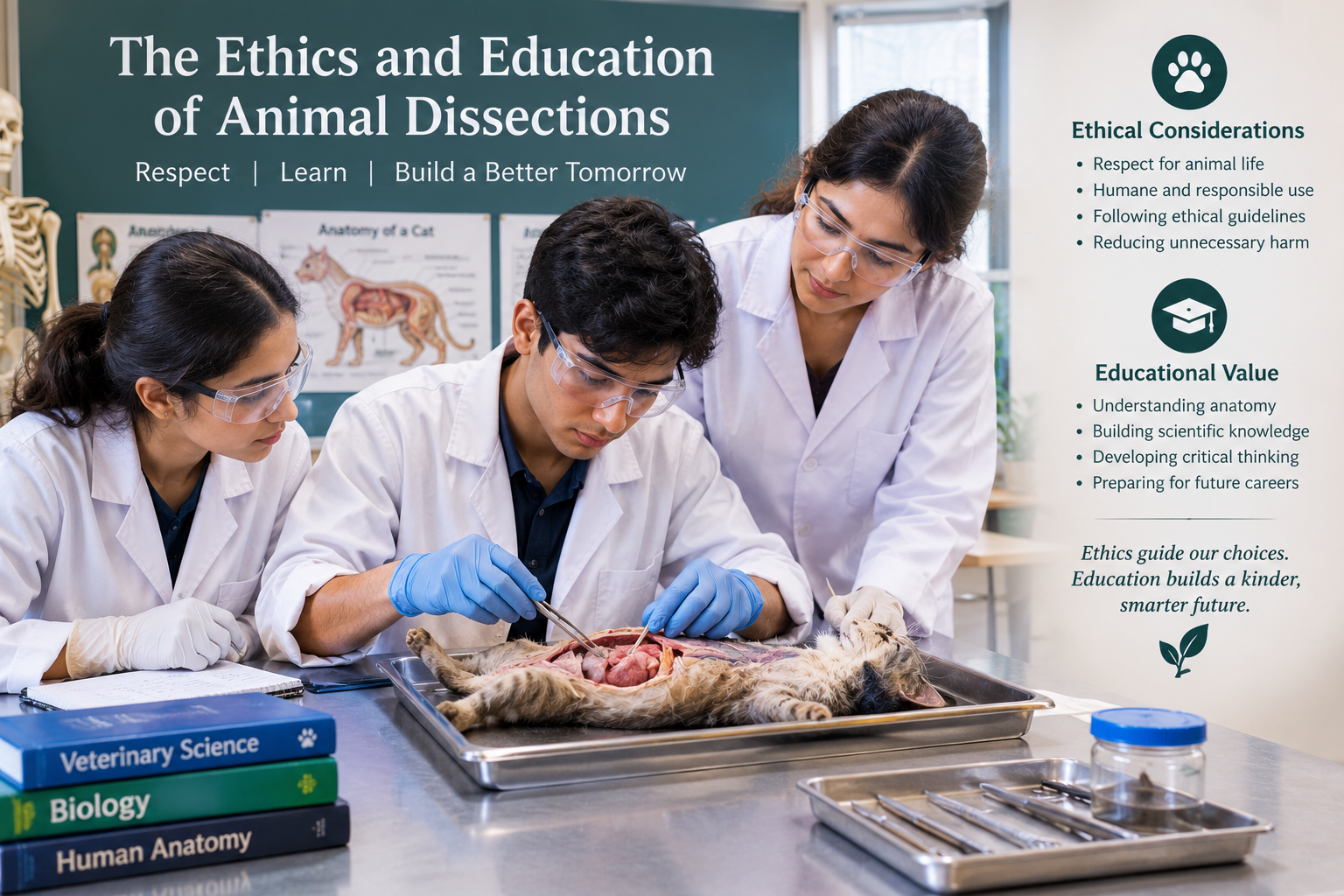
    Welcome to an exploration of science, learning, and ethical responsibility! **“The Ethics and Education of Animal Dissections”** examines the role of animal dissection in biological education and highlights the importance of balancing scientific knowledge with respect for animal life.

    Animal dissection has traditionally been used to help students understand the structure and function of organs, tissues, and body systems. Through guided observation and practical learning, students can develop a deeper understanding of anatomy, improve their scientific thinking, and explore how different biological systems work together.

    However, scientific education also involves important ethical questions. Students and educators must consider animal welfare, responsible specimen use, and ways to reduce unnecessary harm. Modern educational approaches increasingly include virtual dissections, 3D anatomical models, videos, and interactive simulations as valuable alternatives that can support effective learning.

    ## Key Topics Covered

    - Understanding animal anatomy and biological systems
    - Exploring the educational purpose of animal dissections
    - Respecting animal welfare and ethical responsibilities
    - Developing scientific knowledge and critical-thinking skills
    - Discovering virtual dissections and alternative learning methods
    - Encouraging responsible and compassionate scientific research

    ## Why Is This Topic Important?

    Understanding the ethics of animal dissection encourages students to think critically about how scientific knowledge is gained. It teaches the importance of balancing educational benefits with compassion, responsibility, and respect for living organisms.

    **Science is not only about discovering how life works; it is also about making thoughtful, ethical choices in the pursuit of knowledge.**

    Join us in exploring how education, scientific discovery, and animal welfare can work together to create a more responsible future!

    #AnimalDissection #AnimalAnatomy #ScienceEducation #Bioethics #AnimalWelfare #Biology #EthicalScience #VirtualDissection #ScientificLearning #VeterinaryScience #EducationAndEthics
    RSIF8 Roll no:14 story no:23 story topic:The Ethics and Education of Animal Dissections # 🔬 The Ethics and Education of Animal Dissections 🐾 Welcome to an exploration of science, learning, and ethical responsibility! **“The Ethics and Education of Animal Dissections”** examines the role of animal dissection in biological education and highlights the importance of balancing scientific knowledge with respect for animal life. 🧬📚 Animal dissection has traditionally been used to help students understand the structure and function of organs, tissues, and body systems. Through guided observation and practical learning, students can develop a deeper understanding of anatomy, improve their scientific thinking, and explore how different biological systems work together. However, scientific education also involves important ethical questions. Students and educators must consider animal welfare, responsible specimen use, and ways to reduce unnecessary harm. Modern educational approaches increasingly include virtual dissections, 3D anatomical models, videos, and interactive simulations as valuable alternatives that can support effective learning. 🌱💻 ## 🌟 Key Topics Covered - 🔬 Understanding animal anatomy and biological systems - 🐾 Exploring the educational purpose of animal dissections - ❤️ Respecting animal welfare and ethical responsibilities - 📚 Developing scientific knowledge and critical-thinking skills - 💻 Discovering virtual dissections and alternative learning methods - 🌍 Encouraging responsible and compassionate scientific research ## 🎯 Why Is This Topic Important? Understanding the ethics of animal dissection encourages students to think critically about how scientific knowledge is gained. It teaches the importance of balancing educational benefits with compassion, responsibility, and respect for living organisms. ✨ **Science is not only about discovering how life works; it is also about making thoughtful, ethical choices in the pursuit of knowledge.** Join us in exploring how education, scientific discovery, and animal welfare can work together to create a more responsible future! #AnimalDissection #AnimalAnatomy #ScienceEducation #Bioethics #AnimalWelfare #Biology #EthicalScience #VirtualDissection #ScientificLearning #VeterinaryScience #EducationAndEthics
    0 Comentários 0 Compartilhamentos 3935 Visualizações
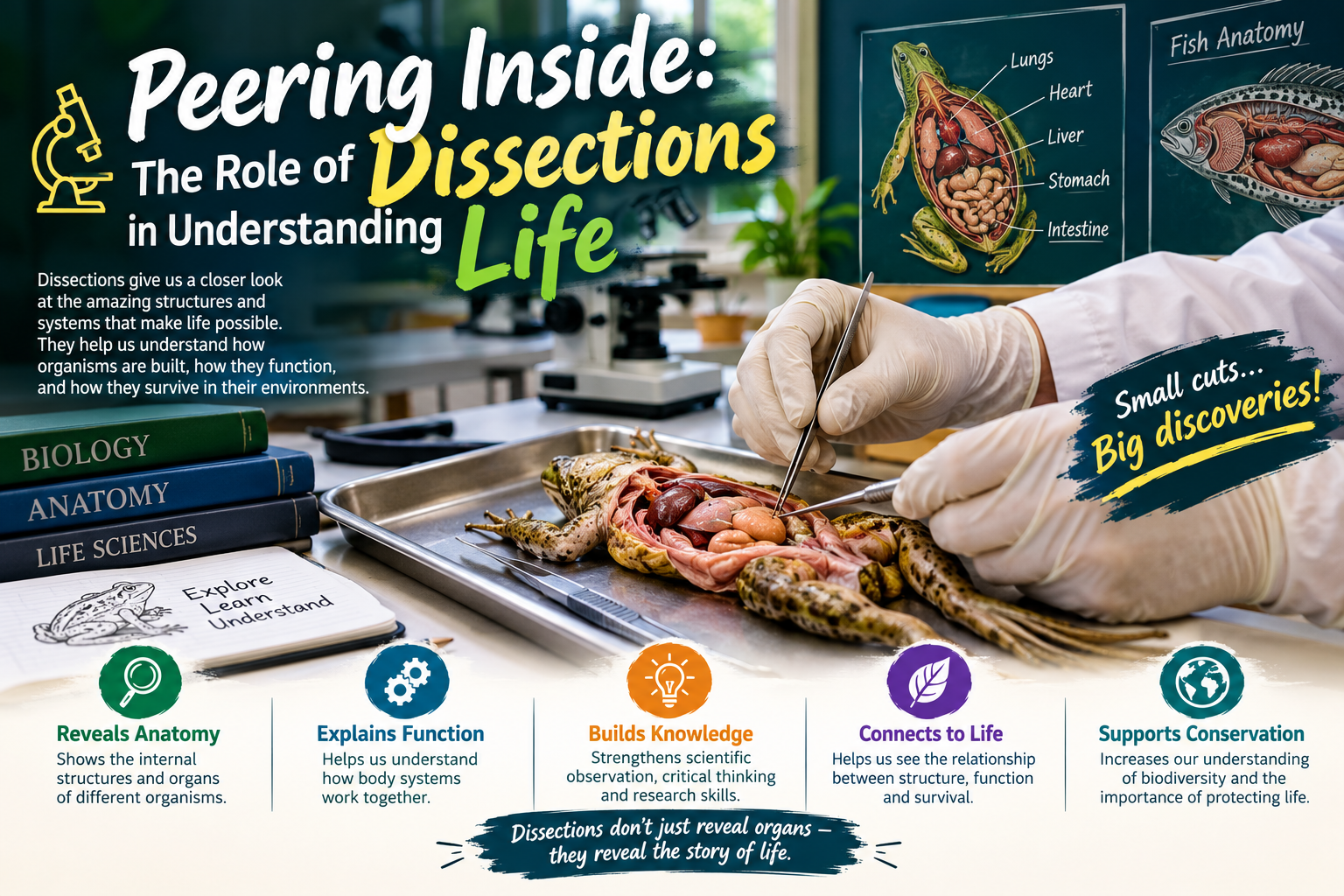
  • RSIF8
    Roll no:14
    story no:21
    story topic:Peering Inside: The Role of Dissections in Understanding Life
    # Peering Inside: The Role of Dissections in Understanding Life

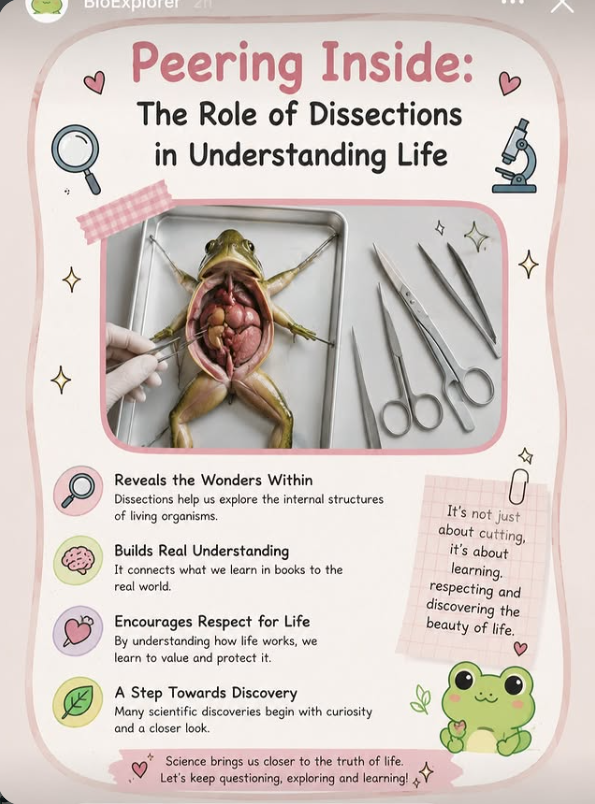
    Discover the fascinating world of biology through **“Peering Inside: The Role of Dissections in Understanding Life.”** This educational topic explores how dissection helps scientists and students understand the internal structures of living organisms and uncover the amazing systems that make life possible.

    Dissection is an important scientific method that allows researchers to examine organs, tissues, and body structures to learn how different parts of an organism work together. By studying anatomy, we can better understand the relationship between structure and function, how body systems support survival, and how different species are adapted to their environments.

    **What Will You Learn?**

    - **Understanding Anatomy:** Discover the internal structures and organs of living organisms.
    - **Structure and Function:** Learn how different organs work together to support life.
    - **Exploring Organisms:** Understand the similarities and differences between various species.
    - **Scientific Investigation:** Develop observation, analytical thinking, and research skills.
    - **Biodiversity and Conservation:** Explore how anatomical knowledge contributes to understanding and protecting living things.
    - **Educational Importance:** Discover how dissection supports biology, medicine, and scientific learning.

    Dissection has contributed greatly to our understanding of the human body and other organisms. Today, scientists and educators can also use anatomical models, digital simulations, and virtual dissection tools to explore biological structures. Responsible scientific study emphasizes ethical practices, safety, and respect for living things.

    **Conclusion:** Dissection is more than the study of internal organs; it is a window into the complexity, organization, and wonder of life. By exploring anatomy, we gain valuable knowledge about how organisms function, survive, and interact with the world around them.

    **“Dissections don't just reveal organs — they reveal the story of life!”**

    #PeeringInside #Dissection #Anatomy #Biology #LifeSciences #ScienceEducation #ScientificDiscovery #HumanAnatomy #AnimalBiology #Biodiversity #LearningThroughScience #EducationalContent #ExploreLife
    RSIF8 Roll no:14 story no:21 story topic:Peering Inside: The Role of Dissections in Understanding Life # 🔬 Peering Inside: The Role of Dissections in Understanding Life 🧬 Discover the fascinating world of biology through **“Peering Inside: The Role of Dissections in Understanding Life.”** This educational topic explores how dissection helps scientists and students understand the internal structures of living organisms and uncover the amazing systems that make life possible. 🌿✨ Dissection is an important scientific method that allows researchers to examine organs, tissues, and body structures to learn how different parts of an organism work together. By studying anatomy, we can better understand the relationship between structure and function, how body systems support survival, and how different species are adapted to their environments. 🔍 **What Will You Learn?** - 🫀 **Understanding Anatomy:** Discover the internal structures and organs of living organisms. - 🧠 **Structure and Function:** Learn how different organs work together to support life. - 🐸 **Exploring Organisms:** Understand the similarities and differences between various species. - 🔬 **Scientific Investigation:** Develop observation, analytical thinking, and research skills. - 🌍 **Biodiversity and Conservation:** Explore how anatomical knowledge contributes to understanding and protecting living things. - 📚 **Educational Importance:** Discover how dissection supports biology, medicine, and scientific learning. Dissection has contributed greatly to our understanding of the human body and other organisms. Today, scientists and educators can also use anatomical models, digital simulations, and virtual dissection tools to explore biological structures. Responsible scientific study emphasizes ethical practices, safety, and respect for living things. 💚 ✨ **Conclusion:** Dissection is more than the study of internal organs; it is a window into the complexity, organization, and wonder of life. By exploring anatomy, we gain valuable knowledge about how organisms function, survive, and interact with the world around them. **“Dissections don't just reveal organs — they reveal the story of life!”** 🌱🔬 #PeeringInside #Dissection #Anatomy #Biology #LifeSciences #ScienceEducation #ScientificDiscovery #HumanAnatomy #AnimalBiology #Biodiversity #LearningThroughScience #EducationalContent #ExploreLife
    0 Comentários 0 Compartilhamentos 4139 Visualizações
  • RSIF8
    Roll no 94
    Story post no 21
    Story post topic
    Story Title: The Ethics and Education of Animal Dissections
    Animal dissections have long been a part of science education, helping students understand anatomy and biological systems. However, they also raise important ethical questions about animal welfare and the responsibility of scientists and educators. This story explores the balance between learning, scientific discovery, and compassion for living creatures. It encourages thoughtful discussion about modern alternatives and the future of biology education.
    Learning science is not only about gaining knowledge—it's also about developing respect, responsibility, and ethical awareness.
    #AnimalDissection #ScienceEducation #EthicsInScience #BiologyLearning #STEMEducation #AnimalWelfare #ScientificDiscovery #LearningJourney #EducationMatters
    RSIF8 Roll no 94 Story post no 21 Story post topic 📚🐾 Story Title: The Ethics and Education of Animal Dissections 🐾📚 Animal dissections have long been a part of science education, helping students understand anatomy and biological systems. However, they also raise important ethical questions about animal welfare and the responsibility of scientists and educators. This story explores the balance between learning, scientific discovery, and compassion for living creatures. It encourages thoughtful discussion about modern alternatives and the future of biology education. 🌱🔬 Learning science is not only about gaining knowledge—it's also about developing respect, responsibility, and ethical awareness. #AnimalDissection #ScienceEducation #EthicsInScience #BiologyLearning #STEMEducation #AnimalWelfare #ScientificDiscovery #LearningJourney #EducationMatters 🐾📖🔬🌱✨
    0 Comentários 0 Compartilhamentos 2432 Visualizações
  • RSIF8
    Roll no 94
    Storypost no 19
    Storypost topic
    Peering Inside: The Role of Dissections in Understanding Life
    Every living organism has an incredible story hidden inside. Through dissections, we gain a deeper understanding of anatomy, organ functions, and the complex systems that keep life moving.
    This hands-on learning experience helps connect classroom knowledge with real-world science, inspiring curiosity, discovery, and respect for living things.
    Let's explore, learn, and uncover the wonders of life together!
    #ScienceEducation #Biology #Dissection #LearningByDoing #STEMEducation #Anatomy #LifeSciences #ScientificDiscovery #Curiosity #StudentLife #EducationMatters #FutureScientists
    RSIF8 Roll no 94 Storypost no 19 Storypost topic 🔬🐸 Peering Inside: The Role of Dissections in Understanding Life 🧬✨ Every living organism has an incredible story hidden inside. Through dissections, we gain a deeper understanding of anatomy, organ functions, and the complex systems that keep life moving. 🌱💡 This hands-on learning experience helps connect classroom knowledge with real-world science, inspiring curiosity, discovery, and respect for living things. 🔍❤️ Let's explore, learn, and uncover the wonders of life together! 🌍📚✨ #ScienceEducation #Biology #Dissection #LearningByDoing #STEMEducation #Anatomy #LifeSciences #ScientificDiscovery #Curiosity #StudentLife #EducationMatters #FutureScientists 🐸🔬🧬📖✨
    0 Comentários 0 Compartilhamentos 2214 Visualizações
  • **Roll No: 2**
    **Batch: 14**
    **Book: ACCL**
    **Task No: 145**

    # The Ethics and Education of Animal Dissections

    Have you ever wondered how students learn about the internal structures of animals and why science education places importance on understanding life responsibly? Animal dissection has been used in biology classrooms and scientific research to help learners explore anatomy, examine organs, and understand how different body systems function. However, it also raises important questions about animal welfare, ethical responsibility, and the best ways to teach scientific concepts.

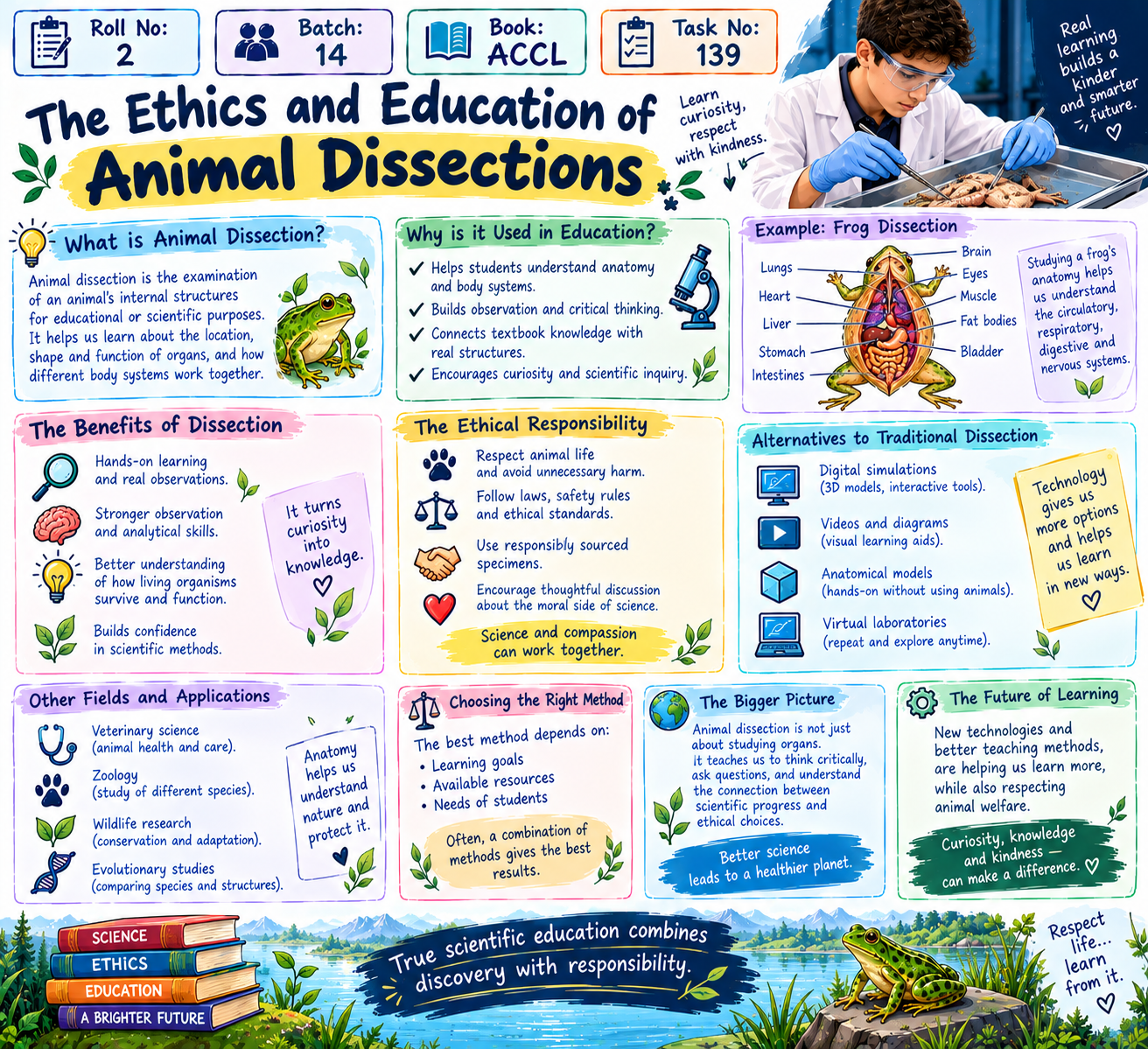
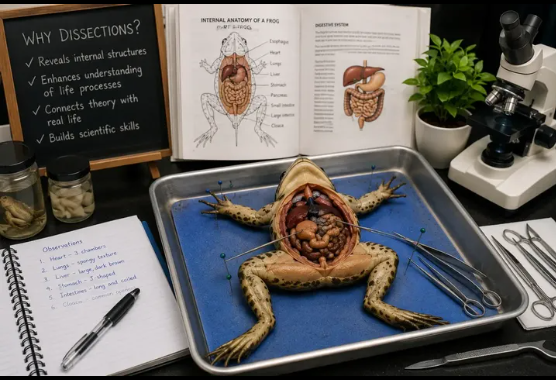
    **Animal dissection is the examination of an animal's internal structures for educational or scientific purposes.** By studying anatomy, students can learn how organs are arranged and how body systems work together. For example, examining the anatomy of a frog can help learners understand the circulatory, respiratory, digestive, and nervous systems. These observations connect information from textbooks with the physical structures found in living organisms.

    One major benefit of dissection is that it encourages active learning. Instead of only memorizing the names of organs, students can observe anatomical structures, compare their shapes and positions, and ask questions about their functions. This process can strengthen observation skills, critical thinking, and scientific understanding. It also helps learners recognize that every organ has a role in supporting the survival of an organism.

    Nevertheless, **education must balance scientific learning with respect for animal life.** Animals are living organisms with their own biological needs, and their use in education should be considered carefully. Teachers and institutions should follow applicable laws, safety rules, and ethical standards. Specimens should be obtained responsibly, and unnecessary harm should be avoided. Students should also be encouraged to discuss the moral responsibilities that accompany scientific discovery.

    Fortunately, modern technology provides several alternatives to traditional dissection. Digital simulations allow students to explore three-dimensional anatomical models, examine virtual organs, and study body systems through interactive activities. Videos, diagrams, anatomical models, and virtual laboratories can also make complex concepts easier to understand. These approaches may reduce the need for physical specimens while offering flexible opportunities for repeated learning.

    The best educational method can depend on the learning objective, available resources, and the needs of students. A physical specimen may provide certain observations that a diagram cannot fully reproduce, while a digital model may allow students to rotate structures, zoom in on details, and repeat an activity without using another specimen. Combining different teaching methods can provide a richer understanding of anatomy and biology.

    Animal dissection also connects classroom education with wider scientific fields. Knowledge of anatomy contributes to veterinary science, zoology, wildlife research, and the study of animal health. Comparing anatomical structures across species can help scientists investigate adaptation and evolutionary relationships. Such knowledge can also support conservation efforts by improving our understanding of animals and the environments in which they live.

    Ethics should remain an important part of every scientific learning experience. Students should be able to ask questions, understand why a particular method is being used, and learn about alternatives where appropriate. Teachers can create respectful classrooms by explaining the educational purpose of activities, ensuring proper supervision, and encouraging thoughtful discussion. Scientific progress is strongest when curiosity is combined with compassion and responsibility.

    Another important lesson is that science continues to develop. New technologies and educational methods provide opportunities to improve the way anatomy is taught. By evaluating the effectiveness of different approaches, educators can choose methods that support learning while taking animal welfare seriously. This ongoing evaluation reflects the scientific habit of questioning, testing, and improving established practices.

    Ultimately, the ethics and education of animal dissections are about more than studying organs. They encourage students to think critically about scientific methods, recognize the value of responsible research, and understand the relationship between knowledge and moral choices. Learning biology should deepen both our understanding of nature and our respect for living organisms.

    **True scientific education combines discovery with responsibility. By studying anatomy thoughtfully, considering ethical alternatives, and respecting animal welfare, we can develop knowledgeable learners who value both scientific progress and the natural world. **

    #AnimalDissection #AnimalEthics #Biology #ScienceEducation #AnimalWelfare #Anatomy #ACCL #Batch14 #Task139
    **Roll No: 2** **Batch: 14** **Book: ACCL** **Task No: 145** # 🐸🔬 The Ethics and Education of Animal Dissections 🌿📚 Have you ever wondered how students learn about the internal structures of animals and why science education places importance on understanding life responsibly? 🧬🔍 Animal dissection has been used in biology classrooms and scientific research to help learners explore anatomy, examine organs, and understand how different body systems function. However, it also raises important questions about animal welfare, ethical responsibility, and the best ways to teach scientific concepts. **Animal dissection is the examination of an animal's internal structures for educational or scientific purposes.** 🔬 By studying anatomy, students can learn how organs are arranged and how body systems work together. For example, examining the anatomy of a frog can help learners understand the circulatory, respiratory, digestive, and nervous systems. These observations connect information from textbooks with the physical structures found in living organisms. 🐸🫀 One major benefit of dissection is that it encourages active learning. 📖 Instead of only memorizing the names of organs, students can observe anatomical structures, compare their shapes and positions, and ask questions about their functions. This process can strengthen observation skills, critical thinking, and scientific understanding. It also helps learners recognize that every organ has a role in supporting the survival of an organism. Nevertheless, **education must balance scientific learning with respect for animal life.** 💚 Animals are living organisms with their own biological needs, and their use in education should be considered carefully. Teachers and institutions should follow applicable laws, safety rules, and ethical standards. Specimens should be obtained responsibly, and unnecessary harm should be avoided. Students should also be encouraged to discuss the moral responsibilities that accompany scientific discovery. ⚖️🌱 Fortunately, modern technology provides several alternatives to traditional dissection. 💻🧬 Digital simulations allow students to explore three-dimensional anatomical models, examine virtual organs, and study body systems through interactive activities. Videos, diagrams, anatomical models, and virtual laboratories can also make complex concepts easier to understand. These approaches may reduce the need for physical specimens while offering flexible opportunities for repeated learning. The best educational method can depend on the learning objective, available resources, and the needs of students. 🏫 A physical specimen may provide certain observations that a diagram cannot fully reproduce, while a digital model may allow students to rotate structures, zoom in on details, and repeat an activity without using another specimen. Combining different teaching methods can provide a richer understanding of anatomy and biology. Animal dissection also connects classroom education with wider scientific fields. 🏥 Knowledge of anatomy contributes to veterinary science, zoology, wildlife research, and the study of animal health. Comparing anatomical structures across species can help scientists investigate adaptation and evolutionary relationships. Such knowledge can also support conservation efforts by improving our understanding of animals and the environments in which they live. 🌍🐦 Ethics should remain an important part of every scientific learning experience. Students should be able to ask questions, understand why a particular method is being used, and learn about alternatives where appropriate. Teachers can create respectful classrooms by explaining the educational purpose of activities, ensuring proper supervision, and encouraging thoughtful discussion. Scientific progress is strongest when curiosity is combined with compassion and responsibility. 🤝💚 Another important lesson is that science continues to develop. 🔬 New technologies and educational methods provide opportunities to improve the way anatomy is taught. By evaluating the effectiveness of different approaches, educators can choose methods that support learning while taking animal welfare seriously. This ongoing evaluation reflects the scientific habit of questioning, testing, and improving established practices. Ultimately, the ethics and education of animal dissections are about more than studying organs. They encourage students to think critically about scientific methods, recognize the value of responsible research, and understand the relationship between knowledge and moral choices. 🌿📚 Learning biology should deepen both our understanding of nature and our respect for living organisms. **True scientific education combines discovery with responsibility. By studying anatomy thoughtfully, considering ethical alternatives, and respecting animal welfare, we can develop knowledgeable learners who value both scientific progress and the natural world. 🐸🔬🌎💚** #AnimalDissection #AnimalEthics #Biology #ScienceEducation #AnimalWelfare #Anatomy #ACCL #Batch14 #Task139 🐸🧬📚
    0 Comentários 0 Compartilhamentos 4490 Visualizações
  • **Roll No: 2**
    **Batch: 14**
    **Book: ACCL**
    **Task No: 130**

    # Peering Inside: The Role of Dissections in Understanding Life

    Have you ever wondered how scientists discover what lies inside a living organism and how its different organs work together? The human body and the bodies of other animals contain many complex structures that cannot be fully understood by looking only at their outer appearance. Dissection is one scientific method that helps students and researchers explore internal anatomy and understand the remarkable organization of life.

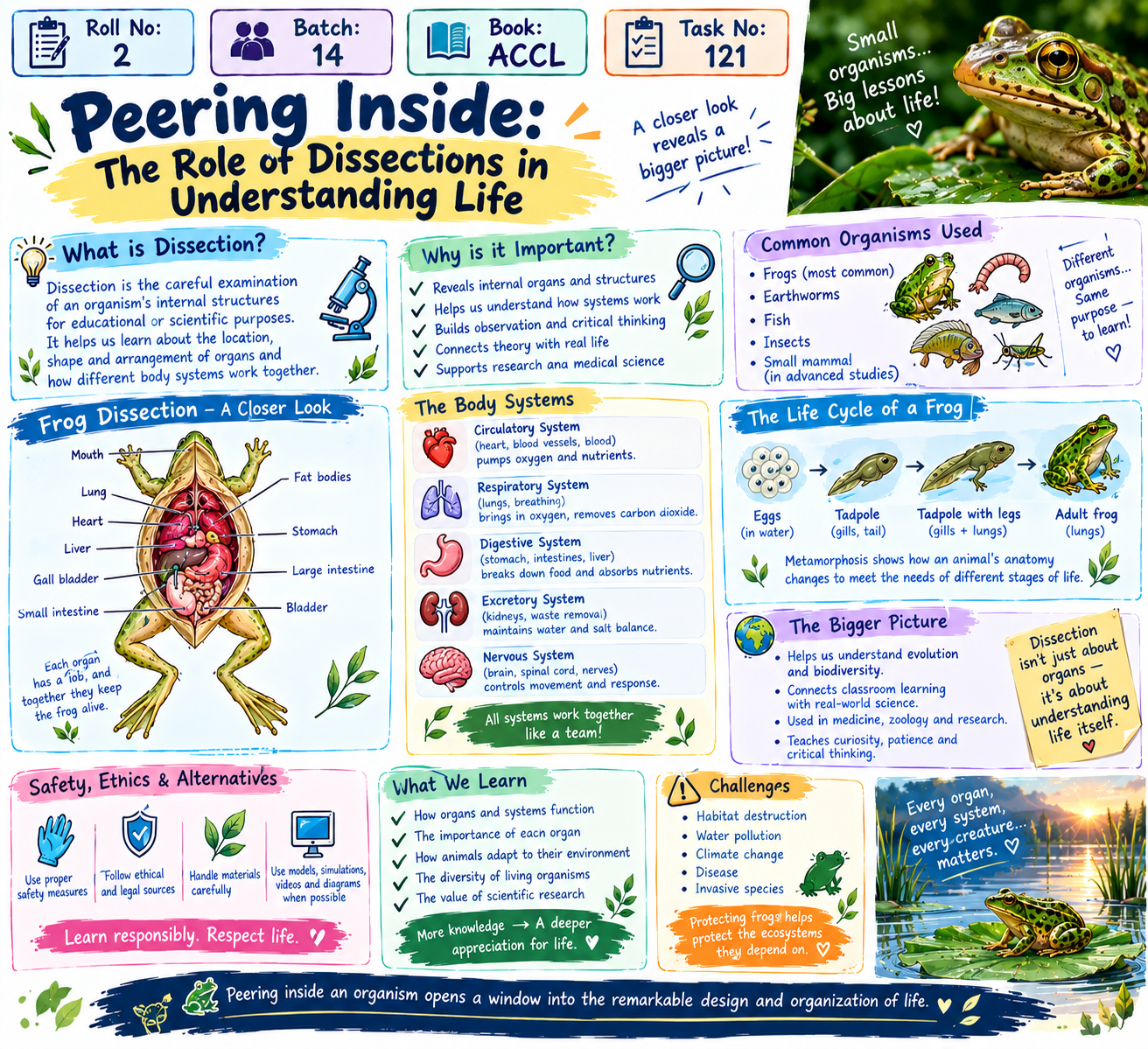
    **Dissection is the careful examination of an organism's internal structures for educational or scientific purposes.** It helps us learn about the location, shape, and arrangement of organs and how different body systems work together. By studying anatomy, we can better understand how living organisms obtain energy, breathe, circulate blood, digest food, and respond to their surroundings.

    One commonly discussed example in biology education is frog dissection. Frogs are interesting study organisms because they have many organ systems that can be compared with those of other vertebrates. Their bodies are adapted for movement on land and in water, and their anatomy provides useful opportunities to study how organs perform different functions. Observing frog anatomy can help students understand the relationship between body structure and survival.

    The circulatory system is an important area of anatomical study. The heart pumps blood through blood vessels, helping transport oxygen, nutrients, and other substances around the body. The respiratory system supports gas exchange, while the digestive system breaks down food so that the body can absorb useful nutrients. These systems work together to supply cells with the materials and energy they need.

    The nervous system is equally fascinating. It includes the brain, spinal cord, and nerves, which coordinate movement, process information, and help organisms respond to changes in their environments. The excretory system also plays an essential role by removing waste products and maintaining the balance of water and salts. Studying these systems reveals that every organ has a specific role, yet no organ works entirely alone.

    Dissection can also connect classroom learning with real-world science. Medical professionals study anatomy to understand the human body, while zoologists investigate the structures of different animal species. Researchers use many methods, including imaging, microscopy, computer models, and carefully conducted anatomical studies, to investigate how organisms function. These approaches have helped expand our knowledge of health, development, and biodiversity.

    Although dissection can be a valuable learning method, science education must also emphasize responsibility and respect for life. Schools and laboratories should follow appropriate safety procedures, use legally and ethically sourced specimens, and handle materials carefully. Whenever possible, students may also learn through digital simulations, anatomical models, videos, and diagrams. These alternatives can explain many internal structures without requiring the use of preserved specimens.

    The study of anatomy helps us appreciate the diversity of living organisms. Different species have different body structures because they have adapted to different environments and ways of life. Comparing these structures allows scientists to investigate evolution, understand biological similarities, and discover how organisms meet the challenges of survival.

    Dissection teaches more than the names of organs. It encourages observation, patience, careful reasoning, and the ability to connect scientific evidence with biological explanations. It also reminds us that scientific knowledge grows through asking questions, examining evidence, and learning from reliable methods rather than making assumptions.

    **Peering inside an organism opens a window into the remarkable design and organization of life. By studying anatomy responsibly, we deepen our understanding of biology, appreciate the connections between body systems, and learn why every discovery should be guided by curiosity, care, and respect for the natural world. **

    \#Dissection #Anatomy #Biology #ScienceEducation #AnimalScience #LearningThroughScience #ACCL #Batch14 #Task121
    **Roll No: 2** **Batch: 14** **Book: ACCL** **Task No: 130** # 🔬🧬 Peering Inside: The Role of Dissections in Understanding Life 🐸🌿 Have you ever wondered how scientists discover what lies inside a living organism and how its different organs work together? 🔍🫀 The human body and the bodies of other animals contain many complex structures that cannot be fully understood by looking only at their outer appearance. Dissection is one scientific method that helps students and researchers explore internal anatomy and understand the remarkable organization of life. 🌍✨ **Dissection is the careful examination of an organism's internal structures for educational or scientific purposes.** 🔬 It helps us learn about the location, shape, and arrangement of organs and how different body systems work together. By studying anatomy, we can better understand how living organisms obtain energy, breathe, circulate blood, digest food, and respond to their surroundings. 📚🧠 One commonly discussed example in biology education is frog dissection. 🐸 Frogs are interesting study organisms because they have many organ systems that can be compared with those of other vertebrates. Their bodies are adapted for movement on land and in water, and their anatomy provides useful opportunities to study how organs perform different functions. Observing frog anatomy can help students understand the relationship between body structure and survival. The circulatory system is an important area of anatomical study. ❤️ The heart pumps blood through blood vessels, helping transport oxygen, nutrients, and other substances around the body. The respiratory system supports gas exchange, while the digestive system breaks down food so that the body can absorb useful nutrients. These systems work together to supply cells with the materials and energy they need. ⚡🫁 The nervous system is equally fascinating. 🧠 It includes the brain, spinal cord, and nerves, which coordinate movement, process information, and help organisms respond to changes in their environments. The excretory system also plays an essential role by removing waste products and maintaining the balance of water and salts. Studying these systems reveals that every organ has a specific role, yet no organ works entirely alone. Dissection can also connect classroom learning with real-world science. 🏥 Medical professionals study anatomy to understand the human body, while zoologists investigate the structures of different animal species. Researchers use many methods, including imaging, microscopy, computer models, and carefully conducted anatomical studies, to investigate how organisms function. These approaches have helped expand our knowledge of health, development, and biodiversity. 🔬📖 Although dissection can be a valuable learning method, science education must also emphasize responsibility and respect for life. 💚 Schools and laboratories should follow appropriate safety procedures, use legally and ethically sourced specimens, and handle materials carefully. Whenever possible, students may also learn through digital simulations, anatomical models, videos, and diagrams. These alternatives can explain many internal structures without requiring the use of preserved specimens. The study of anatomy helps us appreciate the diversity of living organisms. 🐸🐟🐦 Different species have different body structures because they have adapted to different environments and ways of life. Comparing these structures allows scientists to investigate evolution, understand biological similarities, and discover how organisms meet the challenges of survival. Dissection teaches more than the names of organs. It encourages observation, patience, careful reasoning, and the ability to connect scientific evidence with biological explanations. 🧪💡 It also reminds us that scientific knowledge grows through asking questions, examining evidence, and learning from reliable methods rather than making assumptions. **Peering inside an organism opens a window into the remarkable design and organization of life. By studying anatomy responsibly, we deepen our understanding of biology, appreciate the connections between body systems, and learn why every discovery should be guided by curiosity, care, and respect for the natural world. 🔬🌿🌎** \#Dissection #Anatomy #Biology #ScienceEducation #AnimalScience #LearningThroughScience #ACCL #Batch14 #Task121 🧬🔬💚
    0 Comentários 0 Compartilhamentos 3438 Visualizações
  • ACCL Day 146

    Story: The Ethics and Education of Animal Dissections
    (Narrator POV)

    The classroom was quieter than usual. The students sat in a circle around the table where the dissection kits were placed. It wasn’t fear that filled the room—
    it was responsibility.

    As the narrator of their journey, I could feel the weight of the moment. Today wasn’t just another science lesson. It was a lesson about choices, respect, and ethics.

    Their mentor, Sir Imran, stepped forward and said calmly,
    “Before we learn how things work, we must understand why we study them—and what respect truly means.”

    Aaliya raised her hand.
    “Sir… do we really need to dissect animals to learn?”
    The question hung in the air, honest and thoughtful.

    Sir Imran smiled gently.
    “That’s exactly what today is about.”

    He explained how dissections, when done ethically, teach students about anatomy, structure, and life—but also teach compassion.
    He reminded them that scientists aren’t just seekers of knowledge; they are guardians of life.

    The students listened deeply.

    To reinforce the lesson, he opened a digital 3D model on the screen.
    “Before touching anything real,” he said, “we study virtually. We learn respectfully. We decide responsibly.”

    Only then, after understanding the ethics, did the students approach the specimen.
    Not with excitement—
    but with purpose.

    Their movements were slow and careful.
    They spoke quietly, sharing observations.
    They treated the process not as an experiment, but as a responsibility.

    For the first time, they understood that education isn’t only about knowledge—
    it’s about values.

    As the session ended, the students closed their kits with new awareness. They walked out not just smarter, but wiser… understanding that science is not only about learning life’s mechanisms, but respecting the life that makes it possible.

    And that was the true lesson of the day.
    ACCL Day 146 🌟 Story: The Ethics and Education of Animal Dissections (Narrator POV) The classroom was quieter than usual. The students sat in a circle around the table where the dissection kits were placed. It wasn’t fear that filled the room— it was responsibility. As the narrator of their journey, I could feel the weight of the moment. Today wasn’t just another science lesson. It was a lesson about choices, respect, and ethics. Their mentor, Sir Imran, stepped forward and said calmly, “Before we learn how things work, we must understand why we study them—and what respect truly means.” Aaliya raised her hand. “Sir… do we really need to dissect animals to learn?” The question hung in the air, honest and thoughtful. Sir Imran smiled gently. “That’s exactly what today is about.” He explained how dissections, when done ethically, teach students about anatomy, structure, and life—but also teach compassion. He reminded them that scientists aren’t just seekers of knowledge; they are guardians of life. The students listened deeply. To reinforce the lesson, he opened a digital 3D model on the screen. “Before touching anything real,” he said, “we study virtually. We learn respectfully. We decide responsibly.” Only then, after understanding the ethics, did the students approach the specimen. Not with excitement— but with purpose. Their movements were slow and careful. They spoke quietly, sharing observations. They treated the process not as an experiment, but as a responsibility. For the first time, they understood that education isn’t only about knowledge— it’s about values. As the session ended, the students closed their kits with new awareness. They walked out not just smarter, but wiser… understanding that science is not only about learning life’s mechanisms, but respecting the life that makes it possible. And that was the true lesson of the day.
    0 Comentários 0 Compartilhamentos 1285 Visualizações
  • #rsisb
    Roll no.279
    story post no.21
    Foundation Level
    **The Ethics and Education of Animal Dissections**
    In a science classroom, students gathered around their teacher for an important lesson about how living organisms are structured and how their bodies work. ‍ The topic was **animal dissection**, a traditional method that has helped students understand anatomy through direct scientific observation.
    The teacher explained that science is not only about discovering new information—it is also about **responsibility, respect, and ethical thinking**. Students learned that when animals are used for educational purposes, their use should be carefully considered, and unnecessary harm should always be avoided.
    Some students were curious about how organs and body systems are connected. Others wondered whether there were alternative ways to learn anatomy without using animals. This led to an interesting classroom discussion about modern educational tools such as **3D models, digital simulations, virtual dissections, and detailed anatomical diagrams**.
    The students discovered that there is no single answer to every ethical question. Instead, responsible science requires people to ask thoughtful questions: **Is the activity necessary? Is there a safer alternative? Does it provide meaningful educational value?**
    By the end of the lesson, the students understood that learning biology is not simply about looking inside an organism—it is also about developing **curiosity, compassion, critical thinking, and respect for life**.
    The classroom became more than a place to study anatomy. It became a place where students learned how **science and ethics can work together**.
    **Science helps us understand life, while ethics teaches us how to treat life responsibly.**
    #AnimalDissection #ScienceEducation #Biology #Ethics #AnimalWelfare #ScienceAndEthics #Learning #Education #CriticalThinking #BiologyStudents #ScienceClass #Anatomy #ResponsibleScience #StudentLearning #RespectForLife
    Asma Shaheen EducationWali
    Saima Empowerment Wali
    Irum Asim Leadershipwali
    #rsisb Roll no.279 story post no.21 Foundation Level 🧬🔬 **The Ethics and Education of Animal Dissections** 🐸📚 In a science classroom, students gathered around their teacher for an important lesson about how living organisms are structured and how their bodies work. 🧑‍🏫🔬 The topic was **animal dissection**, a traditional method that has helped students understand anatomy through direct scientific observation. 📖🧠 The teacher explained that science is not only about discovering new information—it is also about **responsibility, respect, and ethical thinking**. 🌱⚖️ Students learned that when animals are used for educational purposes, their use should be carefully considered, and unnecessary harm should always be avoided. ❤️🐾 Some students were curious about how organs and body systems are connected. Others wondered whether there were alternative ways to learn anatomy without using animals. 💭🔍 This led to an interesting classroom discussion about modern educational tools such as **3D models, digital simulations, virtual dissections, and detailed anatomical diagrams**. 💻🧩 The students discovered that there is no single answer to every ethical question. Instead, responsible science requires people to ask thoughtful questions: **Is the activity necessary? Is there a safer alternative? Does it provide meaningful educational value?** 🤔⚖️ By the end of the lesson, the students understood that learning biology is not simply about looking inside an organism—it is also about developing **curiosity, compassion, critical thinking, and respect for life**. 🌍❤️🧠 The classroom became more than a place to study anatomy. It became a place where students learned how **science and ethics can work together**. 🔬🤝⚖️ ✨ **Science helps us understand life, while ethics teaches us how to treat life responsibly.** 🌱🐾📚 #AnimalDissection #ScienceEducation #Biology #Ethics #AnimalWelfare #ScienceAndEthics #Learning #Education #CriticalThinking #BiologyStudents #ScienceClass #Anatomy #ResponsibleScience #StudentLearning #RespectForLife 🔬🧬📚🐾⚖️🌱✨ Asma Shaheen EducationWali Saima Empowerment Wali Irum Asim Leadershipwali
    0 Comentários 0 Compartilhamentos 3122 Visualizações
  • Mohsin RS F8
    Story post NO:17
    roll NO:13
    Class: Foundation Level
    Made by Me

    The Ethics and Education of Animal Dissections

    Animal dissections have been used in science education for many years as a way to help students understand anatomy, biological structures, and how different body systems work together. By studying organisms directly, students can connect what they read in textbooks with real biological structures. Dissections can make lessons more meaningful by allowing learners to observe organs, tissues, and their relationships in a practical setting.

    However, animal dissection is not only a scientific or educational topic; it also raises important ethical questions. Animals are living beings, and their use in education should always be approached with respect, care, and responsibility. Students and teachers should understand why a specimen is being used and ensure that the activity has a genuine educational purpose. Ethical education encourages students to think about both the value of scientific knowledge and the responsibility humans have toward other living organisms.

    A responsible approach to dissection includes following appropriate safety and ethical guidelines. Specimens should be obtained through approved and humane sources, handled carefully, and used only when they provide meaningful educational value. Teachers should also explain the purpose of the activity before beginning and create an environment where students can ask questions or express concerns respectfully.

    Education is ultimately about developing knowledge as well as character. Learning anatomy through dissection can teach students about the complexity of life, but it can also encourage appreciation for living organisms. When carried out responsibly, the experience can promote scientific curiosity, careful observation, critical thinking, and respect for life.

    Modern education can also consider alternatives such as detailed anatomical models, digital simulations, videos, diagrams, and virtual dissection programs. These methods can provide valuable learning experiences while reducing the need for physical specimens in some situations.
    Mohsin RS F8 🎓✨ Story post NO:17 roll NO:13 Class: Foundation Level 📚 Made by Me 💻🚀 The Ethics and Education of Animal Dissections Animal dissections have been used in science education for many years as a way to help students understand anatomy, biological structures, and how different body systems work together. By studying organisms directly, students can connect what they read in textbooks with real biological structures. Dissections can make lessons more meaningful by allowing learners to observe organs, tissues, and their relationships in a practical setting. However, animal dissection is not only a scientific or educational topic; it also raises important ethical questions. Animals are living beings, and their use in education should always be approached with respect, care, and responsibility. Students and teachers should understand why a specimen is being used and ensure that the activity has a genuine educational purpose. Ethical education encourages students to think about both the value of scientific knowledge and the responsibility humans have toward other living organisms. A responsible approach to dissection includes following appropriate safety and ethical guidelines. Specimens should be obtained through approved and humane sources, handled carefully, and used only when they provide meaningful educational value. Teachers should also explain the purpose of the activity before beginning and create an environment where students can ask questions or express concerns respectfully. Education is ultimately about developing knowledge as well as character. Learning anatomy through dissection can teach students about the complexity of life, but it can also encourage appreciation for living organisms. When carried out responsibly, the experience can promote scientific curiosity, careful observation, critical thinking, and respect for life. Modern education can also consider alternatives such as detailed anatomical models, digital simulations, videos, diagrams, and virtual dissection programs. These methods can provide valuable learning experiences while reducing the need for physical specimens in some situations.
    0 Comentários 0 Compartilhamentos 2260 Visualizações
  • Mohsin RS F8
    Story post NO:15
    Class: Foundation Level
    Made by Me

    “Peering Inside: The Role of Dissections in Understanding Life” explores how dissection can help us understand the hidden structures of living organisms. While diagrams, textbooks, and digital models provide important information, studying anatomical structures directly can make biological concepts easier to understand and remember.
    Dissection allows students and researchers to observe how organs are positioned, how different body systems are connected, and how structures work together to support life. It encourages careful observation, scientific thinking, curiosity, and evidence-based learning. By examining anatomy, students can connect what they learn in the classroom with real biological structures.
    Dissections have also played an important role in the development of biological and medical knowledge. Understanding anatomy has helped scientists learn more about the human body, animal biology, diseases, and the functions of different organs. Today, traditional dissection can also be supported by modern tools such as microscopes, anatomical models, medical imaging, 3D simulations, and virtual laboratories.
    Most importantly, studying anatomy teaches us about the remarkable organization and complexity of life. Peering inside is not simply about seeing organs—it is about discovering how the many parts of a living system work together. Through responsible scientific study, dissection can help turn curiosity into knowledge and observation into a deeper understanding of life.
    Mohsin RS F8 🎓✨ Story post NO:15 Class: Foundation Level 📚 Made by Me 💻🚀 “Peering Inside: The Role of Dissections in Understanding Life” explores how dissection can help us understand the hidden structures of living organisms. While diagrams, textbooks, and digital models provide important information, studying anatomical structures directly can make biological concepts easier to understand and remember. Dissection allows students and researchers to observe how organs are positioned, how different body systems are connected, and how structures work together to support life. It encourages careful observation, scientific thinking, curiosity, and evidence-based learning. By examining anatomy, students can connect what they learn in the classroom with real biological structures. Dissections have also played an important role in the development of biological and medical knowledge. Understanding anatomy has helped scientists learn more about the human body, animal biology, diseases, and the functions of different organs. Today, traditional dissection can also be supported by modern tools such as microscopes, anatomical models, medical imaging, 3D simulations, and virtual laboratories. Most importantly, studying anatomy teaches us about the remarkable organization and complexity of life. Peering inside is not simply about seeing organs—it is about discovering how the many parts of a living system work together. Through responsible scientific study, dissection can help turn curiosity into knowledge and observation into a deeper understanding of life.
    0 Comentários 0 Compartilhamentos 1481 Visualizações
Páginas Impulsionadas