• Day 29
    Foundation Level
    Rehan School Urdu Bazaar Campus
    Roll Number: 4
    Topic: Basic Calculator (Arithmetic Operations)

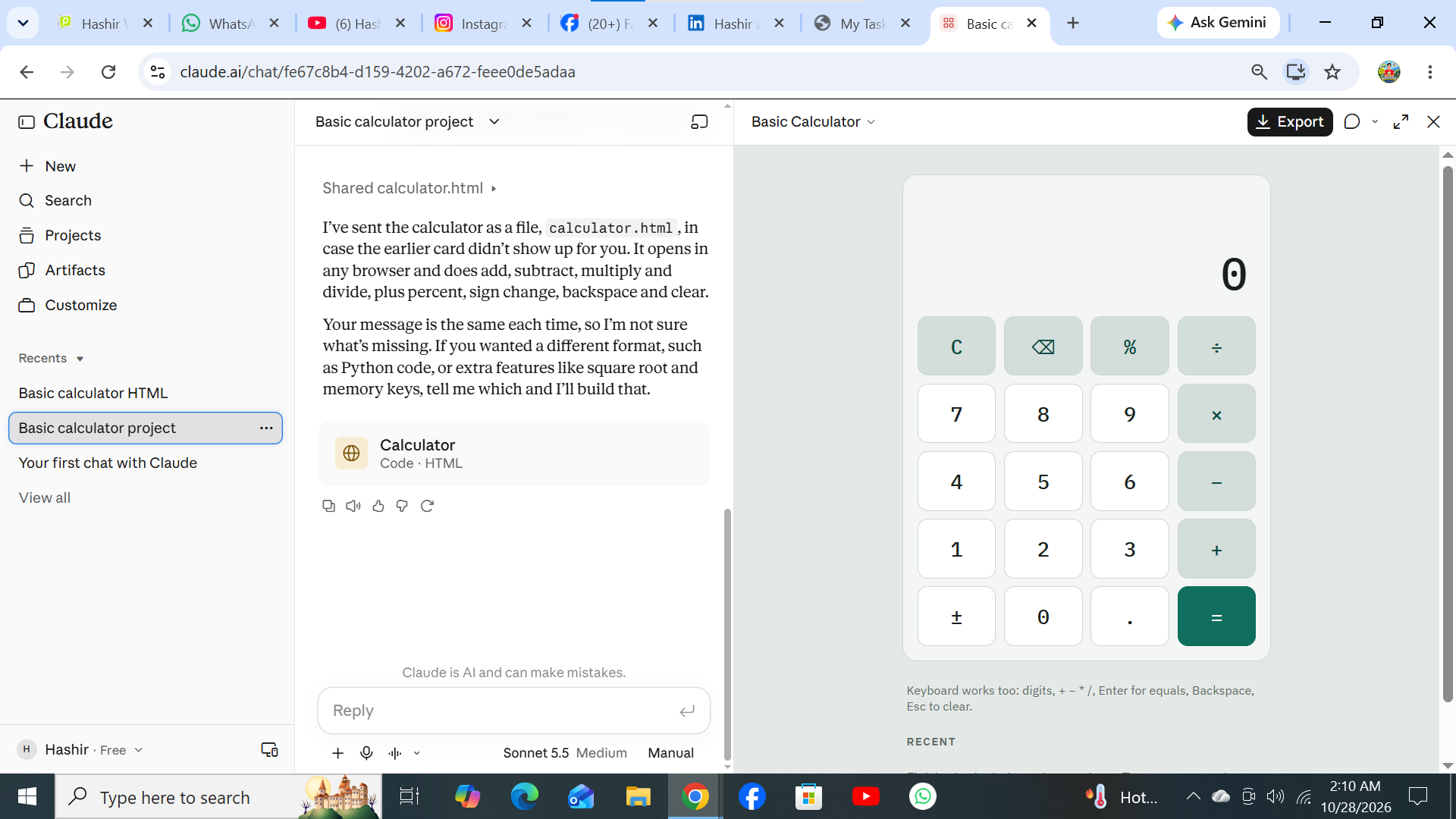
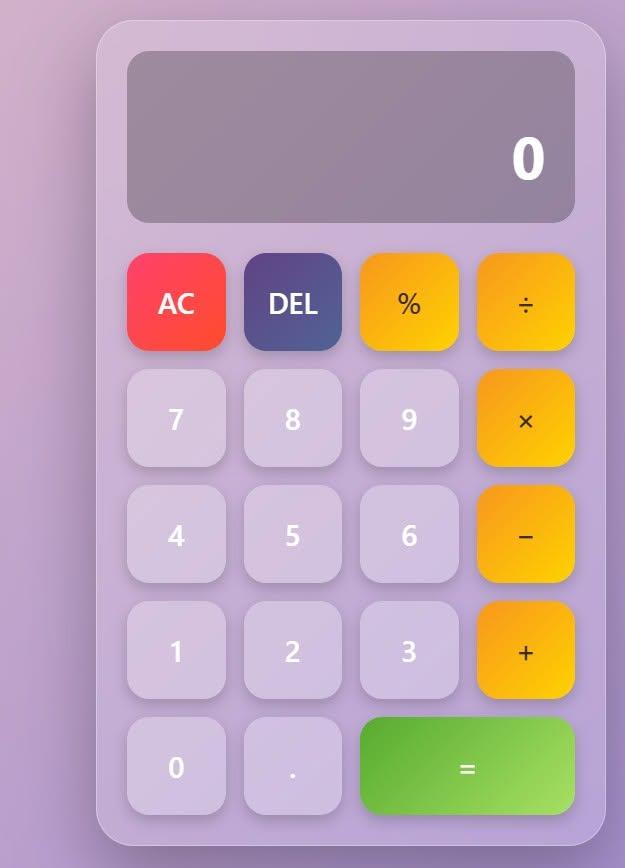
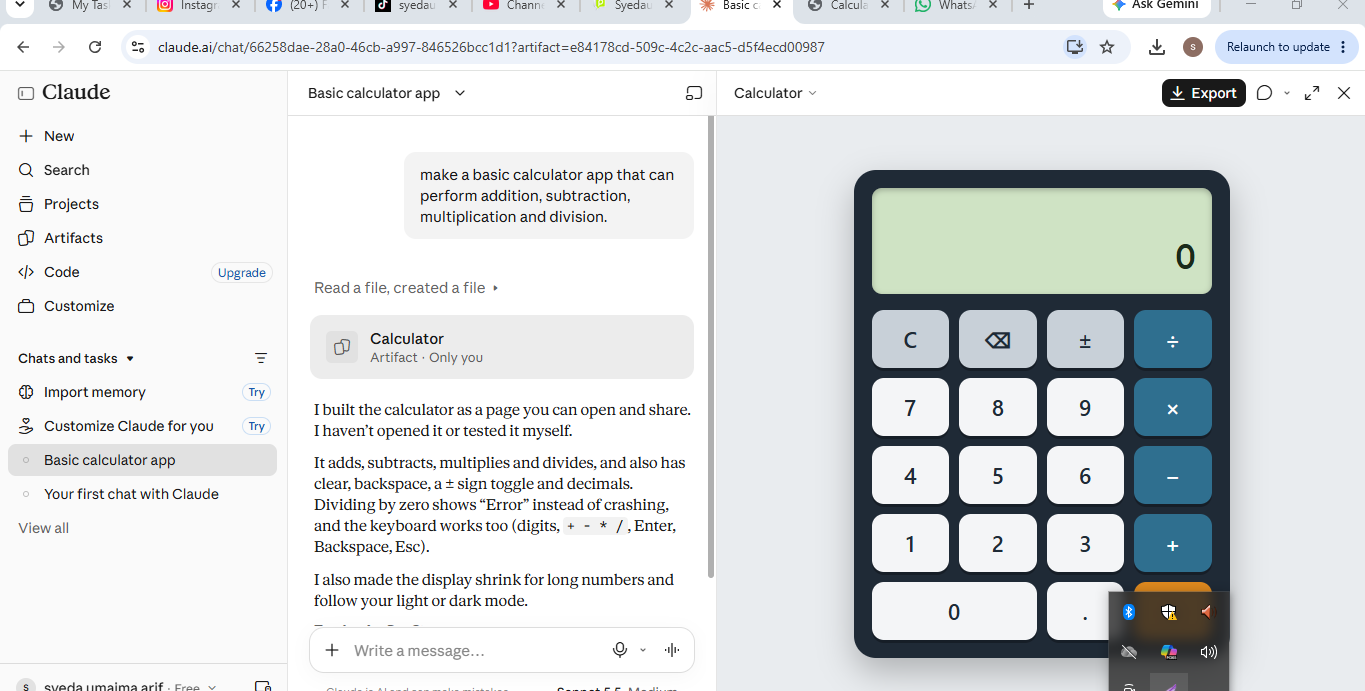
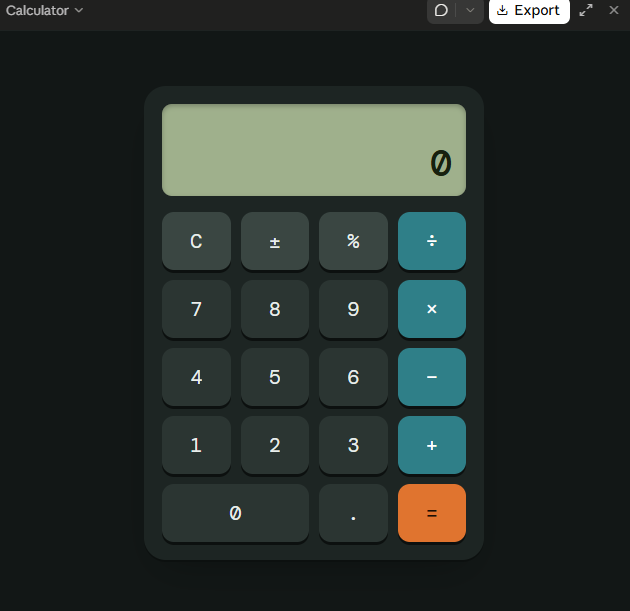
    Today, I completed my Basic Calculator coding task using HTML, CSS, and JavaScript. I created a calculator that performs four basic arithmetic operations: addition (+), subtraction (-), multiplication (*), and division (/). I also added Calculate and Clear buttons. This project helped me learn how to write code, use functions, and perform mathematical calculations using programming.

    #BasicCalculator #ArithmeticOperations #Coding #HTML #CSS #JavaScript #RehanSchool #FoundationLevel #Day29
    https://claude.ai/artifact/T6kWBuXjb8pRd68czTGLni
    Day 29 Foundation Level Rehan School Urdu Bazaar Campus Roll Number: 4 Topic: Basic Calculator (Arithmetic Operations) Today, I completed my Basic Calculator coding task using HTML, CSS, and JavaScript. I created a calculator that performs four basic arithmetic operations: addition (+), subtraction (-), multiplication (*), and division (/). I also added Calculate and Clear buttons. This project helped me learn how to write code, use functions, and perform mathematical calculations using programming. #BasicCalculator #ArithmeticOperations #Coding #HTML #CSS #JavaScript #RehanSchool #FoundationLevel #Day29 https://claude.ai/artifact/T6kWBuXjb8pRd68czTGLni
    0 Comments 0 Shares 164 Views
  • Day 29
    Foundation Level
    Rehan School Urdu Bazaar Campus
    Roll Number: 4
    Topic: Basic Calculator (Arithmetic Operations)

    Today, I completed my coding task on a Basic Calculator using HTML, CSS, and JavaScript. The calculator performs four basic arithmetic operations: addition, subtraction, multiplication, and division. I also added Calculate and Clear buttons and handled errors such as division by zero. This task helped me understand how to use JavaScript functions, user inputs, and conditional statements to create a simple, interactive calculator.

    #BasicCalculator #Coding #HTML #CSS #JavaScript #RehanSchool #FoundationLevel #Day29
    Day 29 Foundation Level Rehan School Urdu Bazaar Campus Roll Number: 4 Topic: Basic Calculator (Arithmetic Operations) Today, I completed my coding task on a Basic Calculator using HTML, CSS, and JavaScript. The calculator performs four basic arithmetic operations: addition, subtraction, multiplication, and division. I also added Calculate and Clear buttons and handled errors such as division by zero. This task helped me understand how to use JavaScript functions, user inputs, and conditional statements to create a simple, interactive calculator. #BasicCalculator #Coding #HTML #CSS #JavaScript #RehanSchool #FoundationLevel #Day29
    0 Comments 0 Shares 154 Views
  • **Day 27 – Coding Task: Create a Basic Calculator**

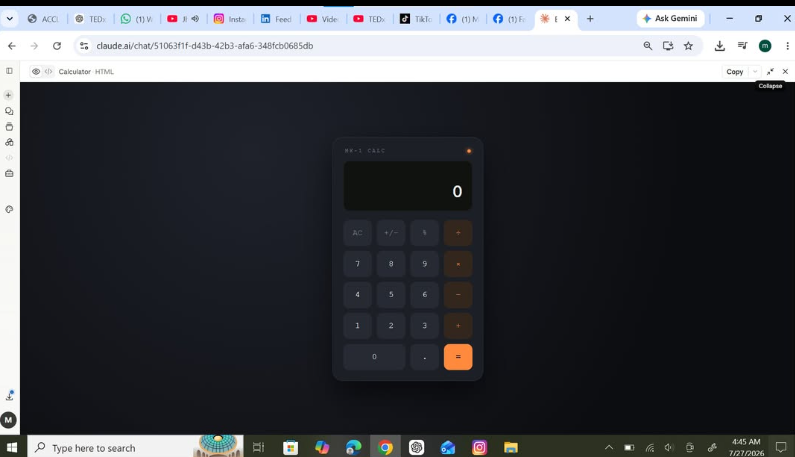
    Today, I completed a small coding challenge to create a **Basic Calculator** that can perform essential arithmetic operations: **Addition , Subtraction , Multiplication , and Division .**

    This task helped me practice my coding logic and understand how different operations work together to create a useful program.

    **I’m sharing a screenshot of my calculator along with a short explanation of how it works.**

    **Hassan Climate Wala | Day 27**

    #Day27 #CodingTask #BasicCalculator #Python #Coding #Programming #LearningByDoing #RehanSchool #HassanClimateWala
    ๐Ÿ’ป **Day 27 – Coding Task: Create a Basic Calculator** ๐Ÿงฎ Today, I completed a small coding challenge to create a **Basic Calculator** that can perform essential arithmetic operations: **Addition โž•, Subtraction โž–, Multiplication โœ–๏ธ, and Division โž—.** This task helped me practice my coding logic and understand how different operations work together to create a useful program. ๐Ÿš€ ๐Ÿ“ธ **I’m sharing a screenshot of my calculator along with a short explanation of how it works.** **Hassan Climate Wala | Day 27** ๐Ÿ”ฅ #Day27 #CodingTask #BasicCalculator #Python #Coding #Programming #LearningByDoing #RehanSchool #HassanClimateWala
    0 Comments 0 Shares 424 Views
  • Accl Foundation Level ( Rehan School Urdu Bazar Campus )
    Day : 29 Coding Task
    Roll No : 16
    Accl Task
    – Basic Calculator
    Today, I completed my Day 29 coding task: Basic Calculator (Arithmetic Operations).
    This project helped me practice basic arithmetic operations like addition (+), subtraction (−), multiplication (×), and division (÷).
    I am learning something new every day and improving my coding skills step by step.
    Link: https://claude.ai/artifact/VgSHXQNfdSVHUYyMve6EeS
    #Day29 #CodingTask #BasicCalculator #LearningCoding #RehanSchool See less
    Accl Foundation Level ( Rehan School Urdu Bazar Campus ) Day : 29 Coding Task Roll No : 16 Accl Task – Basic Calculator ๐Ÿงฎ Today, I completed my Day 29 coding task: Basic Calculator (Arithmetic Operations). This project helped me practice basic arithmetic operations like addition (+), subtraction (−), multiplication (×), and division (÷). I am learning something new every day and improving my coding skills step by step. ๐Ÿš€โœจ Link: https://claude.ai/artifact/VgSHXQNfdSVHUYyMve6EeS #Day29 #CodingTask #BasicCalculator #LearningCoding #RehanSchool See less
    0 Comments 0 Shares 448 Views
  • ACCL POST
    Day:43
    Roll No:003
    Story post
    Student at Rehan School Urdu bazar campus

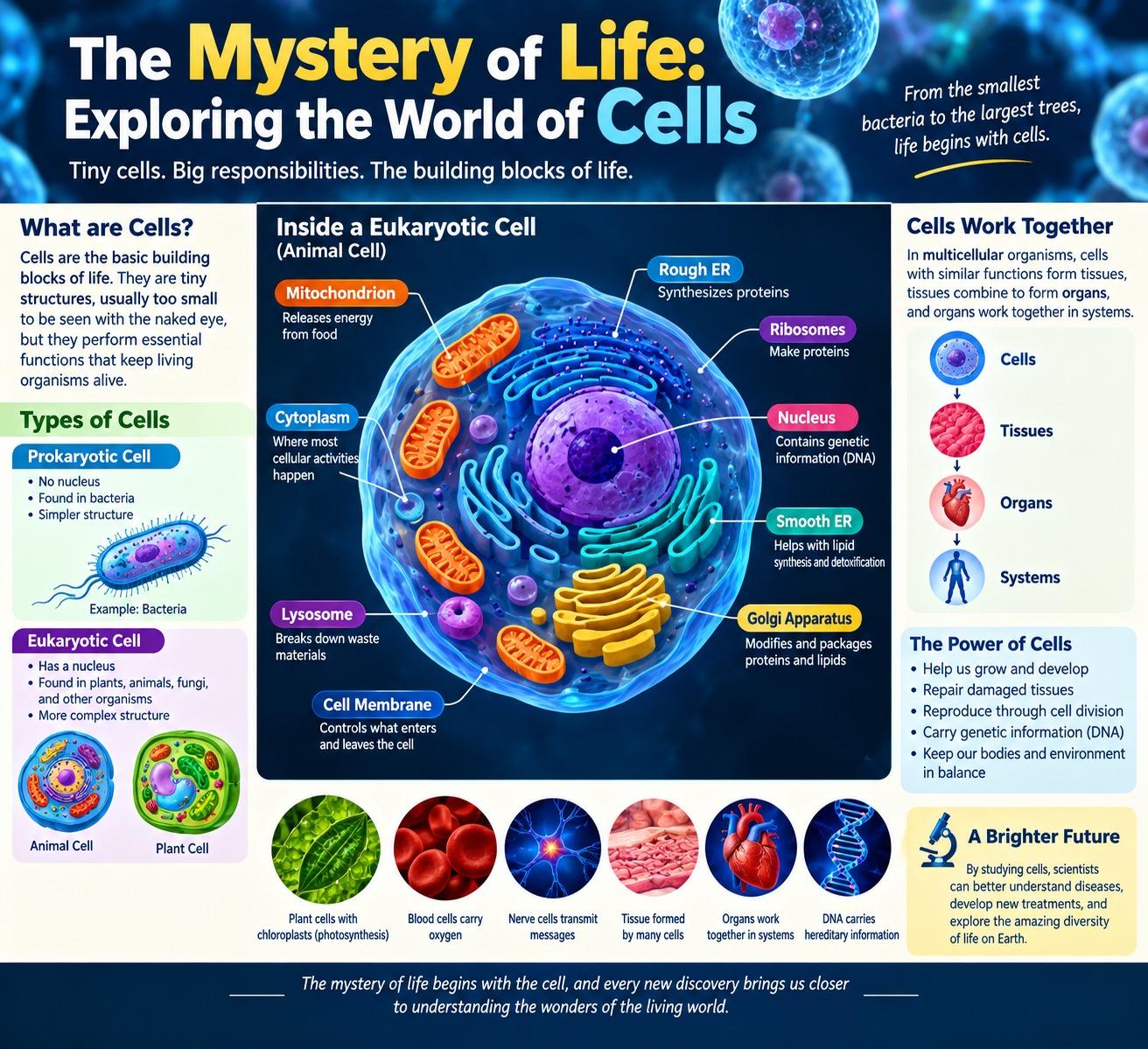
    # The Mystery of Life: Exploring the World of Cells Life is one of the most fascinating mysteries of the natural world. From the tallest trees to the smallest insects, every living organism has a unique structure and a special way of surviving. But have you ever wondered what makes life possible? What is the tiny building block that forms every living thing? The answer is **cells**, the fundamental units of life. Although cells are usually too small to be seen without a microscope, they perform countless important functions that allow living organisms to grow, develop, reproduce, and survive. Cells are often described as the basic building blocks of life because all living organisms are made up of one or more cells. Some organisms, such as bacteria, consist of only a single cell, while humans, animals, and plants are made up of trillions of cells. Each cell has its own structure and responsibilities. Some cells help the body obtain energy, while others carry oxygen, fight infections, or transmit messages throughout the body. In plants, cells help produce food through photosynthesis and provide support to the plant's structure. There are two major types of cells: **prokaryotic cells and eukaryotic cells**. Prokaryotic cells, such as bacteria, do not have a nucleus enclosed by a membrane. Eukaryotic cells, which are found in animals, plants, fungi, and many other organisms, contain a nucleus that stores genetic information. These cells also contain specialized structures called organelles, each of which performs a particular function. For example, the nucleus controls many cellular activities, mitochondria release usable energy from food, and the cell membrane regulates what enters and leaves the cell. Plant cells also contain chloroplasts, which help them produce food using sunlight. One of the most amazing things about cells is how they work together. In multicellular organisms, cells with similar functions form tissues, tissues combine to form organs, and organs work together in systems. In the human body, for example, the heart, lungs, brain, and other organs depend on the coordinated activities of countless cells. This cooperation allows the body to maintain balance, respond to changes, and carry out the activities necessary for life. Cells also play an essential role in growth, healing, and reproduction. Through a process called cell division, cells produce new cells. This allows organisms to grow, replace old or damaged cells, and repair tissues. Cells contain DNA, the genetic material that carries instructions for the development and functioning of living organisms. By studying DNA and cellular processes, scientists can better understand heredity, diseases, and the remarkable diversity of life on Earth. The study of cells has transformed our understanding of biology and medicine. understanding the wonders of the living world.**
    Activate to view larger image,
    View image

    ACCL POST Day:43 Roll No:003 Story post Student at Rehan School Urdu bazar campus # The Mystery of Life: Exploring the World of Cells Life is one of the most fascinating mysteries of the natural world. From the tallest trees to the smallest insects, every living organism has a unique structure and a special way of surviving. But have you ever wondered what makes life possible? What is the tiny building block that forms every living thing? The answer is **cells**, the fundamental units of life. Although cells are usually too small to be seen without a microscope, they perform countless important functions that allow living organisms to grow, develop, reproduce, and survive. Cells are often described as the basic building blocks of life because all living organisms are made up of one or more cells. Some organisms, such as bacteria, consist of only a single cell, while humans, animals, and plants are made up of trillions of cells. Each cell has its own structure and responsibilities. Some cells help the body obtain energy, while others carry oxygen, fight infections, or transmit messages throughout the body. In plants, cells help produce food through photosynthesis and provide support to the plant's structure. There are two major types of cells: **prokaryotic cells and eukaryotic cells**. Prokaryotic cells, such as bacteria, do not have a nucleus enclosed by a membrane. Eukaryotic cells, which are found in animals, plants, fungi, and many other organisms, contain a nucleus that stores genetic information. These cells also contain specialized structures called organelles, each of which performs a particular function. For example, the nucleus controls many cellular activities, mitochondria release usable energy from food, and the cell membrane regulates what enters and leaves the cell. Plant cells also contain chloroplasts, which help them produce food using sunlight. One of the most amazing things about cells is how they work together. In multicellular organisms, cells with similar functions form tissues, tissues combine to form organs, and organs work together in systems. In the human body, for example, the heart, lungs, brain, and other organs depend on the coordinated activities of countless cells. This cooperation allows the body to maintain balance, respond to changes, and carry out the activities necessary for life. Cells also play an essential role in growth, healing, and reproduction. Through a process called cell division, cells produce new cells. This allows organisms to grow, replace old or damaged cells, and repair tissues. Cells contain DNA, the genetic material that carries instructions for the development and functioning of living organisms. By studying DNA and cellular processes, scientists can better understand heredity, diseases, and the remarkable diversity of life on Earth. The study of cells has transformed our understanding of biology and medicine. understanding the wonders of the living world.** Activate to view larger image, View image

    0 Comments 0 Shares 1474 Views
  • ACCL TASK
    Day:41
    Roll No:003
    Story post
    @Student at Rehan School Urdu bazar campus

    # The Mystery of Life: Exploring the World of Cells

    Life is one of the most fascinating mysteries of the natural world. From the tallest trees to the smallest insects, every living organism has a unique structure and a special way of surviving. But have you ever wondered what makes life possible? What is the tiny building block that forms every living thing? The answer is **cells**, the fundamental units of life. Although cells are usually too small to be seen without a microscope, they perform countless important functions that allow living organisms to grow, develop, reproduce, and survive.

    Cells are often described as the basic building blocks of life because all living organisms are made up of one or more cells. Some organisms, such as bacteria, consist of only a single cell, while humans, animals, and plants are made up of trillions of cells. Each cell has its own structure and responsibilities. Some cells help the body obtain energy, while others carry oxygen, fight infections, or transmit messages throughout the body. In plants, cells help produce food through photosynthesis and provide support to the plant's structure.

    There are two major types of cells: **prokaryotic cells and eukaryotic cells**. Prokaryotic cells, such as bacteria, do not have a nucleus enclosed by a membrane. Eukaryotic cells, which are found in animals, plants, fungi, and many other organisms, contain a nucleus that stores genetic information. These cells also contain specialized structures called organelles, each of which performs a particular function. For example, the nucleus controls many cellular activities, mitochondria release usable energy from food, and the cell membrane regulates what enters and leaves the cell. Plant cells also contain chloroplasts, which help them produce food using sunlight.

    One of the most amazing things about cells is how they work together. In multicellular organisms, cells with similar functions form tissues, tissues combine to form organs, and organs work together in systems. In the human body, for example, the heart, lungs, brain, and other organs depend on the coordinated activities of countless cells. This cooperation allows the body to maintain balance, respond to changes, and carry out the activities necessary for life.

    Cells also play an essential role in growth, healing, and reproduction. Through a process called cell division, cells produce new cells. This allows organisms to grow, replace old or damaged cells, and repair tissues. Cells contain DNA, the genetic material that carries instructions for the development and functioning of living organisms. of cells. Exploring the world of cells helps us understand how living things function and reveals the extraordinary hidden within even the smallest units of life. The mystery of life begins with the cell, and every new discovery brings us closer to understanding the wonders of the living world.
    ACCL TASK Day:41 Roll No:003 Story post @Student at Rehan School Urdu bazar campus # The Mystery of Life: Exploring the World of Cells Life is one of the most fascinating mysteries of the natural world. From the tallest trees to the smallest insects, every living organism has a unique structure and a special way of surviving. But have you ever wondered what makes life possible? What is the tiny building block that forms every living thing? The answer is **cells**, the fundamental units of life. Although cells are usually too small to be seen without a microscope, they perform countless important functions that allow living organisms to grow, develop, reproduce, and survive. Cells are often described as the basic building blocks of life because all living organisms are made up of one or more cells. Some organisms, such as bacteria, consist of only a single cell, while humans, animals, and plants are made up of trillions of cells. Each cell has its own structure and responsibilities. Some cells help the body obtain energy, while others carry oxygen, fight infections, or transmit messages throughout the body. In plants, cells help produce food through photosynthesis and provide support to the plant's structure. There are two major types of cells: **prokaryotic cells and eukaryotic cells**. Prokaryotic cells, such as bacteria, do not have a nucleus enclosed by a membrane. Eukaryotic cells, which are found in animals, plants, fungi, and many other organisms, contain a nucleus that stores genetic information. These cells also contain specialized structures called organelles, each of which performs a particular function. For example, the nucleus controls many cellular activities, mitochondria release usable energy from food, and the cell membrane regulates what enters and leaves the cell. Plant cells also contain chloroplasts, which help them produce food using sunlight. One of the most amazing things about cells is how they work together. In multicellular organisms, cells with similar functions form tissues, tissues combine to form organs, and organs work together in systems. In the human body, for example, the heart, lungs, brain, and other organs depend on the coordinated activities of countless cells. This cooperation allows the body to maintain balance, respond to changes, and carry out the activities necessary for life. Cells also play an essential role in growth, healing, and reproduction. Through a process called cell division, cells produce new cells. This allows organisms to grow, replace old or damaged cells, and repair tissues. Cells contain DNA, the genetic material that carries instructions for the development and functioning of living organisms. of cells. Exploring the world of cells helps us understand how living things function and reveals the extraordinary hidden within even the smallest units of life. The mystery of life begins with the cell, and every new discovery brings us closer to understanding the wonders of the living world.
    0 Comments 0 Shares 1333 Views
  • RSIF8
    Roll no:14
    coding task no:13
    coding topic:**Basic Calculator with GUI
    **Basic Calculator with GUI – A Simple and User-Friendly Application**

    **Description:**

    The Basic Calculator with GUI is a beginner-friendly programming project designed to perform essential mathematical calculations through a simple, interactive, and user-friendly graphical interface. Instead of entering commands, users can perform calculations by clicking buttons, making the application easy and convenient to use.

    This project allows users to perform basic arithmetic operations, including **addition (+), subtraction (−), multiplication (×), and division (÷)**. It features a clear display screen for showing numbers and results, along with dedicated buttons for entering values, selecting operations, clearing the display, and calculating answers.

    **Key Features:**

    - **Addition:** Add two or more numbers easily.
    - **Subtraction:** Calculate the difference between numbers.
    - **Multiplication:** Multiply numbers quickly.
    - **Division:** Divide numbers and display the results.
    - **Graphical User Interface (GUI):** An interactive layout with clickable buttons.
    - **Clear Button:** Reset the display and start a new calculation.
    - **Instant Results:** Perform calculations quickly and efficiently.
    - **Error Handling:** Handle invalid calculations, such as division by zero.

    **Learning Objectives:**

    The main goal of this project is to help beginners understand the fundamentals of programming and GUI development. It introduces important concepts such as button events, user input, mathematical operators, functions, conditional statements, and displaying output on the screen.

    **Conclusion:**

    The Basic Calculator with GUI is an excellent project for anyone beginning their programming journey. It combines practical mathematical operations with an interactive design, demonstrating how code can be transformed into a useful desktop application. With further improvements, the calculator can also include percentage calculations, decimal numbers, keyboard support, and a more attractive interface.

    **Project Goal:** To create a simple, reliable, and easy-to-use calculator that makes everyday mathematical calculations faster and more convenient.

    #BasicCalculator #GUI #ProgrammingProject #BeginnerCoding #PythonProgramming #AppDevelopment #LearnToCode #ComputerScience #CodingForBeginners #SoftwareDevelopment
    RSIF8 Roll no:14 coding task no:13 coding topic:**Basic Calculator with GUI ๐Ÿงฎ **Basic Calculator with GUI – A Simple and User-Friendly Application** ๐Ÿ’ป โœจ **Description:** The Basic Calculator with GUI is a beginner-friendly programming project designed to perform essential mathematical calculations through a simple, interactive, and user-friendly graphical interface. Instead of entering commands, users can perform calculations by clicking buttons, making the application easy and convenient to use. ๐Ÿš€๐Ÿ“ฑ This project allows users to perform basic arithmetic operations, including **addition (+), subtraction (−), multiplication (×), and division (÷)**. It features a clear display screen for showing numbers and results, along with dedicated buttons for entering values, selecting operations, clearing the display, and calculating answers. ๐ŸŽฏ **Key Features:** - โž• **Addition:** Add two or more numbers easily. - โž– **Subtraction:** Calculate the difference between numbers. - โœ–๏ธ **Multiplication:** Multiply numbers quickly. - โž— **Division:** Divide numbers and display the results. - ๐Ÿ–ฅ๏ธ **Graphical User Interface (GUI):** An interactive layout with clickable buttons. - ๐Ÿ”„ **Clear Button:** Reset the display and start a new calculation. - โšก **Instant Results:** Perform calculations quickly and efficiently. - โš ๏ธ **Error Handling:** Handle invalid calculations, such as division by zero. ๐Ÿ“š **Learning Objectives:** The main goal of this project is to help beginners understand the fundamentals of programming and GUI development. It introduces important concepts such as button events, user input, mathematical operators, functions, conditional statements, and displaying output on the screen. ๐ŸŒŸ **Conclusion:** The Basic Calculator with GUI is an excellent project for anyone beginning their programming journey. It combines practical mathematical operations with an interactive design, demonstrating how code can be transformed into a useful desktop application. With further improvements, the calculator can also include percentage calculations, decimal numbers, keyboard support, and a more attractive interface. ๐Ÿ’ก **Project Goal:** To create a simple, reliable, and easy-to-use calculator that makes everyday mathematical calculations faster and more convenient. #BasicCalculator #GUI #ProgrammingProject #BeginnerCoding #PythonProgramming #AppDevelopment #LearnToCode #ComputerScience #CodingForBeginners #SoftwareDevelopment ๐Ÿ’ป๐Ÿงฎ๐Ÿš€
    0 Comments 0 Shares 2047 Views
  • #rsisb Foundation level student. Roll no:232 Documentary NO:5 ๐Ÿ”ฌ๐Ÿงฌ **Documentary — Symphony of the Cell: Understanding Cellular Processes** ๐ŸŽฌโœจ Welcome to an exciting journey into the microscopic world of cells! ๐ŸŒ๐Ÿ”ฌ In this documentary, *Symphony of the Cell: Understanding Cellular Processes*, we explore the amazing activities that keep living organisms alive. ๐Ÿงซ๐Ÿ’ก Discover how cells produce energy, create proteins, transport materials, remove waste, and communicate with one another. Learn about important cell organelles, including the nucleus, mitochondria, ribosomes, and cell membrane, and understand how they work together like instruments in a beautiful symphony. ๐ŸŽถ๐Ÿงฌ From cell division to maintaining life, every cellular process plays an essential role in the growth, development, and survival of living things. This documentary makes biology fascinating and helps us appreciate the incredible complexity of life at its smallest level. ๐ŸŒฑ๐Ÿ” Join me on this educational adventure and discover the hidden wonders of the cell! ๐Ÿš€๐Ÿ“š **Keep Exploring, Keep Learning, and Keep Discovering! ๐ŸŒŸ** #SymphonyOfTheCell #CellBiology #CellularProcesses #Biology #ScienceDocumentary #HumanBiology #CellOrganelles #Mitochondria #Nucleus #ScientificDiscovery #EducationalVideo #ScienceEducation #LearnWithAI #KnowledgeIsPower #KeepLearning ๐Ÿ”ฌ๐Ÿงฌ๐ŸŽฌ๐ŸŒโœจ Irum Asim Leadershipwali Asma Shaheen EducationWali Rehan School Islamabad Campus https://www.facebook.com/share/v/1J5vJHF9Mo/
    WWW.FACEBOOK.COM
    Facebook
    #rsisb Foundation level student. Roll no:232 Documentary NO:5 ๐Ÿ”ฌ๐Ÿงฌ **Documentary — Symphony of the Cell: Understanding Cellular Processes** ๐ŸŽฌโœจ Welcome to an exciting journey into the microscopic...
    0 Comments 0 Shares 1928 Views
  • RSIF8
    Roll no 94
    Coding task no 15
    Coding task topic
    Basic Calculator with Graphical User Interface (GUI)
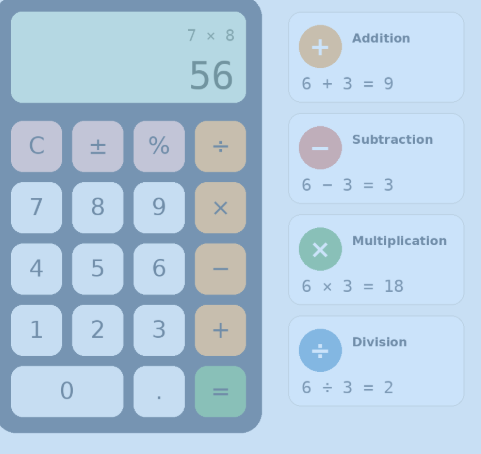
    I successfully created a Basic Calculator with a Graphical User Interface (GUI) that can perform simple arithmetic operations like Addition, Subtraction, Multiplication, and Division. The calculator features an easy-to-use design, making calculations quick and efficient.
    Screenshot attached to showcase the working application. This project helped me improve my programming, problem-solving, and GUI design skills.
    #BasicCalculator #GUI #Programming #CodingProject #PythonProgramming #TechSkills #SoftwareDevelopment #LearningByDoing #StudentProject #ComputerScience #Innovation #FutureProgrammer
    RSIF8 Roll no 94 Coding task no 15 Coding task topic ๐Ÿš€ Basic Calculator with Graphical User Interface (GUI) ๐Ÿงฎโœจ I successfully created a Basic Calculator with a Graphical User Interface (GUI) that can perform simple arithmetic operations like โž• Addition, โž– Subtraction, โœ–๏ธ Multiplication, and โž— Division. The calculator features an easy-to-use design, making calculations quick and efficient. ๐Ÿ“ฑ๐Ÿ’ป ๐Ÿ“ธ Screenshot attached to showcase the working application. This project helped me improve my programming, problem-solving, and GUI design skills. ๐ŸŒŸ #BasicCalculator #GUI #Programming #CodingProject #PythonProgramming #TechSkills #SoftwareDevelopment #LearningByDoing #StudentProject #ComputerScience #Innovation #FutureProgrammer ๐Ÿš€๐Ÿ’ป๐Ÿงฎ
    0 Comments 0 Shares 2014 Views
  • RSIF8
    Roll no:81
    conding task no:2
    conding task topic Basic Calculator – Arithmetic Operations
    Welcome to my Basic Calculator project! A basic calculator is a simple and useful tool that helps us solve mathematical problems quickly and easily.
    In this project, we can perform four basic arithmetic operations: addition , subtraction , multiplication , and division . This calculator is helpful for students and beginners who want to improve their math skills and learn how calculations work.
    Learn, Practice, and Calculate!
    Thank you for watching my project. Don't forget to like, share, and follow for more educational content!
    #BasicCalculator #ArithmeticOperations #Mathematics #Addition #Subtraction #Multiplication #Division #Coding #Education #StudentProject #LearningMadeEasy
    RSIF8 Roll no:81 conding task no:2 conding task topic๐Ÿงฎ Basic Calculator – Arithmetic Operations โž•โž–โœ–๏ธโž— Welcome to my Basic Calculator project! ๐ŸŽ‰ A basic calculator is a simple and useful tool that helps us solve mathematical problems quickly and easily. In this project, we can perform four basic arithmetic operations: addition โž•, subtraction โž–, multiplication โœ–๏ธ, and division โž—. This calculator is helpful for students and beginners who want to improve their math skills and learn how calculations work. ๐Ÿ’ก Learn, Practice, and Calculate! ๐Ÿš€ Thank you for watching my project. Don't forget to like, share, and follow for more educational content! โค๏ธ #BasicCalculator #ArithmeticOperations #Mathematics #Addition #Subtraction #Multiplication #Division #Coding #Education #StudentProject #LearningMadeEasy ๐Ÿงฎ๐Ÿ“š
    0 Comments 0 Shares 1513 Views
More Results