• Liked by aiman_zaheer_ and 1 other
    Mohsin #RSF8
    Call Annine NO:7
    Class: foundation level
    rool no:13
    Made by Me

    “Please” – The Evolution of Politeness (5 Min)

    The word “please” may be small, but it has a very important place in communication. We use it when making requests, asking for help, or speaking respectfully with other people. This simple word can make our conversations sound kinder, more respectful, and more thoughtful.

    From childhood, many of us are taught to use polite words such as “please,” “thank you,” “sorry,” and “excuse me.” These words help us communicate our feelings and requests in a positive way. Saying “please” shows that we understand that other people have their own choices, time, and responsibilities.

    The idea of politeness has changed throughout history. Different societies and cultures have developed their own ways of showing respect. The words people use, the way they make requests, and the customs they follow can be different from one place to another. However, the basic idea of treating others with consideration remains important.

    “Please” is especially useful when we want something from another person. Compare “Give me your book” with “Please give me your book.” The second sentence sounds more respectful because it turns a direct command into a polite request. Although the word itself is simple, it can influence the tone of an entire conversation.

    Politeness is also important in schools, workplaces, families, and online communication. When students speak politely with teachers and classmates, it can create a more positive learning environment. Similarly, using respectful language in messages, emails, and social media conversations can help prevent misunderstandings.

    Another interesting part of politeness is that it is not only about words. Tone of voice, facial expressions, listening, patience, and respect also influence how our communication is received. Someone can say “please” but still sound disrespectful if their overall behavior is unkind. True politeness comes from both our words and our attitude.
    Liked by aiman_zaheer_ and 1 other Mohsin #RSF8🎓✨ Call Annine NO:7 Class: foundation level 📚 rool no:13 Made by Me 💻🚀 🌟 “Please” – The Evolution of Politeness (5 Min) The word “please” may be small, but it has a very important place in communication. We use it when making requests, asking for help, or speaking respectfully with other people. This simple word can make our conversations sound kinder, more respectful, and more thoughtful. From childhood, many of us are taught to use polite words such as “please,” “thank you,” “sorry,” and “excuse me.” These words help us communicate our feelings and requests in a positive way. Saying “please” shows that we understand that other people have their own choices, time, and responsibilities. The idea of politeness has changed throughout history. Different societies and cultures have developed their own ways of showing respect. The words people use, the way they make requests, and the customs they follow can be different from one place to another. However, the basic idea of treating others with consideration remains important. “Please” is especially useful when we want something from another person. Compare “Give me your book” with “Please give me your book.” The second sentence sounds more respectful because it turns a direct command into a polite request. Although the word itself is simple, it can influence the tone of an entire conversation. Politeness is also important in schools, workplaces, families, and online communication. When students speak politely with teachers and classmates, it can create a more positive learning environment. Similarly, using respectful language in messages, emails, and social media conversations can help prevent misunderstandings. Another interesting part of politeness is that it is not only about words. Tone of voice, facial expressions, listening, patience, and respect also influence how our communication is received. Someone can say “please” but still sound disrespectful if their overall behavior is unkind. True politeness comes from both our words and our attitude.
    0 Комментарии 0 Поделились 822 Просмотры 37
  • RSIF8
    Roll no:14
    coding task no:12
    coding task topic:Simple Contact Book (store/manage contacts)

    **Simple Contact Book – Store and Manage Contacts**

    **Description:**

    The Simple Contact Book is a useful and user-friendly application designed to store, organize, and manage contact information easily. This project allows users to save important details such as names, phone numbers, and email addresses in one convenient place. Instead of searching through a long list of contacts, users can quickly find the information they need whenever required.

    The application includes essential features such as **adding new contacts, viewing saved contacts, editing existing information, deleting unwanted contacts, and searching for specific people**. These features make contact management simple, fast, and efficient.

    The main purpose of this project is to provide a practical solution for organizing personal or professional contacts while learning the fundamentals of programming and application development. It helps beginners understand important concepts such as data storage, user input, searching, updating records, and deleting information.

    With its simple design and easy-to-use features, the Simple Contact Book is an excellent beginner-friendly programming project. It demonstrates how technology can make everyday tasks easier and more organized.

    **Key Features:**
    - Add new contacts.
    - View all saved contacts.
    - Edit contact details.
    - Delete unwanted contacts.
    - Search contacts by name or phone number.
    - Keep contact information organized.

    **Project Goal:** To develop a simple, efficient, and user-friendly application that makes storing and managing contacts quick and convenient.

    #SimpleContactBook #ProgrammingProject #ContactManager #BeginnerCoding #AppDevelopment #LearnProgramming #ComputerScience #CodingProject #Technology #StudentProject

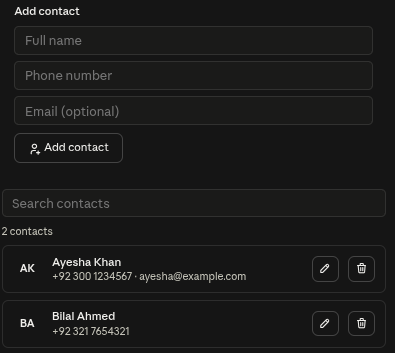
    RSIF8 Roll no:14 coding task no:12 coding task topic:Simple Contact Book (store/manage contacts) 📱 **Simple Contact Book – Store and Manage Contacts** 📇 **Description:** The Simple Contact Book is a useful and user-friendly application designed to store, organize, and manage contact information easily. 📒✨ This project allows users to save important details such as names, phone numbers, and email addresses in one convenient place. Instead of searching through a long list of contacts, users can quickly find the information they need whenever required. The application includes essential features such as **adding new contacts, viewing saved contacts, editing existing information, deleting unwanted contacts, and searching for specific people**. 🔍📞 These features make contact management simple, fast, and efficient. The main purpose of this project is to provide a practical solution for organizing personal or professional contacts while learning the fundamentals of programming and application development. 💻🚀 It helps beginners understand important concepts such as data storage, user input, searching, updating records, and deleting information. With its simple design and easy-to-use features, the Simple Contact Book is an excellent beginner-friendly programming project. It demonstrates how technology can make everyday tasks easier and more organized. 🌟 **Key Features:** - ➕ Add new contacts. - 📋 View all saved contacts. - ✏️ Edit contact details. - 🗑️ Delete unwanted contacts. - 🔎 Search contacts by name or phone number. - 📱 Keep contact information organized. 🎯 **Project Goal:** To develop a simple, efficient, and user-friendly application that makes storing and managing contacts quick and convenient. #SimpleContactBook #ProgrammingProject #ContactManager #BeginnerCoding #AppDevelopment #LearnProgramming #ComputerScience #CodingProject #Technology #StudentProject 💻📱✨
    0 Комментарии 0 Поделились 1454 Просмотры
  • #rsisb Foundation level student. Roll no:232 Documentary NO:6 🌐💻 **Documentary — How the Internet Changed the World** 🌍🚀 Welcome to an exciting journey through the history of the internet! 🎬✨ In this documentary, *How the Internet Changed the World*, we explore how the internet transformed the way people communicate, learn, work, and share information. Discover how the internet connects billions of people around the world, makes education more accessible, supports businesses, and creates new opportunities in science, technology, and entertainment. 📱🌐 From emails and social media to online learning and artificial intelligence, the internet has become an essential part of modern life. 🤖📚 We will also explore the challenges of the digital world, including online safety, privacy, misinformation, and responsible internet use. 🔐💡 Understanding both the benefits and challenges of the internet helps us become smarter and more responsible digital citizens. Join me as we discover how this powerful invention changed our world and continues to shape our future! 🌎⚡ **Learn, Explore, Connect, and Innovate! 🚀💡** #HowTheInternetChangedTheWorld #Internet #Technology #DigitalWorld #HistoryOfTheInternet #ArtificialIntelligence #DigitalEducation #Innovation #Communication #OnlineLearning #InternetSafety #DigitalCitizenship #EducationalDocumentary #TechEvolution #FutureOfTechnology 🌐💻🤖📚🌍✨ Irum Asim Leadershipwali Asma Shaheen EducationWali Rehan School Islamabad Campus https://www.facebook.com/share/v/19cP7WVama/
    WWW.FACEBOOK.COM
    Facebook
    #rsisb Foundation level student. Roll no:232 Documentary NO:6 🌐💻 **Documentary — How the Internet Changed the World** 🌍🚀 Welcome to an exciting journey through the history of the internet! 🎬✨ In...
    0 Комментарии 0 Поделились 1216 Просмотры
  • Story Post

    # Cybersecurity Chronicles: Protecting Information in the Digital Age

    The air in the control room was thick with tension, punctuated only by the hum of cooling fans and the quiet, rhythmic clacking of mechanical keyboards. For Maya, a senior cybersecurity analyst at Apex Sentinel, late-night shifts were usually spent monitoring routine network pings and automated firewall logs.

    Tonight was different.

    At 2:17 AM, a single red alert flashed across her secondary monitor: **`UNAUTHORIZED ACCESS ATTEMPT – SECTOR 4 DATABASE`**.

    ---

    ## Chapter 1: The Invisible Intruder

    Sector 4 housed the core sensitive data for millions of users—encrypted identifiers, access keys, and proprietary algorithms. Maya leaned in, her eyes scanning the incoming data packets. This was no low-level script kiddie trying a basic brute-force attack. The intruder was moving with surgical precision, exploiting an unpatched zero-day vulnerability in a legacy microservice.

    > *"They're not just trying to break in,"* Maya whispered to her teammate, Leo, sitting at the adjacent console. *"They already have internal credentials. It’s a spear-phishing compromise."*

    The threat actor—known in threat intelligence circles as **ShadowByte**—had spent weeks laying the groundwork. A spoofed executive email, a single clicked link on a rogue landing page, and a compromised credential was all it took to bypass traditional perimeter defenses.

    ---

    ## Chapter 2: The Digital Countermeasure

    Every second mattered. A full breach could result in millions of compromised records, massive regulatory fines, and shattered public trust.

    Maya executed Apex Sentinel’s incident response protocol:

    1. **Isolation:** She immediately severed Sector 4's outward-facing network connections, routing traffic into a isolated honeypot to monitor the attacker's movements.
    2. **Credential Revocation:** Leo forced a company-wide token refresh, revoking all active sessions associated with the compromised user account.
    3. **Patch Deployment:** Working rapidly, the engineering team deployed an emergency hotfix to patch the exploited vulnerability across all microservices.

    ```text
    [SYSTEM ACTION] Isolating Sector 4... SUCCESS
    [SYSTEM ACTION] Revoking Active Tokens... SUCCESS
    [SYSTEM ACTION] Hotfix v4.12.9 Deployed. Threat Contained.

    ```

    By 3:45 AM, the malicious traffic ceased. The breach was neutralized before a single byte of customer data left the server.

    ---

    ## Chapter 3: Lessons from the Frontlines

    The attack was a stark reminder that in the digital age, **security is not a static destination—it is a continuous practice.**

    Technology alone is never enough; humans remain both the most vulnerable link and the strongest line of defense in cybersecurity.

    | Threat Vectors | Modern Safeguards |
    | --- | --- |
    | **Spear-Phishing & Social Engineering** | Security awareness training & Phishing simulations |
    | **Stolen Credentials** | Multi-Factor Authentication (MFA) & Zero Trust Access |
    | **Zero-Day Vulnerabilities** | Automated patch management & Intrusion Detection Systems (IDS) |
    | **Data Exfiltration** | End-to-end encryption & Data Loss Prevention (DLP) tools |

    ---

    ## The Takeaway: Building a Culture of Security

    As the sun began to rise over the city, Maya stepped out of the building into the cool morning air. The digital battleground is silent, invisible to the millions of people going about their day, trusting that their information is safe.

    Protecting data in the modern world requires vigilance at every level:

    * **For Individuals:** Use strong, unique passwords combined with dynamic MFA, and remain skeptical of unexpected emails or requests for information.
    * **For Organizations:** Adopt a **Zero Trust architecture** ("Never trust, always verify"), keep infrastructure patched, and empower employees with security education.

    In the digital age, our information is our currency. Safeguarding it isn't just the job of analysts like Maya—it’s a collective responsibility we all share.

    ---

    *How does your team or organization stay ahead of evolving cyber threats? What security practices do you rely on daily?*
    Story Post # Cybersecurity Chronicles: Protecting Information in the Digital Age The air in the control room was thick with tension, punctuated only by the hum of cooling fans and the quiet, rhythmic clacking of mechanical keyboards. For Maya, a senior cybersecurity analyst at Apex Sentinel, late-night shifts were usually spent monitoring routine network pings and automated firewall logs. Tonight was different. At 2:17 AM, a single red alert flashed across her secondary monitor: **`UNAUTHORIZED ACCESS ATTEMPT – SECTOR 4 DATABASE`**. --- ## Chapter 1: The Invisible Intruder Sector 4 housed the core sensitive data for millions of users—encrypted identifiers, access keys, and proprietary algorithms. Maya leaned in, her eyes scanning the incoming data packets. This was no low-level script kiddie trying a basic brute-force attack. The intruder was moving with surgical precision, exploiting an unpatched zero-day vulnerability in a legacy microservice. > *"They're not just trying to break in,"* Maya whispered to her teammate, Leo, sitting at the adjacent console. *"They already have internal credentials. It’s a spear-phishing compromise."* The threat actor—known in threat intelligence circles as **ShadowByte**—had spent weeks laying the groundwork. A spoofed executive email, a single clicked link on a rogue landing page, and a compromised credential was all it took to bypass traditional perimeter defenses. --- ## Chapter 2: The Digital Countermeasure Every second mattered. A full breach could result in millions of compromised records, massive regulatory fines, and shattered public trust. Maya executed Apex Sentinel’s incident response protocol: 1. **Isolation:** She immediately severed Sector 4's outward-facing network connections, routing traffic into a isolated honeypot to monitor the attacker's movements. 2. **Credential Revocation:** Leo forced a company-wide token refresh, revoking all active sessions associated with the compromised user account. 3. **Patch Deployment:** Working rapidly, the engineering team deployed an emergency hotfix to patch the exploited vulnerability across all microservices. ```text [SYSTEM ACTION] Isolating Sector 4... SUCCESS [SYSTEM ACTION] Revoking Active Tokens... SUCCESS [SYSTEM ACTION] Hotfix v4.12.9 Deployed. Threat Contained. ``` By 3:45 AM, the malicious traffic ceased. The breach was neutralized before a single byte of customer data left the server. --- ## Chapter 3: Lessons from the Frontlines The attack was a stark reminder that in the digital age, **security is not a static destination—it is a continuous practice.** Technology alone is never enough; humans remain both the most vulnerable link and the strongest line of defense in cybersecurity. | Threat Vectors | Modern Safeguards | | --- | --- | | **Spear-Phishing & Social Engineering** | Security awareness training & Phishing simulations | | **Stolen Credentials** | Multi-Factor Authentication (MFA) & Zero Trust Access | | **Zero-Day Vulnerabilities** | Automated patch management & Intrusion Detection Systems (IDS) | | **Data Exfiltration** | End-to-end encryption & Data Loss Prevention (DLP) tools | --- ## The Takeaway: Building a Culture of Security As the sun began to rise over the city, Maya stepped out of the building into the cool morning air. The digital battleground is silent, invisible to the millions of people going about their day, trusting that their information is safe. Protecting data in the modern world requires vigilance at every level: * **For Individuals:** Use strong, unique passwords combined with dynamic MFA, and remain skeptical of unexpected emails or requests for information. * **For Organizations:** Adopt a **Zero Trust architecture** ("Never trust, always verify"), keep infrastructure patched, and empower employees with security education. In the digital age, our information is our currency. Safeguarding it isn't just the job of analysts like Maya—it’s a collective responsibility we all share. --- *How does your team or organization stay ahead of evolving cyber threats? What security practices do you rely on daily?*
    0 Комментарии 0 Поделились 1961 Просмотры
  • RSIF8
    Roll no: 09
    Coding task no: 10
    Coding task topic: Simple Contact Book – Store & Manage Contacts.

    Simple Contact Book – Store & Manage Contacts
    Stay organized with a Simple Contact Book! This project helps you easily store, manage, and search your contacts in one place. You can add new contacts with their names, phone numbers, and email addresses, search for saved contacts , and edit or delete contact details whenever needed.
    This project demonstrates how technology makes everyday tasks easier while helping us learn programming, data management, and user-friendly design.
    Learn • Create • Organize • Innovate!
    #SimpleContactBook #Coding #Programming #WebDevelopment #AIStudent #LearnToCode #TechProjects #ContactManagement #StudentProjects #Innovation #DigitalSkills #KeepLearning
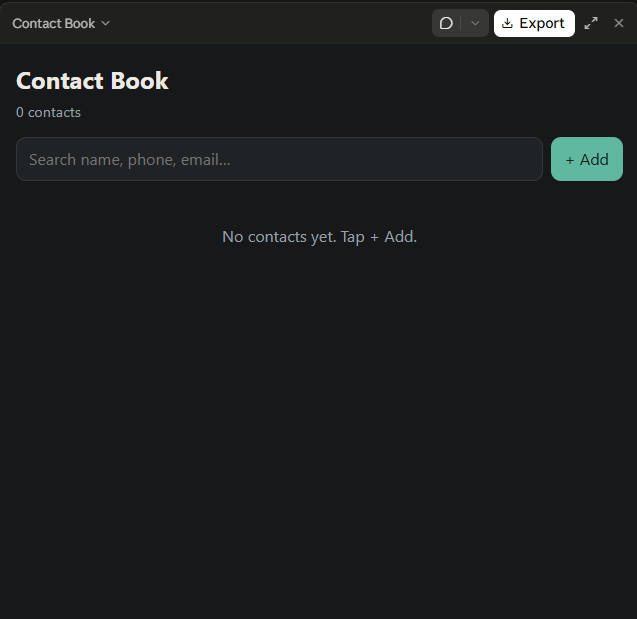
    RSIF8 Roll no: 09 Coding task no: 10 Coding task topic: Simple Contact Book – Store & Manage Contacts. 📱✨ Simple Contact Book – Store & Manage Contacts 📇💻 🚀 Stay organized with a Simple Contact Book! 🌟 This project helps you easily store, manage, and search your contacts in one place. 🗂️💖 You can add new contacts with their names, phone numbers, and email addresses, 🔢📧 search for saved contacts 🔍, and edit or delete contact details whenever needed. ✏️🗑️ 💡 This project demonstrates how technology makes everyday tasks easier while helping us learn programming, data management, and user-friendly design. 🧠💻 🌈 Learn • Create • Organize • Innovate! 🎯✨ #SimpleContactBook 📇 #Coding 💻 #Programming 🚀 #WebDevelopment 🌐 #AIStudent 🤖 #LearnToCode 📚 #TechProjects ⚡ #ContactManagement 📱 #StudentProjects 🎓 #Innovation 💡 #DigitalSkills 🌟 #KeepLearning 💖
    0 Комментарии 0 Поделились 1457 Просмотры
  • foundation level
    day 1
    task email account
    topic: how to create a gmail accout ]
    foundation level day 1 task email account topic: how to create a gmail accout ]
    0 Комментарии 0 Поделились 449 Просмотры
  • Roll No : 55 Level 2 Work Book A Coding Task : 01 Grass hopper https://gray-talk-bridge-go.base44.app 📞 Virtual Phone System Project | Built by Faizan Ali SoftwareWala 💻🚀 I have built a Virtual Phone System project with features designed to make call management easier and more organized. ✨ Key Features: 🔐 User Signup and Login 📱 Unique Virtual Number for Each User 📲 Call Forwarding Setup 🎙️ Voicemail Setup ☎️ Call Forwarding Simulation with the message: “Call forwarded to [Number]” This project helped me explore how virtual phone systems work and how technology can be used to manage calls efficiently. My goal is to keep learning, building practical projects, and improving my software development skills by creating solutions that solve real-world problems. Built with creativity, powered by learning, and driven by innovation! 🚀 #SoftwareDevelopment #WebDevelopment #VirtualPhoneSystem #CallForwarding #Voicemail #CodingProjects #TechInnovation #FaizanAliSoftwareWala #LearnByBuilding @followers Asma Shaheen EducationWali
    0 Комментарии 0 Поделились 1909 Просмотры
  • No otp received in email
    No option for password direct login
    Unable to upload any photo
    No otp received in email No option for password direct login Unable to upload any photo
    0 Комментарии 0 Поделились 541 Просмотры
  • RSISB
    Roll No:56
    Level 2
    Earning Book No : 04
    Teaching My Mother Technology

    I’m so happy to help my mother learn technology step by step! ‍ From basic computer skills and internet browsing to YouTube, WhatsApp, and email, every small lesson helps build confidence and independence.

    Learning together makes the journey more special.
    Small steps, big progress!

    #TeachingMyMother #TechnologyLearning #LearnTogether #DigitalSkills #FamilyLearning #ComputerSkills #AizaLearningContent
    RSISB Roll No:56 Level 2 Earning Book No : 04 🌟 Teaching My Mother Technology 💻❤️ I’m so happy to help my mother learn technology step by step! 👩‍💻✨ From basic computer skills and internet browsing to YouTube, WhatsApp, and email, every small lesson helps build confidence and independence. 🌐📱 Learning together makes the journey more special. 💕 Small steps, big progress! 🌱🚀 #TeachingMyMother #TechnologyLearning #LearnTogether #DigitalSkills #FamilyLearning #ComputerSkills #AizaLearningContent 💻✨
    0 Комментарии 0 Поделились 1755 Просмотры
  • RSIF8
    Roll NO:13
    Task no :5
    task topic How to Create an Instagram Account?

    Instagram is a popular social media platform where people can share photos, videos, stories, and creative ideas with others. Creating an Instagram account is a simple process, but it is important to understand the basic steps and use the platform responsibly and safely.

    The first step in creating an Instagram account is to download the Instagram app from the official app store on your phone or use Instagram through a web browser. After opening the app, you can choose the option to create a new account. Instagram will ask for some basic information, such as an email address or phone number, which can be used to create and manage the account.

    Next, you will need to choose a username. Your username is the name people can use to find your profile, so it is a good idea to choose something simple, appropriate, and easy to remember. You can also add a profile picture and write a short bio that explains your interests or what you want to share.

    A strong password is another important part of creating an account. Your password should be difficult for other people to guess, and you should never share it with friends or strangers. If available, using additional account-security features such as two-step verification can provide extra protection.

    After setting up your profile, you can customize your account according to your interests. You can follow people, creators, educational pages, sports accounts, and other topics that you enjoy. Instagram may also recommend accounts based on your interests, helping you discover new content.

    When using Instagram, privacy and safety should always be important priorities. Avoid sharing personal information such as your home address, passwords, private contact details, or other information that could put your privacy at risk. It is also important to think carefully before posting photos, videos, comments, or other content because anything shared online can potentially be saved or reshared by others.

    Instagram can be used for much more than entertainment. Students can use social media to discover educational content, follow creative communities, share project
    RSIF8 Roll NO:13 Task no :5 task topic How to Create an Instagram Account? Instagram is a popular social media platform where people can share photos, videos, stories, and creative ideas with others. Creating an Instagram account is a simple process, but it is important to understand the basic steps and use the platform responsibly and safely. The first step in creating an Instagram account is to download the Instagram app from the official app store on your phone or use Instagram through a web browser. After opening the app, you can choose the option to create a new account. Instagram will ask for some basic information, such as an email address or phone number, which can be used to create and manage the account. Next, you will need to choose a username. Your username is the name people can use to find your profile, so it is a good idea to choose something simple, appropriate, and easy to remember. You can also add a profile picture and write a short bio that explains your interests or what you want to share. A strong password is another important part of creating an account. Your password should be difficult for other people to guess, and you should never share it with friends or strangers. If available, using additional account-security features such as two-step verification can provide extra protection. After setting up your profile, you can customize your account according to your interests. You can follow people, creators, educational pages, sports accounts, and other topics that you enjoy. Instagram may also recommend accounts based on your interests, helping you discover new content. When using Instagram, privacy and safety should always be important priorities. Avoid sharing personal information such as your home address, passwords, private contact details, or other information that could put your privacy at risk. It is also important to think carefully before posting photos, videos, comments, or other content because anything shared online can potentially be saved or reshared by others. Instagram can be used for much more than entertainment. Students can use social media to discover educational content, follow creative communities, share project
    0 Комментарии 0 Поделились 1470 Просмотры
Расширенные страницы