RSIF8
Roll no:14
story no:23
story topic:The Ethics and Education of Animal Dissections
# The Ethics and Education of Animal Dissections
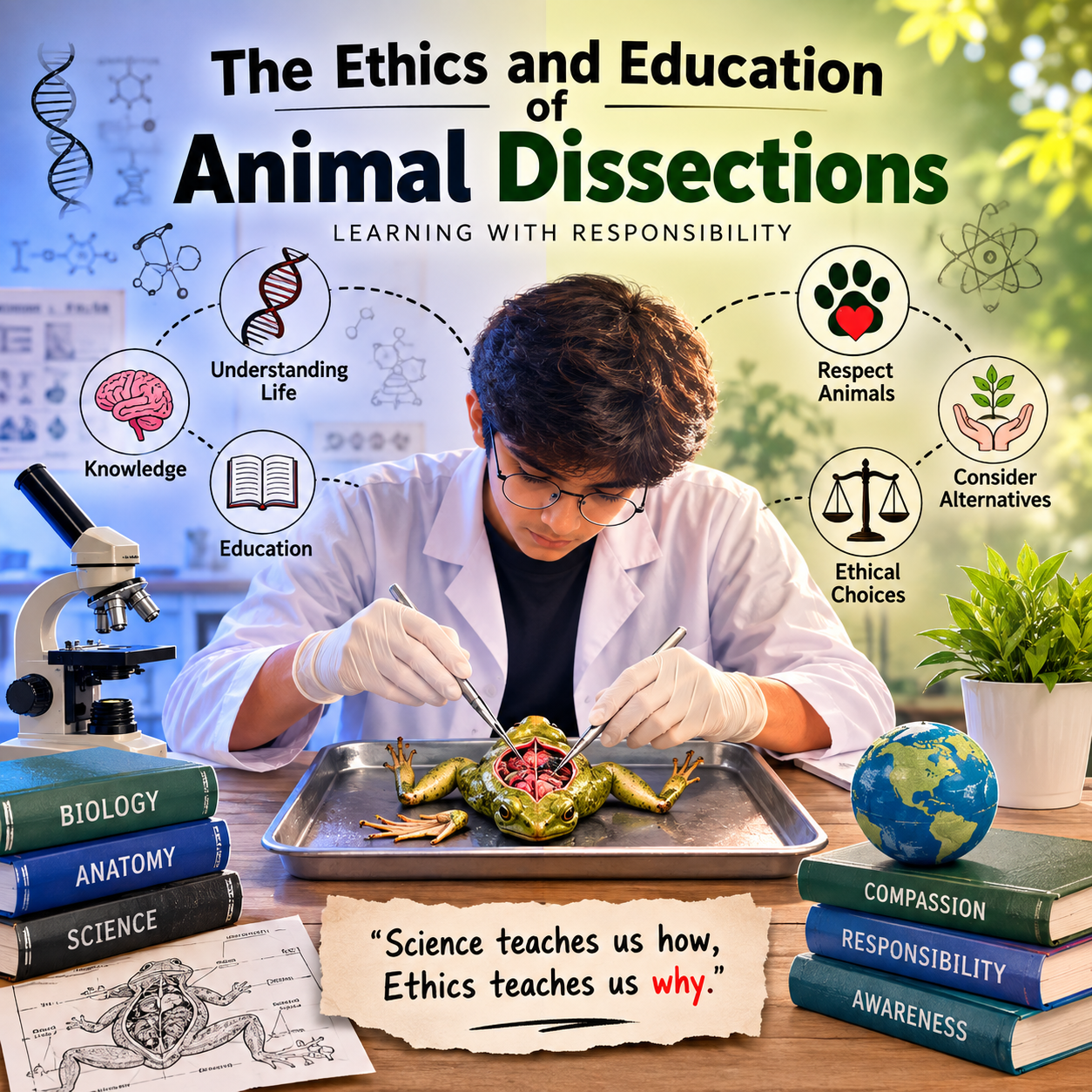
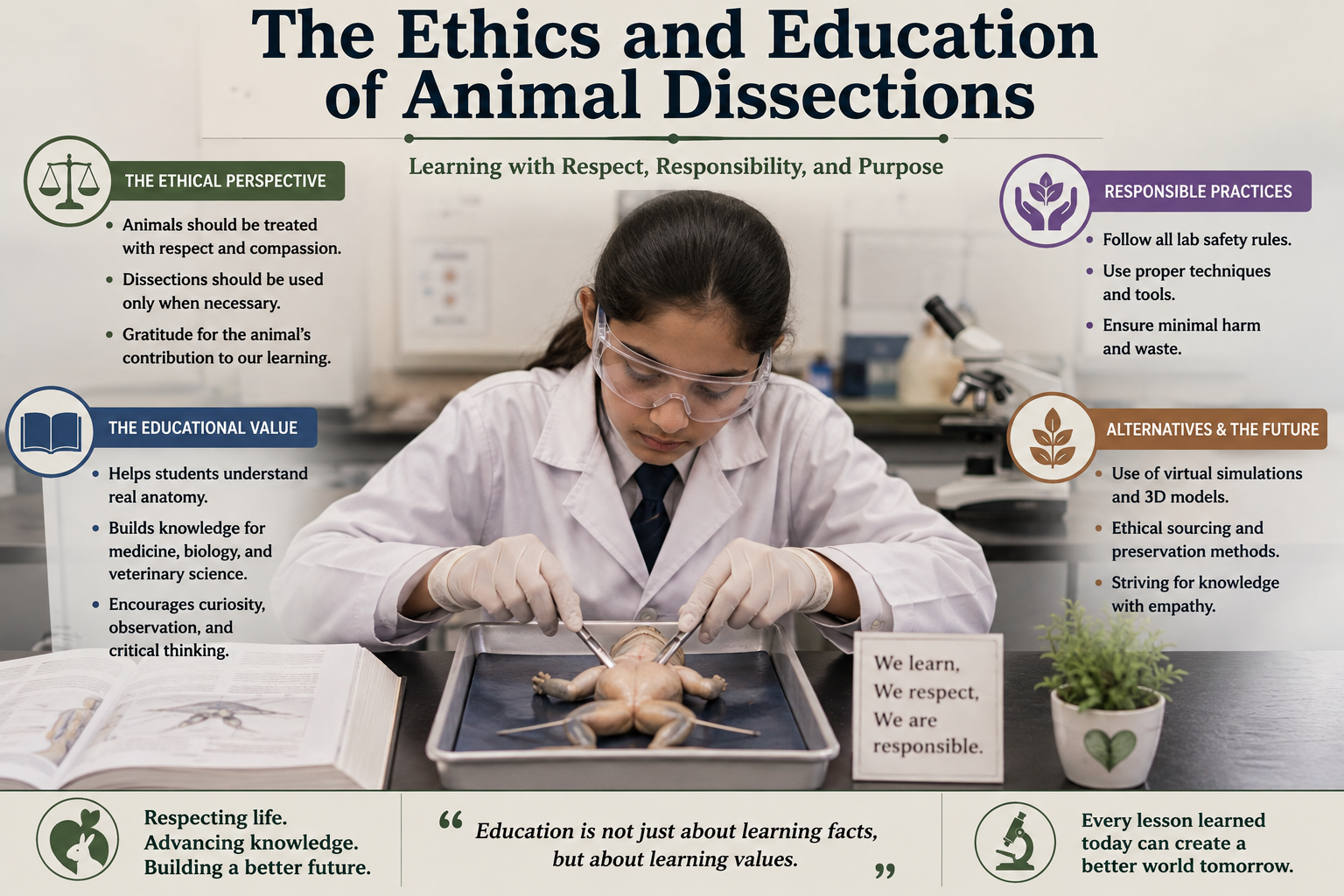
Welcome to an exploration of science, learning, and ethical responsibility! **“The Ethics and Education of Animal Dissections”** examines the role of animal dissection in biological education and highlights the importance of balancing scientific knowledge with respect for animal life.
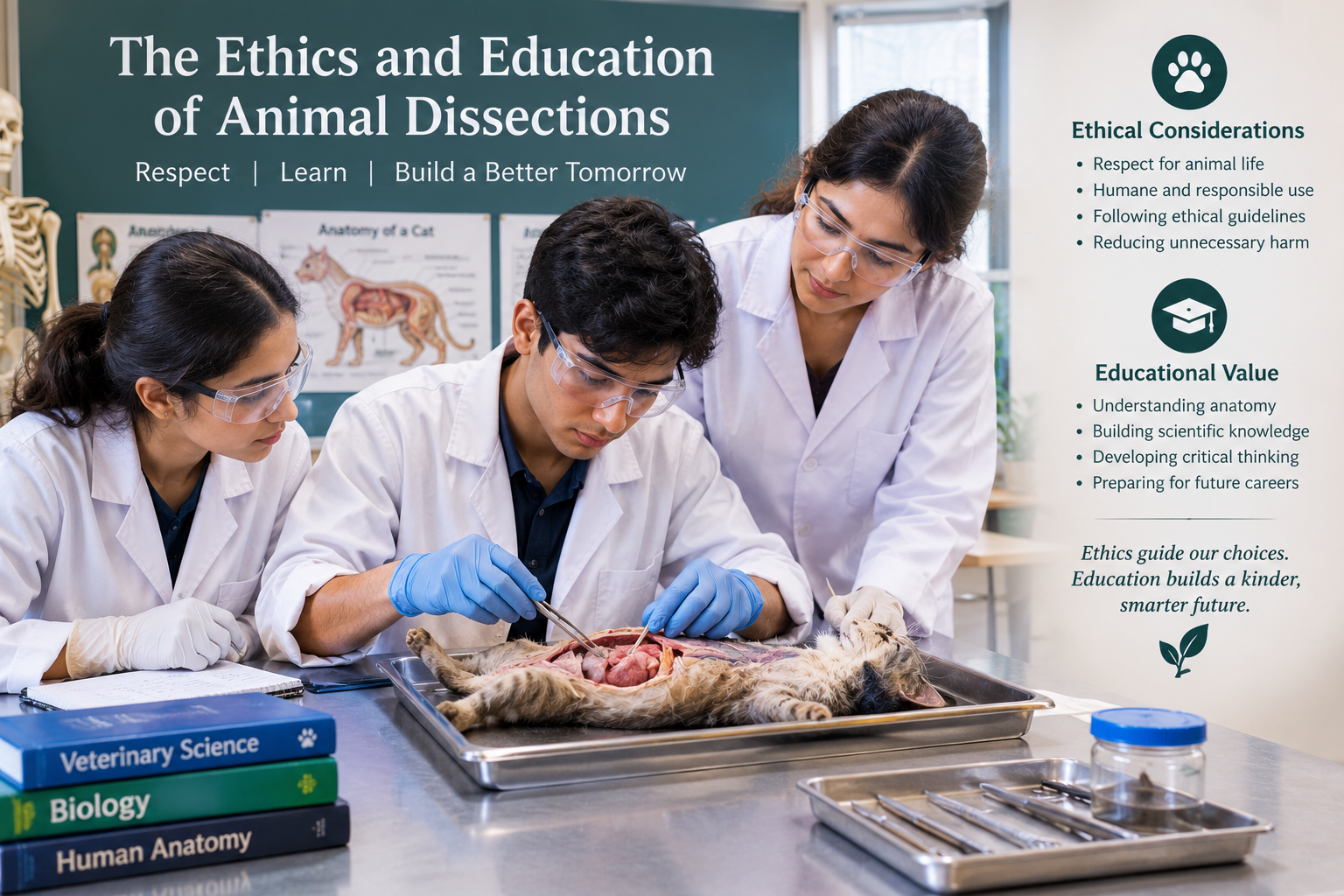
Animal dissection has traditionally been used to help students understand the structure and function of organs, tissues, and body systems. Through guided observation and practical learning, students can develop a deeper understanding of anatomy, improve their scientific thinking, and explore how different biological systems work together.
However, scientific education also involves important ethical questions. Students and educators must consider animal welfare, responsible specimen use, and ways to reduce unnecessary harm. Modern educational approaches increasingly include virtual dissections, 3D anatomical models, videos, and interactive simulations as valuable alternatives that can support effective learning.
## Key Topics Covered
- Understanding animal anatomy and biological systems
- Exploring the educational purpose of animal dissections
- Respecting animal welfare and ethical responsibilities
- Developing scientific knowledge and critical-thinking skills
- Discovering virtual dissections and alternative learning methods
- Encouraging responsible and compassionate scientific research
## Why Is This Topic Important?
Understanding the ethics of animal dissection encourages students to think critically about how scientific knowledge is gained. It teaches the importance of balancing educational benefits with compassion, responsibility, and respect for living organisms.
**Science is not only about discovering how life works; it is also about making thoughtful, ethical choices in the pursuit of knowledge.**
Join us in exploring how education, scientific discovery, and animal welfare can work together to create a more responsible future!
#AnimalDissection #AnimalAnatomy #ScienceEducation #Bioethics #AnimalWelfare #Biology #EthicalScience #VirtualDissection #ScientificLearning #VeterinaryScience #EducationAndEthics
RSIF8
Roll no:14
story no:23
story topic:The Ethics and Education of Animal Dissections
# 🔬 The Ethics and Education of Animal Dissections 🐾
Welcome to an exploration of science, learning, and ethical responsibility! **“The Ethics and Education of Animal Dissections”** examines the role of animal dissection in biological education and highlights the importance of balancing scientific knowledge with respect for animal life. 🧬📚
Animal dissection has traditionally been used to help students understand the structure and function of organs, tissues, and body systems. Through guided observation and practical learning, students can develop a deeper understanding of anatomy, improve their scientific thinking, and explore how different biological systems work together.
However, scientific education also involves important ethical questions. Students and educators must consider animal welfare, responsible specimen use, and ways to reduce unnecessary harm. Modern educational approaches increasingly include virtual dissections, 3D anatomical models, videos, and interactive simulations as valuable alternatives that can support effective learning. 🌱💻
## 🌟 Key Topics Covered
- 🔬 Understanding animal anatomy and biological systems
- 🐾 Exploring the educational purpose of animal dissections
- ❤️ Respecting animal welfare and ethical responsibilities
- 📚 Developing scientific knowledge and critical-thinking skills
- 💻 Discovering virtual dissections and alternative learning methods
- 🌍 Encouraging responsible and compassionate scientific research
## 🎯 Why Is This Topic Important?
Understanding the ethics of animal dissection encourages students to think critically about how scientific knowledge is gained. It teaches the importance of balancing educational benefits with compassion, responsibility, and respect for living organisms.
✨ **Science is not only about discovering how life works; it is also about making thoughtful, ethical choices in the pursuit of knowledge.**
Join us in exploring how education, scientific discovery, and animal welfare can work together to create a more responsible future!
#AnimalDissection #AnimalAnatomy #ScienceEducation #Bioethics #AnimalWelfare #Biology #EthicalScience #VirtualDissection #ScientificLearning #VeterinaryScience #EducationAndEthics
0 Reacties
0 aandelen
5093 Views