• #rsisb
    Roll no 279
    song no 12
    foundation level
    # Microbial Universe: The Power of the Invisible World
    The world around us is full of tiny living organisms that are too small to see with our naked eyes. These fascinating organisms are called microbes or microorganisms. Although they are invisible to us, they play an incredibly important role in our lives, our environment, and the natural world.
    The microbial universe includes bacteria, fungi, protozoa, microscopic algae, and other fascinating microorganisms. They exist almost everywhere—in soil, water, air, and even inside living organisms. Some microbes help keep our bodies healthy, while others support the growth of plants and maintain the balance of ecosystems.
    Microorganisms are essential for many natural processes. They help decompose dead plants and animals, recycle nutrients, improve soil fertility, and support food production. Some bacteria are used to make yogurt and cheese, while yeast helps bread rise. These tiny organisms demonstrate how something so small can make such a huge difference!
    However, not all microbes are beneficial. Certain microorganisms can cause diseases and infections. Scientists study these organisms to understand how they work and how we can protect ourselves through hygiene, sanitation, vaccination, and medical research. ‍
    In this exciting journey into the microbial universe, we will discover the different types of microorganisms, explore their amazing abilities, understand their importance in nature, and learn how they influence human life. We will also explore the fascinating world of microscopes and scientific discoveries that allow us to study these invisible forms of life.
    **Remember:** The smallest organisms can have some of the biggest impacts on our planet. Let's explore the invisible world, discover the wonders of science, and understand the incredible power of microorganisms!
    #MicrobialUniverse #Microorganisms #Microbiology #Science #Bacteria #Fungi #Protozoa #MicroscopicWorld #ScientificDiscovery #Biology #Education #Learning #ExploreScience #InvisibleWorld
    #rsisb Roll no 279 song no 12 foundation level # 🦠 Microbial Universe: The Power of the Invisible World 🔬🌍 The world around us is full of tiny living organisms that are too small to see with our naked eyes. These fascinating organisms are called microbes or microorganisms. Although they are invisible to us, they play an incredibly important role in our lives, our environment, and the natural world. 🌱✨ The microbial universe includes bacteria, fungi, protozoa, microscopic algae, and other fascinating microorganisms. They exist almost everywhere—in soil, water, air, and even inside living organisms. Some microbes help keep our bodies healthy, while others support the growth of plants and maintain the balance of ecosystems. 🌿💧 Microorganisms are essential for many natural processes. They help decompose dead plants and animals, recycle nutrients, improve soil fertility, and support food production. Some bacteria are used to make yogurt and cheese, while yeast helps bread rise. These tiny organisms demonstrate how something so small can make such a huge difference! 🧀🍞🔍 However, not all microbes are beneficial. Certain microorganisms can cause diseases and infections. Scientists study these organisms to understand how they work and how we can protect ourselves through hygiene, sanitation, vaccination, and medical research. 🧪🧑‍🔬 In this exciting journey into the microbial universe, we will discover the different types of microorganisms, explore their amazing abilities, understand their importance in nature, and learn how they influence human life. We will also explore the fascinating world of microscopes and scientific discoveries that allow us to study these invisible forms of life. 🔬📚 **Remember:** The smallest organisms can have some of the biggest impacts on our planet. Let's explore the invisible world, discover the wonders of science, and understand the incredible power of microorganisms! 🚀🌎 #MicrobialUniverse #Microorganisms #Microbiology #Science #Bacteria #Fungi #Protozoa #MicroscopicWorld #ScientificDiscovery #Biology #Education #Learning #ExploreScience #InvisibleWorld 🦠🔬🌍
    0 Commentaires 0 Parts 633 Vue 2
  • RSIf8
    Roll Number: 49
    Story post no.51
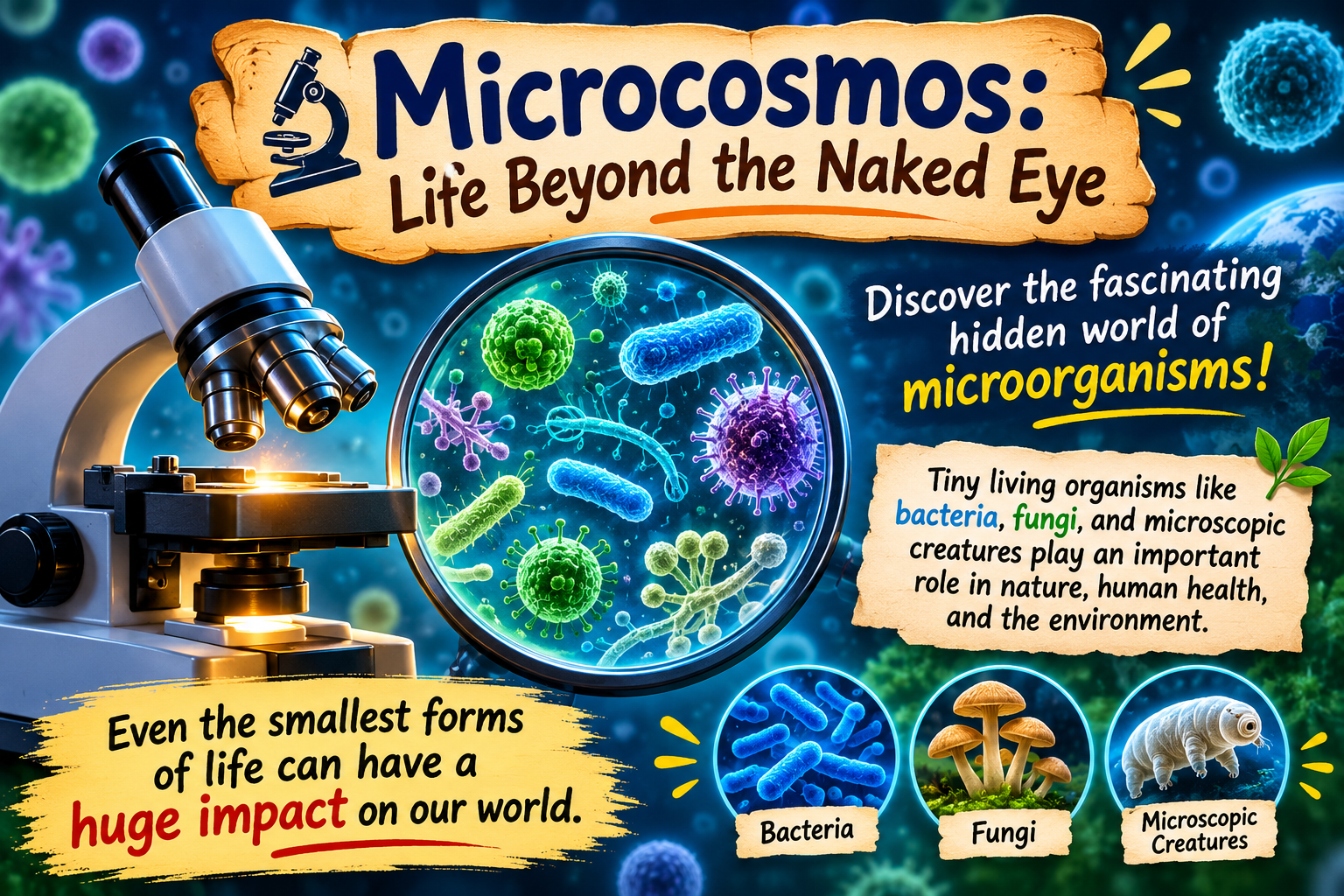
    Story post topic: Microcosmos: Life Beyond the Naked Eye

    Discover the fascinating hidden world of microorganisms! This story explores tiny living organisms such as bacteria, fungi, and microscopic creatures that exist all around us. Although they are too small to see with our naked eyes, they play an important role in nature, human health, and the environment. Through this journey, we learn that even the smallest forms of life can have a huge impact on our world.

    #Microcosmos #MicroscopicWorld #HiddenLife #ScienceExploration #AmazingNature #Microorganisms #LearningIsFun #ScienceEducation #ClassFoundation #RSf8
    RSIf8 Roll Number: 49 Story post no.51 Story post topic:🔬🌍 Microcosmos: Life Beyond the Naked Eye 🌱✨ Discover the fascinating hidden world of microorganisms! This story explores tiny living organisms such as bacteria, fungi, and microscopic creatures that exist all around us. Although they are too small to see with our naked eyes, they play an important role in nature, human health, and the environment. Through this journey, we learn that even the smallest forms of life can have a huge impact on our world. 🦠🔍 #Microcosmos #MicroscopicWorld #HiddenLife #ScienceExploration #AmazingNature #Microorganisms #LearningIsFun #ScienceEducation #ClassFoundation #RSf8
    0 Commentaires 0 Parts 694 Vue
  • RSIF8
    Roll no: 86
    Short Documentary no: 6
    Short Documentary Topic: **The Secret Lives of Plants: Communication and Interaction**

    In this task, I created a short documentary titled **“The Secret Lives of Plants: Communication and Interaction”** and shared it on **Facebook, YouTube, LinkedIn, Instagram, and TikTok**.

    This documentary explores the fascinating ways plants communicate, respond to their environment, and interact with other living organisms. Although plants may appear silent and still, they use chemical and biological signals to respond to changes around them.

    I learned how plants interact with insects, animals, fungi, sunlight, water, and other plants. These interactions play an important role in pollination, growth, protection, and maintaining healthy ecosystems.

    Creating this documentary helped me improve my **research, communication, storytelling, video creation, and digital content skills**. It also increased my interest in biology and encouraged me to learn more about the hidden processes happening in nature.

    Overall, this was an educational, creative, and inspiring experience. It reminded me that plants are an important part of life on Earth and that nature is full of amazing connections waiting to be discovered.

    #Plants #PlantCommunication #Biology #Nature #Science #Education #Learning #Biodiversity #Ecosystem #StudentLearning #Documentary #DigitalSkills #RSIF8
    RSIF8 Roll no: 86 Short Documentary no: 6 Short Documentary Topic: **The Secret Lives of Plants: Communication and Interaction** 🌿🔬🌍 In this task, I created a short documentary titled **“The Secret Lives of Plants: Communication and Interaction”** and shared it on **Facebook, YouTube, LinkedIn, Instagram, and TikTok**. 🎥📱✨ This documentary explores the fascinating ways plants communicate, respond to their environment, and interact with other living organisms. 🌱💡 Although plants may appear silent and still, they use chemical and biological signals to respond to changes around them. I learned how plants interact with insects, animals, fungi, sunlight, water, and other plants. 🐝🌸🍄 These interactions play an important role in pollination, growth, protection, and maintaining healthy ecosystems. Creating this documentary helped me improve my **research, communication, storytelling, video creation, and digital content skills**. 📚🎬 It also increased my interest in biology and encouraged me to learn more about the hidden processes happening in nature. Overall, this was an educational, creative, and inspiring experience. It reminded me that plants are an important part of life on Earth and that nature is full of amazing connections waiting to be discovered. 🌍🌿✨ #Plants #PlantCommunication #Biology #Nature #Science #Education #Learning #Biodiversity #Ecosystem #StudentLearning #Documentary #DigitalSkills #RSIF8 🌿🔬🌱🌍🎥✨
    0 Commentaires 0 Parts 2447 Vue 12
  • RSIF8
    Roll no: 86
    Short Documentary no: 5
    Short Documentary Topic: **The Secret Lives of Plants: Communication and Interaction**

    In this task, I created a short documentary titled **"The Secret Lives of Plants: Communication and Interaction"** and shared it on **Facebook, YouTube, LinkedIn, Instagram, and TikTok**.

    This documentary explores the fascinating ways plants communicate and interact with their environment and other living organisms. I learned that plants can respond to changes around them and use chemical signals and natural processes to survive and adapt.

    The documentary also explains how plants interact with **fungi, microorganisms, insects, birds, and other animals**. These relationships are important for plant growth, reproduction, and healthy ecosystems.

    Through this activity, I improved my **research, communication, storytelling, presentation, and digital content creation skills**. It also increased my appreciation for nature and the importance of protecting plants and biodiversity.

    Overall, this was an educational and inspiring experience. It helped me understand that plants are much more active and responsive than they appear and that nature is full of fascinating connections.

    #Plants #PlantCommunication #Biology #Nature #Science #Biodiversity #Education #Learning #StudentLearning #Documentary #RSIF8
    RSIF8 Roll no: 86 Short Documentary no: 5 Short Documentary Topic: **The Secret Lives of Plants: Communication and Interaction** 🌱🌿🔬 In this task, I created a short documentary titled **"The Secret Lives of Plants: Communication and Interaction"** and shared it on **Facebook, YouTube, LinkedIn, Instagram, and TikTok**. 📱🎥✨ This documentary explores the fascinating ways plants communicate and interact with their environment and other living organisms. 🌿💡 I learned that plants can respond to changes around them and use chemical signals and natural processes to survive and adapt. The documentary also explains how plants interact with **fungi, microorganisms, insects, birds, and other animals**. 🐝🦋🌱 These relationships are important for plant growth, reproduction, and healthy ecosystems. Through this activity, I improved my **research, communication, storytelling, presentation, and digital content creation skills**. 📚🎤💻 It also increased my appreciation for nature and the importance of protecting plants and biodiversity. Overall, this was an educational and inspiring experience. It helped me understand that plants are much more active and responsive than they appear and that nature is full of fascinating connections. 🌍🌱✨ #Plants #PlantCommunication #Biology #Nature #Science #Biodiversity #Education #Learning #StudentLearning #Documentary #RSIF8 🌱🔬📚🌍✨
    0 Commentaires 0 Parts 2279 Vue 2
  • RSIf8
    Roll Number: 49
    Story post no.50
    Story post topic:The Secret Lives of Plants: Communication and Interaction.

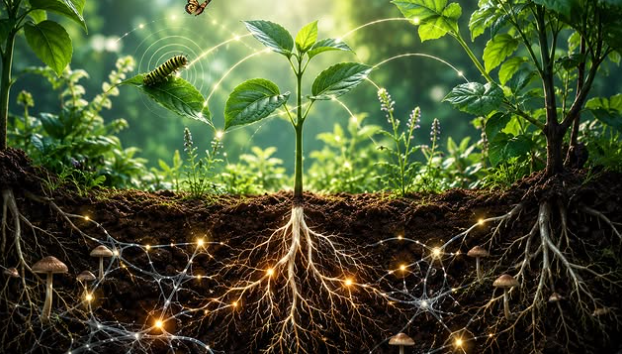
    Did you know that plants have their own hidden way of communicating?

    Although they don't speak with words, plants send chemical signals through the air and even underground using their roots and fungi. When one plant is attacked by insects, it can warn nearby plants, helping them prepare their defenses.

    Plants also work together by sharing nutrients and supporting weaker plants through underground networks known as the "Wood Wide Web." This incredible system shows that nature is full of cooperation and intelligence.

    The next time you walk through a garden or forest, remember—you are surrounded by a silent world filled with communication, teamwork, and life.

    Nature has more secrets than we can imagine. Keep exploring, keep learning!

    #Plants #Nature #Science #PlantCommunication #WoodWideWeb #AmazingNature #Botany #GreenLife #NatureLovers #Earth #Learning #DidYouKnow #ExploreNature #ScienceFacts #Environment
    RSIf8 Roll Number: 49 Story post no.50 Story post topic:The Secret Lives of Plants: Communication and Interaction. Did you know that plants have their own hidden way of communicating? 🌼🌳 Although they don't speak with words, plants send chemical signals through the air and even underground using their roots and fungi. 🌍🍄 When one plant is attacked by insects, it can warn nearby plants, helping them prepare their defenses. 🐛⚠️ Plants also work together by sharing nutrients and supporting weaker plants through underground networks known as the "Wood Wide Web." 🌲🤝 This incredible system shows that nature is full of cooperation and intelligence. The next time you walk through a garden or forest, remember—you are surrounded by a silent world filled with communication, teamwork, and life. 🌿🌎💖 Nature has more secrets than we can imagine. Keep exploring, keep learning! 🌱✨ #Plants #Nature #Science #PlantCommunication #WoodWideWeb #AmazingNature #Botany #GreenLife #NatureLovers #Earth #Learning #DidYouKnow #ExploreNature #ScienceFacts #Environment 🌿💚
    0 Commentaires 0 Parts 2651 Vue
  • #RSFI8
    Roll No: 64
    Class: Foundation Level
    Muhammad ibrahim Acctounting wala
    TEDx Talk task topicDocumentary — "The Secret Lives of Plants: Communication and Interaction".
    Documentary Review — "The Secret Lives of Plants: Communication and Interaction"
    Have you ever wondered how plants communicate and interact with the world around them?
    In this fascinating documentary, we explore the hidden world of plants and discover how they respond to their environment, exchange chemical signals, and interact with other living organisms.
    I learned that plants are more amazing than we imagine! They can respond to sunlight , interact with fungi through underground networks , and use chemical signals to defend themselves from threats.
    This documentary inspired me to appreciate nature, protect our environment, and understand the importance of plants in maintaining life on Earth.
    My biggest lesson:** Plants may be silent, but their world is full of incredible interactions and fascinating discoveries!
    Let's protect nature, plant more trees, and keep exploring the wonders of science!
    Hashtags
    #TheSecretLivesOfPlants #PlantCommunication #NatureDocumentary #PlantScience #Biology #AmazingNature #Environment #SaveNature #PlantLife #ScienceEducation #NatureLovers #EducationalDocumentary #LearningEveryDay #ExploreNature #RehanSchool #RSFI8
    #RSFI8 Roll No: 64📝 Class: Foundation Level Muhammad ibrahim Acctounting wala TEDx Talk task topicDocumentary — "The Secret Lives of Plants: Communication and Interaction". 🌱🌿 Documentary Review — "The Secret Lives of Plants: Communication and Interaction"🌍✨ 🌳💚 Have you ever wondered how plants communicate and interact with the world around them? 🌸🍃 🎬 In this fascinating documentary, we explore the hidden world of plants and discover how they respond to their environment, exchange chemical signals, and interact with other living organisms. 🌻🔬 🌿🧠 I learned that plants are more amazing than we imagine! They can respond to sunlight ☀️, interact with fungi through underground networks 🌱, and use chemical signals to defend themselves from threats. 🦋🌳 🌎💡 This documentary inspired me to appreciate nature, protect our environment, and understand the importance of plants in maintaining life on Earth. 🌍💚 ✨ My biggest lesson:** Plants may be silent, but their world is full of incredible interactions and fascinating discoveries! 🌿🌟 🌸 Let's protect nature, plant more trees, and keep exploring the wonders of science! 🌱🚀 Hashtags #TheSecretLivesOfPlants #PlantCommunication #NatureDocumentary #PlantScience #Biology #AmazingNature #Environment #SaveNature #PlantLife #ScienceEducation #NatureLovers #EducationalDocumentary #LearningEveryDay #ExploreNature #RehanSchool #RSFI8
    0 Commentaires 0 Parts 2609 Vue 2
  • RSIF8
    Roll no.49
    Documentary no.05
    Documentary Topic:The Secret Lives of Plants – Communication and Interaction

    In this documentary, I explored the fascinating world of plants and discovered how they communicate with their surroundings and interact with other living organisms. Although plants cannot speak like humans, they can respond to light, touch, water, and changes in their environment through amazing natural processes.

    I learned how plants use chemical signals to respond to insect attacks, attract pollinators through colorful flowers and sweet scents, and form partnerships with fungi in the soil to absorb essential nutrients. These incredible interactions show how deeply connected nature is and how plants contribute to the balance of our ecosystems.

    This documentary helped me understand that plants are much more than beautiful decorations. They are essential to life on Earth, supporting biodiversity, providing oxygen, and creating habitats for countless organisms.

    The biggest lesson is that nature is full of hidden wonders, and every living thing has an important role to play!

    #SecretLivesOfPlants #PlantCommunication #Botany #Nature #Biodiversity #Ecosystems #EnvironmentalAwareness #ScienceDocumentary #ClassFoundation #RSf8
    RSIF8 Roll no.49 Documentary no.05 Documentary Topic:The Secret Lives of Plants – Communication and Interaction In this documentary, I explored the fascinating world of plants and discovered how they communicate with their surroundings and interact with other living organisms. 🌱🔬 Although plants cannot speak like humans, they can respond to light, touch, water, and changes in their environment through amazing natural processes. 🌸🐝 I learned how plants use chemical signals to respond to insect attacks, attract pollinators through colorful flowers and sweet scents, and form partnerships with fungi in the soil to absorb essential nutrients. These incredible interactions show how deeply connected nature is and how plants contribute to the balance of our ecosystems. 🌍💚 This documentary helped me understand that plants are much more than beautiful decorations. They are essential to life on Earth, supporting biodiversity, providing oxygen, and creating habitats for countless organisms. The biggest lesson is that nature is full of hidden wonders, and every living thing has an important role to play! 🌿✨ #SecretLivesOfPlants #PlantCommunication #Botany #Nature #Biodiversity #Ecosystems #EnvironmentalAwareness #ScienceDocumentary #ClassFoundation #RSf8
    0 Commentaires 0 Parts 2445 Vue 3
  • ACCL POST
    Day:43
    Roll No:003
    Story post
    Student at Rehan School Urdu bazar campus

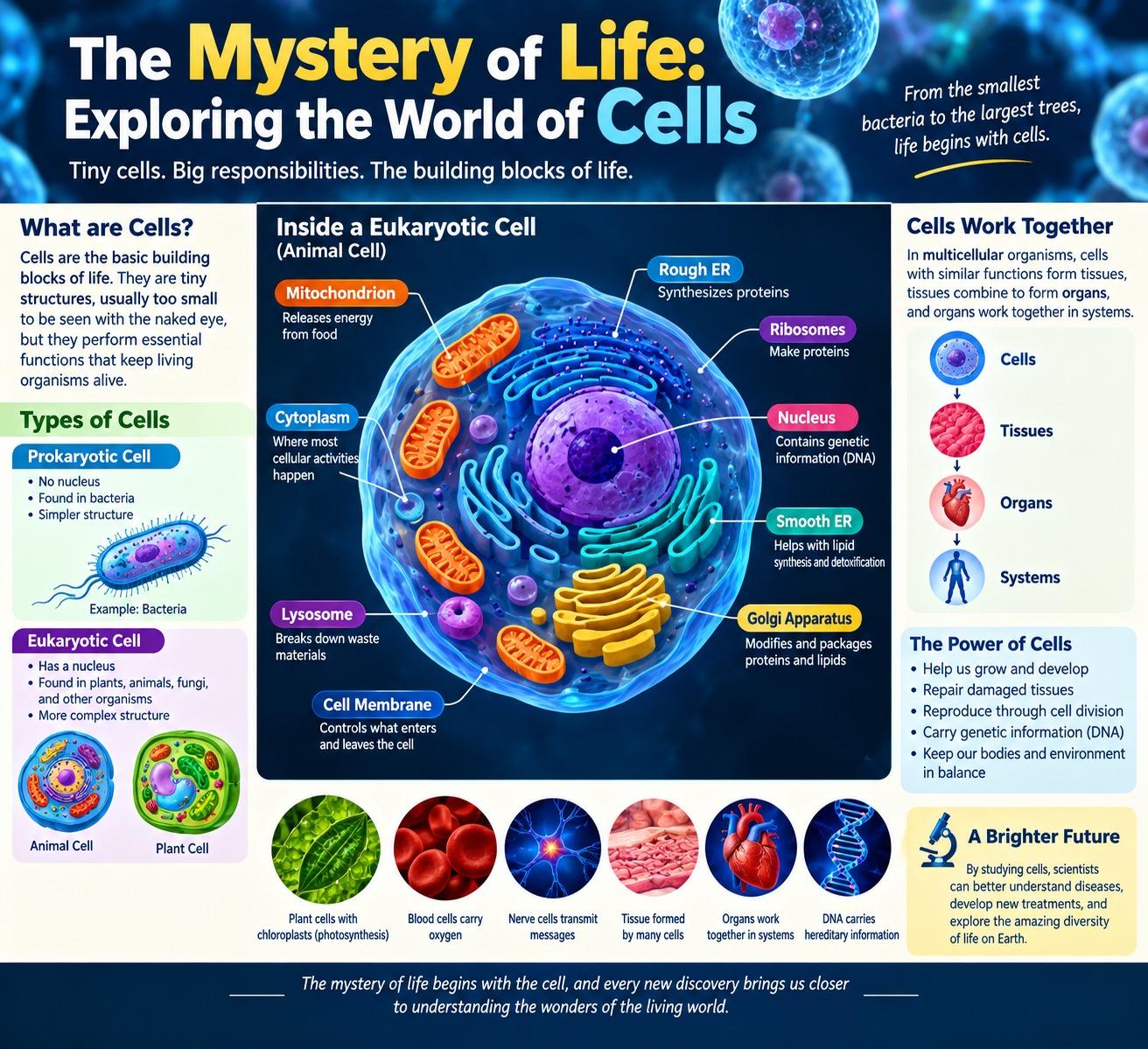
    # The Mystery of Life: Exploring the World of Cells Life is one of the most fascinating mysteries of the natural world. From the tallest trees to the smallest insects, every living organism has a unique structure and a special way of surviving. But have you ever wondered what makes life possible? What is the tiny building block that forms every living thing? The answer is **cells**, the fundamental units of life. Although cells are usually too small to be seen without a microscope, they perform countless important functions that allow living organisms to grow, develop, reproduce, and survive. Cells are often described as the basic building blocks of life because all living organisms are made up of one or more cells. Some organisms, such as bacteria, consist of only a single cell, while humans, animals, and plants are made up of trillions of cells. Each cell has its own structure and responsibilities. Some cells help the body obtain energy, while others carry oxygen, fight infections, or transmit messages throughout the body. In plants, cells help produce food through photosynthesis and provide support to the plant's structure. There are two major types of cells: **prokaryotic cells and eukaryotic cells**. Prokaryotic cells, such as bacteria, do not have a nucleus enclosed by a membrane. Eukaryotic cells, which are found in animals, plants, fungi, and many other organisms, contain a nucleus that stores genetic information. These cells also contain specialized structures called organelles, each of which performs a particular function. For example, the nucleus controls many cellular activities, mitochondria release usable energy from food, and the cell membrane regulates what enters and leaves the cell. Plant cells also contain chloroplasts, which help them produce food using sunlight. One of the most amazing things about cells is how they work together. In multicellular organisms, cells with similar functions form tissues, tissues combine to form organs, and organs work together in systems. In the human body, for example, the heart, lungs, brain, and other organs depend on the coordinated activities of countless cells. This cooperation allows the body to maintain balance, respond to changes, and carry out the activities necessary for life. Cells also play an essential role in growth, healing, and reproduction. Through a process called cell division, cells produce new cells. This allows organisms to grow, replace old or damaged cells, and repair tissues. Cells contain DNA, the genetic material that carries instructions for the development and functioning of living organisms. By studying DNA and cellular processes, scientists can better understand heredity, diseases, and the remarkable diversity of life on Earth. The study of cells has transformed our understanding of biology and medicine. understanding the wonders of the living world.**
    Activate to view larger image,
    View image
    ACCL POST Day:43 Roll No:003 Story post Student at Rehan School Urdu bazar campus # The Mystery of Life: Exploring the World of Cells Life is one of the most fascinating mysteries of the natural world. From the tallest trees to the smallest insects, every living organism has a unique structure and a special way of surviving. But have you ever wondered what makes life possible? What is the tiny building block that forms every living thing? The answer is **cells**, the fundamental units of life. Although cells are usually too small to be seen without a microscope, they perform countless important functions that allow living organisms to grow, develop, reproduce, and survive. Cells are often described as the basic building blocks of life because all living organisms are made up of one or more cells. Some organisms, such as bacteria, consist of only a single cell, while humans, animals, and plants are made up of trillions of cells. Each cell has its own structure and responsibilities. Some cells help the body obtain energy, while others carry oxygen, fight infections, or transmit messages throughout the body. In plants, cells help produce food through photosynthesis and provide support to the plant's structure. There are two major types of cells: **prokaryotic cells and eukaryotic cells**. Prokaryotic cells, such as bacteria, do not have a nucleus enclosed by a membrane. Eukaryotic cells, which are found in animals, plants, fungi, and many other organisms, contain a nucleus that stores genetic information. These cells also contain specialized structures called organelles, each of which performs a particular function. For example, the nucleus controls many cellular activities, mitochondria release usable energy from food, and the cell membrane regulates what enters and leaves the cell. Plant cells also contain chloroplasts, which help them produce food using sunlight. One of the most amazing things about cells is how they work together. In multicellular organisms, cells with similar functions form tissues, tissues combine to form organs, and organs work together in systems. In the human body, for example, the heart, lungs, brain, and other organs depend on the coordinated activities of countless cells. This cooperation allows the body to maintain balance, respond to changes, and carry out the activities necessary for life. Cells also play an essential role in growth, healing, and reproduction. Through a process called cell division, cells produce new cells. This allows organisms to grow, replace old or damaged cells, and repair tissues. Cells contain DNA, the genetic material that carries instructions for the development and functioning of living organisms. By studying DNA and cellular processes, scientists can better understand heredity, diseases, and the remarkable diversity of life on Earth. The study of cells has transformed our understanding of biology and medicine. understanding the wonders of the living world.** Activate to view larger image, View image
    0 Commentaires 0 Parts 3148 Vue
  • ACCL TASK
    Day:41
    Roll No:003
    Story post
    @Student at Rehan School Urdu bazar campus

    # The Mystery of Life: Exploring the World of Cells

    Life is one of the most fascinating mysteries of the natural world. From the tallest trees to the smallest insects, every living organism has a unique structure and a special way of surviving. But have you ever wondered what makes life possible? What is the tiny building block that forms every living thing? The answer is **cells**, the fundamental units of life. Although cells are usually too small to be seen without a microscope, they perform countless important functions that allow living organisms to grow, develop, reproduce, and survive.

    Cells are often described as the basic building blocks of life because all living organisms are made up of one or more cells. Some organisms, such as bacteria, consist of only a single cell, while humans, animals, and plants are made up of trillions of cells. Each cell has its own structure and responsibilities. Some cells help the body obtain energy, while others carry oxygen, fight infections, or transmit messages throughout the body. In plants, cells help produce food through photosynthesis and provide support to the plant's structure.

    There are two major types of cells: **prokaryotic cells and eukaryotic cells**. Prokaryotic cells, such as bacteria, do not have a nucleus enclosed by a membrane. Eukaryotic cells, which are found in animals, plants, fungi, and many other organisms, contain a nucleus that stores genetic information. These cells also contain specialized structures called organelles, each of which performs a particular function. For example, the nucleus controls many cellular activities, mitochondria release usable energy from food, and the cell membrane regulates what enters and leaves the cell. Plant cells also contain chloroplasts, which help them produce food using sunlight.

    One of the most amazing things about cells is how they work together. In multicellular organisms, cells with similar functions form tissues, tissues combine to form organs, and organs work together in systems. In the human body, for example, the heart, lungs, brain, and other organs depend on the coordinated activities of countless cells. This cooperation allows the body to maintain balance, respond to changes, and carry out the activities necessary for life.

    Cells also play an essential role in growth, healing, and reproduction. Through a process called cell division, cells produce new cells. This allows organisms to grow, replace old or damaged cells, and repair tissues. Cells contain DNA, the genetic material that carries instructions for the development and functioning of living organisms. of cells. Exploring the world of cells helps us understand how living things function and reveals the extraordinary hidden within even the smallest units of life. The mystery of life begins with the cell, and every new discovery brings us closer to understanding the wonders of the living world.
    ACCL TASK Day:41 Roll No:003 Story post @Student at Rehan School Urdu bazar campus # The Mystery of Life: Exploring the World of Cells Life is one of the most fascinating mysteries of the natural world. From the tallest trees to the smallest insects, every living organism has a unique structure and a special way of surviving. But have you ever wondered what makes life possible? What is the tiny building block that forms every living thing? The answer is **cells**, the fundamental units of life. Although cells are usually too small to be seen without a microscope, they perform countless important functions that allow living organisms to grow, develop, reproduce, and survive. Cells are often described as the basic building blocks of life because all living organisms are made up of one or more cells. Some organisms, such as bacteria, consist of only a single cell, while humans, animals, and plants are made up of trillions of cells. Each cell has its own structure and responsibilities. Some cells help the body obtain energy, while others carry oxygen, fight infections, or transmit messages throughout the body. In plants, cells help produce food through photosynthesis and provide support to the plant's structure. There are two major types of cells: **prokaryotic cells and eukaryotic cells**. Prokaryotic cells, such as bacteria, do not have a nucleus enclosed by a membrane. Eukaryotic cells, which are found in animals, plants, fungi, and many other organisms, contain a nucleus that stores genetic information. These cells also contain specialized structures called organelles, each of which performs a particular function. For example, the nucleus controls many cellular activities, mitochondria release usable energy from food, and the cell membrane regulates what enters and leaves the cell. Plant cells also contain chloroplasts, which help them produce food using sunlight. One of the most amazing things about cells is how they work together. In multicellular organisms, cells with similar functions form tissues, tissues combine to form organs, and organs work together in systems. In the human body, for example, the heart, lungs, brain, and other organs depend on the coordinated activities of countless cells. This cooperation allows the body to maintain balance, respond to changes, and carry out the activities necessary for life. Cells also play an essential role in growth, healing, and reproduction. Through a process called cell division, cells produce new cells. This allows organisms to grow, replace old or damaged cells, and repair tissues. Cells contain DNA, the genetic material that carries instructions for the development and functioning of living organisms. of cells. Exploring the world of cells helps us understand how living things function and reveals the extraordinary hidden within even the smallest units of life. The mystery of life begins with the cell, and every new discovery brings us closer to understanding the wonders of the living world.
    0 Commentaires 0 Parts 2646 Vue
  • #rsisb
    Roll no 248
    Foundation level
    Documentary no 23
    **The Secret Lives of Plants: Communication and Interaction**

    Did you know that plants have their own amazing ways of communicating and interacting with the world? In this fascinating documentary, we explore the hidden lives of plants and discover how they communicate through chemical signals, interact with insects, connect with fungi, and respond to their environment.

    Plants are more than just beautiful parts of nature. They play an important role in maintaining life on Earth. This documentary helps us understand the wonders of nature, the importance of biodiversity, and why we should protect our green planet.

    Watch, learn, and discover the incredible secrets of the plant world!

    **Protect Plants, Protect Life!**

    #SecretLivesOfPlants #PlantCommunication #NatureDocumentary #PlantScience #AmazingNature #Biodiversity #Environment #ScienceAndLearning #SaveNature #ProtectOurPlanet #NatureLovers #LearningWithAI
    #rsisb Roll no 248 Foundation level Documentary no 23 🌿🌱 **The Secret Lives of Plants: Communication and Interaction** 🌻🌳 🌍✨ Did you know that plants have their own amazing ways of communicating and interacting with the world? 🌿🌸 In this fascinating documentary, we explore the hidden lives of plants and discover how they communicate through chemical signals, interact with insects, connect with fungi, and respond to their environment. 🐝🍄🌞 🌱 Plants are more than just beautiful parts of nature. They play an important role in maintaining life on Earth. 🌎💚 This documentary helps us understand the wonders of nature, the importance of biodiversity, and why we should protect our green planet. 🌳🌿 🎬 Watch, learn, and discover the incredible secrets of the plant world! 🌺💫 💚 **Protect Plants, Protect Life!** 🌍🌱 #SecretLivesOfPlants 🌿 #PlantCommunication 🌱 #NatureDocumentary 🎬 #PlantScience 🔬 #AmazingNature 🌍 #Biodiversity 🦋 #Environment 🌳 #ScienceAndLearning 📚 #SaveNature 💚 #ProtectOurPlanet 🌎 #NatureLovers 🌸 #LearningWithAI 🤖
    0 Commentaires 0 Parts 2875 Vue 0
Plus de résultats