• RSIf8
    Roll Number: 49
    Story post no.33
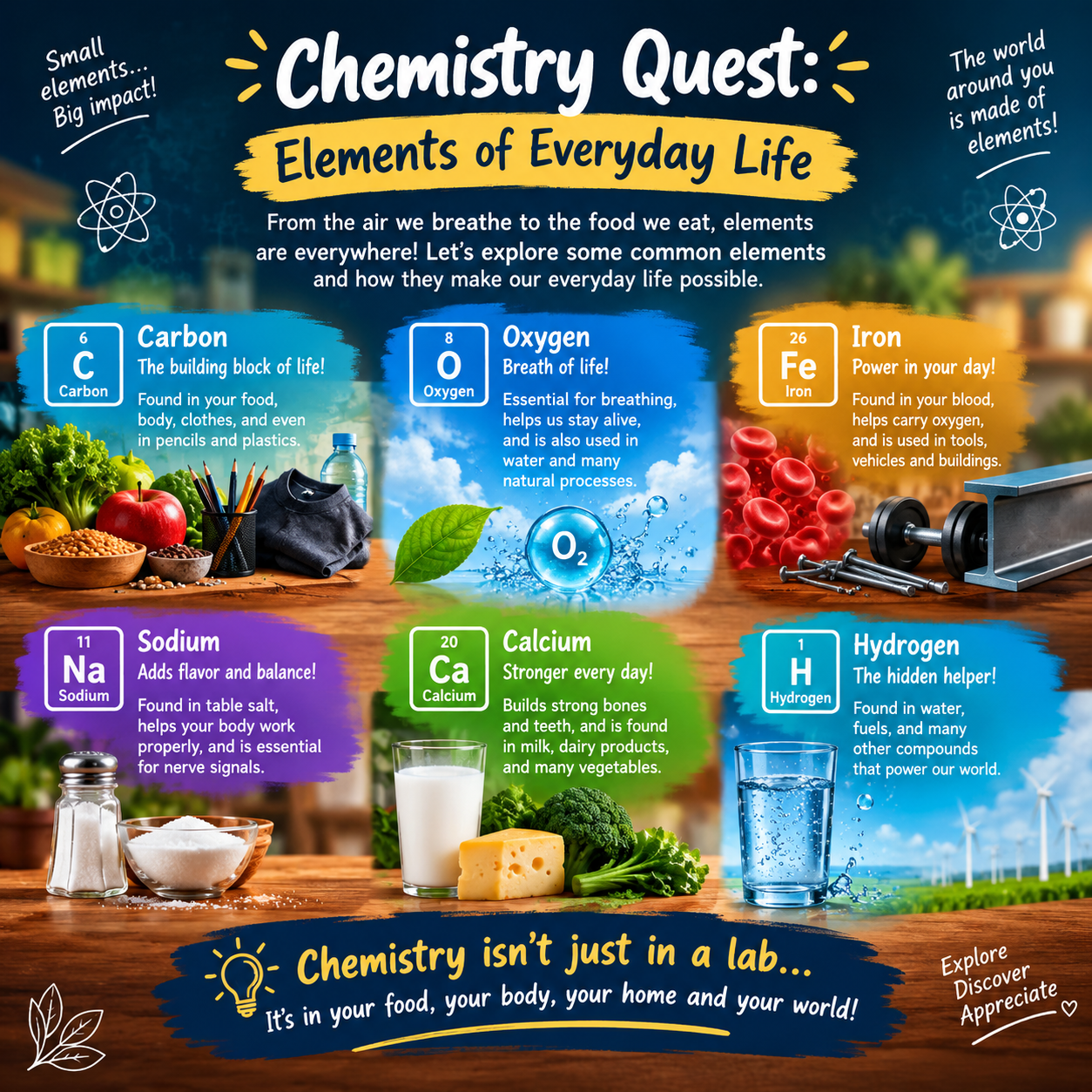
    Story post topic:Chemistry Quest — Elements of Everyday Life

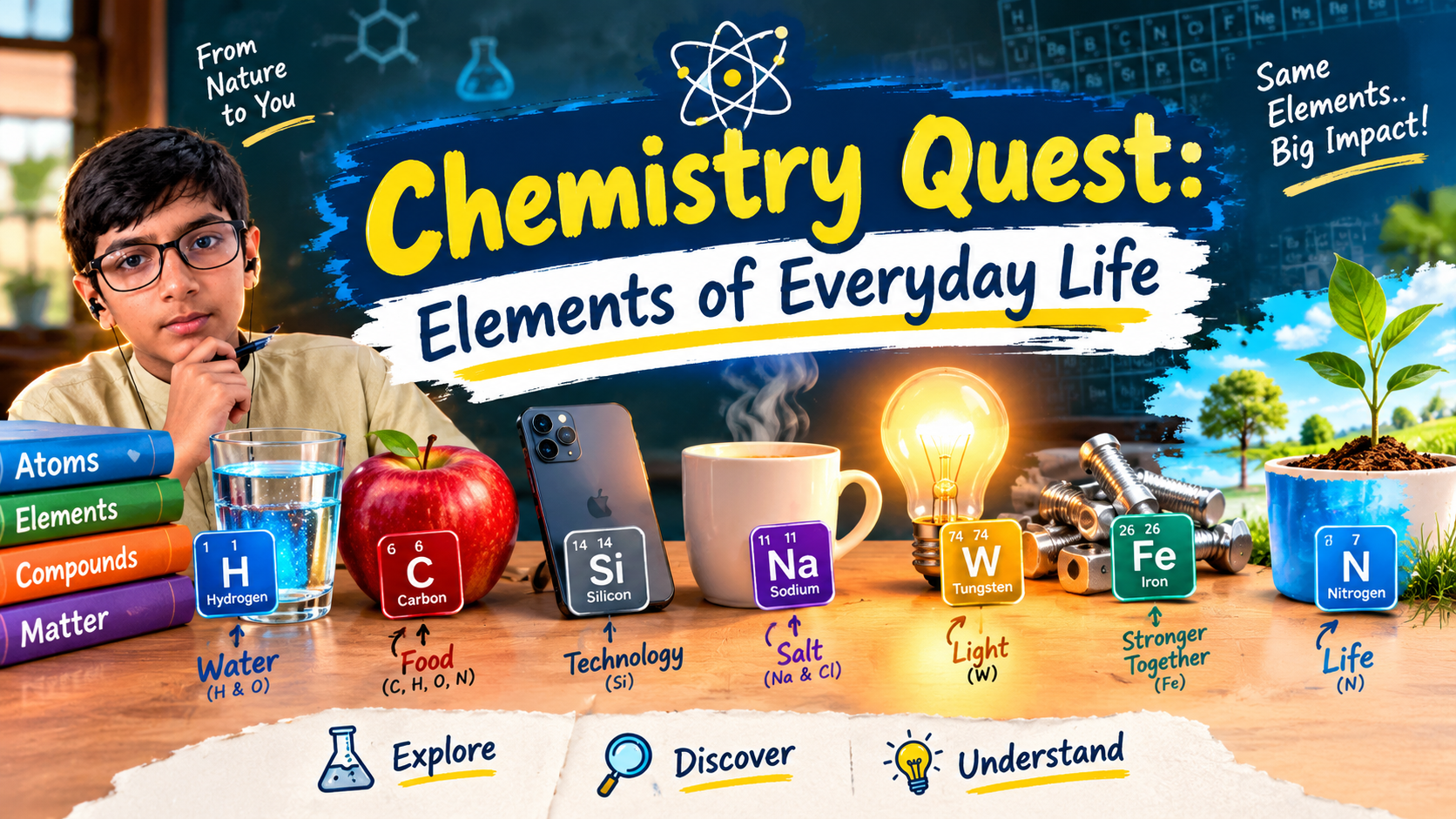
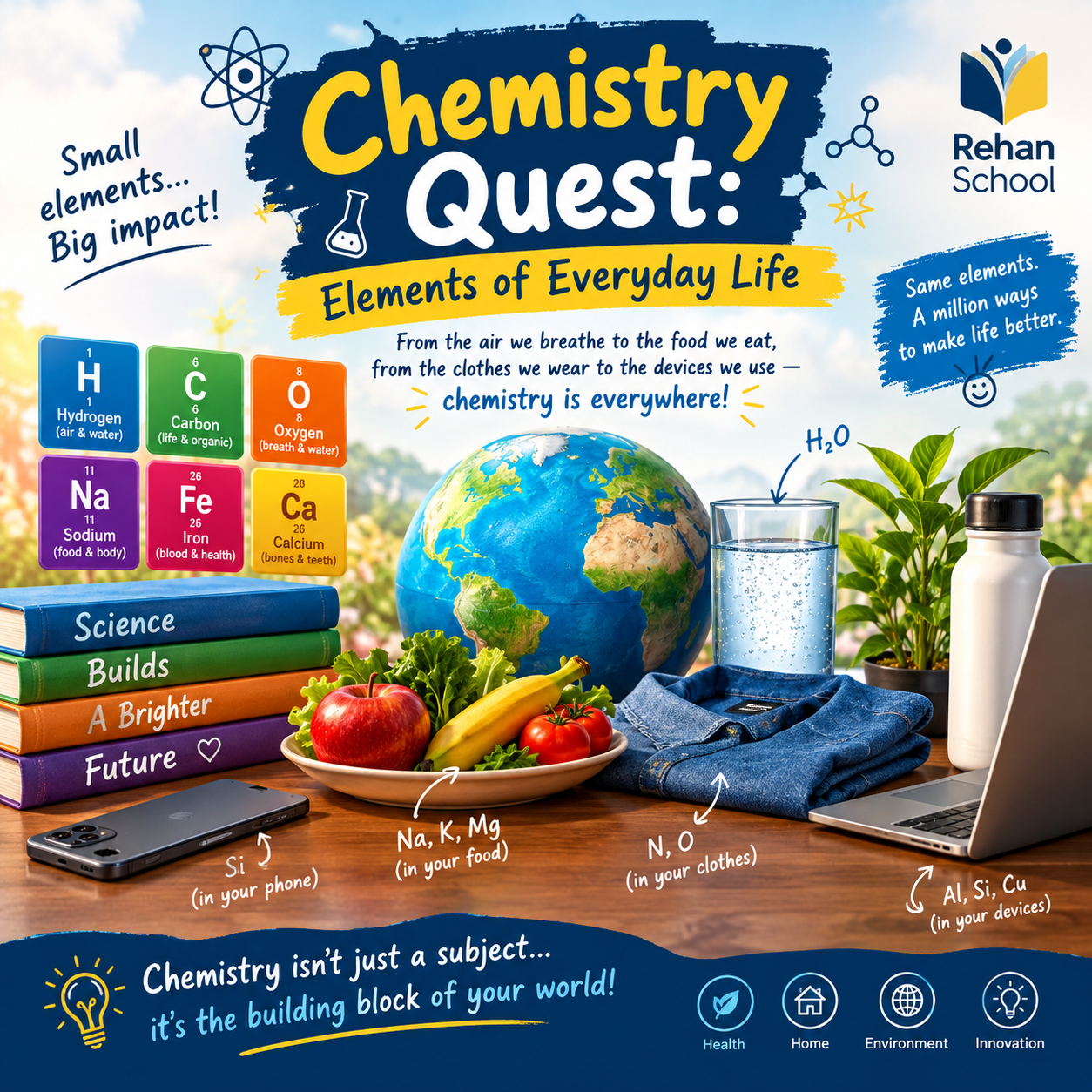
    Have you ever wondered how chemistry makes our everyday lives possible? From the air we breathe to the food we eat, chemical elements are all around us! This exciting story post explores the fascinating role of elements such as Carbon, Oxygen, Iron, Sodium, Calcium, and Hydrogen in our daily lives.

    Through this creative learning journey, I discovered how carbon is found in living things, oxygen is essential for breathing, iron helps our bodies carry oxygen, sodium supports important body functions, calcium strengthens our bones and teeth, and hydrogen is a key component of water.

    This activity helped me understand that chemistry is not limited to laboratories; it is an important part of our bodies, homes, nature, and the world around us. Learning about these elements makes science more interesting and helps us appreciate the wonders of everyday life!

    Small elements, big impact! Let's explore, discover, and appreciate the chemistry all around us.

    #ChemistryQuest #ElementsOfEverydayLife #Chemistry #ScienceEducation #ChemicalElements #Carbon #Oxygen #Iron #Sodium #Calcium #Hydrogen #CreativeLearning #ClassFoundation #RSf8
    RSIf8 Roll Number: 49 Story post no.33 Story post topic:Chemistry Quest — Elements of Everyday Life ⚗️✨ Have you ever wondered how chemistry makes our everyday lives possible? From the air we breathe to the food we eat, chemical elements are all around us! 🌿💧 This exciting story post explores the fascinating role of elements such as Carbon, Oxygen, Iron, Sodium, Calcium, and Hydrogen in our daily lives. Through this creative learning journey, I discovered how carbon is found in living things, oxygen is essential for breathing, iron helps our bodies carry oxygen, sodium supports important body functions, calcium strengthens our bones and teeth, and hydrogen is a key component of water. 🔬🧬 This activity helped me understand that chemistry is not limited to laboratories; it is an important part of our bodies, homes, nature, and the world around us. Learning about these elements makes science more interesting and helps us appreciate the wonders of everyday life! 💡📚 Small elements, big impact! Let's explore, discover, and appreciate the chemistry all around us. 🚀🌱 #ChemistryQuest #ElementsOfEverydayLife #Chemistry #ScienceEducation #ChemicalElements #Carbon #Oxygen #Iron #Sodium #Calcium #Hydrogen #CreativeLearning #ClassFoundation #RSf8
    0 Комментарии 0 Поделились 485 Просмотры
  • RSIF8
    Roll no:14
    canva post no:45
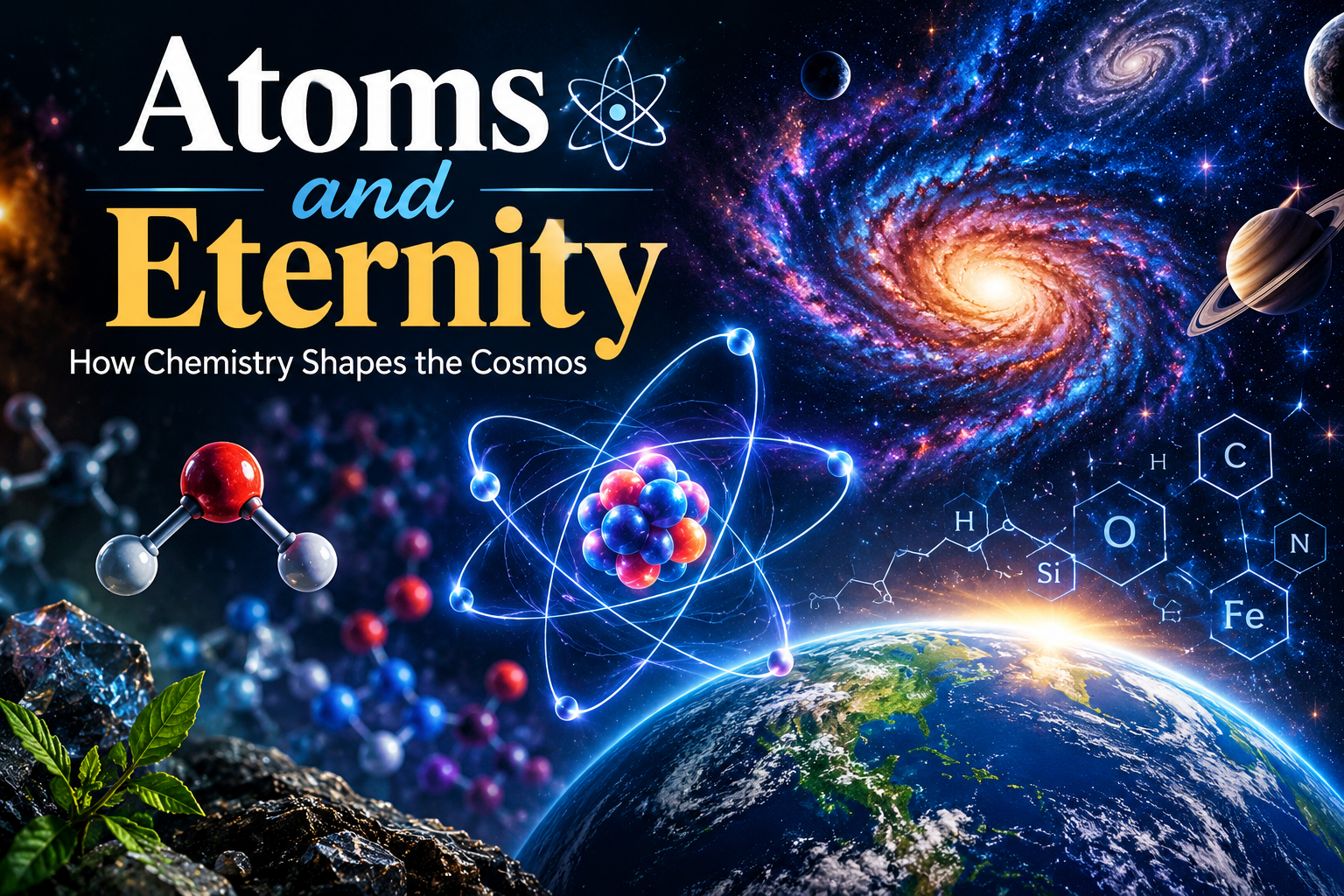
    canva post topic:Atoms and Eternity: How Chemistry Shapes the Cosmos
    # Atoms and Eternity: How Chemistry Shapes the Cosmos

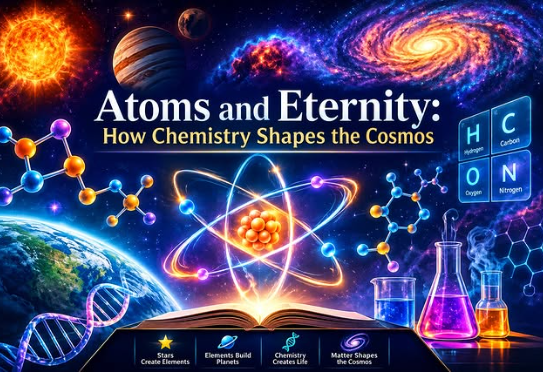
    Discover the fascinating connection between chemistry and the universe through **“Atoms and Eternity: How Chemistry Shapes the Cosmos.”** From the smallest atoms to the largest galaxies, chemistry plays a fundamental role in shaping the world around us and the vast universe beyond.

    This educational journey explores how elements are formed in stars, how atoms combine to create molecules, and how chemical reactions contribute to the formation of planets, oceans, and life itself. Learn how essential elements such as hydrogen, oxygen, carbon, and iron connect the mysteries of space with the science of everyday life.

    From the birth of stars to the building blocks of living organisms, this topic reveals the incredible relationship between chemistry, physics, astronomy, and the origins of existence.

    **Explore the science behind the cosmos, understand the power of atoms, and discover how chemistry connects everything in the universe!**

    **Topics Covered:**
    - Atoms, elements, and molecules
    - Formation of elements inside stars
    - Chemistry of planets and galaxies
    - Chemical elements essential for life
    - The connection between chemistry and the cosmos

    **#AtomsAndEternity #Chemistry #Cosmos #ScienceEducation #Astronomy #Atoms #Universe #SpaceScience #Elements #EducationalContent #ExploreScience #DiscoverTheUniverse**
    RSIF8 Roll no:14 canva post no:45 canva post topic:Atoms and Eternity: How Chemistry Shapes the Cosmos # 🌌 Atoms and Eternity: How Chemistry Shapes the Cosmos 🔬✨ Discover the fascinating connection between chemistry and the universe through **“Atoms and Eternity: How Chemistry Shapes the Cosmos.”** 🌠 From the smallest atoms to the largest galaxies, chemistry plays a fundamental role in shaping the world around us and the vast universe beyond. This educational journey explores how elements are formed in stars, how atoms combine to create molecules, and how chemical reactions contribute to the formation of planets, oceans, and life itself. 🪐💫 Learn how essential elements such as hydrogen, oxygen, carbon, and iron connect the mysteries of space with the science of everyday life. From the birth of stars to the building blocks of living organisms, this topic reveals the incredible relationship between chemistry, physics, astronomy, and the origins of existence. 🚀🌍 ✨ **Explore the science behind the cosmos, understand the power of atoms, and discover how chemistry connects everything in the universe!** 📚 **Topics Covered:** - 🔬 Atoms, elements, and molecules - 🌟 Formation of elements inside stars - 🪐 Chemistry of planets and galaxies - 🌍 Chemical elements essential for life - 💫 The connection between chemistry and the cosmos **#AtomsAndEternity #Chemistry #Cosmos #ScienceEducation #Astronomy #Atoms #Universe #SpaceScience #Elements #EducationalContent #ExploreScience #DiscoverTheUniverse**
    0 Комментарии 0 Поделились 746 Просмотры
  • MohsinRSF8
    song title no:11
    Rool no:13

    The Story of Elements: From Carbon to Gold

    The universe is full of incredible stories, and one of the most fascinating stories is the story of the elements. Everything around us—from the air we breathe and the water we drink to the rocks beneath our feet, the plants around us, and even our own bodies—is connected to chemical elements. This journey helps us understand how the building blocks of matter became part of the amazing world we see today.

    The story begins with the early universe, when the simplest elements such as hydrogen and helium appeared. As the universe expanded and changed, huge clouds of matter came together under gravity and eventually formed stars. These stars became enormous natural laboratories where nuclear reactions could create heavier elements.

    Inside stars, incredible temperatures and pressures allow atoms to take part in processes that produce new elements. One important element created through stellar processes is carbon. Carbon is especially fascinating because it can form a huge variety of compounds and plays a fundamental role in life. It can be found in living organisms, plants, fuels, minerals, and different forms of materials.

    But carbon is only one part of the story. Other elements such as oxygen and nitrogen are also essential to the natural world. Elements move through cycles in nature, becoming part of the atmosphere, oceans, soil, rocks, plants, animals, and countless other systems. This shows us that the elements are constantly participating in the processes that shape our planet.

    As massive stars evolve, they can create heavier elements through different nuclear processes. Eventually, some stars reach dramatic final stages and release material into space. That material can become part of future stars, planets, and other objects. In this way, the universe continuously recycles matter and gives elements new places to exist.

    The journey becomes even more fascinating when we reach elements heavier than iron. Powerful cosmic events can create many of these heavy elements. Gold is one of the most remarkable examples.
    MohsinRSF8 song title no:11 Rool no:13 🌌 The Story of Elements: From Carbon to Gold 🔬🥇 The universe is full of incredible stories, and one of the most fascinating stories is the story of the elements. Everything around us—from the air we breathe and the water we drink to the rocks beneath our feet, the plants around us, and even our own bodies—is connected to chemical elements. This journey helps us understand how the building blocks of matter became part of the amazing world we see today. The story begins with the early universe, when the simplest elements such as hydrogen and helium appeared. As the universe expanded and changed, huge clouds of matter came together under gravity and eventually formed stars. These stars became enormous natural laboratories where nuclear reactions could create heavier elements. Inside stars, incredible temperatures and pressures allow atoms to take part in processes that produce new elements. One important element created through stellar processes is carbon. Carbon is especially fascinating because it can form a huge variety of compounds and plays a fundamental role in life. It can be found in living organisms, plants, fuels, minerals, and different forms of materials. But carbon is only one part of the story. Other elements such as oxygen and nitrogen are also essential to the natural world. Elements move through cycles in nature, becoming part of the atmosphere, oceans, soil, rocks, plants, animals, and countless other systems. This shows us that the elements are constantly participating in the processes that shape our planet. As massive stars evolve, they can create heavier elements through different nuclear processes. Eventually, some stars reach dramatic final stages and release material into space. That material can become part of future stars, planets, and other objects. In this way, the universe continuously recycles matter and gives elements new places to exist. The journey becomes even more fascinating when we reach elements heavier than iron. Powerful cosmic events can create many of these heavy elements. Gold is one of the most remarkable examples.
    0 Комментарии 0 Поделились 1377 Просмотры 55
  • Atoms and Eternity: How Chemistry Shapes the Cosmos
    #ACCL Day 118

    From the dust of dying stars to the spark of human life — everything is chemistry in motion.

    Every atom in your body once danced in the heart of a burning star. Hydrogen fused into helium, carbon formed, oxygen bloomed — and through eons of cosmic reactions, the universe crafted you.

    Chemistry isn’t just about formulas and reactions; it’s the poetry of creation — the silent language of the universe connecting the infinite with the intimate.

    Every bond between atoms writes the story of existence, from galaxies swirling above to the heartbeat pulsing within.

    The cosmos isn’t random — it’s a masterpiece of molecular harmony, proving that eternity begins at the atomic level.

    #AtomsAndEternity #CosmicChemistry #ACCLDay118 #ScienceAndSoul #UniverseWithinUs
    ⚛️✨ Atoms and Eternity: How Chemistry Shapes the Cosmos #ACCL Day 118 From the dust of dying stars to the spark of human life — everything is chemistry in motion. 🌌 Every atom in your body once danced in the heart of a burning star. ☀️ Hydrogen fused into helium, carbon formed, oxygen bloomed — and through eons of cosmic reactions, the universe crafted you. Chemistry isn’t just about formulas and reactions; it’s the poetry of creation — the silent language of the universe connecting the infinite with the intimate. 💫 Every bond between atoms writes the story of existence, from galaxies swirling above to the heartbeat pulsing within. 🔬✨ The cosmos isn’t random — it’s a masterpiece of molecular harmony, proving that eternity begins at the atomic level. #AtomsAndEternity #CosmicChemistry #ACCLDay118 #ScienceAndSoul #UniverseWithinUs
    0 Комментарии 0 Поделились 1230 Просмотры
  • Rsif8
    Roll No 30
    Post No 214
    ## Description — “Chemistry Quest: Elements of Everyday Life”

    In this project, I explored **“Chemistry Quest: Elements of Everyday Life”** and discovered how chemistry is connected to the things we use every day.

    From **water and food to smartphones, lights, metals, plants, and many other objects**, different chemical elements play an important role in our daily lives. For example, hydrogen and oxygen are found in water, carbon is important in living things, silicon is used in technology, and iron is used in many everyday objects.

    This project helped me understand that **chemistry is not only something we study in books—it is all around us!**

    I hope you enjoy this chemistry journey and learn something new.

    #ChemistryQuest #Chemistry #Elements #EverydayChemistry #Science #Learning #Education #PeriodicTable #RehanSchool
    Rsif8 Roll No 30 Post No 214 ## 🧪 Description — “Chemistry Quest: Elements of Everyday Life” In this project, I explored **“Chemistry Quest: Elements of Everyday Life”** and discovered how chemistry is connected to the things we use every day. From **water and food to smartphones, lights, metals, plants, and many other objects**, different chemical elements play an important role in our daily lives. For example, hydrogen and oxygen are found in water, carbon is important in living things, silicon is used in technology, and iron is used in many everyday objects. This project helped me understand that **chemistry is not only something we study in books—it is all around us!** 🔬🌍 I hope you enjoy this chemistry journey and learn something new. #ChemistryQuest #Chemistry #Elements #EverydayChemistry #Science #Learning #Education #PeriodicTable #RehanSchool
    0 Комментарии 0 Поделились 1200 Просмотры


  • Mohsin RS F8
    Story post NO:14
    roll NO:13
    Class: Foundation Level
    Made by Me

    Description: Atoms and Eternity: How Chemistry Shapes the Cosmos

    Atoms and Eternity: How Chemistry Shapes the Cosmos is a fascinating journey into the connection between the smallest building blocks of matter and the enormous universe around us. Everything we see—from stars and planets to oceans, rocks, plants, animals, and even our own bodies—is made from atoms. Although atoms are incredibly tiny, their interactions create the incredible diversity and complexity we observe throughout nature.

    The story of atoms is also connected to the story of the cosmos. The universe began with simple elements, while stars became powerful cosmic environments where many heavier elements were produced. Over immense periods of time, these elements became part of clouds of gas and dust that could eventually form new stars, planets, and other celestial objects. This gives us a remarkable way to understand how matter travels and transforms across the universe.

    Chemistry helps explain what happens when atoms combine. Different combinations of elements create molecules with completely different properties. Water, for example, is formed from hydrogen and oxygen, while carbon can form an enormous variety of molecules that are important in living systems. These chemical relationships show how simple components can create increasingly complex structures.

    The connection between chemistry and astronomy is especially exciting because scientists can study the composition of objects that are unimaginably far away. By analyzing the light from stars and other cosmic objects, scientists can identify elements and learn about the conditions in distant regions of space. In this way, chemistry becomes a powerful tool for exploring the universe.

    This topic also encourages us to think about the relationship between stars, elements, planets, and life. The elements found on Earth are part of a much larger cosmic story. The atoms that make up minerals, water, atmosphere, and living organisms have participated in countless transformations throughout the history of the universe.

    Ultimately, Atoms and Eternity
    Mohsin RS F8 🎓✨ Story post NO:14 roll NO:13 Class: Foundation Level 📚 Made by Me 💻🚀 Description: Atoms and Eternity: How Chemistry Shapes the Cosmos 🌌⚛️ Atoms and Eternity: How Chemistry Shapes the Cosmos is a fascinating journey into the connection between the smallest building blocks of matter and the enormous universe around us. Everything we see—from stars and planets to oceans, rocks, plants, animals, and even our own bodies—is made from atoms. Although atoms are incredibly tiny, their interactions create the incredible diversity and complexity we observe throughout nature. The story of atoms is also connected to the story of the cosmos. The universe began with simple elements, while stars became powerful cosmic environments where many heavier elements were produced. Over immense periods of time, these elements became part of clouds of gas and dust that could eventually form new stars, planets, and other celestial objects. This gives us a remarkable way to understand how matter travels and transforms across the universe. Chemistry helps explain what happens when atoms combine. Different combinations of elements create molecules with completely different properties. Water, for example, is formed from hydrogen and oxygen, while carbon can form an enormous variety of molecules that are important in living systems. These chemical relationships show how simple components can create increasingly complex structures. The connection between chemistry and astronomy is especially exciting because scientists can study the composition of objects that are unimaginably far away. By analyzing the light from stars and other cosmic objects, scientists can identify elements and learn about the conditions in distant regions of space. In this way, chemistry becomes a powerful tool for exploring the universe. This topic also encourages us to think about the relationship between stars, elements, planets, and life. The elements found on Earth are part of a much larger cosmic story. The atoms that make up minerals, water, atmosphere, and living organisms have participated in countless transformations throughout the history of the universe. Ultimately, Atoms and Eternity
    0 Комментарии 0 Поделились 1216 Просмотры
  • RSIF8
    Roll no:85
    Task no:62
    Task topic: Periodic Table: The Language of Science
    The periodic table is one of the greatest achievements in science,
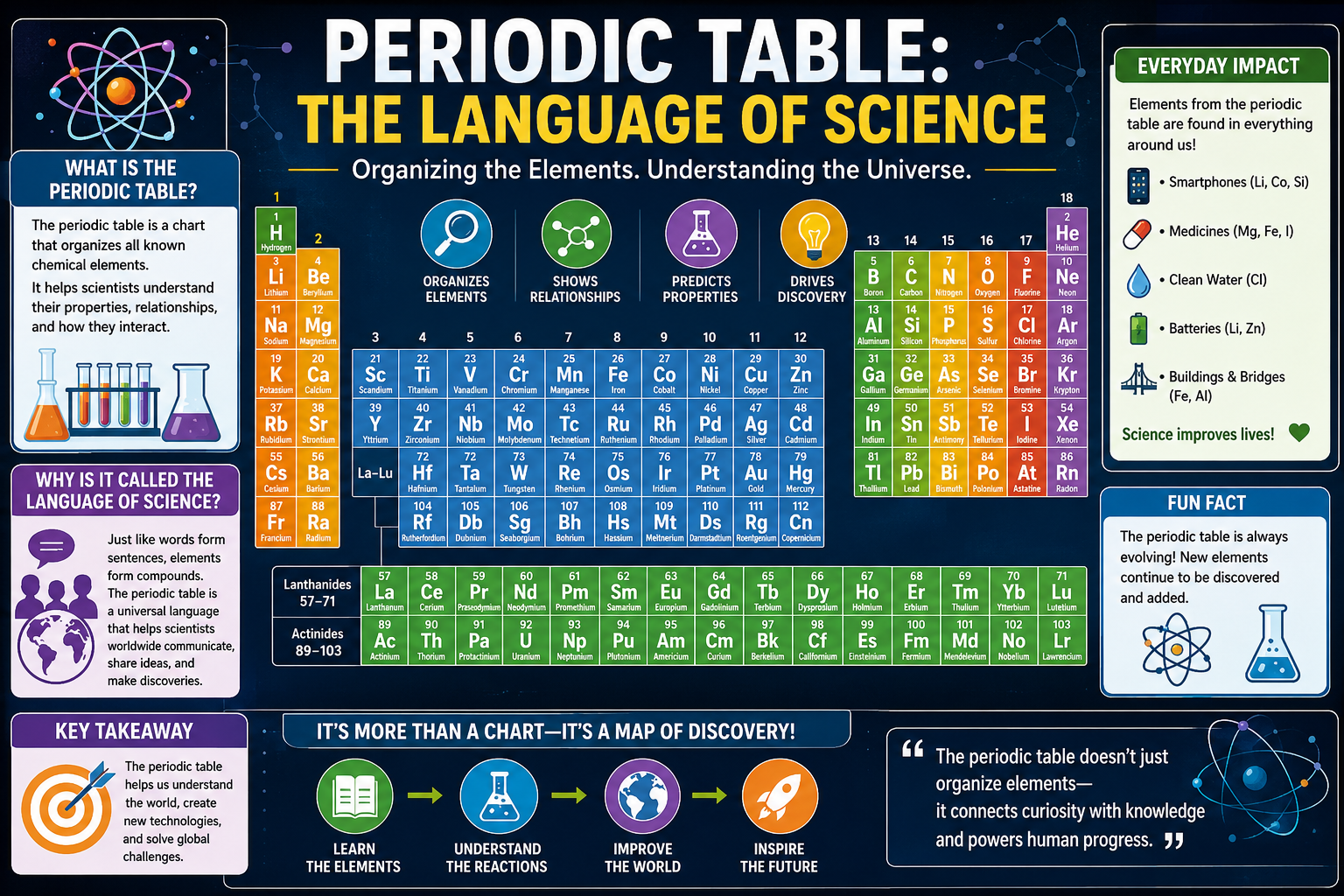
    organizing all known chemical elements into a simple and meaningful chart. It helps scientists understand the properties, behavior, and relationships of elements, making it easier to study chemistry and discover new materials. From hydrogen to oganesson, every element has its unique place and purpose in the universe.

    The periodic table is often called the "language of science" because it allows scientists around the world to communicate using the same system. By studying the arrangement of elements, students can predict how different substances will react, form compounds, and contribute to everyday life. It is an essential tool in classrooms, laboratories, and scientific research. ‍

    Many of the things we use every day—such as smartphones, medicines, clean water systems, batteries, and building materials—depend on elements from the periodic table. Understanding these elements helps us develop new technologies, improve healthcare, and protect the environment. The periodic table continues to inspire innovation and scientific discovery across the globe.

    Learning the periodic table is more than memorizing symbols and numbers—it is about understanding the building blocks of everything around us. Whether you dream of becoming a scientist, engineer, doctor, or teacher, the periodic table opens the door to endless possibilities. It reminds us that science is a universal language that connects knowledge, curiosity, and progress.
    RSIF8 Roll no:85 Task no:62 Task topic: Periodic Table: The Language of Science The periodic table is one of the greatest achievements in science, organizing all known chemical elements into a simple and meaningful chart. It helps scientists understand the properties, behavior, and relationships of elements, making it easier to study chemistry and discover new materials. From hydrogen to oganesson, every element has its unique place and purpose in the universe. 🌍⚛️ The periodic table is often called the "language of science" because it allows scientists around the world to communicate using the same system. By studying the arrangement of elements, students can predict how different substances will react, form compounds, and contribute to everyday life. It is an essential tool in classrooms, laboratories, and scientific research. 📚🧑‍🔬🔍 Many of the things we use every day—such as smartphones, medicines, clean water systems, batteries, and building materials—depend on elements from the periodic table. Understanding these elements helps us develop new technologies, improve healthcare, and protect the environment. The periodic table continues to inspire innovation and scientific discovery across the globe. 💊📱⚡🌱 Learning the periodic table is more than memorizing symbols and numbers—it is about understanding the building blocks of everything around us. Whether you dream of becoming a scientist, engineer, doctor, or teacher, the periodic table opens the door to endless possibilities. It reminds us that science is a universal language that connects knowledge, curiosity, and progress. 🌟🔬🚀
    0 Комментарии 0 Поделились 1182 Просмотры
  • #rsisb
    Roll no.247
    Story no.5
    Foundation level

    **Chemistry Quest: Elements of Everyday Life**

    Welcome to an exciting journey into the amazing world of **Chemistry!** Chemistry is not just a subject we study in books—it is all around us, every single day! From the water we drink and the air we breathe to the food we eat , the medicines we use , the clothes we wear , and even the technology we use , chemistry plays an important role in our everyday lives.

    In this **Chemistry Quest**, we explore the fascinating world of **elements, atoms, molecules, compounds, and chemical reactions**. Each element has its own unique properties and characteristics, and together they create the incredible materials and substances that make up our world.

    As we explore, we can discover how **oxygen** helps us breathe, how **hydrogen and oxygen** can form water, how **carbon** is an important part of living things, and how many other elements are connected to the world around us.

    Chemistry helps us understand questions we see every day: Why does food change when it is cooked? Why does iron rust? Why does soap clean? How do batteries produce energy? How are medicines developed? These everyday mysteries become much more interesting when we look at them through the eyes of chemistry!

    This story post is a reminder that **science is everywhere**. Every object, material, and natural process can teach us something new. By asking questions, observing carefully, experimenting safely, and staying curious, we can become better scientists and discover new ideas.

    Let’s continue our **Chemistry Quest** with curiosity, creativity, and a passion for learning! Who knows what amazing discovery might be waiting for us around the next corner?

    **Explore. Observe. Question. Discover. Learn.**

    #ChemistryQuest #Chemistry #Elements #EverydayChemistry #Science #ScienceEverywhere #STEM #STEMEducation #ScienceLearning #LearningIsFun #YoungScientists #FutureScientists #Atoms #Molecules #ChemicalReactions #PeriodicTable #ScienceExplorer #Curiosity #Discovery #Education #LearningJourney #ExploreScience #ScienceForEveryone #EverydayLife #ChemistryIsFun #ExperimentAndLearn #KnowledgeIsPower
    #rsisb Roll no.247 Story no.5 Foundation level 🧪🌟 **Chemistry Quest: Elements of Everyday Life** 🌟🧪 Welcome to an exciting journey into the amazing world of **Chemistry!** 🔬⚗️ Chemistry is not just a subject we study in books—it is all around us, every single day! 🌍✨ From the water we drink 💧 and the air we breathe 🌬️ to the food we eat 🍎, the medicines we use 💊, the clothes we wear 👕, and even the technology we use 📱, chemistry plays an important role in our everyday lives. In this **Chemistry Quest**, we explore the fascinating world of **elements, atoms, molecules, compounds, and chemical reactions**. 🧪🔍 Each element has its own unique properties and characteristics, and together they create the incredible materials and substances that make up our world. 🌎⚛️ As we explore, we can discover how **oxygen** helps us breathe, how **hydrogen and oxygen** can form water, how **carbon** is an important part of living things, and how many other elements are connected to the world around us. 🌱💧🌬️ Chemistry helps us understand questions we see every day: Why does food change when it is cooked? 🍳 Why does iron rust? 🔩 Why does soap clean? 🧼 How do batteries produce energy? 🔋 How are medicines developed? 💊 These everyday mysteries become much more interesting when we look at them through the eyes of chemistry! 👀🔬 This story post is a reminder that **science is everywhere**. 🚀✨ Every object, material, and natural process can teach us something new. By asking questions, observing carefully, experimenting safely, and staying curious, we can become better scientists and discover new ideas. 🧠💡 Let’s continue our **Chemistry Quest** with curiosity, creativity, and a passion for learning! 🧪🌟 Who knows what amazing discovery might be waiting for us around the next corner? 🔍🚀 🔬⚗️ **Explore. Observe. Question. Discover. Learn.** ⚗️🔬 #ChemistryQuest #Chemistry #Elements #EverydayChemistry #Science #ScienceEverywhere #STEM #STEMEducation #ScienceLearning #LearningIsFun #YoungScientists #FutureScientists #Atoms #Molecules #ChemicalReactions #PeriodicTable #ScienceExplorer #Curiosity #Discovery #Education #LearningJourney #ExploreScience #ScienceForEveryone #EverydayLife #ChemistryIsFun #ExperimentAndLearn #KnowledgeIsPower 🧪🔬⚗️🌍💡🚀📚✨
    0 Комментарии 0 Поделились 3300 Просмотры
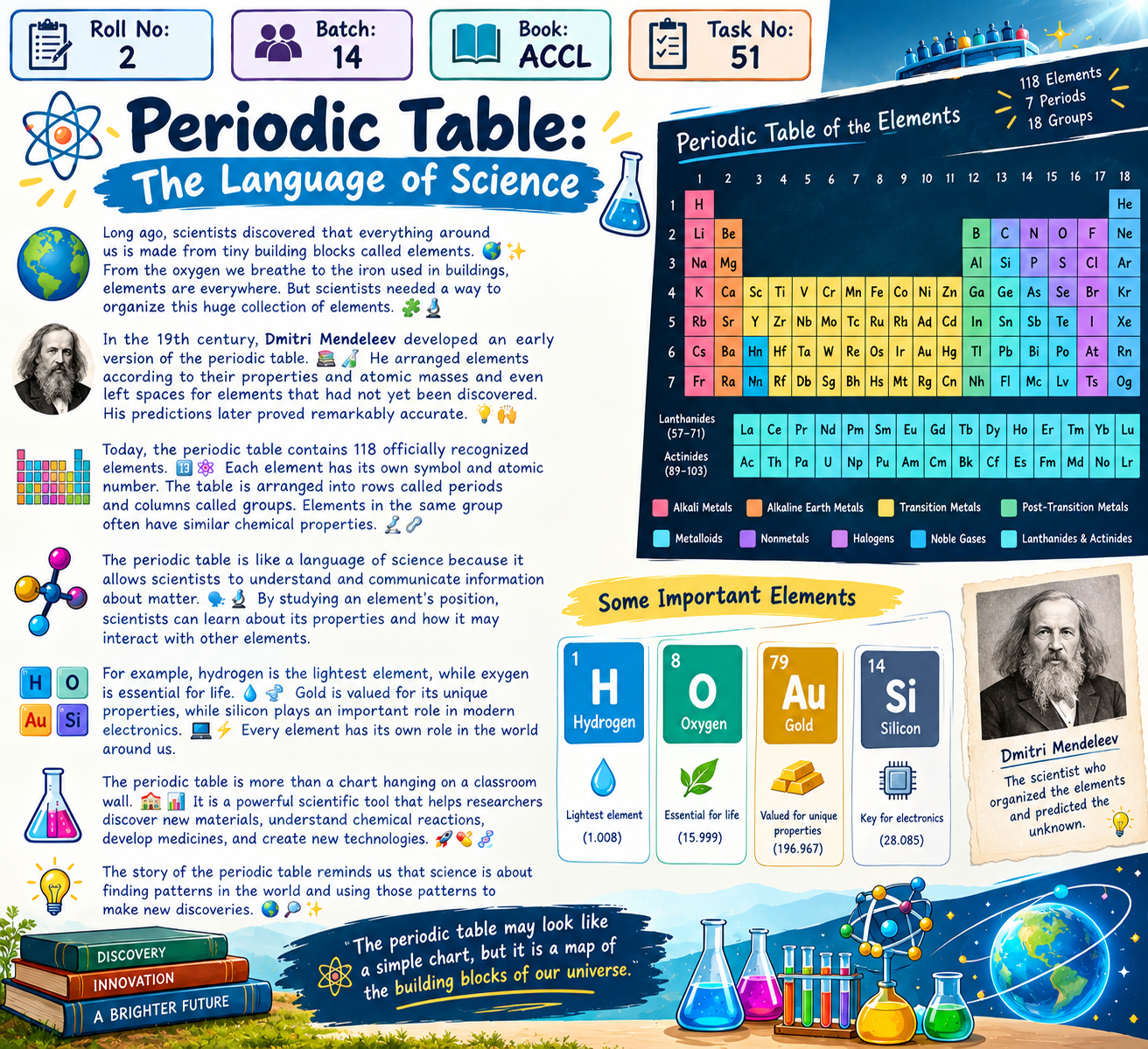
  • **Roll No: 2**
    **Batch: 14**
    **Book: ACCL**
    **Task No: 61**

    # Periodic Table: The Language of Science

    Long ago, scientists discovered that everything around us is made from tiny building blocks called **elements**. From the oxygen we breathe to the iron used in buildings, elements are everywhere. But scientists needed a way to organize this huge collection of elements.

    In the 19th century, **Dmitri Mendeleev** developed an early version of the periodic table. He arranged elements according to their properties and atomic masses and even left spaces for elements that had not yet been discovered. His predictions later proved remarkably accurate.

    Today, the periodic table contains **118 officially recognized elements**. Each element has its own symbol and atomic number. The table is arranged into rows called **periods** and columns called **groups**. Elements in the same group often have similar chemical properties.

    The periodic table is like a **language of science** because it allows scientists to understand and communicate information about matter. By studying an element's position, scientists can learn about its properties and how it may interact with other elements.

    For example, hydrogen is the lightest element, while oxygen is essential for life. Gold is valued for its unique properties, while silicon plays an important role in modern electronics. Every element has its own role in the world around us.

    The periodic table is more than a chart hanging on a classroom wall. It is a powerful scientific tool that helps researchers discover new materials, understand chemical reactions, develop medicines, and create new technologies.

    The story of the periodic table reminds us that science is about finding patterns in the world and using those patterns to make new discoveries.

    **The periodic table may look like a simple chart, but it is a map of the building blocks of our universe. **
    **Roll No: 2** **Batch: 14** **Book: ACCL** **Task No: 61** # 🧪 Periodic Table: The Language of Science 🌍🔬 Long ago, scientists discovered that everything around us is made from tiny building blocks called **elements**. 🌎✨ From the oxygen we breathe to the iron used in buildings, elements are everywhere. But scientists needed a way to organize this huge collection of elements. 🧩🔬 In the 19th century, **Dmitri Mendeleev** developed an early version of the periodic table. 📚🧪 He arranged elements according to their properties and atomic masses and even left spaces for elements that had not yet been discovered. His predictions later proved remarkably accurate. 💡👏 Today, the periodic table contains **118 officially recognized elements**. 🔢⚛️ Each element has its own symbol and atomic number. The table is arranged into rows called **periods** and columns called **groups**. Elements in the same group often have similar chemical properties. 🧪🔗 The periodic table is like a **language of science** because it allows scientists to understand and communicate information about matter. 🗣️🔬 By studying an element's position, scientists can learn about its properties and how it may interact with other elements. For example, hydrogen is the lightest element, while oxygen is essential for life. 💧🌬️ Gold is valued for its unique properties, while silicon plays an important role in modern electronics. 💻⚡ Every element has its own role in the world around us. The periodic table is more than a chart hanging on a classroom wall. 🏫📊 It is a powerful scientific tool that helps researchers discover new materials, understand chemical reactions, develop medicines, and create new technologies. 🚀💊🧬 The story of the periodic table reminds us that science is about finding patterns in the world and using those patterns to make new discoveries. 🌍🔎✨ **The periodic table may look like a simple chart, but it is a map of the building blocks of our universe. 🧪⚛️🌌**
    0 Комментарии 0 Поделились 1439 Просмотры
  • MohsinRSF8
    song title no:8
    Rool no:13
    Class: Foundation level

    Sure! Here is a **long English description** for your social media post:

    **Chemical Bonding: The Relationship of Molecules**

    Chemistry is one of the most fascinating branches of science because it helps us understand the materials, substances, and processes that surround us every day. From the water we drink and the air we breathe to the food we eat and the objects we use, everything is connected to atoms and molecules. But how do these tiny particles come together to form the world around us? The answer lies in **chemical bonding**.

    My song, **“Chemical Bonding: The Relationship of Molecules,”** presents this important chemistry concept in a creative, simple, and enjoyable way. Through this song, I have tried to explain how atoms interact with each other, how electrons are involved in bonding, and how different atoms combine to form molecules and compounds.

    Atoms are extremely small, but the relationships between them have a huge impact on the properties of matter. Atoms can form different types of chemical bonds depending on how their electrons interact. These bonds help determine the structure, stability, and many properties of the substances around us.

    One important type is **covalent bonding**, where atoms share electrons with each other. This type of bonding plays an important role in the formation of many molecules. Water is a familiar example in which hydrogen and oxygen atoms are connected through covalent bonds. Many other substances that are essential to life also depend on this type of bonding.

    Another important type is **ionic bonding**. In this type of bonding, one atom transfers electrons to another atom. This creates positively and negatively charged ions that attract each other. Sodium and chlorine provide a common example, forming sodium chloride, which is the salt we use in everyday life.

    We can also learn about **metallic bonding**, which helps explain the special properties of metals. The way electrons are arranged and shared among metal atoms contributes to characteristics such as electrical conductivity, strength, and metallic appearance.
    MohsinRSF8 song title no:8 Rool no:13 Class: Foundation level Sure! ❤️ Here is a **long English description** for your social media post: 🧪🎵 **Chemical Bonding: The Relationship of Molecules** 🎵🧪 Chemistry is one of the most fascinating branches of science because it helps us understand the materials, substances, and processes that surround us every day. From the water we drink and the air we breathe to the food we eat and the objects we use, everything is connected to atoms and molecules. But how do these tiny particles come together to form the world around us? The answer lies in **chemical bonding**. My song, **“Chemical Bonding: The Relationship of Molecules,”** presents this important chemistry concept in a creative, simple, and enjoyable way. Through this song, I have tried to explain how atoms interact with each other, how electrons are involved in bonding, and how different atoms combine to form molecules and compounds. 🎶🔬 Atoms are extremely small, but the relationships between them have a huge impact on the properties of matter. Atoms can form different types of chemical bonds depending on how their electrons interact. These bonds help determine the structure, stability, and many properties of the substances around us. One important type is **covalent bonding**, where atoms share electrons with each other. This type of bonding plays an important role in the formation of many molecules. Water is a familiar example in which hydrogen and oxygen atoms are connected through covalent bonds. Many other substances that are essential to life also depend on this type of bonding. 💧 Another important type is **ionic bonding**. In this type of bonding, one atom transfers electrons to another atom. This creates positively and negatively charged ions that attract each other. Sodium and chlorine provide a common example, forming sodium chloride, which is the salt we use in everyday life. 🧂 We can also learn about **metallic bonding**, which helps explain the special properties of metals. The way electrons are arranged and shared among metal atoms contributes to characteristics such as electrical conductivity, strength, and metallic appearance. ⚙️✨
    0 Комментарии 0 Поделились 1491 Просмотры 86
Расширенные страницы