• **Foundation Level** **Day 153** **story post** **Roll Number: 005**

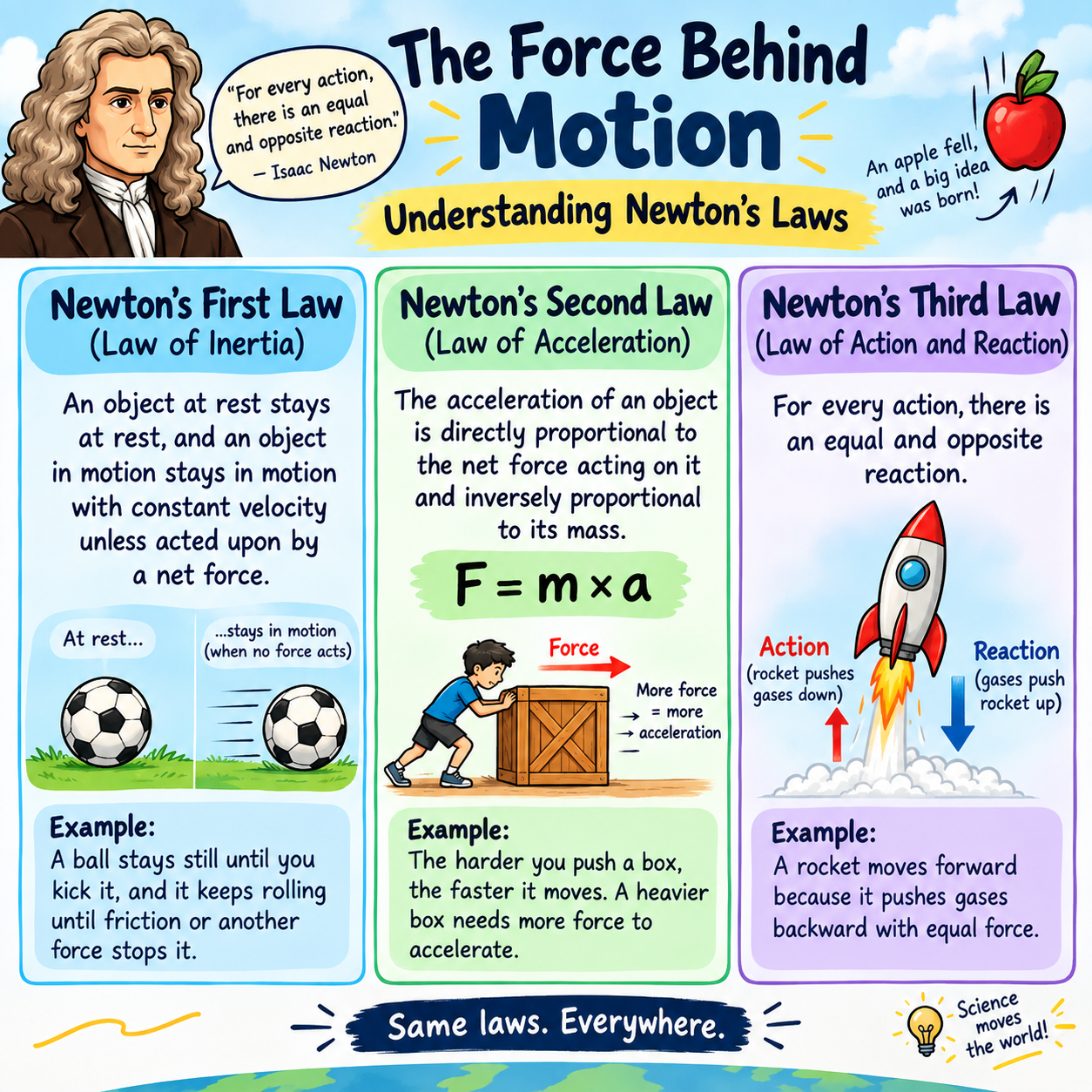
    The Force Behind Motion: Understanding Newton’s Laws

    Ever wondered why objects move, stop, or change direction? Isaac Newton’s three laws of motion help us understand the forces behind movement.

    First Law – Inertia: Objects keep their state of motion unless a force changes it.
    Second Law – Acceleration: Force, mass, and acceleration are connected by F = m × a.
    Third Law – Action & Reaction: Every action has an equal and opposite reaction.

    From a rolling ball to a launching rocket , Newton’s laws are working all around us!

    #NewtonLaws #Physics #Science #Motion #Force #Education #ScienceExplained #PhysicsForStudents #LearningScience #InstagramEducation
    **Foundation Level** **Day 153** **story post** **Roll Number: 005** 🚀 The Force Behind Motion: Understanding Newton’s Laws ⚡ Ever wondered why objects move, stop, or change direction? 🌍 Isaac Newton’s three laws of motion help us understand the forces behind movement. 🔹 First Law – Inertia: Objects keep their state of motion unless a force changes it. 🔹 Second Law – Acceleration: Force, mass, and acceleration are connected by F = m × a. 🔹 Third Law – Action & Reaction: Every action has an equal and opposite reaction. From a rolling ball ⚽ to a launching rocket 🚀, Newton’s laws are working all around us! #NewtonLaws #Physics #Science #Motion #Force #Education #ScienceExplained #PhysicsForStudents #LearningScience #InstagramEducation
    0 Kommentare 0 Anteile 1133 Ansichten
  • RSIF8
    Roll No: 112
    Story Post No: 5
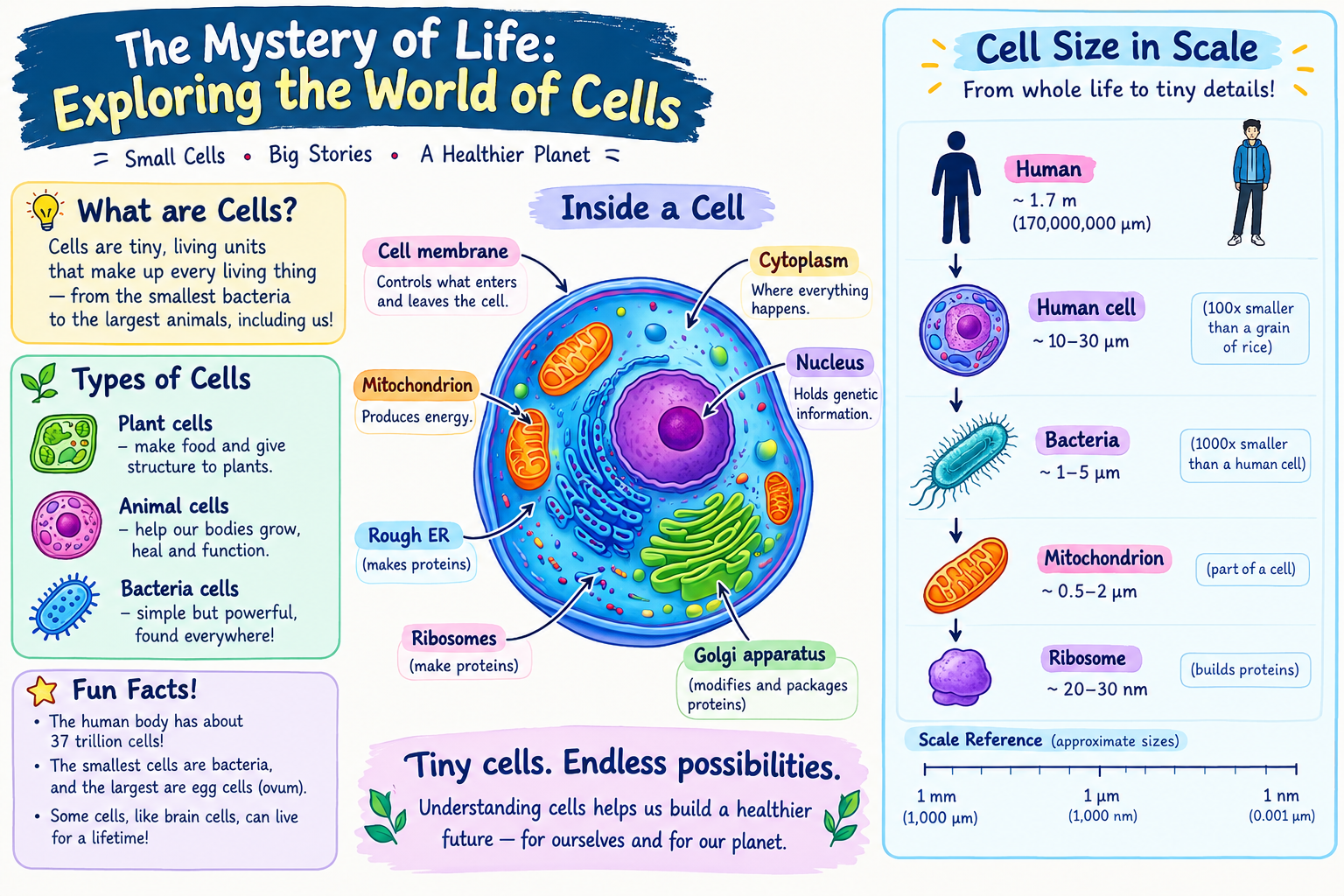
    Story Post Topic: The Mystery of Life: Exploring the World of Cells
    **The Mystery of Life: Exploring the World of Cells**
    Cells are the tiny building blocks that make up all living things! From plants and animals to bacteria and humans, every living organism is made of cells.
    In this task, I explored the fascinating world inside a cell and learned about important parts such as the **nucleus, cell membrane, cytoplasm, mitochondria, ribosomes, and Golgi apparatus**.
    I also learned about the differences between **plant cells, animal cells, and bacterial cells**. Each type of cell has special features and important jobs that help living things survive and grow.
    One of the most amazing things about cells is their size. They are incredibly tiny, yet they perform complex processes that keep life going! Understanding cells helps us understand our bodies, nature, health, and the world around us.
    This activity helped me discover how something so small can play such a huge role in life.
    **Tiny cells. Endless possibilities!**
    #TheMysteryOfLife #ExploringCells #CellBiology #Cells #Science #Biology #ScienceProject #LearningScience #PlantCells #AnimalCells #Bacteria #HumanCells #CellStructure #ScienceEducation #STEM #LearningJourney #Education #ExploreScience #BiologyProject #FutureScientist
    RSIF8 🎓✨ Roll No: 112 🎯 Story Post No: 5 📝 Story Post Topic: The Mystery of Life: Exploring the World of Cells 🔬🧬🌱 🔬✨ **The Mystery of Life: Exploring the World of Cells** 🧬🌱 Cells are the tiny building blocks that make up all living things! 🌍🔬 From plants and animals to bacteria and humans, every living organism is made of cells. 🧫✨ In this task, I explored the fascinating world inside a cell and learned about important parts such as the **nucleus, cell membrane, cytoplasm, mitochondria, ribosomes, and Golgi apparatus**. 🧬⚡🧪 I also learned about the differences between **plant cells, animal cells, and bacterial cells**. 🌱🐾🦠 Each type of cell has special features and important jobs that help living things survive and grow. 💚🌎 One of the most amazing things about cells is their size. They are incredibly tiny, yet they perform complex processes that keep life going! 🔍✨ Understanding cells helps us understand our bodies, nature, health, and the world around us. 🌿🧠❤️ This activity helped me discover how something so small can play such a huge role in life. 🔬🌟 🌟 **Tiny cells. Endless possibilities!** 🌟 #TheMysteryOfLife #ExploringCells #CellBiology #Cells #Science #Biology #ScienceProject #LearningScience #PlantCells #AnimalCells #Bacteria #HumanCells #CellStructure #ScienceEducation #STEM #LearningJourney #Education #ExploreScience #BiologyProject #FutureScientist 🔬🧬🌱🦠🧪✨🌍📚💡❤️🧠🌿🚀
    0 Kommentare 0 Anteile 2826 Ansichten
  • Fondation Level Batch No 4
    Roll RSLC #42
    Task No #153
    Day #153

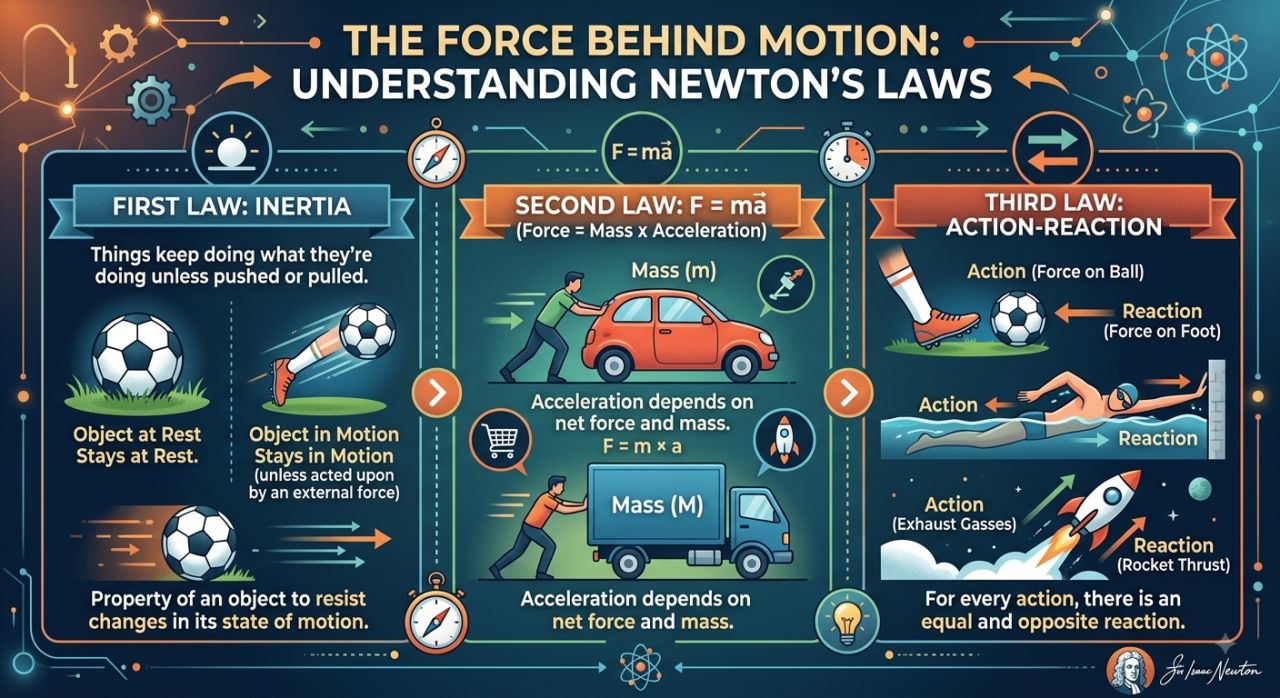
    One bright morning, Adam was playing in a park when he noticed a football resting quietly on the grass. He gently kicked the ball, and it suddenly began rolling across the field. Curious, Adam wondered why the ball had moved only after he kicked it. His teacher explained that this was connected to Newton?s First Law of Motion. An object remains at rest or keeps moving in the same way unless an external force changes its motion. Adam realized that even a simple kick could demonstrate an important scientific principle. From that moment, he became interested in discovering the forces behind everyday movement.

    Adam then decided to test how different objects responded to force. He pushed a light ball and a heavier ball with similar strength and noticed that the lighter ball moved more easily. His teacher explained Newton?s Second Law, which connects force, mass, and acceleration. Adam learned that applying more force can produce a greater change in an object?s motion. He also discovered that heavier objects usually need more force to achieve the same acceleration. Suddenly, pushing a bicycle, moving a box, or kicking a ball seemed much more interesting to him. He understood that forces were constantly influencing the world around him.

    Later, Adam threw a ball against a wall and watched it bounce back toward him. His teacher explained that this was an example of Newton?s Third Law of Motion. Whenever one object applies a force to another object, an equal and opposite force acts back. Adam realized that this principle could be seen when people walk, jump, swim, or ride a bicycle. When his feet pushed the ground backward, the ground pushed him forward. He also learned that rockets move upward by pushing gases downward at high speed. Newton?s Third Law suddenly made many everyday movements easier for Adam to understand.

    By the end of the day, Adam realized that Newton?s laws were much more than formulas in a science book. They were powerful principles that explained how objects move, stop, accelerate, and interact with one another. He could see examples of them in cars, bicycles, sports, falling objects, machines, and even rockets traveling into space. The world around him suddenly looked like a fascinating laboratory filled with invisible forces. Adam understood that physics helps us discover the rules behind ordinary events. From a simple football rolling across the grass to a spacecraft leaving Earth, Newton?s laws tell an amazing story about the force behind motion.

    #NewtonLaws #Physics #ForceAndMotion #NewtonianPhysics #ScienceEducation #PhysicsExplained #LearningScience
    Fondation Level Batch No 4 Roll RSLC #42 Task No #153 Day #153 One bright morning, Adam was playing in a park when he noticed a football resting quietly on the grass. He gently kicked the ball, and it suddenly began rolling across the field. Curious, Adam wondered why the ball had moved only after he kicked it. His teacher explained that this was connected to Newton?s First Law of Motion. An object remains at rest or keeps moving in the same way unless an external force changes its motion. Adam realized that even a simple kick could demonstrate an important scientific principle. From that moment, he became interested in discovering the forces behind everyday movement. Adam then decided to test how different objects responded to force. He pushed a light ball and a heavier ball with similar strength and noticed that the lighter ball moved more easily. His teacher explained Newton?s Second Law, which connects force, mass, and acceleration. Adam learned that applying more force can produce a greater change in an object?s motion. He also discovered that heavier objects usually need more force to achieve the same acceleration. Suddenly, pushing a bicycle, moving a box, or kicking a ball seemed much more interesting to him. He understood that forces were constantly influencing the world around him. Later, Adam threw a ball against a wall and watched it bounce back toward him. His teacher explained that this was an example of Newton?s Third Law of Motion. Whenever one object applies a force to another object, an equal and opposite force acts back. Adam realized that this principle could be seen when people walk, jump, swim, or ride a bicycle. When his feet pushed the ground backward, the ground pushed him forward. He also learned that rockets move upward by pushing gases downward at high speed. Newton?s Third Law suddenly made many everyday movements easier for Adam to understand. By the end of the day, Adam realized that Newton?s laws were much more than formulas in a science book. They were powerful principles that explained how objects move, stop, accelerate, and interact with one another. He could see examples of them in cars, bicycles, sports, falling objects, machines, and even rockets traveling into space. The world around him suddenly looked like a fascinating laboratory filled with invisible forces. Adam understood that physics helps us discover the rules behind ordinary events. From a simple football rolling across the grass to a spacecraft leaving Earth, Newton?s laws tell an amazing story about the force behind motion. #NewtonLaws #Physics #ForceAndMotion #NewtonianPhysics #ScienceEducation #PhysicsExplained #LearningScience
    0 Kommentare 0 Anteile 2316 Ansichten
  • #rsisb
    Roll no.247
    story post .24
    Foundation level

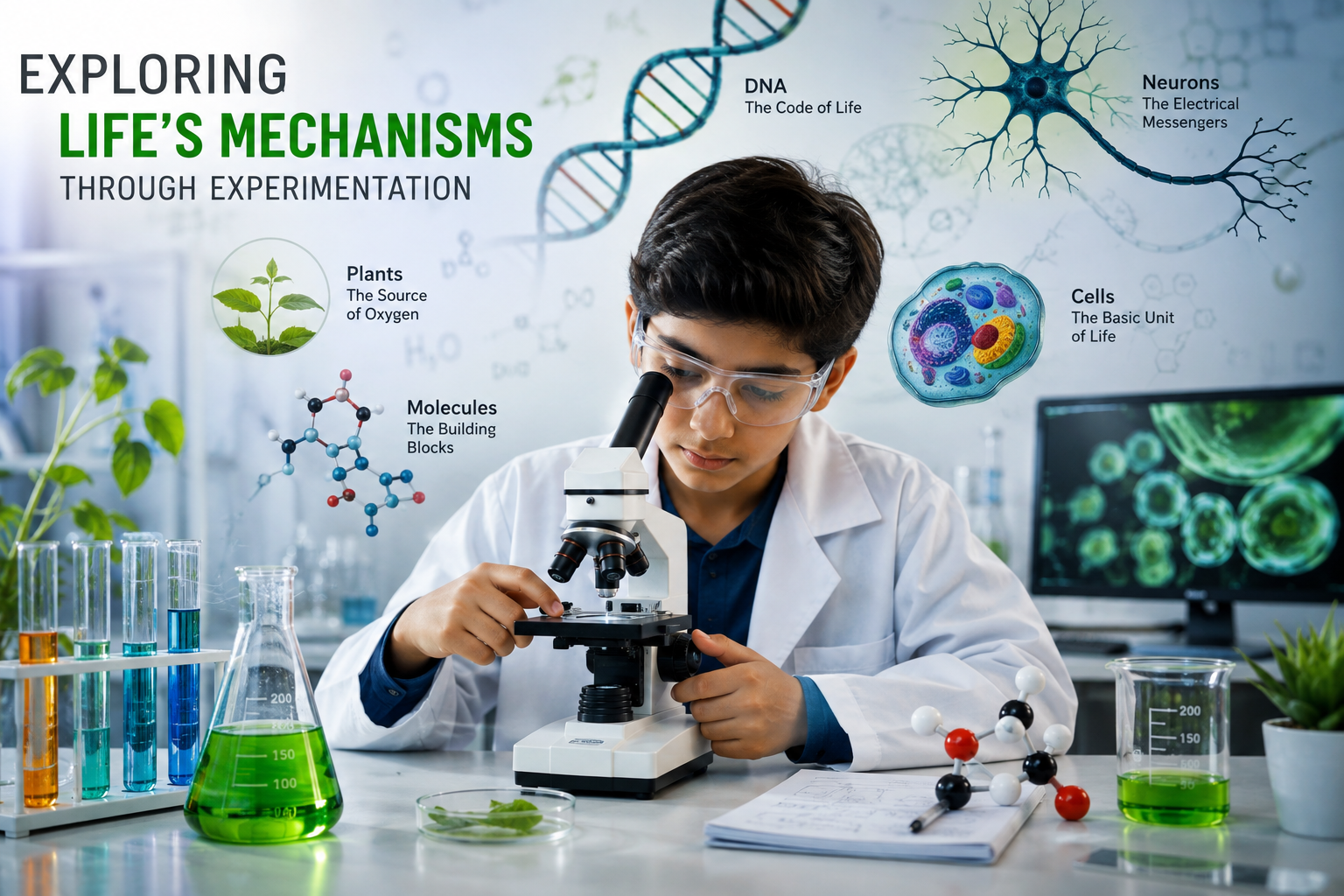
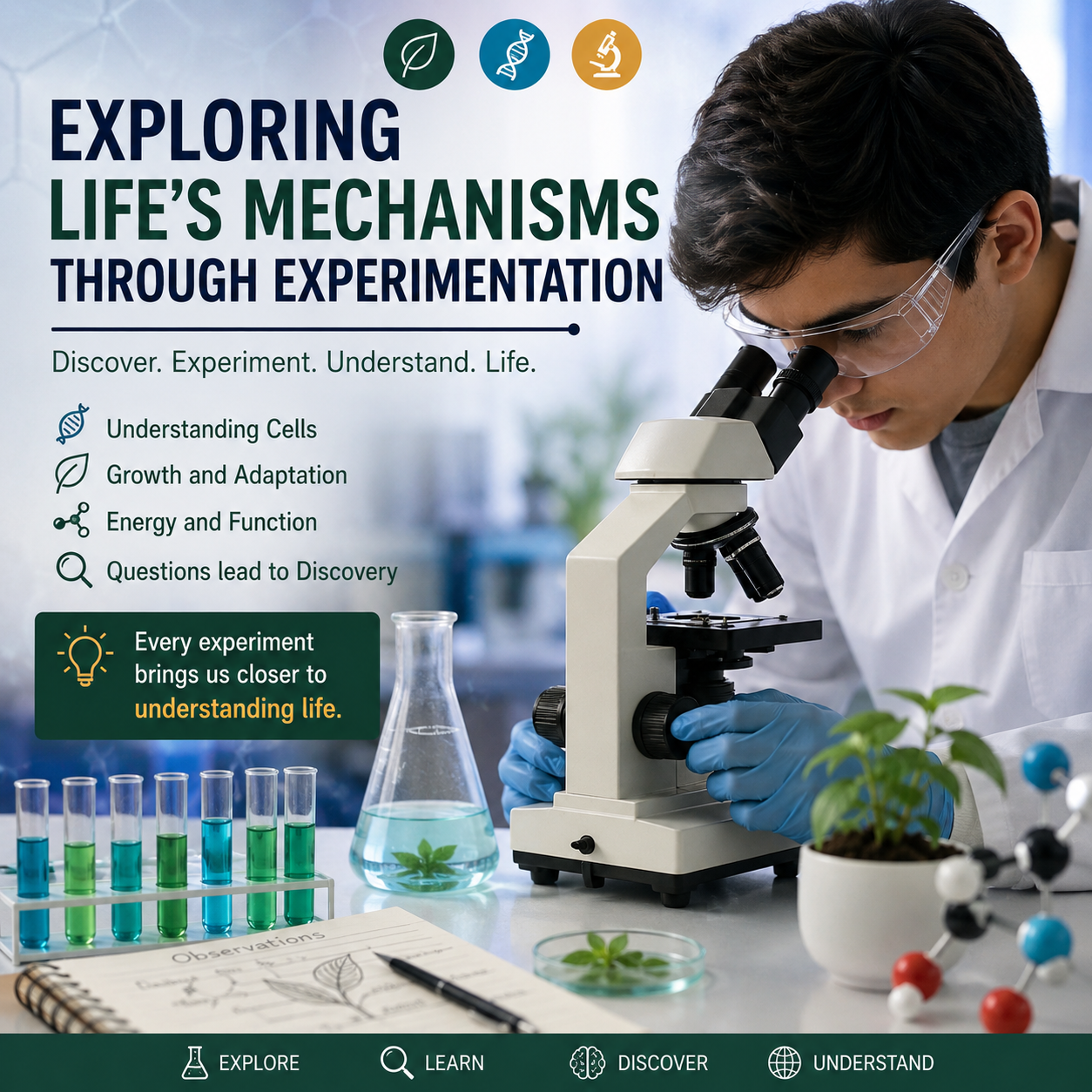
    **Exploring Life’s Mechanisms Through Experimentation**

    Life is full of fascinating mysteries, and science gives us the tools to explore them! **“Exploring Life’s Mechanisms Through Experimentation”** takes us on an exciting journey into the world of biology, where observation, questions, experiments, and discoveries help us understand how living things work.

    From the tiny structures inside cells to the complex systems that allow plants, animals, and humans to grow and survive ‍, experimentation helps scientists uncover the mechanisms behind life. By carefully designing experiments, collecting evidence, analyzing results, and learning from unexpected outcomes, we can turn curiosity into knowledge.

    This topic highlights the importance of the **scientific method**—asking meaningful questions, forming hypotheses, conducting fair tests, recording observations, and drawing conclusions based on evidence. Every experiment, whether successful or not, can teach us something valuable and lead to new questions.

    **Cells and their functions**
    **DNA and genetic information**
    **Plant growth and photosynthesis**
    **How body systems work together**
    **Microorganisms and their environments**
    **Chemical processes involved in life**
    **How living organisms interact with their surroundings**

    Experimentation also teaches important skills such as critical thinking, patience, teamwork, creativity, problem-solving, and careful observation. Science is not simply about memorizing facts—it is about discovering *why* and *how* things happen.

    Every observation can inspire a question.
    Every question can lead to an investigation.
    Every experiment can reveal something new.
    And every discovery can help us understand life a little better.

    Join us as we explore the amazing mechanisms that make life possible and discover how scientific experimentation continues to expand our understanding of the natural world!

    #ExploringLife #LifeScience #Biology #ScienceExperiment #ScientificMethod #ScienceEducation #BiologyExperiments #CellBiology #DNA #Genetics #Photosynthesis #HumanBiology #Microbiology #ScienceLearning #STEM #STEMEducation #YoungScientists #ScienceDiscovery #Experimentation #ScientificDiscovery #Curiosity #CriticalThinking #LearningScience #Nature #LivingThings #ScienceIsAmazing
    #rsisb Roll no.247 story post .24 Foundation level 🔬🧬 **Exploring Life’s Mechanisms Through Experimentation** 🌱✨ Life is full of fascinating mysteries, and science gives us the tools to explore them! 🔍🧪 **“Exploring Life’s Mechanisms Through Experimentation”** takes us on an exciting journey into the world of biology, where observation, questions, experiments, and discoveries help us understand how living things work. 🌍🔬 From the tiny structures inside cells 🦠 to the complex systems that allow plants, animals, and humans to grow and survive 🌿🧑‍🔬, experimentation helps scientists uncover the mechanisms behind life. By carefully designing experiments, collecting evidence, analyzing results, and learning from unexpected outcomes, we can turn curiosity into knowledge. 💡📊 This topic highlights the importance of the **scientific method**—asking meaningful questions, forming hypotheses, conducting fair tests, recording observations, and drawing conclusions based on evidence. 📝🔎 Every experiment, whether successful or not, can teach us something valuable and lead to new questions. 🧫 **Cells and their functions** 🧬 **DNA and genetic information** 🌱 **Plant growth and photosynthesis** 🫀 **How body systems work together** 🦠 **Microorganisms and their environments** ⚗️ **Chemical processes involved in life** 🌎 **How living organisms interact with their surroundings** Experimentation also teaches important skills such as critical thinking, patience, teamwork, creativity, problem-solving, and careful observation. 🧠🤝✨ Science is not simply about memorizing facts—it is about discovering *why* and *how* things happen. 🌟 Every observation can inspire a question. 🔍 Every question can lead to an investigation. 🧪 Every experiment can reveal something new. 💡 And every discovery can help us understand life a little better. Join us as we explore the amazing mechanisms that make life possible and discover how scientific experimentation continues to expand our understanding of the natural world! 🚀🔬🌿 #ExploringLife #LifeScience #Biology #ScienceExperiment #ScientificMethod #ScienceEducation #BiologyExperiments #CellBiology #DNA #Genetics #Photosynthesis #HumanBiology #Microbiology #ScienceLearning #STEM #STEMEducation #YoungScientists #ScienceDiscovery #Experimentation #ScientificDiscovery #Curiosity #CriticalThinking #LearningScience #Nature #LivingThings #ScienceIsAmazing 🔬🧬🌱🧪✨
    0 Kommentare 0 Anteile 4936 Ansichten
  • #rsisb
    roll no.247
    Foundation level

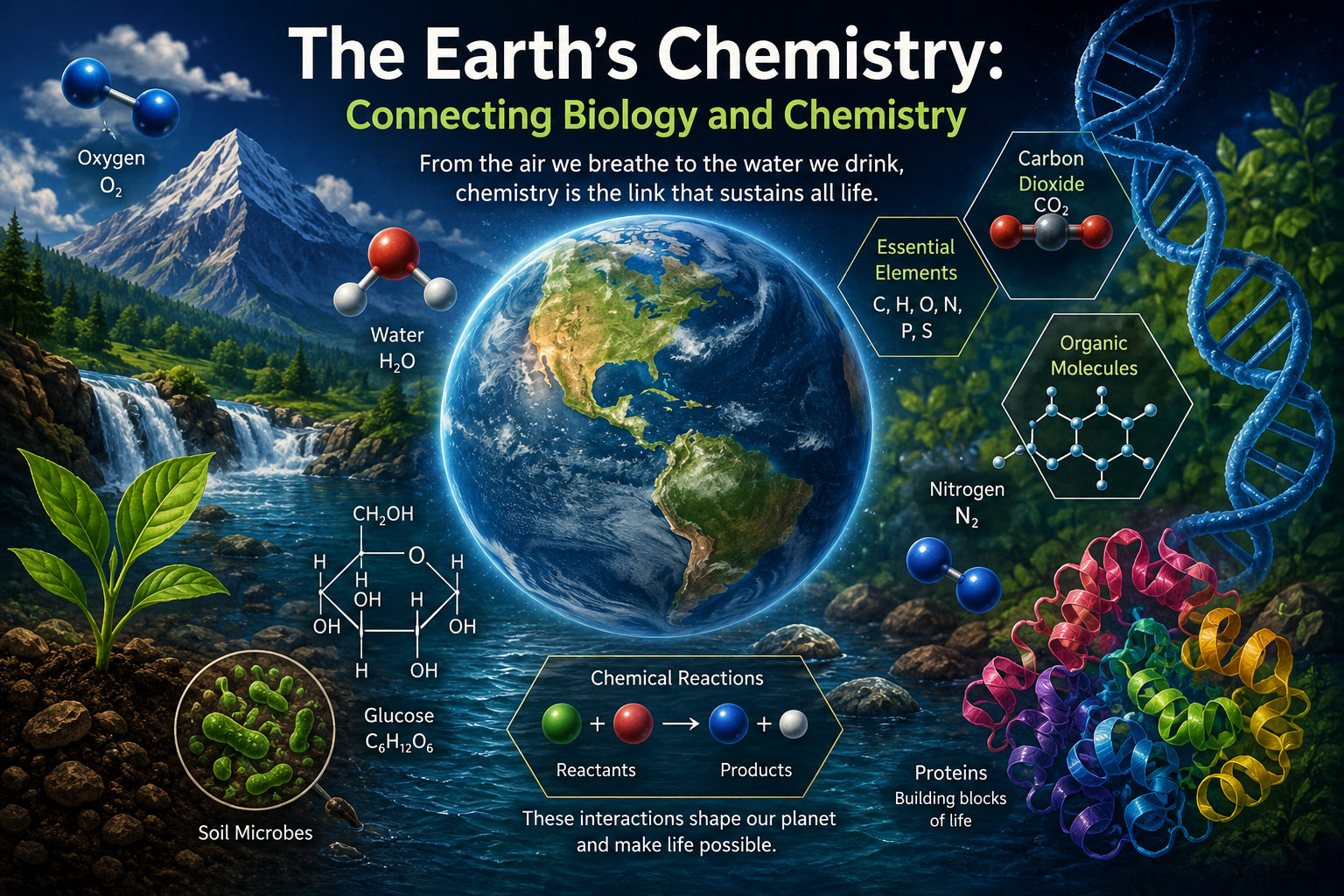
    **The Earth's Chemistry: Connecting Biology and Chemistry**

    Our Earth is a remarkable laboratory where chemistry and biology work together every moment! From the air we breathe to the water we drink, from the soil that supports plants to the cells that make up living organisms, chemistry is at the heart of life.

    **Chemistry makes life possible.** Plants use chemical reactions during photosynthesis to transform sunlight, water, and carbon dioxide into energy-rich food while releasing oxygen. This amazing process supports ecosystems and provides the oxygen needed by countless living organisms.

    **Biology and chemistry are deeply connected.** Every living cell depends on chemical substances such as proteins, carbohydrates, fats, DNA, water, minerals, and gases. These molecules interact through countless chemical reactions that allow organisms to grow, repair themselves, reproduce, and respond to their environment.

    Water is another perfect example of this connection. It helps transport nutrients, regulate temperature, support chemical reactions, and maintain ecosystems. Oceans, rivers, lakes, and groundwater are all part of Earth's interconnected chemical and biological systems.

    The **carbon cycle, nitrogen cycle, and oxygen cycle** demonstrate how matter continuously moves between the atmosphere, soil, water, and living organisms. Plants absorb carbon dioxide, animals obtain nutrients by consuming plants or other organisms, and decomposers return important elements to the environment.

    Even the soil beneath our feet is full of chemistry and biology. Minerals, microorganisms, organic matter, water, and air interact to create an environment where plants can grow. Healthy ecosystems depend on these delicate chemical relationships.

    Understanding Earth's chemistry helps us better understand climate, pollution, agriculture, ecosystems, human health, and the future of our planet. By studying how chemical substances interact with living systems, scientists can discover better ways to protect nature and use Earth's resources responsibly.

    **The big lesson:** Chemistry explains many of the processes that make biology possible, while biology shows us how those chemical processes come together to create living systems. Together, they tell an incredible story about our planet and life itself.

    Keep exploring, keep questioning, and keep discovering the fascinating science hidden all around us!

    #EarthsChemistry #Chemistry #Biology #EarthScience #Science #ScienceEducation #ChemistryAndBiology #LifeOnEarth #EnvironmentalScience #Photosynthesis #CarbonCycle #NitrogenCycle #OxygenCycle #Ecosystems #Nature #ScienceLovers #LearningScience #STEM #STEMEducation #ScienceExploration #OurPlanet #AmazingScience #Biochemistry #PlanetEarth #Education

    #rsisb roll no.247 Foundation level 🌍🧪 **The Earth's Chemistry: Connecting Biology and Chemistry** 🧬🌱 Our Earth is a remarkable laboratory where chemistry and biology work together every moment! 🌎✨ From the air we breathe to the water we drink, from the soil that supports plants to the cells that make up living organisms, chemistry is at the heart of life. 🔬💚 🌿 **Chemistry makes life possible.** Plants use chemical reactions during photosynthesis to transform sunlight, water, and carbon dioxide into energy-rich food while releasing oxygen. ☀️🌱 This amazing process supports ecosystems and provides the oxygen needed by countless living organisms. 🧬 **Biology and chemistry are deeply connected.** Every living cell depends on chemical substances such as proteins, carbohydrates, fats, DNA, water, minerals, and gases. These molecules interact through countless chemical reactions that allow organisms to grow, repair themselves, reproduce, and respond to their environment. 🔬🧫 💧 Water is another perfect example of this connection. It helps transport nutrients, regulate temperature, support chemical reactions, and maintain ecosystems. Oceans, rivers, lakes, and groundwater are all part of Earth's interconnected chemical and biological systems. 🌊🐟 🌎 The **carbon cycle, nitrogen cycle, and oxygen cycle** demonstrate how matter continuously moves between the atmosphere, soil, water, and living organisms. Plants absorb carbon dioxide, animals obtain nutrients by consuming plants or other organisms, and decomposers return important elements to the environment. 🔄🌿🦠 🌱 Even the soil beneath our feet is full of chemistry and biology. Minerals, microorganisms, organic matter, water, and air interact to create an environment where plants can grow. Healthy ecosystems depend on these delicate chemical relationships. 🌾🌍 🔬 Understanding Earth's chemistry helps us better understand climate, pollution, agriculture, ecosystems, human health, and the future of our planet. By studying how chemical substances interact with living systems, scientists can discover better ways to protect nature and use Earth's resources responsibly. 💡🌳 ✨ **The big lesson:** Chemistry explains many of the processes that make biology possible, while biology shows us how those chemical processes come together to create living systems. Together, they tell an incredible story about our planet and life itself. 🌍❤️🧪🧬 📚 Keep exploring, keep questioning, and keep discovering the fascinating science hidden all around us! 🔎✨ #EarthsChemistry #Chemistry #Biology #EarthScience #Science #ScienceEducation #ChemistryAndBiology #LifeOnEarth #EnvironmentalScience #Photosynthesis #CarbonCycle #NitrogenCycle #OxygenCycle #Ecosystems #Nature #ScienceLovers #LearningScience #STEM #STEMEducation #ScienceExploration #OurPlanet #AmazingScience #Biochemistry #PlanetEarth #Education

    0 Kommentare 0 Anteile 6912 Ansichten
  • #rsisb
    Roll no 248
    Foundation level
    story post no 25
    **Exploring Life’s Mechanisms Through Experimentation**

    Discover how scientists use experiments to understand the amazing mechanisms that make life possible! From cells and DNA to growth, energy, and adaptation, experimentation helps us uncover how living systems work. Every experiment brings new questions, new discoveries, and a deeper understanding of life.

    #LifeScience #Biology #Experimentation #Science #ScientificDiscovery #BiologyExperiments #LifeMechanisms #LearningScience #STEM #ScienceEducation #Curiosity #ExploreAndLearn
    #rsisb Roll no 248 Foundation level story post no 25 🔬🧬 **Exploring Life’s Mechanisms Through Experimentation** 🧪🌱 Discover how scientists use experiments to understand the amazing mechanisms that make life possible! From cells and DNA to growth, energy, and adaptation, experimentation helps us uncover how living systems work. 🌍🔍 Every experiment brings new questions, new discoveries, and a deeper understanding of life. 💡✨ #LifeScience #Biology #Experimentation #Science #ScientificDiscovery #BiologyExperiments #LifeMechanisms #LearningScience #STEM #ScienceEducation #Curiosity #ExploreAndLearn 🧪🔬🧬🌱📚
    0 Kommentare 0 Anteile 3288 Ansichten