• RSI F8
    Task NO:8
    ROLL: NO13

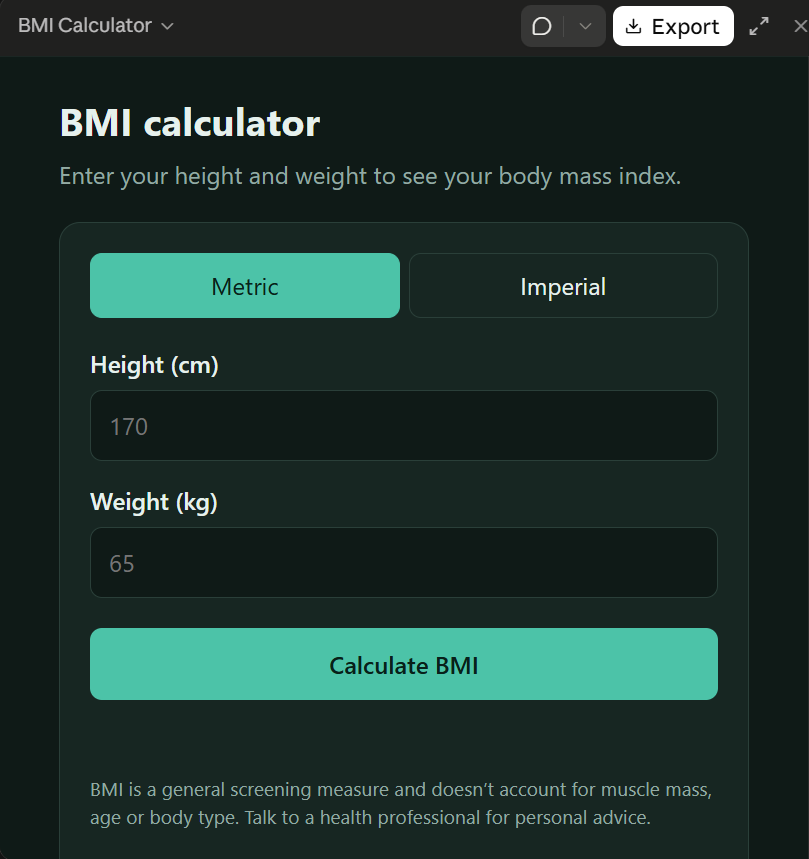
    Download and Use ChatGPT Voice
    In today's modern world, Artificial Intelligence (AI) is becoming an important part of our daily lives. It helps us learn new things, solve problems, improve our skills, and make our work easier. One of the most interesting features of ChatGPT is Voice Mode, which allows users to communicate with AI by speaking instead of typing. The task “Download and Use ChatGPT Voice” helped me learn how to use this useful technology and understand how voice-based communication can make learning more interactive, simple, and enjoyable.
    ChatGPT Voice is a helpful feature that allows users to have conversations with ChatGPT using their voice. Instead of writing every question, users can speak naturally and listen to the responses. This makes communication easier and provides a more conversational learning experience. It can be especially useful when practising English, asking questions, learning new topics, and improving communication skills.
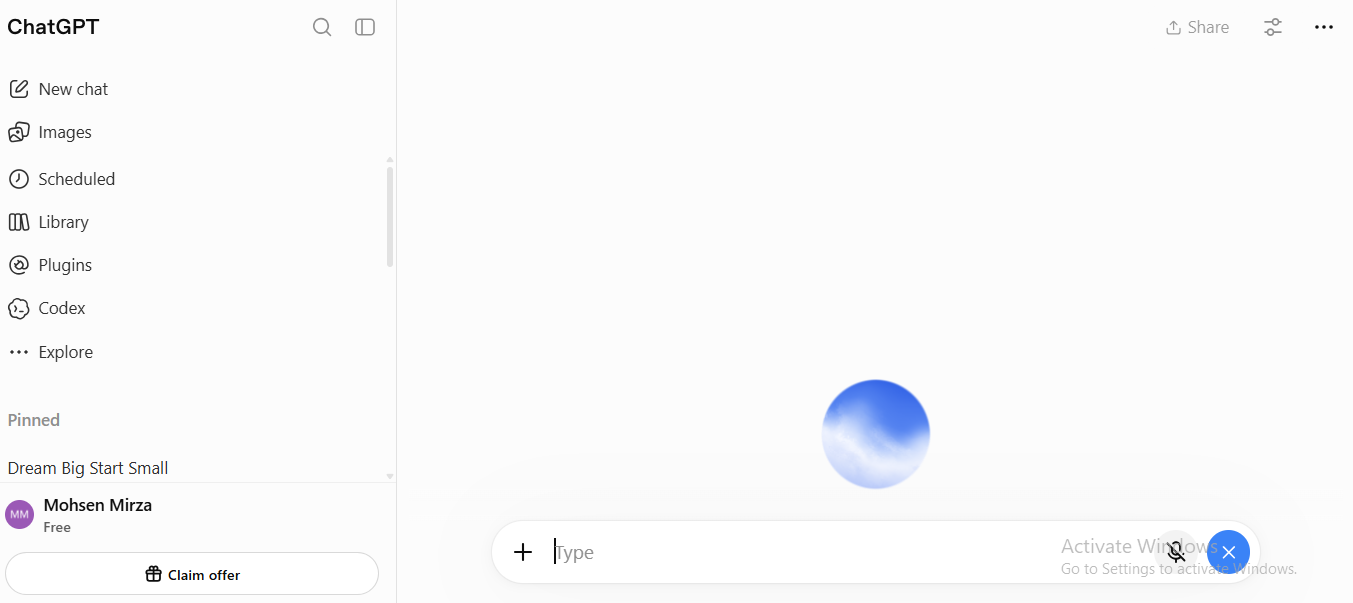
    To begin using ChatGPT Voice, I learned that I can access ChatGPT through its official website or the official ChatGPT mobile application. On a computer, I can visit the ChatGPT website and sign in to my account. On a mobile phone, I can install the official ChatGPT app from the Google Play Store or Apple App Store. After opening ChatGPT, I can look for the Voice icon and follow the instructions to start a voice conversation. Depending on the device and available features, microphone permission may be required.
    One of the biggest advantages of ChatGPT Voice is that it can help students practise English speaking. Sometimes, students feel shy or nervous when speaking English in front of other people. With voice conversations, they can practise asking questions, answering them, learning new vocabulary, and improving sentence formation. They can also ask ChatGPT to explain difficult words in simple English. Regular practice can help students become more confident in their communication skills.
    Another advantage is that ChatGPT Voice makes learning more interactive. For example, I can ask questions about science, mathematics, technology, history, and general knowledge.
    RSI F8 Task NO:8 ROLL: NO13 Download and Use ChatGPT Voice 🎙️🤖 In today's modern world, Artificial Intelligence (AI) is becoming an important part of our daily lives. It helps us learn new things, solve problems, improve our skills, and make our work easier. One of the most interesting features of ChatGPT is Voice Mode, which allows users to communicate with AI by speaking instead of typing. The task “Download and Use ChatGPT Voice” helped me learn how to use this useful technology and understand how voice-based communication can make learning more interactive, simple, and enjoyable. ChatGPT Voice is a helpful feature that allows users to have conversations with ChatGPT using their voice. Instead of writing every question, users can speak naturally and listen to the responses. This makes communication easier and provides a more conversational learning experience. It can be especially useful when practising English, asking questions, learning new topics, and improving communication skills. To begin using ChatGPT Voice, I learned that I can access ChatGPT through its official website or the official ChatGPT mobile application. On a computer, I can visit the ChatGPT website and sign in to my account. On a mobile phone, I can install the official ChatGPT app from the Google Play Store or Apple App Store. After opening ChatGPT, I can look for the Voice icon and follow the instructions to start a voice conversation. Depending on the device and available features, microphone permission may be required. One of the biggest advantages of ChatGPT Voice is that it can help students practise English speaking. Sometimes, students feel shy or nervous when speaking English in front of other people. With voice conversations, they can practise asking questions, answering them, learning new vocabulary, and improving sentence formation. They can also ask ChatGPT to explain difficult words in simple English. Regular practice can help students become more confident in their communication skills. Another advantage is that ChatGPT Voice makes learning more interactive. For example, I can ask questions about science, mathematics, technology, history, and general knowledge.
    0 Comentários 0 Compartilhamentos 243 Visualizações
  • RSIF8
    Roll no:81
    conding task no:2
    conding task topic Basic Calculator – Arithmetic Operations
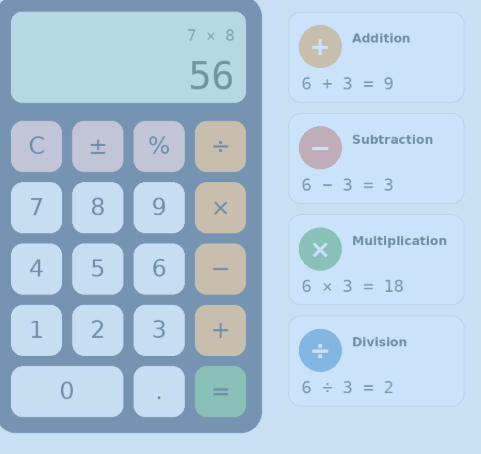
    Welcome to my Basic Calculator project! A basic calculator is a simple and useful tool that helps us solve mathematical problems quickly and easily.
    In this project, we can perform four basic arithmetic operations: addition , subtraction , multiplication , and division . This calculator is helpful for students and beginners who want to improve their math skills and learn how calculations work.
    Learn, Practice, and Calculate!
    Thank you for watching my project. Don't forget to like, share, and follow for more educational content!
    #BasicCalculator #ArithmeticOperations #Mathematics #Addition #Subtraction #Multiplication #Division #Coding #Education #StudentProject #LearningMadeEasy
    RSIF8 Roll no:81 conding task no:2 conding task topic🧮 Basic Calculator – Arithmetic Operations ➕➖✖️➗ Welcome to my Basic Calculator project! 🎉 A basic calculator is a simple and useful tool that helps us solve mathematical problems quickly and easily. In this project, we can perform four basic arithmetic operations: addition ➕, subtraction ➖, multiplication ✖️, and division ➗. This calculator is helpful for students and beginners who want to improve their math skills and learn how calculations work. 💡 Learn, Practice, and Calculate! 🚀 Thank you for watching my project. Don't forget to like, share, and follow for more educational content! ❤️ #BasicCalculator #ArithmeticOperations #Mathematics #Addition #Subtraction #Multiplication #Division #Coding #Education #StudentProject #LearningMadeEasy 🧮📚
    0 Comentários 0 Compartilhamentos 243 Visualizações
  • RSIF8
    Roll no:81
    coding task no:1
    coding taskm topic **Basic Calculator – Arithmetic Operations**

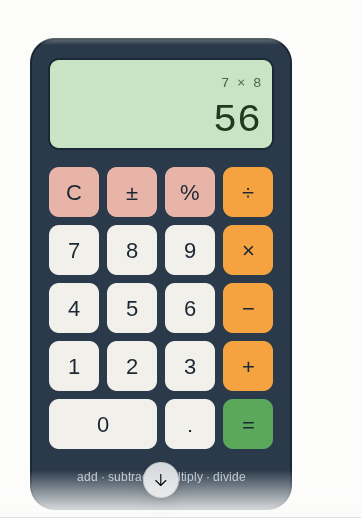
    Welcome to my Basic Calculator project! A basic calculator helps us perform important mathematical operations quickly and easily. It can add , subtract , multiply , and divide numbers.

    This project is useful for students and beginners who want to learn basic mathematics and understand how a calculator works. It makes calculations simple, fast, and accurate.

    **Learn Mathematics the Easy Way!**

    Like, Share, and Follow for more educational projects!

    #BasicCalculator #ArithmeticOperations #Mathematics #Addition #Subtraction #Multiplication #Division #Learning #Education #StudentProject #Technology
    RSIF8 Roll no:81 coding task no:1 coding taskm topic🧮 **Basic Calculator – Arithmetic Operations** ➕➖✖️➗ Welcome to my Basic Calculator project! 🎉 A basic calculator helps us perform important mathematical operations quickly and easily. It can add ➕, subtract ➖, multiply ✖️, and divide ➗ numbers. This project is useful for students and beginners who want to learn basic mathematics and understand how a calculator works. It makes calculations simple, fast, and accurate. 🚀 📚 **Learn Mathematics the Easy Way!** 👍 Like, Share, and Follow for more educational projects! #BasicCalculator #ArithmeticOperations #Mathematics #Addition #Subtraction #Multiplication #Division #Learning #Education #StudentProject #Technology 🧮✨
    0 Comentários 1 Compartilhamentos 336 Visualizações
  • RSIF8
    Rool no :14
    story no:15
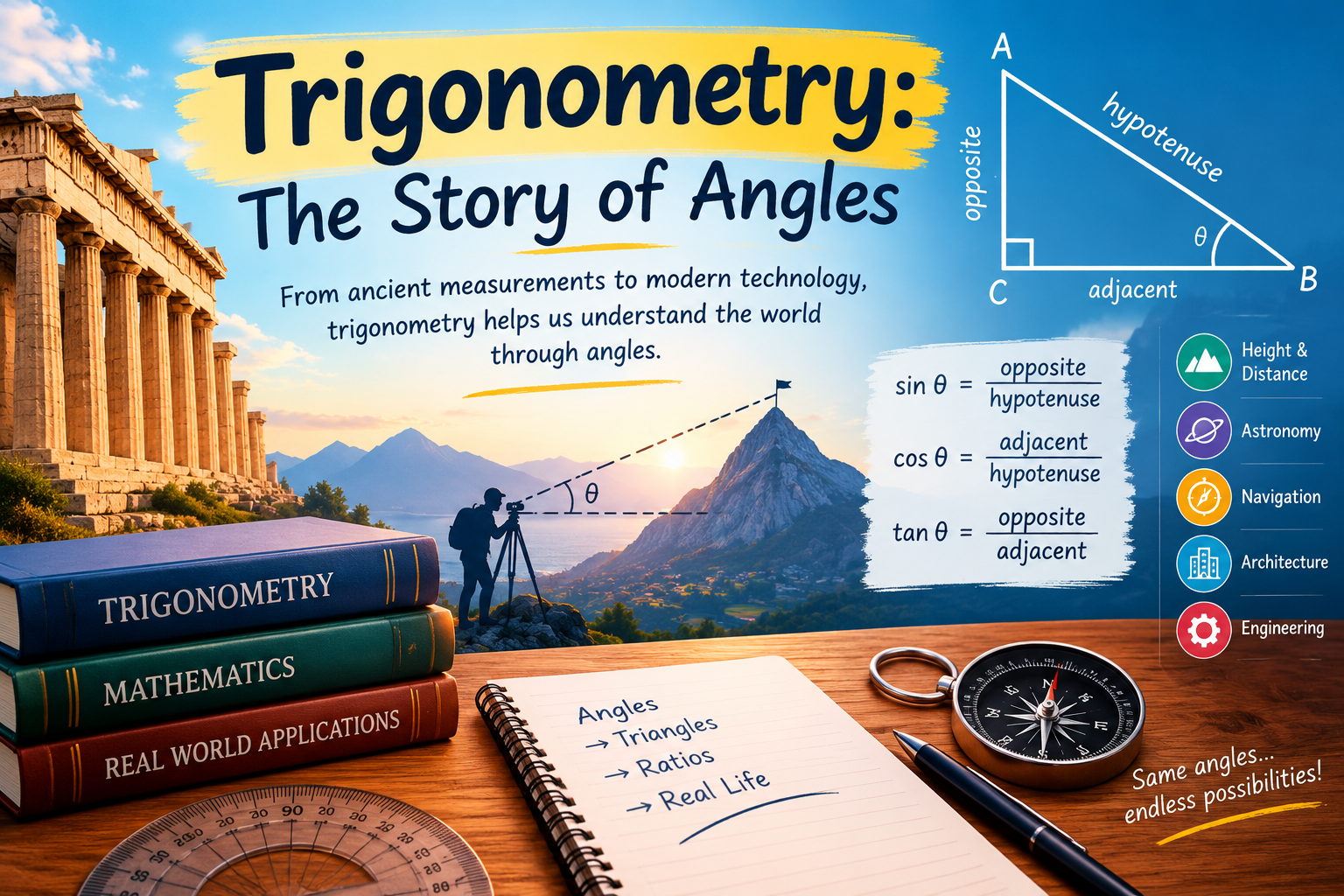
    story topic:Trigonometry: The Story of Angles

    # Trigonometry: The Story of Angles

    Trigonometry is a fascinating branch of mathematics that helps us understand the relationship between angles and sides of triangles. From ancient civilizations to modern technology, trigonometry has played an important role in exploring the world, solving complex problems, and making scientific discoveries.

    In this educational project, **“Trigonometry: The Story of Angles,”** we explore the basic concepts of angles, triangles, and trigonometric ratios, including sine (sin), cosine (cos), and tangent (tan). These mathematical principles help us calculate heights, distances, and unknown measurements with accuracy and confidence.

    We also discover how trigonometry is used in our everyday lives and in various professional fields. Architects use it to design buildings, engineers apply it to construct safe structures, astronomers use it to study celestial objects, and navigators rely on it to determine directions and positions. Even measuring the height of a mountain without climbing it can be possible with the help of trigonometry!

    This project demonstrates that mathematics is not just about formulas and calculations; it is a powerful tool for understanding the world around us. By learning trigonometry, students can improve their logical thinking, problem-solving abilities, and understanding of real-world measurements.

    **Key Message:** Every angle tells a story, and every triangle opens the door to new discoveries. Trigonometry connects mathematical theory with practical applications, showing us how simple relationships can help solve extraordinary problems.

    **Remember:** Learn the angles, understand the ratios, and discover the endless possibilities of mathematics!

    #Trigonometry #TheStoryOfAngles #Mathematics #SineCosineTangent #EducationalProject #Geometry #MathsLearning #ScienceAndTechnology #RealWorldApplications #StudentLearning #LearnMathematics #STEMEducation
    RSIF8 Rool no :14 story no:15 story topic:Trigonometry: The Story of Angles # 📐 Trigonometry: The Story of Angles 🔺✨ Trigonometry is a fascinating branch of mathematics that helps us understand the relationship between angles and sides of triangles. From ancient civilizations to modern technology, trigonometry has played an important role in exploring the world, solving complex problems, and making scientific discoveries. 🌍📚 In this educational project, **“Trigonometry: The Story of Angles,”** we explore the basic concepts of angles, triangles, and trigonometric ratios, including sine (sin), cosine (cos), and tangent (tan). These mathematical principles help us calculate heights, distances, and unknown measurements with accuracy and confidence. 📏🧮 We also discover how trigonometry is used in our everyday lives and in various professional fields. Architects use it to design buildings, engineers apply it to construct safe structures, astronomers use it to study celestial objects, and navigators rely on it to determine directions and positions. Even measuring the height of a mountain without climbing it can be possible with the help of trigonometry! 🏔️🏗️🚀 This project demonstrates that mathematics is not just about formulas and calculations; it is a powerful tool for understanding the world around us. By learning trigonometry, students can improve their logical thinking, problem-solving abilities, and understanding of real-world measurements. 💡🎯 ✨ **Key Message:** Every angle tells a story, and every triangle opens the door to new discoveries. Trigonometry connects mathematical theory with practical applications, showing us how simple relationships can help solve extraordinary problems. 🌟 **Remember:** Learn the angles, understand the ratios, and discover the endless possibilities of mathematics! #Trigonometry #TheStoryOfAngles #Mathematics #SineCosineTangent #EducationalProject #Geometry #MathsLearning #ScienceAndTechnology #RealWorldApplications #StudentLearning #LearnMathematics #STEMEducation
    0 Comentários 0 Compartilhamentos 495 Visualizações
  • RSi F8
    Roll NO:13
    Task NO:110
    Class: Foundation Level
    Made by Me

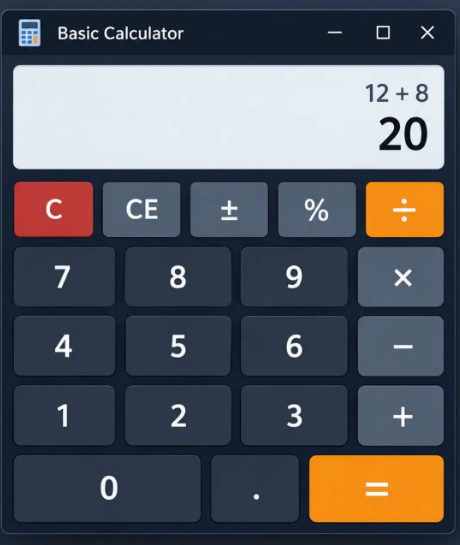
    Basic Calculator with GUI is a simple and useful coding project designed to create a calculator application with a graphical user interface. The main purpose of this project is to provide users with an easy and interactive way to perform basic mathematical calculations.
    The calculator includes a clean display area where numbers and results are shown, along with buttons for common operations such as addition (+), subtraction (−), multiplication (×), and division (÷). It can also include useful buttons such as Clear (C), decimal point (.), percentage (%), and equals (=) to make calculations easier and more convenient.
    This project demonstrates important programming concepts such as GUI design, button handling, user input, mathematical operations, event-driven programming, and displaying results. Each button performs a specific function when clicked, allowing the user to enter numbers and calculate the desired result.
    Creating a Basic Calculator with GUI is a great beginner-friendly project because it combines programming logic with visual design. It helps students understand how software applications respond to user actions and how different components of a graphical interface work together.
    Overall, this project provides practical experience in building an interactive application while developing problem-solving, logical thinking, and programming skills. It is a simple but valuable project for learning the fundamentals of GUI-based application development.
    RSi F8 🎓✨ Roll NO:13 Task NO:110 Class: Foundation Level 📚 Made by Me 💻🚀 Basic Calculator with GUI is a simple and useful coding project designed to create a calculator application with a graphical user interface. The main purpose of this project is to provide users with an easy and interactive way to perform basic mathematical calculations. The calculator includes a clean display area where numbers and results are shown, along with buttons for common operations such as addition (+), subtraction (−), multiplication (×), and division (÷). It can also include useful buttons such as Clear (C), decimal point (.), percentage (%), and equals (=) to make calculations easier and more convenient. This project demonstrates important programming concepts such as GUI design, button handling, user input, mathematical operations, event-driven programming, and displaying results. Each button performs a specific function when clicked, allowing the user to enter numbers and calculate the desired result. Creating a Basic Calculator with GUI is a great beginner-friendly project because it combines programming logic with visual design. It helps students understand how software applications respond to user actions and how different components of a graphical interface work together. Overall, this project provides practical experience in building an interactive application while developing problem-solving, logical thinking, and programming skills. It is a simple but valuable project for learning the fundamentals of GUI-based application development.
    0 Comentários 0 Compartilhamentos 259 Visualizações
  • RSi F8
    Roll NO:13
    Task NO:180
    Class: Foundation Level
    Made by Me

    Prime Number Checker — Description

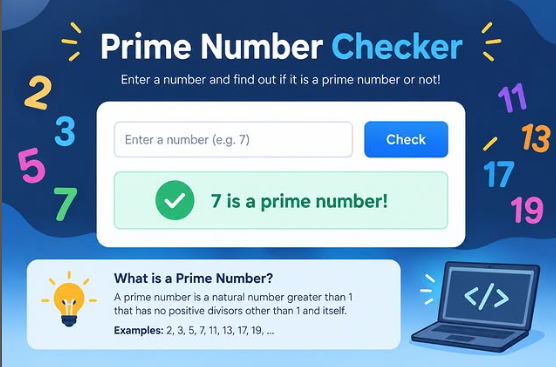
    Prime Number Checker is a simple and useful programming project designed to help users quickly determine whether a given number is a prime number or not. Prime numbers are natural numbers greater than 1 that have exactly two positive factors: 1 and the number itself. Some common examples of prime numbers are 2, 3, 5, 7, 11, 13, 17, 19, and 23.

    This project provides an easy-to-use interface where the user can enter any number into an input field and click the “Check” button. The program then analyzes the entered number and displays a clear result, telling the user whether the number is prime or not. This makes the project useful for students who are learning about mathematics, logical thinking, algorithms, and programming fundamentals.

    Behind the simple interface, the program uses a logical process to check whether the number can be divided evenly by any number other than 1 and itself. If no such divisor exists, the number is identified as a prime number. If the number has another divisor, it is considered a composite number. The project can also handle special cases such as numbers less than or equal to 1, which are not considered prime numbers.

    The Prime Number Checker is a great beginner-friendly project because it combines HTML, CSS, and JavaScript to create an interactive web application. HTML can be used to structure the page, CSS can make the interface attractive and responsive, and JavaScript can perform the actual prime-number calculation.

    Creating this project also helps learners understand important programming concepts such as variables, functions, conditional statements, loops, user input, mathematical operations, and displaying dynamic results. It demonstrates how a mathematical idea can be converted into a working computer program.

    Overall, the Prime Number Checker is a small but meaningful coding project that makes learning programming more interesting and practical. It shows how simple algorithms can solve everyday computational problems while giving beginners valuable hands-on experience in building interactive application
    RSi F8 🎓✨ Roll NO:13 Task NO:180 Class: Foundation Level 📚 Made by Me 💻🚀 Prime Number Checker — Description Prime Number Checker is a simple and useful programming project designed to help users quickly determine whether a given number is a prime number or not. Prime numbers are natural numbers greater than 1 that have exactly two positive factors: 1 and the number itself. Some common examples of prime numbers are 2, 3, 5, 7, 11, 13, 17, 19, and 23. This project provides an easy-to-use interface where the user can enter any number into an input field and click the “Check” button. The program then analyzes the entered number and displays a clear result, telling the user whether the number is prime or not. This makes the project useful for students who are learning about mathematics, logical thinking, algorithms, and programming fundamentals. Behind the simple interface, the program uses a logical process to check whether the number can be divided evenly by any number other than 1 and itself. If no such divisor exists, the number is identified as a prime number. If the number has another divisor, it is considered a composite number. The project can also handle special cases such as numbers less than or equal to 1, which are not considered prime numbers. The Prime Number Checker is a great beginner-friendly project because it combines HTML, CSS, and JavaScript to create an interactive web application. HTML can be used to structure the page, CSS can make the interface attractive and responsive, and JavaScript can perform the actual prime-number calculation. Creating this project also helps learners understand important programming concepts such as variables, functions, conditional statements, loops, user input, mathematical operations, and displaying dynamic results. It demonstrates how a mathematical idea can be converted into a working computer program. Overall, the Prime Number Checker is a small but meaningful coding project that makes learning programming more interesting and practical. It shows how simple algorithms can solve everyday computational problems while giving beginners valuable hands-on experience in building interactive application
    0 Comentários 0 Compartilhamentos 238 Visualizações
  • #rsisb
    Roll no. 247
    Story post . 18
    Foundation level

    **Story Post — Decoding “Cyber”: Origins in Norbert Wiener’s Cybernetics**

    **Have you ever wondered where the word “Cyber” comes from?**

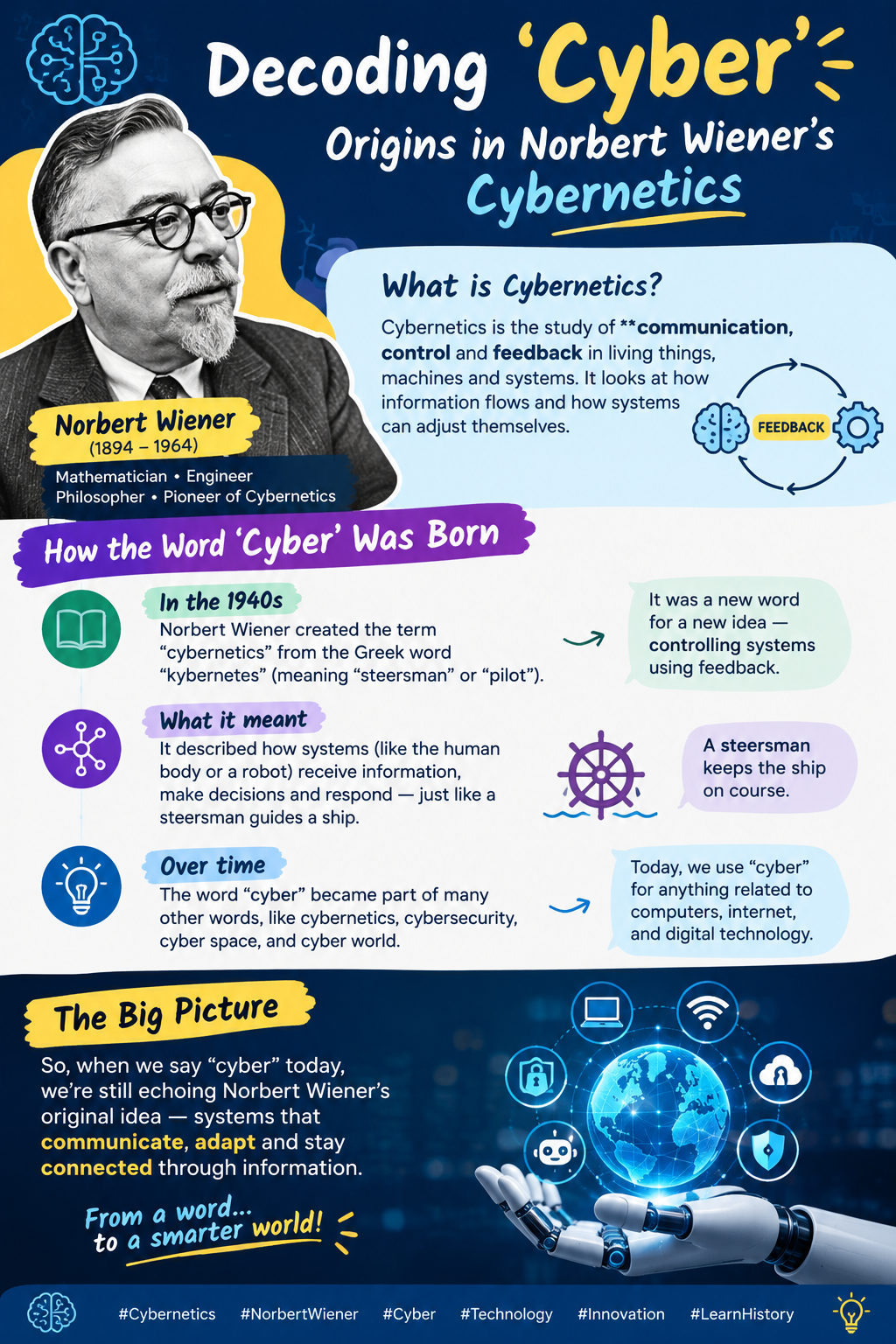
    The word *Cyber* is connected to the fascinating world of **cybernetics**, a field that explores communication, control, and feedback in both living organisms and machines. It helps us understand how humans, computers, and other systems receive information, respond to changes, and make adjustments.

    **The Story Behind Cybernetics**

    The story takes us back to **Norbert Wiener (1894–1964)**, an American mathematician who helped establish the field of cybernetics. In 1948, he published his influential book *Cybernetics: Or Control and Communication in the Animal and the Machine*.

    Wiener explored how communication and control work in animals and machines. One important concept was **feedback**—when a system uses information about its results to adjust what it does next.

    For example, a thermostat checks the temperature of a room and adjusts the heating to maintain the desired temperature. Similarly, modern robots use sensors to understand their surroundings and adjust their movements. These ideas help us understand many technologies we use today!

    **How Did “Cyber” Become So Popular?**

    Over time, the word *cyber* became associated with computers, digital communication, and the internet. Today, we hear it in words such as:

    **Cybersecurity** — protecting computers, networks, and information from digital threats.

    **Cyberspace** — the digital environment where people communicate and interact online.

    **Cybercrime** — illegal activities involving computers or digital networks.

    **Cybernetics** — the study of control, communication, and feedback in systems.

    From the early ideas of cybernetics to today's connected digital world, this little word has become part of our everyday vocabulary!

    **Why Is This Story Important?**

    Understanding the history of the word *cyber* helps us appreciate how scientific ideas influence language and technology. It also reminds us that many modern inventions are built on ideas developed decades ago. Every time we use the internet, learn about artificial intelligence, or explore robotics, we encounter concepts connected to communication, information, and control.

    **Today's Learning Message:**
    Every word has a story, and every story can teach us something new! Keep asking questions, exploring history, and discovering how science shapes our world.

    **Question for You:**
    Which cyber-related topic interests you the most: cybersecurity, artificial intelligence, robotics, or the history of the internet? Share your answer in the comments!

    Like, share, and comment to help others discover the amazing story behind the word *Cyber*!

    #rsisb Roll no. 247 Story post . 18 Foundation level 🌐🤖 **Story Post — Decoding “Cyber”: Origins in Norbert Wiener’s Cybernetics** 💻📚 ✨ **Have you ever wondered where the word “Cyber” comes from?** 🚀 The word *Cyber* is connected to the fascinating world of **cybernetics**, a field that explores communication, control, and feedback in both living organisms and machines. 🧠⚙️ It helps us understand how humans, computers, and other systems receive information, respond to changes, and make adjustments. 📖 **The Story Behind Cybernetics** The story takes us back to **Norbert Wiener (1894–1964)**, an American mathematician who helped establish the field of cybernetics. In 1948, he published his influential book *Cybernetics: Or Control and Communication in the Animal and the Machine*. 📘🔬 Wiener explored how communication and control work in animals and machines. One important concept was **feedback**—when a system uses information about its results to adjust what it does next. 🔄🤖 For example, a thermostat checks the temperature of a room and adjusts the heating to maintain the desired temperature. 🌡️🏠 Similarly, modern robots use sensors to understand their surroundings and adjust their movements. These ideas help us understand many technologies we use today! 🌍 **How Did “Cyber” Become So Popular?** Over time, the word *cyber* became associated with computers, digital communication, and the internet. Today, we hear it in words such as: 💻 **Cybersecurity** — protecting computers, networks, and information from digital threats. 🌐 **Cyberspace** — the digital environment where people communicate and interact online. 🕵️ **Cybercrime** — illegal activities involving computers or digital networks. 🤖 **Cybernetics** — the study of control, communication, and feedback in systems. From the early ideas of cybernetics to today's connected digital world, this little word has become part of our everyday vocabulary! 🌟 🎯 **Why Is This Story Important?** Understanding the history of the word *cyber* helps us appreciate how scientific ideas influence language and technology. It also reminds us that many modern inventions are built on ideas developed decades ago. Every time we use the internet, learn about artificial intelligence, or explore robotics, we encounter concepts connected to communication, information, and control. 🚀🧠 💡 **Today's Learning Message:** Every word has a story, and every story can teach us something new! Keep asking questions, exploring history, and discovering how science shapes our world. 📚✨ 💬 **Question for You:** Which cyber-related topic interests you the most: cybersecurity, artificial intelligence, robotics, or the history of the internet? Share your answer in the comments! 👇🌐 ❤️ Like, share, and comment to help others discover the amazing story behind the word *Cyber*!
    0 Comentários 0 Compartilhamentos 377 Visualizações
  • #rsisb
    Roll no. 247
    Story post . 18
    Foundation level

    **Story Post — Decoding “Cyber”: Origins in Norbert Wiener’s Cybernetics**

    **Have you ever wondered where the word “Cyber” comes from?**

    The word *Cyber* is connected to the fascinating world of **cybernetics**, a field that explores communication, control, and feedback in both living organisms and machines. It helps us understand how humans, computers, and other systems receive information, respond to changes, and make adjustments.

    **The Story Behind Cybernetics**

    The story takes us back to **Norbert Wiener (1894–1964)**, an American mathematician who helped establish the field of cybernetics. In 1948, he published his influential book *Cybernetics: Or Control and Communication in the Animal and the Machine*.

    Wiener explored how communication and control work in animals and machines. One important concept was **feedback**—when a system uses information about its results to adjust what it does next.

    For example, a thermostat checks the temperature of a room and adjusts the heating to maintain the desired temperature. Similarly, modern robots use sensors to understand their surroundings and adjust their movements. These ideas help us understand many technologies we use today!

    **How Did “Cyber” Become So Popular?**

    Over time, the word *cyber* became associated with computers, digital communication, and the internet. Today, we hear it in words such as:

    **Cybersecurity** — protecting computers, networks, and information from digital threats.

    **Cyberspace** — the digital environment where people communicate and interact online.

    **Cybercrime** — illegal activities involving computers or digital networks.

    **Cybernetics** — the study of control, communication, and feedback in systems.

    From the early ideas of cybernetics to today's connected digital world, this little word has become part of our everyday vocabulary!

    **Why Is This Story Important?**

    Understanding the history of the word *cyber* helps us appreciate how scientific ideas influence language and technology. It also reminds us that many modern inventions are built on ideas developed decades ago. Every time we use the internet, learn about artificial intelligence, or explore robotics, we encounter concepts connected to communication, information, and control.

    **Today's Learning Message:**
    Every word has a story, and every story can teach us something new! Keep asking questions, exploring history, and discovering how science shapes our world.

    **Question for You:**
    Which cyber-related topic interests you the most: cybersecurity, artificial intelligence, robotics, or the history of the internet? Share your answer in the comments!

    Like, share, and comment to help others discover the amazing story behind the word *Cyber*!

    #Cyber #Cybernetics #NorbertWiener #WordOrigins #HistoryOfTechnology #Technology #Science #ComputerScience #ArtificialIntelligence #AI #Cybersecurity #DigitalWorld #Internet #Robotics #Innovation #LearningEveryDay #EducationalContent #DidYouKnow #KnowledgeIsPower #TechHistory #DigitalLiteracy #StoryPost #RehanSchool #RSISB #RehanCodingWithAI
    #rsisb Roll no. 247 Story post . 18 Foundation level 🌐🤖 **Story Post — Decoding “Cyber”: Origins in Norbert Wiener’s Cybernetics** 💻📚 ✨ **Have you ever wondered where the word “Cyber” comes from?** 🚀 The word *Cyber* is connected to the fascinating world of **cybernetics**, a field that explores communication, control, and feedback in both living organisms and machines. 🧠⚙️ It helps us understand how humans, computers, and other systems receive information, respond to changes, and make adjustments. 📖 **The Story Behind Cybernetics** The story takes us back to **Norbert Wiener (1894–1964)**, an American mathematician who helped establish the field of cybernetics. In 1948, he published his influential book *Cybernetics: Or Control and Communication in the Animal and the Machine*. 📘🔬 Wiener explored how communication and control work in animals and machines. One important concept was **feedback**—when a system uses information about its results to adjust what it does next. 🔄🤖 For example, a thermostat checks the temperature of a room and adjusts the heating to maintain the desired temperature. 🌡️🏠 Similarly, modern robots use sensors to understand their surroundings and adjust their movements. These ideas help us understand many technologies we use today! 🌍 **How Did “Cyber” Become So Popular?** Over time, the word *cyber* became associated with computers, digital communication, and the internet. Today, we hear it in words such as: 💻 **Cybersecurity** — protecting computers, networks, and information from digital threats. 🌐 **Cyberspace** — the digital environment where people communicate and interact online. 🕵️ **Cybercrime** — illegal activities involving computers or digital networks. 🤖 **Cybernetics** — the study of control, communication, and feedback in systems. From the early ideas of cybernetics to today's connected digital world, this little word has become part of our everyday vocabulary! 🌟 🎯 **Why Is This Story Important?** Understanding the history of the word *cyber* helps us appreciate how scientific ideas influence language and technology. It also reminds us that many modern inventions are built on ideas developed decades ago. Every time we use the internet, learn about artificial intelligence, or explore robotics, we encounter concepts connected to communication, information, and control. 🚀🧠 💡 **Today's Learning Message:** Every word has a story, and every story can teach us something new! Keep asking questions, exploring history, and discovering how science shapes our world. 📚✨ 💬 **Question for You:** Which cyber-related topic interests you the most: cybersecurity, artificial intelligence, robotics, or the history of the internet? Share your answer in the comments! 👇🌐 ❤️ Like, share, and comment to help others discover the amazing story behind the word *Cyber*! #Cyber #Cybernetics #NorbertWiener #WordOrigins #HistoryOfTechnology #Technology #Science #ComputerScience #ArtificialIntelligence #AI #Cybersecurity #DigitalWorld #Internet #Robotics #Innovation #LearningEveryDay #EducationalContent #DidYouKnow #KnowledgeIsPower #TechHistory #DigitalLiteracy #StoryPost #RehanSchool #RSISB #RehanCodingWithAI 🚀💻📚
    0 Comentários 0 Compartilhamentos 487 Visualizações

  • **Roll No: 2**

    **Batch: 14**

    **Book: ACCL**

    **Task No: 134**

    ## BMI Calculator

    Today’s task is to develop a **Body Mass Index (BMI) Calculator** that demonstrates how a simple computer program can perform calculations using user input. The calculator will allow users to enter their height and weight and calculate BMI using a mathematical formula. This project will help improve programming skills, logical thinking, and understanding of basic formulas, variables, input handling, and output formatting. It can also display the calculated result clearly and explain that BMI is a general screening measure, not a complete assessment of a person’s health. Through this task, I will gain practical experience in creating a useful application while strengthening my problem-solving abilities and learning how mathematics can be applied in technology.

    #Batch14 #Task134 #ACCL #BMICalculator #Coding #Programming #PythonProject #HealthTechnology #Mathematics #ProblemSolving #Learning #DigitalSkills #DailyTask
    👤 **Roll No: 2** 📚 **Batch: 14** 📖 **Book: ACCL** 🎯 **Task No: 134** ## 💻 BMI Calculator 📊 Today’s task is to develop a **Body Mass Index (BMI) Calculator** that demonstrates how a simple computer program can perform calculations using user input. 🖥️ The calculator will allow users to enter their height and weight and calculate BMI using a mathematical formula. ➗ This project will help improve programming skills, logical thinking, and understanding of basic formulas, variables, input handling, and output formatting. 🚀 It can also display the calculated result clearly and explain that BMI is a general screening measure, not a complete assessment of a person’s health. 🌟 Through this task, I will gain practical experience in creating a useful application while strengthening my problem-solving abilities and learning how mathematics can be applied in technology. #Batch14 #Task134 #ACCL #BMICalculator #Coding #Programming #PythonProject #HealthTechnology #Mathematics #ProblemSolving #Learning #DigitalSkills #DailyTask
    0 Comentários 0 Compartilhamentos 386 Visualizações
  • #rsisb
    roll no. 247
    Movie no. 4
    Foundation level

    **Movie Review — Hidden Figures ‍ | An Inspiring Story of Intelligence, Courage, and Equality!**

    Today, I am sharing my movie review of *Hidden Figures*, an inspiring and meaningful movie based on the true story of three brilliant African American women who made important contributions to NASA’s space program. Their names are Katherine Johnson, Dorothy Vaughan, and Mary Jackson. ‍‍

    ** About the Movie**

    *Hidden Figures* shows us how three talented women worked hard, solved difficult mathematical problems, and helped NASA during the Space Race. At a time when racial discrimination and gender inequality created many challenges, these women continued to learn, work, and prove their abilities.

    **‍ Katherine Johnson** was a brilliant mathematician whose calculations helped NASA plan important space missions. Her intelligence, accuracy, and dedication made her an important part of the team.

    **‍ Dorothy Vaughan** was a talented mathematician and leader who learned computer programming and helped her team prepare for changing technology. Her story teaches us the importance of leadership, teamwork, and lifelong learning.

    **‍ Mary Jackson** wanted to become an engineer and worked hard to achieve her dream despite the barriers she faced. Her journey teaches us to believe in ourselves and keep moving forward.

    ** What Did I Learn from This Movie?**

    This movie taught me that intelligence, education, hard work, and determination can help people overcome challenges. It also showed me that everyone deserves equal opportunities, respect, and recognition, regardless of their race or gender.

    The most important lesson I learned is that we should never underestimate anyone's abilities. Every person has unique talents and the potential to make a positive difference in the world.

    ** My Personal Review**

    I found *Hidden Figures* to be an educational, inspiring, and motivational movie. It encourages students to study hard, improve their knowledge, develop their skills, and never give up on their dreams.

    As a student, I believe this movie is a wonderful reminder that learning is powerful and that curiosity can open doors to amazing opportunities. It also encourages us to respect others, work together, and appreciate the contributions of people whose achievements may not always receive enough recognition.

    ** My Final Thoughts**

    I would recommend *Hidden Figures* to students, teachers, parents, and anyone who enjoys stories about science, mathematics, history, teamwork, and personal achievement. ‍

    This movie reminds us that sometimes the people who make the biggest difference are the ones whose stories have not yet been fully told. Their courage and achievements continue to inspire future generations.

    Thank you for watching my movie review! I hope this film inspires you to learn something new, believe in your abilities, respect others, and work hard to achieve your goals.

    **What lesson did you learn from *Hidden Figures*?** Share your thoughts in the comments below!

    Like | Comment | Share | Follow for more educational content, movie reviews, and inspiring stories!

    #HiddenFigures #MovieReview #HiddenFiguresMovie #NASA #KatherineJohnson #DorothyVaughan #MaryJackson #WomenInScience #STEMEducation #ScienceAndTechnology #Mathematics #WomenInHistory #Education #Inspiration #Motivation #Equality #Teamwork #NeverGiveUp #StudentLearning #LearningJourney #MovieLessons #EducationalContent #EnglishMovieReview #UrduMovieReview #KnowledgeIsPower #BelieveInYourself #DreamBig #KeepLearning #PositiveThinking #AllPlatforms
    #rsisb roll no. 247 Movie no. 4 Foundation level 🎬🌟 **Movie Review — Hidden Figures 🚀👩‍🔬 | An Inspiring Story of Intelligence, Courage, and Equality!** 💻📚✨ 🌍🎥 Today, I am sharing my movie review of *Hidden Figures*, an inspiring and meaningful movie based on the true story of three brilliant African American women who made important contributions to NASA’s space program. 🚀🌌 Their names are Katherine Johnson, Dorothy Vaughan, and Mary Jackson. 👩‍💻🧮👩‍🔬 💫 **📖 About the Movie** *Hidden Figures* shows us how three talented women worked hard, solved difficult mathematical problems, and helped NASA during the Space Race. At a time when racial discrimination and gender inequality created many challenges, these women continued to learn, work, and prove their abilities. 💪📚✨ 🧮 **👩‍🚀 Katherine Johnson** was a brilliant mathematician whose calculations helped NASA plan important space missions. Her intelligence, accuracy, and dedication made her an important part of the team. 🌟 💻 **👩‍💻 Dorothy Vaughan** was a talented mathematician and leader who learned computer programming and helped her team prepare for changing technology. Her story teaches us the importance of leadership, teamwork, and lifelong learning. 🤝💡 🔬 **👩‍🔬 Mary Jackson** wanted to become an engineer and worked hard to achieve her dream despite the barriers she faced. Her journey teaches us to believe in ourselves and keep moving forward. 🎯🚀 💖 **🌈 What Did I Learn from This Movie?** This movie taught me that intelligence, education, hard work, and determination can help people overcome challenges. It also showed me that everyone deserves equal opportunities, respect, and recognition, regardless of their race or gender. 🌍🤝❤️ ✨ The most important lesson I learned is that we should never underestimate anyone's abilities. Every person has unique talents and the potential to make a positive difference in the world. 🌟📖 🎯 **⭐ My Personal Review** I found *Hidden Figures* to be an educational, inspiring, and motivational movie. It encourages students to study hard, improve their knowledge, develop their skills, and never give up on their dreams. 📚💪 As a student, I believe this movie is a wonderful reminder that learning is powerful and that curiosity can open doors to amazing opportunities. It also encourages us to respect others, work together, and appreciate the contributions of people whose achievements may not always receive enough recognition. 🧠🌍✨ 🏆 **🎬 My Final Thoughts** I would recommend *Hidden Figures* to students, teachers, parents, and anyone who enjoys stories about science, mathematics, history, teamwork, and personal achievement. 🚀👩‍🔬📚 This movie reminds us that sometimes the people who make the biggest difference are the ones whose stories have not yet been fully told. Their courage and achievements continue to inspire future generations. 🌟💫 🙏 Thank you for watching my movie review! I hope this film inspires you to learn something new, believe in your abilities, respect others, and work hard to achieve your goals. ❤️🎥 💬 **What lesson did you learn from *Hidden Figures*?** Share your thoughts in the comments below! 👇😊 ❤️ Like 👍 | 💬 Comment | 🔄 Share | ➕ Follow for more educational content, movie reviews, and inspiring stories! 🎬📚🌍 #HiddenFigures #MovieReview #HiddenFiguresMovie #NASA #KatherineJohnson #DorothyVaughan #MaryJackson #WomenInScience #STEMEducation #ScienceAndTechnology #Mathematics #WomenInHistory #Education #Inspiration #Motivation #Equality #Teamwork #NeverGiveUp #StudentLearning #LearningJourney #MovieLessons #EducationalContent #EnglishMovieReview #UrduMovieReview #KnowledgeIsPower #BelieveInYourself #DreamBig #KeepLearning #PositiveThinking #AllPlatforms 🎬🚀🌟📚❤️
    0 Comentários 0 Compartilhamentos 1199 Visualizações 4
Páginas Impulsionadas