• #rsisb
    Roll No.269
    Foundation Level
    Story Post No.10


    **Acids and Bases: The Balance of Nature **

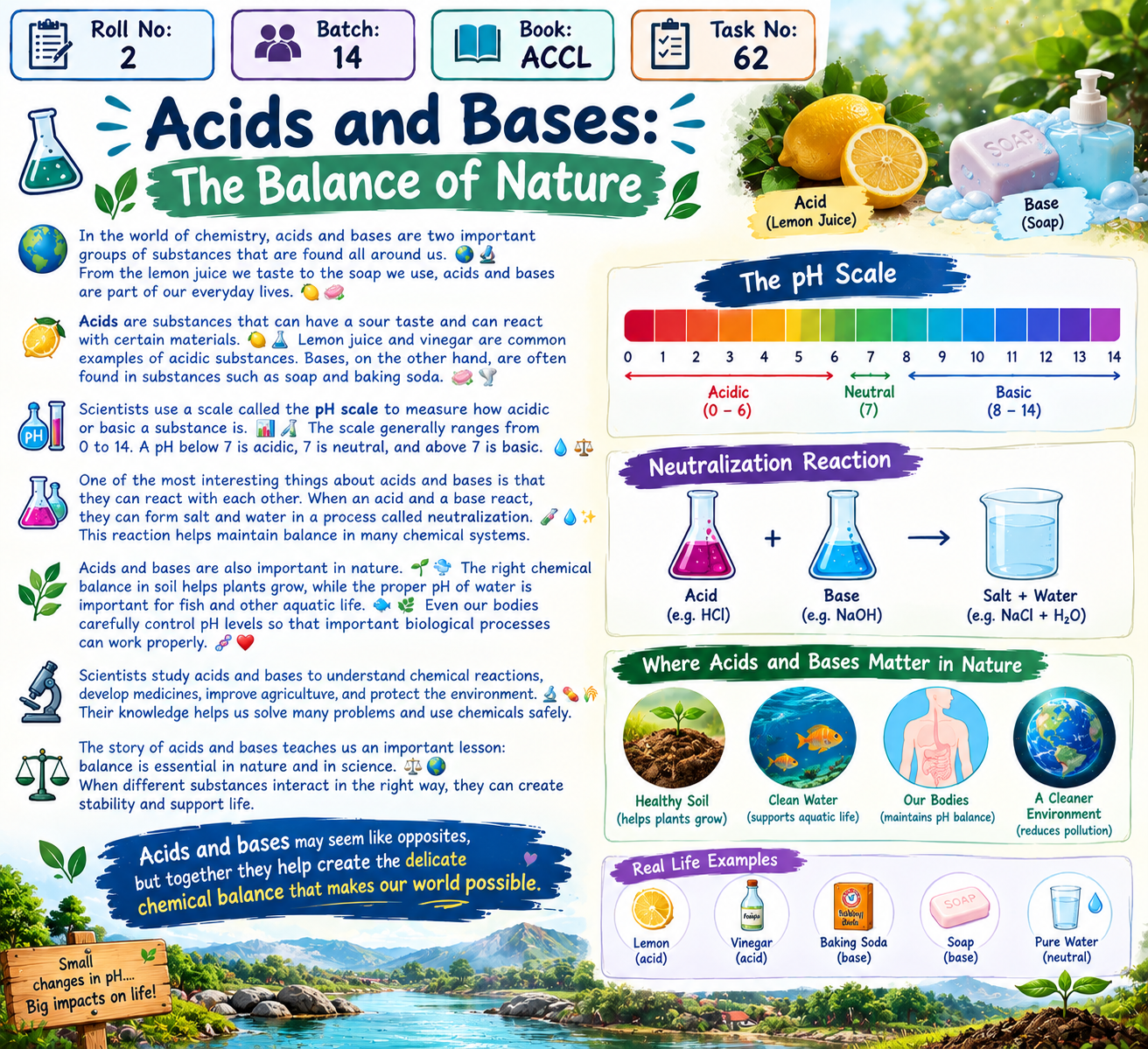
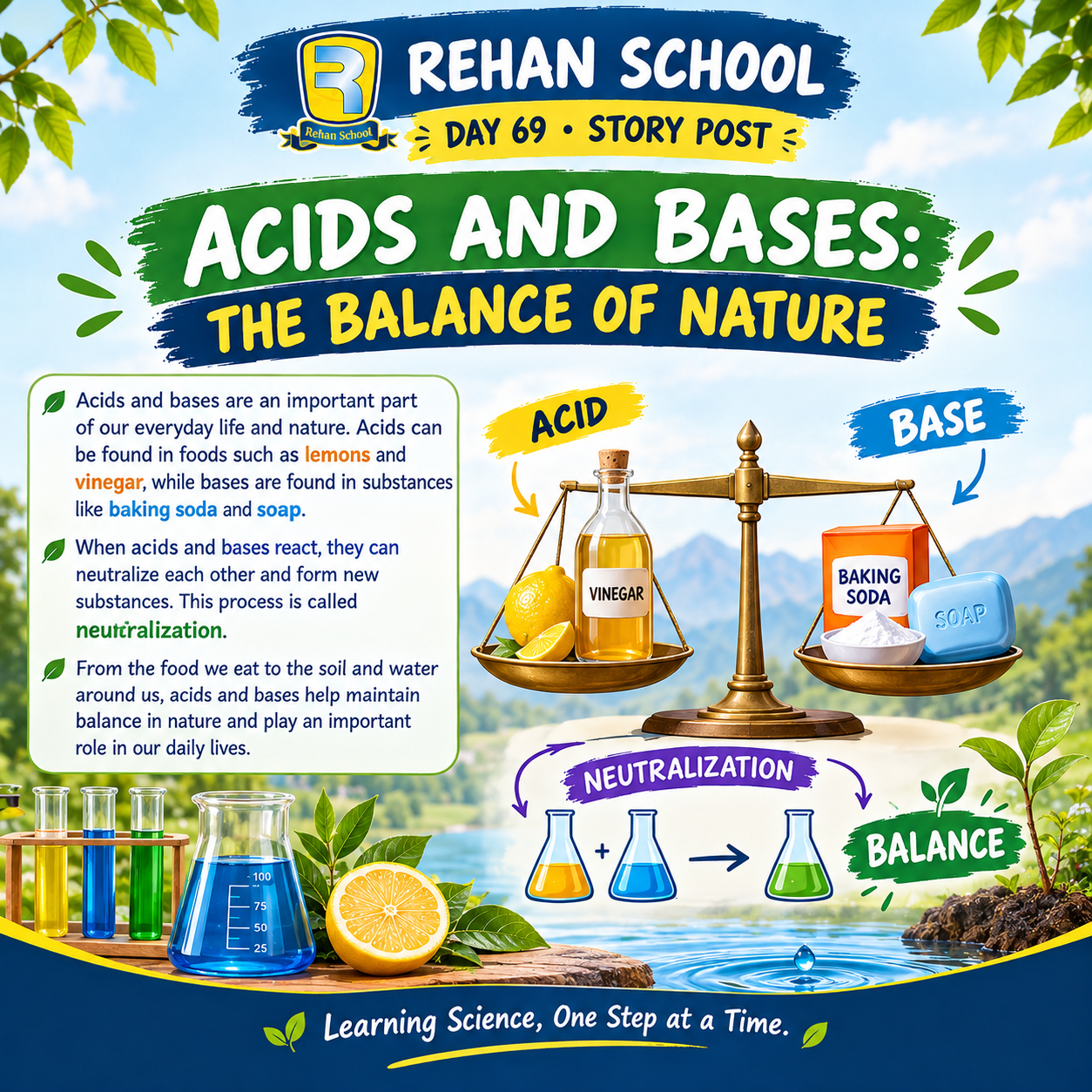
    Have you ever wondered why lemons taste sour , why soap feels slippery , or how scientists measure the strength of different substances? The answer lies in the fascinating world of **acids and bases!**

    In this video, we explore **“Acids and Bases: The Balance of Nature”** and discover how these two important groups of substances interact with each other. Acids and bases are found everywhere around us—from the foods we eat and the drinks we enjoy to our environment, soil, water, and many everyday products.

    We’ll learn about the **pH scale**, the difference between acids and bases, neutral substances, indicators, and the process of **neutralization**. Understanding these concepts helps us see how chemistry plays an important role in everyday life.

    **In This Video, You’ll Learn:**
    What acids and bases are
    The meaning of the pH scale
    Examples of acids and bases in daily life
    What neutral substances are
    How indicators help identify acids and bases
    What happens during neutralization
    Why the balance between acids and bases is important in nature

    From the chemistry of our oceans and soil to the food in our kitchens, acids and bases help maintain balance in the natural world.

    Whether you're a student, science lover, or simply curious about how the world works, this video will help make chemistry interesting and easy to understand!

    **Like, Share & Subscribe** for more educational videos and fascinating science topics!

    **Question:** Can you name one acidic substance and one basic substance you use in everyday life?

    #AcidsAndBases #Chemistry #Science #PHScale #ScienceEducation #LearnChemistry #ChemicalReactions #Neutralization #Nature #ScienceFacts #STEM #Education #LearningIsFun #ChemistryForStudents
    #rsisb Roll No.269 Foundation Level Story Post No.10 🧪 **Acids and Bases: The Balance of Nature 🌿⚖️** Have you ever wondered why lemons taste sour 🍋, why soap feels slippery 🧼, or how scientists measure the strength of different substances? 🤔 The answer lies in the fascinating world of **acids and bases!** 🔬✨ In this video, we explore **“Acids and Bases: The Balance of Nature”** and discover how these two important groups of substances interact with each other. Acids and bases are found everywhere around us—from the foods we eat 🍊 and the drinks we enjoy 🥤 to our environment, soil, water, and many everyday products. 🌍💧 We’ll learn about the **pH scale**, the difference between acids and bases, neutral substances, indicators, and the process of **neutralization**. 🧪📚 Understanding these concepts helps us see how chemistry plays an important role in everyday life. 🌱 **In This Video, You’ll Learn:** 🔹 What acids and bases are 🔹 The meaning of the pH scale 🔹 Examples of acids and bases in daily life 🔹 What neutral substances are 🔹 How indicators help identify acids and bases 🔹 What happens during neutralization 🔹 Why the balance between acids and bases is important in nature 🌍 From the chemistry of our oceans and soil to the food in our kitchens, acids and bases help maintain balance in the natural world. ⚖️🌿 🎓 Whether you're a student, science lover, or simply curious about how the world works, this video will help make chemistry interesting and easy to understand! 🧠🔬 👍 **Like, Share & Subscribe** for more educational videos and fascinating science topics! 🔔📖 💬 **Question:** Can you name one acidic substance and one basic substance you use in everyday life? 🤔🧪 #AcidsAndBases 🧪 #Chemistry 🔬 #Science 🌍 #PHScale ⚖️ #ScienceEducation 📚 #LearnChemistry 🧠 #ChemicalReactions ⚗️ #Neutralization 🧪 #Nature 🌿 #ScienceFacts 💡 #STEM 🚀 #Education 🎓 #LearningIsFun 😊 #ChemistryForStudents 📖
    0 Commentarios 0 Acciones 277 Views
  • #rsisb
    Roll no.239
    Foundation Level
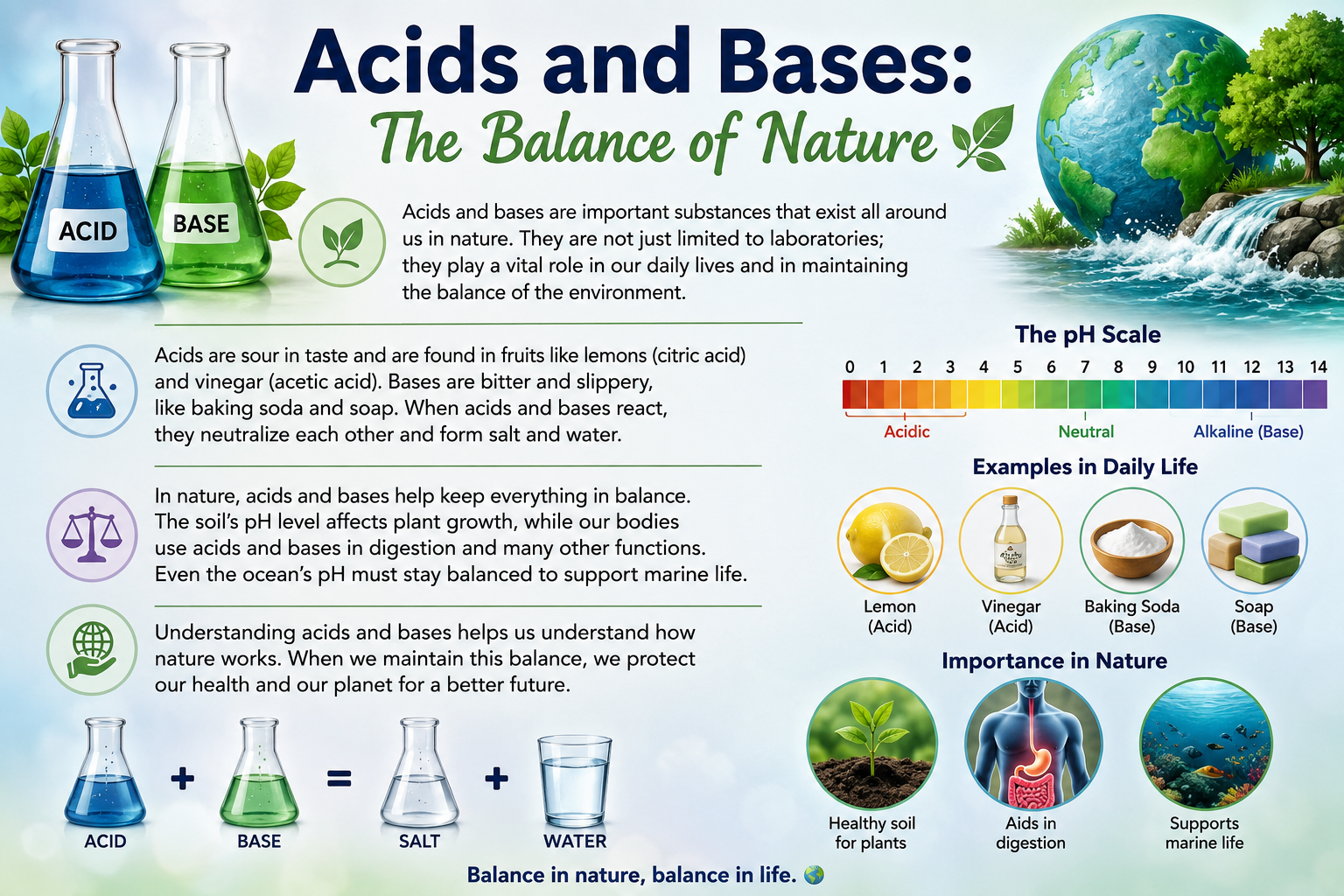
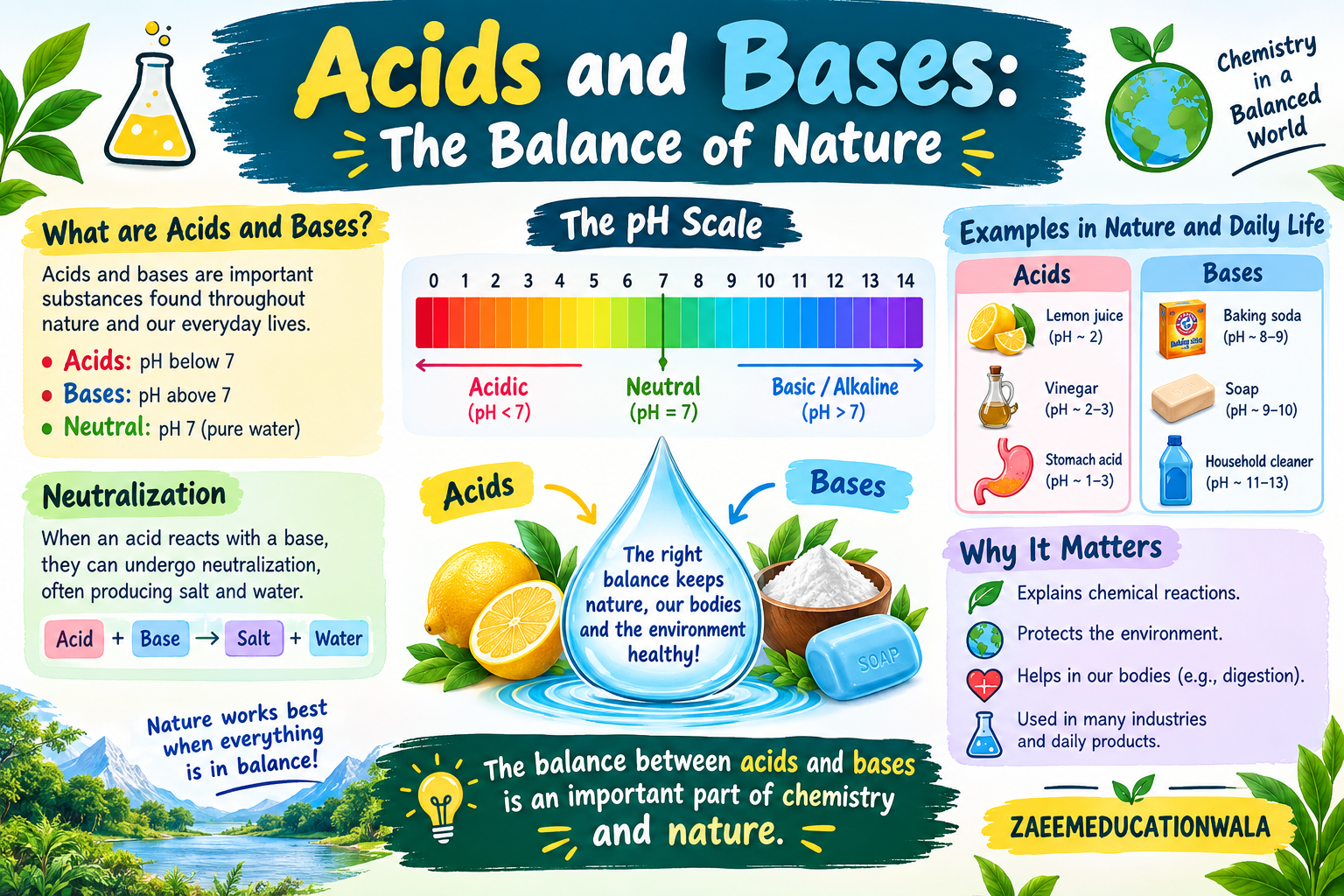
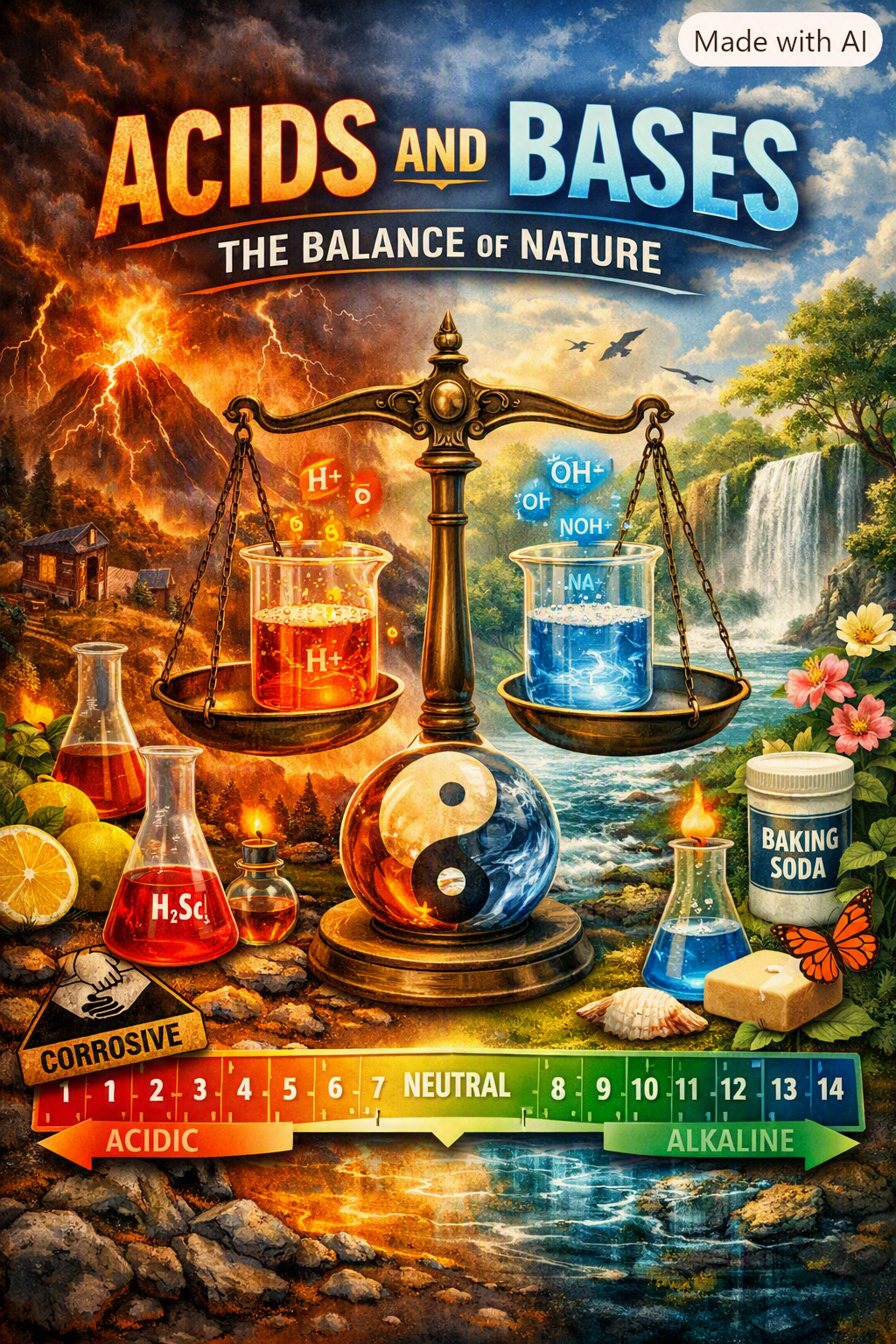
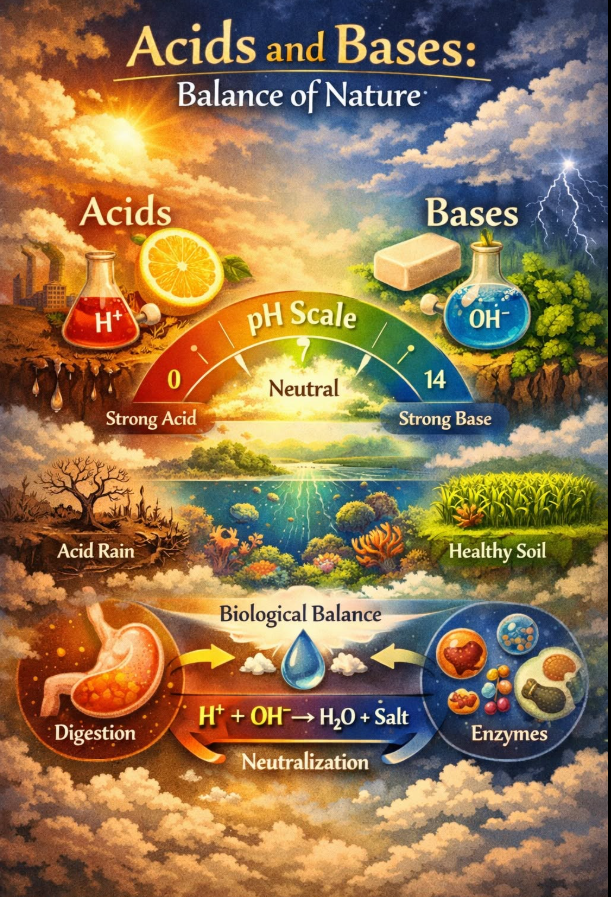
    **Acids and bases** are two important types of substances that play a major role in chemistry and in the natural world. Acids are generally known for their sour properties, while bases often have a bitter taste and slippery feel.
    The strength of an acid or base can be described using the **pH scale**, which ranges from 0 to 14. A pH below 7 is acidic, 7 is neutral, and above 7 is basic.
    Acids and bases are found everywhere—from **lemon juice and vinegar to soap, soil, oceans, and our bodies**. They also interact through a process called **neutralization**, where an acid and a base react to form products such as salt and water.
    Understanding acids and bases helps us appreciate the delicate **chemical balance of nature** and their importance in everyday life.
    #rsisb Roll no.239 Foundation Level **Acids and bases** are two important types of substances that play a major role in chemistry and in the natural world. Acids are generally known for their sour properties, while bases often have a bitter taste and slippery feel. The strength of an acid or base can be described using the **pH scale**, which ranges from 0 to 14. A pH below 7 is acidic, 7 is neutral, and above 7 is basic. Acids and bases are found everywhere—from **lemon juice and vinegar to soap, soil, oceans, and our bodies**. They also interact through a process called **neutralization**, where an acid and a base react to form products such as salt and water. Understanding acids and bases helps us appreciate the delicate **chemical balance of nature** and their importance in everyday life.
    0 Commentarios 0 Acciones 566 Views
  • To neutralize one human’s carbon footprint, we need to calculate how much carbon dioxide (CO₂) trees absorb.

    1. Average Human CO₂ Emissions Per Year

    Based on global averages:
    • Low-emission country (Pakistan): ~1 ton CO₂ per year
    • Medium-emission country (China): ~9 tons CO₂ per year
    • High-emission country (USA): ~14 tons CO₂ per year

    2. CO₂ Absorption by Trees
    • A mature tree absorbs 22 kg (~48 lbs) of CO₂ per year on average.
    • This varies by species, location, and growth conditions.

    3. Number of Trees Needed to Offset CO₂

    To offset one person’s annual emissions, we need:

    Country Annual CO₂ (tons) Trees Needed per Year
    USA 14 ~636 trees
    China 9 ~410 trees
    Pakistan 1 ~45 trees

    4. Lifetime Carbon Neutralization
    • If a person lives 70 years, their total emissions are:
    • USA: ~980 tons CO₂ → ~44,500 trees
    • China: ~630 tons CO₂ → ~28,600 trees
    • Pakistan: ~70 tons CO₂ → ~3,200 trees

    Conclusion

    To neutralize one person’s carbon footprint, we need ~45 trees per year in Pakistan, ~400 trees per year in China, and ~600 trees per year in the USA. However, this assumes each tree survives and reaches maturity, which may not always happen.

    Would you like suggestions on the best tree species for carbon sequestration?
    To neutralize one human’s carbon footprint, we need to calculate how much carbon dioxide (CO₂) trees absorb. 1. Average Human CO₂ Emissions Per Year Based on global averages: • Low-emission country (Pakistan): ~1 ton CO₂ per year • Medium-emission country (China): ~9 tons CO₂ per year • High-emission country (USA): ~14 tons CO₂ per year 2. CO₂ Absorption by Trees • A mature tree absorbs 22 kg (~48 lbs) of CO₂ per year on average. • This varies by species, location, and growth conditions. 3. Number of Trees Needed to Offset CO₂ To offset one person’s annual emissions, we need: Country Annual CO₂ (tons) Trees Needed per Year USA 14 ~636 trees China 9 ~410 trees Pakistan 1 ~45 trees 4. Lifetime Carbon Neutralization • If a person lives 70 years, their total emissions are: • USA: ~980 tons CO₂ → ~44,500 trees • China: ~630 tons CO₂ → ~28,600 trees • Pakistan: ~70 tons CO₂ → ~3,200 trees Conclusion To neutralize one person’s carbon footprint, we need ~45 trees per year in Pakistan, ~400 trees per year in China, and ~600 trees per year in the USA. However, this assumes each tree survives and reaches maturity, which may not always happen. Would you like suggestions on the best tree species for carbon sequestration?
    0 Commentarios 0 Acciones 159 Views
  • Carbon Neutralization Business Model for Thatta, Pakistan

    Your business can offer a subscription-based tree-planting and maintenance service to individuals, businesses, and organizations looking to offset their carbon footprint. Here’s a structured plan:

    1. Business Model

    You will offer carbon neutralization services by planting and maintaining trees for customers. The business will generate revenue through subscriptions, one-time payments, and corporate partnerships.

    Service Offerings

    Package CO₂ Offset Trees Planted Target Customers
    Personal Carbon Offset (Small) 1 ton CO₂/year 50 trees Individuals in Pakistan
    Personal Carbon Offset (Medium) 5 tons CO₂/year 250 trees Climate-conscious individuals
    Personal Carbon Offset (Large) 10 tons CO₂/year 500 trees High-net-worth individuals
    Corporate Carbon Offset (Starter) 50 tons CO₂/year 2,500 trees Small businesses
    Corporate Carbon Offset (Growth) 100 tons CO₂/year 5,000 trees Medium businesses
    Corporate Carbon Offset (Enterprise) 1,000 tons CO₂/year 50,000 trees Large corporations

    2. Pricing Model

    The price per tree should include planting, maintenance, and monitoring costs. Estimated pricing:

    Package Trees Planted Annual Subscription Price (USD) Price Per Tree (USD)
    Personal (Small) 50 trees $50 $1.00
    Personal (Medium) 250 trees $200 $0.80
    Personal (Large) 500 trees $350 $0.70
    Corporate (Starter) 2,500 trees $1,500 $0.60
    Corporate (Growth) 5,000 trees $2,500 $0.50
    Corporate (Enterprise) 50,000 trees $20,000 $0.40

    3. Revenue Potential
    • If you secure 500 individual subscribers at $100/year → $50,000/year revenue.
    • If 50 businesses subscribe to a $2,500/year plan → $125,000/year revenue.
    • Potential total revenue: $175,000+ per year.

    4. Key Differentiators

    Transparency & Tracking
    • Offer a web portal or app where customers can track their trees via GPS and photos.

    Sponsorship & Branding
    • Allow corporate clients to brand their trees, linking their CSR (Corporate Social Responsibility) goals.

    Government & NGO Partnerships
    • Work with local and international organizations to get subsidies or additional funding.

    Carbon Credit Certification
    • Register trees with carbon offset organizations to sell carbon credits.

    5. Implementation Plan

    Phase 1 (0-3 Months)

    Secure land for planting (e.g., lease/buy in Thatta).
    Hire a local tree-planting team.
    Develop a website & payment system.
    Start a pilot program with a few hundred trees.

    Phase 2 (4-6 Months)

    Launch marketing campaign (targeting eco-conscious individuals & businesses).
    Develop corporate partnerships for bulk tree-planting.
    Offer lifetime maintenance packages for high-value customers.

    Phase 3 (6-12 Months)

    Scale to 10,000+ trees planted.
    Register for carbon credit certification.
    Explore international clients & funding opportunities.

    6. Marketing Strategy
    Social Media & Influencer Partnerships: Engage climate activists & influencers.
    Corporate CSR Programs: Partner with businesses for tax benefits & branding.
    Public Relations & Media: Get featured in climate action news.
    Storytelling & Impact Reports: Show real-time progress of planted trees.

    7. Expansion Opportunities

    E-commerce Integration: Sell tree-planting services as a gift option.
    Carbon Credit Marketplace: Sell CO₂ offsets to companies in carbon-trading schemes.
    Eco-Tourism: Offer eco-travel experiences where people visit their planted trees.

    Conclusion

    This business can be profitable and impactful while helping individuals and businesses meet their carbon neutrality goals. By leveraging technology, corporate partnerships, and government support, you can scale it into a major climate action initiative.

    Would you like help setting up a website & marketing strategy for this initiative?
    Carbon Neutralization Business Model for Thatta, Pakistan Your business can offer a subscription-based tree-planting and maintenance service to individuals, businesses, and organizations looking to offset their carbon footprint. Here’s a structured plan: 1. Business Model You will offer carbon neutralization services by planting and maintaining trees for customers. The business will generate revenue through subscriptions, one-time payments, and corporate partnerships. Service Offerings Package CO₂ Offset Trees Planted Target Customers Personal Carbon Offset (Small) 1 ton CO₂/year 50 trees Individuals in Pakistan Personal Carbon Offset (Medium) 5 tons CO₂/year 250 trees Climate-conscious individuals Personal Carbon Offset (Large) 10 tons CO₂/year 500 trees High-net-worth individuals Corporate Carbon Offset (Starter) 50 tons CO₂/year 2,500 trees Small businesses Corporate Carbon Offset (Growth) 100 tons CO₂/year 5,000 trees Medium businesses Corporate Carbon Offset (Enterprise) 1,000 tons CO₂/year 50,000 trees Large corporations 2. Pricing Model The price per tree should include planting, maintenance, and monitoring costs. Estimated pricing: Package Trees Planted Annual Subscription Price (USD) Price Per Tree (USD) Personal (Small) 50 trees $50 $1.00 Personal (Medium) 250 trees $200 $0.80 Personal (Large) 500 trees $350 $0.70 Corporate (Starter) 2,500 trees $1,500 $0.60 Corporate (Growth) 5,000 trees $2,500 $0.50 Corporate (Enterprise) 50,000 trees $20,000 $0.40 3. Revenue Potential • If you secure 500 individual subscribers at $100/year → $50,000/year revenue. • If 50 businesses subscribe to a $2,500/year plan → $125,000/year revenue. • Potential total revenue: $175,000+ per year. 4. Key Differentiators ✅ Transparency & Tracking • Offer a web portal or app where customers can track their trees via GPS and photos. ✅ Sponsorship & Branding • Allow corporate clients to brand their trees, linking their CSR (Corporate Social Responsibility) goals. ✅ Government & NGO Partnerships • Work with local and international organizations to get subsidies or additional funding. ✅ Carbon Credit Certification • Register trees with carbon offset organizations to sell carbon credits. 5. Implementation Plan Phase 1 (0-3 Months) ✔️ Secure land for planting (e.g., lease/buy in Thatta). ✔️ Hire a local tree-planting team. ✔️ Develop a website & payment system. ✔️ Start a pilot program with a few hundred trees. Phase 2 (4-6 Months) ✔️ Launch marketing campaign (targeting eco-conscious individuals & businesses). ✔️ Develop corporate partnerships for bulk tree-planting. ✔️ Offer lifetime maintenance packages for high-value customers. Phase 3 (6-12 Months) ✔️ Scale to 10,000+ trees planted. ✔️ Register for carbon credit certification. ✔️ Explore international clients & funding opportunities. 6. Marketing Strategy • 🌱 Social Media & Influencer Partnerships: Engage climate activists & influencers. • 🌎 Corporate CSR Programs: Partner with businesses for tax benefits & branding. • 📢 Public Relations & Media: Get featured in climate action news. • 🎥 Storytelling & Impact Reports: Show real-time progress of planted trees. 7. Expansion Opportunities 📌 E-commerce Integration: Sell tree-planting services as a gift option. 📌 Carbon Credit Marketplace: Sell CO₂ offsets to companies in carbon-trading schemes. 📌 Eco-Tourism: Offer eco-travel experiences where people visit their planted trees. Conclusion This business can be profitable and impactful while helping individuals and businesses meet their carbon neutrality goals. By leveraging technology, corporate partnerships, and government support, you can scale it into a major climate action initiative. Would you like help setting up a website & marketing strategy for this initiative?
    0 Commentarios 0 Acciones 413 Views