• #rsisb
    Roll no 248
    Foundation level
    song no 18
    ### Cellular Symphony: The Intricate Dance of Life’s Building Blocks

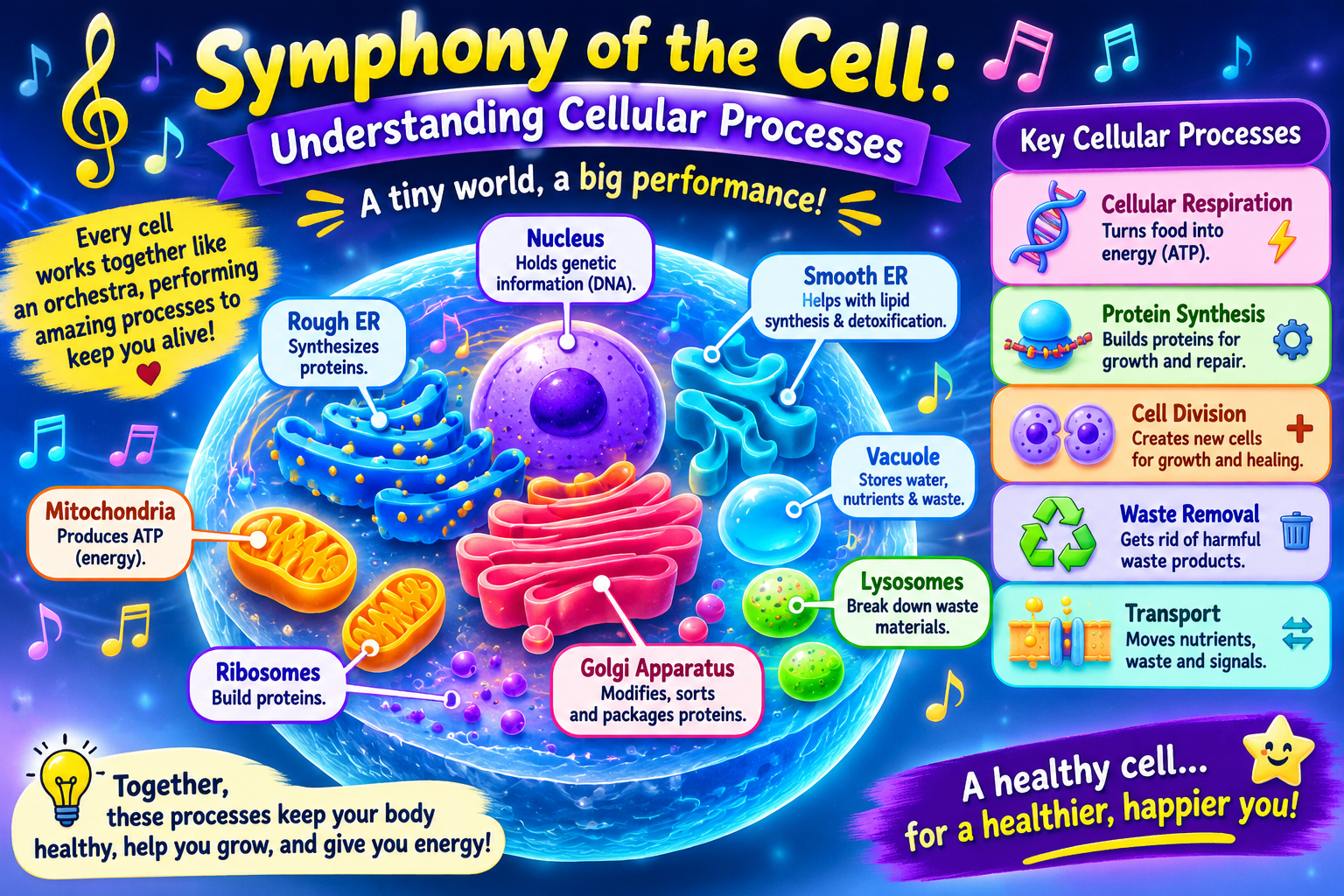
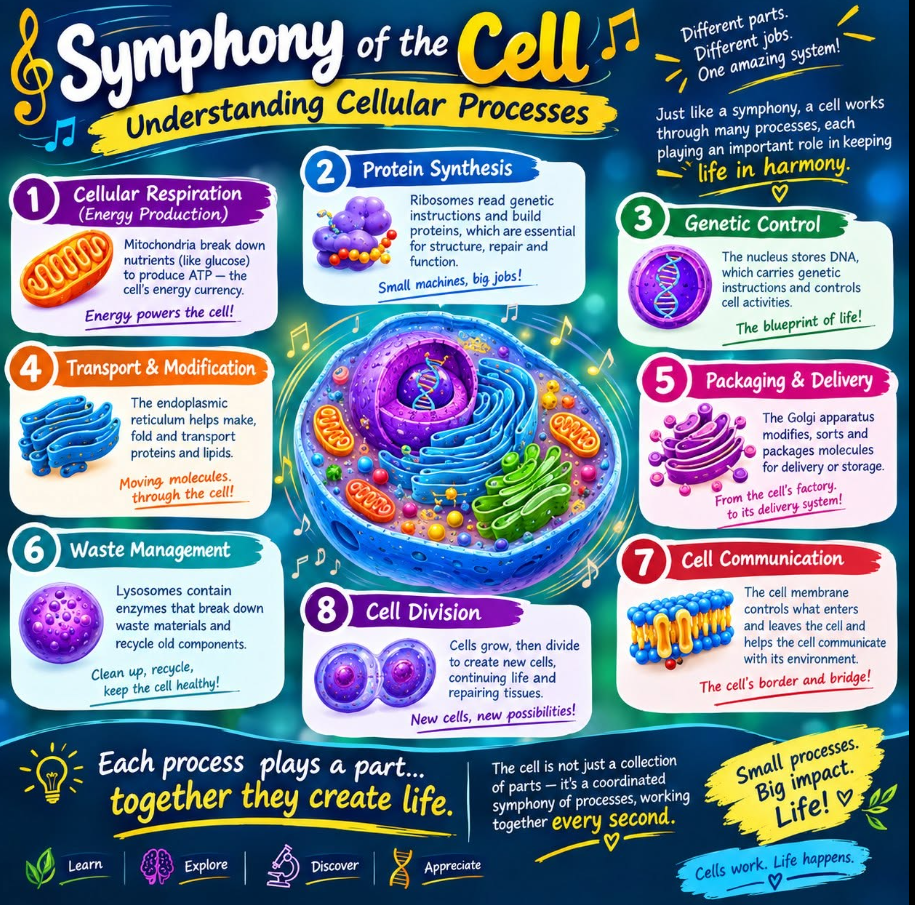
    Step inside the incredible world of **cells**, the tiny building blocks that make life possible! From the nucleus storing genetic information to mitochondria producing energy , every part of a cell has an important role to play.

    Just like musicians in a symphony orchestra , cellular components work together in harmony to keep organisms alive, growing, and functioning. Explore how cells communicate, produce energy, build proteins, and maintain the delicate balance of life.

    **Discover. Learn. Explore. Understand life at its smallest scale!**

    #CellularSymphony #CellBiology #Cells #Biology #Science #LifeScience #MicroscopicWorld #CellStructure #DNA #Mitochondria #Nucleus #BiologyStudents #ScienceLearning #STEM #ExploreScience #LearnBiology #BuildingBlocksOfLife #ScienceEducation
    #rsisb Roll no 248 Foundation level song no 18 ### 🧬 Cellular Symphony: The Intricate Dance of Life’s Building Blocks 🎶🔬 Step inside the incredible world of **cells**, the tiny building blocks that make life possible! 🌱🧫 From the nucleus storing genetic information 🧬 to mitochondria producing energy ⚡, every part of a cell has an important role to play. Just like musicians in a symphony orchestra 🎻🎼, cellular components work together in harmony to keep organisms alive, growing, and functioning. Explore how cells communicate, produce energy, build proteins, and maintain the delicate balance of life. 🌍✨ 🔬 **Discover. Learn. Explore. Understand life at its smallest scale!** 🧠🌟 #CellularSymphony #CellBiology #Cells #Biology #Science #LifeScience #MicroscopicWorld #CellStructure #DNA #Mitochondria #Nucleus #BiologyStudents #ScienceLearning #STEM #ExploreScience #LearnBiology #BuildingBlocksOfLife #ScienceEducation 🧬🔬🧫🌱⚡🎶🌍✨
    0 تبصرے 0 شیئرز 301 ویوز 7
  • accl portal
    day 41
    week 3
    topic
    The Mystery of Life: Exploring the World of Cells
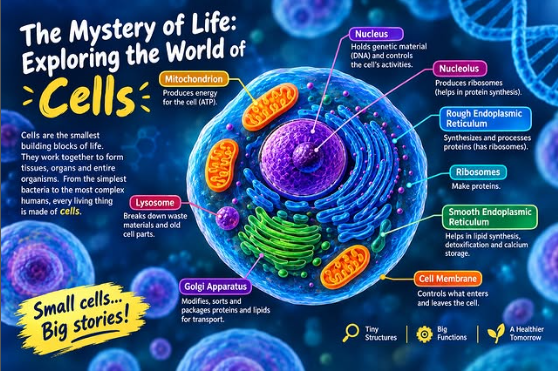
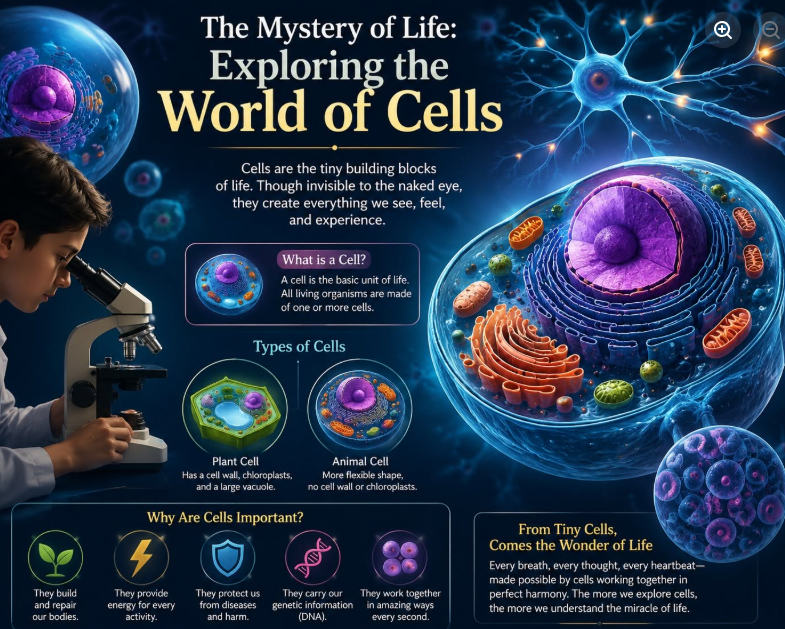
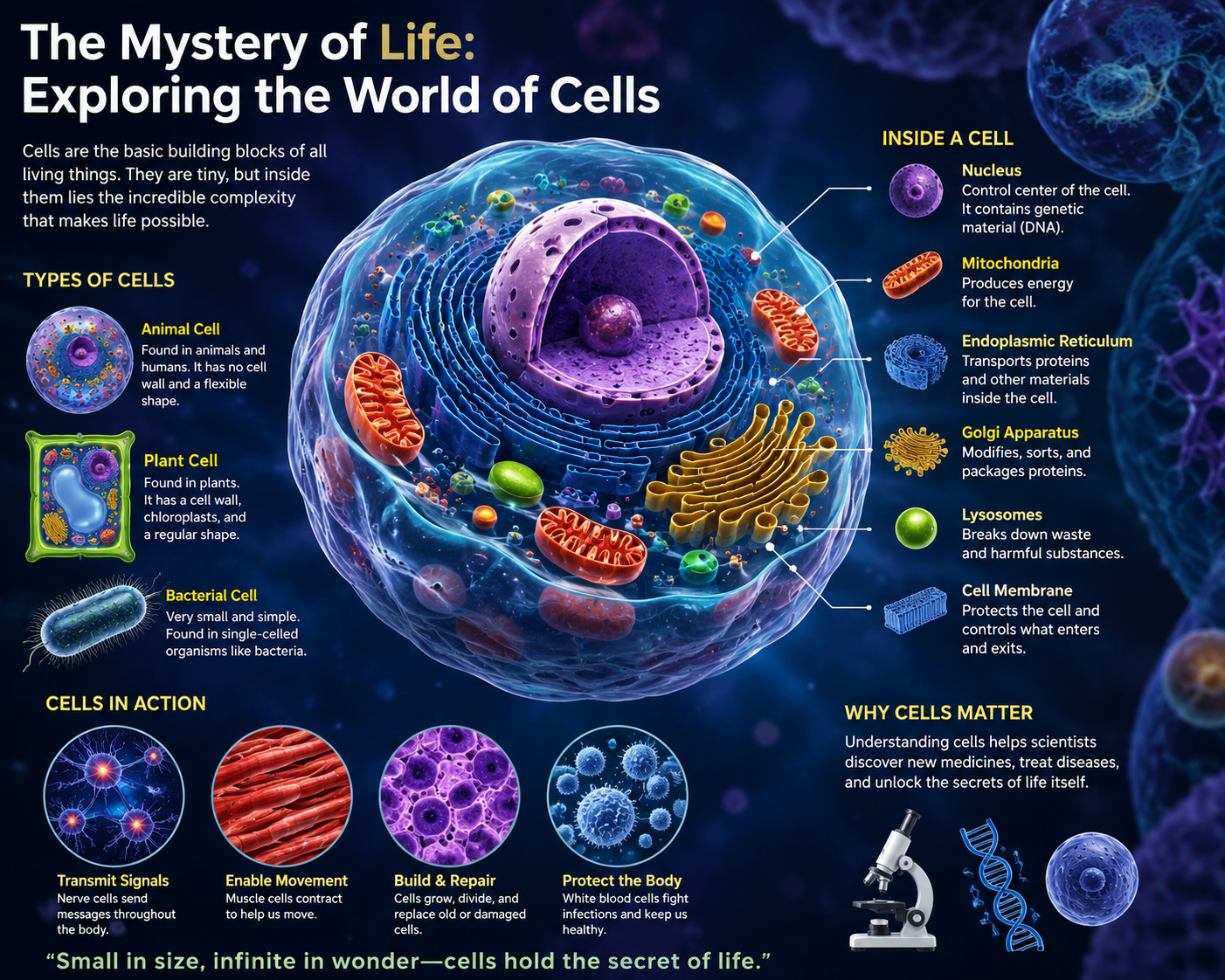
    Cells are the tiny building blocks of life. Every living thing—from humans and animals to plants and microorganisms—is made of cells. Although most cells are too small to see with our eyes, they perform amazing jobs every second.
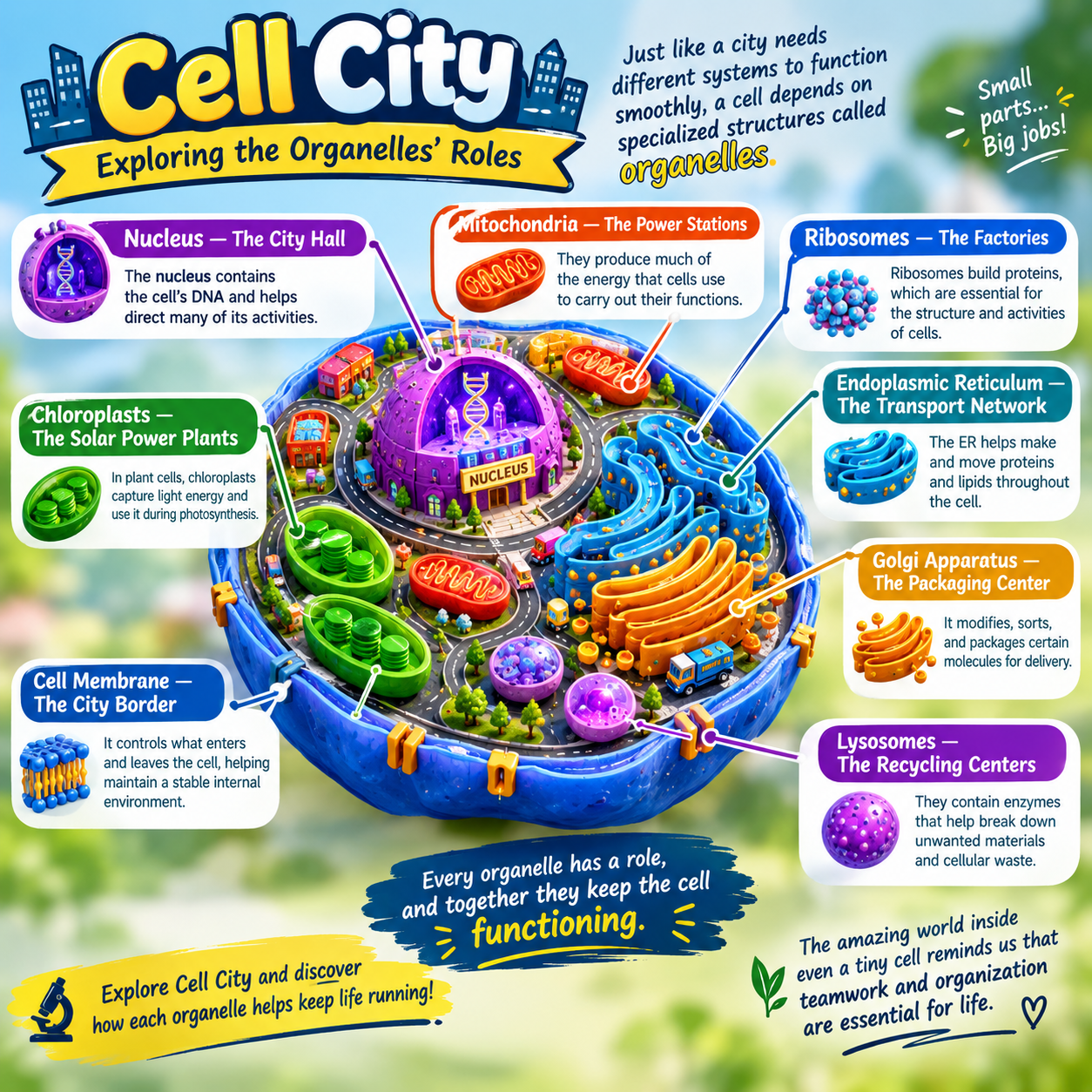
    A cell has different parts, and each part has a special role. The nucleus controls many activities of the cell, while the cell membrane protects the cell and controls what enters and leaves. Mitochondria provide energy, helping the cell carry out its activities.
    Plant cells have some special structures that animal cells do not have. For example, chloroplasts help plants make food using sunlight. Plant cells also have a strong cell wall that gives them support.
    The most fascinating thing about cells is that they work together. Groups of similar cells form tissues, tissues form organs, and organs work together to make a complete living organism.
    So, even though cells are incredibly small, they hold the secret to how life grows, works, and survives. The world of cells is truly a tiny universe full of fascinating mysteries!
    Tania Khan Mentorship Wali
    Rehan School Korangi Campus
    Mohsin Rathore Seo Wala
    Shazia EducationWali
    accl portal day 41 week 3 topic The Mystery of Life: Exploring the World of Cells Cells are the tiny building blocks of life. Every living thing—from humans and animals to plants and microorganisms—is made of cells. Although most cells are too small to see with our eyes, they perform amazing jobs every second. A cell has different parts, and each part has a special role. The nucleus controls many activities of the cell, while the cell membrane protects the cell and controls what enters and leaves. Mitochondria provide energy, helping the cell carry out its activities. Plant cells have some special structures that animal cells do not have. For example, chloroplasts help plants make food using sunlight. Plant cells also have a strong cell wall that gives them support. The most fascinating thing about cells is that they work together. Groups of similar cells form tissues, tissues form organs, and organs work together to make a complete living organism. So, even though cells are incredibly small, they hold the secret to how life grows, works, and survives. The world of cells is truly a tiny universe full of fascinating mysteries! Tania Khan Mentorship Wali Rehan School Korangi Campus Mohsin Rathore Seo Wala Shazia EducationWali
    0 تبصرے 0 شیئرز 282 ویوز
  • #rsisb
    Roll No.269
    Foundation Level
    Story Post No.6


    # The Mystery of Life: Exploring the World of Cells

    Have you ever wondered what makes your body grow, breathe, move, and stay alive? The answer lies in one of the smallest and most fascinating building blocks of life—the **cell!**

    In this video, **“The Mystery of Life: Exploring the World of Cells,”** we take an exciting journey into the microscopic world of cells and discover how these tiny structures make life possible.

    We’ll explore what cells are, how they work, and why they are often called the **basic units of life**. From the protective cell membrane to the nucleus that contains genetic information, each part of a cell has an important job.

    You’ll also learn about different types of cells, including **plant cells and animal cells **, and discover how their structures help them perform different functions. We’ll take a closer look at fascinating cell organelles such as the **nucleus, mitochondria, cytoplasm, cell membrane, chloroplasts, and vacuoles**.

    Cells may be incredibly small, but they are responsible for some of the biggest mysteries of life. They work together to form tissues, organs, and entire living organisms. Understanding cells helps us understand ourselves, nature, animals, plants, and the amazing diversity of life on Earth.

    This video is perfect for students, science lovers, curious minds, and anyone who wants to learn more about the incredible world hidden beyond what our eyes can see.

    So get ready to zoom in, explore, and discover the amazing secrets of life at the microscopic level!

    **Watch the video, learn something new, and join us on this fascinating journey into the world of cells!**

    Like the video
    Share your thoughts in the comments
    Subscribe for more interesting educational content
    Share this video with your friends and classmates

    #MysteryOfLife #Cells #CellBiology #Science #Biology #HumanBody #PlantCells #AnimalCells #ScienceForKids #ScienceEducation #BiologyFacts #MicroscopicWorld #Learning #Education #ScienceLovers #AmazingScience #DidYouKnow #ExploreScience #Knowledge #StudentLearning
    #rsisb Roll No.269 Foundation Level Story Post No.6 # The Mystery of Life: Exploring the World of Cells 🔬🧬✨ Have you ever wondered what makes your body grow, breathe, move, and stay alive? 🤔 The answer lies in one of the smallest and most fascinating building blocks of life—the **cell!** 🔬✨ In this video, **“The Mystery of Life: Exploring the World of Cells,”** we take an exciting journey into the microscopic world of cells and discover how these tiny structures make life possible. 🌱🐾🧑‍🔬 We’ll explore what cells are, how they work, and why they are often called the **basic units of life**. From the protective cell membrane to the nucleus that contains genetic information, each part of a cell has an important job. 🧬🔍 You’ll also learn about different types of cells, including **plant cells 🌿 and animal cells 🐾**, and discover how their structures help them perform different functions. We’ll take a closer look at fascinating cell organelles such as the **nucleus, mitochondria, cytoplasm, cell membrane, chloroplasts, and vacuoles**. ⚡🌱 Cells may be incredibly small, but they are responsible for some of the biggest mysteries of life. They work together to form tissues, organs, and entire living organisms. Understanding cells helps us understand ourselves, nature, animals, plants, and the amazing diversity of life on Earth. 🌍❤️ This video is perfect for students, science lovers, curious minds, and anyone who wants to learn more about the incredible world hidden beyond what our eyes can see. 📚🔬 So get ready to zoom in, explore, and discover the amazing secrets of life at the microscopic level! 🚀🧬🔎 ✨ **Watch the video, learn something new, and join us on this fascinating journey into the world of cells!** 👍 Like the video 💬 Share your thoughts in the comments 🔔 Subscribe for more interesting educational content 📢 Share this video with your friends and classmates #MysteryOfLife #Cells #CellBiology #Science #Biology #HumanBody #PlantCells #AnimalCells #ScienceForKids #ScienceEducation #BiologyFacts #MicroscopicWorld #Learning #Education #ScienceLovers #AmazingScience #DidYouKnow #ExploreScience #Knowledge #StudentLearning 🔬🧬🌱✨
    0 تبصرے 0 شیئرز 2180 ویوز
  • #rsisb Roll No.240 Song No.8 Foundation Level # **Cellular Symphony: The Intricate Dance of Life’s Building Blocks — Description** Step into the fascinating microscopic world of **cells**, the tiny building blocks that make life possible. 🧬🔬 In this educational journey, **“Cellular Symphony: The Intricate Dance of Life’s Building Blocks”** explores how cells work together like instruments in a beautiful symphony to create, maintain, and support life. Discover the important roles of different parts of a cell, including the **nucleus, DNA, mitochondria, ribosomes, cell membrane, and cytoplasm**. Learn how the nucleus controls many cellular activities, how DNA stores the instructions needed for life, and how mitochondria help provide energy for the cell. We also explore how proteins are made and how cells communicate, grow, repair themselves, and work together to form tissues and organs. From the smallest microscopic cell to the complex human body, every part has an important role. The incredible coordination between cellular structures shows us how organized and amazing the natural world can be. This video is designed to make **cell biology simple, interesting, and easy to understand** for students, science lovers, and anyone curious about how life works at its most basic level. 🌱🧫✨ Join us on this amazing scientific journey and discover the **hidden symphony inside every living cell!** **#CellularSymphony #CellBiology #Cells #DNA #Mitochondria #Biology #Science #LifeScience #HumanBody #ScienceEducation #BiologyForStudents #EducationalVideo #ScienceForKids #LearnBiology #AmazingScience** Rehan School Islamabad Campus Asma Shaheen EducationWali Irum Asim Saima Happinesswali https://www.facebook.com/share/v/194hR29gJa/
    WWW.FACEBOOK.COM
    Facebook
    #rsisb Roll No.240 Song No.8 Foundation Level # **Cellular Symphony: The Intricate Dance of Life’s Building Blocks — Description** Step into the fascinating microscopic world of **cells**, the tiny...
    0 تبصرے 0 شیئرز 2256 ویوز
  • #rsisb
    Roll No.247
    Stroy post
    Foundation Level

    # The Mystery of Life: Exploring the World of Cells

    Welcome to an incredible journey into the **hidden world of cells**—the tiny building blocks that make up every living thing on Earth! From the smallest bacteria to the largest blue whale, every organism is made of cells that work together in amazing ways.

    In this video, we'll explore the fascinating science behind cells, discover the differences between **plant and animal cells**, learn about important cell organelles such as the **nucleus , mitochondria , cell membrane , cytoplasm , and chloroplasts **, and understand how these microscopic structures keep living organisms alive.

    Have you ever wondered:
    What is a cell?
    Why are cells called the building blocks of life?
    How do cells produce energy?
    What makes plant and animal cells different?
    How do trillions of cells work together to create the human body?

    This educational video explains these concepts in a simple, engaging, and easy-to-understand way, making it perfect for:
    Students
    Teachers
    Parents
    Science lovers
    Anyone curious about biology!

    Whether you're preparing for exams, improving your biology knowledge, or simply exploring the wonders of science, this video will help you understand the amazing microscopic world that powers all life.

    **What you'll learn:**
    What cells are and why they are important
    Cell theory explained simply
    Parts and functions of a cell
    Plant vs. animal cells
    Prokaryotic and eukaryotic cells
    Cell division and growth
    The importance of cells in living organisms
    Fun facts about cells and biology

    Every heartbeat , every breath , every thought , and every movement begins with the incredible work of tiny cells. These microscopic structures are constantly working to keep us alive, healthy, and growing. Understanding cells helps us understand life itself!

    If you enjoyed this video, don't forget to:
    Like
    Comment
    Share
    Subscribe for more exciting science, biology, and educational videos!

    Thank you for watching and exploring the amazing world of cells with us! Keep learning, stay curious, and never stop discovering!

    #TheMysteryOfLife #Cells #Biology #Science #CellBiology #PlantCell #AnimalCell #HumanBody #Microscope #Education #Learning #STEM #LifeScience #CellTheory #BiologyClass #ScienceEducation #SchoolLearning #Knowledge #ScienceFacts #ExploreScience #AmazingScience #EducationalVideo #Students #Teachers #CuriousMinds #ScienceLovers #Nature #Discovery #LearningIsFun #BiologyFacts
    #rsisb Roll No.247 Stroy post Foundation Level # 🔬 The Mystery of Life: Exploring the World of Cells 🧬✨ Welcome to an incredible journey into the **hidden world of cells**—the tiny building blocks that make up every living thing on Earth! 🌍🦠 From the smallest bacteria to the largest blue whale, every organism is made of cells that work together in amazing ways. 💚 In this video, we'll explore the fascinating science behind cells, discover the differences between **plant 🌿 and animal 🐾 cells**, learn about important cell organelles such as the **nucleus 🧠, mitochondria ⚡, cell membrane 🛡️, cytoplasm 💧, and chloroplasts 🌞**, and understand how these microscopic structures keep living organisms alive. Have you ever wondered: 🔹 What is a cell? 🤔 🔹 Why are cells called the building blocks of life? 🧩 🔹 How do cells produce energy? ⚡ 🔹 What makes plant and animal cells different? 🌱🐶 🔹 How do trillions of cells work together to create the human body? 👨‍🔬 This educational video explains these concepts in a simple, engaging, and easy-to-understand way, making it perfect for: 🎓 Students 👨‍🏫 Teachers 👨‍👩‍👧 Parents 📚 Science lovers 🔬 Anyone curious about biology! Whether you're preparing for exams, improving your biology knowledge, or simply exploring the wonders of science, this video will help you understand the amazing microscopic world that powers all life. ✨ **What you'll learn:** ✅ What cells are and why they are important ✅ Cell theory explained simply ✅ Parts and functions of a cell ✅ Plant vs. animal cells ✅ Prokaryotic and eukaryotic cells ✅ Cell division and growth ✅ The importance of cells in living organisms ✅ Fun facts about cells and biology 🌟 Every heartbeat ❤️, every breath 🌬️, every thought 💭, and every movement 🚶 begins with the incredible work of tiny cells. These microscopic structures are constantly working to keep us alive, healthy, and growing. Understanding cells helps us understand life itself! 👍 If you enjoyed this video, don't forget to: ❤️ Like 💬 Comment 📢 Share 🔔 Subscribe for more exciting science, biology, and educational videos! Thank you for watching and exploring the amazing world of cells with us! 🌎🧬 Keep learning, stay curious, and never stop discovering! 🚀📖 #TheMysteryOfLife #Cells #Biology #Science #CellBiology #PlantCell #AnimalCell #HumanBody #Microscope #Education #Learning #STEM #LifeScience #CellTheory #BiologyClass #ScienceEducation #SchoolLearning #Knowledge #ScienceFacts #ExploreScience #AmazingScience #EducationalVideo #Students #Teachers #CuriousMinds #ScienceLovers #Nature #Discovery #LearningIsFun #BiologyFacts
    0 تبصرے 0 شیئرز 3377 ویوز
  • #rsisb
    Roll No.221
    Song No.17
    Foundation Level


    **Cellular Symphony: The Intricate Dance of Life’s Building Blocks**

    Discover the incredible world of **cells**, the fundamental building blocks of all living organisms, through this inspiring educational song! From the nucleus and DNA to mitochondria, ribosomes, and the cell membrane, this song takes you on a fascinating journey into the microscopic world where life begins. Learn how cells work together to create tissues, organs, and entire living beings while celebrating the beauty, complexity, and harmony of biology.

    Perfect for **students, teachers, biology enthusiasts, and lifelong learners**, this song makes science engaging, memorable, and fun. Whether you're studying cell biology, preparing for exams, or simply curious about the wonders of life, let this musical journey inspire your love for science and discovery.

    **Learn • Explore • Discover • Be Inspired**

    #CellularSymphony #CellBiology #BiologySong #ScienceEducation #STEM #LifeSciences #DNA #Cells #EducationalMusic #LearningThroughMusic #ScienceForStudents #BiologyEducation #MicroscopicWorld #Nature #Knowledge #Inspiration #ScienceLovers
    Asma Shaheen EducationWali
    Saima Happinesswali
    Irum Asim

    #rsisb Roll No.221 Song No.17 Foundation Level 🧬🎶 **Cellular Symphony: The Intricate Dance of Life’s Building Blocks** 🌍✨ Discover the incredible world of **cells**, the fundamental building blocks of all living organisms, through this inspiring educational song! 🔬💚 From the nucleus and DNA to mitochondria, ribosomes, and the cell membrane, this song takes you on a fascinating journey into the microscopic world where life begins. Learn how cells work together to create tissues, organs, and entire living beings while celebrating the beauty, complexity, and harmony of biology. Perfect for **students, teachers, biology enthusiasts, and lifelong learners**, this song makes science engaging, memorable, and fun. Whether you're studying cell biology, preparing for exams, or simply curious about the wonders of life, let this musical journey inspire your love for science and discovery. 🌱🧪 ✨ **Learn • Explore • Discover • Be Inspired** #CellularSymphony #CellBiology #BiologySong #ScienceEducation #STEM #LifeSciences #DNA #Cells #EducationalMusic #LearningThroughMusic #ScienceForStudents #BiologyEducation #MicroscopicWorld #Nature #Knowledge #Inspiration #ScienceLovers 🧬🎵🌍 Asma Shaheen EducationWali Saima Happinesswali Irum Asim
    0 تبصرے 0 شیئرز 6933 ویوز 7
  • The #striatum is the input module to the basal ganglia, a neuronal circuit necessary for voluntary movement control (Hikosaka et al., 2000). The striatum is composed of three nuclei: caudate, putamen, and ventral striatum. The latter contains the nucleus accumbens
    The #striatum is the input module to the basal ganglia, a neuronal circuit necessary for voluntary movement control (Hikosaka et al., 2000). The striatum is composed of three nuclei: caudate, putamen, and ventral striatum. The latter contains the nucleus accumbens
    0 تبصرے 0 شیئرز 54 ویوز
  • The Theosophical Society was founded in New York City on November 17, 1875, by Helena Petrovna Blavatsky, Colonel Henry Steel Olcott, and William Quan Judge. This organization was established with the primary objectives of:

    1. Forming a nucleus of the universal brotherhood of humanity without distinction of race, creed, sex, caste, or color.
    2. Encouraging the comparative study of religion, philosophy, and science.
    3. Investigating the unexplained laws of nature and the powers latent in humans.

    ### Key Founders:

    - **Helena Petrovna Blavatsky (1831-1891):** A Russian occultist, philosopher, and author who is often regarded as the primary founder of the Theosophical Society. She is best known for her works "Isis Unveiled" and "The Secret Doctrine," which laid the foundation for theosophical thought.

    - **Henry Steel Olcott (1832-1907):** An American military officer, lawyer, and journalist who co-founded the society and served as its first president. Olcott was instrumental in organizing and promoting the societys activities and spreading its teachings.

    - **William Quan Judge (1851-1896):** An Irish-American lawyer and mystic who played a crucial role in the early development of the society. He worked closely with Blavatsky and Olcott and was a key figure in the spread of theosophy in America.

    ### Development and Spread:

    The society quickly expanded internationally, establishing branches in India, Europe, and other parts of the world. Its teachings, which blend elements of Eastern and Western spiritual traditions, emphasize the unity of all life and the importance of spiritual development.

    For more detailed information, you can refer to the official website of the Theosophical Society or comprehensive historical accounts available in the public domain, such as [Theosophy World](https://www.theosophy.world) and other reputable sources.
    The Theosophical Society was founded in New York City on November 17, 1875, by Helena Petrovna Blavatsky, Colonel Henry Steel Olcott, and William Quan Judge. This organization was established with the primary objectives of: 1. Forming a nucleus of the universal brotherhood of humanity without distinction of race, creed, sex, caste, or color. 2. Encouraging the comparative study of religion, philosophy, and science. 3. Investigating the unexplained laws of nature and the powers latent in humans. ### Key Founders: - **Helena Petrovna Blavatsky (1831-1891):** A Russian occultist, philosopher, and author who is often regarded as the primary founder of the Theosophical Society. She is best known for her works "Isis Unveiled" and "The Secret Doctrine," which laid the foundation for theosophical thought. - **Henry Steel Olcott (1832-1907):** An American military officer, lawyer, and journalist who co-founded the society and served as its first president. Olcott was instrumental in organizing and promoting the society's activities and spreading its teachings. - **William Quan Judge (1851-1896):** An Irish-American lawyer and mystic who played a crucial role in the early development of the society. He worked closely with Blavatsky and Olcott and was a key figure in the spread of theosophy in America. ### Development and Spread: The society quickly expanded internationally, establishing branches in India, Europe, and other parts of the world. Its teachings, which blend elements of Eastern and Western spiritual traditions, emphasize the unity of all life and the importance of spiritual development. For more detailed information, you can refer to the official website of the Theosophical Society or comprehensive historical accounts available in the public domain, such as [Theosophy World](https://www.theosophy.world) and other reputable sources.
    0 تبصرے 0 شیئرز 52 ویوز
  • ** ACCl Task 24 – Day 41: The Mystery of Life: Exploring the World of Cells **

    I have successfully completed my twenty-fourth ACCl task titled **“The Mystery of Life: Exploring the World of Cells”** .
    This task helped me understand how **tiny cells form the foundation of all living things**, revealing the hidden beauty and complexity of life itself .

    Story: The Mystery of Life — Exploring the World of Cells

    Long ago, scientists wondered what made living things alive. Why did a leaf grow, a bird fly, or a person breathe? The answer was hidden in something so small that no one could see it — the cell.

    In the 1600s, a man named Robert Hooke looked through a microscope and saw tiny box-like shapes in a slice of cork. He called them cells, which means “small rooms.” Later, other scientists discovered that every plant, animal, and human is made up of these tiny living units.

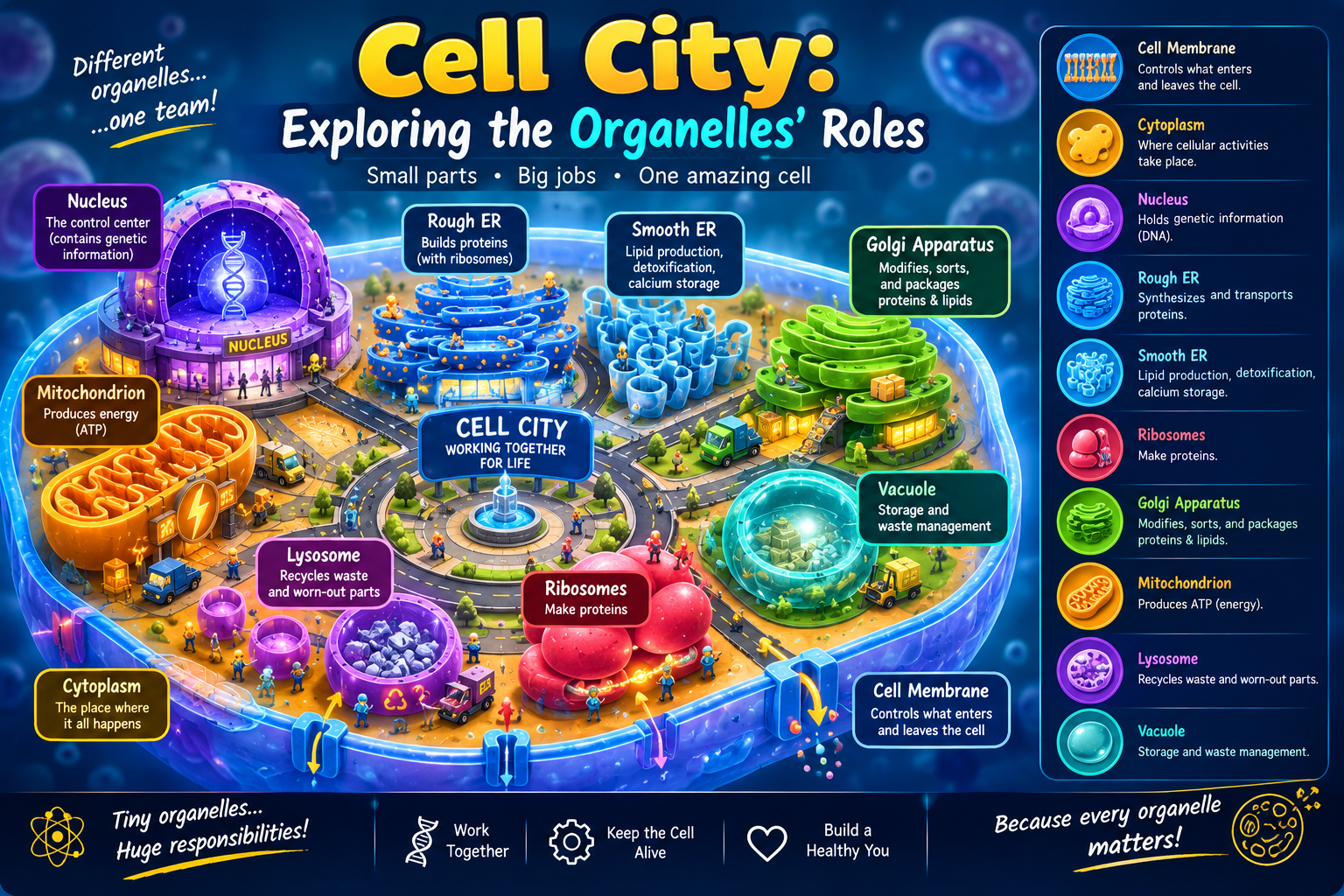
    Cells are like miniature cities. The nucleus acts as the brain, giving orders and storing information. The mitochondria are the power stations, creating the energy needed for life. The cell membrane guards the city walls, letting in what’s good and keeping out what’s harmful.

    Some creatures, like bacteria, are made of just one cell — yet they live, eat, and even reproduce! Others, like humans, have trillions of cells, each doing its special job — skin cells protect, blood cells carry oxygen, and nerve cells send messages faster than lightning.

    The world of cells is a hidden universe inside every living thing. Though we can’t see them with our eyes, they are the building blocks of life, quietly working every second to keep us alive.
    **📘 ACCl Task 24 – Day 41: The Mystery of Life: Exploring the World of Cells 🔬** I have successfully completed my twenty-fourth ACCl task titled **“The Mystery of Life: Exploring the World of Cells”** 🧬. This task helped me understand how **tiny cells form the foundation of all living things**, revealing the hidden beauty and complexity of life itself 🌍✨. Story: The Mystery of Life — Exploring the World of Cells Long ago, scientists wondered what made living things alive. Why did a leaf grow, a bird fly, or a person breathe? The answer was hidden in something so small that no one could see it — the cell. In the 1600s, a man named Robert Hooke looked through a microscope and saw tiny box-like shapes in a slice of cork. He called them cells, which means “small rooms.” Later, other scientists discovered that every plant, animal, and human is made up of these tiny living units. Cells are like miniature cities. The nucleus acts as the brain, giving orders and storing information. The mitochondria are the power stations, creating the energy needed for life. The cell membrane guards the city walls, letting in what’s good and keeping out what’s harmful. Some creatures, like bacteria, are made of just one cell — yet they live, eat, and even reproduce! Others, like humans, have trillions of cells, each doing its special job — skin cells protect, blood cells carry oxygen, and nerve cells send messages faster than lightning. The world of cells is a hidden universe inside every living thing. Though we can’t see them with our eyes, they are the building blocks of life, quietly working every second to keep us alive.
    0 تبصرے 0 شیئرز 550 ویوز
  • Story: The Mystery of Life — Exploring the World of Cells

    ACCL Task — Day 41

    Once upon a time, a curious student named Alina wanted to uncover the mystery of life. One day, her teacher gave her a magical microscope. As soon as she looked through it, she entered a tiny, invisible world — the world of cells!

    She saw busy cells working like a well-organized city. The nucleus was the control center, giving commands. The mitochondria produced energy like power stations. The cell membrane acted as a security gate, allowing only the right things to enter.

    Alina was amazed to learn that every living thing is made up of cells, from the tallest trees to the smallest insects. She realized that even her own body is a world full of millions of tiny workers, keeping her alive and healthy.

    When she came back to the real world, she smiled and whispered, “The mystery of life is inside us.”
    📖 Story: The Mystery of Life — Exploring the World of Cells ACCL Task — Day 41 Once upon a time, a curious student named Alina wanted to uncover the mystery of life. One day, her teacher gave her a magical microscope. As soon as she looked through it, she entered a tiny, invisible world — the world of cells! She saw busy cells working like a well-organized city. The nucleus was the control center, giving commands. The mitochondria produced energy like power stations. The cell membrane acted as a security gate, allowing only the right things to enter. Alina was amazed to learn that every living thing is made up of cells, from the tallest trees to the smallest insects. She realized that even her own body is a world full of millions of tiny workers, keeping her alive and healthy. When she came back to the real world, she smiled and whispered, “The mystery of life is inside us.” 🧠✨🔬
    0 تبصرے 0 شیئرز 545 ویوز
More Results