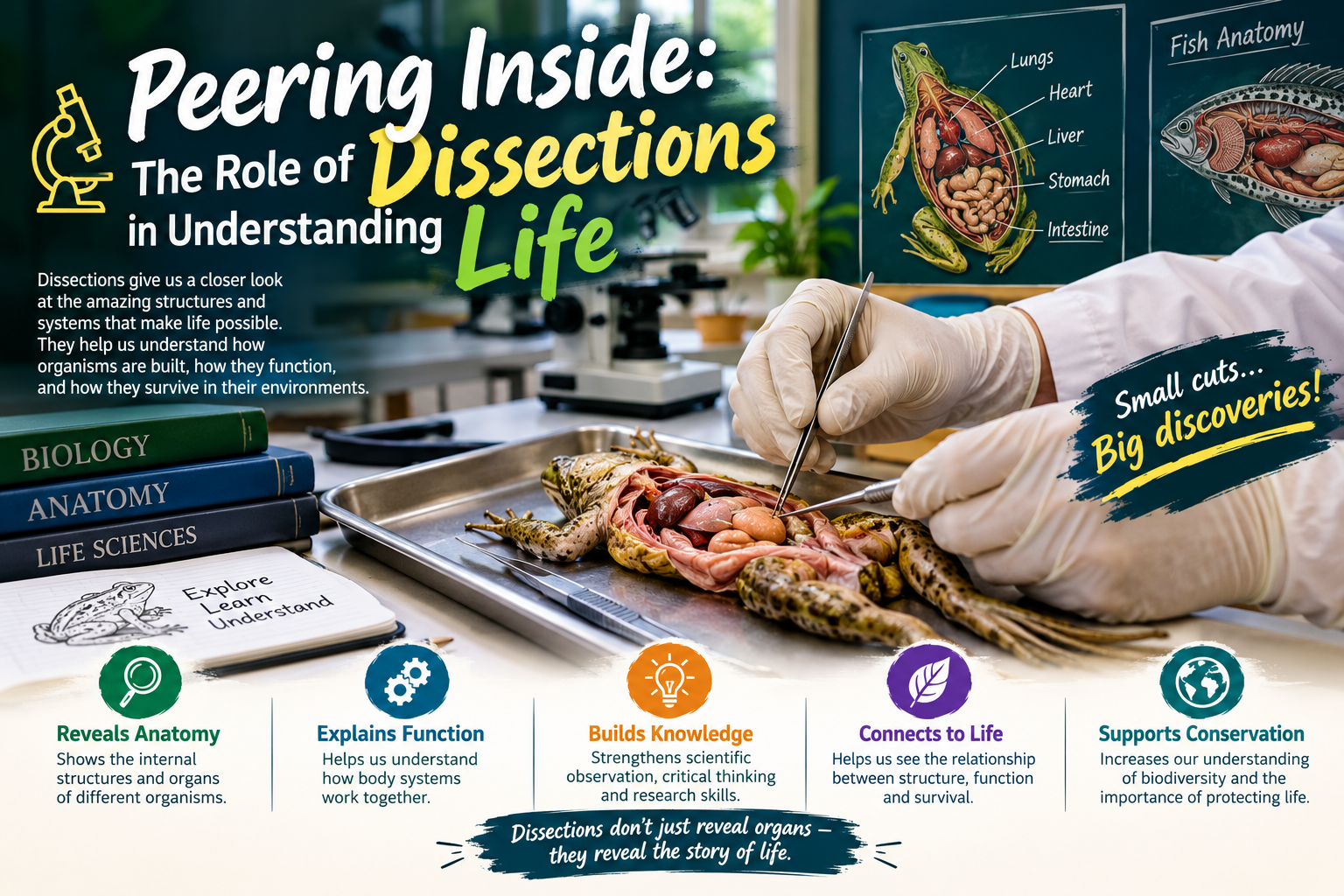
• #rsisb Roll No.240 Song No.25 Foundation level Dissecting Frogs: A Gateway to Human Anatomy explores the role of frog anatomy in biology education and shows how studying animal structures can help students develop a better understanding of anatomy. Frog anatomy provides a useful learning model for exploring the organization of a living body. Through careful observation, students can learn about different organs, body parts, and biological systems, while connecting classroom concepts with practical scientific learning. One of the important goals of anatomy studies is understanding how different body parts work together. By learning about body structures and their functions, students can build a stronger foundation for understanding more complex biological systems, including those found in humans. This topic also introduces the importance of observation, comparison, and scientific thinking. Students can examine similarities and differences between frog and human anatomy and understand that different organisms may have different structures while still sharing some basic biological principles. Practical anatomy work can also teach students important values such as responsibility, careful observation, accurate recording of information, and respect for biological specimens. Such activities should always be conducted with appropriate supervision, ethical consideration, and laboratory safety procedures. The study of frog anatomy can be especially valuable for students interested in biology, medicine, veterinary science, zoology, and health-related subjects. It helps turn scientific ideas into meaningful learning experiences and encourages students to ask questions about how living bodies are organized. 🔬 Learn about animal anatomy 🐸 Explore body structures and biological systems 🧠 Develop observation and scientific thinking skills 📚 Connect practical study with biology lessons 🫀 Build a foundation for understanding human anatomy 🌍 Appreciate the complexity of living organisms Dissecting Frogs: A Gateway to Human Anatomy reminds us that studying biology is more than memorizing names and diagrams. It is about observing, questioning, comparing, and understanding how life is organized. Through responsible scientific study, students can gain knowledge that supports deeper learning in anatomy and the life sciences. #FrogDissection #FrogAnatomy #HumanAnatomy #Biology #Anatomy #ScienceEducation #BiologyLab #LifeScience #AnimalAnatomy #ScientificLearning #StudentLearning #Zoology #HumanBody Rehan School Islamabad Campus Asma Shaheen EducationWali Irum Asim Saima Happinesswali https://www.facebook.com/share/v/1BrWG6PyH1/
    WWW.FACEBOOK.COM
    Facebook
    #rsisb Roll No.240 Song No.25 Foundation level Dissecting Frogs: A Gateway to Human Anatomy explores the role of frog anatomy in biology education and shows how studying animal structures can help...
    0 Σχόλια 0 Μοιράστηκε 1358 Views
  • #rsisb Roll No.240 Song No.24 Foundation Level Learning Through Layers: The Importance of Animal Anatomy Studies explores the fascinating world of animal anatomy and helps us understand how different parts of an animal’s body work together. By studying body structures, students can discover how bones, muscles, organs, tissues, and other systems support movement, growth, feeding, breathing, and other important functions. Animal anatomy is an important part of biology because it allows us to learn about the structure and organization of living organisms. When students study animals carefully, they can identify similarities and differences between species and understand how animals are adapted to their environments. The study of anatomy also teaches valuable scientific skills. Students learn to observe carefully, compare structures, record information, ask questions, and develop conclusions from evidence. These skills are useful not only in biology but also in medicine, veterinary science, zoology, and other fields of science. Learning about animals can also help us understand the human body. By comparing different organisms, scientists can learn how body systems are organized and how certain biological structures perform similar or different functions. This topic reminds us that every living organism has a complex and carefully organized body. From tiny structures to complete body systems, each part has an important role. Understanding these layers of organization helps students appreciate the diversity and complexity of life. Most importantly, animal anatomy studies should always be approached with care, respect, ethical awareness, and appropriate scientific supervision. Responsible learning helps students gain knowledge while developing respect for living organisms and the natural world. 🔬 Explore the structure of animals 🐾 Understand organs, tissues, bones, and body systems 🧠 Develop observation and scientific thinking skills 📚 Compare different animals and their adaptations 🌍 Appreciate the diversity of living organisms ✨ Connect anatomy with broader biological knowledge Learning Through Layers encourages students to look beyond what they see on the surface and discover the fascinating structures that make life possible. By studying animal anatomy, learners can build a stronger understanding of biology and develop curiosity about the amazing world of living things. #AnimalAnatomy #AnatomyStudies #Biology #Zoology #AnimalScience #ScienceEducation #LifeScience #BiologyStudents #ScientificLearning #AnimalStructure #BodySystems #Education #LearningThroughScience Rehan School Islamabad Campus Asma Shaheen EducationWali Irum Asim Saima Happinesswali https://www.facebook.com/reel/749999181542227/
    WWW.FACEBOOK.COM
    Facebook
    #rsisb Roll No.240 Song No.24 Foundation Level Learning Through Layers: The Importance of Animal Anatomy Studies explores the fascinating world of animal anatomy and helps us understand how...
    0 Σχόλια 0 Μοιράστηκε 1663 Views
  • #rsisb Roll No.240 Song No.24 Foundation Level Learning Through Layers: The Importance of Animal Anatomy Studies explores the fascinating world of animal anatomy and helps us understand how different parts of an animal’s body work together. By studying body structures, students can discover how bones, muscles, organs, tissues, and other systems support movement, growth, feeding, breathing, and other important functions. Animal anatomy is an important part of biology because it allows us to learn about the structure and organization of living organisms. When students study animals carefully, they can identify similarities and differences between species and understand how animals are adapted to their environments. The study of anatomy also teaches valuable scientific skills. Students learn to observe carefully, compare structures, record information, ask questions, and develop conclusions from evidence. These skills are useful not only in biology but also in medicine, veterinary science, zoology, and other fields of science. Learning about animals can also help us understand the human body. By comparing different organisms, scientists can learn how body systems are organized and how certain biological structures perform similar or different functions. This topic reminds us that every living organism has a complex and carefully organized body. From tiny structures to complete body systems, each part has an important role. Understanding these layers of organization helps students appreciate the diversity and complexity of life. Most importantly, animal anatomy studies should always be approached with care, respect, ethical awareness, and appropriate scientific supervision. Responsible learning helps students gain knowledge while developing respect for living organisms and the natural world. 🔬 Explore the structure of animals 🐾 Understand organs, tissues, bones, and body systems 🧠 Develop observation and scientific thinking skills 📚 Compare different animals and their adaptations 🌍 Appreciate the diversity of living organisms ✨ Connect anatomy with broader biological knowledge Learning Through Layers encourages students to look beyond what they see on the surface and discover the fascinating structures that make life possible. By studying animal anatomy, learners can build a stronger understanding of biology and develop curiosity about the amazing world of living things. #AnimalAnatomy #AnatomyStudies #Biology #Zoology #AnimalScience #ScienceEducation #LifeScience #BiologyStudents #ScientificLearning #AnimalStructure #BodySystems #Education #LearningThroughScience Rehan School Islamabad Campus Asma Shaheen EducationWali Irum Asim Saima Happinesswali https://www.facebook.com/share/v/1BZsxjH7QB/
    WWW.FACEBOOK.COM
    Facebook
    #rsisb Roll No.240 Song No.24 Foundation Level Learning Through Layers: The Importance of Animal Anatomy Studies explores the fascinating world of animal anatomy and helps us understand how...
    0 Σχόλια 0 Μοιράστηκε 1637 Views
  • #rsisb Roll No.240 Song No.23 Foundation Level **Dissecting Frogs: A Gateway to Human Anatomy** explores how studying frog anatomy can help students understand important ideas about the structure and functions of living organisms. Through careful observation and scientific study, students can learn how different body systems work together and how anatomy helps us understand life. Frogs are often used in biology education because their body structures provide useful examples for learning about organs, body systems, and biological functions. Studying anatomy can help students connect what they learn from textbooks and diagrams with real biological structures. This topic introduces students to important concepts such as the organization of the body, organs, tissues, and different body systems. It also encourages students to observe carefully, record information, ask questions, and think scientifically. The study of frog anatomy can also provide a broader understanding of **human anatomy**. Although frogs and humans are different animals, studying similarities and differences between organisms can help students understand how bodies are organized and how living systems perform essential functions. Most importantly, biological practical work should be carried out with **proper supervision, ethical consideration, safety procedures, and respect for living organisms**. Students can gain valuable scientific knowledge while developing responsible attitudes toward biological research. This topic encourages curiosity and helps students appreciate the complexity of life. It shows that science is not only about memorizing facts; it is also about observing, questioning, investigating, and building a deeper understanding of the natural world. 🔬 **Learn through scientific observation** 🐸 **Explore frog anatomy as a biology model** 🧠 **Understand organs and body systems** 📚 **Connect practical learning with classroom knowledge** 👩‍🔬 **Develop scientific thinking and observation skills** 🌍 **Appreciate the complexity and diversity of life** **Dissecting Frogs: A Gateway to Human Anatomy** provides students with an opportunity to explore anatomy in an educational setting and understand how biological structures are connected to their functions. Through responsible scientific learning, students can build knowledge that supports their future studies in biology, medicine, health sciences, and other scientific fields. #FrogDissection #HumanAnatomy #Anatomy #Biology #ScienceEducation #BiologyLab #FrogAnatomy #HumanBody #LifeScience #ScientificLearning #Education #Science #BiologyStudents #LearningThroughScience Rehan School Islamabad Campus Asma Shaheen EducationWali Irum Asim Saima Happinesswali https://www.facebook.com/share/v/1DrPuWFK8D/
    WWW.FACEBOOK.COM
    Facebook
    #rsisb Roll No.240 Song No.23 Foundation Level **Dissecting Frogs: A Gateway to Human Anatomy** explores how studying frog anatomy can help students understand important ideas about the structure...
    0 Σχόλια 0 Μοιράστηκε 1356 Views
  • #rsisb Roll No.240 Song No.20 Foundation Level **The Blueprint of Existence: Unraveling DNA and the Origins of Life** takes us on an exciting journey into one of the greatest mysteries of science: **life itself**. At the heart of every living organism is DNA, a remarkable molecule that carries genetic information and helps guide how living things grow, develop, and function. In this topic, we explore what DNA is, where it is found, and how genes carry information inside cells. We also learn how DNA is passed from one generation to the next, helping explain why living things share characteristics with their parents while still having their own differences. The journey also takes us toward the fascinating question of the **origins of life**. How did the first forms of life appear? What conditions may have existed on early Earth? Scientists study rocks, fossils, chemistry, genetics, and other evidence to learn more about these questions. Although many discoveries have been made, some questions about life's earliest beginnings remain areas of active scientific research. By studying DNA, we can better understand the incredible organization of living cells and the information needed for life. From a tiny cell to complex living organisms, DNA plays an important role in the story of life. This topic encourages students to ask questions, explore evidence, think scientifically, and appreciate the complexity of the living world. It shows how modern biology helps us understand life at a microscopic level while reminding us that some of the biggest questions about existence continue to inspire curiosity and discovery. 🔬 **DNA carries genetic information.** 🧬 **Genes are parts of DNA that help control traits and biological processes.** 🌱 **All living things have fascinating biological systems.** 🌍 **Scientists study evidence to investigate the origins and history of life.** 💡 **Curiosity and research help us discover more about the world around us.** #DNA #OriginsOfLife #Biology #Genetics #Science #LifeScience #Cells #Genes #Evolution #ScientificDiscovery #Education #ScienceEducation #Learning Rehan School Islamabad Campus Asma Shaheen EducationWali Irum Asim Saima Happinesswali https://www.facebook.com/share/v/1BfiLU4quk/
    WWW.FACEBOOK.COM
    Facebook
    #rsisb Roll No.240 Song No.20 Foundation Level **The Blueprint of Existence: Unraveling DNA and the Origins of Life** takes us on an exciting journey into one of the greatest mysteries of science:...
    0 Σχόλια 0 Μοιράστηκε 1213 Views
  • #rsisb
    Roll no.239
    Song no .3
    Foundation Level


    Law plays a fundamental role in maintaining peace, justice, and order within society. It provides a set of rules and principles that guide human behavior and help people live together in a safe and organized way. Without laws, society could face confusion, conflict, injustice, and insecurity.

    Legal systems establish clear standards of acceptable and unacceptable behavior. Laws protect the rights and freedoms of individuals while also defining their responsibilities toward others. For example, laws against theft, violence, and fraud help protect people and their property from harm.

    Another important role of law is to ensure justice. Courts and legal institutions provide a structured way to resolve disputes and hold individuals or organizations accountable for their actions. This helps prevent people from taking justice into their own hands and promotes peaceful solutions to conflicts.

    Law also promotes equality by establishing that everyone should be treated fairly under the legal system. Although legal systems may differ from one country to another, the central purpose remains similar: creating a stable society where rights are protected and responsibilities are respected.

    Furthermore, laws support social progress by addressing important issues such as education, employment, environmental protection, public safety, and human rights. As society changes, laws can also evolve to respond to new challenges and technologies.

    In conclusion, law is an essential foundation of an organized society. By establishing rules, protecting rights, resolving disputes, and promoting justice, legal systems help maintain order and create a safer environment for everyone.

    #Law #LegalSystem #Justice #Society #RuleOfLaw #HumanRights #Equality #Peace #SocialOrder #Education
    #rsisb Roll no.239 Song no .3 Foundation Level Law plays a fundamental role in maintaining peace, justice, and order within society. It provides a set of rules and principles that guide human behavior and help people live together in a safe and organized way. Without laws, society could face confusion, conflict, injustice, and insecurity. Legal systems establish clear standards of acceptable and unacceptable behavior. Laws protect the rights and freedoms of individuals while also defining their responsibilities toward others. For example, laws against theft, violence, and fraud help protect people and their property from harm. Another important role of law is to ensure justice. Courts and legal institutions provide a structured way to resolve disputes and hold individuals or organizations accountable for their actions. This helps prevent people from taking justice into their own hands and promotes peaceful solutions to conflicts. Law also promotes equality by establishing that everyone should be treated fairly under the legal system. Although legal systems may differ from one country to another, the central purpose remains similar: creating a stable society where rights are protected and responsibilities are respected. Furthermore, laws support social progress by addressing important issues such as education, employment, environmental protection, public safety, and human rights. As society changes, laws can also evolve to respond to new challenges and technologies. In conclusion, law is an essential foundation of an organized society. By establishing rules, protecting rights, resolving disputes, and promoting justice, legal systems help maintain order and create a safer environment for everyone. ⚖️🌍 #Law #LegalSystem #Justice #Society #RuleOfLaw #HumanRights #Equality #Peace #SocialOrder #Education
    0 Σχόλια 0 Μοιράστηκε 1698 Views 4
  • #rsisb
    Roll no.246
    Foundation level

    # Why Frogs? Understanding the Anatomy of Life

    Why study frogs? Because these fascinating amphibians provide an excellent way to explore the incredible organization and complexity of living organisms. From their powerful hind legs and unique skeletal structure to their remarkable organs, muscles, nervous system, and respiratory adaptations, frogs offer a wonderful window into the basic principles of anatomy and biology.

    In this educational exploration, **“Why Frogs? Understanding the Anatomy of Life,”** we discover how different body systems work together to keep an organism alive. We can learn how a frog moves, breathes, senses its environment, obtains nutrients, circulates blood, and responds to changes around it. Studying frog anatomy also helps us understand broader biological concepts that apply to many other animals, including humans.

    Frogs are especially interesting because they live both in water and on land, making them excellent examples of adaptation. Their life cycle—from egg to tadpole to adult frog—demonstrates how living organisms can undergo remarkable changes as they develop. Their anatomy reflects their lifestyle, showing how body structures are connected to survival and environmental challenges.

    Exploring anatomy encourages students to ask important scientific questions: How does each organ function? Why are certain body structures shaped the way they are? How do different systems cooperate? By investigating these questions, we develop observation skills, scientific curiosity, and a deeper appreciation for the complexity of life.

    Most importantly, studying frogs reminds us that biology is not simply about memorizing names of organs—it is about understanding **how life works as a connected system.** Every bone, muscle, organ, and tissue has a role, and together they create a living organism capable of movement, growth, reproduction, and interaction with its environment.

    Join us on this fascinating scientific journey and discover how the anatomy of a frog can open the door to understanding the amazing mechanisms of life!

    #WhyFrogs #FrogAnatomy #UnderstandingLife #Biology #ScienceEducation #Anatomy #Amphibians #FrogLifeCycle #AnimalBiology #HumanAnatomy #LifeScience #ScienceLearning #BiologyStudents #ScientificDiscovery #ExploreScience #Nature #Wildlife #Evolution #Adaptation #STEM #STEMEducation #ScienceIsAmazing #LearningIsFun #Curiosity #ExploreNature
    #rsisb Roll no.246 Foundation level # Why Frogs? Understanding the Anatomy of Life 🐸🔬 Why study frogs? 🐸 Because these fascinating amphibians provide an excellent way to explore the incredible organization and complexity of living organisms. From their powerful hind legs and unique skeletal structure to their remarkable organs, muscles, nervous system, and respiratory adaptations, frogs offer a wonderful window into the basic principles of anatomy and biology. 🌿🧬 In this educational exploration, **“Why Frogs? Understanding the Anatomy of Life,”** we discover how different body systems work together to keep an organism alive. 🫀🫁🧠 We can learn how a frog moves, breathes, senses its environment, obtains nutrients, circulates blood, and responds to changes around it. Studying frog anatomy also helps us understand broader biological concepts that apply to many other animals, including humans. 🌎✨ Frogs are especially interesting because they live both in water and on land, making them excellent examples of adaptation. 💧🌱 Their life cycle—from egg to tadpole to adult frog—demonstrates how living organisms can undergo remarkable changes as they develop. 🔄🐸 Their anatomy reflects their lifestyle, showing how body structures are connected to survival and environmental challenges. Exploring anatomy encourages students to ask important scientific questions: How does each organ function? Why are certain body structures shaped the way they are? How do different systems cooperate? 🤔🔬 By investigating these questions, we develop observation skills, scientific curiosity, and a deeper appreciation for the complexity of life. Most importantly, studying frogs reminds us that biology is not simply about memorizing names of organs—it is about understanding **how life works as a connected system.** ❤️🧬 Every bone, muscle, organ, and tissue has a role, and together they create a living organism capable of movement, growth, reproduction, and interaction with its environment. 🐸🌿 Join us on this fascinating scientific journey and discover how the anatomy of a frog can open the door to understanding the amazing mechanisms of life! #WhyFrogs #FrogAnatomy #UnderstandingLife #Biology #ScienceEducation #Anatomy #Amphibians #FrogLifeCycle #AnimalBiology #HumanAnatomy #LifeScience #ScienceLearning #BiologyStudents #ScientificDiscovery #ExploreScience #Nature #Wildlife #Evolution #Adaptation #STEM #STEMEducation #ScienceIsAmazing #LearningIsFun #Curiosity #ExploreNature 🐸🔬🌿🧬🫀🧠🌎✨
    0 Σχόλια 0 Μοιράστηκε 2809 Views
  • #rsisb
    Roll no.239
    Account Creation no.7
    Foundation Level


    LinkedIn is a professional networking platform that helps people **build professional connections, showcase their skills, discover career opportunities, follow companies, learn about different industries, and share professional content**. Creating a LinkedIn account is an important first step for students, job seekers, professionals, entrepreneurs, freelancers, and anyone interested in developing a professional online presence.

    In this topic, **“How to Create a LinkedIn Account?”**, we explore the basic process of creating and setting up a LinkedIn profile from the beginning. The process generally starts by visiting LinkedIn through its website or mobile application and selecting the option to create a new account. You will typically need to provide basic information such as your **name, email address, and password** and follow the instructions provided during registration.

    After creating your account, one of the most important steps is completing your **professional profile**. Your profile can include information about your education, work experience, skills, achievements, interests, certifications, and other relevant professional details. A clear profile helps other users understand your background and what you are interested in professionally.

    Your **profile photo** is another important part of your LinkedIn presence. A clear and professional-looking photograph can make your profile more recognizable and welcoming. You can also create a strong **headline** that briefly explains who you are, what you do, or what type of professional opportunities you are interested in.

    The **About section** provides an opportunity to introduce yourself in more detail. You can use it to describe your goals, experience, skills, interests, and professional journey. For students, this section can highlight areas of study, projects, abilities, and career interests. For professionals, it can summarize experience and areas of expertise.

    LinkedIn also allows you to add **education and work experience** to your profile. Providing accurate information can help create a clearer picture of your professional background. You can also highlight important skills and certifications that demonstrate your knowledge and abilities.

    One of LinkedIn's most important features is **professional networking**. You can connect with classmates, teachers, colleagues, employers, professionals, entrepreneurs, and people working in industries that interest you. Building a meaningful network can help you learn from others, discover opportunities, and stay informed about developments in your field.

    LinkedIn can also be useful for **job searching and career development**. Users can explore job listings, learn about companies, follow organizations, and discover professional opportunities. A complete and accurate profile can make it easier for potential employers or professional contacts to understand your background.

    Another useful feature is the ability to **share professional content**. Users can publish posts, share useful information, discuss ideas, celebrate achievements, and participate in professional conversations. Posting thoughtfully and respectfully can help you develop a positive professional reputation online.

    Privacy and security should also be considered when creating a LinkedIn account. Avoid sharing unnecessary sensitive information, use a **strong and unique password**, and review your account's privacy and communication settings. Be cautious when receiving unexpected messages, connection requests, or links from unfamiliar people.

    For students and beginners, LinkedIn can be more than just a place to search for jobs. It can become a **digital professional portfolio** where you present your learning, projects, skills, achievements, and career goals. Starting early can help you learn how professional networking works and gradually build meaningful connections.

    This topic provides beginners with a clear introduction to **creating, completing, and using a LinkedIn account responsibly**. Whether your goal is to find a job, showcase your skills, connect with professionals, promote your work, or explore future career opportunities, a well-prepared LinkedIn profile can be a valuable part of your professional journey.

    **Create your profile, showcase your skills, build meaningful connections, and take the next step toward your professional future.**

    ### Hashtags

    #LinkedIn #LinkedInAccount #CreateLinkedInAccount #HowToLinkedIn #LinkedInForBeginners #LinkedInProfile #ProfessionalNetworking #CareerDevelopment #CareerGrowth #JobSearch #ProfessionalProfile #DigitalSkills #DigitalLiteracy #Technology #TechSkills #Networking #ProfessionalDevelopment #Students #CareerOpportunities #JobSeekers #Freelancers #Entrepreneurs #Skills #Education #Learning #OnlineNetworking #PersonalBranding #ProfessionalLife #CareerTips #FutureCareer
    #rsisb Roll no.239 Account Creation no.7 Foundation Level LinkedIn is a professional networking platform that helps people **build professional connections, showcase their skills, discover career opportunities, follow companies, learn about different industries, and share professional content**. Creating a LinkedIn account is an important first step for students, job seekers, professionals, entrepreneurs, freelancers, and anyone interested in developing a professional online presence. In this topic, **“How to Create a LinkedIn Account?”**, we explore the basic process of creating and setting up a LinkedIn profile from the beginning. The process generally starts by visiting LinkedIn through its website or mobile application and selecting the option to create a new account. You will typically need to provide basic information such as your **name, email address, and password** and follow the instructions provided during registration. 👤💻 After creating your account, one of the most important steps is completing your **professional profile**. Your profile can include information about your education, work experience, skills, achievements, interests, certifications, and other relevant professional details. A clear profile helps other users understand your background and what you are interested in professionally. Your **profile photo** is another important part of your LinkedIn presence. A clear and professional-looking photograph can make your profile more recognizable and welcoming. You can also create a strong **headline** that briefly explains who you are, what you do, or what type of professional opportunities you are interested in. 📸✨ The **About section** provides an opportunity to introduce yourself in more detail. You can use it to describe your goals, experience, skills, interests, and professional journey. For students, this section can highlight areas of study, projects, abilities, and career interests. For professionals, it can summarize experience and areas of expertise. LinkedIn also allows you to add **education and work experience** to your profile. Providing accurate information can help create a clearer picture of your professional background. You can also highlight important skills and certifications that demonstrate your knowledge and abilities. 🎓🏆 One of LinkedIn's most important features is **professional networking**. You can connect with classmates, teachers, colleagues, employers, professionals, entrepreneurs, and people working in industries that interest you. Building a meaningful network can help you learn from others, discover opportunities, and stay informed about developments in your field. 🤝 LinkedIn can also be useful for **job searching and career development**. Users can explore job listings, learn about companies, follow organizations, and discover professional opportunities. A complete and accurate profile can make it easier for potential employers or professional contacts to understand your background. Another useful feature is the ability to **share professional content**. Users can publish posts, share useful information, discuss ideas, celebrate achievements, and participate in professional conversations. Posting thoughtfully and respectfully can help you develop a positive professional reputation online. 📝🌍 Privacy and security should also be considered when creating a LinkedIn account. Avoid sharing unnecessary sensitive information, use a **strong and unique password**, and review your account's privacy and communication settings. Be cautious when receiving unexpected messages, connection requests, or links from unfamiliar people. For students and beginners, LinkedIn can be more than just a place to search for jobs. It can become a **digital professional portfolio** where you present your learning, projects, skills, achievements, and career goals. Starting early can help you learn how professional networking works and gradually build meaningful connections. This topic provides beginners with a clear introduction to **creating, completing, and using a LinkedIn account responsibly**. Whether your goal is to find a job, showcase your skills, connect with professionals, promote your work, or explore future career opportunities, a well-prepared LinkedIn profile can be a valuable part of your professional journey. 💼🚀 **Create your profile, showcase your skills, build meaningful connections, and take the next step toward your professional future.** 🌟💻 ### 🔖 Hashtags #LinkedIn #LinkedInAccount #CreateLinkedInAccount #HowToLinkedIn #LinkedInForBeginners #LinkedInProfile #ProfessionalNetworking #CareerDevelopment #CareerGrowth #JobSearch #ProfessionalProfile #DigitalSkills #DigitalLiteracy #Technology #TechSkills #Networking #ProfessionalDevelopment #Students #CareerOpportunities #JobSeekers #Freelancers #Entrepreneurs #Skills #Education #Learning #OnlineNetworking #PersonalBranding #ProfessionalLife #CareerTips #FutureCareer 💼🌐🚀✨
    0 Σχόλια 0 Μοιράστηκε 7949 Views
  • #rsisb
    Roll no.239
    Account Creation no.6


    Instagram is one of the world’s most popular social media platforms, allowing people to **share photos and videos, create Stories and Reels, follow friends and creators, discover new content, and communicate with others**. Creating an Instagram account is a simple process, but understanding the setup and privacy options can help beginners use the platform more confidently and safely.

    In this topic, **“How to Create an Instagram Account?”**, we explore the basic steps involved in joining Instagram and setting up a new profile. The process generally begins by installing the Instagram app or visiting Instagram through a web browser. New users can sign up using an **email address or phone number**, and they may also be offered other sign-up options depending on their device and location.

    After creating an account, the next step is choosing a **username**. Your username is an important part of your Instagram identity because people can use it to find your profile. A good username should be easy to remember, simple to type, and appropriate for the type of content you plan to share.

    You can then personalize your profile by adding a **profile picture, name, biography, and other optional information**. Your bio gives visitors a quick idea about who you are, what you do, or what kind of content they can expect from your account. If you are creating an account for a project, business, educational purpose, or creative work, your profile can be designed to clearly communicate that purpose.

    Instagram also provides different ways to **connect with people and discover content**. You can search for friends, creators, organizations, and topics that interest you. Following relevant accounts can help personalize the content that appears in your feed and recommendations. You can also interact with content through likes, comments, shares, and messages.

    Another important part of creating an Instagram account is **privacy and security**. Before sharing personal information, it is useful to review your account's privacy settings. Depending on your needs, you may choose whether your account is public or private and manage who can interact with you or see your content.

    Security is equally important. Use a **strong and unique password**, protect your email address or phone number, and enable available security features such as **two-factor authentication**. Be careful with suspicious messages, unfamiliar links, fake accounts, and requests for personal information. Remember that protecting your account is just as important as creating it.

    Once your account is ready, you can begin exploring Instagram's features, including **Posts, Stories, Reels, direct messages, and other creative tools**. However, responsible social media use means thinking carefully before posting and remembering that anything shared online can potentially reach a wider audience.

    This topic is especially useful for beginners who want to understand **how to create an Instagram account, personalize a profile, connect with others, manage privacy, and stay secure online**. With the right settings and responsible habits, Instagram can be a useful platform for communication, creativity, learning, and sharing ideas.

    ### Hashtags

    #Instagram #InstagramAccount #CreateInstagramAccount #InstagramTutorial #HowToInstagram #InstagramForBeginners #SocialMedia #SocialMediaTips #InstagramTips #DigitalSkills #DigitalLiteracy #Technology #TechTips #OnlineSafety #InternetSafety #Privacy #AccountSecurity #TwoFactorAuthentication #SocialMediaLearning #LearnInstagram #DigitalEducation #OnlineCommunication #ContentCreation #InstagramReels #InstagramStories #SocialNetworking #ComputerSkills #Education #Learning #TechEducation
    #rsisb Roll no.239 Account Creation no.6 Instagram is one of the world’s most popular social media platforms, allowing people to **share photos and videos, create Stories and Reels, follow friends and creators, discover new content, and communicate with others**. Creating an Instagram account is a simple process, but understanding the setup and privacy options can help beginners use the platform more confidently and safely. In this topic, **“How to Create an Instagram Account?”**, we explore the basic steps involved in joining Instagram and setting up a new profile. The process generally begins by installing the Instagram app or visiting Instagram through a web browser. New users can sign up using an **email address or phone number**, and they may also be offered other sign-up options depending on their device and location. After creating an account, the next step is choosing a **username**. Your username is an important part of your Instagram identity because people can use it to find your profile. A good username should be easy to remember, simple to type, and appropriate for the type of content you plan to share. 👤✨ You can then personalize your profile by adding a **profile picture, name, biography, and other optional information**. Your bio gives visitors a quick idea about who you are, what you do, or what kind of content they can expect from your account. If you are creating an account for a project, business, educational purpose, or creative work, your profile can be designed to clearly communicate that purpose. Instagram also provides different ways to **connect with people and discover content**. You can search for friends, creators, organizations, and topics that interest you. Following relevant accounts can help personalize the content that appears in your feed and recommendations. You can also interact with content through likes, comments, shares, and messages. ❤️💬 Another important part of creating an Instagram account is **privacy and security**. Before sharing personal information, it is useful to review your account's privacy settings. Depending on your needs, you may choose whether your account is public or private and manage who can interact with you or see your content. 🔐🛡️ Security is equally important. Use a **strong and unique password**, protect your email address or phone number, and enable available security features such as **two-factor authentication**. Be careful with suspicious messages, unfamiliar links, fake accounts, and requests for personal information. Remember that protecting your account is just as important as creating it. Once your account is ready, you can begin exploring Instagram's features, including **Posts, Stories, Reels, direct messages, and other creative tools**. However, responsible social media use means thinking carefully before posting and remembering that anything shared online can potentially reach a wider audience. This topic is especially useful for beginners who want to understand **how to create an Instagram account, personalize a profile, connect with others, manage privacy, and stay secure online**. With the right settings and responsible habits, Instagram can be a useful platform for communication, creativity, learning, and sharing ideas. 🌐📚 ### 🔖 Hashtags #Instagram #InstagramAccount #CreateInstagramAccount #InstagramTutorial #HowToInstagram #InstagramForBeginners #SocialMedia #SocialMediaTips #InstagramTips #DigitalSkills #DigitalLiteracy #Technology #TechTips #OnlineSafety #InternetSafety #Privacy #AccountSecurity #TwoFactorAuthentication #SocialMediaLearning #LearnInstagram #DigitalEducation #OnlineCommunication #ContentCreation #InstagramReels #InstagramStories #SocialNetworking #ComputerSkills #Education #Learning #TechEducation 📱📸✨
    0 Σχόλια 0 Μοιράστηκε 6213 Views
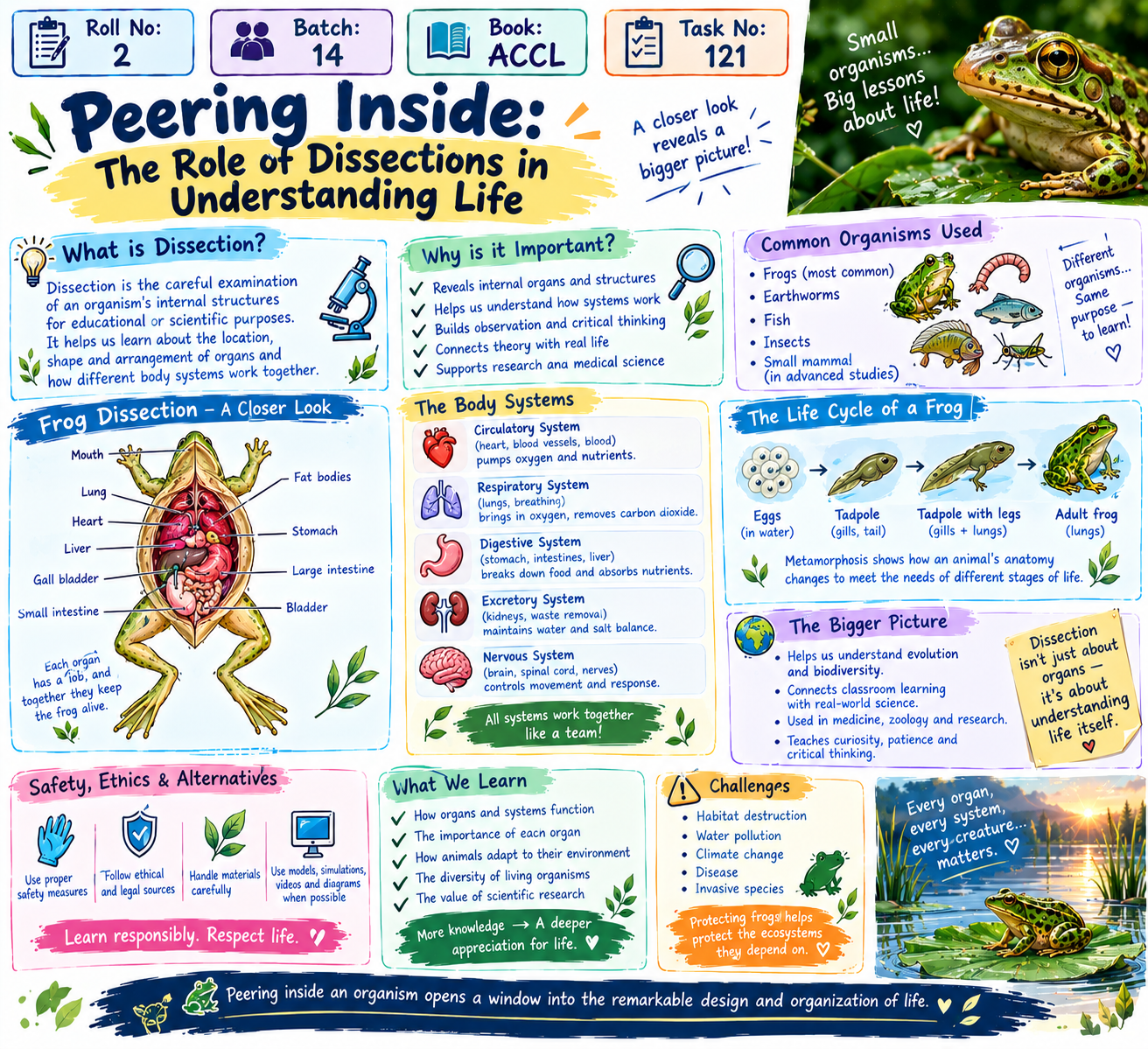
  • #rsisb
    roll no.247
    Coding task no.7
    Foundation Level
    # The Ethics and Education of Animal Dissections
    Animal dissection has been an important part of science education for many years, especially in biology and anatomy classes. It allows students to observe the structure of organisms directly and understand how different body parts work together. However, the practice also raises important ethical questions about animal welfare, respect for living beings, and whether there are better educational alternatives.
    From an educational perspective, dissections can provide students with a hands-on learning experience that textbooks and diagrams cannot always provide. Students may develop a clearer understanding of anatomy, biological organization, and scientific observation. Practical activities can also encourage curiosity, careful observation, teamwork, and responsible scientific thinking.
    At the same time, ethical considerations should be taken seriously. Animals should not be treated simply as objects for classroom activities. Their use should follow appropriate welfare standards, and students should be encouraged to think about why an animal is being used and whether the educational objective could be achieved through another method.
    Modern education offers several alternatives, including high-quality anatomical models, computer simulations, virtual dissection programs, videos, and interactive digital resources. These approaches can sometimes provide detailed visual information while reducing or eliminating the need to use animals. For some students, alternatives may also make learning more comfortable and accessible.
    The most responsible approach is to balance educational value with ethical responsibility. Schools and teachers can carefully evaluate whether dissection is necessary, explain the ethical issues to students, follow proper guidelines, and provide suitable alternatives when appropriate.
    Ultimately, science education should not only teach students about biology—it should also teach them values such as compassion, responsibility, critical thinking, and respect for life. By combining scientific knowledge with ethical awareness, students can become better scientists, thoughtful citizens, and responsible stewards of the natural world.
    ### Key Message
    Animal dissection can offer valuable educational experiences, but it should always be considered alongside animal welfare, ethical responsibility, and modern alternatives. The goal of education should be to develop both **scientific understanding and compassion**.
    ### Hashtags
    #AnimalDissection #EthicsInScience #ScienceEducation #AnimalWelfare #BiologyEducation #EthicalScience #HandsOnLearning #VirtualLearning #ScienceAndEthics #StudentLearning #Biology #Anatomy #ScientificThinking #ResponsibleScience #EducationMatters #CompassionAndScience #STEMEducation #LearningThroughScience #RespectForLife #FutureScientists
    #rsisb roll no.247 Coding task no.7 Foundation Level # The Ethics and Education of Animal Dissections 🧪🐾📚 Animal dissection has been an important part of science education for many years, especially in biology and anatomy classes. It allows students to observe the structure of organisms directly and understand how different body parts work together. However, the practice also raises important ethical questions about animal welfare, respect for living beings, and whether there are better educational alternatives. ⚖️🐾 From an educational perspective, dissections can provide students with a hands-on learning experience that textbooks and diagrams cannot always provide. Students may develop a clearer understanding of anatomy, biological organization, and scientific observation. 🔬📖✨ Practical activities can also encourage curiosity, careful observation, teamwork, and responsible scientific thinking. At the same time, ethical considerations should be taken seriously. Animals should not be treated simply as objects for classroom activities. Their use should follow appropriate welfare standards, and students should be encouraged to think about why an animal is being used and whether the educational objective could be achieved through another method. ❤️🐾🌱 Modern education offers several alternatives, including high-quality anatomical models, computer simulations, virtual dissection programs, videos, and interactive digital resources. 💻🧬 These approaches can sometimes provide detailed visual information while reducing or eliminating the need to use animals. For some students, alternatives may also make learning more comfortable and accessible. The most responsible approach is to balance educational value with ethical responsibility. Schools and teachers can carefully evaluate whether dissection is necessary, explain the ethical issues to students, follow proper guidelines, and provide suitable alternatives when appropriate. 🌍⚖️ Ultimately, science education should not only teach students about biology—it should also teach them values such as compassion, responsibility, critical thinking, and respect for life. 🧠💚🐾 By combining scientific knowledge with ethical awareness, students can become better scientists, thoughtful citizens, and responsible stewards of the natural world. 🌱🔬✨ ### 🌟 Key Message Animal dissection can offer valuable educational experiences, but it should always be considered alongside animal welfare, ethical responsibility, and modern alternatives. The goal of education should be to develop both **scientific understanding and compassion**. 🐾❤️📚 ### 🏷️ Hashtags #AnimalDissection #EthicsInScience #ScienceEducation #AnimalWelfare #BiologyEducation #EthicalScience #HandsOnLearning #VirtualLearning #ScienceAndEthics #StudentLearning #Biology #Anatomy #ScientificThinking #ResponsibleScience #EducationMatters #CompassionAndScience #STEMEducation #LearningThroughScience #RespectForLife #FutureScientists
    0 Σχόλια 0 Μοιράστηκε 7059 Views
Αναζήτηση αποτελεσμάτων