**Roll No: 2**
**Batch: 14**
**Book: ACCL**
**Task No: 50**
# Winds and Environment: The Impact of Change
Wind is one of the most important natural forces on Earth. It is created mainly by differences in air pressure and temperature. When air moves from areas of higher pressure toward areas of lower pressure, wind is produced.
Winds play an important role in shaping our environment. They help move clouds and distribute heat and moisture around the planet. This movement of air influences weather and climate in different regions.
Strong winds can also change the landscape. They can carry sand and soil from one place to another, causing erosion. Over a long period, wind can create dunes, shape rocks, and change the appearance of deserts and coastlines.
Winds are also important for living things. Plants depend on wind to spread pollen and seeds, while many birds use air currents to travel long distances. Wind therefore connects different parts of an ecosystem.
However, very strong winds can sometimes cause damage. Storms and hurricanes may damage buildings, trees, roads, and crops. Scientists use weather instruments and satellites to monitor wind patterns and warn people about dangerous weather conditions.
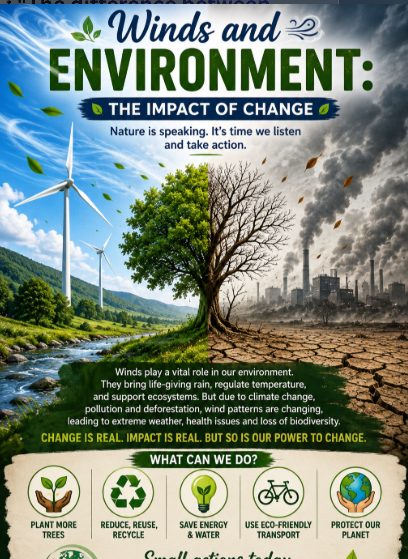
Wind can also be a valuable source of clean energy. Wind turbines use moving air to produce electricity without directly burning fossil fuels. This makes wind energy an important part of efforts to reduce pollution and protect the environment.
The study of wind helps scientists understand weather, climate, ecosystems, and environmental change. By learning how winds affect our planet, people can better prepare for extreme weather and use natural resources responsibly.
**Wind may be invisible, but its effects can be seen everywhere—from moving clouds and shaping landscapes to powering our future. **
**Batch: 14**
**Book: ACCL**
**Task No: 50**
# Winds and Environment: The Impact of Change
Wind is one of the most important natural forces on Earth. It is created mainly by differences in air pressure and temperature. When air moves from areas of higher pressure toward areas of lower pressure, wind is produced.
Winds play an important role in shaping our environment. They help move clouds and distribute heat and moisture around the planet. This movement of air influences weather and climate in different regions.
Strong winds can also change the landscape. They can carry sand and soil from one place to another, causing erosion. Over a long period, wind can create dunes, shape rocks, and change the appearance of deserts and coastlines.
Winds are also important for living things. Plants depend on wind to spread pollen and seeds, while many birds use air currents to travel long distances. Wind therefore connects different parts of an ecosystem.
However, very strong winds can sometimes cause damage. Storms and hurricanes may damage buildings, trees, roads, and crops. Scientists use weather instruments and satellites to monitor wind patterns and warn people about dangerous weather conditions.
Wind can also be a valuable source of clean energy. Wind turbines use moving air to produce electricity without directly burning fossil fuels. This makes wind energy an important part of efforts to reduce pollution and protect the environment.
The study of wind helps scientists understand weather, climate, ecosystems, and environmental change. By learning how winds affect our planet, people can better prepare for extreme weather and use natural resources responsibly.
**Wind may be invisible, but its effects can be seen everywhere—from moving clouds and shaping landscapes to powering our future. **
**Roll No: 2**
**Batch: 14**
**Book: ACCL**
**Task No: 50**
# 🌬️ Winds and Environment: The Impact of Change 🌍
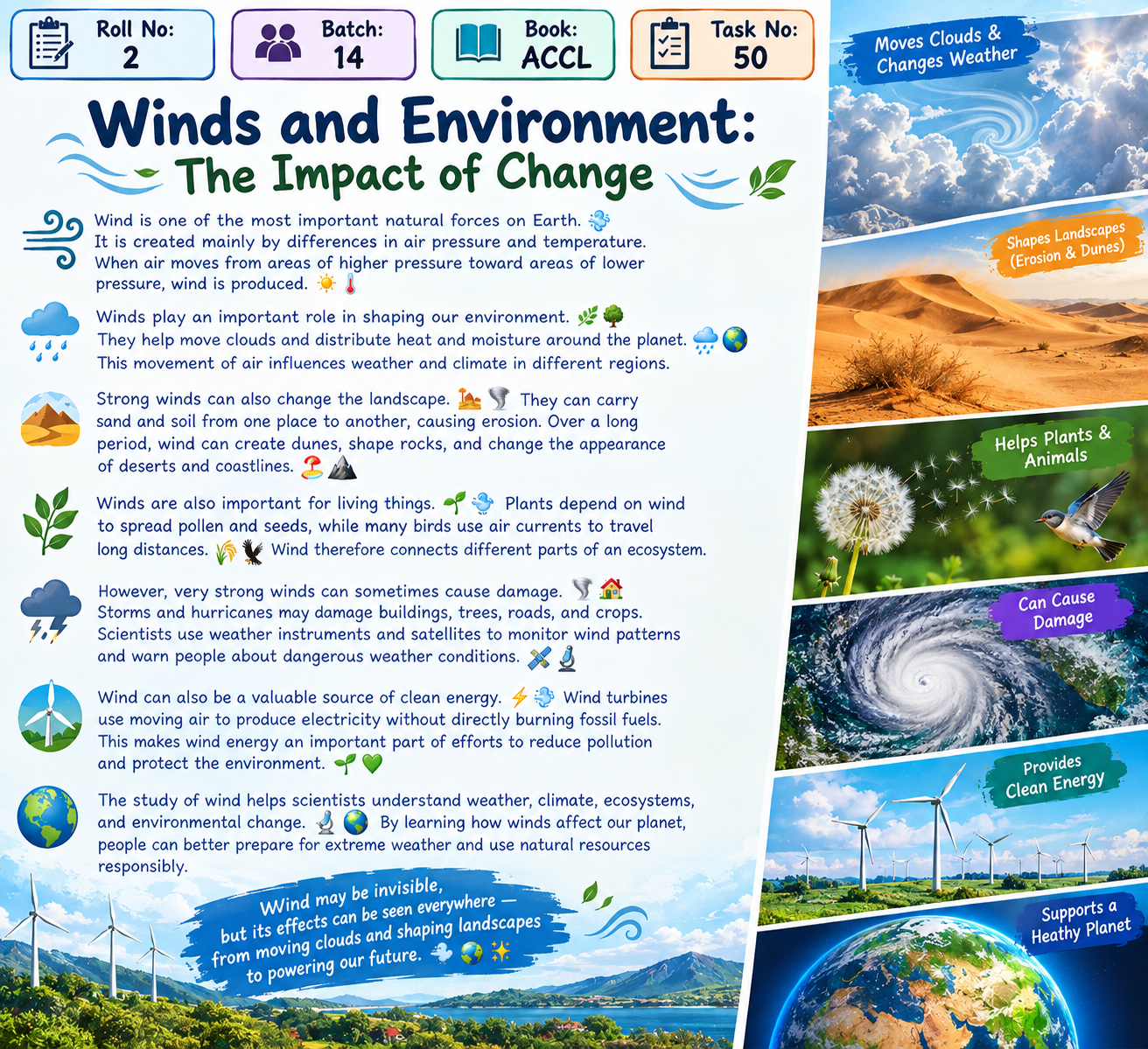
Wind is one of the most important natural forces on Earth. 🌬️ It is created mainly by differences in air pressure and temperature. When air moves from areas of higher pressure toward areas of lower pressure, wind is produced. ☀️🌡️
Winds play an important role in shaping our environment. 🌿🌳 They help move clouds and distribute heat and moisture around the planet. 🌧️🌎 This movement of air influences weather and climate in different regions.
Strong winds can also change the landscape. 🏜️🌪️ They can carry sand and soil from one place to another, causing erosion. Over a long period, wind can create dunes, shape rocks, and change the appearance of deserts and coastlines. 🏖️⛰️
Winds are also important for living things. 🌱🐦 Plants depend on wind to spread pollen and seeds, while many birds use air currents to travel long distances. 🌾🦅 Wind therefore connects different parts of an ecosystem.
However, very strong winds can sometimes cause damage. 🌪️🏠 Storms and hurricanes may damage buildings, trees, roads, and crops. Scientists use weather instruments and satellites to monitor wind patterns and warn people about dangerous weather conditions. 🛰️🔬
Wind can also be a valuable source of clean energy. ⚡🌬️ Wind turbines use moving air to produce electricity without directly burning fossil fuels. This makes wind energy an important part of efforts to reduce pollution and protect the environment. 🌱💚
The study of wind helps scientists understand weather, climate, ecosystems, and environmental change. 🔬🌍 By learning how winds affect our planet, people can better prepare for extreme weather and use natural resources responsibly.
**Wind may be invisible, but its effects can be seen everywhere—from moving clouds and shaping landscapes to powering our future. 🌬️🌎✨**
0 Reacties
0 aandelen
184 Views