• RSIF8
    ROLL NO 77
    SHOURT DOCUMENTARY NO 4
    SHOURT
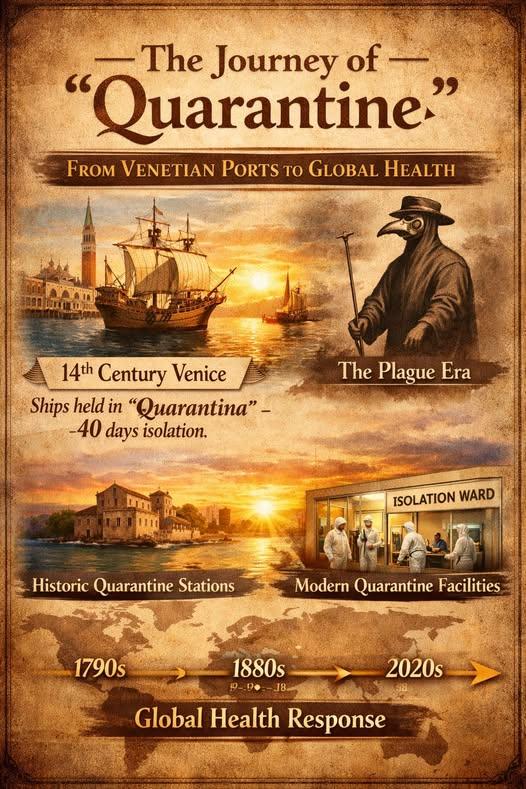
    DOCUMENTARY TOPIC The Journey of "Quarantine": From Venetian Ports to Global Health

    یہ رہی آپ کی ویڈیو کے لیے ایک **engaging English description** hashtags اور emojis کے ساتھ:

    **The Journey of “Quarantine”: From Venetian Ports to Global Health**

    Ever wondered where the word **“Quarantine”** actually came from? Travel back hundreds of years to the busy ports of Venice, where a simple idea—keeping travelers separated during disease outbreaks—helped shape modern public health.

    From the **Black Death** to the COVID-19 pandemic, quarantine has played an important role in protecting communities and slowing the spread of infectious diseases. ‍

    Discover how a word born in medieval Europe became a global health concept—and how history continues to influence the way we fight diseases today!

    #Quarantine #History #PublicHealth #GlobalHealth #MedicalHistory #BlackDeath #Venice #HealthScience #ScienceHistory #DidYouKnow #Education #Learning #HistoryFacts #Pandemic #Science
    RSIF8 ROLL NO 77 SHOURT DOCUMENTARY NO 4 SHOURT DOCUMENTARY TOPIC The Journey of "Quarantine": From Venetian Ports to Global Health یہ رہی آپ کی ویڈیو کے لیے ایک **engaging English description** hashtags اور emojis کے ساتھ: 🌍🦠 🌍🦠 **The Journey of “Quarantine”: From Venetian Ports to Global Health** Ever wondered where the word **“Quarantine”** actually came from? 🤔📜 Travel back hundreds of years to the busy ports of Venice, where a simple idea—keeping travelers separated during disease outbreaks—helped shape modern public health. ⚓🏛️ From the **Black Death** to the COVID-19 pandemic, quarantine has played an important role in protecting communities and slowing the spread of infectious diseases. 🧑‍⚕️🌎 Discover how a word born in medieval Europe became a global health concept—and how history continues to influence the way we fight diseases today! 🔬💡 #Quarantine #History #PublicHealth #GlobalHealth #MedicalHistory #BlackDeath #Venice #HealthScience #ScienceHistory #DidYouKnow #Education #Learning #HistoryFacts #Pandemic #Science 🌍🔬📚
    0 Commentarii 0 Distribuiri 196 Views 1
  • Untitled recording - 2026-09-30T221838.220RSIF 8

    Roll no 93

    Short documentary no5

    Task topic:"The Journey of 'Quarantine': From Venetian Ports to Global Health".

    Bilkul Yeh aapki documentary ke liye **long social media description** hai:


    **The Journey of “Quarantine”: From Venetian Ports to Global Health**


    Have you ever wondered where the word **“quarantine”** came from?


    In this documentary, we explore the fascinating history of quarantine—from its origins in the busy ports of medieval Venice to its important role in modern global health.


    The word “quarantine” comes from the Italian word **“quaranta,” meaning forty**. During times of plague and other infectious diseases, ships and travelers could be kept separated from communities to reduce the risk of spreading illness.


    Over the centuries, quarantine developed into an important public-health practice. As international travel and trade expanded, countries created organized systems to monitor and isolate people who might have been exposed to infectious diseases.


    Today, quarantine is part of a much larger public-health system that includes testing, vaccination, disease surveillance, medical treatment, and prevention.


    The COVID-19 pandemic also showed the world how important public-health measures can become during a global health emergency.


    This documentary takes us through the history, meaning, and evolution of quarantine and shows how an idea that began centuries ago continues to influence public health today.


    **Watch the full documentary and discover the incredible journey of quarantine!**


    **What you will learn:**

    • The origin of the word “quarantine”

    • Its connection to Venice and maritime travel

    • Why forty days became historically significant

    • How quarantine practices developed over time

    • The role of quarantine in modern public health

    • How global health systems respond to infectious diseases


    **Key Message:**

    The history of quarantine reminds us that protecting public health is not a new challenge. For centuries, people have searched for ways to prevent diseases from spreading and protect their communities.


    From Venetian ports to a connected modern world, the journey of quarantineUntitled recording - 2026-09-30T221838.220RSIF 8

    Roll no 93

    Short documentary no5

    Task topic:"The Journey of 'Quarantine': From Venetian Ports to Global Health".

    Bilkul Yeh aapki documentary ke liye **long social media description** hai:


    **The Journey of “Quarantine”: From Venetian Ports to Global Health**


    Have you ever wondered where the word **“quarantine”** came from?


    In this documentary, we explore the fascinating history of quarantine—from its origins in the busy ports of medieval Venice to its important role in modern global health.


    The word “quarantine” comes from the Italian word **“quaranta,” meaning forty**. During times of plague and other infectious diseases, ships and travelers could be kept separated from communities to reduce the risk of spreading illness.


    Over the centuries, quarantine developed into an important public-health practice. As international travel and trade expanded, countries created organized systems to monitor and isolate people who might have been exposed to infectious diseases.


    Today, quarantine is part of a much larger public-health system that includes testing, vaccination, disease surveillance, medical treatment, and prevention.


    The COVID-19 pandemic also showed the world how important public-health measures can become during a global health emergency.


    This documentary takes us through the history, meaning, and evolution of quarantine and shows how an idea that began centuries ago continues to influence public health today.


    **Watch the full documentary and discover the incredible journey of quarantine!**


    **What you will learn:**

    • The origin of the word “quarantine”

    • Its connection to Venice and maritime travel

    • Why forty days became historically significant

    • How quarantine practices developed over time

    • The role of quarantine in modern public health

    • How global health systems respond to infectious diseases


    **Key Message:**

    The history of quarantine reminds us that protecting public health is not a new challenge. For centuries, people have searched for ways to prevent diseases from spreading and protect their communities.


    From Venetian ports to a connected modern world, the journey of quarantine
    Untitled recording - 2026-09-30T221838.220RSIF 8 Roll no 93 Short documentary no5 Task topic:"The Journey of 'Quarantine': From Venetian Ports to Global Health". Bilkul 👍 Yeh aapki documentary ke liye **long social media description** hai: 🌍 **The Journey of “Quarantine”: From Venetian Ports to Global Health** Have you ever wondered where the word **“quarantine”** came from? 🤔 In this documentary, we explore the fascinating history of quarantine—from its origins in the busy ports of medieval Venice to its important role in modern global health. The word “quarantine” comes from the Italian word **“quaranta,” meaning forty**. During times of plague and other infectious diseases, ships and travelers could be kept separated from communities to reduce the risk of spreading illness. Over the centuries, quarantine developed into an important public-health practice. As international travel and trade expanded, countries created organized systems to monitor and isolate people who might have been exposed to infectious diseases. Today, quarantine is part of a much larger public-health system that includes testing, vaccination, disease surveillance, medical treatment, and prevention. The COVID-19 pandemic also showed the world how important public-health measures can become during a global health emergency. This documentary takes us through the history, meaning, and evolution of quarantine and shows how an idea that began centuries ago continues to influence public health today. 🎥 **Watch the full documentary and discover the incredible journey of quarantine!** 📚 **What you will learn:** • The origin of the word “quarantine” • Its connection to Venice and maritime travel • Why forty days became historically significant • How quarantine practices developed over time • The role of quarantine in modern public health • How global health systems respond to infectious diseases 💡 **Key Message:** The history of quarantine reminds us that protecting public health is not a new challenge. For centuries, people have searched for ways to prevent diseases from spreading and protect their communities. 🌎 From Venetian ports to a connected modern world, the journey of quarantineUntitled recording - 2026-09-30T221838.220RSIF 8 Roll no 93 Short documentary no5 Task topic:"The Journey of 'Quarantine': From Venetian Ports to Global Health". Bilkul 👍 Yeh aapki documentary ke liye **long social media description** hai: 🌍 **The Journey of “Quarantine”: From Venetian Ports to Global Health** Have you ever wondered where the word **“quarantine”** came from? 🤔 In this documentary, we explore the fascinating history of quarantine—from its origins in the busy ports of medieval Venice to its important role in modern global health. The word “quarantine” comes from the Italian word **“quaranta,” meaning forty**. During times of plague and other infectious diseases, ships and travelers could be kept separated from communities to reduce the risk of spreading illness. Over the centuries, quarantine developed into an important public-health practice. As international travel and trade expanded, countries created organized systems to monitor and isolate people who might have been exposed to infectious diseases. Today, quarantine is part of a much larger public-health system that includes testing, vaccination, disease surveillance, medical treatment, and prevention. The COVID-19 pandemic also showed the world how important public-health measures can become during a global health emergency. This documentary takes us through the history, meaning, and evolution of quarantine and shows how an idea that began centuries ago continues to influence public health today. 🎥 **Watch the full documentary and discover the incredible journey of quarantine!** 📚 **What you will learn:** • The origin of the word “quarantine” • Its connection to Venice and maritime travel • Why forty days became historically significant • How quarantine practices developed over time • The role of quarantine in modern public health • How global health systems respond to infectious diseases 💡 **Key Message:** The history of quarantine reminds us that protecting public health is not a new challenge. For centuries, people have searched for ways to prevent diseases from spreading and protect their communities. 🌎 From Venetian ports to a connected modern world, the journey of quarantine
    0 Commentarii 0 Distribuiri 818 Views
  • #rsisb
    Roll no.231
    story post no.86
    Foundation Level

    ### The Journey of “Quarantine”

    The word **“quarantine”** has a fascinating journey through history. It comes from the Italian **“quarantina,”** meaning a period of **forty days**. The term became associated with the practice of keeping ships and travelers separated during outbreaks of infectious diseases to help prevent illness from spreading.

    Over time, **quarantine** became a familiar word around the world, especially during major disease outbreaks. During the COVID-19 pandemic, it became part of everyday conversations as people used isolation and quarantine measures to help protect communities.

    The journey of this word shows how language changes alongside human history, science, and society. Every word has a story—and **“quarantine”** is a powerful example of how a historical practice became a modern global term.

    #Quarantine #WordJourney #LanguageHistory #HistoryOfWords #Vocabulary #Learning #Education #DidYouKnow #LanguageAndHistory #KeepLearning

    Asma Shaheen EducationWali
    Irum Asim Leadershipwali
    #rsisb Roll no.231 story post no.86 Foundation Level ### 🦠📚 The Journey of “Quarantine” The word **“quarantine”** has a fascinating journey through history. It comes from the Italian **“quarantina,”** meaning a period of **forty days**. The term became associated with the practice of keeping ships and travelers separated during outbreaks of infectious diseases to help prevent illness from spreading. 🚢⏳ Over time, **quarantine** became a familiar word around the world, especially during major disease outbreaks. During the COVID-19 pandemic, it became part of everyday conversations as people used isolation and quarantine measures to help protect communities. 🌍🏠 The journey of this word shows how language changes alongside human history, science, and society. Every word has a story—and **“quarantine”** is a powerful example of how a historical practice became a modern global term. 📖✨ #Quarantine #WordJourney #LanguageHistory #HistoryOfWords #Vocabulary #Learning #Education #DidYouKnow #LanguageAndHistory #KeepLearning 📚🌟 Asma Shaheen EducationWali Irum Asim Leadershipwali
    0 Commentarii 0 Distribuiri 976 Views
  • Victorias Secret declared bankruptcy. Zara closed 1,200 stores. Chanel, Hermes and Rolex have stopped production. Nike is getting ready for stage two of layoffs.

    AirBnb founder says that due to the pandemic, 12 years of effort were destroyed in 6 weeks.

    Starbucks announced the permanent closure of 400 stores. Virgin Australia put off 3000 poeple today. And the list continues...

    Five months since the pandemic started and it has created huge debts, many of our friends and family are out of work and unemployed with tens of thousands of businesses now out of service. Don’t even get me started on the energy industry. It’s a mess.

    If the company you work for continues to pay you, then treat it well and have respect for what the leaders and owner(s) must be going through to keep it going.

    Use this time to unlearn, and learn new things, forget what you already know, as it already maybe obsolete, go on YouTube and start learning !

    2020 is about survival. Leave the daily complaints/moans and anything else minor behind, be thankful, and show respect for what you have. Families are losing loved ones — to illness and other suffering. Work hard and show your boss/owner/company the appreciation they need and deserve. And, support any small business you know please! Let’s build stronger and better and more grateful!

    *copied from elsewhere. Let’s spread it and support small businesses suffering*
    Victoria's Secret declared bankruptcy. Zara closed 1,200 stores. Chanel, Hermes and Rolex have stopped production. Nike is getting ready for stage two of layoffs. AirBnb founder says that due to the pandemic, 12 years of effort were destroyed in 6 weeks. Starbucks announced the permanent closure of 400 stores. Virgin Australia put off 3000 poeple today. And the list continues... Five months since the pandemic started and it has created huge debts, many of our friends and family are out of work and unemployed with tens of thousands of businesses now out of service. Don’t even get me started on the energy industry. It’s a mess. If the company you work for continues to pay you, then treat it well and have respect for what the leaders and owner(s) must be going through to keep it going. Use this time to unlearn, and learn new things, forget what you already know, as it already maybe obsolete, go on YouTube and start learning ! 2020 is about survival. Leave the daily complaints/moans and anything else minor behind, be thankful, and show respect for what you have. Families are losing loved ones — to illness and other suffering. Work hard and show your boss/owner/company the appreciation they need and deserve. And, support any small business you know please! Let’s build stronger and better and more grateful! *copied from elsewhere. Let’s spread it and support small businesses suffering*
    0 Commentarii 0 Distribuiri 1614 Views
  • Question: I am Khalid i am 27 years old single person i have my family business since 8 years my i start from scratch due to the pandemic and economic crisis my business is in loss now i shutdown my business and want to see other sector which can help me out from my financial crisis and start to my next life journey
    i want consultantation for my career...
    What should i do?
    From where i start?
    What is best for me now?

    Chatgpt Answers:
    Hello Khalid, Im sorry to hear about your situation. Im happy to provide some guidance to help you navigate through this challenging time. Here are some general steps you can take to identify potential new career paths and opportunities:

    Self-assessment: Start by assessing your interests, strengths, and skills. Make a list of what you enjoy doing, what youre good at, and any transferable skills that can be applied to various industries. This can help you identify potential fields that align with your abilities and passions.
    Research: Once you have a better understanding of your strengths and interests, research different industries and job roles. Look for growing sectors or industries that have a strong demand for professionals with your skills.
    Networking: Reach out to your professional and personal network. Let people know that youre looking for new opportunities and ask for advice or recommendations. Networking can often lead to job openings that may not be publicly advertised.
    Upskilling or reskilling: Based on your research, identify any skills or qualifications that you may need to acquire to enter a new field. Consider taking online courses or attending workshops to gain the necessary skills and knowledge.
    Tailor your resume: Update your resume to highlight your transferable skills and relevant experience. Customize your resume for each job application, focusing on the skills and experiences that are most relevant to the position.
    Job search: Utilize job search websites, social media platforms like LinkedIn, and your network to find job opportunities in your target industry.
    Prepare for interviews: Practice your interview skills by doing mock interviews with friends or family, or by using online resources. Be prepared to discuss your past experiences and how your skills can be applied to the new field.
    Remember, this process may take time, so its important to be patient and persistent. Continuously learn from your experiences and keep refining your approach until you find the right opportunity for your next life journey. Good luck!
    Question: I am Khalid i am 27 years old single person i have my family business since 8 years my i start from scratch due to the pandemic and economic crisis my business is in loss now i shutdown my business and want to see other sector which can help me out from my financial crisis and start to my next life journey i want consultantation for my career... What should i do? From where i start? What is best for me now? Chatgpt Answers: Hello Khalid, I'm sorry to hear about your situation. I'm happy to provide some guidance to help you navigate through this challenging time. Here are some general steps you can take to identify potential new career paths and opportunities: Self-assessment: Start by assessing your interests, strengths, and skills. Make a list of what you enjoy doing, what you're good at, and any transferable skills that can be applied to various industries. This can help you identify potential fields that align with your abilities and passions. Research: Once you have a better understanding of your strengths and interests, research different industries and job roles. Look for growing sectors or industries that have a strong demand for professionals with your skills. Networking: Reach out to your professional and personal network. Let people know that you're looking for new opportunities and ask for advice or recommendations. Networking can often lead to job openings that may not be publicly advertised. Upskilling or reskilling: Based on your research, identify any skills or qualifications that you may need to acquire to enter a new field. Consider taking online courses or attending workshops to gain the necessary skills and knowledge. Tailor your resume: Update your resume to highlight your transferable skills and relevant experience. Customize your resume for each job application, focusing on the skills and experiences that are most relevant to the position. Job search: Utilize job search websites, social media platforms like LinkedIn, and your network to find job opportunities in your target industry. Prepare for interviews: Practice your interview skills by doing mock interviews with friends or family, or by using online resources. Be prepared to discuss your past experiences and how your skills can be applied to the new field. Remember, this process may take time, so it's important to be patient and persistent. Continuously learn from your experiences and keep refining your approach until you find the right opportunity for your next life journey. Good luck!
    0 Commentarii 0 Distribuiri 962 Views
  • Creating the European Union (EU) was a complex process that evolved over decades, involving a series of treaties, expansions, and integrative steps. Heres a detailed look at the small and significant steps that led to the formation of the EU, which could serve as a roadmap for creating a similar union, like an Asian Union.

    ### Initial Concepts and Foundations

    1. **Post-World War II Reconciliation (1945-1950):** The devastation of World War II prompted European leaders to seek ways to prevent future conflicts. The idea of European integration was seen as a solution to foster peace and economic cooperation.

    2. **Schuman Declaration (1950):** French Foreign Minister Robert Schuman proposed the creation of a European Coal and Steel Community (ECSC), aiming to pool coal and steel production. This was a strategic move to bind Europe’s key industries together, making war between historic rivals France and Germany "not merely unthinkable, but materially impossible."

    3. **Treaty of Paris (1951):** Established the ECSC, including six founding countries: Belgium, France, Germany, Italy, Luxembourg, and the Netherlands. This treaty was the first step towards economic integration.

    ### Expanding the Scope of Integration

    4. **Treaty of Rome (1957):** Signed by the six ECSC members, it created the European Economic Community (EEC) and Euratom. The EEC aimed at establishing a common market and a customs union among the member states.

    5. **Merger Treaty (1965):** Merged the executive bodies of the ECSC, EEC, and Euratom into a single Commission and Council of the European Communities, simplifying the structure and strengthening integration.

    ### Enlargement and Deepening Integration

    6. **First Enlargement (1973):** Denmark, Ireland, and the United Kingdom joined, marking the first expansion beyond the six founding members.

    7. **Single European Act (1986):** Aimed at creating a single market by 1992, it allowed for the free movement of goods, services, capital, and people. This act significantly deepened economic integration.

    8. **Treaty of Maastricht (1992):** Officially established the European Union and introduced the concept of European citizenship. It set the stage for monetary union and introduced the three-pillar structure of the EU.

    9. **Treaty of Amsterdam (1997) and Treaty of Nice (2001):** These treaties reformed institutions to prepare for the eastward expansion of the EU and improved decision-making processes.

    ### Expansion and Consolidation

    10. **Eurozone (1999):** Introduction of the euro as a single currency for many EU countries, further integrating the economies of member states.

    11. **Eastern Enlargement (2004 and 2007):** The EU expanded to include eight Central and Eastern European countries in 2004, followed by Bulgaria and Romania in 2007, marking a significant geographical and political expansion.

    12. **Treaty of Lisbon (2007, effective 2009):** Simplified the EU’s structure, increased the powers of the European Parliament, and introduced changes to improve decision-making efficiency. It also established a more permanent President of the European Council and a High Representative for Foreign Affairs to strengthen the EUs global presence.

    ### Continuous Challenges and Adaptations

    - **Brexit (2016 referendum, effective 2020):** The United Kingdoms vote to leave the EU marked a significant challenge and led to discussions about the nature of EU integration and the future direction of the union.

    - **Ongoing Issues:** The EU continues to face challenges such as migration crises, economic disparities, and external pressures. It has also been working on digital transformation, climate change policies, and strengthening the European Health Union in response to the COVID-19 pandemic.

    Creating a similar union, like an Asian Union, would likely involve similar steps: starting with targeted economic cooperation, gradually expanding the scope of integration, formalizing structures through treaties, and continuously adapting to new challenges. It would also require strong political will, a shared vision among member states, and mechanisms to accommodate diversity while pursuing common goals.

    Creating the European Union (EU) was a complex process that evolved over decades, involving a series of treaties, expansions, and integrative steps. Here's a detailed look at the small and significant steps that led to the formation of the EU, which could serve as a roadmap for creating a similar union, like an Asian Union. ### Initial Concepts and Foundations 1. **Post-World War II Reconciliation (1945-1950):** The devastation of World War II prompted European leaders to seek ways to prevent future conflicts. The idea of European integration was seen as a solution to foster peace and economic cooperation. 2. **Schuman Declaration (1950):** French Foreign Minister Robert Schuman proposed the creation of a European Coal and Steel Community (ECSC), aiming to pool coal and steel production. This was a strategic move to bind Europe’s key industries together, making war between historic rivals France and Germany "not merely unthinkable, but materially impossible." 3. **Treaty of Paris (1951):** Established the ECSC, including six founding countries: Belgium, France, Germany, Italy, Luxembourg, and the Netherlands. This treaty was the first step towards economic integration. ### Expanding the Scope of Integration 4. **Treaty of Rome (1957):** Signed by the six ECSC members, it created the European Economic Community (EEC) and Euratom. The EEC aimed at establishing a common market and a customs union among the member states. 5. **Merger Treaty (1965):** Merged the executive bodies of the ECSC, EEC, and Euratom into a single Commission and Council of the European Communities, simplifying the structure and strengthening integration. ### Enlargement and Deepening Integration 6. **First Enlargement (1973):** Denmark, Ireland, and the United Kingdom joined, marking the first expansion beyond the six founding members. 7. **Single European Act (1986):** Aimed at creating a single market by 1992, it allowed for the free movement of goods, services, capital, and people. This act significantly deepened economic integration. 8. **Treaty of Maastricht (1992):** Officially established the European Union and introduced the concept of European citizenship. It set the stage for monetary union and introduced the three-pillar structure of the EU. 9. **Treaty of Amsterdam (1997) and Treaty of Nice (2001):** These treaties reformed institutions to prepare for the eastward expansion of the EU and improved decision-making processes. ### Expansion and Consolidation 10. **Eurozone (1999):** Introduction of the euro as a single currency for many EU countries, further integrating the economies of member states. 11. **Eastern Enlargement (2004 and 2007):** The EU expanded to include eight Central and Eastern European countries in 2004, followed by Bulgaria and Romania in 2007, marking a significant geographical and political expansion. 12. **Treaty of Lisbon (2007, effective 2009):** Simplified the EU’s structure, increased the powers of the European Parliament, and introduced changes to improve decision-making efficiency. It also established a more permanent President of the European Council and a High Representative for Foreign Affairs to strengthen the EU's global presence. ### Continuous Challenges and Adaptations - **Brexit (2016 referendum, effective 2020):** The United Kingdom's vote to leave the EU marked a significant challenge and led to discussions about the nature of EU integration and the future direction of the union. - **Ongoing Issues:** The EU continues to face challenges such as migration crises, economic disparities, and external pressures. It has also been working on digital transformation, climate change policies, and strengthening the European Health Union in response to the COVID-19 pandemic. Creating a similar union, like an Asian Union, would likely involve similar steps: starting with targeted economic cooperation, gradually expanding the scope of integration, formalizing structures through treaties, and continuously adapting to new challenges. It would also require strong political will, a shared vision among member states, and mechanisms to accommodate diversity while pursuing common goals.

    0 Commentarii 0 Distribuiri 1717 Views
  • The preface of book of Zahid Turkeywala

    ### Preface

    In the labyrinth of life, sometimes the most unexpected turns lead to the most extraordinary journeys. This is the tale of Rana Zahid Turkiwala, a man who transformed from a daily wage laborer into a confidence-building coach, inspiring countless students and teachers along the way.

    I first met Mr. Rehan Allahwala during a time when life seemed as harsh and unyielding as the rocks I once broke with a hammer. The pandemic had stolen my job, leaving me to grapple with the backbreaking labor of ironwork. But fate had a different path for me. I became a driver for Mr. Rehan, a role that seemed mundane but became the catalyst for my transformation.

    Driving through the bustling streets of Karachi, I was always quick to honk, a habit Mr. Rehan gently but firmly curbed. That first month, refraining from using the horn felt like scaling a mountain. But in hindsight, it was the first step in a journey of patience, self-control, and inner strength.

    As I spent more time with Mr. Rehan, I transitioned from a driver to an assistant, absorbing his teachings and philosophies. My journey took a significant turn when I was sent to Rehans Kulkarangi campus. There, I began sharing what I had learned, calling myself a confidence-building coach. The path wasnt always smooth—fits of frustration and internal struggles often marked it—but each challenge only strengthened my resolve.

    Eventually, Mr. Rehan sent me beyond the confines of Karachi to train schools on the Rehan School system, AI, and social media. Today, I have conducted over ten school trainings, empowering teachers and students to embrace technology and build their confidence.

    This is a story of transformation, resilience, and humor—a testament to how one mans belief can ignite change in anothers life. As you turn these pages, I hope my journey inspires you to find your own path, no matter how unexpected it may seem.
    The preface of book of Zahid Turkeywala ### Preface In the labyrinth of life, sometimes the most unexpected turns lead to the most extraordinary journeys. This is the tale of Rana Zahid Turkiwala, a man who transformed from a daily wage laborer into a confidence-building coach, inspiring countless students and teachers along the way. I first met Mr. Rehan Allahwala during a time when life seemed as harsh and unyielding as the rocks I once broke with a hammer. The pandemic had stolen my job, leaving me to grapple with the backbreaking labor of ironwork. But fate had a different path for me. I became a driver for Mr. Rehan, a role that seemed mundane but became the catalyst for my transformation. Driving through the bustling streets of Karachi, I was always quick to honk, a habit Mr. Rehan gently but firmly curbed. That first month, refraining from using the horn felt like scaling a mountain. But in hindsight, it was the first step in a journey of patience, self-control, and inner strength. As I spent more time with Mr. Rehan, I transitioned from a driver to an assistant, absorbing his teachings and philosophies. My journey took a significant turn when I was sent to Rehan's Kulkarangi campus. There, I began sharing what I had learned, calling myself a confidence-building coach. The path wasn't always smooth—fits of frustration and internal struggles often marked it—but each challenge only strengthened my resolve. Eventually, Mr. Rehan sent me beyond the confines of Karachi to train schools on the Rehan School system, AI, and social media. Today, I have conducted over ten school trainings, empowering teachers and students to embrace technology and build their confidence. This is a story of transformation, resilience, and humor—a testament to how one man's belief can ignite change in another's life. As you turn these pages, I hope my journey inspires you to find your own path, no matter how unexpected it may seem.
    0 Commentarii 0 Distribuiri 996 Views
  • Estimated approximation of the world population in 100-year increments, starting from 2023 and going back 5,000 years:

    | Year | Estimated World Population |
    |--------|----------------------------|
    | 2023 | 8 billion |
    | 1923 | 2 billion |
    | 1823 | 1.1 billion |
    | 1723 | 740 million |
    | 1623 | 545 million |
    | 1523 | 460 million |
    | 1423 | 375 million |
    | 1323 | 360 million |
    | 1223 | 360 million |
    | 1123 | 320 million |
    | 1023 | 310 million |
    | 923 | 275 million |
    | 823 | 240 million |
    | 723 | 210 million |
    | 623 | 200 million |
    | 523 | 190 million |
    | 423 | 180 million |
    | 323 | 170 million |
    | 223 | 170 million |
    | 123 | 150 million |
    | 23 | 170 million |
    | 100 BCE | 150 million |
    | 200 BCE | 150 million |
    | 300 BCE | 100 million |
    | 400 BCE | 100 million |
    | 500 BCE | 100 million |
    | 600 BCE | 100 million |
    | 700 BCE | 90 million |
    | 800 BCE | 85 million |
    | 900 BCE | 80 million |
    | 1000 BCE | 75 million |
    | 1100 BCE | 72 million |
    | 1200 BCE | 70 million |
    | 1300 BCE | 65 million |
    | 1400 BCE | 60 million |
    | 1500 BCE | 50 million |
    | 1600 BCE | 45 million |
    | 1700 BCE | 40 million |
    | 1800 BCE | 35 million |
    | 1900 BCE | 30 million |
    | 2000 BCE | 27 million |
    | 2100 BCE | 25 million |
    | 2200 BCE | 23 million |
    | 2300 BCE | 20 million |
    | 2400 BCE | 18 million |
    | 2500 BCE | 15 million |
    | 2600 BCE | 12 million |
    | 2700 BCE | 10 million |
    | 2800 BCE | 7 million |
    | 2900 BCE | 5 million |
    | 3000 BCE | 3 million |

    ### Explanation:
    - Population estimates are highly speculative the further back in time you go, especially for pre-modern periods, and the exact numbers are subject to scholarly debate.
    - Major events like pandemics, wars, and the development of agriculture and technology caused fluctuations in population growth rates.
    - Population growth began to accelerate more significantly with industrialization, medical advancements, and improved agricultural techniques in the last few centuries.

    L
    Estimated approximation of the world population in 100-year increments, starting from 2023 and going back 5,000 years: | Year | Estimated World Population | |--------|----------------------------| | 2023 | 8 billion | | 1923 | 2 billion | | 1823 | 1.1 billion | | 1723 | 740 million | | 1623 | 545 million | | 1523 | 460 million | | 1423 | 375 million | | 1323 | 360 million | | 1223 | 360 million | | 1123 | 320 million | | 1023 | 310 million | | 923 | 275 million | | 823 | 240 million | | 723 | 210 million | | 623 | 200 million | | 523 | 190 million | | 423 | 180 million | | 323 | 170 million | | 223 | 170 million | | 123 | 150 million | | 23 | 170 million | | 100 BCE | 150 million | | 200 BCE | 150 million | | 300 BCE | 100 million | | 400 BCE | 100 million | | 500 BCE | 100 million | | 600 BCE | 100 million | | 700 BCE | 90 million | | 800 BCE | 85 million | | 900 BCE | 80 million | | 1000 BCE | 75 million | | 1100 BCE | 72 million | | 1200 BCE | 70 million | | 1300 BCE | 65 million | | 1400 BCE | 60 million | | 1500 BCE | 50 million | | 1600 BCE | 45 million | | 1700 BCE | 40 million | | 1800 BCE | 35 million | | 1900 BCE | 30 million | | 2000 BCE | 27 million | | 2100 BCE | 25 million | | 2200 BCE | 23 million | | 2300 BCE | 20 million | | 2400 BCE | 18 million | | 2500 BCE | 15 million | | 2600 BCE | 12 million | | 2700 BCE | 10 million | | 2800 BCE | 7 million | | 2900 BCE | 5 million | | 3000 BCE | 3 million | ### Explanation: - Population estimates are highly speculative the further back in time you go, especially for pre-modern periods, and the exact numbers are subject to scholarly debate. - Major events like pandemics, wars, and the development of agriculture and technology caused fluctuations in population growth rates. - Population growth began to accelerate more significantly with industrialization, medical advancements, and improved agricultural techniques in the last few centuries. L
    0 Commentarii 0 Distribuiri 273 Views
  • Here is a timeline of Uline and the lives of its founders, Liz Uihlein and **** Uihlein:

    Founding and Growth of Uline:
    • 1980: Liz and **** Uihlein founded Uline in their basement in Lake Forest, Illinois. Their first product was H-101 carton sizer, a tool to resize shipping boxes.
    • 1981-1990s: Uline expanded its catalog to include shipping supplies like boxes, tape, and packing materials. The company moved to larger facilities as demand grew.
    • 1994: Uline launched its first website, making it easier for customers to order products.
    • 2008: Uline relocated its headquarters to Pleasant Prairie, Wisconsin, from Illinois due to business-friendly policies and tax advantages.
    • 2010s: Uline rapidly expanded, opening distribution centers across the U.S., Canada, and Mexico.
    • 2020: Uline grew significantly during the COVID-19 pandemic due to increased demand for shipping and packaging materials.
    • 2023: Uline’s annual revenue exceeded $11 billion, with over 9,000 employees.
    • Present: Uline remains a privately held, family-run business, with Liz Uihlein as President and **** Uihlein as CEO.

    Founders’ Personal Timeline (Liz & **** Uihlein):
    • 1940s: Liz and **** Uihlein were born in the U.S. They both grew up in business-oriented families.
    • 1960s: The couple met and got married. They were involved in their family’s brewing business, Schlitz Beer, before founding Uline.
    • 1980: Started Uline from their home.
    • 2010s-Present: Became major political donors supporting conservative causes and politicians.
    • 2020s: Continue to run Uline and expand its operations.

    Would you like more details on any specific aspect of their history?
    Here is a timeline of Uline and the lives of its founders, Liz Uihlein and Dick Uihlein: Founding and Growth of Uline: • 1980: Liz and Dick Uihlein founded Uline in their basement in Lake Forest, Illinois. Their first product was H-101 carton sizer, a tool to resize shipping boxes. • 1981-1990s: Uline expanded its catalog to include shipping supplies like boxes, tape, and packing materials. The company moved to larger facilities as demand grew. • 1994: Uline launched its first website, making it easier for customers to order products. • 2008: Uline relocated its headquarters to Pleasant Prairie, Wisconsin, from Illinois due to business-friendly policies and tax advantages. • 2010s: Uline rapidly expanded, opening distribution centers across the U.S., Canada, and Mexico. • 2020: Uline grew significantly during the COVID-19 pandemic due to increased demand for shipping and packaging materials. • 2023: Uline’s annual revenue exceeded $11 billion, with over 9,000 employees. • Present: Uline remains a privately held, family-run business, with Liz Uihlein as President and Dick Uihlein as CEO. Founders’ Personal Timeline (Liz & Dick Uihlein): • 1940s: Liz and Dick Uihlein were born in the U.S. They both grew up in business-oriented families. • 1960s: The couple met and got married. They were involved in their family’s brewing business, Schlitz Beer, before founding Uline. • 1980: Started Uline from their home. • 2010s-Present: Became major political donors supporting conservative causes and politicians. • 2020s: Continue to run Uline and expand its operations. Would you like more details on any specific aspect of their history?
    0 Commentarii 0 Distribuiri 297 Views
  • The world spent $99.6 TRILLION on military and war in the last 80 years.
    Let that number sink in:
    That’s $99,600,000,000,000 — enough to completely change the world forever.

    Instead of war, we could have:
    1. Ended world hunger 3,000 times
    Feeding everyone for a year costs $30B. We could’ve done it every year for 3,000 years.
    2. Given free healthcare to every human on Earth for 12 years
    No hospital bills, no suffering because you couldn’t afford treatment.
    3. Built schools for every child and paid every teacher for centuries
    Education for every single child — forever.
    4. Provided clean water for every person 600+ times over
    No child would die from drinking dirty water.
    5. Built safe homes for every homeless person on the planet
    We could’ve given a home to every human alive — and done it again.
    6. Funded the fight against climate change for the next 100 years
    Saving the planet is cheaper than fighting over it.
    7. Brought internet and digital learning to the entire world
    Every kid with a laptop. Every village with Wi-Fi. For generations.
    8. Wiped out extreme poverty
    Completely. And still have $96 trillion left over.
    9. Made transport free in every major city
    No child would miss school because they couldn’t afford the bus.
    10. Prepared every country for disasters — before they strike
    Earthquakes, floods, pandemics — we could’ve been ready for all of it.

    ⸻

    We had the money. We just chose to spend it on guns instead of growth.
    War instead of water. Bullets instead of books.

    It’s time to choose better.
    Share this if you believe peace should be our biggest investment.

    #PeaceNotWar #99TrillionTruth #RehanSchool #WhatIfWeChosePeace
    The world spent $99.6 TRILLION on military and war in the last 80 years. Let that number sink in: That’s $99,600,000,000,000 — enough to completely change the world forever. Instead of war, we could have: 1. Ended world hunger 3,000 times Feeding everyone for a year costs $30B. We could’ve done it every year for 3,000 years. 2. Given free healthcare to every human on Earth for 12 years No hospital bills, no suffering because you couldn’t afford treatment. 3. Built schools for every child and paid every teacher for centuries Education for every single child — forever. 4. Provided clean water for every person 600+ times over No child would die from drinking dirty water. 5. Built safe homes for every homeless person on the planet We could’ve given a home to every human alive — and done it again. 6. Funded the fight against climate change for the next 100 years Saving the planet is cheaper than fighting over it. 7. Brought internet and digital learning to the entire world Every kid with a laptop. Every village with Wi-Fi. For generations. 8. Wiped out extreme poverty Completely. And still have $96 trillion left over. 9. Made transport free in every major city No child would miss school because they couldn’t afford the bus. 10. Prepared every country for disasters — before they strike Earthquakes, floods, pandemics — we could’ve been ready for all of it. ⸻ We had the money. We just chose to spend it on guns instead of growth. War instead of water. Bullets instead of books. It’s time to choose better. Share this if you believe peace should be our biggest investment. #PeaceNotWar #99TrillionTruth #RehanSchool #WhatIfWeChosePeace
    0 Commentarii 0 Distribuiri 1745 Views
Sponsorizeaza Paginile