• RSIF8
    Roll no:14
    maya task no:8
    maya task topic:"What’s the Matter?" – The Roots of Concern (10 min)


    # “What’s the Matter?” – The Roots of Concern

    Have you ever wondered why we ask someone, **“What’s the matter?”** when they seem upset, worried, or troubled? This common English expression is more than just a simple question. It reflects our ability to recognize emotions, express concern, and show care for others.

    In this educational video, *“What’s the Matter? – The Roots of Concern,”* we explore the meaning, history, and everyday use of this familiar phrase. We discover how the word “matter” developed from its older meanings to become a common way of referring to a problem, difficulty, or something that causes worry.

    Throughout this journey, we examine how language connects with human emotions and social relationships. We learn why people use this expression when someone appears unhappy, how tone of voice can change its meaning, and how a simple question can open the door to an important conversation.

    The video also explores the difference between expressions such as “What’s the matter?”, “What’s wrong?”, and “Is something bothering you?” By understanding these phrases, we can improve our English communication skills and learn to express empathy more naturally in everyday conversations.

    This topic reminds us that language is not only a way to exchange information; it is also a powerful tool for building connections, understanding feelings, and supporting one another. Sometimes, a simple question can make someone feel heard, valued, and less alone.

    **Key Takeaway:** Understanding the roots of everyday expressions helps us appreciate the richness of the English language and the important role communication plays in our lives.

    **Ask with kindness, listen with care, and communicate with understanding!**

    #WhatsTheMatter #RootsOfConcern #EnglishLanguage #EnglishLearning #Etymology #LanguageHistory #CommunicationSkills #HumanEmotions #EducationalVideo #LearnEnglish #Vocabulary #Empathy #EnglishExpressions
    RSIF8 Roll no:14 maya task no:8 maya task topic:"What’s the Matter?" – The Roots of Concern (10 min) # ๐ŸŽฌ “What’s the Matter?” – The Roots of Concern ๐Ÿ’ญโค๏ธ Have you ever wondered why we ask someone, **“What’s the matter?”** when they seem upset, worried, or troubled? This common English expression is more than just a simple question. It reflects our ability to recognize emotions, express concern, and show care for others. ๐ŸŒŸ In this educational video, *“What’s the Matter? – The Roots of Concern,”* we explore the meaning, history, and everyday use of this familiar phrase. We discover how the word “matter” developed from its older meanings to become a common way of referring to a problem, difficulty, or something that causes worry. ๐Ÿ“š๐Ÿ” Throughout this journey, we examine how language connects with human emotions and social relationships. We learn why people use this expression when someone appears unhappy, how tone of voice can change its meaning, and how a simple question can open the door to an important conversation. ๐Ÿ’ฌ๐Ÿค The video also explores the difference between expressions such as “What’s the matter?”, “What’s wrong?”, and “Is something bothering you?” By understanding these phrases, we can improve our English communication skills and learn to express empathy more naturally in everyday conversations. ๐Ÿ—ฃ๏ธโœจ This topic reminds us that language is not only a way to exchange information; it is also a powerful tool for building connections, understanding feelings, and supporting one another. Sometimes, a simple question can make someone feel heard, valued, and less alone. โค๏ธ๐ŸŒˆ ๐ŸŽฏ **Key Takeaway:** Understanding the roots of everyday expressions helps us appreciate the richness of the English language and the important role communication plays in our lives. ๐ŸŒŸ **Ask with kindness, listen with care, and communicate with understanding!** #WhatsTheMatter #RootsOfConcern #EnglishLanguage #EnglishLearning #Etymology #LanguageHistory #CommunicationSkills #HumanEmotions #EducationalVideo #LearnEnglish #Vocabulary #Empathy #EnglishExpressions
    0 Comments 0 Shares 1208 Views 1
  • #rsisb
    Roll no. 247
    Story post . 17
    Foundation level

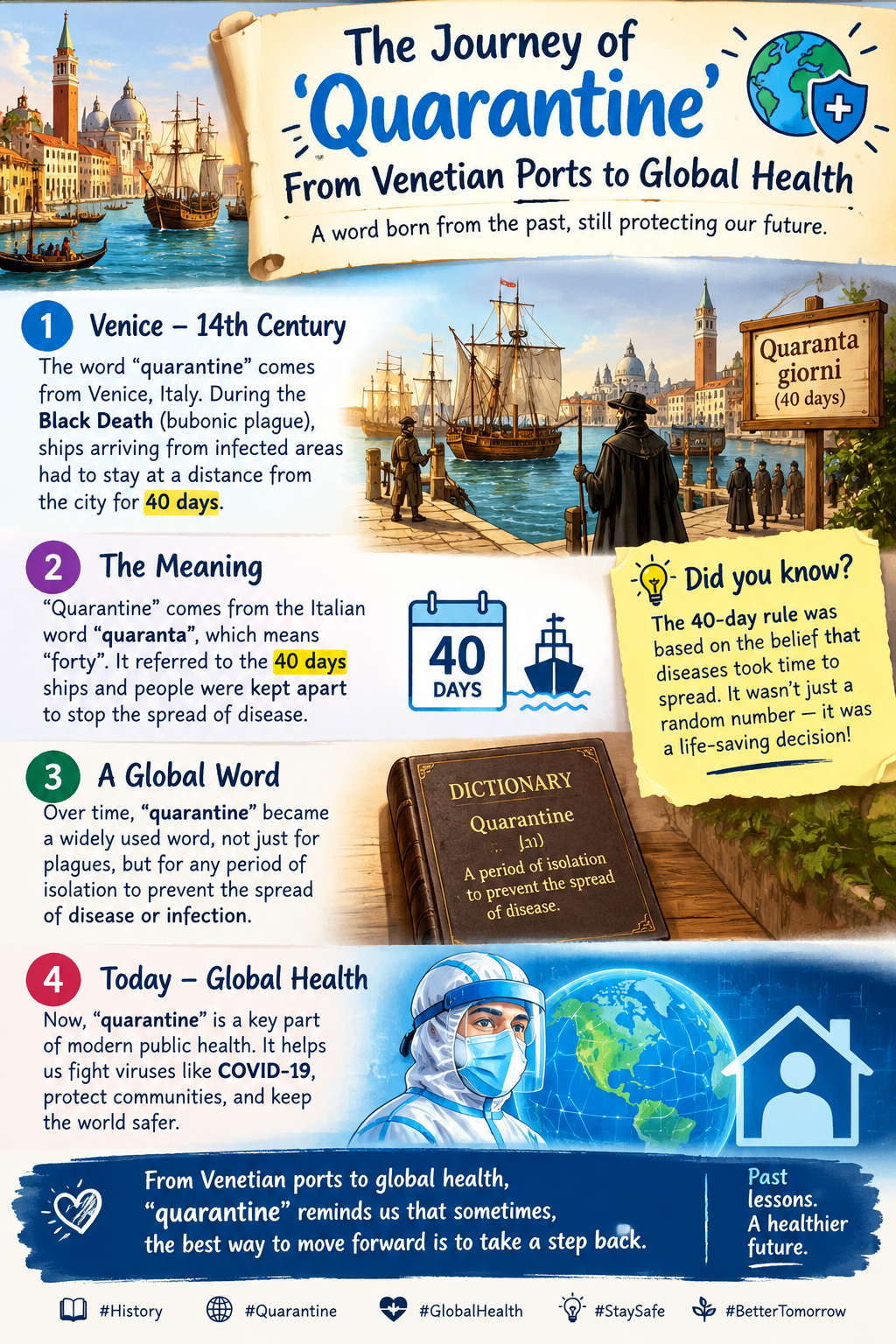
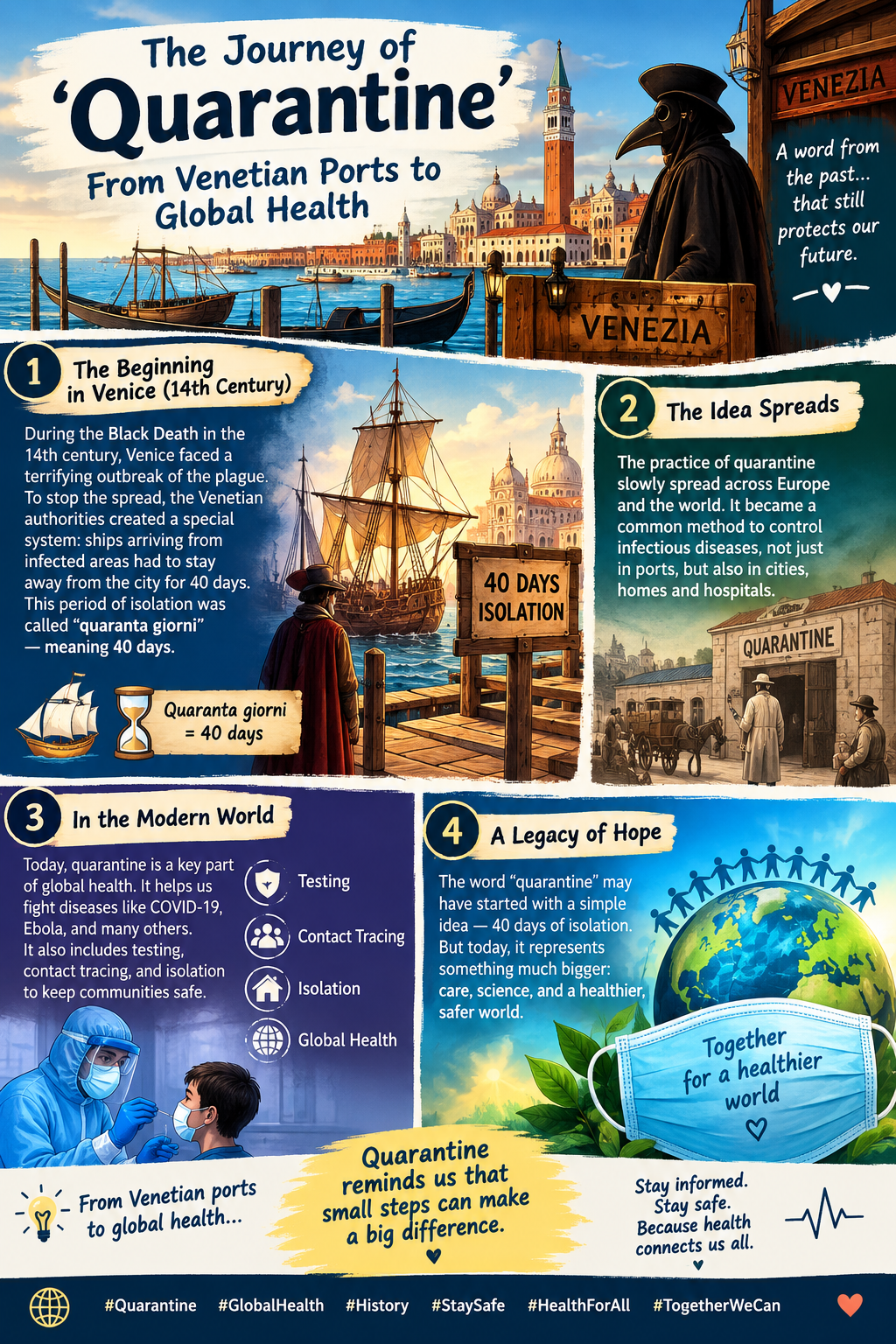
    **The Journey of “Quarantine”: From Venetian Ports to Global Health **

    Have you ever wondered where the word **“Quarantine”** came from? Today, we use this word when people need to stay separated for a period to help prevent the spread of infectious diseases. But did you know that its history goes back hundreds of years?

    **The Story Begins in Venice! **

    The word *quarantine* comes from the Italian word *quarantena*, meaning **forty days**. During the 14th century, when the plague threatened communities across Europe, the Venetian authorities required certain ships arriving from places affected by disease to wait before allowing passengers and goods to enter the city. This waiting period helped reduce the risk of spreading illness.

    **A Simple Idea That Changed Public Health!**

    The idea of keeping people separated during a possible infectious disease outbreak became an important part of public health. Over time, quarantine practices developed in different countries to help protect communities from dangerous diseases.

    **Quarantine in the Modern World**

    Today, quarantine and related public health measures may be used during outbreaks of infectious diseases. During the COVID-19 pandemic, people around the world became familiar with these measures. Scientists, doctors, nurses, and public health workers helped communities understand how to reduce the spread of infections. ‍‍

    **What Can We Learn From This History?**

    Words have fascinating stories behind them!
    History helps us understand how public health developed.
    Science and cooperation can help protect communities.
    Learning about the past can prepare us for future challenges.

    From the busy ports of Venice to modern hospitals and communities around the world, the journey of the word *quarantine* shows how language, history, and public health are connected.

    **Remember:** Every word has a story, and every story gives us an opportunity to learn something new! Keep exploring, keep asking questions, and never stop learning!

    Thank you for reading! If you enjoyed this historical journey, please Like, Comment, Share, and Follow for more amazing stories about words, science, history, and the world around us!

    #Quarantine #WordHistory #HistoryOfWords #Etymology #VeniceHistory #PublicHealth #HealthEducation #ScienceAndHistory #MedicalHistory #GlobalHealth #LearnSomethingNew #EducationalContent #KnowledgeIsPower #HistoryLovers #ScienceForEveryone #DidYouKnow #StoryPost #LearningJourney #StayCurious #RehanSchool #RehanCodingWithAI
    #rsisb Roll no. 247 Story post . 17 Foundation level ๐Ÿ“œ๐ŸŒ **The Journey of “Quarantine”: From Venetian Ports to Global Health ๐Ÿ›ณ๏ธ๐Ÿฆ ** ๐Ÿค”โœจ Have you ever wondered where the word **“Quarantine”** came from? Today, we use this word when people need to stay separated for a period to help prevent the spread of infectious diseases. But did you know that its history goes back hundreds of years? ๐Ÿ“š๐Ÿ” ๐Ÿ›๏ธ๐Ÿšข **The Story Begins in Venice! ๐Ÿ‡ฎ๐Ÿ‡น** The word *quarantine* comes from the Italian word *quarantena*, meaning **forty days**. During the 14th century, when the plague threatened communities across Europe, the Venetian authorities required certain ships arriving from places affected by disease to wait before allowing passengers and goods to enter the city. This waiting period helped reduce the risk of spreading illness. โš“โณ ๐Ÿฆ ๐ŸŒŠ **A Simple Idea That Changed Public Health!** The idea of keeping people separated during a possible infectious disease outbreak became an important part of public health. Over time, quarantine practices developed in different countries to help protect communities from dangerous diseases. ๐Ÿฅ๐Ÿ›ก๏ธ ๐ŸŒ๐Ÿ’™ **Quarantine in the Modern World** Today, quarantine and related public health measures may be used during outbreaks of infectious diseases. During the COVID-19 pandemic, people around the world became familiar with these measures. Scientists, doctors, nurses, and public health workers helped communities understand how to reduce the spread of infections. ๐Ÿ”ฌ๐Ÿ‘ฉ‍โš•๏ธ๐Ÿ‘จ‍โš•๏ธ ๐Ÿ“–๐Ÿ’ก **What Can We Learn From This History?** โœ… Words have fascinating stories behind them! โœ… History helps us understand how public health developed. โœ… Science and cooperation can help protect communities. โœ… Learning about the past can prepare us for future challenges. ๐ŸŒฑ๐ŸŒŽ โœจ From the busy ports of Venice to modern hospitals and communities around the world, the journey of the word *quarantine* shows how language, history, and public health are connected. ๐ŸŽฏ **Remember:** Every word has a story, and every story gives us an opportunity to learn something new! Keep exploring, keep asking questions, and never stop learning! ๐Ÿ“š๐Ÿš€๐Ÿ’ซ ๐Ÿ™ Thank you for reading! If you enjoyed this historical journey, please โค๏ธ Like, ๐Ÿ’ฌ Comment, ๐Ÿ” Share, and ๐Ÿ“Œ Follow for more amazing stories about words, science, history, and the world around us! #Quarantine #WordHistory #HistoryOfWords #Etymology #VeniceHistory #PublicHealth #HealthEducation #ScienceAndHistory #MedicalHistory #GlobalHealth #LearnSomethingNew #EducationalContent #KnowledgeIsPower #HistoryLovers #ScienceForEveryone #DidYouKnow #StoryPost #LearningJourney #StayCurious #RehanSchool #RehanCodingWithAI ๐ŸŒ๐Ÿ“š๐Ÿ”ฌโœจ
    0 Comments 0 Shares 2381 Views
  • #rsisb
    Roll no. 247
    Story post . 18
    Foundation level

    **The Journey of “Quarantine”: From Venetian Ports to Global Health **

    **Have you ever wondered where the word “quarantine” came from?** Today, we use the word quarantine when people stay apart from others for a period of time to help prevent the spread of infectious diseases. But did you know that this word has a fascinating history that goes back hundreds of years?

    **The Story Begins in Venice!**

    The journey of the word *quarantine* takes us back to the busy port cities of Venice, Italy, during the 14th century. Venice was an important center of international trade, where ships arrived from different parts of the world carrying goods, travelers, and sailors. However, ships could also bring infectious diseases into crowded cities.

    To reduce the risk of disease spreading, authorities required certain arriving travelers and sailors to wait for a period before entering the city. The Italian word *quaranta* means **forty**, and the term *quarantina* referred to a period of forty days. This practice helped give us the English word **“quarantine.”**

    **How Did Quarantine Change the World?**

    Over time, quarantine became an important public health measure. During outbreaks of infectious diseases, authorities used isolation and quarantine practices to help protect communities. As medical science developed, people gained a better understanding of how diseases spread and how to reduce transmission.

    ‍ Today, quarantine and isolation have different meanings:
    **Quarantine:** Separating or restricting the movement of people who may have been exposed to an infectious disease.
    **Isolation:** Keeping people who are infected or ill apart from others to help prevent the spread of disease.

    These measures may be used alongside vaccination, testing, good hygiene, and other public health strategies, depending on the disease and the situation.

    **What Can We Learn from This Story?**

    The history of quarantine teaches us that language, science, and human society are connected. A word that began with a forty-day waiting period in historical maritime trade became part of the vocabulary of global health!

    It also reminds us that communities have worked for centuries to protect public health. Learning about the past helps us understand the importance of scientific knowledge, responsible decisions, cooperation, and caring for one another.

    **A Small Word, A Big History!**

    From the historic Venetian ports to modern hospitals and public health systems, the journey of “quarantine” shows how a simple word can carry centuries of history, challenges, and discoveries.

    Keep asking questions, exploring history, and discovering the amazing stories hidden behind everyday words!

    **Question for You:** Did you know that the word “quarantine” is connected to the Italian word for forty? Share your thoughts in the comments!

    Like, share, and save this post if you enjoy learning interesting facts about history, language, and science!

    #๏ธโƒฃ **Hashtags:**

    #TheJourneyOfQuarantine #HistoryOfWords #Quarantine #VeniceHistory #ItalianHistory #WordOrigins #Etymology #GlobalHealth #PublicHealth #MedicalHistory #HistoryAndScience #ScienceEducation #HealthAwareness #InfectiousDiseases #LearningIsFun #EducationalPost #KnowledgeIsPower #DiscoverHistory #DidYouKnow #InterestingFacts #WorldHistory #LanguageLearning #StoryPost #KeepLearning #ExploreAndDiscover
    #rsisb Roll no. 247 Story post . 18 Foundation level ๐ŸŒ๐Ÿ“œ **The Journey of “Quarantine”: From Venetian Ports to Global Health ๐Ÿšข๐Ÿฆ ** โœจ๐Ÿ“š **Have you ever wondered where the word “quarantine” came from?** ๐Ÿค”๐ŸŒŽ Today, we use the word quarantine when people stay apart from others for a period of time to help prevent the spread of infectious diseases. But did you know that this word has a fascinating history that goes back hundreds of years? ๐Ÿ›๏ธโณ ๐Ÿšข๐Ÿ‡ฎ๐Ÿ‡น **The Story Begins in Venice!** ๐Ÿฐโœจ The journey of the word *quarantine* takes us back to the busy port cities of Venice, Italy, during the 14th century. Venice was an important center of international trade, where ships arrived from different parts of the world carrying goods, travelers, and sailors. ๐ŸŒโš“ However, ships could also bring infectious diseases into crowded cities. ๐Ÿ›ก๏ธโฐ To reduce the risk of disease spreading, authorities required certain arriving travelers and sailors to wait for a period before entering the city. The Italian word *quaranta* means **forty**, and the term *quarantina* referred to a period of forty days. This practice helped give us the English word **“quarantine.”** ๐Ÿ“–๐Ÿ” ๐Ÿฆ ๐Ÿ’ก **How Did Quarantine Change the World?** ๐ŸŒ๐Ÿฅ Over time, quarantine became an important public health measure. During outbreaks of infectious diseases, authorities used isolation and quarantine practices to help protect communities. As medical science developed, people gained a better understanding of how diseases spread and how to reduce transmission. ๐Ÿ”ฌ๐Ÿ‘ฉ‍โš•๏ธ Today, quarantine and isolation have different meanings: โœ… **Quarantine:** Separating or restricting the movement of people who may have been exposed to an infectious disease. โœ… **Isolation:** Keeping people who are infected or ill apart from others to help prevent the spread of disease. ๐ŸŒ๐Ÿฉบ These measures may be used alongside vaccination, testing, good hygiene, and other public health strategies, depending on the disease and the situation. ๐Ÿ’ญโœจ **What Can We Learn from This Story?** ๐Ÿ“š๐ŸŒŸ The history of quarantine teaches us that language, science, and human society are connected. A word that began with a forty-day waiting period in historical maritime trade became part of the vocabulary of global health! ๐ŸŒ๐Ÿšข ๐Ÿง ๐Ÿ’ก It also reminds us that communities have worked for centuries to protect public health. Learning about the past helps us understand the importance of scientific knowledge, responsible decisions, cooperation, and caring for one another. โค๏ธ๐Ÿค ๐ŸŽฏ๐Ÿ“– **A Small Word, A Big History!** From the historic Venetian ports to modern hospitals and public health systems, the journey of “quarantine” shows how a simple word can carry centuries of history, challenges, and discoveries. ๐Ÿšขโžก๏ธ๐Ÿฅ ๐ŸŒŸ Keep asking questions, exploring history, and discovering the amazing stories hidden behind everyday words! ๐Ÿ”Ž๐Ÿ“šโœจ ๐Ÿ’ฌ **Question for You:** Did you know that the word “quarantine” is connected to the Italian word for forty? ๐Ÿค”๐Ÿ‘‡ Share your thoughts in the comments! โค๏ธ Like, ๐Ÿ”„ share, and ๐Ÿ“Œ save this post if you enjoy learning interesting facts about history, language, and science! #๏ธโƒฃ **Hashtags:** #TheJourneyOfQuarantine #HistoryOfWords #Quarantine #VeniceHistory #ItalianHistory #WordOrigins #Etymology #GlobalHealth #PublicHealth #MedicalHistory #HistoryAndScience #ScienceEducation #HealthAwareness #InfectiousDiseases #LearningIsFun #EducationalPost #KnowledgeIsPower #DiscoverHistory #DidYouKnow #InterestingFacts #WorldHistory #LanguageLearning #StoryPost #KeepLearning #ExploreAndDiscover ๐ŸŒ๐Ÿ“š๐Ÿ”ฌโœจ
    0 Comments 0 Shares 2862 Views
  • RSIF8
    Roll no 94
    Call annie no 6
    Call annie topic
    Thank You – The Etymology of Gratitude

    Had a wonderful 5-minute conversation with Annie about the meaning and origins of the phrase "Thank You" and how gratitude has shaped human connections throughout history.

    We explored how a simple expression of appreciation can strengthen relationships, spread positivity, and make a meaningful difference in everyday life.

    Remember, a heartfelt "Thank You" costs nothing but can mean everything.

    #ThankYou #Gratitude #Etymology #PowerOfWords #PositiveVibes #Appreciation #LearningTogether #MeaningfulConversations #KindnessMatters #StayGrateful
    RSIF8 Roll no 94 Call annie no 6 Call annie topic ๐Ÿ™โœจ Thank You – The Etymology of Gratitude โœจ๐Ÿ™ Had a wonderful 5-minute conversation with Annie about the meaning and origins of the phrase "Thank You" and how gratitude has shaped human connections throughout history. ๐ŸŒ๐Ÿ’– We explored how a simple expression of appreciation can strengthen relationships, spread positivity, and make a meaningful difference in everyday life. ๐ŸŒŸ๐Ÿค Remember, a heartfelt "Thank You" costs nothing but can mean everything. ๐Ÿ’๐Ÿ˜Š #ThankYou #Gratitude #Etymology #PowerOfWords #PositiveVibes #Appreciation #LearningTogether #MeaningfulConversations #KindnessMatters #StayGrateful ๐Ÿ™๐Ÿ’ซโค๏ธ
    0 Comments 0 Shares 1398 Views 14
  • Call Aniie – Day 44
    Topic: “Thank You” – The Etymology of Gratitude
    Exploring the beautiful history behind the words that express our deepest appreciation
    ๐Ÿ“ž Call Aniie – Day 44 โœจ Topic: “Thank You” – The Etymology of Gratitude Exploring the beautiful history behind the words that express our deepest appreciation ๐Ÿค๐Ÿ’ฌ
    0 Comments 0 Shares 318 Views 0
  • RSIF8
    Roll no: 99
    Call Annie No: 5
    Topic: "Thank You" – The Etymology of Gratitude
    I had a 5 minute conversation with Annie on the fascinating topic "Thank You" – The Etymology of Gratitude.
    #thankyou #BeyondHorizons #Annie #LiveConversation #Learning #ScienceAndNature #Exploration #Curiosity #SocialMediaLive
    RSIF8 Roll no: 99 Call Annie No: 5 Topic: "Thank You" – The Etymology of Gratitude I had a 5 minute conversation with Annie on the fascinating topic "Thank You" – The Etymology of Gratitude. #thankyou #BeyondHorizons #Annie #LiveConversation #Learning #ScienceAndNature #Exploration #Curiosity #SocialMediaLive
    0 Comments 0 Shares 512 Views 6
  • #rsisb
    Roll No:232
    Foundation level student.
    Call annie:5

    **Bye-Bye – Where Did Our Goodbye Come From?**

    Have you ever wondered where the simple word **“Bye”** actually came from? In this video, we explore the fascinating history behind **“Bye,” “Bye-Bye,” “Goodbye,” and “Farewell.”**

    We’ll discover how people said goodbye in the past, how the word **“Goodbye”** developed over time, and how different cultures around the world say goodbye.

    From everyday conversations to phone calls, messages, movies, and social media, saying goodbye is a small but important part of communication.

    Join us on this interesting journey through **language, history, culture, and communication**!

    **Watch, learn, and discover the story behind one of the most common words we use every day!**

    ### Hashtags

    #ByeBye #Goodbye #WhereDidGoodbyeComeFrom #EnglishLanguage #LanguageHistory #WordHistory #Etymology #LearnEnglish #EnglishWords #LanguageLearning #HistoryOfWords #Communication #Culture #InterestingFacts #DidYouKnow #Education #Learning #EnglishVocabulary #FunLearning #LanguageFacts

    ### Emojis


    Irum Asim Leadershipwali
    Rehan School Islamabad Campus
    Asma Shaheen EducationWali
    #rsisb Roll No:232 Foundation level student. Call annie:5 ๐Ÿ‘‹ **Bye-Bye – Where Did Our Goodbye Come From?** ๐ŸŒ Have you ever wondered where the simple word **“Bye”** actually came from? ๐Ÿค” In this video, we explore the fascinating history behind **“Bye,” “Bye-Bye,” “Goodbye,” and “Farewell.”** ๐Ÿ“šโœจ We’ll discover how people said goodbye in the past, how the word **“Goodbye”** developed over time, and how different cultures around the world say goodbye. ๐ŸŒŽ๐Ÿ—ฃ๏ธ From everyday conversations to phone calls, messages, movies, and social media, saying goodbye is a small but important part of communication. ๐Ÿ“ฑ๐Ÿ‘‹ Join us on this interesting journey through **language, history, culture, and communication**! ๐Ÿš€๐Ÿ“– โค๏ธ **Watch, learn, and discover the story behind one of the most common words we use every day!** ### ๐Ÿ”– Hashtags #ByeBye #Goodbye #WhereDidGoodbyeComeFrom #EnglishLanguage #LanguageHistory #WordHistory #Etymology #LearnEnglish #EnglishWords #LanguageLearning #HistoryOfWords #Communication #Culture #InterestingFacts #DidYouKnow #Education #Learning #EnglishVocabulary #FunLearning #LanguageFacts ### ๐Ÿ˜Š Emojis ๐Ÿ‘‹ ๐ŸŒ ๐Ÿ—ฃ๏ธ ๐Ÿ“š ๐Ÿ“– ๐Ÿค” ๐Ÿ’ก โœจ ๐Ÿ•ฐ๏ธ ๐ŸŒŽ ๐Ÿ“ฑ ๐ŸŽ“ ๐Ÿš€ โค๏ธ ๐Ÿ˜Š ๐Ÿ”ค Irum Asim Leadershipwali Rehan School Islamabad Campus Asma Shaheen EducationWali
    1
    0 Comments 0 Shares 2977 Views 8
  • #rsisb
    Roll no.239
    Story post no.21
    Foundation Level


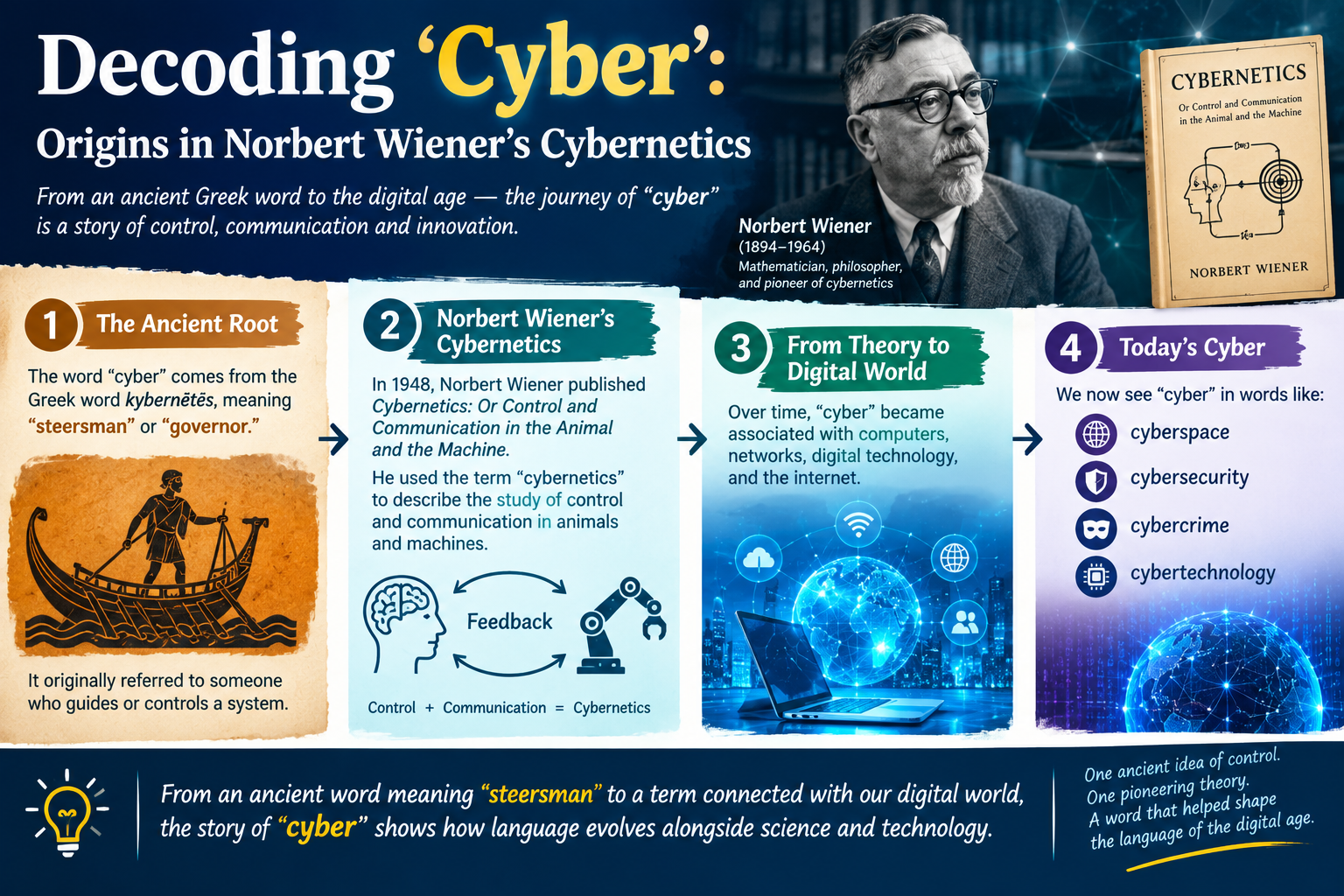
    The word **“cyber”** has a fascinating journey from ancient Greek language to the modern digital world.

    In 1948, American mathematician and philosopher **Norbert Wiener** published *Cybernetics: Or Control and Communication in the Animal and the Machine*. He used the term **“cybernetics”** to describe the study of control and communication in animals and machines.

    The word traces back to the Greek **“kybernฤ“tฤ“s,”** meaning **“steersman” or “governor”**—someone who guides or controls a system.

    Over time, **“cyber”** became associated with computers, networks, digital technology, and the internet. Today, we encounter it in words such as **cyberspace, cybersecurity, cybercrime, and cybertechnology**.

    From an ancient word meaning **“steersman”** to a term connected with our digital world, the story of **“cyber”** shows how language evolves alongside science and technology.

    **One ancient idea of control. One pioneering theory. A word that helped shape the language of the digital age.**

    #Cyber #Cybernetics #NorbertWiener #Technology #ComputerScience #HistoryOfTechnology #Etymology #DigitalWorld #Cybersecurity #ScienceHistory #DidYouKnow #Education #Innovation #TechnologyHistory
    #rsisb Roll no.239 Story post no.21 Foundation Level The word **“cyber”** has a fascinating journey from ancient Greek language to the modern digital world. ๐ŸŒ In 1948, American mathematician and philosopher **Norbert Wiener** published *Cybernetics: Or Control and Communication in the Animal and the Machine*. He used the term **“cybernetics”** to describe the study of control and communication in animals and machines. The word traces back to the Greek **“kybernฤ“tฤ“s,”** meaning **“steersman” or “governor”**—someone who guides or controls a system. ๐Ÿšข Over time, **“cyber”** became associated with computers, networks, digital technology, and the internet. Today, we encounter it in words such as **cyberspace, cybersecurity, cybercrime, and cybertechnology**. From an ancient word meaning **“steersman”** to a term connected with our digital world, the story of **“cyber”** shows how language evolves alongside science and technology. ๐Ÿ”ฌ๐Ÿ’ป โœจ **One ancient idea of control. One pioneering theory. A word that helped shape the language of the digital age.** #Cyber #Cybernetics #NorbertWiener #Technology #ComputerScience #HistoryOfTechnology #Etymology #DigitalWorld #Cybersecurity #ScienceHistory #DidYouKnow #Education #Innovation #TechnologyHistory
    0 Comments 0 Shares 2439 Views
  • #rsisb
    Roll no.239
    Story post no.20
    Foundation Level

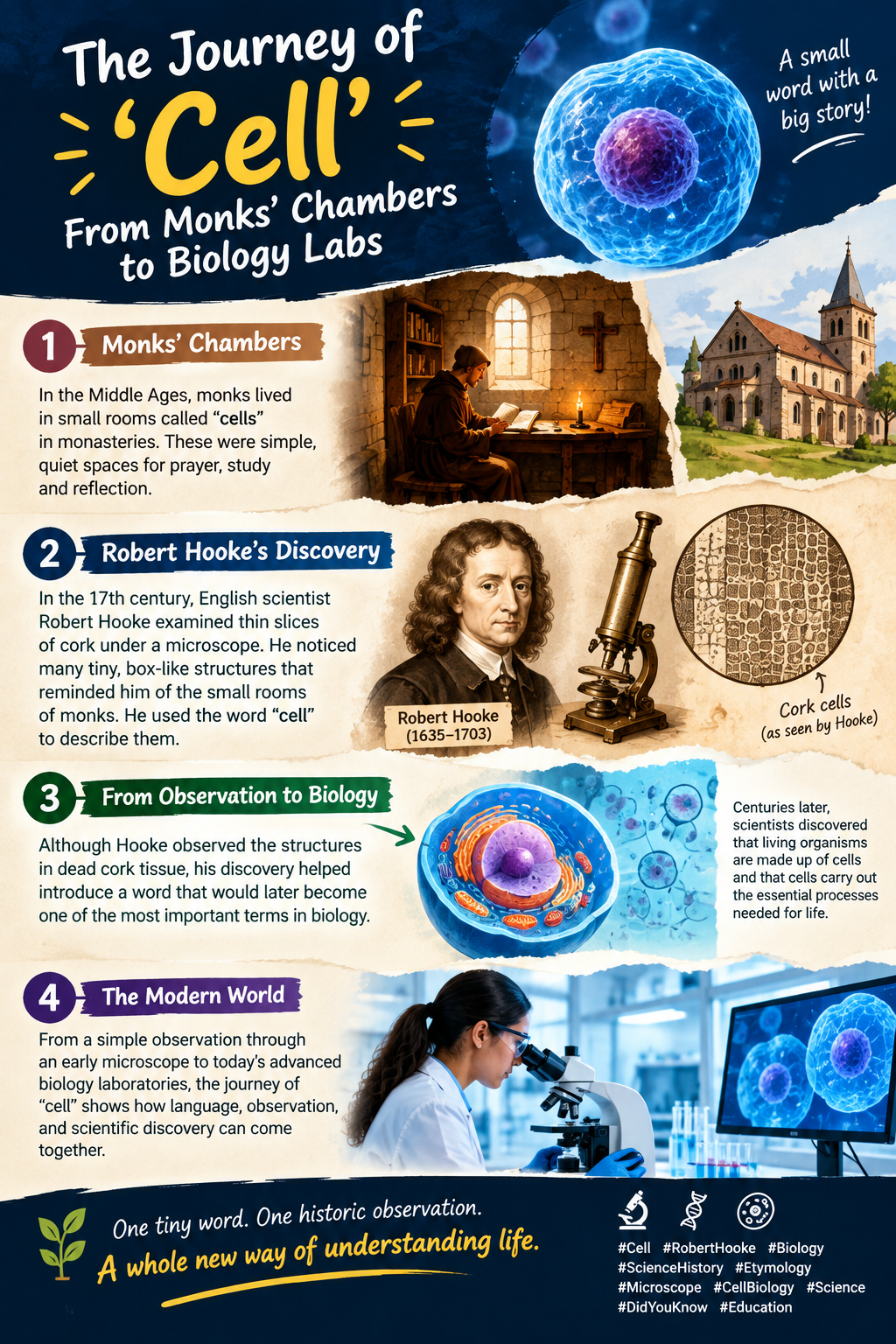
    In the 17th century, English scientist **Robert Hooke** examined thin slices of cork under a microscope. He noticed many tiny, box-like structures that reminded him of the small rooms, or **cells**, occupied by monks. He used the word **“cell”** to describe them.

    Although Hooke observed the structures in dead cork tissue, his discovery helped introduce a word that would later become one of the most important terms in biology.

    Centuries later, scientists discovered that living organisms are made up of cells and that cells carry out the essential processes needed for life. From a simple observation through an early microscope to today’s advanced biology laboratories, the journey of **“cell”** shows how language, observation, and scientific discovery can come together.

    **One tiny word. One historic observation. A whole new way of understanding life.**

    #Cell #RobertHooke #Biology #ScienceHistory #HistoryOfWords #Etymology #Microscope #CellBiology #Science #BiologyFacts #DidYouKnow #Education #Learning #ScientificDiscovery
    #rsisb Roll no.239 Story post no.20 Foundation Level In the 17th century, English scientist **Robert Hooke** examined thin slices of cork under a microscope. He noticed many tiny, box-like structures that reminded him of the small rooms, or **cells**, occupied by monks. He used the word **“cell”** to describe them. Although Hooke observed the structures in dead cork tissue, his discovery helped introduce a word that would later become one of the most important terms in biology. ๐Ÿงฌ Centuries later, scientists discovered that living organisms are made up of cells and that cells carry out the essential processes needed for life. From a simple observation through an early microscope to today’s advanced biology laboratories, the journey of **“cell”** shows how language, observation, and scientific discovery can come together. ๐ŸŒฑ **One tiny word. One historic observation. A whole new way of understanding life.** #Cell #RobertHooke #Biology #ScienceHistory #HistoryOfWords #Etymology #Microscope #CellBiology #Science #BiologyFacts #DidYouKnow #Education #Learning #ScientificDiscovery
    0 Comments 0 Shares 1346 Views
  • #rsisb
    Roll no.239
    Story post no.19
    Foundation Level


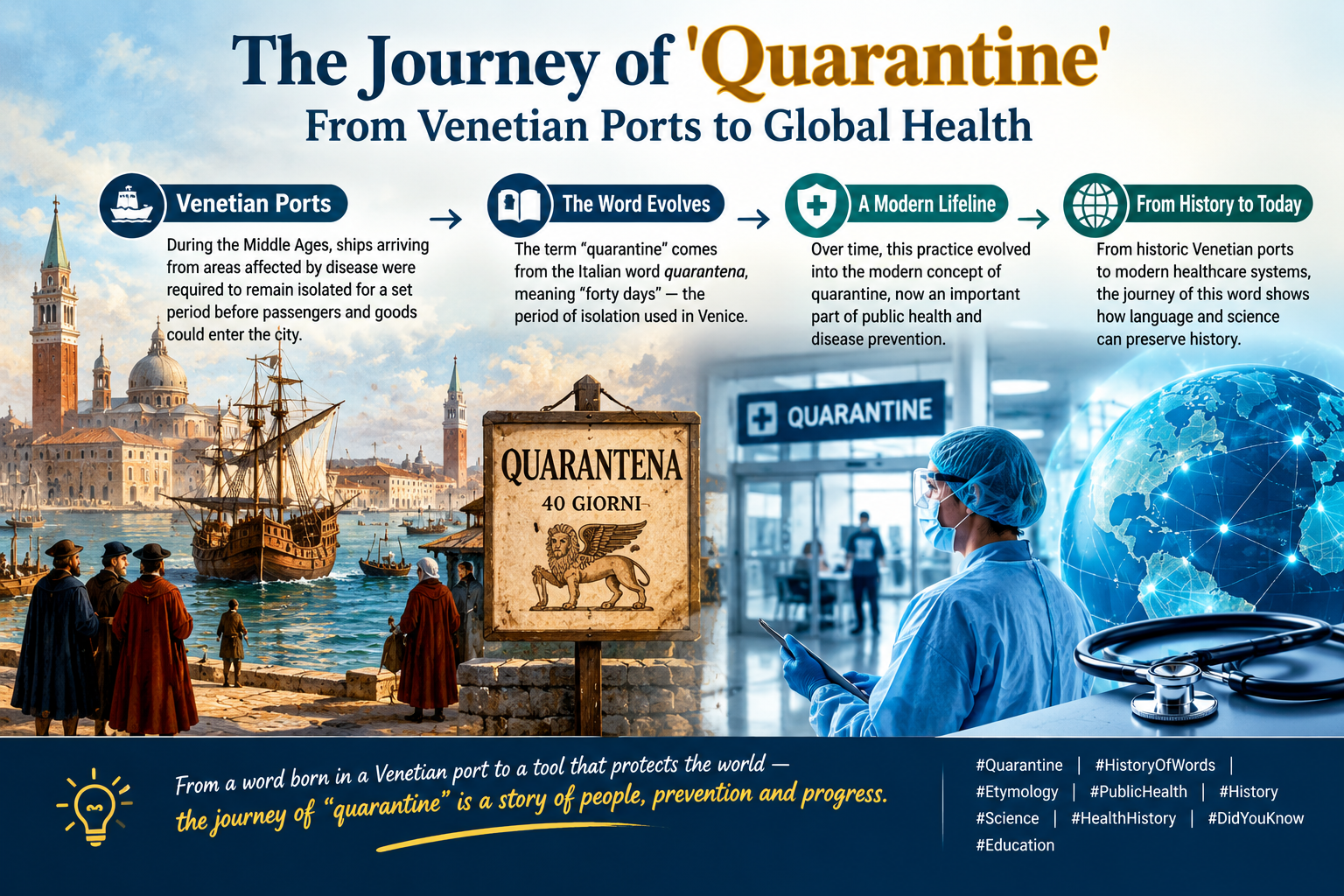
    Did you know the word **“quarantine”** has its roots in Venice? During the Middle Ages, ships arriving from areas affected by disease were required to remain isolated for a set period before passengers and goods could enter the city.

    Over time, this practice evolved into the modern concept of **quarantine**, now an important part of public health and disease prevention.

    From historic Venetian ports to modern healthcare systems, the journey of this word shows how language and science can preserve history.

    #Quarantine #HistoryOfWords #Etymology #PublicHealth #History #Science #HealthHistory #DidYouKnow #Education
    #rsisb Roll no.239 Story post no.19 Foundation Level Did you know the word **“quarantine”** has its roots in Venice? During the Middle Ages, ships arriving from areas affected by disease were required to remain isolated for a set period before passengers and goods could enter the city. Over time, this practice evolved into the modern concept of **quarantine**, now an important part of public health and disease prevention. ๐Ÿงช๐Ÿฅ From historic Venetian ports to modern healthcare systems, the journey of this word shows how language and science can preserve history. #Quarantine #HistoryOfWords #Etymology #PublicHealth #History #Science #HealthHistory #DidYouKnow #Education
    0 Comments 0 Shares 1385 Views
More Results