• #rsisb
    Roll no 248
    Foundation level
    song no 9
    **Chemical Reactions: The Engine of Life**

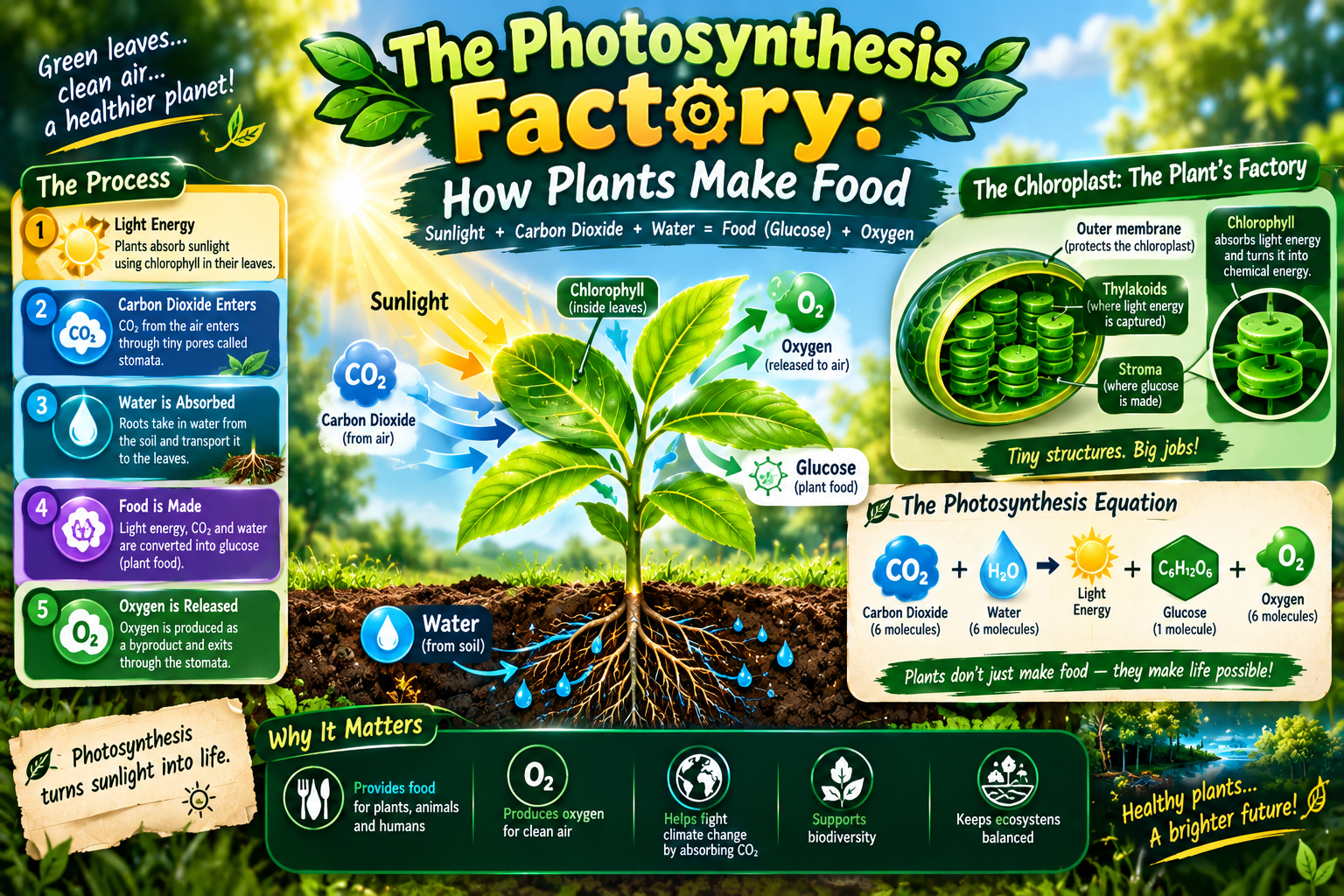
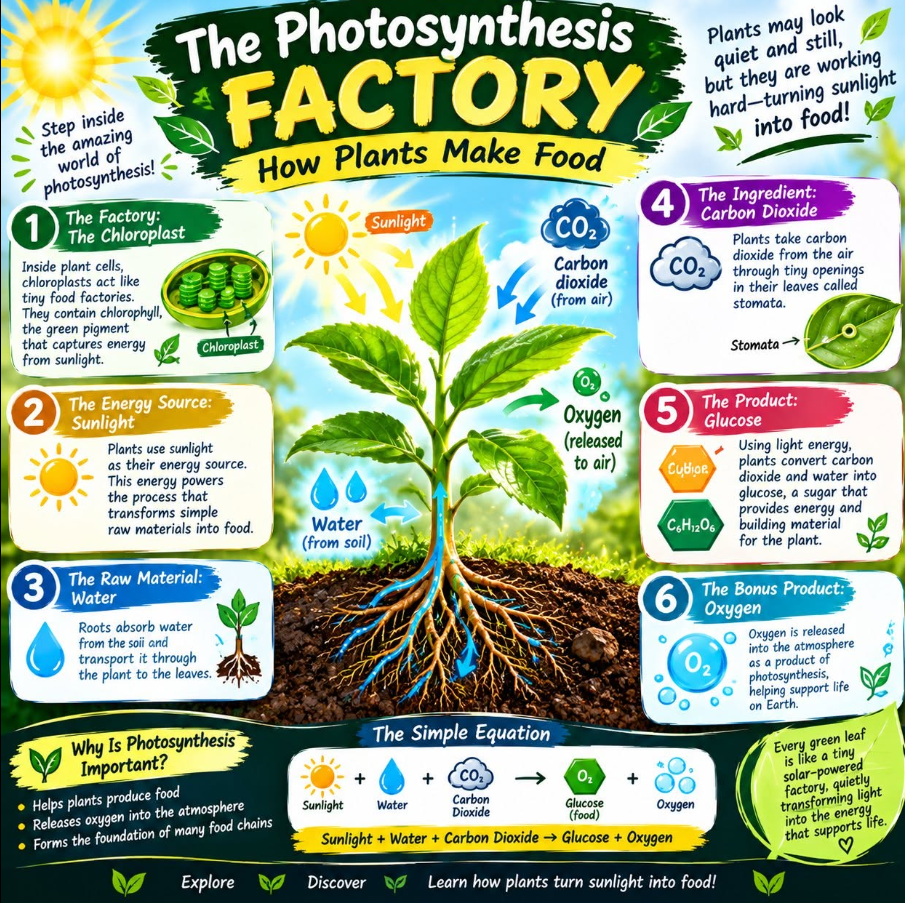
    Chemical reactions are happening around us every moment! From the food we eat to the energy our bodies use , reactions help make life possible. Photosynthesis , respiration , digestion , and many other processes depend on chemical changes.

    In this topic, we explore how atoms rearrange to create new substances and how these reactions support life on Earth . Understanding chemical reactions helps us discover the amazing science working inside our bodies and throughout nature!

    #ChemicalReactions #EngineOfLife #Science #Chemistry #Biology #Photosynthesis #Respiration #Learning #ScienceEducation #StudentLife
    #rsisb Roll no 248 Foundation level song no 9 🧪⚡ **Chemical Reactions: The Engine of Life** 🌱🔬 Chemical reactions are happening around us every moment! From the food we eat 🍎 to the energy our bodies use ⚡, reactions help make life possible. Photosynthesis 🌿☀️, respiration 🫁, digestion 🍽️, and many other processes depend on chemical changes. In this topic, we explore how atoms rearrange to create new substances and how these reactions support life on Earth 🌍✨. Understanding chemical reactions helps us discover the amazing science working inside our bodies and throughout nature! 🧬🔬 #ChemicalReactions 🧪 #EngineOfLife ⚡ #Science 🔬 #Chemistry 🧬 #Biology 🌱 #Photosynthesis ☀️ #Respiration 🫁 #Learning 📚 #ScienceEducation 🎓 #StudentLife 🌟
    0 Commentaires 0 Parts 527 Vue 3
  • #rsisb
    Roll No.240
    Story No.13
    Foundation Level

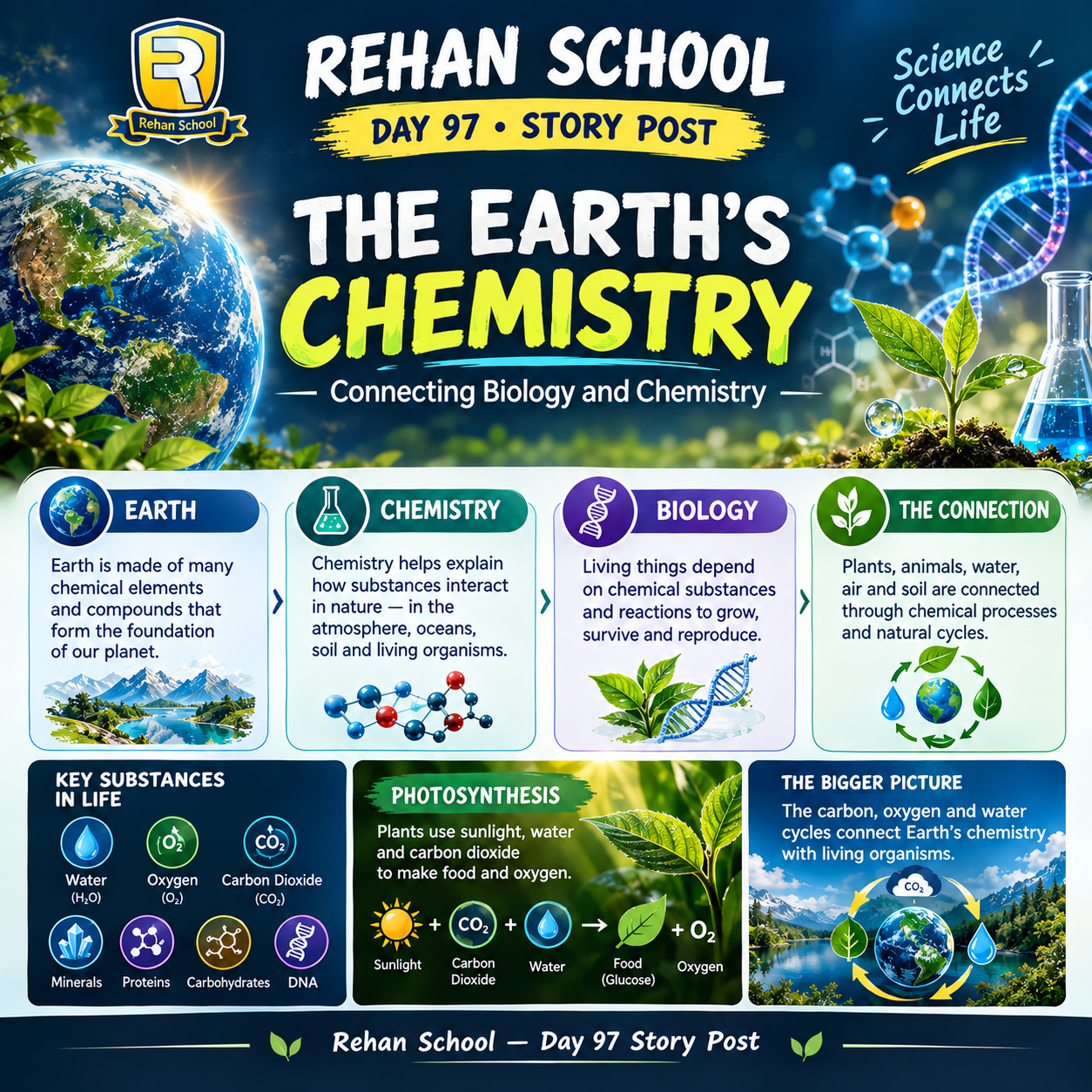
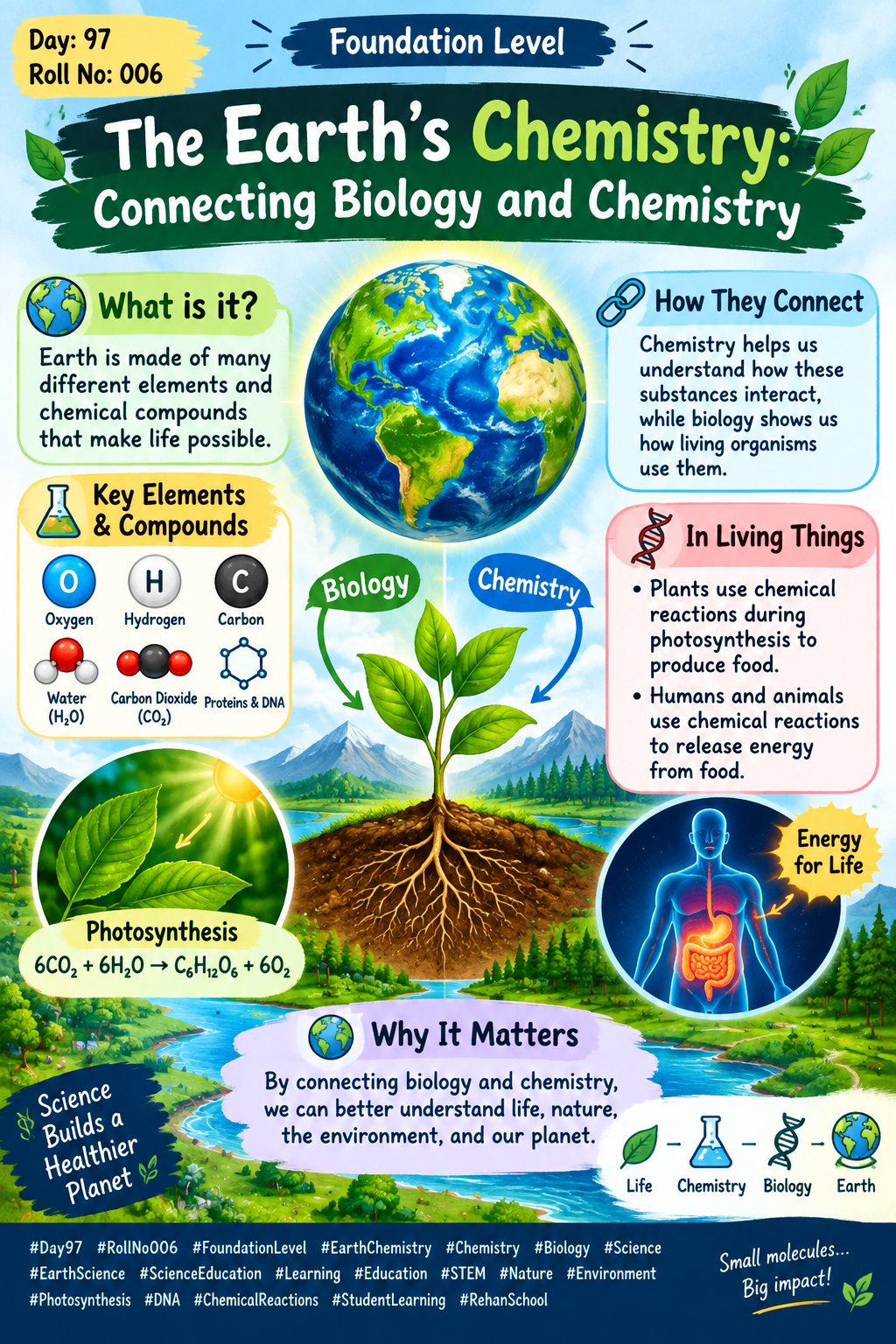
    # The Earth's Chemistry: Connecting Biology and Chemistry

    The Earth is a remarkable system where biology and chemistry work together to sustain life. Every living organism depends on chemical elements and reactions to grow, reproduce, and survive. From the oxygen we breathe and the water we drink to the nutrients in the soil, Earth's natural cycles are driven by the close relationship between biological processes and chemical transformations. Photosynthesis, respiration, decomposition, and nutrient cycling all demonstrate how life and chemistry are deeply interconnected.

    Chemistry explains the composition of air, water, rocks, and living cells, while biology reveals how organisms use these substances to carry out life's essential functions. Carbon, hydrogen, oxygen, nitrogen, phosphorus, and sulfur are the building blocks of life, constantly moving through Earth's atmosphere, oceans, soil, and ecosystems. Understanding this connection helps us appreciate the delicate balance that supports biodiversity, regulates climate, and maintains healthy environments.

    Exploring Earth's chemistry allows us to understand environmental challenges such as pollution, climate change, soil degradation, and water quality. By combining the principles of biology and chemistry, scientists develop innovative solutions for conserving ecosystems, improving agriculture, protecting natural resources, and creating a more sustainable future. Discover how these two fascinating sciences unite to explain the incredible processes that make our planet a thriving home for life.

    Rehan School Islamabad Campus
    Asma Shaheen EducationWali
    Irum Asim
    Saima Happinesswali
    #rsisb Roll No.240 Story No.13 Foundation Level # The Earth's Chemistry: Connecting Biology and Chemistry The Earth is a remarkable system where biology and chemistry work together to sustain life. Every living organism depends on chemical elements and reactions to grow, reproduce, and survive. From the oxygen we breathe and the water we drink to the nutrients in the soil, Earth's natural cycles are driven by the close relationship between biological processes and chemical transformations. Photosynthesis, respiration, decomposition, and nutrient cycling all demonstrate how life and chemistry are deeply interconnected. Chemistry explains the composition of air, water, rocks, and living cells, while biology reveals how organisms use these substances to carry out life's essential functions. Carbon, hydrogen, oxygen, nitrogen, phosphorus, and sulfur are the building blocks of life, constantly moving through Earth's atmosphere, oceans, soil, and ecosystems. Understanding this connection helps us appreciate the delicate balance that supports biodiversity, regulates climate, and maintains healthy environments. Exploring Earth's chemistry allows us to understand environmental challenges such as pollution, climate change, soil degradation, and water quality. By combining the principles of biology and chemistry, scientists develop innovative solutions for conserving ecosystems, improving agriculture, protecting natural resources, and creating a more sustainable future. Discover how these two fascinating sciences unite to explain the incredible processes that make our planet a thriving home for life. Rehan School Islamabad Campus Asma Shaheen EducationWali Irum Asim Saima Happinesswali
    0 Commentaires 0 Parts 1783 Vue
  • #rsisb
    Roll no.239
    Foundation Level

    Earth is a remarkable system where **chemistry and biology work together** to support life. From the air we breathe and the water we drink to the food we eat, chemical substances and reactions are constantly shaping the living world.

    genui{"chemistry_atoms_molecules_matter":{"type_id":"ATOMIC_COMPOSITION"}}

    Chemistry helps us understand the elements and molecules that make up living organisms, while biology explains how these substances interact within cells and ecosystems. **Carbon, oxygen, hydrogen, nitrogen, phosphorus, and sulfur** are especially important because they form many of the molecules essential for life.

    Processes such as **photosynthesis, respiration, decomposition, and nutrient cycling** demonstrate the close relationship between chemistry and biology. Understanding this connection helps us explore Earth's ecosystems, environmental changes, and the chemistry that makes life possible.

    **Chemistry explains the substances; biology shows how life uses them. Together, they reveal the amazing science of our planet.**
    #rsisb Roll no.239 Foundation Level Earth is a remarkable system where **chemistry and biology work together** to support life. From the air we breathe and the water we drink to the food we eat, chemical substances and reactions are constantly shaping the living world. genui{"chemistry_atoms_molecules_matter":{"type_id":"ATOMIC_COMPOSITION"}} Chemistry helps us understand the elements and molecules that make up living organisms, while biology explains how these substances interact within cells and ecosystems. **Carbon, oxygen, hydrogen, nitrogen, phosphorus, and sulfur** are especially important because they form many of the molecules essential for life. Processes such as **photosynthesis, respiration, decomposition, and nutrient cycling** demonstrate the close relationship between chemistry and biology. Understanding this connection helps us explore Earth's ecosystems, environmental changes, and the chemistry that makes life possible. **Chemistry explains the substances; biology shows how life uses them. Together, they reveal the amazing science of our planet.** 🌍🧪🌱
    0 Commentaires 0 Parts 1179 Vue
  • Some Questions for friends who are interested in Philosophy, Science, Religion, Epistemology, Nature and Consciousness:

    Q- Is there any purpose of the intelligent life on this planet which is floating in an unfathomably vast and expanding universe? Why there is life at all?

    Q- Will humans with a few decades of working life be ever physically able to travel even to the limits of the solar system in a universe where distances are measured in light years; a universe where even light needs millions of billions of years to travel across galaxies and there are billions of galaxies in the known universe?

    Q- Is there a creative consciousnesses behind the origin of this universe? If so, why?

    Q- If it was an explosion of an infinite singularity called the Big Bang, then what was the prime mover of the Big Bang?

    Q- If at all there is a creator of the universe, what meaningful relationship the teeming humanity on this speck of cosmic dust called earth can have with that creative consciousness?

    Q- Why there lurks a similarity of design in all natural creations on the planet? Why all life forms, from an embryonic foetus to sperm whale are programmed for propagation of life and species?

    Q- Why love, empathy, intelligence, fear, hate, anger, happiness, surprise, trust, are found to exist in humans as well as in many other species too? Is it only the natural selection at work?

    Q- Why are we connected and dependent upon our environment to survive? Why we humans depend upon other life forms for our own existence? For example, photosynthesis of plants which is vital in our food chain, as well as recycling of Carbon dioxide to produce oxygen without which humans can’t even exist on the planet.

    Q- Is there a designer mind behind the creation of the universe 13.4 billion years ago which set up and linked the values of universal physical constants to enable life to evolve or it was just a random accident? Or could these be random?

    Q- How ‘a causal agent outside space & time’ (God) connects with the entirety of space-time?

    Q- Does a a self-existent, immutable, immaterial, omnipotent, and omniscient Being (God) exist? How evil would exist with an omnipotent and omniscient being?

    These are the questions which the best thinking minds in the humanity has been seeking answers of, since time immemorial. All the religious and philosophical answers, theism, pantheism, agnosticism as well as atheism are in fact the humanity’s attempt to solve this riddle of consciousness and the cycle of existence.

    I will explore and try to read and share with you what the great geniuses from Aristotle to Stephen Hawking thought and contemplated; but let us start this quest from you.

    Everyone will get a different answer; in the verse of Ghalib;

    kyā farz hai ki sab ko mile ek sā javāb
    aao na ham bhī sair kareñ koh-e-tūr kī

    This Koh-e-tur is the riddle of life.

    Shared via Khalid Umar ! Do reply to him
    Some Questions for friends who are interested in Philosophy, Science, Religion, Epistemology, Nature and Consciousness: Q- Is there any purpose of the intelligent life on this planet which is floating in an unfathomably vast and expanding universe? Why there is life at all? Q- Will humans with a few decades of working life be ever physically able to travel even to the limits of the solar system in a universe where distances are measured in light years; a universe where even light needs millions of billions of years to travel across galaxies and there are billions of galaxies in the known universe? Q- Is there a creative consciousnesses behind the origin of this universe? If so, why? Q- If it was an explosion of an infinite singularity called the Big Bang, then what was the prime mover of the Big Bang? Q- If at all there is a creator of the universe, what meaningful relationship the teeming humanity on this speck of cosmic dust called earth can have with that creative consciousness? Q- Why there lurks a similarity of design in all natural creations on the planet? Why all life forms, from an embryonic foetus to sperm whale are programmed for propagation of life and species? Q- Why love, empathy, intelligence, fear, hate, anger, happiness, surprise, trust, are found to exist in humans as well as in many other species too? Is it only the natural selection at work? Q- Why are we connected and dependent upon our environment to survive? Why we humans depend upon other life forms for our own existence? For example, photosynthesis of plants which is vital in our food chain, as well as recycling of Carbon dioxide to produce oxygen without which humans can’t even exist on the planet. Q- Is there a designer mind behind the creation of the universe 13.4 billion years ago which set up and linked the values of universal physical constants to enable life to evolve or it was just a random accident? Or could these be random? Q- How ‘a causal agent outside space & time’ (God) connects with the entirety of space-time? Q- Does a a self-existent, immutable, immaterial, omnipotent, and omniscient Being (God) exist? How evil would exist with an omnipotent and omniscient being? These are the questions which the best thinking minds in the humanity has been seeking answers of, since time immemorial. All the religious and philosophical answers, theism, pantheism, agnosticism as well as atheism are in fact the humanity’s attempt to solve this riddle of consciousness and the cycle of existence. I will explore and try to read and share with you what the great geniuses from Aristotle to Stephen Hawking thought and contemplated; but let us start this quest from you. Everyone will get a different answer; in the verse of Ghalib; kyā farz hai ki sab ko mile ek sā javāb aao na ham bhī sair kareñ koh-e-tūr kī This 'Koh-e-tur' is the riddle of life. Shared via Khalid Umar ! Do reply to him
    0 Commentaires 0 Parts 2383 Vue
  • #rsisb
    Roll No. 183
    Image With Chatgpt No. 22
    Foundation Level

    **Did You Know?**

    The **Amazon Rainforest** is often called the **"Lungs of the Earth"** because it plays a vital role in our planet's ecosystem. While a popular claim says it produces **20% of the Earth's oxygen**, the reality is more nuanced—although the Amazon generates a great deal of oxygen through photosynthesis, it also uses much of that oxygen through the respiration of plants and other living organisms. Even so, it remains one of the world's most important ecosystems, helping regulate climate, store vast amounts of carbon, and provide a home for millions of plant and animal species.

    Protecting the Amazon means protecting biodiversity, supporting Indigenous communities, and helping maintain a healthier planet for future generations. Every small action we take to care for nature makes a difference. Let's spread awareness and inspire others to value and protect our forests!

    **Nature is our greatest treasure—let's protect it together!**

    #AmazonRainforest #DidYouKnow #NatureFacts #SaveTheAmazon #ProtectNature #ClimateAction #GoGreen #Earth #Environment #Rainforest #Wildlife #Biodiversity #Sustainability #EcoFriendly #NatureLovers #PlanetEarth #GreenFuture #Forest #Conservation #LearnSomethingNew

    Malik Lehrasib Awan
    Irum Asim

    #rsisb Roll No. 183 Image With Chatgpt No. 22 Foundation Level 🌿🌎 **Did You Know?** 🌎🌿 The **Amazon Rainforest** is often called the **"Lungs of the Earth"** because it plays a vital role in our planet's ecosystem. 🌳💚 While a popular claim says it produces **20% of the Earth's oxygen**, the reality is more nuanced—although the Amazon generates a great deal of oxygen through photosynthesis, it also uses much of that oxygen through the respiration of plants and other living organisms. 🌱🍃 Even so, it remains one of the world's most important ecosystems, helping regulate climate, store vast amounts of carbon, and provide a home for millions of plant and animal species. 🦜🐒🌺 Protecting the Amazon means protecting biodiversity, supporting Indigenous communities, and helping maintain a healthier planet for future generations. Every small action we take to care for nature makes a difference. 🌍💙 Let's spread awareness and inspire others to value and protect our forests! 🌿✨ 💚 **Nature is our greatest treasure—let's protect it together!** 🌎🌱 #AmazonRainforest #DidYouKnow #NatureFacts #SaveTheAmazon #ProtectNature #ClimateAction #GoGreen #Earth #Environment #Rainforest #Wildlife #Biodiversity #Sustainability #EcoFriendly #NatureLovers #PlanetEarth #GreenFuture #Forest #Conservation #LearnSomethingNew 🌿🌎🍃💚✨ Malik Lehrasib Awan Irum Asim
    0 Commentaires 0 Parts 7102 Vue
  • ** ACCl Task 36 – Day 48: The Journey of Dinosaurs: A Scientific Perspective **

    I have successfully completed my thirty-sixth ACCl task titled **“The Journey of Dinosaurs: A Scientific Perspective”** .
    This task helped me explore how **dinosaurs lived, evolved, and disappeared**, deepening my understanding of Earth’s ancient history and the science of evolution .

    Part I: The Rise of Argentumdraco The world was the Mesozoic Era, a sprawling, humid greenhouse, and in the heart of what would one day be the Patagonia desert, the first Argentumdraco ("Silver Dragon") hatched. It was the early Late Cretaceous period, about 95 million years ago. Argentumdraco magnificens was a magnificent specimen of the Titanosauria, a subclass of the long-necked, plant-eating Sauropods.Unlike its ancient, bulkier ancestors, the Argentumdraco possessed a relatively slender frame, a long, flexible neck used to graze on the canopy's highest cycads and conifers, and skin that, when wet, shimmered with a faint, silvery-green iridescence—hence its name. Its feet, like those of all sauropods, were columnar, built for supporting its $60$-ton mass across the moist floodplain.The young Argentumdraco, who the paleontologists of the future would affectionately nickname "Ares," grew fast. His life was a constant, slow-motion migration, following the seasonal blooms of vegetation and avoiding the razor-toothed gaze of the massive Giganotosaurus that patrolled the forests. For millions of years, the species thrived. They were the undisputed, slow-moving monarchs of their ecosystem, a testament to evolutionary success.Part II: The Shadow of Chicxulub Then, $66$ million years ago, the environment began to subtly shift. Volcanic activity had been increasing across the globe—the Deccan Traps were pouring out vast sheets of lava and gas—straining the atmosphere. Ares, now old and scarred, felt the dryness in the air and the increasing scarcity of his preferred equatorial ferns.The true cataclysm, however, came in the form of a blinding flash from above. A massive asteroid, estimated to be $10$ kilometers wide, hurtled into the shallow waters of the Yucatán Peninsula, near what is now Chicxulub.The immediate effects were devastating: an immense shockwave, tsunamis, and a fiery blast that ignited global wildfires. But it was the aftermath that truly sealed the fate of the dinosaurs. The impact hurled colossal amounts of dust, soot, and sulfur aerosols into the stratosphere, blocking out the sun and plunging the Earth into years of "impact winter."Ares and his herd, thousands of miles away, did not die in the blast. They died of starvation. As the darkness persisted, photosynthesis failed. The massive ferns and conifers withered. Ares's immense bulk, once an advantage in warding off predators, became a metabolic liability. His $60$-ton body simply required too much energy from a world that had none left to give. Ares was among the last of his kind, his final resting place a muddy riverbed, an end not of violence, but of slow, cold inevitability.Part III: The Legacy of a Bone For $66$ million years, Ares's fossilized skeleton lay undisturbed. The continents drifted, the climate cooled, and new life—the small, resilient mammals that had scurried in the dinosaurs' shadow—inherited the Earth.Then, in the 21st century, a team of paleontologists, using geological mapping and seismic surveys, unearthed Ares's massive femur. It was enormous, a pale, petrified column of calcium and time.The scientists named the site "The Silver Bed." Through painstaking excavation and laboratory analysis, they didn't just find a skeleton; they reconstructed a story.CT scans revealed lines of arrested growth, like tree rings, detailing Ares's rapid juvenile growth rate.Geochemical analysis of the rock surrounding the bones confirmed the precise dating—$95.2 \pm 0.4$ million years ago.The unique pelvic structure was analyzed, helping to refine the evolutionary tree of sauropods.Ares, the Argentumdraco, became a key piece of the puzzle, a Type Specimen illustrating the magnificence of the dinosaurian world and the fragility of even the greatest life forms against a cosmic event.The scientists realized that while the asteroid wiped out all non-avian dinosaurs, it didn't truly end the dinosaur journey. The small, feathered theropods—birds—survived. The robin on your windowsill and the mighty Argentumdraco share an ancient, unbroken lineage.Ares’s bone now rests in a museum, a silent, monumental testament to a biological empire that spanned $165$ million years. It is a scientific narrative written in stone: the ultimate power of evolution, the devastating force of extinction, and the endless cycle of life on a tumultuous planet.
    **📘 ACCl Task 36 – Day 48: The Journey of Dinosaurs: A Scientific Perspective 🦖** I have successfully completed my thirty-sixth ACCl task titled **“The Journey of Dinosaurs: A Scientific Perspective”** 🌍. This task helped me explore how **dinosaurs lived, evolved, and disappeared**, deepening my understanding of Earth’s ancient history and the science of evolution 🔬✨. Part I: The Rise of Argentumdraco 🌍The world was the Mesozoic Era, a sprawling, humid greenhouse, and in the heart of what would one day be the Patagonia desert, the first Argentumdraco ("Silver Dragon") hatched. It was the early Late Cretaceous period, about 95 million years ago. Argentumdraco magnificens was a magnificent specimen of the Titanosauria, a subclass of the long-necked, plant-eating Sauropods.Unlike its ancient, bulkier ancestors, the Argentumdraco possessed a relatively slender frame, a long, flexible neck used to graze on the canopy's highest cycads and conifers, and skin that, when wet, shimmered with a faint, silvery-green iridescence—hence its name. Its feet, like those of all sauropods, were columnar, built for supporting its $60$-ton mass across the moist floodplain.The young Argentumdraco, who the paleontologists of the future would affectionately nickname "Ares," grew fast. His life was a constant, slow-motion migration, following the seasonal blooms of vegetation and avoiding the razor-toothed gaze of the massive Giganotosaurus that patrolled the forests. For millions of years, the species thrived. They were the undisputed, slow-moving monarchs of their ecosystem, a testament to evolutionary success.Part II: The Shadow of Chicxulub 🔥Then, $66$ million years ago, the environment began to subtly shift. Volcanic activity had been increasing across the globe—the Deccan Traps were pouring out vast sheets of lava and gas—straining the atmosphere. Ares, now old and scarred, felt the dryness in the air and the increasing scarcity of his preferred equatorial ferns.The true cataclysm, however, came in the form of a blinding flash from above. A massive asteroid, estimated to be $10$ kilometers wide, hurtled into the shallow waters of the Yucatán Peninsula, near what is now Chicxulub.The immediate effects were devastating: an immense shockwave, tsunamis, and a fiery blast that ignited global wildfires. But it was the aftermath that truly sealed the fate of the dinosaurs. The impact hurled colossal amounts of dust, soot, and sulfur aerosols into the stratosphere, blocking out the sun and plunging the Earth into years of "impact winter."Ares and his herd, thousands of miles away, did not die in the blast. They died of starvation. As the darkness persisted, photosynthesis failed. The massive ferns and conifers withered. Ares's immense bulk, once an advantage in warding off predators, became a metabolic liability. His $60$-ton body simply required too much energy from a world that had none left to give. Ares was among the last of his kind, his final resting place a muddy riverbed, an end not of violence, but of slow, cold inevitability.Part III: The Legacy of a Bone 🦴For $66$ million years, Ares's fossilized skeleton lay undisturbed. The continents drifted, the climate cooled, and new life—the small, resilient mammals that had scurried in the dinosaurs' shadow—inherited the Earth.Then, in the 21st century, a team of paleontologists, using geological mapping and seismic surveys, unearthed Ares's massive femur. It was enormous, a pale, petrified column of calcium and time.The scientists named the site "The Silver Bed." Through painstaking excavation and laboratory analysis, they didn't just find a skeleton; they reconstructed a story.CT scans revealed lines of arrested growth, like tree rings, detailing Ares's rapid juvenile growth rate.Geochemical analysis of the rock surrounding the bones confirmed the precise dating—$95.2 \pm 0.4$ million years ago.The unique pelvic structure was analyzed, helping to refine the evolutionary tree of sauropods.Ares, the Argentumdraco, became a key piece of the puzzle, a Type Specimen illustrating the magnificence of the dinosaurian world and the fragility of even the greatest life forms against a cosmic event.The scientists realized that while the asteroid wiped out all non-avian dinosaurs, it didn't truly end the dinosaur journey. The small, feathered theropods—birds—survived. The robin on your windowsill and the mighty Argentumdraco share an ancient, unbroken lineage.Ares’s bone now rests in a museum, a silent, monumental testament to a biological empire that spanned $165$ million years. It is a scientific narrative written in stone: the ultimate power of evolution, the devastating force of extinction, and the endless cycle of life on a tumultuous planet.
    0 Commentaires 0 Parts 1314 Vue
  • #rsisb
    Roll No.190
    Coding Task No.13
    Foundation Level

    Flashcard App Ideas (Full Concept Expansion)
    1. Core Learning System (Basic Foundation)

    A flashcard app starts with a simple idea: question on one side, answer on the other. But you can make it much more powerful.

    Core Features:
    Flip cards (tap to reveal answer)
    Swipe left/right (wrong/right answers)
    Mark cards as "Easy", "Medium", "Hard"
    Save favorite cards
    Create your own decks (Math, Science, History, etc.)
    Smart Learning Logic:

    Instead of random repetition:

    Hard cards appear more often
    Easy cards appear less often
    System automatically adapts to user performance

    This is called adaptive learning, and it makes studying faster and smarter.

    2. AI-Powered Flashcards (Modern Idea)

    This is where your app becomes advanced and unique.

    AI Features:
    Paste notes → AI automatically creates flashcards
    Upload PDF → extract key points into cards
    Scan textbook page → generate questions
    AI explains wrong answers in simple language
    AI creates quiz from your weak topics

    Example:
    User pastes:

    "Photosynthesis is the process by which plants make food using sunlight."

    AI creates:

    Q: What is photosynthesis?
    A: Process where plants make food using sunlight.
    3. Gamification System (Make Learning Addictive)

    Turn studying into a game so users dont get bored.

    Game Features:
    XP points for every correct answer
    Level system (Beginner → Expert)
    Daily streak rewards
    Badges like "Science Master" or "Memory King"
    Leaderboard (compete with friends)
    Challenge Modes:
    1-minute speed quiz
    Survival mode (3 wrong answers = game over)
    Boss level quizzes (hard mixed questions)
    4. Smart Progress Tracking

    Help users understand their learning progress clearly.

    Analytics:
    Accuracy percentage per subject
    Weak topics highlighted automatically
    Time spent studying
    Daily improvement graph
    Memory retention score

    Example:
    "Your Biology score improved by 18% this week!"

    5. Social Learning Features

    Learning becomes more powerful when shared.

    Social Ideas:
    Share flashcard decks with friends
    Public library of flashcards
    Follow top learners
    Like and rate decks
    Study groups (join rooms and learn together)
    Teacher Mode:
    Teachers create decks for students
    Assign homework using flashcards
    Track student performance
    6. Study Modes (Different Ways to Learn)

    Different students learn differently, so give options:

    Modes:
    Classic Flip Mode
    Multiple Choice Mode
    Typing Answer Mode
    Listening Mode (audio questions)
    Image Recognition Mode (choose correct picture)
    Speed Mode (fast answers required)
    7. Special Learning Modes (Unique Ideas)

    These make your app stand out from others.

    Sleep Learning Mode:
    Soft background audio
    Slow flashcard playback
    Helps revision before sleep
    Focus Mode:
    Dark UI
    No distractions
    Calm background music
    Stress-Free Mode:
    Gentle reminders
    No pressure scoring system
    8. Language Learning Flashcards

    One of the most powerful uses.

    Features:
    Word → meaning → example sentence
    Pronunciation audio
    Translation between languages
    Daily vocabulary challenge
    Grammar practice cards

    Example:

    Q: "Hola" means?
    A: Hello (Spanish)
    9. Visual & Image Flashcards

    Great for memory-based learning.

    Features:
    Add images to cards
    Diagram-based learning (biology, geography)
    Label parts of images
    Match images with answers

    Example:
    Show human heart diagram → ask users to label parts.

    10. Real-Life Use Cases

    Your app can be used for:

    School exams (Math, Science, English)
    College entrance tests
    Language learning (English, Arabic, Spanish)
    Coding concepts (Java, Python, AI terms)
    Competitive exams (MCAT, SAT, IELTS)
    11. Monetization Ideas (If you want to build it as a business)
    Premium AI flashcards
    Exam preparation packs
    Offline downloadable decks
    Ad-free subscription
    Teacher dashboard subscription
    Marketplace for paid flashcard sets
    12. Next-Level Ideas (Future App Vision)

    If you want something futuristic:

    Brain-training mode using memory science
    AR flashcards (real-world object learning)
    Voice-controlled flashcards ("Ask me questions")
    AI tutor that chats with you about cards
    Offline-first learning app for low internet areas
    Final Idea Summary

    A powerful flashcard app is not just:

    "Q → A"

    It becomes:

    Game + AI tutor + progress tracker + social learning platform

    If you want next step, I can also:

    build UI design for this app
    suggest app names and logos
    write full Flutter / Android code
    design database structure for flashcards

    Just tell me
    #rsisb Roll No.190 Coding Task No.13 Foundation Level 📚 Flashcard App Ideas (Full Concept Expansion) 🧠 1. Core Learning System (Basic Foundation) A flashcard app starts with a simple idea: question on one side, answer on the other. But you can make it much more powerful. ✨ Core Features: Flip cards (tap to reveal answer) Swipe left/right (wrong/right answers) Mark cards as "Easy", "Medium", "Hard" Save favorite cards Create your own decks (Math, Science, History, etc.) 🔁 Smart Learning Logic: Instead of random repetition: Hard cards appear more often Easy cards appear less often System automatically adapts to user performance This is called adaptive learning, and it makes studying faster and smarter. 🧠 2. AI-Powered Flashcards (Modern Idea) This is where your app becomes advanced and unique. 🤖 AI Features: Paste notes → AI automatically creates flashcards Upload PDF → extract key points into cards Scan textbook page → generate questions AI explains wrong answers in simple language AI creates quiz from your weak topics 💡 Example: User pastes: "Photosynthesis is the process by which plants make food using sunlight." AI creates: Q: What is photosynthesis? A: Process where plants make food using sunlight. 🎮 3. Gamification System (Make Learning Addictive) Turn studying into a game so users don't get bored. 🏆 Game Features: XP points for every correct answer Level system (Beginner → Expert) Daily streak rewards 🔥 Badges like "Science Master" or "Memory King" Leaderboard (compete with friends) 🎯 Challenge Modes: 1-minute speed quiz Survival mode (3 wrong answers = game over) Boss level quizzes (hard mixed questions) 📊 4. Smart Progress Tracking Help users understand their learning progress clearly. 📈 Analytics: Accuracy percentage per subject Weak topics highlighted automatically Time spent studying Daily improvement graph Memory retention score 💡 Example: "Your Biology score improved by 18% this week!" 🌍 5. Social Learning Features Learning becomes more powerful when shared. 👥 Social Ideas: Share flashcard decks with friends Public library of flashcards Follow top learners Like and rate decks Study groups (join rooms and learn together) 🧑‍🏫 Teacher Mode: Teachers create decks for students Assign homework using flashcards Track student performance 🎯 6. Study Modes (Different Ways to Learn) Different students learn differently, so give options: 📖 Modes: Classic Flip Mode Multiple Choice Mode Typing Answer Mode Listening Mode (audio questions) Image Recognition Mode (choose correct picture) Speed Mode (fast answers required) 🌙 7. Special Learning Modes (Unique Ideas) These make your app stand out from others. 💤 Sleep Learning Mode: Soft background audio Slow flashcard playback Helps revision before sleep 🎧 Focus Mode: Dark UI No distractions Calm background music 🧘 Stress-Free Mode: Gentle reminders No pressure scoring system 🌐 8. Language Learning Flashcards One of the most powerful uses. 🌍 Features: Word → meaning → example sentence Pronunciation audio Translation between languages Daily vocabulary challenge Grammar practice cards 💡 Example: Q: "Hola" means? A: Hello (Spanish) 📷 9. Visual & Image Flashcards Great for memory-based learning. 🖼️ Features: Add images to cards Diagram-based learning (biology, geography) Label parts of images Match images with answers 💡 Example: Show human heart diagram → ask users to label parts. 🔥 10. Real-Life Use Cases Your app can be used for: 📖 School exams (Math, Science, English) 🏫 College entrance tests 🌍 Language learning (English, Arabic, Spanish) 💻 Coding concepts (Java, Python, AI terms) 🧠 Competitive exams (MCAT, SAT, IELTS) 💰 11. Monetization Ideas (If you want to build it as a business) Premium AI flashcards Exam preparation packs Offline downloadable decks Ad-free subscription Teacher dashboard subscription Marketplace for paid flashcard sets 🚀 12. Next-Level Ideas (Future App Vision) If you want something futuristic: 🧠 Brain-training mode using memory science 🕶️ AR flashcards (real-world object learning) 🎙️ Voice-controlled flashcards ("Ask me questions") 🤖 AI tutor that chats with you about cards 📱 Offline-first learning app for low internet areas 💡 Final Idea Summary A powerful flashcard app is not just: "Q → A" It becomes: 🎮 Game + 🧠 AI tutor + 📊 progress tracker + 🌍 social learning platform If you want next step, I can also: 💻 build UI design for this app 📱 suggest app names and logos 👨‍💻 write full Flutter / Android code 📊 design database structure for flashcards Just tell me 👍
    0 Commentaires 0 Parts 5867 Vue