• #rsisb
    Roll No.240
    Image With Chatgpt No.5
    Foundation Level

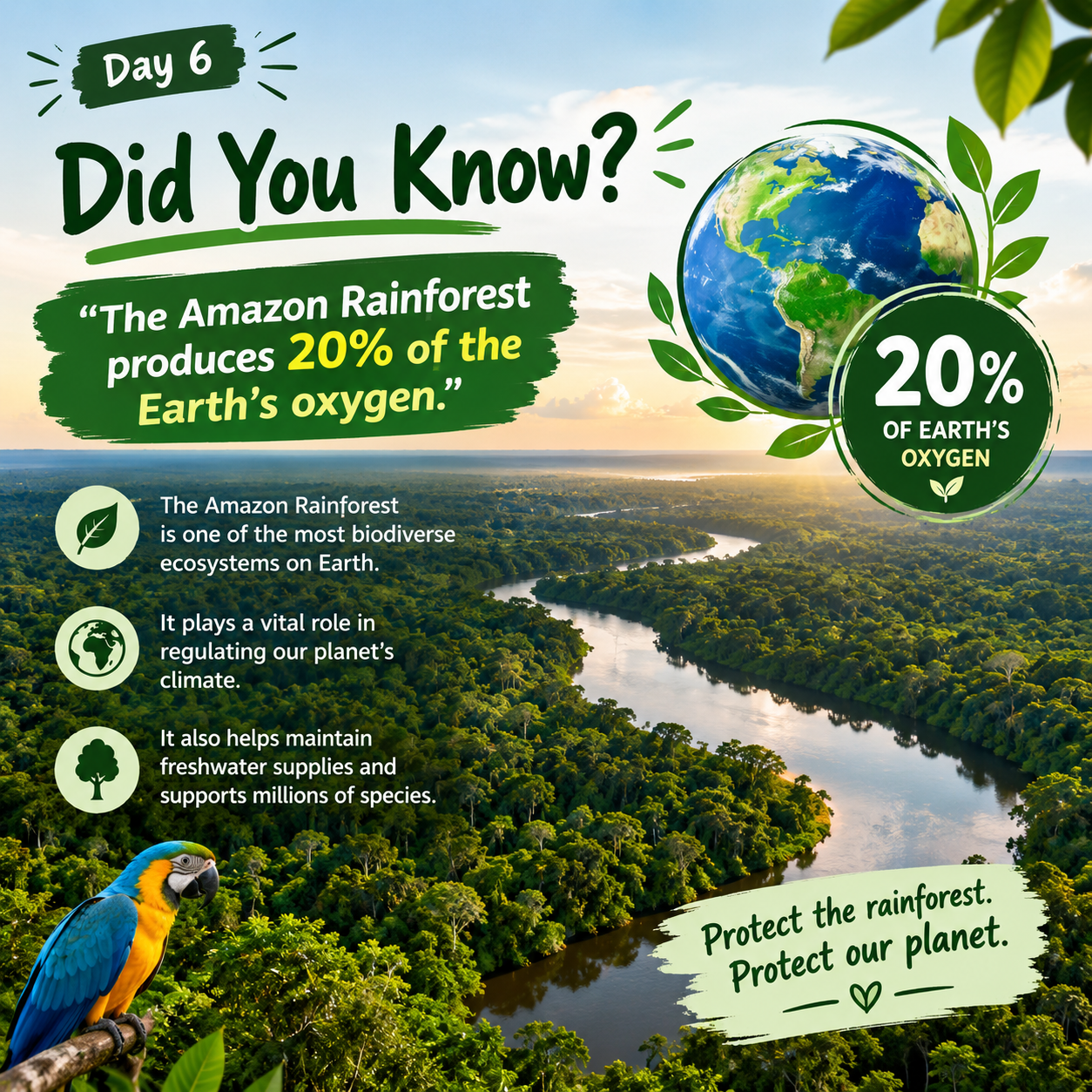
    The Amazon Rainforest is one of the most extraordinary natural environments on our planet. Stretching across a vast area of South America, it is home to an incredible variety of plants, animals, insects, birds, and microorganisms.

    The rainforest is often called the “lungs of the world,” because its plants produce oxygen through photosynthesis and the ecosystem plays an important role in absorbing and storing carbon dioxide. However, the commonly repeated claim that the Amazon produces 20% of the world’s oxygen is misleading. Much of the oxygen produced by plants is also consumed by plants, animals, fungi, and microorganisms within the ecosystem.

    What makes the Amazon truly remarkable is its biodiversity. From colorful macaws flying through the canopy to jaguars moving through the forest, countless species depend on this habitat for food, shelter, and survival.

    The rainforest also has an important role in the global carbon cycle and climate system. Trees and vegetation absorb large amounts of carbon dioxide, storing carbon in plants and soils. This makes protecting healthy forests important for the environment and for communities that depend on them.

    Every part of the Amazon ecosystem is connected. When forests are damaged or destroyed, the effects can spread through habitats, wildlife populations, water systems, and climate processes.

    Learning about the Amazon teaches us an important lesson: protecting nature means protecting the systems that support life. Conservation, responsible land use, reducing deforestation, and caring for biodiversity can all help preserve this extraordinary ecosystem for future generations.

    Explore the rainforest. Discover its biodiversity. Understand its importance. Protect our planet.

    The Amazon is more than just a forest—it is a living, interconnected world filled with life, discovery, and natural wonder.

    #AmazonRainforest #Amazon #Rainforest #DidYouKnow #Nature #Biodiversity #Wildlife #Environment #Earth #PlanetEarth #Forest #TropicalRainforest #Ecology #Science #Biology #ScienceEducation #EnvironmentalEducation #WildlifeConservation #ForestConservation #ProtectNature #SaveTheRainforest #Climate #CarbonCycle #Ecosystem #NaturalWorld #NatureLovers #ExploreNature #EarthScience #LearningJourney #EducationalContent #ScienceFacts #BiodiversityMatters #EverySpeciesCounts #ProtectOurPlanet

    Rehan School Islamabad Campus
    Asma Shaheen EducationWali
    Irum Asim
    Saima Happinesswali

    #rsisb Roll No.240 Image With Chatgpt No.5 Foundation Level The Amazon Rainforest is one of the most extraordinary natural environments on our planet. Stretching across a vast area of South America, it is home to an incredible variety of plants, animals, insects, birds, and microorganisms. 🌎🌱🐒🦋 The rainforest is often called the “lungs of the world,” because its plants produce oxygen through photosynthesis and the ecosystem plays an important role in absorbing and storing carbon dioxide. However, the commonly repeated claim that the Amazon produces 20% of the world’s oxygen is misleading. Much of the oxygen produced by plants is also consumed by plants, animals, fungi, and microorganisms within the ecosystem. What makes the Amazon truly remarkable is its biodiversity. 🌿🐢🐍🦜🐆 From colorful macaws flying through the canopy to jaguars moving through the forest, countless species depend on this habitat for food, shelter, and survival. The rainforest also has an important role in the global carbon cycle and climate system. Trees and vegetation absorb large amounts of carbon dioxide, storing carbon in plants and soils. 🌱🌍 This makes protecting healthy forests important for the environment and for communities that depend on them. Every part of the Amazon ecosystem is connected. 🌳➡️🦋➡️🐦➡️🐆 When forests are damaged or destroyed, the effects can spread through habitats, wildlife populations, water systems, and climate processes. Learning about the Amazon teaches us an important lesson: protecting nature means protecting the systems that support life. 💚🌎 Conservation, responsible land use, reducing deforestation, and caring for biodiversity can all help preserve this extraordinary ecosystem for future generations. ✨ Explore the rainforest. Discover its biodiversity. Understand its importance. Protect our planet. 🌿🔬🌍 The Amazon is more than just a forest—it is a living, interconnected world filled with life, discovery, and natural wonder. 🌳💚🦜 #AmazonRainforest #Amazon #Rainforest #DidYouKnow #Nature #Biodiversity #Wildlife #Environment #Earth #PlanetEarth #Forest #TropicalRainforest #Ecology #Science #Biology #ScienceEducation #EnvironmentalEducation #WildlifeConservation #ForestConservation #ProtectNature #SaveTheRainforest #Climate #CarbonCycle #Ecosystem #NaturalWorld #NatureLovers #ExploreNature #EarthScience #LearningJourney #EducationalContent #ScienceFacts #BiodiversityMatters #EverySpeciesCounts #ProtectOurPlanet 🌎🌿🌳🦜🐆🐢 Rehan School Islamabad Campus Asma Shaheen EducationWali Irum Asim Saima Happinesswali
    0 Reacties 0 aandelen 2493 Views
  • RSISB
    Roll No: 209
    IMG with ChatGPT No.20

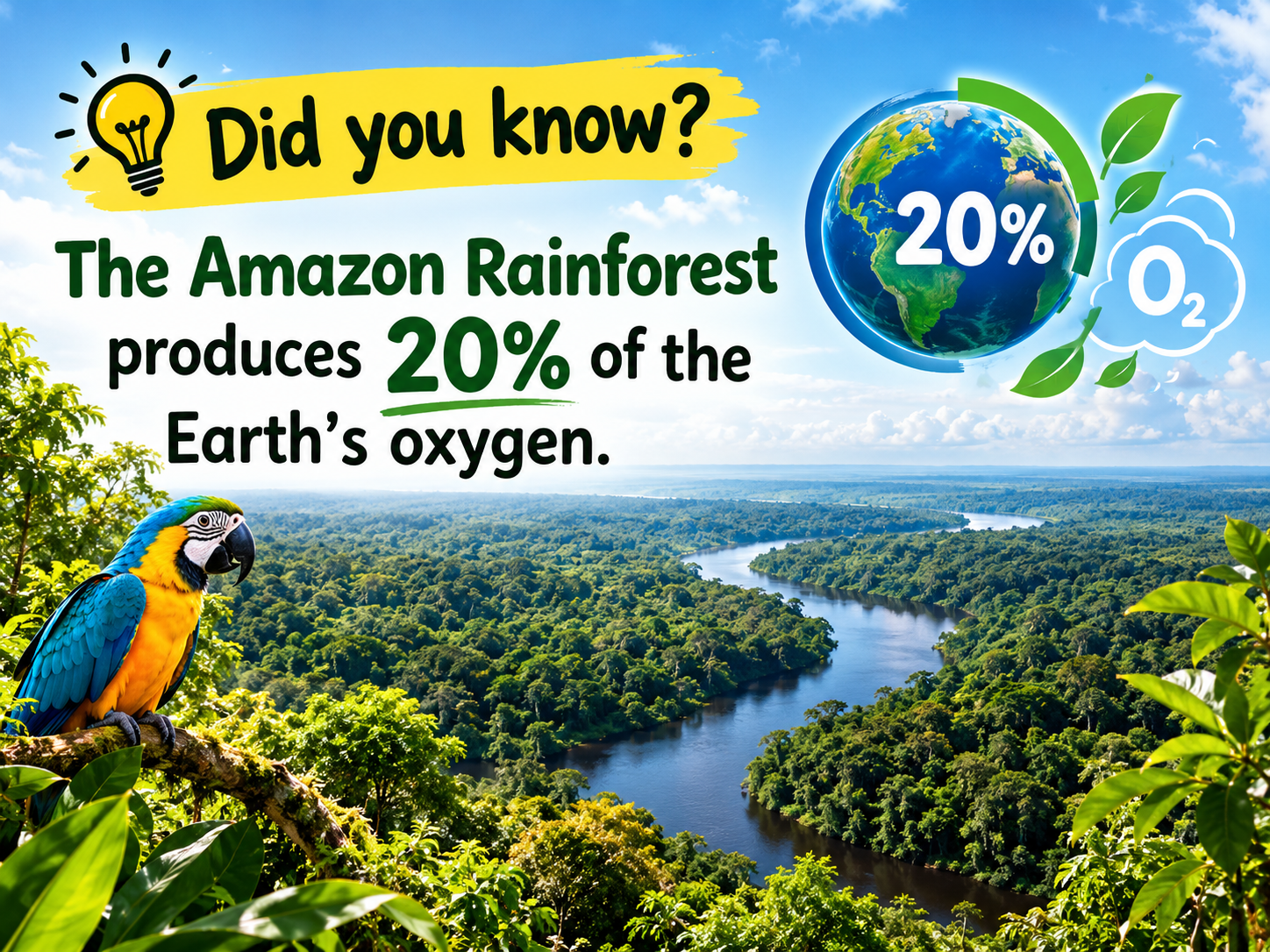
    Did You Know? The Amazon Rainforest is one of the most incredible ecosystems on Earth! Often called the “lungs of the planet,” it plays an important role in our global climate and supports an amazing variety of wildlife.

    Let’s learn more about our planet, protect our forests, and inspire others to care for nature!

    #AmazonRainforest #DidYouKnow #Earth #Nature #Rainforest #Environment #SaveTheAmazon #ClimateAwareness #Wildlife #ProtectOurPlanet #EcoAwareness #ScienceFacts
    RSISB Roll No: 209 IMG with ChatGPT No.20 🌳🌎 Did You Know? 🌿✨ The Amazon Rainforest is one of the most incredible ecosystems on Earth! 🌧️🦜🐒 Often called the “lungs of the planet,” it plays an important role in our global climate and supports an amazing variety of wildlife. 💚🌍 Let’s learn more about our planet, protect our forests, and inspire others to care for nature! 🌱💪🌎 #AmazonRainforest 🌳 #DidYouKnow 🤔 #Earth 🌍 #Nature 🌿 #Rainforest 🌧️ #Environment 💚 #SaveTheAmazon 🌎 #ClimateAwareness 🌱 #Wildlife 🦜 #ProtectOurPlanet 💚 #EcoAwareness ♻️ #ScienceFacts 🔬
    0 Reacties 0 aandelen 1047 Views
  • #rsisb
    Roll No.190
    Image With Chatgpt No.22
    Foundation Level
    Sure! Here are some ideas for **“Did you know? The Amazon Rainforest produces 20% of the Earth's oxygen.”**
    1. **Amazon Rainforest Scene** — Show a beautiful aerial view of the rainforest with the quote in the center.
    2. **Earth + Amazon** — Show Earth from space, zooming into the Amazon with glowing green highlights.
    3. **Oxygen Animation** — Show trees releasing oxygen bubbles into the atmosphere.
    4. **Wildlife Theme** — Add monkeys, colorful birds, butterflies, and other rainforest animals.
    5. **Rainforest Journey** — Show rain falling on the forest, rivers flowing, and sunlight passing through the trees.
    6. **Science Style** — Create an educational infographic with trees, oxygen molecules, and the Amazon map.
    7. **Short Reel** — Start with **“DID YOU KNOW?”** → reveal the Amazon → finish with **“Protect our forests. Protect our planet.”**
    8. **Conservation Message** — End with: **“Every tree matters.”**
    **Small fact-check:** The commonly repeated **20% figure is a myth/oversimplification**. The Amazon produces oxygen through
    #rsisb Roll No.190 Image With Chatgpt No.22 Foundation Level Sure! 🌳🌎 Here are some ideas for **“Did you know? The Amazon Rainforest produces 20% of the Earth's oxygen.”** 1. 🌿 **Amazon Rainforest Scene** — Show a beautiful aerial view of the rainforest with the quote in the center. 2. 🌎 **Earth + Amazon** — Show Earth from space, zooming into the Amazon with glowing green highlights. 3. 💨 **Oxygen Animation** — Show trees releasing oxygen bubbles into the atmosphere. 🌱💨 4. 🐒 **Wildlife Theme** — Add monkeys, colorful birds, butterflies, and other rainforest animals. 5. 🌧️ **Rainforest Journey** — Show rain falling on the forest, rivers flowing, and sunlight passing through the trees. 6. 🔬 **Science Style** — Create an educational infographic with trees, oxygen molecules, and the Amazon map. 7. 🎬 **Short Reel** — Start with **“DID YOU KNOW?”** 🤔 → reveal the Amazon → finish with **“Protect our forests. Protect our planet.”** 🌍💚 8. 🌱 **Conservation Message** — End with: **“Every tree matters.”** 🌳✨ 💡 **Small fact-check:** The commonly repeated **20% figure is a myth/oversimplification**. The Amazon produces oxygen through
    0 Reacties 0 aandelen 2090 Views
  • RSISB
    Roll No: 209
    Image with ChatGPT No.6


    Did you know? The Amazon Rainforest is often called the “lungs of the Earth,” but the truth is even more fascinating! It plays a huge role in our planet’s ecosystem by absorbing carbon dioxide, producing oxygen, and supporting incredible biodiversity.

    Let’s learn more about our planet and protect the amazing natural world we call home!

    #AmazonRainforest #Rainforest #DidYouKnow #Nature #Environment #Earth #Climate #Biodiversity #SaveTheRainforest #EcoAwareness #ScienceFacts #AmazingFacts

    RSISB Roll No: 209 Image with ChatGPT No.6 🌳🌎 Did you know? The Amazon Rainforest is often called the “lungs of the Earth,” but the truth is even more fascinating! 🌿💚 It plays a huge role in our planet’s ecosystem by absorbing carbon dioxide, producing oxygen, and supporting incredible biodiversity. 🦜🐒🌱 Let’s learn more about our planet and protect the amazing natural world we call home! 🌍✨ #AmazonRainforest #Rainforest #DidYouKnow #Nature #Environment #Earth #Climate #Biodiversity #SaveTheRainforest #EcoAwareness #ScienceFacts #AmazingFacts 🌿🌎💚
    0 Reacties 0 aandelen 2105 Views
  • #rsisb
    Roll No. 183
    Image With Chatgpt No. 22
    Foundation Level

    **Did You Know?**

    The **Amazon Rainforest** is often called the **"Lungs of the Earth"** because it plays a vital role in our planet's ecosystem. While a popular claim says it produces **20% of the Earth's oxygen**, the reality is more nuanced—although the Amazon generates a great deal of oxygen through photosynthesis, it also uses much of that oxygen through the respiration of plants and other living organisms. Even so, it remains one of the world's most important ecosystems, helping regulate climate, store vast amounts of carbon, and provide a home for millions of plant and animal species.

    Protecting the Amazon means protecting biodiversity, supporting Indigenous communities, and helping maintain a healthier planet for future generations. Every small action we take to care for nature makes a difference. Let's spread awareness and inspire others to value and protect our forests!

    **Nature is our greatest treasure—let's protect it together!**

    #AmazonRainforest #DidYouKnow #NatureFacts #SaveTheAmazon #ProtectNature #ClimateAction #GoGreen #Earth #Environment #Rainforest #Wildlife #Biodiversity #Sustainability #EcoFriendly #NatureLovers #PlanetEarth #GreenFuture #Forest #Conservation #LearnSomethingNew

    Malik Lehrasib Awan
    Irum Asim

    #rsisb Roll No. 183 Image With Chatgpt No. 22 Foundation Level 🌿🌎 **Did You Know?** 🌎🌿 The **Amazon Rainforest** is often called the **"Lungs of the Earth"** because it plays a vital role in our planet's ecosystem. 🌳💚 While a popular claim says it produces **20% of the Earth's oxygen**, the reality is more nuanced—although the Amazon generates a great deal of oxygen through photosynthesis, it also uses much of that oxygen through the respiration of plants and other living organisms. 🌱🍃 Even so, it remains one of the world's most important ecosystems, helping regulate climate, store vast amounts of carbon, and provide a home for millions of plant and animal species. 🦜🐒🌺 Protecting the Amazon means protecting biodiversity, supporting Indigenous communities, and helping maintain a healthier planet for future generations. Every small action we take to care for nature makes a difference. 🌍💙 Let's spread awareness and inspire others to value and protect our forests! 🌿✨ 💚 **Nature is our greatest treasure—let's protect it together!** 🌎🌱 #AmazonRainforest #DidYouKnow #NatureFacts #SaveTheAmazon #ProtectNature #ClimateAction #GoGreen #Earth #Environment #Rainforest #Wildlife #Biodiversity #Sustainability #EcoFriendly #NatureLovers #PlanetEarth #GreenFuture #Forest #Conservation #LearnSomethingNew 🌿🌎🍃💚✨ Malik Lehrasib Awan Irum Asim
    0 Reacties 0 aandelen 8664 Views
  • Easiest country in the world to migrate to ! Paraguay

    Paraguay, a landlocked country in South America, is often overlooked but offers many benefits to migrants, especially those seeking permanent residency with a straightforward process. Here’s a detailed overview of Paraguay:

    Geography and Climate

    • Location: Paraguay is bordered by Argentina, Brazil, and Bolivia. Its central location makes it a key part of South America.
    • Capital: Asunción.
    • Climate: Subtropical to tropical climate with warm, humid summers and mild winters. The country experiences significant rainfall, especially in the eastern regions.

    Key Benefits of Moving to Paraguay

    1. Ease of Residency:
    • Paraguay offers one of the simplest pathways to permanent residency in the world.
    • You can apply for permanent residency with minimal requirements, such as proof of income or a $5,000 deposit in a Paraguayan bank.
    2. Cost of Living:
    • Paraguay is one of the most affordable countries in South America.
    • Housing, food, transportation, and utilities are very inexpensive compared to Western countries.
    3. Peaceful Lifestyle:
    • Paraguay is known for its relaxed and slow-paced lifestyle, ideal for retirees or those seeking a peaceful environment.
    4. Tax Benefits:
    • Paraguay has a territorial tax system, meaning you’re only taxed on income earned within the country. Foreign income is tax-free.
    • The corporate tax rate is also low, making it attractive to entrepreneurs.
    5. Natural Beauty:
    • Paraguay has diverse landscapes, from the lush rainforests of the east to the arid Chaco region in the west.
    • The Paraguay River divides the country and offers opportunities for boating and fishing.
    6. Residency as a Path to Citizenship:
    • After three years of residency, you can apply for Paraguayan citizenship, which grants you visa-free travel to over 140 countries.

    Residency in Paraguay

    a. Permanent Residency Requirements:

    • A valid passport.
    • A clean criminal record.
    • Proof of economic solvency (such as a $5,000 deposit in a Paraguayan bank).
    • A medical certificate.
    • Apostilled documents, including birth certificate and marriage certificate (if applicable).

    b. Process:

    1. Enter Paraguay on a tourist visa (if required for your nationality).
    2. Open a bank account in Paraguay and deposit $5,000.
    3. Submit all required documents to the immigration office in Asunción.
    4. Wait for approval, which usually takes 2-3 months.
    5. Once approved, you’ll receive your permanent residency card.

    Living in Paraguay

    1. Cost of Living:

    • Rent for a one-bedroom apartment in the city center: $200–$400.
    • Monthly groceries: $150–$200.
    • Transportation (buses and taxis): Extremely affordable, with bus fares around $0.40.

    2. Language:

    • The official languages are Spanish and Guaraní. Learning basic Spanish is essential for integration, as English is not widely spoken.

    3. Healthcare:

    • Public healthcare is free but can be basic. Many expats prefer private healthcare, which is affordable and of good quality.

    4. Safety:

    • Paraguay is generally safe, but petty theft can occur in urban areas. Rural regions are peaceful and welcoming.

    Economy and Opportunities

    • Paraguay has a growing economy, with agriculture being the dominant sector (soybeans, beef, and corn).
    • There are opportunities for entrepreneurs in agriculture, renewable energy, and trade.
    • The government offers incentives for foreign investors, particularly in the Free Trade Zone.

    Culture and Society

    • Paraguay has a rich cultural heritage blending indigenous Guaraní and Spanish influences.
    • Music, especially harp and guitar-based folk music, is a vital part of Paraguayan culture.
    • Popular dishes include sopa paraguaya (a type of cornbread) and asado (barbecue).

    Challenges

    1. Bureaucracy:
    • Paperwork and processes can sometimes be slow and require patience.
    2. Language Barrier:
    • Non-Spanish speakers may find it challenging to communicate and integrate initially.
    3. Limited Public Infrastructure:
    • While the cost of living is low, public services such as roads and utilities may not meet Western standards.

    Who Should Consider Paraguay?

    • Retirees: Those seeking a peaceful and affordable lifestyle.
    • Digital Nomads: Paraguay’s territorial tax system is a major draw for those earning income abroad.
    • Entrepreneurs: The low cost of doing business and growing economy offer many opportunities.
    • Investors: Real estate and agriculture provide lucrative options.
    Easiest country in the world to migrate to ! Paraguay 🇵🇾 Paraguay, a landlocked country in South America, is often overlooked but offers many benefits to migrants, especially those seeking permanent residency with a straightforward process. Here’s a detailed overview of Paraguay: Geography and Climate • Location: Paraguay is bordered by Argentina, Brazil, and Bolivia. Its central location makes it a key part of South America. • Capital: Asunción. • Climate: Subtropical to tropical climate with warm, humid summers and mild winters. The country experiences significant rainfall, especially in the eastern regions. Key Benefits of Moving to Paraguay 1. Ease of Residency: • Paraguay offers one of the simplest pathways to permanent residency in the world. • You can apply for permanent residency with minimal requirements, such as proof of income or a $5,000 deposit in a Paraguayan bank. 2. Cost of Living: • Paraguay is one of the most affordable countries in South America. • Housing, food, transportation, and utilities are very inexpensive compared to Western countries. 3. Peaceful Lifestyle: • Paraguay is known for its relaxed and slow-paced lifestyle, ideal for retirees or those seeking a peaceful environment. 4. Tax Benefits: • Paraguay has a territorial tax system, meaning you’re only taxed on income earned within the country. Foreign income is tax-free. • The corporate tax rate is also low, making it attractive to entrepreneurs. 5. Natural Beauty: • Paraguay has diverse landscapes, from the lush rainforests of the east to the arid Chaco region in the west. • The Paraguay River divides the country and offers opportunities for boating and fishing. 6. Residency as a Path to Citizenship: • After three years of residency, you can apply for Paraguayan citizenship, which grants you visa-free travel to over 140 countries. Residency in Paraguay a. Permanent Residency Requirements: • A valid passport. • A clean criminal record. • Proof of economic solvency (such as a $5,000 deposit in a Paraguayan bank). • A medical certificate. • Apostilled documents, including birth certificate and marriage certificate (if applicable). b. Process: 1. Enter Paraguay on a tourist visa (if required for your nationality). 2. Open a bank account in Paraguay and deposit $5,000. 3. Submit all required documents to the immigration office in Asunción. 4. Wait for approval, which usually takes 2-3 months. 5. Once approved, you’ll receive your permanent residency card. Living in Paraguay 1. Cost of Living: • Rent for a one-bedroom apartment in the city center: $200–$400. • Monthly groceries: $150–$200. • Transportation (buses and taxis): Extremely affordable, with bus fares around $0.40. 2. Language: • The official languages are Spanish and Guaraní. Learning basic Spanish is essential for integration, as English is not widely spoken. 3. Healthcare: • Public healthcare is free but can be basic. Many expats prefer private healthcare, which is affordable and of good quality. 4. Safety: • Paraguay is generally safe, but petty theft can occur in urban areas. Rural regions are peaceful and welcoming. Economy and Opportunities • Paraguay has a growing economy, with agriculture being the dominant sector (soybeans, beef, and corn). • There are opportunities for entrepreneurs in agriculture, renewable energy, and trade. • The government offers incentives for foreign investors, particularly in the Free Trade Zone. Culture and Society • Paraguay has a rich cultural heritage blending indigenous Guaraní and Spanish influences. • Music, especially harp and guitar-based folk music, is a vital part of Paraguayan culture. • Popular dishes include sopa paraguaya (a type of cornbread) and asado (barbecue). Challenges 1. Bureaucracy: • Paperwork and processes can sometimes be slow and require patience. 2. Language Barrier: • Non-Spanish speakers may find it challenging to communicate and integrate initially. 3. Limited Public Infrastructure: • While the cost of living is low, public services such as roads and utilities may not meet Western standards. Who Should Consider Paraguay? • Retirees: Those seeking a peaceful and affordable lifestyle. • Digital Nomads: Paraguay’s territorial tax system is a major draw for those earning income abroad. • Entrepreneurs: The low cost of doing business and growing economy offer many opportunities. • Investors: Real estate and agriculture provide lucrative options.
    0 Reacties 0 aandelen 1107 Views
  • The Story of Plastic-Eating Mushrooms

    Plastic pollution has become one of the most serious environmental challenges of our time. Every year, more than 400 million tons of plastic are produced, and only about 9% of it ever gets recycled. The rest ends up in landfills, rivers, and oceans, where it remains for hundreds of years, harming animals, entering our food chain, and choking our planet.

    But nature, as always, has a secret weapon — fungi. In the last decade, scientists have discovered that some species of mushrooms have the extraordinary ability to “eat” plastic, turning it into harmless materials. These organisms may hold one of the keys to cleaning up our plastic-filled world.


    What Are Plastic-Eating Mushrooms?

    Plastic-eating mushrooms are not a single species but a group of fungi capable of breaking down synthetic polymers — the long chemical chains that make up plastics. Instead of relying on sunlight or heat, these fungi use enzymes, powerful biological molecules, to digest plastic just as they would digest wood or dead leaves.

    The first major discovery came in 2011 when students from Yale University explored the Amazon rainforest and found a species called Pestalotiopsis microspora. This fungus could survive by feeding on polyurethane, a common type of plastic used in foams, shoes, and furniture — even in places without oxygen, such as deep landfills. This was revolutionary because it meant that fungi could potentially degrade plastic where most other life forms could not survive.

    A few years later, another breakthrough came from Pakistan. Scientists studying a waste dump near Islamabad discovered Aspergillus tubingensis, a fungus that could break down polyurethane in just a few weeks. This discovery gained international attention because it showed that plastic-eating fungi exist even in polluted urban environments, not only in exotic rainforests.

    Since then, researchers around the world — from China to Hawaii — have identified more than 200 species of fungi capable of degrading various plastics, including polyethylene (used in shopping bags), polystyrene (used in packaging), and PET (used in bottles).


    How Do They Eat Plastic?

    The process through which mushrooms “eat” plastic is both simple and amazing.

    When a piece of plastic comes in contact with fungal spores, the spores germinate and form a thin network called mycelium — a web of thread-like roots that cover the plastic’s surface. Once attached, the fungus secretes special enzymes that start attacking the strong chemical bonds inside the plastic.

    These enzymes act like molecular scissors, cutting the long plastic molecules into smaller pieces called monomers. The fungus then absorbs these small molecules as food, using them as a source of carbon and energy. Over time, the plastic begins to lose its shape, crack, and disappear. What remains is mostly water, carbon dioxide, and fungal biomass — all naturally occurring and harmless.

    Some fungi even do this in anaerobic conditions, where there is no oxygen. This is important because most landfill environments are oxygen-poor. That means fungi could, in theory, help reduce the billions of tons of plastic buried underground.


    Where Are They Found?

    Plastic-degrading fungi have been found in some of the most unexpected places.
    • Tropical rainforests like the Amazon, where humidity and biodiversity create perfect conditions for unique microbes to evolve.
    • Urban dumps and landfills, where human waste gives fungi new materials to adapt to.
    • Oceans and coastal areas, where marine fungi cling to floating plastic debris and slowly begin digesting it.

    In 2023, a team from the University of Hawaii discovered that over 60% of marine fungi isolated from ocean plastic waste could degrade plastic to some extent. This shows that nature is already evolving to respond to our pollution problem — we just need to understand and support it.


    What Are the Challenges?

    Although the idea of mushrooms eating plastic sounds like a miracle, it is not yet a large-scale solution. Scientists face several challenges.

    First, speed. Fungi work slowly. In laboratory experiments, small pieces of plastic may take weeks or months to break down, while the world produces millions of tons of plastic every month.

    Second, plastic variety. Not all plastics are the same. Some, like polyurethane, are easier to digest; others, like polyethylene, are extremely resistant. We still don’t have fungi that can handle every type.

    Third, environmental conditions. Fungi need the right temperature, humidity, and nutrients to survive. In dry or cold environments, they may not function effectively.

    Fourth, safety and by-products. When plastic is broken down, tiny microplastics or chemical residues might still remain. Scientists must ensure that these by-products do not cause new environmental or health problems.

    Lastly, scalability. What works in a small petri dish is not easy to repeat in a landfill or ocean. To make this technology useful, we need bioreactors — machines where fungi can grow under controlled conditions and process large quantities of waste.


    Why It Matters

    Even with its challenges, the discovery of plastic-eating mushrooms is a symbol of hope. It reminds us that nature is not our enemy but our greatest teacher. Fungi have been decomposing dead trees, leaves, and animals for millions of years. Now, they are adapting to a new material that humans have introduced: plastic.

    For countries like Pakistan, where waste management systems are weak, this presents a massive opportunity for innovation. Imagine young students or entrepreneurs developing small-scale units that use fungi to turn plastic waste into compost or clean soil. This could become a new form of green entrepreneurship, creating jobs while protecting the environment.

    Schools, like Rehan School, could include this topic in science and leadership curriculums — encouraging students to see waste not as a problem but as a business opportunity. Students could collect plastic waste, experiment with local fungi, measure results, and even develop small startup ideas based on bioremediation.


    The Future of Fungal Biodegradation

    Scientists are now exploring how to make fungi work faster using genetic engineering and biotechnology. By studying the enzymes that break down plastic, researchers hope to produce synthetic versions that are much more efficient.

    Some labs are also combining fungi with bacteria to create microbial teams — ecosystems that can digest different plastics together. Others are designing bioreactors that feed on plastic waste and produce valuable by-products like organic fertilizer or even edible mycelium (mushroom protein).

    In the long term, this technology could be integrated with recycling systems. For example, factories might send certain types of waste to “fungal recycling plants,” where mushrooms turn plastic into harmless matter instead of burning or burying it.


    Lessons from Nature

    The discovery of plastic-eating mushrooms teaches a deep lesson about life on Earth. Whenever humans create a problem, nature begins working on a solution. These fungi are proof that evolution never sleeps. They are small, silent recyclers, turning pollution into potential.

    It also challenges us to rethink how we live. Instead of fighting nature with chemicals and machines, we can partner with it — using living systems to heal what we have damaged.


    Conclusion

    Plastic-eating mushrooms are still in the early stages of research, but they represent one of the most exciting frontiers in environmental science. They show that solutions to global problems may come not from high technology, but from the humble soil beneath our feet.

    If supported by researchers, entrepreneurs, and educators, these fungi could one day help humanity close the loop on plastic waste. For visionary institutions like Rehan School, this is more than a science topic — it is an opportunity to inspire the next generation of green innovators who can turn today’s waste into tomorrow’s wealth.

    Nature has already shown us the way. Now it’s our turn to follow.
    🌱 The Story of Plastic-Eating Mushrooms Plastic pollution has become one of the most serious environmental challenges of our time. Every year, more than 400 million tons of plastic are produced, and only about 9% of it ever gets recycled. The rest ends up in landfills, rivers, and oceans, where it remains for hundreds of years, harming animals, entering our food chain, and choking our planet. But nature, as always, has a secret weapon — fungi. In the last decade, scientists have discovered that some species of mushrooms have the extraordinary ability to “eat” plastic, turning it into harmless materials. These organisms may hold one of the keys to cleaning up our plastic-filled world. ⸻ 🍄 What Are Plastic-Eating Mushrooms? Plastic-eating mushrooms are not a single species but a group of fungi capable of breaking down synthetic polymers — the long chemical chains that make up plastics. Instead of relying on sunlight or heat, these fungi use enzymes, powerful biological molecules, to digest plastic just as they would digest wood or dead leaves. The first major discovery came in 2011 when students from Yale University explored the Amazon rainforest and found a species called Pestalotiopsis microspora. This fungus could survive by feeding on polyurethane, a common type of plastic used in foams, shoes, and furniture — even in places without oxygen, such as deep landfills. This was revolutionary because it meant that fungi could potentially degrade plastic where most other life forms could not survive. A few years later, another breakthrough came from Pakistan. Scientists studying a waste dump near Islamabad discovered Aspergillus tubingensis, a fungus that could break down polyurethane in just a few weeks. This discovery gained international attention because it showed that plastic-eating fungi exist even in polluted urban environments, not only in exotic rainforests. Since then, researchers around the world — from China to Hawaii — have identified more than 200 species of fungi capable of degrading various plastics, including polyethylene (used in shopping bags), polystyrene (used in packaging), and PET (used in bottles). ⸻ 🔬 How Do They Eat Plastic? The process through which mushrooms “eat” plastic is both simple and amazing. When a piece of plastic comes in contact with fungal spores, the spores germinate and form a thin network called mycelium — a web of thread-like roots that cover the plastic’s surface. Once attached, the fungus secretes special enzymes that start attacking the strong chemical bonds inside the plastic. These enzymes act like molecular scissors, cutting the long plastic molecules into smaller pieces called monomers. The fungus then absorbs these small molecules as food, using them as a source of carbon and energy. Over time, the plastic begins to lose its shape, crack, and disappear. What remains is mostly water, carbon dioxide, and fungal biomass — all naturally occurring and harmless. Some fungi even do this in anaerobic conditions, where there is no oxygen. This is important because most landfill environments are oxygen-poor. That means fungi could, in theory, help reduce the billions of tons of plastic buried underground. ⸻ 🌍 Where Are They Found? Plastic-degrading fungi have been found in some of the most unexpected places. • Tropical rainforests like the Amazon, where humidity and biodiversity create perfect conditions for unique microbes to evolve. • Urban dumps and landfills, where human waste gives fungi new materials to adapt to. • Oceans and coastal areas, where marine fungi cling to floating plastic debris and slowly begin digesting it. In 2023, a team from the University of Hawaii discovered that over 60% of marine fungi isolated from ocean plastic waste could degrade plastic to some extent. This shows that nature is already evolving to respond to our pollution problem — we just need to understand and support it. ⸻ ⚙️ What Are the Challenges? Although the idea of mushrooms eating plastic sounds like a miracle, it is not yet a large-scale solution. Scientists face several challenges. First, speed. Fungi work slowly. In laboratory experiments, small pieces of plastic may take weeks or months to break down, while the world produces millions of tons of plastic every month. Second, plastic variety. Not all plastics are the same. Some, like polyurethane, are easier to digest; others, like polyethylene, are extremely resistant. We still don’t have fungi that can handle every type. Third, environmental conditions. Fungi need the right temperature, humidity, and nutrients to survive. In dry or cold environments, they may not function effectively. Fourth, safety and by-products. When plastic is broken down, tiny microplastics or chemical residues might still remain. Scientists must ensure that these by-products do not cause new environmental or health problems. Lastly, scalability. What works in a small petri dish is not easy to repeat in a landfill or ocean. To make this technology useful, we need bioreactors — machines where fungi can grow under controlled conditions and process large quantities of waste. ⸻ 🌿 Why It Matters Even with its challenges, the discovery of plastic-eating mushrooms is a symbol of hope. It reminds us that nature is not our enemy but our greatest teacher. Fungi have been decomposing dead trees, leaves, and animals for millions of years. Now, they are adapting to a new material that humans have introduced: plastic. For countries like Pakistan, where waste management systems are weak, this presents a massive opportunity for innovation. Imagine young students or entrepreneurs developing small-scale units that use fungi to turn plastic waste into compost or clean soil. This could become a new form of green entrepreneurship, creating jobs while protecting the environment. Schools, like Rehan School, could include this topic in science and leadership curriculums — encouraging students to see waste not as a problem but as a business opportunity. Students could collect plastic waste, experiment with local fungi, measure results, and even develop small startup ideas based on bioremediation. ⸻ 🚀 The Future of Fungal Biodegradation Scientists are now exploring how to make fungi work faster using genetic engineering and biotechnology. By studying the enzymes that break down plastic, researchers hope to produce synthetic versions that are much more efficient. Some labs are also combining fungi with bacteria to create microbial teams — ecosystems that can digest different plastics together. Others are designing bioreactors that feed on plastic waste and produce valuable by-products like organic fertilizer or even edible mycelium (mushroom protein). In the long term, this technology could be integrated with recycling systems. For example, factories might send certain types of waste to “fungal recycling plants,” where mushrooms turn plastic into harmless matter instead of burning or burying it. ⸻ 💡 Lessons from Nature The discovery of plastic-eating mushrooms teaches a deep lesson about life on Earth. Whenever humans create a problem, nature begins working on a solution. These fungi are proof that evolution never sleeps. They are small, silent recyclers, turning pollution into potential. It also challenges us to rethink how we live. Instead of fighting nature with chemicals and machines, we can partner with it — using living systems to heal what we have damaged. ⸻ 🧭 Conclusion Plastic-eating mushrooms are still in the early stages of research, but they represent one of the most exciting frontiers in environmental science. They show that solutions to global problems may come not from high technology, but from the humble soil beneath our feet. If supported by researchers, entrepreneurs, and educators, these fungi could one day help humanity close the loop on plastic waste. For visionary institutions like Rehan School, this is more than a science topic — it is an opportunity to inspire the next generation of green innovators who can turn today’s waste into tomorrow’s wealth. Nature has already shown us the way. Now it’s our turn to follow.
    0 Reacties 0 aandelen 2761 Views
  • The Pipe Line Track rainforest
    The Pipe Line Track rainforest
    0 Reacties 0 aandelen 567 Views 0
  • The Pipe Line Track rainforest
    The Pipe Line Track rainforest
    0 Reacties 0 aandelen 541 Views 0
  • Sacsayhuamán: The Giant Fortress of the Incas

    High above the city of Cusco in Peru lies Sacsayhuamán, one of the greatest architectural achievements of the Inca Empire. From a distance, it looks like a wall of giant stones stacked together, but once you get close, you realize it is something extraordinary. Each stone is cut so perfectly that it fits into the next one like pieces of a puzzle—without using any cement or mortar. Even today, after hundreds of years and many earthquakes, the walls still stand strong.


    The Beginning

    Before the Incas became powerful, another people called the Killke culture lived in the area around 900 AD. They first used this site for ceremonies. When the Incas rose to power in the 1400s, their great leader Pachacútec decided to turn it into something much bigger: a fortress and ceremonial center that would protect Cusco and show the strength of the empire.


    How It Was Built

    The Incas did not have iron tools, wheels, or modern machines, yet they managed to cut and move stones weighing up to 125 tons. These stones were dragged from quarries several kilometers away using ropes, wooden rollers, ramps, and pure human strength. More than 20,000 workers were brought from different parts of the empire to build Sacsayhuamán.

    What makes this fortress so special is the way the stones were shaped. Each one was carved by hand until it fit perfectly with its neighbors. The Incas used a technique called ashlar masonry—cutting the stones so precisely that not even a sheet of paper can fit between them. They also designed the walls in a zigzag shape, which made them flexible and strong enough to resist earthquakes. That’s why the walls still stand today while many colonial buildings fell.


    Why It Was Important

    Sacsayhuamán was not only a military fortress. It also had a deep religious and symbolic meaning. Cusco, the Inca capital, was designed in the shape of a puma, a sacred animal. Sacsayhuamán was considered the “head” of the puma. Inside the fortress, there were towers, open squares for ceremonies, and sacred areas used by priests.

    It was a place where soldiers defended the empire, priests performed rituals, and the emperor showed his power.


    The Spanish Conquest

    In 1536, when the Spanish invaded Peru, the fortress became the center of a great battle. Inca warriors fought bravely to defend it. One famous hero, Cahuide, refused to be captured and threw himself from the top of a tower. Despite their courage, the Incas lost, and the Spanish took control.

    Later, the Spanish destroyed many parts of Sacsayhuamán. They took the stones to build churches and houses in Cusco, including the famous cathedral. Only the largest stones were left behind because they were too heavy to move.


    Sacsayhuamán Today

    Today, Sacsayhuamán is a UNESCO World Heritage Site and one of the most visited places in Peru. Tourists from all over the world come to see its giant walls and wonder how the Incas managed such an incredible feat without modern technology.

    Every year on June 24, thousands gather there to celebrate Inti Raymi, the Festival of the Sun, which reenacts Inca traditions and honors their gods.

    Sacsayhuamán is more than just stones—it is a symbol of the creativity, power, and determination of the Inca civilization.


    Conclusion

    Sacsayhuamán teaches us that with vision, teamwork, and determination, human beings can achieve the impossible. It has survived centuries of earthquakes, battles, and colonization, and still stands as proof of the genius of the Inca people.


    References
    • Wikipedia – Sacsayhuamán
    • Britannica – Sacsayhuamán Fortress
    • Salkantay Trekking – The Ultimate Guide to Sacsayhuamán
    • Rainforest Cruises – Guide to Sacsayhuamán
    • Peruvian Sunrise – History and Architecture of Sacsayhuamán
    • Trexperience Peru – History of Sacsayhuamán
    Sacsayhuamán: The Giant Fortress of the Incas High above the city of Cusco in Peru lies Sacsayhuamán, one of the greatest architectural achievements of the Inca Empire. From a distance, it looks like a wall of giant stones stacked together, but once you get close, you realize it is something extraordinary. Each stone is cut so perfectly that it fits into the next one like pieces of a puzzle—without using any cement or mortar. Even today, after hundreds of years and many earthquakes, the walls still stand strong. ⸻ The Beginning Before the Incas became powerful, another people called the Killke culture lived in the area around 900 AD. They first used this site for ceremonies. When the Incas rose to power in the 1400s, their great leader Pachacútec decided to turn it into something much bigger: a fortress and ceremonial center that would protect Cusco and show the strength of the empire. ⸻ How It Was Built The Incas did not have iron tools, wheels, or modern machines, yet they managed to cut and move stones weighing up to 125 tons. These stones were dragged from quarries several kilometers away using ropes, wooden rollers, ramps, and pure human strength. More than 20,000 workers were brought from different parts of the empire to build Sacsayhuamán. What makes this fortress so special is the way the stones were shaped. Each one was carved by hand until it fit perfectly with its neighbors. The Incas used a technique called ashlar masonry—cutting the stones so precisely that not even a sheet of paper can fit between them. They also designed the walls in a zigzag shape, which made them flexible and strong enough to resist earthquakes. That’s why the walls still stand today while many colonial buildings fell. ⸻ Why It Was Important Sacsayhuamán was not only a military fortress. It also had a deep religious and symbolic meaning. Cusco, the Inca capital, was designed in the shape of a puma, a sacred animal. Sacsayhuamán was considered the “head” of the puma. Inside the fortress, there were towers, open squares for ceremonies, and sacred areas used by priests. It was a place where soldiers defended the empire, priests performed rituals, and the emperor showed his power. ⸻ The Spanish Conquest In 1536, when the Spanish invaded Peru, the fortress became the center of a great battle. Inca warriors fought bravely to defend it. One famous hero, Cahuide, refused to be captured and threw himself from the top of a tower. Despite their courage, the Incas lost, and the Spanish took control. Later, the Spanish destroyed many parts of Sacsayhuamán. They took the stones to build churches and houses in Cusco, including the famous cathedral. Only the largest stones were left behind because they were too heavy to move. ⸻ Sacsayhuamán Today Today, Sacsayhuamán is a UNESCO World Heritage Site and one of the most visited places in Peru. Tourists from all over the world come to see its giant walls and wonder how the Incas managed such an incredible feat without modern technology. Every year on June 24, thousands gather there to celebrate Inti Raymi, the Festival of the Sun, which reenacts Inca traditions and honors their gods. Sacsayhuamán is more than just stones—it is a symbol of the creativity, power, and determination of the Inca civilization. ⸻ Conclusion Sacsayhuamán teaches us that with vision, teamwork, and determination, human beings can achieve the impossible. It has survived centuries of earthquakes, battles, and colonization, and still stands as proof of the genius of the Inca people. ⸻ References • Wikipedia – Sacsayhuamán • Britannica – Sacsayhuamán Fortress • Salkantay Trekking – The Ultimate Guide to Sacsayhuamán • Rainforest Cruises – Guide to Sacsayhuamán • Peruvian Sunrise – History and Architecture of Sacsayhuamán • Trexperience Peru – History of Sacsayhuamán
    0 Reacties 0 aandelen 782 Views
Zoekresultaten