• **Roll No: 2**
    **Batch: 14**
    **Book: ACCL**
    **Task No: 138**

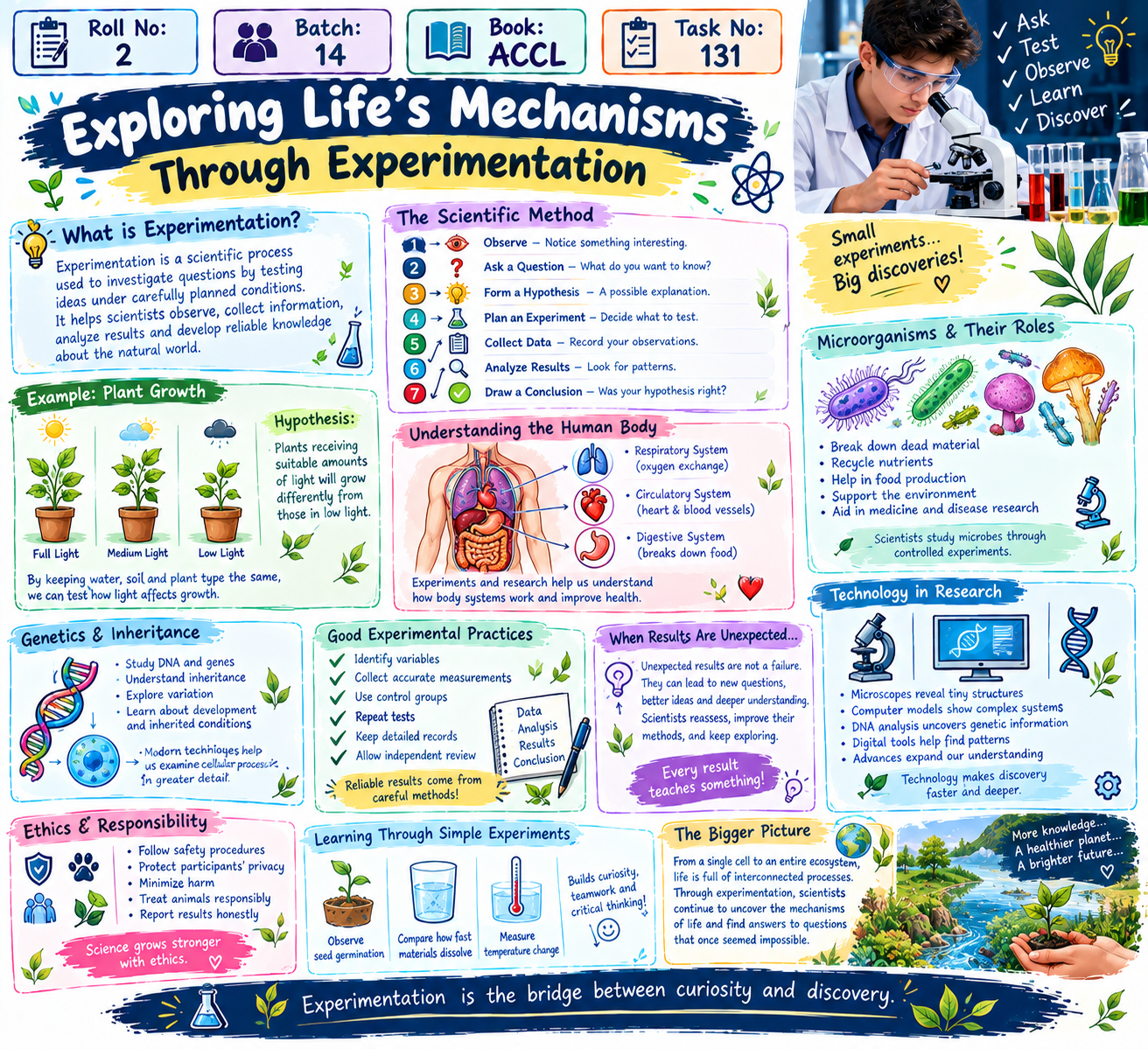
    # Exploring Life’s Mechanisms Through Experimentation

    Have you ever wondered how scientists discover the secrets of life? From understanding how plants grow to investigating how the human heart works, science helps us explore the processes that make living organisms function. Behind many important discoveries lies a powerful method called **experimentation**, which allows scientists to test ideas, observe results, and develop a deeper understanding of the natural world.

    **Experimentation is a scientific process used to investigate questions by testing ideas under carefully planned conditions.** Scientists begin by observing something interesting, asking a question, and developing a hypothesis—a possible explanation that can be tested. They then design an experiment, collect information, and analyze the results to determine whether the evidence supports their original idea. This process helps turn curiosity into reliable scientific knowledge.

    One fascinating example is the study of plant growth. Imagine a student who wants to discover whether the amount of light affects how quickly a plant grows. The student forms a hypothesis that plants receiving suitable amounts of light will grow differently from plants kept in low-light conditions. By keeping factors such as water, soil, and plant type consistent, the student can compare the results and investigate the role of light in plant development.

    Experimentation is also essential for understanding the human body. Scientists investigate how the heart circulates blood, how the lungs exchange gases, and how the digestive system processes food. Through carefully designed studies, medical imaging, laboratory tests, and other research methods, scientists learn how body systems work together to maintain health. Their findings can contribute to improved medical treatments and a better understanding of human biology.

    Another important field is microbiology, the study of microscopic organisms. Many bacteria and fungi play beneficial roles in nature, including breaking down dead material and recycling nutrients. Scientists use controlled experiments to investigate how these organisms respond to different environmental conditions. Such research can help improve food production, develop medicines, understand infectious diseases, and protect ecosystems.

    Experiments also help researchers understand genetics and the mechanisms of inheritance. By studying DNA, genes, and the characteristics of organisms across generations, scientists investigate how biological information is passed on and how variations arise. Modern techniques allow researchers to explore cellular processes in greater detail, helping them understand development, inherited conditions, and the relationships among different forms of life.

    A successful experiment requires more than simply observing what happens. Scientists must identify the variables they are studying, collect accurate measurements, and repeat tests when appropriate. They often use control groups for comparison and record their observations carefully. Repeating experiments helps determine whether a result is consistent, while independent review allows other researchers to examine the methods and evaluate the conclusions. These practices make scientific findings more trustworthy.

    Sometimes experiments produce unexpected results. Instead of treating an unexpected outcome as a failure, scientists use it as an opportunity to ask new questions. They may reconsider their hypothesis, improve their experimental design, or investigate another possible explanation. Scientific progress often happens through this cycle of questioning, testing, learning, and refining ideas. Every result can contribute something valuable when it is interpreted carefully.

    Technology has made biological experimentation more advanced than ever before. Microscopes reveal structures too small to see with the naked eye, computer models help researchers understand complicated systems, and DNA analysis allows scientists to investigate genetic information. Digital tools can also help organize large amounts of data and identify patterns that might otherwise be difficult to notice. These innovations continue to expand our understanding of living organisms.

    However, scientific experimentation must always be guided by responsibility and ethics. Researchers should follow safety procedures, protect participants' privacy, minimize harm, and treat animals responsibly. Experiments involving people or animals require appropriate ethical review and safeguards. Scientists must also report results honestly, even when the findings do not match their expectations. Reliable science depends on both accurate evidence and responsible behavior.

    Experimentation connects classroom learning with real-world discoveries. Students can explore scientific ideas through safe activities, such as observing seed germination, comparing how quickly different materials dissolve in water, or measuring changes in temperature. These activities encourage curiosity, careful observation, teamwork, and critical thinking. They also show that science is not just a collection of facts to memorize; it is an ongoing process of discovery.

    As we explore life's mechanisms, we begin to understand how countless processes work together to support living organisms. From the activity inside a single cell to the interactions among species in an ecosystem, each discovery reveals another part of nature's complexity. Through experimentation, scientists continue to investigate these connections and search for answers to questions that once seemed impossible to solve.

    **Experimentation is the bridge between curiosity and discovery. By asking thoughtful questions, testing ideas fairly, and learning from evidence, we can uncover the mechanisms of life and use scientific knowledge to improve human health, protect the environment, and build a brighter future. **

    \#Experimentation #Biology #ScientificMethod #LifeSciences #ScientificDiscovery #Research #ACCL #Batch14 #Task131
    **Roll No: 2** **Batch: 14** **Book: ACCL** **Task No: 138** # 🔬🧪 Exploring Life’s Mechanisms Through Experimentation 🌱🧬 Have you ever wondered how scientists discover the secrets of life? 🌍 From understanding how plants grow to investigating how the human heart works, science helps us explore the processes that make living organisms function. Behind many important discoveries lies a powerful method called **experimentation**, which allows scientists to test ideas, observe results, and develop a deeper understanding of the natural world. 🔍✨ **Experimentation is a scientific process used to investigate questions by testing ideas under carefully planned conditions.** 🧪 Scientists begin by observing something interesting, asking a question, and developing a hypothesis—a possible explanation that can be tested. They then design an experiment, collect information, and analyze the results to determine whether the evidence supports their original idea. This process helps turn curiosity into reliable scientific knowledge. 📚💡 One fascinating example is the study of plant growth. 🌱 Imagine a student who wants to discover whether the amount of light affects how quickly a plant grows. The student forms a hypothesis that plants receiving suitable amounts of light will grow differently from plants kept in low-light conditions. By keeping factors such as water, soil, and plant type consistent, the student can compare the results and investigate the role of light in plant development. ☀️🌿 Experimentation is also essential for understanding the human body. ❤️ Scientists investigate how the heart circulates blood, how the lungs exchange gases, and how the digestive system processes food. Through carefully designed studies, medical imaging, laboratory tests, and other research methods, scientists learn how body systems work together to maintain health. Their findings can contribute to improved medical treatments and a better understanding of human biology. 🫁🧠 Another important field is microbiology, the study of microscopic organisms. 🦠 Many bacteria and fungi play beneficial roles in nature, including breaking down dead material and recycling nutrients. Scientists use controlled experiments to investigate how these organisms respond to different environmental conditions. Such research can help improve food production, develop medicines, understand infectious diseases, and protect ecosystems. 🔬🌍 Experiments also help researchers understand genetics and the mechanisms of inheritance. 🧬 By studying DNA, genes, and the characteristics of organisms across generations, scientists investigate how biological information is passed on and how variations arise. Modern techniques allow researchers to explore cellular processes in greater detail, helping them understand development, inherited conditions, and the relationships among different forms of life. 🌱🔍 A successful experiment requires more than simply observing what happens. Scientists must identify the variables they are studying, collect accurate measurements, and repeat tests when appropriate. 📏 They often use control groups for comparison and record their observations carefully. Repeating experiments helps determine whether a result is consistent, while independent review allows other researchers to examine the methods and evaluate the conclusions. These practices make scientific findings more trustworthy. 📊📝 Sometimes experiments produce unexpected results. 🤔 Instead of treating an unexpected outcome as a failure, scientists use it as an opportunity to ask new questions. They may reconsider their hypothesis, improve their experimental design, or investigate another possible explanation. Scientific progress often happens through this cycle of questioning, testing, learning, and refining ideas. Every result can contribute something valuable when it is interpreted carefully. 💡🔄 Technology has made biological experimentation more advanced than ever before. 🤖🔬 Microscopes reveal structures too small to see with the naked eye, computer models help researchers understand complicated systems, and DNA analysis allows scientists to investigate genetic information. Digital tools can also help organize large amounts of data and identify patterns that might otherwise be difficult to notice. These innovations continue to expand our understanding of living organisms. 💻🧬 However, scientific experimentation must always be guided by responsibility and ethics. 💚 Researchers should follow safety procedures, protect participants' privacy, minimize harm, and treat animals responsibly. Experiments involving people or animals require appropriate ethical review and safeguards. Scientists must also report results honestly, even when the findings do not match their expectations. Reliable science depends on both accurate evidence and responsible behavior. ⚖️🌿 Experimentation connects classroom learning with real-world discoveries. 🏫 Students can explore scientific ideas through safe activities, such as observing seed germination, comparing how quickly different materials dissolve in water, or measuring changes in temperature. These activities encourage curiosity, careful observation, teamwork, and critical thinking. They also show that science is not just a collection of facts to memorize; it is an ongoing process of discovery. 🌈🧪 As we explore life's mechanisms, we begin to understand how countless processes work together to support living organisms. From the activity inside a single cell to the interactions among species in an ecosystem, each discovery reveals another part of nature's complexity. Through experimentation, scientists continue to investigate these connections and search for answers to questions that once seemed impossible to solve. 🌎🦋🔬 **Experimentation is the bridge between curiosity and discovery. By asking thoughtful questions, testing ideas fairly, and learning from evidence, we can uncover the mechanisms of life and use scientific knowledge to improve human health, protect the environment, and build a brighter future. 🔬🧬🌍💚** \#Experimentation #Biology #ScientificMethod #LifeSciences #ScientificDiscovery #Research #ACCL #Batch14 #Task131 🧪🔬🌱
    0 Comentários 0 Compartilhamentos 4033 Visualizações
  • RSIF8
    Roll no:86
    Task no:38
    Task topic: Living in Denial – Climate Change – Iqra Khilji
    Climate change is one of the greatest challenges facing our world today. Rising temperatures, melting glaciers, extreme weather events, and changing ecosystems are clear signs that our planet is under pressure. Despite the growing evidence, many people continue to deny or ignore the reality of climate change, delaying the actions needed to protect our environment.
    From devastating floods to prolonged droughts and heatwaves, the effects of climate change are becoming more visible every year. Communities around the world are experiencing the consequences, with impacts on agriculture, water resources, wildlife, and public health. These changes remind us that climate change is not a distant problem—it is happening right now.
    Human activities such as deforestation, pollution, and the excessive use of fossil fuels contribute significantly to global warming. However, every individual can play a role in creating positive change. Simple actions like saving energy, reducing waste, recycling, and planting trees can make a meaningful difference in protecting our planet for future generations.
    The first step toward solving any problem is accepting that it exists. By moving beyond denial and embracing responsibility, we can work together to build a cleaner, greener, and more sustainable future. Awareness, education, and action are the keys to combating climate change and ensuring a healthier world for everyone.
    #LivingInDenial #ClimateChange #IqraKhilji #ClimateAction #SaveThePlanet #GlobalWarming #EnvironmentalAwareness #GoGreen #Sustainability #ProtectEarth #EcoFriendly #GreenFuture #ActNow #ClimateCrisis #SaveOurFuture
    RSIF8 Roll no:86 Task no:38 Task topic: Living in Denial – Climate Change – Iqra Khilji Climate change is one of the greatest challenges facing our world today. Rising temperatures, melting glaciers, extreme weather events, and changing ecosystems are clear signs that our planet is under pressure. Despite the growing evidence, many people continue to deny or ignore the reality of climate change, delaying the actions needed to protect our environment. 🌱 🌦️ From devastating floods to prolonged droughts and heatwaves, the effects of climate change are becoming more visible every year. Communities around the world are experiencing the consequences, with impacts on agriculture, water resources, wildlife, and public health. These changes remind us that climate change is not a distant problem—it is happening right now. 🌳 Human activities such as deforestation, pollution, and the excessive use of fossil fuels contribute significantly to global warming. However, every individual can play a role in creating positive change. Simple actions like saving energy, reducing waste, recycling, and planting trees can make a meaningful difference in protecting our planet for future generations. 💚 The first step toward solving any problem is accepting that it exists. By moving beyond denial and embracing responsibility, we can work together to build a cleaner, greener, and more sustainable future. Awareness, education, and action are the keys to combating climate change and ensuring a healthier world for everyone. #LivingInDenial #ClimateChange #IqraKhilji #ClimateAction #SaveThePlanet #GlobalWarming #EnvironmentalAwareness #GoGreen #Sustainability #ProtectEarth #EcoFriendly #GreenFuture #ActNow #ClimateCrisis #SaveOurFuture 🌍🌿
    0 Comentários 0 Compartilhamentos 3510 Visualizações 11
  • #rsisb
    Roll no.239
    Miss Zoya no.3
    Foundation Level

    **Human beings are one of the most remarkable parts of life on Earth.** Humans have the ability to think, learn, communicate, create, imagine, and solve problems. They can develop knowledge through education and experience and use that knowledge to improve their lives and the world around them.

    The **human body** is a complex system made up of many organs and body systems that work together. The brain helps humans think, remember, learn, and control the body. The heart pumps blood throughout the body, while the lungs help provide oxygen. Bones provide structure and support, muscles allow movement, and the nervous system helps control and coordinate many body functions.

    Humans also have **emotions and feelings**. People can experience happiness, sadness, fear, anger, love, excitement, and many other emotions. Understanding emotions is important because they influence how people communicate, make decisions, and interact with others.

    ### Learning and Intelligence

    Humans have a remarkable ability to learn. Children learn language, numbers, social skills, and many other things as they grow. Education helps people develop knowledge and skills, while experience teaches them how to deal with challenges and make better decisions.

    Humans can also use **creativity and imagination** to create art, music, literature, inventions, and new technologies. This ability to imagine new possibilities has played an important role in the development of human civilization.

    ### Health and Well-Being

    Good health is essential for a healthy and productive life. Humans need nutritious food, clean water, oxygen, enough sleep, physical activity, and a safe environment. Regular exercise can help keep the body strong, while healthy habits can support overall well-being.

    Mental and emotional well-being are also important. People need positive relationships, support, relaxation, and opportunities to express their feelings.

    ### ‍‍‍ Human Relationships

    Humans are social beings. Families, friends, classmates, teachers, colleagues, and communities all play important roles in people's lives. Communication and cooperation help people build strong relationships

    ### Humans and Technology

    Technology has become an important part of modern human life. Computers, smartphones, the internet, robotics, and artificial intelligence help people communicate, learn, work, and solve problems.

    Artificial intelligence can assist humans in many areas, but human judgment, responsibility, creativity, and ethical thinking remain extremely important. Technology should be used wisely and responsibly to benefit society.

    ### Humans and the Environment

    Humans depend on Earth for air, water, food, energy, and natural resources. Protecting the environment is therefore an important responsibility.

    Pollution, climate change, deforestation, and the loss of biodiversity can affect human life and other living organisms. People can help protect the planet by reducing waste, saving water and energy, recycling, planting trees, and using resources responsibly.

    ### The Future of Humanity

    The future of humanity will depend on the choices people make today. Education, science, technology, cooperation, peace, and responsible decision-making can help create a better future.

    Humans may continue to explore space, develop new medical treatments, create advanced technologies, and discover new ways to solve global problems. However, progress should always be balanced with ethics, safety, equality, and respect for life.

    ### **Conclusion**

    The study of humans is a broad and fascinating topic that includes the **human body, brain, emotions, health, learning, relationships, society, technology, and the future**.

    Understanding ourselves can help us become healthier, kinder, more responsible, and more thoughtful people. It can also teach us to respect others, appreciate differences, protect our planet, and work together to solve problems.

    **Key Message:**

    > **Human beings have the ability to learn, create, care, and make a difference. By using knowledge wisely and treating others with respect, humans can help build a healthier, kinder, and better world.**
    #rsisb Roll no.239 Miss Zoya no.3 Foundation Level **Human beings are one of the most remarkable parts of life on Earth.** Humans have the ability to think, learn, communicate, create, imagine, and solve problems. They can develop knowledge through education and experience and use that knowledge to improve their lives and the world around them. The **human body** is a complex system made up of many organs and body systems that work together. The brain helps humans think, remember, learn, and control the body. The heart pumps blood throughout the body, while the lungs help provide oxygen. Bones provide structure and support, muscles allow movement, and the nervous system helps control and coordinate many body functions. Humans also have **emotions and feelings**. People can experience happiness, sadness, fear, anger, love, excitement, and many other emotions. Understanding emotions is important because they influence how people communicate, make decisions, and interact with others. ### 🧠 Learning and Intelligence Humans have a remarkable ability to learn. Children learn language, numbers, social skills, and many other things as they grow. Education helps people develop knowledge and skills, while experience teaches them how to deal with challenges and make better decisions. Humans can also use **creativity and imagination** to create art, music, literature, inventions, and new technologies. This ability to imagine new possibilities has played an important role in the development of human civilization. ### ❤️ Health and Well-Being Good health is essential for a healthy and productive life. Humans need nutritious food, clean water, oxygen, enough sleep, physical activity, and a safe environment. Regular exercise can help keep the body strong, while healthy habits can support overall well-being. Mental and emotional well-being are also important. People need positive relationships, support, relaxation, and opportunities to express their feelings. ### 👨‍👩‍👧‍👦 Human Relationships Humans are social beings. Families, friends, classmates, teachers, colleagues, and communities all play important roles in people's lives. Communication and cooperation help people build strong relationships ### 💻 Humans and Technology Technology has become an important part of modern human life. Computers, smartphones, the internet, robotics, and artificial intelligence help people communicate, learn, work, and solve problems. Artificial intelligence can assist humans in many areas, but human judgment, responsibility, creativity, and ethical thinking remain extremely important. Technology should be used wisely and responsibly to benefit society. ### 🌱 Humans and the Environment Humans depend on Earth for air, water, food, energy, and natural resources. Protecting the environment is therefore an important responsibility. Pollution, climate change, deforestation, and the loss of biodiversity can affect human life and other living organisms. People can help protect the planet by reducing waste, saving water and energy, recycling, planting trees, and using resources responsibly. ### 🚀 The Future of Humanity The future of humanity will depend on the choices people make today. Education, science, technology, cooperation, peace, and responsible decision-making can help create a better future. Humans may continue to explore space, develop new medical treatments, create advanced technologies, and discover new ways to solve global problems. However, progress should always be balanced with ethics, safety, equality, and respect for life. ### **Conclusion** The study of humans is a broad and fascinating topic that includes the **human body, brain, emotions, health, learning, relationships, society, technology, and the future**. Understanding ourselves can help us become healthier, kinder, more responsible, and more thoughtful people. It can also teach us to respect others, appreciate differences, protect our planet, and work together to solve problems. **Key Message:** > **Human beings have the ability to learn, create, care, and make a difference. By using knowledge wisely and treating others with respect, humans can help build a healthier, kinder, and better world.**
    0 Comentários 0 Compartilhamentos 3401 Visualizações 5
  • #rsisb
    Roll no.231
    song no.17
    Foundation Level


    ### Environmental Science and Nature

    **“Environmental Science and Nature”** explores the fascinating relationship between humans and the natural world. It helps us understand **ecosystems, plants, animals, water, air, soil, climate, and biodiversity**.

    Nature provides essential resources for life, so learning about environmental science can help us understand problems such as **pollution, deforestation, waste, and climate change**. It also teaches us ways to protect our surroundings through conservation, recycling, saving water, and planting trees.

    This topic reminds us that **our everyday choices can affect the environment**. By learning more about nature and caring for our planet, we can help create a cleaner and healthier future.

    **My Takeaway:** *“Protecting nature today helps preserve a beautiful and healthy planet for tomorrow.”*

    #EnvironmentalScience #Nature #Environment #Biodiversity #SaveOurPlanet #Climate #Conservation #PlantTrees #Sustainability #Learning #Education


    Asma Shaheen EducationWali\
    Irum Asim Leadershipwali
    @
    #rsisb Roll no.231 song no.17 Foundation Level ### 🌿 Environmental Science and Nature 🌍 **“Environmental Science and Nature”** explores the fascinating relationship between humans and the natural world. It helps us understand **ecosystems, plants, animals, water, air, soil, climate, and biodiversity**. 🌱🦋💧 Nature provides essential resources for life, so learning about environmental science can help us understand problems such as **pollution, deforestation, waste, and climate change**. It also teaches us ways to protect our surroundings through conservation, recycling, saving water, and planting trees. 🌳♻️ This topic reminds us that **our everyday choices can affect the environment**. By learning more about nature and caring for our planet, we can help create a cleaner and healthier future. 🌎💚 ✨ **My Takeaway:** *“Protecting nature today helps preserve a beautiful and healthy planet for tomorrow.”* #EnvironmentalScience #Nature #Environment #Biodiversity #SaveOurPlanet #Climate #Conservation #PlantTrees #Sustainability #Learning #Education 🌿🌍💚 Asma Shaheen EducationWali\ Irum Asim Leadershipwali @
    0 Comentários 0 Compartilhamentos 2661 Visualizações 3
  • #rsisb
    Roll no.231
    song no.15
    Foundation Level


    ## Environmental Science and Nature

    **“Environmental Science and Nature”** is an educational topic that helps us understand the amazing world around us. It explores **plants, animals, water, air, soil, ecosystems, climate, and biodiversity**.

    Nature provides us with the resources we need to live, so protecting our environment is an important responsibility. Learning about pollution, conservation, recycling, and sustainable living can help us make better choices for our planet.

    This topic reminds us that **every small action matters**. Planting trees, saving water, reducing waste, and keeping our surroundings clean can all contribute to a healthier environment.

    **My Takeaway:** *“When we understand nature, we learn why it is important to protect it.”*

    #EnvironmentalScience #Nature #Environment #SaveOurPlanet #Biodiversity #Climate #CleanWater #PlantTrees #Sustainability #Learning #Education


    Asma Shaheen EducationWali
    Saima Empowerment Wali
    Irum Asim Leadershipwali
    #rsisb Roll no.231 song no.15 Foundation Level ## 🌿 Environmental Science and Nature 🌍 **“Environmental Science and Nature”** is an educational topic that helps us understand the amazing world around us. It explores **plants, animals, water, air, soil, ecosystems, climate, and biodiversity**. 🌱🦋💧 Nature provides us with the resources we need to live, so protecting our environment is an important responsibility. Learning about pollution, conservation, recycling, and sustainable living can help us make better choices for our planet. This topic reminds us that **every small action matters**. Planting trees, saving water, reducing waste, and keeping our surroundings clean can all contribute to a healthier environment. 🌳♻️ 🌟 **My Takeaway:** *“When we understand nature, we learn why it is important to protect it.”* #EnvironmentalScience #Nature #Environment #SaveOurPlanet #Biodiversity #Climate #CleanWater #PlantTrees #Sustainability #Learning #Education 🌍🌿💚✨ Asma Shaheen EducationWali Saima Empowerment Wali Irum Asim Leadershipwali
    0 Comentários 0 Compartilhamentos 2434 Visualizações 3
  • #rsisb
    Roll no.239
    Story post no.24
    Foundation Level
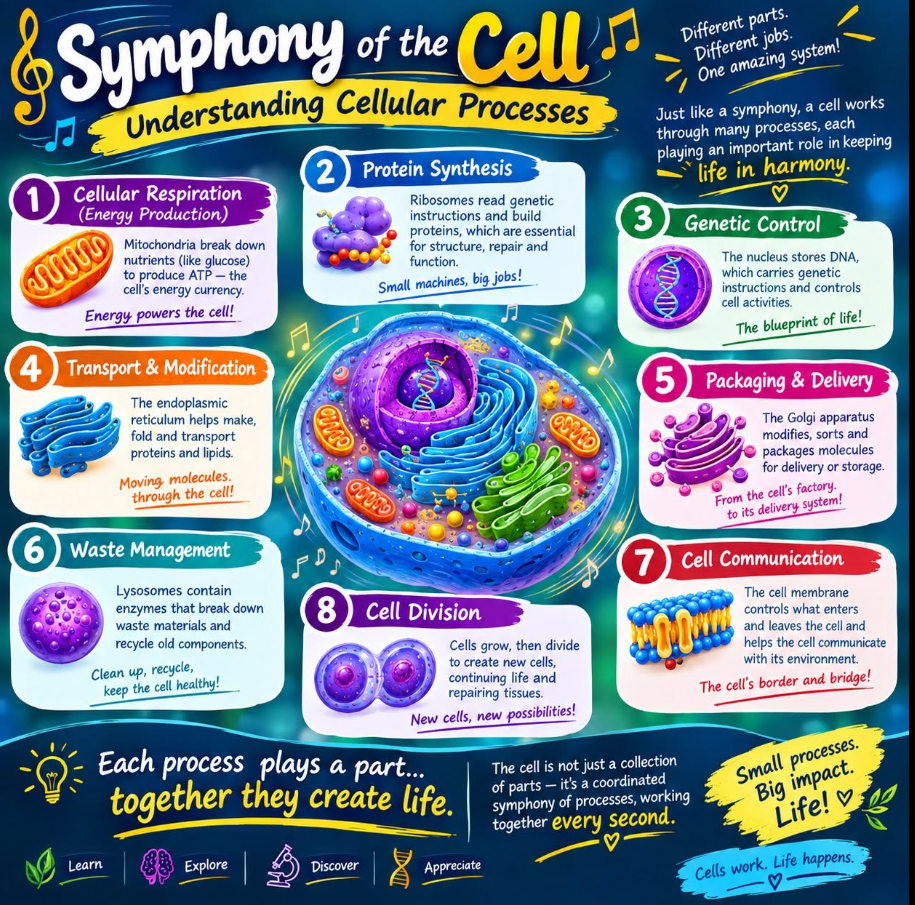
    Imagine a cell as a magnificent orchestra, where every organelle has its own instrument and every cellular process plays an important part. Together, they create the incredible **symphony of life**.
    Just as an orchestra depends on different musicians working together, a cell depends on many specialized structures and processes to stay organized and function properly.
    **Cellular Respiration — The Energy Makers**
    Mitochondria help produce ATP, the usable energy that powers many cellular activities.
    **Genetic Control — The Instructions**
    The nucleus stores DNA, which contains genetic information that helps guide cell activities.
    **Protein Synthesis — The Builders**
    Ribosomes use genetic instructions to build proteins needed for growth, repair, and everyday cellular functions.
    **Transport & Modification — The Delivery Network**
    The endoplasmic reticulum helps produce and transport proteins and lipids within the cell.
    **Packaging & Delivery — The Shipping Center**
    The Golgi apparatus modifies, sorts, and packages molecules so they can reach their proper destinations.
    **Waste Management — The Recycling Team**
    Lysosomes help break down unwanted materials and recycle components within the cell.
    **Cell Communication — The Gatekeeper**
    The cell membrane controls what enters and leaves the cell while helping the cell interact with its surroundings.
    **Cell Division — Creating New Cells**
    Cells can grow and divide, allowing organisms to develop, replace cells, and repair tissues.
    Every process has a role. Every organelle contributes to the performance. And together, they demonstrate one of biology’s most fascinating ideas:
    **A cell is not simply a collection of parts—it is a coordinated system where countless processes work together to support life.**
    **Learn. Explore. Discover. Appreciate the amazing symphony happening inside every living cell.**
    #SymphonyOfTheCell #CellBiology #Biology #CellularProcesses #Organelles #Science #ScienceEducation #BiologyFacts #CellStructure #Mitochondria #DNA #ProteinSynthesis #CellDivision #Microscopy #Learning #DidYouKnow #ScientificDiscovery
    #rsisb Roll no.239 Story post no.24 Foundation Level Imagine a cell as a magnificent orchestra, where every organelle has its own instrument and every cellular process plays an important part. Together, they create the incredible **symphony of life**. 🎼🌱 Just as an orchestra depends on different musicians working together, a cell depends on many specialized structures and processes to stay organized and function properly. ⚡ **Cellular Respiration — The Energy Makers** Mitochondria help produce ATP, the usable energy that powers many cellular activities. 🧬 **Genetic Control — The Instructions** The nucleus stores DNA, which contains genetic information that helps guide cell activities. 🏭 **Protein Synthesis — The Builders** Ribosomes use genetic instructions to build proteins needed for growth, repair, and everyday cellular functions. 🚚 **Transport & Modification — The Delivery Network** The endoplasmic reticulum helps produce and transport proteins and lipids within the cell. 📦 **Packaging & Delivery — The Shipping Center** The Golgi apparatus modifies, sorts, and packages molecules so they can reach their proper destinations. ♻️ **Waste Management — The Recycling Team** Lysosomes help break down unwanted materials and recycle components within the cell. 🚪 **Cell Communication — The Gatekeeper** The cell membrane controls what enters and leaves the cell while helping the cell interact with its surroundings. 🌱 **Cell Division — Creating New Cells** Cells can grow and divide, allowing organisms to develop, replace cells, and repair tissues. Every process has a role. Every organelle contributes to the performance. And together, they demonstrate one of biology’s most fascinating ideas: ✨ **A cell is not simply a collection of parts—it is a coordinated system where countless processes work together to support life.** 🔬 **Learn. Explore. Discover. Appreciate the amazing symphony happening inside every living cell.** #SymphonyOfTheCell #CellBiology #Biology #CellularProcesses #Organelles #Science #ScienceEducation #BiologyFacts #CellStructure #Mitochondria #DNA #ProteinSynthesis #CellDivision #Microscopy #Learning #DidYouKnow #ScientificDiscovery
    0 Comentários 0 Compartilhamentos 5613 Visualizações
  • #rsisb
    Roll no.239
    Story post no.22
    Foundation Level


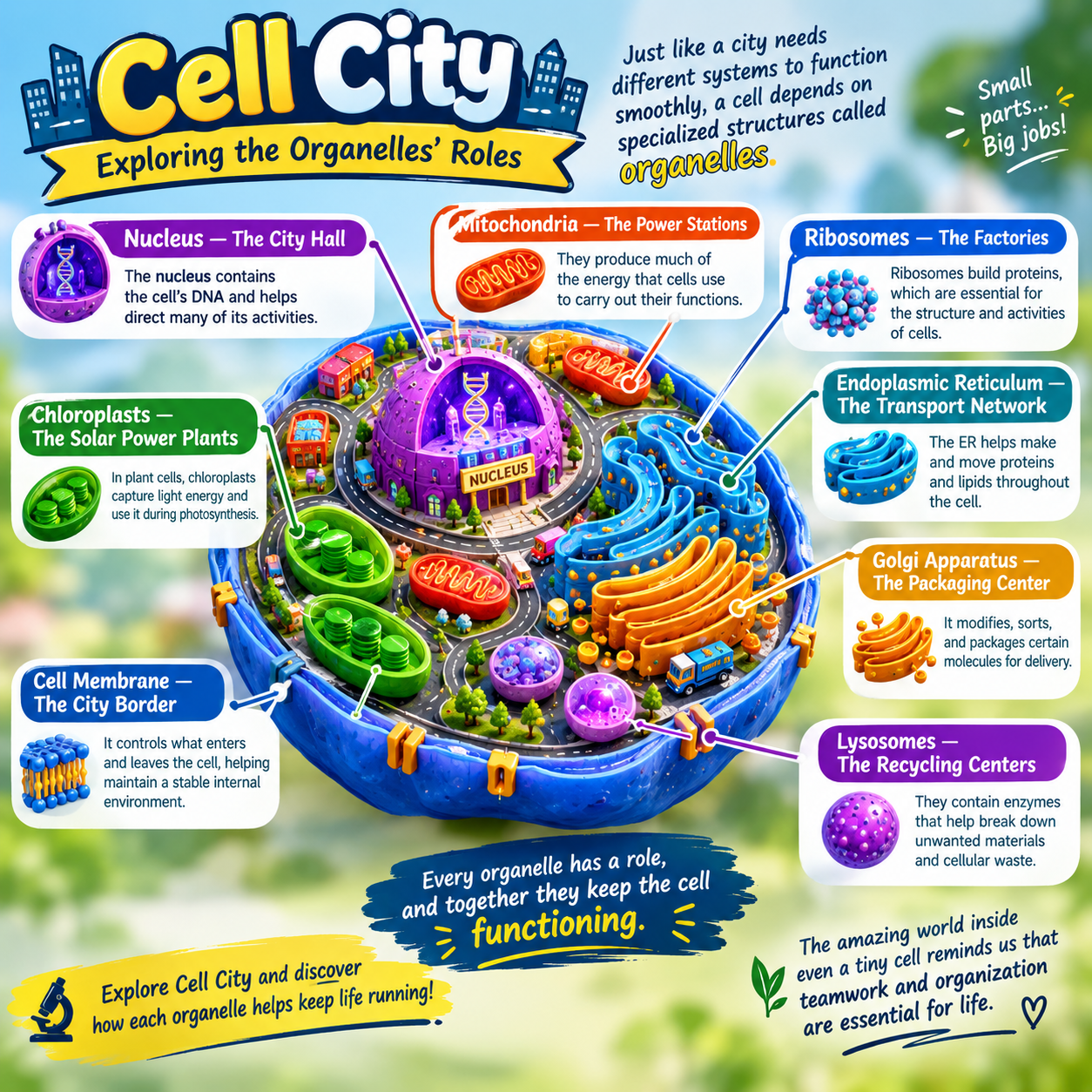
    Imagine a living cell as a busy, well-organized city where every building, worker, and department has an important job. Welcome to **Cell City**!

    Just like a city needs different systems to function smoothly, a cell depends on specialized structures called **organelles**.

    **Nucleus — The City Hall**
    The nucleus contains the cell’s DNA and helps direct many of its activities.

    **Mitochondria — The Power Stations**
    They produce much of the energy that cells use to carry out their functions.

    **Ribosomes — The Factories**
    Ribosomes build proteins, which are essential for the structure and activities of cells.

    **Endoplasmic Reticulum — The Transport Network**
    The ER helps make and move proteins and lipids throughout the cell.

    **Golgi Apparatus — The Packaging Center**
    It modifies, sorts, and packages certain molecules for delivery.

    **Lysosomes — The Recycling Centers**
    They contain enzymes that help break down unwanted materials and cellular waste.

    **Cell Membrane — The City Border**
    It controls what enters and leaves the cell, helping maintain a stable internal environment.

    **Chloroplasts — The Solar Power Plants**
    In plant cells, chloroplasts capture light energy and use it during photosynthesis.

    Every organelle has a role, and together they keep the cell functioning. The amazing world inside even a tiny cell reminds us that **teamwork and organization are essential for life.**

    **Explore Cell City and discover how each organelle helps keep life running!**

    #CellCity #CellBiology #Organelles #Biology #Science #ScienceEducation #BiologyFacts #CellStructure #Mitochondria #Nucleus #Ribosomes #GolgiApparatus #Chloroplasts #Learning #DidYouKnow #education
    #rsisb Roll no.239 Story post no.22 Foundation Level Imagine a living cell as a busy, well-organized city where every building, worker, and department has an important job. Welcome to **Cell City**! 🏙️ Just like a city needs different systems to function smoothly, a cell depends on specialized structures called **organelles**. 🏛️ **Nucleus — The City Hall** The nucleus contains the cell’s DNA and helps direct many of its activities. ⚡ **Mitochondria — The Power Stations** They produce much of the energy that cells use to carry out their functions. 🏭 **Ribosomes — The Factories** Ribosomes build proteins, which are essential for the structure and activities of cells. 🚚 **Endoplasmic Reticulum — The Transport Network** The ER helps make and move proteins and lipids throughout the cell. 📦 **Golgi Apparatus — The Packaging Center** It modifies, sorts, and packages certain molecules for delivery. ♻️ **Lysosomes — The Recycling Centers** They contain enzymes that help break down unwanted materials and cellular waste. 🚪 **Cell Membrane — The City Border** It controls what enters and leaves the cell, helping maintain a stable internal environment. 🌿 **Chloroplasts — The Solar Power Plants** In plant cells, chloroplasts capture light energy and use it during photosynthesis. Every organelle has a role, and together they keep the cell functioning. The amazing world inside even a tiny cell reminds us that **teamwork and organization are essential for life.** 🌱🔬 ✨ **Explore Cell City and discover how each organelle helps keep life running!** #CellCity #CellBiology #Organelles #Biology #Science #ScienceEducation #BiologyFacts #CellStructure #Mitochondria #Nucleus #Ribosomes #GolgiApparatus #Chloroplasts #Learning #DidYouKnow #education
    0 Comentários 0 Compartilhamentos 4230 Visualizações
  • Level 01 Work Book 01
    Day 14
    Task Canva post 49
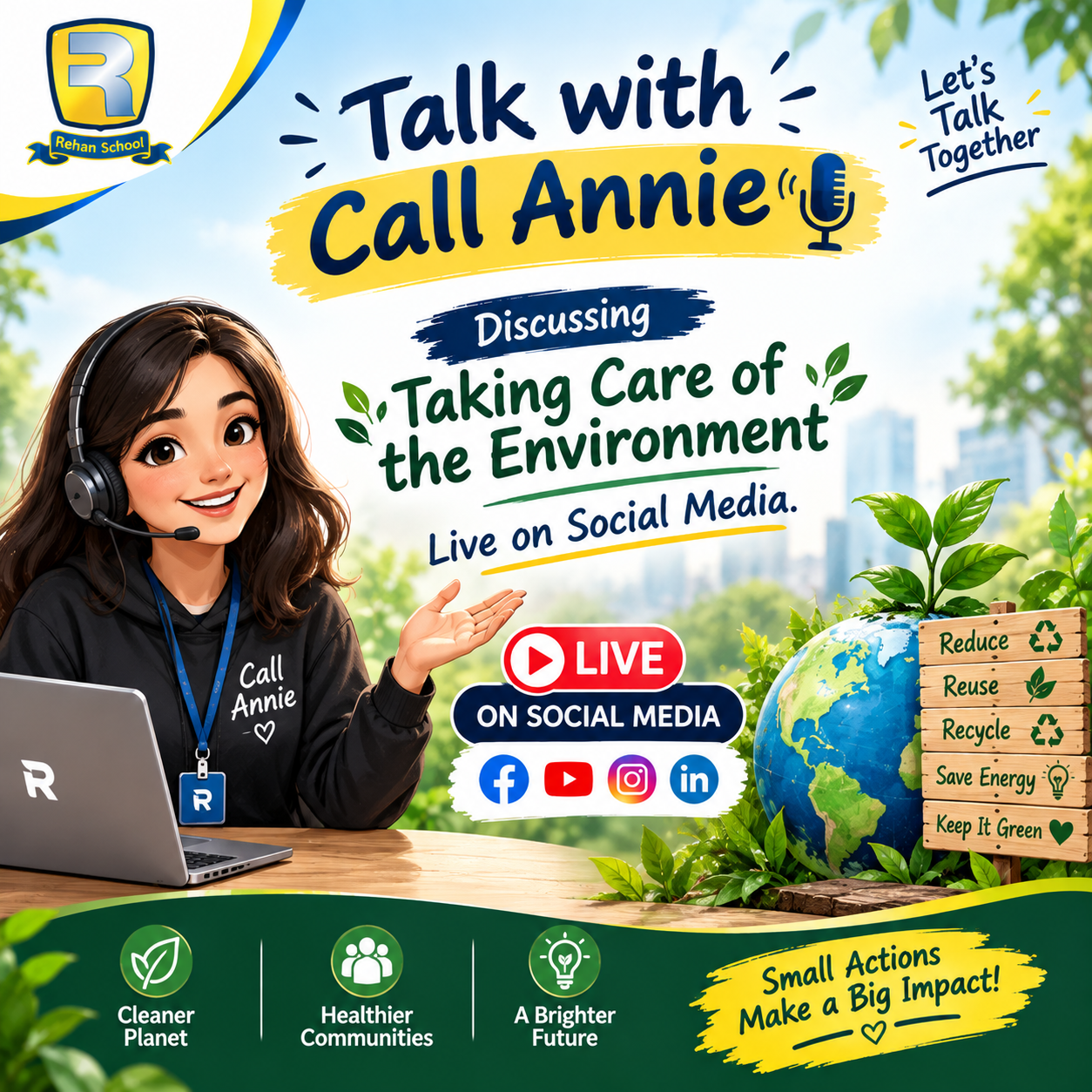
    Topic Talk with Call Annie!
    Join us for an inspiring live discussion on Taking Care of the Environment
    Let’s learn how small actions like reducing waste, reusing resources, recycling, and saving energy can help create a cleaner and healthier planet.
    Small Actions Make a Big Impact!
    #CallAnnie #RehanSchool #Environment #SaveOurPlanet #GoGreen #ReduceReuseRecycle #ClimateAwareness #EcoFriendly #CleanPlanet #GreenFuture #Sustainability #LiveSession #CreativeLearning
    @followers
    Tania Khan Mentorship Wali
    Mohsin Rathore Seo Wala
    Imran Khan Street Wala
    Shazia Javed Educationwali
    Hafsa Noor
    Rafia Remotejobwali
    Rehan School Korangi Campus
    Level 01 Work Book 01 Day 14 Task Canva post 49 Topic 🌍💚 Talk with Call Annie! 🎙️ Join us for an inspiring live discussion on Taking Care of the Environment 🌱♻️ Let’s learn how small actions like reducing waste, reusing resources, recycling, and saving energy can help create a cleaner and healthier planet. 🌎✨ Small Actions Make a Big Impact! 💚 #CallAnnie #RehanSchool #Environment #SaveOurPlanet #GoGreen #ReduceReuseRecycle #ClimateAwareness #EcoFriendly #CleanPlanet #GreenFuture #Sustainability #LiveSession #CreativeLearning @followers Tania Khan Mentorship Wali Mohsin Rathore Seo Wala Imran Khan Street Wala Shazia Javed Educationwali Hafsa Noor Rafia Remotejobwali Rehan School Korangi Campus
    0 Comentários 0 Compartilhamentos 2035 Visualizações
  • level 01 Work Book 01
    Day 14
    Task Canva post 48
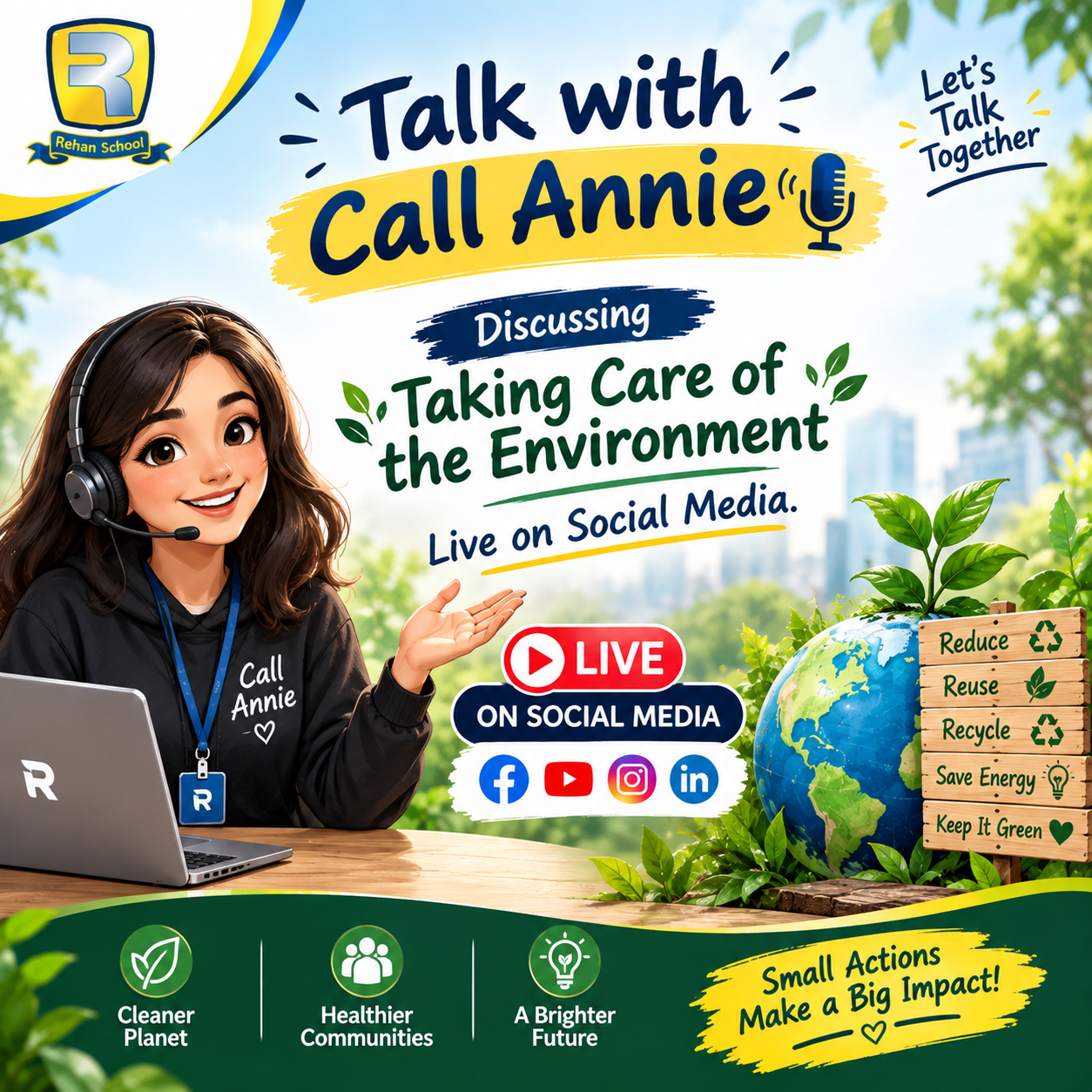
    Topic Talk with Call Annie!

    Join us for an inspiring live discussion on Taking Care of the Environment

    Let’s learn how small actions like reducing waste, reusing resources, recycling, and saving energy can help create a cleaner and healthier planet.

    Small Actions Make a Big Impact!

    #CallAnnie #RehanSchool #Environment #SaveOurPlanet #GoGreen #ReduceReuseRecycle #ClimateAwareness #EcoFriendly #CleanPlanet #GreenFuture #Sustainability #LiveSession #CreativeLearning

    @followers
    Tania Khan Mentorship Wali
    Mohsin Rathore Seo Wala
    Imran Khan Street Wala
    Shazia Javed Educationwali
    Hafsa Noor
    Rafia RemotejobWali
    level 01 Work Book 01 Day 14 Task Canva post 48 Topic 🌍💚 Talk with Call Annie! 🎙️ Join us for an inspiring live discussion on Taking Care of the Environment 🌱♻️ Let’s learn how small actions like reducing waste, reusing resources, recycling, and saving energy can help create a cleaner and healthier planet. 🌎✨ Small Actions Make a Big Impact! 💚 #CallAnnie #RehanSchool #Environment #SaveOurPlanet #GoGreen #ReduceReuseRecycle #ClimateAwareness #EcoFriendly #CleanPlanet #GreenFuture #Sustainability #LiveSession #CreativeLearning @followers Tania Khan Mentorship Wali Mohsin Rathore Seo Wala Imran Khan Street Wala Shazia Javed Educationwali Hafsa Noor Rafia RemotejobWali
    0 Comentários 0 Compartilhamentos 2088 Visualizações
  • RSIF8
    roll no 72
    story post no 5
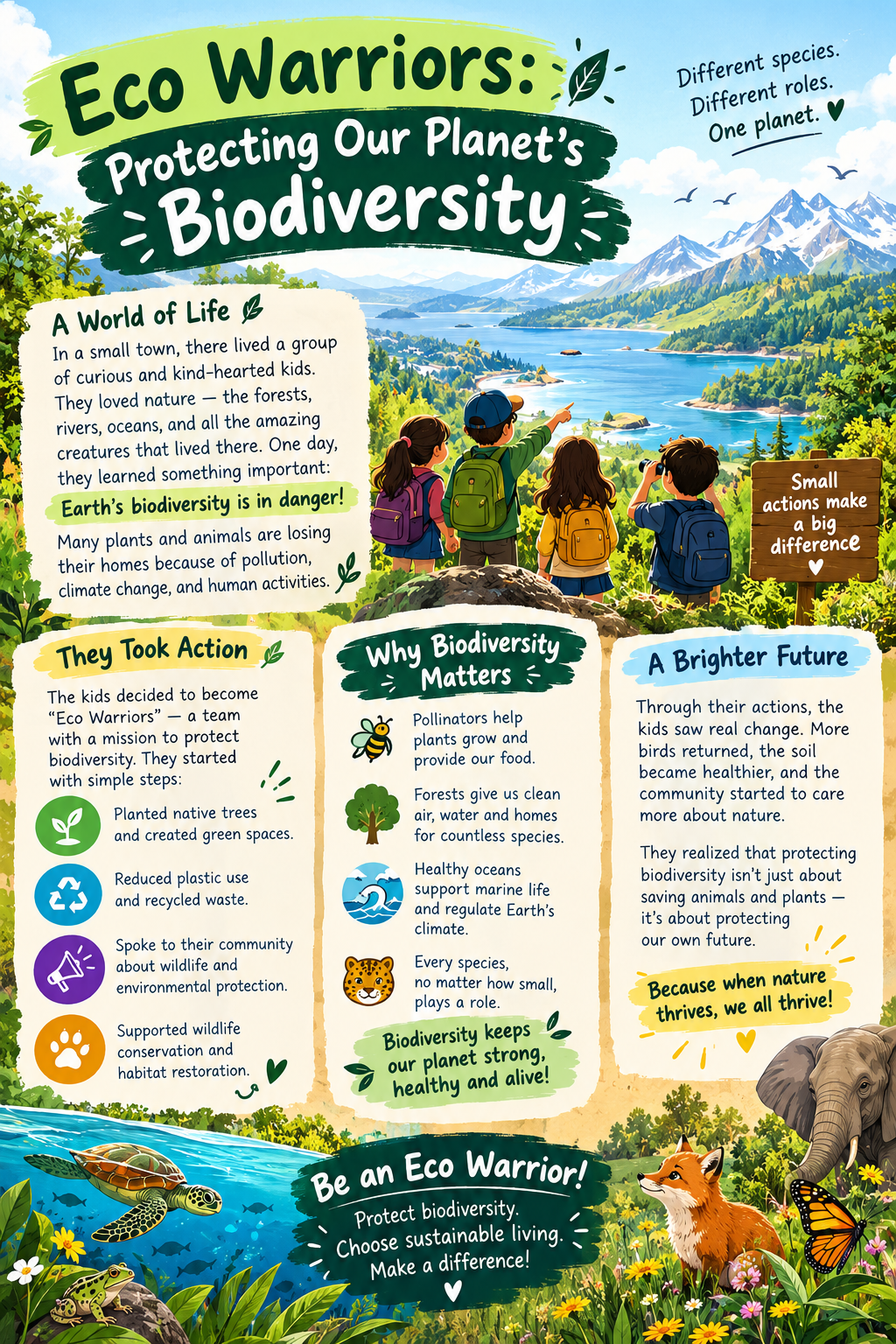
    story post topic :Eco Warriors: Protecting Our Planet’s Biodiversity**

    Every plant, animal, insect, and ecosystem has an important role in keeping our planet healthy. But pollution, habitat loss, climate change, and other human activities are putting many species at risk.

    In this story, a group of young **Eco Warriors** discovers that protecting biodiversity can begin with simple actions—planting trees, reducing plastic, recycling, protecting wildlife, and spreading awareness.

    Their journey teaches an important lesson: **when we protect nature, we protect our own future.**

    **Be an Eco Warrior. Small actions can make a big difference!**
    RSIF8 roll no 72 story post no 5 story post topic :Eco Warriors: Protecting Our Planet’s Biodiversity** 🐝🦋 Every plant, animal, insect, and ecosystem has an important role in keeping our planet healthy. But pollution, habitat loss, climate change, and other human activities are putting many species at risk. 🌳🐘🌊 In this story, a group of young **Eco Warriors** discovers that protecting biodiversity can begin with simple actions—planting trees, reducing plastic, recycling, protecting wildlife, and spreading awareness. 💚♻️🌱 Their journey teaches an important lesson: **when we protect nature, we protect our own future.** ✨ 🌎 **Be an Eco Warrior. Small actions can make a big difference!**
    0 Comentários 0 Compartilhamentos 973 Visualizações
Páginas impulsionada