#rsisb
Roll no.279
story post no.21
Foundation Level
**The Ethics and Education of Animal Dissections**
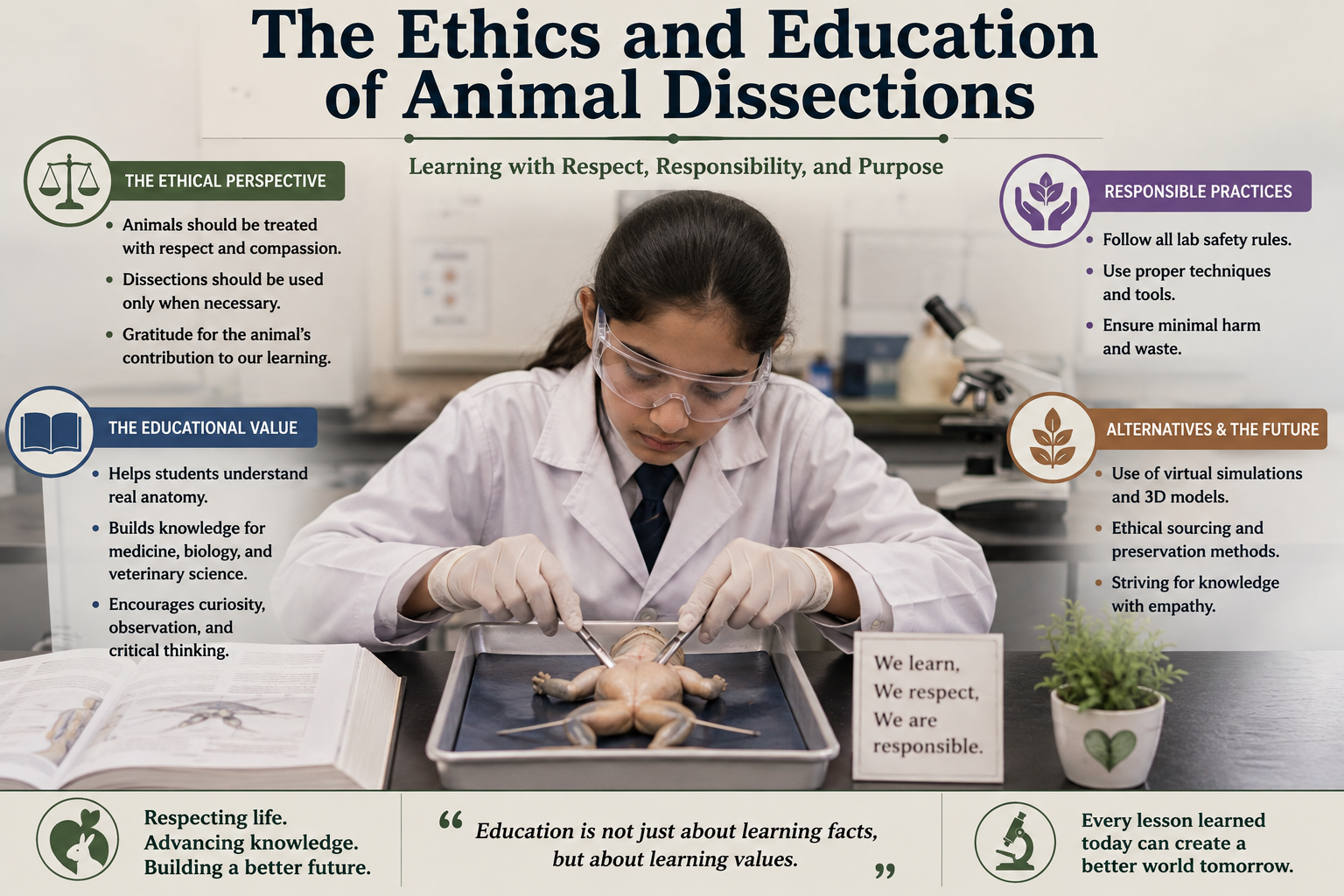
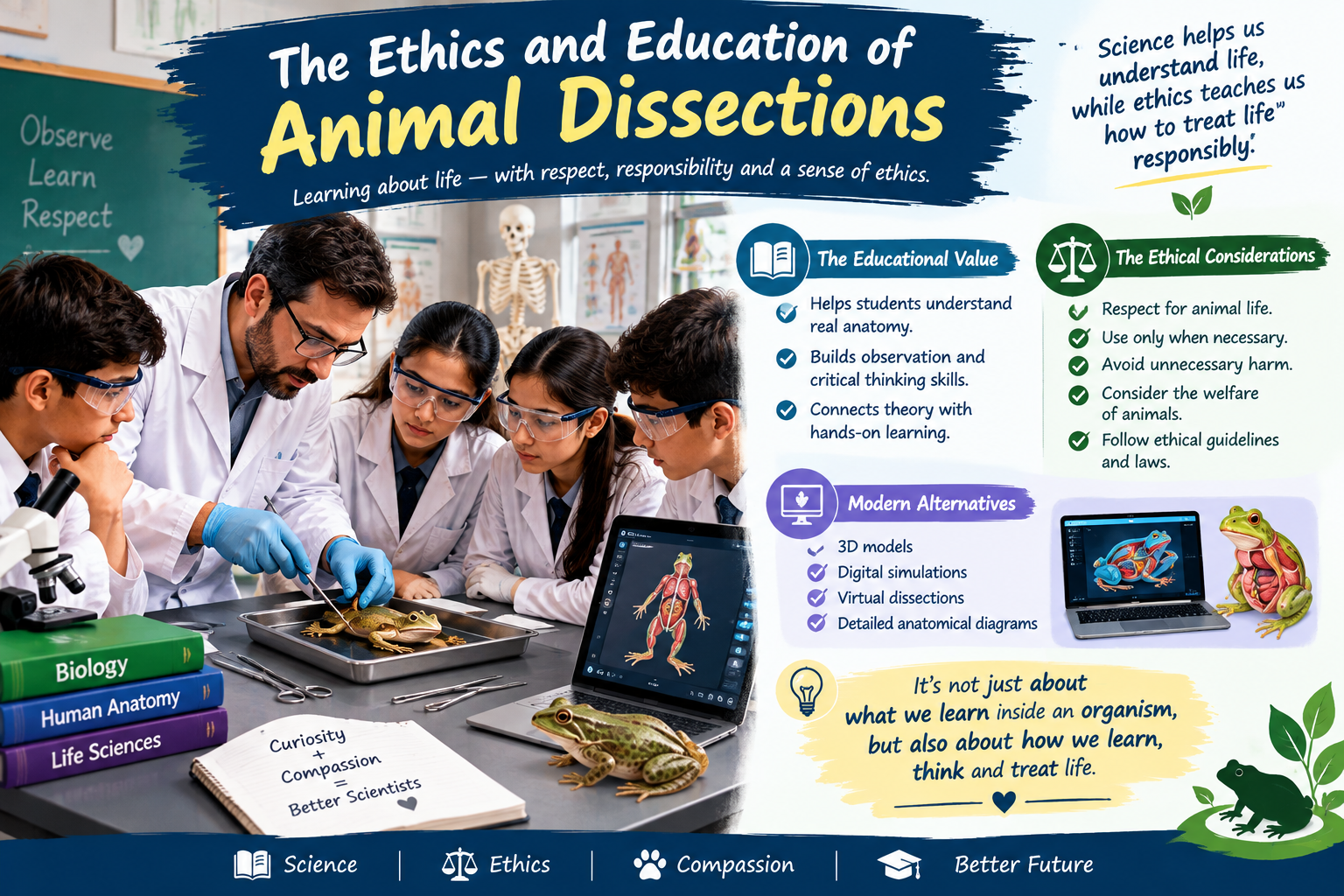
In a science classroom, students gathered around their teacher for an important lesson about how living organisms are structured and how their bodies work. The topic was **animal dissection**, a traditional method that has helped students understand anatomy through direct scientific observation.
The teacher explained that science is not only about discovering new information—it is also about **responsibility, respect, and ethical thinking**. Students learned that when animals are used for educational purposes, their use should be carefully considered, and unnecessary harm should always be avoided.
Some students were curious about how organs and body systems are connected. Others wondered whether there were alternative ways to learn anatomy without using animals. This led to an interesting classroom discussion about modern educational tools such as **3D models, digital simulations, virtual dissections, and detailed anatomical diagrams**.
The students discovered that there is no single answer to every ethical question. Instead, responsible science requires people to ask thoughtful questions: **Is the activity necessary? Is there a safer alternative? Does it provide meaningful educational value?**
By the end of the lesson, the students understood that learning biology is not simply about looking inside an organism—it is also about developing **curiosity, compassion, critical thinking, and respect for life**.
The classroom became more than a place to study anatomy. It became a place where students learned how **science and ethics can work together**.
**Science helps us understand life, while ethics teaches us how to treat life responsibly.**
#AnimalDissection #ScienceEducation #Biology #Ethics #AnimalWelfare #ScienceAndEthics #Learning #Education #CriticalThinking #BiologyStudents #ScienceClass #Anatomy #ResponsibleScience #StudentLearning #RespectForLife
Asma Shaheen EducationWali
Saima Empowerment Wali
Irum Asim Leadershipwali
#rsisb
Roll no.279
story post no.21
Foundation Level
🧬🔬 **The Ethics and Education of Animal Dissections** 🐸📚
In a science classroom, students gathered around their teacher for an important lesson about how living organisms are structured and how their bodies work. 🧑🏫🔬 The topic was **animal dissection**, a traditional method that has helped students understand anatomy through direct scientific observation. 📖🧠
The teacher explained that science is not only about discovering new information—it is also about **responsibility, respect, and ethical thinking**. 🌱⚖️ Students learned that when animals are used for educational purposes, their use should be carefully considered, and unnecessary harm should always be avoided. ❤️🐾
Some students were curious about how organs and body systems are connected. Others wondered whether there were alternative ways to learn anatomy without using animals. 💭🔍 This led to an interesting classroom discussion about modern educational tools such as **3D models, digital simulations, virtual dissections, and detailed anatomical diagrams**. 💻🧩
The students discovered that there is no single answer to every ethical question. Instead, responsible science requires people to ask thoughtful questions: **Is the activity necessary? Is there a safer alternative? Does it provide meaningful educational value?** 🤔⚖️
By the end of the lesson, the students understood that learning biology is not simply about looking inside an organism—it is also about developing **curiosity, compassion, critical thinking, and respect for life**. 🌍❤️🧠
The classroom became more than a place to study anatomy. It became a place where students learned how **science and ethics can work together**. 🔬🤝⚖️
✨ **Science helps us understand life, while ethics teaches us how to treat life responsibly.** 🌱🐾📚
#AnimalDissection #ScienceEducation #Biology #Ethics #AnimalWelfare #ScienceAndEthics #Learning #Education #CriticalThinking #BiologyStudents #ScienceClass #Anatomy #ResponsibleScience #StudentLearning #RespectForLife 🔬🧬📚🐾⚖️🌱✨
Asma Shaheen EducationWali
Saima Empowerment Wali
Irum Asim Leadershipwali
0 Commentarii
0 Distribuiri
4005 Views