• ACCL TASK :41
    Day :41
    foundation level
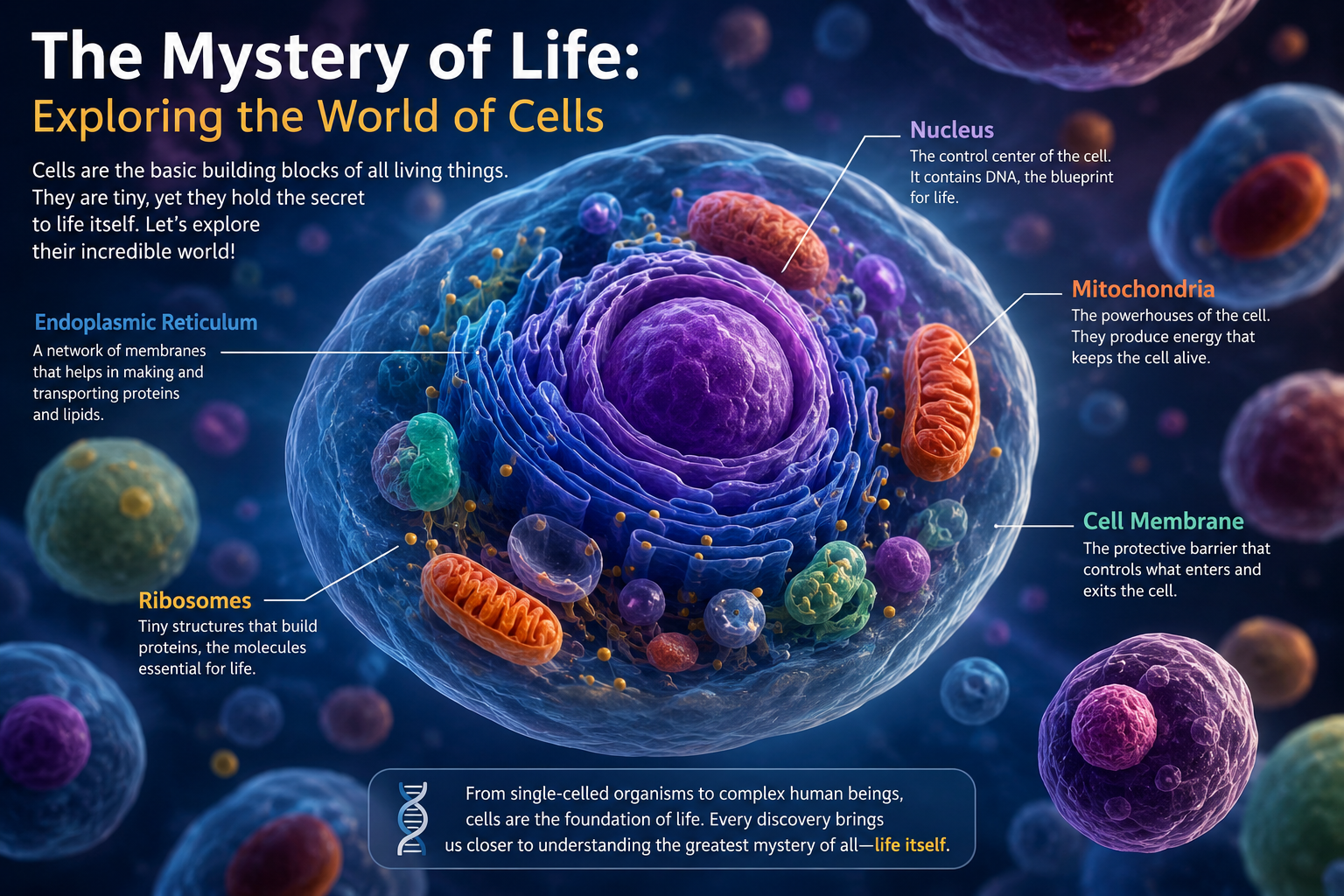
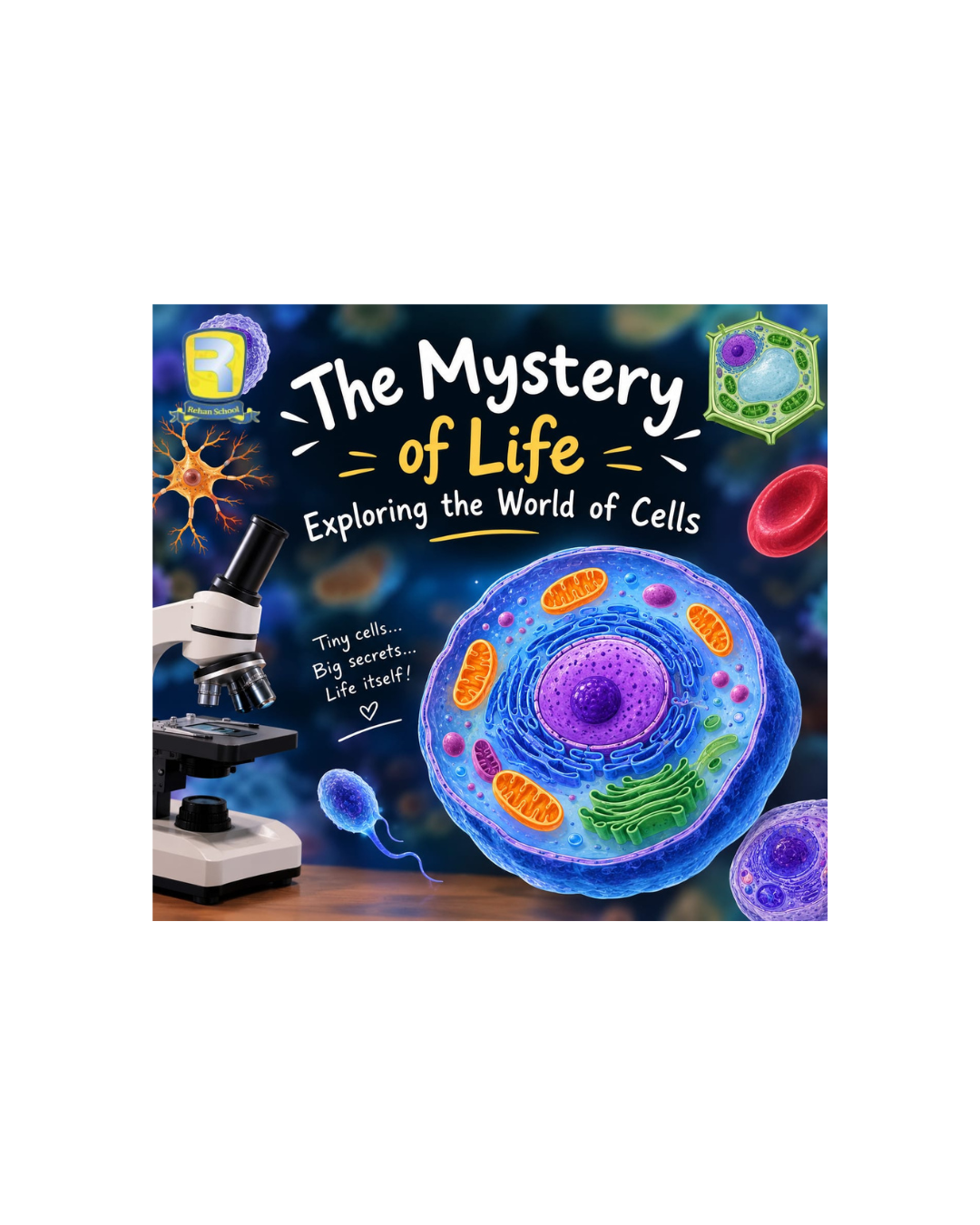
    The Mystery of Life: Exploring the World of Cells
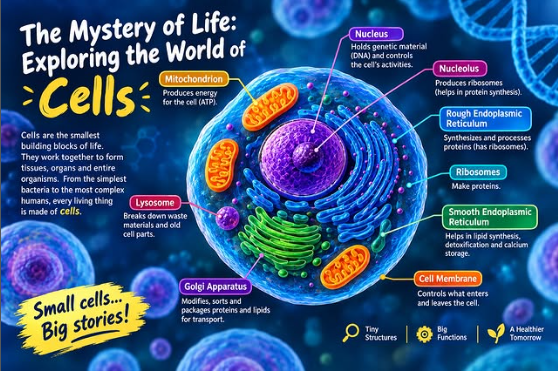
    Cells are the tiny building blocks of life, yet they contain an incredible world of structures and processes. From the nucleus and mitochondria to ribosomes and the cell membrane, every part plays an important role in keeping living organisms alive.
    Discover the fascinating world inside cells and explore the science behind life itself!
    ACCL TASK :41 Day :41 foundation level 🔬✨ The Mystery of Life: Exploring the World of Cells 🧬 Cells are the tiny building blocks of life, yet they contain an incredible world of structures and processes. From the nucleus and mitochondria to ribosomes and the cell membrane, every part plays an important role in keeping living organisms alive. 🌱 Discover the fascinating world inside cells and explore the science behind life itself! 🔬🧬
    0 Kommentare 0 Anteile 634 Ansichten
  • RSIf8
    Roll Number: 49
    Story post no.48
    Story post topic:Symphony of the Cell: Understanding Cellular Processes.

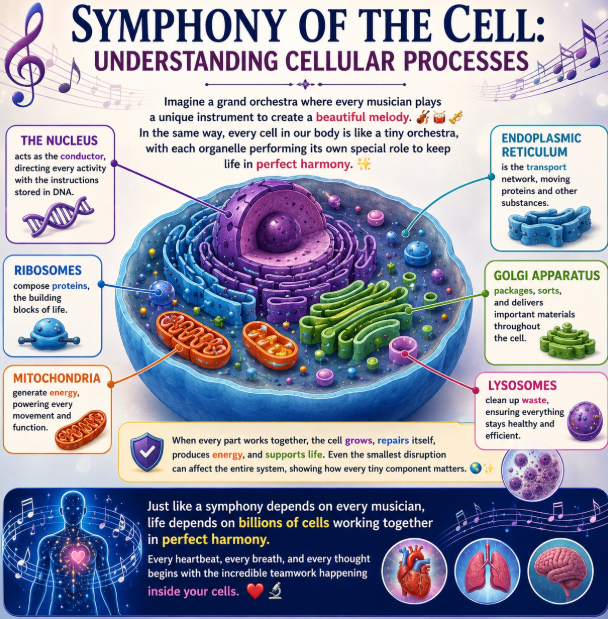
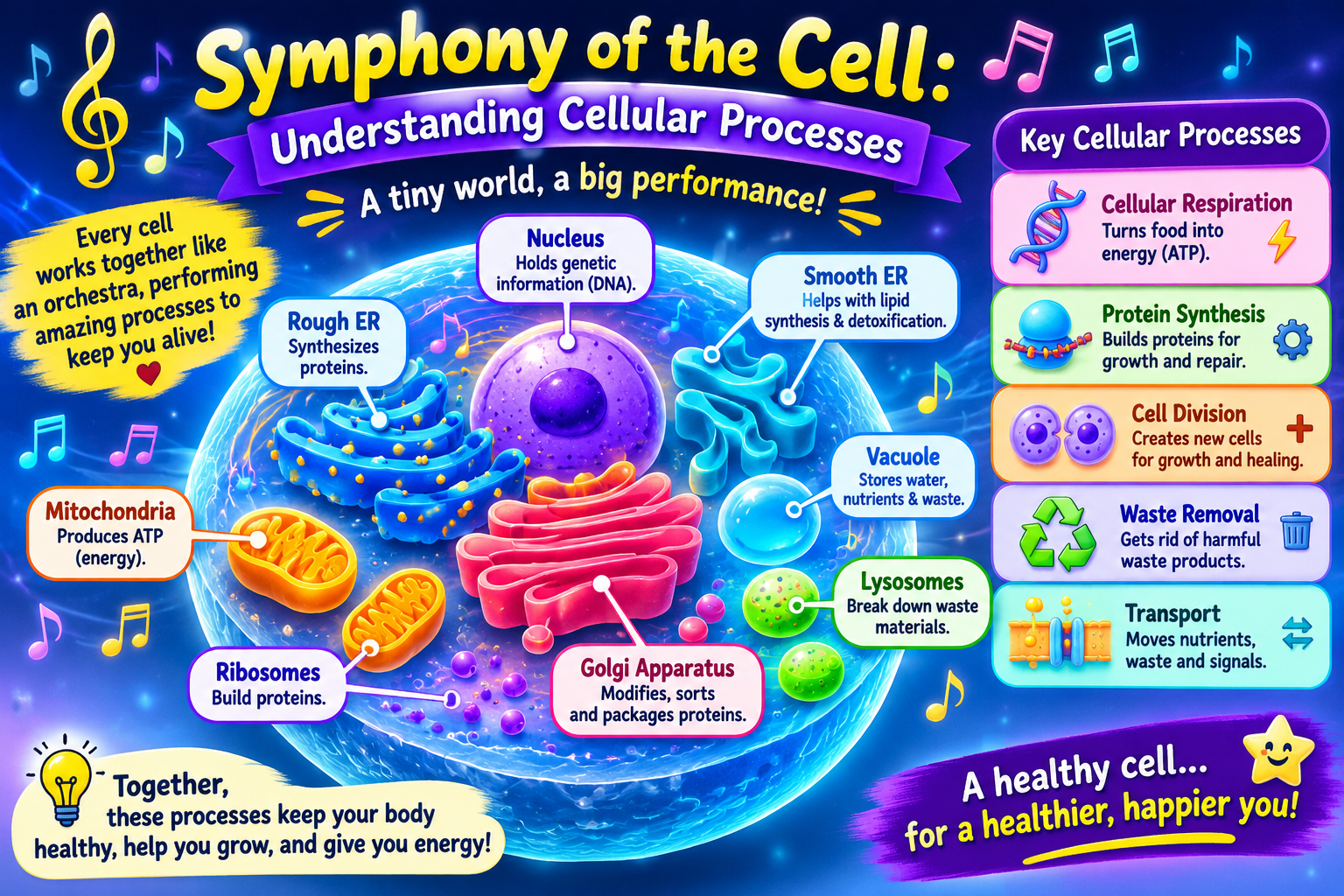
    Imagine a grand orchestra where every musician plays a unique instrument to create a beautiful melody. In the same way, every cell in our body is like a tiny orchestra, with each organelle performing its own special role to keep life in perfect harmony.

    The nucleus acts as the conductor, directing every activity with the instructions stored in DNA. The ribosomes compose proteins, the building blocks of life. The mitochondria generate energy, powering every movement and function. Meanwhile, the endoplasmic reticulum and Golgi apparatus transport, package, and deliver important materials throughout the cell. Finally, lysosomes clean up waste, ensuring everything stays healthy and efficient.

    When every part works together, the cell grows, repairs itself, produces energy, and supports life. Even the smallest disruption can affect the entire system, showing how every tiny component matters.

    Just like a symphony depends on every musician, life depends on billions of cells working together in perfect harmony. Every heartbeat, every breath, and every thought begins with the incredible teamwork happening inside your cells.

    #CellBiology #Science #Biology #CellularProcesses #STEM #Education #Learning #ScienceFacts #DidYouKnow #HumanBody #Knowledge #Innovation
    RSIf8 Roll Number: 49 Story post no.48 Story post topic:Symphony of the Cell: Understanding Cellular Processes. Imagine a grand orchestra where every musician plays a unique instrument to create a beautiful melody. 🎻🥁🎺 In the same way, every cell in our body is like a tiny orchestra, with each organelle performing its own special role to keep life in perfect harmony. 🌟 The nucleus acts as the conductor, directing every activity with the instructions stored in DNA. 🧠📖 The ribosomes compose proteins, the building blocks of life. 🏗️ The mitochondria generate energy, powering every movement and function. ⚡ Meanwhile, the endoplasmic reticulum and Golgi apparatus transport, package, and deliver important materials throughout the cell. 📦🚚 Finally, lysosomes clean up waste, ensuring everything stays healthy and efficient. ♻️💚 When every part works together, the cell grows, repairs itself, produces energy, and supports life. Even the smallest disruption can affect the entire system, showing how every tiny component matters. 🌍✨ Just like a symphony depends on every musician, life depends on billions of cells working together in perfect harmony. Every heartbeat, every breath, and every thought begins with the incredible teamwork happening inside your cells. ❤️🔬 #CellBiology #Science #Biology #CellularProcesses #STEM #Education #Learning #ScienceFacts #DidYouKnow #HumanBody #Knowledge #Innovation 🧬🎼✨
    0 Kommentare 0 Anteile 2643 Ansichten
  • RSIf8
    Roll Number: 49
    Story post no.47
    Story post topic:Exploring the Organelles' Roles

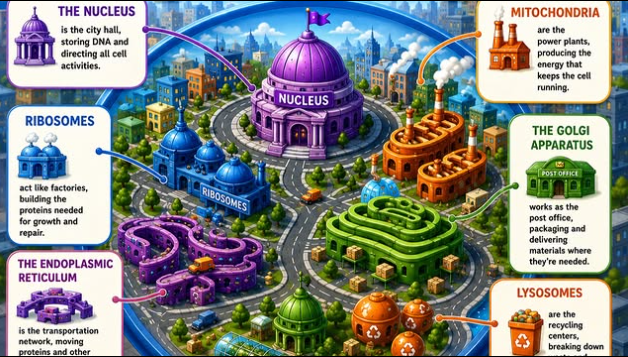
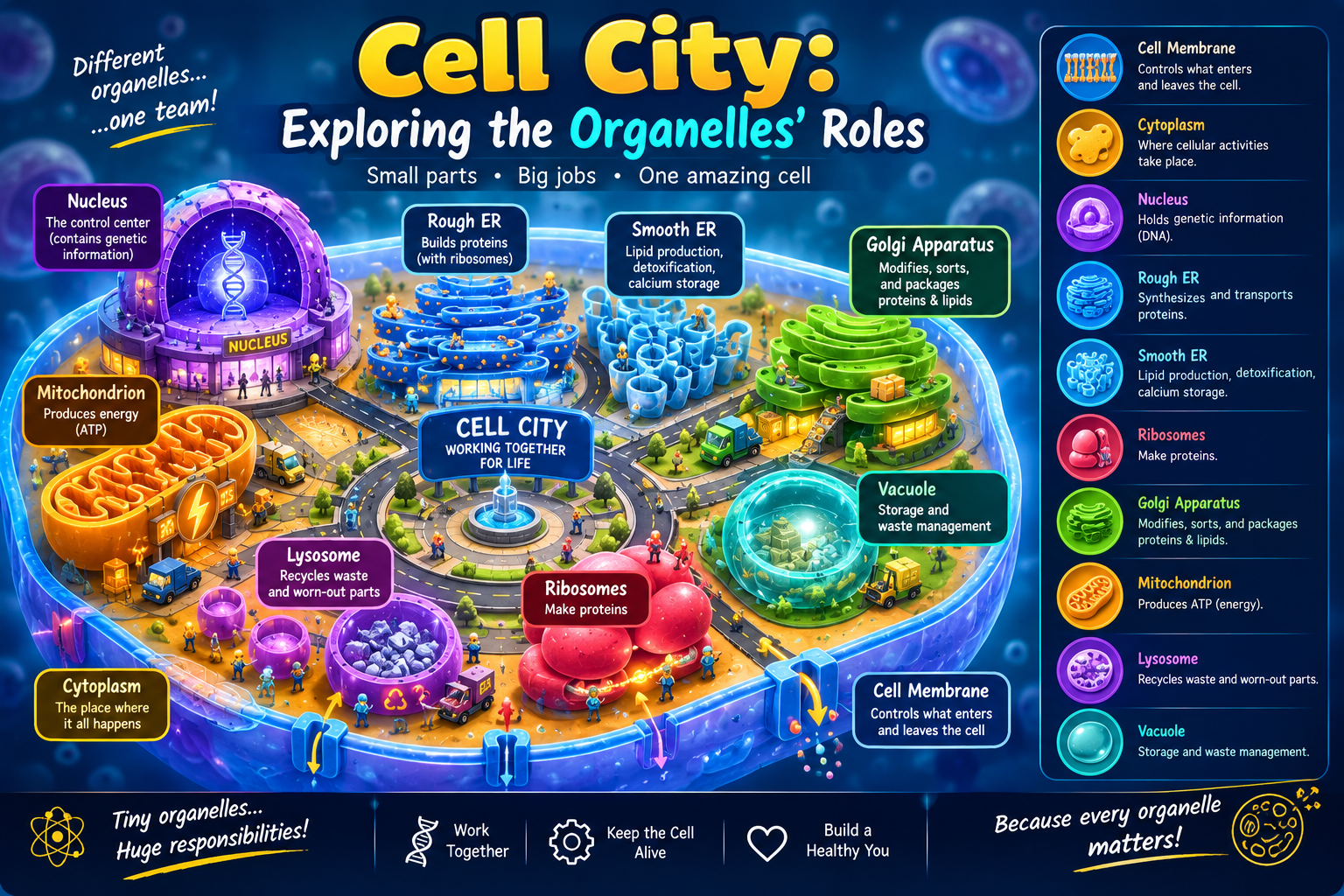
    Imagine a cell as a busy city where every organelle has an important job!

    The nucleus is the city hall, storing DNA and directing all cell activities.
    Mitochondria are the power plants, producing the energy that keeps the cell running.
    Ribosomes act like factories, building the proteins needed for growth and repair.
    The Golgi apparatus works as the post office, packaging and delivering materials where they're needed.
    The endoplasmic reticulum is the transportation network, moving proteins and other substances throughout the cell.
    Lysosomes are the recycling centers, breaking down waste and keeping the cell clean.
    In plant cells, chloroplasts capture sunlight to produce food through photosynthesis.

    Together, these tiny organelles work in perfect harmony, proving that even the smallest parts can make the biggest difference.

    Every cell is a bustling city—and every organelle plays a vital role in keeping life alive!

    #CellBiology #Science #Biology #Organelles #STEM #Education #Learning #ScienceFacts #DidYouKnow #Microscope #LifeScience #Knowledge
    RSIf8 Roll Number: 49 Story post no.47 Story post topic:Exploring the Organelles' Roles Imagine a cell as a busy city where every organelle has an important job! 🌟🏙️ 🧠 The nucleus is the city hall, storing DNA and directing all cell activities. ⚡ Mitochondria are the power plants, producing the energy that keeps the cell running. 🏭 Ribosomes act like factories, building the proteins needed for growth and repair. 📦 The Golgi apparatus works as the post office, packaging and delivering materials where they're needed. 🚚 The endoplasmic reticulum is the transportation network, moving proteins and other substances throughout the cell. 🧹 Lysosomes are the recycling centers, breaking down waste and keeping the cell clean. 🌿 In plant cells, chloroplasts capture sunlight to produce food through photosynthesis. ☀️🍃 Together, these tiny organelles work in perfect harmony, proving that even the smallest parts can make the biggest difference. 🌍💚 Every cell is a bustling city—and every organelle plays a vital role in keeping life alive! 🌟🔬 #CellBiology #Science #Biology #Organelles #STEM #Education #Learning #ScienceFacts #DidYouKnow #Microscope #LifeScience #Knowledge 🧬✨
    0 Kommentare 0 Anteile 2550 Ansichten
  • ACCL Foundation Level (Rehan School Urdu Bazar Campus )
    Day : 41 Story Post No: 6
    Roll No : 17
    Accl task
    The Mystery of Life: Exploring the World of Cells
    ---
    Once, a curious girl named Sara always asked one question: "What is life really made of?"
    One day, her science teacher didn't answer with words. She just placed a single drop of pond water under a microscope and said, "Look."
    Sara looked. And gasped.
    Inside that tiny, clear drop was an entire universe. Hundreds of tiny creatures swimming, spinning, eating, dividing. Little transparent bubbles were moving like they had a purpose.
    "What are they?" Sara whispered.
    "They are Cells," her teacher said. "The building blocks of all life. Every leaf, every bird, every human - including you - is made of them. You have about 37 trillion of them inside you right now."
    Sara couldn't believe it. "But they are so small!"
    "Small, but not simple," said the teacher. "Let's explore one."
    She showed Sara a diagram of a single cell.
    "See this? This dark circle in the middle is the Nucleus. Think of it as the brain or the control center. It holds all the instructions - your DNA - that tells the cell who you are.
    Around it is the Cytoplasm, a jelly-like fluid. It's like a busy factory floor where all the work happens. Food is turned into energy here.
    Scattered inside are tiny machines. Some are Mitochondria - the powerhouses that give you energy to run and laugh. Some are Ribosomes - tiny builders that make proteins.
    And finally, surrounding everything is the Cell Membrane. It's the gatekeeper, the wall of the city. It decides what goes in and what stays out, keeping the cell safe."
    Sara stared, amazed. "So... inside me, there are trillions of little cities, all working together?"
    "Exactly," the teacher smiled. "When cells of the same kind join together, they form tissues. Tissues join to form organs, like your heart and brain. And organs join to form... you."
    "So life isn't one big thing," Sara said slowly. "Life is billions of tiny lives working as one team."
    The teacher nodded. "That's the mystery. From the outside, we look like one person. From the inside, we are a universe."
    From that day on, Sara never saw herself the same way again. She knew that every time she breathed, healed, or grew - it was her 37 trillion tiny citizens working hard for her.
    MORAL: Life's greatest wonder is not in the stars above, but in the tiny world within us.
    ---
    زندگی کا راز: خلیوں کی دنیا کی سیر
    ایک دفعہ کا ذکر ہے، سارہ نام کی ایک بہت متجسس لڑکی تھی۔ وہ ہمیشہ ایک ہی سوال پوچھتی تھی: "آخر زندگی بنی کس چیز سے ہے؟"
    ایک دن اس کی سائنس ٹیچر نے اسے لفظوں میں جواب نہیں دیا۔ اس نے تالاب کے پانی کا ایک قطرہ خوردبین کے نیچے رکھا اور کہا، "خود دیکھ لو۔"
    سارہ نے خوردبین میں جھانکا۔ اور اس کی چیخ نکل گئی۔
    اس چھوٹے سے شفاف قطرے کے اندر ایک پوری کائنات آباد تھی۔ سینکڑوں ننھی ننھی مخلوقات تیر رہی تھیں، گھوم رہی تھیں، کھا رہی تھیں، تقسیم ہو رہی تھیں۔ چھوٹے چھوٹے شفاف غبارے ایسے حرکت کر رہے تھے جیسے ان کا کوئی مقصد ہو۔
    "یہ کیا ہیں؟" سارہ نے سرگوشی کی۔
    "یہ خلیے (Cells) ہیں،" ٹیچر نے کہا۔ "یہ زندگی کی بنیاد ہیں۔ ہر پتہ، ہر پرندہ، ہر انسان، تم سمیت، انہی سے بنا ہے۔ تمہارے اندر اس وقت تقریباً 37 کھرب خلیے موجود ہیں۔"
    سارہ کو یقین نہیں آیا۔ "لیکن یہ تو اتنے چھوٹے ہیں!"
    "چھوٹے ہیں، لیکن سادہ نہیں،" ٹیچر نے کہا۔ "آؤ ایک کو قریب سے دیکھتے ہیں۔"
    اس نے سارہ کو ایک خلیے کا نقشہ دکھایا۔
    "یہ دیکھو؟ بیچ میں یہ گہرا دائرہ مرکزہ (Nucleus) ہے۔ اسے خلیے کا دماغ یا کنٹرول سینٹر سمجھو۔ اس میں ساری ہدایات ہیں، تمہارا ڈی این اے، جو خلیے کو بتاتا ہے کہ تم کون ہو۔
    اس کے ارد گرد سائٹو پلازم (Cytoplasm) ہے، ایک جیلی جیسا مادہ۔ یہ ایک مصروف فیکٹری کے فرش کی طرح ہے جہاں سارا کام ہوتا ہے۔ یہاں خوراک توانائی میں بدلتی ہے۔
    اندر بکھری ہوئی چھوٹی چھوٹی مشینیں ہیں۔ کچھ مائٹو کونڈریا ہیں، یہ پاور ہاؤس ہیں جو تمہیں بھاگنے اور ہنسنے کے لیے توانائی دیتے ہیں۔ کچھ رائبوسومز ہیں، چھوٹے مستری جو پروٹین بناتے ہیں۔
    اور آخر میں، ہر چیز کے گرد خلیاتی جھلی (Cell Membrane) ہے۔ یہ دربان ہے، شہر کی دیوار ہے۔ یہ فیصلہ کرتی ہے کہ اندر کیا جائے گا اور باہر کیا رہے گا، اور خلیے کو محفوظ رکھتی ہے۔"
    سارہ حیرت سے بولی، "تو... میرے اندر کھربوں چھوٹے شہر ہیں، جو سب مل کر کام کر رہے ہیں؟"بالکل،" ٹیچر مسکرائی۔ "جب ایک ہی قسم کے خلیے آپس میں ملتے ہیں تو وہ ٹشو (نسیج) بناتے ہیں۔ ٹشو مل کر اعضاء بناتے ہیں، جیسے تمہارا دل اور دماغ۔ اور اعضاء مل کر بناتے ہیں... تمہیں۔"
    "تو زندگی ایک بڑی چیز نہیں ہے،" سارہ نے آہستہ سے کہا۔ "زندگی اربوں ننھی زندگیوں کا ایک ٹیم کے طور پر کام کرنا ہے۔"
    ٹیچر نے سر ہلایا۔ "یہی تو راز ہے۔ باہر سے ہم ایک انسان نظر آتے ہیں۔ اندر سے ہم ایک پوری کائنات ہیں۔"
    اس دن کے بعد سارہ نے اپنے آپ کو کبھی پہلے جیسا نہیں دیکھا۔ وہ جان گئی تھی کہ جب بھی وہ سانس لیتی ہے، اس کا زخم بھرتا ہے، یا وہ بڑی ہوتی ہے، تو اس کے 37 کھرب ننھے شہری اس کے لیے سخت محنت کر رہے ہوتے ہیں۔
    سبق: زندگی کا سب سے بڑا عجوبہ اوپر ستاروں میں نہیں، بلکہ ہمارے اندر کی چھوٹی دنیا میں چھپا ہے۔ See less
    ACCL Foundation Level (Rehan School Urdu Bazar Campus ) Day : 41 Story Post No: 6 Roll No : 17 Accl task The Mystery of Life: Exploring the World of Cells --- Once, a curious girl named Sara always asked one question: "What is life really made of?" One day, her science teacher didn't answer with words. She just placed a single drop of pond water under a microscope and said, "Look." Sara looked. And gasped. Inside that tiny, clear drop was an entire universe. Hundreds of tiny creatures swimming, spinning, eating, dividing. Little transparent bubbles were moving like they had a purpose. "What are they?" Sara whispered. "They are Cells," her teacher said. "The building blocks of all life. Every leaf, every bird, every human - including you - is made of them. You have about 37 trillion of them inside you right now." Sara couldn't believe it. "But they are so small!" "Small, but not simple," said the teacher. "Let's explore one." She showed Sara a diagram of a single cell. "See this? This dark circle in the middle is the Nucleus. Think of it as the brain or the control center. It holds all the instructions - your DNA - that tells the cell who you are. Around it is the Cytoplasm, a jelly-like fluid. It's like a busy factory floor where all the work happens. Food is turned into energy here. Scattered inside are tiny machines. Some are Mitochondria - the powerhouses that give you energy to run and laugh. Some are Ribosomes - tiny builders that make proteins. And finally, surrounding everything is the Cell Membrane. It's the gatekeeper, the wall of the city. It decides what goes in and what stays out, keeping the cell safe." Sara stared, amazed. "So... inside me, there are trillions of little cities, all working together?" "Exactly," the teacher smiled. "When cells of the same kind join together, they form tissues. Tissues join to form organs, like your heart and brain. And organs join to form... you." "So life isn't one big thing," Sara said slowly. "Life is billions of tiny lives working as one team." The teacher nodded. "That's the mystery. From the outside, we look like one person. From the inside, we are a universe." From that day on, Sara never saw herself the same way again. She knew that every time she breathed, healed, or grew - it was her 37 trillion tiny citizens working hard for her. MORAL: Life's greatest wonder is not in the stars above, but in the tiny world within us. --- زندگی کا راز: خلیوں کی دنیا کی سیر ایک دفعہ کا ذکر ہے، سارہ نام کی ایک بہت متجسس لڑکی تھی۔ وہ ہمیشہ ایک ہی سوال پوچھتی تھی: "آخر زندگی بنی کس چیز سے ہے؟" ایک دن اس کی سائنس ٹیچر نے اسے لفظوں میں جواب نہیں دیا۔ اس نے تالاب کے پانی کا ایک قطرہ خوردبین کے نیچے رکھا اور کہا، "خود دیکھ لو۔" سارہ نے خوردبین میں جھانکا۔ اور اس کی چیخ نکل گئی۔ اس چھوٹے سے شفاف قطرے کے اندر ایک پوری کائنات آباد تھی۔ سینکڑوں ننھی ننھی مخلوقات تیر رہی تھیں، گھوم رہی تھیں، کھا رہی تھیں، تقسیم ہو رہی تھیں۔ چھوٹے چھوٹے شفاف غبارے ایسے حرکت کر رہے تھے جیسے ان کا کوئی مقصد ہو۔ "یہ کیا ہیں؟" سارہ نے سرگوشی کی۔ "یہ خلیے (Cells) ہیں،" ٹیچر نے کہا۔ "یہ زندگی کی بنیاد ہیں۔ ہر پتہ، ہر پرندہ، ہر انسان، تم سمیت، انہی سے بنا ہے۔ تمہارے اندر اس وقت تقریباً 37 کھرب خلیے موجود ہیں۔" سارہ کو یقین نہیں آیا۔ "لیکن یہ تو اتنے چھوٹے ہیں!" "چھوٹے ہیں، لیکن سادہ نہیں،" ٹیچر نے کہا۔ "آؤ ایک کو قریب سے دیکھتے ہیں۔" اس نے سارہ کو ایک خلیے کا نقشہ دکھایا۔ "یہ دیکھو؟ بیچ میں یہ گہرا دائرہ مرکزہ (Nucleus) ہے۔ اسے خلیے کا دماغ یا کنٹرول سینٹر سمجھو۔ اس میں ساری ہدایات ہیں، تمہارا ڈی این اے، جو خلیے کو بتاتا ہے کہ تم کون ہو۔ اس کے ارد گرد سائٹو پلازم (Cytoplasm) ہے، ایک جیلی جیسا مادہ۔ یہ ایک مصروف فیکٹری کے فرش کی طرح ہے جہاں سارا کام ہوتا ہے۔ یہاں خوراک توانائی میں بدلتی ہے۔ اندر بکھری ہوئی چھوٹی چھوٹی مشینیں ہیں۔ کچھ مائٹو کونڈریا ہیں، یہ پاور ہاؤس ہیں جو تمہیں بھاگنے اور ہنسنے کے لیے توانائی دیتے ہیں۔ کچھ رائبوسومز ہیں، چھوٹے مستری جو پروٹین بناتے ہیں۔ اور آخر میں، ہر چیز کے گرد خلیاتی جھلی (Cell Membrane) ہے۔ یہ دربان ہے، شہر کی دیوار ہے۔ یہ فیصلہ کرتی ہے کہ اندر کیا جائے گا اور باہر کیا رہے گا، اور خلیے کو محفوظ رکھتی ہے۔" سارہ حیرت سے بولی، "تو... میرے اندر کھربوں چھوٹے شہر ہیں، جو سب مل کر کام کر رہے ہیں؟"بالکل،" ٹیچر مسکرائی۔ "جب ایک ہی قسم کے خلیے آپس میں ملتے ہیں تو وہ ٹشو (نسیج) بناتے ہیں۔ ٹشو مل کر اعضاء بناتے ہیں، جیسے تمہارا دل اور دماغ۔ اور اعضاء مل کر بناتے ہیں... تمہیں۔" "تو زندگی ایک بڑی چیز نہیں ہے،" سارہ نے آہستہ سے کہا۔ "زندگی اربوں ننھی زندگیوں کا ایک ٹیم کے طور پر کام کرنا ہے۔" ٹیچر نے سر ہلایا۔ "یہی تو راز ہے۔ باہر سے ہم ایک انسان نظر آتے ہیں۔ اندر سے ہم ایک پوری کائنات ہیں۔" اس دن کے بعد سارہ نے اپنے آپ کو کبھی پہلے جیسا نہیں دیکھا۔ وہ جان گئی تھی کہ جب بھی وہ سانس لیتی ہے، اس کا زخم بھرتا ہے، یا وہ بڑی ہوتی ہے، تو اس کے 37 کھرب ننھے شہری اس کے لیے سخت محنت کر رہے ہوتے ہیں۔ سبق: زندگی کا سب سے بڑا عجوبہ اوپر ستاروں میں نہیں، بلکہ ہمارے اندر کی چھوٹی دنیا میں چھپا ہے۔ See less
    0 Kommentare 0 Anteile 3434 Ansichten
  • #rsisb Foundation level student. Roll no:232 Documentary NO:5 🔬🧬 **Documentary — Symphony of the Cell: Understanding Cellular Processes** 🎬✨ Welcome to an exciting journey into the microscopic world of cells! 🌍🔬 In this documentary, *Symphony of the Cell: Understanding Cellular Processes*, we explore the amazing activities that keep living organisms alive. 🧫💡 Discover how cells produce energy, create proteins, transport materials, remove waste, and communicate with one another. Learn about important cell organelles, including the nucleus, mitochondria, ribosomes, and cell membrane, and understand how they work together like instruments in a beautiful symphony. 🎶🧬 From cell division to maintaining life, every cellular process plays an essential role in the growth, development, and survival of living things. This documentary makes biology fascinating and helps us appreciate the incredible complexity of life at its smallest level. 🌱🔍 Join me on this educational adventure and discover the hidden wonders of the cell! 🚀📚 **Keep Exploring, Keep Learning, and Keep Discovering! 🌟** #SymphonyOfTheCell #CellBiology #CellularProcesses #Biology #ScienceDocumentary #HumanBiology #CellOrganelles #Mitochondria #Nucleus #ScientificDiscovery #EducationalVideo #ScienceEducation #LearnWithAI #KnowledgeIsPower #KeepLearning 🔬🧬🎬🌍✨ Irum Asim Leadershipwali Asma Shaheen EducationWali Rehan School Islamabad Campus https://www.facebook.com/share/v/1J5vJHF9Mo/
    WWW.FACEBOOK.COM
    Facebook
    #rsisb Foundation level student. Roll no:232 Documentary NO:5 🔬🧬 **Documentary — Symphony of the Cell: Understanding Cellular Processes** 🎬✨ Welcome to an exciting journey into the microscopic...
    0 Kommentare 0 Anteile 3127 Ansichten
  • #rsisb
    Roll no. 247
    Story post . 18
    Foundation level

    **Story Post — Symphony of the Cell: Understanding Cellular Processes**

    **Welcome to the Amazing World of Cells!**

    Have you ever wondered how the human body works, how we grow, how we breathe, or how our bodies get energy? The answer lies in the tiny but powerful building blocks of life — **cells!**

    **Symphony of the Cell** takes us on an exciting journey into the microscopic world, where every cell works like a beautiful orchestra. Just as musical instruments work together to create a wonderful melody, the different parts of a cell work together to keep living organisms alive and healthy.

    **Discover the Amazing Cell Organelles!**

    **Mitochondria:** Often called the powerhouse of the cell, mitochondria help produce the energy that cells need to function.

    **Nucleus:** The control center of the cell, containing DNA and instructions for many cellular activities.

    **Ribosomes:** Tiny structures that make proteins, which are essential for growth and repair.

    **Golgi Apparatus:** Helps modify, package, and transport proteins and other materials.

    **Cell Membrane:** Controls what enters and leaves the cell, helping maintain a stable internal environment.

    **Chloroplasts:** Found in plant cells, these structures capture sunlight for photosynthesis.

    **Cytoplasm:** The jelly-like material inside the cell where many important chemical reactions take place.

    **How Do Cells Work Together?**

    Cells carry out many amazing processes every second! They use nutrients to obtain energy, make proteins, transport materials, remove waste, respond to their surroundings, and grow. Some cells can also divide to produce new cells. These activities help living organisms survive and develop.

    **Why Is Understanding Cellular Processes Important?**

    Learning about cells helps us understand human health, diseases, plant growth, genetics, and the incredible complexity of life. From the smallest microorganism to the largest living organisms, cells play an essential role in the natural world.

    **Let's Learn, Explore, and Discover!**

    Science teaches us that even the smallest things can have the biggest impact. Every cell has a role to play, and together, cells create the extraordinary systems that make life possible. Keep asking questions, keep exploring, and never stop learning!

    **Question for You:** If you could explore one part of a cell under a powerful microscope, which organelle would you choose, and why?

    Like, share, and comment to spread the wonder of science! Let's make learning fun, creative, and inspiring for everyone.
    #rsisb Roll no. 247 Story post . 18 Foundation level 🔬🎶 **Story Post — Symphony of the Cell: Understanding Cellular Processes** 🧬✨ 🌟 **Welcome to the Amazing World of Cells!** 🌟 Have you ever wondered how the human body works, how we grow, how we breathe, or how our bodies get energy? 🤔💡 The answer lies in the tiny but powerful building blocks of life — **cells!** 🦠🔬 🎼 **Symphony of the Cell** takes us on an exciting journey into the microscopic world, where every cell works like a beautiful orchestra. Just as musical instruments work together to create a wonderful melody, the different parts of a cell work together to keep living organisms alive and healthy. 🎻🎹🎵 🧫 **Discover the Amazing Cell Organelles!** 🔋 **Mitochondria:** Often called the powerhouse of the cell, mitochondria help produce the energy that cells need to function. 🧠 **Nucleus:** The control center of the cell, containing DNA and instructions for many cellular activities. 🏭 **Ribosomes:** Tiny structures that make proteins, which are essential for growth and repair. 📦 **Golgi Apparatus:** Helps modify, package, and transport proteins and other materials. 🚪 **Cell Membrane:** Controls what enters and leaves the cell, helping maintain a stable internal environment. 🌱 **Chloroplasts:** Found in plant cells, these structures capture sunlight for photosynthesis. ☀️🌿 💧 **Cytoplasm:** The jelly-like material inside the cell where many important chemical reactions take place. ⚡ **How Do Cells Work Together?** Cells carry out many amazing processes every second! They use nutrients to obtain energy, make proteins, transport materials, remove waste, respond to their surroundings, and grow. Some cells can also divide to produce new cells. These activities help living organisms survive and develop. 🌍❤️ 🧬 **Why Is Understanding Cellular Processes Important?** Learning about cells helps us understand human health, diseases, plant growth, genetics, and the incredible complexity of life. From the smallest microorganism to the largest living organisms, cells play an essential role in the natural world. 🌎🔍 📚 **Let's Learn, Explore, and Discover!** Science teaches us that even the smallest things can have the biggest impact. Every cell has a role to play, and together, cells create the extraordinary systems that make life possible. Keep asking questions, keep exploring, and never stop learning! 🚀💡 💭 **Question for You:** If you could explore one part of a cell under a powerful microscope, which organelle would you choose, and why? 🔬👇 ❤️ Like, share, and comment to spread the wonder of science! Let's make learning fun, creative, and inspiring for everyone. 🌟📖

    0 Kommentare 0 Anteile 1970 Ansichten
  • RSIF8
    Task NO:41

    The Mystery of Life: Exploring the World of Cells

    Cells are the fundamental building blocks of life, and understanding them helps us understand how living organisms grow, function, develop, and survive. From tiny microorganisms to plants, animals, and humans, every living organism is made up of cells. Although cells are incredibly small, they contain many fascinating structures that work together like a well-organized system.

    In this learning task, I explored the amazing world of cells and learned about different cell organelles and their important functions. The nucleus contains genetic material and helps control the activities of the cell, while the nucleolus plays an important role in producing ribosomes. The mitochondria are responsible for producing energy that the cell needs to perform its activities. I also learned about the rough and smooth endoplasmic reticulum, which are involved in processes such as protein production, lipid synthesis, and other cellular functions.

    Another interesting part of the cell is the Golgi apparatus, which modifies, sorts, and packages proteins and other materials for transport. Ribosomes help make proteins, while lysosomes help break down waste materials and unwanted cell components. The cell membrane surrounds the cell and controls what enters and leaves it. Learning about these structures made me realize that even the smallest parts of life have specific jobs and work together to keep the cell functioning properly.

    This topic also helped me understand how complex life can exist at a microscopic level. A cell may look tiny and simple from the outside, but inside it is a busy world filled with structures, chemical reactions, energy production, information, and continuous activity. Studying cells gives us a foundation for learning more advanced topics such as genetics, DNA, human biology, diseases, medicine, and biotechnology.

    Through this task, I improved my knowledge of biology and developed a greater appreciation for the incredible organization found in living things. It also reminded me that science is all about asking questions, exploring mysteries, observing carefully, and discovering
    RSIF8 Task NO:41 🔬🧬 The Mystery of Life: Exploring the World of Cells 🧬🔬 Cells are the fundamental building blocks of life, and understanding them helps us understand how living organisms grow, function, develop, and survive. From tiny microorganisms to plants, animals, and humans, every living organism is made up of cells. Although cells are incredibly small, they contain many fascinating structures that work together like a well-organized system. In this learning task, I explored the amazing world of cells and learned about different cell organelles and their important functions. The nucleus contains genetic material and helps control the activities of the cell, while the nucleolus plays an important role in producing ribosomes. The mitochondria are responsible for producing energy that the cell needs to perform its activities. I also learned about the rough and smooth endoplasmic reticulum, which are involved in processes such as protein production, lipid synthesis, and other cellular functions. Another interesting part of the cell is the Golgi apparatus, which modifies, sorts, and packages proteins and other materials for transport. Ribosomes help make proteins, while lysosomes help break down waste materials and unwanted cell components. The cell membrane surrounds the cell and controls what enters and leaves it. Learning about these structures made me realize that even the smallest parts of life have specific jobs and work together to keep the cell functioning properly. This topic also helped me understand how complex life can exist at a microscopic level. A cell may look tiny and simple from the outside, but inside it is a busy world filled with structures, chemical reactions, energy production, information, and continuous activity. Studying cells gives us a foundation for learning more advanced topics such as genetics, DNA, human biology, diseases, medicine, and biotechnology. Through this task, I improved my knowledge of biology and developed a greater appreciation for the incredible organization found in living things. It also reminded me that science is all about asking questions, exploring mysteries, observing carefully, and discovering
    0 Kommentare 0 Anteile 2823 Ansichten
  • RSIF8
    ROLL NO 77
    SHOURT DOCUMENTARY NO 10
    DOCUMENTARY TOPIC "Symphony of the Cell: Understanding Cellular Processes".

    **Symphony of the Cell: Understanding Cellular Processes**

    Have you ever wondered what happens inside the tiny cells that keep you alive? Discover the amazing world of cells and explore how their different parts work together like instruments in a beautiful symphony!

    **Mitochondria** produce usable energy for the cell.\
    **Nucleus** stores DNA and helps control cellular activities.\
    **Ribosomes** build essential proteins.\
    **Cell Membrane** controls what enters and leaves the cell.\
    **Photosynthesis** helps plant cells convert sunlight into chemical energy.

    From producing energy to building proteins and creating new cells, every process plays an important role in sustaining life!

    **Small cells, extraordinary functions, and the incredible science of life!** Keep exploring, keep learning, and discover the wonders hidden inside every living thing.

    \#SymphonyOfTheCell #CellBiology #CellularProcesses #ScienceEducation #Biology #HumanBody #MicroscopicWorld #DNA #Mitochondria #Photosynthesis #STEMEducation #LearnWithFun #ScienceFacts

    Add a stronger learning takeawayMake the opening more attention-grabbing
    RSIF8 ROLL NO 77 SHOURT DOCUMENTARY NO 10 DOCUMENTARY TOPIC "Symphony of the Cell: Understanding Cellular Processes". 🔬🧬 **Symphony of the Cell: Understanding Cellular Processes** 🧫✨ Have you ever wondered what happens inside the tiny cells that keep you alive? 🌱🔍 Discover the amazing world of cells and explore how their different parts work together like instruments in a beautiful symphony! 🎶🧬 ⚡ **Mitochondria** produce usable energy for the cell.\ 🧠 **Nucleus** stores DNA and helps control cellular activities.\ 🏭 **Ribosomes** build essential proteins.\ 🛡️ **Cell Membrane** controls what enters and leaves the cell.\ 🌿 **Photosynthesis** helps plant cells convert sunlight into chemical energy. From producing energy to building proteins and creating new cells, every process plays an important role in sustaining life! 🌍💚 ✨ **Small cells, extraordinary functions, and the incredible science of life!** Keep exploring, keep learning, and discover the wonders hidden inside every living thing. 🚀🔬 \#SymphonyOfTheCell #CellBiology #CellularProcesses #ScienceEducation #Biology #HumanBody #MicroscopicWorld #DNA #Mitochondria #Photosynthesis #STEMEducation #LearnWithFun #ScienceFacts 🧬🌱🔬 Add a stronger learning takeawayMake the opening more attention-grabbing
    0 Kommentare 0 Anteile 2423 Ansichten 27
  • #rsisb
    Roll NO:232
    Foundation level student.
    Story post:23

    ### Cell City: Exploring the Organelles' Roles

    **Description:**
    Welcome to **Cell City**, where every organelle has an important job! In this exciting journey, we explore the amazing world inside a cell and discover how the **nucleus, mitochondria, ribosomes, endoplasmic reticulum, Golgi apparatus, lysosomes, and other organelles** work together like different departments in a busy city.

    Learn how cells produce energy, build proteins, transport materials, remove waste, and keep everything organized. This video makes cell biology simple, visual, and fun for students and science lovers!

    **Hashtags:**
    #CellCity #CellBiology #Organelles #Biology #Science #Mitochondria #Nucleus #Ribosomes #GolgiApparatus #Lysosomes #EndoplasmicReticulum #ScienceEducation #LearnBiology #BiologyForStudents #EducationalVideo #ScienceLovers

    **Emojis:**
    #rsisb Roll NO:232 Foundation level student. Story post:23 ### 🧬 Cell City: Exploring the Organelles' Roles 🔬🏙️ **Description:** Welcome to **Cell City**, where every organelle has an important job! 🏙️🧫 In this exciting journey, we explore the amazing world inside a cell and discover how the **nucleus, mitochondria, ribosomes, endoplasmic reticulum, Golgi apparatus, lysosomes, and other organelles** work together like different departments in a busy city. 🔬⚡ Learn how cells produce energy, build proteins, transport materials, remove waste, and keep everything organized. 🌱🧬 This video makes cell biology simple, visual, and fun for students and science lovers! 📚✨ **Hashtags:** #CellCity #CellBiology #Organelles #Biology #Science #Mitochondria #Nucleus #Ribosomes #GolgiApparatus #Lysosomes #EndoplasmicReticulum #ScienceEducation #LearnBiology #BiologyForStudents #EducationalVideo #ScienceLovers 🧬🔬📚✨ **Emojis:** 🧬 🔬 🧫 🏙️ 🧪 ⚡ 🧠 📚 🌱 ✨ 🚀
    0 Kommentare 0 Anteile 3883 Ansichten
  • #rsisb
    Roll no.239
    Story post no.24
    Foundation Level
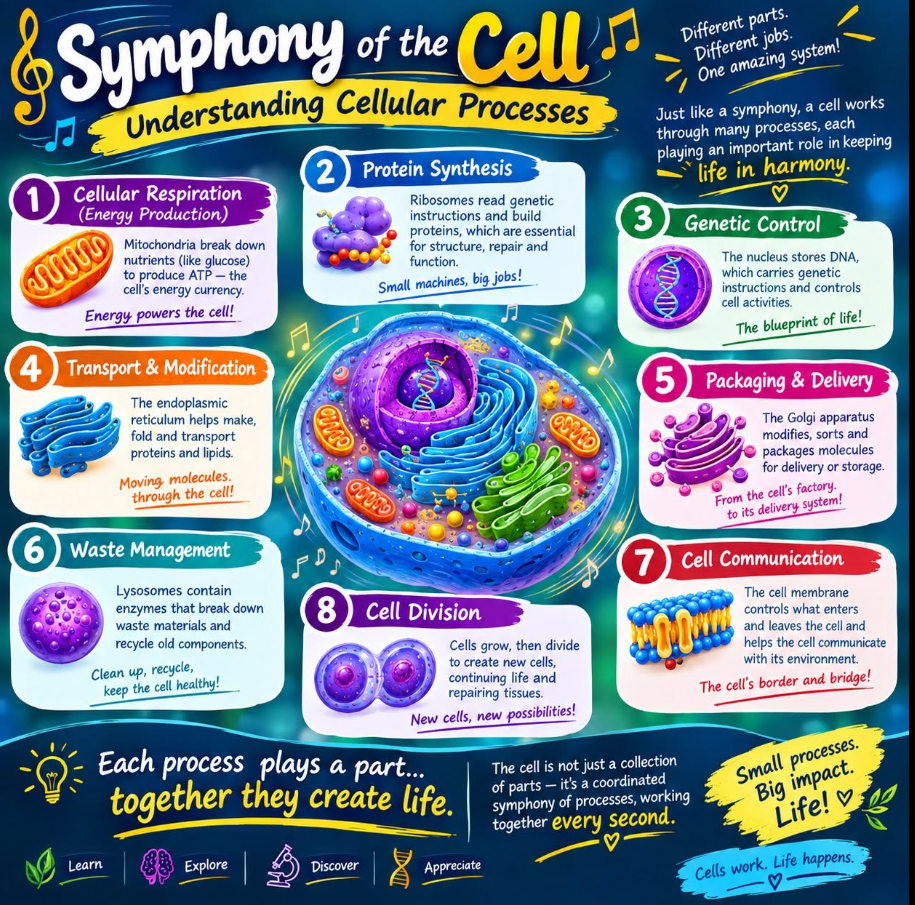
    Imagine a cell as a magnificent orchestra, where every organelle has its own instrument and every cellular process plays an important part. Together, they create the incredible **symphony of life**.
    Just as an orchestra depends on different musicians working together, a cell depends on many specialized structures and processes to stay organized and function properly.
    **Cellular Respiration — The Energy Makers**
    Mitochondria help produce ATP, the usable energy that powers many cellular activities.
    **Genetic Control — The Instructions**
    The nucleus stores DNA, which contains genetic information that helps guide cell activities.
    **Protein Synthesis — The Builders**
    Ribosomes use genetic instructions to build proteins needed for growth, repair, and everyday cellular functions.
    **Transport & Modification — The Delivery Network**
    The endoplasmic reticulum helps produce and transport proteins and lipids within the cell.
    **Packaging & Delivery — The Shipping Center**
    The Golgi apparatus modifies, sorts, and packages molecules so they can reach their proper destinations.
    **Waste Management — The Recycling Team**
    Lysosomes help break down unwanted materials and recycle components within the cell.
    **Cell Communication — The Gatekeeper**
    The cell membrane controls what enters and leaves the cell while helping the cell interact with its surroundings.
    **Cell Division — Creating New Cells**
    Cells can grow and divide, allowing organisms to develop, replace cells, and repair tissues.
    Every process has a role. Every organelle contributes to the performance. And together, they demonstrate one of biology’s most fascinating ideas:
    **A cell is not simply a collection of parts—it is a coordinated system where countless processes work together to support life.**
    **Learn. Explore. Discover. Appreciate the amazing symphony happening inside every living cell.**
    #SymphonyOfTheCell #CellBiology #Biology #CellularProcesses #Organelles #Science #ScienceEducation #BiologyFacts #CellStructure #Mitochondria #DNA #ProteinSynthesis #CellDivision #Microscopy #Learning #DidYouKnow #ScientificDiscovery
    #rsisb Roll no.239 Story post no.24 Foundation Level Imagine a cell as a magnificent orchestra, where every organelle has its own instrument and every cellular process plays an important part. Together, they create the incredible **symphony of life**. 🎼🌱 Just as an orchestra depends on different musicians working together, a cell depends on many specialized structures and processes to stay organized and function properly. ⚡ **Cellular Respiration — The Energy Makers** Mitochondria help produce ATP, the usable energy that powers many cellular activities. 🧬 **Genetic Control — The Instructions** The nucleus stores DNA, which contains genetic information that helps guide cell activities. 🏭 **Protein Synthesis — The Builders** Ribosomes use genetic instructions to build proteins needed for growth, repair, and everyday cellular functions. 🚚 **Transport & Modification — The Delivery Network** The endoplasmic reticulum helps produce and transport proteins and lipids within the cell. 📦 **Packaging & Delivery — The Shipping Center** The Golgi apparatus modifies, sorts, and packages molecules so they can reach their proper destinations. ♻️ **Waste Management — The Recycling Team** Lysosomes help break down unwanted materials and recycle components within the cell. 🚪 **Cell Communication — The Gatekeeper** The cell membrane controls what enters and leaves the cell while helping the cell interact with its surroundings. 🌱 **Cell Division — Creating New Cells** Cells can grow and divide, allowing organisms to develop, replace cells, and repair tissues. Every process has a role. Every organelle contributes to the performance. And together, they demonstrate one of biology’s most fascinating ideas: ✨ **A cell is not simply a collection of parts—it is a coordinated system where countless processes work together to support life.** 🔬 **Learn. Explore. Discover. Appreciate the amazing symphony happening inside every living cell.** #SymphonyOfTheCell #CellBiology #Biology #CellularProcesses #Organelles #Science #ScienceEducation #BiologyFacts #CellStructure #Mitochondria #DNA #ProteinSynthesis #CellDivision #Microscopy #Learning #DidYouKnow #ScientificDiscovery
    0 Kommentare 0 Anteile 7352 Ansichten
Suchergebnis