• #rsisb
    Roll no.239
    Song no .30
    Foundation Level

    **From Specimens to Knowledge: The Purpose of Science Experiments** explores how scientists use specimens, observations, and experiments to understand the living world. By carefully examining biological materials and testing scientific ideas, researchers can gather evidence and develop reliable explanations.

    Experiments help transform **curiosity into knowledge** by allowing scientists to ask questions, test hypotheses, analyze results, and discover how biological systems work. From cells and microorganisms to plants and animals, scientific investigation helps us better understand the complexity of life.

    #ScienceExperiments #Biology #ScientificMethod #Specimens #Research #Science #Education #Learning #ScientificDiscovery
    #rsisb Roll no.239 Song no .30 Foundation Level **From Specimens to Knowledge: The Purpose of Science Experiments** explores how scientists use specimens, observations, and experiments to understand the living world. 🌱✨ By carefully examining biological materials and testing scientific ideas, researchers can gather evidence and develop reliable explanations. Experiments help transform **curiosity into knowledge** by allowing scientists to ask questions, test hypotheses, analyze results, and discover how biological systems work. From cells and microorganisms to plants and animals, scientific investigation helps us better understand the complexity of life. 🧬🌍 #ScienceExperiments #Biology #ScientificMethod #Specimens #Research #Science #Education #Learning #ScientificDiscovery 🔬🧪✨
    0 Σχόλια 0 Μοιράστηκε 989 Views 5
  • #rsisb
    Roll no.239
    Song no .29
    Foundation Level

    **Why Do We Experiment? The Search for Truth in Biology** explores how experiments help scientists investigate living organisms, test ideas, and understand biological processes. By making observations, forming hypotheses, collecting evidence, and analyzing results, researchers can build and refine scientific knowledge.

    Experiments are important because they allow scientists to **test explanations, discover patterns, identify cause-and-effect relationships, and improve our understanding of life**. From studying cells and genetics to ecosystems and human biology, experimentation is a key part of the scientific method.

    #Biology #ScientificMethod #Experiments #Science #Research #BiologyExperiments #ScientificDiscovery #Education #Learning
    #rsisb Roll no.239 Song no .29 Foundation Level **Why Do We Experiment? The Search for Truth in Biology** explores how experiments help scientists investigate living organisms, test ideas, and understand biological processes. 🧪✨ By making observations, forming hypotheses, collecting evidence, and analyzing results, researchers can build and refine scientific knowledge. Experiments are important because they allow scientists to **test explanations, discover patterns, identify cause-and-effect relationships, and improve our understanding of life**. From studying cells and genetics to ecosystems and human biology, experimentation is a key part of the scientific method. 🌱🔬 #Biology #ScientificMethod #Experiments #Science #Research #BiologyExperiments #ScientificDiscovery #Education #Learning 🧬🧪✨
    0 Σχόλια 0 Μοιράστηκε 636 Views 4

  • #rsisb
    Roll no.239
    Song no .28
    Foundation Level

    **Learning Through Layers: The Importance of Animal Anatomy Studies** explores how studying animal anatomy helps us understand the structure and function of living organisms. By examining organs, tissues, bones, muscles, and body systems, students can discover how different parts work together to support life.

    Animal anatomy studies also help develop **observation, scientific thinking, and biological understanding**. Comparing different species can reveal both shared biological structures and fascinating adaptations to different environments.

    #AnimalAnatomy #Biology #Science #LifeScience #AnatomyStudies #AnimalScience #Education #Learning #ScientificDiscovery
    #rsisb Roll no.239 Song no .28 Foundation Level **Learning Through Layers: The Importance of Animal Anatomy Studies** explores how studying animal anatomy helps us understand the structure and function of living organisms. 🧬✨ By examining organs, tissues, bones, muscles, and body systems, students can discover how different parts work together to support life. Animal anatomy studies also help develop **observation, scientific thinking, and biological understanding**. Comparing different species can reveal both shared biological structures and fascinating adaptations to different environments. 🌍🐾 #AnimalAnatomy #Biology #Science #LifeScience #AnatomyStudies #AnimalScience #Education #Learning #ScientificDiscovery 🐾🔬📚✨
    0 Σχόλια 0 Μοιράστηκε 528 Views 4
  • RSIF8
    Roll No: 112
    Story Post No: 6
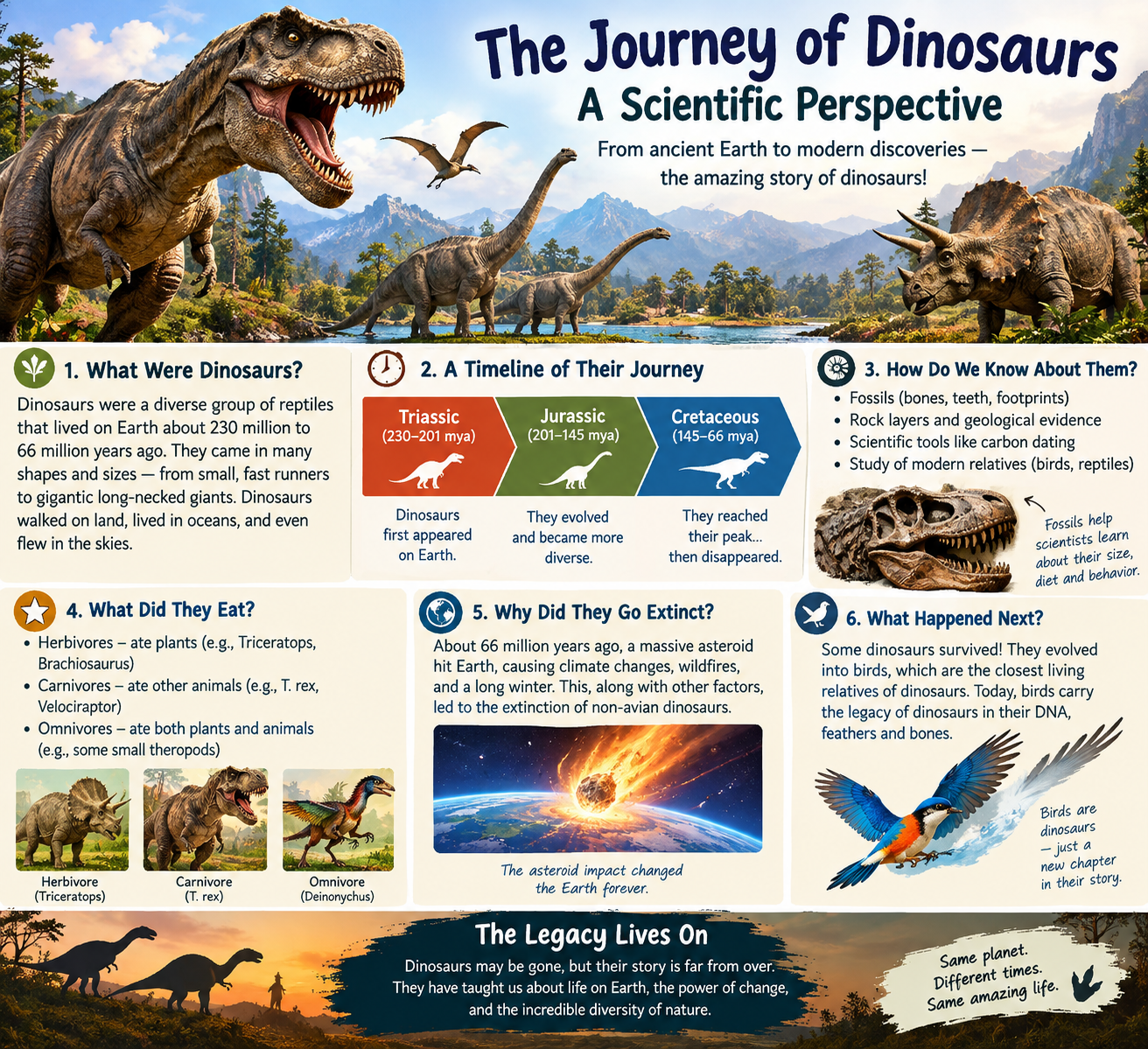
    Story Post Topic: The Journey of Dinosaurs: A Scientific Perspective
    **The Journey of Dinosaurs: A Scientific Perspective**
    Today, I completed an interesting and educational task about **The Journey of Dinosaurs: A Scientific Perspective**. This activity gave me the opportunity to explore the fascinating history of dinosaurs and understand how scientists learn about these incredible creatures that lived millions of years ago.
    Dinosaurs first appeared on Earth more than **230 million years ago** during the Triassic Period. Over millions of years, they evolved into many different species with different sizes, shapes, diets, and ways of living. Some dinosaurs were small and fast, while others were enormous plant-eaters.
    During the **Jurassic Period**, dinosaurs became even more diverse and widespread. They lived in many different environments and developed different adaptations that helped them survive. The **Cretaceous Period** was another important stage in their history, when many well-known dinosaur species lived.
    One of the most important things I learned is how scientists discover information about dinosaurs. Scientists study fossils such as bones, teeth, footprints, and eggs. They also examine rock layers and use different scientific methods to understand when dinosaurs lived and how they behaved.
    Dinosaurs had different diets. Some were **herbivores** that ate plants, while others were **carnivores** that ate other animals. There were also dinosaurs with more varied diets. Studying their teeth, bones, and fossil evidence helps scientists understand what they may have eaten.
    One of the most important events in dinosaur history happened about **66 million years ago**. A large asteroid struck Earth, causing major environmental and climate changes. This event contributed to the extinction of the non-avian dinosaurs.
    However, the dinosaur story did not completely end. Scientists have found strong evidence that **modern birds are living descendants of theropod dinosaurs**. This means that dinosaurs still have a living connection to the world today!
    This task helped me understand that fossils are like pieces of a giant scientific puzzle. Each fossil can provide clues about ancient life, and scientists carefully study these clues to build a better understanding of Earth's history.
    I also learned that science is constantly developing. New fossil discoveries, improved technology, and new research can help scientists learn more about dinosaurs and correct or improve our understanding of the past.
    **My key learning from this task:**
    Dinosaurs lived millions of years ago.
    Their history covered a huge period of Earth's history.
    Fossils provide important evidence about ancient life.
    Scientists use evidence and research to study dinosaurs.
    Dinosaurs had different diets and lifestyles.
    A major asteroid impact occurred around 66 million years ago.
    Birds are living descendants of theropod dinosaurs.
    Studying dinosaurs helps us understand Earth's changing environment.
    Overall, this task was a fascinating journey into the ancient world. It helped me appreciate the importance of science, fossils, research, and evidence in understanding our planet's past.
    The story of dinosaurs reminds us that Earth has changed dramatically over time and that life continues to evolve and adapt. Their fossils allow us to look into the distant past and discover how incredible the history of life on our planet really is.
    **Learning about the past helps us understand the present and inspires us to explore the future!**
    #RSIF8 #RollNo112 #Dinosaurs #DinosaurJourney #ScientificPerspective #DinosaurScience #Paleontology #Fossils #DinosaurFossils #AncientEarth #EarthHistory #ScienceLearning #ScientificDiscovery #Jurassic #Triassic #Cretaceous #Evolution #NaturalHistory #AncientLife #LearningJourney #StudentLearning #ScienceProject #Research #Curiosity #KeepLearning #LearnAndGrow #ScienceIsAmazing #HistoryOfLife #ExploreScience #Education
    RSIF8 Roll No: 112 Story Post No: 6 Story Post Topic: The Journey of Dinosaurs: A Scientific Perspective 🦕🌟 **The Journey of Dinosaurs: A Scientific Perspective** 🌟🦖 Today, I completed an interesting and educational task about **The Journey of Dinosaurs: A Scientific Perspective**. 🦖🔬📚 This activity gave me the opportunity to explore the fascinating history of dinosaurs and understand how scientists learn about these incredible creatures that lived millions of years ago. 🌍⏳ Dinosaurs first appeared on Earth more than **230 million years ago** during the Triassic Period. 🦕🌿 Over millions of years, they evolved into many different species with different sizes, shapes, diets, and ways of living. Some dinosaurs were small and fast, while others were enormous plant-eaters. 🦖🌱 During the **Jurassic Period**, dinosaurs became even more diverse and widespread. 🌎🦕 They lived in many different environments and developed different adaptations that helped them survive. The **Cretaceous Period** was another important stage in their history, when many well-known dinosaur species lived. 🦖🌿✨ One of the most important things I learned is how scientists discover information about dinosaurs. 🔬🦴 Scientists study fossils such as bones, teeth, footprints, and eggs. They also examine rock layers and use different scientific methods to understand when dinosaurs lived and how they behaved. 🧪🪨📖 Dinosaurs had different diets. 🌱🍖 Some were **herbivores** that ate plants, while others were **carnivores** that ate other animals. There were also dinosaurs with more varied diets. Studying their teeth, bones, and fossil evidence helps scientists understand what they may have eaten. 🦷🔬 One of the most important events in dinosaur history happened about **66 million years ago**. ☄️🌍 A large asteroid struck Earth, causing major environmental and climate changes. This event contributed to the extinction of the non-avian dinosaurs. 🌎⏳ However, the dinosaur story did not completely end. 🐦✨ Scientists have found strong evidence that **modern birds are living descendants of theropod dinosaurs**. This means that dinosaurs still have a living connection to the world today! 🦖➡️🐦🌍 This task helped me understand that fossils are like pieces of a giant scientific puzzle. 🧩🦴 Each fossil can provide clues about ancient life, and scientists carefully study these clues to build a better understanding of Earth's history. 🔬📚 I also learned that science is constantly developing. New fossil discoveries, improved technology, and new research can help scientists learn more about dinosaurs and correct or improve our understanding of the past. 🧠🔍🚀 ✨ **My key learning from this task:** 🦖 Dinosaurs lived millions of years ago. ⏳ Their history covered a huge period of Earth's history. 🦴 Fossils provide important evidence about ancient life. 🔬 Scientists use evidence and research to study dinosaurs. 🌱 Dinosaurs had different diets and lifestyles. ☄️ A major asteroid impact occurred around 66 million years ago. 🐦 Birds are living descendants of theropod dinosaurs. 🌍 Studying dinosaurs helps us understand Earth's changing environment. Overall, this task was a fascinating journey into the ancient world. 🦕🌍 It helped me appreciate the importance of science, fossils, research, and evidence in understanding our planet's past. 🔬📚✨ The story of dinosaurs reminds us that Earth has changed dramatically over time and that life continues to evolve and adapt. 🌱🌎🦖 Their fossils allow us to look into the distant past and discover how incredible the history of life on our planet really is. 🌟🔬 📚 **Learning about the past helps us understand the present and inspires us to explore the future!** 🚀🌍✨ #RSIF8 #RollNo112 #Dinosaurs #DinosaurJourney #ScientificPerspective #DinosaurScience #Paleontology #Fossils #DinosaurFossils #AncientEarth #EarthHistory #ScienceLearning #ScientificDiscovery #Jurassic #Triassic #Cretaceous #Evolution #NaturalHistory #AncientLife #LearningJourney #StudentLearning #ScienceProject #Research #Curiosity #KeepLearning #LearnAndGrow #ScienceIsAmazing #HistoryOfLife #ExploreScience #Education 🦖🦕🔬🦴🌍⏳☄️🐦🌱📚🧪🪨🧩💡✨🌟🚀🌿🌎❤️👏🎓

    0 Σχόλια 0 Μοιράστηκε 2017 Views
  • RSIF8
    Roll no: 09
    Song no: 07
    Song topic: Health and DNA: The Struggle of Life.
    Health and DNA: The Struggle of Life

    This song explores the amazing connection between DNA, health, and life. It highlights how our DNA carries important information, how genetic changes can create challenges, and how science helps us understand the journey of life. A simple reminder that knowledge, healthy habits, and scientific discovery can help us better understand ourselves.

    #HealthAndDNA #DNA #Genetics #Science #Health #LifeJourney #Biology #ScientificDiscovery #Learning #StudentProject #ScienceSong
    RSIF8 Roll no: 09 Song no: 07 Song topic: Health and DNA: The Struggle of Life. 🧬🎵 Health and DNA: The Struggle of Life 🔬🌱 This song explores the amazing connection between DNA, health, and life. It highlights how our DNA carries important information, how genetic changes can create challenges, and how science helps us understand the journey of life. 🌍✨ A simple reminder that knowledge, healthy habits, and scientific discovery can help us better understand ourselves. 💚🧠 #HealthAndDNA #DNA #Genetics #Science #Health #LifeJourney #Biology #ScientificDiscovery #Learning #StudentProject #ScienceSong 🧬🔬🌱🎶✨
    0 Σχόλια 0 Μοιράστηκε 621 Views 10
  • #rsisb
    Roll no.247
    song . 9
    Foundation level

    **Cellular Symphony: The Intricate Dance of Life’s Building Blocks**

    Life is an extraordinary masterpiece, and at its heart lies the incredible world of the **cell**—the fundamental building block of every living organism. From the tiniest microorganisms to the complex human body, cells work together in a beautifully coordinated system that makes life possible.

    In **“Cellular Symphony: The Intricate Dance of Life’s Building Blocks,”** we explore the fascinating universe hidden within cells. Discover how the cell membrane protects and communicates, how the nucleus stores genetic information, how mitochondria help provide energy, and how proteins and other molecular components perform countless essential tasks.

    Just like musicians in a symphony orchestra, each cellular component has a unique role. No single part works completely alone. Instead, organelles, molecules, and genetic instructions interact continuously, creating an amazing biological harmony. From energy production and cellular communication to growth, repair, and reproduction, every process contributes to the larger story of life.

    We’ll also take a closer look at **DNA**, the remarkable molecule that carries the instructions needed for life. How does DNA store information? How do cells use those instructions to create proteins? And how do cells coordinate their activities with such incredible precision? These questions reveal just how sophisticated even the smallest living systems can be.

    This journey into cellular biology is an opportunity to appreciate the complexity and beauty of life from a completely new perspective. Whether you are a student, science enthusiast, educator, or simply curious about how living things work, this exploration can help make the microscopic world easier to understand and appreciate.

    **Every cell tells a story.**
    **Every molecule has a purpose.**
    **Every process contributes to life.**
    **Together, they create the symphony of existence.**

    Join us as we zoom into the microscopic world and uncover the remarkable cooperation that takes place inside living cells. From the structure of cellular organelles to the flow of genetic information, this is a fascinating journey through one of nature’s greatest achievements—the living cell.

    **Educational • Scientific • Inspiring • Fascinating**
    Explore. Discover. Learn. Be Inspired.

    #CellularSymphony #CellBiology #Cells #Biology #Science #ScienceEducation #MolecularBiology #DNA #Genetics #LifeScience #HumanBody #MicroscopicWorld #BiologyLovers #ScienceLovers #STEM #STEMEducation #LearnScience #ScientificDiscovery #Nature #Life #Education #Knowledge #ScienceExplained #AmazingScience #CellularLife #Organelle #GeneticInformation #BiologicalScience #ExploreScience #ScienceJourney
    #rsisb Roll no.247 song . 9 Foundation level 🧬✨ **Cellular Symphony: The Intricate Dance of Life’s Building Blocks** 🔬🌱 Life is an extraordinary masterpiece, and at its heart lies the incredible world of the **cell**—the fundamental building block of every living organism. 🧫🌍 From the tiniest microorganisms to the complex human body, cells work together in a beautifully coordinated system that makes life possible. In **“Cellular Symphony: The Intricate Dance of Life’s Building Blocks,”** we explore the fascinating universe hidden within cells. 🔬✨ Discover how the cell membrane protects and communicates, how the nucleus stores genetic information, how mitochondria help provide energy, and how proteins and other molecular components perform countless essential tasks. ⚡🧬 Just like musicians in a symphony orchestra, each cellular component has a unique role. 🎻🎶 No single part works completely alone. Instead, organelles, molecules, and genetic instructions interact continuously, creating an amazing biological harmony. From energy production and cellular communication to growth, repair, and reproduction, every process contributes to the larger story of life. 🌱❤️ We’ll also take a closer look at **DNA**, the remarkable molecule that carries the instructions needed for life. 🧬📖 How does DNA store information? How do cells use those instructions to create proteins? And how do cells coordinate their activities with such incredible precision? These questions reveal just how sophisticated even the smallest living systems can be. This journey into cellular biology is an opportunity to appreciate the complexity and beauty of life from a completely new perspective. 🌎🔍 Whether you are a student, science enthusiast, educator, or simply curious about how living things work, this exploration can help make the microscopic world easier to understand and appreciate. 🔬 **Every cell tells a story.** 🧬 **Every molecule has a purpose.** ⚡ **Every process contributes to life.** 🌱 **Together, they create the symphony of existence.** Join us as we zoom into the microscopic world and uncover the remarkable cooperation that takes place inside living cells. From the structure of cellular organelles to the flow of genetic information, this is a fascinating journey through one of nature’s greatest achievements—the living cell. 🌟🧫 🎓 **Educational • Scientific • Inspiring • Fascinating** 🔬 Explore. 🧬 Discover. 🌱 Learn. ✨ Be Inspired. #CellularSymphony #CellBiology #Cells #Biology #Science #ScienceEducation #MolecularBiology #DNA #Genetics #LifeScience #HumanBody #MicroscopicWorld #BiologyLovers #ScienceLovers #STEM #STEMEducation #LearnScience #ScientificDiscovery #Nature #Life #Education #Knowledge #ScienceExplained #AmazingScience #CellularLife #Organelle #GeneticInformation #BiologicalScience #ExploreScience #ScienceJourney 🔬🧬🌱✨
    0 Σχόλια 0 Μοιράστηκε 5356 Views 7
  • Day 104
    Task No:104
    Roll No:42
    RSLC
    Foundation Level, Batch#04

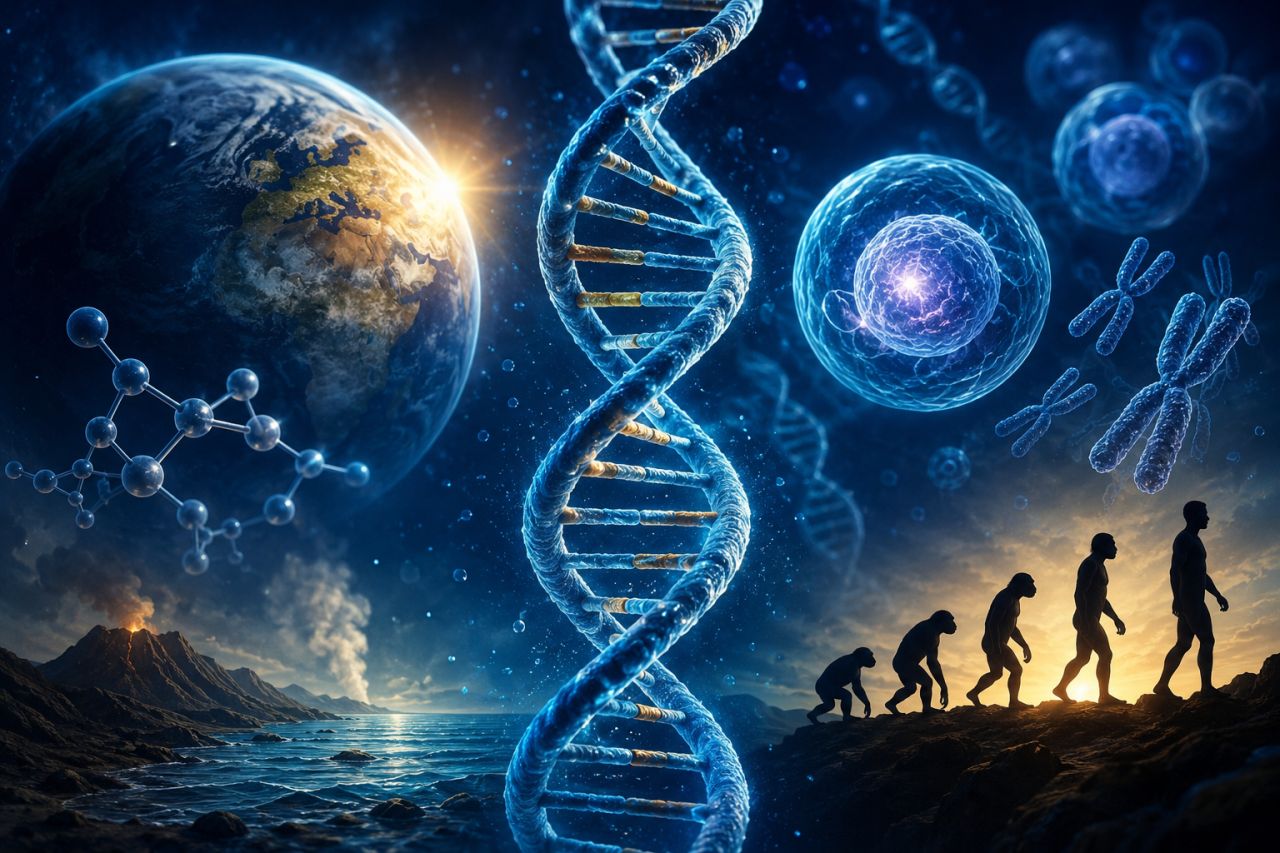
    Life on Earth is built upon an extraordinary blueprint known as DNA. Hidden inside every living cell, DNA carries the genetic instructions that determine how organisms grow, develop, and survive. From the smallest bacteria to the largest whales, every living being shares this remarkable biological code. Scientists often describe DNA as the language of life because it stores the information that connects all generations across time.

    The mystery of lifes origins has fascinated humanity for centuries. While researchers continue to explore how the first living cells emerged on the early Earth, DNA remains one of the greatest clues to understanding our beginnings. By studying genes and genetic evolution, scientists can trace the relationships between species and uncover how life has adapted over billions of years. Every discovery in genetics brings us one step closer to answering one of humanitys greatest questions: Where did life come from?

    DNA is more than just a scientific molecule?it is a symbol of connection, diversity, and the incredible complexity of nature. As technology advances, our understanding of genetics opens new possibilities in medicine, agriculture, and environmental conservation. The blueprint of existence reminds us that every living organism is part of a shared story written over billions of years, inspiring us to protect and appreciate the remarkable web of life that surrounds us.

    #DNA #Genetics #OriginOfLife #Science #Biology #MolecularBiology #LifeScience #Genome #Evolution #ScientificDiscovery #STEM #Education #DNAResearch #CellBiology #Nature #Knowledge #Innovation #FutureOfScience #LearnScience #ScienceFacts
    Day 104 Task No:104 Roll No:42 RSLC Foundation Level, Batch#04 Life on Earth is built upon an extraordinary blueprint known as DNA. Hidden inside every living cell, DNA carries the genetic instructions that determine how organisms grow, develop, and survive. From the smallest bacteria to the largest whales, every living being shares this remarkable biological code. Scientists often describe DNA as the language of life because it stores the information that connects all generations across time. The mystery of life's origins has fascinated humanity for centuries. While researchers continue to explore how the first living cells emerged on the early Earth, DNA remains one of the greatest clues to understanding our beginnings. By studying genes and genetic evolution, scientists can trace the relationships between species and uncover how life has adapted over billions of years. Every discovery in genetics brings us one step closer to answering one of humanity's greatest questions: Where did life come from? DNA is more than just a scientific molecule?it is a symbol of connection, diversity, and the incredible complexity of nature. As technology advances, our understanding of genetics opens new possibilities in medicine, agriculture, and environmental conservation. The blueprint of existence reminds us that every living organism is part of a shared story written over billions of years, inspiring us to protect and appreciate the remarkable web of life that surrounds us. #DNA #Genetics #OriginOfLife #Science #Biology #MolecularBiology #LifeScience #Genome #Evolution #ScientificDiscovery #STEM #Education #DNAResearch #CellBiology #Nature #Knowledge #Innovation #FutureOfScience #LearnScience #ScienceFacts
    0 Σχόλια 0 Μοιράστηκε 3288 Views
  • Fondation Level Batch No 4
    Roll RSLC #42
    Task No #139
    Day #139

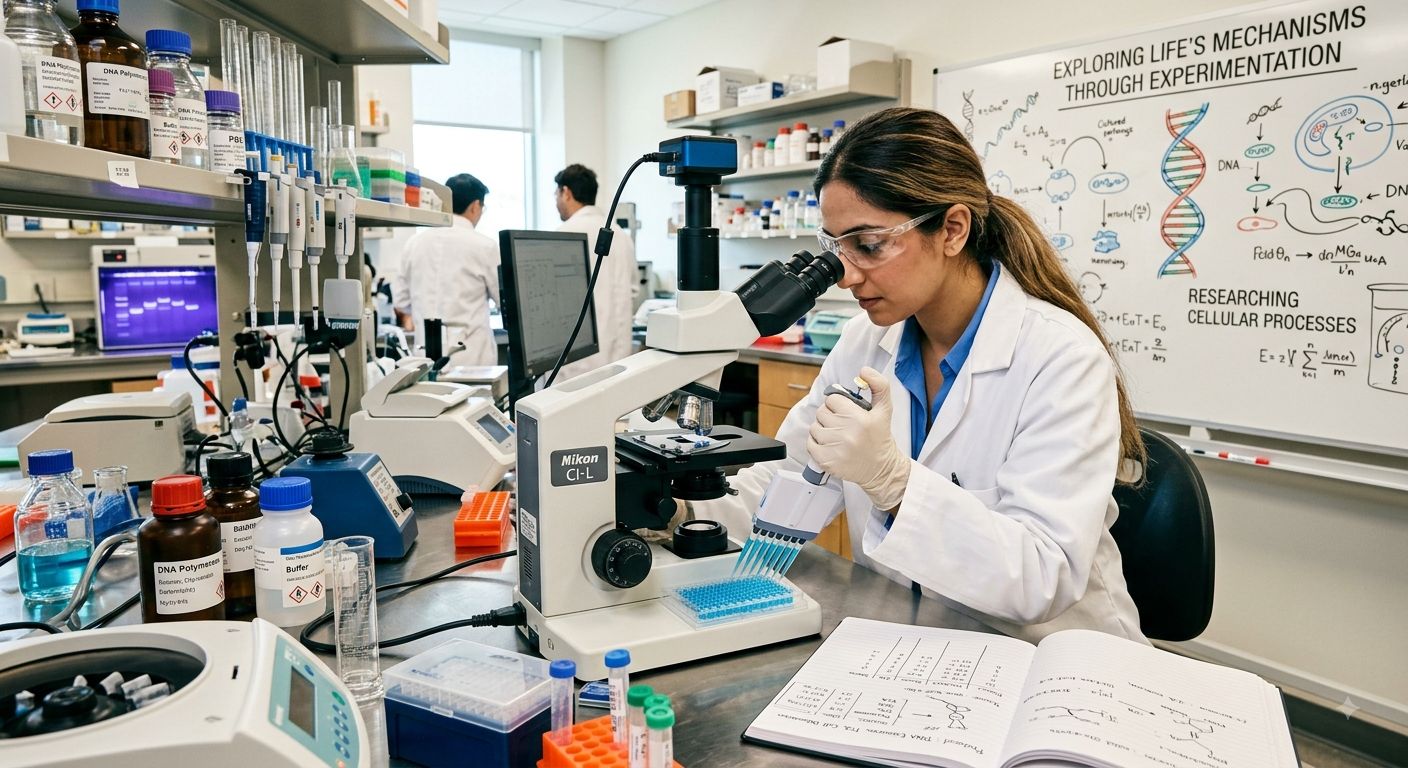
    # Exploring Life?s Mechanisms Through Experimentation

    Sara was a curious young student who loved discovering how life worked. One day, while studying in her school laboratory, she looked through a microscope and became fascinated by the tiny cells she saw moving beneath the lens. She wondered how something so small could perform such important tasks and keep living organisms alive. Instead of simply memorizing facts from her textbook, Sara decided to investigate through experiments. She carefully planned her work, recorded her observations, and began searching for answers to the mysteries hidden inside living cells.

    At first, Sara?s experiments did not go as planned. Some results were confusing, while others were completely different from what she expected. She became disappointed and thought about giving up, but her teacher encouraged her to look at every mistake as an opportunity to learn. Sara repeated her experiments, checked her measurements, and carefully studied her observations. Gradually, she discovered that cells respond to changes in their environment and that many different processes work together to keep life functioning. Each experiment, even the unsuccessful ones, taught her something valuable.

    As Sara continued her research, she realized that life is a complex system filled with countless interactions. Cells communicate, produce energy, transport materials, grow, repair damage, and respond to their surroundings. She understood that scientific discovery requires more than intelligence; it requires patience, curiosity, careful observation, and the courage to learn from failure. The more she experimented, the more questions she developed, and each question encouraged her to explore even deeper into the fascinating mechanisms of life.

    When Sara finally completed her project, she presented her findings to her classmates. She explained that her greatest discovery was not a single scientific fact, but the understanding that every experiment has something to teach us. Success can give us answers, while failure can show us a better path toward them. Sara left the laboratory with a new appreciation for science and a stronger belief in herself.

    **Moral: Never be afraid of failure, because every mistake can become a lesson, and every lesson can bring you one step closer to discovery.**

    #LifeScience #ScientificResearch #Experimentation #Biology #ScienceExploration #LifeMechanisms #ScientificDiscovery
    Fondation Level Batch No 4 Roll RSLC #42 Task No #139 Day #139 # Exploring Life?s Mechanisms Through Experimentation Sara was a curious young student who loved discovering how life worked. One day, while studying in her school laboratory, she looked through a microscope and became fascinated by the tiny cells she saw moving beneath the lens. She wondered how something so small could perform such important tasks and keep living organisms alive. Instead of simply memorizing facts from her textbook, Sara decided to investigate through experiments. She carefully planned her work, recorded her observations, and began searching for answers to the mysteries hidden inside living cells. At first, Sara?s experiments did not go as planned. Some results were confusing, while others were completely different from what she expected. She became disappointed and thought about giving up, but her teacher encouraged her to look at every mistake as an opportunity to learn. Sara repeated her experiments, checked her measurements, and carefully studied her observations. Gradually, she discovered that cells respond to changes in their environment and that many different processes work together to keep life functioning. Each experiment, even the unsuccessful ones, taught her something valuable. As Sara continued her research, she realized that life is a complex system filled with countless interactions. Cells communicate, produce energy, transport materials, grow, repair damage, and respond to their surroundings. She understood that scientific discovery requires more than intelligence; it requires patience, curiosity, careful observation, and the courage to learn from failure. The more she experimented, the more questions she developed, and each question encouraged her to explore even deeper into the fascinating mechanisms of life. When Sara finally completed her project, she presented her findings to her classmates. She explained that her greatest discovery was not a single scientific fact, but the understanding that every experiment has something to teach us. Success can give us answers, while failure can show us a better path toward them. Sara left the laboratory with a new appreciation for science and a stronger belief in herself. **Moral: Never be afraid of failure, because every mistake can become a lesson, and every lesson can bring you one step closer to discovery.** #LifeScience #ScientificResearch #Experimentation #Biology #ScienceExploration #LifeMechanisms #ScientificDiscovery
    0 Σχόλια 0 Μοιράστηκε 1871 Views
  • #rsisb
    Roll No.240
    Image With Chatgpt No.6
    Foundation Level

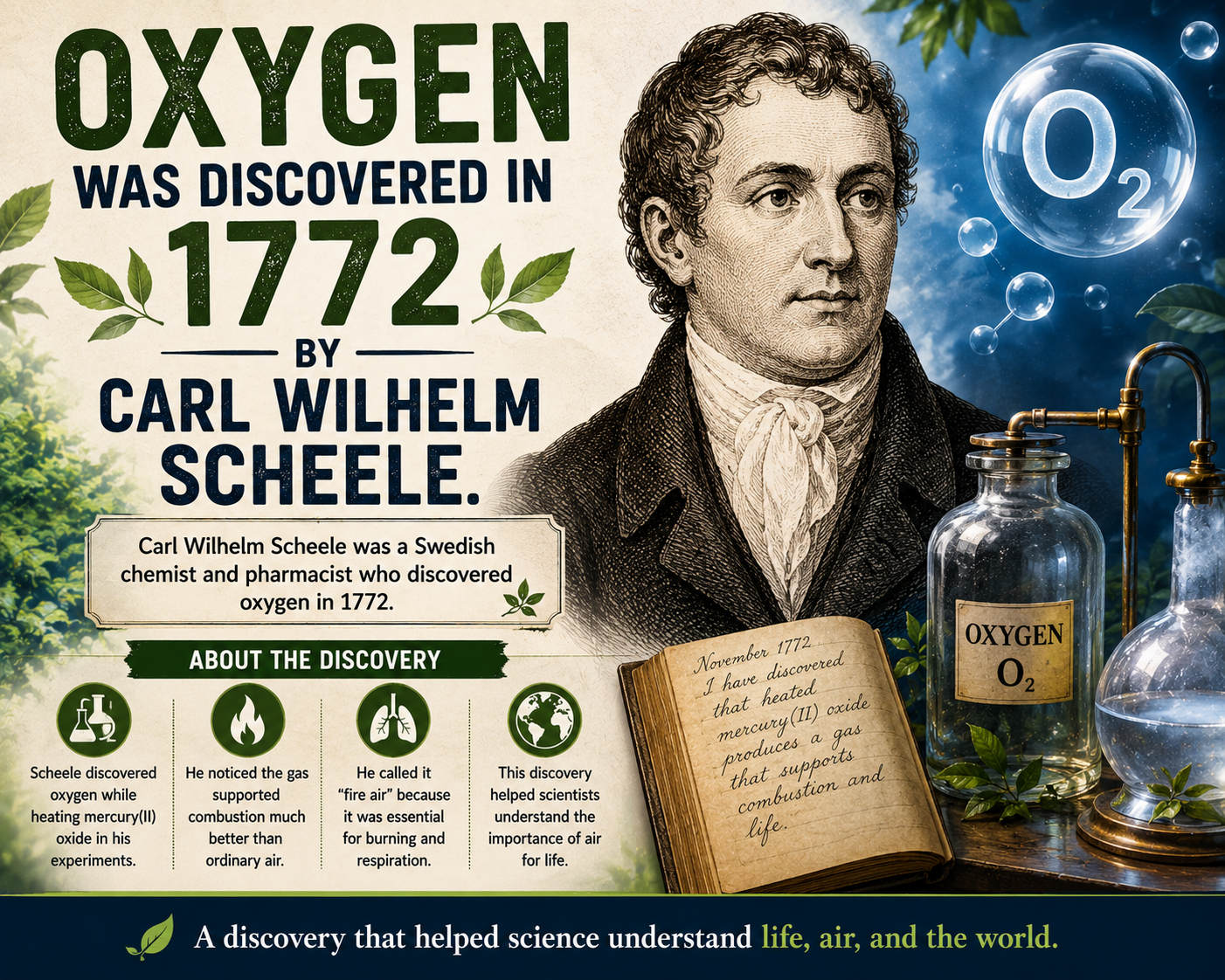
    Oxygen is one of the most important elements for life on Earth, but its discovery was the result of careful experiments, curiosity, and scientific investigation.

    In 1772, Swedish chemist and pharmacist Carl Wilhelm Scheele identified a gas that behaved differently from ordinary air. He found that this gas strongly supported combustion and played an important role in the processes we now understand as respiration and burning.

    Scheele referred to the gas as “fire air” because of its ability to support combustion. His experiments helped reveal that air was not simply one single substance, but a mixture containing different gases.

    The story of oxygen’s discovery is a fascinating example of how science develops through observation and experimentation. Scientists investigate materials, record their observations, test ideas, and gradually build a better understanding of the natural world.

    Although Scheele discovered oxygen independently, the recognition and naming of oxygen as an element also involved other scientists, including Joseph Priestley and Antoine Lavoisier. Their work helped establish oxygen’s role in combustion and contributed to the development of modern chemistry.

    Oxygen is represented by the chemical symbol O and has the atomic number 8. It is essential for aerobic respiration in humans and many other organisms. Without oxygen, most familiar forms of complex life could not survive.

    The discovery of oxygen changed the way scientists understood air, combustion, chemistry, and life. It became an important part of the scientific revolution in chemistry and helped researchers develop a much clearer understanding of chemical reactions.

    This story also reminds us that major scientific discoveries often happen through patience, careful observation, and a willingness to ask questions. Every experiment can reveal something new, and every discovery can open the door to further knowledge.

    From “fire air” to oxygen, the journey of discovery changed chemistry forever.

    Science teaches us that the world around us is full of mysteries waiting to be explored. Whether studying gases, atoms, cells, planets, or living organisms, curiosity is often the first step toward discovery.

    Question. Observe. Experiment. Discover. Learn.

    #Oxygen #DiscoveryOfOxygen #CarlWilhelmScheele #ScienceHistory #HistoryOfScience #Chemistry #ChemicalElements #OxygenDiscovery #1772 #ScientificDiscovery #ScienceEducation #ChemistryFacts #ScienceFacts #LearnScience #ScientificRevolution #Combustion #Air #Respiration #ChemistryHistory #STEM #Education #LearningJourney #ScienceExperiment #ScientificThinking #Research #Discovery #Knowledge #Innovation #Curiosity #ExploreScience #ScienceLovers #EducationalContent #Scientists #ChemicalScience #ModernChemistry #ScienceJourney #HistoryOfChemistry

    Rehan School Islamabad Campus
    Asma Shaheen EducationWali
    Irum Asim
    Saima Happinesswali

    #rsisb Roll No.240 Image With Chatgpt No.6 Foundation Level Oxygen is one of the most important elements for life on Earth, but its discovery was the result of careful experiments, curiosity, and scientific investigation. 🌱🫁🔥 In 1772, Swedish chemist and pharmacist Carl Wilhelm Scheele identified a gas that behaved differently from ordinary air. He found that this gas strongly supported combustion and played an important role in the processes we now understand as respiration and burning. 🔥🧪 Scheele referred to the gas as “fire air” because of its ability to support combustion. His experiments helped reveal that air was not simply one single substance, but a mixture containing different gases. 🌬️🔬 The story of oxygen’s discovery is a fascinating example of how science develops through observation and experimentation. Scientists investigate materials, record their observations, test ideas, and gradually build a better understanding of the natural world. 📚🔎💡 Although Scheele discovered oxygen independently, the recognition and naming of oxygen as an element also involved other scientists, including Joseph Priestley and Antoine Lavoisier. Their work helped establish oxygen’s role in combustion and contributed to the development of modern chemistry. ⚗️🧠🌍 Oxygen is represented by the chemical symbol O and has the atomic number 8. It is essential for aerobic respiration in humans and many other organisms. 🫁🌿🐾 Without oxygen, most familiar forms of complex life could not survive. The discovery of oxygen changed the way scientists understood air, combustion, chemistry, and life. 🌎🔥🔬 It became an important part of the scientific revolution in chemistry and helped researchers develop a much clearer understanding of chemical reactions. This story also reminds us that major scientific discoveries often happen through patience, careful observation, and a willingness to ask questions. 💭➡️🔬➡️💡 Every experiment can reveal something new, and every discovery can open the door to further knowledge. ✨ From “fire air” to oxygen, the journey of discovery changed chemistry forever. ✨ Science teaches us that the world around us is full of mysteries waiting to be explored. 🌍🔎 Whether studying gases, atoms, cells, planets, or living organisms, curiosity is often the first step toward discovery. 🚀📚 🌟 Question. Observe. Experiment. Discover. Learn. 🌟 #Oxygen #DiscoveryOfOxygen #CarlWilhelmScheele #ScienceHistory #HistoryOfScience #Chemistry #ChemicalElements #OxygenDiscovery #1772 #ScientificDiscovery #ScienceEducation #ChemistryFacts #ScienceFacts #LearnScience #ScientificRevolution #Combustion #Air #Respiration #ChemistryHistory #STEM #Education #LearningJourney #ScienceExperiment #ScientificThinking #Research #Discovery #Knowledge #Innovation #Curiosity #ExploreScience #ScienceLovers #EducationalContent #Scientists #ChemicalScience #ModernChemistry #ScienceJourney #HistoryOfChemistry 🔬🧪🌍🔥🫁📚💡✨🚀🌱 Rehan School Islamabad Campus Asma Shaheen EducationWali Irum Asim Saima Happinesswali
    0 Σχόλια 0 Μοιράστηκε 5831 Views
  • #rsisb
    Roll No.269
    Foundation Level
    Story Post No.25

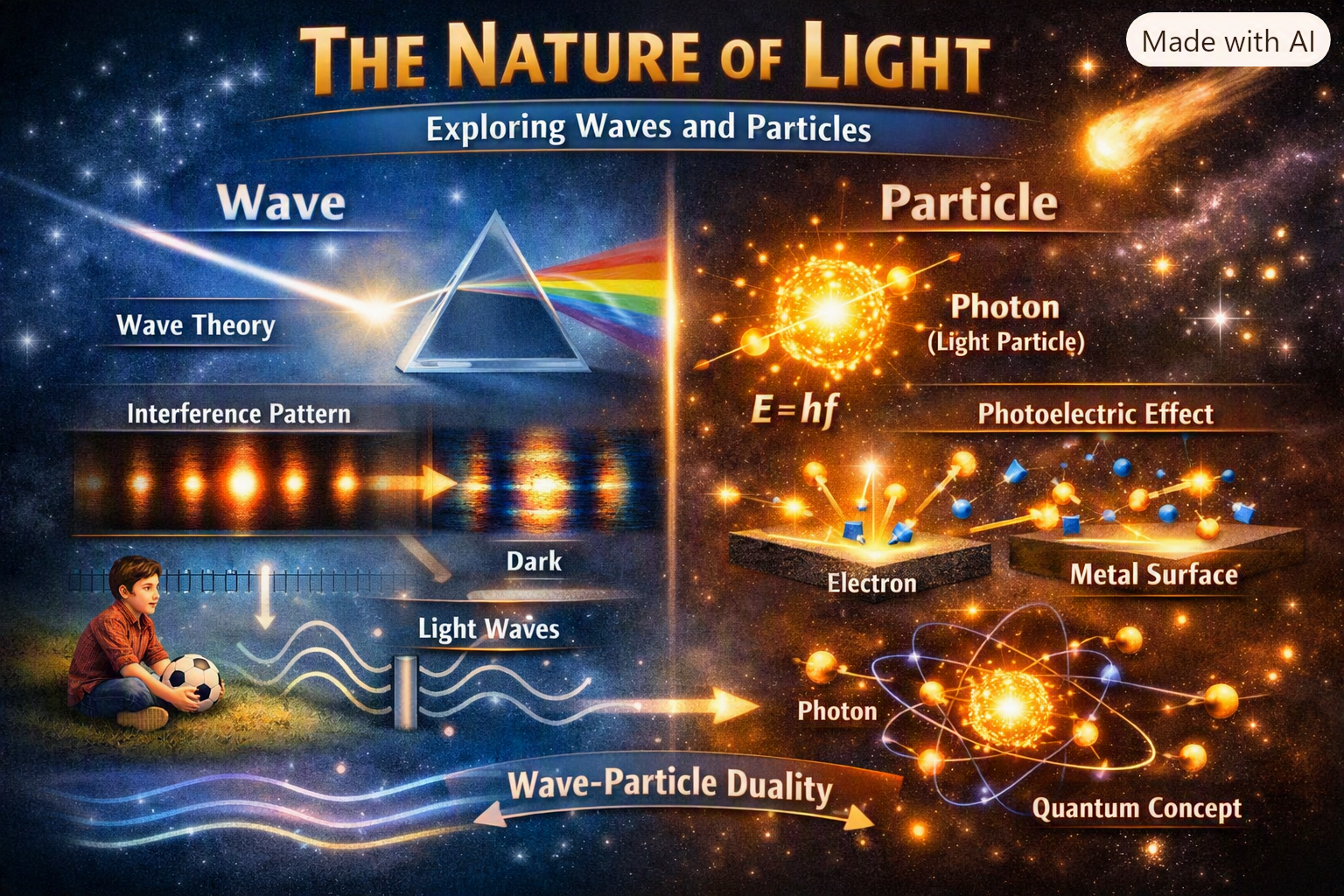
    **The Nature of Light: Exploring Waves and Particles**

    Light is one of the most fascinating phenomena in the universe. We see it every day, but have you ever wondered what light really is and how it travels? In this video, we explore the amazing nature of light and discover how it can behave both as a **wave and as a particle**.

    We will learn about the wave properties of light, including reflection, refraction, interference, and diffraction. We will also explore the particle nature of light and understand how photons help explain the behavior of light at a microscopic level.

    The wave-particle duality of light is one of the most interesting ideas in modern physics. It shows us that nature can behave in ways that are very different from our everyday experiences.

    From sunlight and rainbows to lasers, cameras, and modern technology , light plays an important role in our daily lives and in scientific discoveries.

    Join us as we explore the fascinating world of **light, waves, particles, and quantum physics**. Keep learning, stay curious, and discover the science behind the light around us!

    #Light #Physics #LightWaves #WaveParticleDuality #Particles #Photons #QuantumPhysics #Optics #Science #PhysicsFacts #ScienceEducation #Learning #Reflection #Refraction #Interference #Diffraction #ElectromagneticWaves #ScientificDiscovery #Technology #SpaceScience #Knowledge #Curiosity #StudentLife #RehanSchool #LearnAndGrow
    #rsisb Roll No.269 Foundation Level Story Post No.25 💡 **The Nature of Light: Exploring Waves and Particles** 🌈🔬 Light is one of the most fascinating phenomena in the universe. 🌟 We see it every day, but have you ever wondered what light really is and how it travels? 🤔 In this video, we explore the amazing nature of light and discover how it can behave both as a **wave and as a particle**. We will learn about the wave properties of light, including reflection, refraction, interference, and diffraction. 🌊✨ We will also explore the particle nature of light and understand how photons help explain the behavior of light at a microscopic level. 🔬⚡ The wave-particle duality of light is one of the most interesting ideas in modern physics. It shows us that nature can behave in ways that are very different from our everyday experiences. 🌌🧠 From sunlight and rainbows 🌈 to lasers, cameras, and modern technology 📷💻, light plays an important role in our daily lives and in scientific discoveries. Join us as we explore the fascinating world of **light, waves, particles, and quantum physics**. Keep learning, stay curious, and discover the science behind the light around us! 🚀📚✨ #Light 💡 #Physics 🔬 #LightWaves 🌊 #WaveParticleDuality ⚛️ #Particles #Photons ⚡ #QuantumPhysics 🌌 #Optics 👓 #Science 📚 #PhysicsFacts 🧠 #ScienceEducation 🎓 #Learning 📖 #Reflection ✨ #Refraction 🌈 #Interference 🔬 #Diffraction 🌊 #ElectromagneticWaves ⚡ #ScientificDiscovery 🔍 #Technology 💻 #SpaceScience 🚀 #Knowledge 💡 #Curiosity 🤔 #StudentLife 🎓 #RehanSchool 🏫 #LearnAndGrow 🌱
    0 Σχόλια 0 Μοιράστηκε 3142 Views
Αναζήτηση αποτελεσμάτων